Sunday, June 01, 2025


At-Home Heart Attacks And Cardiac Deaths On The Rise Since COVID-19 Pandemic

healthcare medicine pulse heartbeat


By 

Heart attacks are the leading cause of death globally, yet some statistics from many different countries suggest these events declined in frequency since the COVID-19 pandemic

Mass General Brigham researchers evaluated whether these cardiac trends reflect a true change in event rates, or if they reflect that more people are dying at home rather than in hospitals. Their findings highlight potential shortcomings of cardiac care during and in the years following the height of the pandemic, suggesting opportunities to better treat and prevent cardiac events in people at risk. The study published in JAMA Network Open. 

“Lots of reports have shown that there have been fewer heart attacks in hospitals since 2020—but something seems to be missing from that data,” said corresponding author Jason H. Wasfy, MD, MPhil,  director of Outcomes Research at the at the Massachusetts General Hospital Cardiology Division and a faculty member at the Mongan Institute at Massachusetts General Hospital, a founding member of the Mass General Brigham healthcare system. “We now show that if you account for deaths at home, cardiac deaths are going up and have stayed up for years. Today there are a lot more people having cardiac deaths at home, which also raises the concern that people with heart disease haven’t been getting the care they need since the pandemic.”

The researchers looked at death certificate data from 127,746 people who died in Massachusetts and found cardiac deaths exceeded anticipated levels between 2020 and 2023. Using data from 2014 to 2019, the team set an expected cardiac death rate to compare the new 2020 to 2023 rate against. Cardiac deaths were 16% higher than expected in 2020, 17% higher in 2021 and 2022, and 6% higher in 2023. Notably, this significant increase in cardiac deaths happened despite lower cardiac-related hospital admissions, meaning more deaths occurred at home.

“Healthcare systems around the world have experienced multiple shocks since 2020. Our findings suggest that both patient choices about seeking care and outcomes after experiencing a cardiac emergency also have changed,” said senior author John Hsu, MD, MBA, MSCE, faculty member and director of the Program for Clinical Economics and Policy Analysis at the Mongan Institute at MGH. “Had we not examined mortality using death certificate data, the increases in population cardiac mortality could have gone unnoticed.”


Iran’s Regime On Edge As Blackouts Fuel Public Fury – OpEd

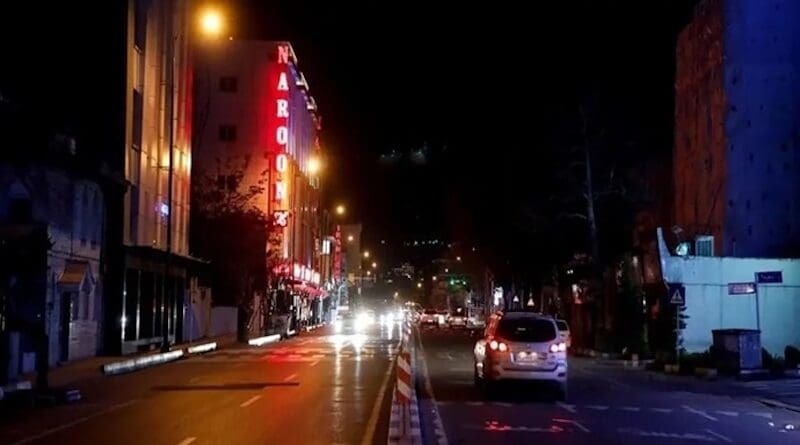
Iran power outages. Photo Credit: PMOI


By 

While Iranian regime Supreme Leader Ali Khamenei recently asserted with unparalleled audacity that “in the public sphere of the country, there is no particular issue,” the reality on the ground paints a starkly different picture. The mullahs’ regime is gripped by fear, particularly dreading the escalation of social protests fueled by a worsening electricity crisis and its accompanying frequent blackouts.


This crisis is a glaring symptom of the regime’s endemic corruption, incompetence, and profound disregard for the Iranian people, pushing the nation ever closer to a boiling point.

An “irreversible” crisis of the regime’s making

The energy and electricity crisis under the clerical regime has reached what is described as an “irreversible point.” The power shortage is projected to reach a staggering 30,000 megawatts by the end of the current government’s term.

Regime officials, experts, and state-controlled media themselves acknowledge the impossibility of resolving this deficit. Aliabadi, the Minister of Energy in Pezeshkian’s cabinet, admitted, “We are now in a super-critical situation.” The state-affiliated Bahar News grimly predicts that by 2026, winter blackouts could extend to 8 hours, and by 2028, they could last up to 14 hours daily. This self-admitted catastrophe underscores the regime’s abject failure to manage essential services, directly devastating the lives and livelihoods of ordinary Iranians. Rather than a lack of resources, the crisis stems from chronic mismanagement and systematic neglect, with billions diverted from infrastructure to fund the IRGC and its regional proxies.

Blackouts igniting widespread protest

The regime’s own media outlets are sounding the alarm. The state-run Jahan Sanatnewspaper explicitly warned of the potential for “violent protests” and “social unrest” stemming from the power cuts, particularly noting that outages in industrial towns have led to “expanded dissatisfaction among workers” and that “the smell of violent protests can be detected in some industrial towns.”

The paper added that “in these coming days, perhaps seeking tolerance and inviting citizens to cooperate with the government will become a rusty tool that is useless and does not reduce social unrest. Every day that passes like this, the cancer of powerlessness gets closer to killing Iranian society.”


Members of the regime’s parliament (Majlis) echo these concerns. Ahmad Jabari, an MP, criticized the regime for “playing with people’s psyche” by using terms like “imbalance” to describe the energy crisis, while citizens, especially in Hormozgan province in the south, endure 50-degree Celsius heat without electricity. “The power outages have exhausted the dear and honorable people of the south of the country… People’s lives and businesses are facing problems… Cutting off people’s electricity in the 50-degree heat of the south, by God, has no logical or rational justification,” Jabari stated.

Another MP, Hassan Norouzi, confessed to the regime’s lack of solutions as the peak summer months of July and August approach, with concurrent water shortages compounding the misery and impacting factories, insurance, and even the bread supply.

Bakers on the frontline

The regime’s fear has been magnified by street protests from hardworking bakers, who are severely impacted by the power outages from multiple angles. The state-run Etemadnewspaper warned that “power cuts have brought public dissatisfaction to a peak and weakened trust in the government. In most cities, bakers have protested.”

Ahmad Fatemi, another Majlis member, described the bakers’ predicament as a “super-challenge,” exclaiming with trepidation, “Today, the problems of bakeries have turned into a super-challenge… Why are you not accountable? Regarding the frequent power cuts and widespread blackouts, I am warning; this issue has exhausted the people. It has exhausted production units and industry owners.”

These warnings are not abstract. In the past weeks, bakers in major Iranian provinces—Qom, Mashhad, Isfahan, Birjand, and Khuzestan—launched coordinated protests. They voiced anger over repeated, unannounced electricity cuts that ruined dough batches, led to severe financial losses, and rendered production unsustainable. In Mashhad, bakery owners highlighted chaos from inconsistent power, reporting dough frequently wasted. In Isfahan, protesters chanted, “Enough with promises—our tables are empty!” and dumped spoiled dough in front of the power office. This unified outcry from bakers, whose livelihoods are being destroyed, signals a dangerous flashpoint for the regime.

A failing regime pushing society to the brink

The devastating electricity crisis is not an isolated incident but a direct and undeniable consequence of the Iranian regime’s systemic corruption, gross mismanagement, and deliberate prioritization of its repressive security apparatus, missile programs, and funding for regional terrorist proxies over the fundamental welfare of its own people.

Billions of dollars in national revenue have been plundered and diverted from essential infrastructure investments. The regime’s officials offer no accountability, further highlighting the complete disconnect between the rulers and the ruled, and signaling the collapse of any remaining social legitimacy.

As power outages intensify, so does public fury. The shared experience of suffering from blackouts, alongside hyperinflation, water scarcity, and unemployment, is uniting Iranians across all social strata. Khamenei’s dismissive pronouncements cannot mask the daily reality faced by millions, a reality that is steadily fueling the embers of dissent. The regime’s inability to provide basic necessities like electricity is not just a failure of governance; it is an indictment of its very existence, pushing Iranian society closer to a nationwide uprising that could spell the end of this corrupt and oppressive rule.


Sadegh Pashm-Foroush

Sadegh Pashm-Foroush writes for PMOI/MEK


Inside A Cup Of Turkish Coffee: How A Mystic Drink Impacted Politics, Cultures, And Lifestyles In Europe And The Middle East – Book Review


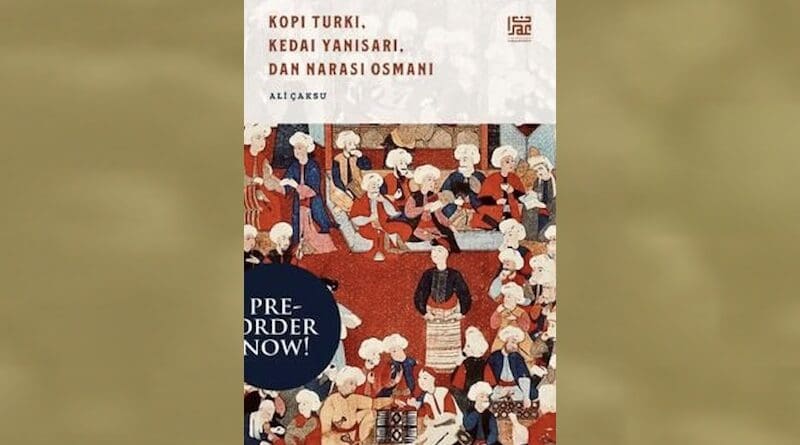
The new book by Prof. Ali Çaksu on the history and politics of Turkish coffee is published in Indonesian and is titled ‘Kopi Turki, Kedai Yanisari, dan Narasi Osmani’ or Turkish Coffee, Janissary Cafe, and the Ottoman Narrative.


By 

In the centuries since the first coffeehouse was opened in Istanbul in 1554, Turkish coffee has brought together people of different classes, cultures and ranks and helped shape politics and lifestyles, Ali Çaksu, visiting professor of history and political thought at Germany’s Ludwig Maximilian University, told a scientific forum at the University of Sharjah last week.

Prof. Çaksu was presenting to the forum his new book titled Kopi Turki, Kedai Yanisari, dan Narasi Osmani, Indonesian for ‘Turkish Coffee, Janissary Café, and the Ottoman Narrative’ published in April 2025 by Umran Press in Yogyakarta, Indonesia. The two-word phrase in the book’s title ‘Kedai Yanisari’ is an Indonesian appellation associating ‘Yanisari’ or Janissary, part of the elite infantry force of Ottoman sultan’s palace guards, with ‘Kedai’ or Café – an indication of the influence the beverage exercised in the Ottoman era.

“Turkish coffee is not merely a drink associated with caffeine and known to keep tiredness at pay and stimulate heart and mind,” said Prof. Çaksu. “Turkish coffee has been a political, cultural and mystical drink since the first café appeared in Istanbul in the 16th century, transforming leisure, lifestyle, cultures and influencing politics.”

In less than a century, parallels to the first coffee house in Istanbul were available in the larger Middle East and many European countries. Turkish coffee could be found in London, Venice, Marseille, Vienna, Paris among other European metropolises. In the Middle East, coffeehouses were established in Damascus, including the then cosmopolitan city of Aleppo; Cairo, where coffee shops opened in streets adjacent to the Islamic university of Azhar; in Baghdad; and even in the Muslims’ holiest city of Mecca in Saudi Arabia.

The forum brought together scholars with an interest in Arab and Muslim civilization from different parts of the world. It was convened by Sharjah International Foundation for the History of Arab and Muslim Sciences (SIFHAMS).

“The history of Muslim sciences cannot be fully appreciated without recognizing the pivotal role of cultural practices and social institutions, among which the advent of coffee and the rise of coffeehouses which stand out as particularly significant,” said University of Sharjah professor of Islamic studies, Mesut Idriz, who is also SIFHAMS’ director and the forum’s organizer.


Turkish coffee, which originated in Yemen through the practices of Sufi mystics, was accompanied by the emergence of the qahwa khāna, Turkish for coffeehouse which Prof. Idriz described as “an institution that transcended its immediate function as a place of refreshment … and became a vital forum for intellectual exchange, often frequented by scholars, poets, travelers, and merchants.”

Prof. Çaksu’s book highlights the interesting and rich relationship of the drink to politics and religion. He suggests that Turkish coffee was a “political drink” or was politicized in its earliest time in Istanbul, “because political meanings were often attached to the drink and the places where it was consumed.

“In those times political discussions took place in coffeehouses and they included criticism of policies, appointments and dismissals, corruption of politicians as well as rumors. Such conversations disturbed rulers and officials who were quite suspicious of them and perceived them as a threat to the existing socio-political order.”

The rapid spread of coffee shops emulating the first coffeehouse in Istanbul was not always smooth and peaceful. Many in Europe saw the coming of coffee as part of fresh efforts by the Ottoman Empire at “Islamization”. In the Middle East, which was then still part of Ottoman dominions, the prevalence of coffeehouses was seen as an attempt at “Ottomanism,” a political ideology meant to unify diverse ethnic populations of Ottoman Empire under Ottoman identity. Muslim clergy, who thought of it as alcohol, initially forbade Muslims from drinking it.

Prof. Çaksu reiterated the line “New Liquors brought in new Religions,” a 17th century phrase often mentioned by scholars when researching the impact of new beverages. He said the same phrase was frequently cited, when Turkish-style coffeehouses mushroomed in Europe, as evidence of “an invasion by Islam” on the back of a cup of coffee.

He noted that Europeans feared the coming of coffee to their lands could be the harbinger of new social habits that would introduce Islamic religious practices to what was then a purely Christian society.

When it first arrived, people in many European countries branded Turkish coffee as “unchristian,” said Prof.  Çaksu. He mentioned how American literary icon, Mark Twain, was disappointed with Turkish coffee and quoted him as saying, “Of all the unchristian beverages that ever passed my lips, Turkish coffee is the worst.”

Christian Europe was uneasy with the newcomer “Turkish coffee” as it was associated with “the Muslim infidels with whom Christians had been at war for centuries,” Prof. Çaksu noted.

Turkish coffee was “Satan’s drink or drink of the devil,” noted Prof. Çaksu, adding that the expression “Satanick Tipple” was the first line in the notable piece of satirical writing titled ‘A Satyr against Coffee’ by the 19th century English writer Samuel Butler in which he blasted the burgeoning coffeehouse culture of the time.

In both East and West, many found in the burgeoning coffeehouses a center of sedition and a hub for fomenting anti-religious sentiments. Though Prof. Çaksu had more to say about how the new drink was received in Europe, he did mention that Muslim clergy were unhappy with its popularity, equating Turkish coffee with alcoholic drinks like wine, which Islam forbids. However, added Prof. Çaksu, Muslim scholars relented and issued fatwas (religious decrees) making coffee a permissible drink.

But in Europe Turkish coffeehouses were met with suspicion and seen as a rendezvous for subversive elements to hatch conspiracies on rounds of drinking coffee. Authorities in several European countries saw the advent of coffee as “more dangerous than gunpowder,” he said.

In his book Prof. Çaksu writes, “That is why the authorities often closed down and sometimes even demolished coffeehouses, which they saw as centers of sedition. In addition to the official disdain of coffeehouses, some jurists and religious leaders criticized and condemned coffeehouses and coffee and even issued decrees against coffee and declared it forbidden on religious grounds.

“When the Turkish coffee spread from Istanbul and Cairo to Southern and Western Europe, initially it faced … negative reactions. The drink was considered Turkish, Arabic or Muslim and thus unchristian, heathenish, or satanic. The coffeehouses, too, got their share: just like in Istanbul, in Britain they were also often associated with political subversion and sedition and became targets for official blame and suppression.”

For instance, in England, he said, some branded Turkish coffee “Mahometan berry” in a bid to relate it to Ottoman Empire’s conquests which usually resulted in large-scale conversions to Islam. Some even found the presence of coffeehouses a threat to “Englishness.”

“Some associated Turkish coffee with sexuality, linking it to a surge or drop in sexual desires. Some saw Turkish coffeehouses as likely places to encourage conversion to Islam, and were even said to be part of Republican conspiracy of the 1650s aimed at introducing Islam as a national religion in the U.K.”

In his book, Prof. Çaksu scours literature of various European nations to see what their literary figures had to say about Turkish coffee. Literature mirrors social reality, he affirmed, adding that literary texts reflect cultures, lifestyles and even the type of politics prevalent at the time of writing.

Johann Sebastian Bach (1685 –1750), a German composer and musician of the Baroque period, Prof. Çaksu went on, “had a Kaffeekantate (Coffee Cantata) composed probably between 1732 and 1735. The cantata suggests that in eighteenth-century Germany, coffee drinking was considered a bad habit.

“Sometime later in Germany, Karl Gottlieb Hering (1766-1853) warned people (and children) against this “Türkentrank” (“Turkish drink”) in his Kaffeelied (“Coffee Song”) for children. For him, the Turkish drink was not good for children, because it could weaken the nerves and make one pale and sick.”

Frederick the Great of Germany, Prof. Çaksu claimed, was so against coffee and he attempted to outlaw it outright in favor of beer in September 1777.  Frederick, he said, “required all coffee sellers to register … and ordered soldiers to work as sniffers, roaming the streets to detect any contraband coffee roasters.”

For long, Prof. Çaksu pointed out, coffee was considered a Turkish and Muslim drink in Europe, evidence the negative appellations given to it in the literature like “Turkish berry, Arabian berry, or sometimes Mahometan berry.”

The wide spread of Turkish coffeehouses led to two different views and mindsets about its consumptions and the issuing of two historically important petitions in England in the 17thcentury. The first by women who poured scorn on all-male coffeehouses, branding the drink as “heathen” and “abominable”, and alleging that it caused “impotence”. The second petition was a retort by men to refute claims made by women. The men’s petition described the drink as “innocent” and referred it as “that harmless and healing liquor.”

However, Prof. Çaksu said coffee did good service for the dissemination of Turkish culture and lifestyles. Once widely accepted, Turkish coffee-related customs and symbols were embraced.

“Coffeehouse keepers often wore turbans as an advertising device. Many coffee houses in London and Oxford adopted the name Turk’s Head, Sultan’s Head or took the names of famous Ottoman rulers such as Murad the Great,” he stressed, confirming that the “signs for coffeehouses often displayed a symbol of a turbaned Turk, Turk’s head, or a coffee pot. Even today in Britain some cafes, restaurants, bars, and clubs bear the name Turk’s Head.”

Asked to summarize in his opinion the good things Turkish coffee has done to Europeans, Prof. Çaksu said, “Before the arrival of Turkish coffee, Western Europe did have some places of socialization like pubs where people met. However, unlike alcoholic drinks, coffee and coffeehouses brought a sort of sobering effect. Thus, for instance, in Britain coffeehouses were sometimes called penny universities or citizens’ academy, since for the price of a penny a man could buy a cup of coffee and join the discussions on a variety of topics.

“Turkish coffeehouse frequenters would learn a great deal from friends, strangers, learned people, travelers and soldiers returning home. Furthermore, like in Istanbul, some coffeehouses in London too fostered political opposition and attracted the wrath of the authorities.”

Turkish coffee is the beverage that is steeped in tradition, with UNESCO inscribing it in its Intangible Cultural Heritage List in 2013. Even its grounds have been found to have mystical powers as they have led to the emergence of one of the world’s most intriguing and most widely used fortune-telling practice.
 

Antarctica’s Hidden Wind Jets: Study Reveals Storm-Driven Low-Level Jets Near Thwaites ‘Doomsday’ Glacier


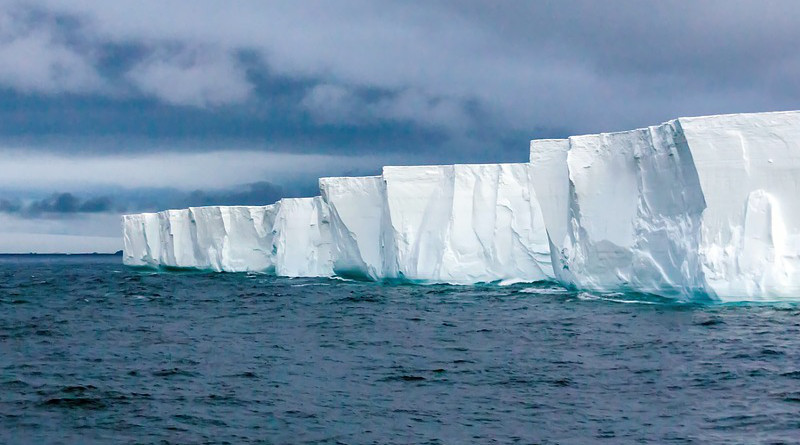
Continent Antarctica Iceberg Hurtigruten Travel

By 

In the remote and hostile realm of the Amundsen Sea Embayment, West Antarctica, powerful winds known as low-level jets (LLJs) race over its coastal regions, including both the Thwaites and Pine Island ice shelves and the open ocean. These previous unknown atmospheric forces could hold the key to understanding—and predicting—the alarming melt of two critical glaciers: Pine Island and Thwaites, the latter ominously called the “Doomsday Glacier” for its potential to unleash catastrophic sea-level rise.


A recent study published in  Advances in Atmospheric Sciences  by researchers from the Indian Institute of Technology and the British Antarctic Survey zeroes in on powerful winds known as low-level jets (LLJs) that occur over the coastal region of the Amundsen Sea Embayment, West Antarctica, which includes both Thwaites and Pine Island glaciers, as well as the open ocean. These glaciers are currently melting at an accelerating pace, resulting in increased sea-level rise.

“We wanted to understand how often these LLJs happen and what causes them. Understanding these strong winds is critical as they could perhaps have important impacts on the redistribution of snow over both the Thwaites and Pine Island ice shelves, as well as affecting the ocean circulation and movement of sea-ice. These processes could potentially influence the rate at which Thwaites and Pine Island glaciers melt, and thus their contribution to sea-level rise.” said Sai Prabala Swetha CHITTELLA, the lead author.

Earlier research has shown that LLJs often develop when cold, dense air flows down from Antarctica’s high interior, which are known as katabatic winds. Swetha’s new study explored whether nearby low-pressure systems, called cyclones, could also play a role in strengthening these katabatic winds even further, resulting.

To investigate this, the team used data from instruments attached to weather balloons, called radiosonde measurements, that had been launched from a ship near the Amundsen Sea Embayment coast in late summer to measure wind and temperature in the lower atmosphere. They then ran simulations using a high-resolution weather model to better understand the wind patterns responsible for the wind jets. What they found was surprising: 11 out of 22 of the radiosonde measurements showed these LLJs, and 10 of them were blowing out to sea (offshore). Additionally, their simulations showed the LLJs extending over large areas of the Amundsen Sea Embayment, resulting in substantially enhanced near-surface wind speeds over both the Thwaites and Pine Island ice shelves, as well as the open ocean. Additionally, the simulations showed that the strengthening of the katabatic winds by cyclones played a critical role in producing the jets.

“The most important thing we found is that LLJs happen often in this part of Antarctica and are usually made stronger by passing storms.” said Dr Andrew Orr, one of the coauthor of the study.


What’s next?

“We plan to continue our investigation of these extreme winds over this region of West Antarctica, including focusing on winter, when they are likely to be even more stronger and more frequent. Additionally, we want to also begin to investigate more explicitly the impacts of these winds on ocean circulation and movement of sea-ice in this critical region.” said Dr Pranab Deb, another co-author of the study.

The researchers hope the study can help improve future predictions about melting ice and sea level rise and give scientists, policymakers, and communities more tools to plan for our changing climate.


Eurasia Review

Eurasia Review is an independent Journal that provides a venue for analysts and experts to disseminate content on a wide-range of subjects that are often overlooked or under-represented by Western dominated media.

WAIT, WHAT?

EU Should Allow Gene Editing To Make Organic Farming More Sustainable, Researchers Say

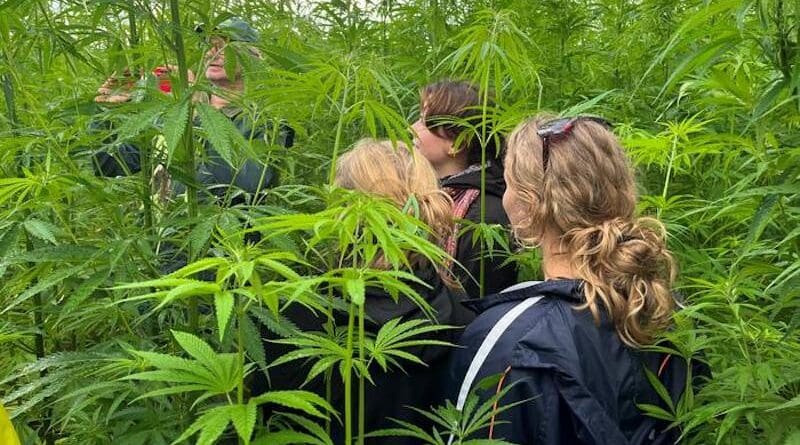
Researchers in a field of hemp. CREDIT: Justus Wesseler

By 

To achieve the European Green Deal’s goal of 25% organic agriculture by 2030, researchers argue that new genomic techniques (NGTs) should be allowed without pre-market authorization in organic as well as conventional food production. NGTs—also known as gene editing-—are classified under the umbrella of GMOs, but they involve more subtle genetic tweaks.


In an opinion paper published in the Cell Press journal Cell Reports Sustainability, the researchers describe how NGTs could enable rapid development of crops that are climate resilient, produce higher yields, and require less fertilizers and pesticides. 

“This is an excellent opportunity to modernize European agriculture, to make it more science based, and to support the goal of improving sustainability inside the European Union,” says first author Alexandra Molitorisová, a food law researcher at the University of Bayreuth. 

Currently, 10% of EU farming areas are organic. Though organic farming can reduce carbon emissions and pollution from fertilizer and pesticides, Molitorisová’s team says that these benefits could be negated by biodiversity losses due to expanding agricultural land, since organic agriculture requires more land to grow the same amount of food. 

“The target of 25% organic land is unlikely to ensure sustainable food production in the EU if modern biotechnology, such as NGTs, is excluded from organic farming,” says Molitorisová. 

European institutions are currently debating how to regulate NGTs—which did not exist when the EU legislation on GMOs was adopted in 2001—in response to a proposal from the European Commission that NGT usage be allowed in conventional but not organic farming. 


“Research suggests that NGTs are still something that European consumers are not completely aware of—they just do not distinguish between NGTs and GMOs,” says senior author Kai Purnhagen, Professor of Food Law at the University of Bayreuth. “There are strong indications that consumers would be willing to accept these technologies if they yield substantial benefits, and the Commission’s proposal for new regulation allowing NGTs in conventional farming points in this direction.” 

Though NGT crops are still developed through genetic alteration, the processes usually don’t involve the insertion of DNA from non-plant species. This means that, in theory, identical crops could be developed using conventional breeding methods, though it would take decades rather than months. For these reasons, the researchers argue that NGTs and GMOs should be defined and regulated separately, including in organic production. 

“From the consumer’s perception of naturalness, the normal breeding process is between two crossable varieties, and that is also what happens with NGTs,” says Molitorisová. “So, if consumers understand the nature and benefits of this technology, it should be easier for them to accept it compared with GMOs, which might involve inserting a gene from a non-plant organism into a plant genome.” 

The researchers also note that the most common type of NGT, targeted mutagenesis, is very similar to mutagenesis—which uses chemical or radioactive substances to induce random genetic mutations and has never been subject to GMO regulation in the EU, even for organic farms. 

“If mutagenesis had not been exempted from GMO legislation, the estimation is that 80%–90% of the cereal products on the European market would have been subject to GMO labeling,” says Purnhagen.  

The team highlights that allowing NGTs in conventional but not organic agriculture creates a formidable hurdle in terms of NGT identification, labeling, and traceability. 

“At the moment, there are unresolved practical problems with the identification of NGTs inside of food, feed, or seeds,” says Molitorisová. “One rational alternative is to allow NGTs in organic production, because if NGT organisms are not identifiable, they are also technically unavoidable.” 

Ultimately, the researchers say that the decision to allow NGTs in organic farming should be made by the organic farming and consumer communities—for example, by way of citizens’ juries or food councils. 

“Organic consumers care about the environment and sustainability. For organic farmers, accepting this technology is a way to speak to those consumers,” says Purnhagen. 


Eurasia Review

Eurasia Review is an independent Journal that provides a venue for analysts and experts to disseminate content on a wide-range of subjects that are often overlooked or under-represented by Western dominated media.