Monday, June 09, 2025

WAR AT SEA

Small Craft, Big Impact: Ukraine's War and the Rise of New-Tech Warships
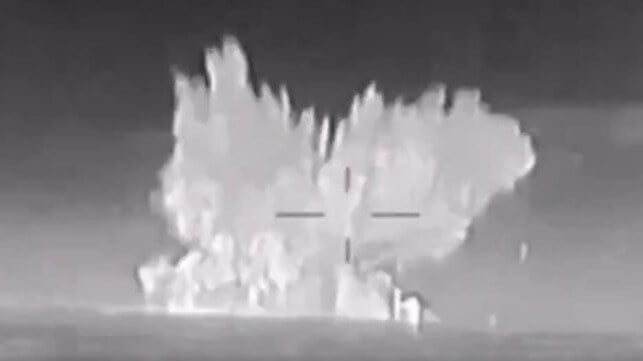
A Ukrainian drone strikes a Russian corvette in the Black Sea (GUR file image)
A Ukrainian drone boat strikes a Russian corvette in the Black Sea (GUR file image)

Published Jun 8, 2025 1:57 PM by CIMSEC


LONG READ


[By David Kirichenko]

Russia’s full-scale invasion of Ukraine in 2022 shocked the international order. What surprised the world even more was Ukraine’s ability to resist. While many in the West believed Ukraine would only hold out for a few weeks, the war has now entered its fourth year. Ukraine has relied on agility and innovation – especially in its use of drones and battlefield technology – to fend off Russian forces. This technological edge has extended beyond land warfare to the sea.

Over the past few years, Ukraine’s growing use of naval drones has pushed both sides to rapidly adapt, accelerating the race for countermeasures and maritime innovation. NATO would do well to study Ukraine’s approach as it prepares for the future of warfare at sea. Rear Admiral James Parkin, the Royal Navy’s director of development, notes that in 28 maritime battles, the larger fleet won all but three. Parkin believed that larger fleets win, but Ukraine has changed that paradigm, for now. The future of naval warfare is here and Ukraine is demonstrating what the future looks like.

Valerii Zaluzhnyi, Ukraine’s former commander-in-chief and current ambassador to the U.K., stated, “I have repeated many times that the nature of modern warfare has changed and continues to change.” Zaluzhnyi added, “The nature of modern warfare is far from what NATO is now operating.”

Ukraine’s Naval Lessons

At the outset of the war, Ukraine’s navy was virtually nonexistent, having lost most of its fleet when Russia annexed Crimea in 2014. Its only major warship, the frigate Hetman Sahaidachny, was scuttled by Ukrainian forces in February 2022 to prevent its capture. Yet through asymmetric tactics – naval drones, coastal missile strikes, and aerial attacks – Ukraine has transformed the Black Sea battlefield, forcing Russia into retreat and reclaiming strategic control of key waters around Ukraine’s coast.

Serhii Kuzan, chair of the think tank Ukrainian Security and Cooperation Center and a former adviser to Ukraine’s Ministry of Defense, explained that even before the full-scale invasion, Ukraine understood it could not match Russia in conventional naval strength.1 As a result, it adopted an asymmetric strategy focused on coastal missile systems, small vessels, and air support. After 2022, sea drones were added to this concept and have since become the navy’s primary strike weapon at sea. These unmanned systems emerged out of necessity, filling the gap left by the absence of a traditional fleet.

Ukraine is now rebuilding its navy around a fleet of unmanned surface vehicles (USVs), making sea drones central to its maritime strategy. When Russia attempted to blockade Ukrainian shipping, Kyiv responded swiftly with sea drone strikes. Even after the Russian Navy retreated from occupied Crimea to the safety of its mainland ports, Ukrainian USVs continued to harass and damage its fleet.

Following the sea drone offensive in 2023, Former US Navy Admiral James George Stavridis noted, “We’re at a juncture in military evolution akin to the game-changers like Agincourt or Pearl Harbor. Expensive manned surface warships now face existential threats from affordable drones.” The Ukrainians issued a warning in August 2023 that “There are no more safe waters or peaceful harbors for you in the Black and Azov Seas.” The Russians eventually learned to heed that warning and hid from Ukraine’s sea drones. According to Roy Gardiner, an open source weapons researcher and former Canadian Armed Forces officer, “These asymmetric victories have forced the relocation of the Russian Fleet to the eastern Black Sea, and broke the blockade to reopen the vital grain export routes.”

Ukraine’s drones have even achieved the unprecedented. By January 2025, modified Magura V5 sea drones armed with heat-seeking missiles shot down two Russian Mi-8 helicopters and damaged a third off the coast of Crimea – marking the first time a naval drone successfully downed enemy aircraft. In May 2025, Ukraine stunned the world by using sea drones equipped with AIM-9 Sidewinder missiles, each worth about $300,000 to shoot down two Russian fighter jets, each worth $50 million. The Ukrainian sea drones themselves are worth only several hundred thousand dollars. HI Sutton, a naval warfare expert wrote, “The success of Ukraine’s uncrewed surface drones (USVs) cannot be overstated. They are rewriting the rules of naval warfare.”
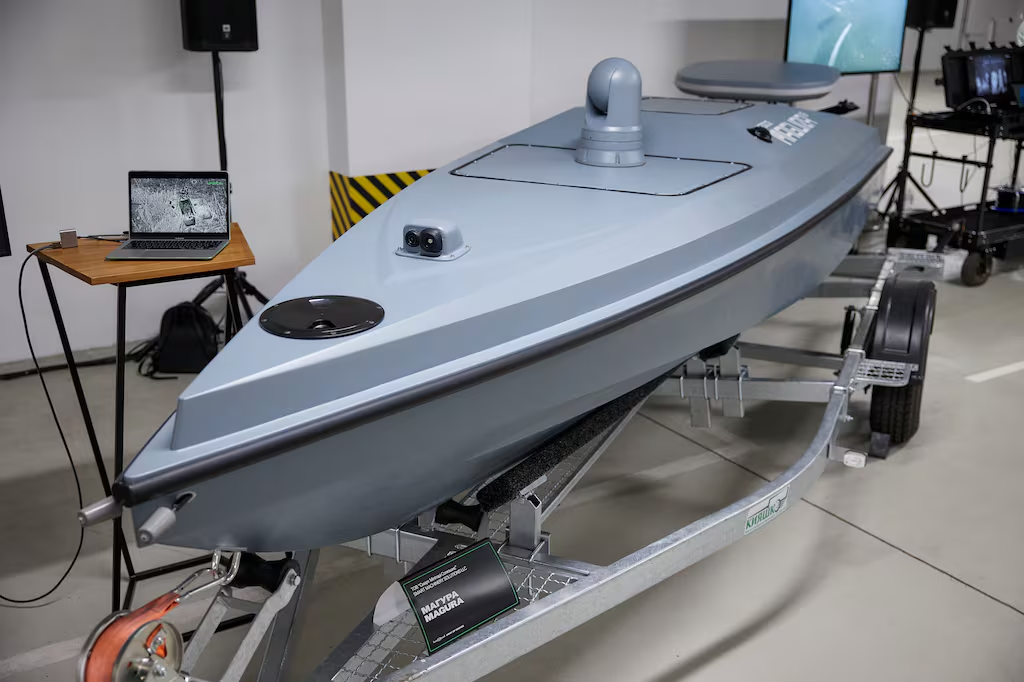
A Magura V5 maritime drone. (Photo by Daniyar Sarsenov/Ministry of Digital Transformation of Ukraine)

Ukrainian forces are increasingly adapting these drones for multi-role capabilities, equipping them with missile launchers and advanced payloads. Ukraine has effectively turned its USVs into robotic drone carriers capable of launching explosive FPV drones at Russian coastal targets. One of Ukraine’s latest sea drones, can launch up to four quadcopter First-Person View (FPV) drones and may carry naval mines, enabling complex multi-phase attacks. Ukrainian intelligence recently announced that their sea drones have been upgraded to carry over a ton of explosives and can now operate across distances exceeding 1,000 kilometers (about 621 miles), significantly expanding their strike range and lethality across the Black Sea. “We completely blocked the Russian Black Sea fleet in the water area near the port of Novorossiysk,” said Kyrylo Budanov, the head of Ukraine’s defense intelligence (HUR). He added that said the Russian fleet can no longer come out to the open waters.

“The cost of USVs such as Magura V5 and Sea Baby is about $250,000, which is inexpensive relative to their significant tactical and strategic success,” said Gardiner. “With naval targets gone from the western Black Sea, some Ukrainian USVs have transitioned to FPV carriers and launched successful attacks on multiple radars and air defense systems in Crimea.”

According to Kuzan, sea drones have emerged as one of Ukraine’s most effective tools against the Russian fleet. Ukrainian unmanned systems have struck Russian ships and boats 21 times, with 10 vessels confirmed destroyed and several others severely damaged. As a result, Russian naval forces have lost the initiative at sea and are now largely confined to operating near the ports of Sevastopol in occupied Crimea and Novorossiysk on the Russian mainland. Kuzan highlighted that these drone strikes have also enabled Ukraine to reopen the grain corridor despite Russia’s withdrawal from the agreement, effectively restoring maritime trade.

Despite Ukraine’s impressive string of successes at sea, Russia has begun mounting a more effective defense. According to Ukrainian Navy Commander Oleksiy Neizhpapa, Moscow has built a multi-layered system around key locations like Sevastopol Bay, including long-, medium-, and short-range detection zones designed to identify and destroy incoming sea drones. “In the past, we could easily enter Sevastopol Bay with our drones,” Neizhpapa said.

“Now it’s not so simple because the enemy has established a tiered defense system.” In response, Ukraine is working to upgrade its unmanned systems with more advanced weaponry and modular designs that can adapt to rapidly evolving threats. Russia has adapted but by bringing out its ships into the open sea, meaning that the success rate of Ukraine’s sea drones has also dropped. According to Gardiner, “Naval vessels have been equipped with thermal vision systems to better combat Ukrainian USV nighttime attacks.” 

The naval drone war is also becoming more symmetric: Russian forces are beginning to deploy their own sea drones. “They are gearing up for it,” Neizhpapa warned, “so we are preparing not only to deploy drones against the enemy but also to defend against them.” 

Gregory Falco, an autonomous systems and cybersecurity expert at Cornell University, commented on the design balance between sophistication and scale. According to Falco,

“The sea is a highly dynamic environment so it has been a more difficult domain to design robust and reliable systems for. Given Ukraine’s people-constrained navy, they have relied on unmanned systems which Ukraine has adeptly made cost efficiently and therefore largely disposable. The sophistication of this technology right now is less important than its scale and cost. Scale for drones is what will help win wars.”

The war in the Black Sea shows how asymmetric innovation can shift the balance of power. Despite having no traditional fleet, Ukraine has dealt major blows to a superior naval force using low-cost, adaptable technology. Dmitry Gorenburg, a researcher with the Center for Naval Analyses, remarked that,

“Russia has been forced to erect barriers for harbor protection, which have been relatively effective. But Ukraine showed that it could still damage Russian ships at sea. In the future, the cost asymmetry between cheap drones and expensive ships will mean that even a low success rate will prove highly damaging to naval forces, including Russia. The advantage of having a powerful navy will thus be somewhat decreased.”

However, Kuzan stresses that drones alone cannot provide full control over maritime space. A balanced navy remains essential. Looking ahead, Ukraine’s future fleet will likely combine Ada-class corvettes, missile boats, and coastal defense systems, with sea drones continuing to serve as the main offensive force.

Adaptability and Technology

Moreover, both China and Russia “are surging ahead in the realm of small drones, while the United States moves at a relatively glacial pace,” the Modern War Institute at West Point noted in a March 2024 report. Deborah Fairlamb, founding partner of Ukraine-focused venture capital firm Green Flag Ventures said, “I still believe that the West really does not understand how much warfare has changed.” Fairlamb pointed out the rapid technological advancements on the battlefield, increased mass production, and the decreasing cost of effective weaponry – such as $500 drones that can take out a $5m tank, a $30m radar system.”

Now, the U.S. Navy is embracing unmanned systems with urgency, spurred by lessons from Ukraine’s naval drone success and asymmetrical threats like the Houthis in the Red Sea. Ukraine is already working closely with artificial intelligence (AI) and is rapidly reshaping modern warfare, particularly through machine vision in drones and ground platforms, allowing for autonomous targeting. Ukraine is at the forefront of this transformation, with over 90 percent of AI military technologies coming from domestic developers, including swarming drone systems.

??Ukraine is placing innovation at the heart of its defense strategy, leveraging homegrown technologies to stay ahead on the battlefield. Mykhailo Fedorov, the country’s minister of digital transformation, emphasized this approach in a speech at the The NATO-Ukraine Defense Innovators Forum:

“In Ukraine, we fight with innovations made in Ukraine. It is a constant work, a continuous R&D process, solving logistical problems with components and looking for solutions five steps ahead. Ukraine is already the best R&D center for any innovation. Today we get a technology for testing, and tomorrow we will scale it hundreds of times.”

Ukraine’s defense tech sector is accelerating rapidly under the pressure of war, driving battlefield innovation in drones, robotics, AI, electronic warfare, and demining systems. Platforms like the government-backed Brave1 fast-track promising technologies – by providing funding, testing, and streamlined certification, bypassing the slow procurement systems common in the West. “I always tell our American and other international partners: if your drone hasn’t been tested in Ukraine, it’s still just a toy,” said Oleksandra Ustinova, a Ukrainian member of parliament.

Economics of War

Modern warfare is now a battle of economics and scale, where the key metric is no longer troop numbers, but the cost and quantity of systems deployed. Cheap, one-way drones costing under $1,000 have become central to the fighting in Ukraine and elsewhere, capable of destroying far more expensive targets. As Christian Brose noted in "The Kill Chain," U.S. military dominance has long relied on costly platforms like tanks, stealth fighters, and aircraft carriers. First-person view drones invert that model, using cheap, smart, networked machines to challenge the traditional military-industrial complex. As the U.S. continues to rely on high-cost systems, adversaries like China, Russia, and even non-state actors are leveraging mass-produced, inexpensive drones and missiles to inflict outsized damage at a fraction of the cost.

Andy Yakulis, a former Army special operations commander, highlighted how expensive the USS Gerald R. Ford aircraft carrier is at $13 billion, with other platforms, “such as the F-35, costing between $80m to $100m per aircraft. While the U.S. was building such systems, China has been focused on cheaper systems that, in mass, can destroy these large systems.” Yakulis further pointed out that in the Red Sea, the U.S. Navy has been using two $1 million missiles to shoot down Houthi drones that cost just $40,000 each. That means the cost of the drone is only about two percent of the price of the missiles needed to destroy it.

“Our adversaries use $10,000 one-way drones that we shoot down with $2 million missiles,” said Army Gen. Bryan P. Fenton. “That cost benefit curve is upside down.” The Houthis in under two months were also able to shoot down $200 million worth of U.S. drones in the Yemen conflict.

Taiwan is Taking Note

Taiwan has also recently unveiled its first uncrewed surface vessel (USV), the Endeavor Manta, developed specifically for naval defense in the Taiwan Strait. Built by CSBC Corporation, the vessel is designed for swarm operations, can carry light torpedoes and a warhead for kamikaze-style strikes, and includes autonomous navigation, AI target recognition, and anti-hijacking features. Inspired by Ukraine’s use of naval drones, the Manta is part of Taiwan’s broader strategy to counter Chinese military superiority through low-cost, asymmetric warfare, joining a growing global trend of using drones as force multipliers in modern conflicts. Alessio Patalano, Professor of War and Strategy at King’s College, London, noted that relying on weapons that are cheaper and easier to acquire will be critical to helping Taiwan defend itself against a potential Chinese invasion.
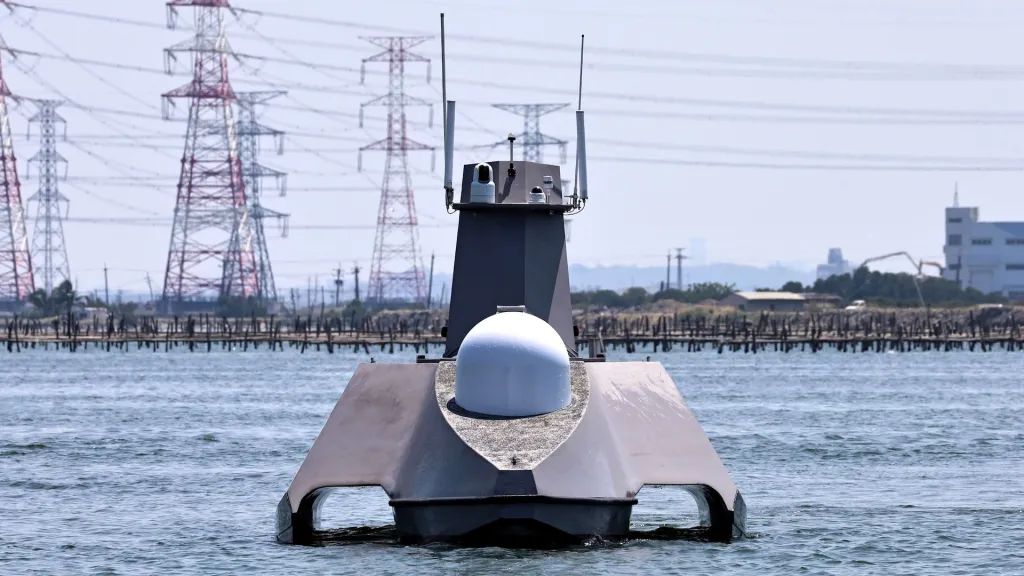
The Endeavor Manta USV during the launch event held in the port of Kaohsiung in southern Taiwan. (Photo via Taiwan Ministry of National Defense)

Rather than attempting to match China’s drone production, Hunter Keeley of the U.S. Marine Corps suggested Taiwan should adopt Ukraine’s targeted approach: deploying naval drones and missiles in focused, intelligence-led strikes near expected landing zones. A limited, layered Hellscape – centered on drones, jammers, and mobile sensors – could significantly disrupt PLA amphibious operations and buy Taiwan critical time in the opening stages of a conflict.

According to Kuzan, “Taiwan already benefits from U.S. support and has its own advanced defense industry, which is testing both surface and underwater maritime drones. For example, Taiwan’s Smart Dragon underwater drone is reportedly armed with torpedo systems.” He believes that incorporating torpedoes into Ukrainian sea drones could be the next step in their development. Kuzan remarked that, “If the opportunity and necessity arise, Ukraine could potentially sell or exchange its military technologies with Taiwan. This would be mutually beneficial, allowing both countries to enhance their capabilities.”

China and Russia Prepare

Russia is also taking notes. While it has significantly lagged behind Ukraine in naval drone warfare, it is now preparing for the future at sea. At the Army-2024 defense show, Russia unveiled the Murena-300S, a new naval drone resembling Ukraine’s successful sea drones. With a 500 km range, the fast and compact USV is built for coastal missions such as reconnaissance, mine-laying, and strike operations, possibly with a large explosive payload. The Murena appears to feature a Starlink antenna, suggesting Russia is seeking to match Ukraine’s real-time drone control capabilities.

The Russians have learned hard lessons from Ukraine’s asymmetric warfare and are now applying those insights more rapidly. Russia is creating unmanned systems regiments within its Navy that will integrate aerial, ground, and maritime drones to carry out reconnaissance and strike missions across all fleets. These new units, equipped with systems like Orlans, Lancets, FPVs, and USVs, are expected to form the backbone of the Navy’s unmanned component, with deployments planned across the European, Pacific, Caspian, and Dnieper naval forces.

At the same time, Russia is steadily advancing toward the development of AI-enabled autonomous drone swarms. It is investing heavily in AI research, both domestically and through partnerships with countries like Iran and China. Russia is focusing its efforts on leveraging cheap, scalable drone technology to overwhelm adversaries. This can be applied to the battle at sea as well. If the U.S. aims to deploy large expensive ships across the Asia-Pacific, we could see our adversaries working together to deploy cheap drones to destroy the ships.

China has also unveiled the Feiyi drone earlier this year, the world’s first known aerial and underwater drone capable of launching from a submarine, transitioning between air and sea multiple times, and returning to its original platform.

Preparing NATO for the Future

In a February 2025 interview, Anduril founder Palmer Luckey laid out bold ideas for revitalizing the U.S. defense industry and countering China’s growing military threat. He argued that the U.S. should shift from “world police” to “world’s gun store,” prioritizing mass production of weapons over elite, slow-to-build systems. Citing China’s massive manufacturing capacity and militarized civilian infrastructure, Luckey warned that Beijing is preparing for full-scale war, including repurposing commercial ships and producing cruise missiles far faster than the U.S.

Warfare is rapidly evolving into a battle of algorithms and adaptability. If the West clings to its old-school model of building massive, slow-to-deploy systems, it risks a harsh wake-up call – where billion-dollar warships are struck down by sea drones costing a fraction of that. In this new era, speed, scale, and software will determine who dominates the battlefield. When Russia invaded Ukraine in 2022, it was unprepared for how quickly warfare would evolve, and how drones would come to dominate the skies.

Now Ukraine has amassed a massive war-time video dataset, over 2 million hours of drone footage through its OCHI system, which collects and analyzes feeds from 15,000 frontline drone crews. This data is being used to train AI for battlefield applications such as target recognition, weapon effectiveness analysis, and autonomous drone tactics.

Kuzan believes that Ukraine is already working on building AI technologies for its sea drones as well. “Notably, during the successful maritime drone attack on December 31, 2024, which resulted in the destruction of Russian helicopters, many researchers speculated that AI was used to enhance target identification and missile guidance,” said Kuzan.

NATO should work closely with Ukraine on the development of these models to prepare its own autonomous sea drones to deploy them in future conflicts. The UK-built Kraken3, inspired by Ukraine’s battlefield innovations, was recently unveiled, showcasing AI-powered swarming capabilities, kamikaze drone launches, and GPS-free navigation, reflecting how Ukrainian success is already influencing NATO procurement.

NATO itself has begun expanding its unmanned maritime capabilities, recently demonstrating autonomous surface vessels in the Baltic Sea through Task Force X, an initiative designed to deter sabotage and fill surveillance gaps. But these sea drones are focused on addressing the threat of Russian sabotage. More practical drones are needed to help disable enemy warships, such as in the event of a Chinese blockade of Taiwan. Expensive systems will no longer do the job. Cheap and scalable solutions are what is needed for NATO. Some in the U.S. are already thinking about how naval warfare is being transformed. For example, the U.S.-based Anduril has unveiled the Seabed Sentry – a network of AI-powered mobile undersea sensor nodes designed for persistent monitoring and undersea kill chains.

Lithuania is leading by example as it is moving toward shared sea drone production with Ukraine under a “1+1” model, where one Magura-class sea drone would be retained for Lithuania’s defense and the other delivered to Ukraine. “Whether you want to believe it or not, whether you have or are about to sign contracts for tanks and helicopters for the next 10 years, the nature of military power has already changed,” said Zaluzhnyi.

Today, Ukraine’s sea drones control a significant extent of the Black Sea. In a future conflict over the Arctic or the Asia-Pacific, we can expect an even greater surge – a true sea of drones. As Ukraine’s navy chief put it, “After the war we will certainly write a textbook and we’ll send it to all the NATO military academies.”

David Kirichenko is an Associate Research Fellow at the Henry Jackson Society. His work on warfare has been featured in the Atlantic Council, Center for European Policy Analysis, and the Modern Warfare Institute, among many others. He can be found on X/Twitter @DVKirichenko.

This article appears courtesy of CIMSEC and may be found in its original form here

The opinions expressed herein are the author's and not necessarily those of The Maritime Executive.

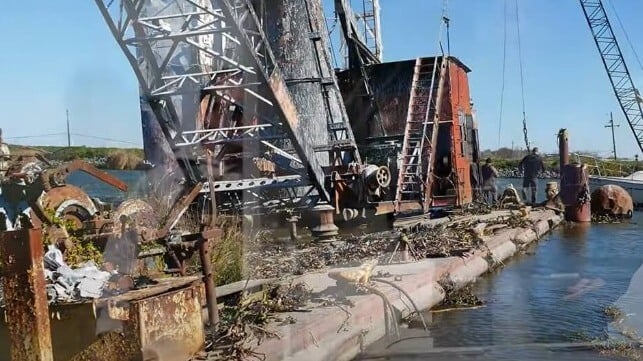
 

California Hauls Abandoned Crane Barges Out of San Joaquin Delta

San Joaquin Delta derelict site
California State Lands Commission

Published Jun 8, 2025 4:42 PM by The Maritime Executive


California is taking action to address the menace of derelict vessels in the expansive Sacramento-San Joaquin Delta after conducting the largest single-site commercial abandoned vessel abatement and site restoration in the state’s history.

California has been grappling with the problem of abandoned vessels for decades, with the hazard being most concentrated in the Delta. Since enacting a law that authorizes the removal and disposal of abandoned and derelict vessels and marine debris in 2011, California has been proactive in dealing with the problem.

The State Lands Commission says that it has conducted the largest operation in the Sevenmile Slough area in the Delta at a location known as the Skarry site, where abandoned vessels had been an eyesore for years. The deteriorating vessels were not just a navigational hazard, but were highly visible, attracting scavengers and vandals and marring the serenity of the beautiful area.

The Skarry site got its name from Skarry Brothers, a marine construction business that abandoned its equipment in the Slough. Michael Skarry, the last known responsible party, died without disposing of his vessels and machinery, despite efforts by multiple agencies to hold him responsible. The abandoned vessels included several large crane barges, two tugboats, and smaller work and recreational vessels, all of which were removed during the operation. Divers also discovered another sunken vessel and other debris while the removal work was underway.

During the operation, salvors also managed to remove almost 1,000 tonnes of debris, more than 1,000 gallons of diesel, and two large barges.  

“The Delta is one of California’s most vital and cherished waterways, and it deserves to be protected,” said Lieutenant Governor and State Lands Commission Chair Eleni Kounalakis. “These abandoned vessels not only pose environmental and navigational hazards but also threaten the health and safety of nearby communities. I’m proud that we are taking decisive action to restore this site, protect our natural resources, and prevent illegal dumping in our public waterways.”

The operation in the Skarry site is the latest in the Commission’s efforts in dealing with a hazard that it contends is stubborn, perennial and expensive to deal with. Over the last two years, the Commission has removed at least nine high-priority commercial abandoned vessels and forced the owners of an additional 10 abandoned vessels to remove them.

TACO

White House Walks Back U.S.-Built LNG Carrier Ambitions

The USTR now says that it won't suspend LNG export licenses if U.S.-built LNGCs aren't available

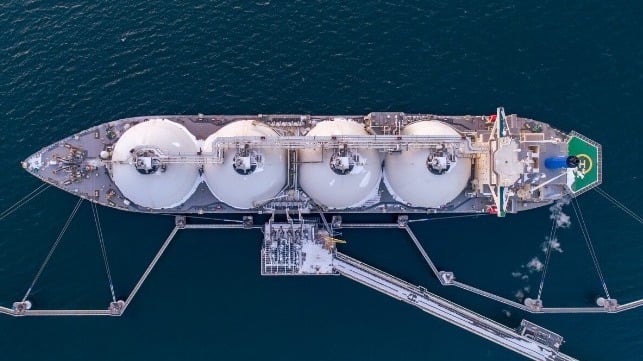
LNGC
iStock

Published Jun 8, 2025 8:26 PM by The Maritime Executive


The Office of the U.S. Trade Representative has decided to further tweak its proposed port fee structure for Chinese-built vessels, rolling back a proposed deadline for U.S.-built LNG carrier capacity and a fee that would hit all PCTCs in the Maritime Security Program. 

USTR's original proposal was released in April, and its headline provisions were focused on fees on Chinese-built container ships. Less noticed, further down the list, it also proposed steep new fees on all foreign-built vehicle carriers (PCTCs) and laid out an ambitious LNG carrier construction and utilization requirement for American LNG exporters. 

On Friday, the office proposed modifications to its PCTC fee plans. Instead of charging $150 per car equivalent unit, based on lane-meters of capacity, it will now charge based on each PCTC's net tonnage. This will make the fee easier to administer and will help close off a potential avenue for fee evasion, the office said. Like lane-meters, net tonnage is a measurement of the vessel rather than the cargo, so even empty PCTCs arriving in ballast will still be charged - a point that foreign critics have emphasized previously. 

USTR also proposed "targeted coverage" for imposing the fee on the foreign-built PCTCs that are flagged into the United States registry for the Maritime Security Program. The agency noted that the MSP "reduces dependence on China," a core objective of the new port fees. 

The office also rolled back the enforcement of its ambitious timetable for imposing a U.S.-built LNG carrier requirement on the U.S. LNG export industry. In the original proposal, USTR called for the LNG industry to begin shipping one percent of all of its exports aboard U.S.-built LNGCs by 2029. If LNG exporters did not meet this timeline, USTR proposed to begin suspending export licenses. 

The challenge for this requirement is that this vessel class does not currently exist: the last LNGC delivered by an American yard entered service in 1980 and was scrapped in 2021. The shipyard that built that final hull closed in 1986.  

Given the challenges of scaling a domestic LNG carrier construction program within four years - an uncertain prospect with real technical risks - LNG exporters informed USTR that they do not favor having their licenses suspended if the ships aren't ready by 2029. USTR agreed, and it now plans to remove the license-suspension clause from the proposed regulation in order "to allay concerns about the provision’s impact on the U.S. LNG sector."


Homeland Security Dept. Cancels Order for Incomplete USCG Cutter

USCG Legend-class cutter James
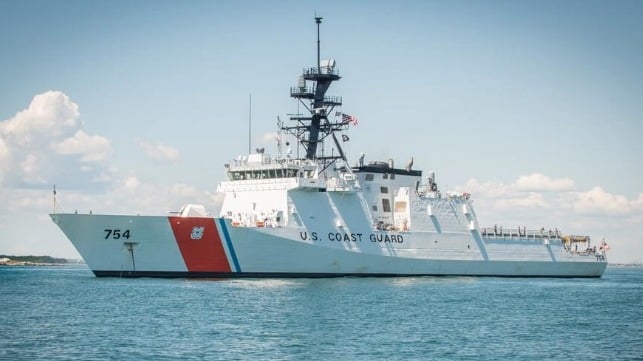
USCG James was commissioned in 2015 as the fifth ember of the Legend-class (USCG photo)

Published Jun 5, 2025 9:20 PM by The Maritime Executive


The Department of Homeland Security is reporting that it canceled the order for the eleventh Legend-class national security cutter which was to be named USCG Friedman. Production for the vessel began in 2021 at HII’s Ingalls Shipbuilding in Pascagoula, Mississippi, but the project has been dogged by concerns.

Ingalls had a sole source contract as the only builder for the class which began delivering in 2008 and was designed to replace 12 aging 378-foot Hamilton-class high-endurance cutters that have been in service for 40 years. At 418 feet long, the Legend-class NSC has a maximum speed of 28 knots and a range of 12,000 nautical miles. The tenth ship, USCG Calhoun was delivered in October 2023.

Work had begun for number 11 in May 2021. HII reported that the start of fabrication signified the first 100 tons of steel had been cut. USCG said the vessel was due for delivery in 2024 and plans called for it to be homeported in Charleston, South Carolina with four other Legend-class cutters.

“Huntington Ingalls owed us this cutter over a year ago,” said Homeland Security Secretary Kristi Noem. “This project was over time and over budget. Now the money can be redirected to ensuring the Coast Guard remains the finest, most-capable maritime service in the world.”

According to the announcement for Homeland Security, canceling the contract with HII will save the U.S. over $260 million. They have also agreed that the Coast Guard will receive $135 million in parts that will be used to retrofit, upgrade, and maintain the Coast Guard’s existing fleet of 10 Legend-class cutters.

Congress has been highly critical of the USCG’s problems with its shipbuilding projects both for the cutters and the Polar Security Icebreakers. USCG had reported to Congress that there were issues with the project saying that construction of the 11th ship had been halted since at least November 2024 with the ship 15 percent complete. It blamed “material conformance concerns,” and said that the Coast Guard and the shipbuilder were working to resolve the issue.

The Coast Guard has also planned a 12th vessel in the Legand-class. Congress was yet to appropriate funds for the vessel but some long-lead elements were reportedly being ordered. 

Homeland Security highlights canceling the project will save money that can be used as part of the recently announced Force Design 2028 project to overhaul USCG operations and command structure. However, it did not address how the USCG will allocate resources for the two planned vessels which were scheduled as replacements for the older class which is now entirely decommissioned. The USCG had deferred the decommissioning of the last two Hamilton-class cutters, John Midget and Douglas Munro, to 2020 and 2021 while the rest of the class was replaced with the new cutters by 2018.


Israel Takes "All Necessary Measures" to Block 'Greta Thunberg's' Gaza Relief Boat

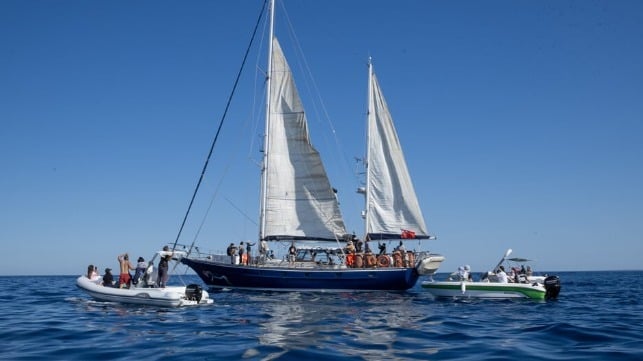
The boat carrying Thunberg and 11 other activists, a 60-foot yacht recently renamed Madleen (Freedom Flotilla Coalition)

Published Jun 8, 2025 6:55 PM by The Maritime Executive


After Israel's defense minister vowed to take "all necessary measures" to prevent a 60-foot sailboat carrying activist Greta Thunberg from reaching the shores of Gaza, Israeli commandos interdicted the vessel in international waters, then persuaded the crew to transit to an Israeli port. 

Likud party Knesset member and current Minister of Defense Israel Katz said Sunday that he had given instructions to the Israel Defense Forces to block the vessel's progress, before it reached Gaza's shores. "You'd better turn back - because you will not reach Gaza," Katz warned the boat's operators, calling them a "hate flotilla" of "antisemitic" activists. 

Gaza has been under a strict Israeli naval blockade for nearly two decades, a policy intended to prevent the infiltration of arms for Palestinian terrorist group Hamas. The last time a foreign vessel attempted to run the blockade was the infamous Mavi Marmara incident of 2010. Israeli special forces boarded the ship as it neared shore, and the exchange that followed resulted in the deaths of ten people on board.

The current mission's organizers say that their plan is to deliver humanitarian aid to residents of Gaza. The territory has not received full-scale food imports since early March because of certain border control factors. The Integrated Food Security Phase Classification (IPC, the UN's reference system for degree of deprivation) currently classifies all areas of Gaza as a Phase 4 nutrition "emergency," with risk of edging into famine. 

The size of the group's boat suggests that the delivery would be symbolic in nature. The organizers originally intended to use a larger vessel, but it was damaged by two unexplained explosions while anchored off Malta last month. The group alleges that Israeli drones caused the blast damage, but no conclusive evidence has emerged and Israel has not claimed responsibility. 

Thunberg and her co-organizers have framed the voyage in symbolic terms. "We are seeing a systematic starvation of 2 million people. The world cannot be silent bystanders," Thunberg asserted in a statement. 


Australia Confirms Discovery of the Wreck of Cook’s HMB Endeavour

historic shipwreck
Australian National Maritime Museum issued report confirming the shipwreck in Newport Harbor, RI is HM Bark Endeavour (ANMM)

Published Jun 7, 2025 5:08 PM by The Maritime Executive


The Australian National Maritime Museum (ANMM) released its final report detailing its conclusion that a wreck lying on the seabed in Newport Harbor, Rhode Island, is the famed HM Bark Endeavour, which carried Capt. James Cook and his crew on their voyage of exploration to Australia and New Zealand.

ANMM published its final report on the location of Endeavour, detailing a site known as RI 2394 in Newport Harbor indicating that it stands with its 2022 conclusion on the identity of the vessel at the wreck site. In the report, ANMM concludes that based on a “preponderance of evidence,” the wreck is that of Endeavour.

ANMM is hoping that the report, which is a culmination of a 26-year archival and archaeological research, will bring to rest the controversy that has continued to surround the identification of the sailing vessel that is of significant importance to Australia’s maritime history.

In 2022 when ANMM first announced the identification, archeologists at the Rhode Island Marine Archaeology Project (RIMAP) termed the announcement as “premature,” going on to add that Australia was being driven by emotions or politics. RIMAP, which was partnering with ANMM to locate the wreck, is yet to comment on the final report.


In its detailed 129-page report, ANMM contends that after Cook’s Pacific voyage on the Endeavour that began in 1768 and saw him reach the New South Wales coast in 1770, the vessel returned to England a year later. For about seven years, the vessel was of public view, being used as a naval transport before being sold to private owners, who renamed her Lord Sandwich. She was used to transport troops to the American colonies in support of British campaigns.

In 1778, the vessel was in poor condition and relegated to holding American prisoners of war in Newport Harbor. When American and French forces besieged the British-held town, Lord Sandwich was one of 13 vessels that were deliberately sunk to act as a submerged blockade. The ship was never salvaged.

For decades, historians and archeologists have been undertaking extensive research on the vessel. Part of the research was able to confirm the names and the details of five vessels scuttled by the British in August 1778 within a section of Newport Harbor that would later be identified as the Limited Study Area (LSA). One of these vessels was the 368-tonne Lord Sandwich.

In 2019, ANMM and RIMAP signed a memorandum of understanding to jointly identify the wreck and went ahead to establish a 10-point criteria necessary for the Lord Sandwich (ex-HMB Endeavour) shipwreck site to be identified with a reasonable degree of certainty. The teams carried out diving expeditions, surveying a large area of Newport Harbor with the hope of locating the vessel. Apart from the history of the ship, factors like the ship's hull and keel, timber used to construct the ship, and repairs that had been carried out made the team conclude the wreck on the RI 2394 site was indeed that of Lord Sandwich.

ANMM highlights that in 1999 and again in 2019, an agreement had been reached with RIMAP on a set of criteria that, if satisfied, would permit the identification of RI 2394 as Lord Sandwich. “Based on the agreed preponderance of evidence approach, enough of these criteria have now been met for the ANMM to positively identify RI 2394 as the remnants of Lord Sandwich, formerly James Cook’s HM Bark Endeavour,” states ANMM in its final report.

Endeavour remains an important vessel in Australian maritime history and one that elicits mixed opinions. For some, the Pacific voyage embodies the spirit of Europe’s Age of Enlightenment, while for others it symbolizes the onset of colonization and the subjugation of First Nations Peoples.


Open-Ocean Currents Could Generate Electrical Power

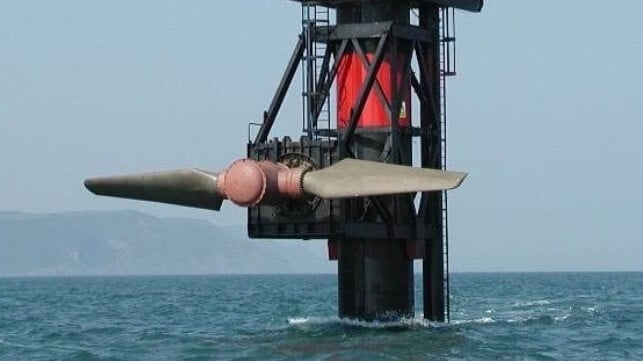
Ocean currents can be harnessed with turbine generators using the same principles as tidal turbines, above
Ocean currents can be harnessed with turbine generators using the same principles as tidal stream turbines, above (Fundy / CC BY SA 3.0)

Published Jun 8, 2025 10:40 PM by The Conversation


The world’s oceans cover more than 70% of Earth’s surface. They’re filled with currents, some much stronger than the fastest flowing large rivers. These currents can be harnessed as clean, marine renewable energy. Marine energy is much more predictable and reliable than many other forms of renewable energy because unlike sun and wind, which regularly do not produce electricity, ocean currents never stop moving around the planet. 

New research has found that the eastern and south-eastern coasts of Africa have currents that put them among the world’s top potential locations for ocean energy production. Researchers Mahsan Sadoughipour, James VanZwieten, Yufei Tang and Gabriel Alsenas explain what is needed to bring renewable marine energy into African countries’ electricity mix.

How can open ocean currents generate energy?

Ocean currents contain kinetic energy that can be converted to electrical power using turbines.

This is similar to offshore wind farms, or wind turbines positioned in the ocean, that convert wind to electricity. The difference is that converting ocean currents to energy means the turbines would float on the surface or just under the surface of the ocean.

The electricity they generate can be brought to shore using power cables under the sea (as is currently done with wind turbines in the sea). It could also be used to generate hydrogen offshore which could be transported and used as fuel. This would eliminate the need for subsea cables.

What did you set out to find?

We looked at 30 years of water velocity data – measurements of how fast the water moves (currents).

We got the data from drifting buoys in the ocean. These devices are fitted with meteorological and oceanographic sensors that have been sent into the ocean. There are 1,250 of these buoys floating around the world’s oceans today.

They are designed to follow the water circulation in oceans so that they can constantly measure the speed and direction of ocean currents. They aren’t blown around by the wind. They transmit information about ocean currents via satellite so that it can be made publicly available and used by scientists.

We looked at 43 million measurements of ocean current speed and direction at specific locations and times over 30 years. From this, we were able to calculate the amount of energy stored in every square meter of the ocean. This is known as energy density. This is a foundational step in determining the potential of ocean currents for generating clean and renewable energy. Our research is the first time this information has ever been generated.

Where are ocean current turbines being tested?

Prototypes have been developed and tested at sea from as far back as 1985. But there are no ocean current turbines feeding power to electrical grids at present. This delay between testing the prototypes and getting turbines up and running has happened because of the technical challenges in setting up these systems in deep water offshore environments.

Developers have recently made new advances, however, improving the undersea cables and the microcomputers used in ocean current energy systems, and enhancing the design of the turbine blades. There have also been advances in developing stronger anchors for these systems.

The new and advanced systems are being developed and tested in the waters off Florida (US), North Carolina (US), Japan and Taiwan.

Engineers in South Africa and Mexico are also investigating the potential of ocean current turbine systems.

Which African countries could generate electricity from ocean currents?

We’ve identified high energy areas in the waters off Somalia, Kenya, Tanzania and Madagascar. They have some of the most energy dense currents on Earth, higher than the standard for wind energy resource to be classified as “excellent”. These are potential sites for ocean energy production. An area in the ocean off the coast of South Africa also has potential.

For example, we found areas with power densities ranging from 500 to 2,500 watts per square meter over an area around 800km by 30km off South Africa and around 2,000km by 30km off Somalia, Kenya and Tanzania.

To put this into perspective, the average small household in South Africa uses on average about 730 watts of power. Therefore, every square meter in the ocean that generates power could provide enough power for one small South African household.

More research is needed, however. This is because we haven’t been measuring the currents in the Indian Ocean as long as we have for other oceans. For example, Pacific Ocean currents have been measured since 1979 but the Indian Ocean currents have only been measured since 1994.

Also, most of these high-energy areas are located in relatively deep water (over 1,000 metres deep). This could make it challenging to install ocean current turbines.

On the positive side, these areas are relatively close to shore. There are also areas off South Africa, Somalia, Kenya and Madagascar where strong ocean current energy densities are found in waters as shallow as 100 metres. There is a good chance that relatively shallow and nearshore locations such as these will be the first places where ocean current based electricity will be generated off Africa.

What is needed to make this happen?

Scientists all over the world are conducting research into how to use the oceans’ waves, tides and currents to generate energy. So, what’s needed is for the projects to be developed.

Usually, this starts with a project developer, community or electric company setting up a business to attract investment to get the project started. Then more technical work will be needed. This includes measuring the ocean currents closely to select the precise locations for the turbines, and figuring out how to connect the turbines to shore.

The project developer then needs to bring everything together. Each project will cost a different amount, depending on how big it is and what technology is needs. Finding the start-up funds could be a challenge.

The other stumbling block is that the technologies to harness ocean currents are not commercially viable yet. But they are developing fast.

Ocean current energy is a compelling prospect for African countries in times of climate change.

This article appears courtesy of The Conversation and may be found in its original form here

Top image courtesy Fundy / CC BY SA 3.0

The opinions expressed herein are the author's and not necessarily those of The Maritime Executive.
 

Effects of psilocybin on religious and spiritual attitudes and behaviors in clergy from major world religions


Mary Ann Liebert, Inc./Genetic Engineering News
Psychedelic Medicine 

image: 


The first peer-reviewed journal to publish original research papers on every aspect of psychedelic medicine including basic science, clinical, and translational research.

view more 

Credit: Mary Ann Liebert, Inc.


A new study in the peer-reviewed journal Psychedelic Medicine showed that psilocybin administration in a sample of clergy from major world religions increased multiple domains of overall psychological well-being, including positive changes in religious attitudes and behavior as well as effectiveness in their vocation as a religious leader. Click here to read the article now.

The late Roland Griffiths, of Johns Hopkins University, along with Stephen Ross and Anthony Bossis, from New York University Grossman School of Medicine, and coauthors, compared a control group of participants to psychedelic-naïve clergy from various major world religions who received two psilocybin sessions: 20 and then 20 or 30 mg/70 kg about 1 month later.

Compared to the control group, “participants who had received psilocybin reported significantly greater positive changes in their religious practices, attitudes about their religions, and effectiveness as a religious leader, as well as in their non-religious attitudes, moods, and behavior,” reported the investigators. “Follow-up assessments showed that positive changes in religious and non-religious attitudes and behavior were sustained through 16 months after the second psilocybin session.”

Participants rated at least one of their psilocybin experiences to be among the top 5 most spiritually significant (96%), profoundly sacred (92%), psychologically insightful (83%), and psychologically meaningful (79%) of their lives.

About the Journal
Psychedelic Medicine is the first peer-reviewed journal to publish original research papers on every aspect of psychedelic medicine, including basic science, clinical, and translational research, as well as medical applications. This journal provides a vital resource for clinicians and patients alike who are invested in the potential efficacy of psychedelic drugs currently undergoing research in preclinical and clinical studies as an alternative or supplement to traditionally manufactured pharmaceuticals to treat depression, anxiety, addiction, demoralization, and other mental health conditions. Visit the Psychedelic Medicine website to learn more.

About Mary Ann Liebert, Inc., a Sage Company
Mary Ann Liebert, Inc. is a global media company dedicated to publishing and delivering impactful peer-reviewed research in biotechnology & life sciences, specialized clinical medicine, public health and policy, and technology & engineering. Since its founding in 1980, the company has focused on providing critical insights and content that empower researchers and clinicians worldwide to drive innovation and discovery.

Over confidence in finance bosses leads to environmental rule-breaking


University of East Anglia


New research shows that firms are more likely to break environmental rules when those who control the company finances are overly confident in their abilities.

These environmental violations damage the company’s long-term performance, especially when it comes to credit ratings.

However, the research, which looked at nearly 600 US companies over 17 years, found those in states with laws that require them to consider the interests of all stakeholders - not just shareholders - are better at avoiding these issues and protecting their financial health.

The study was conducted by researchers at the University of East Anglia (UEA) and Heriot-Watt University, together with colleagues at Coventry University and Bangor University and the University of Aberdeen, in the UK.

Most previous studies have focused on CEOs, but this one looked at Chief Financial Officers (CFOs), the top financial decision-makers at companies. The findings are published today in the journal European Management Review.

“What’s new here is that we show CFOs’ personalities - especially if they’re overconfident -can lead to risky decisions that harm both the environment and the company,” said Dr Yurtsev Uymaz of UEA’s Norwich Business School. “We also show that certain state laws can help keep those risks in check.”

Prof Patrycja Klusak of Heriot-Watt University added: “This matters because it connects executive behaviour with real-world outcomes like pollution and financial damage. It suggests that paying attention to the personality traits of company leaders - especially CFOs - is important. It also shows that stakeholder-focused laws can help prevent bad behaviour and protect both the public and investors.”

Given the important role of senior executives’ overconfidence bias in shaping firms’ environmental actions, the authors say there is a need to strengthen internal control and oversight of high-impact decisions, with the active participation of all stakeholders.

“Constraining managerial overconfidence through regulation can improve investor confidence and trust, as it helps counter the tendency toward short-termism driven by this overconfidence bias,” said Dr Uymaz. “In particular, firms with overconfident CFOs may benefit more from stakeholder-oriented laws while also incurring higher penalties for environmental violations.

“Our findings are also valuable to stakeholders such as employees, customers, investors, and local communities, whose trust and well-being might be at risk. If the cognitive and psychological biases among management play a critical role in firms’ environmental decisions, addressing these biases can shift managerial and organizational incentives, with far-reaching implications not only for financial markets but for society.”

The findings show that the distinct roles of board members should not be underestimated, as they can amplify firms’ environmental impacts. While managerial overconfidence can drive growth, it can also be detrimental to environmental performance if not properly balanced and controlled. The authors argue this is particularly important at the firm level, as environmental misconduct can lead to significant reputational and litigation costs.

The team looked at financial data, executive behaviour, and records of environmental violations for US firms from 2006 – 2022. The researchers then analysed how these factors were connected and how the introduction of stakeholder laws affected outcomes.

The sample included air transport, manufacturing, petroleum, technology and telecom firms. The researchers found that Brown industries (air transport and petroleum alone) violated environmental rules approximately 62% of the time, compared with 10.6% in green industries (technologies and telecom).

Due to the nature of their business, some industries pose greater risk to environmental degradation than others, which the study controlled for.

‘CFO overconfidence, environmental violations, and firm performance. The moderating role of constituency statutes’, Panagiotis Andrikopoulos, Shee-Yee Khoo, Patrycja Klusak, Yurtsev Uymaz and Huong Vu, is published in European Management Review on June 9.