Friday, June 13, 2025


'OceanCare’: Emotional and Mental Assistance for MOL Seafarers Worldwide
Mission to Seafarers

Published Jun 12, 2025 11:40 PM by The Maritime Executive


[By: The Mission to Seafarers]

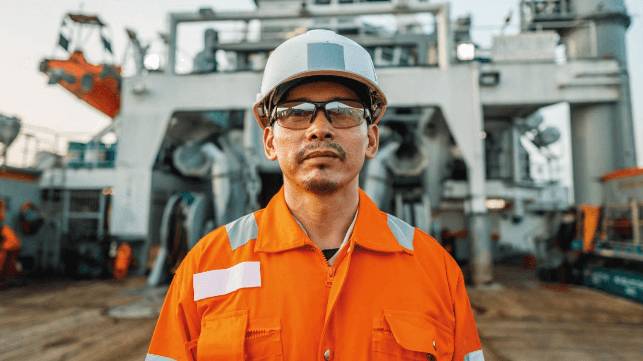
Last month, The Mission to Seafarers was proud to launch OceanCare, a new global welfare initiative developed in partnership with Mitsui O.S.K. Lines, Ltd. (MOL) to support the wellbeing of MOL’s seafarers working in some of the world’s most challenging environments.

This first-of-its-kind initiative provides a confidential listening and support service led by trained welfare professionals for MOL’s seafarers. OceanCare is designed to give seafarers the space to share any potential problems, whether they are dealing with work-related stress, health concerns, personal relationships, financial pressures or any other issues affecting their wellbeing.

OceanCare opens every conversation with a simple yet impactful question: “What’s on your mind?” From there, the Welfare Officer will listen to the challenges and help identify support for seafarers seeking meaningful solutions.

The initiative comes as the most recent Seafarer Happiness Index shines a light on the wide-ranging challenges faced by all seafarers, such as the impact of reductions in crew numbers and the training requirements to address new regulations and technologies, all of which can impact physical and mental health.

As Jan Webber, Director of Development at The Mission to Seafarers, explains,“MtS is delighted to be partnering with MOL to create OceanCare. This is a trailblazing initiative run by the Mission on behalf of MOL in support of its seafarers. All MOL seafarers can access this vital listening and support service. Our team will respond to any issues a seafarer raises, from mental health to money, from breakups to workplace conflicts. We are so pleased we can help MOL seafarers so they will feel even more supported, safe, be prosperous in their careers”.

The programme offers seafarers the opportunity to engage in one-to-one conversations with an experienced welfare officer who is ready to listen and help. In addition to emotional support, OceanCare assists seafarers in creating personal self-care plans, developing coping strategies and, where necessary, provides referrals to trusted specialist services. The service is also connected to a worldwide network of over 200 Mission to Seafarers’ Port Chaplains, available to offer in-person welfare support in ports across the globe.

OceanCare is set to empower seafarers to take control of their wellbeing, reduce risks, and foster a culture of openness and support across the MOL fleet. By encouraging dialogue and helping seafarers find their solutions, the initiative aims to build stronger individuals and healthier shipboard communities.

The products and services herein described in this press release are not endorsed by The Maritime Executive.

 

250th Anniversary of the U.S. Merchant Marine's First Trial By Fire

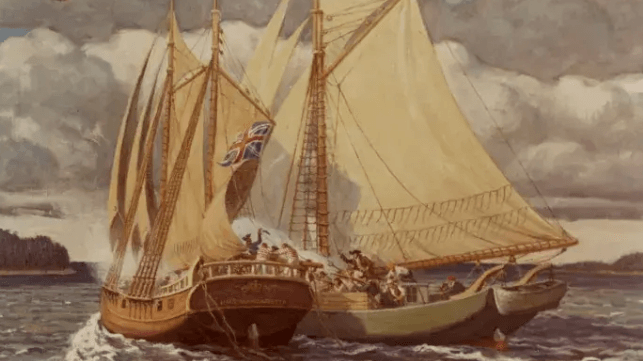
The capture of HMS Margaretta (Robert L. Lambdin / U.S. Navy)

Published Jun 12, 2025 7:31 PM by The Maritime Executive


On Thursday, the U.S. merchant marine celebrated what might be considered its 250th anniversary. In peace and war, merchant mariners carry the nation's commerce and back up the U.S. military - and in 1775, they proved it for the first time. 

In May and June 1775, shortly after the start of the American Revolutionary War, British forces hired a Loyalist shipowner - Ichabod Jones - to obtain lumber from local suppliers at the port of Machias. The lumber was needed to build barracks for British troops in Boston, which was under siege by what would soon be known as the Continental Army. 

Jones arrived at Machias with the merchant vessels Unity and Polly on June 2, 1775, in the company of the Royal Navy sloop HMS Margaretta. They were carrying pork and flour to trade for the lumber. Patriots among the townspeople disliked the idea of doing business that would benefit the British, and Jones had to use threats of force to compel the trade. 

In response, a local militia under the command of Capt. Jeremiah O'Brien attempted to capture Jones on June 11; this was not successful, so the next day they seized the Unity instead. After making preparations aboard Unity, O'Brien and about 30 men proceeded to chase down HMS Margaretta as well. When Unity came alongside and militia members climbed across, Margaretta's commanding officer was mortally wounded by musket fire, and his second-in-command surrendered. 

It was the first time that patriots had seized a British vessel in the war. At the time, the Continental Navy did not yet exist, and it was a military support action carried out by civilian mariners - the first such engagement in the history of the merchant marine, but far from the last. O'Brien went on to a storied career as a privateer throughout the war, and six ships have been named in his honor - five U.S. Navy warships and the well-known WWII Liberty Ship SS Jeremiah O'Brien. 


It’s Time for Shipping to Properly Regulate Plastic Pollution

Nurdles
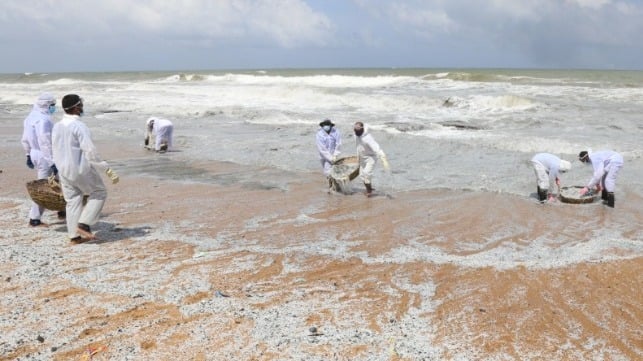
Responders clean plastic pellets off the beaches of Colombo after the X-Press Pearl fire, 2021 (Sri Lanka Marine Environment Protection Authority)

Published Jun 12, 2025 8:50 PM by Emma Forbes-Gearey


In the vast expanses of the world's oceans, a silent yet pervasive threat is taking shape: nurdles. These tiny, pre-production plastic pellets, measuring between 2 to 5 millimeters in diameter, are fundamental to the plastics industry, serving as the building blocks for a myriad of plastic products. However, their small size belies the significant environmental and potential health hazards they pose.

The start of 2024 highlighted the ongoing problem of plastic nurdle pollution. In January, the news reported a significant incident involving a spillage of nurdles from a shipping container caused by a storm the vessel encountered in December 2023. Over 1000 sacks of plastic nurdles were lost from a Danish ship, and 25 tonnes of plastic pellets fell from a Liberian vessel. These spills had a considerable impact on Spain, where vast quantities of nurdles washed up on the coastline and are notoriously hard to collect.

Nurdles pose a significant threat to marine ecosystems because they are often spilled during transportation, resulting in millions of nurdles entering the marine environment annually. Due to their minuscule size, they are not always readily visible except when they wash up in unusually huge quantities. Often mistaken for food by a wide range of marine species, they are ingested once they enter the ocean. This misidentification is particularly dangerous for smaller marine organisms, as it can lead to internal injuries, blockages, and starvation. Furthermore, as nurdles break down over time, they can release harmful chemicals, especially if they have absorbed toxic substances. These chemicals may contaminate the food chain and disrupt the delicate balance of marine ecosystems.

One of the most concerning aspects of nurdle pollution is its ability to accumulate in remote and pristine areas. Ocean currents and wind can transport nurdles across vast distances, carrying them to even the most isolated islands and coastlines. This widespread distribution makes it challenging to contain and clean up nurdle pollution, further exacerbating its negative impact on marine life.

Plastic nurdles leaking into the environment can be argued to be potentially worse than an oil spill. In the rare occurrence of an oil spill, most of it can be cleared away by specialized equipment, dispersants, biological agents, or via nature alone. However, when these plastic pellets enter the marine environment, they could end up anywhere depending on currents, making recovery at sea very difficult. Most of the recovery can only be done when it hits land, and over time they get buried in beaches, which makes recovering every nurdle impossible.

This was the case with the X-Press Pearl disaster in 2021. Following the fire and subsequent sinking of the ship, plastic pellets were found in the bellies and gills of local fish and washed up on Sri Lankan beaches as far as the eye could see. This is not the only case of nurdles spilled from containers. In 2017, approximately 2.25 billion nurdles spilled from a moored ship in Durban, South Africa. It was reported in various news outlets that these nurdles traveled as far as the southwest coast of Western Australia.

Global Efforts to Mitigate Nurdle Pollution

At MEPC 82 in October 2024, some progress was made towards tackling the plastic pollution problem, but there was a lack of concrete decisions and enforceable legislation. Delegates approved the guidelines on good practice relating to clean-up of plastic pellets from ship-source releases. These provide practical guidance for government authorities on issues such as contingency planning, response, post-spill monitoring and analysis, and intervention and cost recovery.

In addition, the committee continued discussions on the development of mandatory regulations to address plastic pellets released from ships. These would build on the non-mandatory recommendations for the carriage of plastic pellets by sea in freight containers approved by MEPC 81, and the aforementioned best practice guidelines. While it is a positive step to see IMO discussions held and guidelines developed, given the significance of the plastic pollution challenge, the implementation of mandatory regulations as soon as possible is essential.

 In January 2025, the Sub-Committee on Pollution Prevention and Response (PPR 12) agreed to a draft action plan to address Marine Plastic Litter from ships. The plan dictates the need to develop mandatory measures to reduce environmental risks when plastic pellets are transported by sea in freight containers. This was to be reviewed in the MEPC 83 that occurred in April 2025.

While significant progress has been made in recent years, the challenge of mitigating nurdle pollution remains substantial. The widespread distribution of nurdles and the ongoing production of plastic products make it difficult to eliminate this environmental threat, especially while the industry continues to wait for mandatory regulations. However, by continuing to implement effective prevention and cleanup measures, and by promoting sustainable practices, it is possible to significantly reduce the impact of nurdles on marine ecosystems and human health.

Emma Forbes-Gearey is Loss Prevention Officer at West P&I. 

The opinions expressed herein are the author's and not necessarily those of The Maritime Executive.

PATHETIC

DNV: 15% of Shipboard Carbon Emissions Will be Captured With CCS by 2050

CCS Clipper Eris
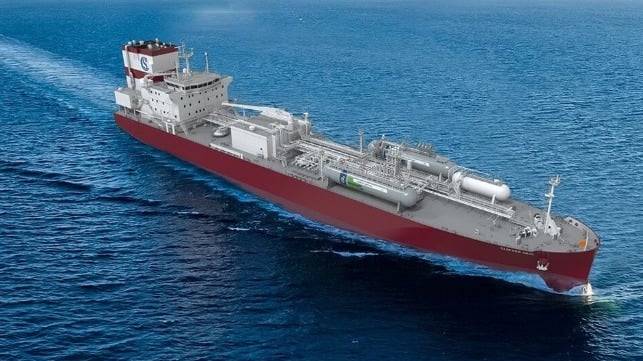
Solvang ASA's Clipper Eris, fitted with a Wartsila CCS system (Solvang)

Published Jun 12, 2025 9:40 PM by The Maritime Executive


Industrial carbon capture and storage is about to take off, according to DNV. Capacity will quadruple with $80 billion in investment by 2030, and will continue to expand through 2050, DNV predicts - and shipping will be along for the ride. 

The concept of carbon capture has been on the table since the beginning of the drive for decarbonization, but the technology is beginning to gain traction, particularly in regions where it is incentivized by regulations (Europe) and in heavy industries where it is most practical (power generation, oil and gas). Government subsidies also help: Denmark is underwriting the Greensand and Bifrost storage projects, and Norway is underwriting 80 percent of the cost of the Longship CCS project. In the U.S., the Biden-era Inflation Reduction Act created a tax credit that has driven investment in a large CCS project pipeline. 

CCS is also possible on board ships, though as with any emissions reduction strategy, there are caveats. The captured CO2 gas has to be stored in pressurized, cylindrical tanks, taking up additional volume on deck or belowdecks. It has to be offloaded to a reception facility, and at present the infrastructure only exists at a few locations. And operating the onboard capture system itself requires heat and electric power, increasing fuel consumption at the same time that carbon is being captured. However,  CCS has a significant advantage: it can run on ubiquitous and inexpensive bunker fuel, even HFO (with a scrubber).

"We expect a [storage] system to be in place from 2040 and 15% of all maritime CO2 emissions to be captured and stored by 2050. Overall, maritime transport will account for 9% of CO2 captured with CCS in 2050," DNV predicted. 

Shipping will also have a part to play in developing offshore subsea injection and storage facilities. "Ship transport, especially in the North Sea or the Mediterranean Sea, will likely play a key role in transporting CO2 between shore terminals or via offshore injection," DNV predicted.  


Report: COSCO Seeks Share of Hutchison Deal Addressing China’s Fears

container terminal COSCO
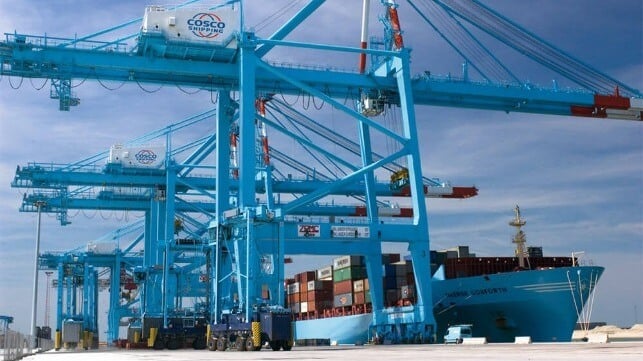
COSCO which already has substantial port operations is negotiating for a port of the deal to acquire CK Hutchison's portfolio (COSCO Zeebrugge)

Published Jun 13, 2025 5:27 PM by The Maritime Executive


A new report is suggesting that China’s COSCO Shipping is negotiating for a role as an investor in the deal to acquire the terminal operations of CK Hutchison. Bloomberg first reported that a group of Chinese investors is in discussions with MSC’s Terminal Investments and BlackRock about participating in the $23 billion deal for the terminal operations in 41 ports around the world.

China has strongly objected to the deal and primarily the parallel portion that sells the operation of terminals at both ends of the Panama Canal. Billionaire Li Ka-shing who controls CK Hutchison has long been at odds with the communist government and with the announcement of the deal China said it was a betrayal of the nation. It sees the agreement to sell the operations in Panama to BlackRock as a threat to Chinese trade and being done to appease Donald Trump and his assertions that “China runs the Panama Canal.”

The two deals have also come under scrutiny from various parts of the shipping industry which cites MSC’s growing domination. Panama officials told the Financial Times that the concentration of terminal ownership could threaten the promised neutrality of Panama’s operations. Well-known industry analyst Drewry also highlights that TIL would become a dominant force in port operations. TIL says on its website that it operates more than 70 terminals worldwide in 31 countries and handles more than 65 million containers annually. MSC has also become the sole investor in the Port of Hamburg (Germany) with the city.

CK Hutchison announced at the beginning of March that it had entered into exclusive negotiations with the BlackRock investment group for the terminals in Panama as well as its portfolio of properties worldwide except for Hong Kong and the Chinese mainland. The outline of the deal called for the sale of 80 percent ownership of CK Hutchison’s portfolio of 43 global ports (199 berths in 23 countries) and in a parallel agreement 90 percent ownership of Panama Ports Company, which operates the terminals in Balboa and Cristobal, Panama. It later came out that TIL was negotiating for as much as 70 percent ownership of the international portfolio with BlackRock holding just 20 percent and 10 percent retained by CK Hutchison.

China has said it would be reviewing the deal to ensure it followed the rules although it has no official oversight role. Restructuring to add a portion of the investment from COSCO and possibly other Chinese companies could be seen as a face-saving move for the Chinese government. COSCO is a logical company to lead the Chinese portion as its COSCO Shipping Ports as of December 31, 2024, operated and managed 375 berths at 39 ports globally, of which 226 were for containers, with an annual handling capacity of approximately 124 million TEU.

Bloomberg points out that the exclusive agreement between Hutchison and the BlackRock/TIL group was for 145 days meaning it is due to expire in late July. They could agree to extend the exclusive agreement or it could open the door for alternate bids. Hutchison and BlackRock had said they were targeting signing definitive agreements on or before April 2.


WWI Shipwreck Survey to Help Tackle Threats of Environmental Time Bomb

WWI Royal Navy destroyer
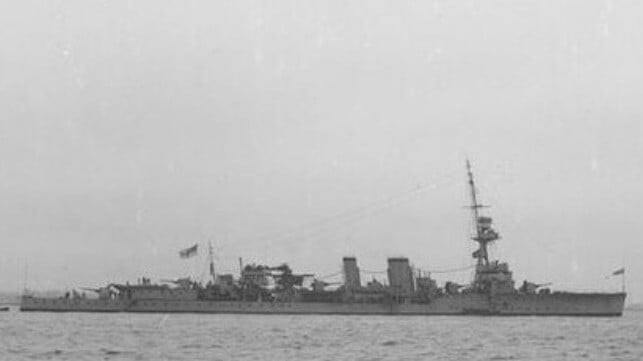
HMS Cassandra was lost in 1918 (Imperial War Museum public image)

Published Jun 13, 2025 6:21 PM by The Maritime Executive


A team of experts is planning to carry out a detailed survey of a British World War I warship sitting at the bottom of the sea, hoping that it can serve as a blueprint for tackling the environmental time bombs of wartime shipwrecks.

The team from Britain’s Ministry of Defense Salvage and Maritime Operations (SALMO) and Waves Group intends to study the wreck of HMS Cassandra which is lying in just 20 meters of water in the Baltic Sea, off the Estonian island of Saaremaa. The British warship was lost in December 1918 after hitting a mine.

The Cassandra survey is a response to a call by Project Tangaroa for governments to act decisively and deal with the threat of pollution posed by thousands of vessels lost during World War I and II. Project Tangaroa, a global community of experts coordinated by Lloyd’s Register Foundation, The Ocean Foundation, and Waves Group, made the call at the third UN Ocean Conference in Nice, France.

Wartime shipwrecks lying at the bottom of the oceans and seas are believed to be environmental disasters waiting to happen. It is estimated that globally, there are over 8,500 wrecks classified as “potentially polluting wrecks. The majority originate from World War I and II and contain harmful chemical pollutants, unexploded munitions, and an estimated 2.5 million to 20 million tonnes of oil.


Imaging of HMS Cassandra from 2021 (Royal Navy)


There are concerns that after 80 to 110 years beneath the waves, the wrecks are becoming increasingly unstable, something that is raising the risks of pollution. Climate change, structural breakdown, and a lack of proactive management are some of the factors that have made the wrecks become “ticking time bombs.”

Experts believe that without proactive actions, dealing with pollution from these wrecks could cost up to $340 billion. There is also the danger of immeasurable environmental damage, threats to marine life, and potentially disastrous impacts on ocean economies and coastal communities.

To avert the risks posed by wartime shipwrecks, the planned study of Cassandra is seen as critical in serving as a blueprint. Discovered in August 2010 by the Estonian Navy and Estonian Maritime Museum, the cruiser was a tragic aftermath of WWI.

Cassandra was commissioned into the Royal Navy fleet in June 1917 and actively participated in WWI for two years. Following the end of the war, the cruiser was part of a British force dispatched to the Baltic as part of the Allied intervention in the Russian Civil War. A key aim of the intervention was to support the independence of the newly founded Baltic States of Latvia and Estonia against the Bolsheviks.

Historical accounts show that on December 5, 1918, the British force was on passage to Tallinn, Estonia, when Cassandra struck a mine near the island of Saaremaa. The ship sank quickly, with 11 of her 400 crew killed. The wreck of Cassandra is close to the wrecks of two other Royal Navy ships, minesweepers Myrtle and Gentian which also struck mines, both sinking within moments of each other on July 15, 1919.

In 2021, sailors aboard Royal Navy ship Echo surveyed the wreck of Cassandra, managing to get imagery that showed the cruiser was lying on her starboard side with approximately 20 meters of her bow section missing.

With experts going back to the wreck for a detailed study, it is expected that the findings will be instrumental in tackling threats of warships lying in ocean and sea beds.

“Cassandra has the potential to become a blueprint for future international collaboration when it comes to addressing the risks caused by potentially-polluting wrecks,” said Matt Skelhorn, Head of the UK MOD Wreck Management Programme at SALMO.

The SALMO team has been closely involved with Project Tangaroa since its inception, providing critical insights on the practical and political challenges involved with the management of its own inventory of more than 5,000 wrecks around the world.


NTSB: Aging Vessel Lost Due to Lack of Fundamental Watertight Integrity

fishing service vessel
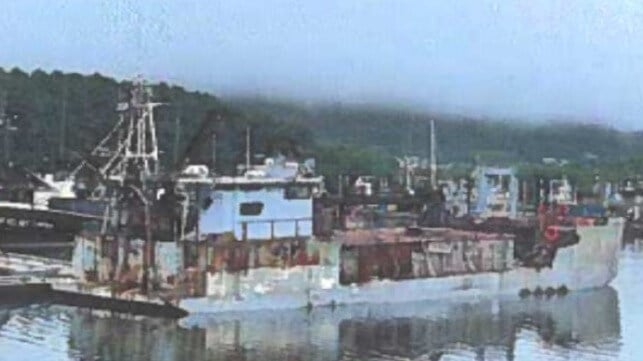
Cape Douglas was 80-year-old when it went down due to engien room flooding (Alaska Marine Surveyors photo from NTSB)

Published Jun 12, 2025 5:40 PM by The Maritime Executive


The National Transportation Safety Board is pointing out some of the fundamentals of vessel operations along with the dangers of aging vessels in its latest report. The report shows that an 80-year-old Navy surplus vessel being used to support Alaska’s fishing industry was lost due to flooding possibly caused by maintenance issues and the captain and mate’s decision to leave watertight doors open while they were underway.

The vessel named Cape Douglas was lost on November 6, 2024, about four miles southeast of Kodiak, Alaska. The captain and mate reported they were unable to control flooding on the vessel and abandoned ship to a towed skiff. They flagged down a nearby fishing boat for their rescue. Less than an hour after the captain and mate donned survival suits and abandoned ship, 40 minutes after they were rescued, they watched the industrial ship they had been operating sink.

The NTSB reports the Cape Douglas was built for the U.S. Navy in 1944 as a landing craft tank. By 1947, it had been decommissioned and found its way to Alaska where it was sailing from Kodiak as a commercial fishing vessel. It was acquired by North Bay Corporation in 2000 and used to haul heavy equipment and as a fish tender to dispose of fish byproducts.

It was on one of those fish tender runs loaded with about 30 tons of fish byproduct which the captain termed a “moderate load.” The disposal site was about four miles southeast of Kodiak in Chiniak Bay, and they were making about 5.5 knots. The captain was trying to start a pump used for offloading when he observed water had flooded into the engine room. The mate estimated there were four feet of water in the engine room but a high-water bilge alarm had not sounded. The captain later told the NTSB that he did not know when it had been last tested or if it was functional.

The captain told the NTSB investigators he was unable to enter the engine room. He said the water, “seems to be coming in awfully quick.” He confirmed they regularly left the watertight doors open during transit to “help with ventilation in the engine room.”

The NTSB reports the vessel had last been surveyed in August 2022 and the report found wastage greater than 15 percent and many sections exceeding 25 percent as well as rust and other issues. The owner was told the vessel was only suitable for local limited fish waste dumping and would require an extensive refit for any heavy load/freight operations. The vessel was not used between the survey in 2022 and the trip in November 2024. The owner was trying to sell the vessel.

The City of Kodiak harbormaster also raised concerns in April 2024 over the vessel’s seaworthiness. The harbormaster cited “significant marine growth” and “indications of disrepair.”  NTSB says the operating company resolved the complaint by providing proof of vessel insurance.

The report lists the probable cause as flooding from an undetermined failure in the vessel’s deck washdown system. It also points to the fundamental principle of maintaining watertight integrity saying leaving the watertight doors open likely contributed to the casualty.

It is another example of aging vessels being used in the fishing industry. In 2023, the U.S. Coast Guard in Tacoma, Washington had to manage a situation with a 77-year-old fish processing vessel after there were reports of an ammonia leak. The ship had a long list of violations and after the leak was addressed, it was listed as a derelict for disposal.


U.S. Coast Guard Aids Rescue of Dismasted Yacht off BVI

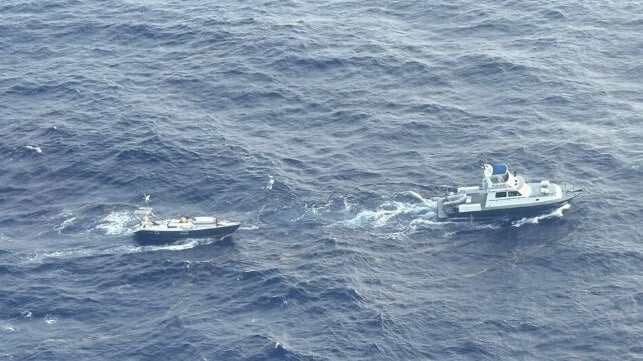
Topaze under tow by the BVI Royal Marine Police (USCG)

Published Jun 12, 2025 2:25 PM by The Maritime Executive


On Tuesday, the U.S. Coast Guard helped Dutch and British partners rescue a yachtsman whose vessel was disabled off the British Virgin Islands. 

The skipper, 58-year-old French national Frank Rouvray, was operating single-handed on a voyage to Saint Martin. As he neared the island of Anegada in the British Virgin Islands, his yacht was dismasted, then lost propulsion due to lack of fuel. He activated his EPIRB and U.S. Coast Guard Sector San Juan received the distress signal. The command center dispatched a Jayhawk SAR helicopter out of Air Station Borinquen, Puerto Rico to search the scene, and it also broadcast a request for assistance to nearby merchant shipping. 

The helicopter aircrew located the yacht - the Topaze - and made contact with Rouvray, albeit with difficulty due to a language barrier. A Royal Marine Police boat from the British Virgin Islands arrived later in the day and established a tow to bring the Topaze safely into the harbor at Tortola. 

"The EPIRB distress signal and the efficient communication and coordination between all Coast Guard elements and those of our Dutch and British Virgin Islands partners led to the successful rescuer," said Lt. Cmdr. Lukas Rodríguez, Sector San Juan Search and Rescue mission coordinator for the case. "Having the right emergency communication equipment onboard can make the difference between success and failure."


Stricken Laker Self-Unloads its Cargo Onto Another Ship

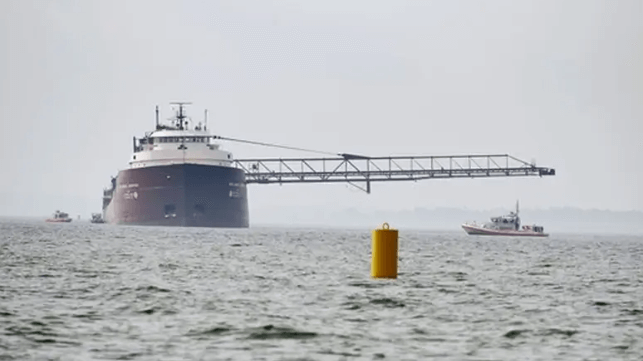
The Oberstar at anchor after the grounding (USCG)
The Oberstar at anchor after the grounding, June 10 (USCG)

Published Jun 12, 2025 9:44 PM by The Maritime Executive


The laker that grounded downriver of the Soo Locks last weekend is now transferring its bulk cargo onto another vessel in the operator's fleet, according to local media - demonstrating the less-used ship-to-ship transfer capability of a classic self-unloading laker.

At about 1550 hours on June 8, the laker Hon. James L. Oberstar experienced unusual vibration after making the turn at Johnson's Point on the St. Mary's River. The crew notified the Coast Guard and went to anchor on nearby Hay Lake to conduct a damage assessment. Photos from the scene appear to show that she had taken on a starboard list, and the crew had swung her unloading boom out over the port side, shifting weight to port. 

No injuries or pollution have been reported, and the vessel is a stable condition. The Oberstar has an estimated 108,000 gallons of fuel and oil products on board, and the Coast Guard is conducting periodic overflights to monitor for any leaks. 

The laker Kaye E. Barker anchored alongside the Oberstar on Thursday morning, and the crew of the Oberstar used their self-unloading boom to transfer their cargo - 29,000 tonnes of limestone - over to the Barker. A crane barge is also on scene to assist. 

Operator Interlake Steamship said in a statement Wednesday that it is working with the United States Coast Guard, a third-party spill response company, and commercial salvors to resolve the situation. 

"The safety of our crew, the protection of the environment, and the integrity of our operations remain our top priorities," Interlake said in a statement. "We appreciate the diligence and professionalism of all agencies involved in this response."


Korean Bulker Rescues Crew from Cargo Ship Sinking in the Indian Ocean

sinking cargo ship
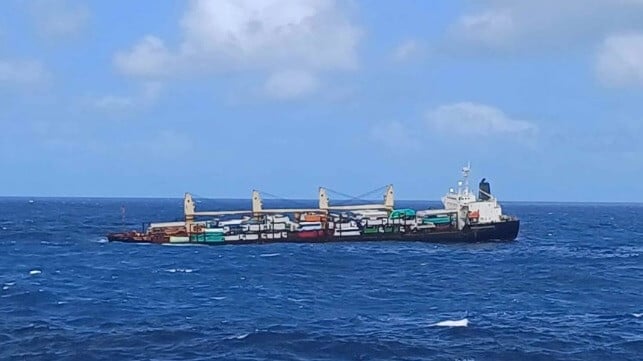
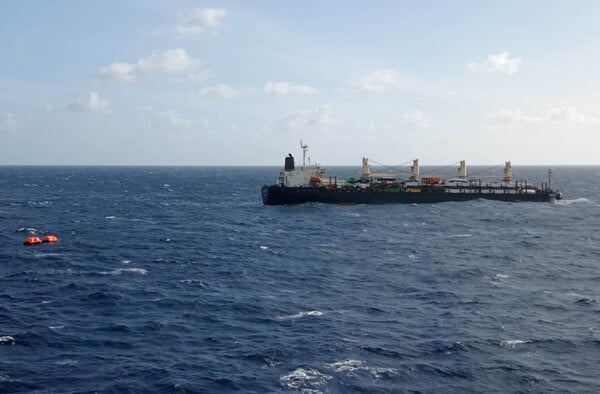
Korean bulker rescued the crew from a sinking Chinese-owned cargo ship (photos courtesy of Ministry of Oceans and Fisheries)

Published Jun 12, 2025 3:15 PM by The Maritime Executive


The crew of a Chinese cargo ship is thankful for a Korean bulker that came to their aid. The Run Fun 3 (32,115 dwt) was taking on water in a remote part of the Indian Ocean when it issued a distress call early on Wednesday, June 11.

The reports place the vessel which was built in 1997 and operating under the Panama flag approximately 500 nautical miles south of the Maldives. The ship departed Singapore on June 1 reporting its destination as Lome, Togo where it was due on July 5.

The Korean-managed bulker Maple Harbour (55,832 dwt) was also westbound in the Indian Ocean having departed Singapore on June 2 bound for Italy. C Transport Maritime (CCTM) which manages the ship reports its crew received an urgent message from the Run Fu 3 at 02:45 am local time. The Run Fu 3 reported that one of its holds had started taking on water and the ship was requesting assistance.

Upon learning that they were the closest vessel available, the crew of the Maple Harbour changed course. They were able to reach the Run Fu 3 at around 5:30 am, approximately three hours after having received the distress call. CTM reports the crew of the Run Fu 3 “did everything possible to save their vessel, but at 08:15 am, their captain made the decision to abandon ship.”


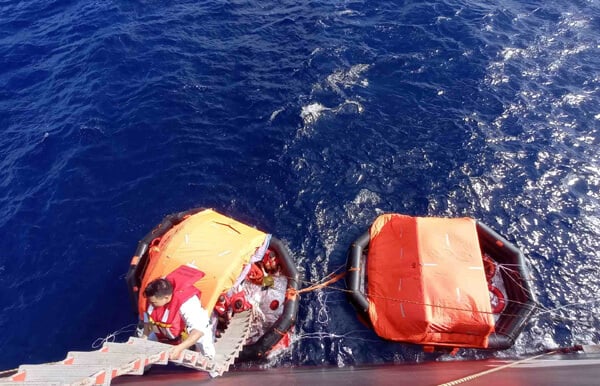
Crew of the Chinese cargo ship abandoned ship in two rafts (left)


The 23 crew members boarded the vessel's two life rafts and were rescued by the Maple Harbour. South Korea’s Ministry of Oceans and Fisheries reports that 21 of the crewmembers are from Vietnam and two from Myanmar. They were given water, food, and shelter aboard the bulker.

Maple Harbour is proceeding to Port Louis, Mauritius where its AIS signal says it is due on June 16. The South Korean ministry reports discussions are ongoing with the owners of Run Fu 3 making arrangements for the crew to be disembarked when the bulker reaches port.

The Ministry issued a statement thanking the bulker’s crew for their efforts. It highlighted the importance of cooperation and consideration beyond borders while ships are operating at sea.


Crew was rescued by the bulker an hour after they abandon ship