Friday, June 13, 2025

India Looks To Keep Domestic Rare Earth Supply at Home

Following the disruption to the global rare earth supply chain after China’s export curbs, India is now looking at ways to keep its own rare earths at home.

The government has asked state-owned minerals and metals mining enterprise IREL (India) Limited to halt a more than a decade-old supply agreement to export rare earth elements to Japan, Reuters reported on Friday, citing sources with knowledge of the development.

But the idea to stop supply to Japan may not be immediately feasible because it is part of a bilateral government deal, one of Reuters’ sources said.

IREL has an agreement with Toyotsu Rare Earths India Limited, a unit of Japan’s trading house Toyota Tsusho, to supply it with rare earth concentrate. Toyotsu Rare Earths processes the minerals for export to Japan, where the processed rare earths are used to make magnets.

After China’s controls and curbs of exports of rare earths affected global supply chains, India is eager to develop a domestic processing industry, the sources told Reuters.

India’s government says that Rare Earth (RE) resources in India are reported to be the fifth largest in the world, although the resources are mainly of the so-called light rare earths. The country has facilities for mining, separation, and refining in oxide form, and has also developed capability of metal extraction. However, India lacks industrial scale facilities to make alloys, magnets, and other products from rare earths.

The Chinese export restrictions for rare earths from April reverberated through global supply chains and were initially felt in the automotive industry, where major car manufacturing associations warned that production and assembly lines are being idled due to a bottleneck in magnet and rare earth supply.

India wasn’t spared from the supply chain disruptions. So the government is considering how India could launch production of rare earth magnets via IREL, or to collaborate with the private sector to build domestic rare earth processing capacities, sources told CNBC-TV18 earlier this week.

By Charles Kennedy for Oilprice.com

PAKISTAN

IFC to provide $400 million loan for Barrick's Reko Diq mine

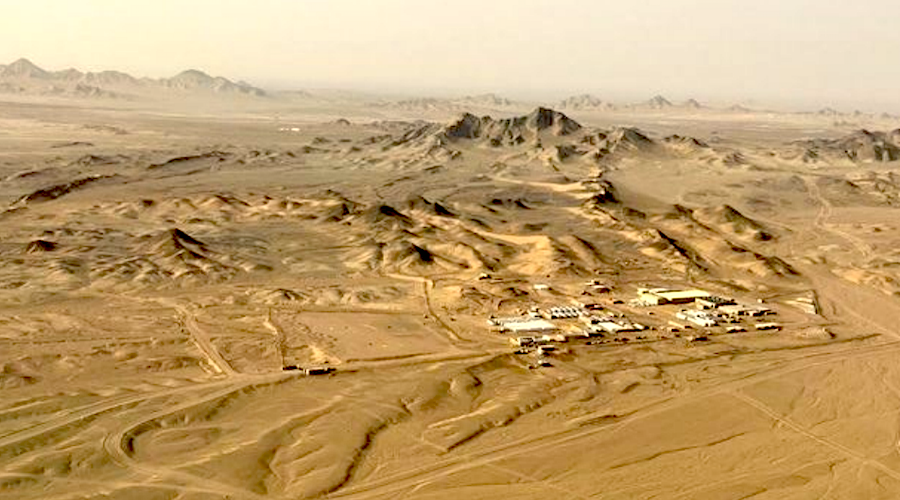
Barrick Gold has targeted 2028 as the year of first production for Pakistan’s Reko Diq copper-gold mine. Barrick Gold photo

The International Finance Corporation will provide a $400 million subordinated loan for Pakistan’s Reko Diq copper-gold mine, according to an IFC disclosure on Friday.

The loan adds to a $300 million commitment announced in April, bringing IFC’s total financing for the project to $700 million. The estimated cost of the mine is $6.6 billion, to be funded through a mix of debt and equity from a consortium of lenders.

“The estimated total project cost is $6.6bn, and it will be financed using a combination of debt and equity,” the disclosure said, adding that other parallel lenders will provide the remaining debt financing.

This type of loan, known as subordinated debt, is typically repaid after other senior loans and helps absorb more risk, making it easier for other lenders to invest.

Other financiers, including the US EXIM Bank, Asian Development Bank, Export Development Canada and Japan’s JBIC, are also expected to join the financing package, project director Tim Cribb told Reuters in April. Term sheets are expected to close by early in the third quarter.

IFC chief Makhtar Diop said earlier this year that the institution was “doubling down” on Pakistan, with a focus on infrastructure, energy and natural resources.

Reko Diq, located in Balochistan, is one of the world’s largest undeveloped copper-gold deposits. It is being developed by Barrick Gold, which holds 50%, with the remainder split between Pakistan’s federal and provincial governments.

Production is expected to begin in 2028. Barrick has projected the mine will generate up to $74 billion in free cash flow over its estimated 37-year life.

(By Ariba Shahid; Editing by Louise Heavens and Matthew Lewis)


Pakistan Strikes Critical Win With Oil, Gas Wildcat Discovery


Pakistan’s state-owned Oil & Gas Development Company Limited (OGDCL) has hit a new reservoir of oil and gas at its Faakir-1 wildcat well—an onshore discovery in Sindh province that could help reverse the country’s deepening energy crisis.

Drilled to a depth of 4,185 meters, the well tested at 6.4 million cubic feet per day of gas and 55 barrels per day of condensate from the Lower Goru formation. It’s not a gusher by global standards, but it’s a critical domestic win. OGDCL called the find a “significant breakthrough” and a step forward in tapping the hydrocarbon potential of the Bitrisim block, which it operates with a 95% interest.

This comes as Pakistan stares down a widening gap between energy supply and demand, worsened by declining domestic gas production, record summer heat, and rising LNG import costs. With the country’s power grid stretched thin and foreign reserves under pressure, any indigenous hydrocarbon source is a strategic lifeline.

It’s also a rare bright spot in a high-risk environment that has long failed to attract foreign investment, despite the country's theoretical 235 trillion cubic feet of gas reserves. A 2023 auction for new blocks saw minimal interest. Security concerns, high development costs, and a lack of infrastructure have kept most global players on the sidelines.

That may change. Pakistan recently inked a deal with Turkey to jointly explore what some surveys suggest could be the world’s fourth-largest offshore oil and gas cache, located in the Makran and Indus basins. If confirmed, it could reshape Pakistan’s economy—one in four citizens lives below the poverty line—and drastically reduce its dependence on imports.

But for now, Faakir-1 is the win Pakistan needs: a homegrown find, drilled with in-house expertise, that signals there’s still life in the onshore sector—and still untapped energy under Pakistani soil.

By Julianne Geiger for Oilprice.com


Dundee Precious Metals to buy Adriatic in $1.25B deal

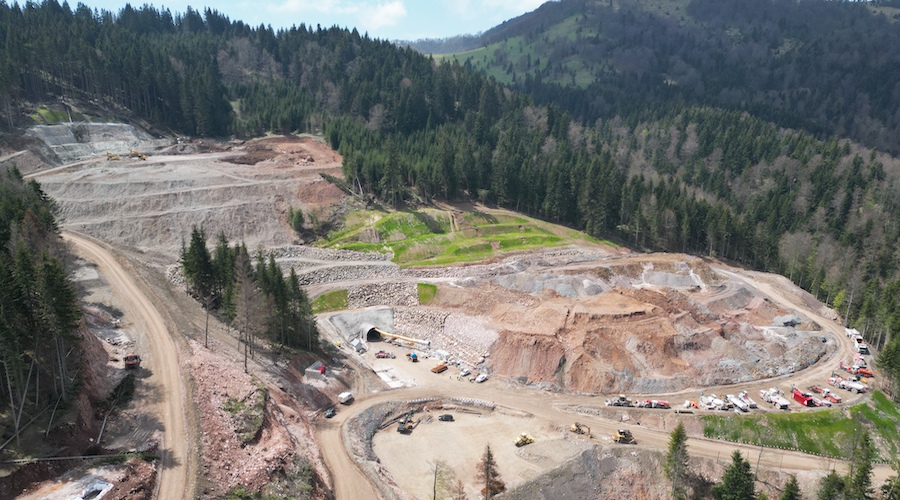
Vares project. Early works. (Image courtesy of Adriatic Metals.)

Canada’s Dundee Precious Metals (TSX: DPM) is acquiring UK-based Adriatic Metals (LON: ADT1) in a cash-and-stock deal worth $1.25 billion, marking the latest in a wave of foreign takeovers targeting British companies.

The deal gives Dundee control of Adriatic’s flagship Vareš silver-zinc mine in central Bosnia, along with the Raška zinc-silver project in Serbia. Already active in the Balkans, Dundee sees the new assets as a strategic fit that will expand its production pipeline and diversify cash flow.

“The Vareš is a logical fit with our portfolio, and adds near-term production growth and mine life, a highly prospective land package, and cash flow diversification,” chief executive officer David Rae said in a statement.

Adriatic shareholders will receive 268 pence per share, made up of 93 pence in cash and 0.1590 new Dundee shares. The offer represents a 50.5% premium to Adriatic’s closing price of 177.8 pence on May 19, the last trading day before it confirmed takeover talks with Dundee.

On completion of the transaction, Dundee shareholders will hold about 75.3% of the combined mining company, with Adriatic shareholders owning 24.7%. Dundee has secured voting support from Adriatic directors and major shareholders representing 37.2% of Adriatic’s shares.

Adriatic CEO Laura Tyler said Vareš remained on track to become a low-cost producer, supported by a high-grade deposit, long mine life and strong exploration upside. Tyler and chief financial officer Michael Horner will exit after the deal closes, and all Adriatic directors will step down.

The merged company will keep its global headquarters in Toronto, while Adriatic’s UK office will shut down.

Adriatic shares surged on the news, trading 4% higher in London mid-afternoon at 250.5 pence each, lifting the company’s market value to nearly £862 million ($1.2 billion).

The deal caps a week of intense dealmaking in London, reflecting growing foreign interest in UK-listed assets.


As global tumult grows, UK Plc’s stability and bargains appeal to dealmakers

Stock image, AI generated. By Adiom.

More than $10 billion in bids for British companies announced on Monday, this year’s busiest day according to Dealogic data, showed how low valuations and the market’s relative stability were attracting rivals and funds after a volatility-induced pause.

Companies may also be using the opportunity to enter the UK market before potential further weakening of the dollar or strengthening of the pound made future transactions more expensive, analysts said.

Among those to announce takeover offers for UK firms on Monday were US chipmaker Qualcomm, private equity firm Advent and France’s L’Oreal.

While US President Donald Trump’s announcement of sweeping tariffs and the resulting volatility hampered dealmaking for weeks, some companies are now finding the right conditions to agree on transactions.

Niccolo de Masi, CEO of Maryland-based IonQ, which on Monday announced a $1.08 billion acquisition of British quantum computing firm Oxford Ionics, said that in addition to Britain’s talent pool, the geopolitical backdrop made the deal more compelling as governments want more “sovereign quantum networks,” he said.

“People want things on-premise and they want things to be local,” de Masi told Reuters.

So far this year, there have already been 30 bids for UK companies valued at more than 100 million pounds ($135.44 million), compared with 26 over the same period of last year and 45 for the whole of 2024, according to Peel Hunt.

The total value of 24 billion pounds of deals announced to date compared with 36 billion pounds in the year-ago period, which was skewed by a few large deals, such as International Paper’s $7.1 billion bid for D.S Smith.

Years of outflows from UK equities that depressed valuations for British companies compared with their competitors listed on other European or US exchanges, have played a role in making them more attractive as acquisition targets.

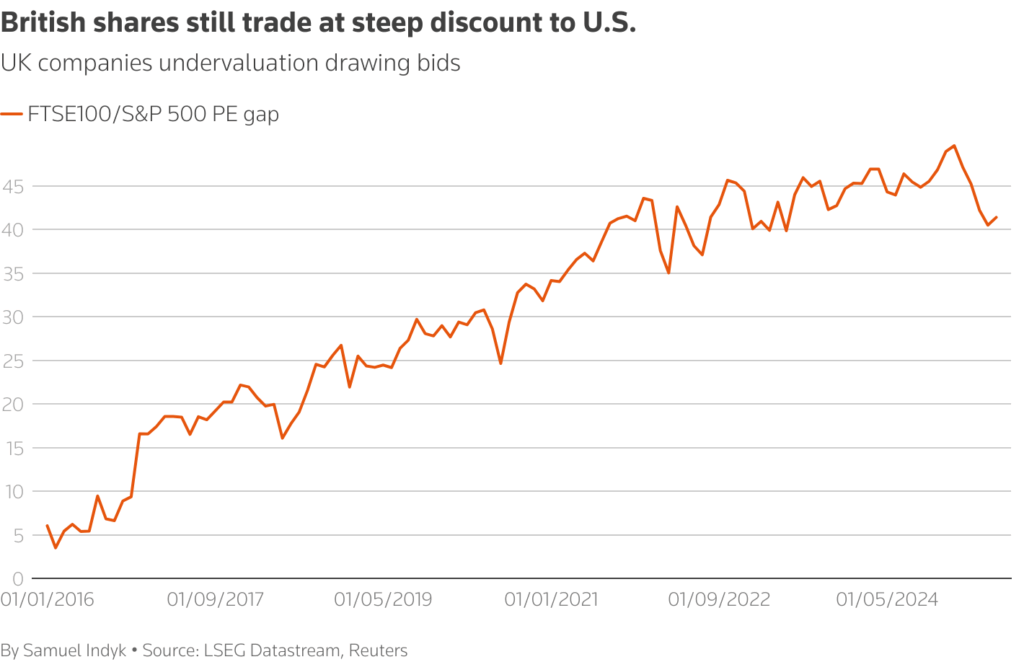
For example, the discount between the FTSE 100 and the US S&P 500 benchmarks peaked at about 49.5% in January and is about 41% now.

“Management teams have been happier to accept bids because sometimes that is an easier way to crystallize the valuations and as equity markets have been so challenging for so long,” Amanda Yeaman, co-manager of the abrdn UK Smaller Companies Fund and the abrdn UK Smaller Companies Growth Trust plc.

Moreover, bidders are being drawn to a relatively stable UK economic and political backdrop.

“We now have an improving economic environment in the UK, and the regulatory position is much more predictable,” said Charles Hall, head of research at Peel Hunt. “Buying a UK company at the moment is likely to be less risky than, say, buying a US business.”

The trade deals that Britain has pursued also show the country is “open for business,” Yeaman said. And with no general election due soon, Britain promises political stability. “Our markets really like stability and for the next four years, that is something that we have, which is less predictable in other geographies,” she said.

Analysts also say the pound’s strength does not seem to act as a deterrent.

“Particularly global investors, US investors are thinking, let’s grab as much as we can before things get more expensive and currency tailwinds are still there,” said Magesh Kumar, equity strategist at Barclays.

This year’s largest bids so far were all announced this week, with Advent offering 3.7 billion pounds for scientific instruments maker Spectris and Qualcomm’s 1.8 billion pound bid for Alphawave, and some advisers expect many more to come.

Erik O’Connor, partner at Clifford Chance, said that while economic uncertainties could weigh on the M&A market, factors such as more predictable outlook for interest rates and UK companies’ improved balance sheets should encourage dealmaking.

“There’s a sense that key fundamentals are in the right place to transact,” O’Connor said, pointing to technology and real estate, the busiest sectors so far this year according to Dealogic, as those less susceptible to recent market volatility.

“I would not be surprised if we continue at a similar pace,” he said.

($1 = 0.7383 pounds)

(By Amy-Jo Crowley, Yadarisa Shabong, Purvi Agarwal and Samuel Indyk; Editing by Anousha Sakoui and Tomasz Janowski)


Tanzania wants large miners to refine, trade 20% of gold locally

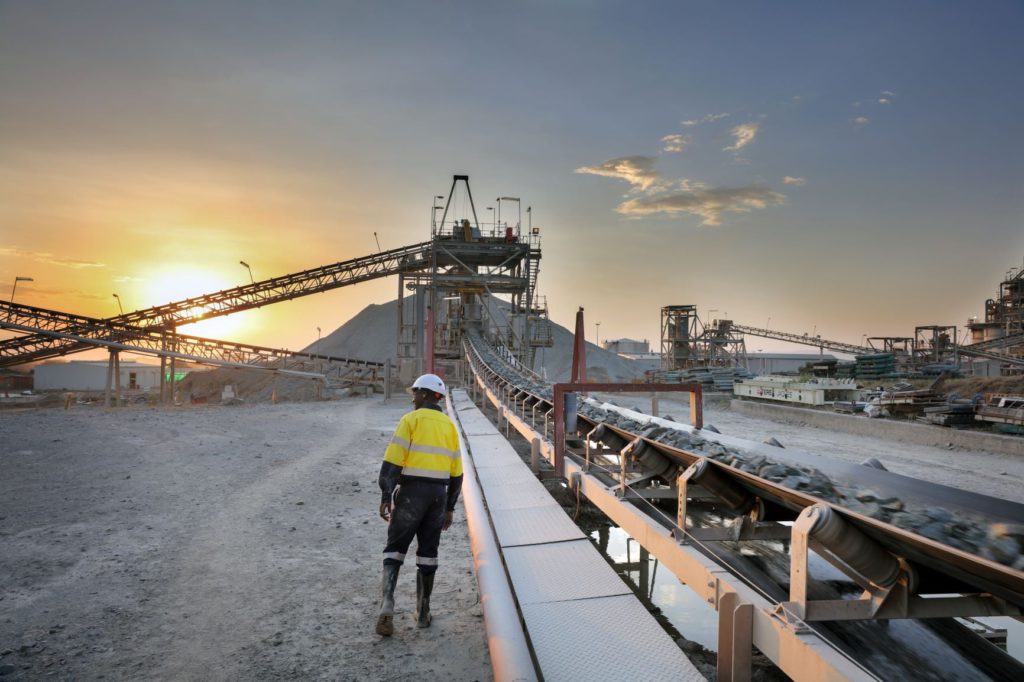
North Mara gold mine in Tanzania. (Image courtesy of Twiga Minerals | Instagram.)

Tanzania plans to make it compulsory for large-scale miners to refine and trade at least 20% of their gold output domestically as the East African nation seeks to benefit from a rally in the bullion price and control a larger share of its resources.

Miners that will likely be affected by the move include Barrick Gold Corp., the world’s second largest gold producer, and AngloGold Ashanti Plc.

Companies with contracts with the government will be required “to allocate gold at a rate of not less than 20% of production for smelting, refining, and trading in the country,” said Finance Minister Mwigulu Nchemba in his 2025-26 budget speech on Thursday.

The government plans to finalize contract renegotiations within 30 days of the new changes being passed, Nchemba said.

Tanzania, which produces around 1.9 million ounces of gold a year, joins a growing number of mineral-rich African nations looking to extract greater value from their resources.

Gold has been on a tear since 2024, hitting a record this year as US President Donald Trump’s trade war boosted its appeal as a haven.

(By Fumbuka Ng’wanakilala)


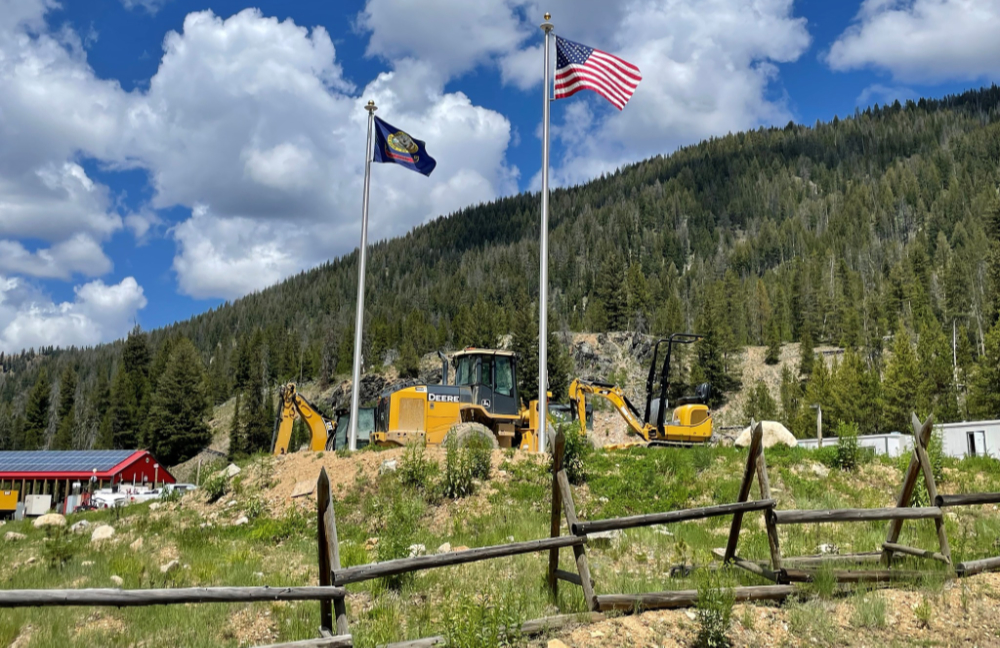
Perpetua Resources secures $400M equity financing for Stibnite project in Idaho

Credit: Perpetua Resources

Perpetua Resources (NASDAQ, TSX: PPTA) has entered into an agreement with the National Bank of Canada and BMO Capital Markets to purchase, on behalf of themselves and a syndicate of underwriters, approximately 22.73 million common shares of the company for $13.20 per share for $300 million.

Separately, Paulson & Co. has agreed to purchase an additional $100 million in Perpetua common shares under a private placement, bringing to total financing to $400 million.

Perpetua said it intends to use the proceeds for the development of the company’s Stibnite project in Idaho that is being fast-tracked by the Trump administration, in conjunction with the application for up to $2 billion in project financing submitted to the Export-Import Bank of the United States (EXIM) in May.

Also in May, Perpetua obtained the final federal approval required to progress the project towards construction.

Combined with the EXIM debt financing and royalty financing, the company believes that the net proceeds from the offering and the private placement will provide it with sufficient capital to fund the project construction costs of $2.2 billion, along with additional funds for cost overruns and exploration activities.

The Stibnite project, with its recently secured record of decision from the US Forest Service, is uniquely positioned to supply the critical mineral antimony, which is essential to national security and energy technology, the company said.

Stibnite holds an estimated 148-million-pound antimony reserve — the only identified antimony reserve in the US and one of the largest reserves outside of Chinese control. Once in production, it could meet about 35% of US antimony demand during its initial six years of production, according to the 2023 USGS commodity summary.

The company said it expects the remaining state permits required to commence construction to be issued by the relevant agencies in summer 2025.

Perpetua Resources was flat at Wednesday’s market close in New York, but was down 9.8% in after-hours trading. The company has a $1.1 billion market capitalization.

 CHILE

Codelco to focus on public-private partnerships to boost finances and production, CFO says

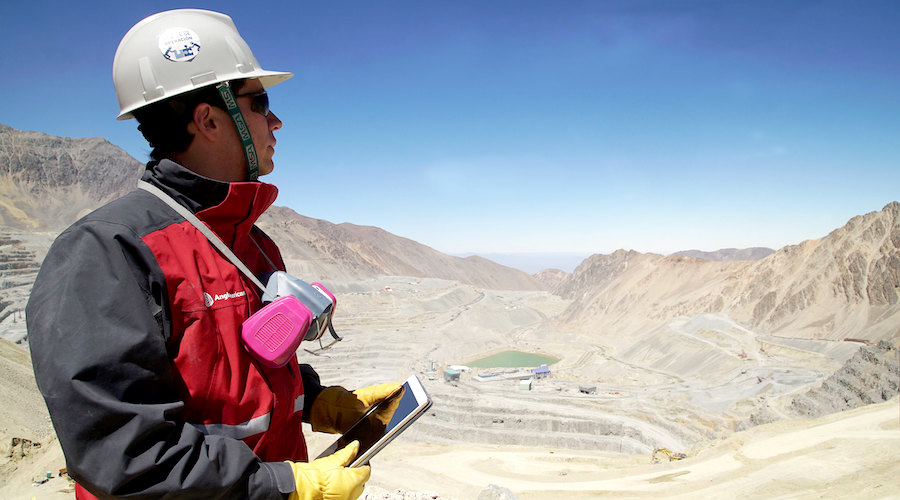
The Andina and Los Bronces copper mines sit in Chile’s Andes Mountains, near Santiago. (Image: Anglo American | Flickr.)

Chile’s Codelco, the world’s largest copper producer, will focus on more public-private partnerships to buoy finances and improve its capacity to develop new projects amid efforts to boost production, CFO Alejandro Sanhueza told Reuters on Wednesday.

A growing global appetite for copper and lithium amid the energy transition has led to sky-rocketing demand at a time when Codelco has been struggling to lift production after hitting quarter-century lows in 2023, partly due to dropping ore grades and delays in projects to overhaul key mines.

The CFO’s comments are the strongest to date that the state-run company will focus on private backing to boost growth.

Sanhueza said public-private partnerships will be a “pillar of growth” and are not intended for the overhaul projects or any existing operations so as to comply with the company’s nationalization regulations that do not allow it to accept private money in its mines.

“Greenfield initiatives (new projects) are a key part of our growth strategy and an opportunity to continue partnerships with third parties,” Sanhueza said in a written response to Reuters, adding that it will also help diversify risk.

“Our exploration partnerships allow us to attract external financing and (production) capacity, enabling us to accelerate value generation with additional resources beyond those available to Codelco.”

Aside from recent lithium joint ventures, Codelco reached agreements with Rio Tinto and BHP to prospect new potential copper mines, which sources with knowledge of the matter have described as promising.

Codelco already has a partnership in the El Abra mine with Freeport McMoRan and also owns a fifth of Anglo American Sur. This year, it also acquired a 10% stake in the Quebrada Blanca deposit from the small state-owned company Enami.

Sanhueza said another goal is to build joint infrastructure, facilitate access to new technology, or minimize environmental impacts.

Codelco announced an unprecedented agreement earlier this year to jointly operate neighboring copper mines with Anglo American that the company said would increase production by 120,000 metric tons per year for 21 years. According to sources, the company is seeking to finalize the agreement by September.

The company is also strengthening its own exploration budget Sanhueza said, which increased to an average of $83 million annually in 2023 and 2024 and will grow to an average of $150 million annually during the 2025-2029 period.

“Codelco has a significant stock of mining resources, which is a privilege in the industry,” Sanhueza said. “This collaboration with third parties allows us to make better use of these resources, which are complementary to our own projects.”

(By Fabián Andrés Cambero; Editing by Alexander Villegas and Sandra Maler)


Condor-Teck copper project in Peru receives environmental approval

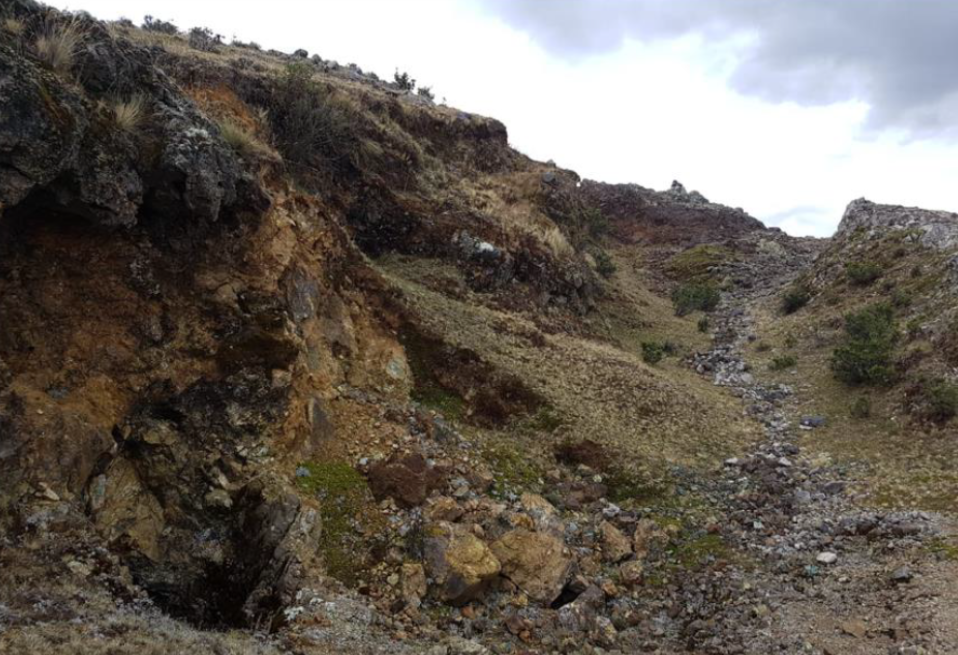
Some of the artisanal workings in an area of skarn-gossan near the Cobreorco North target. Credit: Condor Resources

Condor Resources (TSXV: CN) says its Cobreorco project in central Peru has passed an “important” permitting milestone following the approval of its environmental impact statement, moving the project closer to the drilling stage.

The permitting process is being carried out by Teck Resources (TSX: TECK.A/TECK.B; NYSE: TECK), which entered the project in late 2023 through an option and joint venture agreement with Condor.

Under that agreement, Teck can earn a 55% interest in Cobreorco over three years following the permit issuance by spending $4 million on exploration and paying another $500,000 in cash. The Canadian miner would also take over technical, social and environmental programs at Cobreorco.

Upon exercising this option, the companies will then form a joint venture, after Teck can increase its stake in the project further to 75% by spending an additional $6 million in exploration and making another cash payment of $600,000.

“We are very pleased to have reached this important milestone with Teck,” Condor CEO Chris Buncic said in a news release. “Projects of this scale and quality are exceedingly rare, and we are only at the beginning of what we believe will be an exciting journey with our partner.”

The EIS approval from the Peruvian Ministry of Energy and Mines represents the first key step to obtain surface drilling permits for the project. Dialogue with two local communities remains ongoing to complete the process.

Shares of Condor Resources gained 10% to C$0.11 by midday Friday, taking its market capitalization to C$16.5 million ($12.1 million).

Porphyry-skarn system

The Cobreorco property, located in the province of Andahuaylas, is host to several porphyry and skarn-related copper and gold deposits that are exposed in outcrops and small-scale artisanal workings within a 2-sq.-km area.

Condor entered the project in 2018 by winning a sealed bid auction to the first 1.7 sq. km of the property. Over the subsequent years, it accumulated more land through staking, bringing the project area to a total of 50 sq. km.

In the meantime, the company has conducted several sampling programs on the property. An analysis showed that a third of the channels tested contained more than 1,000 ppm copper, and nearly half contained at least 100 ppb gold.

A drone-supported magnetic survey was done in 2020, and the initial review of the data suggests the presence of two potential intrusive systems that correlate with exposed surface copper-gold porphyry and skarn outcrops.

The results of the magnetic survey sampling and analysis demonstrate a substantial target of 2.5 km in lateral extent and potentially very shallow, similar in geometry to the Tintaya mine owned by Glencore about 300 km to the southeast, Condor said.

Condor’s geologists also compared the mineralization to that at Las Bambas, the large copper porphyry with skarn overprinting 50 km to the east.

BLACKFOOT NATION CORP.

KORITE acquisition in Alberta creates world’s only mine-to-market ammolite producer


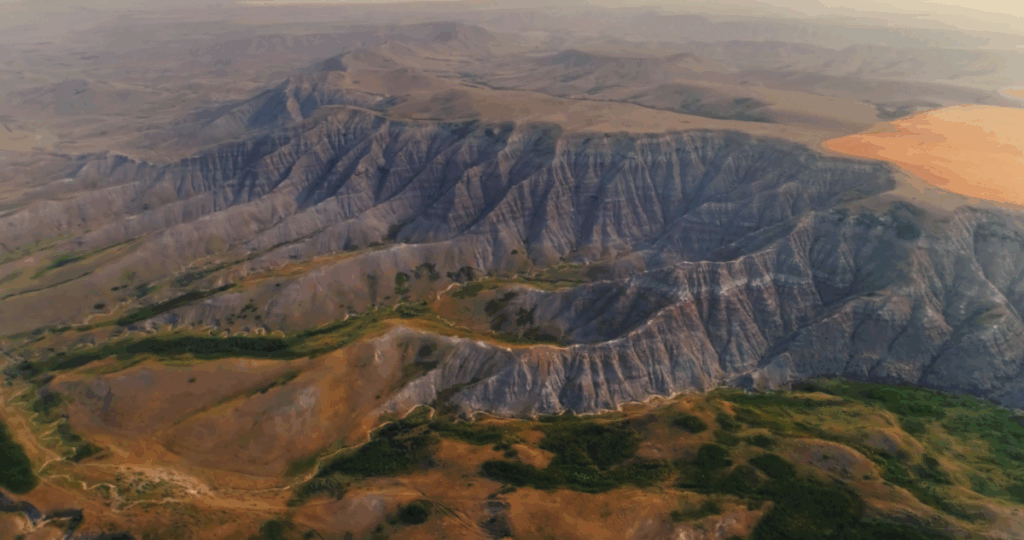
Bearpaw Formation in Alberta. Image from KORITE.

When Alberta-based Buffalo Rock Mining acquired Calgary-headquartered KORITE, North America’s largest producer of ammolite, it flew right under the mining industry’s radar, even as the company’s creations were featured in the New York Times

The acquisition, say Indigenous owners Tracy and Beth Day Chief of the Kainai Nation, reflects a revitalized vision for the company,  in committment to ethical and sustainable mining. The value of the transaction was not disclosed, and privately-held Buffalo Rock Mining does not disclose mineral resource information. 

Ammonite extraction is one of the rarest and most delicate mining processes in the world, and KORITE established itself as the leading global producer, controlling 95% of the world’s known ammonite reserves, and selling mainly into European and Asian markets. 

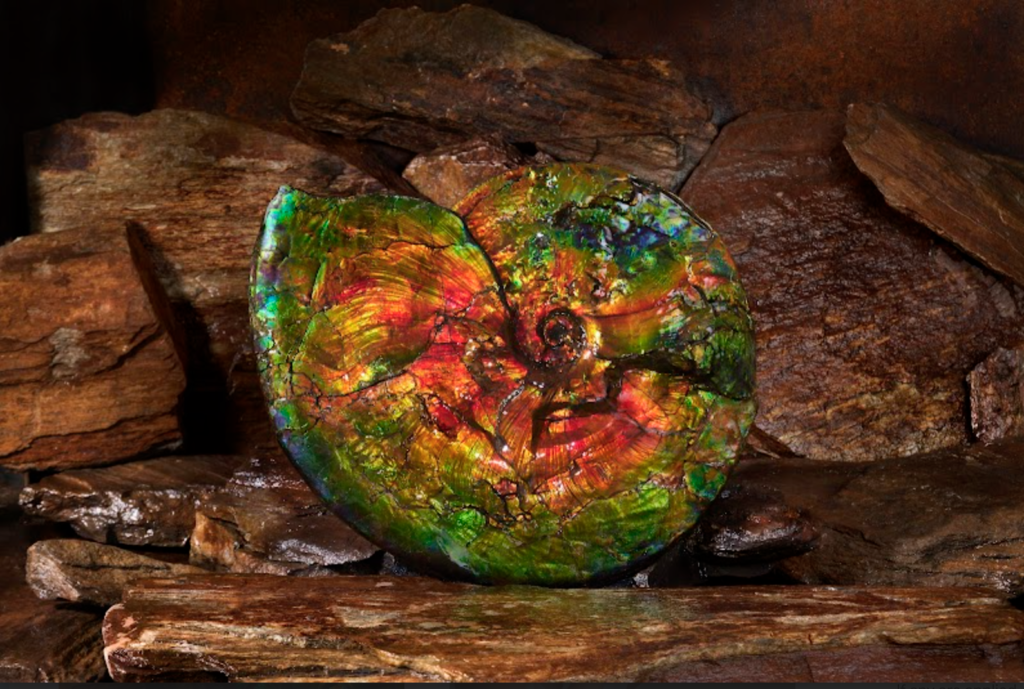
Ammolites are rare, rainbow coloured gemstones derived from the fossils of ammonites — extinct marine mollusks from the dinosaur-era. Ammonite fossils are mined solely in south-central Alberta to produce the organic gemstone ammolite.

The Blackfoot peoples recognize ammonite—which they call “Iniskim” meaning  ‘Buffalo Healing Stone’—as a sacred stone that brought prosperity. The only known reserves in the world are in the Bearpaw formation, which spans the Canadian provinces of Alberta and Saskatchewan and the US state of Montana.

Ammolite fossil. Image from KORITE

KORITE has been in business for 45 years and Buffalo Rock has been mining for over 20 years and the combined company employs about 30 people, including miners. The company owns the mineral rights from its flagship namesake mine. 

Buffalo Rock was mining and selling rough stones to the market, while KORITE was cutting and polishing stones, sold both as preserved fossils and as art and jewelry. 

KORITE’ ammonite fossils retail online for up to C$120,000 — and one fossil sold on Christie’s auction for C$250 000, according to president Amarjeet Grewal. 

 “We own 95% of the market share of the ammolite deposits in Alberta, and its only found in Alberta – you can’t find this anywhere else in the world,” Grewal told MINING.com in an interview.  

“It’s mine to market – not only the mining but cutting the gemstones [and] making jewelry. We have always been mine to market whereas Buffalo Rock Mining did only the mining part,  so two different companies to the point that we were almost in competition,” Grewal said. 

 “We didn’t sell rough.. we cut the gemstones and finished jewelry whereas Buffalo Rock Mining weren’t interested in finishing any gemstones –  they weren’t supplying in volume to the market.” 

Now that the company is vertically integrated, Grewal said the protocols to follow both at provincial and federal levels are rigorous, and the environmental standards are high.

“We work with Heritage Canada because this is cultural property, so every piece of fossil that leaves the country needs a permit,” she said. 

Buffalo Rock Mining has, on the reserve, another 30-40 years of mineral rights, Grewal said, adding that how many acres the company mines per year will depend on the supply and demand. 

While KORITE is well known in Asian markets, Grewal said the aim after the acquisition is to gain visibility in the Canadian market. 

“In southeast Asia from a feng shui perspective ammolite is a holistic stone and it brings good luck and good energy so it’s very well received, so that’s our primary market,” she said. 

Grewal also noted the irony of the company selling its Canadian fossils  and jewelry in foreign markets while the brand is virtually unknown locally. 

“You’re selling overseas and in your own backyard your neighbors don’t know you exist,” she noted. 

Stay tuned as MINING.com tours the KORITE ammolite mine in Alberta with Buffalo Rock Mining on a site visit in July