Monday, July 14, 2025

Dozens killed in violent clashes in predominantly Druze Syrian city


At least 37 people have been killed in violent clashes between Bedouin tribes and local Druze fighters in the southern Syrian city of Sweida, a war monitor reported Monday, marking the deadliest bout of unrest in the region since May. The unrest has prompted the Syrian government to deploy security forces in a bid to restore order, as fears grow of renewed instability in the Druze-majority province.


Issued on: 14/07/2025 - 
By: FRANCE 24
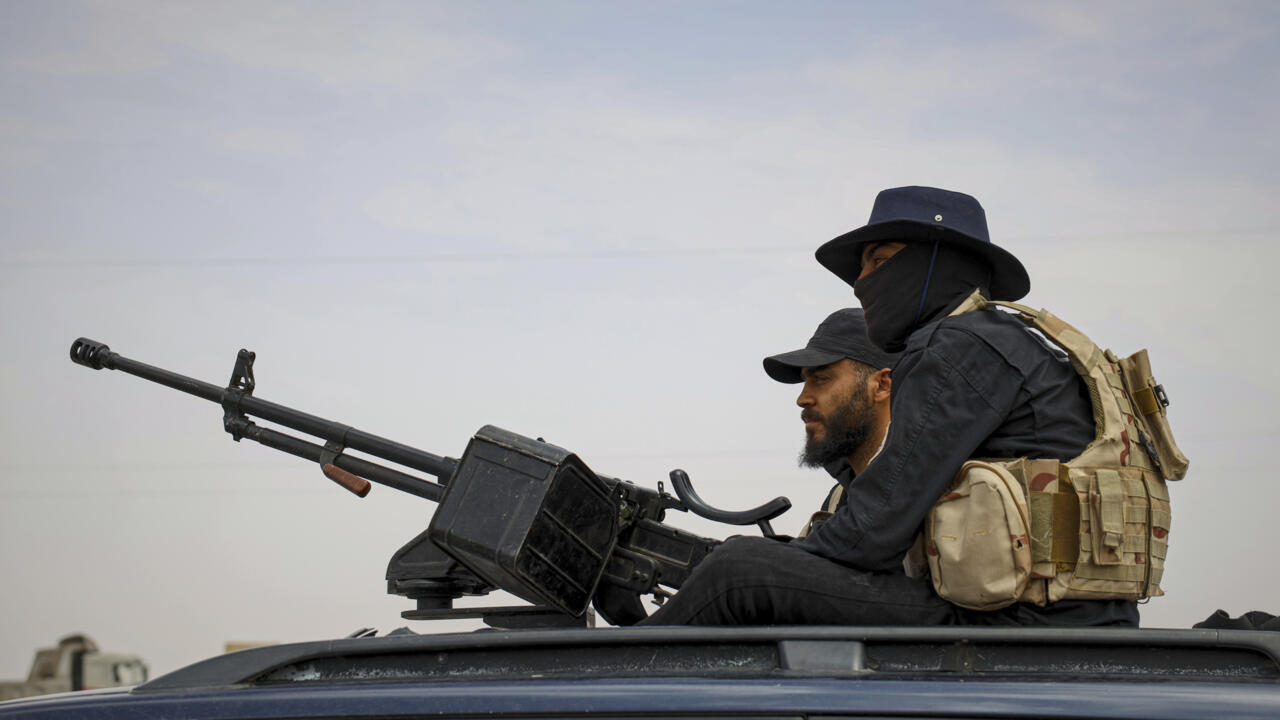
Syrian security forces on highway in Sweida province, southern Syria, Thursday, May 1, 2025. © Omar Albam, AP

Clashes between Bedouin tribes and local fighters in the predominantly Druze city of Sweida in southern Syria have killed 37 people, a war monitor said Monday, as authorities sent forces to de-escalate the situation.

The clashes are the first outbreak of deadly violence in the area since fighting between members of the Druze community and the security forces killed dozens of people in April and May.

The Syrian Observatory for Human Rights said at least 37 people had been killed, 27 of them Druze, including two children, and 10 of them Bedouin.

It also reported the closure of the Damascus-Sweida highway due to the violence.

Syria's interior ministry put the toll at "more than 30 deaths and nearly 100 injuries" and said it would deploy troops in coordination with the defence ministry.

Those troops "will begin direct intervention in the area to resolve the conflict, stop the clashes, impose security, pursue those responsible for the incidents, and refer them to the competent judiciary," an interior ministry statement said.

Syrian state-run media outlet SANA earlier said the security forces had deployed on the administrative borders between Daraa and Sweida provinces in light of the situation.

Sweida Governor Mustapha al-Bakur called on his constituents to "exercise self-restraint and respond to national calls for reform".

Several Syrian Druze spiritual leaders have also called for calm and asked Damascus to intervene.

Due to the violence, the education ministry announced the postponement of Sweida's official secondary school exams due on Monday to a future date.

Syria's pre-civil war Druze population numbered around 700,000, with Sweida province home to the sect's largest community.

Bedouin and Druze factions have a longstanding feud in Sweida, and violence occasionally erupts between the two.

The interior ministry said the violence was "the result of unfortunate armed clashes that broke out between local military groups and clans... against a backdrop of accumulated tensions over previous periods".

Since the overthrow of longtime Syrian ruler Bashar al-Assad, concerns have been raised over the rights and safety of minorities under the new Islamist authorities, who have also struggled to re-establish security more broadly.

Clashes between the new security forces and Druze fighters in April and May killed dozens of people, with local leaders and religious figures signing agreements to contain the escalation and better integrate Druze fighters into the new government.

(FRANCE 24 with AFP)


More than 30 dead in sectarian clashes between Druze, Bedouins in south Syria

Violence erupted after a wave of kidnappings, including the abduction of a Druze merchant on Friday on the highway linking Damascus to Sweida

Reuters| Yesterday |

More than 30 people were killed and 100 injured in armed clashes in Syria's predominantly Druze city of Sweida, the Syrian interior ministry said early on Monday, in the latest bout of sectarian clashes.
The violence erupted after a wave of kidnappings, including the abduction of a Druze merchant on Friday on the highway linking Damascus to Sweida, witnesses said.

This is the first time sectarian fighting has erupted inside the city of Sweida itself, the provincial capital of the mostly Druze province.

Last April saw clashes between Sunni fighters and armed Druze residents of Jaramana, southeast of Damascus, which later spread to another district near the provincial capital.

"This cycle of violence has exploded in a terrifyng way and if it doesn't end we are heading toward to a bloodbath," said Rayan Marouf, a Druze researcher based in Sweida who runs the Suwayda24 website.

The clashes involving Bedouin tribal fighters and Druze militias were centered in Maqwas neighborhood east of Sweida, which is inhabited by Bedouin tribes, and was encircled by armed Druze groups and later seized.

The Syrian ministry of interior said that its forces will begin direct intervention in Sweida to resolve the conflict, calling on local parties in the Druze city to cooperate with the security forces.

Armed Bedouin tribesmen also launched attacks on Druze villages on the western and north outskirts of the city, residents said.


A medical source told Reuters that at least 15 bodies had been taken to the morgue at Sweida's state hospital. Around 50 people were injured, with some transported to Deraa city for medical care.

The violence marked the latest episode of sectarian bloodshed in Syria, where fears among minority groups have surged since Islamist-led rebels toppled President Bashar al-Assad in December, installing their own government and security forces.

Those concerns intensified following the killing of hundreds of Alawites in March, in apparent retaliation for an earlier attack carried out by Assad loyalists.

It was the deadliest sectarian flare-up in years in Syria, where a 14-year civil war ended last December with Assad fleeing to Russia after his government was overthrown by rebel forces.

Israel strikes military tanks in southern Syria, where government forces clash with Druze militias
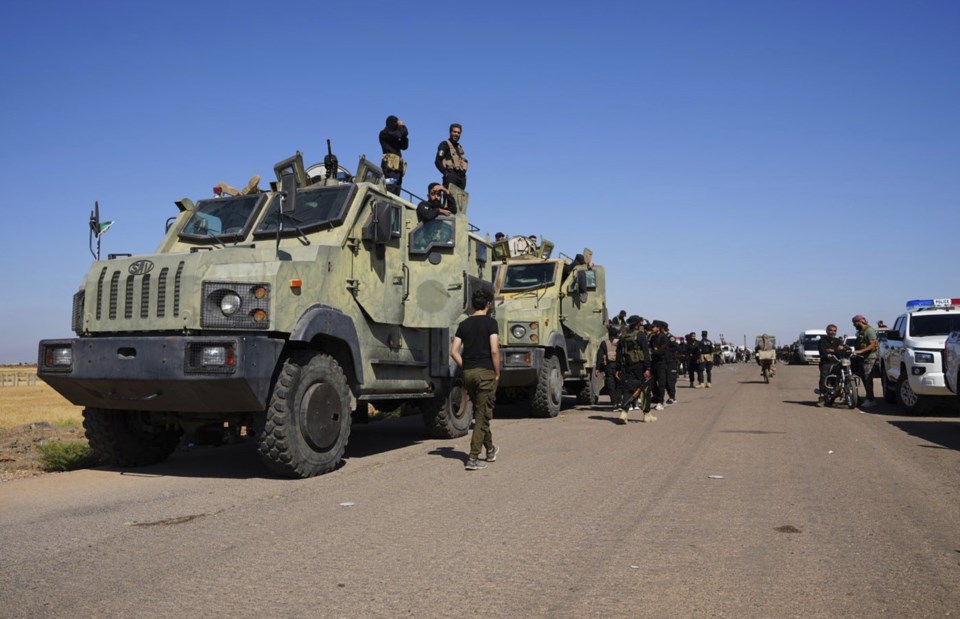
BUSRA AL-HARIR, Syria (AP) — Israel’s army said Monday it has struck military tanks in southern Syria, where government forces and Bedouin tribes clashed with Druze militias.
Syrian government security forces gather on the outskirts of Sweida province where clashes erupted between Druze militias and Sunni Bedouin clans, southern Syria, Monday, July 14, 2025. (AP Photo/Malek Khattab)

BUSRA AL-HARIR, Syria (AP) — Israel’s army said Monday it has struck military tanks in southern Syria, where government forces and Bedouin tribes clashed with Druze militias.

Dozens of people have been killed in the fighting between local militias and clans in Syria ’s Sweida province. Government security forces that were sent to restore order Monday also clashed with local armed groups.

Syria's Interior Ministry has said more than 30 people have died and nearly 100 others have been injured. The Syrian Observatory for Human Rights, a U.K.-based war monitor, reported at least 89 dead, including two children, two women and 14 members of the security forces.

The clashes in Syria initially broke out between armed groups from the Druze and Sunni Bedouin clans, the observatory said, with some members of the government security forces “actively participating” in support of the Bedouins.

Interior Ministry spokesperson Noureddine al-Baba said government forces entered Sweida in the early morning to restore order.

“Some clashes occurred with outlawed armed groups, but our forces are doing their best to prevent any civilian casualties,” he told the state-run Al-Ikhbariya TV.

The observatory said the clashes started after a series of kidnappings between both groups, which began when members of a Bedouin tribe in the area set up a checkpoint where they attacked and robbed a young Druze man.

Rami Abdurrahman, who heads the observatory, said the conflict started with the kidnapping and robbery of a Druze vegetable seller, leading to tit-for-tat attacks and kidnappings.

Syria’s defense and interior ministries were deploying personnel to the area to attempt to restore order.

The Interior Ministry described the situation as a dangerous escalation that “comes in the absence of the relevant official institutions, which has led to an exacerbation of the state of chaos, the deterioration of the security situation, and the inability of the local community to contain the situation despite repeated calls for calm.”

U.N. Deputy Special Envoy for Syria Najat Rochdi expressed “deep concern” over the violence and urged the government and local groups to “take immediate steps to protect civilians, restore calm, and prevent incitement.”

She said in a statement the clashes underscored the “urgent need for genuine inclusion, trust-building, and meaningful dialogue to advance a credible and inclusive political transition in Syria.”

In Israel, Druze are seen as a loyal minority and often serve in the armed forces.

Syria’s Foreign Ministry called for “all countries and organizations to respect the authority of the Syrian Arab Republic and refrain from supporting any separatist rebel movements.” In a statement, it called for Syrians to “cease acts of violence, surrender illegal weapons and thwart those seeking to dismantle the Syrian social fabric and sow discord and division.”

Israel sees Druze as a loyal minority

Israel has previously intervened in Syria in defense of the Druze religious minority. In May, Israeli forces struck a site near the presidential palace in Damascus, in what was seen as a warning to Syrian interim President Ahmad al-Sharaa. The strike came after dozens were killed in fighting between pro-government gunmen and Druze fighters earlier this year in the town of Sahnaya and the Druze-majority Damascus suburb of Jaramana.

Israeli Prime Minister Benjamin Netanyahu and Defense Minister Israel Katz said in a statement at the time that Israel “will not allow the deployment of (Syrian government) forces south of Damascus or any threat to the Druze community.”

Over half of the roughly 1 million Druze worldwide live in Syria. Most other Druze live in Lebanon and Israel, including in the Golan Heights, which Israel captured from Syria in the 1967 Mideast War and annexed in 1981.

While many Druze in Syria have said they do not want Israel to intervene on their behalf, factions from the Druze minority have also been suspicious of the new authorities in Damascus after former President Bashar Assad fled the country in December during a rebel offensive led by Sunni Islamist insurgent groups. On several occasions, Druze groups have clashed with security forces from the new government or allied factions.

A group led by Sheikh Hikmat Al-Hijri, a Druze spiritual leader who has been opposed to the new government in Damascus, on Monday issued a statement calling for “international protection” and accused government forces and General Security agency of “supporting takfiri gangs” - using a term for extremist Sunni militants.

‘Like unwrapping an onion’

The Druze religious sect is a minority group that began as a 10th-century offshoot of Ismailism, a branch of Shiite Islam. In Syria, they largely live in the southern Sweida province and some suburbs of Damascus, mainly in Jaramana and Ashrafiyat Sahnaya to the south.

The Druze developed their own militias during the country’s nearly 14-year civil war, during which they sometimes faced attacks by the Islamic State and other Islamist militant groups.

Israel has taken an aggressive stance toward Syria’s new leaders since Assad's fall, saying it does not want Islamist militants near its borders. Israeli forces earlier seized a U.N.-patrolled buffer zone on Syrian territory along the border with the Golan Heights and have launched hundreds of airstrikes on military sites in Syria.

The Trump administration has been pushing for the new Syrian government to move toward normalization with Israel. Syrian officials have acknowledged holding indirect talks with Israel to attempt to defuse tensions, but have not responded to reports that the two sides have also held direct talks.

U.S. envoy to Syria Tom Barrack told The Associated Press last week that he believes normalizing ties will happen “like unwrapping an onion, slowly.”

———

Sewell reported from Beirut. Associated Press writer Kareem Chehayeb in Beirut contributed to this report.

Omar Sanadiki And Abby Sewell, The Associated Press


What role is Israel playing in the clashes between Druze and Bedouins in Syria? - analysis

Israel has demanded southern Syria be demilitarized. This has had the result of creating a vacuum in southern Syria. The government claims that it wants to protect civilians and restore order.

Druze women walk on a street, in Jaramana, Syria May 5, 2025.
(photo credit: REUTERS/YAMAM AL SHAAR)

JULY 14, 2025 

Clashes in Syria between the Druze minority in Sweida and Bedouin tribesmen are the latest in a series of similar confrontations that have taken place since Syria’s new government came to power in December 2024, replacing the Assad regime.

The Druze in Syria have often sought to maintain some of their own autonomy in their region, a trend that increased during the Syrian civil war.

The recent clashes have led Israel to carry out overflights in southern Syria, according to local witnesses in the country.

In addition, reports said that the IDF had targeted armored vehicles in Syria amid the clashes. This is not the first time that has happened. In fact, this is at least the third time in the last six months that this similar cycle has played out.

In essence, the way the cycle works is like this: Druze clash with local Arabs. Usually several people or up to a dozen people are killed, with victims on both sides. The government forces try to intervene. Typically, government forces oppose the armed Druze fighters who have also arrived on the scene. Israel then also threatens to intervene and sometimes carries out airstrikes or threats. Subsequently, the government says it has come to an agreement with the Druze. Commonly, the agreement is supposed to have the Druze accept government control. Generally, nothing changes, and in a month or two, there are new clashes.

Syrian security forces stand together, following deadly clashes between Sunni fighters against armed Druze residents, at the entrance of Jaramana, Syria May 5, 2025. (credit: REUTERS/YAMAM AL SHAAR)


The Druze in southern Syria are armed with light weapons, such as rifles. They also possess other munitions and various types of military vehicles. These are leftovers from the Assad era.

The Druze served in the regime’s military like other Syrians, however, they also sought to arm themselves to protect their own interests. Most Druze live in the area of Sweida, also called Jebel Druze or Druze Mountain.

The Druze have been wary of jihadist groups and persecution. Therefore, they have tended to prefer the Assad regime as long as it didn’t oppress them too much. The regime was dominated by the Alawite minority and often tried to play groups off against each other in Syria. As such, the Druze were used by the regime. Druze in Israel and Lebanon also try to balance their interests with the state, achieving the same types of local autonomy while serving in the armed forces

What this means is that the Druze minority in Syria tends to be well armed and assertive. It also appears to be suspicious of other groups that may chafe against their autonomy, such as Bedouin and other Sunni Arab groups. According to North Press, a Syrian media outlet in eastern Syria, “a Druze militia, early on Monday, held the Syrian transitional government responsible for the recent escalation and violent clashes in Sweida Governorate, southern Syria.”

The report goes on to note that “In a statement, the Men of Dignity movement, a self-defense militia established after the outbreak of the Syrian war to defend Sweida Governorate, called for de-escalation while emphasizing the mobilization of its members to defend the region.” The statement read, “This dangerous tension the governorate is witnessing serves no party but rather threatens civil peace and paves the way for a state of chaos we reject for our people and our country.”

The Druze claim that the government has not secured the road between Sweida and Damascus. The report claims 100 people have been killed and wounded.

“We hold the Syrian government primarily responsible for the current situation,” the statement noted, “due to its failure to maintain security, its silence in the face of repeated violations, and its tolerance of affiliated factions interfering and siding with one group over another.”

It also says “Sweida was and will remain a land of dignity and coexistence. It will not be drawn into any sedition, but at the same time, we will not allow it to become an open arena for settling scores.”

Syria’s government believes a power vacuum has led to this chaos.

Clashes come after Israel demands southern Syria demilitarizedIsrael has demanded southern Syria be demilitarized. This has had the result of creating a vacuum in southern Syria. The government claims that it wants to protect civilians and restore order.

“The [Syrian] Ministry of Interior also issued a statement, attributing the worsening security situation to the absence of active state institutions and the local community’s inability to contain the crisis despite repeated calls for calm,” the report said.

The Syrian Defense Ministry “confirmed Monday the institutional vacuum that accompanied the outbreak of clashes in Sweida Governorate has worsened the state of chaos, in addition to the inability of official security or military institutions to intervene, which hindered the efforts exerted to calming down the situation there,” Syrian state media noted.

“We have followed with deep sadness and concern the bloody developments Sweida province has witnessed over the past two days, which left more than 30 deaths and nearly 100 injuries in a number of neighborhoods and towns,” the ministry said.

“In coordination with the Interior Ministry, we have deployed specialized military units to the affected areas, providing safe passages for civilians,” the report noted.

The difficulty in resolving these issues will mean continued clashes are likely. The Druze will not want to hand over their weapons to the new government.

The role of Israel is complex.

The IDF has said in recent weeks that it has captured two cells near the Golan that were linked to Iran’s Islamic Revolutionary Guard Corps (IRGC).

The IDF has also carried out recent operations on Mount Hermon. These are areas the IDF moved to when the Assad regime fell.

Some argue the IDF should intervene more in Syria. On the other hand, that could lead to more chaos in southern Syria.
Lawmaker says Alligator Alcatraz is an ‘internment camp’ after joint GOP-Dem visit: ‘Packed into cages’


Democrat Debbie Wasserman Schultz, who represents Florida's 25th congressional district, said that pictures of the facility ‘don’t do it justice’


Mike Bedigan
Sunday 13 July 2025


From reproductive rights to climate change to Big Tech, The Independent is on the ground when the story is developing. Whether it's investigating the financials of Elon Musk's pro-Trump PAC or producing our latest documentary, 'The A Word', which shines a light on the American women fighting for reproductive rights, we know how important it is to parse out the facts from the messaging.

At such a critical moment in US history, we need reporters on the ground. Your donation allows us to keep sending journalists to speak to both sides of the story.

The Independent is trusted by Americans across the entire political spectrum. And unlike many other quality news outlets, we choose not to lock Americans out of our reporting and analysis with paywalls. We believe quality journalism should be available to everyone, paid for by those who can afford it.Your support makes all the difference.Read more

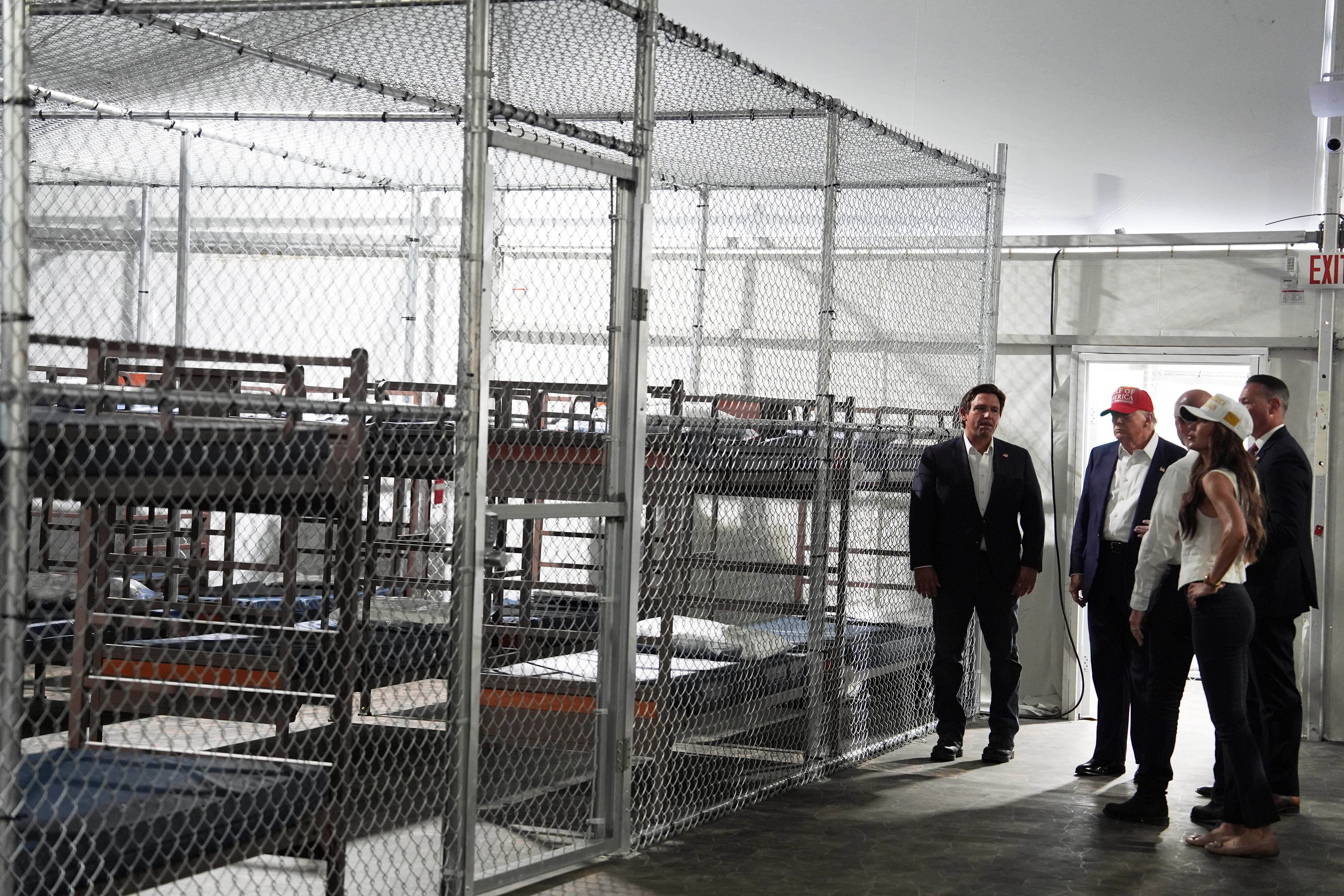
A Democratic congresswoman has given a scathing review of the Trump administration’s so-called “Alligator Alcatraz” in Florida, describing it as an “internment camp” that needs to be “shut the hell down.”

Debbie Wasserman Schultz, who represents Florida's 25th congressional district, said that pictures of the facility “don’t do it justice” and that detainees were being “packed into cages.”

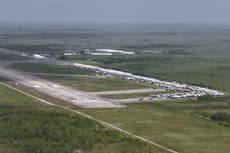
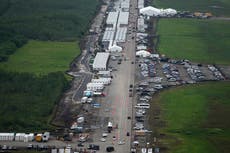
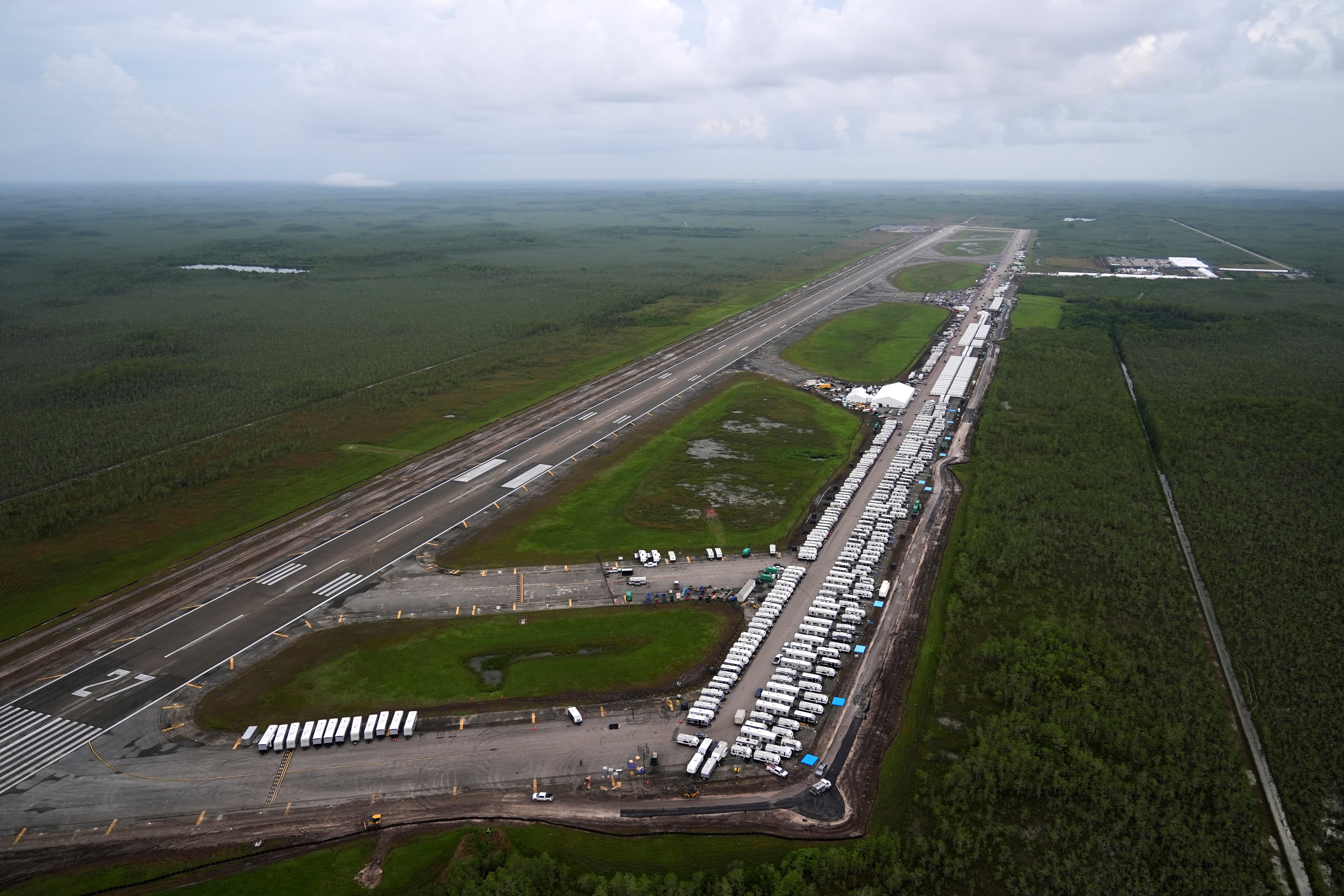
On Saturday Florida lawmakers from both parties took a state-arranged tour of the new 3,000-bed detention center that the state rapidly built on an isolated airstrip surrounded by swampland in the Everglades.

Speaking at a press conference following the tour, Wasserman Schultz said that the walk-through had been “sanitized” but conditions were nonetheless “appalling.”


open image in galleryDebbie Wasserman Schultz, who represents Florida's 25th congressional district, said that pictures of the ‘Alligator Alcatraz’ facility ‘don’t do it justice’ and that detainees were being ‘packed into cages’ (AP)

Lawmakers visit 'Alligator Alcatraz,' but some wonder how much they'll get to see

“They are essentially packed into cages, wall-to-wall humans, 32 detainees per cage,” she told reporters. “The only thing inside those cages are their bunk beds, and there are three tiny toilets.”

The units, Wasserman Schultz said, have sinks attached to the toilet resulting in detainees having to “brush their teeth where they poop.” There was minimal privacy for any person inside, she added.


open image in galleryOn Saturday Florida lawmakers from both parties took a state-arranged tour of the new 3,000-bed detention center that the state rapidly built on an isolated airstrip surrounded by swampland in the Everglades (AP)

“This place needs to be shut the hell down. They're abusing human beings in cages,” the congresswoman later added in a post on X.

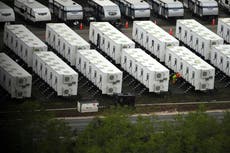
Trump and his allies, including Florida Governor Ron DeSantis, have touted the makeshift detention center — an agglomeration of tents, trailers and temporary buildings constructed in a matter of days — as an efficient and get-tough response to the president’s call for mass deportations.


open image in galleryTrump and his allies, including Florida Governor Ron DeSantis, have touted the makeshift detention center as an efficient and get-tough response to the president’s call for mass deportations (AP)

Described as temporary, the detention center is meant to help the administration reach its goal of boosting the U.S. migrant detention capacity from 41,000 people to at least 100,000.

The Florida facility's remote location and its name — a nod to the notorious Alcatraz prison that once housed federal inmates in California — are meant to underscore a message of deterring illegal immigration.


open image in galleryPresident Donald Trump visits 'Alligator Alcatraz' in Florida with Governor Ron DeSantis and Homeland Security Secretary Kristi Noem (AP)

Despite the outrage of Democrats like Wasserman Schultz, other Republicans who took the tour said the conditions were “clean, air conditioned and well-kept.”

“The rhetoric does not match the reality,” said State Senator Blaise Ingoglia, a DeSantis ally. “It’s basically all political theater coming from the [Democrats]. What they’re saying is pure bullshit.”
'If I wasn't here, people could die': Trump public media cuts could hit rural America


Thomas Copeland
BBC World Service
JULY 13, 2025

BBC
Desiree Hagan broadcasts across a coverage area the size of Indiana


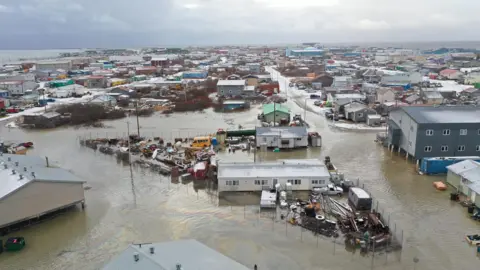
A gale-force storm hit north-eastern Alaska last winter. Residents of Kotzebue, a town of about 3,000, are used to polar conditions, so Desiree Hagan still had to get to work.

"The snow was so intense you could not see in front of you," Ms Hagan remembers. "I was walking backwards to work."

Ms Hagan is a reporter at a public radio station, KOTZ, which airs across Kotzebue and its 12 surrounding villages.

She also happens to be the only US journalist stationed inside the Arctic Circle, so as the storm intensified, she had to get on the air.

"It's go time, I have to report on this," recalls Ms Hagan. "We have to make sure we know where people can go. Oh, the electric is out. Okay, now the airport is flooded."


Two homes were destroyed by the flooding and 80 residents were evacuated


"Winter is not a joke here, it is life and death," she tells the BBC. "As a reporter I try not to make emotional statements like, if I wasn't here, people could die, but that is a reality."

On the other side of the country in Washington DC, however, a historic vote could bring federal support for KOTZ to an end.

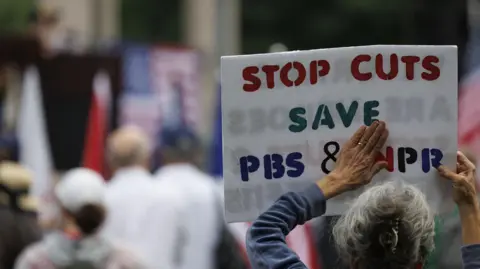
The Senate must decide by the end of the week whether to claw back $1.1bn (£800m) from the Corporation for Public Broadcasting, the body that distributes federal funding to public radio and television stations.

While the public media cuts are part of a broad spending package, which includes requests to rescind $8.3bn from the United States Agency for International Development and other foreign aid programmes, they are especially dear to President Donald Trump, who frequently accuses media of bias.

The president has now threatened to pull his support from any Republican senator who does not support the cuts.

President Trump said he would be "honoured" to end funding for NPR and PBS

"It is very important that all Republicans adhere to my Recissions Bill and, in particular, DEFUND THE CORPORATION FOR PUBLIC BROADCASTING (PBS and NPR), which is worse than CNN & MSDNC put together," Trump posted on Truth Social Thursday night.

Executives at National Public Radio (NPR) and the Public Broadcasting System (PBS) reject accusations of bias and say they abide by all journalistic standards.

Republican voters, however, are about three times less likely than Democrats to consume or trust news coverage from either outlet, according to the Pew Research Center.

While the cuts will affect national broadcasters like NPR and PBS, more than 70% of federal funding goes to local media stations and about 45% of the stations that received funding in 2023 are in rural areas.

For half of those rural stations, federal grants made up a quarter or more of their revenue. At KOTZ in Kotzebue, public funding constitutes 41% of its income.

EPA
The impacts of the cuts on rural constituents have made some senators balk.

"By no means is it assured of being passed in the Senate, where many of the Republican senators represent rural states that really do benefit from the Corporation for Public Broadcasting," Democratic congressman Dan Goldman, co-chair of the Public Broadcasting Caucus, told the BBC World Service's Weekend programme.

Republican Senator Lisa Murkowski of Alaska has said she opposes the cuts to public media stations, warning that "what may seem like a frivolous expense to some has proven to be an invaluable resource that saves lives in Alaska".

"Almost to a number, they're saying that they will go under if public broadcasting funds are no longer available to them," Murkowski told a Senate hearing last month.

Other Republican senators, including Susan Collins of Maine and Mitch McConnell of Kentucky, have expressed concern about cuts to foreign aid programmes.


Reuters
Goldman told the BBC the president is deliberately targeting independent media

Cutting federal funding for public broadcasting has been an ambition of Republican administrations for decades and was regularly raised by President Trump during his first term.

"It is unfair to ask conservative Americans to pay for a service that mocks them, that has nothing but a derisive attitude towards them," says Mike Gonzalez, senior fellow at the Heritage Foundation, a conservative think tank. Last year, a senior NPR editor resigned after accusing the outlet of favouring left-wing voices.

Gonzalez wrote a chapter in the Project 2025 policy blueprint calling for an end to all federal funding for public media.
"If there is a demand for local news, the market will meet it," Mr Gonzalez says. "The idea that the taxpayer is the only surviving business model, I don't think that is the case."

According to Northwestern University, the number of counties in the US without a local news source has risen to 206, with 1,561 counties having just one source.

Almost 55 million Americans now live in these news deserts, three-quarters of which are predominantly rural.

Rural America strongly backed Donald Trump in November's election, leading some to claim that the president's own voters could be hardest hit by cuts to public media.


Bubenik says there is no commercially viable alternative to public media

Travis Bubenik is the news director at Marfa Public Radio in rural west Texas. Nearly every county where the station airs overwhelmingly voted Republican in the last election.
Where there is anger about public media, Mr Bubenik says it is directed at the national outlets.

"All I know is that in my experience here at this local station doing local news, people talk to me, they like what we're doing, they understand that we are local, that we live here and that we care about the region," he says.


Marfa Public Radio broadcasts over a coverage area the size of South Carolina


More than a third of the funding for Marfa Public Radio comes from the federal grants that are now under threat.

"It's scary," admits Mr Bubenik. "In the not too distant future this station might be either off the air or just not able to do the same quantity and quality of local news."

The bill has to pass the Senate before 18 July and any changes must be approved by the House before it can make its way onto Trump's desk. If four Republicans decide not to vote for the bill, it won't move forward.


EPA
House Speaker Mike Johnson described the public media funding as 'wasteful spending'


Watching an iceberg float by her office window in Kotzebue, Desiree Hagan is hoping enough senators will cross the aisle. She tries not to think about the alternative.

"Even when there's a few moments of dead air here, people think, 'What's wrong?" laughs Ms Hagan.

Around 90% of her audience is Inupiat, an Alaska Native community. Much of the programming is delivered by Elders in the Inupiat language.

"The station is so interwoven into the community," Ms Hagan says. "These cuts would have ripple effects across every aspect of society."

"It would be devastating," she adds.


Furope’s privacy groups take on Big Tech with class action cases

Coupled with the EU’s GDPR, a new collective redress tool could see tech firms face a new wave of massive cases.


Collective redress actions have raised concerns for businesses about the multiplier effect of what happens if “it's a million people claiming €400." | iStock

July 14, 2025 4:23 am CET
By Ellen O'Regan
POLITICO EU

BRUSSELS — Europe's powerful privacy activists are wielding a sharp new legal tool that, if successful, could see the cost of privacy breaches balloon into the billions for Big Tech.

European consumers in recent years have seen a law take effect that allows them to club together to look for compensation for damages caused by companies. Armed with Europe's blockbuster privacy law, the General Data Protection Regulation, internet users — often represented by savvy digital rights groups — are now gunning for big payouts.

The European Union has had a Collective Redress Directive in force since 2020, designed in the wake of the Volkswagen emissions scandal to better protect large groups of consumers from suffering the same harm, and to collectively look for compensation. One of the laws the directive can help enforce is the GDPR.


Already, Dutch non-profit SOMI has launched collective redress actions against TikTok and Meta; the Irish Council for Civil Liberties has lodged one against Microsoft; and Austrian privacy group Noyb is preparing to launch its first action against credit ratings agency CRIF.

Privacy groups see “a lot of potential” in collective redress as a new avenue, especially for GDPR breaches by Big Tech, said Ursula Pachl, who last year took on the role of spearheading collective redress actions at Noyb — one of Europe's most prolific privacy watchdogs — after more than a decade working at powerful Brussels consumer lobby association BEUC.

“Enforcement has always been the Achilles heel of the European Union, particularly in regards to consumer protection,” Pachl said.

The GDPR in particular lends itself well to collective action because “everybody in Europe probably suffers from the same illegal behavior if there is a Big Tech company who does something which doesn't respect the GDPR," she said.

Guillaume Couneson, a data protection lawyer with the firm Linklaters, said that when a breach is confirmed by a data protection authority, collective redress actions could “immediately [pop] up like mushrooms.”
Multiplying fines

A recent landmark court case highlighted just how much collective redress actions could sting tech firms and others alike.


A judge at the EU's General Court ruled in January that a complainant, Thomas Bindl, was entitled to damages when he was faced with "some uncertainty" about what happened to his data. Bindl's case rested on his having clicked a "Sign in with Facebook" hyperlink displayed on a European Commission webpage.

The judge ruled Bindl was owed €400 in damages — a judgement that was quickly seen as setting the bar for compensation for a single breach of the GDPR .

Couneson said the case “surprised many by the height of the damages” and had raised immediate concerns for businesses about the multiplier effect of what happens if “it’s a million people claiming €400."

Thomas Bindl's case rested on his having clicked a "Sign in with Facebook" hyperlink displayed on a European Commission webpage. | Olivier Hoslet/EPA

That's a daunting prospect for Big Tech firms, especially if such class action cases take off in Europe, where the tech sector has faced much heavier regulatory scrutiny and court losses than in the United States.

Class actions are predominantly a phenomenon of the U.S. legal system, where they are seen as a way to relieve courts of many similar cases and for consumers to get compensation in a more cost-effective way.

But the U.S. system has also led to court cases driven by opportunistic litigation, with lawyers actively rallying plaintiffs to bring forward a case in order to take a cut of the winnings.


Countries like the Netherlands and Belgium have long traditions of collective action for consumers, while in other EU countries legal routes have been limited or don't exist. But before the directive, legal avenues to take consumer group actions were “quite patchy” across the EU, said Florence Danis, also a lawyer at Linklaters.

The first article of the EU directive on collective redress says it will put in place “appropriate safeguards to avoid abusive litigation." The power to take up cases is granted only to not-for-profit, independent, consumer-focused organizations, while EU countries are required to create a legal route for these “qualified entities.”

According to Karen Shin, a California-based privacy lawyer at law firm Blank Rome, non-profits might be less inclined to take genuine cases due to the costs they could trigger. In many EU countries as well as in the United Kingdom, the losing side of a court case pays for attorney’s fees and costs, which "may limit the usage of class actions in the EU,” she said.

New privacy battlegrounds


Enforcement of the GDPR was designed to be the domain of national data protection authorities across the EU. Because the principle of a "one-stop shop" regulator was built into the law, most of the landmark privacy cases have fallen into the hands of Ireland's chief regulator, the Irish Data Protection Commission.

Charged with regulating the many Big Tech companies headquartered in the country, the Irish regulator has handed down most of the biggest fines in the history of the GDPR, including the €1.2 billion against Meta over data transfers to the U.S. and the €530 million against TikTok relating to Chinese data transfers.

But those fines took years to decide. For years, civil society and other data protection regulators were left frustrated over perceived inaction by the Irish DPC. Noyb has repeatedly criticized the Irish regulator over what it describes as tardy or lenient enforcement against Big Tech.

A 2023 report from the Irish Council of Civil Liberties estimated that 67 percent of the Irish DPC's EU-level investigations had been overruled by a majority of its European counterparts demanding tougher enforcement action.

Ireland has also thrown up barriers to the use of collective action, through both centuries-old laws and its implementation of the new directive.

The country's legal system prohibits third-party funding of collective actions, harking back to old laws from as early as the 14th century that were reaffirmed by the Irish Supreme Court in 2017. Ireland has also limited contributions from consumers to collective cases at €25 per person.

This is something that Noyb, a familiar presence in Irish courts, has raised as a concern with the European Commission, arguing it infringes on the EU directive. EU countries "[have] a positive obligation to make sure that financially it's not an obstacle” to start collective action cases, Pachl said.

Ireland will still be an “obvious forum” for GDPR collective redress actions, given that many Big Tech defendants are based there, said Linklaters' Danis.

But, she added, consumers are not geographically bound by the directive: “Even if you're an Irish plaintiff or representative, you could go before the French court to claim damages to the benefit of French consumers, for instance.”
Trump’s war on multinationals tests Ireland’s economic miracle

Whether it’s tariffs that impact its exports or a retaliatory EU digital services tax, Ireland stands to lose more acutely than most.


To guard against potential vulnerabilities, Irish officials have scrambled since Donald Trump came to power to build relationships with U.S. state governors and congressional figures, hoping to soften Washington’s stance. | 
Pool photo by Ludovic Marin/EFE via EPA

July 14, 2025 
By Giovanna Faggionato and Carlo Martuscelli
POLITICO EU

Donald Trump’s trade war is forcing Ireland to confront the fragile foundation of its economic miracle.

One economist saw it coming. In the summer of 2024, just after taking up an economic advisory role to Ireland’s government, Stephen Kinsella, professor of economics at the University of Limerick, warned that the next crisis wouldn’t be homegrown — it would come from Washington.

“The most obvious source,” he said, “would be the election of Donald Trump.”

If Trump moved to block U.S. multinational investment in Ireland, the shock, he said, would make Ireland’s earlier period of austerity “look like an episode of the Care Bears.”

Within months, Kinsella’s prediction began to materialize. Trump returned to the White House. He publicly called Ireland a “tax scam” and launched a trade assault that threatened the Irish exports of American pharmaceutical giants like Pfizer. Meanwhile, the EU — eyeing retaliation — has considered targeting big tech firms also based on the island, such as Apple, and reviewing services imported from the U.S.

From every angle, Ireland’s unusually buoyant economy suddenly looked exposed.

This has much to do with Ireland’s recent economic success being linked to the fortunes of U.S. multinationals. Such corporations, many of them with market valuations exceeding Ireland’s own GDP, employed an estimated 620,000 people across a workforce of 2.9 million in 2024, according to Ireland’s National Statistics Office.

Even more stark: Just 10 international corporations account for over half of all corporate tax receipts — and they make up more than a third of total Irish government revenue.

“It’s the highest reliance on corporate income among developed countries,” said Aidan Regan, political economy professor at Dublin’s University College and a vocal critic of the Irish model.

The risk is not just economic slowdown, but a systemic shock. As Kinsella told a business podcast: “We are an economy that is very strangely structured, a beautiful freak.” And: “To lose the top three biggest, most concentrated players [would] basically wipe us out.”

Kinsella declined to be interviewed for this story because of his government advisory role. But his analysis is shared by many including the country’s Fiscal Council, a statutory body set up to monitor Irish fiscal policy

Disappearing windfall


In April, the Fiscal Council warned the government not to use corporate windfalls to fund permanent spending, because of the risk they could “easily disappear.”

The source of these Irish corporate revenues is no mystery. What appear to be pharmaceutical exports or imports of digital services are in substance the effects of massive U.S. firms shifting their profits to Ireland, via intangible assets like intellectual property.


Dublin is also lobbying hard within the EU to shield U.S. firms. 
| Mairo Cinquetti/NurPhoto via Getty Images

The data tells the story. Corporate tax receipts began surging in 2015, following OECD-led reforms that curbed some abuses elsewhere but left key loopholes intact.

As a result, many companies chose to anchor their royalty-generating assets in Ireland, where the tax on such income is a minuscule 6.25 percent. According to EU Tax Observatory research, Ireland is still leads the global rankings for corporate profit shifting.

“Ireland is both in a very privileged position and a very precarious position,” Regina Doherty, a former Irish government minister who is now a member of European Parliament with the center-right European People’s Party, told POLITICO last month.

Her party, Fine Gael, has been part of coalitions that governed Ireland through a series of shocks, including the post-2008 financial crisis, Brexit, and the pandemic — but the Trump shock may be the most serious of them all.


“Certainly [this] is the most challenging time that I can remember in my political and adult career,” Doherty said.

To guard against potential vulnerabilities, Irish officials have scrambled since Trump came to power to build relationships with U.S. state governors and congressional figures, hoping to soften Washington’s stance.

When Taoiseach Micheál Martin met Trump in the Oval Office in March, he leaned on talking points from the Irish American Chamber of Commerce, describing the U.S.–Ireland relationship as a “two-way street.” Ireland is now the sixth-largest investor into the United States — a fact increasingly invoked as evidence of a balanced partnership.

But Dublin is also lobbying hard within the EU to shield U.S. firms.

Doherty warned that introducing a bloc-wide digital tax would be “incredibly damaging for the Irish economy” and said Ireland would “continue to advance that view with EU partners.”

The EU is negotiating to avoid tariffs, including on sectors such as pharmaceuticals which Ireland’s corporate revenues depend on. But it is also considering a tax on digital firms to get more revenues for its own budget.

Fortress Ireland


Even as it defends U.S. multinationals abroad, Ireland is scrambling to fortify its economy at home.

Speaking at the Global Ireland event last month, Frances Ruane, chair of the National Competitiveness and Productivity Council, said that dealings on the U.S. front require patience — but at home, they “need to move more quickly.”

Ireland, she said, must invest in infrastructure and scale its indigenous economy, particularly energy grids and data centres, if it’s to ensure its economic miracle does not go to waste.

Ruane also called for expanding R&D tax credits for domestic firms and for tapping into new common strategic EU funding programs.

“What really matters is that the small countries make sure their voice is heard so that this does not become a concentration,” she said, referring to the risk of larger countries capturing the lion’s share of EU support.

At the same event, Martin echoed this push, unveiling new bilateral strategies for deepening ties with Germany and France. Still, he stressed that “even if others step back, Ireland will continue to engage” with the U.S. “at all levels.”

Whether that strategy is enough to shield Ireland from a global reordering of corporate geography remains to be seen.

Back in Dublin, however, the domestic political class has been absorbed by other matters — like a parliamentary feud over whether pro-government independents can ask questions during sessions with the Taoiseach.

Meanwhile, the underlying model of Ireland’s prosperity is beginning to wobble.

On the surface, the island’s economy continues to perform at an incredible growth rate. In the first three months of the year, it notched up a massive 9.1 percent rise in GDP, according to the country’s statistics agency.

But the figures may be misleading. Economists and even Irish Finance Minister and Eurogroup President Paschal Donohoe say the effect was largely due to large multinationals rushing through exports to front-run Donald Trump’s April 2 U.S. tariff announcement.

When the distorting effects of multinationals are stripped out of official data, the quarterly growth rate comes in at a decidedly more modest 0.8 percent, according to official figures.

“It frustrates me to see what our political system is doing while Trump is unleashing an existential threat to the future prosperity of the Irish economy,” said Jim Power, an independent economist. “I’m hoping that the gravity of the threat to the Irish economy will drive policy in a better direction.”
ILO

UN-backed labour standards at risk as tariff uncertainty grows


13 July 2025


© Better Work/Marcel Crozet
Employees work at a garment factory in Haiti

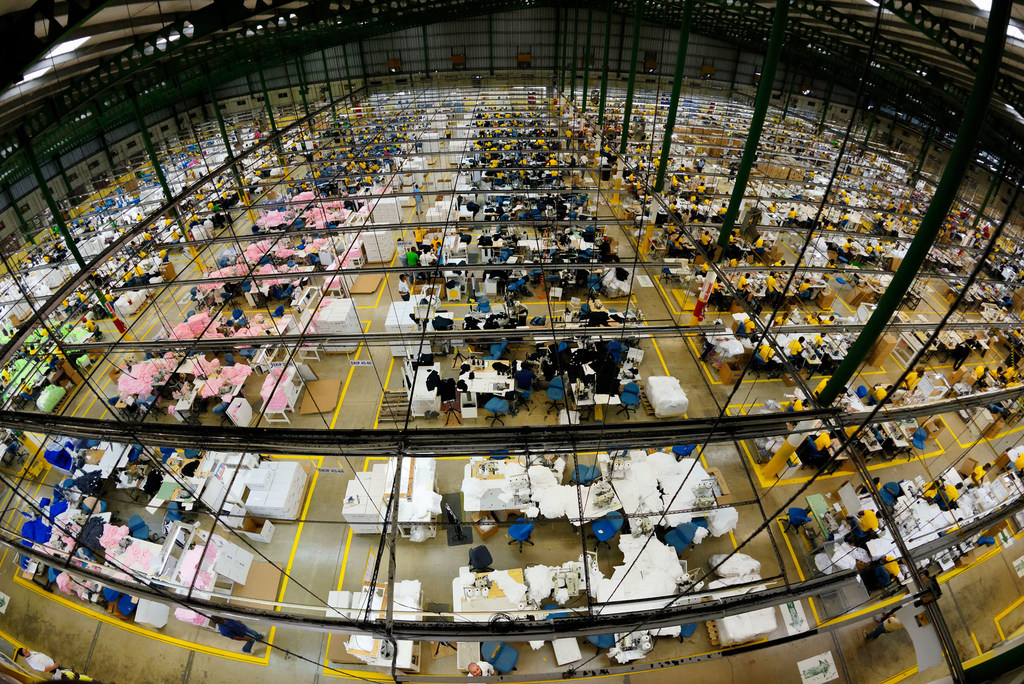
Garment factories around the world which have signed up to implement UN-backed labour standards may simply stop investing in improving working conditions, due to widespread uncertainty over tariff levels, according to the International Labour Organization (ILO).

Threatened or actual tariff increases are largely focused on taxing imports into the United States and will make the products made by factories outside the country more expensive – a situation which may drive down demand.

The ILO’s Better Work programme, a partnership with the International Finance Corporation (IFC), has supported garment factories, many of which export their products to the United States.

The ILO’s Sara Park explained to UN News what could happen next.

Sara Park: Better Work currently operates in the garment, textile and footwear sector in 13 countries around the world.

It was set up 24 years ago in Cambodia to monitor the working conditions in garment factories and since then has focused on improvement and capacity building of factories and our constituencies in the sector, for example occupational safety and health.

There are other elements that support the sector to promote social dialogue, safe and decent work which includes fair wages and working hours. The programme has also helped build productivity in those sectors.

UN News: How is the ILO involved?

Sara Park: The ILO is a tripartite organization, so we work with governments, employers, the unions who represent workers, usually Ministries of Labour, but also with ministries of trade or commerce because the programme focuses on exports.


© Better Work/Aron Simeneh
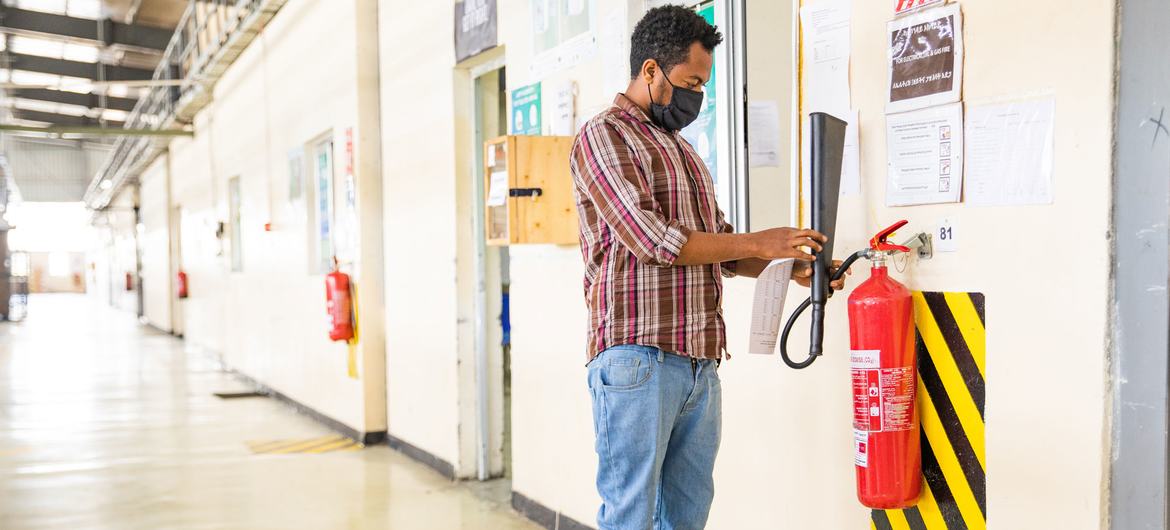
A worker at a factory in Ethiopia carries out an inspection on fire safety equipment.

But what maybe makes us different from other projects is that we have a very close collaboration with major brands from the US, UK, Europe and Japan to promote responsible business practices.

UN News: How successful has this programme been?

Sara Park: Our studies show that at the factory level we've made significant impact, for example by increasing wages and supporting gender-equality related issues, women's empowerment and women getting more supervisory roles.

Over the quarter of a century of its existence, Better Work has lifted millions of people out of poverty and reduced the environmental impact of the apparel sector by creating decent work in sustainable enterprises.

It's still hard for unions as freedom of association remains a big challenge.

© ILO/Aaron Santos
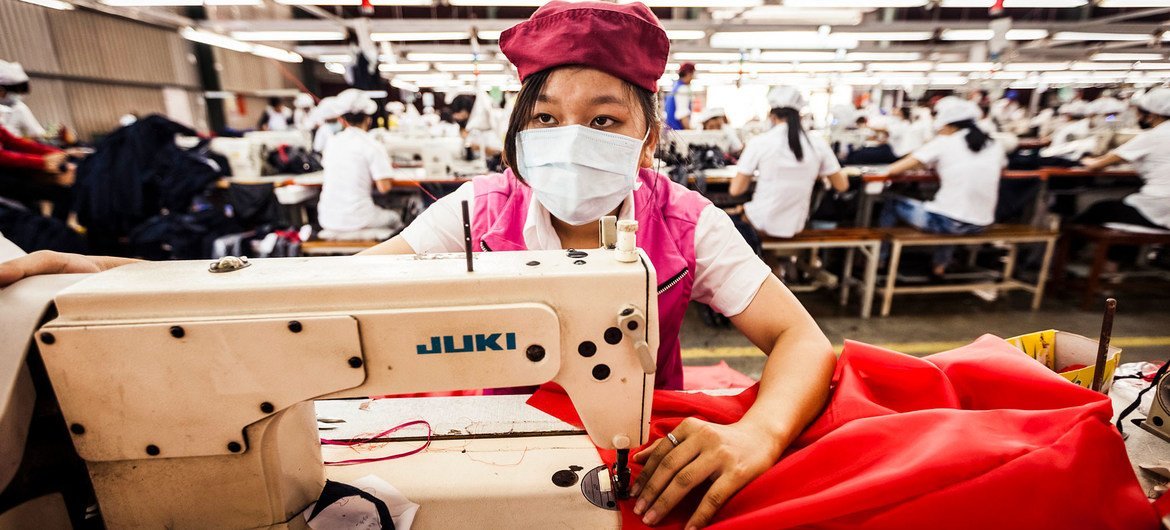
A woman works at a Better Work-affiliated factory in Viet Nam.

If you're trying to develop a whole industry and make it competitive, it takes years if not decades; however, we have seen improvements in the factories where we work.

Better Work-enrolled factories have also reported an increase in orders from buyers.

UN News: So, this is good for business as well?

Sara Park: This is good for business, and productivity in individual factories. Governments also tell us that the programme supports confidence and thus growth of the industry as a whole in participating countries.


© Better Work/Marcel Crozet
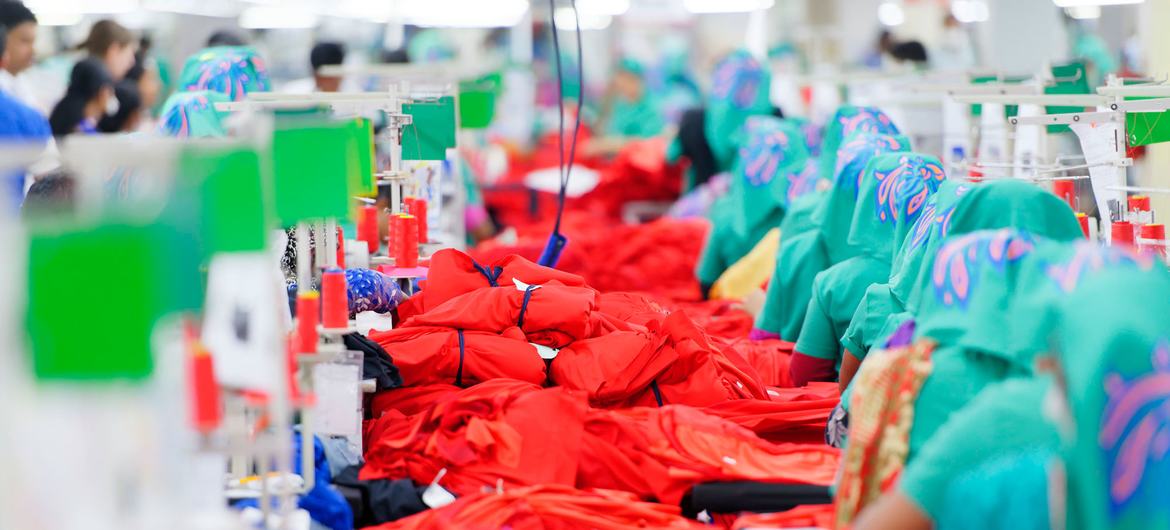
Garment employees work on a production line of an exporting clothing plant in Jordan.

UN News: How has Better Work been affected by recent global changes in development funding?

Sara Park: As we know from recent developments, the US Government has cut funding and that has affected our programmes in Haiti and Jordan, which were almost fully funded by the US. The other countries have not been affected, as we are lucky to have very diverse funding.

UN News: Why is the ILO’s ongoing support needed once the relationship between factory and the buyer is set up?

Sara Park: The buyers, which are often well-known companies, require a sustainable way of monitoring working conditions to ensure they are in compliance with international labour standards; this is important to eliminate risk from the buyers’ perspective.

The Better Work programme supports improvements in factories, by conducting assessments, advisory and learning sessions and helps all parties to better understand compliance with the standards. It also works with governments, workers and employers to build capacity.

© Better Work/Feri Latief
Workers take their lunch break at a garment factory in Indonesia.

UN News: Currently there is widespread uncertainty about tariffs, the taxing of imported goods particularly into the United States. How is the garment sector impacted?

Sara Park: At the moment, we don’t know what the impact will be. Governments are monitoring the situation. Employers and, of course, the unions are worried.

It is extremely challenging for factories as uncertainty means they cannot plan even for the short term, as they don’t know what orders they will have. They are also concerned about paying workers.

Better Work-enrolled factories are providing primarily jobs in the formal sector; if they close, then those jobs may move to the informal sector where workers have fewer protections.

In countries like Jordan for example, migrants make up the majority of the workforce in the garment industry, most of them come from South and Southeast Asia.

UN News: How is this uncertainty impacting investment in the global garment industry?

Sara Park: During periods of crisis or uncertainty, investment generally pauses. One concern is that factories stop investing in improving working conditions, which could affect occupational safety and health.

For example, heat stress is a serious issue. Recently, in Pakistan temperatures reached 50 degrees Celsius so action needs to be taken to protect workers. This may not happen if investment dries up.

UN News: What would you say to a garment worker who was worried about his or her job?

Sara Park: We understand this is a worry for many workers. Yet the work of the ILO is continuing to ensure that workers are protected and the ILO remains in those countries and is committed to improving conditions for all workers across different sectors.

We will continue to promote social dialogue because that's how improvements can be made at factory, sectoral and national level.
The right kind of jihadist: Israel’s support for anti-Hamas Islamists in Gaza

Yuriy Matsarsky
13 July 2025
THE INSIDER

A pro-Israeli group of “radical Islamists” is operating behind Hamas lines in the Gaza Strip. Its leader, Yasser Abu Shabab, has been branded a traitor by Hamas and other anti-Israeli forces. For a long time, he denied having any connection to Israel, but then unexpectedly admitted that he coordinates his actions with forces from the Jewish state. Before the current war in Gaza, Abu Shabab presented himself and his circle as radical Muslims who opposed Hamas for not being religious enough. Their exaggerated displays of piety even prompted accusations of links to ISIS. Yet this hasn’t stopped the self-proclaimed jihadists from siding not with Iran or Qatar, but with Israel — whose leadership is willing to do almost anything to eliminate Hamas. However, serious doubts remain regarding the sincerity of these pro-Israeli Islamic radicals.


Content

Not holy enough


Hamas in reverse


Fellow traveler, not ally


Not holy enough

“When they think no one is watching or listening, they smoke, curse, and even talk about women,” said a Gaza resident I stayed with during one of my trips to the Middle East, listing what he considered the worst traits of Hamas fighters.

Such behavior — smoking, swearing, and speaking openly about sex — violates the strict Islamic rules Hamas members are supposedly committed to following. The group’s name, after all, is an acronym in Arabic for “Islamic Resistance Movement.”

But since at least the mid-2000s, when Hamas took control of the Gaza Strip, it has been criticized for lacking religious fervor. In fact, its participation in Palestinian parliamentary elections — which in 2006 marked the group’s first step toward seizing power — was condemned by religious hardliners as un-Islamic and contrary to a strict reading of the Quran and Sunnah.

Radicals also opposed Hamas’s reluctance to keep up a state of constant war with Israel. They criticized the group for holding talks with the Israelis, for refusing to immediately impose Sharia law in Gaza, and for what they saw as excessive attention to women’s rights in its founding documents.

Radicals denounced Hamas’s refusal to immediately introduce Sharia law in Gaza

The radicals accurately identified the source of Hamas’s popularity among Gaza’s population — its aggressive anti-Israel rhetoric and frequent appeals to religious values — and simply co-opted those issues, taking the hostility of their slogans and the visibility of their piety to the extreme.

By comparison, Hamas began to appear less anti-Israeli and less committed to defending Muslim interests. In statements by leaders of more radical Salafi groups such as Jaysh al-Ummah, Hamas is still portrayed as a Muslim organization, but as one that has lost its way and strayed from true Islamic principles.

Opposition radical groups and organizations might have had a chance to become serious rivals to Hamas in Gaza, but their ideological leaders failed to find common ground with one another, meaning that the region’s countless scattered cells remained disunited. The problem was not necessarily religious in nature.

Instead, a major obstacle was the simple fact that a significant number of these groups were using radical Islam merely as a cover for criminal enterprises. For example, entire Bedouin clans, who had for generations earned substantial money smuggling weapons and other less-than-legal goods, declared themselves jihadists shortly after Hamas began cracking down on smuggling in Gaza.

Some opposition groups used radical Islam merely as a front for illegal business

This sudden “jihadization” of mafia structures was primarily aimed at legitimizing them in the eyes of the Palestinian public — giving yesterday’s criminals the aura of religious warriors. After all, serving as a soldier of Islam who has been called by Allah to clandestinely deliver weapons through underground tunnels in support of a sacred jihad sounds far more noble than simply acting as a member of a gang of smugglers.


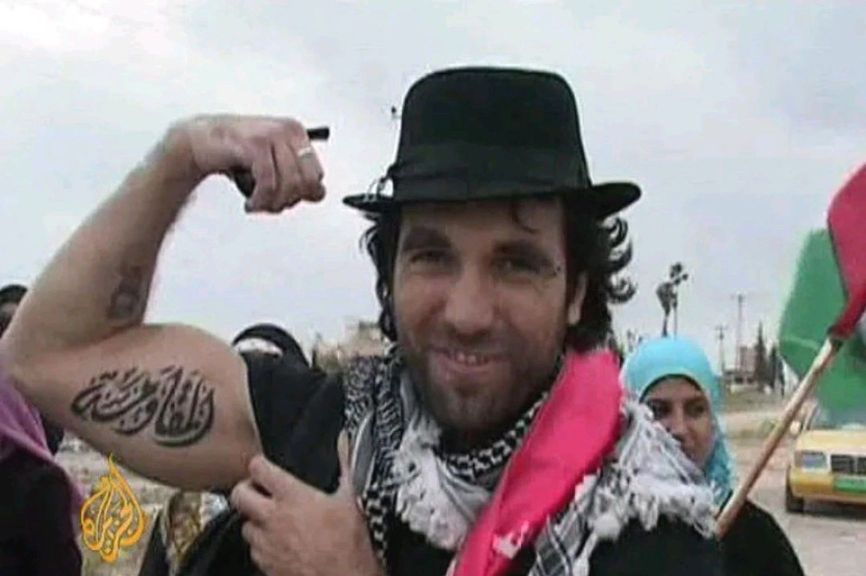
Of course, not all jihadists in Gaza were mafia-style impostors. There were — and still are — plenty of genuine radicals. One need only recall the 2011 murder of Italian activist Vittorio Arrigoni, who lived in Gaza and was killed by Salafis outraged by his openly un-Islamic behavior (which included drinking alcohol in public). But there are also plenty of mafia-style structures that only pretend to be religiously motivated.

Hamas in reverse

One such group is the faction led by a young Bedouin, Yasser Abu Shabab, who became internationally known just last month after former Israeli Defense Minister Avigdor Lieberman publicly named him as the head of a pro-Israeli militia in Gaza — one funded by the Jewish state.

Little is known about Abu Shabab himself. Arab sources describe him as a textbook example of a bandit turned jihadist. Media reports suggest he once led a criminal network involved in smuggling weapons and drugs — and that later rebranded itself as a jihadist group.

This faction operated in the Gaza Strip and in Egypt’s neighboring Sinai Peninsula, including during the period when large swaths of Sinai were under ISIS control. This led to accusations that Abu Shabab was either a member of ISIS or at least closely tied to the radical movement.


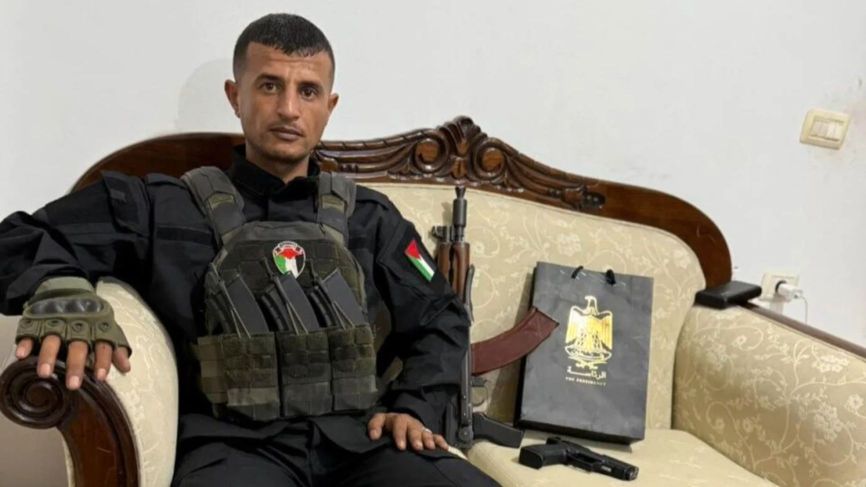
Yasser Abu Shabab

According to Muhammad Shehada, a Gaza-born expert at the European Council on Foreign Relations, Abu Shabab was serving a prison sentence in Gaza for drug smuggling at the time of the October 7 Hamas terrorist attack. Today, Shehada says, the young Bedouin leads a militia at least 300 strong and carries out delicate tasks for Israel, including reconnaissance behind Hamas lines, organizing refugee camps, and supplying those camps with humanitarian aid stolen from international aid warehouses.

It is possible that Shehada, who holds openly anti-Israeli views, may simply be trying to demonize the Jewish state by accusing it of collaborating with a criminal tied to ISIS. However, earlier this month Abu Shabab himself seemed to partly confirm Shehada’s claims. In an interview with an Israeli Arabic-language radio station (the mere fact that a Gaza militant spoke with Israeli journalists says a lot), Abu Shabab admitted to coordinating his group’s activities with the Israeli military.

At the same time, Abu Shabab denies having any ties to ISIS or receiving weapons and money from Israel. He sees Israel — as he puts it — as a situational ally in the war against Hamas and declares that he is ready to fight to liberate Gaza from Hamas “with the Israelis or without them.”

Abu Shabab admitted to coordinating his group’s actions with the Israeli army


It’s worth noting that Abu Shabab had previously insisted he had no connection to Israel and no contact with representatives of the Jewish state. As recently as early June, he claimed he had never cooperated with the Israelis — though he did add the caveat that, in the future, he might act alongside them.

Israel’s selection of Abu Shabab’s group as its proxy is unlikely to be coincidental. If reports that the young Bedouin commands around 300 fighters are accurate, that would make his faction one of the largest anti-Hamas forces in Gaza.

For comparison, the aforementioned Salafi group Jaysh al-Ummah consists of just a few dozen members — yet even they have remained beyond Hamas’s control, resisting both force and persuasion. Moreover, Abu Shabab’s men operate in the border city of Rafah, at the very southern edge of the Gaza Strip, which now represents the primary theater of the war.

The Revolutionary Court in Gaza, which is under Hamas control, has issued an arrest warrant for Abu Shabab, charging him with treason, collaboration with hostile entities, forming an illegal armed group, and rebellion. The judges gave him until July 12 to surrender to Hamas, and it appears his case will be tried in absentia.

It’s almost unthinkable that Yasser Abu Shabab would be intimidated by the court’s ultimatum and voluntarily place himself in Hamas’s custody. Hamas is clearly no longer in a position to dictate terms. It has failed — and is unlikely to succeed — in turning the tide of the war in the Gaza Strip, much of which is already under Israeli military control.

In recent days, the IDF has intensified its shelling and bombing of Gaza, worsening an already catastrophic humanitarian situation in the region. And Israel has no intention of letting up. Prime Minister Benjamin Netanyahu continues to insist that the fighting will go on until Hamas is completely eliminated.

As for the region’s administrative future after that goal is achieved, Israeli authorities appear not to have made a final decision. Plans to forcibly deport Palestinians to neighboring Arab countries have so far failed to gain any adherents from among Middle Eastern governments, even if the idea has not been entirely abandoned. In any case, the strip is likely to remain predominantly Arab and staunchly anti-Israeli — which is where someone like Abu Shabab might prove useful. In theory, Israel could entrust him or someone from his circle with establishing a new, post-Hamas administration for the Gaza Strip.

Israel could entrust Shabab with creating a post-Hamas administration in Gaza

After all, the Israelis have significant experience in building governments — and even armies — led by their Arab partners. The most illustrative example is the long occupation of southern Lebanon, where functioning government institutions and security forces operated successfully on Israeli-controlled territory.


Fellow traveler, not ally

Still, the risks in Abu Shabab’s case are considerable, with reputational concerns chief among them. His involvement in looting humanitarian aid has led even his own family to disown him, calling the theft of food and medicine an “unforgivable crime.”

Moreover, despite all of Abu Shabab’s denials, many still view him as being affiliated with both ISIS and Israel. In much of the Arab world, this isn’t seen as a contradiction — thanks to widely believed conspiracy theories that portray ISIS as part of a Jewish anti-Arab plot. Some even go so far as to claim that the English acronym ISIS stands for Israel Secret Intelligence Service.

In other words, it’s unlikely that Yasser Abu Shabab will be offered any serious position, even if a new administration for Gaza is formed. He and Israel appear to be merely situational allies, united by nothing more than a common enemy: Hamas.

Incidentally, Hamas’s predecessor — the Palestinian branch of the Muslim Brotherhood — was viewed by Israel in the 1970s as just such a situational ally in its fight against the Palestine Liberation Organization (PLO), which at the time was Israel’s main enemy. Back then, the PLO was staunchly secular and sought to mobilize Palestinians not for a holy war, but for the creation of an independent national state. The Muslim Brotherhood, for its part, stayed out of politics and focused on building mosques and libraries. Israeli officials thought it would be a great idea to divert Palestinian attention away from nationalism and toward religion, and for years they therefore refrained from imposing any restrictions on the Brotherhood’s activities.

Israeli officials believed it would be a great idea to distract Palestinians away from nationalism by encouraging the promotion of religious groups


A little later, after the PLO had seen many of its most active members either arrested or forced into exile, the Muslim Brotherhood changed its stance on politics and became the main anti-Israeli force in the Palestinian territories. Netanyahu is almost certainly well aware of this history, which is why he is unlikely to let Abu Shabab’s group get too comfortable. That is, of course, if his plans for the complete destruction of Hamas are carried out.
NAKBA 2
Israeli plan to move Gazans into closed zone triggers backlash


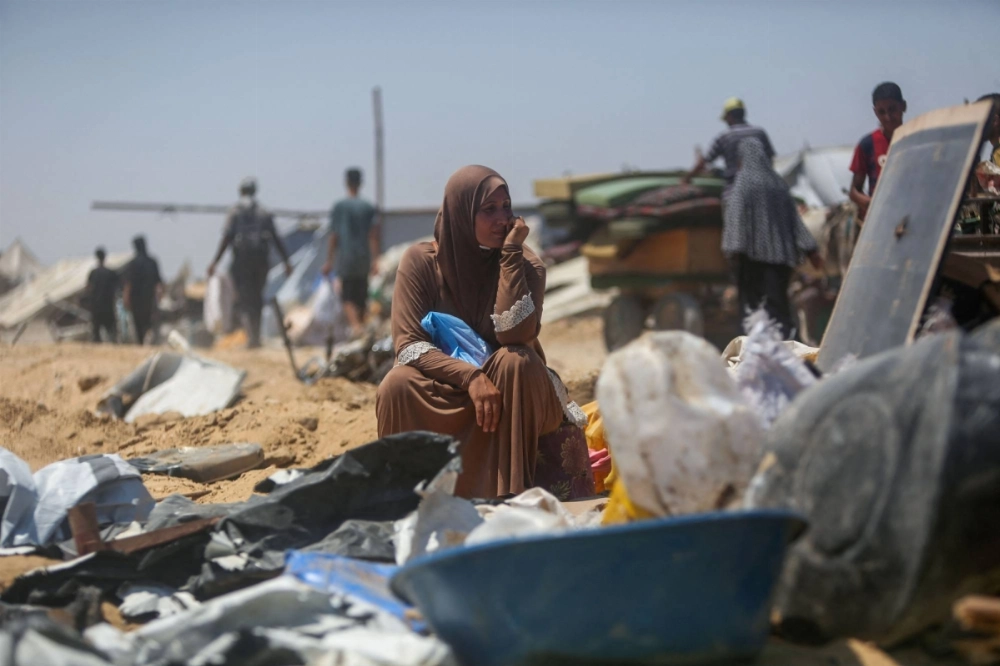
A woman sitting amid debris looks on as Palestinians inspect destroyed tents at a makeshift displacement camp following a reported incursion a day earlier by Israeli tanks in the area in Khan Younis in the northern Gaza strip on Friday. | AFP-JIJI

By Gianluca PACCHIANI
AFP-JIJI
JULY 13, 2025
Jerusalem –

An Israeli proposal to move Gazans into what is being called a "humanitarian city" has come under intense fire, slammed by critics as a costly distraction at best, and at worst a potential step toward forcing Palestinians off of their land.

Defense Minister Israel Katz first unveiled the plan during a briefing with reporters last Monday. It envisions building from scratch a closed zone in southern Gaza during a potential 60-day ceasefire in Israel's war with Hamas, currently under negotiation in Qatar.

According to Katz, the area would initially house around 600,000 displaced people from southern Gaza and include four aid distribution sites managed by international organizations.

The entire civilian population of Gaza — more than 2 million people — would eventually be relocated there.

Critics, however, have questioned both the feasibility and ethics of the plan, with Israel's opposition leader citing its astronomical cost, and one expert pointing to lack of infrastructure in the area necessary to accommodate so many people.

The U.N. agency for Palestinian refugees has described the proposed facility as a "concentration camp," while Britain's minister for the Middle East and North Africa has said he is "appalled" by the idea

"Palestinian territory must not be reduced," the U.K.'s Hamish Falconer said on X. "Civilians must be able to return to their communities."

Nearly 21 months of war have devastated much of the Gaza Strip, displacing most of its population, creating dire shortages of food and other essentials, and killing 58,026 people, most of them civilians, according to the territory's health ministry.

The Oct. 7, 2023, Hamas attack on Israel that sparked the war led to 1,219 deaths, also mostly civilians, according to an AFP tally based on official figures

New arrivals to the proposed facility would undergo security screening to ensure they are not affiliated with Hamas, and once admitted, they would not be permitted to leave.

The Israeli military would provide security "from a distance," Katz has said.

However, the criticism of the plan reportedly extends even to Israel's own security establishment.

Local media reported that army chief Eyal Zamir lambasted the proposal at a cabinet meeting, arguing it would divert focus from the military's two core objectives: defeating Hamas and securing the return of hostages taken on Oct. 7.

The broadcaster Channel 12 reported that unnamed security officials viewed the plan as little more than a "gigantic tent city," and warned it could pave the way for a return to Israeli military rule in Gaza.

Such a move aligns with the long-standing goals of far-right Israeli ministers Bezalel Smotrich and Itamar Ben Gvir, key coalition partners of Prime Minister Benjamin Netanyahu.

Both Smotrich and Ben Gvir advocate the reestablishment of Jewish settlements in Gaza, from which Israel unilaterally withdrew in 2005, and have repeatedly called for the voluntary expatriation of Palestinians from Gaza.

The projected expense of the initiative — estimated between 10 and 20 billion shekels ($3 to $6 billion) — has further fueled domestic outrage as the cost of nearly two years of war mounts.

"That money is not coming back," opposition leader Yair Lapid said on X on Sunday.

"Netanyahu is letting Smotrich and Ben Gvir run wild with extremist delusions just to preserve his coalition. Instead of plundering the middle class's money, end the war and bring back the hostages."

The Palestinian Authority was scathing in appraisal of the proposed facility, with its foreign ministry saying: "The humanitarian city has nothing to do with humanity."

That view was echoed by UNRWA, the U.N. agency for Palestinian refugees, which said the "plan would de facto create massive concentration camps at the border with Egypt."

A Palestinian official with knowledge of the ongoing ceasefire talks in Qatar said Hamas rejected plans to concentrate Palestinians in a small part of the south, viewing it as "preparation for forcibly displacing them to Egypt or other countries."

Amnesty International, which has accused Israel of genocide, warned that relocating Gazans within the territory or "deporting them outside against their will would amount to the war crime of unlawful transfer."

On Friday, 16 Israeli scholars of international law sent a letter to Katz and Zamir also warning the scheme could amount to a war crime.

Michael Milshtein, an Israeli former military intelligence officer, called the plan one of many "fantasies" floated by Israel's leadership amid mounting public frustration with the war's trajectory and lack of a political solution.

He also noted there was no existing infrastructure in the proposed zone, raising questions about provision of electricity and water.

"There is only sand and fields, nothing," said Milshtein, who heads the Palestinian studies program at Tel Aviv University.

"Nobody tells the Israeli public what is the price and what are the consequences of reoccupying Gaza, from the economic, political and security points of view," he said.

"I really think that if people understand that the purpose of the war is the reoccupation of Gaza, there is going to be a lot of social unrest in Israel."
Israeli missile hits Gaza children collecting water, IDF blames malfunction


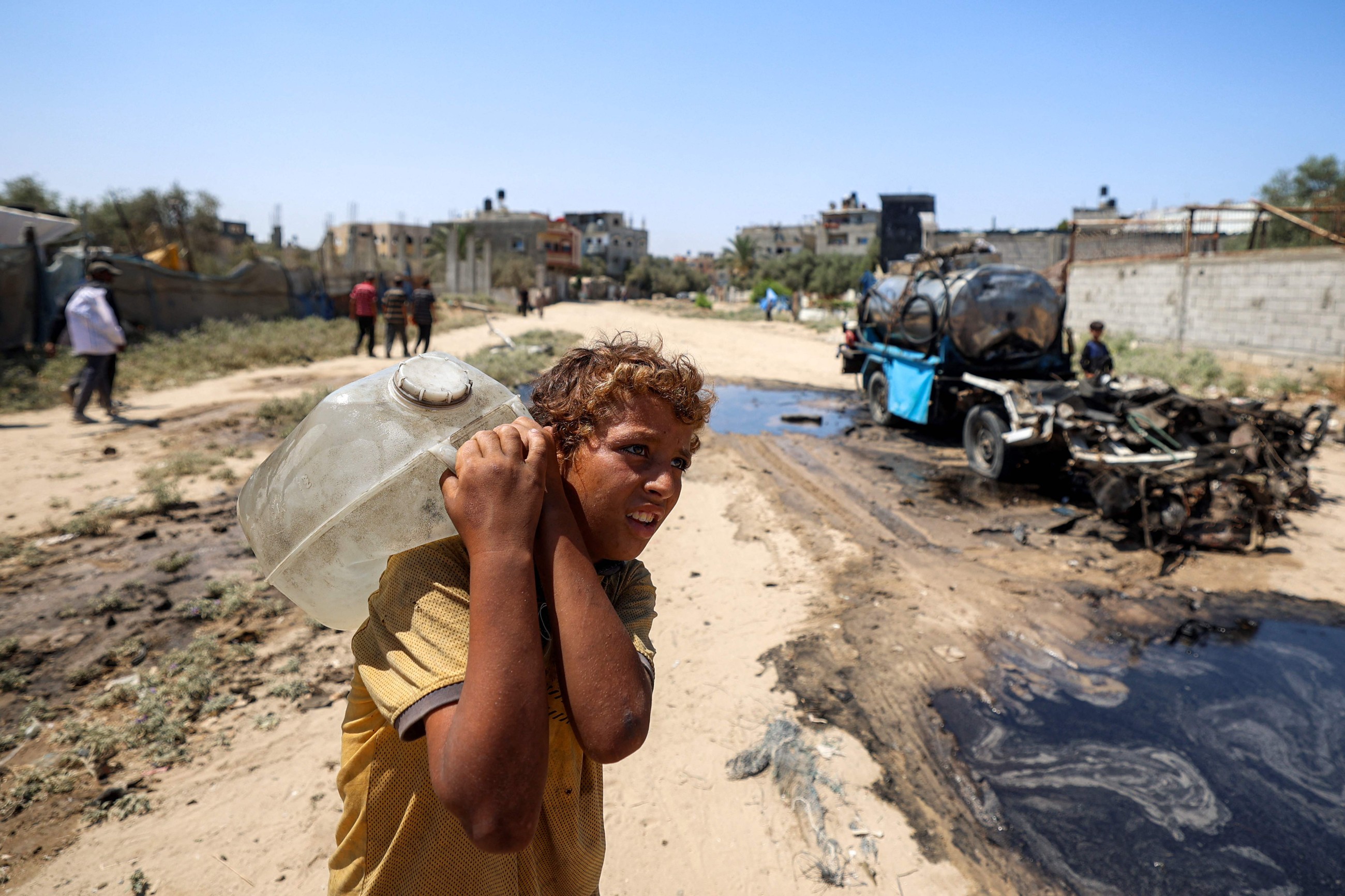
A Palestinian boy inspects the site of an Israeli strike that killed Palestinians, gathered to collect water from a distribution point, according to medics, in Nuseirat in the central Gaza Strip July 13, 2025.
PHOTO: Reuters

July 13, 2025 

JERUSALEM — At least eight Palestinians, most of them children, were killed and more than a dozen were wounded in central Gaza when they went to collect water on Sunday (July 13), local officials said, in an Israeli strike which the military said missed its target.

The Israeli military said the missile had intended to hit an Islamic Jihad militant in the area but that a malfunction had caused it to fall "dozens of metres from the target".

"The IDF regrets any harm to uninvolved civilians," it said in a statement, adding that the incident was under review.

The strike hit a water distribution point in Nuseirat refugee camp, killing six children and injuring 17 others, said Ahmed Abu Saifan, an emergency physician at Al-Awda Hospital.

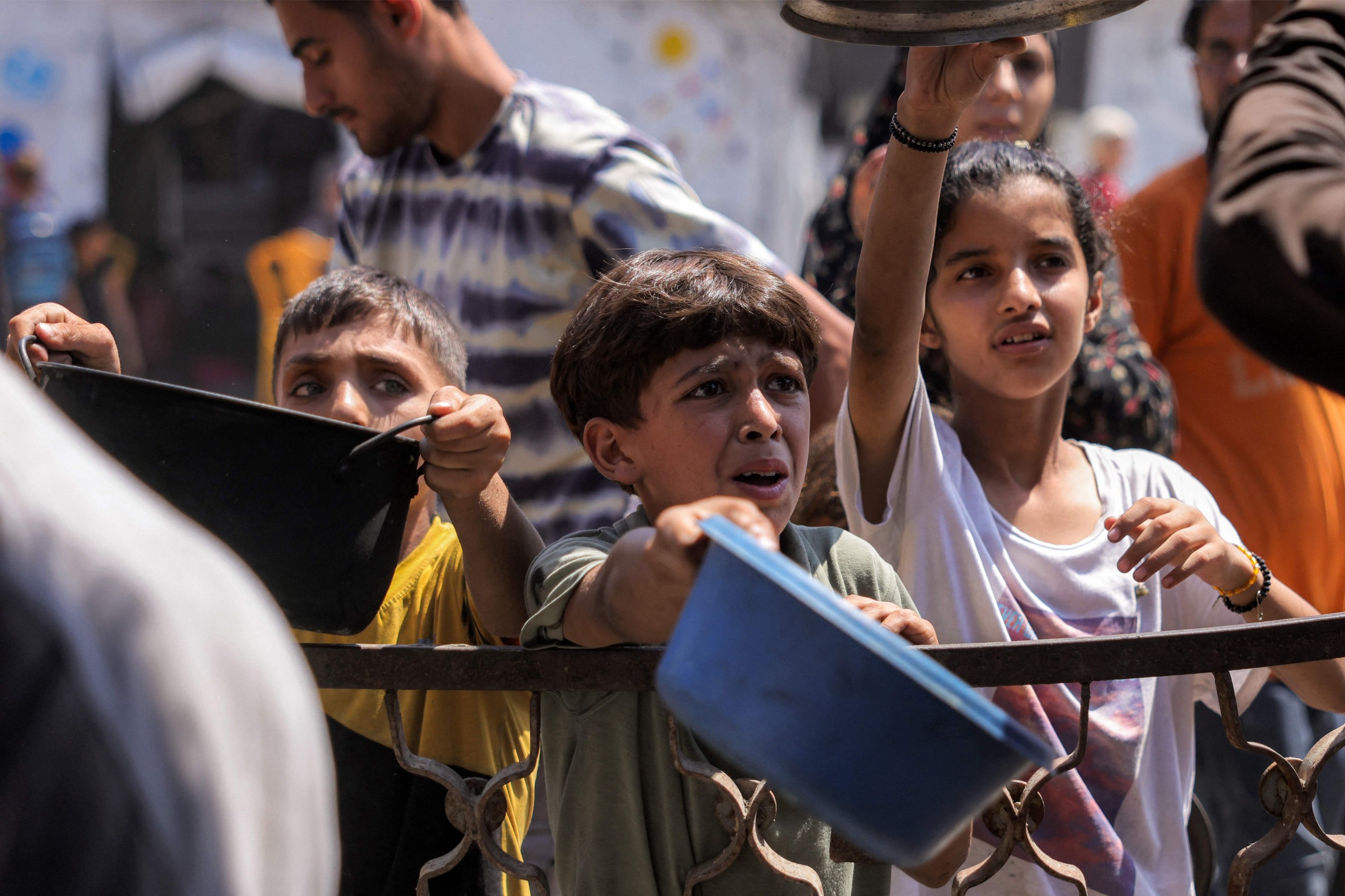
Water shortages in Gaza have worsened sharply in recent weeks, with fuel shortages causing desalination and sanitation facilities to close, making people dependant on collection centres where they can fill up their plastic containers.

A Palestinian inspects the site of an overnight Israeli strike on a house, in Gaza City July 13, 2025.
PHOTO: Reuters

Hours later, 12 people were killed by an Israeli strike on a market in Gaza City, including a prominent hospital consultant, Ahmad Qandil, Palestinian media reported. The Israeli military did not immediately comment on the attack.

Gaza's health ministry said on Sunday that more than 58,000 people had been killed since the start of the war between Israel and Hamas in October 2023, with 139 people added to the death toll over the past 24 hours.

The ministry does not distinguish between civilians and fighters in its tally, but says over half of those killed are women and children.

Ceasefire?

US President Donald Trump's Middle East envoy Steve Witkoff said on Sunday that he was "hopeful" on Gaza ceasefire negotiations underway in Qatar.

He told reporters in Teterboro, New Jersey, that he planned to meet senior Qatari officials on the sidelines of the FIFA Club World Cup final.

However, negotiations aimed at securing a ceasefire have been stalling, with the two sides divided over the extent of an eventual Israeli withdrawal from the Palestinian enclave, Palestinian and Israeli sources said at the weekend.

Israeli Prime Minister Benjamin Netanyahu was set to convene ministers late on Sunday to discuss the latest developments in the talks, an Israeli official said.

The indirect talks over a US proposal for a 60-day ceasefire are being held in Doha, but optimism that surfaced last week of a looming deal has largely faded, with both sides accusing each other of intransigence.

Netanyahu in a video he posted on Telegram on Sunday said Israel would not back down from its core demands — releasing all the hostages still in Gaza, destroying Hamas and ensuring Gaza will never again be a threat to Israel.

The war began on Oct 7, 2023, when Hamas-led militants stormed into Israel, killing about 1,200 people and taking 251 hostages into Gaza. At least 20 of the remaining 50 hostages there are believed to still be alive.

Families of hostages gathered outside Netanyahu's office in Jerusalem to call for a deal.

An Israeli APC manoeuvres in Gaza, near the Israel-Gaza border, July 13, 2025.
PHOTO: Reuters

"The overwhelming majority of the people of Israel have spoken loudly and clearly. We want to do a deal, even at the cost of ending this war, and we want to do it now," said Jon Polin, whose son Hersh Goldberg-Polin was held hostage by Hamas in a Gaza tunnel and slain by his captors in August 2024.

Netanyahu and his ministers were also set to discuss a plan on Sunday to move hundreds of thousands of Gazans to the southern area of Rafah, in what Israeli Defence Minister Israel Katz has described as a new "humanitarian city" but which would be likely to draw international criticism for forced displacement.

An Israeli source briefed on discussions in Israel said that the plan was to establish the complex in Rafah during the ceasefire, if it is reached.

On Saturday, a Palestinian source familiar with the truce talks said that Hamas rejected withdrawal maps which Israel proposed, because they would leave around 40 per cent of the territory under Israeli control, including all of Rafah.

Israel's campaign against Hamas has displaced almost the entire population of more than two million people, but Gazans say nowhere is safe in the coastal enclave.

Early on Sunday morning, a missile hit a house in Gaza City where a family had moved after receiving an evacuation order from their home in the southern outskirts.

"My aunt, her husband and the children, are gone. What is the fault of the children who died in an ugly bloody massacre at dawn?" said Anas Matar, standing in the rubble of the building.

Occupation commits systematic massacres against civilians by targeting water filling points

Published: 14 Jul 2025 - THE PENINSULA - QNA


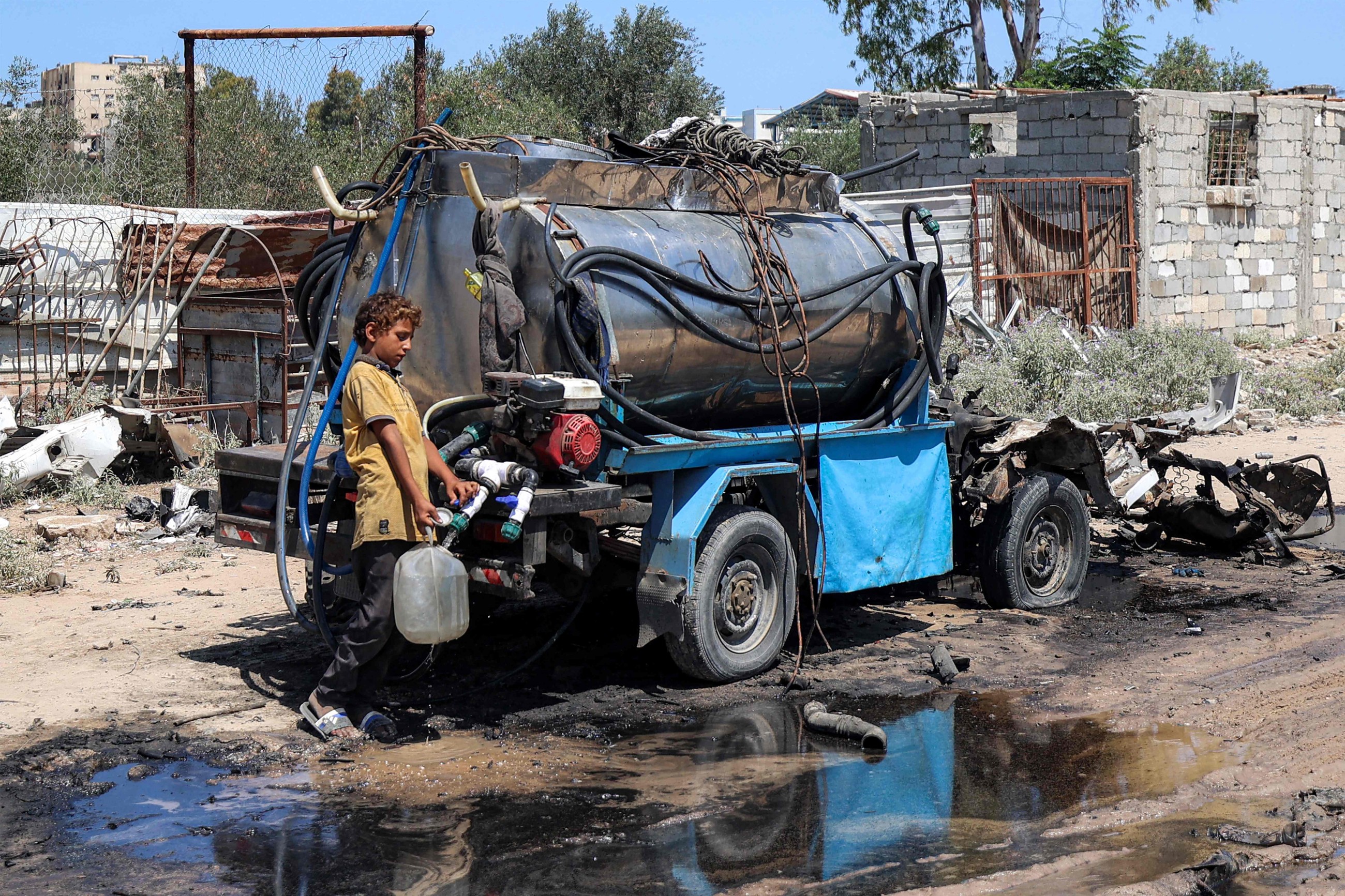
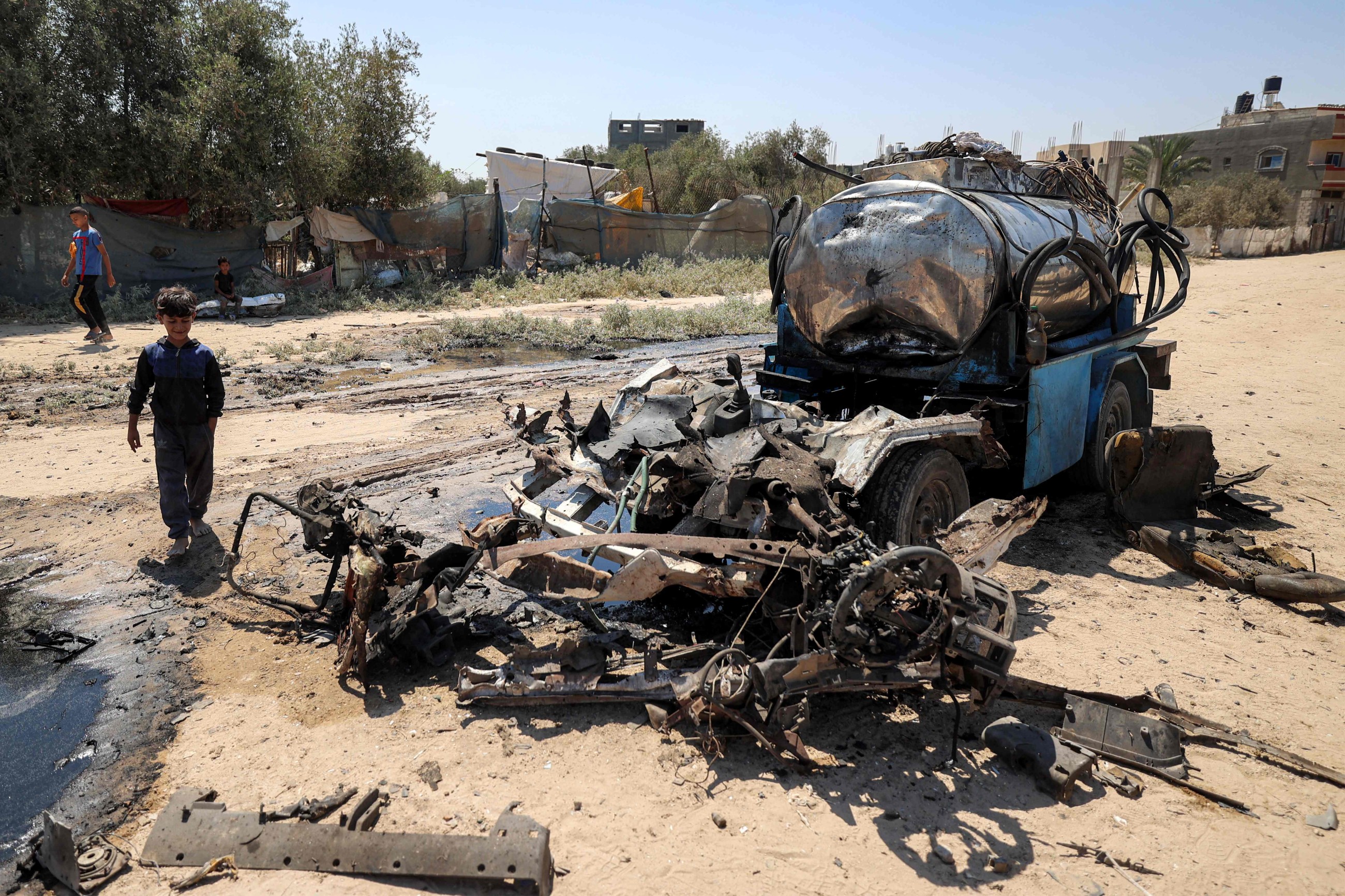
Boys stand near a destroyed mobile water cistern that was hit by Israeli bombardment in the Nuseirat camp for Palestinian refugees in the central Gaza Strip on July 14, 2025. (Photo by Eyad BABA / AFP)

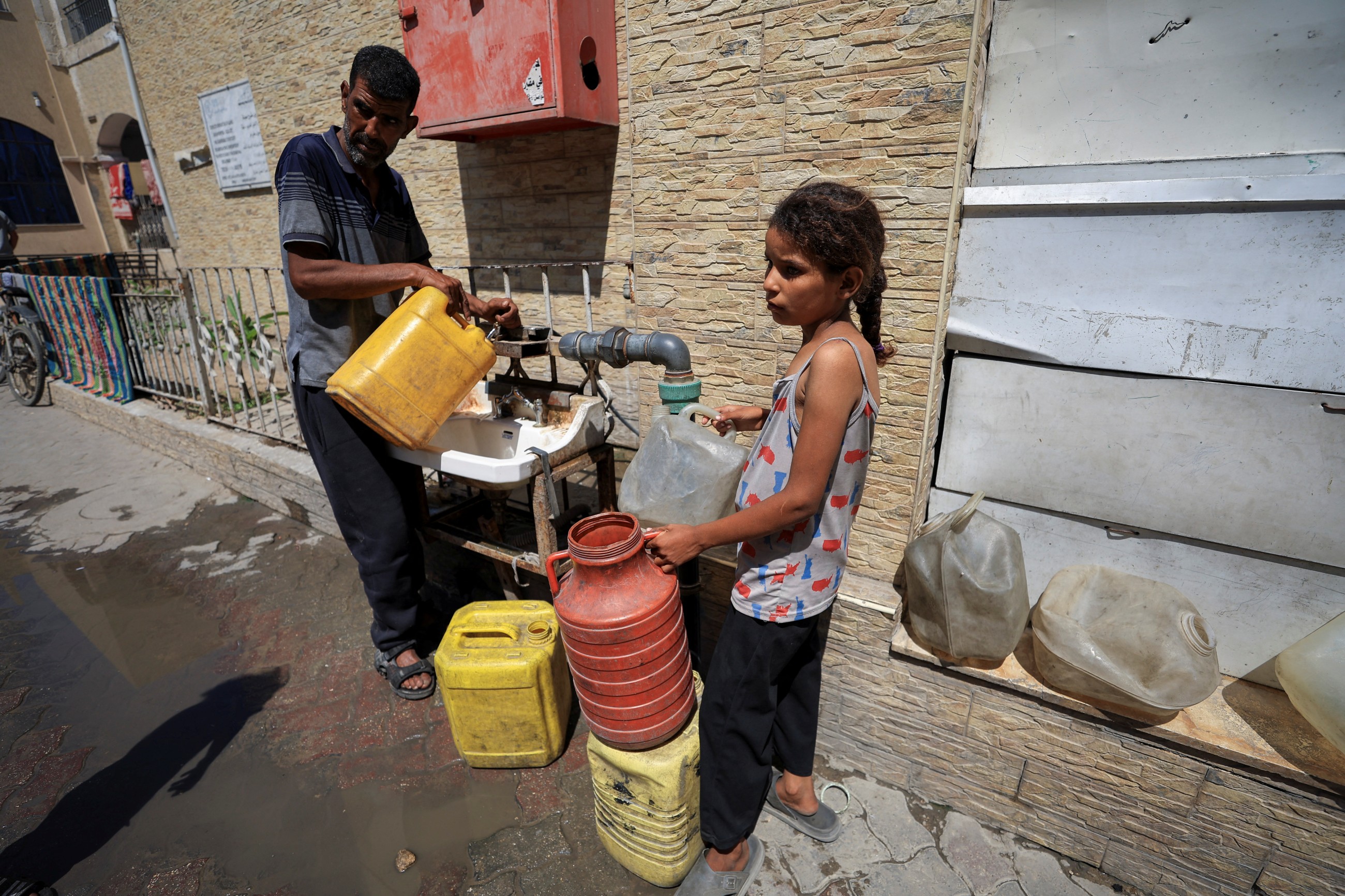
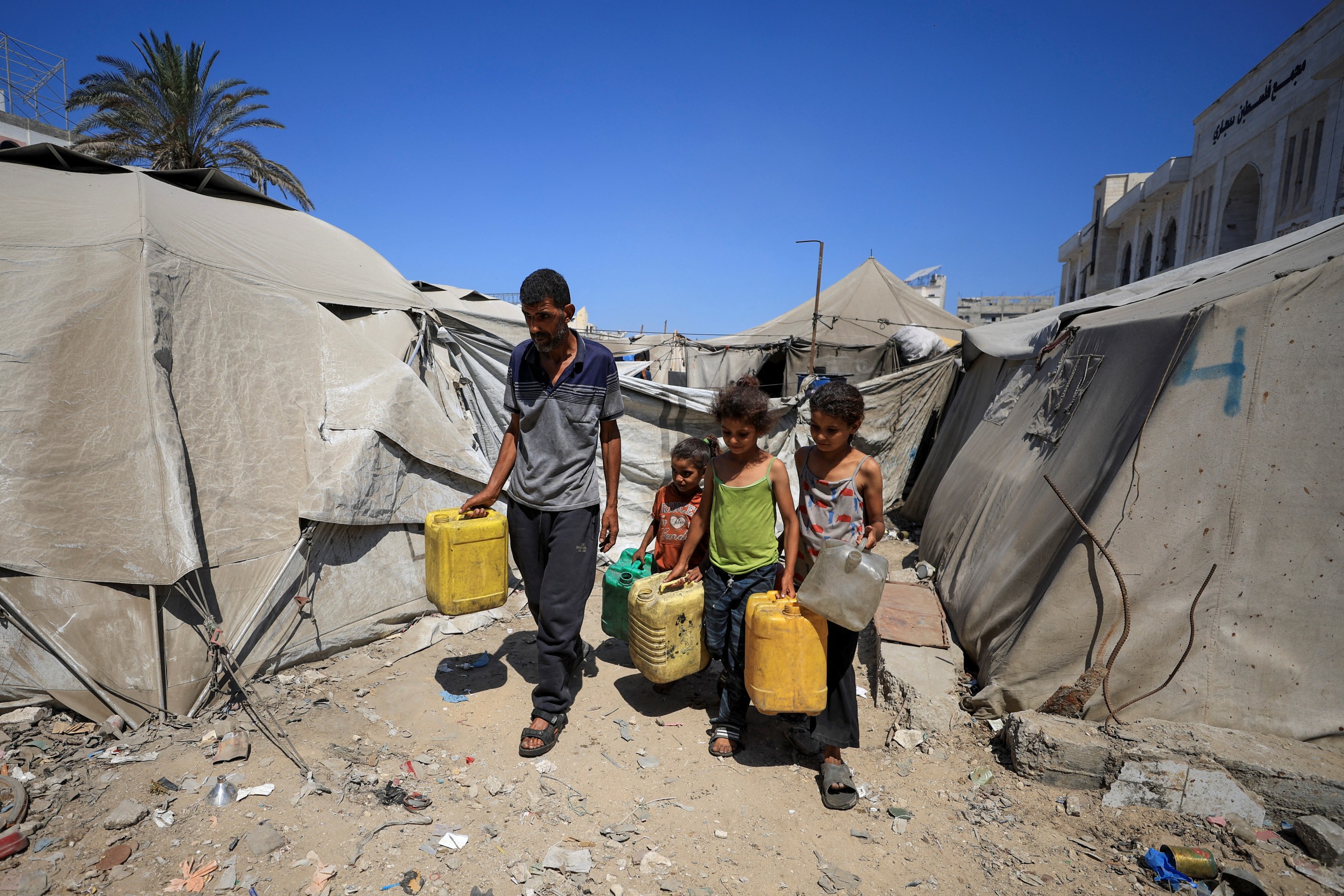
Gaza: The Government Media Office in Gaza emphasized that the Israeli occupation forces are waging a systematic war of deprivation, committing 112 massacres against water-filling queues, resulting in the deaths of hundreds of Palestinians, the majority of whom were children, since Oct. 7, 2023.

In a statement on Monday, the office indicated that the most recent of these massacres occurred in the new camp, northwest of the Nuseirat camp in the central Gaza Strip, and resulted in the death of 12 civilians, including 8 children.

It noted that the Israeli occupation continued to wage a systematic and deliberate war of starvation against the Palestinian people in the Gaza Strip, in flagrant violation of all international and humanitarian conventions.

The office added that the occupation deliberately destroyed 720 water wells and put them out of service, depriving more than a million and a quarter people of access to clean water.

It pointed out that the occupation prevented the entry of 12 million liters of fuel per month, which is the amount necessary to operate the minimum number of water wells, sewage stations, waste collection mechanisms, and other vital sectors.

The office urged the international community, and all UN, international, and global human rights and legal institutions, to take urgent action to halt the war on water immediately, ensure unhindered access to water for civilians, and pressure the occupation to allow the entry of fuel and equipment necessary to operate water wells and sewage treatment plants.

It also stressed the need for an urgent international investigation into the crime of depriving civilians of water, as it is part of the ongoing genocide against civilians in the Gaza Strip.

It also stressed the need to hold the occupation accountable before international courts for its crimes against defenseless civilians, and to bring its criminal leaders to justice.

Children among 700 Palestinians killed waiting to get water in Gaza

Last updated: July 14, 2025 |

Displaced Palestinian man Akram Al Manasra collects water with his daughter amid shortages in Gaza City on Monday. Reuters

The government media office in Gaza says attacks on people waiting in line for water have killed more than 700 Palestinians as part of a “systematic thirst war,” a media outlet reported on Monday.

The Israeli army has targeted 112 freshwater filling points and destroyed 720 water wells, putting them out of service. This has deprived more than 1.25 million people of access to clean water, the office said in a statement.

“We affirm that this racist policy constitutes a full-fledged war crime under the Geneva Conventions, and a grave violation of international humanitarian law and human rights law.”


A boy draws water into a jerrycan from the tank of a destroyed mobile water cistern that was hit by Israeli bombardment in the Nuseirat camp. AFP

The office said Israel has prevented the entry of 12 million litres of fuel monthly, the amount necessary to operate the minimum number of water wells, sewage treatment plants, garbage collection vehicles and other vital services. This ban has “caused near-total paralysis of water and sewage networks and worsened the spread of diseases, especially among children,” the office said.

Gazans' daily struggle for water after deadly strike

The Al Manasra family rarely get enough water for both drinking and washing after their daily trudge to a Gaza distribution point like the one where eight people were killed on Sunday in a strike that Israel's military said had missed its target.


Displaced Palestinian man Akram Al Manasra and his children make their way to collect water from a distribution point amid shortages in Gaza City on Monday. Reuters

Living in a tent camp by the ruins of a smashed concrete building in Gaza City, the family say their children are already suffering from diarrhoea and skin maladies and from the lack of clean water, and they fear worse to come.

"There's no water, our children have been infected with scabies, there are no hospitals to go to and no medications," said Akram Manasra, 51.


A boy carries on his back a jerrycan filled with water drawn from the tank of a destroyed mobile water cistern. AFP

He had set off on Monday for a local water tap with three of his daughters, each of them carrying two heavy plastic containers in Gaza's blazing summer heat, but they only managed to fill two - barely enough for the family of 10. Gaza's lack of clean water after 21 months of war and four months of Israeli blockade is already having "devastating impacts on public health" the United Nations humanitarian agency OCHA said in a report this month.

For people queuing at a water distribution point on Sunday it was fatal. A missile that Israel said had targeted militants but malfunctioned hit a queue of people waiting to collect water at the Nuseirat refugee camp.

Israel's blockade of fuel along with the difficulty in accessing wells and desalination plants in zones controlled by the Israeli military is severely constraining water, sanitation and hygiene services according to OCHA.


Children queue with pots to receive meals from a charity kitchen in Gaza City. AFP

Fuel shortages have also hit waste and sewage services, risking more contamination of the tiny, crowded territory's dwindling water supply, and diseases causing diarrhoea and jaundice are spreading among people crammed into shelters and weakened by hunger.

"If electricity was allowed to desalination plants the problem of a lethal lack of water, which is what's becoming the situation now in Gaza, would be changed within 24 hours," said James Elder, the spokesperson for the U.N.'s children's agency UNICEF.


A boy stands near a destroyed mobile water cistern that was hit by Israeli bombardment. AFP

"What possible reason can there be for denying of a legitimate amount of water that a family needs?" he added.

COGAT, the Israeli military aid coordination agency, did not immediately respond to a request for comment.

Last week, an Israeli military official said that Israel was allowing sufficient fuel into Gaza but that its distribution around the enclave was not under Israel's purview.

THIRSTY AND DIRTY

For the Manasra family, like others in Gaza, the daily toil of finding water is exhausting and often fruitless.

Inside their tent the family tries to maintain hygiene by sweeping. But there is no water for proper cleaning and sometimes they are unable to wash dishes from their meagre meals for several days at a time.

Manasra sat in the tent and showed how one of his young daughters had angry red marks across her back from what he said a doctor had told them was a skin infection caused by the lack of clean water.

They maintain a strict regimen of water use by priority.

After pouring their two containers of water from the distribution point into a broken plastic water butt by their tent, they use it to clean themselves from the tap, using their hands to spoon it over their heads and bodies.

Water that runs off into the basin underneath is then used for dishes and after that - now grey and dirty - for clothes.

"How is this going to be enough for 10 people? For the showering, washing, dish washing, and the washing of the covers. It's been three months we haven't washed the covers, and the weather is hot," Manasra said.

His wife, Umm Khaled, sat washing clothes in a tiny puddle of water at the bottom of a bucket - all that was left after the more urgent requirements of drinking and cooking.

"My daughter was very sick from the heat rash and the scabies. I went to several doctors for her and they prescribed many medications. Two of my children yesterday, one had diarrhoea and vomiting and the other had fever and infections from the dirty water," she said.

Reuters / Agencies