Tuesday, August 26, 2025

In Kenya's capital, a new Rastafari temple shows the movement's endurance

NAIROBI, Kenya (AP) — The rare event — opening a tabernacle made of wooden poles and roofed with iron sheets — illustrated the community’s expanding ranks in a country where until recently Rastafari was not considered a legitimate religion.
THE CONVERSATION
August 20, 2025

NAIROBI, Kenya (AP) — At a recent opening of the newest Rastafari place of worship just outside Kenya’s capital, some of the faithful gathered to sing rhythmic songs, read Scripture and exchange teachings on the appropriate way to live.

The rare event — opening a tabernacle made of wooden poles and roofed with iron sheets — illustrated the community’s expanding ranks in a country where until recently Rastafari was not considered a legitimate religion.

Things changed in 2019 with a court ruling in favor of a petitioner who cited discrimination when her school demanded that she cut her dreadlocks, often preferred by those who follow the Rastafari religion.


The student’s refusal to cut her locks had resulted in her expulsion from school, but the High Court ruled Rastafari was a legitimate religion that should be protected, a ruling later affirmed by the Supreme Court.

A history of the religion

Across the world, the faithful are known as Rastafarians, members of the movement launched in 1930 with the coronation in Ethiopia of Ras Tafari Mekonnen as Emperor Haile Selassie I. Rastafarians believe Selassie was the final incarnation of the biblical Jesus, and during his reign many Rastafarians made pilgrimage to the Horn of Africa nation. For Rastafarians, Ethiopia was a symbol of pride for its unbroken resistance to colonizers and Selassie was Jah, the deity.

Selassie was removed from power in a 1974 coup by a military junta. He died a year later. But the movement inspired by his rise to power in Ethiopia survives in countries ranging from the United States to Ghana.

A religious minority in Kenya

It is unclear how many people identify as Rastafari in Kenya, a country dominated by Christians and Muslims. At least 30 Rastafarians came to the tabernacle opening in Ruai, some 25 kilometers (15 miles) east of Nairobi, last month.

In Kenya, the movement is set up under three “mansions” or branches: Nyabinghi, Bobo Ashanti and The Twelve tribes of Israel. The “mansions” represent small groups of Rastafarians who meet to worship together. Unlike traditional places of worship that are housed in architect-designed permanent structures, a Rastafari tabernacle is built with wooden poles, roofed with iron sheets and decorated in the unmistakable Rastafari colors of red, yellow and green.

Rastafarians around the world have a reputation for their unique Afrocentric spirituality, and they are generally known to be peace advocates. They oppose oppression and gravitate to music and art. The Jamaican reggae singer Bob Marley was a famous Rastafari.


There are challenges, including those that stem from misunderstandings about the religion. Across East Africa, Rastafarians are often stereotyped as lazy and indulging in prohibited substances like marijuana. Known to Rastafarians as ganja, marijuana is an important item in religious ceremonies.

Rastafarians share their experience practicing the faith

The community has been growing in Kenya, attracting mostly young people.

Ng’ang’a Njuguna, a Rastafari elder in the Nyabinghi mansion of Kenya, describes Rastafari as not just a religion but a way of life.

“It is a spiritual way of life,” he said. “That is why we connect with nature, we connect with animals, we connect with every living being because Rastafari is all about the spiritual world.”

Fedrick Wangai, 26, is one of the newest members. He converted six years ago in what he described as his emancipation from Western religion.

“I grew up in a Christian setup and I ended up questioning the faith because it was made by the white man who was the colonial master of my forefathers,” he said. “Growing up for me in that religion was very difficult for me because I believe it brought division to the Black people.”

Christine Wanjiru, a 58-year-old who became a Rastafarian in 1994, making her one of the oldest members of her community, recalled that being one once was difficult as it often attracted discrimination and stigma.


“Back then, there was a lot of stigma and discrimination against Rastafari,” she said. “Most people never saw Rastafari as a good thing or a spiritual thing, from family members to the government, the police, all round. But we endured and we are here today.”

She added, however, that since then “more brethren have received this light and have come to Rastafari.”

Ng’ang’a Njuguna, an elder in the Nyabinghi mansion, says the movement has been growing largely because of interest from young Kenyans.

“They have that fire, they like how Rasta people carry themselves, how Rasta people live,” he said. “Our diet, art and skills.”

___

Associated Press writer Rodney Muhumuza in Kampala, Uganda, contributed to this report.

___

Associated Press religion coverage receives support through the AP’s collaboration with The Conversation US, with funding from Lilly Endowment Inc. The AP is solely responsible for this content.


Psychedelics researcher reveals how MDMA and LSD transform human connectedness


Dr. Harriet de Wit's groundbreaking 45-year journey bridges animal and human drug research, reshaping global understanding of consciousness


Genomic Press

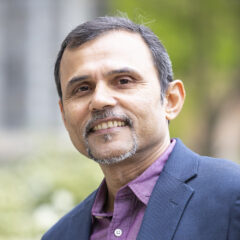
Harriet de Wit, PhD, University of Chicago, USA. 

image: 

Harriet de Wit, PhD, University of Chicago, USA.

view more 

Credit: Harriet de Wit


CHICAGO, Illinois, USA, 26 August 2025 -- In a revealing Genomic Press Interview published today in Psychedelics, Dr. Harriet de Wit shares insights from her extraordinary 45-year scientific journey that has fundamentally transformed global understanding of how psychoactive drugs affect human behavior and consciousness. The Director of the Human Behavioral Pharmacology Laboratory at the University of Chicago discusses breakthrough discoveries that are reshaping psychiatric treatment approaches worldwide, from PTSD therapy to addiction science.

The interview unveils how this internationally recognized researcher, whose work has been continuously funded by the National Institutes of Health for an unprecedented 42 years, developed innovative methodologies that bridge the critical gap between animal research and human studies. Her pioneering investigations into MDMA, LSD, and other psychedelics have established new paradigms that influence therapeutic protocols across continents.

Revolutionary Discoveries Transform Global Treatment Approaches

Dr. de Wit recounts her scientific evolution from studying cocaine self-administration in rats during her doctoral work with renowned scientist Jane Stewart at Concordia University to becoming the world authority consulted by authors like Michael Pollan for understanding psychedelic neuroscience. "The challenge of translating behavioral observations across species has continued to be a central theme in my research for the past 45 years," she explains in the interview.

Her laboratory has produced groundbreaking findings that resonate throughout the international scientific community. Most notably, research demonstrating that MDMA enhances feelings of social connectedness during interpersonal interactions has profound implications for treating trauma-related disorders globally. These discoveries have particular significance as mental health challenges affect populations worldwide, transcending cultural and geographic boundaries.

The interview reveals fascinating details about translational research breakthroughs that connect findings across species. Dr. de Wit describes how her team discovered that human cigarette smokers, like laboratory rats, show increased rather than decreased craving after extended periods of abstinence—a counterintuitive finding with major implications for addiction treatment strategies worldwide. Could this discovery fundamentally alter how rehabilitation programs approach relapse prevention across different cultures and healthcare systems?

Mind-Altering Substances Reveal Universal Human Experiences

Over the past 15 years, Dr. de Wit has focused intensively on what she calls "mind-altering" drugs that produce novel psychological states impossible to assess in nonverbal animals. "Drugs such as MDMA and low doses of LSD produce unusual alterations in self-reported internal states, such as feelings of empathy, awe, and oneness with the environment," she notes.

These investigations raise profound questions about consciousness that resonate across philosophical and scientific traditions globally. Do feelings of empathy and connectedness induced by these substances change subsequent behavior or alter perspectives on life in ways that transcend cultural differences? Her research suggests these experiences may represent universal aspects of human consciousness that unite rather than divide humanity.

The interview exemplifies the type of transformative scientific discourse found across Genomic Press's portfolio of open-access journals reaching researchers worldwide. By making such crucial insights freely available, the publication advances global scientific collaboration and knowledge sharing.

From Ottawa to Chicago: A Journey of Scientific Discovery

Dr. de Wit traces her path from birthplace Ottawa through formative experiences at Oxford University, where working in Jeffrey Gray's laboratory sparked her passion for experimental psychology. Her story illustrates how international scientific collaboration shapes breakthrough discoveries. The cross-cultural experiences and diverse mentorship she encountered—from British psychology to Canadian neuroscience to American pharmacology—enriched her unique perspective on drug effects across species.

Her current research on microdosing and drug-induced neuroplasticity establishes new frameworks for understanding consciousness that influence laboratories from Tokyo to Berlin. As Field Editor for Psychopharmacology and Deputy Editor for Alcoholism: Clinical and Experimental Research, she shapes global scientific discourse while mentoring the next generation of international researchers.

Personal Philosophy Drives Scientific Excellence

Beyond professional achievements, the interview reveals personal dimensions that humanize this distinguished scientist. Dr. de Wit shares her love for traveling to remote corners of the globe—from Svalbard to Patagonia to Madagascar—experiences that mirror her scientific exploration of consciousness frontiers. Her persistent pursuit of watercolor painting "despite little visible progress" reflects the patience and resilience she brings to decades-long research programs.

When asked about her greatest achievement, she cites maintaining her primary NIH grant for 42 years—testament to sustained excellence that benefits global scientific progress. Her motto "keep it simple" resonates with researchers worldwide struggling to design elegant experiments that answer complex questions about human behavior. What lessons might emerging scientists across different research traditions learn from this approach to scientific inquiry?

Dr. de Wit expresses concern about declining respect for science and scholarship globally, advocating for investment in public education at every level. This perspective underscores how scientific advancement depends not just on individual brilliance but on societal commitment to knowledge and discovery that transcends national boundaries.

Dr. Harriet de Wit's Genomic Press interview is part of a larger series called Innovators & Ideas that highlights the people behind today's most influential scientific breakthroughs. Each interview in the series offers a blend of cutting-edge research and personal reflections, providing readers with a comprehensive view of the scientists shaping the future. By combining a focus on professional achievements with personal insights, this interview style invites a richer narrative that both engages and educates readers. This format provides an ideal starting point for profiles that explore the scientist's impact on the field, while also touching on broader human themes. More information on the research leaders and rising stars featured in our Innovators & Ideas -- Genomic Press Interview series can be found on our publications website: https://genomicpress.kglmeridian.com/.

The Genomic Press Interview in Psychedelics titled "Harriet de Wit: What can we learn about behavior and brain processes by studying psychoactive drugs in humans? How can we harmonize behavioral research in humans and nonhuman species?," is freely available via Open Access on 26 August 2025 in Psychedelics at the following hyperlink: https://doi.org/10.61373/pp025k.0029.

About Psychedelics: Psychedelics: The Journal of Psychedelic and Psychoactive Drug Research (ISSN: 2997-2671, online and 2997-268X, print) is a peer-reviewed medical research journal published by Genomic Press, New York. Psychedelics is dedicated to advancing knowledge across the full spectrum of consciousness altering substances, from classical psychedelics to stimulants, cannabinoids, entactogens, dissociatives, plant derived compounds, and novel compounds including drug discovery approaches. Our multidisciplinary approach encompasses molecular mechanisms, therapeutic applications, neuroscientific discoveries, and sociocultural analyses. We welcome diverse methodologies and perspectives from fundamental pharmacology and clinical studies to psychological investigations and societal-historical contexts that enhance our understanding of how these substances interact with human biology, psychology, and society.

Visit the Genomic Press Virtual Library: https://issues.genomicpress.com/bookcase/gtvov/

Our full website is at: https://genomicpress.kglmeridian.com/


Attendees of the Harriet de Wit Festschrift, June 27, 2025. De Wit (center, back row) pictured with collaborators and former trainees who gathered for a day-long symposium celebrating her scientific contributions and mentorship. The program featured talks blending personal reflections on Chicago lab experiences with presentations of subsequent scientific accomplishments, embodying the intersection of social connection and scientific achievement that characterized de Wit’s laboratory. The formal symposium was followed by an evening reception in the garden of an Italian restaurant.

Credit

Harriet de Wit


Opinion

For New York's Muslims, Zohran Mamdani's candidacy is a reckoning on 9/11 backlash

(RNS) — The mayoral candidate’s popularity is a reflection of 9/11’s impact on New York’s political and cultural landscape.


New York City Democratic mayoral candidate Zohran Mamdani speaks during a press conference outside the Jacob K. Javits federal building Aug. 7, 2025, in New York. 
(AP Photo/Yuki Iwamura)


Sangay Mishra
August 20, 2025
RNS


(RNS) — If the current polling holds and Zohran Mamdani is elected mayor of New York in November, he will become the first South Asian, the first Muslim and the first African-born mayor of New York City.

Mamdani, a democratic socialist who won the Democratic Party primary in June, has primarily campaigned on helping lower-income New Yorkers afford to live in their city. But his faith, his easy relationship with his Muslim identity and his support for the pro-Palestine movement contributed to his victory as he brought together New Yorkers on the margins of the city’s economic life with those on the margins of its civic life — historically demonized Muslim communities.
RELATED: Mamdani’s win unleashed a surge of Islamophobia — and showed how to beat it

Once his June victory made him the presumptive winner in the fall, the floodgates of dehumanizing language opened. A Republican congressman from Tennessee dubbed him “little Muhammad,” calling for his denaturalization and deportation. U.S. Rep. Marjorie Taylor Greene of Georgia posted an image of the Statue of Liberty draped in a black burqa, while South Carolina’s Nancy Mace said Mamdani’s win showed that New Yorkers had “sadly forgotten” the Sept. 11, 2001, attacks on the World Trade Center.

No group of New Yorkers, however, was more profoundly impacted by 9/11 than Muslims. A South Asian American Muslim with deep ties to the community, Mamdani knows the hate, violence and racial profiling that these communities endured in the aftermath of the attacks, which laid bare the conditional nature of the acceptance of Muslims, irrespective of citizenship, class or place of birth.

In the post-9/11 period, a new racial category of “Muslim looking” emerged that encompassed a wide swath of New York, and brown Americans across the country. Muslims, South Asians and Arabs became “forever foreigners,” and people who were deeply knit into New York’s culture suddenly morphed into totems of terrorism fears and suspicion.

Islamophobic vitriol against Muslims, of course, has a long history in the United States and Europe, but 9/11 intensified it in unprecedented ways. The Justice Department, the FBI and immigration enforcement agencies began sweeping Muslim neighborhoods, detaining approximately 1,200 Muslims nationwide. Most were immigrants considered of “special interest” because of their faith. The Justice Department ended up acknowledging that the “special interest sweeps” led to massive abuses, but very little success in unearthing terrorism.

Those sweeps were followed by more draconian orders. Introduced in 2002, the National Security Entry-Exit Registration System required men aged 16 or older from 25 designated countries (all but one of them Muslim-majority) who were on temporary visas to register at local immigration offices for fingerprinting, photographs and lengthy interrogations. Approximately 90,000 went through this process, and more than a thousand were detained and deported. The program essentially legalized Muslim suspicion.

In a Pakistani immigrant neighborhood on Coney Island Avenue in Brooklyn, visiting cards from the FBI, NYPD and immigration officials started appearing under residents’ doors, instructing them to call back. Young Muslim men in the neighborhood were soon detained, and their wives and mothers struggled to find out where the men were being held and on what charges.

Local Muslims avoided the neighborhood restaurants as the FBI agents started frequenting them. The local mosque emptied during Friday prayer as many immigrants returned to Pakistan or moved to Canada. Similar stories were shared by working-class South Asians in Queens, Brooklyn and the Bronx.

If he’s elected, Mamdani will inherit a police department that was on the front line of this War on Terror. In 2007, the NYPD released “Radicalization in the West: The Homegrown Threat,” a report claiming that young Muslims’ political and personal grievances led to deeper religiosity, which in turn led to radicalization and terrorism. Growing a beard, becoming religious, wearing Islamic clothing and getting involved in Muslim community activities came to be identified as early signs of radicalization.

The report was widely cited in congressional hearings and policy discussions as the most important framework to understand Muslim radicalization. Its real impact was only understood later, when The Associated Press published a series of Pulitzer Prize-winning articles that showed the NYPD’s systematic documentation of where Muslims lived, shopped, worked and prayed. AP’s stories showed how the department’s Demographic Unit, with the CIA’s help, had infiltrated Muslim student groups, put informants in mosques, monitored sermons and cataloged every Muslim in New York who adopted Americanized surnames.

New York Muslim leaders and civic groups challenged the surveillance regime at every step. Muslim community leaders and civil rights groups, such as the ACLU, NYCLU and CLEAR, brought lawsuits, including Raza v. City of New York and Handschu v. Special Services Division. Settlements in 2017 created greater civilian oversight of the NYPD and renewed a stricter adherence to Handschu guidelines — rules created in 1985 to limit the surveillance of political and religious activities. Most dramatically, the court instructed the NYPD to strike the 2007 report from its website.
RELATED: Zohran Mamdani’s Muslim faith quickly targeted after his victory in NYC mayoral primary

As Mamdani’s rise is rightly seen as a reflection of the crisis of affordability in New York, it’s important to acknowledge how the communities once written out of the city’s civic life have now found new hope in his campaign. Mamdani’s campaign was preceded by others who challenged this exclusion. Prominent among them was Shahana Hanif, who was elected to the City Council from Brooklyn as the first Muslim woman member the same year Mamdani was elected to the New York State Assembly. Hanif has been articulate about how growing up in post-9/11 New York inspired her to run for office.


Mamdani is weaving these various threads of resistance into his campaign to imagine a more inclusive and just city where those at the margins of civic life, especially post-9/11, are visible at the forefront. While the city still has a long way to go to address the harms it has caused Muslim communities, Mamdani’s primary victory reflects the emerging power of civic and grassroots/working-class mobilization at this moment.


Sangay Mishra. (Photo courtesy of Drew University)

(Sangay Mishra is an associate professor of political science and international relations at Drew University and author of “Desis Divided: The Political Lives of South Asian Americans.” The views expressed in this commentary do not necessarily reflect those of Religion News Service.)