Friday, September 05, 2025


Peabody sees booming coal demand in Trump era

Credit: Peabody

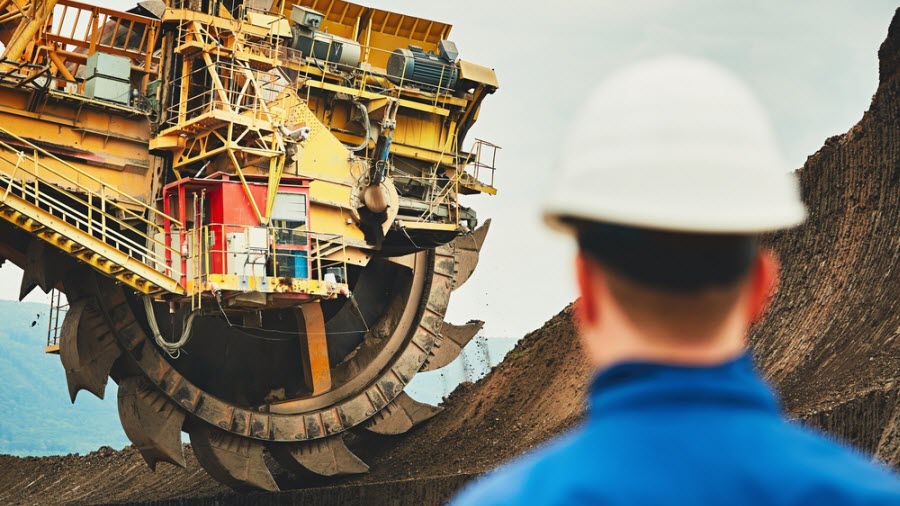
Swelling US demand for electricity has the potential to boost coal consumption as much as 57%, according to mining giant Peabody Energy Corp., in what would be a major shift for an industry that’s been waning for years.

With the US seeking to meet skyrocketing demand and the Trump administration pushing to prop up the coal industry, Peabody expects utilities to ramp up output from coal plants that are running well below full speed, the company said in an investor presentation on Wednesday. Boosting usage to “historic capacity factors” could lead to more than 250 million tons of additional annual demand in the coming years, it said.

Still, analysts see this forecast as a mathematical maximum that’s unlikely to be achieved in the real world.

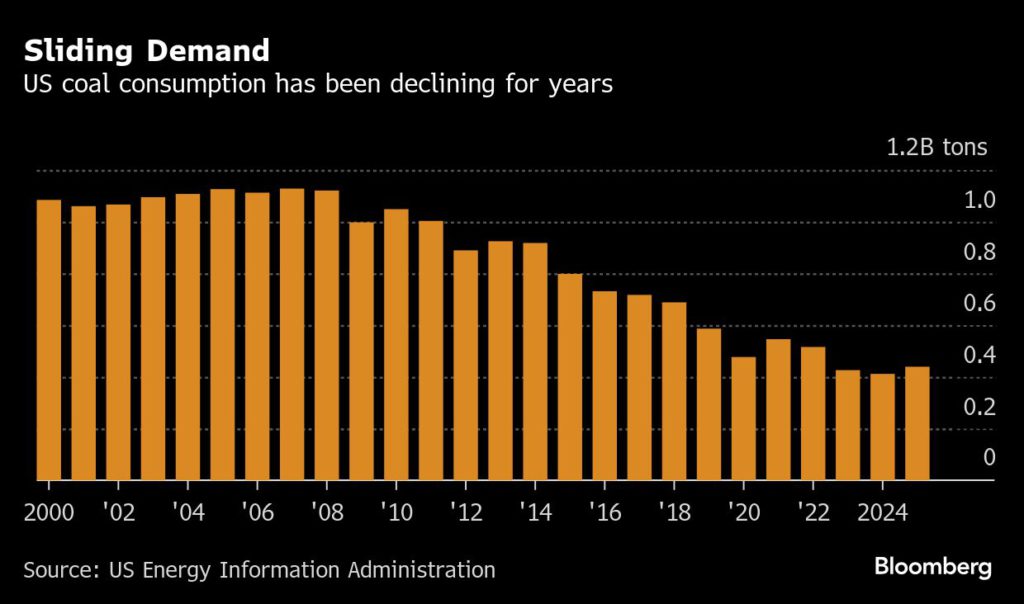
US coal usage has been steadily declining as utilities shift away from the dirtiest fossil fuel. But President Donald Trump’s pro-coal and anti-renewable approach has included blocking plans to shut down this from a Michigan power plant that burns fuel from Peabody. Total consumption is expected to be 439 million tons this year, according to the US Energy Information Administration. That’s up 6.7% from last year, but well down from its 2007 peak of 1.13 billion tons.

“Peabody sees great untapped potential for existing US coal plants,” Mark Spurbeck, chief financial officer for the St. Louis-based company, said by email.
Electricity demand in the US is set to climb 25% through 2030, driven by factories, increasingly electrified homes and especially from the booming buildout of data centers used for artificial intelligence. At the same time, supply-chain constraints have hindered utilities’ efforts to add more natural gas plants.

That’s spurring increased reliance on underused coal plants, which have significant potential to deliver more power.

The US fleet was operating at just 42% last year, according to Peabody, compared to 72% in 2008.

Still, anticipating demand to climb by 250 million tons assumes that coal plants are all ramped up close to the historic levels that preceded the global financial crisis of 2008, which is unlikely, said Andy Blumenfeld, director of data analytics at McCloskey by Opis.

“That’s a really big number,” he said. “It’s a theoretical maximum, if everything works perfectly. And they don’t.”

(By Will Wade)


JS Link America to invest $223M in rare earth magnet manufacturing plant in Georgia  


Industrial facility for processing rare earth elements. Stock image.

Magnet manufacturer JS Link America announced Thursday it is investing about $223 million to establish a new rare earth permanent magnet manufacturing facility in Columbus, Georgia.   

JS Link’s new manufacturing facility will be located at the Muscogee Technology Park in Columbus. The 130,000-square-foot facility is predicted to have an annual production capacity of 3,000 tons, and the company said it will create approximately 520 new jobs in Muscogee County.   

JS Link America is a subsidiary of Seoul, Korea based biotechnology company JS Link that specializes in research and development. JS Link is nearing completion on a similar permanent magnet facility in Yesan, Korea, with an anticipated a pilot production run in September and annual capacity of 1,000 tons. 

Rare earth metals are essential in heavy magnets that power electric vehicles, consumer electronics and military applications, and MP Materials is the only US producer, out of its Mountain Pass mine in California. 

China dominates the global rare earth industry, controlling the vast majority of the world’s rare earth processing and refining capacity. 

“JS Link America strengthens Georgia’s role in securing the U.S. supply chain in industries such as aerospace, mobility, and energy,” Governor Brian Kemp said in a statement. 

“From day one, Georgia’s economic development team, local community leadership in Columbus, and Georgia Power all welcomed JS Link with a pro-business approach. Georgia’s universities with their engineering programs also provide ready-made labor force for JS Link America,” JS Link America CEO Jun Y. Lee added. 

 “JS Link plans to be a part of a value chain focused entirely on Western nations to meet the growing demand for permanent magnets sourced from strategic allies such as Korea. This new chain will cover the entire process, from the procurement of essential rare-earth materials to the final manufacturing of the magnets.”  

The 130,000-square-foot facility is predicted to have an annual production capacity of 3,000 tons. Operations are expected to begin in late 2027.  

Operations are expected to begin in late 2027, the company said. 


Smackover Lithium’s DFS reports ‘robust economics’ for Arkansas project


LSS Koch technology in action. Image from Smackover Lithium.

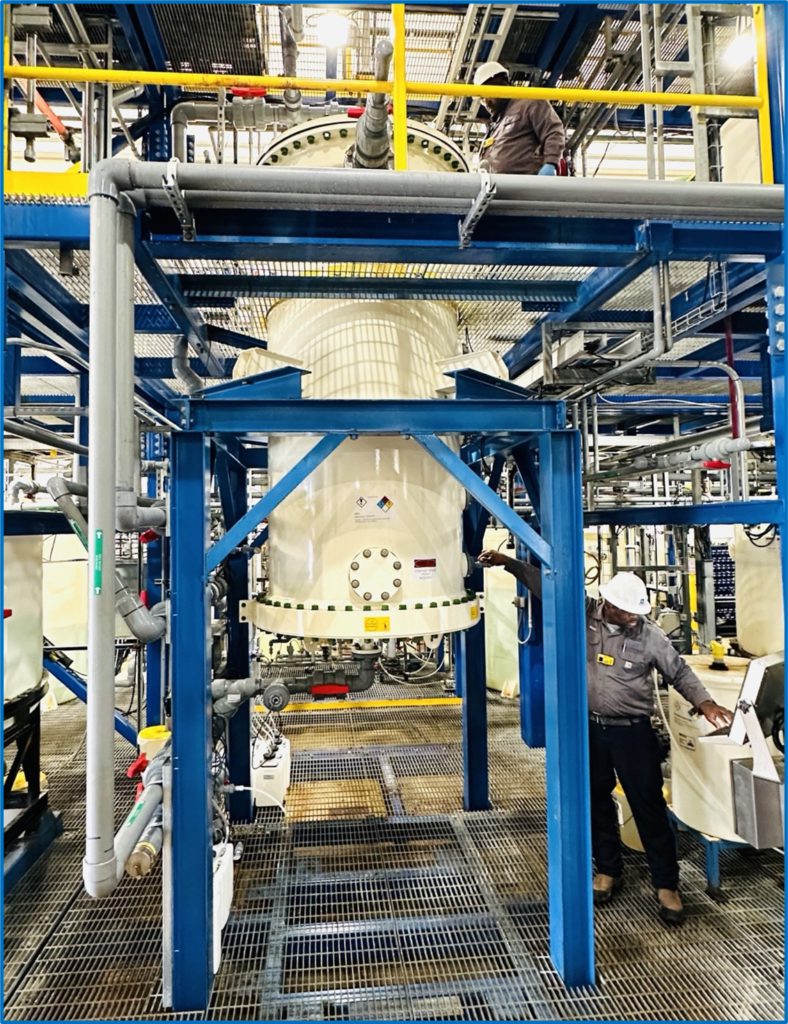
Smackover Lithium, a joint venture between Standard Lithium (TSX-V, NYSE-A: SLI) and Norway’s state-owned petroleum company Equinor (NYSE: EQNR), has announced results of a definitive feasibility study (DFS) for its South West Arkansas (SWA) project.

Smackover Lithium is developing a greenfield lithium extraction and chemicals production facility in the southwestern region of Arkansas. In January, the JV received a $225 million grant from the US Department of Energy to support the construction of Phase 1 of the project.

The DFS projected an initial production capacity of 22,500 tonnes per annum (tpa) of battery-quality lithium carbonate (Li2CO3). This would make SWA the first commercial lithium production in the Smackover Formation, an underground geological formation stretching from Florida to Texas filled with lithium-rich brine.

Analysts estimate that the Smackover Formation could host more than 4 million tonnes of lithium, enough to power millions of electric vehicles and other electronic devices.


DFS results

The DFS detailed a production plan with average lithium concentration of 481 mg/L, underpinning a minimum 20-year operating life with ample opportunity for significant further expansion.

The study envisions a pre-tax net present value of $1.7 billion and an internal rate of return of 20.2%, assuming a discount rate of 8% and a lithium carbonate price of $22,400/t, the average of Fastmarket’s 20-year forward pricing curve for battery-quality lithium carbonate.

The all-in capex estimate of $1.45 billion was based on an 18-month detailed front-end engineering design (FEED) process, which yielded capital definition well beyond typical DFS studies, the company said, adding that conservative adoption of pilot plant learnings used in the FEED could lead to improved capital intensity in future expansion phases.

As a result, the DFS forecasts average cash operating costs of $4,516/t over the operating life and average all-in costs of $5,924/t.

Since completion of the prefeasibility study (PFS), the JV has re-entered wells and drilled a new in-fill well to support upgrading the resource and modeling proven and probable reserves.

The total measured and indicated resource is 1,177,000 tonnes lithium carbonate equivalent (LCE) at an average concentration of 442 mg/L for 0.5 km3 of brine volume. The proven reserves are 447,000 tonnes LCE at an average concentration of 481 mg/L for 0.2 km3 of brine volume.

First commercial DLE site in US

Smackover Lithium is licensing Koch Technology Solutions’ lithium selective sorption process for the initial phase of the project, which includes performance guarantees.

Opportunity exists for further operational and cost improvement on future expansion phases with regional exclusivity for the technology in the Smackover under a joint development agreement, Standard Lithium said.

“The robust economics from our SWA project DFS confirm what we’ve known for a long time – that this is a world-class asset and opportunity,” Standard Lithium’s president and COO Andy Robinson said in a news release.  

“Through years of extensive testing and development we have substantially de-risked the process technology and increased our confidence in project execution,” Robinson added. “We are well-positioned to move the project towards a final investment decision and are excited by the prospect of being a domestic champion for securing critical minerals production in the United States.”

The company is targeting first production in 2028.

Ivanhoe flags ‘significant’ copper discovery in Kazakhstan


Assy Plateau, Kazakhstan. Stock image.

Ivanhoe Mines (TSX: IVN) announced on Thursday that it has made a copper discovery at its exploration joint venture in Kazakhstan’s Chu-Sarysu Basin, warranting further follow-up.

The Canadian miner, alongside UK-based partner Pallas Resources, is exploring a prospective land package of over 16,000 km², covering licences spread across seven projects. The landholding, according to Ivanhoe, represents one of the largest in Kazakhstan and is estimated to be seven times bigger than its Western Forelands project in the Democratic Republic of the Congo.

The new copper discovery resulted from the joint venture’s fieldwork on the Merke licence, which is located in the southern part of the Chu-Sarysu Basin and includes a 36-kilometre-long stratigraphic trend, with multiple samples returning between 1% and 5% copper.

While clearly not an economic occurrence in isolation, Ivanhoe’s team considers the copper mineralization — an outcrop on surface with an approximate 20-metre thick zone — to be “significant” as it supports the thesis that mineralization is structurally controlled, with faults and fractures acting as conduits for copper-bearing fluids into a package of folded sedimentary carbonate rocks.

The joint venture will now follow up on this discovery by mapping these structures in detail, supported by high-resolution magnetic surveys to trace them at depth, and by evaluating basement contacts and fault systems as potential fluid pathways.

Shares of Ivanhoe declined 3.5% to C$12.02 by noon ET on the news, giving the Vancouver-based copper miner a market capitalization of C$16.22 billion ($11.72bn).

Third-largest basin

The entire Chu-Sarysu Basin, according to Ivanhoe, is ranked as the world’s third-largest sediment-hosted copper basin, after the Central African Copperbelt and European Kupferschiefer, hosting 27 million tonnes of known copper. The area hosts the world-class Dzhezkazgan deposit, which has been continuously mined for over a century.

The United States Geological Survey (USGS) estimates that there remains approximately 25 million tonnes of undiscovered copper in the Basin. Despite its significant prospectivity, greenfield exploration has largely been neglected across the entire region for over 40 years.

Kazakhstan as a whole has also been largely underexplored, even with its geological potential and status as a world-leading producer of uranium. S&P Global estimates that over the past 15 years, only $100 million has been spent annually on exploration in the country, far less than other major mining jurisdictions. 

With that in mind, Ivanhoe and privately held Pallas teamed up in late 2024 to explore the 16,000 km² land package in Chu-Sarysu, leveraging the former’s exploration success in Congo and the latter’s experience in Kazakhstan.

Ivanhoe is expected to sole-fund up to $18.7 million over the first two years, and can elect to earn into all seven projects under the JV, up to 80%, for a maximum consideration of $115 million over four years.

Drilling underway

Ivanhoe also said a 15,000-metre drill campaign has commenced in the western section of the joint venture’s land package on the Glubokoe licence, located several hundred kilometres north of the Merke licence.

The first drill hole is expected to test the potential extensions of mineralization first noted in a Soviet-era stratigraphic hole drilled in the 1980s, which intersected three separate copper-bearing intervals over 26 metres, the company said.

The initial drill holes in the 2025 campaign are expected to be between 800 and 1,000 metres deep, and will assist with calibrating the results with historic and newly acquired geophysical datasets. This in turn will inform the stratigraphic and facies models, as well as help identify drill targets for the remainder of drill program, Ivanhoe added.


BRAZIL

Vale reopens Capanema mine, unveils $12.2B investment plan in Minas Gerais


the deadly collapses of two tailings dams in Minas Gerais in 2015 and 2019, disasters that killed hundreds of people and caused widespread environmental devastation


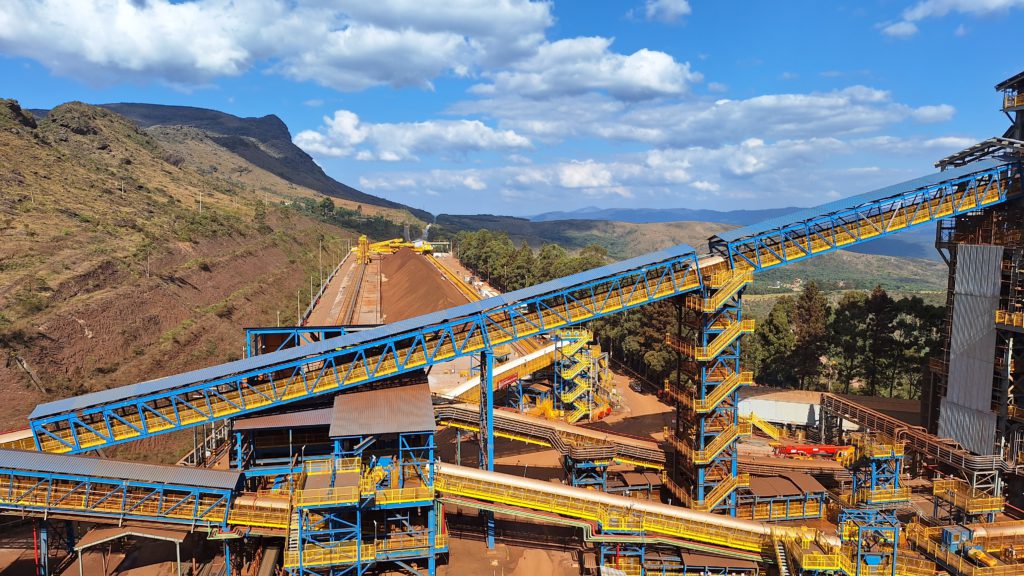
Capanema mine (Image: Vale)

Vale (NYSE: VALE) has officially reopened the Capanema iron ore mine in Ouro Preto, Minas Gerais, after a 22-year halt, as part of the Brazilian miner’s R$67 billion ($12.2 billion) investment strategy through 2030.

The reactivated Capanema unit, which received about R$5.2 billion ($950 million) in investments, will operate without using water in processing, generating no tailings and removing the need for dams.

The shift toward dry processing has been a central goal for Vale following the deadly collapses of two tailings dams in Minas Gerais in 2015 and 2019, disasters that killed hundreds of people and caused widespread environmental devastation.

The majority of Vale’s upcoming investments in Minas Gerais will be directed toward expanding dry tailings stacking and filtration solutions. The goal is to reduce the reliance on dams in the state from 30% today to 20%.

The site will also feature five autonomous haul trucks and incorporate circularity solutions by reprocessing iron ore from an old waste pile.

Vale shares were up 0.5% on Thursday morning in New York, giving the company a market capitalization of $43.6 billion.

Boost to production

The mine is expected to add around 15 million tonnes per year (Mtpa) to Vale’s iron ore output, supporting the company’s production guidance of 340–360 Mtpa by 2026.

“Capanema reinforces our commitment to a more responsible mining process — minimally invasive and driven by technology and innovation for optimal resource use and decarbonization,” Vale CEO Gustavo Pimenta said in a news release.

Vale employs around 63,000 people, including contractors, and its operations account for roughly 3.5% of Minas Gerais’ GDP. Over the past two years, the state has been responsible for nearly 45% of Vale’s total iron ore production.

Gold price could see $5,000 if Trump keeps attacking Fed: Goldman Sachs


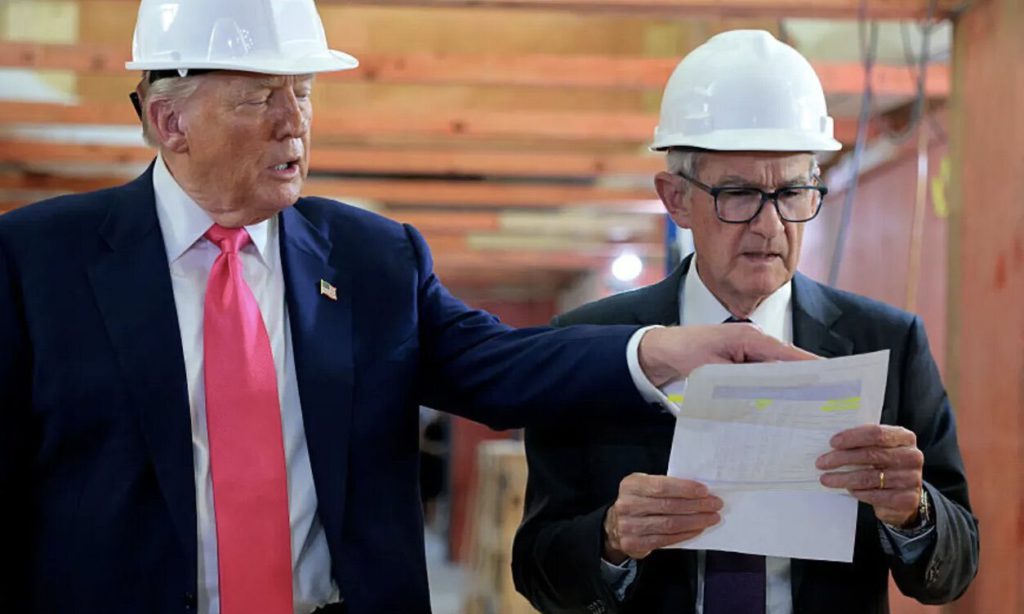
US President Trump pointing to Fed Chair Jerome Powell over the price of the Federal Reserve’s $2.5 billion renovation. Image source: screenshot taken from CNN | Youtube, July 25, 2025.

US President Donald Trump’s war against the Federal Reserve may send gold prices to as high as $5,000 an ounce by driving down investor confidence in the dollar, says Goldman Sachs Group.

In a note published Thursday, the bank’s analysts warned that Trump’s attempt to interfere with the US central bank could further erode trust in dollar-denominated assets, thereby adding to gold’s safe-haven appeal.

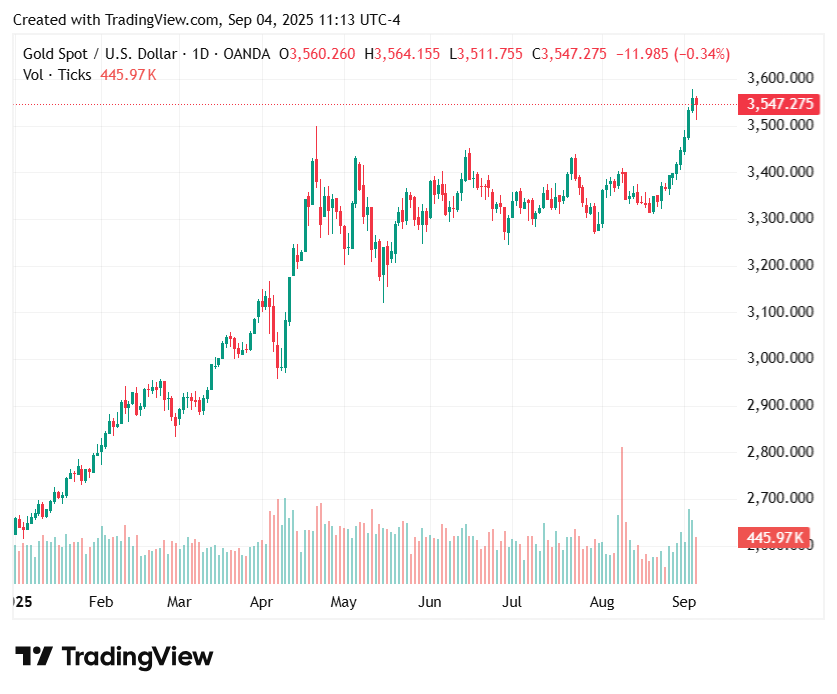
The note, first seen by Financial Times, comes just a day after gold rallied to a new all-time high above $3,560 an ounce. Bullion has now risen by 35% so far this year, as investors and central banks piled into the metal as a hedge against political uncertainty and US debt worries.

The latest rise was fueled by widening expectations that the US will begin to cut interest rates, a scenario that benefits non-yielding assets such as gold. The monetary easing could become even more aggressive should the Trump administration succeed in politicizing the Fed, which sparked concerns amongst some investors.

“A scenario where Fed independence is damaged would likely lead to higher inflation, lower stock and long-dated bond prices and an erosion of the dollar’s reserve currency status,” wrote Daan Struyven, co-head of global commodities research at Goldman Sachs.

On the other hand, “gold is a store of value that doesn’t rely on institutional trust”, Struyven added.

Bullish forecasts

The bank’s base case is that gold could continue its recent rise and achieve an average price of $3,700 by year-end, then $4,000 by mid-2026, assuming that central bank buying remains robust. However, this scenario does not factor in the potential “big move” out of dollar assets, such as bonds, by private investors, which Goldman says could push gold even higher.

“If 1% of the privately-owned US Treasury market were to flow to gold, the gold price would rise to nearly $5,000 per troy ounce,” Struyven wrote.

“We are double overweight gold,” Arun Sai, multi-asset portfolio manager at Pictet Asset Management, told the Financial Times, predicting that there could be another “leg up in gold” given the recent Fed drama, in reference to Trump’s unprecedented move to fire Governor Lisa Cook.


Goldman’s call on gold echoes the thesis built by JPMorgan, which said earlier this year that under the current macroeconomic climate, the yellow metal could realistically reach $6,000 an ounce even with a small allocation away from US assets.


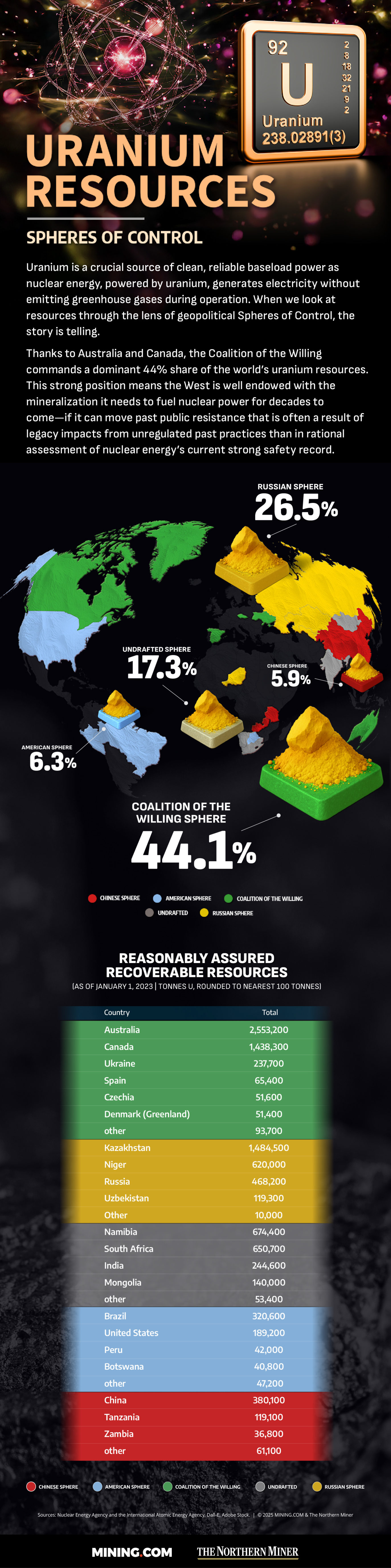
Infographic: Who controls uranium?

Uranium is a crucial source of clean, reliable baseload power as nuclear energy, powered by uranium, generates electricity without emitting greenhouse gases during operation. When we look at resources through the lens of geopolitical Spheres of Control, the story is telling.

Thanks to Australia and Canada, the Coalition of the Willing commands a dominant 44% share of the world’s uranium resources.

This strong position means the West is well endowed with the mineralization it needs to fuel nuclear power for decades to come—if it can move past public resistance that is often a result of legacy impacts from unregulated past practices than in rational assessment of nuclear energy’s current strong safety record.

(By Anthony Vaccaro; Files from: Ali Ravaghi; Creative: James Alafriz)


Nornickel chief’s ex-wife can pursue massive divorce claim, UK court rules

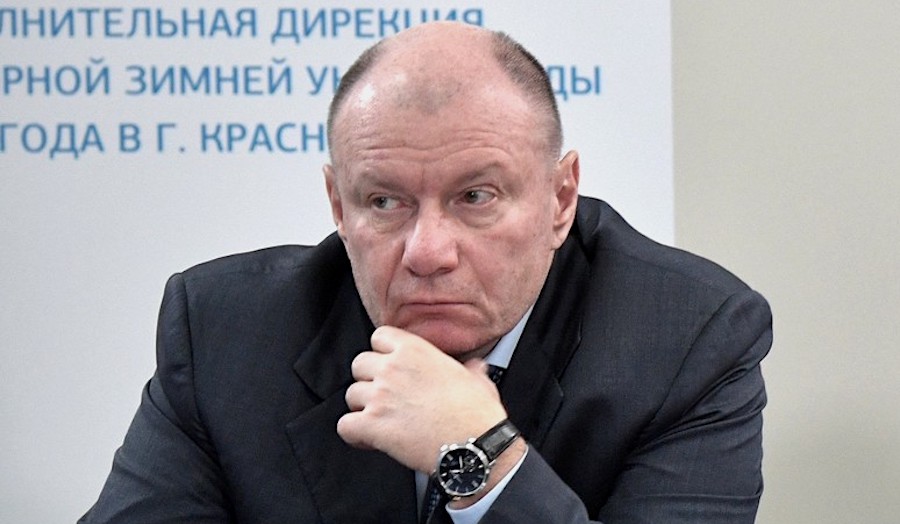
Vladimir Potanin. (Image: The Kremlin.)

Russian oligarch Vladimir Potanin’s ex-wife can pursue a multi-billion dollar share of his stake in Nornickel, London’s Court of Appeal ruled on Thursday, allowing potentially one of the highest-value divorce cases ever brought to continue.

Potanin, the chief executive of Norilsk Nickel, the world’s largest palladium producer and a major producer of refined nickel – is facing a mammoth divorce claim from his ex-wife Natalia Potanina.

Potanina wants to bring a claim for financial relief following their formal divorce in 2014, which includes a claim for 50% of the value of her ex-husband’s ultimate beneficial interest in shares in Nornickel.

Potanin currently holds a 37% stake in the company, which is valued at nearly $9 billion, according to MOEX data.

His ex-wife is also seeking 50% of any dividends paid to Potanin since 2014 and a high-end Russian property, on which the parties spent around $150 million.

Her lawyers say she received only $41.5 million, less than 1% of the couple’s total assets, after their divorce in the Russian courts, though Potanin said his ex-wife received about $84 million and argued the couple had no connection to Britain.

London’s High Court originally rejected Potanina’s bid to bring a claim in 2019, with a judge saying that if her claim was allowed to proceed “then there is effectively no limit to divorce tourism”.

But on Thursday the Court of Appeal overturned that decision, saying she had very largely severed her ties with Russia and was entitled to bring her claim.

“The discrepancy between her award of the marital assets and the husband’s retained share was significant; the discrepancy between what she had recovered in Russia compared with what she would have recovered had the case been heard in this jurisdiction was equally significant,” the court ruling said.

Potanina’s lawyer Frances Hughes said her client was delighted that the court had recognized the merits of her case.

“She very much hopes that her case can now be resolved and can be concluded without further delay,” she said in a statement.

(By Michael Holden and Sam Tobin; Editing by William James and Ros Russell)


ESG and Haney Technical College Launch Marine Apprenticeship Program

Eastern Shipbuilding Group

Published Sep 3, 2025 11:40 PM by The Maritime Executive


[By: Eastern Shipbuilding Group]

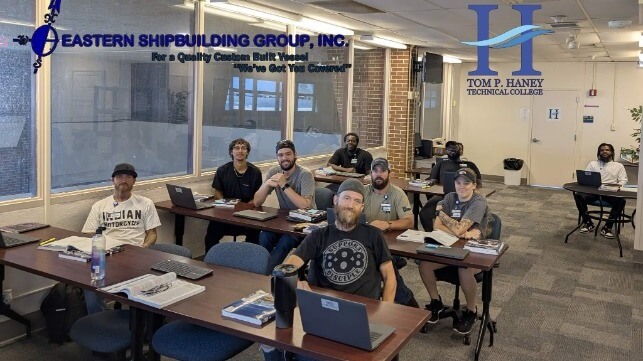
Eastern Shipbuilding Group, Inc. (ESG), in partnership with Haney Technical College, proudly announces the launch of a new Marine Electrician Apprenticeship Program as part of ESG’s BUILD workforce development initiative. The inaugural class of ten students began training last month, marking a significant step in strengthening the region’s skilled maritime workforce.

This three-year certified apprenticeship program offers participants a unique opportunity to learn while they earn, combining structured on-the-job mentorship from experienced Eastern shipbuilders with classroom instruction at Haney Technical College. Graduates will earn an industry-recognized marine electrician certification and be positioned for long-term career growth within Eastern Shipbuilding Group and the broader maritime industry.

Marine Electrical Apprenticeship Program Highlights:

  • Three-Year Structured Training: Apprentices receive a blend of classroom learning and practical experience alongside Eastern mentors.
  • Periodic Pay Increases: Participants can earn pay raises based on performance and commitment throughout the program.
  • Industry Certification: Graduates leave with a certification recognized across the shipbuilding and marine industry.
  • Career Advancement: Successful apprentices who complete the program will have the opportunity to advance into First Class Marine Electrical roles at Eastern.

“This apprenticeship program is an investment in our people and in the future of American shipbuilding,” said Joey D’Isernia, CEO & Chairman of Eastern Shipbuilding Group. “By working with Haney Technical College, we’re providing hands-on training and a clear career path for those who want to build their future with us.”

“Haney Technical College is proud to partner with Eastern Shipbuilding Group on this program that connects education directly with high-demand careers,” said Angela Reese, Director of Tom P. Haney Technical College. “These students are gaining the skills, training, mentorship, and real-world experience that enables them to join a thriving industry right here in our community.”

The apprenticeship program is part of ESG’s BUILD (Building Up Individuals through Learning and Development) initiative, which is focused on creating pathways for long-term careers in the shipbuilding industry.

The products and services herein described in this press release are not endorsed by The Maritime Executive.