A Yank and a Dutchman Exploring on their BettBeat Channel The World
Interview of Karim and Peter from Chinese University of Hong Kong
They’ve had skin in the game — the Podcast and Substack game — for four years.
Amazing guests, and unfortunately for us, but fortunately for us, too, they have been covering the genocide in the Jewish State of Raping and Murdering and Starving and Maiming and Poisoning Palestine: Going on TWO goddamned years.
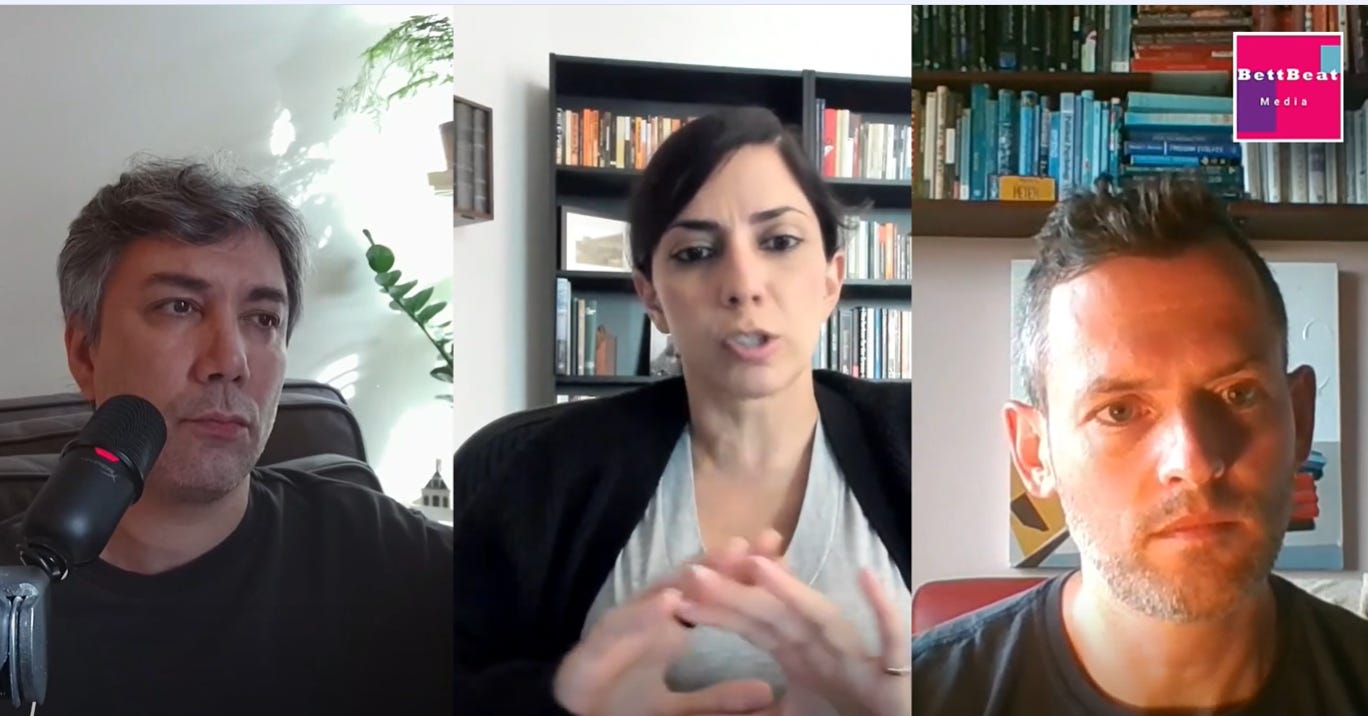
One of their favorite guests, and mine too: Assal Rad, Peter and Karim examine the ongoing genocide in Gaza and the failure of international institutions to respond effectively. The conversation explores how Israeli propaganda has become increasingly ineffective as images of starvation make their justifications harder to sell, yet Western governments continue providing unwavering support despite shifting public opinion.
An outright assault on all Palestinian Life Anywhere.
Listen to BettBeat Media’s Karim and Peter here, on my show, Finding Fringe, KYAQ FM:
Now, both are floundering, as they start a new semester in Hong Kong. Floundering because the world and their own adopted country, China, isn’t doing anything to stop the genocide. Here, a telling interview with a Portuguese fellow, also in China, talking about the lack of soft power from China toward the West, and the odd bullshit in China’s textbooks describing Palestine as a terrorist place:
But, let’s not forget, that the Jewish Illegal State of Israel has a lot of cadres in their camp that have committed settler colonial genocide and mass murder.

Man, oh, man, the Jews of Israel have solid genocidal ground to stand on: Let us put this in a historical perspective: the commemoration of the War to End All Wars acknowledges that 15 million lives were lost in the course of World War I (1914-18).
The loss of life in the Second World War (1939-1945) was on a much larger scale, when compared to World War I: 60 million lives, both military and civilian, were lost during World War II. (Four times those killed during World War I).
The largest WWII casualties were suffered by China and the Soviet Union:
- 26 million in the Soviet Union,
- China estimates its losses at approximately 20 million deaths.
Ironically, these two countries (allies of the US during WWII) — which lost a large share of their population during WWII — were under the Biden-Harris administration as categorized as “enemies of America”, which are threatening the Western World. Under Trump? Same continuation of the hatred.
Germany and Austria lost approximately 8 million people during WWII, Japan lost more than 2.5 million people. The US and Britain respectively lost more than 400,000 lives.
Here’s a carefully researched article by James A. Lucas documenting the more than 20 million lives lost resulting from US led wars, military coups and intelligence ops carried out in the wake of WWII, in what is euphemistically called the “post-war era” (1945- ).
The extensive loss of life in Lebanon, Syria, Yemen, Ukraine and Libya, Palestine is not included in this study.
Nor are the millions of deaths resulting from extreme poverty — largely induced by economic sanctions and Western interference in nations’ ability to democratically elect who they want. Selling weapons to both sides of a revolution or war, well, that has its multiplier effect.
The causes of wars are complex. In some instances nations other than the U.S. may have been responsible for more deaths, but if the involvement of our nation appeared to have been a necessary cause of a war or conflict it was considered responsible for the deaths in it. In other words they probably would not have taken place if the U.S. had not used the heavy hand of its power. The military and economic power of the United States was crucial.
This study reveals that U.S. military forces were directly responsible for about 10 to 15 million deaths during the Korean and Vietnam Wars and the two Iraq Wars. The Korean War also includes Chinese deaths while the Vietnam War also includes fatalities in Cambodia and Laos.
The American public probably is not aware of these numbers and knows even less about the proxy wars for which the United States is also responsible. In the latter wars there were between nine and 14 million deaths in Afghanistan, Angola, Democratic Republic of the Congo, East Timor, Guatemala, Indonesia, Pakistan and Sudan.
But the victims are not just from big nations or one part of the world. The remaining deaths were in smaller ones which constitute over half the total number of nations. Virtually all parts of the world have been the target of U.S. intervention.
The overall conclusion reached is that the United States most likely has been responsible since WWII for the deaths of between 20 and 30 million people in wars and conflicts scattered over the world.
To the families and friends of these victims it makes little difference whether the causes were U.S. military action, proxy military forces, the provision of U.S. military supplies or advisors, or other ways, such as economic pressures applied by our nation. They had to make decisions about other things such as finding lost loved ones, whether to become refugees, and how to survive.
And the pain and anger is spread even further. Some authorities estimate that there are as many as 10 wounded for each person who dies in wars. Their visible, continued suffering is a continuing reminder to their fellow countrymen.
It is essential that Americans learn more about this topic so that they can begin to understand the pain that others feel. Someone once observed that the Germans during WWII “chose not to know.” We cannot allow history to say this about our country. The question posed above was “How many September 11ths has the United States caused in other nations since WWII?” The answer is: possibly 10,000. — James A. Lucas

Here, a bio on Karim:
I am interested in how the asymmetrical cultural flow from the West into societies across the world, reinforced by corporate hegemony in a neoliberal global political economy (e.g., dominance in the spheres of social media, the movie industry and fashion), influences the individual psychology of the global population. In particular, the effects of racism/white supremacy, capitalism and colonialism hold my strong attention. My research revolves around questions such as: Why do racism and colorism follow highly similar patterns across the globe; How do (Western) social media platforms perpetuate racial hierarchies in cultures across the globe; What are the psychological ramifications of colonialism; What is the relationship between neoliberal political economies and our understanding of human nature?
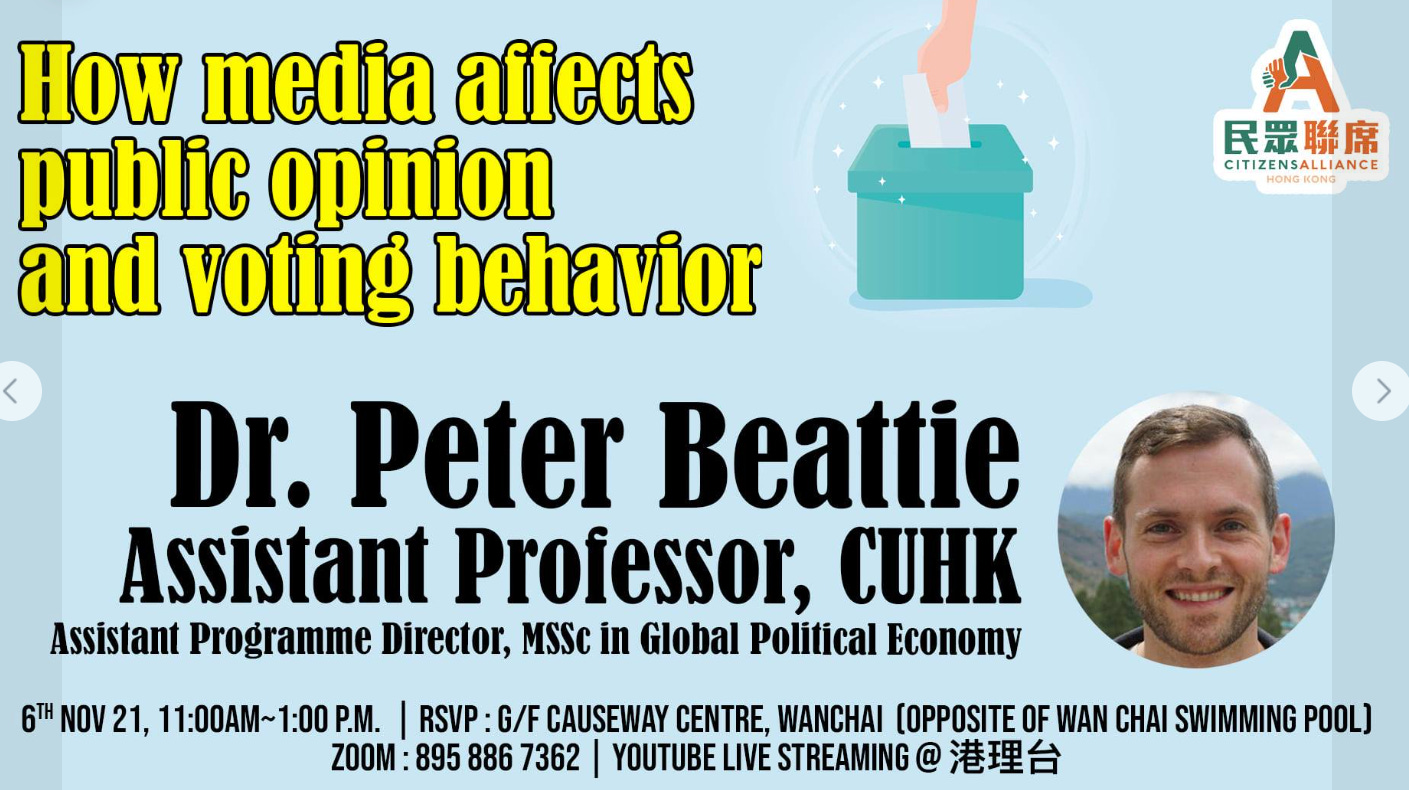
Peter’s a serious scholar: Publications
Work in Progress
“When Left is Right and Right is Left: The psychological correlates of political ideology in China” (Under Review). [Link]
“Knowing what the electorate knows: Issue-specific knowledge and candidate choice in the 2020 elections” (Under Review). [Link]
*****
We intended to get into geopolitical or political economy, but we ran out of time: Here, a primer with Peter Phillips, former director of Project Censored and professor of Political Sociology at Sonoma State University. His new book Giants: The Global Power Elite details the 17 transnational investment firms which control over $50 trillion in wealth—and how they are kept in power by their activists, facilitators and protectors.
Ahh, we did get briefly into the Fertile Crescent, when agriculture highjacked humanity:

Ahh, Peter Beattie said things have been messed up for 10,000 years: Think about this evolution of the brain and psyche for two million years, or more, and now what, the Fertile Crescent fucked us up big TIME.
- 2 million years ago: The earliest evidence of a hunter-gatherer culture emerges with the appearance of the genus Homo.
- 1.9 million years ago: The lifestyle became more developed and accelerated with Homo erectus, a species with a larger brain and physique suited for long-distance walking to acquire meat.
- 700,000 to 40,000 years ago: Hunting and gathering was the way of life for later hominins, including Homo heidelbergensis and Neanderthals, who used increasingly sophisticated tools.
- 200,000 years ago to ~12,000 years ago: The hunter-gatherer lifestyle continued through most of the existence of our own species, Homo sapiens. This period ended with the Neolithic Revolution, which led to the development of agriculture.
I’m adding this here in the DV piece:
Locking up the food and fencing in the hunter/ gatherer and nomadic and pastoral lands caused:
- Social stratification
- Specialization and gender roles
- Warfare
While in 1995 there appeared to have been at least a 1,500-year gap between plant and animal domestication, it now seems that both occurred at roughly the same time, with initial management of morphologically wild future plant and animal domesticates reaching back to at least 11,500 cal BP, if not earlier. A focus on the southern Levant as the core area for crop domestication and diffusion has been replaced by a more pluralistic view that sees domestication of various crops and livestock occurring, sometimes multiple times in the same species, across the entire region. Morphological change can no longer be held to be a leading-edge indicator of domestication. Instead, it appears that a long period of increasingly intensive human management preceded the manifestation of archaeologically detectable morphological change in managed crops and livestock. Agriculture in the Near East arose in the context of broad-based systematic human efforts at modifying local environments and biotic communities to encourage plant and animal resources of economic interest. This process took place across the entire Fertile Crescent during a period of dramatic post-Pleistocene climate and environmental change with considerable regional variation in the scope and intensity of these activities as well as in the range of resources being manipulated.
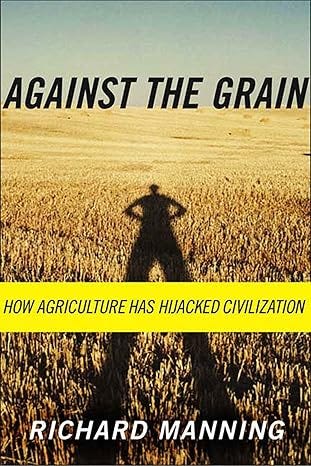
Check out my interview with Manning here:
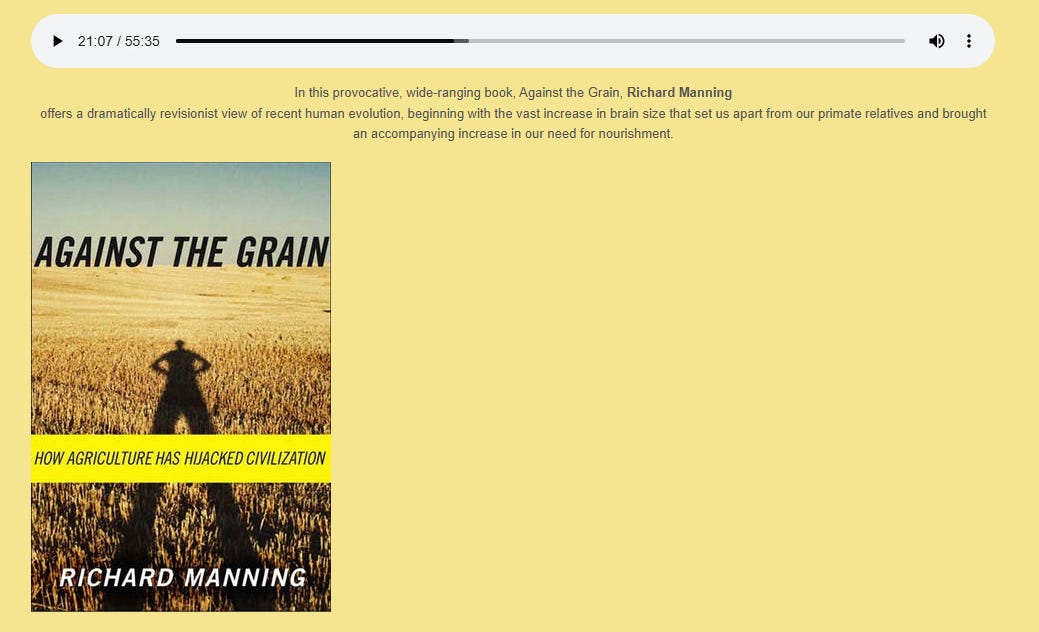
Scroll Down and find the old show illustrated above HERE.
*****
Peter has a big essay — “The Pull of Humanitarian Interventionism: Examining the Effects of Media Frames and Political Values,” (with Jovan Milojevich) International Journal of Communication 12: 831–855 (2018). [Link]
(Oh, winning those hearts and minds with intervention of the Western Humanitarian (sic) kind!)
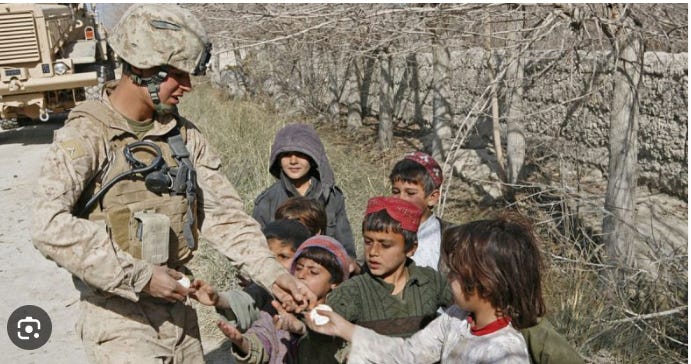
The Candy Man Soldiers of Good Will?
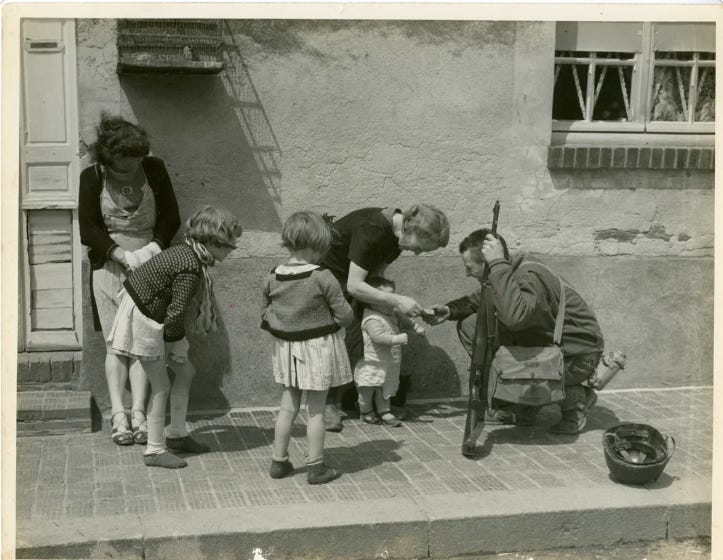
Propaganda:
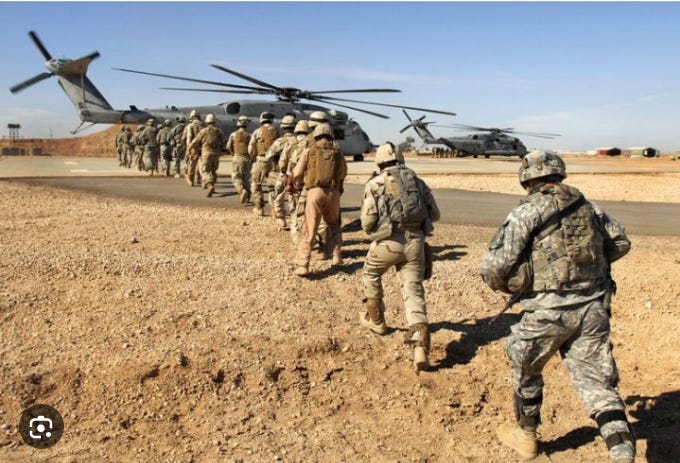
Edward Bernays anyone?
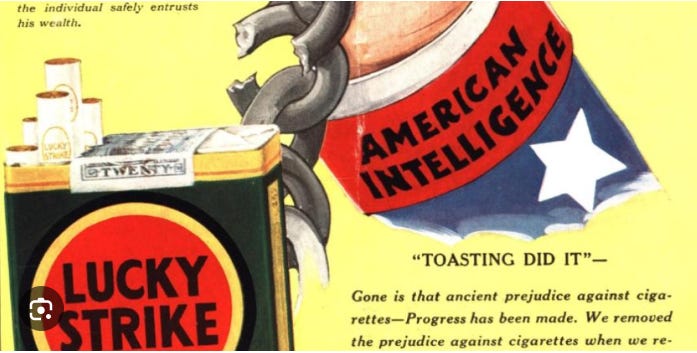
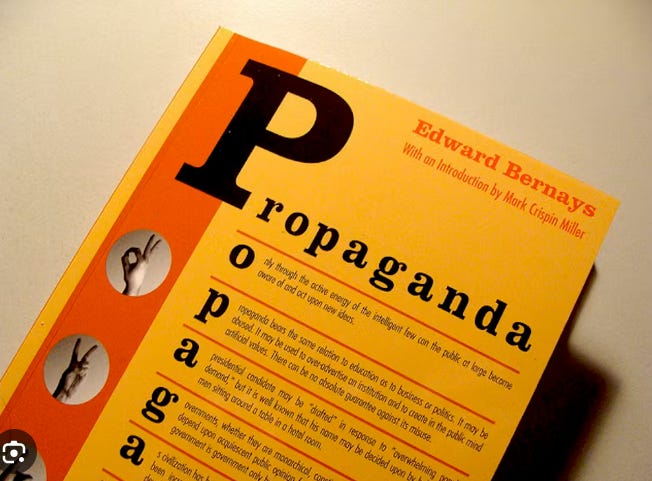
“If we understand the mechanism and motives of the group mind, it is now possible to control and regiment the masses according to our will without them knowing it.” — Edward Bernays, from Propaganda
Soft power into murderous coups:
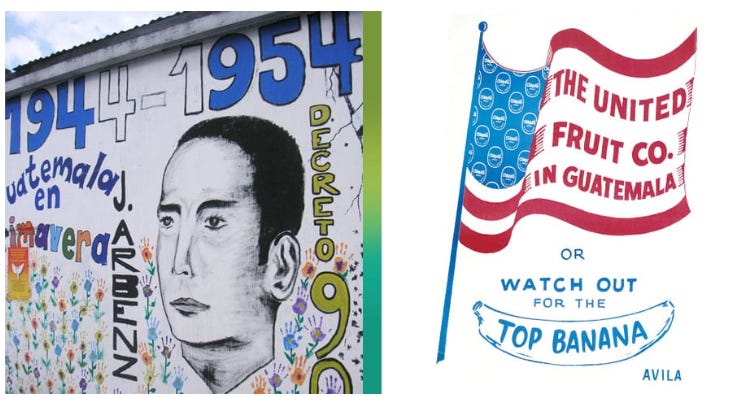
We talked about soft (not mashed banana) power: Edward Bernays’ promotional stunts were only a smokescreen for a not-so-innocent deep-state strategy. With sly public relations tactics, he began to influence American media toward discrediting the new Guatemalan President and ultimately incite action against the duly-elected leader. In 1954, a CIA-backed coup d’état turned the government of Guatemala over to what was ostensibly a leader hand-picked by the U.S. government and indirectly by a U.S. corporation — the United Fruit Company.
I’ll have them both on again, soon: Peter Beattie
The media create frames to transmit information to the public, and the frames can have varying effects on public opinion depending on how they combine with people’s values and deep-seated cultural narratives. This study examines the effects of media frames and values on people’s choice of resolution of conflict. The results show that neither values nor exposure to frames are associated with outcome. Participants overwhelmingly chose the humanitarian intervention option regardless of frame exposure and even in contrast to their own political values, demonstrating the influence of the mainstream media’s dominant, humanitarian interventionist frame on public opinion.
In early 2013, the Syrian crisis was growing worse by the day, and violence was escalating at a rapid pace. Then–U.S. president Barack Obama was weighing the option of a full-scale military intervention, based on humanitarian grounds, in the troubled state. Islamic State was wreaking havoc throughout the country; however, it was Syrian president Bashar al-Assad who was primarily making the headlines in the United States for alleged atrocities and violations of the Geneva Accords and human rights. The seemingly perpetual beat of war drums in the United States did not take long to sound off, and they grew louder each day President Obama did not declare war on Assad. The media played along, and, generally, so did the political elite. Even former U.S. president Bill Clinton contributed by stating that if Obama chose not to go to war because Congress voted against it, he would risk “looking like a total wuss” (Voorhees, 2013)—a feeble and desperate attempt to demean the president into taking the United States to war. Former secretary of state Hillary Clinton and Senator John McCain, never ones to shy away from a military confrontation (Johnstone, 2015; Landler, 2016), echoed Bill Clinton’s sentiment as they were both displeased with Obama’s foreign policy decision making on Syria (Landler, 2016; Voorhees, 2013). Highly emotive phrases—popular in interventionist frames—such as, “History will judge us,” “We don’t want to be on the wrong side of history,” “We cannot look the other way,” “The world is watching us,” and “What will and “What will the world think,” dominated the headlines and news reports. Then–secretary of state John Kerry touched on almost all of these in his speech at a State Department briefing in August 2013, at a time when President Obama was deliberating possible recourses in response to an alleged chemical attack by Assad’s forces.
Kerry stated,
As previous storms in history have gathered, when unspeakable crimes were within our power to stop them, we have been warned against the temptations of looking the other way. . . . What we choose to do or not do matters in real ways to our own security. Some cite the risk of doing things. But we need to ask, “What is the risk of doing nothing?” . . . So our concern is not just about some far-off land oceans away. That’s not what this is about. Our concern with the cause of the defenseless people of Syria is about choices that will directly affect our role in the world and our interests in the world. It is also profoundly about who we are. We are the United States of America. We are the country that has tried, not always successfully, but always tried to honor a set of universal values around which we have organized our lives and our aspirations. . . . My friends, it matters here if nothing is done. It matters if the world speaks out in condemnation and then nothing happens. History would judge us all extraordinarily harshly if we turned a blind eye to a dictator’s wanton use of weapons of mass destruction.
…
Continued, Beattie:
One of the main cultural themes in the United States is the nationalism theme, with the global responsibility nationalism theme—which emerged after World War II—being the most dominant. As Gamson (1992) articulates, “With the advent of World War II and the cold war, public discourse fully embraced the global responsibility theme” (p. 142), and the American public threw its support behind the United Nations and the idea of collective security. Democrats and Republicans alike “embraced a dominant U.S. role in the creation of political-military alliances, not only in Europe but in other regions as well” (Gamson, 1992, p. 142). The global responsibility theme was the dominant theme during the Cold War and the framing of the U.S. doctrine of containment, and it continues to be the dominant theme today in the framing of the humanitarian interventionist doctrine.
Prior to World War II, the “America first” nationalist theme was the most dominant; however, the global responsibility (then) countertheme was still quite prevalent. When the America first theme was dominant, the kind of isolationism that it supported “was never incompatible with expansionism in what was regarded as U.S. turf” (Gamson, 1992, p. 141); therefore, the global responsibility (at that time) countertheme actually supported the America first theme rather than countering it. The Monroe Doctrine is evidence of this compatibility, because it reinforced American isolationism—by telling European powers to stay out of the Americas—yet supported U.S. expansionism. The global responsibility countertheme was “reflected in the idea of America’s international mission as a light unto nations” (Gamson, 1992, pp. 141–142), with the belief that the “expansion of American influence in the world would bring enlightenment to backward peoples and confer upon them the bounties of Christianity and American political genius” (p. 142). The global responsibility (then) countertheme clearly embodied the notion of American exceptionalism, just as it does today as the dominant nationalism theme. Nevertheless, we would like to make it clear that we are not claiming that deep-seated cultural narratives in the United States are necessarily pro–humanitarian interventionist. What we are claiming, and will substantiate throughout this section, is that the U.S. media and political elites have tapped into a deep-seated cultural narrative to gain support for pro–humanitarian intervention policy options.
Many Americans believe, just as Kerry and other political elites publicly pronounce, that their country does try to honor a set of universal values around which they have organized their lives and aspirations and that these values include the notion that the United States is the leading “defender of democracy and human rights” around the world and that it is “exceptional.” Regardless of whether political elites actually believe this or whether it is simply rhetoric on their part, the mere invocation of this notion to justify war (much of the time conducted illegally—without United Nations or congressional approval) is troubling on its own. For instance, American exceptionalism “originally meant that the U.S. had a God given duty to impose its government and ‘way of life’ on lands not already under its control” (Pestana, 2016, para. 3), and it was, therefore, used to justify American imperialism. In more recent times, however, American exceptionalism has morphed into a more idealistic notion, being viewed as a
belief that the American political system is unique in its form, and that the American people have an exceptional commitment to liberty and democracy. By virtue of this, American exceptionalists assert that America has a providential mission to spread its values around the world. American power is viewed as naturally good, leading to the proliferation of freedom and democracy. (Britton, 2006, p. 128)
*****
In the end, really, what is a new semester and a new bunch of students in this time of genocide? The following should lend pause to anyone who is comfortably numb.
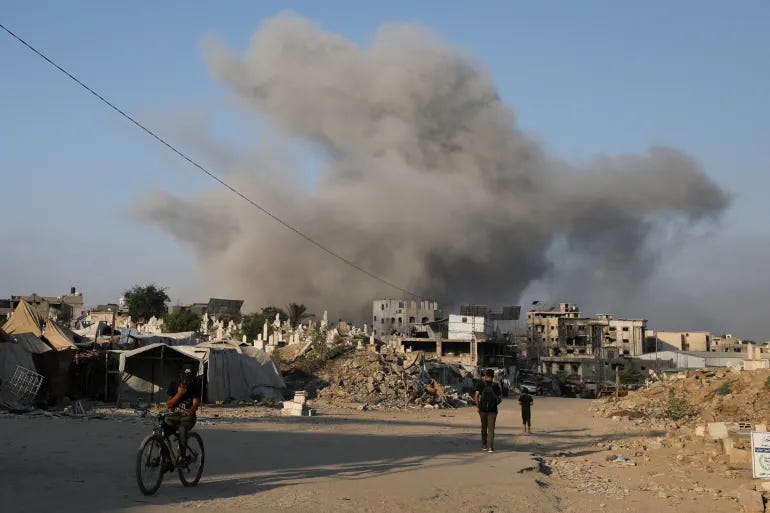
Future Lawyers Don’t Understand Murder
The classroom feels smaller than I remembered, like the walls have moved closer while I was gone. Professor X assigns readings on constitutional interpretation, and I watch twenty-three students highlight passages about due process while Palestinians are denied the most basic right of all: the right to exist. The girl next to me underlines “equal protection under law” in yellow marker, and I wonder if she knows that phrase is meaningless when some lives are worth more than others.
“The framers intended,” someone says, and I stop listening. The framers intended many things, but they could not have intended for us to sit in air-conditioned rooms debating legal theory while children suffocate under rubble. They could not have intended for us to parse the meaning of justice while justice dies in real time, broadcast live, ignored by everyone in this room.
During breaks, I sit on the steps and watch them. They cluster in their familiar groups, talking about internships and weekend plans and whether Professor Y is a hard grader. Their voices float past me, a steady stream of nothing that matters.
“I’m so stressed about the bar exam.” “Are you going to the Football game this weekend?” “My parents want me to come home for Labor Day, but like, I have so much reading.”
I listen for something else, anything else. I wait for one of them to mention that children are being murdered while we debate constitutional amendments. I wait for someone to say the word Palestinian, or genocide, or even just acknowledge that the world exists beyond their study guides and social calendars. I wait for an hour, and then another, and I hear nothing.
In another class, we discuss mens rea and actus reus, the guilty mind and the guilty act. Professor Z explains how intent matters, how knowledge of wrongdoing affects culpability. I think about my classmates’ guilty minds, their knowledge of genocide coupled with their deliberate choice to say nothing. I think about their guilty acts of scrolling past videos of dying children to double-tap vacation photos. But this kind of guilt will never be prosecuted. This kind of crime never sees the inside of a courtroom.
“Can someone give me an example of willful blindness?” Z asks.
I could give twenty-three examples right here in this room, but I stay quiet.
This is my new reality. Sitting in rooms with people who revealed themselves to be the kind of people who would have looked away during any other genocide. Listening to them complain about reading assignments while Palestinians are denied the right to read anything ever again. Watching them stress about internships while Palestinian children will never have the chance to worry about their futures.
The loneliness is not in being alone. The loneliness is in being surrounded by people who chose to be strangers to their own moral obligations. It is in sharing space with those who had the chance to speak and chose silence, who had the opportunity to care and chose comfort, who had the moment to act and chose nothing.
At the coffee shop, I overhear a conversation about whether the new professor is mean. At the library, someone complains that their laptop is slow. In the dining hall, a group debates which Netflix show to binge next. Normal life continues, mundane concerns persist, and the world beyond their bubble might as well not exist.
The hardest part is not their cruelty. It is their comfort with it. It is how easily they moved on, how quickly they forgot, how completely they have convinced themselves that their silence was not a choice. They live their lives as if Palestinian children were not buried alive while they read for evidence.
I am back now, walking through classrooms where professors teach about human rights while ignoring the most basic human right being violated in real time. I am surrounded by people who think my people’s elimination is too complicated to have an opinion about, whose cowardice proved stronger than their morality.
And I still carry shame that I must even share the same air.
Comfortably LOBOTOMIZED!