Thursday, October 02, 2025

Trump’s Bagram Push: Recasting Afghanistan In Global Strategy – Analysis
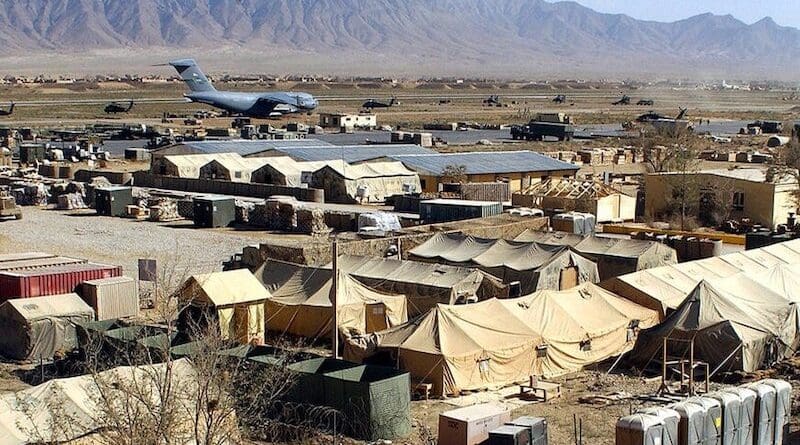
File photo of Bagram military base in Afghanistan. Photo Credit: Wikimedia Commons


By 

By Kabir Taneja

The President of the United States (US), Donald Trump, has recently returned to one of his old standing demands, insisting that the sprawling Bagram military base—which lies around 65 km from Afghanistan’s capital Kabul—be returned to American control. Trump took to social media and said ‘bad things’ will happen if the Taliban refuses to hand over the facility.

In response, the Taliban spokesperson Zabihullah Mujahid said that Afghanistan will never hand over Bagram or any Afghan territory to a foreign power, whether it is the US or China. Trump has argued that Bagram lies in proximity to Beijing’s nuclear weapons facilities, turning the demand into an irredeemable position from the perspective of American security.

Bagram was indeed the core American base for 20 years as the US military struggled during its war against Al Qaeda—and by association, the Taliban—in the aftermath of the 9/11 terror attack. The Soviets—under the reign of Monarch Zahir Shah in Kabul during the 1950s—were the original architects of the Bagram base. It was only in the 1980s that the Soviets withdrew from it, and following the initiation of America’s ‘war on terror’ campaign in 2001, Bagram became central to its military power in the country.

However, the Bagram saga is not just about Trump’s self-professed view to tackle the Chinese threat with this move. It brings in a larger set of regional challenges that have been playing out since August 2021, when a dramatic and chaotic American military withdrawal was orchestrated from Bagram under the auspices of then-President Joe Biden. The last US soldier left on board a US Air Force C-17 transport aircraft on 30 August 2021, as Afghanistan was handed back to the Taliban, marking the end of the two-decade-long war, which ultimately led nowhere.

The US exit, however, was a geopolitical boon for Iran, China, and Russia. While Trump has relayed his interests in China’s nuclear files as the primary motivator in the Bagram base demands, the US is not the most influential state exerting pressure on the Taliban anymore. While the Trump administration does hold significant sway over sanctions and the frozen finances Afghanistan has overseas, the Taliban, almost half a decade into power, has managed to establish virtually complete control across the state without any major hiccups or internal political challenges. Nonetheless, its domestic fabric remains fragile, and tensions with neighbours are consistent.


Trump’s recent bonhomie with Pakistan and its Prime Minister (PM) Shehbaz Sharif, who has taken to fully ingratiating the US president in exchange for reimagining Islamabad’s presence in the White House, is in part aimed at Afghanistan as well. The Tehrik-e-Taliban Pakistan (TTP), an iteration of the Taliban movement, has consistently targeted Pakistani security interests over the past few years. Pakistan has blamed the Afghan Taliban for giving refuge to TTP. On the other hand, the Afghan Taliban says the TTP is Pakistan’s internal security matter. The Pakistani intelligence, once the father figure of the Taliban, is at odds with its own protégé today.

Within this fracas, enter Iran. While Tehran’s geopolitical capacities today are concentrated on the Middle East file, its ‘other borders’, largely calm, allow it to deploy its limited military capacities towards issues such as Israel, Gaza, and its nuclear politics with the West. Any return of Western military to Afghanistan will be unacceptable to Tehran. Iran has prepared for such contingencies by strengthening relations with the Taliban over the past two decades despite its fundamental aversion to the group. Iranian security would be directly threatened, as would Russia and China, if the US succeeds in getting Bagram back. Moreover, Iran will do everything within its power to prevent this eventuality.

For the Taliban itself, allowing any foreign power to base in Afghanistan will be impossible to sell to the group’s rank and file. After 20 years of bloodshed and now enjoying a narrative of having defeated the only superpower in the world, allowing American basing would be akin to shooting yourself in the foot. Before the fall of Kabul, reports and rumours alike were rife that the Taliban was benefiting from American help in eliminating the rise of the Islamic State Khorasan (ISKP) in some of the country’s restive provinces, with the group being seen as a challenge to international security. The fact that ISKP openly opposed the Talibanafforded the latter the bizarre opportunity to present itself as a counter-terror actor. This had already caused some unease within the then government of President Ashraf Ghani, who found themselves on a slippery slope as the US and Taliban signed an exit agreement under the first Trump presidency.

Irrespective of strategic cognisance and potential economic windfalls the Taliban could gain for their struggling economy, the Taliban, after roughly two years of internal wrangling, has come to somewhat of a conclusion on how its internal power is distributed as it moves from militancy to governance. The ideological clique led by Emir Hibatullah Akhundzada, based in Kandahar, has control over most matters of governance today, including foreign policy, which was more in the hands of Kabul, led by Sirajuddin Haqqani of the infamous Haqqani Network. Pragmatism over ideology as a potential concept to further Afghanistan’s cause has been discarded.

Trump’s push for Bagram will lead nowhere unless it is accompanied by military coercion. The option by itself is unpalatable to the American politics of today, coupled with diplomatic capacities being tied down by conflicts such as Ukraine and Gaza. However, if the Trump administration erratically decides to pursue a kinetic option to secure Bagram, many of the regional powers contesting the US directly, christened by some as the ‘Axis of Upheaval’, would make Afghanistan a sectarian and ethnic battleground once again to make sure it remains politically unavailable while weaponising the trauma of the Afghan war ultimately going the Taliban’s way for Western populations.


  • About the author: Kabir Taneja is a Deputy Director and Fellow with the Strategic Studies Programme at the Observer Research Foundation.


Observer Research Foundation

ORF was established on 5 September 1990 as a private, not for profit, ’think tank’ to influence public policy formulation. The Foundation brought together, for the first time, leading Indian economists and policymakers to present An Agenda for Economic Reforms in India. The idea was to help develop a consensus in favour of economic reforms.


Trump tariffs to dent revenue of Indian home textile industry by 5–10%

Trump tariffs to dent revenue of Indian home textile industry by 5–10%
/ Stefano Zocca - Unsplash
By bno - Mumbai Office October 2, 2025

India’s home textile industry is bracing for one of its most challenging years, after the United States imposed steep tariffs of 50% on a broad set of Indian exports with effect from August 27, 2025, according to a report by Crisil Ratings. The measures, linked by Washington to New Delhi’s increased trade in discounted Russian crude oil and to longstanding concerns about market access, are expected to weigh heavily on revenue and profitability for the sector.

Home textiles are among the most exposed categories, with exports contributing nearly three quarters of the industry’s revenue. According to Crisil Ratings, the financial year ending March 2026 could see a 5–10% fall in revenue, alongside pressure on margins.

US move and its backdrop

The tariff hike follows over two years of American disquiet about India’s energy trade with Moscow. Since the invasion of Ukraine in 2022, Indian refiners have sharply raised imports of Russian oil, often paying in non-dollar currencies. For Washington, this has helped funnel critical funds to Russia despite Western sanctions. New Delhi has consistently defended the purchases, framing them as vital for its energy security, but the disagreement has spilled into trade.

By targeting Indian goods such as textiles, steel and engineering products, the US has underlined that strategic divergence will carry commercial costs. For India’s home textile exporters, highly dependent on the American market, the timing could hardly be worse.

Crisil assessment

Crisil Ratings, which studied about 40 companies accounting for nearly half of industry revenue, pointed out that the business environment was already subdued. The agency noted that home textiles are essentially discretionary items, and shipments to the US rose only 2–3% in the first quarter of FY2026, as American retailers stayed cautious amid inflation concerns. There was a brief spike in orders prior to the tariff deadline in late August, as buyers sought to frontload shipments.

At the same time, India retains advantages in cotton-based home textiles. With competing producers such as China, Pakistan and Turkey having limited capacity, India is likely to preserve its competitive edge in the near term. Crisil therefore expects revenue decline to remain contained at 5–10% for the year, though individual firms with more than half their sales tied to the US will feel a sharper impact.

To partly cushion the blow, exporters are expected to benefit from three factors: advance shipments made between April and August ahead of the tariff hike, the constrained supply base in rival markets, and relatively deleveraged balance sheets across leading players.

Yet profitability is projected to be hit harder than revenue. According to Gautam Shahi, director at Crisil Ratings, scaling up sales in alternative destinations will not be immediate. Exporters are likely to absorb part of the additional duties themselves, while US demand could soften further because of inflation. This combination, he warned, would lead to a sharper fall in margins. Shahi also highlighted that oversupply could spill into other markets, weighing on realisations both overseas and at home. As a result, operating profitability at the industry level may drop by 200–250 basis points this year compared with last year.

Financial stress and credit outlook

The weaker performance is set to strain financial metrics. Cash accruals will be lower than in the previous year, and Crisil estimates that the interest coverage ratio could decline to around 4 times from 5.4 times, while the debt-to-earnings before interest, taxes, depreciation and amortisation ratio may worsen to 2.4–2.6 times from 1.9 times. This deterioration could increase stress across companies that rely heavily on US orders.

Diversification efforts

Faced with this disruption, Indian exporters are accelerating efforts to diversify. The European Union and the United Kingdom, which together represented about 13% of India’s home textile exports in the last fiscal, are receiving greater attention. The recently signed India-UK free trade agreement is expected to support market access, though analysts caution that scaling up will take time.

For now, the outlook hinges on several variables: how long Washington keeps the higher tariffs in place, whether the Indian government extends support to soften the blow, the direction of US consumer demand under inflationary pressure, and the movement of global cotton prices. Until clarity emerges, the industry faces a prolonged period of uncertainty.

Modi’s reaction to protests in India’s Ladakh may alienate a vital community


Explainer


The geopolitically sensitive region of Ladakh in northern India recently experienced an unusual wave of anger after four civilians were killed in a protest by police, and a popular environmental activist was arrested. The discontentment in this fragile territory may not bode well for India’s Prime Minister Narendra Modi.


Issued on: 30/09/2025 - 
FRANCE24
By: Diya GUPTA


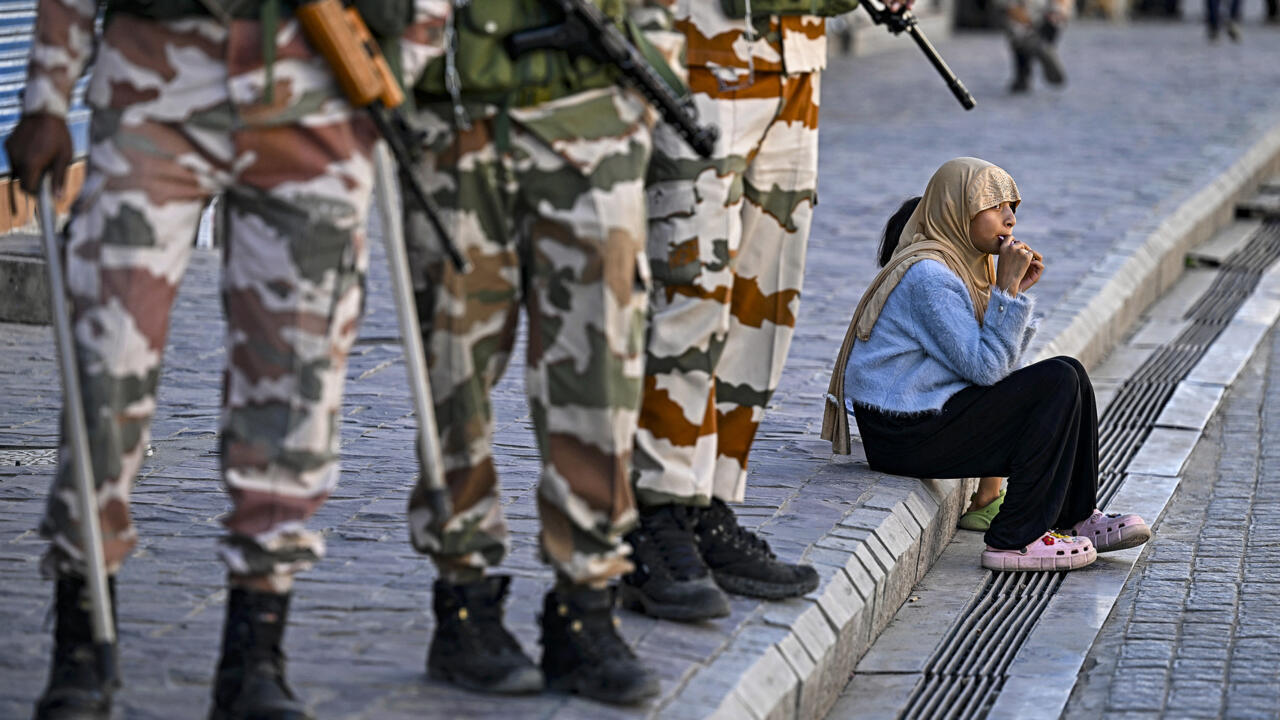
Indo-Tibetan Border Police (ITBP) personnel stand guard near closed shops as a girl enjoys a chocolate after curfew was partially relaxed for a few hours in Leh on September 27, 2025. © Tauseef Mustafa, AFP

Known for its stark beauty and strategic importance in South Asia, India’s northern Ladakh region had remained relatively calm for decades, despite being outlined by some of the most volatile borders in the world. That changed on September 24, after weeks of demonstrations and protests culminated in some of the worst violence in the area since the late 1980s.

Four died and dozens were injured after police opened fire when protesters – who had been peacefully demonstrating for weeks prior – set alight a local office of India’s ruling BJP (Bharatiya Janta Party), injuring security personnel. India’s Home Ministry said police fired in “self-defense” and blamed the violence on “provocative speeches” by Sonam Wangchuk, a popular climate activist who had led the demonstrations since September 10 by going on hunger strike. Wangchuk was subsequently arrested under India’s stringent National Security Act, for allegedly inciting violence.

The protests in Ladakh and, more significantly, New Delhi’s reaction to them, do not bode well for the Modi-led government, eroding trust in a region that has historically aligned with India’s central government during wars and frequent scuffles along the Line of Actual Control (LAC): the de facto line that separates Indian-controlled territory from territory controlled by China.

Growing demands for autonomy

The growing discontentment among Ladakhi people – particularly the younger generations – has been brewing for at least six years.

Ladakh was semi-autonomous until 2019 when the BJP government split it from the former Indian-administered state of Jammu and Kashmir. Under the new law, Ladakh lost its ability to self govern and was folded into India’s direct administrative control. At the time, many Ladakhi people including Wangchuk accepted the new administration, unlike in neighbouring Kashmir, which suffered a spate of violence and crackdown on any dissent.

But over time, Ladakhis began to feel that direct control from the centre did not work in their favour. The ruling BJP party within the territory agreed to autonomy: a promise that has not been met.

"People realised that losing all autonomy was a problem. We lost control over the land, over our own employment and many important decisions are in the hands of bureaucrats who don’t have knowledge of the people or culture," says Mohommad Ramzan Khan, a local lawyer who was born and raised in Ladakh’s capital Leh. Khan is a member of the Leh Apex Body, one of the groups responsible for organising the protests. "We had been appealing for statehood – some legislative control or constitutional safeguard that would give local people agency," he says.

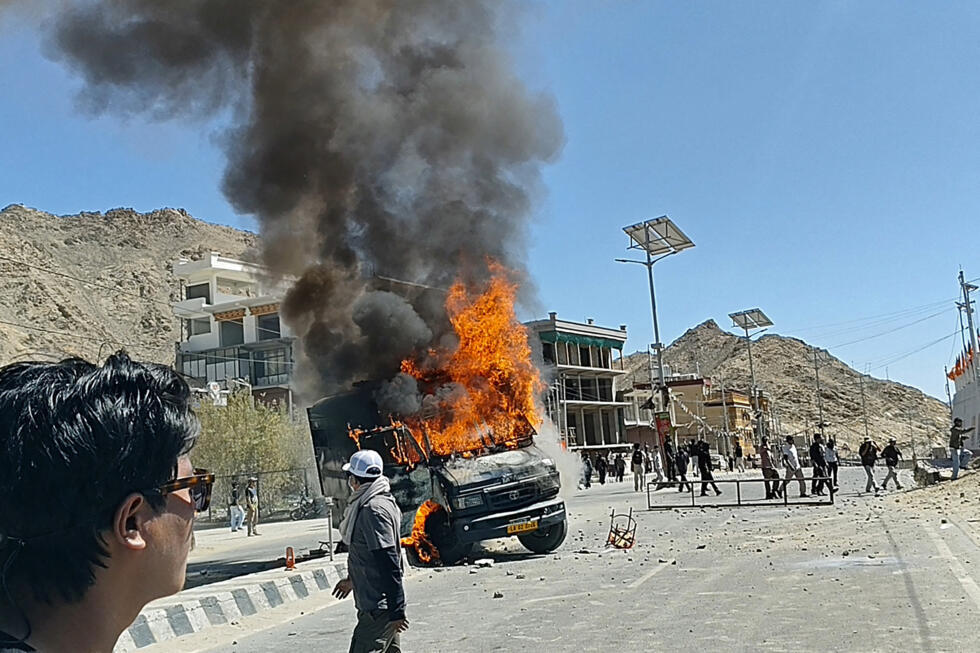
A police vehicle torched by demonstrators is pictured along a street near the Bharatiya Janata Party (BJP) office in Leh on September 24, 2025. © Tsewang Rigzin, AFP


One of the most pressing issues aside from widespread unemployment, according to Khan, is how Ladakh’s fragile lands and ecosystems have been handled. "The land is linked to the culture here, and its ecosystem is very vulnerable to all of these industries and hotels that are opening," he explains. Since bringing Ladakh under its control, the government has announced large-scale tourism, solar and industrial projects in Ladakh that require thousands of acres of land. Khan adds that despite the rampant development, Ladakh’s youth remain unemployed.

Ladakh’s local advocacy bodies, which mainly comprised the Leh Apex Body and Kargil Democratic Alliance, had been appealing for autonomy for years, but the Modi-led central government continues to ignore the demands. The frustrated Ladakhi population, led largely by the two groups and Sonam Wangchuk, began a formal demonstration on September 10. Wangchuk – considered a hero by many for his environmental work – went on a hunger strike along with his followers, refusing to eat until their demands were met.
‘A kind of Gen-Z revolution’

The protests remained peaceful until the 14th day of the hunger strike, when two elderly demonstrators on hunger strike collapsed and had to be hospitalized. This was the turning point that, according to Khan, spurred Ladakh’s youth to join the movement.

Khan was shocked by what he saw the next day. Martyrs Park, where the protests were taking place, was so full of protesters there was barely any space to move. "There must have been six or seven thousand people there. I hadn’t expected it at all." Khan adds that most of the protesters on that day were young, and as Wangchuk himself said in a video statement, "It was an outburst of youth, a kind of Gen-Z revolution, that brought them to the streets."

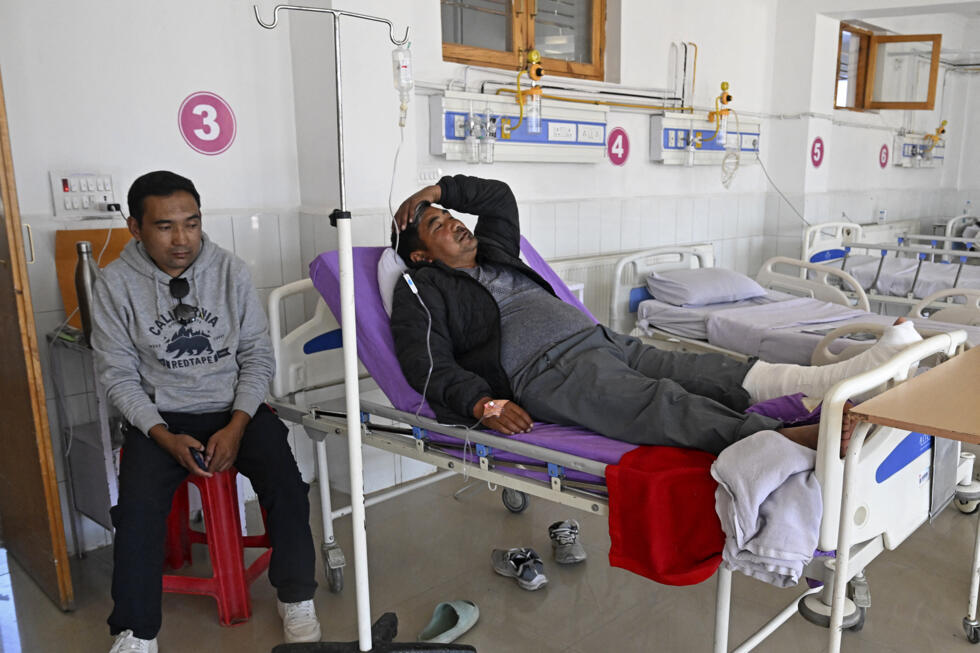
An injured protester undergoes treatment at a local hospital in Leh on September 25, 2025. © Tauseef Mustafa, AFP


Khan says the younger generation "seemed frustrated with all of us appealing for peaceful protests" and became rowdy. "They threw stones, torched a police vehicle and then went up to the BJP office and burnt it. I think they were fed up with us too. They had lost that faith in government and democracy."

Sonam Wangchuk made public appeals to end the violence, and called off his own hunger strike before his arrest on September 26. Since the clashes, a curfew has been in place in several parts of the territory.

A case of tragic irony

In a case of tragic irony, one of the four local men who were killed at the protests was a 46-year-old soldier who served in the Indian army and fought in the 1999 Kargil war against Pakistan. Videos of the man's tearful father have been going viral on social media.

Ladakhi soldiers have played a key role in fighting India’s battles along these volatile borders. The region has seen multiple wars over the past decades with Pakistan and with China, with whom India has had several border skirmishes in recent years.

Read moreChinese weapons pass combat test in India-Pakistan clash – with flying colours

"My own father and grandfather served with the Indian army," says Ramzan Khan. "Almost every home in the area has someone who’s fought at the border – so there’s a huge sense of betrayal right now, and a huge change of sentiment towards the central government." Indian officials have also labelled the protesters ‘anti-national’, even alleging that they may have had foreign influence and funding from Pakistan or China. "There has been a huge shift in sentiment – not towards the country, but towards the administration".

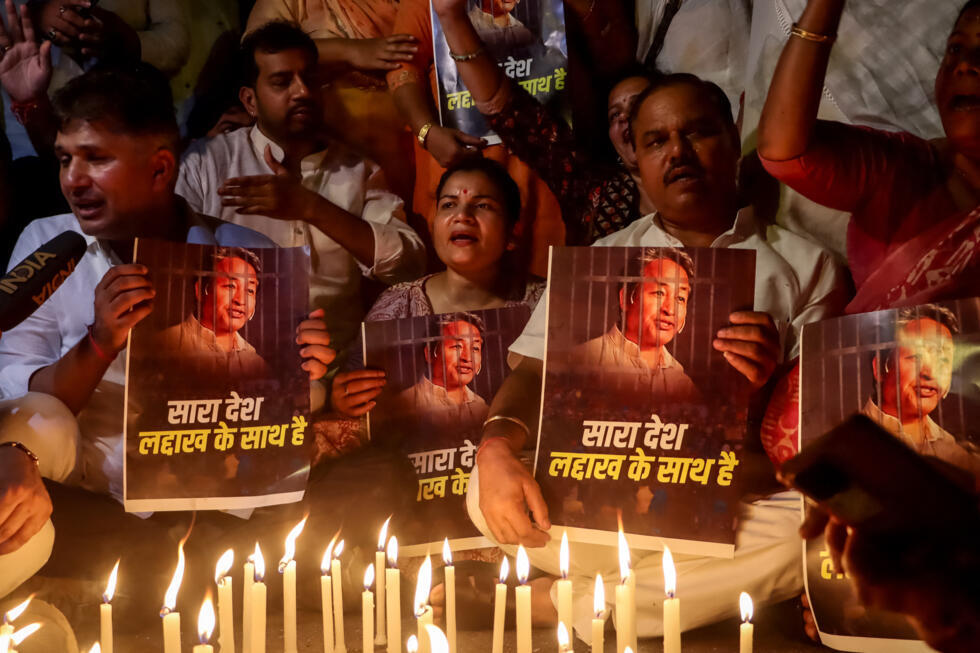
Supporters of the Aam Aadmi Party (AAP) take part in a candlelight vigil protesting against the arrest of climate activist Sonam Wangchuk, at Jantar Mantar in New Delhi on September 26, 2025. © AFP

According to Taiwan-based Indo-China analyst Aadil Brar, media in China has been pointing out the irony in arresting Wangchuk (who is well known in China as the inspiration behind a hugely popular Bollywood film) and labelling him ‘anti-national’. Wangchuk had vocally called for the boycott of Chinese goods to protest against the ‘expansionist’ attitude of the Chinese government. "The patriotic voice that spoke out against China is now being detained by his own government for a peaceful protest. In that regard, Indian democracy comes across as unstable and fragile in the Chinese media," he says.
‘A playground for India and China’

Brar says that while there hasn’t been any official word from China, the context of the protests means they have greater geopolitical significance. Ladakh is a high-altitude plateau that is flanked by two contentious zones. To its east lies Aksai-Chin, which is held by China but claimed by India, and to its West lies Gilgit Baltistan, in Pakistan-administered Kashmir.

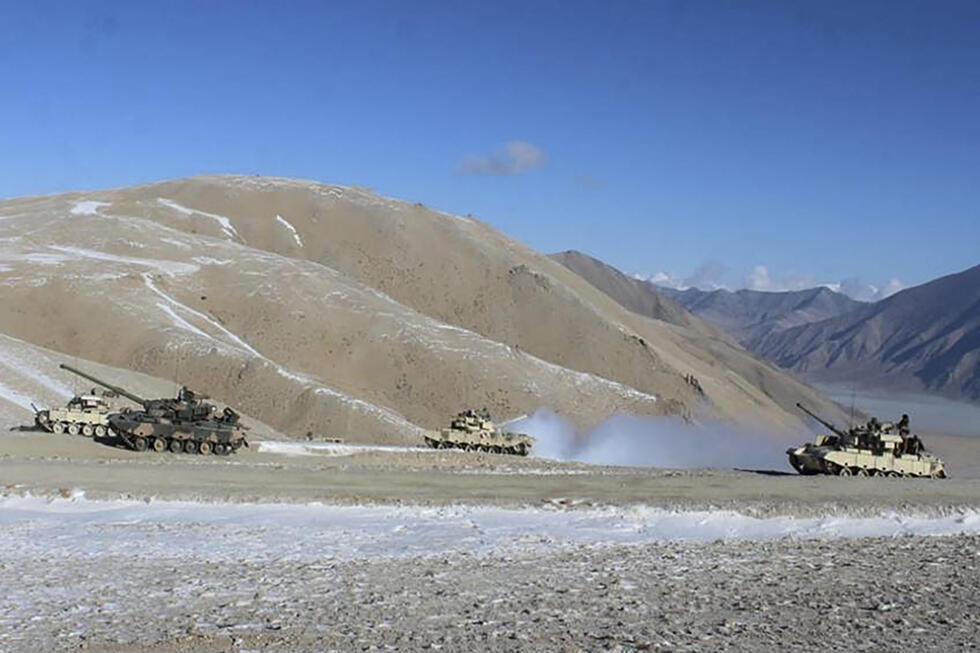
This undated handout photograph released by the Indian Army on February 16, 2021 shows Chinese soldiers and tanks during military disengagement along the Line of Actual Control. © Indian army via AFP


"You have to think of this region as a militaristic playground for India and China. This is an active military zone between two nuclear armed powers, with thousands of troops on either side: by some reports, over 100,000 each. Both countries have invested so much to develop the region's infrastructure. And Ladakh holds so much historical significance. In the Chinese narrative, the border remains unsettled. So you have to place the protests and uprisings within that framework. The ongoing discontentment will not be a good thing for New Delhi, especially in the long run."

For now, China and India are experiencing a moment of relative calm along the border. Ladakh’s future and autonomy are still to be determined, but the Modi government's attitude towards the protests is likely to alienate a community of people whose cooperation has been key in maintaining relative stability. Whether that instability will affect relationships and borders with India’s neighbours is yet to be seen.


'Come back to the motherland' in Africa, Spike Lee tells African Americans


Issued on: 30/09/2025 - 
Play (12:24 min)
From the show

Reading time1 min

In an interview with FRANCE 24 in New York on the sidelines of the UN General Assembly, filmmaker Spike Lee and his wife, the producer Tonya Lewis Lee, discussed their appointment as thematic ambassadors to Benin for the African American diaspora in the United States. The West African nation is offering citizenship to descendants of enslaved Africans without requiring investment. "Our brothers and sisters in Benin are telling us: come home, welcome us home, come back to the motherland. Come back [to] where your roots are," Spike Lee said.


The couple see their role as spreading the word. "We could be a blueprint" for other African nations to follow Benin's example in offering citizenship to descendants of enslaved people, they told FRANCE 24's Marc Perelman.

Asked about the current political climate in the United States under President Donald Trump, Spike Lee described it as "the year of living dangerously," referencing the 1982 Peter Weir film.

'Trump will not be president forever'

Tonya Lewis Lee addressed race relations directly. "To me, Donald Trump is nothing new. I think he's he's saying the quiet parts out loud," she said, adding that her parents grew up in the segregated South. "I think we make we make a lot of progress, and then we make steps backwards, and then we make progress again."

Despite the challenges, she remains hopeful: "The good news is, Donald Trump will not be president forever. And people will rise up, as they are [doing]."

Spike Lee concurred, pointing to the recent example of comedian Jimmy Kimmel being taken off the air and then reinstated after a public outcry.

"People are being galvanised by what's happening in the White House. So justice is going to prevail."

South Africa's Moravian Church at centre of land disputes in Western Cape


FOCUS © FRANCE 24
05:20

Issued on: 01/10/2025 - 

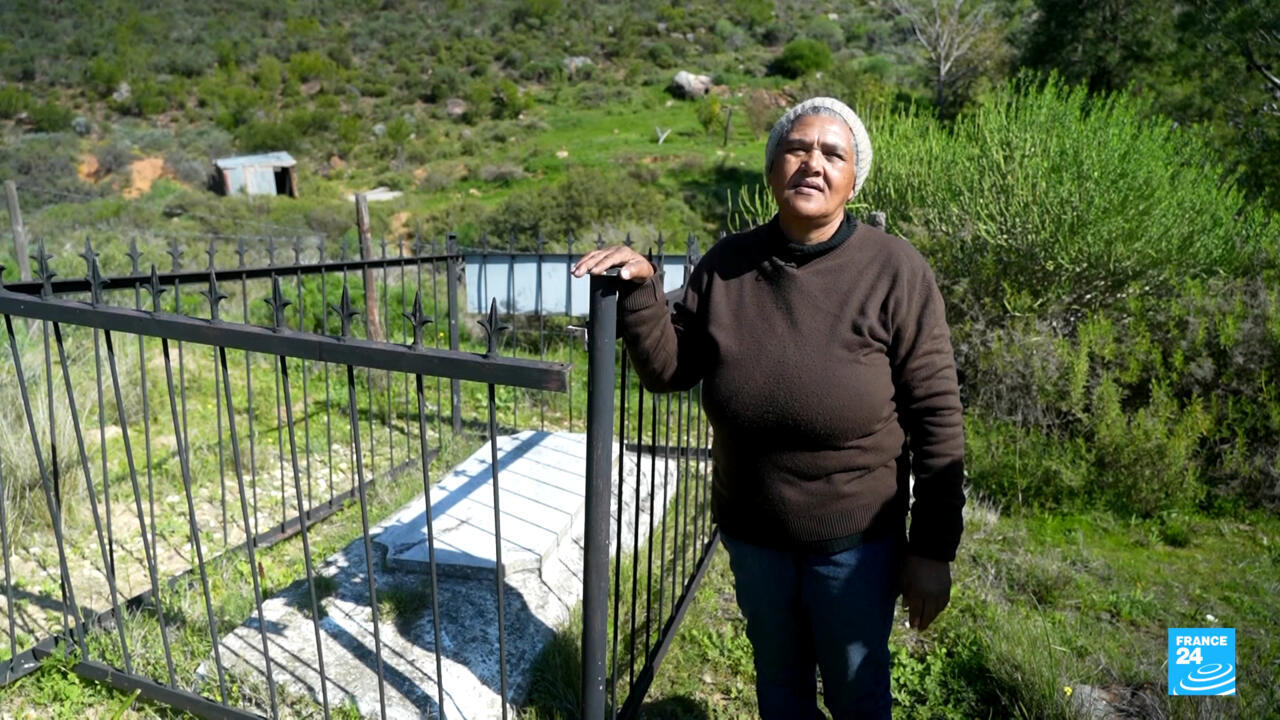
In South Africa, some towns in the Western Cape are entirely controlled by the Moravian Protestant Church, which has a missionary legacy dating back to the 18th century. Residents pay a fee to the Church, which maintains the town's infrastructure in return. But some locals claim the Church isn't using the money collected to reinvest in the town. With over 100,000 current members, the Moravian Church was one of the first religious institutions to welcome worshippers of all races in a South Africa still marked by segregation. FRANCE 24's Caroline Dumay, Stefan Carstens and Tom Canetti report for Pool Africa.


IMPERIALISM'S FAILED NEO-COLONIAL STATE

UN Security Council approves larger military force to tackle Haiti gangs


The United Nations Security Council on Tuesday approved expanding a UN-backed mission in gang-ravaged Haiti into a full military force of up to 5,500 personnel, adding soldiers alongside police officers. The move replaces the current law enforcement-only mission amid worsening violence and instability in the Caribbean nation.


Issued on: 01/10/2025 -
By: FRANCE 24

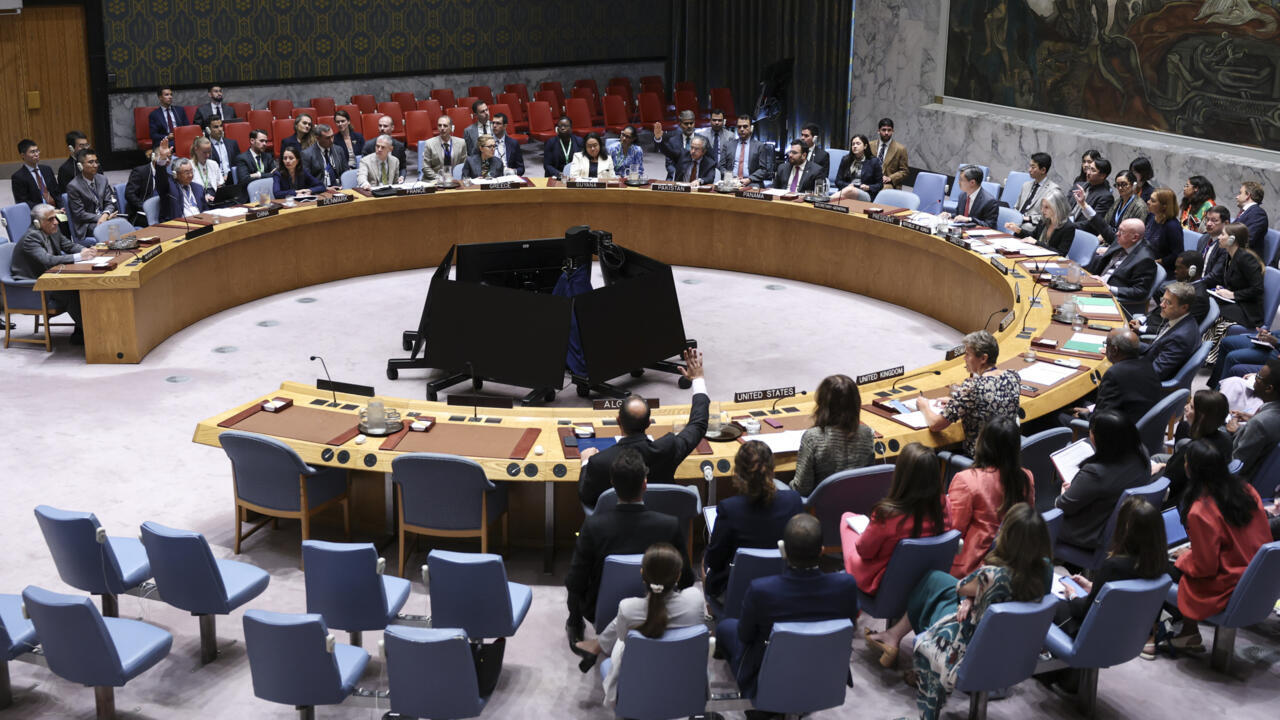
The United Nations Security Council holds a meeting on Iran at UN headquarters on September 19, 2025 © ANGELA WEISS, AFP


The United Nations Security Council on Tuesday adopted a resolution to transform a UN-backed security mission in gang-dominated Haiti into a larger, full-fledged force with military troops.

The new force can now have a maximum of 5,500 uniformed personnel, including police officers and soldiers, unlike the current mission, which is just law enforcement.

US ambassador to the UN Mike Waltz said the vote by 12 council members "to transform the Multinational Security Support mission to the new gang suppression force, a mission five-times the size of its predecessor" showed the "international community was sharing the burden."

Washington co-sponsored the enlargement push with Panama.

Read more  US places $5 million reward for top Haiti gang leader's arrest

Currently, just 1,000 police officers, mostly from Kenya, are deployed in Haiti under the Multinational Security Mission (MSS) to support the overwhelmed Haitian police in their fight against rampant gang violence.

But the mission, which was approved in 2023, has had mixed results.

"Every day, innocent lives are snuffed out by bullets, fire and fear," Laurent Saint-Cyr, who heads the Haitian Transitional Presidential Council, told the UN's signature diplomatic gathering last week.

"Entire neighborhoods are disappearing, forcing more than a million people into internal exile and reducing to nothing memories, investments, and infrastructure.

"This is the face of Haiti today, a country at war, a contemporary Guernica, a human tragedy on America's doorstep," he said.

Saint-Cyr had thrown his support behind the US and Panamanian proposal to evolve the MSS into a more resilient force for an initial period of one year.

"The Council can help restore peace in a nation currently suffocated by merciless gangs," Panama's ambassador to the UN Eloy Alfaro de Alba said ahead of the vote.

Kenya's president William Ruto said last week that "with the right personnel, adequate resources, appropriate equipment and necessary logistics, Haiti's security can be restored."

The major force boost will be accompanied by the creation of a support office within the UN, suggested several months ago by Secretary-General Antonio Guterres, to provide the required logistical and financial support.

Read more  Irish missionary among nine kidnapped in Haiti orphanage raid


Target gangs'


US Deputy Secretary of State Christopher Landau said last week: "This mandate would empower the force to proactively target gangs and restore security to Haiti while ensuring it has the appropriate tools to succeed the mission's anticipated objectives."

China had expressed skepticism about the role of the MSS without political transition in Haiti, but it abstained during the vote to create it in 2023, as did Russia.


China and Russia abstained again on Tuesday's vote.


The poorest country in the Americas, Haiti has long suffered at the hands of violent criminal gangs that commit murders, rapes, looting, and kidnappings against a backdrop of chronic political instability.

The situation has worsened significantly since early 2024, when gangs drove then-Prime Minister Ariel Henry to resign.

The country, which has not held elections since 2016, has since been led by a Transitional Presidential Council.


(FRANCE 24 with AFP)


LA REVUE GAUCHE - Left Comment: Search results for BRANDO BURN


FRANCE 24 wins DIG Award for 'Haiti: The Iron Grip of the Gangs' documentary


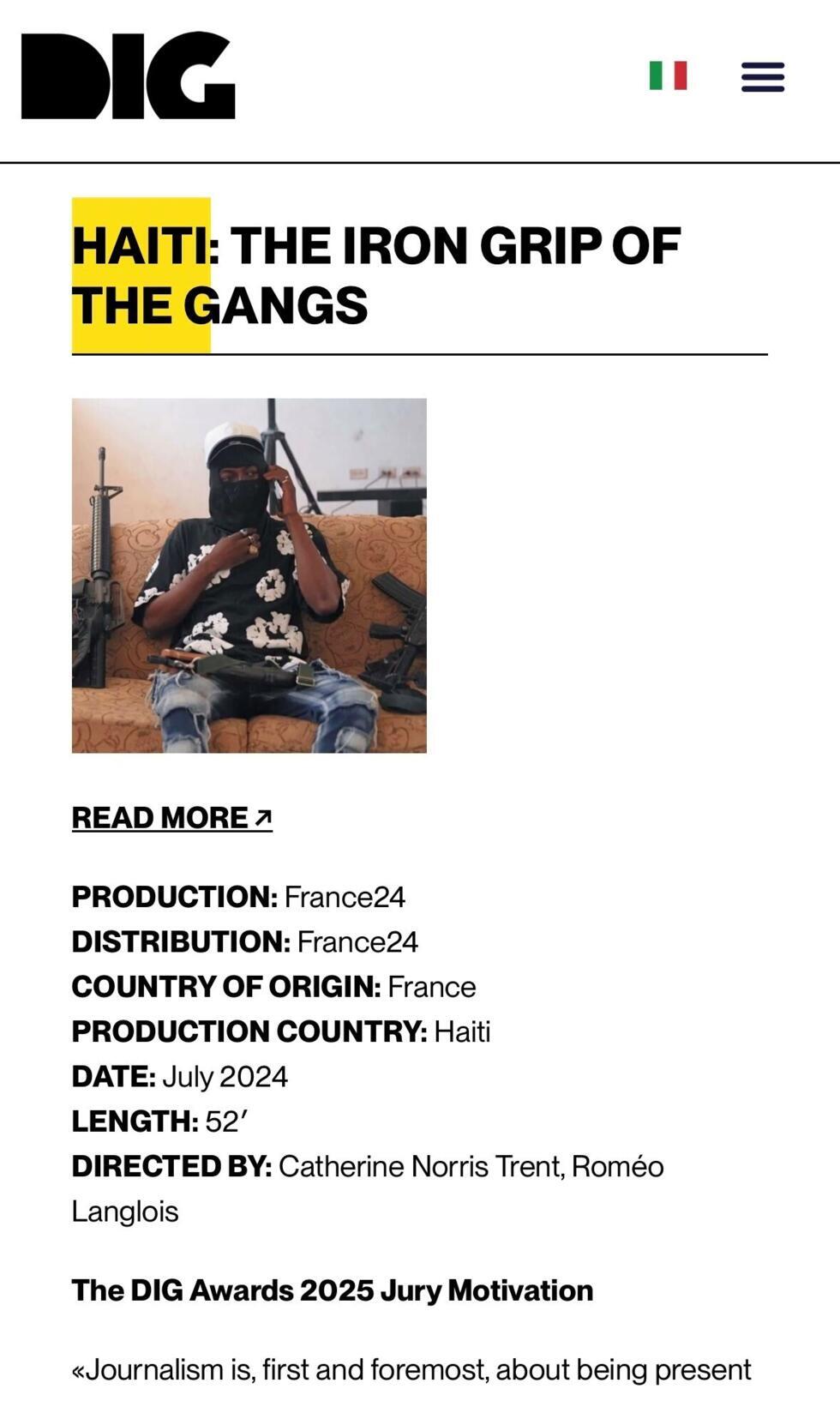
FRANCE 24 journalists Catherine Norris-Trent and Roméo Langlois have won the 2025 DIG Award for Long Reportage for their documentary, "Haiti: The Iron Grip of the Gangs". The annual DIG festival celebrates the best projects in investigative journalism and reportage of the past year.


Issued on: 28/09/2025 
By: FRANCE 24

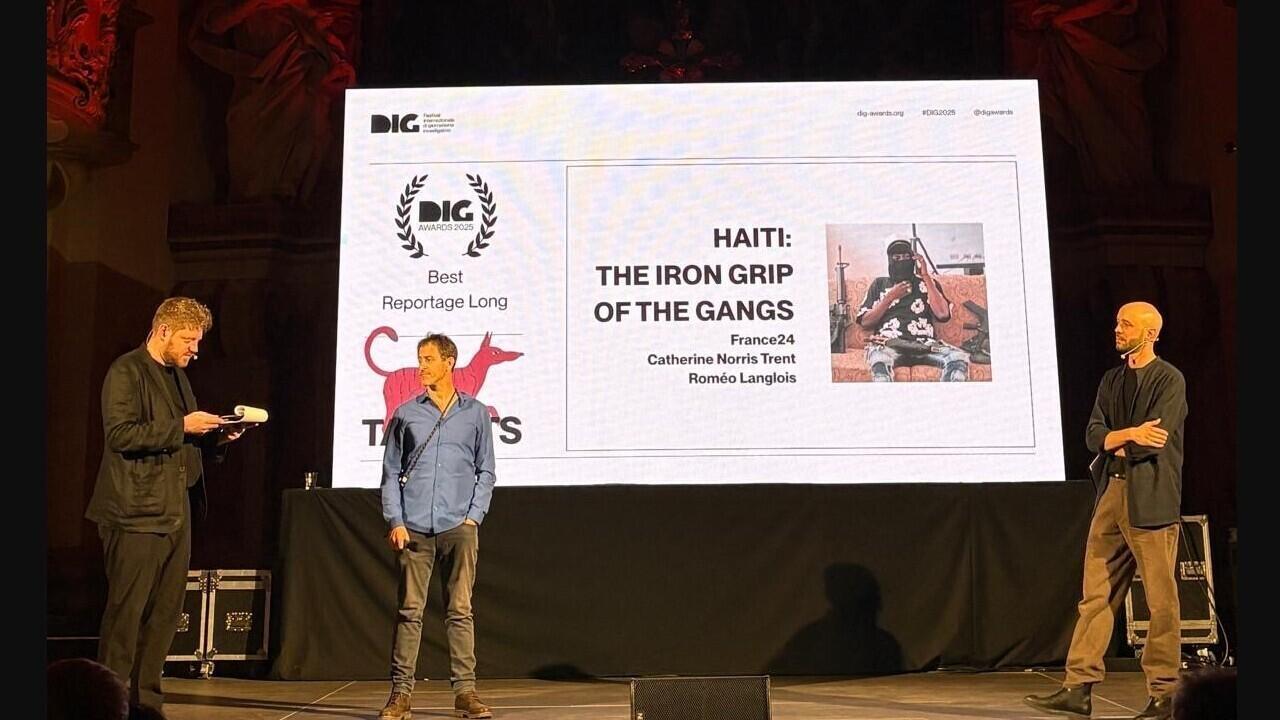
FRANCE 24 journalist Roméo Langlois accepts the DIG Award for Long Reportage on September 27, 2025, in Modena. © Dig Awards 2025

Investigative reporter Roméo Langlois accepted the award on behalf of himself and senior international correspondent Catherine Norris-Trent at the 2025 DIG Festival awards ceremony (September 24-28), which celebrates the best projects in investigative journalism and reportage published over the last year.

DIG is a non-profit organisation that supports watchdog journalism all over the world from its headquarters in Modena, Italy. Its acronym stands for Documentari, Inchieste, Giornalismi (Documentaries, Investigations, Journalism).

The documentary also won the prize for best special report at the 30th “Lauriers de l’audiovisuel” awards ceremony in Paris on February 24, 2025.

The DIG jury shared its reasons for awarding the prize to Norris-Trent and Langlois by noting that the Haiti of today "is one of the most complex and dangerous places in which to practice this profession":

"Journalism is, first and foremost, about being present on the ground. But this can never be taken for granted: it requires courage, preparation, and the ability to move around, knowing that not all places offer the same conditions of safety. Today, Haiti is one of the most complex and dangerous places in which to practice this profession. 'Haiti: The Iron Grip of the Gangs' powerfully recounts this reality, revealing a country where violence is now endemic, impunity reigns, and gangs limit freedom of movement and hope for the future. It is a film that reflects not only the brutality of the Haitian situation, but also the resilience of journalism when confronted with the most extreme environments."


In Port-au-Prince, nearly three million people are living in the grips of an asphyxiating gang war. The crisis continues despite the arrival of the first Kenyan police officers as part of a UN-backed multinational force to stem the violence. Although this international effort offers a glimmer of hope, few residents believe it could provide an effective or long-lasting solution. FRANCE 24's Catherine Norris-Trent and Roméo Langlois bring you behind the scenes of this exclusive 52-minute documentary.

To watch the full documentary "Haiti: The Iron Grip of the Gangs", click here


PUTIN'S PUPPET

Orban says ‘Hungary can't be circumvented' on Ukraine EU accession

Orban says ‘Hungary can't be circumvented' on Ukraine EU accession
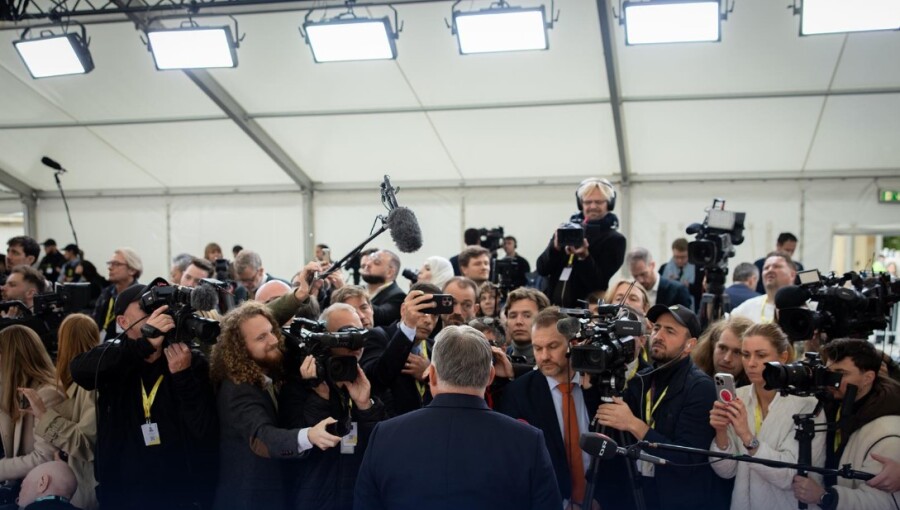
Hungarian Prime Minister Viktor Orban talking to journalists before the informal summit in Copenhagen on October 1. / Viktor Orban via Facebook.
By bne IntelliNews October 1, 2025

Ukraine's accession procedure to the European Union cannot be opened through "legal tricks" circumventing Hungary, Prime Minister Viktor Orban told journalists at an EU summit in Copenhagen focusing on defence issues and support for Ukraine, according to Hungarian state news agency MTI. Orban also said that US President Donald Trump has not asked Budapest to stop buying oil from Russia.

"I’m being attacked from all sides, from EU officials and the opposition. It will be a tough day, a cage fight, but we will deal with it," the Hungarian leader posted on Facebook, hours before the informal summit seen as the preparation for a formal meeting of EU leaders scheduled for October 23-24 meeting in Brussels.

He wrote that Hungary would oppose proposals to recognise the Russia–Ukraine war as the EU’s own, increase financial aid to Kyiv, accelerate Ukraine’s accession, and cut oil and gas imports from Russia.  He called these measures contrary to Hungary’s interests, adding that he faced pressure from EU partners, the Commission, and the domestic opposition.

Talking to reporters before the meeting, Orban stressed that enlargement procedures must follow “strictly settled rules” and that the opening and closing of every accession chapter requires unanimous approval by all member states.

Full membership of the country would draw the EU into the Russia–Ukraine war and divert a significant share of EU funds to Ukraine. "Ukraine is a heroic country, no question about that, and we need to support it, but not with EU membership," according to the premier, who proposed strategic agreement with Ukraine.

When asked that the EU was trying to link the accession procedures of Moldova and Ukraine, he replied: "Those are two separate countries.  Further, Ukraine was not a sovereign country.  We don't know where its eastern border is, we don't know the number of its inhabitants, and it can't stand on its own feet."

According to Orban, it is the EU which is covering Ukraine’s army, public administration and pensions. "This is a financial fact," he said.

Addressing regional security, Orban said Hungary supports all forms of European military cooperation, including a planned drone wall along the EU’s eastern border, which Hungary has agreed to join after an initial hesitation.

Meanwhile, he said that "if something flies into Hungary that doesn't belong to us, we will shoot it down. With or without a drone wall" and recommended the same to the Danes, facing drone attacks that many had attributed as Russian operations.

Orban also noted that he had consulted with leaders of Hungarian oil and gas giant MOL before the summit, and will represent their stance.  As a sovereign country, Hungary is free to decide about its energy mix. As a landlocked country, it has one "primary pipeline from Russia" and a pipeline through Croatia, which is in itself insufficient, he said.

He told journalists US President Donald Trump had not asked Budapest to stop buying oil from Russia and  "nobody asked" to turn off the taps from Russia.

The US president respects the sovereignty of other countries, and he just asked about what the situation is (over the supply of Russian energy), it is an important difference (compared to the EU's stance), Orban told journalists.

Responding to another question, he said in a conflict-ridden situation, even one mistake by a more powerful player may result in a world war.

Ukraine War At Crossroads As Trump Pulls Out – OpEd

donald trump vladimir putin poster grok

A STALINIST VIEW


By 

The Russian Foreign Minister Sergey Lavrov came out of a meeting in New York in the weekend with the US S secretary of State Marco Rubio showing a thumbs-up sign as he passed journalists. It was a confusing signal so soon after the US President Donald Trump publicly shamed the Russian military as a ‘paper tiger’ and stunned European capitals that Ukraine could still “fight and win” all its land.


A charitable explanation could be that Trump was building the off ramp to hand the responsibility for Ukraine’s defence to the Europeans. He made a strong point that Europeans can and should do more. That said, it is also noticeable that Trump’s initial sympathy for Russia has given way steadily to a more neutral position — a shift that accelerated last month.

British columnist Gerard Baker wrote in Times that “Trump is signalling to Russia that he no longer has its back. But he has also made clear that Europeans can’t rely on US support.” Moscow played cool initially but realism dawned within the week.

While reduced US involvement in Ukraine is a good thing to happen for Russia, it is far from an open and shut case that Trump won’t reassume Nato leadership. The matrix is getting complicated, as Nato is not in step with the US and Trump does not control Nato anymore,  although Nato doesn’t amount to much without America. And neither Nato nor Trump controls the war.  

Clearly, the US appears to be growing more distant. This is an epic inflection point: in the American global order Europe flourishes  and has the opportunity to become a geopolitical force in its own right, but also risks becoming an afterthought in a fragmenting world. Scott Bessent, US Treasury Secretary who is close to Trump’s thinking, highlighted this paradox in an interview with Fox Business last Wednesday when he said, “As I told my European counterparts about two weeks ago, ‘All I can hear from you is that Putin wants to march into Warsaw. The one thing I’m sure of is that Putin isn’t marching into Boston.’ ”

Trump’s remarks last week about Ukraine war and his invitation to EU to be the ‘counterweight’ to Russia were by no means a spontaneous, emotional outburst. They came from long multi-layered strategy sessions over several weeks. Indeed, by last Sunday, the US vice-president JD Vance was already revealing that Washington is considering a Ukrainian request to obtain Tomahawk missiles to Ukraine — a long-range, nuclear capable, all-weather cruise missile of  technological sophistication and precision whose land-based version is in production.

Tomahawk, if inducted into the war, will give Kiev the capability to strike deep inside Russia. Moscow sharply reacted overnight to Vance’s remark, saying it would carefully analyse whether any Tomahawk missiles that might be supplied to Ukraine would be fired using targeting data supplied by the US.

A new dangerous phase of the war is beginning, which holds the risk of a direct Russia-Nato confrontation. Asked about Vance’s comments, Kremlin spokesman Dmitry Peskov said Russia was analysing them carefully. President Putin has previously stated that Western countries will make themselves direct parties to the war if they supply targeting and intelligence to enable Ukraine to fire missiles deep inside Russia.

Peskov said, “The question, as before, is this: who can launch these missiles…? Can only Ukrainians launch them, or do American soldiers have to do that? Who is determining the targeting of these missiles? The American side or the Ukrainians themselves?” Peskov added that “a very in-depth analysis” is required. 

This is a moment of truth, since with Tomahawk’s arrival in war zone,  Trump will be climbing the escalation ladder at a juncture when indications are that Ukraine has strengthened its capability lately, launching a series of successful drone strikes against Russian refineries. They triggered fuel shortages, driving gasoline prices to record highs and prompted Moscow to restrict exports to stabilise its domestic market.

The locus of the proxy war in Ukraine may altogether change going forward. Germany is willing to pay for the procurement of Tomahawk. Russian expert opinion is that there is no magic weapon capable of changing the dynamic of the war. But beneath that high threshold, there are other compelling realities. But Tomahawk can bring the war to Russian homesteads for the first time.

The West’s last throw of the dice may well be to stoke up social discontent within Russia, as parliamentary elections are to be held not later than 10 September 2026. The West’s assessment, rightly or wrongly, is that the majority opinion in Russia favours an early end to the war. 

The discords within the transatlantic alliance worked well for Russia so far. Also, Trump exhibited little appetite for military adventurism or foreign entanglements. American foreign policy, once dominated by containment and the domino theory, had gone into reverse. However, now it seems that although the White House ceased to be hostile, the US will still continue to supply intelligence to Kiev and allow Ukraine to buy its advanced weaponry with the Europeans footing the bill. 

German Chancellor Friedrich Merz wrote in FT last week urging EU to transfer Russia’s frozen reserves (roughly $300 billion) to Ukraine exclusively for procurement of weapons. It effectively means Ukraine should be able to hold the line.

The crunch time comes when or if Nato toughens its rules of engagement on its eastern flank to make it easier to shoot down intruding Russian aircraft. No doubt, the alliance has become firmer in its messaging towards the Kremlin over past week.

But there are indications also that Washington and Moscow are communicating. Neither side is looking for confrontation. As things stand, it is very much possible that Trump may not agree ultimately to the supply of Tomahawk to Ukraine. 

On the other hand, in the changed circumstances and growing uncertainties about a negotiated settlement, Russia may be left with no option but to go all out for a military solution. After all, even if there is going to be a negotiated settlement on paper, it may not add up to much. 

The so-called Helsinki Accords (1975) was painstakingly negotiated through a two-year period in Geneva and every European country and the US and Canada signed it, but exactly one year later, this was what Henry Kissinger told President Gerard Ford : “we (US) never wanted it but went along with the Europeans… It is meaningless — it is just a grandstand play to the left. We are going along with it.” 

In the final analysis, all that the Helsinki Final Act achieved was to  draw international attention to the human rights situation in the Soviet bloc and open ties between the East European countries and Western Europe, which of course led to the rise of the Solidarity movement in Poland and an overall  loosening of the cohesion of the Warsaw Pact, which culminated in the collapse of the Berlin Wall. 

M.K. Bhadrakumar

M.K. Bhadrakumar is a former Indian diplomat.