Thursday, October 09, 2025


GRAPHIC: Funds investing in gold miners bask in record prices
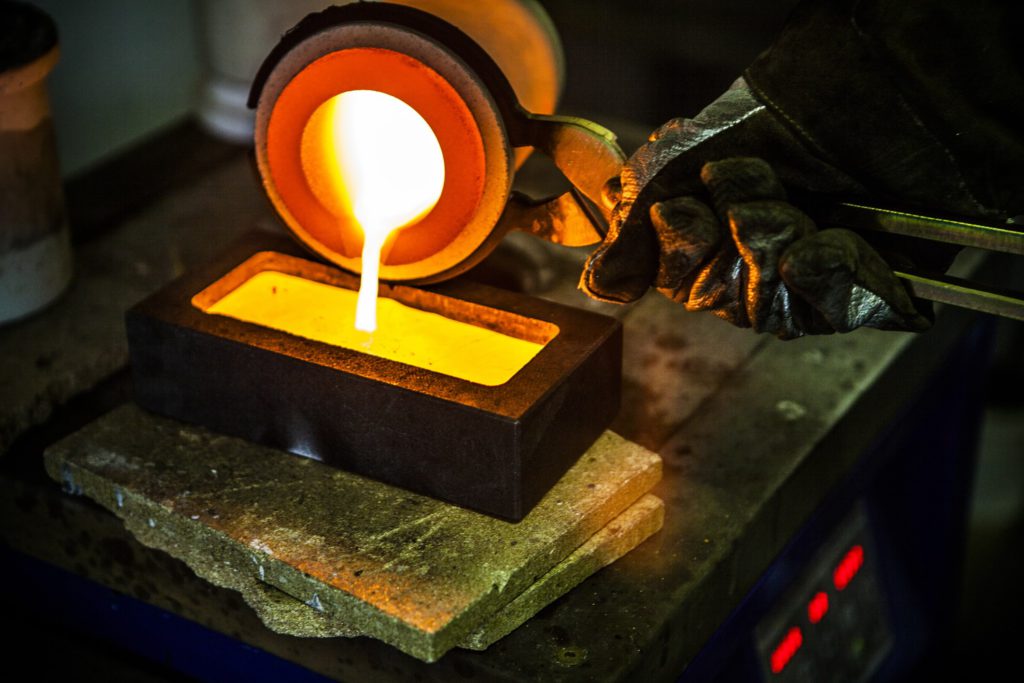

Pouring a gold bar. Credit: iStock

Mutual funds that invest in gold mining firms are leading 2025 performance, overtaking even high-flying AI and tech funds, as investors bet record gold prices will drive strong margins, cashflows and shareholder returns.

According to LSEG Lipper data, gold mining funds have surged about 114% year-to-date, far outpacing technology funds, which are up 27%, and natural resources funds, which have gained around 23.7%.

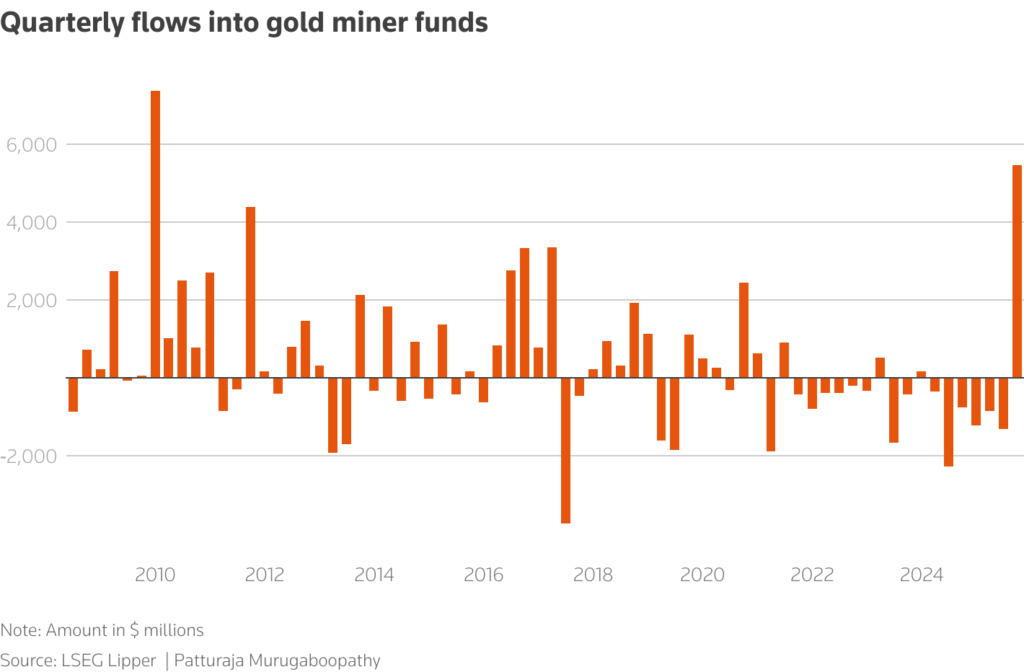
The third quarter alone saw inflows of $5.4 billion, the largest quarterly move, into gold miner funds since December 2009, according to the data.
Gold hit a record high on Tuesday as a US government shutdown persisted and expectations for a Fed rate cut this month boosted demand.

While gold miners had lagged the bullion in recent years due to rising costs and operational setbacks, they have outperformed in 2025 as record prices boost profits and cash flows, strengthening balance sheets and offering leveraged exposure to the gold rally.

“Despite the rally, the sector remains widely under-owned, leaving room for new investors to drive further multiple expansion,” said Trevor Yates, senior investment analyst at Global X ETFs.

“We’re particularly constructive on smaller miners and explorers which offer greater leverage to the gold price and are set to be beneficiaries of continued industry consolidation.”

George Cheveley, portfolio manager at investment management firm Ninety One, said strong earnings are reinforcing cost discipline, with some miners accelerating projects funded by cash, a move that supports growth and avoids the need for borrowing.

Gold miner Newmont reported stronger-than-expected second quarter profits and announced a $3  billion share buyback program, while peer Barrick beat profit forecasts and raised its quarterly dividend by 50%.

Some companies are seizing the rally to boost capital through IPOs and share sales. China’s Zijin Gold International raised $3.2 billion in Hong Kong, while Merdeka Gold secured $280 million.

Despite doubling in 2025, the MSCI gold miners index still trades at a forward P/E of 14.3, below its ten-year average of 16.7, suggesting room for valuation expansion.

“At 30% free cash flow (FCF) margins, gold companies have never had it better,” said Adrian Hammond, a research analyst at SBG Securities.

There were opportunities for investors in companies disciplined about cash and keen to reward shareholders, he said.

(By Patturaja Murugaboopathy; Editing by Vidya Ranganathan and Maju Samuel)


Anglo CEO still sees future in Africa despite shrinking footprint

Duncan Wanblad, CEO of Anglo American. (Image courtesy of Anglo American |Flickr.)

Anglo American still considers Africa to be part of its future due to its critical mineral resources, despite the mining company’s recent restructuring and disposal of assets there, CEO Duncan Wanblad said on Wednesday.

Anglo American has exited its coal and platinum operations in South Africa, the country where it was founded over a century ago, and is selling diamond miner De Beers, as it shifts its focus to copper, a vital metal in the clean energy transition.

Kumba Iron Ore remains as its sole major asset in South Africa.

Despite those exits, Wanblad said Anglo planned to use South Africa as a window into the broader African continent’s vast, under-explored mineral resources.

“I look at what the world needs in terms of minerals, I think Africa is the place to be,” Wanblad said at a mining conference in Johannesburg.

“Hopefully, we’ll be as big as we were in Africa in a couple of years time,” he said.

Africa is home to large deposits of copper, cobalt, lithium and rare earth elements, which are used in solar panels, batteries and electric vehicles.

After fending off a takeover bid by Australia’s BHP, Anglo American last month announced an agreement to merge with Canada’s Teck Resources to create a copper heavyweight.

Wanblad said the diamond market was starting to bounce back from a three-year price slump, and Anglo was seeing “some real strategic interest” from potential buyers of De Beers.

De Beers had by June attracted interest from at least six prospective investors, while Angola’s state diamond company Endiama announced last month it had bid for a minority stake in the company.

“These are parties that know the industry, that know the assets, that love diamonds. And that’s all very positive,” Wanblad said.

(By Nelson Banya; Editing by Joe Bavier)


Congo to tie cobalt export quotas to three-year company data


(Image courtesy of CMOC Group.)

The Democratic Republic of Congo will allocate annual cobalt export quotas based on companies’ production and shipment data for the previous three years, three sources familiar with the matter told Reuters, in a major policy shift intended to curb supply from the world’s top producer.

The quota system, set to take effect on October 16, replaces a months-long export suspension that disrupted supply chains and rattled electric vehicle manufacturers, particularly in leading consumer China.

Congo accounts for over 70% of global cobalt output, making its regulatory decisions critical to the key battery, smartphone and defence systems metals market.

Reuters previously reported that Congo would permanently ban cobalt exporters that violate the new quota system. President Felix Tshisekedi said the export freeze helped drive a 92% rebound in cobalt prices since March, calling the new system a “real lever to influence this strategic market”.

Glencore, the world’s second-largest cobalt producer, supports the quota system, while CMOC, the top producer, opposes it.

Cobalt prices on Comex at $19 a lb. or $41,890 a metric ton have surged 90% since hitting nine-year lows at $10 a lb. in February when the first suspension was announced.

Congo’s central bank expects a surge in cobalt revenue in the final quarter of 2025 and into 2026 boosted by the quota system, its Governor AndrĂ© Wameso said.

“Exports will resume … and this will generate exceptional revenues,” Wameso told Reuters on Wednesday, making up for losses incurred from the export ban.

A government committee is reviewing historical data of producers to determine quota levels and eligibility, said the first source, who asked not to be named because of the sensitive nature of the issue.

The framework will exclude artisanal miners, the source said, and will not introduce a licensing regime for large producers.

Instead, authorities plan to strengthen controls at laboratories and cobalt loading sites to ensure traceability and prevent evasion, according to the source.

Smaller producers will still be required to apply for export permits and additional licences, a second source said.

The quota system is being developed by a multi-agency committee that includes representatives from the presidency, mining ministry, and the chambers of mines, with the aim of aligning with national policy goals and improving transparency in the sector.

Preparations to roll out the quota system come amid escalating conflict in mineral-rich eastern Congo, where fighting between M23 rebels and the army has killed thousands of people and displaced hundreds of thousands.

A US-backed peace effort faced a new setback when Congo and Rwanda failed to sign an accord known as a Regional Economic Integration Framework, part of a plan to make the two countries’ sectors more attractive to Western investors.

(By Ange Kasongo, Pratima Desai, Maxwell Akalaare Adombila and Sonia Rolley; Editing by Ed Osmond)

CRIMINAL CAPITALI$M

Congo mining firms underreported $16.8 billion in revenue, audit says


Cobalt extraction in Congolese mine. AI-generated stock image by ARM.

Mining companies operating in the Democratic Republic of Congo underreported $16.8 billion in revenue between 2018 and 2023, a state audit found, potentially reducing funds for the government and local communities.

Under Congo’s 2018 mining code, firms must contribute 0.3% of annual revenue to community development funds that typically support schools, clinics and water systems.

A June financial audit by the country’s Court of Auditors, seen by Reuters on October 5 and previously unreported, found that companies declared $81.4 billion to the development funds, but reported $98.2 billion to tax authorities.

Lost development funds

Congo, a top cobalt and copper producer – both critical for battery production – is among the world’s poorest countries.

The discrepancy resulted in $50.4 million in lost contributions to development funds, the report said.

CMOC’s TFM, Glencore’s Kamoto Copper, Ivanhoe’s Kamoa-Kakula mine, SICOMINES, Eurasian Resources Group’s Metakol and Ruashi Mining collectively underreported $10 billion, it said.

Number two cobalt exporter Glencore said its subsidiary Kamoto Copper had fully met its obligations under the mining code, adding that the discrepancy reflected competing interpretations of when the law took effect.

It added that its 0.3% community levy was calculated on half-year revenues and validated by auditors and the local development agency.

CMOC, the world’s top cobalt exporter, SICOMINES, Ivanhoe, Eurasian and Ruashi did not respond to requests for comment.

“Practically, 70% of the companies did not respect this regulation … and it’s an enormous loss of earnings for the Congolese state,” said attorney general Jean Chris Mubanga Musuyu in response to questions about the report’s findings.

The Court of Auditors recommended that the government suspend non-compliant firms and pursue prosecutions, mandate revenue audits and enforce stricter oversight.

NGOs call for income boost

Average annual income in Congo, which also has vast reserves of lithium, uranium and other minerals, is about $580 per person.

Conflict with Rwanda-backed M23 rebels in the mineral-rich east has killed thousands this year and displaced hundreds of thousands.

Civil society groups pushed for the 0.3% levy to channel funds directly to mining communities, bypassing central bureaucracy, to drive local development.

“The idea was to see how we can turn mining into a tool for uplift, not just extraction,” said Emmanuel Umpula Nkumba of Lubumbashi-based nonprofit AFREWATCH.

“If this is well managed, it will improve lives on the ground.”

(By Maxwell Akalaare Adombila; Editing by Clara Denina, Robbie Corey-Boulet and Mark Potter)


Lynas partners with Noveon for rare earth magnets supply to US

Inside the lab at Lynas’ rare earths deposit in Mt Weld, Western Australia. Credit: Lynas Corp.

Australia’s Lynas Rare Earths has partnered with US-based manufacturer Noveon Magnetics to supply rare earth permanent magnets to defence and commercial sectors in the US, the two companies said on Wednesday.

The deal includes provision of both light and heavy rare earth materials and the production and supply of finished magnets to end-users across defense, automotive and industrial sectors.

“This partnership delivers what the market and the US government need most: capacity, certainty and speed,” Noveon CEO Scott Dunn said in a joint statement, adding that the companies plan to finalize a definitive agreement and work closely with the US government and customers.

The companies did not divulge any financial details of the deal.

Washington has been pushing to secure critical minerals and reduce reliance on China, which produces around 90% of the world’s rare earths magnets.

Lynas is the world’s largest rare earth producer outside China and CEO Amanda Lacaze said the deal will provide US manufacturers with a “secure and traceable” magnet supply chain.

(By Kumar Tanishk; Editing by Janane Venkatraman and Rashmi Aich)

White House doubles down on Alaska mining, buys 10% of Trilogy Metals

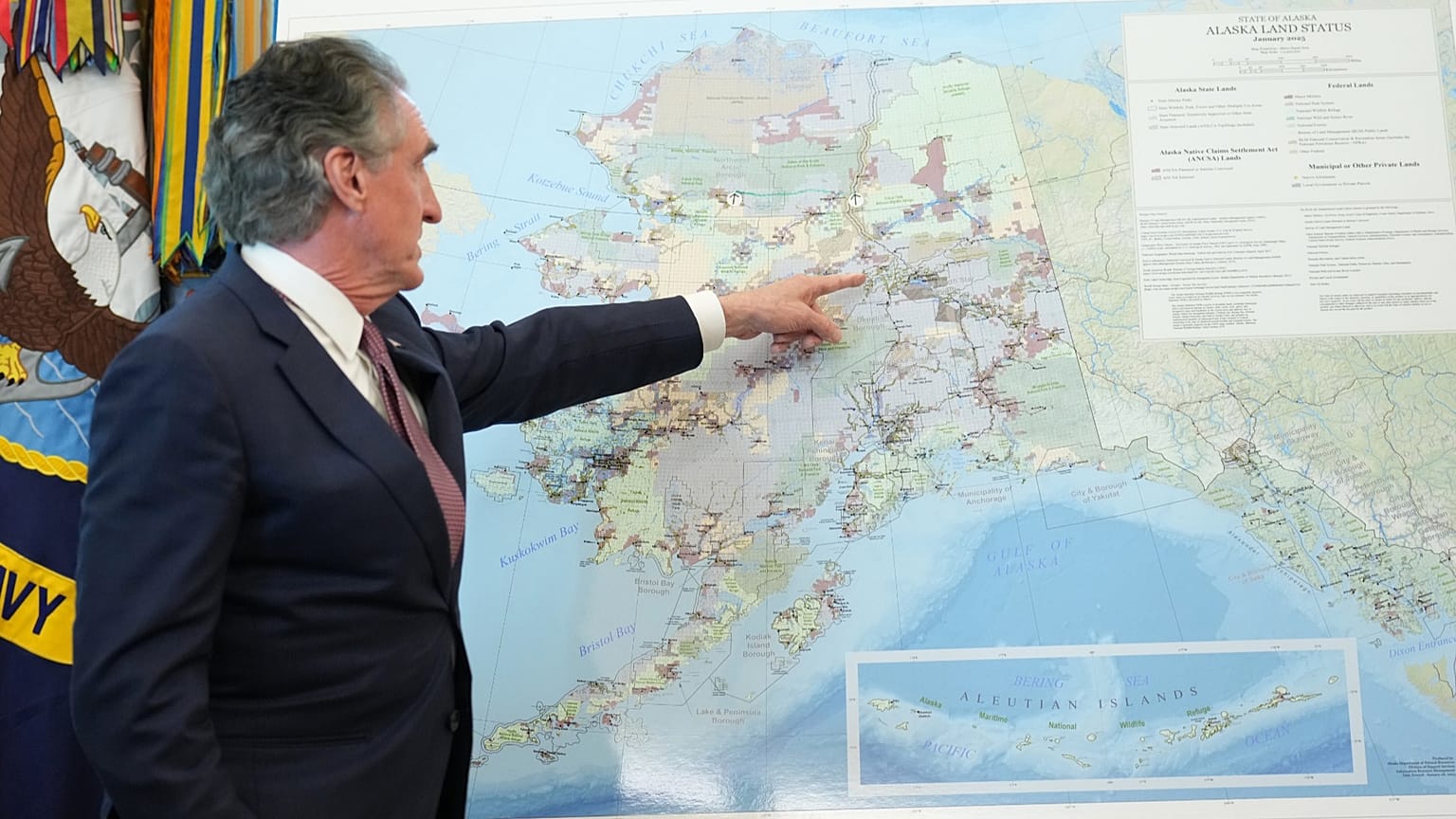
Interior Secretary Doug Burgum points to a map of Alaska as he speaks before President Donald Trump signs an executive order in the White House.
Copyright Copyright 2025 The Associated Press. All rights reserved


By Una Hajdari with AP
Published on 

The White House unveiled its investment in the Canadian mining company as it gave the green light to the Ambler Road project in Alaska, advocating for greater supply-chain security.

The United States plans to buy roughly 10% of Trilogy Metals for $35.6 million, or around €30.5mn, with warrants that could lift the stake by an additional 7.5%.

Interior Secretary Doug Burgum told reporters on Monday evening that the US is making the investment "so we can make sure that we're securing these critical mineral supplies, and that ownership will benefit the American people".

The capital is intended to accelerate exploration in Alaska’s Ambler Mining District, which the White House approved on Monday, reversing Biden-era permit denials tied to environmental concerns.

Burgum said the project is crucial to securing domestic supplies of minerals like copper and cobalt, feeding into US efforts to surpass China in the ongoing race for AI and microchip production. Burgum also pitched it as an economic catalyst for Alaska.

President Donald Trump signed an executive order directing agencies to prioritise Alaska’s resource development and authorise construction of an approximately 200-mile industrial road to the Ambler region where the resources are located.

Trilogy, a Vancouver-based explorer and developer, holds a 50% interest in Ambler Metals LLC. Ambler holds a 100% interest in the Upper Kobuk Mineral Projects in northwestern Alaska.

The announcement follows other recent pledges from the US government to invest in strategic industries. The Trump administration said it would take an equity stake in another Canadian mining company, Lithium Americas, after buying a 10% stake in Intel earlier this year.

A reversal of Biden policy

The long-debated Ambler Road project was approved in Trump's first term, but was later blocked by the Biden administration after an analysis determined the project would threaten caribou and other wildlife, as well as harming Alaska Native tribes that rely on hunting and fishing.

The gravel road and mining project, north of Fairbanks, Alaska, “is something that should’ve been long operating and making billions of dollars for our country and supplying a lot of energy and minerals,” Trump said.

Former President Joe Biden “undid it and wasted a lot of time and a lot of money, a lot of effort. And now we’re starting again. And this time we have plenty of time to get it done," Trump added.

Opponents of the project, including a consortium of 40 federally recognised tribes, worry that development allowed by the road would put subsistence harvests at risk because the lands include important habitat for salmon and caribou.

Karmen Monigold, an Inupiaq member of Protect the Kobuk, a Northwest Arctic advocacy group opposed to the access road, said she cried when she first learned of Trump's actions

“And then I reminded myself of who we are, and who our people are and how far we’ve come,'' she said Monday in a telephone interview. “They tried to assimilate us, to wipe us out, and yet we’re still here. We still matter.”

Monigold said she hopes Alaska Native groups will file lawsuits, as they have done before, to halt the project.

The Republican-controlled House approved a bill last month that would pave the way for Trump to expand mining and drilling on public lands in Alaska and other states.

The vote, largely along party lines, would repeal land management plans adopted in the closing days of Biden’s administration that restricted development in large areas of Alaska, Montana and North Dakota.

Biden’s goal was in part to reduce climate-warming emissions from the burning of fossil fuels extracted from federal land. Under Trump, Republicans are casting aside those concerns as they open more taxpayer-owned land to development, hoping to create more jobs and revenue and boost fossil fuels such as coal, oil and natural gas.

The administration also has pushed to develop critical minerals, including copper, cobalt, gold and zinc.

While Trump has often said, “drill, baby, drill,” he also supports “mine, baby, mine,” Burgum said on Monday.

Orion confirms talks with Trump administration on mining partnership

ALL CAPITALI$M IS STATE CAPITALI$M


Orion Resource Partners is continuing its discussions with the Trump administration about potential partnerships to invest in mining, the founder of the New York-based investment firm said.

“Conversations are progressing and we are marching forward,” Orion chief executive officer Oskar Lewnowski said Tuesday during an event at Bloomberg’s New York headquarters.

Bloomberg reported last month that the US International Development Finance Corp. is in talks to establish a $5 billion fund as a joint venture with Orion to invest in mining, The proposed partnership highlights Washington’s push to counter China’s grip on key metals such as copper, cobalt and rare earth elements.

The US department was created late in US President Donald Trump’s first term to finance strategic overseas investments.


Orion is also interested in agreements with governments on a “case-by-case” basis, said Lewnowski, whose firm is one of the mining industry’s biggest financiers.

“Everyone wins in that scenario,” he said. “The government and industries domestically get the raw market that they need, and emerging markets get jobs and tax revenue.”

(By Veena Ali-Khan)

Teck slashes copper forecast as Anglo stands firm on $53B merger


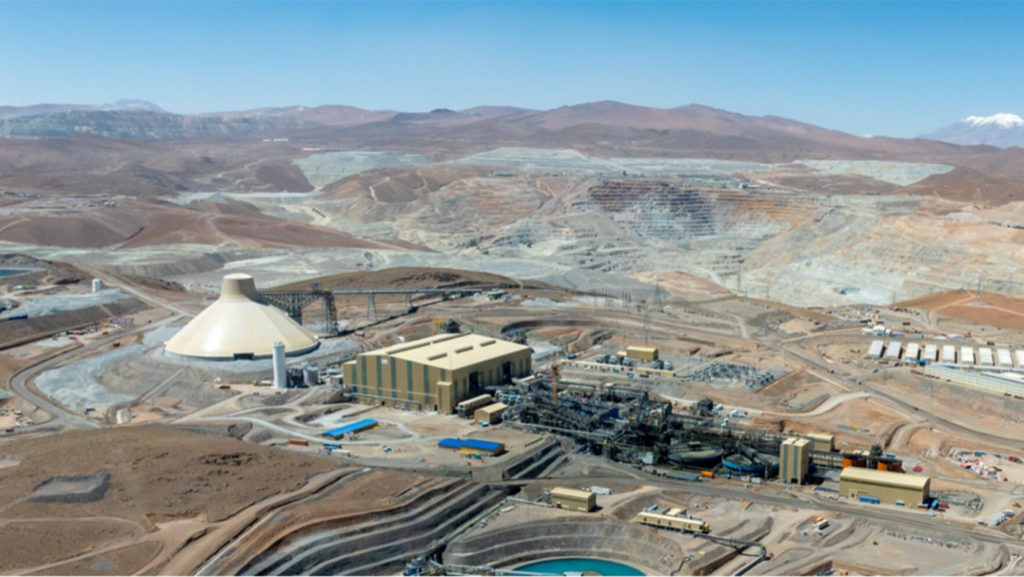
Quebrada Blanca copper mine in Chile. (Image courtesy of Teck Resources.)

Teck Resources (TSX: TECK.A, TECK.B)(NYSE: TECK) has lowered its copper production guidance for 2025 after persistent setbacks at its Quebrada Blanca (QB) mine in Chile and Highland Valley Copper (HVC) operation in Canada.

The company, which in September agreed to a $53-billion merger with Anglo American (LON: AAL), stressed that the deal’s strategic rationale remains intact.

Teck reported QB copper output of 39,600 tonnes and sales of 43,900 tonnes in the third quarter. Annual production guidance for 2025 has been cut to between 170,000 and 190,000 tonnes, down from 210,000–230,000 tonnes, after extended downtime to raise the tailings dam crest. 

Forecasted output for 2026 has also been reduced to 200,000–235,000 tonnes from an earlier 280,000–310,000 tonnes.

The Vancouver-based miner said ongoing tailings management facility (TMF) development continues to restrict output and will cause additional concentrator downtime through 2025, particularly in the third quarter.

Net cash unit costs for 2025 are now projected between $2.65 and $3.00 per pound, up from previous guidance of $2.25–$2.45. Costs are expected to ease to $2.25–$2.70 per pound in 2026 as production improves.

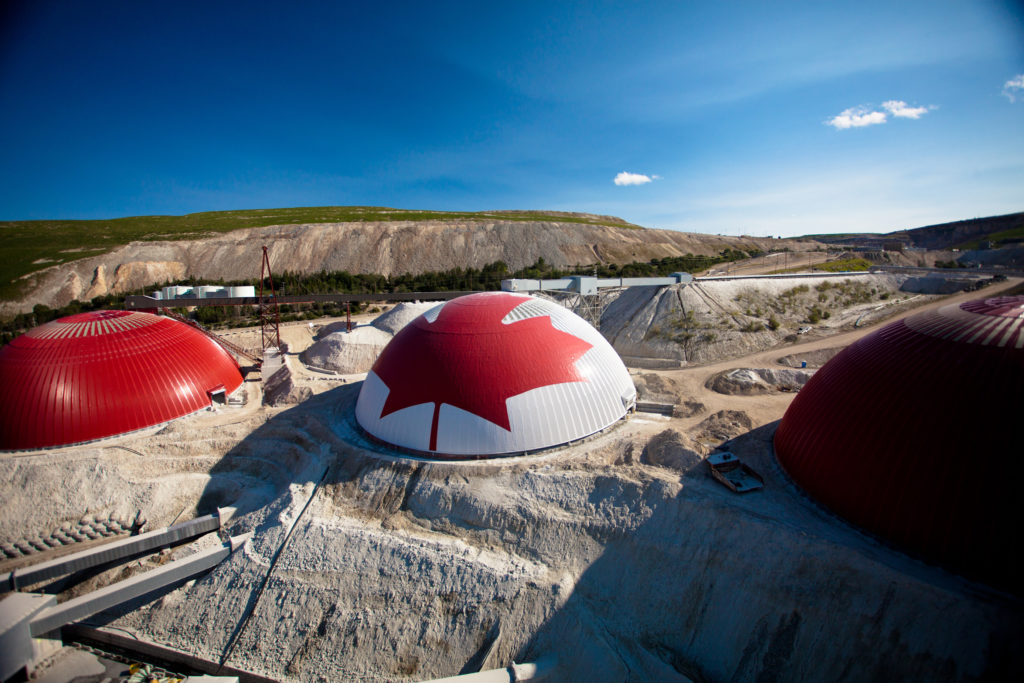
Highland Valley Copper mine in British Columbia. (Image courtesy of Teck.)

The company added that optimization work at QB, expected to increase throughput by 5–10%, will be delayed beyond 2027–2028 due to continued TMF development and downtime in 2026. Teck warned that if efforts to improve sand drainage or advance TMF construction fall short, production in 2026 and 2027 could face further disruptions.

Teck’s shares jumped on the news, gaining 0.6% in Toronto on Wednesday to trade last at C$59.99 and up 1.6% in New York, reaching $43.12 each. This puts the company’s market value at $21 billion.

QB has long been central to Teck’s growth plans, but the mine has been mired in difficulties since its overhaul, running more than 80% over budget and years behind schedule. In addition to cost overruns, the project has faced pit and plant instability, a ship-loader outage, and waste storage issues.

At Highland Valley Copper in British Columbia, lower grades and maintenance prompted Teck to trim its 2025 copper output guidance to 120,000–130,000 tonnes from 135,000–150,000 tonnes. The company said the rest of its assets should perform broadly in line with earlier forecasts.

Proven approach

Anglo American said in a separate statement that it “fully supported” Teck’s updated outlook, calling the revisions consistent with the findings of its comprehensive operational review.

The mining giant reaffirmed that the merger’s strategic rationale, including synergy estimates and timing, remains unchanged.

Anglo also backed Teck’s more measured approach to QB’s ramp-up, noting that its own technical and project delivery teams had successfully addressed similar issues during the commissioning of Quellaveco in Peru.

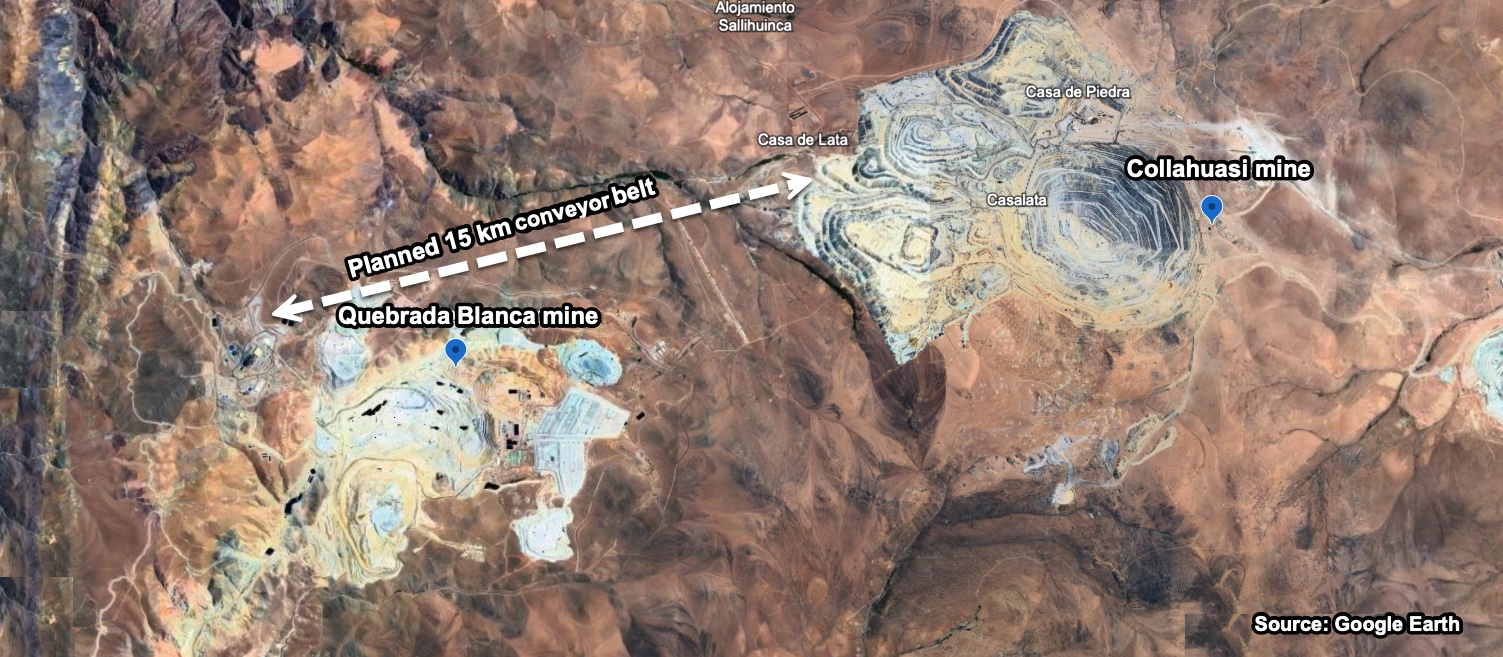
Despite QB’s slower expansion, Teck maintained that the mine’s underlying potential “remains intact” and that synergies with Anglo’s nearby Collahuasi mine could unlock additional value. 

A 15-km (9.3-mile) conveyor would be built to feed Collahuasi’s high-quality ore into QB’s new processing plants. (Click on map to enlarge)

Teck emphasized that QB is capable of operating at design levels, achieving recovery rates of 86% to 92%, when TMF development is not a constraint.

Teck CEO Jonathan Price said the updated plan reflected “realistic performance assumptions and risk assessments”.

Anglo reaffirmed expectations that the merger will deliver an average annual EBITDA uplift of $1.4 billion from combining QB and Collahuasi, along with $800 million in recurring synergies, creating a stronger, more resilient copper producer.


Copper price hits new high as Teck cuts production forecast


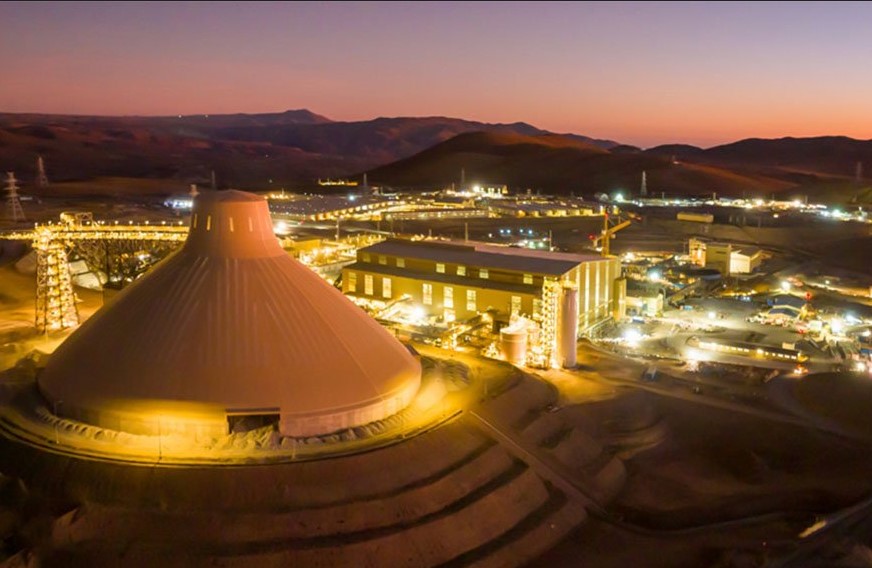
Quebrada Blanca mine in Chile is Teck’s largest copper project. (Image courtesy of Teck Resources.)

Copper surged to a 16-month high in London Wednesday when Teck Resources (TSX: TECK.A, TECK.B)(NYSE: TECK) lowered its copper production guidance for 2025 after persistent setbacks at its Quebrada Blanca (QB) mine in Chile and Highland Valley Copper (HVC) operation in Canada.

Prices climbed as much as 0.5% to $10,815 per tonne on the London Metal Exchange. The company said it now expects to produce 170,000 to 190,000 tons in 2025, down from its previous target of 210,000 to 230,000 tons. Teck also trimmed annual production targets for the next three years.

The QB project has long frustrated investors, coming in $4 billion over budget and years behind schedule. Current challenges include tailings storage at the high-altitude site in the Andes, as well as damage to key equipment and instability within the mine pit.

So far this year, copper prices have risen about 23%, as mounting supply concerns outweigh weak demand in major industrial economies. Analysts have cut output projections after a series of accidents and operational setbacks at mines in Chile, the Democratic Republic of Congo, and Indonesia, leading many to anticipate sizable supply deficits.

Supply worries intensified after Freeport-McMoRan (NYSE: FCX) declared force majeure at its Grasberg mine in Papua, Indonesia—the world’s second-largest copper operation—following severe flooding that halted production. The company confirmed over the weekend that all seven missing workers were found dead after the discovery of five additional bodies.

“We are in a world of unprecedented copper supply disruptions, and many of these issues are not short-term,” analysts at Jefferies wrote in a note. “Yet another miss at QB just adds more fuel to the fire.”

Citigroup analysts expect copper to climb further, forecasting prices could reach $12,000 per tonne in the first half of next year amid supply cuts and favorable macro trends, including a weaker US dollar. They project prices will gradually ease through 2026 as disrupted mines resume production.

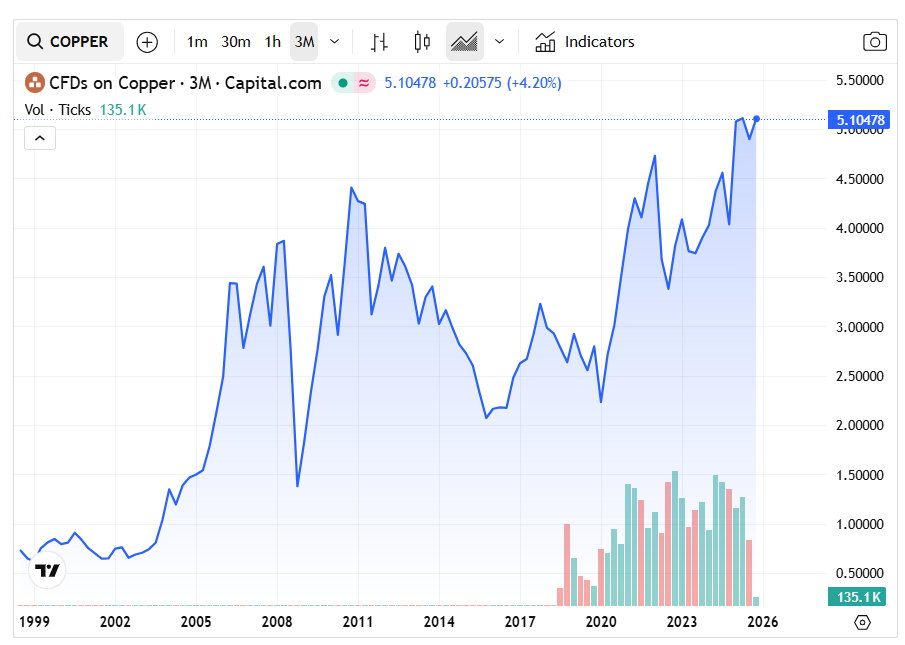
Click on chart for live prices.

On the Chicago Mercantile Exchange, three-month copper futures rose 1.15% to $11,343 per tonne ($5.156 per pound).

(With files from Bloomberg)

BLACKSNAKE

Report: Trump Administration Considers Rebooting Keystone XL Pipeline

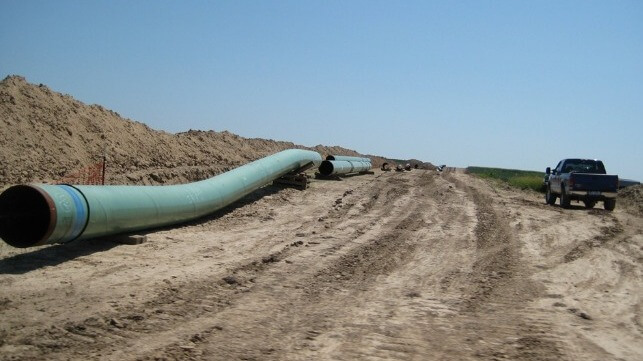
Pipes for the Keystone pipeline network, 2009 (File image courtesy Shannonpatrick17 / CC BY SA 3.0)

Published Oct 8, 2025 10:15 PM by The Maritime Executive


Canadian Prime Minister Mark Carney and U.S. President Donald Trump are in talks to revive the long-dormant Keystone XL pipeline proposal as part of a comprehensive trade deal, according to CBC and BBC. The pipeline's permit was canceled in 2021, and a reboot would give Canada's landlocked tar sands producers a new route to the U.S. Gulf Coast - and the sea. 

Export logistics for Albertan oil are a point of tension in Canadian politics, and the TransCanada (TC Energy) Keystone XL is one of several proposals to address it. If completed, Keystone XL would increase the pipeline capacity connecting Alberta's bitumen fields with refineries and marine export terminals on the U.S. Gulf Coast. In its time, it was a top policy priority for Alberta's government, which provided $1.1 billion in direct funding and $4.2 billion in loan guarantees to support the pipeline's construction. 

However, it was fiercely opposed by environmentalists and native tribes in the United States, who expressed concern about the carbon intensity of the tar sands production process and the potential for a pipeline spill on U.S. soil. Work carried on in fits and starts for more than a decade amidst protests, regulatory actions and lawsuits. In 2015, President Barack Obama ordered a halt to the pipeline's development; President Donald Trump reversed Obama's decision in 2017 and issued a federal permit; and President Joe Biden revoked that permit upon taking office in 2021. A few months later, TransCanada (renamed TC Energy) abandoned the project altogether, leaving behind about eight percent of the completed line.

In 2018, as an alternative to the stalled Keystone, the Canadian government bought and completed the Trans Mountain Expansion (TMX) pipeline from Alberta to Vancouver, B.C., with first oil pumped through in 2024. While TMX is a major addition to Canadian export capacity, the loading terminal is limited to Aframax tankers because of draft restrictions in the harbor, raising cost. Another alternative route backed by the government of Alberta would add a pipeline to the deepwater port of Prince Rupert, B.C. - but the line is opposed by British Columbia. Even if it were built, the Prince Rupert terminal would need exemption from a longtime ban on oil tanker navigation in the northern Inside Passage. 

Keystone XL has none of those limitations, and would give Albertan producers ready access to existing U.S. Gulf Coast loading terminals and connections to global markets. Following initial talks between Trump and Carney, discussions on the possibility of a reboot for construction are under way at the staff level but are still preliminary, sources told BBC.

Any construction would depend upon the interest of the pipeline's inheritor, South Bow, an independent firm spun off from TC Energy last year. A spokesperson for the firm told BBC that it was supportive of the talks, adding that it would "continue to explore opportunities that leverage our existing corridor with our customers."

Pipes for the Keystone pipeline network, 2009 (File image courtesy Shannonpatrick17 / CC BY SA 3.0)


Oil Tankers Jam Seas as Global Glut Builds

  • China, the world’s largest importer of crude oil, has been stockpiling it at a rate of close to 1 million barrels daily since the start of the year.

  • Vortexa: 1.2 billion barrels of crude oil are currently at sea, being moved from one place to another.

  • The huge amount of oil at sea suggests, ultimately, that demand for oil is falling way short of supply.

The amount of oil on tankers in transit has jumped to the highest since 2016, and this is cause for concern because it means there is too much oil around and it is not being consumed. That’s the message that Bloomberg had this week, citing Votexa data. Yet China had a different message: it is building more oil tanks to boost its inventories, a lot more. And that tells a different message.

The Vortexa data that Bloomberg cited said that there were 1.2 billion barrels of crude oil currently at sea, being moved from one place to another. Bloomberg’s Alex Longley noted that this was the highest amount of oil in transit since 2016 and is the result of higher production from key countries. However, oil being at sea does not mean it is being stored at sea because there is no space anywhere else. In fact, the Vortexa data for 1.2 billion barrels does not include oil in floating storage. Yet when floating storage is added to this total above, there is even more crude oil at sea—the most since 2020, per Bloomberg’s Longley.

This picture does not look good for oil bulls. It does not look good for producers, either. This picture suggests that most of the oil at sea is being taken from one place to another, looking for buyers rather than being transported from seller to buyer after a deal has already been made. It suggests, ultimately, that demand for oil is falling way short of supply.

However, in the same piece, Longley notes that “So far, much of the oversupply in crude this year has been absorbed by China, which has been hoarding barrels since the start of 2025.” Per the latest from China itself, it is going to step up the “hoarding,” too.\

Chinese state-owned energy majors are building 11 new storage sites for crude oil this year and in 2026, Reuters reported this week, saying the country’s energy industry was taking advantage of current oil price trends and stocking up on the commodity while prices were low. The amount of storage capacity to be added over the two years is about 169 million barrels, and it compares with some 180 to 190 million barrels in capacity added over the four years between 2020 and 2024, the Reuters report also noted.

China, the world’s largest importer of crude oil, has been stockpiling it at a rate of close to 1 million barrels daily since the start of the year. Indeed, stockpiling has driven imports higher even in the absence of enough demand at home, according to analysts tracking the difference between China’s oil imports and refinery runs for a glimpse into demand. These developments raise the question: Why is China doing this when supply is about to become even more abundant and prices, as a result, are even lower?

The answer might have to do with China knowing that there is nothing certain in the world of oil, least of all oil production trends. U.S. shale is being waved around as the main reason for depressed prices alongside OPEC+’s cut unwindings, yet U.S. shale production growth is slowing—as it always does when prices trend down. Then there is OPEC+ and its spare capacity. A few years ago, this spare capacity was noted as a reason to stay calm about supply security because if the availability of crude tightened, OPEC+ would just tap that capacity.

Now, after almost three years of production constraints, the return to growth is reducing this spare capacity—in case of a demand surge, OPEC+ will not be able to respond as robustly as it would have otherwise, Reuters suggested in another report from this week. Indeed, the publications’ energy commentator Ron Bousso wrote, OPEC+ has consistently fallen short of its production hike targets. This could be cause for worry in case of strong demand because it suggests there is not as much spare capacity as previously believed.

Defined as “capacity levels that can be reached within 90 days and sustained for an extended period” by the International Energy Agency, spare capacity was cited as a reason not to get too bullish on crude while OPEC+ cut about 5% of global supply in response to falling prices—even though OPEC+ indicated it had no intention of tapping that capacity.

Now, it’s oil at sea that is being given as a reason for expecting even more supply amid weak demand—even though a lot of this oil at sea may be getting from its point of origin to its point of consumption. Meanwhile, every mention of more sanctions against Russia’s energy industry pushes oil prices higher, suggesting a certain sensitivity to supply security among traders. This in turn means the glut is not as certain as it may seem based on reports. After all, if it was, traders would hardly care about any more sanctions on Russian crude.

By Irina Slav for Oilprice.com