Sunday, October 19, 2025


By 

For most of his time in power, Vladimir Putin has promoted immigration to compensate for the demographic decline of the Russian nation, but now, in the new concept paper he has signed, he instead is focusing on security issues instead so that immigrants can continue to help Russia but not retain their identities or form isolated ghettos.

That is the overarching conclusion of Novyye Izvestiya journalist Aleksandr Kumanyev who argues that “the new concept is not simple an edited version of the old but a complete change of paradigm (newizv.ru/news/2025-10-17/novaya-kontseptsiya-migratsionnoy-politiki-rossii-chto-ona-izmenit-438076).

“If the previous version of the document adopted in 2018 was essentially economic and demographic, then the current one in the first instance is a document about security,” about ensuring that immigrants can still come and do the work but not act in ways that will threaten public order or threaten the values of the Russian nation.

To achieve that, the commentator says, Putin has called for the introduction of a new and tightly controlled system of managing immigrants, laying much of the responsibility for doing so not on government agencies but on businesses that want to use the labor of migrants, and blocking the rise of concentrated settlements of migrants, otherwise known as ghetto.

Realizing these goals will not be easy. On the one hand, businesses will be upset about these additional responsibilities and monitoring the migrants will be enormously expensive given their number. And on the other, if such a tight system is put in place, the number of immigrants likely to come will fall, pleasing many Russians but hurting the Russian economy.

And despite the obvious shift from demographic and economic considerations to security and control ones, this new paradigm will likely have serious demographic changes as well, pushing down the number of migrants and thus exacerbating the downward trend of the size of the Russian population. 

Thousands rally in Tirana demanding justice for former KLA leaders on trial in The Hague

Thousands rally in Tirana demanding justice for former KLA leaders on trial in The Hague
The protest transformed Skanderbeg Square into a sea of red and black flags. / Edi Rama via Facebook
By Valentina Dimitrievska in Skopje October 19, 2025

Thousands of people filled the centre of the Albanian capital, Tirana, on October 17, answering a nationwide call to demand justice for former Kosovo Liberation Army (KLA) leaders currently on trial before the Specialist Court in The Hague.

The protest, held under the slogan “Freedom Has a Name”, transformed Skanderbeg Square into a sea of red and black flags as Albanians from across the region gathered in a show of solidarity with the former KLA commanders.

The rally was called by Albanian Prime Minister Edi Rama, who urged Albanians from Albania, Kosovo, North Macedonia, Montenegro, the diaspora and all Albanian-inhabited regions to unite behind what he described as a “national cause” — defending the honour and legacy of Kosovo’s wartime leaders.

The demonstration began with the national anthem, as the faces of former Kosovan president Hashim Thaçi, Kadri Veseli, Jakup Krasniqi and Rexhep Selimi — all of whom are being tried for war crimes and crimes against humanity — were displayed on large placards beside the statue of Albania’s national hero, Gjergj Kastrioti Skënderbeu, Shqiptarja reported on October 17.

Chants of “Freedom for the Liberators!” and “Justice for the KLA!” echoed across the square. Many participants carried banners reading “I am the KLA” and “Freedom Has a Name — Kosovo”, while others held portraits of the jailed leaders.

The protest lasted around an hour and drew thousands of people who had travelled to Tirana from across the Balkans, responding to Rama’s appeal to stand up for what he called “the truth and dignity of Kosovo’s liberation struggle”.

The KLA emerged in the 1990s as an armed resistance against Serbian rule, fighting to end decades of repression under Slobodan Milošević. The 1998-1999 conflict saw widespread atrocities by Serbian forces until Nato intervened, forcing Milošević’s withdrawal after 78 days. Over 13,000 people were killed during the conflict.

After the war, the KLA disbanded, and key figures such as Thaçi, Veseli, Krasniqi and Selimi entered politics. In 2020, they were indicted by The Hague-based Specialist Chambers for alleged war crimes. While Albanians across the region see them as heroes of liberation, others view the trials as vital for justice and reconciliation.

Among those attending was Thaçi's son, who came from Pristina to join the protest.

Despite fragile health, Albania’s former president Alfred Moisiu addressed the crowd, declaring that Kosovo’s freedom was “won with blood and sacrifice, not given as a gift”. He called the accusations against the KLA leaders fabricated and politically motivated.

Rama, although a vocal supporter of the protest, did not attend in person to avoid politicising the gathering.

Instead, he posted photos of the rally on social media with the caption “Heart of a mountain!”, praising the citizens who filled the square.

Albanian President Bajram Begaj also voiced his backing, stating that the KLA remains “the pride of the Albanian nation’s history” and that “nothing can undo this legacy of bravery, sacrifice and heroism.”

The leader of the Alliance for the Future of Kosovo (AAK), Ramush Haradinaj, who also fought in the KLA, posted on social media: “Tirana KLA. Freedom for the Liberators.”

Ali Ahmeti, a leader of North Macedonia’s ethnic Albanian party, the Democratic Union for Integration, also attended the protest.

Colonel Sulejman Abazi, a former Albanian military officer, said he hoped the Tirana protest would inspire similar gatherings in other cities, adding that political leaders should have joined the citizens. He also criticised Kosovo’s Prime Minister Albin Kurti for not attending, according to Shqiptarja.

In a later post on X network, Rama defended his position on the KLA amid criticism from Kosovo’s Vetëvendosje Movement, saying that he had “denounced the farce” of the Hague trial “whenever and wherever there was an opportunity or need”. He argued that the Specialist Court was initially created to investigate allegations of organ trafficking, “not to take the President of the Republic of Kosovo hostage”.

Rama’s response followed criticism from Kurti's Vetevendosje, which accused him of hypocrisy for calling the protest, recalling that he had initially supported the establishment of the special war crimes court in The Hague.

Vetëvendosje, which began as a reformist and anti-corruption movement, continues to back the court as an essential mechanism for ensuring justice and the rule of law, while maintaining its distance from the former KLA commanders who once dominated Kosovo’s post-war political scene, blaming them for post-war corruption.

The rally ended peacefully, with participants vowing to continue pressing for the release of the former KLA leaders, who are accused of crimes committed during the 1998-1999 Kosovo war against Serbian forces.

LA REVUE GAUCHE - Left Comment: Search results for KOSOVO


Sri Lanka’s economic escape

Sri Lanka’s economic escape
Colombo in Srt Lanka / Shavin Peiries - Unsplash
By bno - Mark Buckton - Taipei October 20, 2025

Sri Lanka’s recovery over the past year reads like a narrow escape rendered into a cautious, albeit unfinished success story. After the calamitous months of 2022, when foreign-exchange reserves and fuel imports evaporated and the country teetered on the brink of sovereign default, the island has staged a visible turnaround.

But the recovery remains fragile, uneven and is to some extent still dependent on external lifelines and domestic reforms.

The clearest headline is growth. After contracting sharply during the crisis, the economy expanded robustly in 2024, with GDP growth estimated at around 5%, according to the IMF and Sri Lanka’s Department of Census and Statistics (IMF Country Report No. 24/87) at the time - a figure that surprised many international forecasters and reflected a rebound in services and agriculture.

That recovery has continued into 2025: domestic demand has revived, manufacturing output has climbed, and tourism arrivals exceeded 2mn in the first eight months of the year, according to Reuters a month ago – in the process bringing much-needed foreign currency back to the island.

Authorities in Colombo have also succeeded in meeting key IMF programme conditions, and unlocking successive tranche disbursements under the $2.9bn Extended Fund Facility (EFF) approved in 2023. Those funds, alongside stronger remittance inflows which rose to $6.4bn in 2024, up 12% year on year, according to Central Bank of Sri Lanka (CBSL) data, have helped rebuild official foreign-exchange buffers and stabilise the rupee after years of volatility.

“We are now in a position of relative stability,” Central Bank Governor Nandalal Weerasinghe told Reuters, adding that “discipline and structural reforms” were key to avoiding backsliding.

Yet beneath the surface, macroeconomic stability remains a work in progress. Both the IMF and the World Bank’s Sri Lanka Development Update of June 2025, stress that near-term gains rest on continued fiscal consolidation and structural reform rather than a one-off rebound.

As such, the World Bank cautions that, while inflation has turned positive again and consumer demand is firming, financing pressures persist. The government in Colombo faces steep short-term refinancing needs, and public debt remains above 100% of GDP even after restructuring. The Bank warned that “growth without sustained fiscal repair would be precarious,” noting that one in four Sri Lankans remains vulnerable to poverty.

The banking sector tells a similar story of cautious improvement. The Central Bank’s Financial Stability Review 2025 highlights that profitability, capital adequacy and liquidity ratios have strengthened from crisis lows, aided by lower provisioning and improved net interest margins.

Market liquidity also improved during the first half of 2025, while non-performing loans (NPLs), which peaked at 13% in 2023, have fallen to below 9%, helped by restructuring and recovery. The CBSL’s Banking Soundness Index shows a more stable system than at any time since 2021.

But vulnerabilities remain. Local banks’ exposure to government securities, which account for nearly 40% of total assets, leaves them highly sensitive to fiscal risks. Lending growth, particularly to small and medium enterprises, remains subdued. The IMF’s second review of August 2025, urged Colombo to strengthen banking supervision and diversify capital markets to reduce systemic risk. “The scars of 2022 haven’t fully healed,” one senior banker reportedly told Reuters. “The sector is stronger, but still wary.”

Foreign-exchange reserves – a key aspect of the economy for an import-dependent island - have recovered from near-zero levels in 2022 to roughly $5bn by mid-2025, according to CBSL monthly balance reports. This rebound reflects IMF disbursements, improved remittances, and resumed access to international capital markets following debt restructuring with China, India and Paris Club creditors. The improvement has reduced the acute risk of import stoppages that once led to nationwide fuel queues and the much-hated rolling blackouts.

However, reserves remain modest relative to import requirements, covering just over three months of imports, according to IMF data, and any deterioration in the balance of payments could again prove destabilising. Fiscal consolidation, particularly through improved tax collection, remains vital. The government’s goal of raising tax revenue to 15% of GDP by 2026 (from 9.1% in 2023) will be crucial to maintaining debt sustainability, according to the Finance Ministry’s 2025 Budget Statement.

To this end, the energy sector encapsulates both the progress and fragility of the recovery. The Ministry of Power and Energy in Sri Lanka reported that total electricity generation reached approximately 17,364 GWh in 2024, with renewables - primarily hydro and solar - accounting for nearly 48%. The Ceylon Electricity Board’s (CEB) Long-Term Generation Expansion Plan (2024–2043) outlines a shift towards renewables, with 70% of generation expected to come from non-fossil sources by 2030.

Yet the grid’s weaknesses were exposed again in early 2025 when a nationwide blackout plunged the island into darkness for nearly 48 hours, Reuters reported at the time. The outage underscored the urgent need to modernise transmission systems and improve grid resilience. The government has since pledged a $200mn grid modernisation plan, partly financed by the Asian Development Bank, but implementation has lagged.

Another issue is that for ordinary Sri Lankans, the recovery’s texture remains uneven. Inflation, which had soared above 70% in 2022, has now stabilised at around 4–5%, according to CBSL’s September 2025 inflation report. Food and fuel prices have moderated, and the Central Bank has cautiously reduced policy rates from 11% to 9% to spur consumption. Yet fiscal consolidation has come with painful trade-offs. Increases in VAT (to 18%) and cuts to fuel and electricity subsidies have disproportionately affected lower-income households. The World Bank estimates that national poverty, while improving, remains above the 25% mark, underscoring the recovery’s social fragility.

The government of President Anura Kumara Dissanayake faces a delicate balancing act: maintaining fiscal discipline without igniting social unrest ahead of elections expected in 2026. Investor confidence has strengthened with Fitch Ratings signalling potential upgrades if reform momentum continues, but the risk of populist policy reversals looms large.

So where does Sri Lanka go from here? The optimistic path is clear: maintain IMF-backed fiscal discipline, broaden the tax base, accelerate investment in renewable energy and digital infrastructure, and strengthen social safety nets to ensure inclusive growth. But the darker scenario of reform fatigue, renewed external shocks, or pre-election spending unravelling much of what has been rebuilt, is an ever present danger.



Hong Kong cargo plane crash: authorities defend safety procedures amid ongoing probe


Al Reile Dela Torre - Unsplash


By bno - Taipei Office October 20, 2025

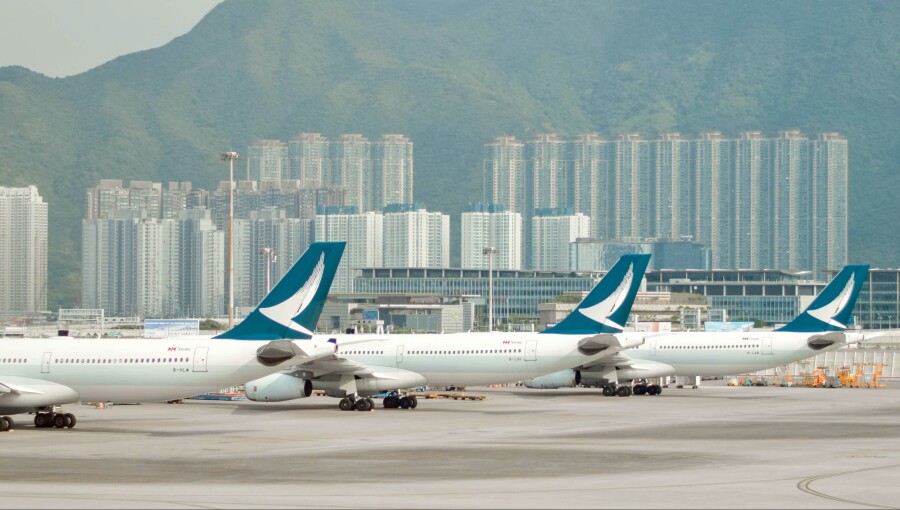
Hong Kong airport and rescue authorities have reaffirmed their confidence in the airport’s safety protocols after a cargo plane crashed into the sea early on October 20, killing two, the BBC reports.

The incident occurred at around 03:50 local time during one of the airport’s busiest cargo flight periods. The Hong Kong International Airport, the world’s busiest air cargo hub in 2024, handled about 429,000 tonnes of cargo in September alone.

According to officials, the cargo aircraft veered off Runway 07L upon landing, broke through the perimeter fence and collided with a patrol car positioned outside the runway, pushing it into the sea. The two security personnel in the vehicle were killed. The aircraft then split into two sections, but all four crew members escaped after breaking open the door and were rescued from the water.

Authorities stated that illuminated taxiway signs were functioning correctly and that the instructions provided to the plane were accurate the BBC reported. They also confirmed that the runway conditions were safe for operation at the time. The north runway remains closed pending safety assessments, while other runways continue to operate normally.

Investigators are searching for the aircraft’s black boxes to determine the cause of the crash. Police have not ruled out the possibility of a criminal investigation.

In Hong Kong, the Transport and Logistics Bureau expressed deep concern over the accident and extended condolences to the victims’ families. Representatives from the airline and the aircraft’s owner are travelling to Hong Kong to assist in the recovery and removal of the wreckage.

An investigation is ongoing, with officials maintaining that the airport was not at fault.

China’s solid-state battery breakthrough challenges the future of petrol-powered cars

China’s solid-state battery breakthrough challenges the future of petrol-powered cars
A chinese breakthrough in battery technology will double the range of EVs and even out-distsance conversional petrol-fuelled cars. / bne IntelliNews
By bne IntelliNews October 19, 2025

Chinese researchers have announced a breakthrough in solid-state battery technology that could accelerate the global shift away from internal combustion engines, with a new design that more than doubles the range of current electric vehicles and addresses long-standing limitations in safety, durability and efficiency.

The development, detailed in a report by The China Academy, marks what researchers describe as a “systems-level leap” in all-solid-state lithium metal batteries, a next-generation technology long seen as the holy grail for electric transport.

“This isn’t just incremental progress. It’s a systems-level leap that could accelerate the end of the internal combustion engine—not just in China, but globally,” the Academy said.

The newly developed batteries promise to double the range of batter-powered cars and go beyond the range of regular petrol-fuelled cars. The range of the new batter is over 1,000 km on a single charge, compared to approximately 500km in today’s most advanced electric vehicles and 600–800km for conventional petrol-powered cars.

In practical terms, that would allow a vehicle to travel from Shenzhen to Changsha, Paris to Milan, or Los Angeles to San Francisco and back without recharging—redefining long-distance travel for EVs.

The breakthrough addresses a persistent engineering problems with using lithium: the unstable interface between brittle ceramic electrolytes and soft lithium metal anodes, which has historically led to poor ion transport and short battery life.

Chinese labs have solved this through three distinct innovations:

  1. A “self-healing” iodine-based interface, developed by the Chinese Academy of Sciences, which migrates during use to seal microscopic gaps and maintain continuous ion flow.
  2. A flexible polymer skeleton, engineered by the Institute of Metals at CAS, which improves stretchability and allows the battery to withstand over 20,000 bends—boosting energy density by 86%.
  3. A fluorine-reinforced electrolyte, designed at Tsinghua University, capable of withstanding high voltages, extreme temperatures up to 120°C, and even needle puncture tests, without igniting—addressing key concerns around battery safety.

Together, these advances offer a solution to what the article calls the “holy trinity” of battery design: safety, energy density, and durability.

If scaled successfully, China’s solid-state battery technology could upend the global automotive industry, particularly as governments phase out internal combustion engines and consumers demand longer-range, safer, and faster-charging electric vehicles. The developments also reinforce China’s strategic lead in battery manufacturing and EV supply chains—a priority sector under its industrial policies, including Made in China 2025.

While commercial deployment timelines remain uncertain, the implications are already prompting attention across the global automotive and energy sectors. “The future of transport isn’t just electric. It’s solid-state. And it’s being built in China,” the report concludes.

Children’s Hospital of Philadelphia researchers observe significant reduction in diagnosis of food allergies following expert guidelines encouraging early peanut exposure


Diagnosis of anaphylactic food allergy decreased after landmark LEAP study and expert guidelines encouraging early peanut introduction


Children's Hospital of Philadelphia


Philadelphia, October 20, 2025 – Peanuts represent one of the most common causes of immunoglobulin E (IgE)-mediated, or anaphylactic, food allergies in children, yet a landmark study found that early introduction of peanut to infants may lower their risk of developing this allergy. Now, a new study from researchers from Children’s Hospital of Philadelphia (CHOP) has shown that the rates of diagnosis of peanut and other IgE-mediated food allergies have declined since the adoption of guidelines encouraging early introduction practices.

The findings, published today in the journal Pediatrics, highlight how landmark research has been translated into a successful public health campaign.

IgE-mediated food allergies affect about 4% of children, causing a child’s immune system to react abnormally when exposed to one or more foods, such as milk, egg, wheat, peanut, or other nuts. Reactions are immediate, causing symptoms that may include hives, swelling, difficulty breathing and vomiting.

Researchers and clinicians have speculated that IgE-mediated food allergies can be prevented through early-life exposure of food antigens in the gut. A landmark study supportive of this paradigm was the 2015 Learning Early About Peanut Allergy (LEAP) trial, which demonstrated that early exposure of peanut in 4-11 month old infants with severe eczema or egg allergy reduced peanut allergy risk by 81%. Subsequent studies have shown that this protective effect is sustained beyond early childhood.

The findings of the LEAP trial prompted major pediatric and allergy and immunology organizations to develop consensus guidelines to put these findings into practice. Released in 2015 and 2017, these guidelines initially focused on children thought to be at high risk of food allergy. In 2021, new guidelines support introduction of peanut, egg and other major food allergens at 4-6 months in all children without a history of prior reaction.

“Everyone has been wondering whether these landmark public health interventions have had an impact on reducing rates of IgE-mediated food allergies in the United States,” said the study’s first author Stanislaw Gabryszewski, MD, PhD, an attending physician in the Division of Allergy and Immunology and a core faculty member in the Clinical Futures Center of Emphasis at CHOP. “We now have data that suggest that the effect of this landmark public health intervention is occurring.”

Using electronic health record data from the multi-state, primary care-based American Academy of Pediatrics Comparative Effectiveness Research through Collaborative Electronic Reporting (CER2) network, the researchers compared rates of food allergy diagnosis at different time periods, prior to the establishment of early introduction guidelines as well as post-guidelines and post-addendum guidelines.

The study found significant reductions in the prevalence of peanut IgE-mediated food allergy (from 0.79% to 0.45% of the study population) and any IgE-mediated food allergy (1.46% to 0.93% of the population) from the time before the guidelines to after the addendum guidelines were introduced. Peanut transitioned from the topmost to second most common food allergen post-guidelines, surpassed by egg. The authors estimate that for about every 200 infants exposed to food allergens early in life, one child would have been prevented from developing food allergy.

While the early introduction strategy does not completely eliminate peanut and other IgE-mediated food allergies, the reduction in food allergy diagnosis rates is a promising finding that underscores ongoing public health efforts to disseminate early introduction practices.

“Our findings have relevance from those of us who treat patients to those caring for infants, and more awareness, education and advocacy could further increase the positive results we observed in this study,” said senior study author David Hill, MD, PhD, an attending physician with the Division of Allergy and Immunology. “Future studies could potentially explore specific feeding practices that help us better understand the timing, frequency and dose of foods that optimize protection against food allergies.”

This study was supported by the National Institutes of Health grants T32HD043021, K08AI182477 and R01HL162715, the Hartwell Foundation, the American Academy of Allergy Asthma and Immunology, the American Partnership for Eosinophilic Disorders, and the Children’s Hospital of Philadelphia Research Institute. Additional infrastructure funding was provided by the American Academy of Pediatrics and the Health Resources and Services Administration (HRSA) of the U.S. Department of Health and Human Services (HHS) under UA6MC15585 - National Research Network to Improve Children’s Health and U5DMC39344 - Pediatric Research Network Program.

This study was also funded by Food Allergy Fund, an organization aimed at funding research focused on the underlying causes of food allergies and improved treatments for millions of people living with food allergies.

Gabryszewski et al, “Guidelines for Early Food Introduction and Patterns of Food Allergy.” Am Pediatrics. Online October 20, 2025. DOI: 10.1542/peds.2024-070516.

About Children’s Hospital of Philadelphia:  

A non-profit, charitable organization, Children’s Hospital of Philadelphia was founded in 1855 as the nation’s first pediatric hospital. Through its long-standing commitment to providing exceptional patient care, training new generations of pediatric healthcare professionals, and pioneering major research initiatives, the hospital has fostered many discoveries that have benefited children worldwide. Its pediatric research program is among the largest in the country. The institution has a well-established history of providing advanced pediatric care close to home through its CHOP Care Network, which includes more than 50 primary care practices, specialty care and surgical centers, urgent care centers, and community hospital alliances throughout Pennsylvania and New Jersey. CHOP also operates the Middleman Family Pavilion and its dedicated pediatric emergency department in King of Prussia, the Behavioral Health and Crisis Center (including a 24/7 Crisis Response Center) and the Center for Advanced Behavioral Healthcare, a mental health outpatient facility. Its unique family-centered care and public service programs have brought Children’s Hospital of Philadelphia recognition as a leading advocate for children and adolescents. For more information, visit https://www.chop.edu.