Tuesday, December 02, 2025


People who received emergency or hospital care for hallucinogens six times more likely to be diagnosed with mania


Those hospitalized for hallucinogens also had four-fold increased risk of bipolar diagnosis


PLOS

People who received emergency or hospital care for hallucinogens six times more likely to be diagnosed with mania 

image: 

Cumulative incidence function (CIF) curves comparing the risk of mania and bipolar disorder acute care over three years.

view more 

Credit: Myran DT et al., 2025, PLOS Medicine, CC-BY 4.0 (https://creativecommons.org/licenses/by/4.0/)


People who have received emergency or hospital care in Canada due to hallucinogen use have a six-fold increased risk of receiving care for mania in the next three years, according to a study published December 2nd in the open-access journal PLOS Medicine by Daniel Myran from North York General Hospital in Canada and colleagues.

Use of hallucinogens such as ketamine, lysergic acid diethylamide (LSD) or psilocybin has been increasing, both recreationally and in medical contexts for treatment of conditions such as depression or post-traumatic stress disorder. But there are safety concerns that these drugs might induce mania or trigger the development of bipolar disorder (BD) in people at risk for the condition. To better understand the association between hallucinogen use and mania, the authors of this study collected data on hospitalizations and emergency department (ED) visits for those using hallucinogens, those hospitalized for other causes, and the general population between January 2008 and December 2022. They compared the groups for the likelihood of requiring an ED visit or hospitalized for mania, or being diagnosed with BD in the subsequent three years.

By comparing records from 7,285 patients who received acute care for hallucinogen use to 78,201 patients hospitalized for other causes, the researchers found that patients with an ED visit or hospitalization for hallucinogen use were six times more likely to receive treatment for mania within the next three years, and four times more likely to be diagnosed with BD compared to those hospitalized for other causes. The risk of later mania-related care was comparable to patients with ED or hospital care for cannabis use, which has previously been associated with an increased risk of mania. Two-thirds of those receiving care for hallucinogens had prior visits for substance use, and nearly half also had prior visits for mental health care.

Due to the timing of the records examined, the authors note that most of the cohort was likely exposed non-medically. The results are only limited to people who needed to receive urgent health care, they say. The results may not apply to the majority of people who used hallucinogens and did not require subsequent urgent healthcare related to the hallucinogen use. However, the authors suggest that use of hallucinogens that results in the need for urgent health care may increase the risk of later developing mania or BD. The authors state, “the findings may be due to ED or hospital care involving hallucinogen use occurring in individuals at greater risk for mania or BD rather than a direct risk of hallucinogens.”

“Our study showed a strong association between hallucinogen use that requires care in the emergency room or hospital and future risk of mania and bipolar disorder,” says Daniel Myran.

“There has been a large increase in interest in the use of hallucinogens, often paired with therapy, to treat some mental health disorders. The current study helps highlight that hallucinogen use outside of trial settings may have important risks for a subset of people who use them,” adds Myran.

Coauthor Marco Solmi states, “Our results fill an important gap around the complexity of therapeutic versus safety profile of hallucinogen use. Future projects will need to identify predictors of beneficial versus harmful outcomes at the individual level.”


In your coverage, please use this URL to provide access to the freely available paper in PLOS Medicinehttps://plos.io/4ojyw7n

Citation: Myran DT, MacDonald-Spracklin R, Pugliese M, Gibb M, Fiedorowicz JG, Kaster TS, et al. (2025) Hospital-based care for hallucinogens and risk of mania and bipolar disorder: A population-based cohort study. PLoS Med 22(12): e1004805. https://doi.org/10.1371/journal.pmed.1004805

Author countries: Canada

Funding: see manuscript


Scientists call for greater focus on conserving whole ecosystems instead of charismatic species


Researchers urge to prioritize ecosystem function in conservation measures of success


PLOS

Scientists call for greater focus on conserving whole ecosystems instead of charismatic species 

image: 

Since the discovery of the remaining seven wild crested ibises in Shaanxi Province's Yangxian County in the 1980s, the region has emerged as a key site for the conservation and recovery of the species through protection initiatives. The crested Ibis, once on the brink of extinction, has now established wild populations in over ten provinces, but long-term effective conservation challenges remain.

view more 

Credit: Siqi Wang, Yangxian County, Shaanxi, China (CC-BY 4.0, https://creativecommons.org/licenses/by/4.0/)


Conservation programs are often too focused on a single charismatic species, Hai-Tao Shi at Hainan Normal University in China and colleagues warn in a perspective article publishing December 2nd in the open-access journal PLOS Biology.

With many species worldwide experiencing population declines, there is an urgent need for conservation initiatives to support their recovery. However, this urgency, combined with insufficient scientific knowledge about endangered species, means that conservationists have often relied on oversimplified measures of success. For example, historical conservation efforts often focused on the abundance of a single charismatic species as a proxy for overall ecosystem health.

The authors highlight three examples from China where oversimplified conservation priorities led to negative outcomes. The Chinese giant salamander (Andrias davidianus) is known as a ‘cryptic species’, because it has multiple, genetically distinct populations that look identical to the naked eye. Unaware of this, conservationists began a large-scale captive breeding and reintroduction program, which led to genetic mixing that threatened native populations. In the case of the crested Ibis (Nipponia nippon) and Père David's deer (Elaphurus davidianus), intensive captive breeding and release programs with limited suitable habitat have resulted in overcrowding, inbreeding and increased mortality. Although well-intentioned, these initiatives have caused unforeseen issues for the ecosystem, and have often failed to improve the conservation status of the target species.

To avoid repeating these mistakes, the perspective article advocates for a more nuanced approach to conservation, focused on creating balanced ecosystems, restoring habitats and minimizing human intervention. Although there has recently been more emphasis placed on protecting whole ecosystems, charismatic species conservation is still prevalent in China and elsewhere. Conservation programs that aim to preserve and restore ecosystem functions are a more effective use of limited resources, and are less likely to have unintended consequences, the authors say.

The authors add, “Conserving non-megafauna charismatic species may not be effective, when conservation outcomes are purely based on abundance and do not facilitate the restoration of long-term ecosystems and their functions.”


In your coverage, please use this URL to provide access to the freely available paper in PLOS Biologyhttps://plos.io/4nQ0Ygo

Citation: Shi H-T, Liu Y, Lee TM (2025) Are we over-conserving charismatic species? PLoS Biol 23(12): e3003494. https://doi.org/10.1371/journal.pbio.3003494

Author countries: China

Funding: The author(s) received no specific funding for this work.

Seven footballers in Malaysia eligibility scandal 'victims': union

Kuala Lumpur (AFP) – Global footballers' union FIFPro says that seven players embroiled in a Malaysian national team eligibility scandal are themselves victims and their 12-month bans "grossly disproportionate".


Issued on: 02/12/2025 - FRANCE24

Rodrigo Holgado (centre) scores for Malaysia against Vietnam in July - he is one of seven players since banned by FIFA © Mohd RASFAN / AFP

Malaysia's federation, FAM, has appealed to the Court of Arbitration for Sport after FIFA banned the players and fined FAM $440,000 in September for submitting false documents that said the foreign-born players had Malaysian ancestry.

FIFA launched an investigation after receiving a complaint following Malaysia's 4-0 win against Vietnam in June in an Asian Cup qualifier in which two of the seven players scored.

Its investigation showed none of Hector Hevel, Jon Irazabal, Gabriel Palmero, Facundo Garces, Rodrigo Holgado, Imanol Machuca or Joao Brandao Figueiredo had a parent or grandparent born in Malaysia, a requirement for selection to a national team.

FIFPro on Monday gave its full support to the seven and said they were not to blame.

"The sanctions imposed on them -– a 12-month ban from all football-related activities -– are grossly disproportionate given the particular circumstances of the case," it said in a statement.

"It is clear that the players are, in fact, victims in this matter."

It added: "All steps were handled by institutions outside their control, yet they now face suspension from their clubs and the serious consequences that follow through no fault of their own."

The FAM has denied any deliberate wrongdoing.

© 2025 AFP

Too many cooks? Trump’s growing army of Ukraine negotiators


ANALYSIS


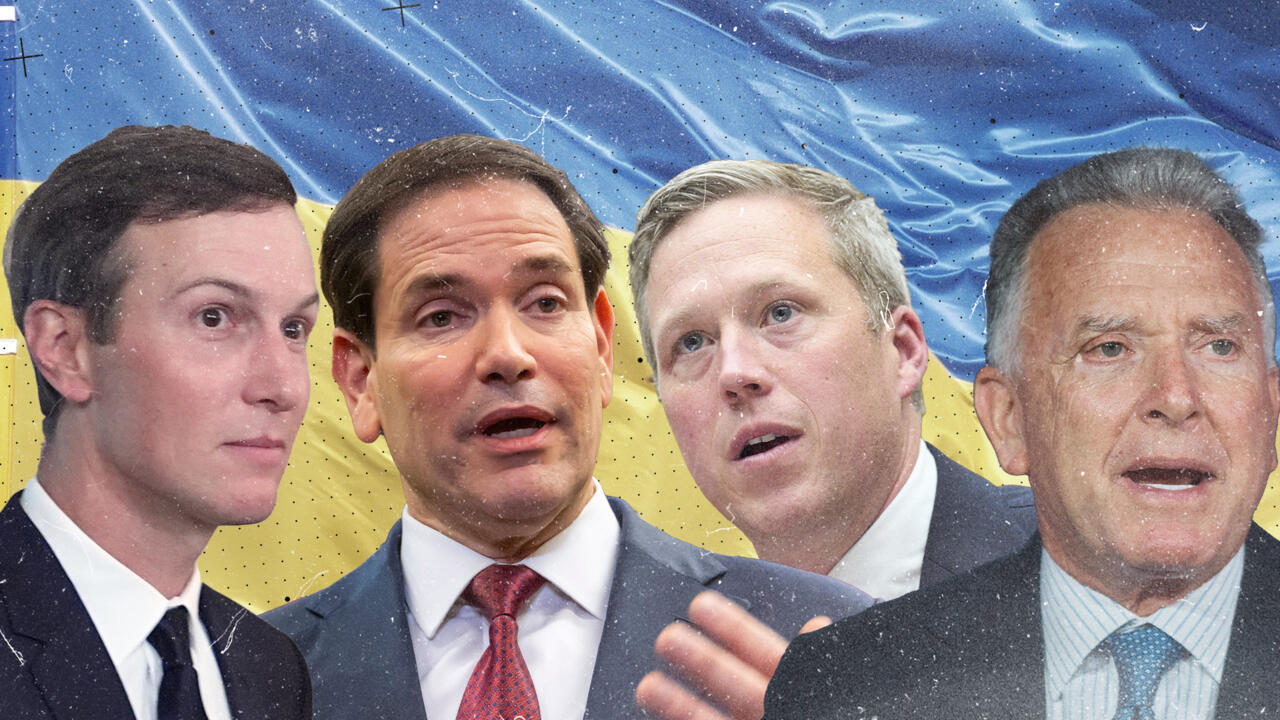
With the quartet of Marco Rubio, Steve Witkoff, Jared Kushner and Daniel Driscoll, US President Donald Trump’s team of negotiators pushing for peace in Ukraine seems to be growing by the minute. And they are all throwing their own ideas and strategies into the mix. Facing them is Russian President Vladimir Putin's trusted aide Kirill Dmitriev, whose diplomatic one-man show has steadfastly advanced the Kremlin’s demands.


Issued on: 30/11/2025 
FRANCE24
By: Sébastian SEIBT

THE FOUR STOOGES, 
MOE, LARRY, CURLY, SHEP
From left to right: Jared Kushner, Marco Rubio, Daniel Driscoll and Steve Witkoff. All four are now involved in Washington’s diplomatic efforts to get a peace plan in Ukraine in place. © Studio graphique France Médias Monde


Are too many cooks spoiling the broth? The question has come to the fore as US President Donald Trump now seems to have sent the entirety of his closest advisers to try to negotiate a peace deal between Russia and Ukraine.

Last week, US Army Secretary Daniel Driscoll became the latest to be added to an already crowded list of dealmakers, flying to Ukraine to present Kyiv with a new US peace proposal after having met a Russian delegation in the United Arab Emirates.

“US Army secretaries are not usually involved in negotiating peace deals,” The New York Times remarked in an analysis looking at the possible reasoning behind the unusual move.

READ MOREWhat we know about the revised US plan for peace in Ukraine

Whirlwind diplomacy

Just days before Driscoll was assigned his new diplomatic role, the Financial Times revealed that Trump’s son-in-law, Jared Kushner, had been added to the mix too, having attended a November 23 meeting with Ukraine and its European backers in Geneva.

But the new have not replaced the old. At least not yet. Steve Witkoff, Trump’s special peace envoy, is continuing to play a leading role and is due to meet Russian President Vladimir Putin next week.

In parallel, US Secretary of State Marco Rubio stated in Geneva that there was “still some work to be done” on the plan that had just been put forward by Witkoff. Trump has not argued against it.

The mixed messaging and increasing number of negotiators stands in stark contrast with the Kremlin's decision to task just one man with doing the same job: Russian sovereign wealth fund boss Kirill Dmitriev.

“They look like amateurs,” René Lindstaedt, an expert in US politics at the University of Birmingham, said of the US diplomatic team. “They don’t look like they’re in control, like they’re representing a super power.”

Washington's approach has raised eyebrows within Trump’s own camp. “Senators like (former Republican Senate leader) Mitch McConnell have criticised the ‘mess’, fuelling media narratives of turmoil,” said Inderjeet Parmar, a professor in international politics at City St George’s University of London.
Three-front offensive

Analysts, however, caution that there may be a type of Trumpian logic to the apparent cacophony.

Parmar said it aligns with “Trump's style of letting the ‘all-stars’ test ideas independently.”

Lindstaedt agreed: “He kind of sends several people running and then just sees who comes back with the best ideas or best results.”

This means that until Trump has decided on his favourite strategy, American diplomats are working on three different fronts: the talks in Geneva led by Rubio’s more Ukraine-leaning sympathies, the army secretary’s negotiations with the Russians in Abu Dhabi, and finally, Witkoff’s upcoming meeting with Putin in Moscow.

But the three paths of negotiation do not carry the same weight. Lindstaedt said that it would have been “natural” for Rubio, as the top US diplomat, to coordinate the different talks, but noted “I don’t think Rubio is aware of all the activities that are going on, and so he’s not really able to”.

He added that Witkoff is – at least on paper – meant to carry out his negotiations in close coordination with Rubio, but that this does not seem to be happening.

“(Rubio) seems to have been caught off guard,” he said, pointing also to Driscoll’s sudden appearance on the diplomatic stage.
‘The adults in the room’

The secretary of state’s time in the spotlight could soon be over, suggested Scott Lucas, a specialist in international relations and US foreign policy at the University of Birmingham.

He described Rubio as one of "the adults in the room", along with special envoy for Ukraine Keith Kellogg, who helped reestablish US military assistance to Ukraine over the summer, albeit through the sale of equipment through NATO countries, and to resume intelligence sharing.

But Rubio has since suffered from “Kellogg having been pushed out”, Lucas added.

It does not help that the “Rubio line”, which calls for bolstering Ukraine's defences, rhymes badly with Trump’s aim of signing a peace deal “as soon as possible”. At one point, the US leader said he wanted to see an end to the fighting by Thanksgiving (November 27), but later backed away from that goal.
Driscoll – the 'JD Vance guy'

Lucas said that Trump’s new diplomatic reinforcements are “not necessarily pro-Kremlin in the sense that they like the Russians” but that they think “it’s a win-win situation in terms of the economic projects” they can secure by reviving trade relations with Moscow. Even if that would mean that Ukraine would have to cede territory to its Russian aggressor.

This is why Witkoff, the man behind the controversial 28-point peace plan that was recently put on the table, suddenly experienced plenty of wind in his sails.

At least until Bloomberg this week exposed his negotiation tactics. The news agency sparked shock waves after publishing the transcript of a telephone conversation Witkoff allegedly had with Putin's foreign affairs adviser, coaching Moscow on how to get Trump onboard the more pro-Russian peace plan.

READ MOREUS envoy Witkoff advised Russia on getting Trump to Ukraine deal, Bloomberg reports

The revelation was not good news for Trump, Lindstaedt said, noting it could hurt his pro-Ukrainian Republican constituencies.

This could explain why Kushner and Driscoll suddenly entered the picture, injecting some fresh – but different – blood into the situation.

Driscoll is a “JD Vance guy”, he said. The two went to Yale together, and share the same vision of what potential peace in Ukraine should look like.

“Basically he’s JD Vance's proxy,” Lindstaedt said, and will likely open up for the vice president to get involved in any deal-making on the war in Ukraine indirectly.

This could spell trouble for Kyiv. “Vance is very anti-Ukraine,” he noted.

All the more reason for Trump to usher Kushner onto the scene.

“If Trump is unsure of whether he can trust his people in government, he reaches out to family,” Lindstaedt said.

As Trump himself put it in a speech to the Israeli Knesset in October following the US-engineered Gaza ceasefire deal, “we always bring Jared when we want to get that deal closed”.

Lindstaedt said Trump views his son-in-law as his “natural successor” and considering Kushner also has business dealings in Russia, it is ultimately in his interest “to make sure there’s peace between Ukraine and Russia so that they can resume normal relations” with Moscow.

Parmar, of City St George’s, said “Kushner has quietly re-emerged as an informal but influential ‘fixer’” in the administration's push for a peace deal.

But, he concluded, “his involvement—unofficial yet central—has added to the chaotic optics of the negotiations, drawing criticism for bypassing traditional diplomatic channels and raising questions about conflicts of interest tied to his business ties”.

This article was adapted from the original in French by Louise Nordstrom.

From Honduras to Poland, Trump meddles in elections as never before


By AFP
December 1, 2025

LEGOMAN

A portrait of US President Donald Trump made out of Legos is seen as part of Christmas decorations at the White House - Copyright AFP SAUL LOEB


Shaun TANDON

The United States has meddled for decades in elections around the world. But no modern president has done so as brazenly as Donald Trump.

Forget shady CIA-hatched plots or surreptitious media campaigns. Trump has openly called on other countries’ electorates to vote for his right-wing friends, often deploying his favorite tool of social media.

Most recently, Trump on his Truth Social platform endorsed Honduran right-wing candidate Nasry Asfura as “the only real friend of Freedom” and vowed to work with him. Asfura held a narrow lead after voting Sunday.

“I cannot think of a time when a US president was willing to just openly state his preferences in foreign elections in this way, at least in modern history,” said Thomas Carothers, director of the democracy, conflict and governance program at the Carnegie Endowment for International Peace.

Trump has felt especially emboldened in Latin America, where the United States has long intervened.

Trump’s secretary of state, Marco Rubio, has belittled Colombia’s elected left-wing president, Gustavo Petro, as a “lunatic,” and imposed sanctions on a Brazilian judge who prosecuted former far-right president Jair Bolsonaro for trying to overturn election results.

In Argentina, Trump promised $20 billion to prop up the struggling economy but warned it would vanish if voters rejected President Javier Milei in legislative elections. The firebrand libertarian’s party ultimately triumphed.

“It’s a consistent attempt to influence the politics, to reinforce what I think they see as already a shift towards the right that’s gaining force across the region,” said Will Freeman, a fellow on Latin America at the Council on Foreign Relations.

In Venezuela, where there is no election to influence, Trump has suggested the use of US military might to remove leftist leader Nicolas Maduro.


– Eye on Europe –


Trump has also sought to tip the scales in Europe. His homeland security chief, Kristi Noem, on a visit to Poland openly endorsed Karol Nawrocki, the conservative candidate for president who went on to win.

Trump had less success in Romania, where a far-right ally lost the presidential election, but only after a previous vote was controversially annulled.

Vice President JD Vance on a trip to Germany publicly attacked restrictions on the far-right AfD party. Trump or his aides have heaped praise on British anti-migrant lawmaker Nigel Farage and criticized a court ruling in France against far-right leader Marine le Pen.

The Trump administration has also stripped back decades of efforts to promote democracy overseas, with Rubio issuing a cable instructing embassies to avoid most commentary on the legitimacy of elections abroad.

The stance mirrors Trump’s approach to elections at home. He refused to accept his 2020 loss and was charged with trying to overturn results in the state of Georgia — a case dropped last week in light of his 2024 election victory.

Trump, perhaps mindful of his own experience, has publicly urged Israel’s president to pardon scandal-tainted Prime Minister Benjamin Netanyahu.


– Unique Trump approach –


Ironically, Trump in a speech in Riyadh in May denounced interventionism, at least in the Middle Eastern context, saying that past US efforts had turned into disasters.

Political scientist Dov Levin in a 2021 book found that the United States had intervened in foreign elections more than 80 times since the end of World War II — more than any other country.

Still, Carothers said that Trump was unique not only in his public methods but in his apparent motivations.

“It’s different than during the Cold War when the United States often favored a particular person, but they did so for geostrategic reasons,” he said.

“What we have here is more that Donald Trump feels he has a group of friends out there in the world whom he wants to help,” he said.

Carothers said that only Russia came close in tactics, with the Kremlin weighing in heavily to make known its preferences in former Soviet bloc countries, such as recently in Moldova where its candidate lost.

“A very high percentage of European leaders would like to see Viktor Orban lose the next election, but they’re not going to say so out loud,” he said, referring to Hungary’s right-wing populist prime minister.

Trump welcomed Orban to the White House last month. Speaking together to reporters, Trump said that European leaders needed to appreciate Orban more.


Trump accuses Honduras of ‘trying to change’ outcome of presidential vote


US President Donald Trump on Monday accused Honduras election officials of “trying to change” the outcome of the presidential vote after the race was too close to call in the digital preliminary results, and the remaining votes are being counted by hand. Trump, who has thrown his weight behind the conservative candidate, warned there will be “hell to pay” if he considers the final results manipulated.


Issued on: 02/12/2025 
By: FRANCE 24

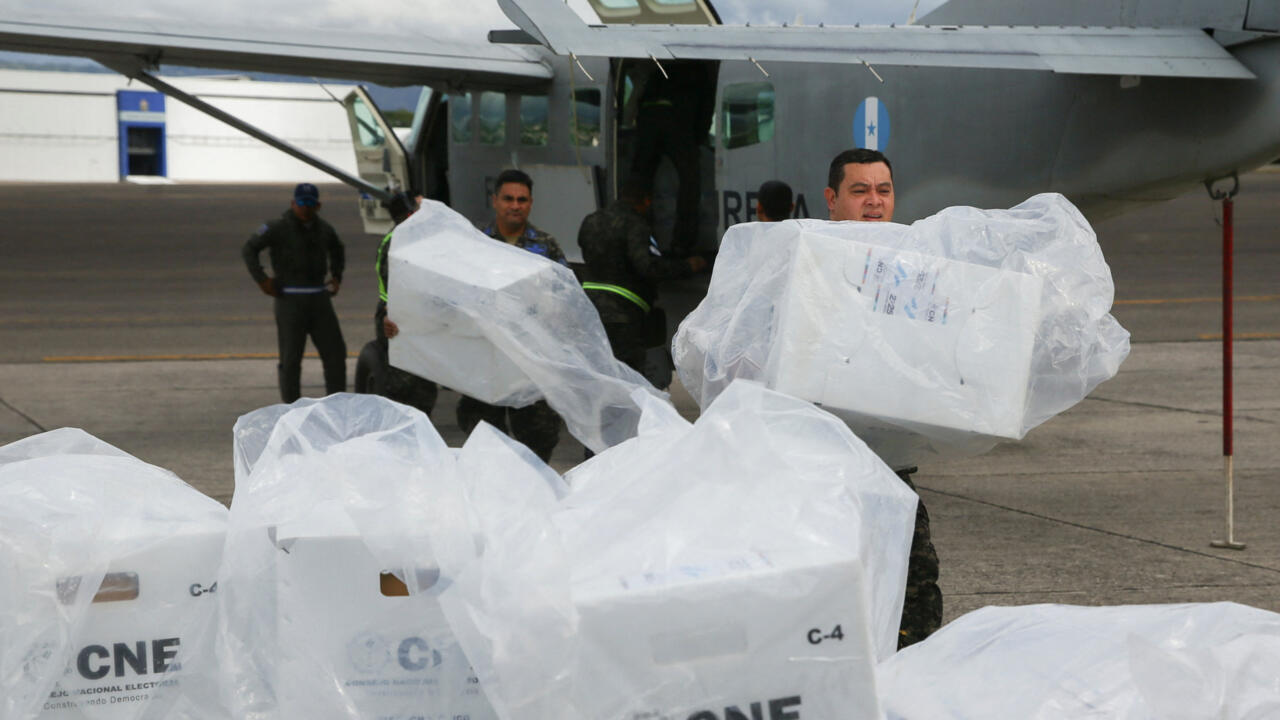
Honduran Air Force members unload packages carrying marked ballots from Bay Islands, after the general election, in Tegucigalpa, Honduras, on December 1, 2025. © Jose Cabezas, Reuters

Donald Trump accused election officials in Honduras on Monday of “trying to change” their presidential election outcome, as a partial digital tally revealed the two frontrunners are locked in a “technical tie".

The National Electoral Council (CNE) has called for “patience” as it starts a manual count of the November 30 vote, in one of Latin America’s most impoverished and violent countries.

Trump-backed Nasry Asfura, 67, led 72-year-old rival Salvador Nasralla by just 515 votes, making it a “technical tie", CNE head Ana Paola Hall said on social media, although the race is too close to call after a preliminary count.

“Looks like Honduras is trying to change the results of their Presidential Election. If they do, there will be hell to pay!” Trump claimed on social media without providing proof of his accusation.

READ MORETrump-backed conservative Asfura takes narrow lead in Honduras presidential vote

Trump has become increasingly vocal about his support for allies in the region, previously threatening to cut aid to Argentina and Honduras if his picks did not win.

Ally Javier Milei was victorious in Argentina’s mid-term elections.

Days before the Honduras vote, former Tegucigalpa mayor Asfura won the Republican leader’s backing – as the US president sought to put his finger on the scale in yet another Latin American election.

Nasralla told reporters on Monday that despite Trump’s endorsement of his rival, he was confident the election would swing in his favor.

“I know I’ve already won. This morning, they sent me a figure that puts me ahead,” he told reporters about the preliminary count.

Nasralla clarified in a post on X that “we are not declaring ourselves winners, we are just projecting the results.”
Swing to the right

The election is a clear defeat for ruling leftists trailing far behind in the vote count.

A swing to the right could help build US influence in a country that under leftist government had increasingly looked to China.

The election campaign was dominated by Trump’s threat and the surprise announcement that he would pardon former Honduran president Juan Orlando Hernandez of Asfura’s National Party.

Hernandez is serving a 45-year prison sentence in the United States, where he had been accused of belonging to one of “the largest and most violent drug trafficking conspiracies in the world".

Some Hondurans have welcomed Trump’s intervention, saying they hope it meant migrants will be allowed to remain in the United States.

Many Hondurans have fled north to escape grinding poverty and violence, including minors fearing forced recruitment by gangs.

This escape route has become more difficult since Trump’s immigration crackdown, and nearly 30,000 Honduran migrants have been deported since his second term started in January.

The clampdown has dealt a severe blow to the country of 11 million people, where remittances accounted for 27 percent of GDP last year.
‘Want to escape poverty’

Others reject Trump’s perceived meddling.

“I vote for whomever I please, not because of what Trump has said, because the truth is I live off my work, not off politicians,” Esmeralda Rodriguez, a 56-year-old fruit seller, told AFP.

Michelle Pineda, a 38-year-old merchant, hoped the winner sees the country “as more than just a bag of money to loot".

Preemptive accusations of election fraud from the ruling party and opposition have sparked fears of unrest.

The vote count has progressed slowly, and final results could take days.

Lawmakers and hundreds of mayors were also elected in the fiercely polarised nation, which has swung back and forth between nominally leftist and conservative leaders.

Long a transit point for cocaine exported from Colombia to the United States, Honduras is now also a drug producer.

But the candidates barely addressed drug trafficking, poverty or violence on the campaign trail.

“I hope the new government will have good lines of communication with Trump, and that he will also support us,” said Maria Velasquez, 58.

“I just want to escape poverty.”

(FRANCE 24 with AFP)


'Hall of Shame'? White House launches website to attack 'media offenders'


EXPLAINER

The White House launched a "media offenders" page on its official website Friday, naming outlets it accuses of bias and "fake news" – including 2025 Pulitzer Prize finalist the Boston Globe, CBS News and the UK’s Independent. Critics fear the initiative is aimed at delegitimising the very media outlets who could hold US President Donald Trump to account.


Issued on: 01/12/2025 
FRANCE24
By: Anaelle JONAH


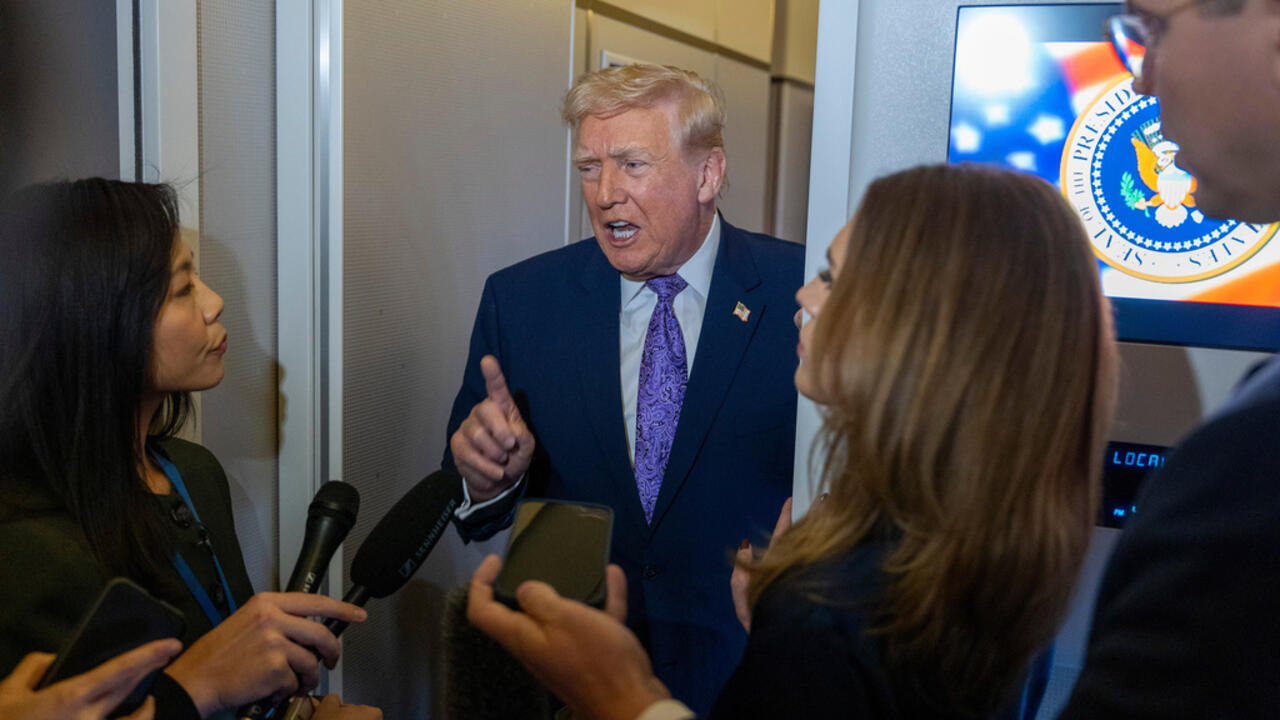
US President Donald Trump speaks with reporters while in flight on Air Force One on November 30, 2025. © Alex Brandon , AP

The White House on Friday launched a new "Media Offender of the Week" page targeting outlets it accused of bias and inaccuracies, prompting warnings from analysts that the initiative is part of a broader effort to delegitimise the press, one of the pillars responsible for holding power to account.

The White House named The Boston Globe – a finalist for three Pulitzer Prizes just this year – CBS News and The Independent as its inaugural "offenders of the week" for stories the White House says misrepresented Trump’s positions. It also featured a "Hall of Shame" list of allegedly "misleading" articles, calling out TV stations CNN and MSNBC alongside The Washington Post (whose staff and affiliates have won more than 70 Pulitzers).

The official White House X account promoted the initiative, stating: "Tired of the Fake News? We've got the place for you. Get the FACTS. Track the worst offenders. See the Fake News EXPOSED."

The rollout came as tensions between the White House and the media continue to escalate, with Trump directing a series of personal insults at reporters and pursuing legal action against several major news organisations, most recently suing the BBC for $1 billion. US broadcasters ABC and CBS both agreed to pay up to $16 million to settle legal disputes filed by Trump.

Aboard Air Force One on November 14, Trump told a Bloomberg reporter "Quiet, piggy" after she asked a question he disliked. He later called an ABC correspondent "a terrible person and a terrible reporter", described a New York Times journalist as "a third-rate reporter who is ugly, both inside and out" and asked a CBS News reporter, “Are you stupid?
‘Fake news’

The White House page opens with the heading: "Misleading. Biased. Exposed." before listing dozens of articles it accuses of slanted coverage. It also invites users to sign up for weekly updates on the "truth".

Speaking to FRANCE 24, David Lipson, an associate professor of American studies at the University of Strasbourg, said this initiative "is part of a generalised strategy to delegitimise traditional media – to gain control over the media narrative".

Lipson said the initiative effectively formalises one of Trump's favourite slogans – "Fake news" – which the president has repeatedly, and erroneously, claimed to have coined. "It's as if he said, 'I'm going to use executive power to make my catchphrase official'," according to Lipson, who added that the site's theatrical "Hall of Shame" category reflects Trump's "showbiz side".

Lipson suggested the timing of the site launch may have been influenced by a recent video featuring US veterans, including Senator Mark Kelly, and former US intelligence officials reminding military personnel that they should refuse unlawful orders – a video showcased on the site’s front page.

The White House said some news outlets had "subversively implied that President Trump had issued illegal orders" before asserting that "every order President Trump has issued has been lawful".

The Pentagon has since announced an investigation into Senator Kelly shortly after Trump accused him of sedition, “punishable by DEATH” in a Truth Social post.

"Given how close the timing is, we can imagine that this was the triggering event," Lipson said.

Kelly has dismissed the threat as the actions of “bullies”, adding that it would not stop him and his colleagues in Congress “from doing our jobs and holding this administration accountable”.

READ MORETrump says AP will be restricted from White House until it adopts 'Gulf of America'
‘Unprecedented’

Shortly after the site’s launch, journalists identified several errors on the site, including an entry wrongly attributing a press briefing question to a Fox News reporter. The page was quietly taken down before reappearing without the Fox reference.

The tracker, which is once again live, currently lists as many as 31 "offenses", naming and shaming reporters from outlets around the world. Among the stories flagged are: "Coast Guard will no longer classify swastikas, nooses as hate symbols" by The Washington Post, "The View's Whoopi Goldberg Makes Up a Song to Slam Trump for Building White House Ballroom" from ABC News and "Trump's autocratic dreams come true as National Guard turns DC into a police state" from The Hill.

Lipson warned that the initiative risks functioning as a way to pressure the press and could lead to self-censorship. "It is, after all, the official White House website," he said. "A civil servant might think: 'If they attack Senator Mark Kelly, maybe I shouldn't speak out too much.' That's where you get a chilling effect."

He noted that past presidents, notably Richard Nixon, also tried to intimidate the press. But he said the current administration’s approach was "really unprecedented".

"Trump doesn't hide any of his intimidation tactics," Lipson said.

Despite the attention surrounding the launch, Lipson questioned its long-term impact, saying many mainstream outlets appear to view it as a "gimmick".

"It already feels forgotten," he said. "What we should really question is its effectiveness, especially at a moment when we're already seeing cracks within the Republican camp."

The White House did not respond to a request for comment.
US Supreme Court hears major online music piracy case


By AFP
December 1, 2025


The US Supreme Court heard arguments on whether internet service providers may be held liable for the online pirating of copyrighted music - Copyright AFP/File Drew ANGERER

The US Supreme Court heard arguments on Monday on whether internet service providers should be held liable for the online pirating of copyrighted music by their users.

Cox Communications, a major broadband ISP, is asking the court to throw out a jury verdict awarding $1 billion in damages to Sony Music Entertainment and other record labels.

Cox was accused in the high-stakes 2019 case of failing to take action against customers accused of illegally downloading copyrighted music.

Joshua Rosenkranz, an attorney representing Cox, warned of “cataclysmic” consequences if the court did not limit the company’s copyright liability.

The only way for an ISP to avoid liability is to “cut off the internet, not just for the accused infringer, but for anyone else who happens to use the same connection,” Rosenkranz said.

“That could be entire towns, universities or hospitals, turning internet providers into internet police,” he said.

A majority of the nine justices appeared sympathetic to the argument that many innocent subscribers could be punished for the actions of a few.

At the same time, several questioned whether Cox should entirely escape liability.

Cox, even when it is aware of copyright infringement by particular users, has apparently been “doing nothing,” said Justice Sonia Sotomayor.

“Why aren’t you contributing to that infringement?” Sotomayor asked.

Justice Ketanji Brown Jackson also expressed skepticism of Cox’s position.

“What concerns me a bit is you’re encouraging us to adopt a common law rule that would essentially eliminate liability,” Jackson said.

Rosenkranz objected to the claims that the company was doing nothing to crack down on habitual copyright offenders.

Cox sends out hundreds of warnings to subscribers each day and has suspended tens of thousands of accounts accused of copyright infringement, he said.

Paul Clement, representing Sony and the other music labels, said Cox is not doing enough to tackle the problem and cannot escape liability.

“Liability for copyright infringement is not limited to direct infringers, but extends to those who induce, cause or materially contribute to the infringement of others,” Clement said.

The Supreme Court is expected to issue a ruling in the case before the end of its term in June.
Apple AI chief leaving as iPhone maker plays catch-up


By AFP
December 1, 2025


Apple says that Senior Vice President Machine Learning and AI Strategy John Giannandrea will retire early in 2026, acting as an advisor during his remaining time at the company - Copyright GETTY IMAGES NORTH AMERICA/AFP JUSTIN SULLIVAN

Apple on Monday said the head of its artificial intelligence team is stepping down, and the effort is to be led by a veteran engineer from Google and Microsoft.

The plan for Apple senior vice president of Machine Learning and AI Strategy John Giannandrea to retire early next year comes after the tech giant stumbled in efforts to show it was not being left behind on the technology.

Giannandrea will serve as an advisor to Apple during his remaining time with the company, according to the iPhone maker.

“We are thankful for the role John played in building and advancing our AI work,” Apple chief executive Tim Cook said in a post announcing the news.

Researcher Amar Subramanya has joined Apple as a vice president and will lead in “critical areas,” including AI foundation models and machine learning, according to the company.

Subramanya was most recently a corporate vice president of AI at Microsoft, prior to that spending 16 years at Google where he was head of engineering for the Gemini digital assistant before leaving, Apple said.

Apple cited Subramanya’s experience integrating AI into features and products as “important to Apple’s ongoing innovation and future Apple Intelligence features.”

Giannandrea joined Apple in 2018, heading the company’s AI efforts. Apple early this year delayed the release of an improved Siri digital assistant and is now promising it for next year.

Meanwhile, Google, Microsoft, OpenAI and other tech rivals have been releasing ever-improved AI models and features in a fierce race to lead in the technology.

Apple has been under pressure to show it is not being left behind when it comes to artificial intelligence, with the potential to change how people engage with the internet and computers.

Cook cited AI as “central to Apple’s strategy” and said Subramanya will bring “extraordinary AI expertise” to his role reporting to senior vice president of Software Engineering Craig Federighi.

“Craig has been instrumental in driving our AI efforts, including overseeing our work to bring a more personalized Siri to users next year,” Cook said.

On a recent earnings call, Cook touted the latest Apple devices and the tech giant’s custom chips and efforts to enhance products and services with artificial intelligence.