By AFP
December 1, 2025
LEGOMAN

A portrait of US President Donald Trump made out of Legos is seen as part of Christmas decorations at the White House - Copyright AFP SAUL LOEB
Shaun TANDON
The United States has meddled for decades in elections around the world. But no modern president has done so as brazenly as Donald Trump.
Forget shady CIA-hatched plots or surreptitious media campaigns. Trump has openly called on other countries’ electorates to vote for his right-wing friends, often deploying his favorite tool of social media.
Most recently, Trump on his Truth Social platform endorsed Honduran right-wing candidate Nasry Asfura as “the only real friend of Freedom” and vowed to work with him. Asfura held a narrow lead after voting Sunday.
“I cannot think of a time when a US president was willing to just openly state his preferences in foreign elections in this way, at least in modern history,” said Thomas Carothers, director of the democracy, conflict and governance program at the Carnegie Endowment for International Peace.
Trump has felt especially emboldened in Latin America, where the United States has long intervened.
Trump’s secretary of state, Marco Rubio, has belittled Colombia’s elected left-wing president, Gustavo Petro, as a “lunatic,” and imposed sanctions on a Brazilian judge who prosecuted former far-right president Jair Bolsonaro for trying to overturn election results.
In Argentina, Trump promised $20 billion to prop up the struggling economy but warned it would vanish if voters rejected President Javier Milei in legislative elections. The firebrand libertarian’s party ultimately triumphed.
“It’s a consistent attempt to influence the politics, to reinforce what I think they see as already a shift towards the right that’s gaining force across the region,” said Will Freeman, a fellow on Latin America at the Council on Foreign Relations.
In Venezuela, where there is no election to influence, Trump has suggested the use of US military might to remove leftist leader Nicolas Maduro.
– Eye on Europe –
Trump has also sought to tip the scales in Europe. His homeland security chief, Kristi Noem, on a visit to Poland openly endorsed Karol Nawrocki, the conservative candidate for president who went on to win.
Trump had less success in Romania, where a far-right ally lost the presidential election, but only after a previous vote was controversially annulled.
Vice President JD Vance on a trip to Germany publicly attacked restrictions on the far-right AfD party. Trump or his aides have heaped praise on British anti-migrant lawmaker Nigel Farage and criticized a court ruling in France against far-right leader Marine le Pen.
The Trump administration has also stripped back decades of efforts to promote democracy overseas, with Rubio issuing a cable instructing embassies to avoid most commentary on the legitimacy of elections abroad.
The stance mirrors Trump’s approach to elections at home. He refused to accept his 2020 loss and was charged with trying to overturn results in the state of Georgia — a case dropped last week in light of his 2024 election victory.
Trump, perhaps mindful of his own experience, has publicly urged Israel’s president to pardon scandal-tainted Prime Minister Benjamin Netanyahu.
– Unique Trump approach –
Ironically, Trump in a speech in Riyadh in May denounced interventionism, at least in the Middle Eastern context, saying that past US efforts had turned into disasters.
Political scientist Dov Levin in a 2021 book found that the United States had intervened in foreign elections more than 80 times since the end of World War II — more than any other country.
Still, Carothers said that Trump was unique not only in his public methods but in his apparent motivations.
“It’s different than during the Cold War when the United States often favored a particular person, but they did so for geostrategic reasons,” he said.
“What we have here is more that Donald Trump feels he has a group of friends out there in the world whom he wants to help,” he said.
Carothers said that only Russia came close in tactics, with the Kremlin weighing in heavily to make known its preferences in former Soviet bloc countries, such as recently in Moldova where its candidate lost.
“A very high percentage of European leaders would like to see Viktor Orban lose the next election, but they’re not going to say so out loud,” he said, referring to Hungary’s right-wing populist prime minister.
Trump welcomed Orban to the White House last month. Speaking together to reporters, Trump said that European leaders needed to appreciate Orban more.
A portrait of US President Donald Trump made out of Legos is seen as part of Christmas decorations at the White House - Copyright AFP SAUL LOEB
Shaun TANDON
The United States has meddled for decades in elections around the world. But no modern president has done so as brazenly as Donald Trump.
Forget shady CIA-hatched plots or surreptitious media campaigns. Trump has openly called on other countries’ electorates to vote for his right-wing friends, often deploying his favorite tool of social media.
Most recently, Trump on his Truth Social platform endorsed Honduran right-wing candidate Nasry Asfura as “the only real friend of Freedom” and vowed to work with him. Asfura held a narrow lead after voting Sunday.
“I cannot think of a time when a US president was willing to just openly state his preferences in foreign elections in this way, at least in modern history,” said Thomas Carothers, director of the democracy, conflict and governance program at the Carnegie Endowment for International Peace.
Trump has felt especially emboldened in Latin America, where the United States has long intervened.
Trump’s secretary of state, Marco Rubio, has belittled Colombia’s elected left-wing president, Gustavo Petro, as a “lunatic,” and imposed sanctions on a Brazilian judge who prosecuted former far-right president Jair Bolsonaro for trying to overturn election results.
In Argentina, Trump promised $20 billion to prop up the struggling economy but warned it would vanish if voters rejected President Javier Milei in legislative elections. The firebrand libertarian’s party ultimately triumphed.
“It’s a consistent attempt to influence the politics, to reinforce what I think they see as already a shift towards the right that’s gaining force across the region,” said Will Freeman, a fellow on Latin America at the Council on Foreign Relations.
In Venezuela, where there is no election to influence, Trump has suggested the use of US military might to remove leftist leader Nicolas Maduro.
– Eye on Europe –
Trump has also sought to tip the scales in Europe. His homeland security chief, Kristi Noem, on a visit to Poland openly endorsed Karol Nawrocki, the conservative candidate for president who went on to win.
Trump had less success in Romania, where a far-right ally lost the presidential election, but only after a previous vote was controversially annulled.
Vice President JD Vance on a trip to Germany publicly attacked restrictions on the far-right AfD party. Trump or his aides have heaped praise on British anti-migrant lawmaker Nigel Farage and criticized a court ruling in France against far-right leader Marine le Pen.
The Trump administration has also stripped back decades of efforts to promote democracy overseas, with Rubio issuing a cable instructing embassies to avoid most commentary on the legitimacy of elections abroad.
The stance mirrors Trump’s approach to elections at home. He refused to accept his 2020 loss and was charged with trying to overturn results in the state of Georgia — a case dropped last week in light of his 2024 election victory.
Trump, perhaps mindful of his own experience, has publicly urged Israel’s president to pardon scandal-tainted Prime Minister Benjamin Netanyahu.
– Unique Trump approach –
Ironically, Trump in a speech in Riyadh in May denounced interventionism, at least in the Middle Eastern context, saying that past US efforts had turned into disasters.
Political scientist Dov Levin in a 2021 book found that the United States had intervened in foreign elections more than 80 times since the end of World War II — more than any other country.
Still, Carothers said that Trump was unique not only in his public methods but in his apparent motivations.
“It’s different than during the Cold War when the United States often favored a particular person, but they did so for geostrategic reasons,” he said.
“What we have here is more that Donald Trump feels he has a group of friends out there in the world whom he wants to help,” he said.
Carothers said that only Russia came close in tactics, with the Kremlin weighing in heavily to make known its preferences in former Soviet bloc countries, such as recently in Moldova where its candidate lost.
“A very high percentage of European leaders would like to see Viktor Orban lose the next election, but they’re not going to say so out loud,” he said, referring to Hungary’s right-wing populist prime minister.
Trump welcomed Orban to the White House last month. Speaking together to reporters, Trump said that European leaders needed to appreciate Orban more.
Trump accuses Honduras of ‘trying to change’ outcome of presidential vote
US President Donald Trump on Monday accused Honduras election officials of “trying to change” the outcome of the presidential vote after the race was too close to call in the digital preliminary results, and the remaining votes are being counted by hand. Trump, who has thrown his weight behind the conservative candidate, warned there will be “hell to pay” if he considers the final results manipulated.
Issued on: 02/12/2025
By: FRANCE 24
US President Donald Trump on Monday accused Honduras election officials of “trying to change” the outcome of the presidential vote after the race was too close to call in the digital preliminary results, and the remaining votes are being counted by hand. Trump, who has thrown his weight behind the conservative candidate, warned there will be “hell to pay” if he considers the final results manipulated.
Issued on: 02/12/2025
By: FRANCE 24
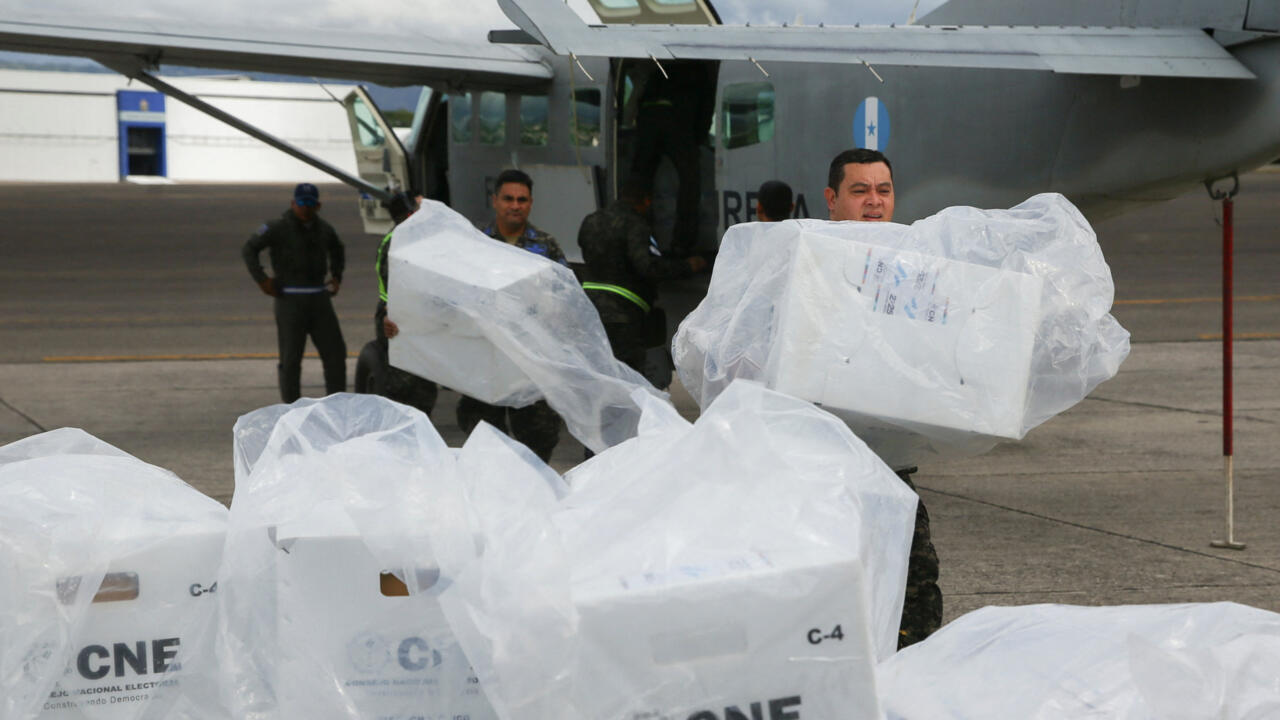
Honduran Air Force members unload packages carrying marked ballots from Bay Islands, after the general election, in Tegucigalpa, Honduras, on December 1, 2025. © Jose Cabezas, Reuters
Donald Trump accused election officials in Honduras on Monday of “trying to change” their presidential election outcome, as a partial digital tally revealed the two frontrunners are locked in a “technical tie".
The National Electoral Council (CNE) has called for “patience” as it starts a manual count of the November 30 vote, in one of Latin America’s most impoverished and violent countries.
Trump-backed Nasry Asfura, 67, led 72-year-old rival Salvador Nasralla by just 515 votes, making it a “technical tie", CNE head Ana Paola Hall said on social media, although the race is too close to call after a preliminary count.
“Looks like Honduras is trying to change the results of their Presidential Election. If they do, there will be hell to pay!” Trump claimed on social media without providing proof of his accusation.
READ MORETrump-backed conservative Asfura takes narrow lead in Honduras presidential vote
Trump has become increasingly vocal about his support for allies in the region, previously threatening to cut aid to Argentina and Honduras if his picks did not win.
Ally Javier Milei was victorious in Argentina’s mid-term elections.
Days before the Honduras vote, former Tegucigalpa mayor Asfura won the Republican leader’s backing – as the US president sought to put his finger on the scale in yet another Latin American election.
Nasralla told reporters on Monday that despite Trump’s endorsement of his rival, he was confident the election would swing in his favor.
“I know I’ve already won. This morning, they sent me a figure that puts me ahead,” he told reporters about the preliminary count.
Nasralla clarified in a post on X that “we are not declaring ourselves winners, we are just projecting the results.”
Swing to the right
The election is a clear defeat for ruling leftists trailing far behind in the vote count.
A swing to the right could help build US influence in a country that under leftist government had increasingly looked to China.
The election campaign was dominated by Trump’s threat and the surprise announcement that he would pardon former Honduran president Juan Orlando Hernandez of Asfura’s National Party.
Hernandez is serving a 45-year prison sentence in the United States, where he had been accused of belonging to one of “the largest and most violent drug trafficking conspiracies in the world".
Some Hondurans have welcomed Trump’s intervention, saying they hope it meant migrants will be allowed to remain in the United States.
Many Hondurans have fled north to escape grinding poverty and violence, including minors fearing forced recruitment by gangs.
This escape route has become more difficult since Trump’s immigration crackdown, and nearly 30,000 Honduran migrants have been deported since his second term started in January.
The clampdown has dealt a severe blow to the country of 11 million people, where remittances accounted for 27 percent of GDP last year.
‘Want to escape poverty’
Others reject Trump’s perceived meddling.
“I vote for whomever I please, not because of what Trump has said, because the truth is I live off my work, not off politicians,” Esmeralda Rodriguez, a 56-year-old fruit seller, told AFP.
Michelle Pineda, a 38-year-old merchant, hoped the winner sees the country “as more than just a bag of money to loot".
Preemptive accusations of election fraud from the ruling party and opposition have sparked fears of unrest.
The vote count has progressed slowly, and final results could take days.
Lawmakers and hundreds of mayors were also elected in the fiercely polarised nation, which has swung back and forth between nominally leftist and conservative leaders.
Long a transit point for cocaine exported from Colombia to the United States, Honduras is now also a drug producer.
But the candidates barely addressed drug trafficking, poverty or violence on the campaign trail.
“I hope the new government will have good lines of communication with Trump, and that he will also support us,” said Maria Velasquez, 58.
“I just want to escape poverty.”
(FRANCE 24 with AFP)
Donald Trump accused election officials in Honduras on Monday of “trying to change” their presidential election outcome, as a partial digital tally revealed the two frontrunners are locked in a “technical tie".
The National Electoral Council (CNE) has called for “patience” as it starts a manual count of the November 30 vote, in one of Latin America’s most impoverished and violent countries.
Trump-backed Nasry Asfura, 67, led 72-year-old rival Salvador Nasralla by just 515 votes, making it a “technical tie", CNE head Ana Paola Hall said on social media, although the race is too close to call after a preliminary count.
“Looks like Honduras is trying to change the results of their Presidential Election. If they do, there will be hell to pay!” Trump claimed on social media without providing proof of his accusation.
READ MORETrump-backed conservative Asfura takes narrow lead in Honduras presidential vote
Trump has become increasingly vocal about his support for allies in the region, previously threatening to cut aid to Argentina and Honduras if his picks did not win.
Ally Javier Milei was victorious in Argentina’s mid-term elections.
Days before the Honduras vote, former Tegucigalpa mayor Asfura won the Republican leader’s backing – as the US president sought to put his finger on the scale in yet another Latin American election.
Nasralla told reporters on Monday that despite Trump’s endorsement of his rival, he was confident the election would swing in his favor.
“I know I’ve already won. This morning, they sent me a figure that puts me ahead,” he told reporters about the preliminary count.
Nasralla clarified in a post on X that “we are not declaring ourselves winners, we are just projecting the results.”
Swing to the right
The election is a clear defeat for ruling leftists trailing far behind in the vote count.
A swing to the right could help build US influence in a country that under leftist government had increasingly looked to China.
The election campaign was dominated by Trump’s threat and the surprise announcement that he would pardon former Honduran president Juan Orlando Hernandez of Asfura’s National Party.
Hernandez is serving a 45-year prison sentence in the United States, where he had been accused of belonging to one of “the largest and most violent drug trafficking conspiracies in the world".
Some Hondurans have welcomed Trump’s intervention, saying they hope it meant migrants will be allowed to remain in the United States.
Many Hondurans have fled north to escape grinding poverty and violence, including minors fearing forced recruitment by gangs.
This escape route has become more difficult since Trump’s immigration crackdown, and nearly 30,000 Honduran migrants have been deported since his second term started in January.
The clampdown has dealt a severe blow to the country of 11 million people, where remittances accounted for 27 percent of GDP last year.
‘Want to escape poverty’
Others reject Trump’s perceived meddling.
“I vote for whomever I please, not because of what Trump has said, because the truth is I live off my work, not off politicians,” Esmeralda Rodriguez, a 56-year-old fruit seller, told AFP.
Michelle Pineda, a 38-year-old merchant, hoped the winner sees the country “as more than just a bag of money to loot".
Preemptive accusations of election fraud from the ruling party and opposition have sparked fears of unrest.
The vote count has progressed slowly, and final results could take days.
Lawmakers and hundreds of mayors were also elected in the fiercely polarised nation, which has swung back and forth between nominally leftist and conservative leaders.
Long a transit point for cocaine exported from Colombia to the United States, Honduras is now also a drug producer.
But the candidates barely addressed drug trafficking, poverty or violence on the campaign trail.
“I hope the new government will have good lines of communication with Trump, and that he will also support us,” said Maria Velasquez, 58.
“I just want to escape poverty.”
(FRANCE 24 with AFP)

No comments:
Post a Comment