Thursday, January 08, 2026

Trump pulls US out of UN climate treaty in sweeping withdrawal from global institutions

Published on 

Experts say withdrawing from the United Nations Framework Convention on Climate Change is a "strategic blunder" for the US.

Donald Trump has been accused of “sinking to a new low” after ordering the US to withdraw from the United Nations’ flagship climate treaty.

In a Presidential Memorandum signed yesterday (7 January), the POTUS says it is “contrary to the interests of the US” to remain a member of, participate in, or provide support to more than 60 international organisations, treaties, and conventions. Many of these agencies, commissions and advisory panels focus on climate change, migration and labour.

The move follows Trump’s continuing efforts to boost polluting fossil fuels while stalling progress on clean energy projects. Last month, the US government’s Environmental Protection Agency (EPA) removed any mention of fossil fuels – the main driver of global warming – from its popular online page explaining the causes of climate change.

Trump withdraws from UN climate treaty

The Trump administration’s boldest withdrawal is from the United Nations Framework Convention on Climate Change (UNFCCC). This landmark treaty was adopted in 1992 by almost 200 nations, and is often seen as the parent of the 2015 Paris Agreement, which the US has already pulled out of.

It aims to stabilise greenhouse gas concentrations in the atmosphere at a level that will prevent “dangerous human interference with the climate system”. However, the UNFCCC also puts an onus on developed countries to take the lead.

This means the US agreed to support climate change activities in developing countries by providing financial support for adaptation that is “above and beyond any financial assistance they already provide to these countries”.

What other organisations has the US withdrawn from?

The administration has already axed its support for international agencies like the UN Human Rights Council and UNESCO. Now, it has cut ties with 66 organisations, many of which work in sectors Trump has described as setting a “woke” agenda.

This includes the Intergovernmental Panel on Climate Change (IPCC), the world’s leading authority on climate science. The IPCC provides governments at all levels with scientific information which they can use to develop climate policies.

IPCC reports are also a key input into international climate negotiations, helping push global progress. Experts warn that stepping away from the panel risks weakening scientific guardrails that protect the public from disinformation, stalled progress and “reckless decision-making”.

Other groups on the administration’s list include UN Oceans, 24/7 Carbon-Free Energy Compact, the Intergovernmental Science-Policy Platform on Biodiversity and Ecosystem Services, and the International Renewable Energy Agency.

A ‘new low’ for Trump

The move sparked outrage from organisations and climate scientists around the world, with many arguing it will make the world “far more unsafe”.

The Union of Concerned Scientists’ (UCS) Dr Rachel Cleetus says withdrawing from the bedrock treaty on climate change is a “new low” for Trump – one that shows the administration is tapping into “authoritarianism” and “anti-science” at the sacrifice of its people’s well-being.

“But, forward-looking US states and the rest of the world recognise that devastating and costly climate impacts are mounting rapidly, and collective global action remains the only viable path to secure a livable future for our children and grandchildren,” she adds.

“Withdrawal from the global climate convention will only serve to further isolate the United States and diminish its standing in the world following a spate of deplorable actions that have already sent our nation’s credibility plummeting, jeopardised ties with some of our closest historical allies, and made the world far more unsafe.”

Dr Cleetus argues that the administration is “pandering to fossil fuel polluters” – a concern that has recently grown following the US taking control of Venezuela and its oil reserves.

What happens next?

David Widawsky, director of the World Resources Institute, which aims to develop low-carbon and resilient economies, argues that pulling out of the UNFCC is a “strategic blunder” that gives away American advantage for nothing in return.

“The 30-year-old agreement is the foundation of international climate cooperation,” Widawsky says. “Walking away doesn’t just put America on the sidelines– it takes the US out of the arena completely.”

Looking forward, Widawsky predicts that American communities and businesses will lose economic ground as other countries capture the jobs, wealth and trade created by the booming clean-energy economy.

In 2023, 1.6 million people in the EU were employed in the renewable energy industry. This number is set to soar as solar and wind become the EU’s largest electricity source.

“Despite [Trump’s] action, global climate diplomacy will not falter,” Widawsky adds.

“Other nations understand the UNFCCC’s irreplaceable role in driving cooperation and advancing climate solutions the world urgently needs. When countries work together on climate, it saves lives, creates jobs, strengthens economic stability, and builds a more prosperous future.”

Euronews Green has contacted the UNFCCC for comment.


Trump withdraws US from UN climate treaty and 65 other global bodies
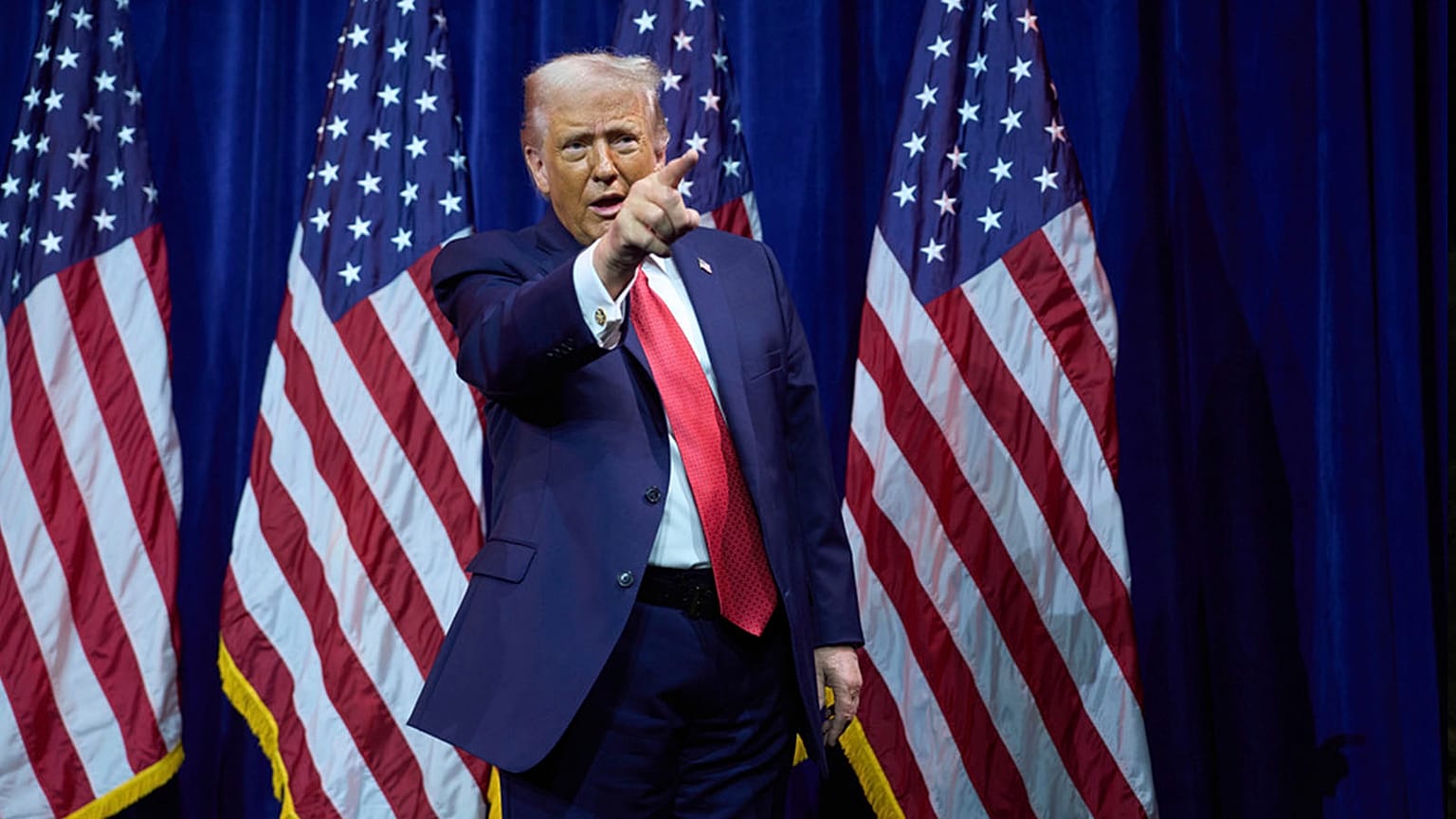
US President Donald Trump speaks to House Republican lawmakers during their annual retreat in Washington, 6 January 2026
Copyright AP Photo

By Euronews
Published on 

President Trump signed an executive order suspending US participation in 66 UN agencies and international organisations, including the UN climate treaty, marking a major retreat from global cooperation.

US President Donald Trump signed an executive order on Wednesday suspending Washington's participation in dozens of UN agencies, commissions and advisory panels focused on climate, labour, migration and other issues his administration describes as promoting "woke" initiatives.

This means the US will withdraw from 66 international organisations including the UN climate treaty framework, marking the most extensive retreat from global cooperation in its modern history.

US Secretary of State Marco Rubio said the institutions were "redundant in their scope, mismanaged, unnecessary, wasteful, poorly run, captured by the interests of actors advancing their own agendas contrary to our own, or a threat to our nation's sovereignty."

"President Trump is clear: It is no longer acceptable to be sending these institutions the blood, sweat, and treasure of the American people, with little to nothing to show for it. The days of billions of dollars in taxpayer money flowing to foreign interests at the expense of our people are over," Rubio said in a statement following the decision.

The withdrawal from the UN Framework Convention on Climate Change — the 1992 treaty underpinning the Paris climate agreement — leaves the US as the only country outside the global climate framework. Trump, who calls climate change a hoax, withdrew from the Paris agreement shortly after returning to the White House

Trump's latest order drew sharp criticism from experts and former Washington officials.

Gina McCarthy, former White House national climate adviser, said the decision was "shortsighted, embarrassing and foolish." She warned the US was forfeiting its ability to influence trillions of dollars in climate investments and policies.

Climate scientist Rob Jackson, who chairs the Global Carbon Project tracking global emissions, said the withdrawal "gives other nations the excuse to delay their own actions and commitments" on reducing greenhouse gases.

“The people of the US and the international community must come together to stop the Trump administration from dismantling the structures and tools we have fought for and won – imperfect though they may be – to advance climate justice and global justice," Niranjali Amerasinghe, executive director of ActionAid USA, said in reaction to the decision.

What is the US exiting?

The US will also exit the UN Population Fund, which provides sexual and reproductive health services worldwide. Trump cut funding to the agency during his first term over Republican accusations that it participated in coercive abortion practices in China, claims a 2022 State Department review found no evidence to support.

Other organisations on the withdrawal list include the Carbon Free Energy Compact, United Nations University, International Cotton Advisory Committee, International Tropical Timber Organisation, Partnership for Atlantic Cooperation and International Lead and Zinc Study Group.

The administration has already suspended support for the World Health Organization, the UN agency for Palestinian refugees UNRWA, the UN Human Rights Council and UNESCO. It has adopted what officials describe as an "à la carte" approach to UN funding, supporting only operations aligned with Trump's agenda.

Daniel Forti, head of UN affairs at the International Crisis Group, said the approach represents "the crystallisation of the US approach to multilateralism, which is 'my way or the highway'".

The shift marks a departure from how both Republican and Democratic administrations historically engaged with the UN.

The world body has responded with staffing and programme cuts, while numerous nongovernmental organisations have closed projects after Trump slashed foreign assistance through USAID.

Trump administration officials said they want to focus resources on expanding US influence in UN standard-setting bodies where the US competes with China, including the International Telecommunications Union, International Maritime Organisation, and International Labour Organisation.

The withdrawals come as Trump has rattled allies and adversaries with military actions including the capture of Venezuela's Nicolás Maduro and threats to seize Greenland.


Trump Abandonment of Global Treaties,


Including Landmark Climate Deal,


 ‘Threatens All Life on Earth’

“Trump cutting ties with the world’s oldest climate treaty is another despicable effort to let corporate fossil fuel interests run our government.”
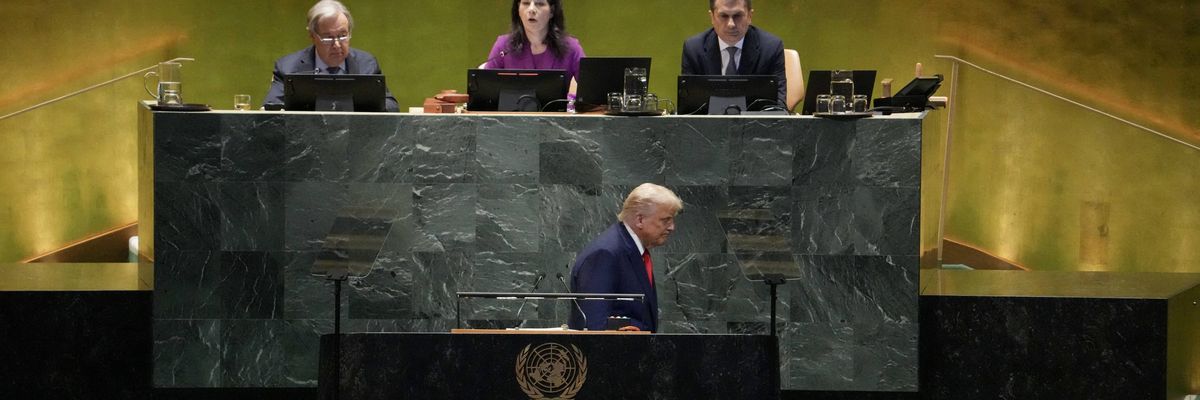


US President Donald Trump departs after delivering remarks to the United Nations General Assembly at the UN headquarters in New York City on September 23, 2025.
(Photo by Timothy A. Clary/AFP via Getty Images)

Jake Johnson
Jan 08, 2026
COMMON DREAMS

President Donald Trump on Wednesday withdrew the United States from dozens of international treaties and organizations aimed at promoting cooperation on the world’s most pressing issues, including human rights and the worsening climate emergency.

Among the treaties Trump ditched via a legally dubious executive order was the United Nations Framework Convention on Climate Change (UNFCCC), making the US—the world’s largest historical emitter of planet-warming greenhouse gases—the first country to abandon the landmark agreement.

The US Senate ratified the convention in 1992 by unanimous consent, but lawmakers have repeatedly failed to assert their constitutional authority to stop presidents from unilaterally withdrawing from global treaties.

Jean Su, energy justice director at the Center for Biological Diversity, said in a statement that “Trump cutting ties with the world’s oldest climate treaty is another despicable effort to let corporate fossil fuel interests run our government.”

“Given deeply polarized US politics, it’s going to be nearly impossible for the U.S. to rejoin the UNFCCC with a two-thirds majority vote. Letting this lawless move stand could shut the US out of climate diplomacy forever,” Su warned. “Withdrawing from the world’s leading climate, biodiversity, and scientific institutions threatens all life on Earth.”

Trump also pulled the US out of the International Institute for Justice and the Rule of Law, the International Union for Conservation of Nature, the UN International Law Commission, the UN Democracy Fund, UN Oceans, and dozens of other global bodies, deeming them “contrary to the interests of the United States.”

The president’s move came as he continued to steamroll domestic and international law with an illegal assault on Venezuela and threats to seize Greenland with military force, among other grave abuses.

Below is the full list of international organizations that Trump abandoned with the stroke of a pen:

(a) Non-United Nations Organizations:

(i) 24/7 Carbon-Free Energy Compact;

(ii) Colombo Plan Council;

(iii) Commission for Environmental Cooperation;

(iv) Education Cannot Wait;

(v) European Centre of Excellence for Countering

Hybrid Threats;

(vi) Forum of European National Highway Research Laboratories;

(vii) Freedom Online Coalition;

(viii) Global Community Engagement and Resilience Fund;

(ix) Global Counterterrorism Forum;

(x) Global Forum on Cyber Expertise;

(xi) Global Forum on Migration and Development;

(xii) Inter-American Institute for Global Change Research;

(xiii) Intergovernmental Forum onMining, Minerals, Metals, and Sustainable Development;

(xiv) Intergovernmental Panel on Climate Change;

(xv) Intergovernmental Science-Policy Platform on Biodiversity and Ecosystem Services;

(xvi) International Centre for the Study of the Preservation and Restoration of Cultural Property;

(xvii) International Cotton Advisory Committee;

(xviii) International Development Law Organization;

(xix) International Energy Forum;

(xx) International Federation of Arts Councils and Culture Agencies;

(xxi) International Institute for Democracy and Electoral Assistance;

(xxii) International Institute for Justice and the Rule of Law;

(xxiii) International Lead and Zinc Study Group;

(xxiv) InternationalRenewable Energy Agency;

(xxv) International Solar Alliance;

(xxvi) International Tropical Timber Organization;

(xxvii) International Union for Conservation of Nature;

(xxviii) Pan American Institute of Geography and History;

(xxix) Partnership for Atlantic Cooperation;

(xxx) Regional Cooperation Agreement on Combatting Piracy and Armed Robbery against Ships in Asia;

(xxxi) Regional Cooperation Council;

(xxxii) Renewable Energy Policy Network for the 21st Century;

(xxxiii)Science and Technology Center in Ukraine;

(xxxiv) Secretariat of the Pacific Regional Environment Programme; and

(xxxv) Venice Commission of the Council of Europe.

(b) United Nations (UN) Organizations:

(i) Department of Economic and Social Affairs;

(ii) UN Economic and Social Council (ECOSOC) — Economic Commission forAfrica;

(iii) ECOSOC — Economic Commission forLatin America and the Caribbean;

(iv) ECOSOC — Economic and Social Commission for Asia and the Pacific;

(v) ECOSOC — Economic and Social Commission for Western Asia;

(vi) International Law Commission;

(vii) International Residual Mechanism for Criminal Tribunals;

(viii) InternationalTrade Centre;

(ix) Office of the Special Adviser on Africa;

(x) Office of the Special Representative of the Secretary General forChildren in Armed Conflict;

(xi) Office of the Special Representative of the Secretary-General on Sexual Violence in Conflict;

(xii) Office of the Special Representative of the Secretary-General on Violence Against Children;

(xiii) Peacebuilding Commission;

(xiv) Peacebuilding Fund;

(xv) Permanent Forum on People of African Descent;

(xvi) UN Alliance of Civilizations;

(xvii) UN Collaborative Programme on Reducing Emissions fromDeforestation and Forest Degradation in Developing Countries;

(xviii) UN Conference on Trade and Development;

(xix) UN Democracy Fund;

(xx) UN Energy;

(xxi) UN Entity for Gender Equality and the Empowerment of Women;

(xxii) UN Framework Convention on Climate Change;

(xxiii) UN Human Settlements Programme;

(xxiv) UN Institute for Training and Research;

(xxv) UN Oceans;

(xxvi) UN Population Fund;

(xxvii) UN Register of Conventional Arms;

(xxviii) UN System Chief Executives Board for Coordination;

(xxix) UN System Staff College;

(xxx) UNWater; and

(xxxi) UN University.

Rachel Cleetus, policy director and lead economist for the Climate and Energy Program at the Union of Concerned Scientists, said Trump’s withdrawal from the world’s bedrock climate treaty marks “a new low and yet another sign that this authoritarian, anti-science administration is determined to sacrifice people’s well-being and destabilize global cooperation.”

“Withdrawal from the global climate convention will only serve to further isolate the United States and diminish its standing in the world following a spate of deplorable actions that have already sent our nation’s credibility plummeting, jeopardized ties with some of our closest historical allies, and made the world far more unsafe,” said Cleetus. “This administration remains cruelly indifferent to the unassailable facts on climate while pandering to fossil fuel polluters.”


US could join rival powers undermining EU in Western Balkans, analyst warns

US could join rival powers undermining EU in Western Balkans, analyst warns
By bne IntelliNews January 7, 2026

Under President Donald Trump, the United States could join rival powers such as China and Russia in undermining the European Union’s leverage in the Western Balkans and other regions in its near neighbourhood, warns a paper published by the European Council on Foreign Relations (ECFR). 

 America’s 2025 National Security Strategy (NSS), it said, combines “a bitter and hostile critique of the EU and its policies” with backing for what the administration calls “healthy nations” – including volatile Western Balkan states – to strike their own deals with Brussels, says the paper, ‘The next ‘big bang’: How the EU can fast-track enlargement amid geopolitical tensions’, by visiting fellow Vladimir Shopov.

“By cultivating resistance towards the EU in this region, America would only deepen these states’ reluctance to align with EU laws and practices,” the paper said.

It cited Montenegro’s decision to sign international agreements allowing non-competitive public procurement despite closing the relevant EU accession chapter, and Serbia’s free-trade deal with China in defiance of EU objections, as examples of how candidates are already hedging their bets.

“During previous enlargement events, the US implemented support programmes which complemented EU accession,” the paper noted, “but this is unlikely to continue under the current US administration.”

Geopolitics reshapes enlargement policy

This comes in the context of a union that is already being pushed by war, great-power rivalry and economic coercion into a more overtly geopolitical posture that is transforming everything from defence policy to the way new members are admitted. 

What began under European Commission President Ursula von der Leyen in 2019 as a broad ambition for a more “geopolitical commission” has turned into a far more concrete reorientation, the think-tank said, driven above all by Russia’s invasion of Ukraine and growing pressure from the United States and China.

“When Ursula von der Leyen talked of a ‘geopolitical commission’ in 2019, her intent was closer to direction of policy travel rather than an urgent and detailed plan aimed at creating a security union with complete defence capabilities,” the paper said. “But geopolitical imperatives are now driving the EU’s development, including in defence and securing economic leverage.”

The EU’s 2020 Security Union strategy, initially designed to complement Nato, has since evolved into what the bloc calls a “2030 defence readiness” agenda, blending internal security with military preparedness. In parallel, Brussels has rolled out an economic security strategy aimed at reducing vulnerabilities and shielding the bloc from external pressure, including through tools such as the EU’s anti-coercion instrument.

“Nowhere is the EU’s changing approach to geopolitics clearer than in enlargement,” the paper said, warning that the bloc risks diluting its long-standing rules for admitting new members as it rushes to lock in influence in its eastern neighbourhood.

Fast-track accession?

Russia’s war in Ukraine has put geopolitics “at the core of the negotiation process”, the report said, especially for Ukraine and Moldova, which both applied for EU membership in 2022.

While accession talks typically last many years, ECFR noted that political discussions now include the possibility that Ukraine could be admitted by 2027 as part of a U.S.-brokered ceasefire arrangement. “The EU could extend a similar logic to Moldova, given the persistent risk of Russian encroachment and hybrid warfare,” it said.

That would mark a sharp departure from the EU’s traditional emphasis on conditionality – the requirement that candidates fully adopt and implement EU laws and standards before joining.

“While the 2027 timeline appears unrealistic for Moldova, political conversations about a contracted negotiation timeframe suggest the EU is shifting its approach,” the report said, “despite the difficulties in adopting, implementing and embedding EU norms and practices in that country.”

The think-tank cautioned that accelerating enlargement for strategic reasons could undermine the EU’s own lessons from the past, when countries admitted in the 2004–2007 wave later struggled with issues such as judicial independence and corruption.

A geopolitically driven expansion to include Ukraine, Moldova and the Western Balkans would amount to another “big bang” enlargement, comparable to 2004 and 2007, and could provoke resistance among voters in existing member states, the report warned.

It would also force the EU to confront its own decision-making rules. France and Germany are pushing to move from unanimity to majority voting in areas such as foreign and security policy, but doing so would require treaty changes that are hard to reconcile with a fast-tracked enlargement.

If We Can’t Stop Trump From Taking Over Greenland, I Will Cry


We cannot allow our nation to stomp all over our friends and neighbors just because our president and his minions get high by pushing weaker countries around.


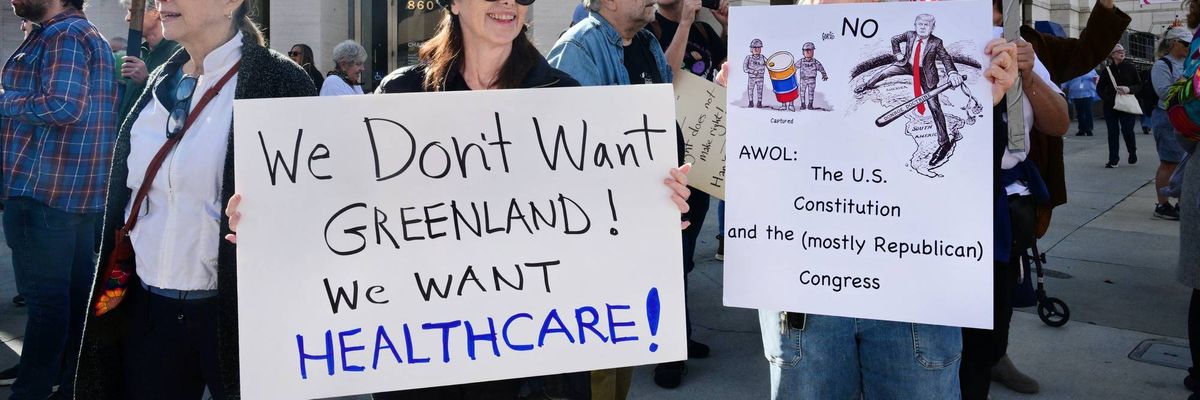
Activists gather to protest against US President Donald Trump’s recent action in Venezuela on January 6, 2026 in Pasadena, California, calling on Congress for an immediate end to military action, accountability for President Trump’s actions, and diplomacy over war.
(Photo by Frederic J. Brown / AFP via Getty Images)


Les Leopold
Jan 08, 2026

Common Dreams

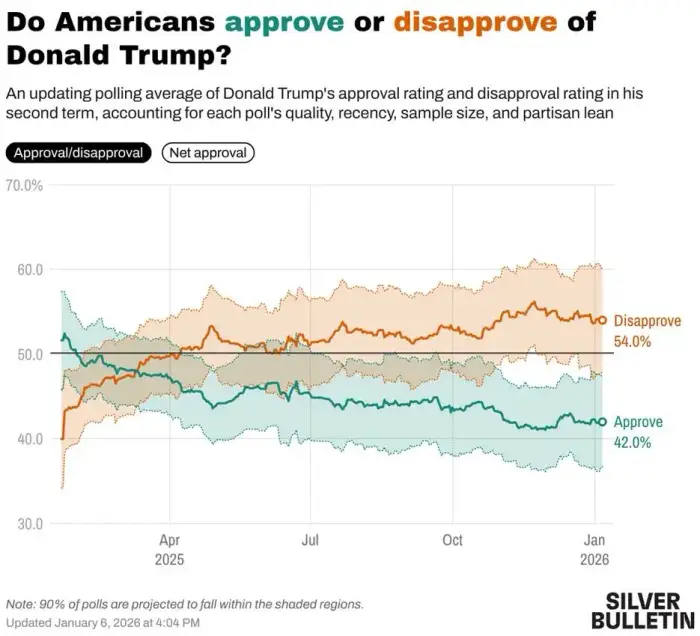
We know one thing for sure: President Donald Trumps wants to be seen as the greatest president there ever was. But he’s not stupid. He sees that the American public doesn’t agree with him—yet. His net popularity rating is minus 12.


Sure, he can claim that all the polls lie but he knows better. He’s always been obsessed by ratings, and he wants them them up fast. And that, I believe, is one of the reasons for his overt imperialist adventure, arresting Venezuelan President Nicolás Maduro and making a claim on Venezuelan oil. Maybe he also believes that taking the oil will drive down US energy prices so that “affordability” concerns will no longer turn consumers against him, though this is almost certainly wrong.

But there is no doubt he’s also worried that unless his popularity changes, the Democrats will gain control of not only the House but also the Senate, putting a major dent in his ability to do as he pleases. So, he appears to be betting the farm that military adventures in Latin America and sword rattling over ever-peaceful Greenland will rally the public behind him, sending his ratings to new heights and leading the Republicans to victory in 2026. It’s called wagging the dog.

Historically, he might not be wrong. Successful expansionist military adventures have led to rallying around the flag: The Mexican-American War (1846-1848) gave us the annexation of Texas and the territories of California, Nevada, Utah, Arizona, and New Mexico. The Spanish-American War of 1898 removed Spain from the Western Hemisphere and gave the US control of the Philippines. Teddy Roosevelt gained a great deal of positive press by leading his Rough Riders up San Juan Hill in Cuba. Quick and dirty wars against weaker adversaries are often good politics.

As ratings sag I truly worry that Trump, egged on by Steven Miller, who truly is off his rocker, will go after Greenland.

Are they this time around? We don’t know for sure yet, but early poll results are not promising for Trump. As expected, the Republicans overwhelmingly support the imperialist adventure, and the Democrats overwhelmingly do not. But the all-important independents vociferously oppose the ousting of Maduro, 43% to 26%.

Another easy way to increase public support is promoting the never-ending War on Drugs. I’m sure Trump believes that blowing up the drug-running boats has helped and will continue to help his ratings. But maybe not, especially when these extrajudicial murders aren’t argued for and supported by the public release of any evidence. Using military force to attack boats suspected of bringing drugs into the US is supported only by 53% to 47%, even though nearly everyone supports less narcotics in the US.

But isn’t stopping the flow of illegal drugs into the US a good, something that we all should support? Sure, it sounds good. Addictive life-threatening drugs are a social bad, but prohibition never, ever works. If we as a society want to get high, that demand will somehow be fulfilled, always. Increased enforcement provides a textbook example of how to raise the price of drugs while increasing employment in the drug-enforcement complex. Prohibition, from the 19th Amendment to the Sinaloa Cartel, usually drives up the profits of the traffickers as cuts in supply lead to price increases. Like everything else in America, poorer drug users will face an affordability crisis, while rich users won’t notice. But in no case will the drugs stop flowing. There is just too much money in it due to our very human desire to feel good.

What happens next? As ratings sag I truly worry that Trump, egged on by Steven Miller, who truly is off his rocker, will go after Greenland. They seem to believe that expanding the US to the north will be viewed with great pleasure by the American public, like the Louisiana Purchase from France and the buying of Alaska from Russia. Why? Because it shows we’re tough, and tough guys always are admired. Miller said it clearly to Jake Tapper on CNN:
“We live in a world, in the real world, Jake, that is governed by strength, that is governed by force, that is governed by power,” he said. “These are the iron laws of the world since the beginning of time.”

I try to stay positive about what we can achieve in this country. I’m calling for a new political organization of working people to promote progressive populism, especially in red America. Finding ways to empower working people in our political system is my lifelong mission. But that mission will be derailed if we allow our nation to stomp all over our friends and neighbors just because our president and his minions get high by pushing weaker countries around.

If we can’t stop our country from taking over Greenland, I will cry.


Our work is licensed under Creative Commons (CC BY-NC-ND 3.0). Feel free to republish and share widely.


Les Leopold


Les Leopold is the executive director of the Labor Institute and author of the new book, “Wall Street’s War on Workers: How Mass Layoffs and Greed Are Destroying the Working Class and What to Do About It." (2024). Read more of his work on his substack here.
Full Bio >

US talk of Greenland grab already damaging NATO


Teri Schultz in Brussels
DW
January 8, 2026


The idea that Washington would militarily intervene in an ally nation has previously been considered unthinkable. The Trump administration is forcing NATO to use its imagination.

Trump sent his son, Donald Jr., to visit Greenland in January 2025. Now, the president is musing about sending in troops
Image: Emil Stach/Ritzau Scanpix/AFP


NATO has hundreds and hundreds of pages of detailed military plans on how to protect itself against attack, but the scenarios of deterrence and defense always envisioned an external adversary. There's no playbook on how to handle President Donald Trump's ramped-up threats to take over territory of an ally by any means necessary. NATO Secretary-General Mark Rutte's strategy so far has been to remain silent, which won't work for long.

Danish Prime Minister Mette Frederiksen has sought to tamp down the US appetite by warning Monday that "if the US chooses to attack another NATO country militarily, then everything stops, including NATO and thus the security that has been established since the end of the Second World War."

Talk not cheap for NATO credibility


But even short of — or perhaps ahead of — any military movements, the impact of the escalating rhetoric alone cannot be underestimated.

"It is a huge victory for [Russian President Vladimir] Putin that we're even having this discussion," noted Patrik Oksanen, a senior fellow at the Stockholm Free World Forum, adding that the current situation inside the alliance would have been the ultimate dream of Soviet leaders.

"We are taking it quite seriously here up in the high north, that is, the combination that these remarks came so quickly after Venezuela and also has been strengthened both by first President Trump but then also his adviser [Stephen] Miller," who has both questioned Denmark's sovereignty over Greenland and whether any European troops would stand up against the US.

A social media post from Miller's wife, Katie, on Saturday, showing a map of Greenland covered by the US flag with the word "SOON," has amplified the angst.


Ed Arnold of the Royal United Services Institute, himself a former official at NATO's military headquarters, agrees that the damage to NATO goes beyond jangled nerves.

"It's an alliance built on values and trust," Arnold told DW, so "even getting to this stage has weakened the alliance." The notion of having NATO consultations about this would also be bad "optics”, he added, with "32 allies all sitting around a table and the principle challenge and threat being from around the table."


Reinforcing forces?

Some observers suggest one solution could be NATO's European allies sending troops to Greenland, to show Trump they are taking its defense seriously and that any unilateral deployment from the US would be unnecessary. Steven Everts, director of the European Union Institute for Security Studies, said there is value in that but only for the right reasons.

"Europeans ought to be taking Arctic security seriously," he said, "and if there are gaps, then we should try to fill them."

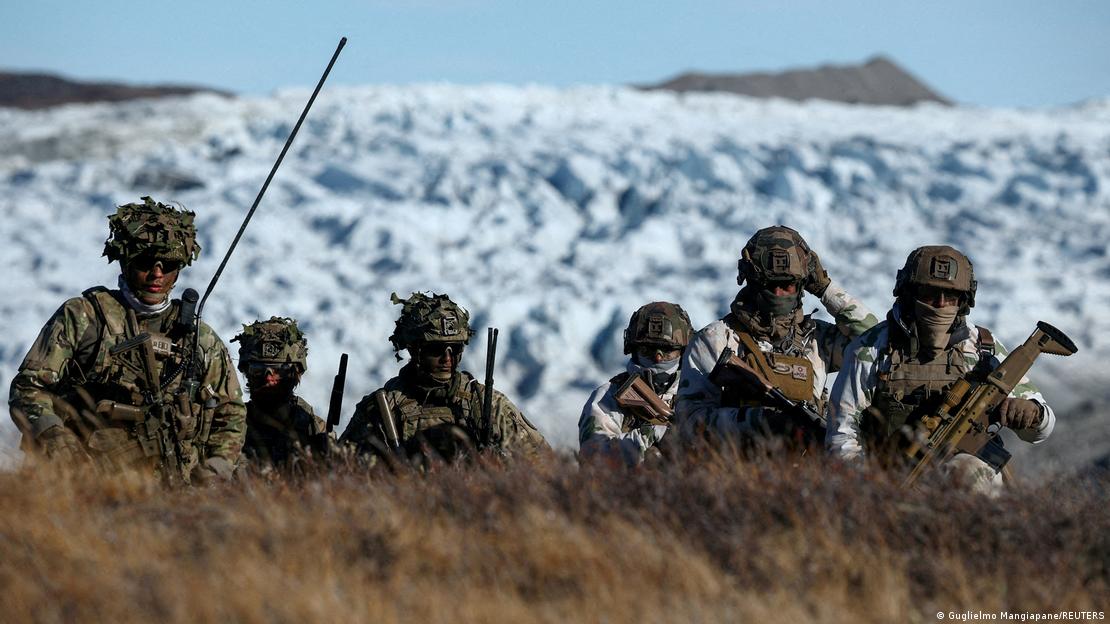
Danish troops were joined by those from allies in military drills in Greenland last September
Image: Guglielmo Mangiapane/REUTERS

But he cautioned that this should not be approached as a way to placate Trump because it's already been proven by the previous attempts to do this that it "doesn't work."

"This is not a drill, people. This is not something that you can just wait out and hope for it to get better," he said. "This will only change if we take forceful action to hold our ground, not in an aggressive way — we're not going to fight the American military over Greenland if it comes to that — but we have to be very, very clear about how we see the future of Greenland and the future the alliance and everything that comes with it."


Danes dig in

Anders Vistisen, a Danish member of the European Parliament, agrees with Everts, saying Europe should "stop playing diplomatic games, giving in, trying to persuade the US to be more reasonable or try to appease them by spending more on military in the Arctic region or giving them mining concession rights in Greenland or whatever else that's been talked about."

While Vistisen's political leanings as a member of the right-wing Danish People's Party may lead one to believe he'd make common cause with Trump on some issues, the lawmaker actually made headlines — and waves — a year ago when he used a profanity in telling Trump what he could do with his intent to buy Greenland. He told DW he has promised not to repeat the phrase publicly, but stands by the sentiment and his tactic to use frank language to convey to Washington the unacceptability of its position.

"We are at a point that is so serious that there can be no room for doubt or any maneuverability within our communication," Vistisen said. "We should have a very strong and very clear rebuttal and say to the American administration and President Trump, 'No, you're not going to have any claim in Greenland, you are not going persuade us, push us, bully us into acting any differently.'"

Vistisen said although he appreciates statements of support from other European leaders, he doesn't believe they'd actually send troops to Greenland. He's looking to his own prime minister to mount a tough enough defense.

"This is something that has to be resolved between the Kingdom of Denmark and the US administration," he said.


EU to NATO's rescue?


One of Vistisen's EU colleagues, Per Clausen of the Left group, believes it's the other side of Brussels that may hold the power to influence this situation. Clausen posted a letter to his counterparts in the European Parliament, proposing that the legislature's approval of last year's deal on trans-Atlantic tariffs, widely seen to favor the US, be suspended until Washington lays off Greenland.


"If we accept this agreement while Trump is threatening the international order and making direct territorial claims against Denmark," Clausen's letter states, "it will be seen as rewarding his action and will only be adding fuel to the fire."

"We have a lot things we could do that could harm the US very much, if you're talking about the economy," Clausen said. "And I think we should make it totally clear for the United States that we want to use this weapon if the US doesn't stop with aggression against Greenland."

EU leaders' response 'spoke to the seriousness' of Trump threat

Clausen, who was speaking to DW from Denmark, said his fellow citizens are "very very angry," more than afraid. He hopes his proposal will gain enough political weight to make the US take notice, to "see that Denmark is not isolated in this situation and that European leaders are not only talking about the solidarity with Denmark and Greenland, but they also are willing to act."


Steven Everts said he has seen at least one encouraging sign of that. While meeting in Paris in the format of the Coalition of the Willing to support Ukraine on Tuesday, the leaders of Germany, Italy, Poland, Spain and the UK joined Denmark's Frederiksen in a joint statement underscoring that "It is for Denmark and Greenland, and them only, to decide on matters concerning Denmark and Greenland."


They issued the statement just before meeting with US intermediaries Steve Witkoff and Jared Kushner, Trump's son-in-law, not shying away from the confrontation that might have been created or its impact on US support for Europe's Ukraine efforts. It's a step that might seem small, but Everts said it "spoke to the seriousness" with which leaders view the threat.

Patrik Oksanen of the Stockholm Free World Forum said the severity of the situation deserves that and more. Never mind the end of NATO, if the US forces its way into Greenland he said it would be no less than the "end of time as we know it."

Edited by: Martin Kuebler


'Crazy idea': Jimmy Kimmel breaks down major flaw in Trump's Greenland takeover plan

Ewan Gleadow
January 8, 2026
RAW STORY


The proposed takeover of Greenland by the United States has a series of flaws in the plan, according to Jimmy Kimmel.

The talk show host would use part of his opening monologue to mock Donald Trump and his administration's plan to take the country over. Kimmel suggested the broad aims of Trump can be achieved without taking the country over, and that the president now risks angering the Republican Party once more.

Speaking to the audience on Live!, Kimmel said, "Trump says he's considering military action to acquire Greenland if necessary, by force. Trump says we need it for national security reasons, some Republicans are pushing back on this crazy idea and none more forcefully than Mike Johnson."

"He doesn't think it's 'appropriate' to invade, and we all know how much Trump cares about being appropriate. Trump says he would prefer to buy Greenland, but if it's not for sale, we may just take it."

Though Trump has made it clear he wants to take Greenland, and has put his administration to work on doing just that, Kimmel pointed out the reason the president wants the land is the "dumbest part" of all.

He said, "The dumbest part of all of it is we've had an agreement with Greenland and Denmark since 1951 that says we can build military installations pretty much anywhere we want. The agreement allows us to 'construct, install, maintain, and operate' military bases across the country."


"In other words, why would we invade the cow when we can get the ice milk for free? This business of strong-arming other countries, Greenland and Venezuela, is not very popular. He ran on the platform of staying out of other countries, he specifically said they will not be part of regime change, they don't want any part of that, and now that's exactly what they're doing."

Former U.S. Ambassador to Denmark Rufus Gifford blasted President Donald Trump’s escalating threats to seize Greenland — even by military force — warning on MS NOW that such a move would run directly counter to NATO’s mission and could force the alliance to defend Denmark against the United States.

Gifford said, "I mean, I would make the argument that this foreign policy, if you want to even call it a foreign policy, is not only reckless, which it is, but it's also clueless."

He added the national security argument "holds zero water here" because NATO would be "compelled to respond" should the country be attacked.


Lithuania’s European commissioner warns US seizure of Greenland would end NATO alliance

Lithuania’s European commissioner warns US seizure of Greenland would end Nato alliance
US President Donald Trump on January 4 repeated earlier statements that Greenland should become part of the United States, despite appeals from Denmark’s prime minister to stop threatening the territory. / Bernd Hildebrandt via Pixabay
By Linas Jeglevicius in Vilnius January 8, 2026

A US military operation to seize control of Greenland, the autonomous Danish territory in the Arctic, would “clearly mean the end of transatlantic relations and Nato,” Lithuania’s European Commissioner for Defence and Space Andrius Kubilius said on January 6 in an interview for national broadcaster LRT.

US President Donald Trump on January 4 repeated earlier statements that Greenland should become part of the United States, despite appeals from Denmark’s prime minister to stop threatening the territory. 

He argued that the island is essential for US national security, claiming Denmark is unable to ensure that security on its own. Trump has also pointed to Greenland’s mineral resources as strategically important for the technology sector.

“I agree with the Danish prime minister: if such a thing were to happen – although I do not believe it will – if the US administration decided to use force to take control of Greenland, that would clearly mean the end of transatlantic relations and Nato,” Kubilius told LRT TV.

Kubilius suggested the US should already understand the implications. “The US administration probably understands this well,” he added, stressing that using force against a Nato ally would be a historic rupture.

 Asked about alternative approaches, Kubilius said that if Washington seeks to strengthen security in Greenland or the broader Arctic, it can do so through existing means rather than threats. “Those possibilities already exist. There is absolutely no need to threaten or intimidate with talk of taking over Greenland or its control,” he said, LRT.lt reported.

Greenland is an inseparable part of the Kingdom of Denmark, the Baltic foreign ministers said earlier this week after Trump renewed his claims that the United States should take control of the island.

Lithuanian Foreign Minister Kestutis Budrys said Denmark is a strong democracy and a reliable Nato ally, stressing that Greenland’s status is a matter of transatlantic security. Writing on X on January 5, he said respect for territorial integrity and sovereignty is essential to global stability and that any decisions regarding Greenland can be made only by Denmark and Greenland themselves.

Latvian Foreign Minister Baiba Braze echoed that position, saying all issues related to Greenland’s status must be resolved by Denmark and Greenland through dialogue. She added that allies are committed to preserving peace and security and must respect each other’s sovereignty.

Estonian Foreign Minister Margus Tsahkna said Estonia stands in full solidarity with Denmark, calling it a Nordic-Baltic ally. He emphasised that Greenland is an integral part of the Kingdom of Denmark and that no decisions concerning the territory can be made without the involvement of both Denmark and Greenland.

France working with allies on plan should US move to take over Greenland

France is working with ‍partners on a plan ​over how to respond should the United States act on its threat to take over Greenland, ⁠as Europe seeks to address US President Donald Trump's ambitions in the region. Denmark and Greenland say they are seeking a meeting with US Secretary of State Marco Rubio.


Issued on: 07/01/2026 

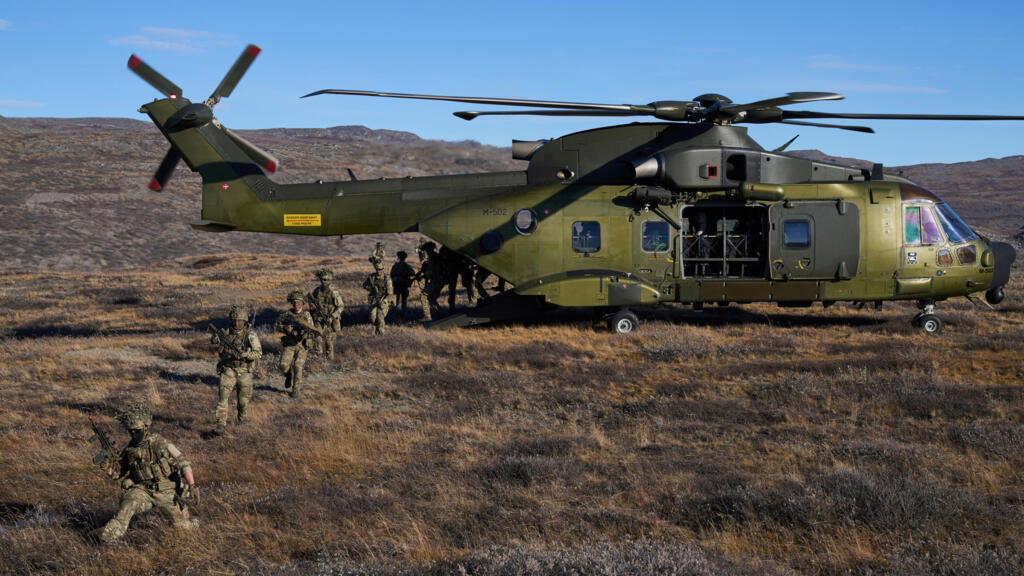
Danish forces participate in military exercises with hundreds of troops from several European NATO members in Kangerlussuaq, Greenland, 17 September, 2025. AP - Ebrahim Noroozi

The White House said on Tuesday that Trump was discussing options for acquiring Greenland, ​including potential use of the US military, in a revival of his ambition to control the strategic island, despite European objections.

Foreign Minister Jean-Noel Barrot ‍said the subject would be raised at a meeting with the foreign ministers of Germany and Poland later on Wednesday.

"We want ​to take action, but we want to do so together with our European partners," ​he said on France Inter radio on Wednesday morning.

Danish Foreign Minister Lars Løkke Rasmussen and his Greenlandic counterpart, Vivian Motzfeldt, have requested the meeting with Rubio in the near future, according to a statement posted Tuesday to Greenland's government website. Previous requests for a sit-down were not successful, the statement said.

However, Barrot suggested a US military operation had been ruled out by a ‌top US official.

"I myself was on the phone yesterday with US Secretary of State Marco Rubio (...) who confirmed that this was not the approach taken ... he ‍ruled out the possibility of an invasion (of Greenland)," he said.

Trump weighs military option to acquire Greenland


Trump renews Greenland ambitions

Trump has in recent days repeated that he wants to gain control of Greenland – an idea first voiced in 2019 during his first presidency. He has argued it is key for the US military and ‍that Denmark has not done enough to protect it.

A US military seizure of Greenland from a longtime ally, Denmark, would send shock waves through the ​Nato alliance and deepen the divide between Trump and European leaders.

Leaders from major European powers and Canada have rallied behind Greenland, saying the Arctic island belongs to its people.

A US military operation over the weekend that seized the leader of Venezuela had already rekindled concerns that Greenland might face a similar scenario. It has repeatedly said it does not want to be part of the United States.

'That's enough': Greenland PM reacts to Trump threats

The world's largest island but with a population of just 57,000 people, Greenland is not an independent member of NATO but is covered by Denmark's ‍membership of the Western alliance.

Mette Frederiksen, the Danish prime minister, warned on Monday that any US attack on a NATO ally would be the end of both the military alliance and "post-second world war security“.

Strategically located between Europe and North America, the US has an early warning air base in northwestern Greenland.

The island's mineral wealth also aligns with Washington's ambition to reduce reliance on China.

(with newswires)


Trump’s Greenland obsession 'the ravings of a degenerate monster': analysis


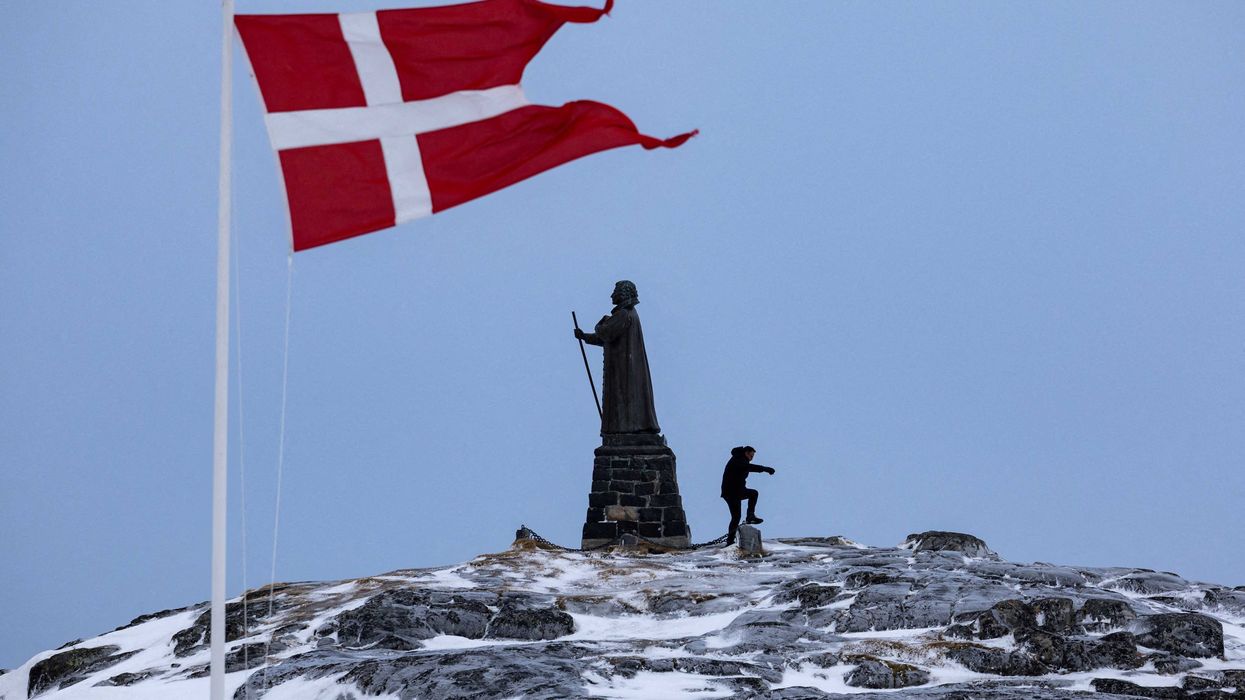
FILE PHOTO: A man walks as Danish flag flutters next to Hans Egede Statue ahead of a March 11 general election in Nuuk, Greenland, March 9, 2025.
 REUTERS/Marko Djurica/File Photo
January 08, 2026 
ALTERNET

Donald Trump's obsession with annexing Greenland for the US reemerged bigger than ever in the wake of his military raid in Venezuela, but a scathing new analysis from The American Prospect argued that this would be "conquest for its own sake" that would achieve "nothing," slamming Trump's bluster as "the ravings of a degenerate monster."

Over the weekend, U.S. military forces successfully captured Venezuelan President Nicolás Maduro, in a raid which some officials estimate killed around 75 people. In the aftermath, Trump and his administration threatened similar actions against other countries and regions, most notably Greenland, which the president has been keen to acquire for the US since his first term. Trump has given various reasons for his obsession with taking Greenland, including its supply of valuable minerals, but has more recently settled on the vague rationale of "national security."

In an unsparing breakdown of the Greenland situation on Thursday, Ryan Cooper, managing editor of The American Prospect, said that most of Trump's explanations for his obsession fall flat in the face of reality. Things are more easily explained, Cooper argued, by the president's desire for "conquest" and his own moral failings.

During past travels to Greenland, Cooper said that locals were uniformly perplexed by Trump's annexation threats, wondering "What could America possibly get from invasion and annexation that it does not already have?"

"The answer on any grounds — morality, self-interest, national security, or plain common sense — is: nothing," Cooper wrote. "These are the ravings of a degenerate monster, the worst person ever to occupy high office in this country, who in his dotage is indulging every one of his numerous awful instincts. This idea is entirely cruel, brutish stupidity."

Cooper's excursion to Greenland also revealed the many logistical holes in Trump's alleged explanations for wanting Greenland. Despite possessing some deposits of valuable minerals, very few of them are "commercially exploitable," being as they are "buried under hundreds or thousands of feet of ice." Greenland is also one of the most remote places in the world, with a terrain ill-suited for industry, given that "there are no internal roads between the few cities... many of the sea-lanes are clogged with ice for half the year," and its "handful of airports are routinely shut down because of fog."

"In short, Greenland is an exceptionally difficult place to scratch out a living, and it’s taken decades of grinding effort from the island’s residents — and a large ongoing subsidy from the Danish government — for it to develop a reasonably prosperous economy," Cooper concluded.

While Cooper agreed that Greenland is a key location for US national security, he noted that the military already has full access to the island and has several bases there, rendering Trump's desire to control the island for defense purposes moot. A military invasion of the island would also risk breaking up NATO, which has helped deter a third world war for nearly a century. Such an operation would risk retaliation from Denmark, which controls Greenland as an autonomous territory, or Canada, and while neither country could pose much of a direct threat to the U.S. military, Cooper argued that it would be relatively easy for them to jeopardize the U.S. nuclear response apparatus by attacking one its many bases in its "elaborate network of military radar installations stretching from western Alaska across northern Canada, Greenland and Britain."

"It likely never occurred to American defense planners that the American president might incite, for no discernible reason, Canada or Denmark to attack critical nuclear deterrence infrastructure that the U.S. military paid billions to construct," Cooper wrote. "The very idea is so paint-blisteringly insane that only one person in a million would even think of it. Unfortunately, the American people elected that person president."

Dogsleds, China and independence: Facts on Greenland


By AFP
January 7, 2026


The US already has extensive access to the Arctic island

 - Copyright AFP/File Odd ANDERSEN


Camille BAS-WOHLERT

US President Donald Trump has stepped up his designs on taking over Denmark’s autonomous territory Greenland, but questions abound about why he has taken an aggressive stance when the US already has extensive access to the Arctic island.

Trump has insisted the US needs Greenland for national security reasons.

What does Denmark’s defence agreement with the US on Greenland say? What investments have Denmark made in Greenland? Do China and Russia pose a real threat? What does Greenland’s independence movement say?

Here are answers to those four key questions.

– US military presence –

In 1941, at the height of World War II, occupied Denmark authorised the United States to build and operate military bases on Greenland, Denmark’s then-colony in the Arctic, for as long as the conflict would last in a bid to protect the American continent.

By the end of the war, the US had 15 military bases in Greenland. Today there remains just one, the Pituffic air base on the northwestern coast, which US Vice President JD Vance visited in March.

Greenland’s location is highly strategic, lying on the shortest route for missiles between Russia and the United States. It is therefore a crucial part of the US anti-missile shield.

Home to 57,000 people, Greenland “is an important part of the US national security protection,” Marc Jacobsen, Arctic expert at the Royal Danish Defence College, told AFP.

“The United State may increase their military presence in Greenland, but that’s already possible under the existing accord,” he said.

Since 1951, a Danish agreement with the United States — revised in 2004 — gives the US military practically carte blanche to do what it wants on Greenlandic territory, as long as it informs Denmark and Greenland in advance.

“The Government of the United States will consult with and inform the Government of the Kingdom of Denmark, including the Home Rule Government of Greenland, prior to the implementation of any significant changes to United States military operations or facilities in Greenland,” Article 3 of the accord states.

– Danish investments in security –

Trump has argued that Denmark has failed to ensure the security of Greenland, which measures 2.2 million square kilometres (849,424 square miles), or about a fifth of the size of the entire European continent.

In the past year, Copenhagen has beefed up its investments in Greenland. In 2025, it allocated 1.2 billion euros to security in the region, Danish Prime Minister Mette Frederiksen recalled on Monday.

And not just to buy dogsleds, contrary to what Trump claimed.

Yes, the Sirius patrol, tasked with defending a huge, largely uninhabited swathe of the island in the northeast measuring 972,000 km2, travels across the ice by dogsled. The patrol consists of 12 soldiers and some 70 dogs.

But to defend the entire territory, 81 percent of which is covered in ice, the Danish military has invested in five new Arctic vessels, an air radar alert system, as well as drones and sea patrol planes.

A subsea telecoms cable between Greenland and Denmark will also be built. Two cables already link the island to Iceland and Canada.

– Chinese and Russian presence –

A recent report by Denmark’s military intelligence service said Russia, China and the United States were all vying to play “a greater role” in the Arctic.

Greenland has untapped rare earth deposits and could be a vital player as melting polar ice opens up new shipping routes.

In August 2025, two Chinese research vessels were observed operating in the Arctic, north of the US and Canada, about 1,000 kilometres (620 miles) north of Greenland.

“It’s important that Donald Trump understands that there are not Russian and Chinese ships along the coast of Greenland,” Jacobsen said.

China is also virtually absent from Greenland’s economy.

The semi-public company Shenghe Resources is a majority shareholder in Australian mining group Energy Transition Minerals, which wants to develop a rare earths deposit in southern Greenland. That project is currently halted, however.

In addition, China was blocked from investing in new airports in Greenland.

“The Greenlandic government had shortlisted a big Chinese state-owned company for providing technical support for building new airports eight years ago, but Denmark and the US offered to finance the airports on the condition that the Chinese contractor was not selected,” Jesper Willaing Zeuthen of the University of Aalborg told AFP.

– Road to independence –

Greenland’s capital Nuuk and Copenhagen have repeatedly said that the territory is not for sale and that only Greenland can decide its future.

It is currently governed by a coalition that has no plans to seek independence from Denmark in the immediate future.

The Naleraq party, which wants swift independence and which came second in Greenland’s legislative elections in March, is not in government.

While some of its members want to bypass Denmark and negotiate directly with the United States, the party’s official stance is that “Naleraq does not want Greenlanders to become American. Just as we do not want to be Danish.”

A year ago, 85 percent of Greenlanders said they opposed joining the United States, according to a poll published in the Danish and Greenlandic press.

The long-held desire of US for Greenland


Issued on: 08/01/2026 - FRANCE24

Strategically positioned and rich in natural resources, Greenland has attracted Donald Trump’s attention since his first term as president, though he is far from the only figure in the United States to recognize the territory’s growing strategic significance. Laurent Berstecher reports.