If We Can’t Stop Trump From Taking Over Greenland, I Will Cry
We cannot allow our nation to stomp all over our friends and neighbors just because our president and his minions get high by pushing weaker countries around.
Activists gather to protest against US President Donald Trump’s recent action in Venezuela on January 6, 2026 in Pasadena, California, calling on Congress for an immediate end to military action, accountability for President Trump’s actions, and diplomacy over war.
(Photo by Frederic J. Brown / AFP via Getty Images)
Les Leopold
Jan 08, 2026
We know one thing for sure: President Donald Trumps wants to be seen as the greatest president there ever was. But he’s not stupid. He sees that the American public doesn’t agree with him—yet. His net popularity rating is minus 12.
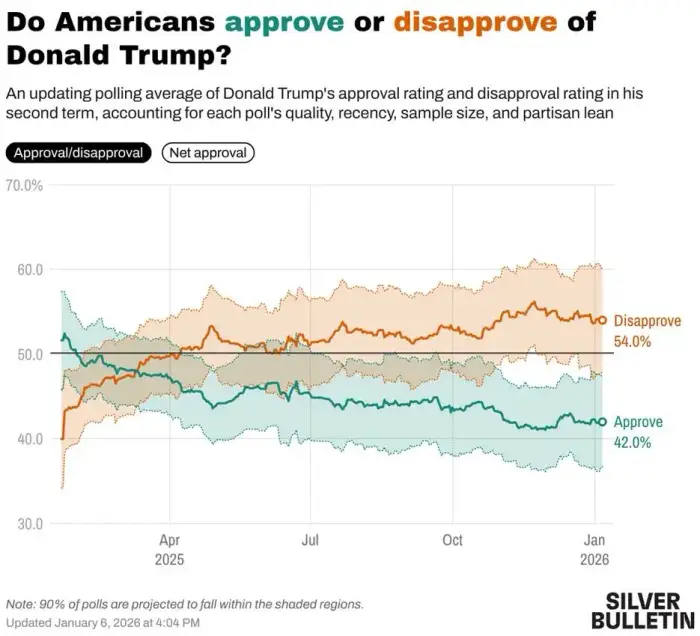
Sure, he can claim that all the polls lie but he knows better. He’s always been obsessed by ratings, and he wants them them up fast. And that, I believe, is one of the reasons for his overt imperialist adventure, arresting Venezuelan President Nicolás Maduro and making a claim on Venezuelan oil. Maybe he also believes that taking the oil will drive down US energy prices so that “affordability” concerns will no longer turn consumers against him, though this is almost certainly wrong.
But there is no doubt he’s also worried that unless his popularity changes, the Democrats will gain control of not only the House but also the Senate, putting a major dent in his ability to do as he pleases. So, he appears to be betting the farm that military adventures in Latin America and sword rattling over ever-peaceful Greenland will rally the public behind him, sending his ratings to new heights and leading the Republicans to victory in 2026. It’s called wagging the dog.
Historically, he might not be wrong. Successful expansionist military adventures have led to rallying around the flag: The Mexican-American War (1846-1848) gave us the annexation of Texas and the territories of California, Nevada, Utah, Arizona, and New Mexico. The Spanish-American War of 1898 removed Spain from the Western Hemisphere and gave the US control of the Philippines. Teddy Roosevelt gained a great deal of positive press by leading his Rough Riders up San Juan Hill in Cuba. Quick and dirty wars against weaker adversaries are often good politics.
As ratings sag I truly worry that Trump, egged on by Steven Miller, who truly is off his rocker, will go after Greenland.
Are they this time around? We don’t know for sure yet, but early poll results are not promising for Trump. As expected, the Republicans overwhelmingly support the imperialist adventure, and the Democrats overwhelmingly do not. But the all-important independents vociferously oppose the ousting of Maduro, 43% to 26%.
Another easy way to increase public support is promoting the never-ending War on Drugs. I’m sure Trump believes that blowing up the drug-running boats has helped and will continue to help his ratings. But maybe not, especially when these extrajudicial murders aren’t argued for and supported by the public release of any evidence. Using military force to attack boats suspected of bringing drugs into the US is supported only by 53% to 47%, even though nearly everyone supports less narcotics in the US.
But isn’t stopping the flow of illegal drugs into the US a good, something that we all should support? Sure, it sounds good. Addictive life-threatening drugs are a social bad, but prohibition never, ever works. If we as a society want to get high, that demand will somehow be fulfilled, always. Increased enforcement provides a textbook example of how to raise the price of drugs while increasing employment in the drug-enforcement complex. Prohibition, from the 19th Amendment to the Sinaloa Cartel, usually drives up the profits of the traffickers as cuts in supply lead to price increases. Like everything else in America, poorer drug users will face an affordability crisis, while rich users won’t notice. But in no case will the drugs stop flowing. There is just too much money in it due to our very human desire to feel good.
What happens next? As ratings sag I truly worry that Trump, egged on by Steven Miller, who truly is off his rocker, will go after Greenland. They seem to believe that expanding the US to the north will be viewed with great pleasure by the American public, like the Louisiana Purchase from France and the buying of Alaska from Russia. Why? Because it shows we’re tough, and tough guys always are admired. Miller said it clearly to Jake Tapper on CNN:
“We live in a world, in the real world, Jake, that is governed by strength, that is governed by force, that is governed by power,” he said. “These are the iron laws of the world since the beginning of time.”
I try to stay positive about what we can achieve in this country. I’m calling for a new political organization of working people to promote progressive populism, especially in red America. Finding ways to empower working people in our political system is my lifelong mission. But that mission will be derailed if we allow our nation to stomp all over our friends and neighbors just because our president and his minions get high by pushing weaker countries around.
If we can’t stop our country from taking over Greenland, I will cry.
Our work is licensed under Creative Commons (CC BY-NC-ND 3.0). Feel free to republish and share widely.
Les Leopold
Les Leopold is the executive director of the Labor Institute and author of the new book, “Wall Street’s War on Workers: How Mass Layoffs and Greed Are Destroying the Working Class and What to Do About It." (2024). Read more of his work on his substack here.
Full Bio >
US talk of Greenland grab already damaging NATO
Teri Schultz in Brussels
The idea that Washington would militarily intervene in an ally nation has previously been considered unthinkable. The Trump administration is forcing NATO to use its imagination.

NATO has hundreds and hundreds of pages of detailed military plans on how to protect itself against attack, but the scenarios of deterrence and defense always envisioned an external adversary. There's no playbook on how to handle President Donald Trump's ramped-up threats to take over territory of an ally by any means necessary. NATO Secretary-General Mark Rutte's strategy so far has been to remain silent, which won't work for long.
Danish Prime Minister Mette Frederiksen has sought to tamp down the US appetite by warning Monday that "if the US chooses to attack another NATO country militarily, then everything stops, including NATO and thus the security that has been established since the end of the Second World War."
Talk not cheap for NATO credibility
But even short of — or perhaps ahead of — any military movements, the impact of the escalating rhetoric alone cannot be underestimated.
"It is a huge victory for [Russian President Vladimir] Putin that we're even having this discussion," noted Patrik Oksanen, a senior fellow at the Stockholm Free World Forum, adding that the current situation inside the alliance would have been the ultimate dream of Soviet leaders.
"We are taking it quite seriously here up in the high north, that is, the combination that these remarks came so quickly after Venezuela and also has been strengthened both by first President Trump but then also his adviser [Stephen] Miller," who has both questioned Denmark's sovereignty over Greenland and whether any European troops would stand up against the US.
A social media post from Miller's wife, Katie, on Saturday, showing a map of Greenland covered by the US flag with the word "SOON," has amplified the angst.
Ed Arnold of the Royal United Services Institute, himself a former official at NATO's military headquarters, agrees that the damage to NATO goes beyond jangled nerves.
"It's an alliance built on values and trust," Arnold told DW, so "even getting to this stage has weakened the alliance." The notion of having NATO consultations about this would also be bad "optics”, he added, with "32 allies all sitting around a table and the principle challenge and threat being from around the table."
Reinforcing forces?
Some observers suggest one solution could be NATO's European allies sending troops to Greenland, to show Trump they are taking its defense seriously and that any unilateral deployment from the US would be unnecessary. Steven Everts, director of the European Union Institute for Security Studies, said there is value in that but only for the right reasons.
"Europeans ought to be taking Arctic security seriously," he said, "and if there are gaps, then we should try to fill them."
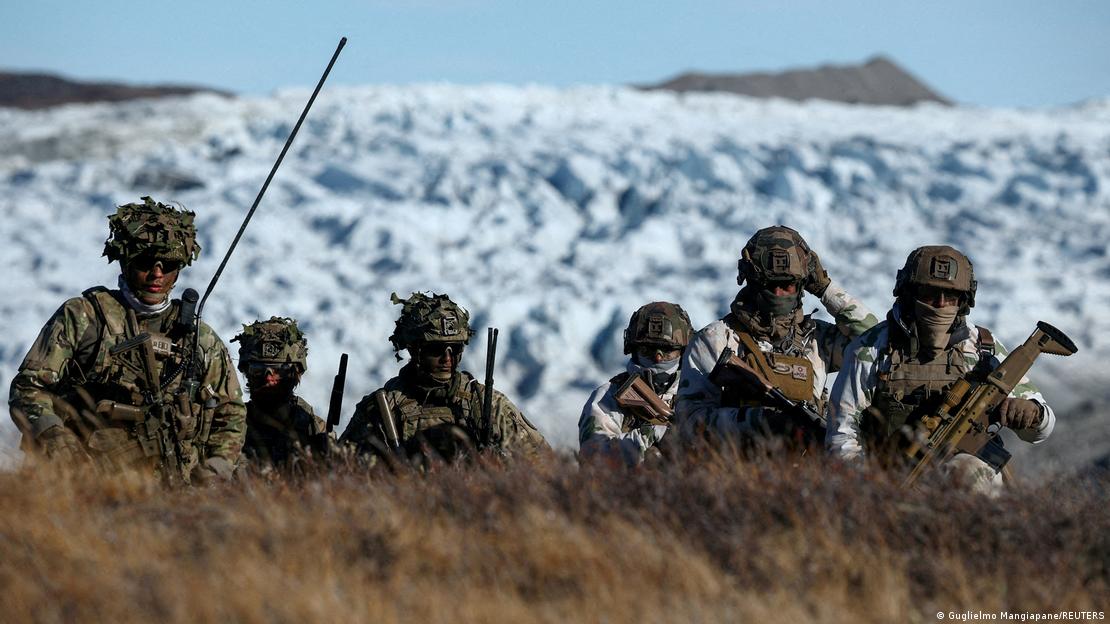
But he cautioned that this should not be approached as a way to placate Trump because it's already been proven by the previous attempts to do this that it "doesn't work."
"This is not a drill, people. This is not something that you can just wait out and hope for it to get better," he said. "This will only change if we take forceful action to hold our ground, not in an aggressive way — we're not going to fight the American military over Greenland if it comes to that — but we have to be very, very clear about how we see the future of Greenland and the future the alliance and everything that comes with it."
Danes dig in
Anders Vistisen, a Danish member of the European Parliament, agrees with Everts, saying Europe should "stop playing diplomatic games, giving in, trying to persuade the US to be more reasonable or try to appease them by spending more on military in the Arctic region or giving them mining concession rights in Greenland or whatever else that's been talked about."
While Vistisen's political leanings as a member of the right-wing Danish People's Party may lead one to believe he'd make common cause with Trump on some issues, the lawmaker actually made headlines — and waves — a year ago when he used a profanity in telling Trump what he could do with his intent to buy Greenland. He told DW he has promised not to repeat the phrase publicly, but stands by the sentiment and his tactic to use frank language to convey to Washington the unacceptability of its position.
"We are at a point that is so serious that there can be no room for doubt or any maneuverability within our communication," Vistisen said. "We should have a very strong and very clear rebuttal and say to the American administration and President Trump, 'No, you're not going to have any claim in Greenland, you are not going persuade us, push us, bully us into acting any differently.'"
Vistisen said although he appreciates statements of support from other European leaders, he doesn't believe they'd actually send troops to Greenland. He's looking to his own prime minister to mount a tough enough defense.
"This is something that has to be resolved between the Kingdom of Denmark and the US administration," he said.
EU to NATO's rescue?
One of Vistisen's EU colleagues, Per Clausen of the Left group, believes it's the other side of Brussels that may hold the power to influence this situation. Clausen posted a letter to his counterparts in the European Parliament, proposing that the legislature's approval of last year's deal on trans-Atlantic tariffs, widely seen to favor the US, be suspended until Washington lays off Greenland.
"If we accept this agreement while Trump is threatening the international order and making direct territorial claims against Denmark," Clausen's letter states, "it will be seen as rewarding his action and will only be adding fuel to the fire."
"We have a lot things we could do that could harm the US very much, if you're talking about the economy," Clausen said. "And I think we should make it totally clear for the United States that we want to use this weapon if the US doesn't stop with aggression against Greenland."
EU leaders' response 'spoke to the seriousness' of Trump threat
Clausen, who was speaking to DW from Denmark, said his fellow citizens are "very very angry," more than afraid. He hopes his proposal will gain enough political weight to make the US take notice, to "see that Denmark is not isolated in this situation and that European leaders are not only talking about the solidarity with Denmark and Greenland, but they also are willing to act."
Steven Everts said he has seen at least one encouraging sign of that. While meeting in Paris in the format of the Coalition of the Willing to support Ukraine on Tuesday, the leaders of Germany, Italy, Poland, Spain and the UK joined Denmark's Frederiksen in a joint statement underscoring that "It is for Denmark and Greenland, and them only, to decide on matters concerning Denmark and Greenland."
They issued the statement just before meeting with US intermediaries Steve Witkoff and Jared Kushner, Trump's son-in-law, not shying away from the confrontation that might have been created or its impact on US support for Europe's Ukraine efforts. It's a step that might seem small, but Everts said it "spoke to the seriousness" with which leaders view the threat.
Patrik Oksanen of the Stockholm Free World Forum said the severity of the situation deserves that and more. Never mind the end of NATO, if the US forces its way into Greenland he said it would be no less than the "end of time as we know it."
Edited by: Martin Kuebler
Ewan Gleadow
January 8, 2026
The proposed takeover of Greenland by the United States has a series of flaws in the plan, according to Jimmy Kimmel.
The talk show host would use part of his opening monologue to mock Donald Trump and his administration's plan to take the country over. Kimmel suggested the broad aims of Trump can be achieved without taking the country over, and that the president now risks angering the Republican Party once more.
Speaking to the audience on Live!, Kimmel said, "Trump says he's considering military action to acquire Greenland if necessary, by force. Trump says we need it for national security reasons, some Republicans are pushing back on this crazy idea and none more forcefully than Mike Johnson."
"He doesn't think it's 'appropriate' to invade, and we all know how much Trump cares about being appropriate. Trump says he would prefer to buy Greenland, but if it's not for sale, we may just take it."
Though Trump has made it clear he wants to take Greenland, and has put his administration to work on doing just that, Kimmel pointed out the reason the president wants the land is the "dumbest part" of all.
He said, "The dumbest part of all of it is we've had an agreement with Greenland and Denmark since 1951 that says we can build military installations pretty much anywhere we want. The agreement allows us to 'construct, install, maintain, and operate' military bases across the country."
"In other words, why would we invade the cow when we can get the ice milk for free? This business of strong-arming other countries, Greenland and Venezuela, is not very popular. He ran on the platform of staying out of other countries, he specifically said they will not be part of regime change, they don't want any part of that, and now that's exactly what they're doing."
Former U.S. Ambassador to Denmark Rufus Gifford blasted President Donald Trump’s escalating threats to seize Greenland — even by military force — warning on MS NOW that such a move would run directly counter to NATO’s mission and could force the alliance to defend Denmark against the United States.
Gifford said, "I mean, I would make the argument that this foreign policy, if you want to even call it a foreign policy, is not only reckless, which it is, but it's also clueless."
He added the national security argument "holds zero water here" because NATO would be "compelled to respond" should the country be attacked.
Lithuania’s European commissioner warns US seizure of Greenland would end NATO alliance
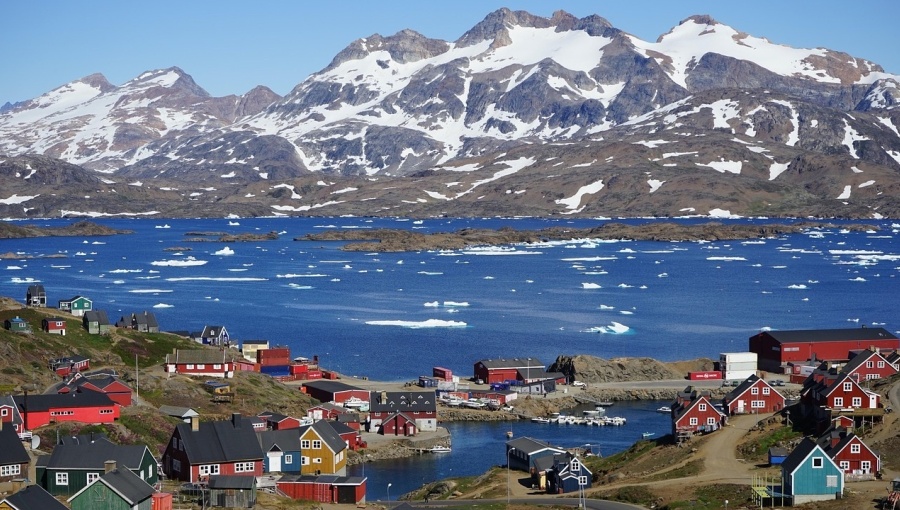
A US military operation to seize control of Greenland, the autonomous Danish territory in the Arctic, would “clearly mean the end of transatlantic relations and Nato,” Lithuania’s European Commissioner for Defence and Space Andrius Kubilius said on January 6 in an interview for national broadcaster LRT.
US President Donald Trump on January 4 repeated earlier statements that Greenland should become part of the United States, despite appeals from Denmark’s prime minister to stop threatening the territory.
He argued that the island is essential for US national security, claiming Denmark is unable to ensure that security on its own. Trump has also pointed to Greenland’s mineral resources as strategically important for the technology sector.
“I agree with the Danish prime minister: if such a thing were to happen – although I do not believe it will – if the US administration decided to use force to take control of Greenland, that would clearly mean the end of transatlantic relations and Nato,” Kubilius told LRT TV.
Kubilius suggested the US should already understand the implications. “The US administration probably understands this well,” he added, stressing that using force against a Nato ally would be a historic rupture.
Asked about alternative approaches, Kubilius said that if Washington seeks to strengthen security in Greenland or the broader Arctic, it can do so through existing means rather than threats. “Those possibilities already exist. There is absolutely no need to threaten or intimidate with talk of taking over Greenland or its control,” he said, LRT.lt reported.
Greenland is an inseparable part of the Kingdom of Denmark, the Baltic foreign ministers said earlier this week after Trump renewed his claims that the United States should take control of the island.
Lithuanian Foreign Minister Kestutis Budrys said Denmark is a strong democracy and a reliable Nato ally, stressing that Greenland’s status is a matter of transatlantic security. Writing on X on January 5, he said respect for territorial integrity and sovereignty is essential to global stability and that any decisions regarding Greenland can be made only by Denmark and Greenland themselves.
Latvian Foreign Minister Baiba Braze echoed that position, saying all issues related to Greenland’s status must be resolved by Denmark and Greenland through dialogue. She added that allies are committed to preserving peace and security and must respect each other’s sovereignty.
Estonian Foreign Minister Margus Tsahkna said Estonia stands in full solidarity with Denmark, calling it a Nordic-Baltic ally. He emphasised that Greenland is an integral part of the Kingdom of Denmark and that no decisions concerning the territory can be made without the involvement of both Denmark and Greenland.
France working with allies on plan should US move to take over Greenland
France is working with partners on a plan over how to respond should the United States act on its threat to take over Greenland, as Europe seeks to address US President Donald Trump's ambitions in the region. Denmark and Greenland say they are seeking a meeting with US Secretary of State Marco Rubio.
Issued on: 07/01/2026 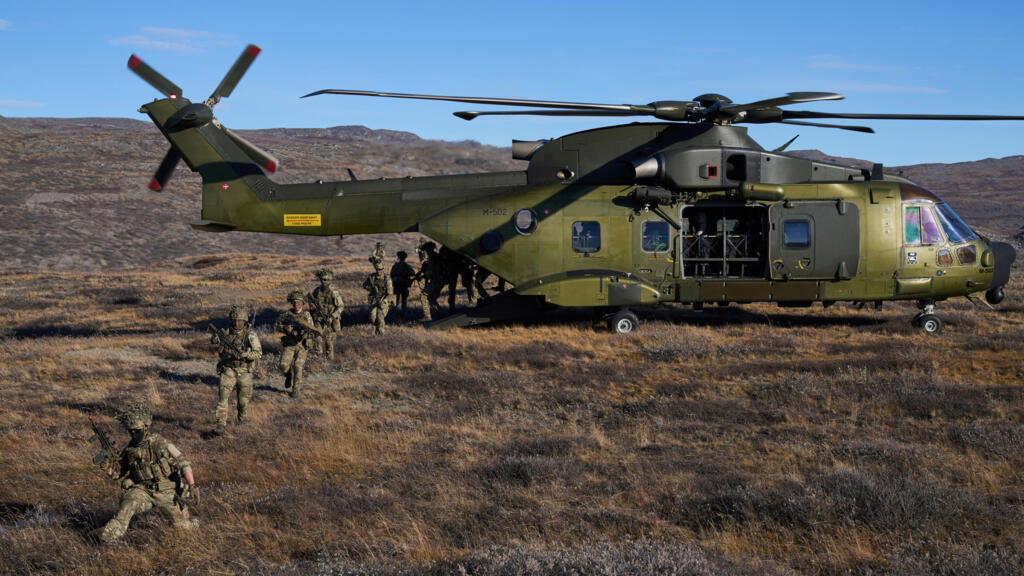
The White House said on Tuesday that Trump was discussing options for acquiring Greenland, including potential use of the US military, in a revival of his ambition to control the strategic island, despite European objections.
Foreign Minister Jean-Noel Barrot said the subject would be raised at a meeting with the foreign ministers of Germany and Poland later on Wednesday.
"We want to take action, but we want to do so together with our European partners," he said on France Inter radio on Wednesday morning.
Danish Foreign Minister Lars Løkke Rasmussen and his Greenlandic counterpart, Vivian Motzfeldt, have requested the meeting with Rubio in the near future, according to a statement posted Tuesday to Greenland's government website. Previous requests for a sit-down were not successful, the statement said.
However, Barrot suggested a US military operation had been ruled out by a top US official.
"I myself was on the phone yesterday with US Secretary of State Marco Rubio (...) who confirmed that this was not the approach taken ... he ruled out the possibility of an invasion (of Greenland)," he said.
Trump weighs military option to acquire Greenland
Trump renews Greenland ambitions
Trump has in recent days repeated that he wants to gain control of Greenland – an idea first voiced in 2019 during his first presidency. He has argued it is key for the US military and that Denmark has not done enough to protect it.
A US military seizure of Greenland from a longtime ally, Denmark, would send shock waves through the Nato alliance and deepen the divide between Trump and European leaders.
Leaders from major European powers and Canada have rallied behind Greenland, saying the Arctic island belongs to its people.
A US military operation over the weekend that seized the leader of Venezuela had already rekindled concerns that Greenland might face a similar scenario. It has repeatedly said it does not want to be part of the United States.
'That's enough': Greenland PM reacts to Trump threats
The world's largest island but with a population of just 57,000 people, Greenland is not an independent member of NATO but is covered by Denmark's membership of the Western alliance.
Mette Frederiksen, the Danish prime minister, warned on Monday that any US attack on a NATO ally would be the end of both the military alliance and "post-second world war security“.
Strategically located between Europe and North America, the US has an early warning air base in northwestern Greenland.
The island's mineral wealth also aligns with Washington's ambition to reduce reliance on China.
(with newswires)
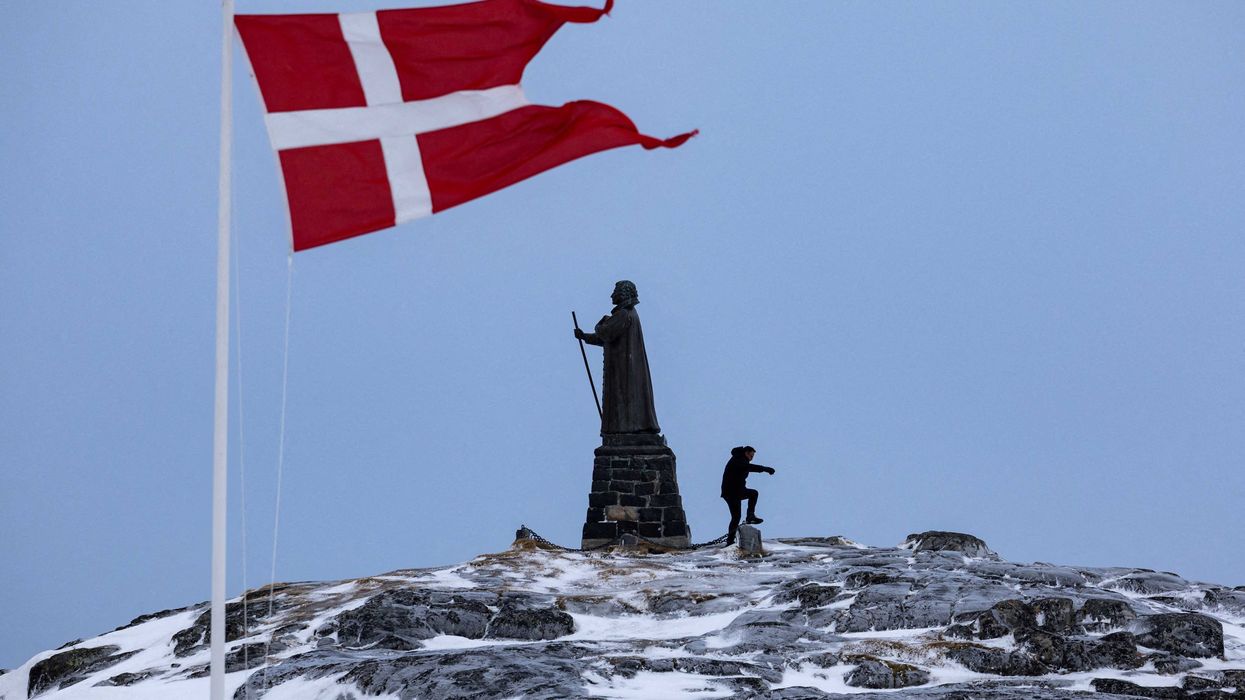
FILE PHOTO: A man walks as Danish flag flutters next to Hans Egede Statue ahead of a March 11 general election in Nuuk, Greenland, March 9, 2025.
Over the weekend, U.S. military forces successfully captured Venezuelan President Nicolás Maduro, in a raid which some officials estimate killed around 75 people. In the aftermath, Trump and his administration threatened similar actions against other countries and regions, most notably Greenland, which the president has been keen to acquire for the US since his first term. Trump has given various reasons for his obsession with taking Greenland, including its supply of valuable minerals, but has more recently settled on the vague rationale of "national security."
In an unsparing breakdown of the Greenland situation on Thursday, Ryan Cooper, managing editor of The American Prospect, said that most of Trump's explanations for his obsession fall flat in the face of reality. Things are more easily explained, Cooper argued, by the president's desire for "conquest" and his own moral failings.
During past travels to Greenland, Cooper said that locals were uniformly perplexed by Trump's annexation threats, wondering "What could America possibly get from invasion and annexation that it does not already have?"
"The answer on any grounds — morality, self-interest, national security, or plain common sense — is: nothing," Cooper wrote. "These are the ravings of a degenerate monster, the worst person ever to occupy high office in this country, who in his dotage is indulging every one of his numerous awful instincts. This idea is entirely cruel, brutish stupidity."
Cooper's excursion to Greenland also revealed the many logistical holes in Trump's alleged explanations for wanting Greenland. Despite possessing some deposits of valuable minerals, very few of them are "commercially exploitable," being as they are "buried under hundreds or thousands of feet of ice." Greenland is also one of the most remote places in the world, with a terrain ill-suited for industry, given that "there are no internal roads between the few cities... many of the sea-lanes are clogged with ice for half the year," and its "handful of airports are routinely shut down because of fog."
"In short, Greenland is an exceptionally difficult place to scratch out a living, and it’s taken decades of grinding effort from the island’s residents — and a large ongoing subsidy from the Danish government — for it to develop a reasonably prosperous economy," Cooper concluded.
While Cooper agreed that Greenland is a key location for US national security, he noted that the military already has full access to the island and has several bases there, rendering Trump's desire to control the island for defense purposes moot. A military invasion of the island would also risk breaking up NATO, which has helped deter a third world war for nearly a century. Such an operation would risk retaliation from Denmark, which controls Greenland as an autonomous territory, or Canada, and while neither country could pose much of a direct threat to the U.S. military, Cooper argued that it would be relatively easy for them to jeopardize the U.S. nuclear response apparatus by attacking one its many bases in its "elaborate network of military radar installations stretching from western Alaska across northern Canada, Greenland and Britain."
"It likely never occurred to American defense planners that the American president might incite, for no discernible reason, Canada or Denmark to attack critical nuclear deterrence infrastructure that the U.S. military paid billions to construct," Cooper wrote. "The very idea is so paint-blisteringly insane that only one person in a million would even think of it. Unfortunately, the American people elected that person president."
Dogsleds, China and independence: Facts on Greenland
By AFP
January 7, 2026
The US already has extensive access to the Arctic island
Camille BAS-WOHLERT
US President Donald Trump has stepped up his designs on taking over Denmark’s autonomous territory Greenland, but questions abound about why he has taken an aggressive stance when the US already has extensive access to the Arctic island.
Trump has insisted the US needs Greenland for national security reasons.
What does Denmark’s defence agreement with the US on Greenland say? What investments have Denmark made in Greenland? Do China and Russia pose a real threat? What does Greenland’s independence movement say?
Here are answers to those four key questions.
– US military presence –
In 1941, at the height of World War II, occupied Denmark authorised the United States to build and operate military bases on Greenland, Denmark’s then-colony in the Arctic, for as long as the conflict would last in a bid to protect the American continent.
By the end of the war, the US had 15 military bases in Greenland. Today there remains just one, the Pituffic air base on the northwestern coast, which US Vice President JD Vance visited in March.
Greenland’s location is highly strategic, lying on the shortest route for missiles between Russia and the United States. It is therefore a crucial part of the US anti-missile shield.
Home to 57,000 people, Greenland “is an important part of the US national security protection,” Marc Jacobsen, Arctic expert at the Royal Danish Defence College, told AFP.
“The United State may increase their military presence in Greenland, but that’s already possible under the existing accord,” he said.
Since 1951, a Danish agreement with the United States — revised in 2004 — gives the US military practically carte blanche to do what it wants on Greenlandic territory, as long as it informs Denmark and Greenland in advance.
“The Government of the United States will consult with and inform the Government of the Kingdom of Denmark, including the Home Rule Government of Greenland, prior to the implementation of any significant changes to United States military operations or facilities in Greenland,” Article 3 of the accord states.
– Danish investments in security –
Trump has argued that Denmark has failed to ensure the security of Greenland, which measures 2.2 million square kilometres (849,424 square miles), or about a fifth of the size of the entire European continent.
In the past year, Copenhagen has beefed up its investments in Greenland. In 2025, it allocated 1.2 billion euros to security in the region, Danish Prime Minister Mette Frederiksen recalled on Monday.
And not just to buy dogsleds, contrary to what Trump claimed.
Yes, the Sirius patrol, tasked with defending a huge, largely uninhabited swathe of the island in the northeast measuring 972,000 km2, travels across the ice by dogsled. The patrol consists of 12 soldiers and some 70 dogs.
But to defend the entire territory, 81 percent of which is covered in ice, the Danish military has invested in five new Arctic vessels, an air radar alert system, as well as drones and sea patrol planes.
A subsea telecoms cable between Greenland and Denmark will also be built. Two cables already link the island to Iceland and Canada.
– Chinese and Russian presence –
A recent report by Denmark’s military intelligence service said Russia, China and the United States were all vying to play “a greater role” in the Arctic.
Greenland has untapped rare earth deposits and could be a vital player as melting polar ice opens up new shipping routes.
In August 2025, two Chinese research vessels were observed operating in the Arctic, north of the US and Canada, about 1,000 kilometres (620 miles) north of Greenland.
“It’s important that Donald Trump understands that there are not Russian and Chinese ships along the coast of Greenland,” Jacobsen said.
China is also virtually absent from Greenland’s economy.
The semi-public company Shenghe Resources is a majority shareholder in Australian mining group Energy Transition Minerals, which wants to develop a rare earths deposit in southern Greenland. That project is currently halted, however.
In addition, China was blocked from investing in new airports in Greenland.
“The Greenlandic government had shortlisted a big Chinese state-owned company for providing technical support for building new airports eight years ago, but Denmark and the US offered to finance the airports on the condition that the Chinese contractor was not selected,” Jesper Willaing Zeuthen of the University of Aalborg told AFP.
– Road to independence –
Greenland’s capital Nuuk and Copenhagen have repeatedly said that the territory is not for sale and that only Greenland can decide its future.
It is currently governed by a coalition that has no plans to seek independence from Denmark in the immediate future.
The Naleraq party, which wants swift independence and which came second in Greenland’s legislative elections in March, is not in government.
While some of its members want to bypass Denmark and negotiate directly with the United States, the party’s official stance is that “Naleraq does not want Greenlanders to become American. Just as we do not want to be Danish.”
A year ago, 85 percent of Greenlanders said they opposed joining the United States, according to a poll published in the Danish and Greenlandic press.
Issued on: 08/01/2026 - FRANCE24
Strategically positioned and rich in natural resources, Greenland has attracted Donald Trump’s attention since his first term as president, though he is far from the only figure in the United States to recognize the territory’s growing strategic significance. Laurent Berstecher reports.

No comments:
Post a Comment