Saturday, January 10, 2026

ISLAMIST WAR ON KURDISTAN

Syrian army offensive in Aleppo draws support from Turkey

Turkey has backed a Syrian army offensive against the Kurdish-led Syrian Democratic Forces (SDF) in Aleppo, Syria’s second-largest city, despite a fragile ceasefire backed by the United States.
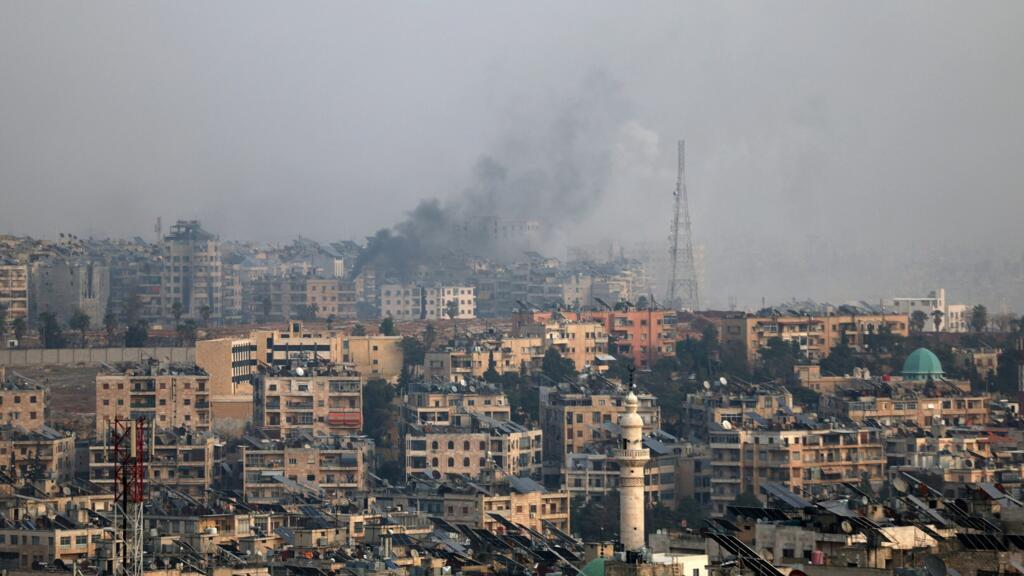
Columns of smoke rise over the Sheikh Maqsoud and Ashrafieh neighbourhoods of Aleppo on 8 January 2026 during clashes between Syrian government forces and the Kurdish-led Syrian Democratic Forces. Syria’s military had earlier warned civilians in the besieged areas to leave as it prepared new strikes, with thousands fleeing the fighting. 
AFP - OMAR HAJ KADOUR

PODCAST

INTERNATIONAL REPORT
Issued on: 10/01/2026 -
Play - 06:06


Aleppo has seen its worst fighting in years, as the Syrian army moved to oust the SDF from two large, mainly Kurdish neighbourhoods in the north of the city. The clashes began in late December and continued into January, forcing many civilians to flee.

The SDF controls a large swathe of northern and eastern Syria. The offensive comes as efforts to integrate the SDF into the Syrian army stalled.

“This is a warning. It is a kind of pressure on the SDF to come to a conclusion quickly, rather than to kick the can down the road with Damascus,” Aydin Selcen, a former senior Turkish diplomat who served in the region, told RFI.

Turkey’s backing

Ankara, which has recently reopened channels with Damascus after years of strained relations, strongly backs the offensive and has signalled its readiness to provide military support against the SDF.

“Turkey has the military advantage there, and I believe the SDF should take these warnings seriously,” Selcen said. He is now an analyst for the Turkish news portal Medyascope.

Turkey accuses the SDF of links to the Kurdistan Workers’ Party, the PKK, which has fought an insurgency against the Turkish state for decades.

The PKK is designated a terrorist organisation by the United States and the European Union. Turkey is also pursuing a renewed peace initiative with the PKK and sees the integration of the SDF into the Syrian army as key to stabilising northern Syria.

Stalled integration

In March last year, the SDF signed an agreement in Damascus to integrate with the Syrian army. The deal set out broad principles but left key questions unresolved.

“There was a discrepancy from the beginning in what the parties understood integration to mean,” said Sezin Oney, of the Turkish Politikyol news portal.

“In Turkey’s case, they mean integration in such a way that it melts into the Syrian army. But the SDF understands it as integrating while protecting its inner core and identity. Remaining as the SDF, but operating under the umbrella of the Syrian army.

“Unless one of the parties backs down and makes concessions, we are likely to see a bigger military operation.”

International stakes

On Thursday, Syrian President Ahmed al-Sharaa held telephone talks with his French and Turkish counterparts on the security situation. The discussions focused on containing the fighting and preserving the ceasefire.

Despite its precarious position, the SDF retains influential supporters. Israel, an increasingly vocal critic of Turkey’s regional role, has expressed support for the group. Foreign Minister Gideon Sa’ar condemned Damascus’s operations in Aleppo.

The SDF remains a key partner of the United States Central Command in operations against the Islamic State group in Syria.

“The SDF lost a lot of troops, at least 10,000 fighters, in the fight against ISIS since 2014,” said Turkish international relations expert Soli Ozel.

“It’s a complicated picture. But from the American side, I do not yet see signs they would allow an attack on the SDF at this moment.”

According to Tom Barrack, the US ambassador to Turkey and Washington’s envoy on Syria, diplomatic efforts are under way to extend the Aleppo ceasefire and allow SDF fighters to withdraw from contested areas.

Pressure on Washington

The duration of US support for the SDF remains uncertain, especially after last year’s agreement between Washington and Damascus to step up cooperation against the Islamic State group.

The issue has taken on added significance following President Donald Trump’s meeting with Syrian President al-Sharaa in Washington.

Given President Recep Tayyip Erdogan’s strong relationship with Trump, time may not be on the SDF’s side, Oney said.

“They want to have the northern part of Syria, at least, but also Syria more broadly, as their backyard,” she added. “Turkey is the most influential country in Damascus. They want the SDF to melt away into the new Syrian state and its army.”

Turkey could face domestic political fallout for targeting the SDF. Protests have erupted in the country’s predominantly Kurdish southeast, which borders Syria, in response to the clashes in Aleppo.

Any further military action against the SDF could jeopardise the fragile peace process with the PKK.

By:Dorian Jones


Syrian army says swept Aleppo district after clashes with Kurdish fighters

Aleppo (Syria) (AFP) – Syria's army said it had completed a "security sweep" on Saturday of a neighbourhood in Aleppo where it clashed with Kurdish forces, though shelling could still be heard following calls for fighters to surrender themselves and their weapons.

Issued on: 10/01/2026 - RFI
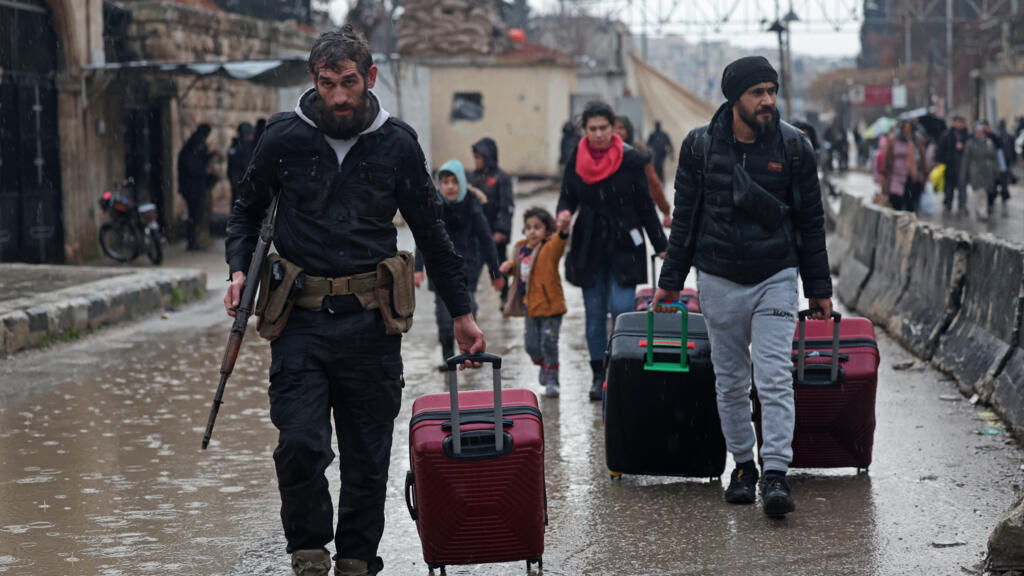
Residents of Aleppo's Sheikh Maqsoud area evacuate after warnings from the Syrian army © OMAR HAJ KADOUR / AFP


Government forces began striking the Sheikh Maqsud district overnight after the Kurdish fighters defied a deadline to withdraw during a temporary ceasefire.

In the morning, the army announced the "completion of a full security sweep of the Sheikh Maqsud neighbourhood", while urging residents to stay in their homes due to the continued presence of Kurdish forces.

AFP correspondents in Aleppo said shelling in the area continued even after the announcement.

A military source previously told the official SANA news agency that "a number of SDF members" -- a reference to the Kurdish-led Syrian Democratic Forces -- had been arrested during the operation

In a statement posted by the Ministry of Defence, Syria's army said "the only remaining option for the armed elements in the Sheikh Maqsud area of Aleppo is to surrender themselves and their weapons immediately".

The violence in Syria's second city erupted after efforts to integrate the Kurds' de facto autonomous administration and military into the country's new government stalled.

Since the start of the fighting on Tuesday, at least 21 civilians have been killed, according to figures from both sides, and tens of thousands have fled Aleppo.
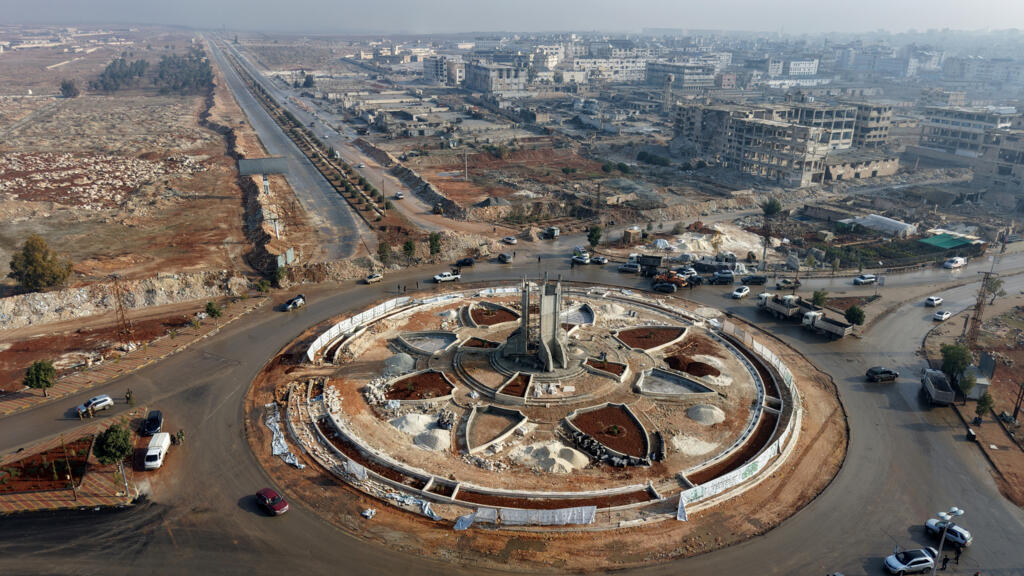
Aleppo has been rocked by clashes between the Syrian army and the Kurdish-led SDF after attempts to integrate the minority into the national military stalled © Bakr ALKASEM / AFP


The clashes, some of the most intense since Syria's new Islamist authorities took power, present yet another challenge as the country struggles to reunify after ousting longtime ruler Bashar al-Assad in December 2024.

Both sides blamed the other for starting the violence in Aleppo.

Early Friday, Syrian authorities announced a window for the Kurdish fighters to leave, but they refused to "surrender" and vowed to defend their districts.

In response, Syria's army warned it would renew strikes on military targets in Sheikh Maqsud and urged civilians to get out ahead of the district's takeover by security forces.

An AFP correspondent saw residents laden with belongings fleeing before the two-hour humanitarian corridor closed.

'Fierce' resistance

Kurdish forces reported coming under artillery and drone attacks, and claimed in a post on social media to be mounting a "fierce and ongoing resistance".

The army said three soldiers had been killed by Kurdish fighters, while state television accused them of launching drones at residential areas of Aleppo.
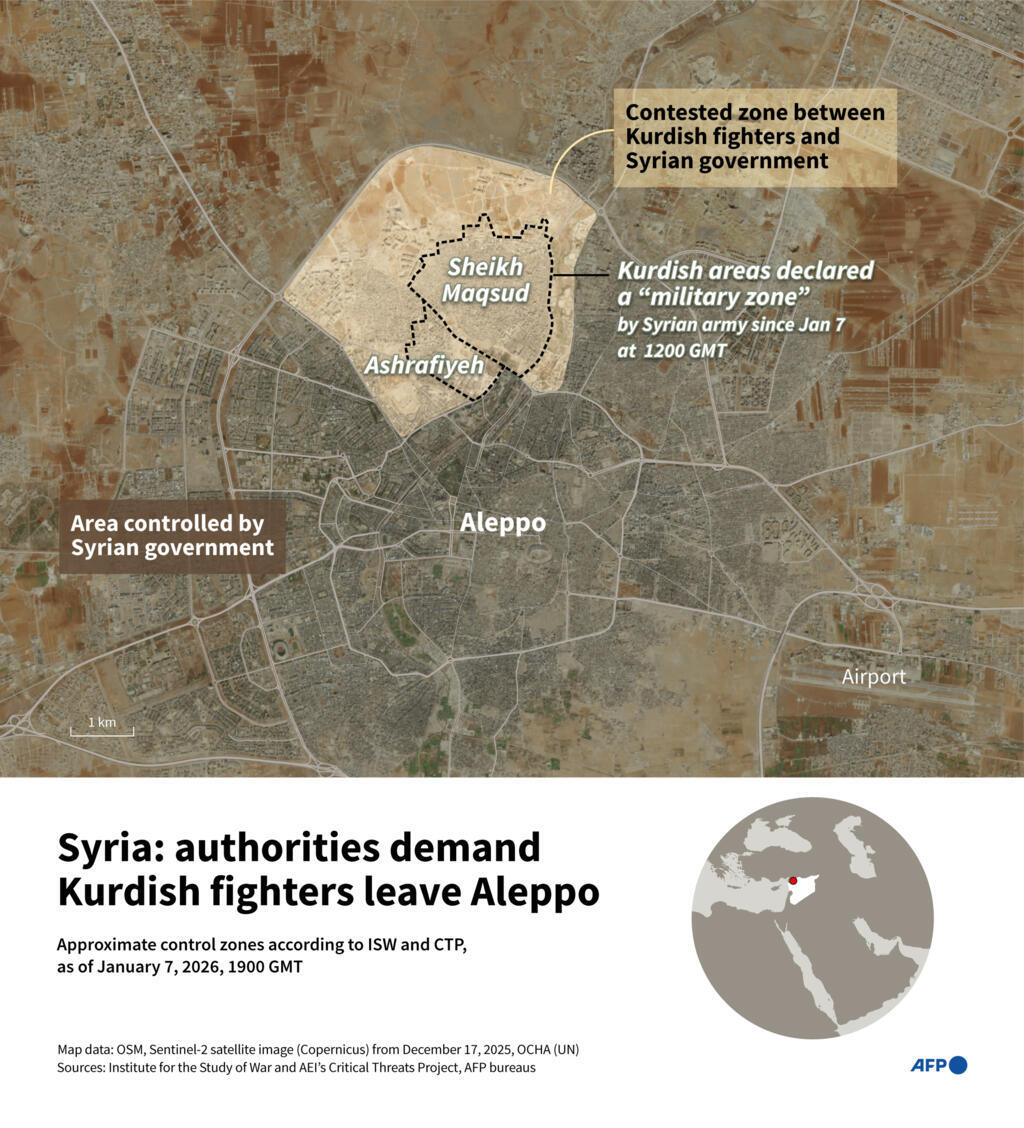
Syria: authorities demand departure of Kurdish fighters from Aleppo © Nalini LEPETIT-CHELLA, Valentina BRESCHI / AFP


A flight suspension at Aleppo airport was extended until late Saturday.

The SDF controls swathes of Syria's oil-rich north and northeast, and was key to the defeat of the Islamic State group in 2019.

But Turkey -- a close ally of Syria's new leaders -- views its main component as an extension of the Kurdistan Workers' Party (PKK), which agreed last year to end its four-decade armed struggle against Ankara.

Elham Ahmad, a senior official in the Kurdish administration in Syria's northeast, accused Syrian authorities of "choosing the path of war" by attacking Kurdish districts and of "seeking to put an end to the agreements that have been reached".

"We are committed to them and we are seeking to implement them," she told AFP.
US mediation

The March integration agreement was meant to be implemented last year, but differences, including Kurdish demands for decentralised rule, have stymied progress.

Ahmad said that "the United States is playing a mediating role... we hope they will apply pressure to reach an agreement".

A diplomatic source told AFP that US envoy Tom Barrack was headed to Damascus.

Barrack said in a statement Saturday morning that he had discussed the situation with Jordan's foreign minister, with both parties expressing a desire for "consolidating the ceasefire, ensuring the peaceful withdrawal of the Syrian Democratic Forces (SDF) from Aleppo, and guaranteeing" civilians' safety.

They also called for the implementation of the integration agreement.

Turkey, which shares a 900-kilometre (550-mile) border with Syria, has launched successive offensives to push Kurdish forces from the frontier.

UN spokesperson Stephane Dujarric expressed alarm over the impact of the fighting on civilians and called on all parties "to swiftly return to negotiations to ensure the full implementation of the 10 March agreement".

Nanar Hawach, senior Syria analyst at the International Crisis Group, said the renewed clashes cast doubt on the government's ability to gain the trust of minority factions and sew the country back together after 14 years of civil war.

"If the fighting escalates, international actors will wonder about Damascus's capacity to govern Syria's heterogeneous society," he added.

Syria's authorities have committed to protecting minorities, but sectarian bloodshed rocked the Alawite and Druze communities last year.

'Limited clashes' still ongoing in Aleppo neighborhood

Issued on: 10/01/2026 - FRANCE24

Syrian security forces began deploying Saturday in a neighborhood in the northern city of Aleppo after days of intense clashes with Kurdish fighters that killed and wounded dozens. Despite the army's claims that it has assumed control of Sheikh Maqsoud, "limited clashes" are still ongoing, FRANCE 24's Dana Alboz said, citing local sources.

Video by: Dana ALBOZ


'American? No!' says Greenland after latest Trump threat

Greenland's political parties said they did not want to be under Washington as US President Donald Trump again suggested using force to seize the mineral-rich Danish autonomous territory, raising concern worldwide.


Issued on: 10/01/2026 - RFI

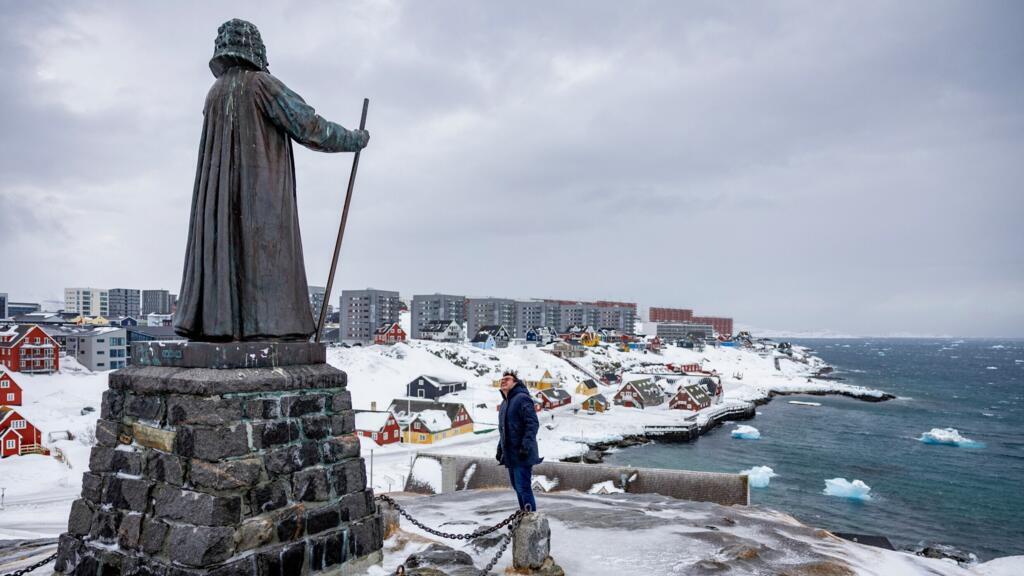
The statue of Hans Egede (1686-1758), a Dano-Norwegian Lutheran missionary, in Nuuk, Greenland, here photographed in March 2025. AFP - ODD ANDERSEN

The statement late Friday came after Trump repeated that Washington was "going to do something on Greenland, whether they like it or not".

European capitals have been scrambling to come up with a coordinated response after the White House said this week that Trump wanted to buy Greenland and refused to rule out military action.

"We don't want to be Americans, we don't want to be Danish, we want to be Greenlanders," the leaders of five parties in Greenland's parliament said in a joint statement.

"The future of Greenland must be decided by Greenlanders."

"No other country can meddle in this. We must decide our country's future ourselves -- without pressure to make a hasty decision, without procrastination, and without interference from other countries," they underscored.

Julius Nielsen, a 48-year-old fisherman in the capital Nuuk, told AFP: "American? No! We were a colony for so many years. We're not ready to be a colony again, to be colonised".

A Danish colony until 1953, Greenland gained home rule 26 years later and is contemplating eventually loosening its ties with Denmark.

Many Greenlanders remain cautious about making this a reality.

"I really like the idea of us being independent, but I think we should wait. Not for now. Not today," Pitsi Mari, who works in telecoms, told AFP.

"I feel like the United States' interference disrupts all relationships and trust" between Denmark and Greenland, said Inaluk Pedersen, a 21-year-old shop assistant.

The coalition currently in power is not in favour of a hasty independence. The only opposition party, Naleraq, which won 24.5 percent of the vote in the 2025 legislative elections, wants to cut ties as quickly as possible but it is also a signatory of the joint declaration.

"It's time for us to start preparing for the independence we have fought for over so many years," said MP Juno Berthelsen in a Facebook post.

According to a poll published on Saturday by Danish agency Ritzau, more than 38 percent of Danes think the United States will launch an invasion of Greenland under the Trump administration.

Vast natural resources

Denmark and other European allies have voiced shock at Trump's threats on Greenland, a strategic island between North America and the Arctic where the United States has had a military base since World War II.

Trump says controlling the island is crucial for US national security given the rising military activity of Russia and China in the Arctic.

"We're not going to have Russia or China occupy Greenland. That's what they're going to do if we don't. So we're going to be doing something with Greenland, either the nice way or the more difficult way," the US president said Friday.

Both Russia and China have increased military activity in the region in recent years, but neither has laid any claim to the vast icy island.

Greenland has also attracted international attention in recent years for its vast natural resources including rare earth minerals and estimates that it could possess huge oil and gas reserves.

Danish Prime Minister Mette Frederiksen has warned that an invasion of Greenland would end "everything", meaning the transatlantic NATO defence pact and the post-World War II security structure.

Flurry of diplomacy

"I'm a fan of Denmark, too, I have to tell you. And you know, they've been very nice to me," Trump said.

"But you know, the fact that they had a boat land there 500 years ago doesn't mean that they own the land."

Secretary of State Marco Rubio is due to meet next week with Denmark's foreign minister and representatives from Greenland.

A flurry of diplomacy is under way as Europeans try to head off a crisis while at the same time avoiding the wrath of Trump, who is nearing the end of his first year back in power.

Trump had offered to buy Greenland in 2019 during his first presidential term but was rebuffed.

The head of NATO's forces in Europe, US General Alexus Grynkewich, said Friday the military alliance was far from being in "a crisis", following Trump's threats to bring Greenland under US control.

(AFP)

Trump And Greenland – Analysis


Credit: Grok/AI GENERATED


January 10, 2026
Manohar Parrikar Institute for Defence Studies and Analyses (MP-IDSA)
By Ajey Lele

After a successful military intervention in Venezuela, United States President Donald Trump is now making efforts to seek control over Greenland. He appears to be considering two options: one, to purchase it from Denmark; two, to use military force to effect the takeover. Trump’s obsession with Greenland is not new. Even during Trump 1.0, he had expressed a desire to acquire Greenland. This issue is going to significantly strain the relations between the European Union (EU) and the US.

Leaders from France, Germany, Italy, Poland, Spain, Britain and Denmark have issued a statement mentioning that, “Greenland belongs to its people. It is for Denmark and Greenland, and them only, to decide on matters concerning Denmark and Greenland.”[1] The Prime Minister of Denmark, Mette Frederiksen, said that “if Trump took over Greenland, that would mark an end of the North Atlantic Treaty Organization (NATO)”, which is an inter-governmental military alliance between the EU and North America, founded in the aftermath of World War II.[2]

Geographically part of the North American continent, Greenland has been politically and culturally linked to Europe for over a thousand years. Today, Greenland functions as an autonomous territory within the Kingdom of Denmark, exercising self-governance while remaining under Danish sovereignty. It shares a small 1.2 km land border with Canada. Greenland does not share a land border with the US, but it’s geographically part of North America. Greenland’s inhabitants are full citizens of Denmark and, by extension, of the EU, reflecting its enduring European political affiliation.

Greenland’s population in 2025 was approximately 55,700–57,000. Greenland is the world’s largest island, covering approximately 2.16 million square km. Approximately 80 per cent of this area is covered by the massive Greenland Ice Sheet, with ice-free areas primarily along the coast. The key issue, therefore, is why the US is keen to acquire Greenland despite its harsh climate and challenging geography.

Geostrategic and economic considerations drive the US interest in acquiring Greenland. Greenland occupies a pivotal position in the Arctic. This region lies between the Atlantic and Arctic Oceans. It has key Arctic shipping lanes and is part of the crucial GIUK (Greenland, Iceland, United Kingdom) Gap, a chokepoint used by NATO to monitor Russian naval movements. NATO has concerns in this regard, particularly in light of Russia’s renewed naval activity.

The GIUK Gap (broader than classic maritime choke points) functions as a critical transit corridor that channels naval movement between northern European waters and the wider Atlantic. Since taking office as US president approximately one year ago, Trump has given indications that he is a NATO sceptic. Clearly, Trump wants only the US to dominate Arctic power politics.

In addition, Greenland possesses significant untapped reserves of rare earth elements (RREs), critical minerals and hydrocarbons. All these resources are central to technological and energy security. The Trump administration is already pursuing an assertive strategy to secure access to strategic minerals in other parts of the world. There are arrangements in place with Australia and resource-rich states in Southeast Asia, Africa and West Asia.[3] He has also sought Ukraine’s access to its mineral deposits. All efforts are being made to reduce the mineral-dependent reliance on China.

Greenland holds considerable strategic relevance for the US defence establishment. The region is essential for space and missile defence activities. Greenland’s geographic position between North America and Europe makes it vital for early-warning and surveillance missions. At the heart of this role is the Pituffik Space Base (formerly Thule Air Base), a key US Department of Defense installation operated by the 821st Space Base Group under the US Space Force’s Space Base Delta 1. The base supports ballistic-missile early-warning systems, satellite tracking, secure communications and space-domain awareness, forming the basis of the US homeland defence architecture against long-range missile threats.[4]

In May 2025, Donald Trump unveiled a new national defence initiative, the ‘Golden Dome’. The proposed missile defence system is envisioned as a space-based missile shield designed to counter threats from incoming nuclear (or non-nuclear) tipped ballistic missiles as well as emerging hypersonic weapons.[5] For this purpose, the US could deploy a constellation of satellite interceptors, possibly equipped with kinetic or directed-energy weapons. Greenland’s strategic geopolitical location could be of great importance for positioning various Golden Dome-related systems.

Beyond its military utility, Greenland also contributes significantly to cutting-edge scientific research, particularly in astronomy and space science. Its high latitude, cold and dry atmosphere, and minimal radio interference make it an ideal location for deep-space observation. Located at the Pituffik Space Base is the Greenland Telescope Project, which has a 12-metre scanning antenna. This telescope is part of a global network studying supermassive black holes and has contributed to breakthroughs, including the imaging of black hole environments. Taiwan leads this project. For the US, such engagements could have both scientific and strategic relevance.[6]

Trump may not accept the scientific rationale for climate change, but he is aware that accelerated ice melt is occurring in the Arctic. In the future, this could lead to the opening of shorter maritime routes linking the Atlantic and the Pacific. This would be very beneficial for global shipping. Obviously, this would have an impact on supply chains and trade. This would also allow the US to increase its maritime dominance. Broadly, it could be said that there is a method behind Trump’s thinking regarding the acquisition of Greenland. It is intended for mineral exploration, space exploration, scientific research and military applications. Trump is seeking to secure US interests in the Arctic for long-term geostrategic and economic reasons.

Views expressed are of the author and do not necessarily reflect the views of the Manohar Parrikar IDSA or of the Government of India.

[1] Jude Sheerin, “US Discussing Options to Acquire Greenland, Including Use of Military, Says White House”, BBC, 7 January 2026.

[2] Anders Kongshaug, Claudia Ciobanu and Stefanie Dazio, “Danish Prime Minister Says a US Takeover of Greenland Would Mark the End of NATO”, Associated Press, 6 January 2026.

[3] “Historic Critical Minerals Framework Signed by President Trump and Prime Minister Albanese”, Prime Minister of Australia, 21 October 2025.

[4] Miranda Bryant, “‘Welcome to the Top of the World’: The Pituffik US Space Base in Greenland”, The Guardian, 28 March 2025.

[5] Bernd Debusmann Jr, “Trump Unveils Plans for ‘Golden Dome’ Defence System”, BBC, 21 May 2025.

[6] “Greenland Telescope”, Center for Astrophysics.About the author: Group Captain (Dr) 


Ajey Lele (Retd.) is the Deputy Director General, MP-IDSA. Earlier, he was a Senior Fellow at the Manohar Parrikar Institute for Defence Studies and Analyses and a part of its Centre on Strategic Technologies. He started his professional career as an officer in the Indian Air Force, and took early retirement from the service to pursue his academic interests.

Source: This article was published by Manohar Parrikar Institute for Defence Studies and Analyses

Manohar Parrikar Institute for Defence Studies and Analyses (MP-IDSA)

The Manohar Parrikar Institute for Defence Studies and Analyses (MP-IDSA), is a non-partisan, autonomous body dedicated to objective research and policy relevant studies on all aspects of defence and security. Its mission is to promote national and international security through the generation and dissemination of knowledge on defence and security-related issues. The Manohar Parrikar Institute for Defence Studies and Analyses (MP-IDSA) was formerly named The Institute for Defence Studies and Analyses (IDSA).
Whale Hunting Began 5,000 Years Ago In South America, A Millennium Earlier Than Previously Thought


CREDIT: Patricia del Amo Martín. ICTA-UAB


January 10, 2026 
By Eurasia Review

The hunting of large whales goes back much further in time than previously thought. New research from the Institute of Environmental Science and Technology at the Universitat Autònoma de Barcelona (ICTA-UAB) and the Department of Prehistory of the UAB reveals that Indigenous communities in southern Brazil were hunting large cetaceans 5,000 years ago, around a thousand years before the earliest documented evidence from Arctic and North Pacific societies.

Published in Nature Communications, the study shows that groups in the region of Babitonga Bay (Santa Catarina) who built sambaquis – monumental shell mounds built by Holocene societies along the coast of Brazil – developed specialized technologies for hunting large whales long before earlier archaeological research had suggested. The study redefines the role of South American communities in the emergence of complex maritime culture as, until now, the origins of large-whale hunting were believed to lie among postglacial societies of the Northern Hemisphere between 3,500 and 2,500 years ago.

Led by ICTA-UAB researchers Krista McGrath and André Colonese and conducted with an international team, the study analysed hundreds of cetacean bone remains and bone tools from sambaquis in Babitonga Bay, now housed at the Museu Arqueológico de Sambaqui de Joinville, Brazil. Many of the sites no longer exist, making this collection a unique archive of a history that otherwise could not have been reconstructed.

The team combined zooarchaeology, typological analysis, and cutting-edge molecular techniques (ZooMS) to study the cetacean bones and objects, identifying remains of the southern right whales, humpback whales, blue whales, sei whales, sperm whales, and dolphins, many showing clear cut marks associated with butchering. Large whale-bone harpoons were also documented among the largest found in South America. Their presence, alongside the abundance of whale bones, their inclusion in funerary contexts and the presence of inshore species, provides strong evidence of active hunting rather than opportunistic use of stranded animals.

“The data reveals that these communities had the knowledge, tools, and specialized strategies to hunt large whales thousands of years earlier than we had previously assumed,” says Krista McGrath, lead author of the study.

The results also offer important ecological insights. The abundance of humpback whale remains suggest that their historical distribution extended much further south than the current main breeding areas off the coast of Brazil. “The recent increase in sightings in Southern Brazil may therefore reflect a historical recolonization process, with implications for conservation. Reconstructing whale distributions before the impact of industrial whaling is essential to understanding their recovery dynamics,” says Marta Cremer, co-author of the paper.

Beyond rewriting the origins of early whale hunting, the study sheds new light on the economies, technologies, and lifeways of postglacial societies along the Atlantic coast of South America. According to André Colonese, senior author of the study, “This research opens a new perspective on the social organization of the Sambaqui peoples. It represents a paradigm shift – we can now view these groups not only as shellfish collectors and fishers, but also as whalers.”

Dione Bandeira, a Brazilian archaeologist with more than 20 years of experience working on sambaquis, adds that “the results reveal a practice that made a significant contribution to the long-term and dense presence of these societies along the Brazilian coast.”

The Sambaqui peoples integrated marine resources into their cultural systems and developed a sophisticated maritime culture characterized by specialized technologies, collective cooperation, and ritual practices associated with the capture of large marine animals. This unwritten Indigenous history has survived through museum collections and through the efforts of those working to preserve the sambaqui sites that have escaped the impact of Brazil’s urbanization over the past centuries.

Ana Paula, director of the Museu Arqueológico de Sambaqui de Joinville, notes that “the collections safeguarded at the Sambaqui Archaeological Museum in Joinville, especially the Guilherme Tibúrtius Collection, highlight the richness and vast potential of information on ancestral peoples that can still be explored in depth.”


The Age Of Fishes Began With Mass Death

A pair of Sacabambaspis fish, around 35 cm in length, which had distinct, forward-facing eyes and an armored head. No fossils of animals like Sacabambaspis from after the Late Ordovician Mass Extinction event have been discovered. CREDIT: Nobu Tamura


January 10, 2026
By Eurasia Review

445 million years ago, life on our planet was forever changed. During a geological blink of an eye, glaciers formed over the supercontinent Gondwana, drying out many of the vast, shallow seas like a sponge and giving us an ‘icehouse climate’ that, together with radically changed ocean chemistry, ultimately caused the extinction of about 85% of all marine species – the majority of life on Earth.

In a new Science Advances study, researchers from the Okinawa Institute of Science and Technology (OIST) have now proved that from this biological havoc, known as the Late Ordovician Mass Extinction (LOME), came an unprecedented richness of vertebrate life. During the upheaval, one group came to dominate all others, putting life on the path to what we know it as today: jawed vertebrates. “We have demonstrated that jawed fishes only became dominant because this event happened,” says senior author Professor Lauren Sallan of the Macroevolution Unit at OIST. “And fundamentally, we have nuanced our understanding of evolution by drawing a line between the fossil record, ecology, and biogeography.”

A fuller picture of life at the Ordovician sunset

The Ordovician period, spanning from roughly 486 to 443 million years ago, was a time when Earth looked very different. The southern supercontinent, Gondwana, dominated the planet, surrounded by vast, shallow seas. The poles were ice-free, and the water was pleasantly warm thanks to a greenhouse climate. And while the coasts were slowly being colonized by liverwort-like plants and many-legged arthropods, the surrounding basins were teeming with diverse – and bizarre – forms of life. Large-eyed, lamprey-like conodonts snaked around towering sea sponges, trilobites scuttled among swarms of shelled mollusks, while human-sized sea scorpions and giant nautiloids with pointy shells up to five meters in length patrolled the waters in search of prey. Few and far in between these strange creatures were the humble ancestors of gnathostomes, or jawed vertebrates, which would later come to dominate animal life on the planet.

“While we don’t know the ultimate causes of LOME, we do know that there was a clear before and after the event. The fossil record shows it,” says Prof. Sallan. The extinction came in two pulses: First, the planet rapidly switched from a greenhouse to an icehouse climate, covering most of Gondwana with glaciers that dried out the shallow ocean habitats. Then, a few million years later, just as biodiversity was beginning to recover, the climate flipped again, melting the icecaps and drowning the now cold-adapted marine life with warm, sulfuric, and oxygen-depleted water.

During and after these waves of death, most of the vertebrate survivors were confined to refugia – isolated biodiversity hotspots separated by unsurmountable swaths of deep ocean – where surviving gnathostomes evidently had an advantage. “We pulled together 200 years of late Ordovician and early Silurian paleontology,” adds first author Wahei Hagiwara, former research intern in the Macroevolution Unit who is now an OIST PhD student, “creating a new database of the fossil record that helped us reconstruct the ecosystems of the refugia. From this, we could quantify the genus-level diversity of the period, showing how LOME led directly to a gradual, but dramatic increase in gnathostome biodiversity. And the trend is clear – the mass extinction pulses led directly to increased speciation after several millions of years.”

From toothed “worms” to Darwin’s finches

In constructing this comprehensive database of fossils from across the world, the researchers were able to link the rising gnathostome biodiversity to not only LOME, but also location. “This is the first time that we’ve been able to quantitatively examine the biogeography before and after a mass extinction event. We could trace the movement of species across the globe – and it’s how we’ve been able to identify specific refugia, which we now know played a significant role in the subsequent diversification of all vertebrates,” explains Prof. Sallan. Hagiwara adds: “For example, in what is now South China, we see the first full-body fossils of jawed fishes that are directly related to modern sharks. They were concentrated in these stable refugia for millions of years until they had evolved the ability to cross the open ocean to other ecosystems.”

By integrating the fossil record with biogeography, morphology, and ecology, these findings have helped nuance our understanding of evolution. “Did jaws evolve in order to create a new ecological niche, or did our ancestors fill an existing niche first, and then diversify?” asks Prof. Sallan. “Our study points to the latter. In being confined to geographically small areas with lots of open slots in the ecosystem left by the dead jawless vertebrates and other animals, gnathostomes could suddenly inhabit a wide range of different niches.” A similar trend is clear with Darwin’s finches on the Galápagos Islands, which took advantage of new opportunities to diversify their diet to survive – and over time, their beaks evolved different shapes to better suit the niche they came to occupy.

While the jawed fishes were trapped in South China, their jawless relatives continued to evolve in parallel elsewhere, ruling the wider seas for the next 40 million years. These diversified into many different forms of reef fishes, some of which had alternative mouth structures. But why jawed fishes, among all other survivors, came to dominate later once they spread from the refugia remains mysterious.

The researchers found that rather than wiping the slate clean, LOME triggered an ecological reset. Early vertebrates stepped into the niches left vacant by conodonts and arthropods, rebuilding the same ecological structure but with new species. This pattern repeats across the Paleozoic following extinction events driven by similar environmental conditions, forming what the team calls a recurring ‘diversity-reset cycle’ in which evolution restores ecosystems by converging on the same functional designs.

Prof. Sallan summarizes: “By integrating location, morphology, ecology, and biodiversity, we can finally see how early vertebrate ecosystems rebuilt themselves after major environmental disruptions. This work helps explain why jaws evolved, why jawed vertebrates ultimately prevailed, and why modern marine life traces back to these survivors rather than to earlier forms like conodonts and trilobites. Revealing these long-term patterns and their underlying processes is one of the exciting aspects of evolutionary biology.”
Research From Shedd Aquarium Tracks Conch Movement To Set New Conservation Guidance

Two eyes peek out from under the shell of a queen conch sitting on the seafloor. 
CREDIT: Shedd Aquarium

January 10, 2026 
By Eurasia Review

A new study published in Conservation Biology examines the behavior and distributions of queen conch (Aliger gigas) to guide conservation management for the threatened sea snail. The research, which tracked adult snail movements, suggests that establishing a 330-meter spatial buffer – about the height of the Eiffel Tower by comparison – around breeding areas could help protect conch populations and serve as a practical tool for local management.

Queen conch are giant herbivorous marine snails that do not crawl slowly along and leave slime trails. Instead, conch move across the seafloor by hopping, using a muscular foot to propel themselves upward and forward. Movement is an essential behavior for conch because it allows the snails to form aggregations, or groups, for reproduction and defense. However, these aggregations also allow conch – an ecologically and culturally important species – to be harvested easily and left vulnerable to overfishing.

“I have been surveying queen conch for a decade, but the first time I watched a conch hop, it startled me,” said Dr. Andy Kough, a research biologist at Shedd Aquarium in Chicago and lead author of the study. “We wanted to leverage this unique behavior to gather data and help inform conservation efforts, but we needed new tools to do so.”

“Our team built and deployed custom biologgers that record when a conch is actively hopping and moving versus when it is staying still,” said Dr. Ben Gutzler, a scientist at Wells National Estuarine Research Reserve in Maine and study co-author.

To study the movements of conch, researchers from Shedd Aquarium and Wells National Estuarine Research Reserve used several complementary methods. Aboard Shedd’s research vessel, the R/V Coral Reef II, staff and volunteers observed conch underwater and measured hundreds of individual hops. At two sites off the Florida coast, the team attached biologgers to 42 conch, tracking their movements across different habitats and seasons. Divers also conducted extensive surveys in The Bahamas to map conch distributions over hundreds of kilometers. Finally, scientists combined these field observations with mathematical models to understand how conch movement shapes the size of aggregations, where the species occurs and why conch distribution appears patchy across the seafloor.


“By combining a variety of research methods, this study determines the minimum space needed to protect breeding aggregations of conch,” said Dr. Kough. “These areas are small enough to be managed locally and quickly, giving resource managers a spatial conservation tool to use in response to dynamic threats such as targeted overfishing or habitat destruction.”

Although conch are listed under the U.S. Endangered Species Act, there are currently few practical management options available for conservation managers tasked with safeguarding these threatened populations. This new study enables conservationists to consider conch behavior and movement when developing management strategies, including minimizing disturbances within 330 meters of a breeding aggregation.
Himalayan Balsam’s Damaging Impact On Rivers Revealed In New Stirling Study

Himalayan balsam growing by a riverbank in the UK CREDIT: University of Stirling

January 10, 2026 
By Eurasia Review

Pioneering University of Stirling led research has revealed the diverse and damaging impact Himalayan balsam has on river ecosystems.

A three-year study led by Dr James Hardwick, a Lecturer in Earth Sciences at the University’s Faculty of Natural Sciences, has shown that the invasive species is doing more than just replacing native plants.

The new research, carried out in partnership with Newcastle University, has shown that the species can disrupt the physical stability of ecosystems in ways that can have far-reaching consequences. Including significantly weakening riverbanks over winter.

By outcompeting native plants and then dying back completely each year, Himalayan balsam makes invaded riverbanks more susceptible to erosion during high-flow periods.

When riverbanks erode, more fine sediment enters their waters. This damages habitats, harms wildlife, and even changes the shape and structure of rivers.


This can then have a negative impact on water quality, biodiversity, and the benefits that healthy rivers provide.

Lead researcher Dr James Hardwick explained: “Our study reveals a previously overlooked seasonal process that illustrates how this plant weakens riverbanks. Himalayan balsam is often assumed to increase riverbank erosion simply because it dies-back leaving riverbanks bare over winter, but very little research has tested this relationship.

“Our work provides the first evidence that the impact of Himalayan balsam on the riverbank is not just about dieback. It’s about the way it suppresses native vegetation during summer, creating a loop that weakens riverbanks in winter. This seasonal mechanism has important implications for both river restoration and the management of invasive species.

“Understanding how invasive plants influence riverbank stability is essential for designing effective strategies that reduce erosion risks and protect river habitats.”

The research team hope that the findings will help river managers, conservation charities, local authorities, and environmental regulators better understand the risks associated with Himalayan balsam. Allowing more informed decisions to be made, particularly on intervention strategies.

Himalayan balsam was first introduced to the UK in 1839 as an ornamental garden plant. It was planted in places like Kew Gardens before escaping and spreading rapidly into the wild, especially along riverbanks and damp areas.

Researchers combined three years of field measurements with advanced statistical modelling. Over this period, they surveyed vegetation and measured riverbank shear strength – an indicator of how resistant the bank is to erosion – at multiple sites with and without Himalayan balsam.

To uncover these processes, researchers used Piecewise Structural Equation Modelling – a statistical method that breaks complex cause-and-effect links into smaller models – to explore how Himalayan balsam and native vegetation interact across seasons and the impact of these changes on riverbank stability.

Together, the field data and modelling approach enabled the team to quantify, for the first time, the indirect effects of Himalayan balsam on winter riverbank strength.

What Canada, accustomed to extreme winters, can teach Europe

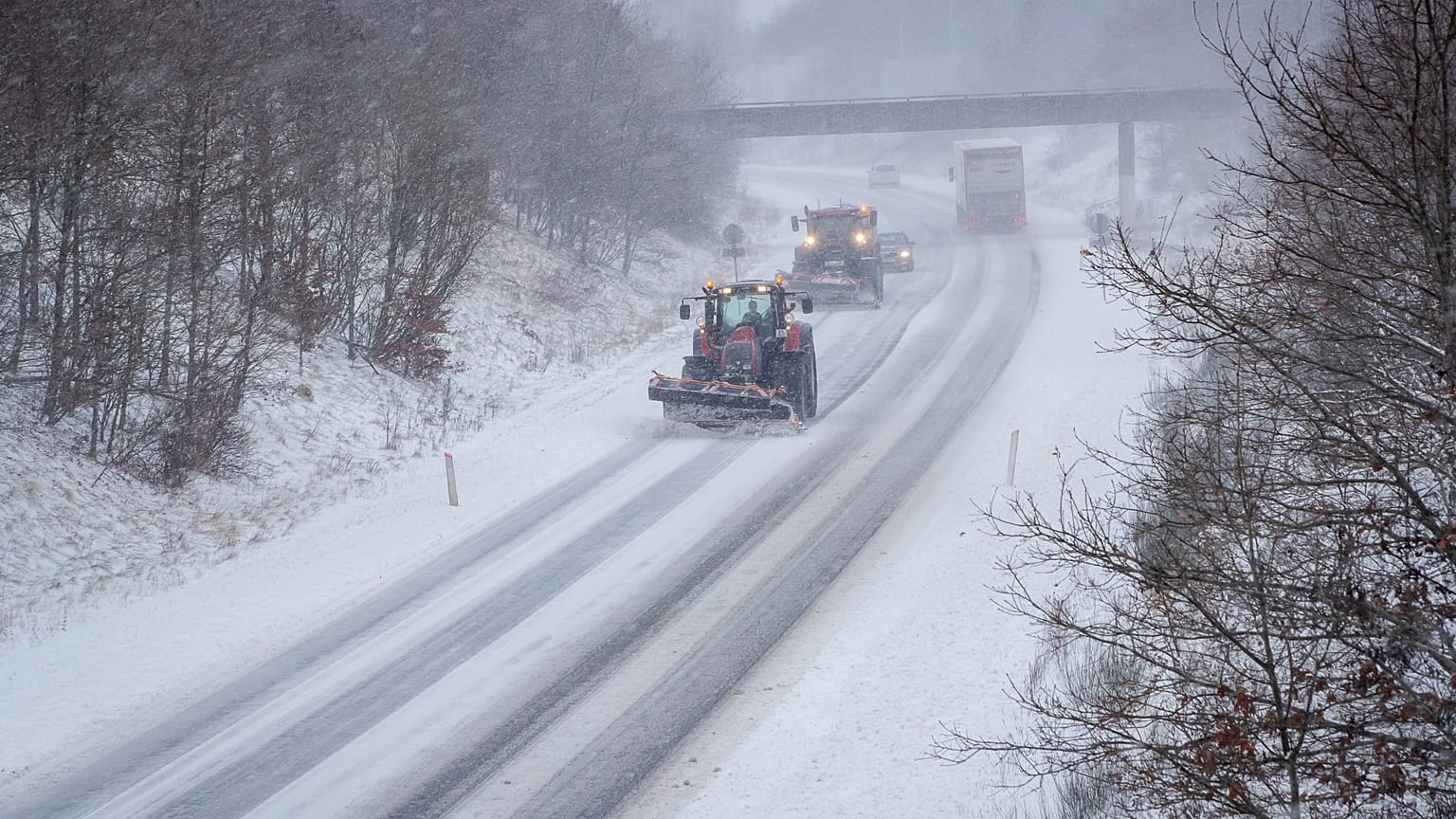
A snow plough cleans the road during a heavy snowfall in Viborg, central Jutland, Denmark, Wednesday Jan. 3, 2024.Temperatures have fallen below minus 40 degrees Celsius in t
Copyright AP/AP Photo


By Maïa de la Baume
Published on 

Euronews spoke to Patrick de Bellefeuille, a prominent Canadian weather presenter and climate specialist, on how Europe could benefit from Canada’s long experience with snowstorms. He has been forecasting for MétéoMédia, Canada’s top French-language weather network, since 1988.

Euronews: Europe has been battling Storm Goretti, bringing heavy snow and icy conditions to many parts of the continent. More than 10 people have died in weather-related accidents across Europe this week, and Germany is now facing snowfalls of up to 20 cm — which the country’s state railway has described as one of the most severe weather events in recent years. In the Paris region, authorities were forced to take 10,000 buses off the roads across 1,900 lines. Many households have lost electricity, air traffic has been severely disrupted, and rail services have been critically suspended. Even though Europe experiences fewer snowstorms than Canada, are Europeans generally bad at anticipating them?

Patrick de Bellefeuille: First and foremost, weather forecasts are part of daily life for Canadians, especially in Quebec and Montreal. People check them all the time, so we aren’t surprised when snow arrives—we know in advance. But it’s also clear that people are well-equipped here. For example, every household has a bucket of de-icing agent. If it’s icy on the steps or in the driveway, we have the de-icer ready. In our cars, we all carry a shovel and a battery system that can plug into the cigarette lighter if we need power. We also have windshield washer fluid and de-icing products. Having this equipment is normal for Canadians—it’s part of everyday life.

Euronews: What are the main Canadian ‘best practices’ for dealing with heavy snowfall?

Patrick de Bellefeuille: Municipal authorities also prepare in advance. They know when snowstorms or freezing rains are coming. Regarding de-icers or abrasives used on streets and sidewalks, there are different types depending on the conditions. For example, if snow has fallen and temperatures drop below -15°C, sand and gravel are used. When temperatures are just below freezing, a salt-based abrasive that melts ice is applied. Authorities plan carefully and use preventive measures whenever possible.

Euronews: Right, but what we saw this week in Brussels and other cities is a snowstorm that caused huge disruptions, as if heavy snow was nearly unprecedented. Schools closed, traffic was chaotic, there were accidents, people slipped—it seemed like a lack of preparation.

Patrick de Bellefeuille: Here in Quebec, we have a law requiring winter tires from December 1 to March 15—it’s mandatory (…). That solves a big problem. We also have five “snow days” in our school system, when children don’t go to school if roads are unsafe. Decisions are based on road conditions: can children safely take school buses? If it’s too dangerous, a snow day is declared. At the end of the school year, if fewer than five snow days are used, school days are adjusted accordingly.

Euronews: Are there major disruptions to air, road, and railway traffic in Canada as well? In the Netherlands, snow and strong winds have seen over 700 flights cancelled at Amsterdam Schiphol airport.

Patrick de Bellefeuille: Yes, but weather events happen frequently here. I experience snowstorms almost continuously for four months. We are better organized out of necessity. For example, at Montréal airport, the aircraft de-icing system is extensive. We can de-ice three or four planes at a time. Weather has to be really severe before flights are cancelled. Delays can occur, but cancellations are rare because systems are in place to clear runways. We have tractors with rotating brushes at the front that literally scratch the asphalt to remove impurities and prevent planes from sliding. They line up four or five tractors side by side and clear the runways continuously. This preparation is standard here because snowstorms are frequent, but I understand that in Brussels, which experiences them only two or three times a year, such equipment may not be available.

Euronews: Do you think there are mistakes people should avoid during a winter storm?

Patrick de Bellefeuille: First, if you don’t have to go out, stay home—it’s safer. If you must drive, reduce your speed and allow for longer braking distances. On sidewalks, older people can use rubber grips with clamps on their shoes to avoid slipping.

Euronews: What general advice would you give to Europeans to protect themselves from snowstorms? What do Canadians do?

Patrick de Bellefeuille: Even with 20 cm of snow, life goes on here—it’s normal. Our main concern is ice. I prepare by consulting forecasts and planning my day around weather conditions: when it will be worst and how to adapt. Consider public transport: buses have snow tires, which could also be done in Europe. Where winter tires aren’t mandatory, a plan B—like chains on buses—should be in place.

Euronews: In your opinion, should Europe prepare to experience these events more frequently in the future?

Patrick de Bellefeuille: Climate change leads to more extremes: we may lose average temperatures but retain the extremes. There are studies showing that the Gulf Stream could slow down its course with the melting of the North Pole and the North Pole is responsible for the temperature differences we experience between summer and winter (…) We’ll have to get used to cold strokes and Europe will have to adapt to it.


How AI-generated content is imitating farmer protests to drive up clicks


By Estelle Nilsson-Julien
Published on 

The motivation for generating this kind of fake content can be to generate clicks, which can be monetised if it goes viral. Europe’s farmer protests have also been weaponised as part of Russian propaganda operations.

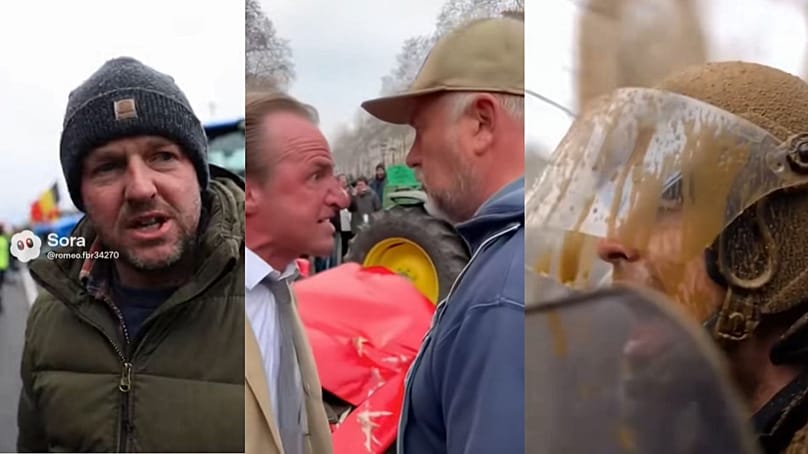
As farmers across Europe protest against the Mercosur free trade agreement with South America, an increasing number of AI-generated videos of farmers have emerged across social media.

A number of the video captions stipulate that they are AI-generated. Others have the Sora watermark on them, which is Open’s AI image and video generator.

Collage of screenshots of AI-generated videos
Collage of screenshots of AI-generated videos Euronews

However, these disclaimers risk getting lost when they are reposted by other accounts.

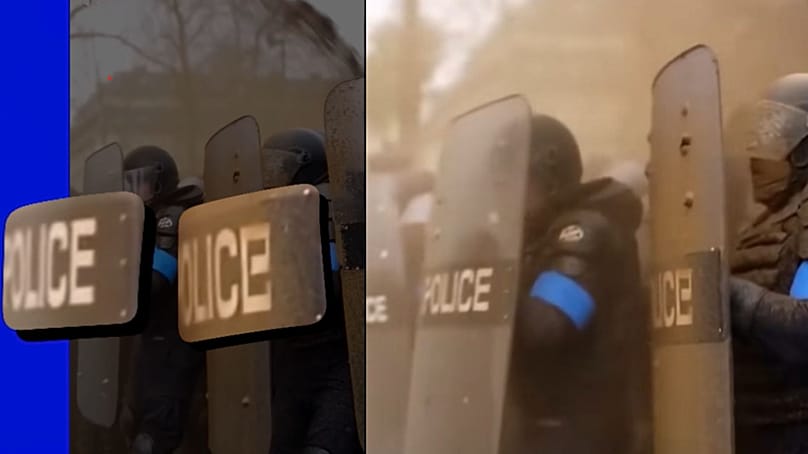
Certain videos display clear AI indicators upon closer inspection. For example, in one video police shields display inconsistencies, as the letter "e" in the word "police" comes in different fonts and sizes.

Screenshot of AI video with inconsistent letter sizes and fonts
Screenshot of AI video with inconsistent letter sizes and fonts Euronews


A string of other videos have specifically imitated French farmers, who as well as being opposed to Mercosur, have been angry at the implementation of culling measures aimed at curbing the spread of lumpy skin disease among cow herds.

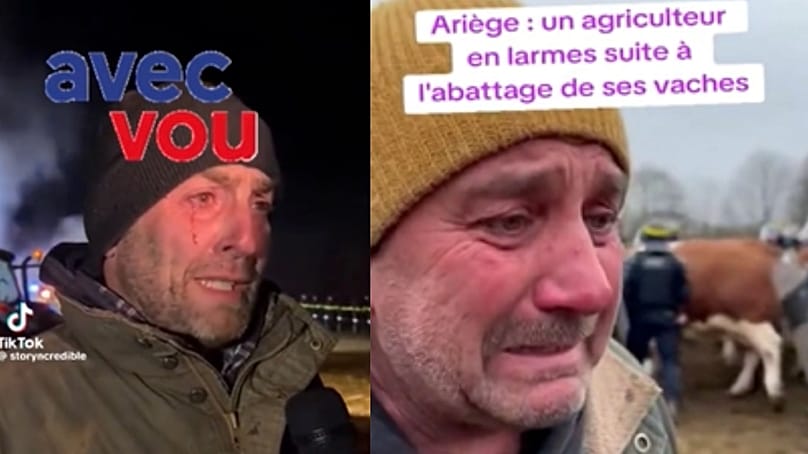
Videos surrounding this issue relay emotional testimonies, with one clip showing a farmer upset at the culling of hundreds of cows in the French department of Ariège.

Fake videos of crying farmers from social media
Fake videos of crying farmers from social media Euronews

Although the testimony may seem plausible — as a culling operation did take place in December, leading to police intervention after farmers attempted to prevent it — there are clear signs of AI generation. For instance, in the background while the farmer speaks, one cow’s backside transforms into its head.

In another instance a farmer delivers a heartfelt testimony: except he is crying tears which are made of blood that do not roll down his face.

Clicks for cash

The motivation for generating this kind of fake content is often to generate clicks, which can be monetised if the clips go viral.

European farmers' protests have also been weaponised as part of Russian propaganda operations.

For instance, a doctored Euronews video imitating the channel's branding and visual identity went viral in early 2024. It showed French farmers spreading manure outside the Ukrainian embassy after a supposed letter from the ambassador urged them to end their protests.

In reality, the footage was not of France's Ukraine embassy, but of the headquarters of the Bourgogne-Franche-Comté regional council in Dijon — where farmers really did spread manure.

The alleged ambassador's letter urging farmers to stop protesting was also falsified.

These efforts were part of an attempt by pro-Russian actors to discredit Ukraine, amidst European farmer's genuine concerns about the introduction of non-European imports into the market.


TikTok removes Polish far-right leader’s videos after antisemitism complaints in rare move

File- The TikTok logo is displayed n a mobile phone in front of a computer screen displaying the TikTok home screen, Oct. 14, 2022, in Boston.
Copyright AP Photo/Michael Dwyer, File

By Anna Desmarais
Published on 

One of the videos removed from the platform showed Polish politician Grzegorz Braun denying the existence of gas chambers at Auschwitz, one of the largest German concentration camps during World War II.

Social media platform TikTok has reportedly removed six videos from the far-right Polish leader Grzegorz Braun, including one related to an attack on a Jewish celebration.

Polish newspaper Rzeczpospolita reported that one of the six removed videos shows a lit seven-branched candlestick that was doused with a stream of water from a fire extinguisher by someone who resembled Braun’s figure. The video also had the slogan, “if you’re afraid, you’re already a slave.”

Another video removed from the platform showed Braun denying the existence of gas chambers at Auschwitz, one of the largest German concentration camps during World War II, located in Nazi-occupied Poland. Over one million people were killed at the concentration camp, and most are believed to be Jewish.

Braun finished fourth in Poland’s national election last year with 6.3 percent of the vote. In a December poll, his party saw support rise to 11 percent, according to local media.

Rzeczpospolita wrote that Braun's TikTok videos were removed after a complaint launched by the Never Again Association, an organisation that fights anti-semitism in Poland. The group did not immediately respond to Euronews Next’s request for comment.

In a video posted to TikTok called “Another ban,” Braun said he was being punished for sharing "pro-Polish" content.

The screenshot shared in the video appears to be from Braun’s TikTok account, which displays a message saying that his account is banned from the For You Page (FYP) recommendations and from his followers’ feeds until April 6 for “repeated policy violations.”. ​

“Additional violations may result in this period being extended,” the screenshot reads.

Euronews Next reached out to TikTok to confirm Braun’s suspension from the platform and the removal of his videos, but did not receive an immediate reply.

TikTok is among a list of social media platforms, including X, Meta’s Facebook and Instagram, and Google’s YouTube, which signed an EU pledge to fight hate speech.

The latest numbers from TikTok show the company removed 27.8 million pieces of content that violated its community guidelines, which includes hate speech.

What other political content has been removed from social media?

There are few cases where social media platforms take action to remove videos or posts written by political leaders or groups in Europe.

In 2022, Janusz Ciezyński, Poland’s former minister of digital affairs, said that Meta, which owns Facebook and Instagram, was planning to remove a page for the far-right party Confederation (Konfederacja), which was co-founded by Braun.

At the time, the political party had over 670,000 followers, which local media said was more than any other Polish political party.

Ciezyński said in the comments that the page was accused of “breaking the rules regarding COVID[-19] information.” At the time of writing, the page is back on Facebook and has over one million followers.

In 2018, Facebook said it would permanently ban Generation Identity, a youth branch of France’s nationalist movement Identitarians, from its platform. The group, which is centred on the preservation of white European identity, has since been dissolved.

In May 2025, two identitarian politicians, the Dutch Dries Van Langenhoveand Austria’s Martin Sellner, claimed that Meta removed “nearly all Identitarian Instagram pages,” and others that supported Germany’s Alternative For Germany (AfD) pages “in a single blow.”

“[US vice-president] JD Vance was rightfully worried about European ‘leaders’ taking away our freedom of speech, but why is an American company helping them?,” Langenhove wrote at the time.

Since US President Donald Trump took office last year, Meta has rolled back its content moderation programmes. After the decision, CEO Mark Zuckerberg called out the European Union's "increasing number of laws institutionalising censorship and making it difficult to build anything innovative there."