Monday, January 19, 2026


What does victory look like? Serbia’s Gen Z’s search for an endgame
JANUARY 19, 2026


By Dragica Felja, Jelisaveta Djordjevic-Ristanovic and Jelena Pavic

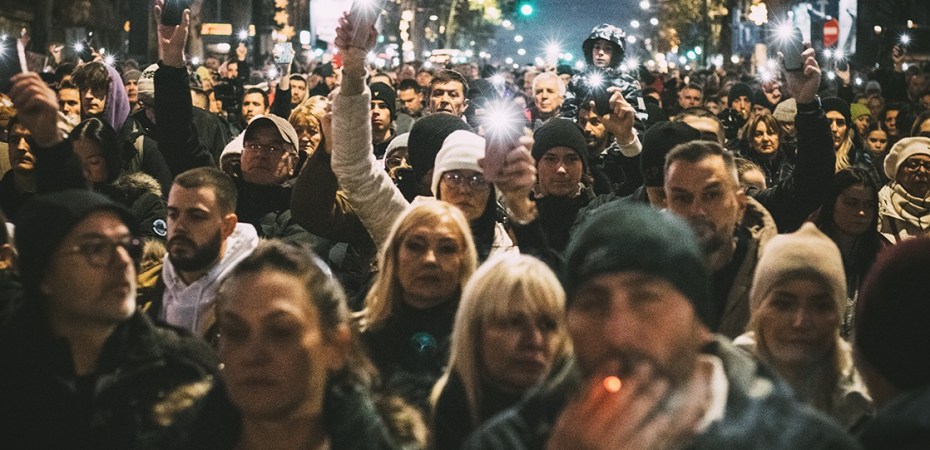
Fourteen months have passed since the collapse of the concrete canopy at the newly refurbished train station in Novi Sad, Serbia – a disaster that claimed 16 lives and seriously injured another. For many citizens, the tragedy was not an isolated incident but a symbol of deeper systemic failures, sparking a wave of mass protests across the country. As Novi Sad-based journalist, Igor Mihaljevic, declared in its aftermath: “What happened in Novi Sad was not a tragedy, it was a crime.”

What made the uprising striking was that it began with those whom society least expected to lead it. For years, Generation Z had been overlooked as apolitical, absorbed in their phones, scrolling through social media and supposedly detached from public life. Yet it was precisely this generation that first refused to accept the official narrative of the station collapse and the broader culture of impunity it represented. What many had mistaken for apathy revealed itself as a different kind of political literacy, one shaped by digital fluency, rapid information‑sharing, scepticism toward authority, and a refusal to normalise corruption. 

Their emergence at the forefront of the protests shattered long‑held stereotypes and signalled that a new, highly networked civic force had entered Serbia’s political landscape. As Marija Petrovic, a student from the Faculty of Agriculture in Novi Sad observes, this mobilisation has already begun to reshape her generation’s priorities: “Protests are leading to a noticeable higher interest in politics amongst Gen Z, compared to a few years ago, placing the fight against nepotism and corruption, as well as support for the rule of law, among their top priorities. Gen Z, as the first true digital generation, has also become the first generation to staunchly oppose cults of personality, something that had persisted for decades.’”

Drawing on this digital‑first organising power, Gen Z students were the first to translate outrage into action. In the aftermath of the canopy collapse, they staged silent vigils and road blockades known as ‘Zastani Srbijo’ (Serbia Stop), actions that quickly set the tone for broader civic resistance. Their peaceful gatherings were met with intimidation, violence, and arrests, exposing the state’s unwillingness to confront its own failures. 

One message in particular – ‘Ruke su vam krvave’ (Your hands are bloody) became the defining symbol of the movement. Paired with red handprint imagery, it marked both a memorial to the victims and a direct accusation against those in power. Chanted at vigils and painted across public spaces, the phrase captured the moral clarity and uncompromising stance that Gen Z brought to the protests.
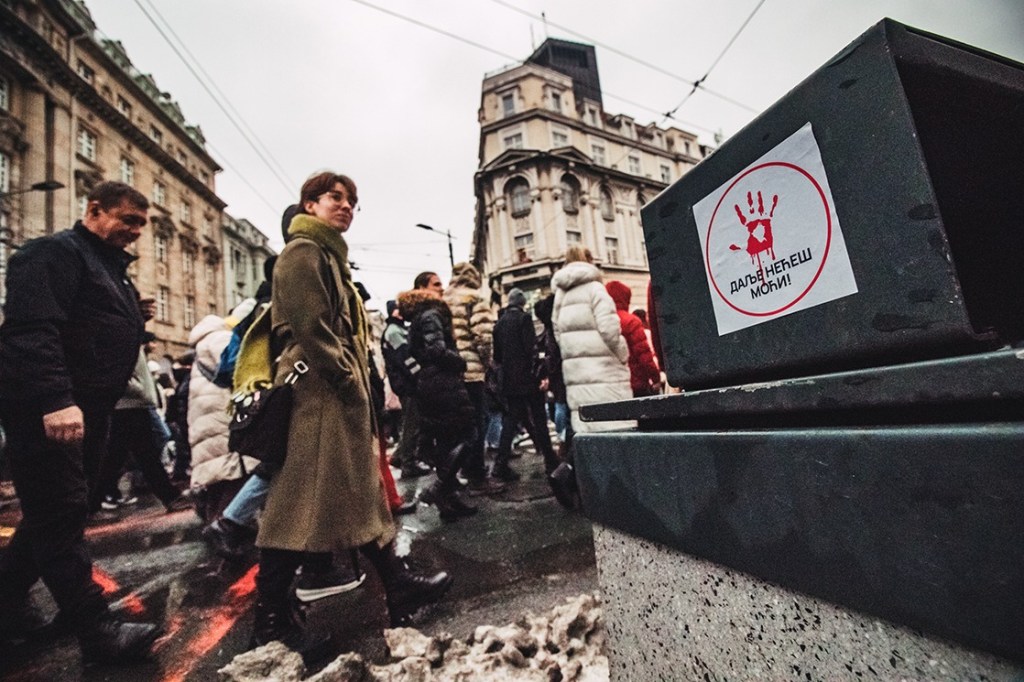
As repression intensified, this same generation pushed the movement into a more organised and strategic phase. Students began blocking university buildings and forming horizontal, leaderless assemblies known as plenums which embodied their distrust of traditional hierarchies and their commitment to collective decision‑making. Their clarity of purpose, focused on systemic change rather than individual politicians, resonated widely across Serbian society. 

When the president attempted to draw them into a dialogue, they responded with a single sentence – “Nisi nadležan” (You are not in charge of this). The phrase, which quickly spread through the protests, captured growing frustration with what many saw as the president’s influence over institutions meant to operate independently. For many, it was not just a legal correction but a symbolic act of civic resistance, aimed at restoring institutional integrity and the rule of law.

Within weeks, the protests spread beyond university campuses to city squares and rural towns. By December 2024, over 100,000 people gathered in Serbian capital Belgrade, and by March 2025, more than 300,000 filled its streets in what became Serbia’s largest protest in modern history. Students took the lead in organising and overseeing the protest that day, demonstrating extraordinary coordination, foresight, and a willingness to put their own safety on the line. 

Images later surfaced showing emergency contact numbers and blood types scrawled on their arms – a haunting testament to the ever-present threat of state violence in Serbia. It was during this protest, that a banned sonic weapon, known as a Long Range Acoustic Device (LRAD), was used to disrupt a silent vigil, causing panic and a stampede. The government denied they used this weapon, but international scrutiny followed and multiple independent reports strongly suggest that a banned sonic weapon was used during the Belgrade protest, despite official denials. 
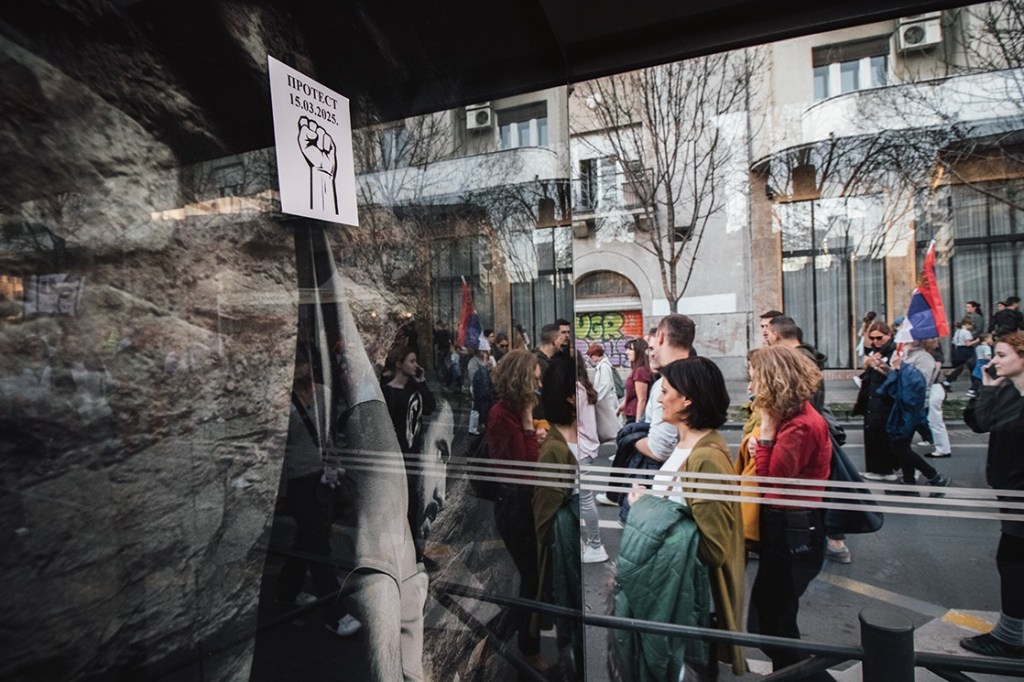
From February to the end of September 2025 more than 10,700 protests took place across more than 630 communities and 1,200 local community assemblies. Whilst largely peaceful, they were often met with disproportionate force by state authorities. Numerous footage showed evidence of riot police deploying tear gas and stun grenades in densely populated areas, including near schools and hospitals. Arbitrary arrests (of students, ordinary citizens and in some cases minors) became commonplace and many of them were held without charge, in custody or house arrest for a long time before official trials.

Surveillance of student organisers, journalists, human rights activists or opposition-party politicians intensified, with reports of phone tapping, online harassment, and physical intimidation. Serbia’s Higher Public Prosecutor’s Office was implicated in politically motivated prosecutions targeting student activists and opposition figures, while pro-government media and security agencies played a central role in smear campaigns and unlawful surveillance. 

Increasingly, Serbian state universities also faced mounting pressure to align with government priorities, with appointments and dismissals increasingly tied to political loyalty rather than academic merit. Students and staff who criticised state policies reported disciplinary measures, surveillance on campus, and the withdrawal of institutional support for independent initiatives. Funding decisions have been routinely used as leverage, rewarding compliant faculties while marginalising those seen as centres of dissent.

Particularly alarming was the gendered nature of the repression. Young women were disproportionately targeted, especially in the early days of the protest. In one widely reported case, a 22-year-old woman suffered a fractured jaw after being violently assaulted by a private security guard outside the ruling party’s headquarters. Her only “offence” was placing a protest sticker on a public bin. In another incident, a university student arrested during a peaceful demonstration reported being threatened with rape by the commanding officer while in detention, a tactic seemingly aimed at silencing and terrorising women who dare to speak out. 

These were not isolated cases but part of a broader pattern of intimidation, humiliation, and physical violence that became a hallmark of the state’s response to dissent. The cumulative effect has been a chilling atmosphere in which civic participation is increasingly criminalised, and the cost of protest is borne most heavily by the young and the outspoken. One parent, whose child was among the protesters, expressed deep concern: “What frightens me most is the thought that one of these brave young people might lose their life fighting for justice, while we stand behind them. It should be us taking the risks, standing at the front.”
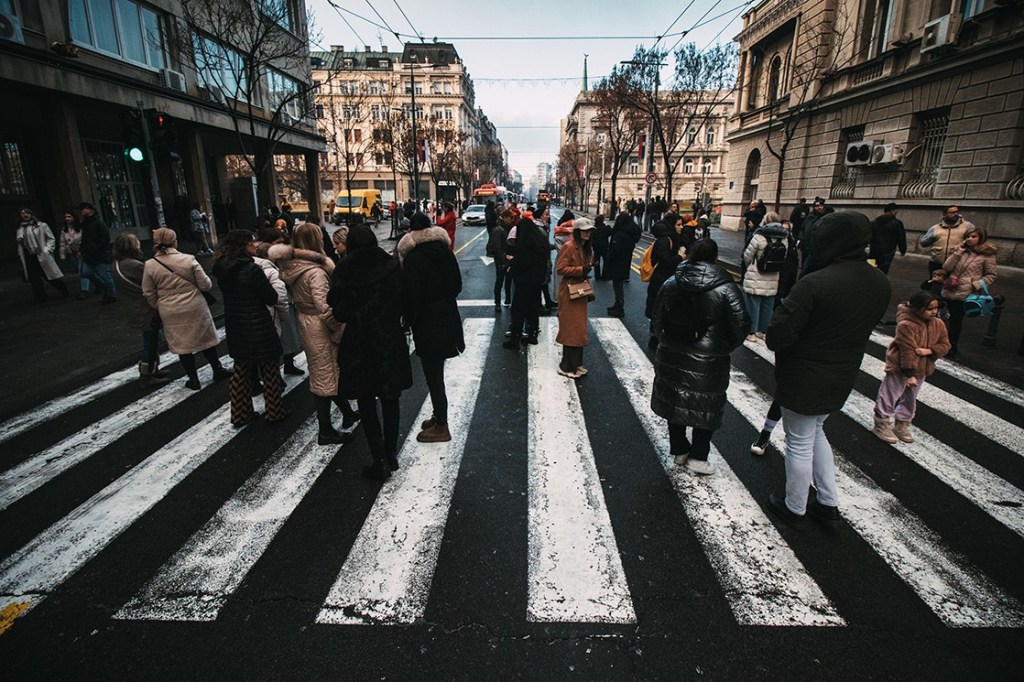
International pressure mounts as Serbia rejects calls for accountability

In response to sustained student protests and escalating police violence, in October 2025, the European Parliament adopted a resolution denouncing state repression and calling for accountability, safeguards for civil rights, and independent investigations. The resolution called for tying EU financial assistance to demonstrable progress on reforms and even raised the possibility of suspending funds if the Serbian government fails to meet essential democratic standards. 

But instead of initiating independent investigations or addressing the documented abuses, Serbian government officials dismissed the resolution as politically motivated interference, reinforcing a long‑standing pattern of rejecting external scrutiny. Civil society organisations, student groups, and independent media continued to document violations, but without cooperation from state institutions their efforts remain largely symbolic. The result is a widening gap between European expectations of democratic safeguards and Serbia’s entrenched practices of impunity, where international criticism raises visibility but does not translate into concrete protections for citizens.

Alongside the European Parliament resolution, Serbia is also coming under growing pressure from Washington. The United States is preparing sanctions against the Oil Industry of Serbia (NIS), whose ownership links to Russia’s Gazprom Neft have long raised concerns. Although repeatedly delayed, the sanctions highlight Washington’s increasing unease about Serbia’s political direction and its continued alignment with Russian‑controlled energy structures.

In contrast to the mounting pressure from Brussels and Washington, the UK has taken a noticeably different path. Reporting by the Guardian highlighted how the UK government scaled back a number of overseas democracy‑support and governance programmes, including initiatives in the Western Balkans that had previously helped counter malign foreign influence. The cuts affected projects aimed at strengthening independent media, supporting civil society, and improving institutional resilience – areas long recognised as vulnerable to Russian political and informational influence, particularly in Serbia. 

400,000 Signatures, zero answers: why students are marching again

In a striking display of public mobilisation, in December 2025, students launched a support initiative that gathered more than 400,000 signatures in a single day. The initiative was a nationwide petition demanding early parliamentary elections and formal public support for the student movement. 

As the authorities remained silent, reinforcing the sense of institutional paralysis, the student movement shifted toward its next step, announced on the protest that took place on 17th January 2026. Building on the momentum generated by the signature campaign, organisers framed the upcoming rally as the beginning of a new phase in their struggle. The protest was designed not only as a public gathering but as a platform for outlining mechanisms of accountability and renewing calls for institutional reform. 

As Petrovic, who has been active in the student movement explained, this next phase is driven by a renewed commitment to the kind of society students want to build: “One of the main things driving the student movement is the will to live in a fairer society, where corruption is recognised as an issue, the rule of law is seen as a priority, and no one’s life is dictated by party membership or nepotism. Most students want to live in Serbia, and hence there is a level of tenacity not seen for a long time, because we refuse to be driven out of our homes. We are not scared, as shown by our relentless actions despite all attempts at intimidation, including police brutality. They rule through fear. Take that away from them, and you largely turn them into a paper tiger.”

Dragica Felja, Jelisaveta Djordjevic-Ristanovic and Jelena Pavic are three Serbian nationals who were active in the student protest movement of the 1990s. One now lives in the diaspora, while two remain in Serbia. Drawing on their lived experience and long-standing civic engagement, they reflect on the legacy of protest and the resurgence of grassroots resistance. They wrote a shorter piece about Serbian protest, published in The Big Issue, in February 2025.
Serbia’s NIS restarts Pancevo refinery after US sanctions waiver

Serbia’s NIS restarts Pancevo refinery after US sanctions waiver
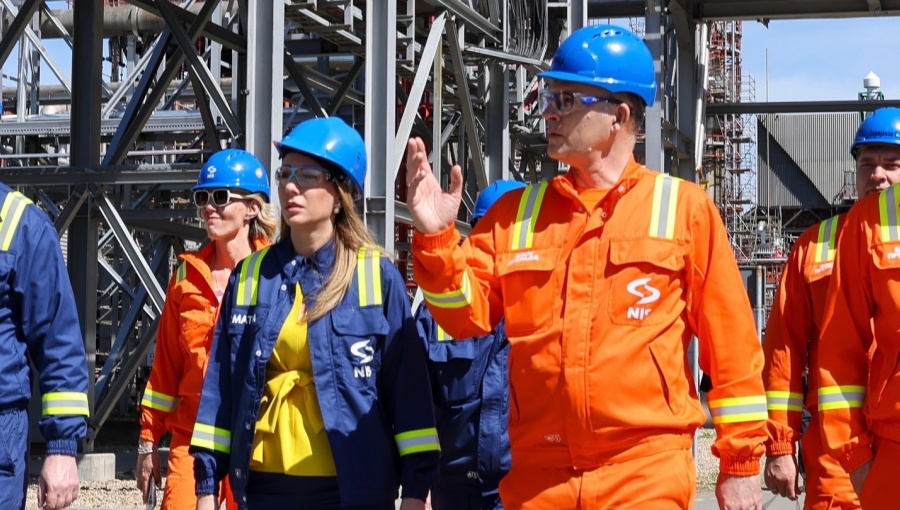
Energy Minister Dubravka Djedovic Handanovic visits the NIS refinery at Pancevo. / Dubravka Djedovic Handanovic via Facebook
By bne IntelliNews January 18, 2026

Serbia’s majority Russian-owned oil company NIS has restarted oil processing at its Pancevo refinery after securing a temporary waiver from US sanctions, Serbia’s energy minister said on January 18.

Production of petroleum derivatives resumed after an almost two-month halt, Energy Minister Dubravka Djedovic Handanovic said in a post on Instagram, adding that the first Euro diesel produced following the restart would reach fuel stations from January 27.

NIS was forced to suspend operations in December after US sanctions imposed in October over Russia’s war in Ukraine restricted its access to crude oil. The measures target Russia’s energy sector and apply to companies with majority Russian ownership.

Russian entities control 56.15% of NIS, with Gazprom Neft holding about 44.9% and Gazprom owning 11.3% via the St. Petersburg-based company Intelligence. The Serbian government holds roughly 29.9%, with the remainder owned by minority shareholders.

The refinery restart follows the granting of a temporary licence by the US Treasury Department’s Office of Foreign Assets Control (OFAC) on December 31, allowing NIS to import crude oil, resume processing and conduct transactions needed to maintain supply security until January 23.

“After almost two months of break, production at the Pancevo refinery began today,” Djedovic Handanovic said, adding that around 2,000 employees were involved in restarting operations.

NIS operates Serbia’s only oil refinery, located near Belgrade, and supplies about 80% of the country’s domestic fuel demand. Crude oil deliveries to the refinery resumed earlier this week via Croatia’s JANAF pipeline following the announcement of the special US licence.

The sanctions waiver comes as NIS negotiates the sale of the Russian-held stakes to comply with US requirements. The company has until March 24 to reach a divestment agreement.

Hungary’s oil and gas group MOL is in advanced talks to acquire a majority stake in NIS. Hungarian Foreign Minister Peter Szijjarto said last week, on January 15, that negotiations with Gazprom were progressing well and that an initial agreement could be signed in the coming days, after which the deal would be submitted to OFAC for approval.

President Aleksandar Vucic said on January 18 that Serbia expects to submit the key terms of a future ownership agreement to OFAC by January 20 at the latest, in order to secure an extension of NIS’s operating licence beyond January 23.

“We do not yet have an agreement, but I believe it will be reached,” Vucic told TV Informer.

In addition to MOL, Abu Dhabi National Oil Company (ADNOC) has expressed interest in a potential partnership in NIS.

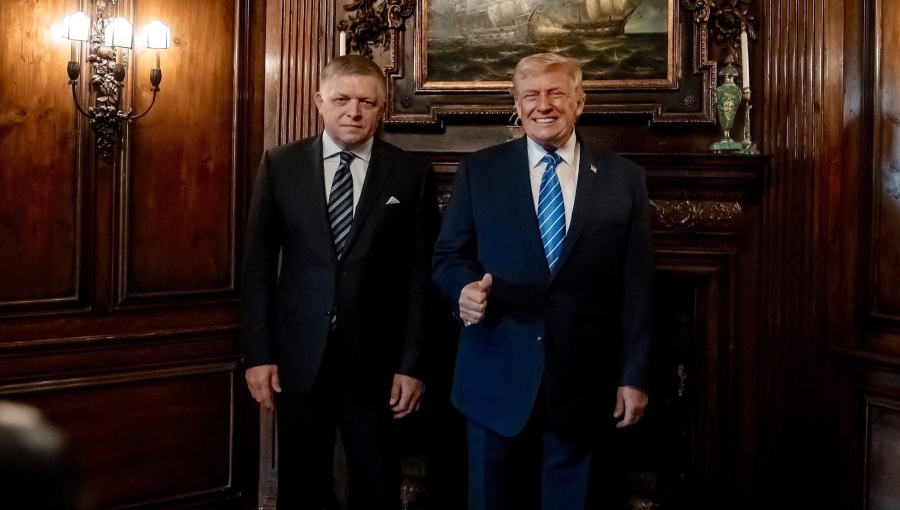
 

Fico visits Trump in Mar-a-Lago, Slovakia signs nuclear deal with US

Fico visits Trump in Mar-a-Lago, Slovakia signs nuclear deal with US
Slovak Prime Minister Robert Fico visited US President Donald Trump at his Florida residence Mar-a-Lago. / Robert Fico via Facebook
By Albin Sybera in Prague January 19, 2026

Slovak Prime Minister Robert Fico visited US President Donald Trump at his Florida residence Mar-a-Lago during a visit to the US to sign a civil nuclear cooperation deal between Slovakia and the US.

As bne IntelliNews covered last week, Fico has reiterated that his government is pursuing close cooperation with the US on a new reactor at the site of the existing Jaslovské Bohunice nuclear power plant (NPP). At the end of 2024, Fico’s cabinet announced plans to launch a new nuclear tender.

“Both countries are fully aware that solutions to serious energy challenges are not possible through wind mills or photovoltaic, but that the base for the future is a sharp development of nuclear energy,” Fico said during the visit to the US in a statement shared on his Facebook social media profile.

Fico and his left-right cabinet has maintained a sharply critical stance towards EU green policies accompanied by Kremlin-pleasing stance since Fico’s return to power in 2023.

The Slovak press agency TASR noted that US Foreign Secretary Marco Rubio and his Slovak counterpart Juraj Blanár were present at the Mar-a-Lago meeting. Slovak Minister of Economy Denisa Saková also posed for photos at Mar-a-Lago, which were shared on Fico’s Facebook profile.  

The Slovak strongman described the talk with Trump as “informal and open” and that their discussion focused on “Ukraine, where American representatives were interested in our stance, because they knew we are not Brussels parrots and we express our own views on the war in Ukraine”. 

Fico said he “declared the Slovak peace stance” in connection to “other sensitive international events” and “there was full agreement in viewing the EU as an institution in deep crisis”. 

“The trip to the USA was another success of ours, as was the case with visits to Russia, China, and many other countries,” Fico stressed, praising the foreign policies of his government, which face criticism from the liberal opposition in Bratislava who have accused him of orienting Slovak diplomacy towards autocrats. 

Fico’s visit comes just weeks after Trump invited Fico to the White House to sign an Intergovernmental Agreement (IGA) on nuclear cooperation under which Slovakia is expected to select American technology for the new nuclear investment. The two national conservative leaders have also exchanged praiseful remarks of each other.

“Under your leadership, Slovakia has become a global leader in nuclear power,” Trump stated in the invitation letter, which Fico shared on Facebook.

The Jaslovské Bohunice site already has two reactors, and the new reactor is expected to cost between €10bn and €15bn. 

Fico said last year he hopes US Westinghouse company will cooperate with Russia on further development of nuclear sources in Slovakia. During the interview for commercial television TA3 last week, Fico noted that cooperation with Russia on the nuclear investment would have been his first choice if there were no sanctions against Russia in place.


BREAKING: Bulgaria’s President Radev to resign amid political crisis

BREAKING: Bulgaria’s President Radev to resign amid political crisis
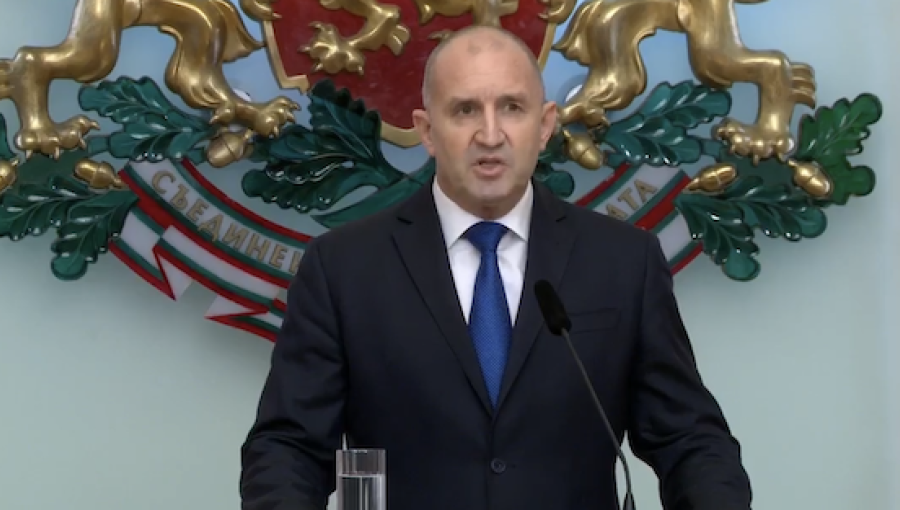
President Rumen Radev announces his resignation in a televised address. / Rumen Radev via Facebook
By bne IntelliNews January 19, 2026

Bulgaria’s President Rumen Radev said on January 19 he would resign from office, ending his second term a year early amid deepening political turmoil and mounting speculation that he is preparing to launch his own political movement ahead of snap parliamentary elections.

“Tomorrow I will submit my resignation as President of Bulgaria,” Radev said in an extraordinary televised address to the nation. “Today is the last time I address you as president.”

Radev, 62, thanked voters for their support over the past nine years and acknowledged mistakes, saying his presidency had unfolded against a backdrop of repeated crises, mass protests and entrenched political deadlock.

“You voted for me to serve Bulgaria as president. Together we went through a number of crises, attacks by the oligarchy and the major protests of 2020 and 2025,” he said.

Radev is Bulgaria’s fifth democratically elected head of state. He was first elected in November 2016 and re-elected in November 2021. His second term was due to expire in January 2027, with regular presidential elections scheduled for October this year.

His announcement comes as Bulgaria heads toward its eighth parliamentary election since 2021 after the country’s third and final attempt to form a government failed last week. Radev said on January 16 that snap elections were unavoidable after months of political paralysis.

“We are going to the elections,” he told reporters, confirming that voters would again be called to the polls following the collapse of coalition talks.

Bulgaria has been without a regular government since Prime Minister Rossen Zhelyazkov resigned on December 11, 2025, after nationwide protests over corruption and a disputed budget proposal. Zhelyazkov’s government, which took office in January 2025 after months of negotiations, fell amid public anger over perceived oligarchic influence, including opposition to businessman Delyan Peevski, who is sanctioned by the United States under the Magnitsky Act.

Political deadlock has plagued the country for more than four years, eroding trust in state institutions and leaving successive minority and caretaker governments in charge.

Radev’s resignation is unprecedented in post-communist Bulgaria and raises procedural questions, as the constitution does not clearly outline the process for a president stepping down before the end of a mandate. Legal experts say his resignation would have to be confirmed by the Constitutional Court.

Speculation has intensified in recent weeks that Radev, the country’s most popular political figure, plans to enter party politics. In recent months he has repeatedly called for the creation of a new political force to confront corruption, describing Peevski as a symbol of a flawed governance model.

“It is important to build a wall against the corruption in power,” Radev said last year, without directly confirming plans to lead a new party.

Opinion polls show Radev enjoys significantly higher approval ratings than other senior politicians. A Market Links survey published on January 12 put his approval at 44%, against 34% disapproval. A December poll by Alpha Research showed trust in most political leaders in single digits, while Radev retained the highest rating at 35%.

Analysts say his early departure from the presidency could clear the way for him to play a direct role in the expected parliamentary elections, likely to be held in late March or early April, although time constraints may force him to rely on an existing political vehicle rather than registering a new party.

Under constitutional rules, the president must appoint a caretaker government and set a date for the snap election within two months.

The President of Bulgaria resigns, seeks to become Prime minister

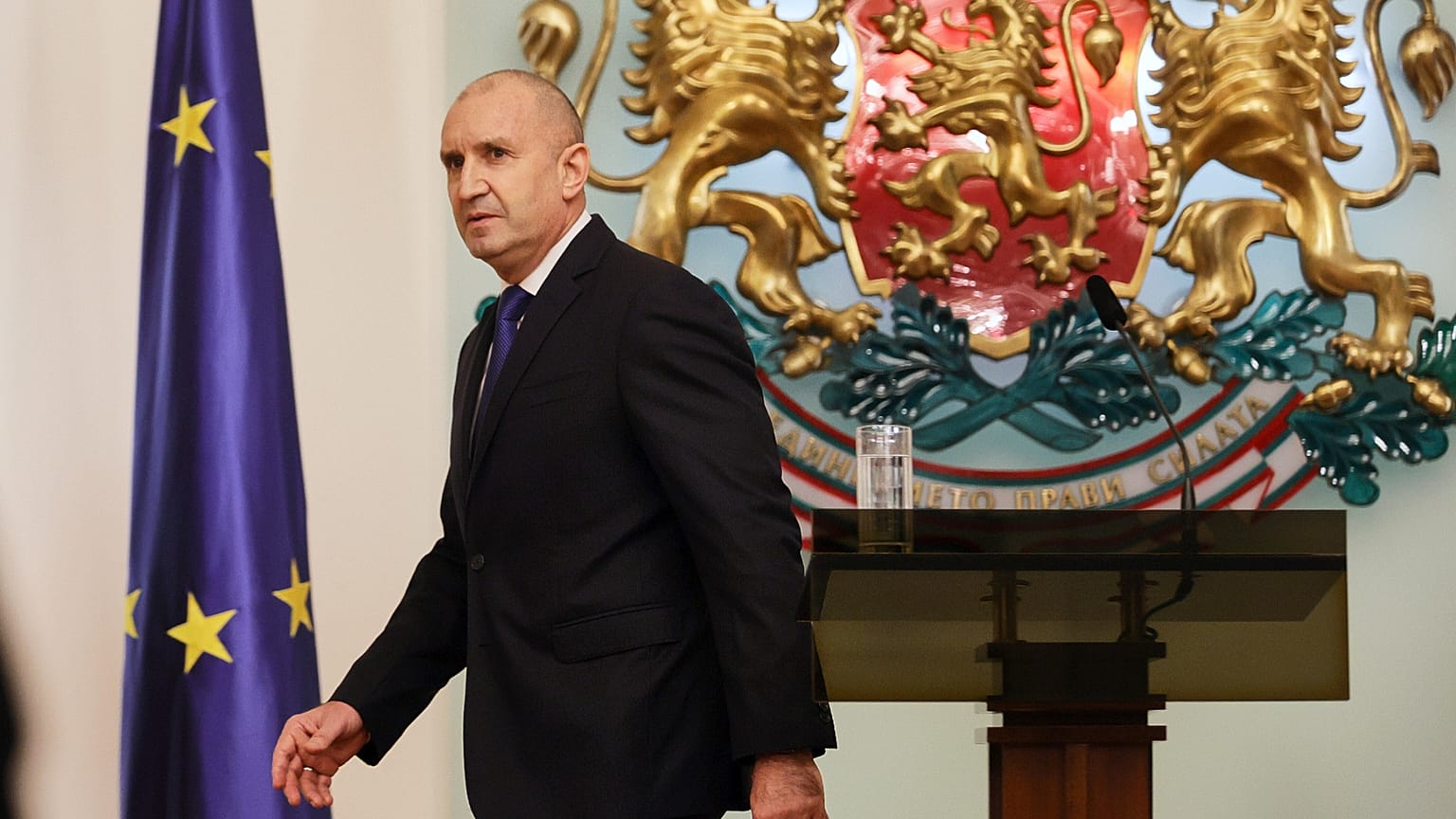
Bulgaria's President Rumen Radev leaves after announcement that he is stepping down from his position at Bulgarian Presidency, Sofia, Bulgaria, Monday, Jan. 19, 2026
Copyright AP Photo

By Marina Stoimenova
Published on 

The emergence of a new political party led by the former president Rumen Radev could significantly reshape not only Bulgaria’s domestic affairs but also its foreign policy.

The Bulgarian President, Rumen Radev, announced that he is resigning as head of state and signaled the launch of a new political project just two months before the next snap parliamentary elections in the country, which has been gripped by an ongoing political crisis.

“Our democracy cannot survive if we leave it in the hands of corrupt figures, deal-makers, and extremists,” the president said, adding that he will formally submit his resignation on Tuesday.

Rumen Radev has held the presidency of Bulgaria for nine years. Speculation that he would enter the parliamentary race and seek the post of prime minister has existed for some time and was confirmed today. Bulgaria is a parliamentary republic, and its governance lies in the hands of the parliament, the Council of Ministers, and the prime minister.

“We are already members of Schengen and the eurozone. The questions here are: why did achieving these goals not bring stability and satisfaction; why did Bulgarians stop voting; why do they not rely on the justice system and do not trust the media; why did citizens flood the squares twice; why, in a European Bulgaria, a large percentage of people feel poor, and even more live in insecurity,” Radev said. He blamed the “conveyor-belt” model of governance, “which has the outward features of democracy but functions through the mechanisms of oligarchy.”

During his tenure as president, Rumen Radev had to appoint seven caretaker governments due to the years-long political crisis and the inability of parties to form stable majorities.

Just weeks ago, the country was shaken by the largest protests since the 1990s, initially triggered by opposition to the draft budget but later escalating into demands for resignations and more - namely, the withdrawal from politics of key political figures such as former Prime Minister Boyko Borissov and Delyan Peevski, who has been sanctioned under the Magnitsky Act.

The emergence of a new political party led by the former president Rumen Radev could significantly reshape not only Bulgaria’s domestic affairs but also its foreign policy. Radev’s position on the war in Ukraine differs sharply from that of previous governments. For this reason, analysts and opponents have often labeled him “pro-Russian.” In today’s speech, Radev also addressed this issue, stating: “In the name of their political future, some politicians are putting the peaceful lives of Bulgarians at risk amid a dangerous war close to our borders and are even encroaching on civil and ethnic peace, which you and I will preserve despite their provocations.”

Weeks before Bulgaria was set to adopt the euro (on January 1, 2026), Rumen Radev called for a referendum on the adoption of the single European currency, but the parliament rejected it. “The final rift between Bulgarians and the political class came with the National Assembly’s refusal to hold a referendum on the date of introduction of the single European currency. The representatives of the people denied the people their right to choose,” Radev said today.

The snap parliamentary elections in Bulgaria will take place in the spring and will be the seventh election since 2021. The role of president will be assumed by Vice President Iliana Yotova.


Uganda's President Yoweri Museveni wins seventh term as rival Bobi Wine rejects 'fake results'

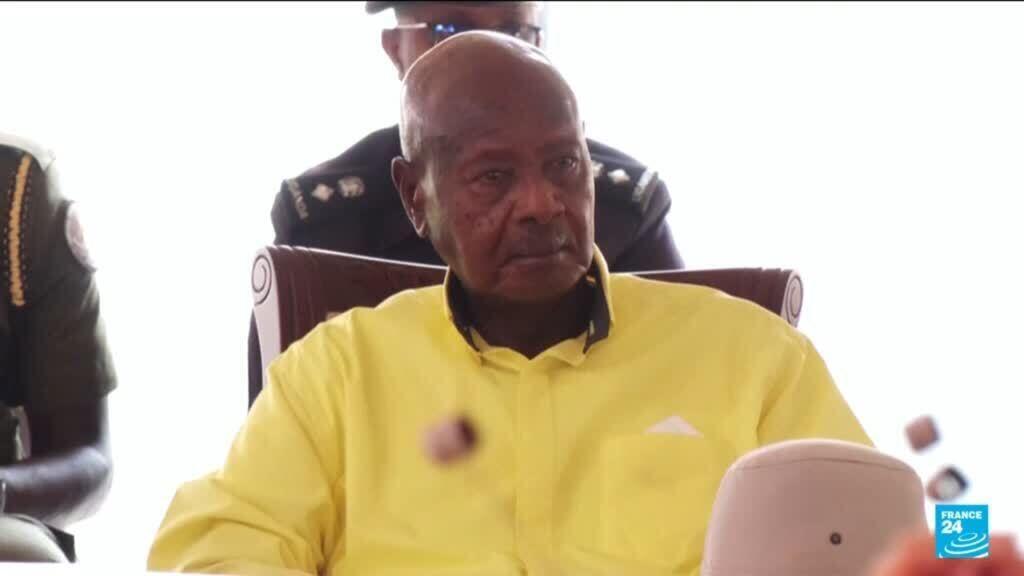
Uganda's incumbent President Yoweri Museveni won a seventh term in office, official results showed Saturday, allowing the former guerrilla to extend his four-decade rule of the East African country. His main opponent, Bobi Wine, remains in hiding after security forces raided his home.


Issued on: 17/01/2026 
By: FRANCE 24


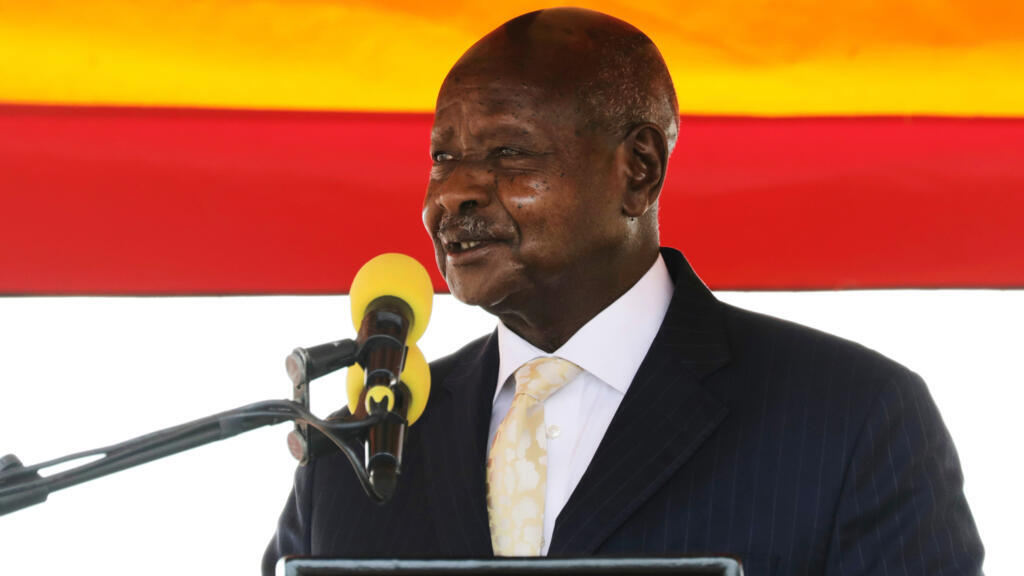
Ugandan President Yoweri Museveni speaks during the 60th Independence Anniversary Celebrations in Kololo on October 9, 2022. © Hajarah Nalwadda, AP

Ugandan President Yoweri Museveni won a seventh term in office on Saturday after an election marred by violence and an internet shutdown, with African observers saying arrests and abductions had "instilled fear".

Museveni, 81, won 71.65 percent of the vote in Thursday's election, the Electoral Commission said, amid reports of at least 10 deaths and intimidation of the opposition and civil society.

His victory allows him to extend his 40-year rule of the East African country.

He defeated opposition leader Bobi Wine, 43, a former singer-turned-politician who won 24.72 percent and said he was in hiding on Saturday after a raid by security forces on his home

Wine has faced relentless pressure since entering politics, including multiple arrests before his first run for the presidency in 2021.

He stated his "complete rejection of the fake results" and said he was on the run after the raid on his home on Friday night.

"I want to confirm that I managed to escape from them," Wine posted on X on Saturday. "Currently, I am not at home, although my wife and other family members remain under house arrest."

"I know that these criminals are looking for me everywhere and I am trying my best to keep safe," he added.

There was a heavy police presence around the capital, Kampala, AFP journalists saw, as security forces sought to prevent the sort of protests that have hit neighbouring Kenya and Tanzania in recent months.


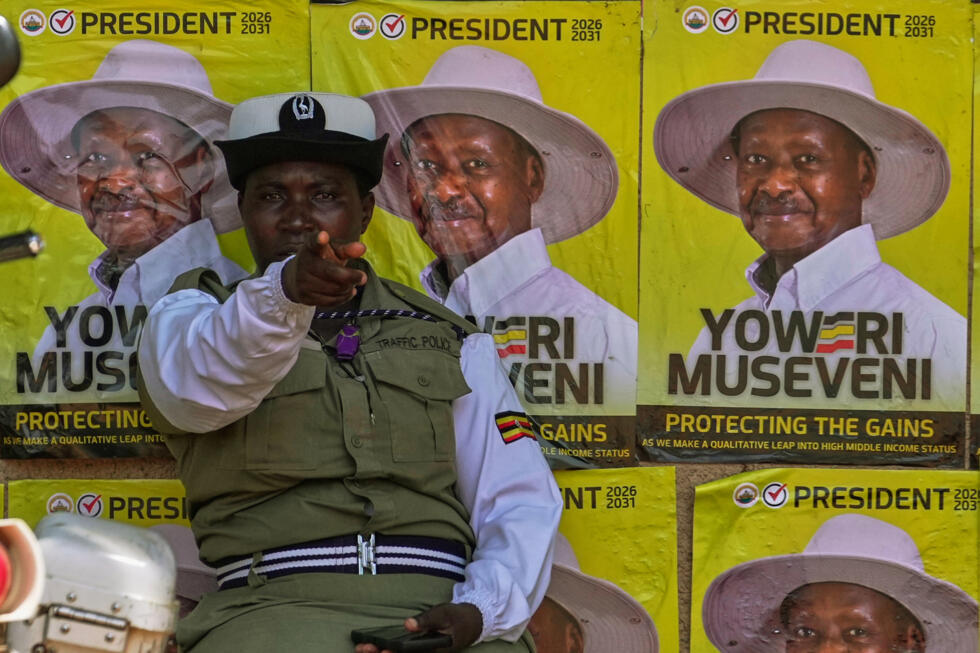
A traffic police officer sits in front of campaign posters of President Yoweri Museveni, the National Resistance Movement (NRM) presidential candidate, during the general election, in Kampala, Uganda, Thursday, Jan. 15, 2026. © Brian Inganga, AP

Electoral officials also face questions about the failure of biometric voter identification machines on Thursday, which caused delays in the start of voting in urban areas – including the capital, Kampala – that are opposition strongholds.

After the machines failed, in a blow to pro-democracy activists who have long demanded their use to curb rigging, polling officials used manual registers of voters. The failure of the machines is likely to be the basis for any legal challenges to the official result.
'A lot of fear'

Police denied they had raided Wine's home but said they had "controlled access in areas we feel are security hotspots", adding they believed the opposition leader was still at home.

"We have not necessarily denied people accessing him but we cannot tolerate instances where people use his residence to gather and ... incite violence," police spokesman Kituuma Rusoke told reporters.

A stall-owner near Wine's home, 29-year-old Prince Jerard, told AFP he had heard a drone and helicopter at the residence the previous night, and saw numerous security officials.

"Many people have left (the area)," he said. "We have a lot of fear."

Wine, whose real name is Robert Kyagulanyi, has emerged as the main challenger to Museveni in recent years, styling himself the "ghetto president" after the Kampala slum areas where he grew up.

He has accused the government of "massive ballot stuffing" and attacking several of his party officials under cover of the internet blackout, which was imposed ahead of the polls and remained in place on Saturday.

Uganda: Africa’s longest-serving leader, Yoweri Museveni, seeks to extend 40-year rule

© France 24
02:08


African election observers said on Saturday they saw no evidence of ballot stuffing but denounced "reports of intimidation, arrest and abductions" targeting the opposition and civil society.

This "instilled fear and eroded public trust in the electoral process", former Nigerian president Goodluck Jonathan told reporters in Kampala.

He was representing election observers from the African Union, as well as regional bodies COMESA and IGAD for east and southern Africa.

Jonathan said the shutdown of the internet "disrupted effective observation" and "increased suspicion" but that the overall conduct of the polls on election day was "peaceful".

Reports of violence

Museveni's ruling party, the National Resistance Movement, also had a commanding lead in parliamentary seats, according to provisional results. Ballots were still being counted.

Analysts have long viewed the election as a formality.

Museveni, a former guerrilla fighter who seized power in 1986, has total control over the state and security apparatus, and has ruthlessly crushed any challenger during his rule.

The other major opposition figure, Kizza Besigye, who ran four times against Museveni, was abducted in Kenya in 2024 and brought back to a military court in Uganda for a treason trial that is ongoing.

There were reports of election-related violence against the opposition.

Muwanga Kivumbi, member of parliament for Wine's party in the Butambala area of central Uganda, told AFP's Nairobi office by phone that security forces had killed 10 of his campaign agents after storming his home.

Police gave a different account, saying an "unspecified number" of people had been "put out of action" when opposition members planned to overrun and burn down a local tally centre and police station.

Yusuf Serunkuma, an academic and columnist for the local Observer newspaper, told the Associated Press on Saturday that Wine “didn’t stand a chance” against the authoritarian Museveni.

“He has quite successfully emasculated the opposition,” Serunkuma said of Museveni. “You would have to credit him for that.”

(FRANCE 24 with AFP and AP)

Ugandan opposition denounces army raid on party leader Bobi Wine


The party of Uganda's main opposition leader Bobi Wine denounced a raid by security forces on his home on Friday amid reports Wine has been cut off from all communication. The raid comes just before the announcement of the results of the presidential election expected on Saturday.


Issued on: 17/01/2026 
By: FRANCE 24


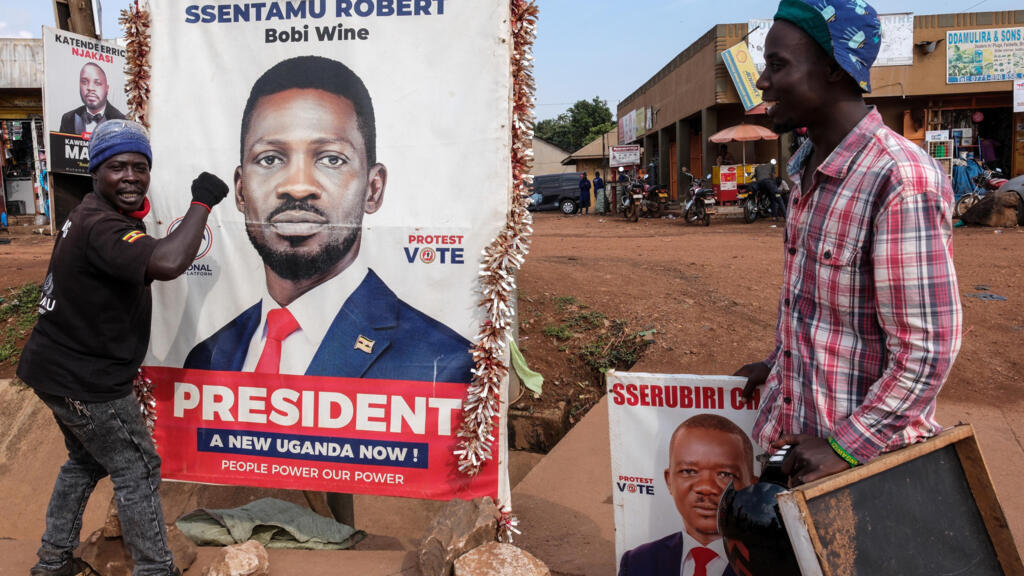
A supporter of Uganda opposition presidential candidate Robert Kyagulanyi Ssentamu, known as Bobi Wine, holds onto a campaign poster in Kampala, Uganda, on January 13, 2026. © Samson Otieno, AP

The Ugandan army on Saturday rejected claims that it had seized opposition leader Bobi Wine as the final stretch of the presidential vote count was under way. Wine said Friday he had been placed under house arrest, with his party later saying that he had been “forcibly taken” from his home in an army helicopter.

Uganda’s January 15 election has been marred by reports of at least 10 deaths amid an internet blackout.

President Yoweri Museveni, 81, looked set to be declared winner and extend his 40-year rule later on Saturday, with a commanding lead against Wine, a former singer turned politician.

Wine said Friday that he was under house arrest, and his party later wrote on X that he had been “forcibly taken” by an army helicopter from his compound.

The army denied that claim.

“The rumours of his so-called arrest are baseless and unfounded,” army spokesman Chris Magezi told AFP.

“They are designed to incite his supporters into acts of violence,” he added.

AFP journalists said the situation was calm outside Wine’s residence early Saturday, but they were unable to contact members of the party due to continued communications interruptions.

A nearby stall-owner, 29-year-old Prince Jerard, said he heard a drone and helicopter at the home the previous night, with a heavy security presence.

“Many people have left (the area),” he said. “We have a lot of fear.”

With more than 80 percent of votes counted on Friday, Museveni was leading on 73.7 percent to Wine’s 22.7, the Electoral Commission said.

Wine, 43, whose real name is Robert Kyagulanyi, has emerged as the main challenger to Museveni in recent years, styling himself the “ghetto president” after the slum areas where he grew up in the capital, Kampala.

He has accused the government of “massive ballot stuffing” and attacking several of his party officials under cover of the internet blackout, which was imposed ahead of Thursday’s polls and remained in place on Saturday.

His claims could not be independently verified, but the United Nations rights office said last week that the elections were taking place in an environment marked by “widespread repression and intimidation” against the opposition.

Reports of violence


Analysts have long viewed the election as a formality.

Museveni, a former guerrilla fighter who seized power in 1986, has total control over the state and security apparatus, and has ruthlessly crushed any challenger during his rule.

Election day was marred by significant technical problems after biometric machines—used to confirm voters’ identities—malfunctioned and ballot papers were undelivered for several hours in many areas.

There were reports of violence against the opposition in other parts of the country.

Muwanga Kivumbi, member of parliament for Wine’s party in the Butambala area of central Uganda, told AFP’s Nairobi office by phone that security forces had killed 10 of his campaign agents after storming his home.

(FRANCE 24 with AFP)

Ivorian village remembers revolt that killed French colonial officer

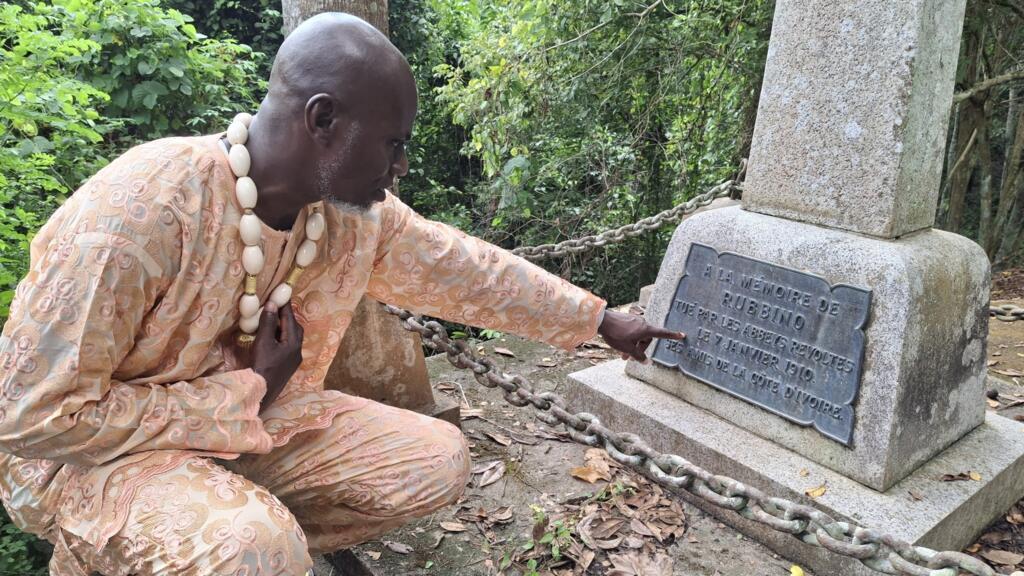
Residents of the village of Rubino, in south-eastern Côte d'Ivoire, continue to commemorate an uprising against a French colonial army officer killed there on 7 July 1910.


Issued on: 18/01/2026 - RFI

Nanan Lambert Koffi Kokola, the chief of Rubino, shows the grave of the French colonial army officer killed by the Abbé people on 7 July, 1910. © Bineta Diagne / RFI

By:RFIFollow
ADVERTISING


The village is named after Rubino, the officer targeted in the revolt by the Abbé people. The uprising is remembered as an act of resistance against colonial rule, and the event is still commemorated more than a century later.

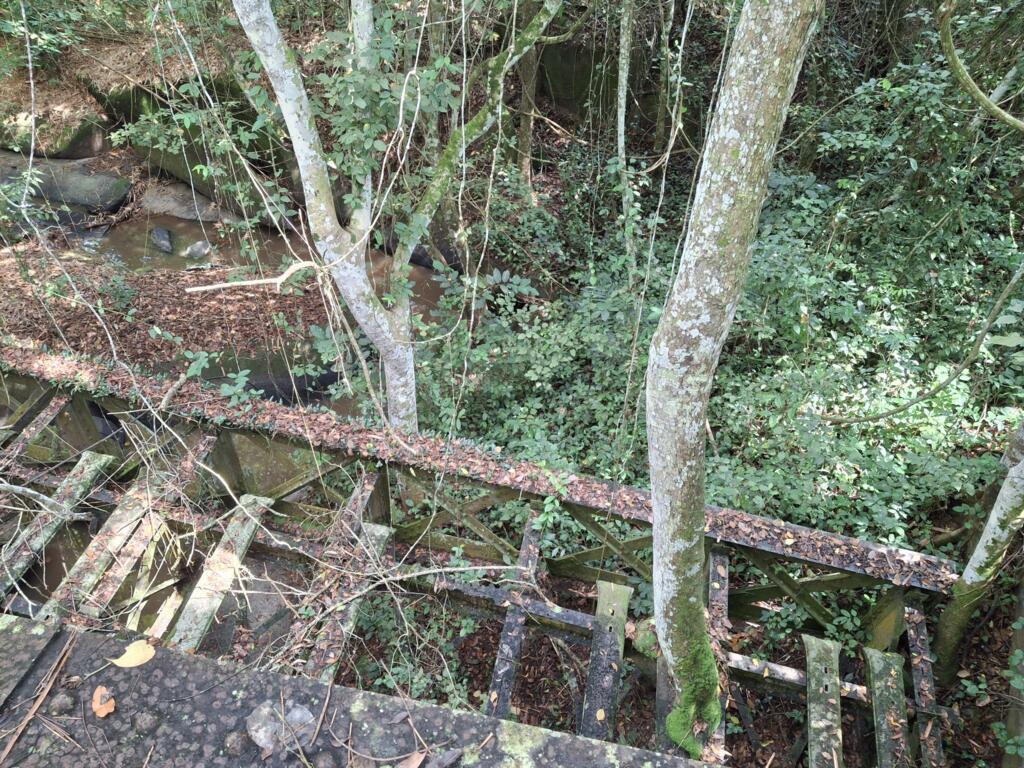
In the middle of a forest near Rubino, a dismantled bridge stands as a reminder of the revolt. The Abbé people removed its bolts by hand to stop a train carrying the officer.

Jean-Claude, a young man from the village, said the story is well known locally.

“When the train arrived, he couldn't cross. This is where Mr Rubino was caught and killed," Jean-Claude told RFI.

The old railway track, sabotaged by the Abbé people as a sign of revolt against the French colonists in 1910. © Bineta Diagne / RFI

Anger over forced labour

The revolt was not only directed at the officer himself, but at the system he represented. The Abbé people rebelled against forced labour imposed during the colonial period.

Rubino worked for the French Company of West Africa (CFAO), a trading business active in colonial West Africa in the late 19th and early 20th centuries.

Eddie Patrick, a resident of Rubino, said the officer’s behaviour angered village elders.

“Rubino was a settler. He was presented as a trader, but in reality, he was trafficking gold. He harassed the villagers and robbed them of their possessions, which annoyed the village elders," Patrick explained.

"To put a stop to this behaviour, something had to be done."

The officer’s grave, located in the forest, has since become a spiritual place for the community.

Nanan Lambert Koffi Kokola, the chief of Rubino, said the site lies on sacred land.

“Because it is located on sacred land where spirits reside, of course, and rivers flow. For us, the Abbé people, it is a place where we come to meditate because it is here that our ancestors finally gained their freedom,” he said.


Railway history

After the revolt, a new railway line was built about 100 metres away from the original track.

Photographer François-Xavier Gbré documented the route in an exhibition titled Radio Ballast, revisiting different periods of the country’s history.

“This railway line has seen colonial times, modern times marked by independence, and is still in operation today. It spans three eras: colonial, independence and the contemporary period,” he said.

Today, the site attracts the occasional tourist or history enthusiast.

This article was adapted from the original version in French by RFI's Bineta Diagne.


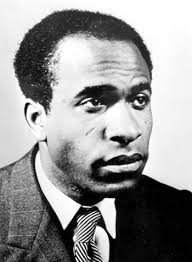
FANON, Frantz

fanonFrantz Fanon was a psychoanalyst who used both his clinical research and lived experience of being a black man in a racist world to analyse the effects of racism on individuals –particularly on people of colour- and of the economic and psychological impacts of imperialism. Fanon is an important thinker within postcolonial and decolonial thought whose work has had widespread influence across the social sciences and humanities.


Like many canonical postcolonial thinkers, Fanon’s personal biography is often viewed as important in understanding his published work. Fanon was born in the French colony of Martinique in 1925. He studied at the Lycée Schoelcher in Fort-de-France, where he was taught by writer and poet Aimé Césaire. Fanon was involved in supporting the French resistance against the Vichy regime in the Caribbean, and against the Nazis in France (though he experienced daily racism while serving in the army). After the Second World War he went to study medicine and psychiatry in Lyon. Following his studies Fanon became involved in struggles against colonialism under the influence of African freedom fighters who went to France to garner support for their struggles. In 1953 he went to Algiers as head of the psychiatric department at the Bilda-Joinville Hospital. In Algeria Fanon was appalled by the difference in living standards between the European colonizers and the indigenous population, and by the racism experienced by the Algerians.


The 1954 Algerian revolt was met with a violent response involving torture, repression, physical abuse and widespread killings of Algerians by the colonisers. This served to radicalise Fanon and he supported the revolutionaries in secret for two years before resigning from his job at the hospital in 1956 and joining the National Liberation Front. He moved to Tunis, founded the Moudjahid (Freedom Fighter) magazine, and became a leading ideologue of the Algerian revolution. He travelled widely in Africa to speak on his anti-colonial ideas and was ambassador to Ghana for a period. Though Fanon was from the Antilles, following his experiences in Algeria he came to think of himself as Algerian. He died of leukimia in Washington 1961.


Fanon’s key works are Black Skins White Masks, A Dying Colonialism, The Wretched of the Earth, and Toward the African Revolution. Black Skins White Masks was published in 1952 but did not gain widespread recognition until the late 1960s. This was one of the first books to analyse the psychology of colonialism. In it Fanon examines how the colonizer internalises colonialism and its attendant ideologies, and how colonized peoples in turn internalise the idea of their own inferiority and ultimately come to emulate their oppressors. Racism here functions as a controlling mechanism which maintains colonial relations as ‘natural’ occurrences. Black Skins White Masks is written in an urgent, fluid style. It is both analytical and passionate, part academic text, part polemic. The book has provided a powerful and lasting indictment of racism and imperialism.


A Dying Colonialism is a historical document. It is a firsthand account of the Algerian revolution, describing how the Algerian people became a revolutionary force, and ultimately were successful in repelling the French colonial government. It is also, however, a philosophical discussion of the meaning of the conflict and what might come after it. Toward the African Revolution is a collection of articles, essays, and letters which spans the period between Black Skin, White Masks and The Wretched of the Earth.


The Wretched of the Earth was published just before Fanon’s death, very much with the Algerian independence struggle in mind. Prefaced by Jean Paul Sartre, the book offers a social-psychological analysis of colonialism, continuing his argument that there is a deep connection between colonialism and the mind, and equally between colonial war and mental disease. In The Wretched of the Earth Fanon argued for violent revolution against colonial control, ending in socialism. These struggles must be combined, he argued with (re)building national culture, and in that sense Fanon was a supporter of socialist nationalism. In The Wretched of the Earth, Fanon not only writes about violence in the international context, colonialism, national consciousness and freedom fighting, but he also includes a psychoanalytic investigation of mental disorders associated with colonial war. The book, then, continues his work of drawing connections between the inner world of subjugated individuals and the workings of international politics. This is something that has been continued by other scholars in the postcolonial tradition including Ashis Nandy and Ngugi wa Thiongo.


Essential Reading

Fanon, F. (1986 [1952]) Black Skins White Masks, London: Pluto Press

Fanon, F. (1970 [1959]) A Dying Colonialism, London: Penguin

Fanon, F. (2001 [1961]) The Wretched of the Earth, London: Penguin

Fanon, F. (1964) Toward the African Revolution, New York: Grove Press


Further Reading

Alessandrini, A. (1999) Frantz Fanon: Critical Perspectives, London: Routledge

Abdilahi Bulhan, H. (1985) Frantz Fanon And The Psychology Of Oppression, New York: Plenum Press

Gibson, N.C. (2003) Fanon: The Postcolonial Imagination, Oxford: Polity Press


Questions:

How does Fanon define decolonization? What does it entail?

What effect does colonization have on the individual and on the community, according to Fanon?

What psychological phenomenon does Fanon refer to in the title ‘Black Skin White Masks’?

How does the process of liberation work? How do peoples become ready for a new battle against colonialism, according to Fanon?

Discuss the complexity of Fanon’s understanding of violence in the context of colonialism.


Submitted by Lucy Mayblin

https://globalsocialtheory.org/

Louvre closes for third time in a month due to staff strike

A staff strike at the Louvre in Paris on Monday led to its closure for the third time in a month as trade unions pressed for more recruitment, higher pay and better maintenance of the museum. The prior closures in December and earlier in January resulted in a loss of "at least one million euros" in revenue, Louvre management said.


Issued on: 19/01/2026 - 
By: FRANCE 24


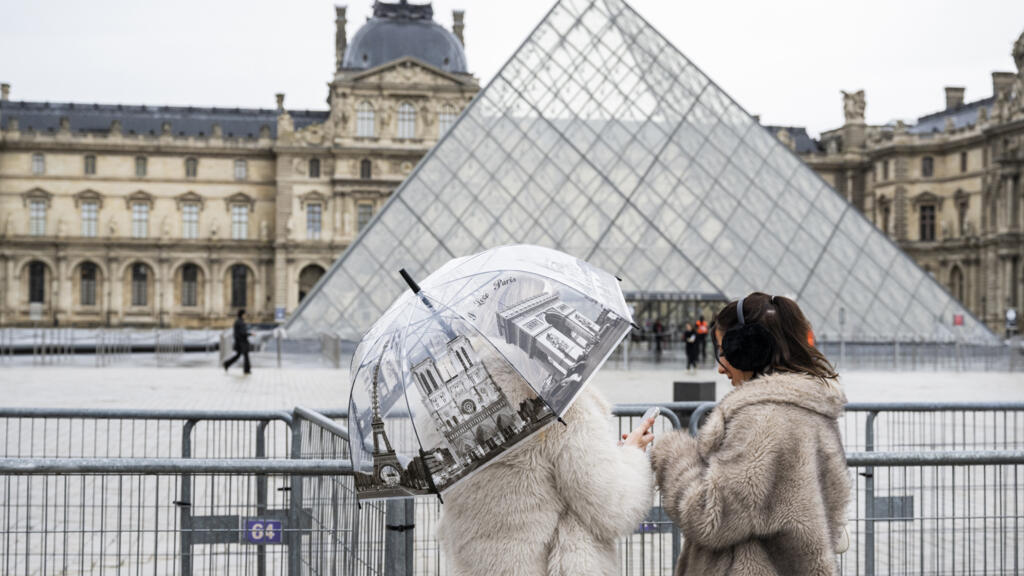
Workers at the Louvre have gone on strike three times in a month to demand better pay and conditions, and better maintenance of the museum. © Martin Lelievre, AF


The Louvre Museum said Monday it was shutting for the day, for the third time in a month, due to a strike by staff.

"The museum is not opening today," said a spokesperson for the most-visited museum in the world.

Trade unions are pressing for more recruitment, pay and better maintenance of the vast former royal palace, and have launched several days of strikes in recent months.

Nearly 140 new hires have been announced since the start of the strike movement in mid-December, and another meeting was scheduled at the culture ministry on Thursday to discuss salary increases.


Some union leaders were also contesting museum director Laurence des Cars' management style which they view as remote and inflexible.

WATCH MORELouvre and Versailles hike prices for foreign visitors: Who should pay for France’s heritage?

"If we get the pay but continue with this governance model, we won’t be out of the woods," Valerie Baud of the CFDT union said.

"There may be announcements, but we are still dealing with a management that digs its heels in and doesn’t recognise that it can sometimes be wrong,” added her colleague Elise Muller from the SUD union.

The two days of museum closures in December and earlier in January have resulted in a loss of "at least one million euros" in revenue, management said.

The security failures highlighted by a spectacular break-in at the museum on October 19 have cast a harsh spotlight on management of the institution and des Cars, who has apologised.

Footage of the heist was broadcast for the first time on French television on Sunday evening, showing the brazen jewel thieves breaking into display cases.

READ MOREMuseums around the world are on high alert following Louvre heist

The images, filmed by surveillance cameras, were shown by the TF1 and public France Televisions channels on Sunday evening, three months after the hugely embarrassing break-in in October.

They show the two burglars, one wearing a black balaclava and a yellow high-visibility jacket, the other dressed in black with a motorcycle helmet, as they force their way into the Apollo Gallery.

After breaking in through a reinforced window with high-powered disk cutters, they begin slicing into display cases under the eyes of several staff members who do not intervene.

Managers at the Louvre have stressed that staff are not trained to confront thieves and are asked to prioritise the evacuation of visitors.

(FRANCE 24 with AFP)

Strike shuts Paris's Louvre again as video of jewel heist aired for first time

The Louvre museum was closed again Monday as staff continue their strike over pay and working conditions, three months after thieves stole crown jewels from the museum – footage of which was broadcast for the first time on French television Sunday night.


Issued on: 19/01/2026 - RFI

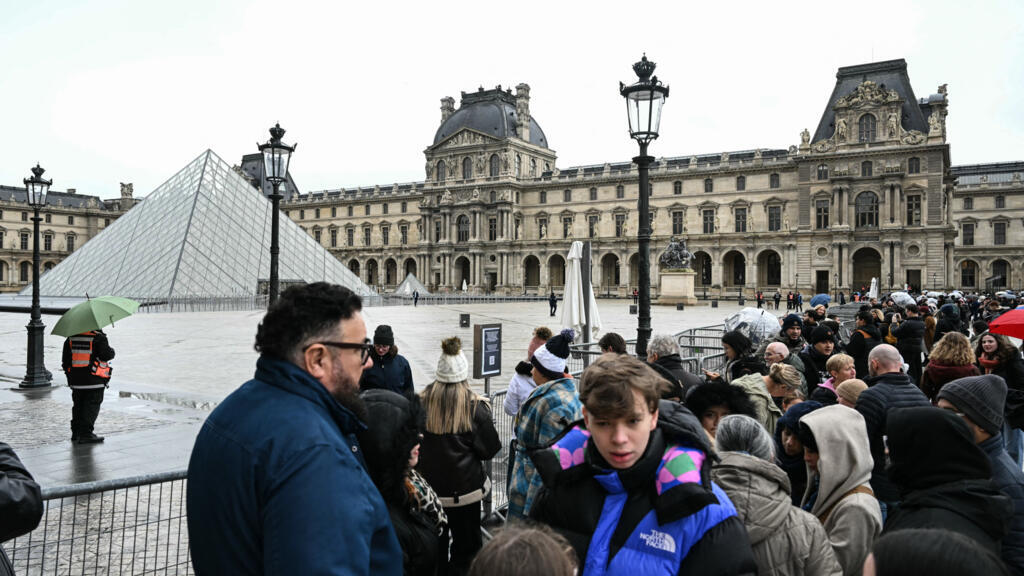
Visitors next to barriers blocking the Louvre plaza on 12 January 2026, when the museum was closed due to a strike, which employees decided to continue on Monday 19 January. © Martin Lelievre/AFP
Louvre employees have been demanding better pay, more recruitment, and improved maintenance of the museum, and their strike action has shut down the museum several times since mid December.

Two previous strike days resulted in a loss of "at least one million euros" in revenue, according to management.

While nearly 140 new hires have been announced since start of the strike movement, and a meeting is scheduled at the culture ministry on Thursday to discuss salary increases, some union leaders remain critical of director Laurence des Cars.

Her management style, which has been described as remote and inflexible, has come under criticism.

"If we get the pay but continue with this governance model, we won’t be out of the woods," Valerie Baud of the CFDT union said.

Culture Minister Rachida Dati, who plans to step down soon as she is running for Mayor of Paris, said Sunday that "major decisions" on the Louvre would be coming soon.

"I reviewed the organisation, the governance," Dati said, answering a question put to her about Des Cars on France Inter radio and public television.

Des Cars offered to resign a few hours after the spectacular break-in on 19 October, which Dati refused.

Images of brazen heist revealed


Surveillance camera footage of the robbery was broadcast for the first time on French television Sunday evening.

The footage showed the two burglars forcing their way into the Apollo Gallery and slicing into display cases under the eyes of several staff members who do not intervene.

After breaking in through a reinforced window with high-powered disk cutters, they begin slicing into display cases.

Managers at the Louvre have stressed that staff are not trained to confront thieves and are asked to prioritise the evacuation of visitors.

Four suspects are in police custody over the robbery, including the two suspected thieves, but the eight stolen items of French crown jewels worth an estimated $102 million (€87 million) have not been found.

During the roughly four minutes that the two men were inside the gallery, one staff member can be seen holding a bollard used to orient visitors through the gallery, according to France Televisions.

The images, as well as multiple DNA samples found at the scene, form a key part of the ongoing criminal investigation into the robbery.

Metal bars have been installed over the windows of the Apollo Gallery since the break-in.

(with AFP)