Tuesday, January 20, 2026

 DOJ vows to press charges after activists disrupt church where Minnesota ICE official is a pastor
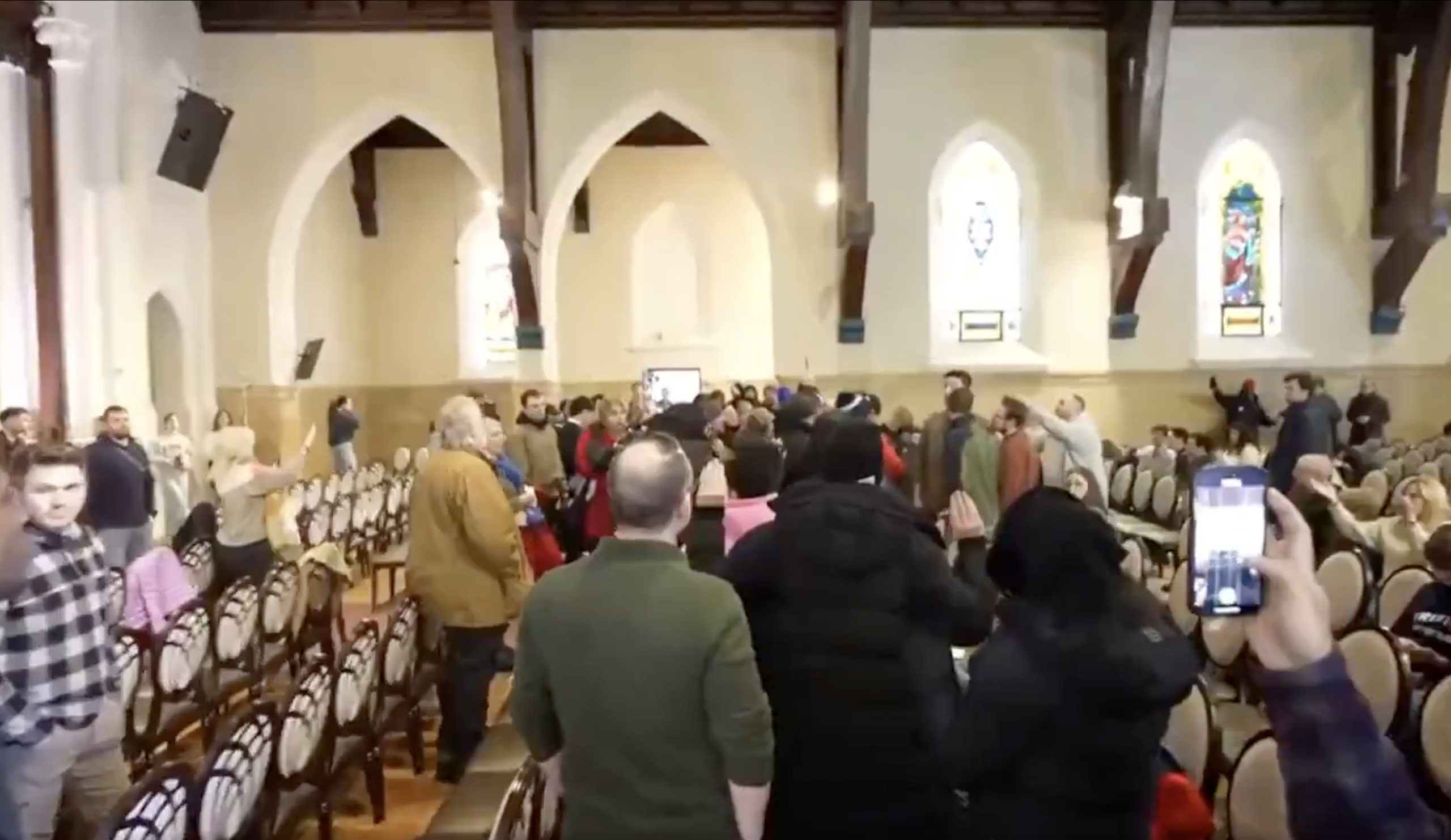
MINNEAPOLIS (AP) — U.S. Department of Justice Assistant Attorney General Harmeet Dhillon said her agency is investigating federal civil rights violations 'by these people desecrating a house of worship and interfering with Christian worshippers.'
The U.S. Department of Justice said Sunday it is investigating a group of protesters in Minnesota who disrupted services at a church where a local official with U.S. Immigration and Customs Enforcement apparently serves as a pastor. (Video screengrab, courtesy Center for Baptist Leadership)

MINNEAPOLIS (AP) — The U.S. Department of Justice said Sunday it is investigating a group of protesters in Minnesota who disrupted services at a church where a local official with U.S. Immigration and Customs Enforcement apparently serves as a pastor.

A livestreamed video posted on the Facebook page of Black Lives Matter Minnesota, one of the protest’s organizers, shows a group of people interrupting services at the Cities Church in St. Paul by chanting “ICE out” and “Justice for Renee Good.” The 37-year-old mother of three was fatally shot by an ICE agent in Minneapolis earlier this month amid a surge in federal immigration enforcement activities.

The protesters allege that one of the church’s pastors — David Easterwood — also leads the local ICE field office overseeing the operations that have involved violent tactics and illegal arrests.


U.S. Department of Justice Assistant Attorney General Harmeet Dhillon said her agency is investigating federal civil rights violations “by these people desecrating a house of worship and interfering with Christian worshippers.”

“A house of worship is not a public forum for your protest! It is a space protected from exactly such acts by federal criminal and civil laws!” she said on social media.

Attorney General Pam Bondi also weighed in on social media, saying that any violations of federal law would be prosecuted.

Nekima Levy Armstrong, who participated in the protest and leads the local grassroots civil rights organization Racial Justice Network, dismissed the potential DOJ investigation as a sham and a distraction from federal agents’ actions in Minneapolis-St. Paul.

“When you think about the federal government unleashing barbaric ICE agents upon our community and all the harm that they have caused, to have someone serving as a pastor who oversees these ICE agents, is almost unfathomable to me,” said Armstrong, who added she is an ordained reverend. “If people are more concerned about someone coming to a church on a Sunday and disrupting business as usual than they are about the atrocities that we are experiencing in our community, then they need to check their theology and the need to check their hearts.”

The website of St. Paul-based Cities Church lists David Easterwood as a pastor, and his personal information appears to match that of the David Easterwood identified in court filings as the acting director of the ICE St. Paul field office. Easterwood appeared alongside DHS Secretary Kristi Noem at a Minneapolis press conference last October.


Cities Church did not respond to a phone call or emailed request for comment Sunday evening, and Easterwood’s personal contact information could not immediately be located.

Easterwood did not lead the part of the service that was livestreamed, and it was unclear if he was present at the church Sunday.

In a Jan. 5 court filing, Easterwood defended ICE’s tactics in Minnesota such as swapping license plates and spraying protesters with chemical irritants. He wrote that federal agents were experiencing increased threats and aggression and crowd control devices like flash-bang grenades were important to protect against violent attacks. He testified that he was unaware of agents “knowingly targeting or retaliating against peaceful protesters or legal observers with less lethal munitions and/or crowd control devices.”

“Agitators aren’t just targeting our officers. Now they’re targeting churches, too,” the U.S. Immigration and Customs Enforcement agency stated. “They’re going from hotel to hotel, church to church, hunting for federal law enforcement who are risking their lives to protect Americans.”

Black Lives Matter Minnesota co-founder Monique Cullars-Doty said that the DOJ’s prosecution was misguided.

“If you got a head — a leader in a church — that is leading and orchestrating ICE raids, my God, what has the world come to?” Cullars-Doty said. “We can’t sit back idly and watch people go and be led astray.”

How ICE recruitment propaganda targets the worst of the worst

Sabrina Haake
January 18, 2026
RAW STORY


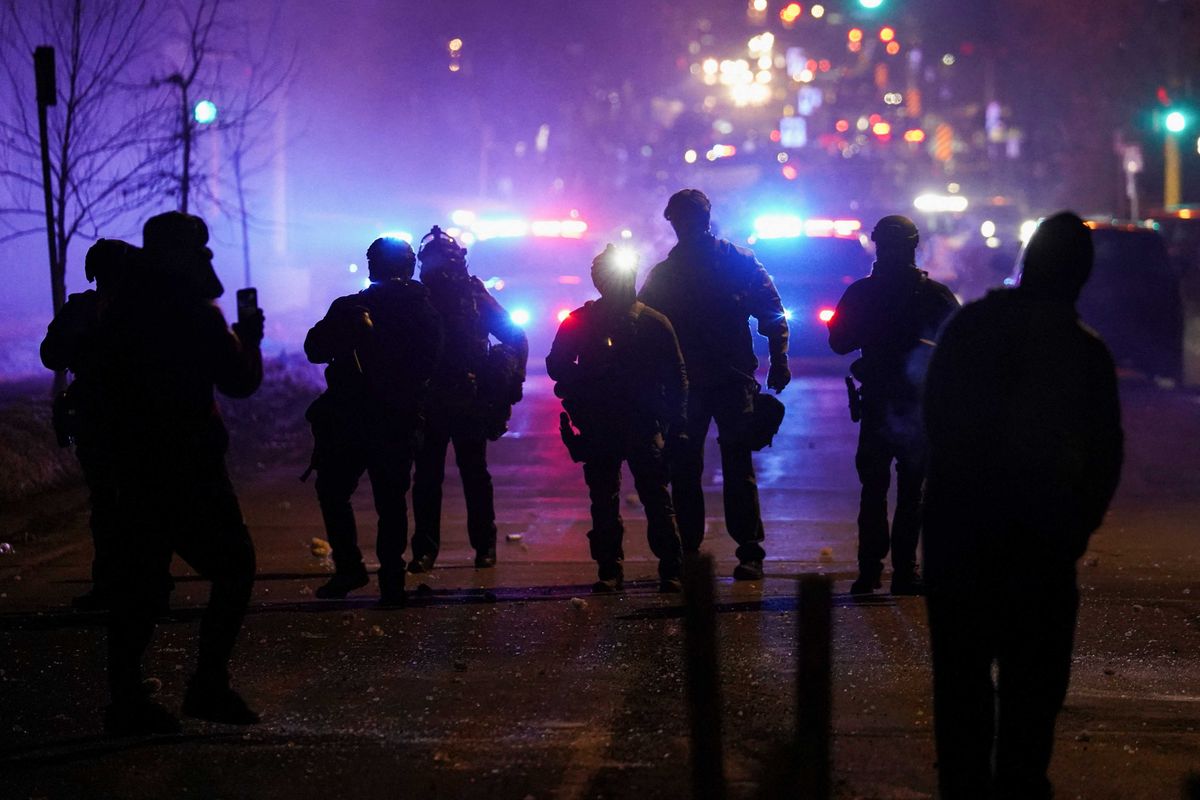
Federal agents stand guard in Minneapolis. REUTERS/Ryan Murphy

Before Renee Nicole Good’s body was cold, Donald Trump, Kristi Noem, and JD Vance grabbed the national spotlight to defame her (terrorist mows down federal agents!) while defending the goon who murdered her.

The masked ICE agent who shot Good at close range held his cellphone in one hand while firing his gun with the other, showing more interest in spectacle than fear. His video will be added to the Department of Homeland Security library of recordings to generate bloodlust among the type of recruits ICE seeks: Proud Boys, Oath Keepers, Three Percenters, pardoned J-6ers, and basement-dwelling incels craving skin on skin action of any kind.

Under Noem’s guidance, and on the American taxpayers’ considerable dime, DHS records high-resolution, highly-edited, "cinematic" style videos of their own brutality for recruitment propaganda. Like the midnight raid of a Chicago apartment building when DHS filmed a Black Hawk helicopter swooping in to terrify sleeping people with flash-bang grenades, most violence is staged, performative horror.

With the Supreme Court temporarily blocking Trump’s deployment of military forces into U.S. cities, ICE is stepping up, morphing into Trump’s Praetorian guard. A look at DHS’ recruitment materials makes clear that ICE isn’t targeting intelligent, law-respecting recruits, but a rabid ethnic cleansing force to serve Steve Miller’s white nationalist agenda.

Emotional appeals to racists

In ICE’s August recruitment push, DHS posted on X, “Which way, American man?” with signs on a deserted road pointing Uncle Sam to “Cultural Decline” and other destinations.

“Which way, American man” is a call for white nationalism, and was the title of William Gayley Simpson’s 1978 white nationalist, neo-Nazi book.

An online review shows DHS similarly misusing American iconography to recruit new agents, manipulating emotions with depictions of a fictitious, ‘happier’ time in America by turning homey Norman Rockwell-style graphics into sinister appeals for violence.

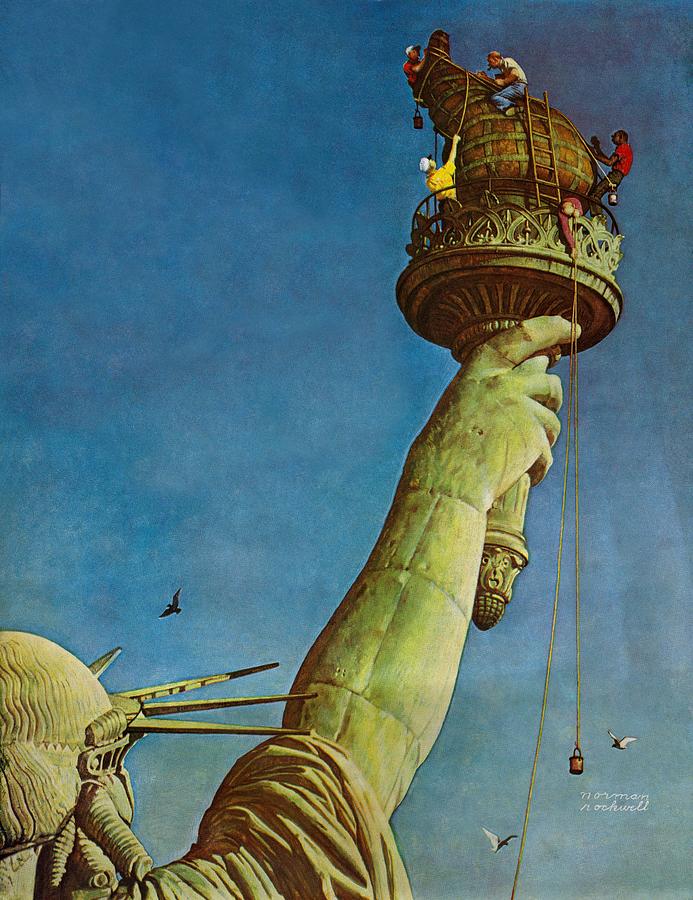
In September, DHS started using Rockwell’s images on Twitter, Facebook, and Instagram, starting with the 1946 Working on the Statue of Liberty. The image appears with ICE slogans, “Protect Your Homeland. Defend Your Culture,” and adds a racist dog whistle by Calvin Coolidge — “Those who do not want to be partakers of the American spirit ought not to settle in America” — along with a URL where people can sign up with ICE.

Rockwell’s family has asked federal agencies to stop using his work because DHS has “become infamous in recent months for its increasingly brutal and often illegal enforcement methods.” In early November, Rockwell’s family wrote an op-ed in USA Today complaining that the Trump messages behind the posts run so contrary to the artist’s personal beliefs that he would be “devastated” to see his art “marshaled for the cause of persecution toward immigrant communities and people of color.”

Us vs. them propaganda

ICE.gov features job postings in which a Civil War era Uncle Sam points and intones, “America needs you. America has been invaded by criminals and predators. We need YOU to get them out.” Then, in smaller print, “You do not need an undergraduate degree.”

ICE’s YouTube site features video after video of Fox News “interviews” — propaganda — alongside professionally filmed fast-action shorts. One video, “Veterans Day Message,” is an interview with acting Director Todd Lyons conflating ICE agents with the military. Spliced with war-time footage, it shows fast action war scenes, paratroopers dropping from planes, armed troops descending from helicopters, and a war-gaming situation room.

Another, “Florida 287(g) with Collier County Sheriff Rambosk,” is accompanied by video game music and features an “Alligator Alcatraz” sign above swampland complete with live alligators waiting for prey.

Another, “Break the law. We regulate” appeals to directly to thugs. It opens showing six masked ICE officers pulling a man out of his car and shoving him to the ground, then segues to other arrests as a narrator says, “Regulators. We regulate the stealing of his property. We damn good too. But you can’t be any geek off the street. You gotta be good with the steal, you know what I mean, to earn your keep.”

Another features an Ohio sheriff in a ten gallon cowboy hat bragging about how many illegal aliens are in his jail, proclaiming, “Thank God that we have an administration, that we have ICE and President Trump actually doing what people want.”

This racist, political propaganda, illegally funded with federal tax dollars, obviously targets low-intellect applicants.

Minnesota fights back


Immediately after Good’s murder, the Trump regime doubled down, and sent 1000 more ICE agents into Minnesota, on top of an already unwanted 2,100 DHS and Border Patrol agents.

Trump officials know that increased ICE forces, now expanding without legal authority into traffic stops, elevate the threat to civilians. Since increased violence and civic unrest will hasten the day Trump declares martial law, escalation appears to be the goal.

St. Paul, Minneapolis, and the state of Minnesota are fighting back. On Monday, they filed suit, alleging that thousands of armed and masked DHS agents have stormed the Twin Cities to conduct militarized raids and carry out dangerous, illegal, and unconstitutional stops and arrests in sensitive public places, including schools and hospitals — all under the guise of lawful immigration enforcement.

This operation is driven by nothing more than the Trump administration’s desire to punish political opponents and score partisan points — at the direct expense of Plaintiffs’ residents. Defendants’ actions appear designed to provoke community outrage, sow fear, and inflict emotional distress, and they are interfering with the ability of state and local officials to protect and care for their residents….

Minnesota notes that state and city governments are bearing the costs of ICE’s civil rights violations. Government brutality, broad-scale and publicly excused by Trump’s spokespeople, “recklessly endangers the public safety, health, and welfare of all Minnesotans. Additionally, Defendants’ agents’ inflammatory and unlawful policing tactics provoke the protests the federal government seeks to suppress…”

Kristi Noem’s DHS podium is inscribed with “One of ours, all of yours,” the Nazi philosophy of collective punishment. By lore or fact, when one SS officer was killed in a Czech Village, the Nazis killed every resident of that village in retribution. Wildly disproportionate, lawless, ignorant, and brutal, the slogan complements ICE recruitment materials perfectly, and draws a map of where Trump’s ICE is heading.

Sabrina Haake is a columnist and 25+ year federal trial attorney specializing in 1st and 14th A defense. Her Substack, The Haake Take, is free.


Investigation Demanded as ICE Reports Third Death at Texas Detention Center in 44 Days

“This is the third person who has died in the $1.24 billion privately-run facility that focuses on profits instead of meeting basic standards,” said one lawmaker.


Acting Immigration and Customs Enforcement Director Todd Lyons (C) speaks during a press conference on October 30, 2025, in Gary, Indiana.
(Photo by Jamie Kelter Davis/Getty Images)

Julia Conley
Jan 19, 2026
COMMON DREAMS

Officials in both Texas and Minnesota are calling for accountability and a full investigation into conditions at Camp East Montana, the sprawling detention complex at Fort Bliss in El Paso, Texas, following the third reported death at the facility in less than two months.

Victor Manuel Diaz, 36, was detained by US Immigration and Customs Enforcement officers in Minneapolis, where ICE has been carrying out violent immigration arrests, cracking down on dissent, and where one officer fatally shot a legal observer earlier this month.
.


‘ICE Kills’: Guards Reportedly Choked Man to Death at El Paso Detention Center


He was one of roughly 2,903 detainees being held at Camp East Montana at Fort Bliss US Army base, one of the largest ICE detention centers in the country, on January 14 when contract security workers found him “unconscious and unresponsive” in his cell.

He was later pronounced dead and ICE released a statement saying he had died of “presumed suicide,” but officials arre still investigating his cause of death.

Diaz’s death comes days after it was reported that a medical examiner in Texas was planning to classify another death reported at Camp East Montana—that of Geraldo Lunas Campos—as a homicide.

A doctor said Lunas Campos’ preliminary cause of death in early January was “asphyxia due to neck and chest compression.” An eyewitness said he had seen several guards in a struggle with the 55-year-old Cuban immigrant and then saw guards choking Lunas Campos.

A month prior of Lunas Campos’ death, 49-year-old Guatemalan immigrant Francisco Gaspar-Andres died at a nearby hospital; he was a detainee at Camp East Montana. ICE said medical staff attributed his death to “natural liver and kidney failure.”

Minnesota Lt. Gov. Peggy Flanagan called for a “complete and transparent investigation” into what happened to Diaz after his death was announced Sunday.

“We deserve answers,” said Flanagan.

US Rep. Veronica Escobar (D-Texas), who last year expressed concern about the US government’s deal with a small private business, Acquisition Logistics LLC, to run Camp East Montana, said the detention center “must be shut down immediately,” warning that “two deaths in one month means conditions are worsening.”


After the administration awarded a $1.2 billion contract to Acquisition Logistics to build and operate the camp, lawmakers and legal experts raised questions about the decision, considering the small company had no listed experience running detention centers, its headquarters was listed as a Virginia residential address, and the president and CEO of the company did not respond to media inquiries.

“It’s far too easy for standards to slip,” Escobar told PBS Newshour after touring the facility. “Private facilities far too frequently operate with a profit margin in mind as opposed to a governmental facility.”

In September, ICE’s own inspectors found at least 60 violations of federal standards, with employees failing to treat and monitor detainees’ medical conditions and the center lacking safety procedures and methods for detainees to contact their lawyers.

Across all of ICE’s detention facilities, 2025 was the deadliest year for immigrant detainees in more than two decades, with 32 people dying in the agency’s centers.

After Diaz’s death was reported Sunday, former National Nurses United communications adviser Charles Idelson said that “ICE detention centers are functioning like death camps.”


Deaths in Detention Warn of Horrors Behind ICE’s Prison Walls

At least 32 people died in ICE jails in 2025, and four more have already died in ICE custody this year.
January 17, 2026
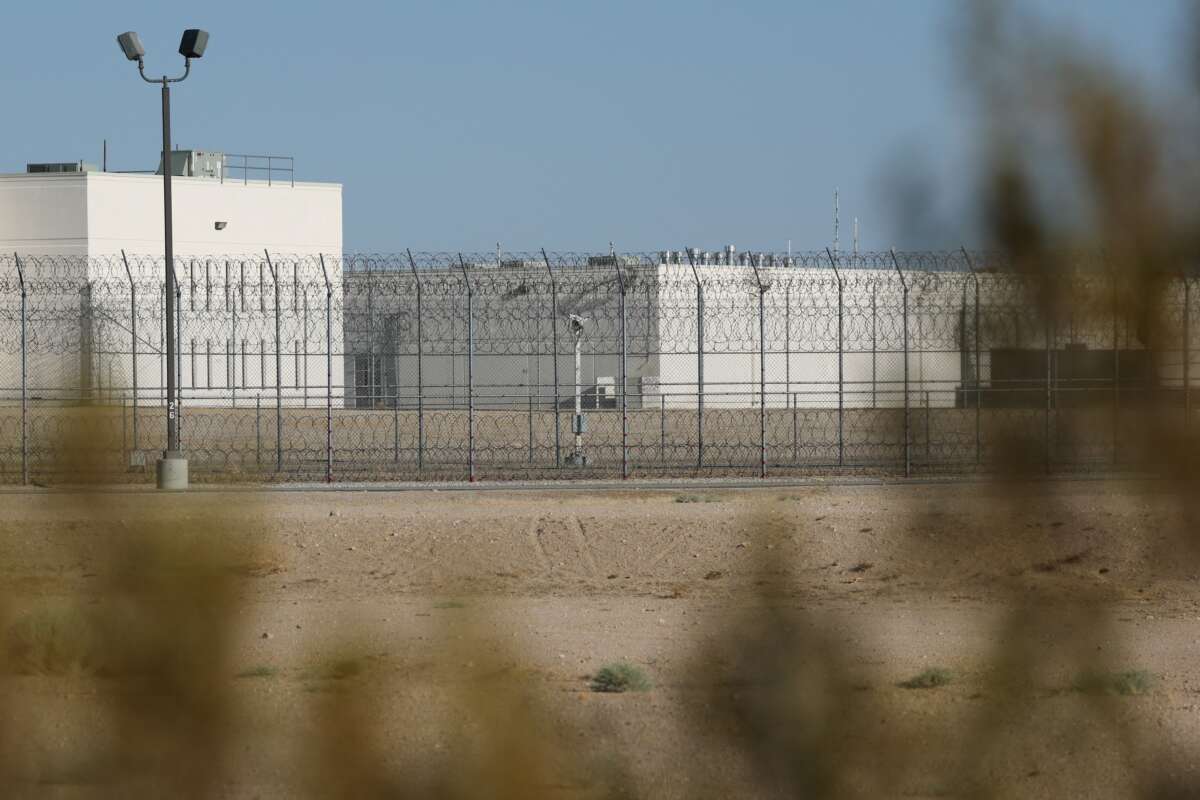
The CoreCivic, Inc. California City Immigration Processing Center stands in the Kern County desert awaiting reopening as a federal immigrant detention facility under contract with Immigration and Customs Enforcement in California City, California, on July 10, 2025.PATRICK T. FALLON / AFP via Getty Images

All eyes are on the Trump administration’s brutal “immigration enforcement” operation in Minnesota, where roving squads of federal agents in Minneapolis are demanding proof of citizenship from people of color on the street and lashing out against residents enraged by the deadly shooting of Renee Nicole Good by an Immigration and Customs Enforcement (ICE) officer last week.

Far less visible is the rapidly expanding, nationwide network of jails and prisons where ICE and Border Patrol lock people up after they are arrested, and that is almost certainly by design. Four people died in federal immigration jails so far in 2026, and at least 32 people died in ICE jails over the course of 2025 as President Donald Trump ramped up his mass deportation campaign. The death count for 2025 constituted the most deaths in ICE jails ever recorded outside the COVID-19 pandemic.

“If we are seeing that sort of outward extreme violence in broad daylight in the streets of Minneapolis and streets across the country, imagine what people must be facing behind closed doors and behind bars in ICE detention centers,” said Setareh Ghandehari, advocacy director at the Detention Watch Network, in an interview with Truthout.

“If we are seeing that sort of outward extreme violence in broad daylight in the streets of Minneapolis, imagine what people must be facing behind closed doors and behind bars in ICE detention centers.”

The number of people imprisoned by ICE increased by 75 percent to nearly 66,000 in 2025, and despite repeated claims by administration officials about targeting “the worst of the worst,” nearly 74 percent have no criminal convictions, according to the Transactional Records Access Clearinghouse immigration database. ICE’s “roving patrols” and “indiscriminate raids” have contributed to a 2,450 percent increase in the number of people with no criminal record held in ICE detention on any given day, according to the American Immigration Council.

Ghandehari told Truthout that ICE has long faced allegations of allowing abuse, medical neglect, inhumane conditions, and solitary confinement in its network of jails and prisons, which are used to incarcerate people facing deportation orders.


ICE Wants to Reopen Notorious California Prison. Locals Are Fighting Back.
FCI Dublin was shut down in 2024 after revelations of abuse against prisoners. Residents want it to stay closed.  By Victoria Law , Truthout/TheAppeal December 20, 2025


ICE’s carceral facilities are often run by for-profit prison companies or local sheriffs acting as contractors. While many detainees are held at remote facilities in Louisiana and Texas, far from families and legal support, Ghandehari said ICE is now operating nearly 200 jails nationwide after opening or reopening more than 130 facilities in 2025.

“What we have seen and are seeing in Minneapolis is enraging; it’s unacceptable, it’s out of control, but unfortunately it is unsurprising given that ICE is inherently a violent agency, and what we are now seeing in Minneapolis is really the manifestation of years of ICE being allowed to act with impunity,” Ghandehari told Truthout.

On January 15, the county medical examiner in El Paso, Texas, announced that the death of Geraldo Lunas Campos, a 55-year-old man held at a massive immigration detention center at El Paso’s Fort Bliss military base, was likely a homicide. The Department of Homeland Security (DHS) said Campos was attempting to kill himself and violently resisted when officers intervened but provided no evidence to back up that claim.

“What we are now seeing in Minneapolis is really the manifestation of years of ICE being allowed to act with impunity.”

The most recent deaths among those imprisoned by ICE also include 46-year-old Parady La from Cambodia, who was arrested and jailed by ICE on January 6 and died three days later after receiving “treatment for severe drug withdrawal at the Federal Detention Center” in Philadelphia, Pennsylvania, according to DHS. La was found unresponsive in his cell the next day and was later pronounced dead of brain and organ failure at a nearby hospital.

Withdrawal from certain drugs and alcohol can be fatal but is easily treatable with medical supervision and proper medications. In an attempt to revive La, DHS claims federal officers administered CPR and naloxone, a drug used to treat opioid overdoses, not withdrawal symptoms. The Bureau of Prisons maintains a protocol for safely supervising drug withdrawal in federal detention facilities.

Jonathan Feinberg, an attorney for La’s family, said nobody should die in custody from opiate withdrawal.

“We do not at this point know exactly what happened to Parady La, but the circumstances that have been reported are highly suspicious and concerning,” Feinberg wrote in an email to Truthout on Friday. “We intend to conduct a full investigation and pursue every legal remedy available to his family.”

A 2024 report by Physicians for Human Rights examined 52 deaths in ICE custody from 2017 to 2021 and found that 95 percent were preventable or possibly preventable if appropriate medical care had been provided. Civil liberties and international human rights groups have sounded alarm bells about medical neglect and preventable deaths in ICE custody for over a decade.

ICE did not respond to a request for comment by the time this story was published. However, the official statement on La’s death includes a list of mostly minor drug and alcohol violations and accuses the man of being a “career criminal,” reflecting a larger pattern of ICE smearing people who are harmed at the hands of its agents. After Renee Good was fatally shot by an ICE agent in Minneapolis while attempting to pull away from the scene in her vehicle on January 7, Homeland Security Secretary Kristi Noem baselessly accused the mother and poet of being a “domestic terrorist.”

Other recent deaths in ICE custody include Luis Beltran Yanez-Cruz, 68, who was detained at the Imperial Regional Detention Facility in California and died on January 6, and Luis Gustavo Nunez Caceres, 42, who was detained at the Joe Corley Processing Center in Texas and died on January 5, according to Detention Watch Network.

“You can imagine how bad the conditions have been getting,” Ghandehari said. “It’s not even a full two weeks into this new year, and we already have four deaths in ICE custody.”

ICE cannot place U.S. citizens in detention for extended periods of time, but multiple citizens have reportedly been arrested by ICE under Trump’s crackdown, including George Retes, a U.S. veteran who was wrongly detained by ICE in California for three days after a chaotic raid on a cannabis farm in August.


ICE cannot place U.S. citizens in detention for extended periods of time, but multiple citizens have reportedly been arrested by ICE under Trump’s crackdown.

The Oglala Sioux Tribe, one of the largest tribal nations in the U.S., has accused ICE of illegally holding four members arrested during raids in Minneapolis, according to Axios.

From New Jersey to California to Minnesota, immigration officials have barred Democratic lawmakers from entering ICE jails to conduct unannounced inspections and check on incarcerated constituents. A federal judge recently struck down a policy requiring advance notice from lawmakers, but Noem instituted a new policy that blocked Minnesota Rep. Ilhan Omar and other Democrats from visiting the central ICE holding facility in the Twin Cities shortly after Good was killed.

“When we appropriate funds as members of Congress, we are expected by the public to do oversight because the public requires their money be used with transparency and accountability,” Omar told reporters on January 10. “And what happened today is ICE agents decided that we were no longer allowed to fulfill our constitutional duties.”

Rep. Ro Khanna (D-California) says he may be the only member of Congress to conduct an oversight visit to an ICE jail under the Trump administration. Khanna and a staff member visited ICE California City Detention Center on January 6, the largest ICE prison in California. Khanna made the visit after one of his constituents “was beaten, unlawfully detained, and held at this very facility before being deported,” according to a social media post.

Khanna said he was “deeply disturbed” by his visit to the ICE prison, which currently holds nearly 1,500 people. When he spoke to families in the parking lot, they described their loved ones being subjected to “inadequate food, visible mold, and water that tastes like metal.” A lack of medical care was the most alarming failure, Khanna said, with one detainee telling the congressman that he was urinating blood but still had not received medical care.

“For illnesses like the flu, medicine is rarely provided; at best, [an] ibuprofen is given, but more often detainees are told to buy basic medicine from the commissary at exaggerated, unaffordable prices,” Khanna said. “With reportedly only one doctor for hundreds of people, the neglect is structural.”

Congress faces a self-imposed January 30 deadline to pass legislation funding the government, which gives lawmakers a chance to rein in ICE by defunding the infrastructure that makes Trump’s brutal “immigration” crackdown possible, including the expanding network of ICE jails and prisons, according to Ghandehari. ICE’s budget is set to balloon by $170 billion under the megabill championed by Trump and passed by Republicans in July 2025, but some progressive Democrats are now pushing to defund the agency.

“They can’t do what they are doing without infrastructure that has been built up over decades,” Ghandehari told Truthout, explaining that the only way to stop the Trump administration’s violence is by starting to dismantle ICE’s infrastructure. ”That’s why it’s so important that Congress do the right things this week and start the process of cutting ICE off.”


Battle Over Facial Recognition in New Orleans Will Shape Future of Surveillance


Edith Romero, an organizer in New Orleans, discusses the dangers of the growing surveillance state.
By Ed Vogel , TruthoutPublishedJanuary 17, 2026

The New Orleans City Council and New Orleans Police Department continue to push for facial recognition technology, despite persistent community opposition.  John Lund via Getty Images

While New York City, Los Angeles, and Chicago have all received significant attention when it comes to police use of surveillance technologies, the small city of New Orleans has for years been the laboratory for a sophisticated surveillance apparatus deployed by the city’s police department and other policing bodies.

Just last year, New Orleans was in the news as the city considered setting a new surveillance precedent in the United States. First, a privately run camera network, Project N.O.L.A., was exposed for deploying facial recognition technology, including “live use” (meaning Project N.O.L.A. was identifying people in real time as they walked through the city). All of this was done in close collaboration with the local police, despite these uses violating a 2022 ordinance that placed narrow limits on the use of facial recognition.

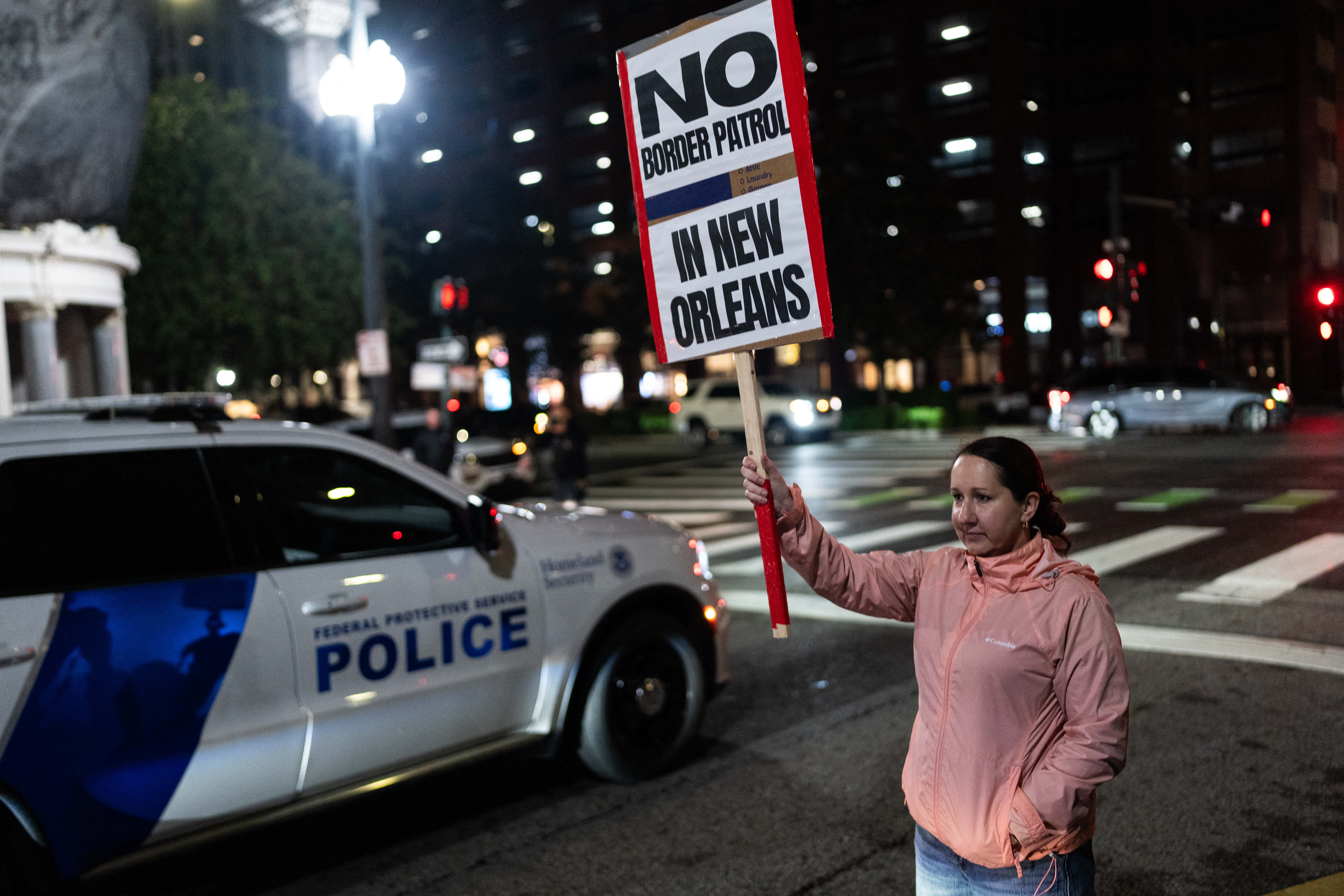
Then the city flirted with formally approving the use of live facial recognition technology, which would have been a first in the United States. If enacted, live facial recognition technology would allow police to identify individuals as they move about New Orleans in real time. All of this occurred in the months before the Trump administration deployed Border Patrol and Immigration and Customs Enforcement (ICE) agents, wielding an array of surveillance technologies, to terrorize and kidnap New Orleans residents. Of course, New Orleans residents have organized and actively fought back against the police and their spying, offering lessons for organizers across the country.

Edith Romero, an organizer with Eye on Surveillance (EOS), spoke with Truthout about the history of Eye on Surveillance, Project NOLA, the use of facial recognition technology in New Orleans and why we should all be watching what’s happening there if we’re concerned about the growing surveillance state.

Ed Vogel: Who is Eye on Surveillance and what do you do?

Edith Romero: In 2020, the Eye on Surveillance (EOS) coalition campaigned for and passed a surveillance ordinance ban that prohibited cell site simulators, facial recognition, and other surveillance technologies. Unfortunately, this ordinance was amended a couple of years later to approve loopholes for the use of facial recognition technology. EOS continues working to halt the expansion of surveillance locally, to change narratives regarding surveillance, and to build a New Orleans that is truly safe for everyone. At this moment while we face the occupation of Customs and Border Protection (CBP), ICE, and National Guard troops, we are even more committed and engaged in the fight against surveillance, with the clear understanding that surveillance is being deployed to kidnap and terrorize our communities of color.


New Orleans Resists ICE Invasion Despite Surveillance and State Repression
Before ICE descended on New Orleans, GOP lawmakers made it a crime to interfere with immigration enforcement. By Mike Ludwig , Truthout/TheAppeal  December 9, 2025


EOS has done some amazing organizing to make the problem of surveillance legible in New Orleans and across the country. Can you share more about your organizing strategy to challenge surveillance systems and infrastructure?

Our organizing strategy has always been community and coalition building. Surveillance affects us all, especially our communities of color. That is why we work with immigrants, Black and Brown residents of New Orleans, teacher unions, civic organizations, and local organizations to unite under the same mission: building a New Orleans free of surveillance. Surveillance truly impacts all of us, in every aspect of our lives; we bring forward the interconnectedness of shared struggles via our fight against surveillance through community meetings, teach-ins both in person and virtual, online educational campaigns and creative community events such as community scouting of local surveillance cameras. Relationship building is key for nurturing movements and narrative change towards a world that truly takes care of all of us. Relationship building has not only enabled the victory of getting the live facial recognition surveillance ordinance withdrawn but has strengthened community power and narrative change regarding surveillance and the root causes of safety, resources, and community care.

How have you leveraged your base building towards policy change?

Base building is essential for policy change. We know surveillance is an issue that transcends time, lived experience, and identities. To build a wide coalition that truly represented the broad harm, danger, and systemic inequities that surveillance upholds, we brought together organizations whose work doesn’t necessarily focus on surveillance, but was a reflection of how surveillance permeates almost every aspect of our lives. We worked with formerly incarcerated community leaders who teach about the dangers of surveillance for those on parole, especially in emergency situations, we brought in immigrant community members whose lives are constantly monitored and whose families are separated by ICE/CBP with the aid of surveillance weapons, we talked with teachers who provided insight into the school-to-prison pipeline and how surveillance of our youth is seeping into our education system. Base building enables a holistic perspective regarding the harm and racism that surveillance embodies, countering narratives that erroneously attribute safety to overpolicing and surveillance. The goal is to truly have conversations and demand policy that resources communities rather than corporate interests that sacrifice our wellbeing.

From the outside, it feels like the use of facial recognition technology in New Orleans is a perpetual issue. Can you trace for us what has changed regarding facial recognition technology since the policy victory in 2021?

After our victory with the surveillance ban in 2021, which banned four different surveillance technologies including facial recognition, we had to mobilize continuously against the City Council and NOPD as they continued to push for the approval of facial recognition against persistent community opposition. In 2022, City Council added amendments to the surveillance ban that approved facial recognition for “violent offenses,” opening the door to the use of facial recognition by NOPD. Fast forward to 2025, City Council and NOPD again introduced an ordinance to expand facial recognition and other surveillance technologies even further, with the goal of approving live facial recognition in all the city cameras. NOPD and City Council try to sell surveillance as the ultimate solution for crime and safety, even though research and lessons from history show that safety comes from resourcing community, not surveillance or overpolicing. New Orleans heavily invests in surveillance; for example, the French Quarter is the most surveilled area of all the city, and even so, we still have tragedies like the New Year’s Day attack last year. Surveillance will never bring safety, and as of late we have seen how surveillance is being weaponized through drones, facial recognition apps, and license plate readers to kidnap our communities of color through the violent CBP operation in New Orleans, Catahoula Crunch.

How did you learn that NOPD was using facial recognition in real time?

For a while, we had knowledge about Project NOLA secretly spying on us with banned facial recognition cameras. However, we weren’t aware of the extremely close relationship between Project NOLA and NOPD. In early 2025, The Washington Post reported that NOPD was using Project NOLA to bypass the surveillance ban on facial recognition. Through this reporting we learned that despite the ban, Project NOLA would send alerts and work intimately with NOPD officers, sending live facial recognition alerts to their phones, providing feeds of their cameras to certain officers, or communicating about certain people of interest that they wanted to be tracked through live facial recognition.

Can you contextualize the use of facial recognition in New Orleans and describe the specific communities who are targeted by the police?

Facial recognition in New Orleans has to be considered in the context of the deep history of Black enslavement, Jim Crow, and racism in Louisiana, as well as the fact that Louisiana is the incarceration capital of the world. As we know, facial recognition is a deeply biased technology, one that reinforces the systemic racism that exists in our modern-day society. Research finds that facial recognition misidentifies people of color, leading to arrests of people like Randal Reid, a man from Atlanta, who was arrested by the Jefferson Parish Sheriff’s Office for crimes in Louisiana that he did not commit. Surveillance historically has been used as an excuse to overpolice and criminalize people of color, starting from the lantern laws that were put in place to surveil enslaved Africans when they moved at night through the carrying of lanterns, to the CIA operations that targeted prominent Black civil rights leaders, to the Patriot Act that demonized Muslim and Arab community members to institute surveillance of U.S. citizens and the creation of the Department of Homeland Security.

New Orleans is a majority Black city (55 percent, according to the 2024 census) with a sizable Latine and immigrant community, a city that is constantly being labeled as a sacrifice zone for climate crisis induced hurricanes or cancer-causing factories. It is appalling for New Orleans to constantly be used as a testing ground for racist surveillance, considering the amount of harm this technology would bring to an under-resourced city that depends on hospitality revenue from a Black and Latine labor force.

The NOPD says that they are no longer using real time facial recognition technology but there is an effort to enshrine its use into law. Tell us about the proposed ordinance and how EOS is challenging it?

Ordinance 35,137, introduced in May 2025, was a joint attempt by NOPD and City Council to approve live facial recognition in New Orleans, right after their possibly illegal partnership with Project NOLA was exposed by The Washington Post on a national level. EOS quickly mobilized against this dangerous ordinance, bringing together multiple diverse local organizations to oppose it. This included Step Up Louisiana, Voice of the Experienced (VOTE), Democratic Socialists of America (DSA), and immigrant rights organizations. National organizations such as MediaJustice, Fight for the Future, and Southerners Against Surveillance Systems & Infrastructure (SASSI) also joined the fight against live facial recognition in New Orleans, echoing the understanding that an assault on New Orleans’ through racist surveillance tech is an assault on our collective safety, dignity, and privacy. Surveillance is a danger to everyone, and a coalition of organizations that have diverse perspectives and communities is best situated to denounce the imminent harm posed by live facial recognition. Through public community events, meetings with council members, and campaigns to inform local communities of the danger posed by facial recognition and surveillance, EOS was able to shift public narratives, build diverse coalitions against surveillance and ultimately, get City Council to withdraw the live facial recognition ordinance.

Who is Project NOLA, the organization facilitating this vast camera apparatus?

Project NOLA is a spy network of thousands of private cameras in New Orleans as well as other cities across the country, that uses banned live facial recognition technology through their status as a non-profit. Project NOLA is owned and managed by Bryan Lagarde, an ex-NOPD officer who also hosts Project NOLA footage in reality TV crime shows. He pays himself $220,000 a year for this work and his family populates the executive board of Project NOLA. Project NOLA cameras are installed in business, houses, and private properties throughout Louisiana and even other cities such as Midfield and Fairfield, Alabama. Project NOLA’s purpose is to bypass city law and, through loopholes, facilitate law enforcement with the use of dangerous, racist live facial recognition alongside other highly invasive surveillance technology including license plate readers. Project NOLA has sole discretion and zero community accountability regarding what, how, and where their invasive video footage is stored, disposed, used, or even shared. We know Project NOLA is sharing their video streams with the Louisiana State Police, FBI, and select NOPD officers. If Project NOLA decides to, they could easily share these camera streams with facial recognition with ICE or CBP, facilitating the kidnapping and racial profiling of people of color.

How do the police, elected officials, Project NOLA, and others in New Orleans align and shape the narrative to justify the use of facial recognition and other surveillance tools?

Police, elected officials, Project NOLA, and people who have financial interests that benefit from surveillance justify and sell facial recognition as the ultimate solution for community safety. According to these people in positions of power, more cameras mean less crimes. It also means more incarceration, more profit for private prisons and detention centers, and a lazy, degrading direction to take when trying to ignore the extreme lack of resources in our communities. Real community safety doesn’t take shortcuts, it doesn’t incarcerate, and it surely doesn’t come from surveillance.

Louisiana recently passed Act 399. Can you tell us more about what this legislation does and how it compounds the potential harms of surveillance tools like facial recognition in New Orleans?

Act 399 is a state law designed by right-wing state legislators with the purpose of scaring, intimidating, and silencing any type of action that can seem to be against immigration enforcement in the state of Louisiana. As of December 26, 2025, no one has been prosecuted by this state law, but it has a chilling effect on the people of Louisiana, promoting fear of incarceration for providing mutual aid, recording ICE, or in any way supporting our immigrant communities. ICE, CBP, and our right-wing Gov. Jeff Landry could use Act 399 to force Project NOLA to share their cameras, video streams, and racist surveillance technology with and for violent “immigration enforcement” attacks.

Why do you think people from around the country should be paying attention to this fight in New Orleans?

The fight in New Orleans is one that every city will eventually face. New Orleans is the laboratory for mass surveillance experiments that eventually may spread to the rest of the country. If live facial recognition would have been approved in New Orleans in 2025, it would have provided a blueprint and example for the rest of the country to follow. Surveillance affects us all, whether in one corner of the country or another, or in Palestine where these surveillance technologies were first tested on Palestinians, because it creates a ripple effect of mass surveillance expansion that decimates privacy and constitutional rights, and perpetuates the long history of systemic racism and criminalization of poor people and people of color. At this conjuncture, when the U.S. federal government is increasingly attacking free speech and kidnapping people of color through racial profiling, the threat and danger of surveillance is even more palpable as is the need to fight it and build a better future for our communities.

This article is licensed under Creative Commons (CC BY-NC-ND 4.0), and you are free to share and republish under the terms of the license.

Ed Vogel is a researcher and organizer.


A Tech Bro Think Tank Is Trying to Roll Back Evidence-Based Homelessness Policy

Housing First policies are being replaced with punitive reforms that could push 170,000 people back into homelessness.
January 19, 2026

A general view of the Robert C. Weaver Building, serving as the Department of Housing and Urban Development, on December 12, 2025, in Washington, D.C.Heather Diehl / Getty Images

Last fall, the Department of Housing and Urban Development (HUD) nearly triggered a homelessness disaster of its own making. A rush of policy changes that were rolled out with almost no warning and even less guidance threatened to push up to 170,000 formerly unhoused Americans out of stable housing.

The strangest part? Much of this upheaval traces back to a little-known think tank that was born in Silicon Valley.

The Cicero Institute, created by tech investor Joe Lonsdale, has spent the past few years promoting aggressive policies targeting encampments for the unhoused and pushing cities to move away from Housing First, the U.S.’s primary model for responding to chronic homelessness. Over the summer, HUD quietly adopted several of Cicero’s key recommendations. And the result was widespread panic among the local agencies responsible for keeping people housed.

Meet the Tech-Bro Think Tank Redesigning Homelessness Policy

Joe Lonsdale, best known as a founding partner of Palantir and a member of the original “PayPal Mafia,” created the Cicero Institute in 2016 to inject what he calls “entrepreneurial thinking” into government. The group operates on a roughly $10 million annual budget that is financed by undisclosed donors, and its board is dominated by Lonsdale’s family members, other entrepreneurs, and political staffers. Its messaging leans heavily on the idea that homelessness persists not because of poverty or a shortage of affordable housing, but because service providers are enabling poor behavior.

On his social media accounts, Lonsdale warns of a “homeless industrial complex” supposedly enriching itself through failed policies. That claim is not grounded in evidence, nor does it match the reality I’ve seen after eight years interviewing and observing frontline service workers in the homeless sector. If anything, the people running U.S. homeless shelters and supportive housing programs are overworked, underpaid, and overwhelmed by needs that far exceed their funding.

Yet Cicero’s arguments have found a national platform through the work of Devon Kurtz, the organization’s “public safety policy director.” Kurtz has a background in classics and criminology, but there is no evidence of any experience working in U.S. homelessness systems, according to his LinkedIn profile. Despite this, he has become a frequent commentator, urging lawmakers to ban encampments, expand involuntary psychiatric commitment, move unhoused people into transitional housing programs with strict behavioral requirements, and dismantle key federal institutions that design homelessness policy.


The proposals are sweeping. The evidence behind them is thin.


The Campaign Against Housing First

Cicero’s preferred target is Housing First, a model adopted by the George W. Bush administration and expanded under both Barack Obama and Donald Trump, during the latter’s first term. Housing First prioritizes moving chronically unhoused people into permanent housing without requiring sobriety or treatment upfront. The model rests on numerous randomized controlled trials, which find that people stay housed at far higher rates and reduce consumption of some costly emergency services when basic stability comes first. By contrast, evidence for mental health, income, and employment impacts shows no advantage for the conditional services that Cicero advocates.

Kurtz argues that Housing First has “failed,” pointing to rising numbers of unsheltered people over the past decade. But this argument misuses the data in several ways.

For one, “permanent supportive housing” is the closest thing to Housing First that the federal government provides homeless service recipients. That program wasn’t designed to end all homelessness. It was specifically created for “chronically” homeless households who have been unhoused for at least 12 months and who have a documented disability. Rising unsheltered homelessness, by contrast, has been driven largely by soaring rent costs, the expiration of pandemic-era protections, and insufficient supply of emergency shelter, not Housing First.

There’s also the question of outcomes. HUD tracks Housing First retention each year, and the results are consistent: Since 2015, roughly 90 to 95 percent of people in these programs remain housed. If chronic homelessness is rising, the problem is not that Housing First “doesn’t work.” The problem instead is that there aren’t enough preventative services to keep people housed during crises or sufficient rental subsidies for people who have been unhoused for less than 12 months.

Still, Cicero frequently cites outlier studies to suggest Housing First is dangerous, ineffective, or too expensive. These studies are often based on narrow samples, misapplied to the wrong populations, or interpreted in ways the original authors explicitly warn against. The broader research consensus is clear: Housing First works extremely well for the population it serves. What it cannot do is counteract years of rising rents, stagnating wages, catastrophic shortages of affordable housing, and the collapse of political will to end homelessness.

HUD Adopts Cicero’s Playbook

The Cicero Institute’s advocacy department, “Cicero Action,” has employed “high-powered” lobbyists to push its agenda in states around the country. Cicero Action, for example, hired Alfred Parks, a former state representative, and a corporate lobbyist, Jason Weaks, in New Mexico to advance model bills that criminalize homelessness and redirect funding from permanent to transitional housing programs.

After passing its model legislation in red states like Florida, Missouri, and Utah, it appears the Cicero Institute has expanded its influence to the federal government. In July 2025, President Trump issued an executive order directing HUD to shift federal homelessness funding away from permanent housing and toward transitional housing and encampment enforcement. And HUD has quickly moved to comply.

Federal contracts that were supposed to run through 2026 were abruptly cut short. A new funding notice, released in mid-November, gave local agencies just months to redesign their entire homelessness systems, which took over 10 years to build.

The notice leaned heavily on the same weak evidence that Cicero uses. HUD cited a non-representative survey from 15 states to justify claims that most unsheltered people have severe mental illness or addiction, despite the study’s own authors warning against using their data to generalize about causes. HUD suggested Housing First had failed, even though the agency’s own metrics belied that claim.

Local administrators were stunned. I conducted 12 interviews with local administrators across the country over the past three months. My contacts would only speak to me under the condition of anonymity due to fear of political retaliation from HUD. The administrators I spoke to described HUD’s abrupt change as chaotic, reckless, illegal, dangerous, and impossible to carry out.

“You’re talking about historical supporting of permanent supportive housing,” one administrator said, “and essentially giving us eight months to wind those down. That’s not enough time.”

In addition to this unrealistic deadline, most administrators would have to make those reforms with less funding and, as a result, fewer staff to deliver the intensive case management that HUD is now demanding. “There are some many consequences to this on down the road that they’re not looking that far ahead,” another administrator said. “They are not looking at, ‘If we cut this, how do other services pick that up,’ because we don’t have those services and they aren’t giving us the money to create those services.”

The recently announced $2 billion cuts to community-based mental health and substance abuse treatment will exacerbate this crisis by shrinking, if not eliminating, the case management agencies that deliver the kind of support HUD expects homeless service users to receive.

A lawsuit was quickly filed to thwart disaster. Ninety minutes before its court hearing, HUD abruptly withdrew the funding notice until problems could be worked out.

The Damage Isn’t Over

Even though HUD pulled back its proposal, the uncertainty it created has already strained homelessness systems that were stretched thin long before this episode. With another winter underway and the threat of policy whiplash still looming, governors cannot afford to wait and see what happens next.

Roughly a third of contracts were ending between January and June 2026. A large number of people would therefore lose their rental assistance in the dead of winter if HUD followed through with this disastrous policy. This will cause unsheltered homelessness to spike at a time when emergency shelters already cannot meet demand.

During the COVID-19 pandemic, states used eviction moratoriums, utility shutoff protections, and emergency rental assistance to keep millions of people housed. They may need to use these tools again if HUD continues to pursue abrupt policy shifts without adequate planning.

Thousands of people are depending on them to act before the next crisis hits.

This article is licensed under Creative Commons (CC BY-NC-ND 4.0), and you are free to share and republish under the terms of the license.

Garrett L. Grainger is Research Fellow in Social Inclusion at Wrexham University in Wales. His work on homeless policy and governance has also appeared in outlets like The Hill, NPR, and The Progressive.

Immigrant Rights Advocates Say Trump’s First Year Was “Much Worse” Than Expected

“Trump wants us to hang our heads and give up, but that’s not happening,” says organizer Rossy Alfaro.
January 17, 2026

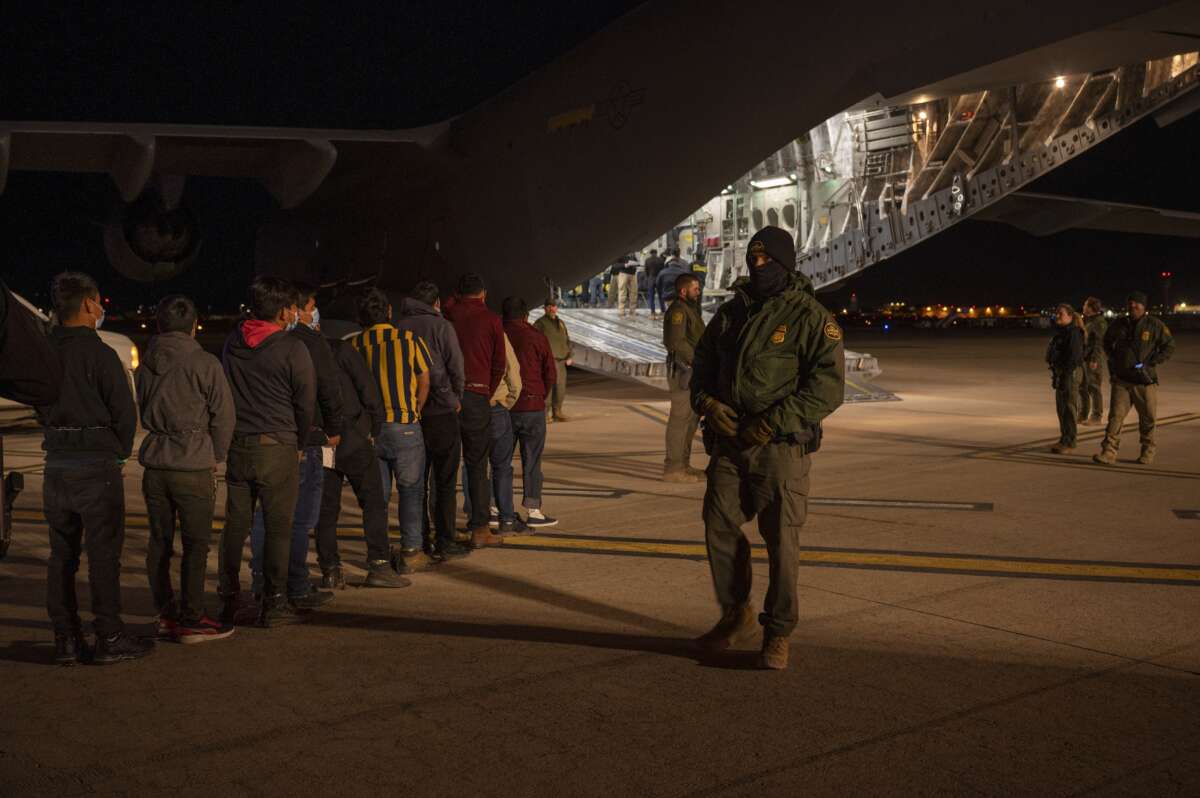
U.S. Customs and Border Protection Agents watch immigrants board a deportation flight at the Tucson International Airport, in Tucson, Arizona, on January 23, 2025.
Department of Defense photo by Senior Airman Devlin Bishop

Donald Trump rode to reelection with racist attacks on immigrants and refugees and promising mass deportations. The first year of his second term was filled with heartbreak, trauma, and fear as his administration escalated its assault on immigrant communities: separating families, occupying cities, targeting workers, and expanding deportations. Immigration and Customs Enforcement (ICE) is using its bloated budget to recruit among Trump’s far right base. This comes amid ICE’s horrific killing of Renée Nicole Good in Minneapolis, staunchly defended by the Trump administration.

At the same time, we’ve seen inspiring community resistance to ICE and Trump across the U.S. Rapid response networks have grown. Teacher unions are defending immigrant students and families. There is growing mass resistance to ICE from Los Angeles to Chicago to Minneapolis.

A year ago, Truthout spoke to several community and farmworker organizations about how they were preparing for the second Trump administration. We reached out to some of those participants again to reflect on the past year in a new roundtable interview. They discuss the anguish of the past year and the challenges immigrant communities have faced, as well as how organizers are proactively responding and what’s keeping people motivated and inspired.

Rossy Alfaro is a former dairy worker in Vermont and organizer with Migrant Justice, which organizes dairy farmworkers in Vermont and oversees the worker-driven Milk with Dignity campaign. María Carrasco is a longtime volunteer with Derechos Humanos, a grassroots organization supporting migrant rights in Tucson, Arizona, and she is closely involved with the group’s rapid response work. Jeannie Economos is the longtime pesticide safety and environmental health project coordinator for the Farmworker Association of Florida, which has organized farmworkers for over four decades.

Note: These interviews took place in December 2025 and were conducted separately and edited into a roundtable format afterward. Alfaro’s interview was done with interpretation provided by Migrant Justice.

Related Story

When ICE Comes Calling, Rapid Community Responses Can Make a Difference
Is your community ready to fight deportations? Here’s how people in New York, New Jersey and Arizona are organizing. By Derek Seidman , Truthout February 3, 2025

Derek Seidman: A year ago, we discussed how you were approaching the new Trump administration. How has the past year been for your community and organizing efforts?

Jeannie Economos: It’s much worse than we expected. The tactics they’re using are very disturbing. Children are being ripped apart from their parents. It’s causing chaos and heartbreak and mental health issues. The community is traumatized. ICE is waiting for people at courthouses and even schools and is intimidating people by wearing masks and dragging people out of their cars. It’s terrible. This is unprecedented.


“The tactics they’re using are very disturbing. Children are being ripped apart from their parents.”

María Carrasco: We’ve seen so many things already. Bounty hunters are out there doing a lot of damage. Many racist people got jobs with ICE and they don’t respect human rights. Sometimes they’re really violent when they arrest people. Every day it’s becoming more dangerous, and this is barely the beginning, because ICE is receiving more money.

They’ve detained a lot of workers we know. Their families come to our meetings. It’s heartbreaking how the kids whose parents are in detention are suffering. We’re traumatizing them. I’m so worried about that.

So many people are missing in the system. We can’t find them. I try to calm down the families. They call me and they’re desperate. There are a lot of Venezuelans being taken. They’re being picked up and deported even though they’re refugees and have all their paperwork.

Rossy Alfaro: It’s had a huge impact on our community. The attacks have been so extreme. Even though we knew what was coming, you can’t really be prepared for it being so intense. So there’s a certain amount of panic in the farmworker community. People are feeling terrorized.


“So many people are missing in the system. We can’t find them.”

At the same time, people are really resolute, especially within our farmworker community here in Vermont. We fought hard for the protections that we’ve won, and we’re going to fight to retain them.

Can you discuss more what the administration’s escalating attacks on immigrants has meant for farmworker communities?

Economos: Things were difficult over a year ago with all the anti-immigrant sentiment and rhetoric, but that looks good compared to what we are seeing now, especially some of the tactics they’re using against the immigrant population. Before, farmworkers were afraid to file complaints for workplace violations, but now they’re afraid to go to work at all. Of course, some people still go to work, but they’re taking a risk. Some farmers have planted fewer crops because they are worried they won’t find enough workers to harvest. It’s causing chaos in agriculture.


“Before, farmworkers were afraid to file complaints for workplace violations, but now they’re afraid to go to work at all.”

Many employers in Florida are implementing E-Verify, a system which tracks immigration status, which means a lot of people won’t get jobs. So they end up in the underground economy working for unscrupulous employers who exploit them and commit wage theft because they’re undocumented and they know they’re very vulnerable.

In November, ICE stopped a bus of farmworkers near Immokalee. They were mostly women and asylum seekers going to work, just trying to take care of their families. They dragged them from the bus. Who will take care of their kids? Along with the fear, how do you go about your daily life with so much uncertainty? It’s terrifying. Some farmworkers are leaving the country.

Alfaro: In April 2025, Border Patrol detained eight farmworkers at a farm where workers had really begun to organize and stand up for their rights. This had a big impact. People felt fear and no longer wanted to speak out and organize. Some stopped going out to get groceries. People are just now feeling enough courage to start organizing again.

Migrant Justice spoke with the detained workers and their families and we launched a public campaign. We had marches and rallies, and thousands of people signed our petition calling for their release. This had a huge impact. The workers being held behind bars knew that they weren’t alone and they knew that the community was behind them.

How has your organization responded over the past year to the Trump administration’s intensified attacks?

Alfaro: We’ve really focused on educating people about their rights and how to prepare for potential encounters with federal agents and minimize risk in those situations. We’ve been building a system of support through our rapid response network so people can respond when there’s a detention happening. We have people trained on how to intervene to defend a person’s rights when they see an arrest — though it’s difficult to respond in time in rural areas.

We have people trained to go observe anytime there’s a rumor about ICE or Border Patrol in an area. That lets us differentiate fact from fiction and helps with that sense of panic that the community feels. This rapid response network has been important for our community, because we haven’t felt so alone. There are people here in Vermont who have our backs.

Economos: We have five offices in Florida. We’ve been doing Know Your Rights trainings with workers across the state. We’ve been handing out red cards in the fields. Some employers have actually asked us to do Know Your Rights trainings for their workers, which is unusual. Some local businesses have put up signs saying they’re a safe place for immigrants.

We’ve been working in coalition with other organizations locally, statewide, and nationally. We have a rapid response group. We’re keeping track of detentions and deportations. We hope to publish a report on this soon.

We were lucky to escape any hurricanes this [past] year. We’ve been really worried about what to tell people if there’s an evacuation order or they need to find shelter. We’ve been contacting local governments about their policies around sheltering undocumented workers. We’re trying to protect people. How can people go to shelters if there is no guarantee that ICE won’t target them there? There’s so much fear and uncertainty.

Carrasco: There are so many groups organizing in Tucson. It’s getting bigger and bigger. People are really pissed off. The more they try to oppress us, the more people are coming out.

We tell people to take out their phone and start recording if someone’s being detained. It’s our right. We keep eight feet away from them. As soon as someone starts recording, ICE wants to go hide. They’ll be less violent toward people. They don’t want to be recorded, because they know sooner or later, we’re going to take them to court. We’ve been cataloging their cars and license plates.

We’re just so mad. These ICE agents don’t even show their faces. They kick us and do whatever they want. They’re the criminals. We have the right to protest.

A lady from Chicago is sending me whistles and offered to train us on how to respond to tear gas. But big cities like that are different from Tucson. They’re crunched up, so when ICE shows up, people pour out together. It’s difficult in Tucson because our city is so spread out, and we’re so close to the border, so it’s more militarized.

Can you talk about your hotline in Tucson?

Carrasco: Some days the phone is ringing off the hook. Just now, while we’re talking, I received three calls. We get a lot of calls in the morning because ICE is getting people on their way to work. This is every day. They’re not criminals. They’re workers.


“They’re dehumanizing people and stealing their wages.”

We’re trying to help people get lawyers. We try to help as many people as we can. Every day is a different story. One worker called us last month. A guy hired him and exploited him and then brought him to ICE. Those are the kinds of abuses we’re seeing. They’re dehumanizing people and stealing their wages.

After the Taco Giro raids here, I got 48 calls. People wanted to join our meetings and our rapid response network. Even though we’re in a really bad situation, people who never helped before are coming out to defend the community. There’s hope out there.

We need people to have our number and call us if you see anything. Call me every time. We have more than 200 people who are ready to come out.

Rossy, you were personally impacted this past year. Can you talk about that?

Alfaro: This is really difficult for me to talk about. My family members, Nacho and Heidi, were detained by Border Patrol and then held in ICE detention for a month. They were detained completely in violation of their rights, and it was done very violently. Their window was shattered, and they were pulled out of the car.

They both knew their rights. They refused to provide any information about themselves to those immigration agents. The agents took them in without any cause. But that also gave them the ability to challenge their detention on legal grounds and helped get them released, because they could show there was an unlawful arrest.

My son and I suffered terribly from all the stress and sadness of having our family separated. They were held for several weeks. But they trusted their community to fight for them. They have very high profiles as community leaders and as fighters for human rights. That faith that the community would fight for their release sustained them during those months in detention, until they ultimately came home.

Have you seen any victories this past year that you want to lift up?

Alfaro: One victory we’re most proud of is the passage of the Housing Access for Immigrant Families Act, which makes it easier for immigrant families to find housing in the state. We campaigned for this and won it last year. For farmworkers especially, having access to housing that’s not associated with your job really opens up opportunities.

Also, the Education Equity law we won that went into effect this year allows undocumented students to attend university and pay the same rate and receive the same financial aid as their classmates who were born here. My daughter is one of the students benefiting from that. She’s able to go to college because of this law that we fought for and that she helped get passed.

Amid the challenges and heartbreak of this past year, what is keeping you motivated or even hopeful?

Economos: All I can say is I’m more committed than ever. There’s no way that we can turn our backs now. It’s personal, too. A community member who’s on our leadership committee — her nephew was sent to Alligator Alcatraz. When you know people, you feel their pain and it makes you more committed than ever before.

Seeing what other people are doing — young people, students standing in front of ICE or blocking a road, pastors going to immigration court to try and protect people; seeing the risks people are taking, just an outpouring of resistance around the country to what’s happening — that’s inspiring.


“People who’ve never protested are coming out to defend our community.”

Carrasco: People are waking up. People who’ve never protested are coming out to defend our community. A really old lady called me the other day. She was so mad. She wanted to join us. Even white people want to join us — people who are less afraid and who’ve never been active in the community, but who are waking up to what’s happening.

I’m hopeful. People are always calling me to help. Our communities are coming together and they’re defending each other every day. We’ll keep working and defending our communities regardless of what they do to us.

Alfaro: Trump wants us to hang our heads and give up, but that’s not happening. These experiences fill us with anger and rage, and the only way to release that anger is by organizing with a community to fight for your rights. The terrible experiences that we’ve had are the fuel we’re now using to fight even harder for the rights of our community.