Gaza Teaches Us That Only Some Lives Are Worth Talking About
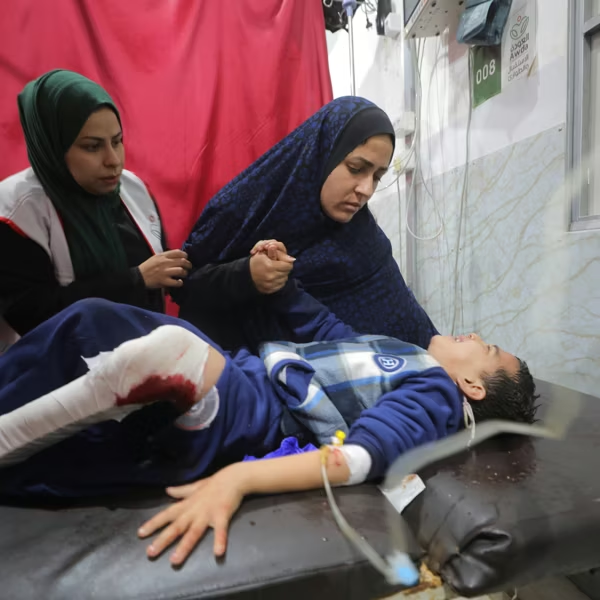
![A Palestinian child is brought to Al Ahli Arab Hospital after an Israeli attack on Al-Nafaq district, in Gaza City, Gaza on August 25, 2024. [Dawoud Abo Alkas – Anadolu Agency]](https://znetwork.org/wp-content/uploads/2024/09/A-Palestinian-child-is-brought-to-Al-Ahli-Arab-Hospital-after-an-Israeli-attack-on-Al-Nafaq-district-in-Gaza-City.jpg "Gaza Teaches Us That Only Some Lives Are Worth Talking About")
Since the so-called ceasefire came into effect in Gaza, Israel has killed over 500 Palestinians. But these lives – according to western media and politicians – are not worth talking about.
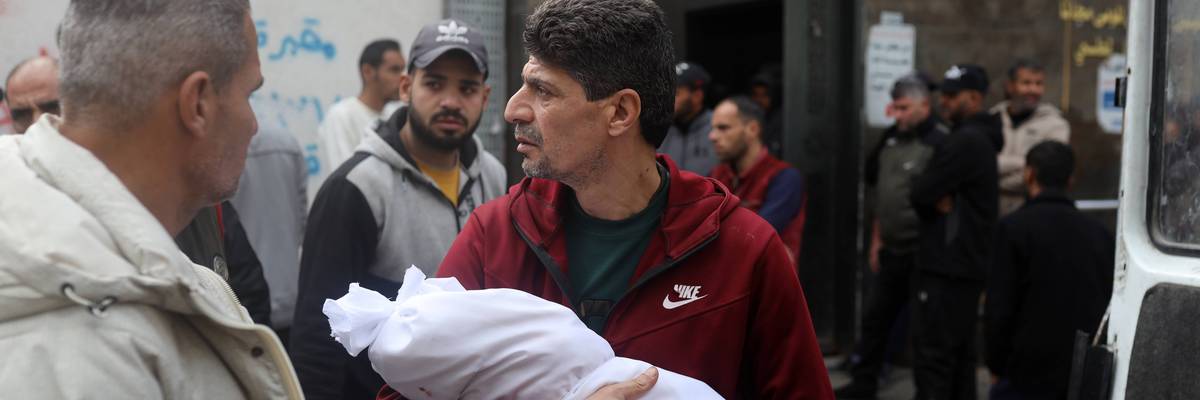
You probably won’t have heard about Zaina, Menna and Maryam Al-Atbash. On Saturday, the remains of these young sisters were found on the street by their uncle. Aged between five and nine, they had been blown out of their Gaza City apartment by an Israeli airstrike. Their grandmother, Um Nael Al-Atbash, and aunt, nurse Islam Al-Atbash were also killed in the blast.
It’s unlikely too, that you will have read anything about siblings Jibril and Sham Abu Hadaid. On the same day the Al-Atbash sisters were blown to pieces, these little children were sleeping in their tent in Khan Younis when it too was struck, burning them alive. The attack killed seven members from three generations of the Abu Hadaid family.
And you definitely won’t know anything about the lives or identities of over 200 Palestinians whose graves were ransacked last week during an operation to retrieve a single Israeli body. For two days, the Israeli military mobilised tanks, drones and what locals described as “explosive robots” to recover the remains of Ran Gvili – an Israeli policeman killed more than two years ago. “They dug up about 200 graves,” Khamis al-Rifi, a journalist in Gaza, said. “They tested them one by one until they found the [Israeli] body.”
Ran Gvili’s story has been blasted all over western media. There are countless articles celebrating his life, complete with photographs and anecdotes from his family and friends. His remains were air-lifted to Israel for a dignified burial. The unearthed Palestinian bodies, on the other hand, were left “covered with sand by the bulldozers,” with “some still visible on the surface” al-Rifi said.
Four Palestinian civilians were also killed by Israeli fire as they attempted to check on the graves of their loved ones following the operation. Like the bodies dug up by bulldozers – and the thousands more buried under Gaza’s rubble – we don’t know their names or anything about them.
A hierarchy of worth
The message we’re being sold is clear. Some lives are worth talking about; others are worth nothing at all.
Of course, this narrative is not new. For decades, wealthy white people from western countries have been afforded infinitely more worth than poor brown and black people from the global south. The livestreamed genocide in Gaza however, has laid this disparity bare.
Just compare the days of wall-to-wall coverage of the Bondi beach attack with reports of 32 Palestinians killed on Saturday. Israeli forces killed more than twice the number of people killed in Australia. But those Palestinian deaths during a so-called ceasefire didn’t even make the headlines.
Blocking communication channels
This erasure of Palestinian identity is no accident. Israel has done everything in its power to ensure the stories of Palestinians do not make it out of Gaza. Since October 2023, Israel has banned international media from entering the enclave, making it impossible to come close to reporting on the actual number of people killed, maimed, orphaned – let alone faithfully tell their stories. At the same time, it has systematically assassinated Gaza-based journalists.
At the beginning of the year, Israel revoked the licences of 37 life-saving aid groups – including Oxfam and Doctors without Borders (MSF) – ensuring they can no longer operate in the Palestinian territories. Beyond depriving Palestinians of vital aid, the move cuts off one of the last remaining channels through which the world can see what is happening in Gaza. MSF in particular have born witness to Palestinian suffering, sharing stories with western media and documenting some of the horrors they’ve witnessed in Gaza through published reports.
Israel’s refusal last week to renew UN spokesperson Olga Cherevko’s visa prompted UNRWA’s Director-General Philippe Lazzarini to state: “[this] follows a pattern of actively silencing aid workers…who are considered ‘too vocal’ about what they have seen on the ground”. These humanitarian partners, he added, “are being forced to make a choice between being the ‘voice of the voiceless’ or being permitted to do their work at all.”
Non-human by association
What’s also striking is that this effort to silence and dehumanise is applied to anyone who speaks up for Palestinians too.
UN special rapporteur for the Palestinian territories, Francesca Albanese, has described herself as a “non-person” since the US government imposed sanctions on her last year. The punishing sanctions – which came days after she published a report accusing western corporations of being complicit in Gaza’s genocide – have left her unable to use credit cards or book hotels or flights. Her assets in the US – including her bank account and apartment – have been frozen. “It’s important that people understand the extent…the United States, Israel and others would go to silence the voice of justice, the voice of human rights” Albanese said.
Greta Thunberg – once courted by world leaders and named person of the year by Time magazine in 2019 for her climate activism – has effectively been cancelled since raising her voice for Palestine. On her second attempt to reach Gaza via the Global Sumud Flotilla to deliver humanitarian aid, Thunberg was abducted by Israeli forces and taken to Ktzi’ot Prison. Here, according to various statements from Thunberg’s fellow passengers and her own testimony, she was tortured and sexually abused.
The story – shocking both for what happened and who it happened to – was met with strikingly little coverage in western media. There were no condemnations from the world leaders so eager to be photographed with Thunberg five years ago. No opinion pieces in the mainstream media calling for an investigation and demanding justice for Greta. Nothing at all from Time magazine.
And not a single mainstream media outlet reported the accusation of rape by German journalist Anna Liedtke – who was also onboard the flotilla. During an international conference, the 26-year-old described having been raped by Israeli guards after resisting a forced strip search while she was detained. But again, not a whisper from our politicians or media.
As horrifying as these revelations are, they offer only a glimpse into what it must be like to be a Palestinian living in the occupied territories. Following her assault in Israel, Greta Thunberg said: “If Israel, with the whole world watching, can treat a well-known, white person with a Swedish passport this way, just imagine what they do to Palestinians behind closed doors.”
Gagged and dehumanised, Palestinians have been stripped of their basic right to tell their stories. The media may have fallen silent, but those of us who still have a voice cannot. Please don’t stop talking about Gaza.