When Charter School Authorities And Liberal Institutions Abandon People
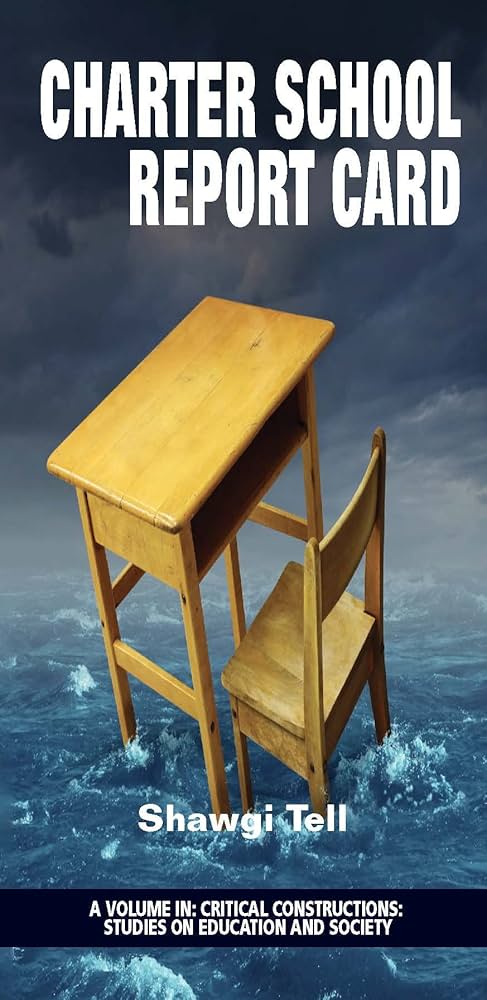 Sadly, the tragic journey of Buffalo’s first charter school, the King Center Charter School (KCCS), is not an isolated one. Nationwide, far too many charter schools—old and new—experience death by a thousand cuts, usually at the hands of their private operators, charter school authorizers, and the institutions that are supposed to protect them.
Buffalo’s King Center Charter School first opened in 2000, but like many deregulated charter schools it has been plagued by numerous problems which have steadily worsened over time.
Spectrum News reported on January 29, 2026 that the privately-operated charter school, “is at the center of a widening dispute that advocates argue spans a series of issues, including charter school governance.” Charter schools, it should be recalled, are governed by unelected private persons.
For starters, “in 2019, academic performance started to slip, an issue which cascaded into a vote of ‘no confidence’ by the staff in May 2024.” Less than five months later the school’s teachers voted to unionize—something charter school operators vehemently oppose, which is why about 90% of the nation’s charter schools are not unionized.
Spectrum News continues: “Then, after the following school year, the board opted not to renew the administration’s contracts. Since then, violence at the school has increased, enrollment has fallen, and about 60% of teachers have quit.” Declining enrollment and high teacher turnover rates are common in charter schools from coast to coast, pointing to instability, poor conditions, and weak management.
These terrible developments prompted a broad and large range of individuals connected to the school and from the wider community to meet regularly in order to take matters into their own hands so as to turn things around. But this drive only further revealed the irrelevance and inefficacy of existing arrangements and institutions to solve problems, leaving many feeling frustrated.
The diverse group attempted to secure help from the school’s authorizer, SUNY Charter Schools Institute (SUNY CSI), which is comprised of unelected pro-privatization persons. Not surprisingly, CSI “has failed to follow up or meaningfully investigate claims or meet with affected stakeholders despite repeated outreach.”
Many other entities have dismissed the legitimate concerns of the group as well. Keith Frome, a former trustee of the [charter] school as well as a former executive director and a member of the group trying to save the school, said the group has tried everything to save the schools: “They’ve reached out to the SUNY trustees. They’ve reached out to the Charter Schools Institute. They’ve reached out to the Buffalo Common Council…. They’ve reached out to the local news to try to get this story front and center and ask the question, is there a mechanism for when a school is in such a dramatic decline to intervene before it crashes and burns?”
Even Joe Belluck, an attorney who chairs the unelected pro-privatization CSI admits that, “this group has done everything it can.” Still, both Belluck and the CSI refuse to lift a finger to help the school.
Naturally, “This isn’t the first Buffalo charter school to face problems. Over the last several years, two SUNY-authorized charter schools in Buffalo — Buffalo Collegiate Charter School and Buffalo Creek Charter School — have closed after similar problems. In the case of Buffalo Creek, the school closed mid–school year, which disrupts families and forces the public schools to absorb students on short notice.”
Instability and chaos have been the norm in the crisis-ridden charter school sector for decades, leaving a bad taste in the mouths of thousands of people. Many fear the writing is on the wall for the King Center Charter School. Like so many privately-operated charter schools, there is a good chance that the school will soon fail and close. So much for “free market” education which leaves everything to chance and forces everyone to fend for themselves.
A key takeaway from all this misfortune is that charter school authorities and liberal institutions of governance are defunct, incapable of representing and affirming people’s rights. The social contract that came into being decades ago lies in tatters today, unable to respond to modern demands. Privatization through decades of state restructuring has deprived people of their wealth, voice, and authority. It has marginalized them and violated their rights and dignity.
How to reverse this infamy is the call of the times. How can people retain the initiative and become effective in these authoritarian times where the rich and their representatives block progress? What is needed to prioritize and guarantee people’s demands? The choices, outlook, and agendas offered by the establishment offer no real solutions, just more antisocial wrecking. There must be sustained organized discussion of new ways to overcome the old arrangements negating rights so that the people themselves become the decision-makers.
Florida’s Charter Schools Lower State’s
2024-25 Graduation Rate
While corruption is endemic to the decades-old charter school sector, it is extra rampant in Florida’s charter schools. To add insult to injury, Florida also has the nation’s second highest charter school failure and closure rate. No amount of “school choice” rhetoric in Florida has improved this record. School privatization is notorious for lowering the level of education.
According to Florida Politics (Jan. 14, 2026), “Florida [high school] graduation rates are rising, but district [public] schools are driving gains far more than charters.”
When data from the Florida Department of Education is broken down by school sector we learn that, “In the 2024–25 cohort, traditional district public high schools graduated 93.8% of students within four years, while charter high schools graduated 78.4%, a gap of more than 15 percentage points.” That’s a big difference.
Even though Florida’s strong graduation rate is driven mainly by the state’s public schools, not its non-unionized charter schools, charter school proponents try to create the impression that charter schools are part and parcel of the state’s impressive high school graduation rate. But as Florida Politics reveals, “While nearly 94% of students in traditional district public schools graduate on time, more than one in five charter students do not. Graduation rate alone understates the disparity.”
Indeed, when state data is further disaggregated, we see that, “In 2024–25, 13% of charter students remained enrolled beyond four years, compared with 2.6% of students in traditional district public schools. Charter dropout rates were nearly three times higher, 4.4% versus 1.5%. These outcomes reflect thousands of students whose path to graduation is delayed or disrupted.” These are not trivial differences. To be sure, “Florida’s graduation gains are real, but they are being driven overwhelmingly by traditional district public schools.” Privately-operated charter schools are actually dragging down the state’s graduation rate. Privatization, wherever it takes place, lowers standards and quality.
Graduation data from Florida and other states once again reveals the need for investing more money in public schools while opposing school privatization, which mainly enriches a few people in the name of “innovation,” “choice,” and “serving the kids.” When private interests supersede the public interest through the continual seizure of state mechanisms, agencies, and levers, both society and education suffer. For more on the differences between public schools and charter schools, see here.
Depending on which source one uses there are currently about 3,100 public schools and roughly 700 charter schools in Florida.
To learn more about the problems, scandals, and controversies surrounding charter schools across the country, see here

No comments:
Post a Comment