Wednesday, January 14, 2026


Opinion

GMB Union: It’s time to tackle inequality within UK Parliament’s workforce. That’s why we’ve launched the One Parliament, One Employer campaign

Today

'In October 2025, the GMB MPs’ and Peers’ Staff Branch launched a report, exposing vast pay inequalities in Parliament'
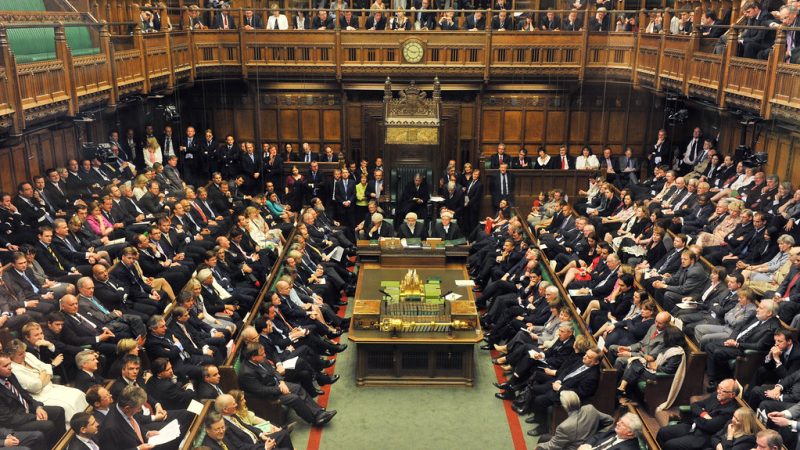


By Holly Williamson, Office Manager and GMB MPs’ and Lords’ Staff Branch Equalities Officer and Philip Hutchinson, Senior Parliamentary Researcher and GMB MPs’ and Lords’ Staff Branch Youth Officer

In October 2025, the GMB MPs’ and Peers’ Staff Branch launched a report, exposing vast pay inequalities in Parliament. The report showed that women earn £1,000 less than men, non-white staff £2,000 less than white staff, and disabled staff £600 less than non-disabled staff. Moreover, these inequalities also compound, with a non-white woman, for example, earning £6,000 less than white men.

This report demonstrated what many of us already knew: that the systems and structures that exist in Parliament reinforce inequality, and with women, non-white, disabled, non-straight and trans staff all suffering as a result. We hoped this report would be a wake-up call that would cause MPs to ask deep and searching questions about how to end these systemic inequalities.

At the heart of these inequalities lies a power imbalance between MPs and their staff. Politics relies on networks and building a good relationship with the MP you work for can help to advance a staffer’s own political career.

However, this power imbalance is grossly exacerbated by the fact that, instead of being employed by Parliament, staff are employed directly by individual MPs. This creates a system rife for abuse, where staff who raise complaints risk professional isolation, career damage, and loss of access to vital networks of support and advice.

Most constituents would be shocked if they discovered that in electing an MP, they are also appointing someone to run a quasi-mini business, responsible for hundreds of thousands of pounds of staff expenditure, and for managing small teams of staff who often have to work in stressful and toxic environments.

Although this situation is bad for all staff, it particularly impacts women, those from minority groups and younger staff, who are groups that already tend to experience higher levels of bullying and exploitation in the workplace.

However, it does not need to be this way. In many established democracies, such as in Australia, New Zealand, Sweden and the European Parliament, staff are employed directly by Parliament rather than by individual MPs. In these countries, Parliament manages contracts, conditions and complaints while MPs continue to choose their team and direct their day-to-day work.

The One Parliament, One Employer campaign, launched by the GMB MPs’ and Peers’ Staff Branch, is therefore calling for the UK Parliament to follow these examples and make Parliament the legal employer for all MPs’ staff. Rather than just addressing the symptoms, this campaign seeks to remove one of the main systemic issues driving inequality.

Having Parliament as the single employer for all MPs would also drive greater levels of transparency. According to UK legislation, only employers with 250 or more staff must report their gender pay gap. Given that each MP currently acts as a separate employer, there is no requirement for Parliament to report on the gender pay gap between MPs’ staff, even though all large businesses, charities and institutions are required to do so.

The proposed Equality (Race and Disability) Bill will also require all large employers to report ethnicity and disability pay gaps. Yet, the existing structures mean that once again, these requirements will not apply to MPs’ staff.

A problem cannot be solved unless it is first identified, and the existing system meant that until recently, the scale of inequality in Parliament was unknown. When we sent a Freedom of Information request to the Independent Parliamentary Standards Authority (IPSA), asking for data on pay, we were told that they did not have available information about ethnicity, gender and disability, with only data on age and sex available. As a result, we had to collect the relevant data by surveying staff members ourselves.

At the heart of this problem is that Parliament does not live up to the values it legislates for others. As long as Parliament maintains inequality within its own workforce, it will also be blind to inequalities that exist within society more widely.

These inequalities and power imbalances also mean that MPs lose out on talented and capable staffers, as experienced workers leave Parliament rather than remain in an unsafe and unequal system. The British Parliament is known for its constant and fast turnover of staff, meaning that it continually bleeds experience and institutional knowledge.

As a union branch with over 1,500 members working for MPs, we also see a concerning number of cases that stem from the current system. This high caseload would make any other employer ashamed and makes clear that this problem can only be fixed by changing the existing employment model.

The One Parliament, One Employer campaign provides MPs with a chance to create a modern and professional workplace, fit for the 21st century. Our democracy has always evolved in order to adjust to new challenges and to address existing problems.

Through the One Parliament, One Employer campaign, we have the chance to create a more equal Parliament and, ultimately, therefore, a more equal country. It is a campaign that now requires MPs’ full support.


Fire, Farage and his first anniversary in post: LabourList interviews FBU General Secretary Steve Wright
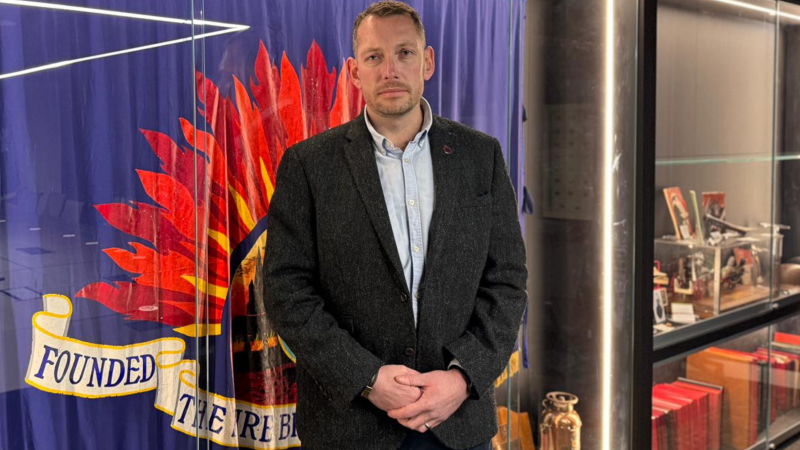

The headquarters of the Fire Brigades Union has a poignant reminder of the job’s cost, with the names of fallen firefighters lining the walls of the building’s staircase. This cost is felt more acutely for general secretary Steve Wright and the union more widely following the addition of two extra names to that long list, commemorating the deaths of Jennie Logan and Martyn Sadler in a fire in Oxfordshire last May.

As he marks a year as FBU general secretary, Wright sees his number one job as not just fighting for better pay and conditions for his members, but also making firefighting safer. 

That mission is incredibly close to home for Wright – his father died of cancer after a long career in the fire service and his son, Ben, marks two years as a firefighter this month.

“He gets a decent pay rise courtesy of the FBU,” Wright notes.
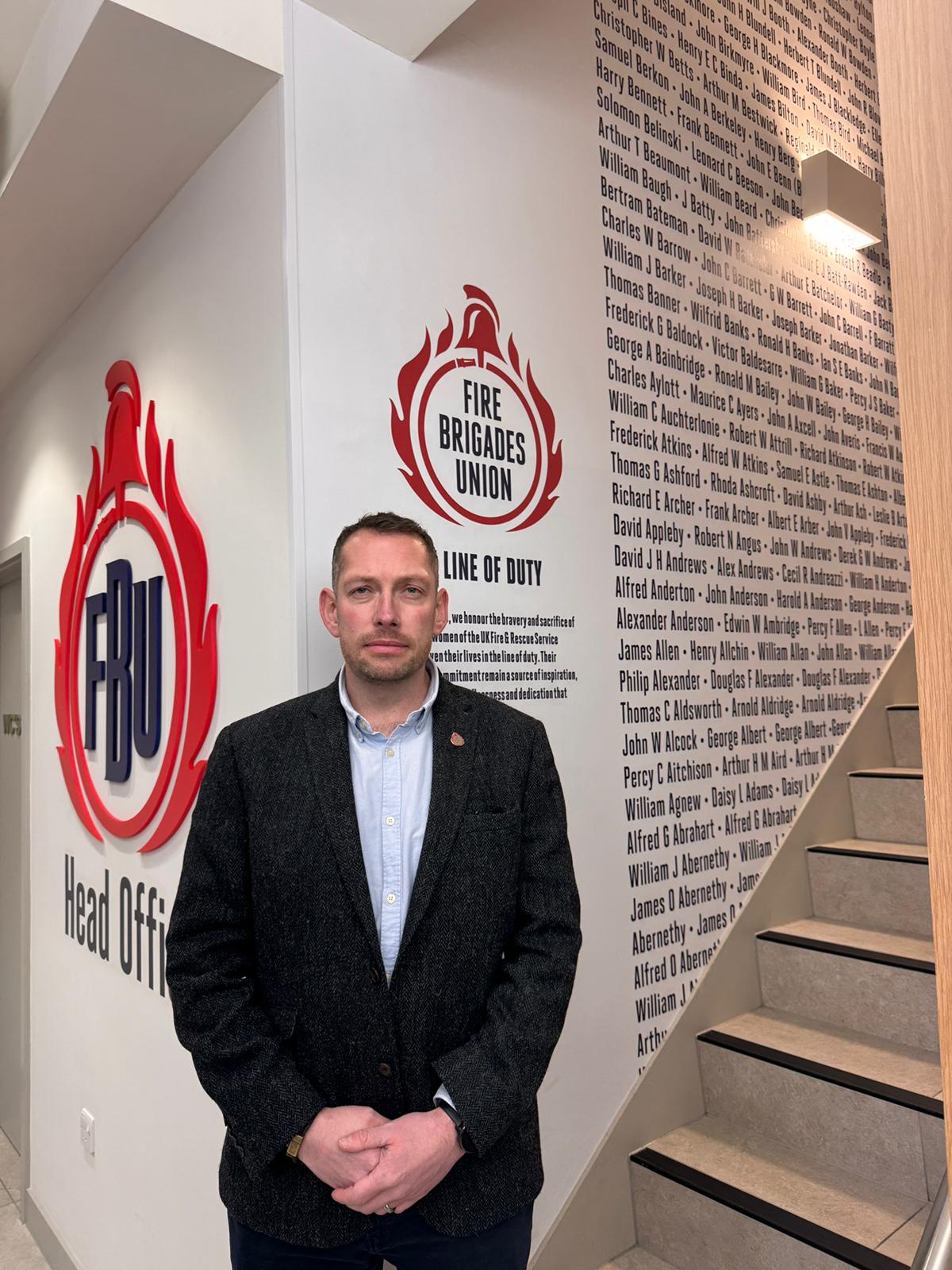
“We’re on the front foot, taking an industrial fight to the bosses, which I think was long overdue. The cuts we have faced in the fire service over the past 14 years under a Conservative government were to dangerous levels – and we’ve seen the effects of that. We’re seeing slower response times, we’ve seen firefighters – our members – killed last year, and we’re seeing fire deaths going up.

“We’re taking the fight to employers and to the government on all those issues, and this is what we are going to press ahead with this year.”

‘More unions should be affiliated to Labour’

Wright’s first year as general secretary has also involved building relationships with the party and with ministers, with Lucy Powell credited for being useful in forging closer relations with trade unions.

“We’re working closely with Hollie Ridley and Labour head office to do some more work and, as part of TULO, I get the opportunity to speak to and question Keir Starmer or one of his ministers, which is good fun. It’s useful to do that. I think they should hear the truth on the floor, and I can talk from years as a public servant extensively about how public services in this country have been downgraded.”

Wright’s work to reset the FBU’s relationship with Labour has come amid calls from some in the union to pursue the road of disaffiliation – a path being actively considered by Unite and also by Unison’s incoming general secretary Andrea Egan.

However, Wright argues trade unions should stay within Labour and be active in trying to change the direction of the party.

“I certainly see elements of the Labour Party that would not want the FBU or any union part of the party, and I think it’s down to general secretaries to make the case for being there.

“Whilst we are affiliated, I do believe that we get opportunities – I get opportunities as a general secretary of an affiliated union to speak out on wider issues.

“I think it would be advantageous if more of the TUC-affiliated unions were affiliated to Labour. There’s only 11 of us – we would have far greater strength if there were more sector-only unions, like ourselves and ASLEF.”

‘Labour have crossed many red lines at the moment’

Is there a red line that would lead to Wright considering disaffiliation?

“My personal point of view is they’ve crossed many red lines at the moment – but my position is to get the best thing for firefighters and FBU members, and I think we’re best placed to do that at the moment with a Labour government.

“We’ve backed the Labour government, we backed the party – and we still do, but our members do want to see some change.

“I think the red line of our members would be job losses, fire station closures and a reduction in our numbers.”

Starmer should be prepared to stand aside, says Wright

The last year has seen increasing questions about Keir Starmer’s future as Prime Minister, but Wright is cautious about a return to the revolving door of leaders from the Conservatives’ years in office.

“There is some argument to be made for keeping people in position for a period of time to make change.”

However, Wright’s caution came with an important caveat: “I think if it gets to the point where the door keeps opening wider and wider for Nigel Farage – which it feels like it is at the moment – and Keir Starmer becomes unable to beat him in the polls, then I think he should step aside.”

Wright said that May would be “a big turning point for that” and suggested that Starmer would “probably” stand down if those circumstances came to pass: “I think actually he will put the country first.”

READ MORE: FBU on ‘industrial footing’ as general secretary prepared for strikes this year

‘God knows what it would be like with Reform running the country’

Wright warned of the spectre of a potential Farage-led government and the dangers such a prospect would bring.

“We’ve had experience of it already. Their flagship council is Kent County Council – the council is responsible for the fire service there, and it fell apart at the end of the last year.

“That was having knock-on effects and repercussions for the fire service in Kent, not being able to make decisions.

“It was absolute chaos with them in charge, so God knows what it would be like if they were running the country.”

He also highlighted Richard Tice’s proposal to attack public sector pensions: “We went on strike, I went on strike, in 2014/15 over our pensions when we faced that attack and our members would stand up for our pensions like we did before.

“Nigel Farage is no friend of working people.”

So concerned is Wright about the rise of the far-right that the FBU joined the Together Alliance of over 80 civil society organisations and unions to challenge their influence – with the union even hosting the group’s first in-person meeting at their headquarters.

“I was there on September 13 at the opposition to the Unite the Kingdom rally and that was frightening. We took members there and what we saw on the streets was quite frightening. I hope that the Together Alliance can make sure there is a big showing in this country of decent people to fight back against them.”

‘Firefighters look at Christmas differently’

Steve Wright with his son Ben

Speaking to Wright shortly after the Christmas holidays, he reflected that the festive season is often different for firefighters and their families.

“The calls we attend, the shifts we work, do not stop at Christmas. I’ve worked many a Christmas Day and Boxing Day away from my family, and I also remember my dad not being there on Christmas, having to wait to open your presents until dad got home from work.

Subscribe here to our daily newsletter roundup of Labour news, analysis and comment– and follow us on BlueskyWhatsAppX and Facebook.

“My son was off this Christmas, but last Christmas worked it.

“I think they look at [the holidays] differently, because things don’t stop for them and it’s also a historically busy period for us as well.”

Wright’s plans for the year ahead

What does Wright hope to achieve in the year ahead?

“We are going to take this industrial fight on, and if that means strike action, that’s where we’ll take it.

“I want to make headway in progress on presumptive legislation, so we are having the first-ever health and safety standalone summit in April to push that ahead.”

One other area Wright wants to work on this year is on ensuring the FBU remains as a sector-only union.

“We’ve seen lots of unions in the past be sucked up by the likes of Unite and Unison. I’m sure they do a great job, but I think our power and strength comes from our elected officials having worked in fire stations and in control rooms and I want to make sure that the longevity of that continues. I’m not saying that’s a threat, but it’s something to be mindful of.”

‘Biden hung around too long – we can’t make the same mistake again’

As we concluded our conversation, Wright’s New Year’s message to the Prime Minister was a clear one.

“It would be not to fall into the trap that the Democratic Party did under Joe Biden. I think he hung around and stayed too long and that allowed the monster that is Donald Trump to come to power in Washington, and I think we can’t make the same mistake again.

“I’d like to think that when the time comes, I want to see another Labour government. I want to see it more progressive, I want to see it more transformative – and I think there are better placed people to do that in the years ahead.”

Does Wright have a person in mind? “I don’t think there is a specific candidate at the moment, but I think someone who is going to be bold. I think with three and a half years away from the election, people want to see change.

“The way you beat Reform is not by out-Reforming Reform. I think that tactic is being tried, and it’s certainly not cutting through with our members or with decent people in society.

“The way you beat them is you start turning things around, so they start seeing meaningful change, they start seeing investment in their communities, they start seeing investment in their public services, they see cuts stopping in the fire service.”

Can Charter Schools Be Meaningfully Reformed?

Charter schools are the main form of school privatization in the United States. As such, they have never been part of a true organic grass-roots movement, that is, they have always been part of a top-down neoliberal agenda right from the start.1 This is why, for example, about 95% of charter schools have not been started, created, owned, managed, or operated by teachers. It is also why these contract schools, which are largely managed or owned by external organizations, are profit-driven whether they are designated as non-profit or for-profit schools.

Not surprisingly, the fraud, corruption, scandal, and failure brought about by charter schools in the U.S. over the past 35 years has been documented in thousands of books, articles, news reports, and websites. Privatization prioritizes profiteering over human rights and is notorious for increasing corruption, lowering the quality of services, and raising costs. More privatization means more harm to the public interest.

For 30+ years, state laws and statutes have been painstakingly written in a manner to promote this antisocial state of affairs, which is why the well-documented problems in the charter school sector have long been the norm and not some aberration affecting a few charter schools here and there.

Over the past 50 years major owners of capital have turned more aggressively to privatization to counter the inescapable law of the falling rate of profit in a desperate attempt to stay viable and avoid extinction. Thus, globally, many programs, services, spheres, sectors, including governance itself, have been rapidly privatized since the 1970s, resulting in great damage to the public interest. Pay-the-rich schemes of all kinds, including so-called public-private “partnerships,” have popped up everywhere and show no sign of diminishing. In this context, the “free market” is heralded as the end-all and be-all. It is no accident that charter school advocates insist that charter schools are marketized schools. They believe education is a commodity, not a right, that should operate according to the vagaries of the “free market.”

Jennifer Klein (2007) states that, “Surveying countries in all continents, a recent international report sponsored by The Club of Rome declared privatization to be ‘one of the defining features of our era’.” Klein stresses that privatization is an attack “on the working classes and on the public claims that workers and citizens are able to make on the economy’s resources and productivity.” For a valuable discussion and analysis of privatization, see The Privatization of Everything (2021) by Donald Cohen and Allen Mikaelian.

As the negation of democracy, equality, and the public interest, privatization necessarily causes many to demand that policies, laws, and rules be rewritten so as to put the public interest in first place and to safeguard the rights of people everywhere.

But when people see things go from bad to worse every year it becomes more urgent to realize that the problems confronting the public are not caused by unenlightened individuals, naïve legislators, uninformed politicians, or lawmakers with “bad ideas” who just need to be persuaded to write better laws and policies, but rather by entrenched historical class forces that act in their own interest. In other words, the issue is not “bad policy” or poorly-conceived laws but class policy, which is why school privatizers and their political representatives are unlikely to stop acting in their own self-interest and rewrite charter school laws and policies so that the problems associated with charter schools disappear. It is well-known that the current neoliberal set-up marginalizes and disempowers people, effectively preventing them from establishing arrangements that benefit them. So long as the class will of the rich dominates the class will of the non-rich, profound pro-social changes will remain elusive.

Over the years, various legal modifications to charter school laws here and there have done little, if anything, to slow the massive onslaught of problems associated with charter schools. Endless calls for more accountability, transparency, and oversight have changed little in the crisis-ridden charter school sector. If anything, the multiplication of charter schools has brought with it more crimes, profiteering, instability, and scandals. Every year things steadily worsen. Consequently, many people, including historian Diane Ravitch, have frequently said “you can’t fix a scam” when it comes to charter schools.

Some questions worth considering: What is to be done under such circumstances to change the situation in favor of the public? Is there any justification for school privatization in the first place? Do charter schools need to exist? Are outsourced schools really needed? Does profiteering belong in public education? Does the private sector have any legitimate claim to public funds that belong to the public? What would happen if traditional public schools were fully funded and not constantly vilified and set up to fail by neoliberals and privatizers? If today’s politicians and institutions are increasingly seen as irrelevant, ineffective, and obsolete what new organizing efforts should people embrace to open the path of progress to society? How can people rely on themselves to bring about deep changes that favor them?

Charter school laws in 47 states, Washington DC, Puerto Rico, and Guam were not written to create high-quality fully-funded public schools controlled by a public authority worthy of the name. They came into being to operate outside public control in order to funnel huge sums of public funds to private interests in the context of a continually failing economy—all in the name of “choice,” “innovation,” and “serving the kids.”

Under the difficult circumstances confronting us today, people from all walks of life need to create spaces for serious analysis and discussion about how to empower themselves to oppose privatization and other obstacles blocking the path of progress to society. Without sustained collective discussion, analysis, and organizing that unleashes the human factor and social consciousness the wrecking activity of the rich and powerful will continue. History is calling on everyone to take collective discussion, analysis, and action to new and different levels so that all that is rotten can be left in the past and a new and bright future can be built. Within all of this, it is important to identify which tactics and strategies work and which do not. For example, begging or pressuring politicians to “do the right thing” for months and years is exhausting and usually fruitless. It can cause burnout and disillusionment. Is there a better way to do things? What would it mean to reject this approach and rely on ourselves to figure out a better way?

ENDNOTE:

  • 1
    It is helpful to study some of the original writings on charter schools from more than 30 years ago (e.g., by Ray Budde, Albert Shanker, Ted Kolderie, Ember Reichgott Junge, and others) to decipher the top-down nature of charter schools.
Shawgi Tell (PhD) is author of the book Charter School Report Card. He can be reached at stell5@naz.eduRead other articles by Shawgi.

The Glee You See From Fascists About State Violence is a Sexual Fetish

January 14, 2026

Photograph by Nathaniel St. Clair

There is a psychology at the root of what we are seeing behind the behavior MAGA fascists and far-right media these past few weeks that isn’t being addressed. One which is behind how they so openly defend the murder of an unarmed woman. Or how they cheer on the Trump regime’s imperialistic fever dreams. And all of this, while none of it improves their own life circumstances in the least.

If these people were to be transported back in time to when slavery was the law of the land, they would have adored the overseers and the bounty hunters and applauded any violence against runaway enslaved people or abolitionists. If they were transported back to 1930’s Germany, they would have cheered the Geheime Staatspolizei as they beat and rounded up communists, Roma, queer people and Jews in the streets. It isn’t a new script. It is the same story of grievance played out in a new setting.

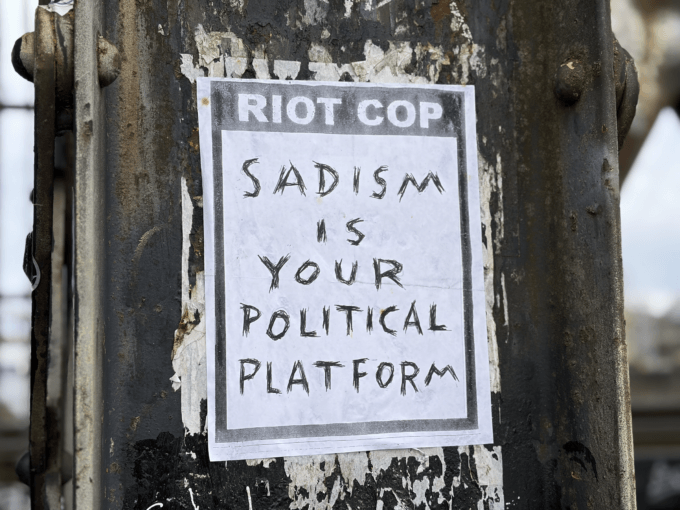
The people who are most susceptible to this are notorious for suppressing sexual desires. And thus, there is an enormous amount of repressed fetishism happening within the celebration of ICE violence. They find unchecked, unaccountable power enticing. Its sadism is intoxicating because it allows them to disassociate from the crushing weight of their own inner turmoil. And because virtually none of them have ever taken the time to examine their own shadows, they project them onto everyone and everything.

This psychology of sadomasochism is not the kind one finds in consensual BDSM relationships or communities. Quite the opposite. The people who participate in consensual BDSM do it because it is cathartic. Because it is fun. Because they trust their partner.

But the kind we see among far-right and fascist groups is solely about demeaning those who have not submitted to the state or to a mob. This is a dynamic that extols an arrangement of power based solely upon punishment and cruelty against a dehumanized other. In this way, the supporters of ICE violence or the Trump regime’s cruelty are positioned as the voyeur, and thus derive pleasure from observing the pain meted out on a scapegoated and dehumanized other, on those who dissent, or anyone who gets in the way of power.

This plays out most especially in misogynistic terms. Patriarchal authoritarianism serves as the foundation for fascist psychopathology. Conservative patriarchal religion provides a framework for both the repression of sexual desire and human sexuality in general, and the oppression of women. And violence, from the burning or witches to the denial of reproductive rights, has often been the result. Fascism merely draws on this dark history of misogyny.

We see this clearly in the murder of Renee Nicole Good. A woman stood in the way of a man’s power. Her wife mocked him. Although they presented no danger to his life, they signified that they did not recognize his dominance. Thus, Good had to be punished. Shot in the face, which is the most intimate form of murder. That Good was later revealed to be in a lesbian relationship provided more ammunition for MAGA fascists. She was swiftly painted by far-right media as a traitor to her gender.

Wilhelm Reich wrote more about this in his book The Psychology of Fascism:

“More than economic dependency of the wife and children on the husband and father is needed to preserve the institution of the authoritarian family [and its support of the authoritarian state]. For the suppressed classes, this dependency is endurable only on condition that the consciousness of being a sexual being is suspended as completely as possible in women and in children. The wife must not figure as a sexual being, but solely as a child-bearer. Essentially, the idealization and deification of motherhood, which are so flagrantly at variance with the brutality with which the mothers of the toiling masses are actually treated, serve as means of preventing women from gaining a sexual consciousness, of preventing the imposed sexual repression from breaking through and of preventing sexual anxiety and sexual guilt-feelings from losing their hold. Sexually awakened women, affirmed and recognized as such, would mean the complete collapse of the authoritarian ideology.”

― Wilhelm Reich, The Mass Psychology of Fascism

White supremacist, Nick Fuentes, said: “You should not seek sex because if you seek sex you will become gay because sex is a gay act.” He elaborated on this thought with: “the straightest thing you could do is to never have sex.” The homophobia and sheer absurdity of these statements aside, it underscores the sexual repression at the heart of fascist thinking. It is a belief that sexual pleasure itself is to be rejected. It may appear contradictory, but it goes hand in hand with the notion that the only role women play in society is to bear and raise children. It is also why transgender people are so often a target of far-right malice. Their very existence is a challenge to an order that they see as essential and God-ordained.

The contradictory nature of fascist thinking is a primary feature. It is how many of them could express anger about the Epstein Files, while ignoring that their leader, Donald Trump, figures large in their pages. It is how they can express devotion to religious institutions which have covered up child abuse for decades, while condemning drag queens. In sum, fascism is more about optics, than facts. It is about upholding traditional mores and myths, and strict gender roles, than human equality. It is about charismatic heterosexual male strongmen rather than things that are considered feminine, like empathy and kindness.

The seduction of state violence is nothing new. And it will always attract a segment of the population, mostly disaffected men. But the American project, with its characteristic predatory capitalism and Calvinist Christian patriarchal roots, has allowed it to grow and become emboldened. Racialized, Indigenous and queer women have known this violence since the first European set foot in North America, often meted out to them by white women who enjoyed a certain measure of privilege in a racist society. This is not to say white women were not also brutalized or treated as property, they were. But racialized and queer women have never enjoyed the same privilege.

As we see more and more incidents of ICE violence and the subsequent praise it receives from fascists, primarily fascist men, we should take time to understand the corrosive pathology at the root of it all. Fascism channels its sexual repression into aggression and absolute submission to charismatic male leaders and grand narratives about nationalistic glory. It thrives on the denigration, humiliation, torture and murder of dehumanized others. And it targets young men.

Understanding this may help us realize where it is coming from, how to oppose it effectively, and how to help a new generation of boys escape a similar fate.

Kenn Orphan is an artist, sociologist, radical nature lover and weary, but committed activist. He can be reached at kennorphan.com.

. THE MASS PSYCHOLOGY. OF FASCISM. By. WILHELM REICH. 

Reich shows how every form of organized mysticism, including fascism, relies on the unsatisfied orgastic longing of the masses. The importance of this work ...


The Pathology of Power: How America Learned to Love State Violence

Source: Originally published by Z. Feel free to share widely.

There’s a scene playing out across American social media that should disturb anyone with a functioning conscience.

A woman lies dead, killed by federal agents while serving as a legal observer. The video evidence is clear: she was waving ICE vehicles forward, her SUV was moving with its wheels turned away from officers, and the fatal shots came from an agent standing to the side with ample space to disengage. Yet in comment sections across the internet, thousands celebrate her death with gleeful acronyms like “FAFO” – Fuck Around and Find Out.

This isn’t an isolated pathology. It’s the same reflex that defended George Floyd’s nine-minute murder under a cop’s knee. The same impulse that mocked Eric Garner’s final words – “I can’t breathe” – as he was choked to death for selling loose cigarettes. The same sickness that turns every police killing into a referendum on the victim’s character, clothing, compliance, or decisions made in fear of state violence.

What we are watching is a culture that has learned to reflexively sanctify the trigger pull, to treat human life as disposable when it inconveniences power, and to experience vicarious pleasure in watching the state kill people who step out of line.

This is what moral rot looks like when it reaches the core.

The Psychology of Victim-Blaming

The comments celebrating and defending Renee Good’s death reveal a psychological pattern familiar to anyone who has studied authoritarian movements: the sadistic pleasure derived from watching power crush the powerless. It’s the same impulse that filled Roman coliseums and medieval execution squares. What should disturb us most is not that such impulses exist – they are part of our evolutionary inheritance – but that contemporary American culture actively cultivates and normalizes them.

When someone types “Yep, still a good shoot” with a meme of Tom Cruise grinning that says “Deal with it” in response to footage of a woman being killed, they are engaging in a form of participatory violence. They are experiencing the pleasure of dominance without the moral burden of pulling the trigger themselves. The state becomes their instrument, and every killing becomes a validation of their worldview: that those who do not perfectly comply with authority deserve to be killed.

This is victim-blaming in its most lethal form. Just as rape culture asks “But what was she wearing?” police violence culture asks “Why didn’t she just comply?”

Both deflect accountability from the person wielding power to the person experiencing violence.

Both manufacture justifications by scrutinizing the victim’s behavior rather than the perpetrator’s choice to commit violence.

Both require us to accept a sick logic: that somehow, the victim brought this on herself.

Rape culture follows a familiar script:

  • “She was drinking”
  • She shouldn’t have been at that party”
  • “She went to his room”
  • “She was flirting with him”
  • “She didn’t fight back hard enough”
  • “She didn’t say no clearly enough”
  • “Why did she wait so long to report it?”
  • “She has a history of…”

But let’s be absolutely clear. As the late Dick Gregory put it: “If I’m a woman and I’m walking down the street naked, you STILL don’t have a right to rape me.”

You see, the clothing was never the issue—the rapist’s choice to commit violence was. Police violence culture operates identically: absolutely nothing Renee Good did warranted lethal force. She could have been blocking traffic, she could have been scared by the assaulting officer trying to suddenly force her door open, she could have tried to drive away—none of it justifies lethal force.

Both systems train us to ask the wrong questions.

Not “Why did he choose to rape?” but “What was she wearing?”

Not “Why did the officer shoot someone driving away?” but “Why didn’t she comply?”

The interrogation always flows toward the victim, excavating any detail that might transform violence into something the victim brought upon themselves.

And just as crucially, both systems ignore the role of the aggressor in creating the crisis they claim justified their violence. Seconds before Renee Good was killed, the situation was calm. Her final words to one officer were “It’s fine, dude. I’m not mad at you.” Then another agent dramatically escalated—yelling “get out of the car” while forcefully trying to open her door, creating the very fear and panic that preceded her attempt to leave. No one asks why he chose that escalation. No one questions why he transformed a de-escalated moment into a chaotic confrontation. The focus remains laser-fixed on her response to the panic he created, never on his choice to create it.

This is the pattern: agents of power escalate, then claim the victim’s reaction to that escalation justified further violence. She panicked because he made her panic. She tried to leave because staying felt dangerous. Then they killed her for the fear they manufactured and called it self-defense.

A Culture of Normalized Violence

This pathology didn’t emerge spontaneously. It was carefully constructed through decades of policy choices, media narratives, and cultural conditioning.

Start with the militarization of American policing. When we equip local police departments with armored vehicles, automatic weapons, and training that emphasizes “warrior mentality” over community service, we shouldn’t be surprised when they treat citizens as enemy combatants. The weapons don’t just kill—they shape psychology. Officers trained to see lethal threats everywhere will escalate situations until their fears materialize, then cite the crisis they created as proof they were right all along.

Add qualified immunity, which shields officers from accountability for all but the most egregious violations. When cops know they can kill with minimal consequences – perhaps a paid administrative leave, perhaps a transfer to another department – the incentive structure actively encourages lethal force. Why take the time to de-escalate when you can shoot and face no meaningful punishment?

Layer on media narratives that frame every police encounter as life-or-death drama, every person killed as a “dangerous criminal,” every protest as a riot. Decades of “copaganda” shows like Law & Order have trained Americans to identify with the badge, to experience every limit on police power as a personal threat, to see civil liberties as obstacles to justice rather than its foundation.

The result is a culture of learned helplessness and moral resignation. We accept as inevitable what other democracies consider intolerable.

In Sweden, police are trained to treat lethal force as a genuine last resort. De-escalation is mandatory. Firing at vehicles is extraordinarily rare. Officers face real investigation and prosecution when force is unjustified. The result? Dramatically fewer police killings – not chaos, not crime spikes, but a society that manages to maintain order without treating human life as disposable.

American culture shrugs at deaths that would spark national crises elsewhere. We’ve been conditioned to accept lower standards through a systematic propaganda campaign that conflates criticism of police with opposition to public safety, that treats accountability as anti-cop bias, that frames every demand for restraint as weakness in the face of threats.

The excuses marshaled to defend Renee Good’s killing follow a familiar script, designed to create the appearance of legal justification where none exists.

“The car is a deadly weapon.”
Only if it’s being used as one. A vehicle moving away at low speed from an agent with space to step aside does not present an imminent threat. DOJ policy is explicit: firearms may not be discharged at moving vehicles unless the vehicle threatens death or serious injury and no other reasonable means of defense exist, including moving out of the path. The agent walked in front of the vehicle, then stepped aside while firing. He created the “danger,” had space to disengage, and shot anyway. Self-defense does not apply.

“Split-second decisions.”
Use-of-force policy exists precisely for fast moments. Training instructs officers to create space, move laterally, use cover, and avoid shooting at moving vehicles except to stop an immediate threat. If the officer had time to stand, aim, and fire from the flank, he had time to step back and disengage. Speed is not a license for killing – it’s a reason for restraint. Professionals in genuinely dangerous occupations make split-second decisions without killing people all the time.

“Failure to comply.”
Even conceding non-compliance, lethal force requires an imminent threat under Graham v. Connor and DHS policy. The video shows her SUV moving away from the officer, who simply steps aside. Mere resistance, obstruction, or failure to follow orders never justifies killing someone. If it did, every traffic stop could end in execution.

“Officer safety comes first.”
This slogan has become a blank check for violence. Officer safety is protected by tactics, not bullets. Do not walk in front of a running vehicle. Do not escalate a calm situation just because you are being heckled. Use calm language to reduce panic. Once the vehicle was in motion, the officer could step aside (he did) and reassess. Every option short of gunfire was available to an officer not pinned, not dragged, and not struck.

“He feared for his life.”
Fear is a terribly pathetic excuse for officers supposedly trained to behave professionally under stressful situations. I saw an apt comment from a woman who remarked, “If I shot a man in the head every time I’ve felt afraid, the streets would be lined with bodies.”

“We have to back our agents.”
Accountability is how you back them. Lowering the bar for deadly force endangers officers by teaching bad tactics and eroding public trust. The standard must be higher for the person with state power and a gun, not lower. Every unjustified killing makes the next officer’s job more dangerous by deepening the divide between law enforcement and the communities they’re supposed to serve.

None of these excuses are legal arguments – they’re narrative tricks designed to move the goalposts after someone is dead.

Bottom line: there was no imminent threat, no pinned officer, a vehicle moving away, and ample alternatives.

The justification for lethal force fails necessity, proportionality, and last-resort tests.

What We’re Really Defending

When someone rushes to justify clearly excessive force, they’re not really defending that specific officer’s split-second decision. They’re defending an entire worldview – one where authority is sacred, where questioning power is the real crime, where the “wrong kind of people” stepping out of line deserve whatever they get.

This worldview is not compatible with democracy. Democracy requires the capacity to challenge power, to resist unjust policies, to document and expose misconduct. When people are conditioned to reflexively side with the badge, to treat every limit on state violence as dangerous, to experience pleasure when protesters, legal observers, or anyone who “doesn’t comply” gets hurt or killed, they’re being trained to act like obedient subjects, not citizens.

The sickest element is the glee. Not grudging acceptance or tragic necessity, but celebration. The comments sections I’ve witnessed these past 48 hours reveal people who aren’t reluctantly accepting “a tough but necessary call” – they’re enjoying it. They experience the killing as entertainment, as righteous retribution, as satisfying proof that “our side” has the power and will to dominate “theirs.”

This is the psychology of fascism, and it doesn’t require jackboots or swastikas. It just requires enough people who have learned to derive pleasure from watching the state hurt the right people.

The Question That Matters

When someone tries to deflect criticism of a clearly unjustified killing by searching for hypocrisy – “But did you condemn mockery on the other side?” – they’re engaging in a familiar evasion. Whether any individual critic is perfectly consistent has nothing to do with whether this specific killing was excessive, criminal, and should never have happened.

But let’s be clear: as a student of Thich Nhat Hanh’s teachings on compassion and nonviolence, I opposed Luigi’s assassination of UnitedHealthcare’s CEO. When Charlie Kirk was assassinated, I condemned his killing without qualification, grounded in a philosophy that refuses to dehumanize our political opponents.

Yes, revelry and jokes about Charlie Kirk’s death disturbed me too—they reflect the same slide toward conditional empathy that corrodes a society’s moral foundation. But for every finger pointed at isolated reactions on the left, three point back at the systematic celebration of violence on the right: from the gleeful reactions to George Floyd’s murder to the countless MAGA supporters cheering the killing of 80+ victims at sea by Pete Hegseth, which legal experts called war crimes, murder or both. Even White House, DHS, and other official social media accounts now openly post memes mocking their enemies.

But consistency is beside the point. The real issue is what kind of society we’re building.

What kind of culture reflexively excuses excessive lethal force by police or our government at every turn?

Those in the comments hunting for hypocrisy would do well to turn their questions inward: what am I doing to make this world a more compassionate and humane place for our children to inherit?

What am I doing?

What’s my role?

Am I living in service to life and human dignity for all? Am I challenging illegitimate abuses of power, or serving it?

When you see footage of someone being killed by agents of the state, and your first impulse is to search for reasons why they deserved it, you need to examine what has happened to your moral compass. When you type “FAFO” and get a little dopamine hit, you have crossed a line that separates civilization from barbarism.

The Alternative We Refuse to Imagine

The most pernicious lie embedded in these defenses is that this is simply how things must be. That police work is so dangerous, we can’t expect better outcomes. That questioning lethal force endangers officers and invites chaos, or is “anti-American.”

This is learned helplessness and nationalist ideology disguised as realism. Other democracies prove it’s a lie.

Police in England, Germany, Japan, and Scandinavia face dangerous situations without killing people at anywhere near American rates. They manage this not because their citizens are more compliant or their criminals less dangerous, but because their training, policies, and culture prioritize de-escalation over dominance, view lethal force as a genuine last resort rather than a routine tool, and hold officers accountable when they exceed those boundaries.

The argument that “American gun culture makes this impossible” ignores that the most egregious police killings occur in situations that don’t involve suspects with guns. George Floyd wasn’t armed. Eric Garner wasn’t armed. Tamir Rice had a toy gun and was killed within two seconds. Renee Good was in a slowly moving vehicle. The vast majority of these killings are tactical failures, not unavoidable shootouts.

The argument that “police need better training” also miss the point entirely. Reports indicate Renee Good’s killer had extensive training. The problem isn’t a skills deficit—it’s a culture of violence. It’s fascism wearing a badge.

This becomes undeniable when you watch the video where you can hear an ICE officer calling Good a “fucking bitch” after she was shot, lying bleeding in her vehicle. When they refused to let her get medical help as she died, an officer replied, “I don’t care.” That’s not an undertrained officer making a tragic mistake. That’s an officer who wanted her dead, and who felt entitled to kill her because his feelings were hurt moments before.

Any honest police officer will tell you they have the capacity to engage, contain, and disengage without killing people. Other democracies prove this every day. American cops choose not to because they operate within a culture that treats such deaths not as failures but as features—acceptable, even desirable demonstrations of power. This isn’t about maintaining public safety. It’s about maintaining a specific kind of order: one where any challenge to authority, no matter how minor, no matter how lawful, is met with overwhelming force. Where the state’s monopoly on violence must be demonstrated repeatedly, viscerally, lethally, to remind everyone who holds power and what happens when you forget your place.

Resisting the Sickness

Part of staying human in a sick culture is resisting “the way it is” and demanding better. It means refusing to let your moral intuitions be overridden by narratives designed to justify the unjustifiable. It means recognizing that the reflex to defend state violence isn’t driven by law or evidence – it’s cultural conditioning.

When you see footage that disturbs you, that conflicts with official narratives claiming “imminent threat,” “domestic terrorist,” or “officer safety,” trust your eyes. Trust your moral sense that something is deeply wrong when the state kills someone who could have been easily addressed without lethal force.

When you encounter people celebrating that death, understand what you’re witnessing: not legitimate debate about a difficult judgment call, but the pathological pleasure of watching power crush someone who stepped out of line. These people are not guardians of public safety. They are apologists for bloodletting.

To anyone who truly believes what you saw warrants execution: you have absolutely zero respect for the sacredness of life and you should be considered a danger to the people around you.

That’s not hyperbole. A person who cheers the state’s right to kill someone for imperfect compliance has revealed something profound about their character. They have demonstrated that they value obedience to authority above human life. But that absence of empathy doesn’t confine itself to strangers on screens—it shapes how they treat everyone around them.

This mindset, if it’s not obvious, is not a foundation for a free society. It’s the psychology that enables atrocity – not just through deliberate malice, but through learned indifference to suffering when it happens to people we’ve been conditioned to see as “other.”

What Actually Needs to Change

The solutions aren’t complicated. Other democracies have already implemented them. The question is whether we have the political will to dismantle systems that serve power at the expense of human life.

Enforce the policies we already have. ICE’s own guidelines discourage shooting at moving vehicles. The officer who killed Renee Good violated them. But policies mean nothing without enforcement, investigation, and prosecution. Officers who violate use-of-force standards must face criminal charges, not paid leave and internal whitewashing.

End qualified immunity. When cops can kill with minimal consequences—perhaps paid leave, perhaps a transfer—the incentive structure actively encourages lethal force. Officers must face real civil liability for rights violations. If doctors can be sued for malpractice, cops should be sued for killing people who posed no threat.

Root out the infiltration. The FBI has warned for decades about white supremacists and far-right extremists infiltrating law enforcement. Any officer with ties to extremist groups must be immediately terminated and barred from law enforcement. Any agency that refuses to purge these elements should lose federal funding.

Abolish ICE. An agency whose founding purpose was mass deportation, whose culture celebrates cruelty, whose agents operate with near-total impunity, cannot be reformed. It must be dismantled. Immigration enforcement existed before ICE and can exist after—but not through an organization that has become a magnet for extremists and an incubator for violence.

Spiritual self-defense. We must retain our humanity in the face of relentless propaganda training us to deaden our hearts and minds. The machinery of justification isn’t just institutional—it’s psychological. Every “FAFO” comment, every reflexive defense of obvious brutality, every search for some detail that makes a killing seem reasonable represents a small victory for forces that want us compliant, obedient, and numb to state violence.

They need us desensitized. They need us asking the wrong questions. They need us identifying with the badge instead of recognizing ourselves in the person being killed. Resisting this requires conscious effort: trusting your moral intuitions when they conflict with official narratives, recognizing that the reflex to defend state violence is cultural conditioning, not evidence-based reasoning. Your capacity for moral horror at unnecessary death is not naivete—it’s the last line of defense against normalized barbarism. Protect it fiercely.

Choose Humanity

Choose to retain your capacity for moral horror. Choose to trust your eyes when they show you something wrong, even when authority insists you’re seeing it incorrectly. Choose to ask why the officer escalated rather than why she didn’t comply. Choose to recognize that her life had inherent worth regardless of her choices in those final seconds.

Choose to build a society where we hold power accountable rather than rush to excuse its failures. Where we demand de-escalation and restraint from those we grant badges and guns. Where we respond to unnecessary death with outrage and action rather than manufactured justifications and victim-blaming.

That choice—renewed daily in how we respond to each new killing, each new justification, each new celebration of cruelty—is what determines whether we’re building a democracy or a death cult.

There is no middle ground. Either human life is sacred, or it’s conditionally valuable based on compliance with authority. Either we hold power to the highest standards, or we grant it permission to kill anyone who inconveniences it.

Renee Good’s last words before the escalation were “It’s fine, dude. I’m not mad at you.” She was calm. She was kind. And then an agent created panic, and another agent killed her for the fear they manufactured.

If that doesn’t fill you with rage and determination to demand better, check your pulse. Reach out to friends and family. You might have already deadened something essential to being human.

The machinery of propaganda wants you numb, compliant, and willing to accept that “this is just how things are.” Resist that. Fiercely. Your humanity depends on it. So does any possibility of building a society worthy of our children to inherit.