UK Awards Europe’s Largest Offshore Wind Energy Allocation for 8.4 GW
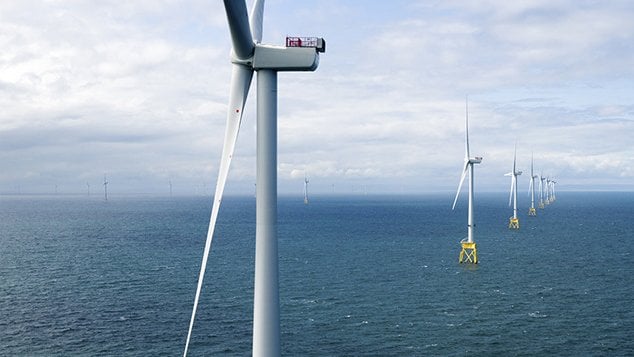
The UK government is hailing what it calls a “monumental step” in energy independence as it awarded 8.4 GW in a total of 12 offshore wind energy projects. The results are the biggest single procurement of offshore wind energy in British and European history, and are seen as a significant validation for the industry.
The government is highlighting the turnaround it was able to achieve with the seventh round of Contracts for Difference Allocation. Round 5 closed in September 2023 with no offshore wind energy projects secured. The government enhanced the subsidies and pricing for Round 6, which awarded nearly 5 GW off fixed bottom offshore wind, although some was a reworking of prior awards, and 400 MW of floating offshore wind. Today’s record awarding of 8.48 GW, they said, would power over 12 million homes and spur more than £22 billion in private investment.
The UK’s goal is for at least 43 GW of offshore wind power by 2030 as part of its overall renewable energy strategy. The country already has 16.6 GW installed and a further 11.7 GW under construction. Many people feared after the last two rounds that the UK would not be able to meet its goals. Today’s results are closing a major portion of the gap, with analysts saying the UK needs another 7 GW in the next round set late this year to ensure it meets its goal. The UK is second only to China in the amount of offshore wind energy developed.
“With these results, Britain is taking back control of our energy sovereignty,” said UK Energy Secretary Ed Miliband. “This is a historic win for those who want Britain to stand on our own two feet, controlling our own energy rather than depending on markets controlled by petrostates and dictators.”
The government is arguing that offshore wind power makes economic sense, highlighting that its development will cost 40 percent less than the cost of building and operating a new gas power plant. They also cited independent research that says renewables can drive down the price of electricity and have already done so by up to a quarter.
The government, however, is providing extensive financial support to the offshore wind energy sector. They noted that the original budget for fixed bottom projects was £900 million, but based on the strength of the round has been increased to £1.79 billion. The strike price for electricity from the fixed bottom projects ranges from approximately £89 to £91, while the strike price for floating offshore wind is £216.46 per MWh. Critics highlight that it was increased from £82 per MWh in 2024. The contract prices are also indexed to CPI inflation.
The projects selected span the North Sea in both England and Scotland, as well as the Irish Sea for Wales. It is the first Welsh project to win a contract in more than a decade and the first new Scottish project since 2022.
The biggest recipients include SSE, which won a 20-year contract for Berwick Bank Phase B. It was the only fixed-bottom project selected in Scotland, and it is a big one. Phase B would be 1.28 GW. The company plans to reach a final investment decision by 2027 and also expects to place Phases A and C in Round 8 later this year. If the full project is developed, it would become the largest in the world with a total capacity of 4.1 GW and 307 turbines.
WE also won major awards both for its Norfolk Vanguard project and two Dogger Bank South projects, all in the North Sea, as well as Awel y Mor in the Irish Sea.
Norfolk Vanguard would be developed in two phases and have a total capacity of 3.1 GW. RWE announced that it has agreed to sell 50 percent of the project to the well-known investment firm KKR. They are targeting the summer of 2026 for the investment decision. The first phase of the project is expected in 2029, and the second in 2030.
Dogger Bank is also two phases, which combined would add another 3 GW in 2031 and 2032. In December 2023, RWE entered into a partnership with the UAE-based Masdar as an investor for these projects.
The trade group RenewableUK reported that more than 20 GW of offshore wind had been eligible for this round of the allocations. The strength of this round comes as many other countries in Europe have struggled to overcome the financial and supply chain challenges to spur interest in their new rounds. The UK government hopes to build on the strength of this round for the next auction late this year.
RWE Wins 6.9 GW of UK Offshore Wind CfDs and Brings in KKR as Partner
Germany’s RWE has emerged as one of the biggest winners in the UK’s latest offshore wind auction, securing Contracts for Difference (CfDs) for 6.9 gigawatts of capacity in Allocation Round 7 while simultaneously locking in a long-term partnership with private equity firm KKR.
Under the results announced by the UK Department for Energy Security and Net Zero, RWE won 20-year inflation-linked CfDs at a strike price of £91.20 per megawatt hour (in 2024 prices) for five projects across the North Sea and Irish Sea. The awards cover the Norfolk Vanguard East and West projects, two Dogger Bank South projects, and the Awel y Môr development off the coast of north Wales.
Alongside the auction success, RWE confirmed that KKR will acquire a 50% equity stake in both Norfolk Vanguard East and Norfolk Vanguard West. The two companies will jointly develop, construct and operate the projects, marking a significant deepening of financial partnerships in the UK offshore wind sector. The transaction is expected to close in summer 2026, subject to regulatory approvals.
The CfDs provide long-term revenue certainty, a critical factor for financing large-scale offshore wind projects amid rising costs and tighter capital markets. The Norfolk Vanguard East and West projects together account for 3.1 GW of capacity and are located 50 to 80 kilometers off the Norfolk coast. Once operational, they are expected to supply electricity to roughly three million UK homes.
RWE has already launched the process to raise non-recourse project finance debt for the Norfolk Vanguard projects. Final investment decisions, along with project financing and completion of the KKR partnership, are targeted for summer 2026. Commissioning is expected in 2029 for Norfolk Vanguard West and 2030 for Norfolk Vanguard East.
The agreement with KKR highlights a broader trend in offshore wind: developers increasingly turning to large institutional investors to share capital burdens and manage balance sheet exposure as project sizes continue to scale.
Beyond Norfolk Vanguard, RWE secured CfDs for its Dogger Bank South East and West projects, which together represent 3 GW of capacity in the North Sea, more than 100 kilometers off England’s northeast coast. The projects are jointly owned by RWE (51%) and Abu Dhabi-based Masdar (49%), with RWE leading development and operations. Commissioning is expected in the early 2030s.
RWE also won support for the 0.8 GW Awel y Môr offshore wind project, an extension of the existing Gwynt y Môr wind farm in the Irish Sea. Awel y Môr is jointly owned by RWE, Stadtwerke München and Siemens, and is expected to come online in 2031.
The AR7 results come as the UK seeks to accelerate offshore wind deployment to meet its decarbonization and energy security goals. After recent auction rounds saw concerns over project viability due to inflation and supply chain pressures, the £91.20/MWh strike price reflects the government’s effort to rebalance developer economics while maintaining competitive procurement.
For RWE, the outcome strengthens its position as one of Europe’s leading offshore wind developers and underscores the growing importance of partnerships with global capital providers as project pipelines expand.
By Charles Kennedy for Oilprice.com
Germany’s RWE has emerged as one of the biggest winners in the UK’s latest offshore wind auction, securing Contracts for Difference (CfDs) for 6.9 gigawatts of capacity in Allocation Round 7 while simultaneously locking in a long-term partnership with private equity firm KKR.
Under the results announced by the UK Department for Energy Security and Net Zero, RWE won 20-year inflation-linked CfDs at a strike price of £91.20 per megawatt hour (in 2024 prices) for five projects across the North Sea and Irish Sea. The awards cover the Norfolk Vanguard East and West projects, two Dogger Bank South projects, and the Awel y Môr development off the coast of north Wales.
Alongside the auction success, RWE confirmed that KKR will acquire a 50% equity stake in both Norfolk Vanguard East and Norfolk Vanguard West. The two companies will jointly develop, construct and operate the projects, marking a significant deepening of financial partnerships in the UK offshore wind sector. The transaction is expected to close in summer 2026, subject to regulatory approvals.
The CfDs provide long-term revenue certainty, a critical factor for financing large-scale offshore wind projects amid rising costs and tighter capital markets. The Norfolk Vanguard East and West projects together account for 3.1 GW of capacity and are located 50 to 80 kilometers off the Norfolk coast. Once operational, they are expected to supply electricity to roughly three million UK homes.
RWE has already launched the process to raise non-recourse project finance debt for the Norfolk Vanguard projects. Final investment decisions, along with project financing and completion of the KKR partnership, are targeted for summer 2026. Commissioning is expected in 2029 for Norfolk Vanguard West and 2030 for Norfolk Vanguard East.
The agreement with KKR highlights a broader trend in offshore wind: developers increasingly turning to large institutional investors to share capital burdens and manage balance sheet exposure as project sizes continue to scale.
Beyond Norfolk Vanguard, RWE secured CfDs for its Dogger Bank South East and West projects, which together represent 3 GW of capacity in the North Sea, more than 100 kilometers off England’s northeast coast. The projects are jointly owned by RWE (51%) and Abu Dhabi-based Masdar (49%), with RWE leading development and operations. Commissioning is expected in the early 2030s.
RWE also won support for the 0.8 GW Awel y Môr offshore wind project, an extension of the existing Gwynt y Môr wind farm in the Irish Sea. Awel y Môr is jointly owned by RWE, Stadtwerke München and Siemens, and is expected to come online in 2031.
The AR7 results come as the UK seeks to accelerate offshore wind deployment to meet its decarbonization and energy security goals. After recent auction rounds saw concerns over project viability due to inflation and supply chain pressures, the £91.20/MWh strike price reflects the government’s effort to rebalance developer economics while maintaining competitive procurement.
For RWE, the outcome strengthens its position as one of Europe’s leading offshore wind developers and underscores the growing importance of partnerships with global capital providers as project pipelines expand.
By Charles Kennedy for Oilprice.com
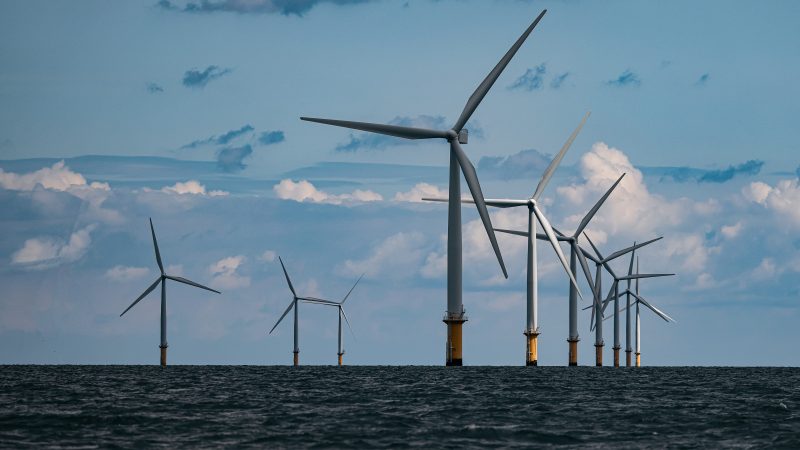
Today’s historic results from the latest offshore wind auction shows the difference a Labour government can make to our communities.
After months of our opponents on the right casting doubt on the benefits of clean power, the results announced today, alongside new analysis on costings are emphatic: we have secured a record amount of clean power at a price that is significantly lower than that of building and operating new gas fired power plants.
The results announced today mean offshore wind in every corner of the country, from Dogger Bank off the Yorkshire coast, to Awel y Mor in Wales, to Berwick Bank in the North Sea.
Labour is delivering our historic promise made at the last election, to deliver energy security through clean power, and bring down bills for good.
READ MORE: ’25 years of offshore wind shows what can be achieved by energy and climate ambition’
We made that promise in the shadow of the cost of living crisis that was, and still is, affecting so many families across our country today.
As Russia invaded Ukraine, the failure by successive Tory governments to invest in our energy system was laid bare.
Households from the Highlands to Cornwall were left to pick up the tab through eye-wateringly high energy bills, and still today face bills that are significantly higher than before the crisis.
At the general election we vowed to never let this happen again, and today we take a significant step forwards in meeting that commitment.
Not only have we secured enough projects to power the equivalent of over 12 million homes, but we are also getting ahead in floating offshore wind, an emerging technology in which we can be a leader here in the UK.
With two successful floating wind projects in the North Sea and Celtic Sea, we are delivering where previous Tory governments failed.
Subscribe here to our daily newsletter roundup of Labour news, analysis and comment– and follow us on Bluesky, WhatsApp, X and Facebook.
I am particularly pleased to see the Pentland project in Scotland secure a contract, building on the backing it has been given by Great British Energy and the National Wealth Fund.
Taken together, the results we are announcing today will support 6,000 highly skilled jobs in every corner of the country, backed by £22bn in private investment going into our communities.
This is on the back of more than £60bn of private investment that we have secured since coming to office.
While our opponents peddle false arguments around cost, today we are also publishing definitive evidence that clean power is the cheaper option when compared to new gas fired power stations.
This analysis shows that the projects secured today are as much as 40% cheaper than the cost of building and operating new gas capacity in the energy system.
Not only that, but the overall results for all technologies in AR7 will contribute to lower bills for households compared to today.
We were elected with a clear mission to end the cost of living crisis facing families, secure our energy system and create the jobs our communities so urgently need.
Today we take a significant step forwards in delivering on that promise to the British people.

UK Awards Record Offshore Wind Capacity in Latest Auction
The UK on Wednesday awarded a record-breaking 8.4 gigawatts (GW) capacity of offshore wind in its latest auction round, which puts Britain “firmly on track to achieve its clean power mission by 2030,” the government said.
The Contracts for Difference AR7 auction secured offshore wind capacity capable of generating enough clean electricity to power the equivalent of 12 million UK homes.
“The results deliver the biggest single procurement of offshore wind energy in British and European history - confounding the global challenges facing the industry - a major vote of confidence in the UK’s new era of energy sovereignty and abundance,” the UK government said in a statement.
Projects in all parts of the UK, including Scotland and the first Welsh project to win a contract in more than a decade, won in the offshore wind tender.
The government also noted that offshore wind is cheaper to build and operate than new gas-fired power generation. In new figures published on Wednesday using the LCOE industry metric, the cost of building and operating a new gas fired power station is £147, or $198, per megawatt hour (MWh). By contrast, the results for fixed offshore wind in today’s auction were £90.91, or $122, per MWh on average. That’s 40% cheaper than the cost of building and operating new gas-fired generation, the UK government said.
With the latest record-breaking auction, Britain is “taking back control of its energy, and lowering bills for good,” the cabinet noted.
The UK aims to have at least 43 GW of offshore wind by 2030 to meet its clean power target. To compare, current offshore wind capacity is 16.6 GW while another 11.7 GW is under construction.
Despite the offshore wind auctions returning back on track, the UK will find it very challenging to connect all these projects to the grid and have it running 95% on clean energy, including renewables and nuclear, analysts say.
By Tsvetana Paraskova for Oilprice.com
The UK on Wednesday awarded a record-breaking 8.4 gigawatts (GW) capacity of offshore wind in its latest auction round, which puts Britain “firmly on track to achieve its clean power mission by 2030,” the government said.
The Contracts for Difference AR7 auction secured offshore wind capacity capable of generating enough clean electricity to power the equivalent of 12 million UK homes.
“The results deliver the biggest single procurement of offshore wind energy in British and European history - confounding the global challenges facing the industry - a major vote of confidence in the UK’s new era of energy sovereignty and abundance,” the UK government said in a statement.
Projects in all parts of the UK, including Scotland and the first Welsh project to win a contract in more than a decade, won in the offshore wind tender.
The government also noted that offshore wind is cheaper to build and operate than new gas-fired power generation. In new figures published on Wednesday using the LCOE industry metric, the cost of building and operating a new gas fired power station is £147, or $198, per megawatt hour (MWh). By contrast, the results for fixed offshore wind in today’s auction were £90.91, or $122, per MWh on average. That’s 40% cheaper than the cost of building and operating new gas-fired generation, the UK government said.
With the latest record-breaking auction, Britain is “taking back control of its energy, and lowering bills for good,” the cabinet noted.
The UK aims to have at least 43 GW of offshore wind by 2030 to meet its clean power target. To compare, current offshore wind capacity is 16.6 GW while another 11.7 GW is under construction.
Despite the offshore wind auctions returning back on track, the UK will find it very challenging to connect all these projects to the grid and have it running 95% on clean energy, including renewables and nuclear, analysts say.
By Tsvetana Paraskova for Oilprice.com
Vattenfall Finalizes Investment for Germany’s Largest Offshore Wind Project
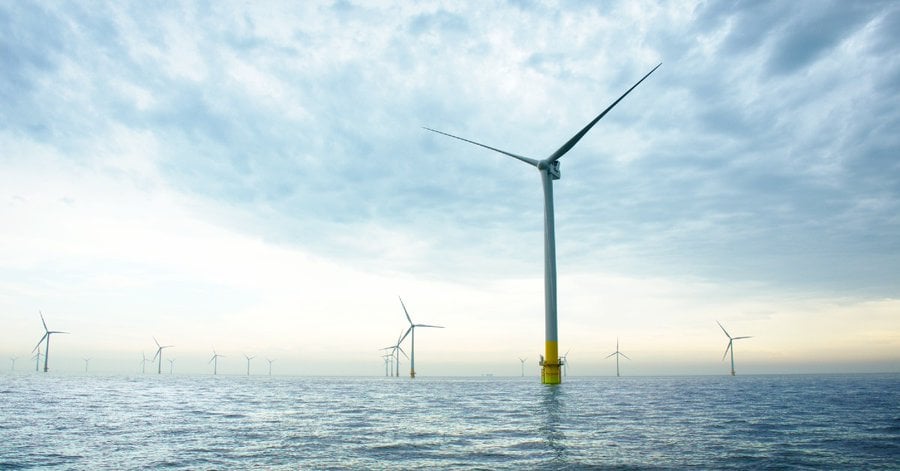
Offshore wind energy developer Vattenfall confirmed that it is moving forward with the Nordlicht offshore wind cluster. With construction due to start later this year, the two-phase project will become the largest wind project for Germany and a key contributor as the country struggles to accelerate development in the offshore wind energy sector.
The permit issued by the Federal Maritime and Hydrographic Agency (BSH) has become irrevocable, making the final step to move forward with the project. Vattenfall had announced in March 2025 that it had made the investment decision for the project, conditional on the receipt of the necessary permits. The company agreed to repurchase the shares in the Nordlicht cluster that BASF acquired in 2024. At the same time, BASF secured access to a long-term supply of renewable electricity, as part of the agreement. The companies said the agreement would secure renewable power for BASF’s chemical production in Europe at a time when such additional supply will be needed.
The Nordlicht wind cluster will be located just over 50 miles north of Borkum in the German region of the North Sea. The company reports monopile installation for Nordlicht I is expected to begin in the third quarter of this year, and when completed, the 980 MW project will be the largest capacity offshore wind farm in Germany. The second phase will add a further 630 MW. Nordlicht II should begin construction in 2027, and both wind farms are expected to be operational in 2028, adding over 1.6 GW to Germany’s energy supply. Electricity production is expected to total around 6 TWh annually.
Catrin Jung, Senior Vice President, Head of Business Area Wind for Vattenfall, called this a “defining moment” for the project. “This project is about more than building offshore wind capacity – it’s about strengthening Europe’s competitiveness and reducing reliance on fossil fuels. By producing clean electricity locally, we help create a more resilient energy system,” said Jung.
The decision to move forward on the project comes as Germany, like other Northern European countries, has experienced reduced interest in future projects due to the challenges and economic pressures on the industry.
Despite having a target to reach 30 GW by 2030, Germany has been stuck at around 1,600 installed wind turbines since late 2024. It currently has a capacity of approximately 9.2 GW installed. While it has grown from just over 7 GW in 2021, future projects have been delayed. In August 2025, Germany received no bids in its latest allocation round, prompting the government to say it would have to adjust the strategy. It scaled back its plan for offshore-wind auctions in 2026 to between 2.5 and 5 GW, from an original plan for 6 GW. The next allocation was expected to proceed in February, with further rounds planned for mid-year.
Despite similar economic challenges in the Netherlands, Vattenfall highlights that it is moving forward with another large-scale project. Together with Copenhagen Infrastructure Partners, the company has received an irrevocable permit for the Zeevonk wind farm, which will have an installed capacity of 2 GW. It is also designed to produce green hydrogen in a key development for the Dutch industry.
The project will be built in phases and is now delayed to a target completion of 2032.


No comments:
Post a Comment