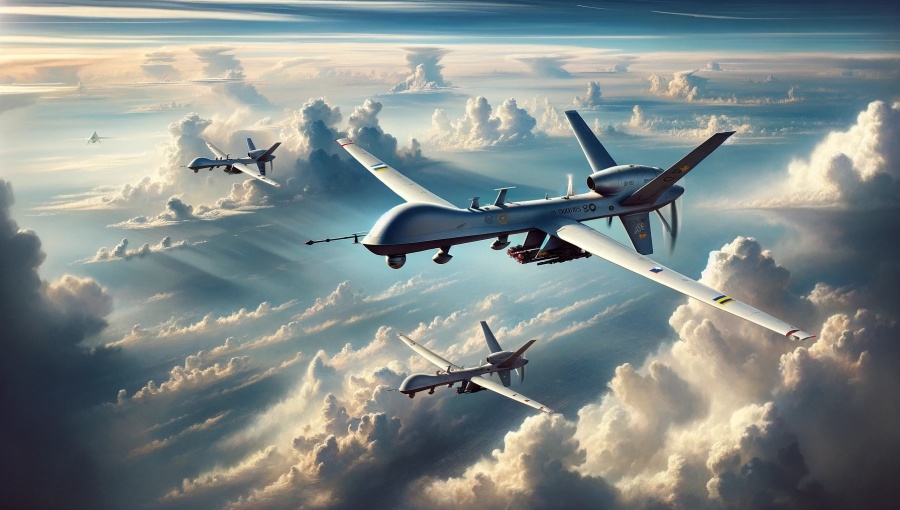
Ukraine’s defence factories could triple their current output tomorrow. The technology is ready, the workers are trained, the production lines are in place. What is missing is money.
“It’s painful to have the capability, to see that what you can produce is urgently needed at the front, but lack contracts and funding to produce it,” said Oleksandr Kamyshin, Ukraine’s former defence minister and now President Volodymyr Zelenskiy’s strategic adviser, in an interview with Euromaidan Press.
Kamyshin, who increased defence production sixfold during his tenure as minister, now focuses on integrating Ukraine’s industry into Europe’s procurement system. He has spearheaded the Manufacturing Freedom initiative, under which contracts from European states fund Ukrainian arms production. “These are not grants, these are contracts for production of our weapons and free transfer of these weapons to our armed forces,” he explained. Denmark pioneered the model, delivering 18 Bohdana artillery systems within two months of its order, an efficiency Kamyshin argues is unmatched globally.
Leadership is key. “Nordics, Baltics, Germany, Czech Republic are the most active,” Kamyshin said. “It always depends on leadership. That’s why I will always be grateful to Denmark’s Prime Minister Mette Frederiksen and her team for being the first to believe, the first to implement this story, and then other countries follow her.”
In general, as the US pulls back from supporting Ukraine directly with arms and money this year, Europe has switched tactics as it increasingly takes over the burden from supplying materiel from its dwindling stockpile to investing in Ukraine domestic defence sector. The plan has always been to turn Ukraine into a military production hub, first floated at conference in October 2023, but the idea has accelerated now. Ukrainian President Volodymyr Zelenskiy boasted early this year that from a standing start, Ukraine now produces between 40% and 50% of all its military needs and has even overtaken Russia in drone manufacturing. The most recent advance is Kyiv has just gone into serial production of its new Flamingo cruise missile that can target military and industrial assets deep inside Russia's territory.
Yet despite Ukraine’s rapid innovation cycle, one gap remains. “We still need the drone swarm solution, coordinated solution,” Kamyshin told the GLOBSEC security forum in Prague. He described how artificial intelligence is already being integrated into drones, with autonomous targeting now operational for strike and kamikaze systems. “The last thing we are still waiting on the front line in scale is the swarm of drones, and that’s something that will give us even bigger change on the front line.”
Recent battlefield successes underscore the urgency. The spectacular Operation Spiderweb, conducted in June 2025, destroyed or damaged more than 40 Russian strategic bombers. “Ukrainian long-range weapons are the best investment in European security,” Kamyshin argued. “Operation Spiderweb is probably the most successful operation to strengthen European security by destroying a third of Russia’s strategic aviation fleet.” Cheap FPV drones costing less than $3,000 were used to eliminate aircraft worth $250mn each. “If that’s an FPV drone over 2,000 kilometres from the front line, it’s fine. We’re fine with that.”
Kamyshin rejects the claim that Ukraine lags behind Russia in long-range drones. “This is a myth that we don’t produce Shaheds. Shahed is a type of long-range drone that we produce and produce in significant quantities. We hit military targets, they terrorise cities.”
Still, he insists that Ukraine cannot prevail alone. “Additional support is needed from both Europe and the USA. This is a big war. Russia is not fighting alone—it receives substantial support from North Korea, from China, and from Iran. Against this background, Ukraine alone, or Ukraine only with Europe, will be difficult. The free world, which America definitely belongs to, must stand against all these evils.”
Currently, investment in drone production is limited by export restrictions, say drone manufacturers. The state ordered some $2bn worth of drones, but the companies say their could massively expand production if they had more investment. However, investment is limited by the export restrictions and if those were lifted the drone manufactures say they could produce some $10bn-$20bn worth of drones a year. The prospects of a drone export deal with the US is currently one of the items on Zelenskiy agenda, who offered US President Donald Trump a mega drones-for-weapons deal last month worth $50bn.
Looking ahead, Kamyshin emphasised the need for permanent deterrence. “We must have strategic deterrence weapons, in sufficient quantity, of sufficiently high quality. This must be regardless of when we end our war with our victory. We must have enough of this always.”
For Kamyshin, the message is clear: Ukraine has already shifted from aid recipient to strategic partner. What it now requires is Europe’s willingness to match its political rhetoric with contracts.
Taiwan to invest in military drones, drawing 'major lesson' from war in Ukraine
Drawing lessons from the ongoing war in Ukraine, where the use of drones is widespread, Taiwan said it plans to invest in 50,000 drones over the course of the next two years. The decision comes as the island faces mounting pressure from China, which it claims as its own territory.
Issued on: 24/08/2025
By:Jan CAMENZIND BROOMBY
Video by:Jan CAMENZIND BROOMBY
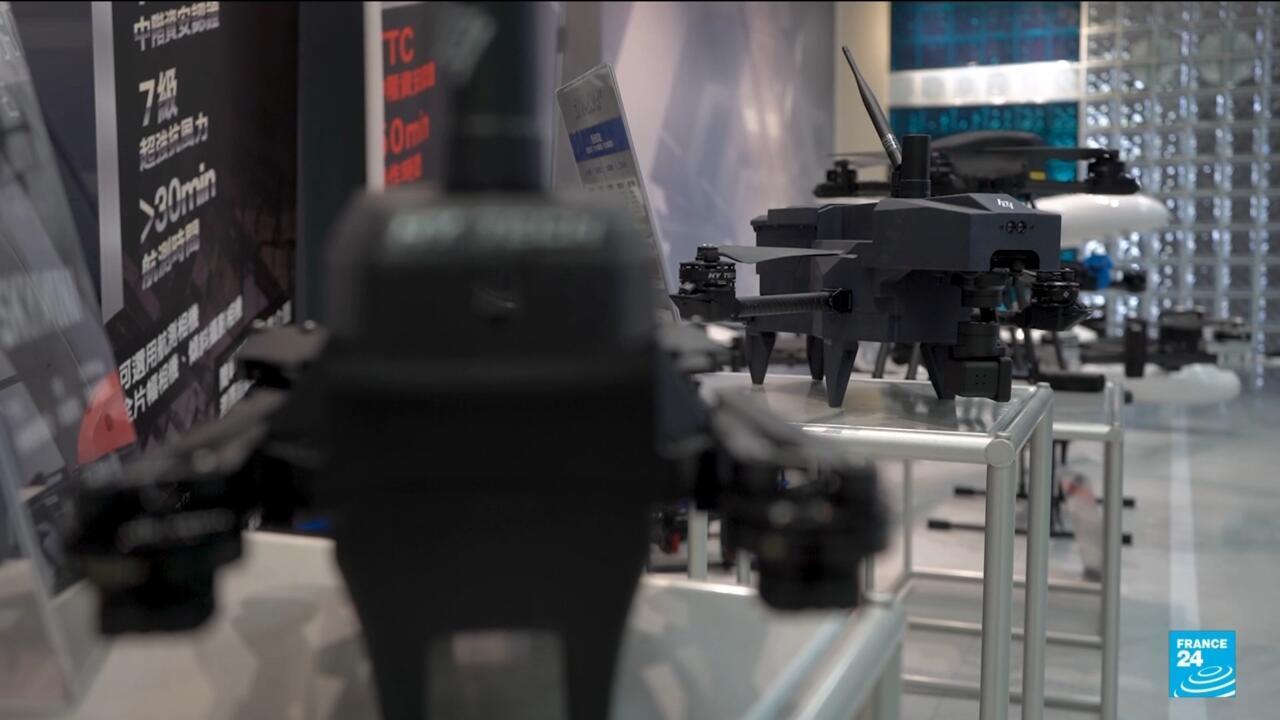
For almost two years, Chen Ting-Wei fought the Russian army as a member of the Ukrainian Foreign Legion.
Now, he has traded the front lines of the war in Ukraine for a classroom in Taiwan, where he shares his experiences on the battlefield with his students. An important lesson he is eager to impart is the rising use of drones.
“More than 80 percent of infantry movements are detected by drones before they even begin,” Ting-Wei says. “It has made combat operations much more difficult.”
Security officials in Taipei are also drawing lessons from the war in Ukraine. Drone exercises were added to Taiwan’s basic military training programme for the first time ever this month.
The Taiwanese government has also announced plans to invest in some 50,000 drones over the course of the next two years, in the face of mounting threats by an increasingly assertive Beijing.
02:07
LA REVUE GAUCHE - Left Comment: Search results for PERMANENT ARMS ECONOMY

No comments:
Post a Comment