Lula Signs Law Temporarily Designating Belém As Brazil’s Capital
November 6, 2025
By ABr
On Tuesday (Nov. 4), President Luiz Inácio Lula da Silva signed into law a bill temporarily transferring Brazil’s capital from Brasília to Belém, in the state of Pará. The change will be in effect during the 30th United Nations Climate Change Conference (COP30), from November 11 to 21, 2025. The proposal was approved by the National Congress, and Law 15,251 was published in the Federal Official Gazette.

According to the government, the temporary transfer is symbolic and political in nature, and “reinforces the relevance of the Amazon on the international environmental agenda,” while also highlighting the country’s commitment to global climate issues.
All acts and orders issued during this period, including those of the President of Brazil and his ministers, will be registered in the capital of Pará. During this time, the Executive, Legislative, and Judicial branches may establish themselves in the city of Belém to carry out their institutional and governmental activities.
A similar case occurred in 1992, when the federal capital was temporarily transferred to Rio de Janeiro during the United Nations Conference on Environment and Development (Rio-92).
On Tuesday (Nov. 4), President Luiz Inácio Lula da Silva signed into law a bill temporarily transferring Brazil’s capital from Brasília to Belém, in the state of Pará. The change will be in effect during the 30th United Nations Climate Change Conference (COP30), from November 11 to 21, 2025. The proposal was approved by the National Congress, and Law 15,251 was published in the Federal Official Gazette.
According to the government, the temporary transfer is symbolic and political in nature, and “reinforces the relevance of the Amazon on the international environmental agenda,” while also highlighting the country’s commitment to global climate issues.
All acts and orders issued during this period, including those of the President of Brazil and his ministers, will be registered in the capital of Pará. During this time, the Executive, Legislative, and Judicial branches may establish themselves in the city of Belém to carry out their institutional and governmental activities.
A similar case occurred in 1992, when the federal capital was temporarily transferred to Rio de Janeiro during the United Nations Conference on Environment and Development (Rio-92).
ABr
Agência Brasil (ABr) is the national public news agency, run by the Brazilian government. It is a part of the public media corporation Empresa Brasil de Comunicação (EBC), created in 2007 to unite two government media enterprises Radiobrás and TVE (Televisão Educativa).
Agência Brasil (ABr) is the national public news agency, run by the Brazilian government. It is a part of the public media corporation Empresa Brasil de Comunicação (EBC), created in 2007 to unite two government media enterprises Radiobrás and TVE (Televisão Educativa).
COP30: Host city Belem is 'at the heart of the issues' and a gateway to the Amazon
ANALYSIS
Brazil's port city of Belem will open its doors to 50,000 participants for the COP30 conference on climate change from November 10-21. While President Luiz Inacio Lula da Silva intentionally picked the location to be “as close as possible to the heart of the issues” discussed at the climate conference, his choice came with its own set of challenges.
Issued on: 06/11/2025 - FRANCE24
By: Cyrielle CABOT
But when Brazilian President Luiz Inacio Lula da Silva, known as Lula, announced in 2023 that he wanted to host COP30 in Belem, the capital of the state of Para, it was clear things would look a little different this time around. This climate conference will bring tens of thousands of participants to a city that lies at the mouth of the Amazon River and at the edge of the rainforest considered the lungs of the planet.
A strategic location
A gateway to the northeastern tip of the Amazon rainforest, Belem lies on the delta formed by the Guama and Acara rivers. Its destiny has always been inextricably linked to its position at a crossroads between the Amazon and the Atlantic Ocean. Which is why the choice to host COP30 there is both “symbolic and political”, according to David Dumoulin, who teaches sociology at the Latin America institute of the Sorbonne University in Paris.
“In choosing Belem, Lula is trying to ensure that the Amazon rainforest and the challenges it is facing as an ecosystem are at the heart of the COP30 discussions,” he says.
Belem's strategic location was quickly recognised by early colonists. “The Portuguese colonised Belem in 1616 so they could control access to the Amazon River and protect themselves from newcomers arriving from the ocean,” explains Ana Claudia Cardoso, associate professor of architecture and urbanism at the Federal University of Para.
The colonists quickly capitalised on the forest's resources. “The first settlers exploited the land by setting up plantations, but quickly realised it was easier to sell products from the Amazon rainforest just as the indigenous population had been doing,” Cardoso says. Indigenous populations at the time introduced a range of products to European colonisers, including spices, cereal, fruits, oils, rubber, fish, oil and cacao.
“That is how Belem became the largest and most important city in the Amazon region for hundreds of years. All forest products would be brought to local markets and then transported to other regions of Brazil, the Caribbean or Europe,” Cardoso explains.
When a vast road network was established in 1950, the industry boomed and transformed Belem into an Amazonian trade hub.
Remnants of the that period in Belem’s history are still visible today. Ver-o-Peso – one of Latin America’s biggest open-air markets, where acai berries, fried fish, fruit and nuts from the Amazon are sold – is one of the main tourist attractions in the region and a cornerstone of the city’s economy.
Logistical nightmare
Organising COP30 in a city already grappling with its own issues was challenging. For months, there were doubts as to whether the event would take place at all. A lack of infrastructure meant that the price of accommodation skyrocketed, sometimes reaching €4,000 per night for a single hotel room and even more in some higher-end establishments.
Organisers had to find creative solutions. Two massive transatlantic cruise ships moored in Belem's north will house some participants while others will sleep in army barracks, schools or even “love motels” that have been refurbished for the occasion. The iconic Vila da Barca shanty town, which sits on stilts on Guajara Bay north of Belem, will host 200 young people from around the world in a free, community-based accommodation centre.
With just a few days to go before the event begins, it seems those solutions have worked. Some 159 countries have managed to find accommodation and have confirmed they will be attending the conference, exceeding the minimum number of representatives required to pass a decision.
Local anger
But there is also the ever-recurring question of what will be left behind for the city's inhabitants. For the past two years, Belem has looked like a huge construction site. The federal government allocated some 4.8 billion reais (€776 million) to improve infrastructure. In early August, the committee charged with the organisation of COP30 announced in a press release that eight major projects had been completed, including the renovation of the Ver-o-Peso market, 90 kilometres of road reparations and the construction of two parks and sewage treatment plants.
But there is mounting criticism from locals, who say the improvements in infrastructure only benefit the most privileged communities. An investigation carried out by Brazilian media outlet Sumauma found that a wastewater pumping station built near Vila da Barca will only serve the affluent next-door neighbourhood of Umarizal, and that two parks built in the north of the city will also only benefit wealthy areas, which already have more trees than most of Belem.
“As with all global events, whether it is the COP conferences or the Olympic Games, there is always an intention to build infrastructure that lasts,” says Dumoulin. “But above all, the goal of these events is not to bring about social justice, it is to bring the cities that host them up to international standards.”
This article has been translated from the original in French by Lara Bullens.
ANALYSIS
Brazil's port city of Belem will open its doors to 50,000 participants for the COP30 conference on climate change from November 10-21. While President Luiz Inacio Lula da Silva intentionally picked the location to be “as close as possible to the heart of the issues” discussed at the climate conference, his choice came with its own set of challenges.
Issued on: 06/11/2025 - FRANCE24
By: Cyrielle CABOT
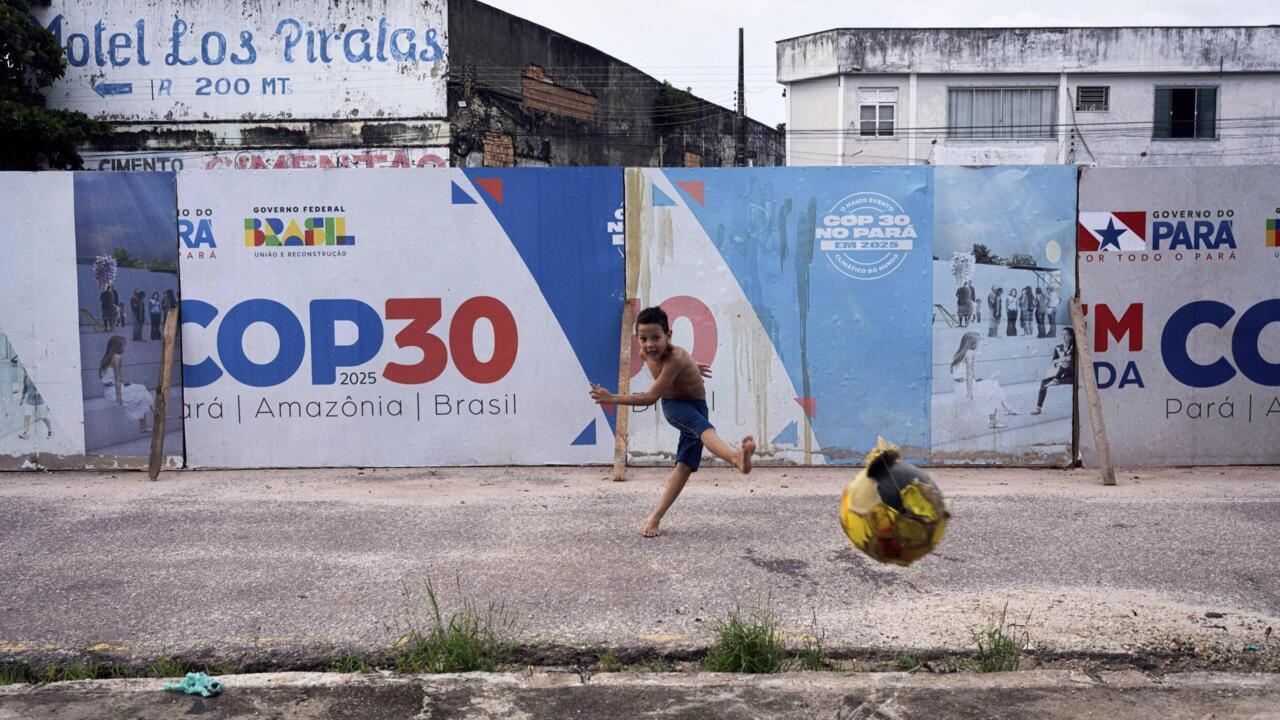
A boy kicks a football near a COP30 sign in Belem, Brazil, on March 23, 2025. © Jorge Saenz, AP
It is easy to lose track of all the COP climate conferences that have taken place in big urban metropolises: Paris in 2015, Dubai in 2023 and Lima in 2020, just to name a few. And each year, the drill is the same. Over the span of about 10 days, world leaders, diplomats, business owners, scientists and activists swarm a large conference centre, going from meeting to meeting, before returning to their accommodations at the end of the day. In turn, host cities and countries take advantage of the attention to showcase what they have done to combat climate change.
It is easy to lose track of all the COP climate conferences that have taken place in big urban metropolises: Paris in 2015, Dubai in 2023 and Lima in 2020, just to name a few. And each year, the drill is the same. Over the span of about 10 days, world leaders, diplomats, business owners, scientists and activists swarm a large conference centre, going from meeting to meeting, before returning to their accommodations at the end of the day. In turn, host cities and countries take advantage of the attention to showcase what they have done to combat climate change.
But when Brazilian President Luiz Inacio Lula da Silva, known as Lula, announced in 2023 that he wanted to host COP30 in Belem, the capital of the state of Para, it was clear things would look a little different this time around. This climate conference will bring tens of thousands of participants to a city that lies at the mouth of the Amazon River and at the edge of the rainforest considered the lungs of the planet.
A strategic location
A gateway to the northeastern tip of the Amazon rainforest, Belem lies on the delta formed by the Guama and Acara rivers. Its destiny has always been inextricably linked to its position at a crossroads between the Amazon and the Atlantic Ocean. Which is why the choice to host COP30 there is both “symbolic and political”, according to David Dumoulin, who teaches sociology at the Latin America institute of the Sorbonne University in Paris.
“In choosing Belem, Lula is trying to ensure that the Amazon rainforest and the challenges it is facing as an ecosystem are at the heart of the COP30 discussions,” he says.
Belem's strategic location was quickly recognised by early colonists. “The Portuguese colonised Belem in 1616 so they could control access to the Amazon River and protect themselves from newcomers arriving from the ocean,” explains Ana Claudia Cardoso, associate professor of architecture and urbanism at the Federal University of Para.
The colonists quickly capitalised on the forest's resources. “The first settlers exploited the land by setting up plantations, but quickly realised it was easier to sell products from the Amazon rainforest just as the indigenous population had been doing,” Cardoso says. Indigenous populations at the time introduced a range of products to European colonisers, including spices, cereal, fruits, oils, rubber, fish, oil and cacao.
“That is how Belem became the largest and most important city in the Amazon region for hundreds of years. All forest products would be brought to local markets and then transported to other regions of Brazil, the Caribbean or Europe,” Cardoso explains.
When a vast road network was established in 1950, the industry boomed and transformed Belem into an Amazonian trade hub.
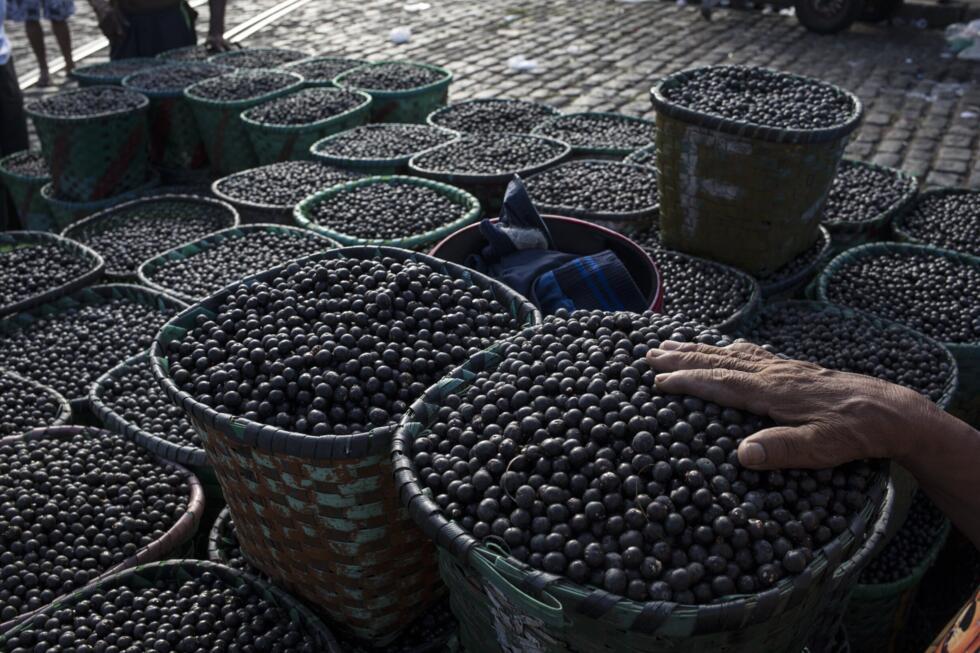
Remnants of the that period in Belem’s history are still visible today. Ver-o-Peso – one of Latin America’s biggest open-air markets, where acai berries, fried fish, fruit and nuts from the Amazon are sold – is one of the main tourist attractions in the region and a cornerstone of the city’s economy.
A market vendor places his hand on acai berries at the Ver-o-Peso market in Belem, Brazil. © Rodrigo Abd, AP
Indigenous representation
“The city also has a significant indigenous population,” Dumoulin notes, which helps Lula fulfil his ambition of making this year’s conference “the people’s COP”.
According to Sonia Guajajara, Brazil's minister of Indigenous peoples, COP30 will see the largest share of indigenous participants ever recorded in 30 years of climate negotiations.
“For two weeks, Lula will be able to showcase the history of the region and rely on indigenous representation to hammer home his message about the importance of the Amazon,” says Dumoulin. As part of these efforts, a grand boat parade along Belem port has been planned to kick off the event.
“It will be interesting to see whether participants will be able to truly experience the Amazon or Belem," Dumoulin says. "Or will the organisation of the event be confined to [a small part] of the urban setting?”
For her part, Cardoso is optimistic. “Our university campus alone will be hosting 3,000 indigenous representatives and social movements from across the world. There will be demonstrations by boat, in the streets and a range of cultural activities. Belem is a wonderful place with good food and a rich music culture. I think all these elements will encourage interaction.”
Demonstrating the effects of climate change
Often described as a “poor capital city”, Belem faces a barrage of challenges that are exacerbated year after year by the effects of climate change.
Nearly half of its 1.4 million inhabitants live in slums with “informal housing, zero vegetation and a dense population”, Cardoso says. And these areas are being hit more frequently by severe flooding, a phenomenon scientists say is becoming increasingly intense and recurrent because of global warming. Whenever there are heavy rains, the streets turn into rivers and the rush of water engulfs entire neighbourhoods of shacks made of tin sheets. At the same time, the city at large contends with infrastructure delays and security issues.
Lula explained his decision to host COP30 in Belem by explaining that it is a city directly affected by many of the issues at stake in the climate negotiations. His hope is that world leaders will gain a concrete understanding of what is at stake.
“What better way to tackle a problem than facing it head on, however uncomfortable,” COP30's president, André Corrêa do Lago, told AP in July.
“When people will go to Belem, you are going to see a developing country and city with considerable infrastructure issues, still with, in relative terms, a high percentage of poverty,” do Lago said. For him, it is an opportunity to show how the fight against climate change and more climate justice could improve the daily lives of communities, especially the most vulnerable.
Indigenous representation
“The city also has a significant indigenous population,” Dumoulin notes, which helps Lula fulfil his ambition of making this year’s conference “the people’s COP”.
According to Sonia Guajajara, Brazil's minister of Indigenous peoples, COP30 will see the largest share of indigenous participants ever recorded in 30 years of climate negotiations.
“For two weeks, Lula will be able to showcase the history of the region and rely on indigenous representation to hammer home his message about the importance of the Amazon,” says Dumoulin. As part of these efforts, a grand boat parade along Belem port has been planned to kick off the event.
“It will be interesting to see whether participants will be able to truly experience the Amazon or Belem," Dumoulin says. "Or will the organisation of the event be confined to [a small part] of the urban setting?”
For her part, Cardoso is optimistic. “Our university campus alone will be hosting 3,000 indigenous representatives and social movements from across the world. There will be demonstrations by boat, in the streets and a range of cultural activities. Belem is a wonderful place with good food and a rich music culture. I think all these elements will encourage interaction.”
Demonstrating the effects of climate change
Often described as a “poor capital city”, Belem faces a barrage of challenges that are exacerbated year after year by the effects of climate change.
Nearly half of its 1.4 million inhabitants live in slums with “informal housing, zero vegetation and a dense population”, Cardoso says. And these areas are being hit more frequently by severe flooding, a phenomenon scientists say is becoming increasingly intense and recurrent because of global warming. Whenever there are heavy rains, the streets turn into rivers and the rush of water engulfs entire neighbourhoods of shacks made of tin sheets. At the same time, the city at large contends with infrastructure delays and security issues.
Lula explained his decision to host COP30 in Belem by explaining that it is a city directly affected by many of the issues at stake in the climate negotiations. His hope is that world leaders will gain a concrete understanding of what is at stake.
“What better way to tackle a problem than facing it head on, however uncomfortable,” COP30's president, André Corrêa do Lago, told AP in July.
“When people will go to Belem, you are going to see a developing country and city with considerable infrastructure issues, still with, in relative terms, a high percentage of poverty,” do Lago said. For him, it is an opportunity to show how the fight against climate change and more climate justice could improve the daily lives of communities, especially the most vulnerable.
Logistical nightmare
Organising COP30 in a city already grappling with its own issues was challenging. For months, there were doubts as to whether the event would take place at all. A lack of infrastructure meant that the price of accommodation skyrocketed, sometimes reaching €4,000 per night for a single hotel room and even more in some higher-end establishments.
Organisers had to find creative solutions. Two massive transatlantic cruise ships moored in Belem's north will house some participants while others will sleep in army barracks, schools or even “love motels” that have been refurbished for the occasion. The iconic Vila da Barca shanty town, which sits on stilts on Guajara Bay north of Belem, will host 200 young people from around the world in a free, community-based accommodation centre.
With just a few days to go before the event begins, it seems those solutions have worked. Some 159 countries have managed to find accommodation and have confirmed they will be attending the conference, exceeding the minimum number of representatives required to pass a decision.
Local anger
But there is also the ever-recurring question of what will be left behind for the city's inhabitants. For the past two years, Belem has looked like a huge construction site. The federal government allocated some 4.8 billion reais (€776 million) to improve infrastructure. In early August, the committee charged with the organisation of COP30 announced in a press release that eight major projects had been completed, including the renovation of the Ver-o-Peso market, 90 kilometres of road reparations and the construction of two parks and sewage treatment plants.
But there is mounting criticism from locals, who say the improvements in infrastructure only benefit the most privileged communities. An investigation carried out by Brazilian media outlet Sumauma found that a wastewater pumping station built near Vila da Barca will only serve the affluent next-door neighbourhood of Umarizal, and that two parks built in the north of the city will also only benefit wealthy areas, which already have more trees than most of Belem.
“As with all global events, whether it is the COP conferences or the Olympic Games, there is always an intention to build infrastructure that lasts,” says Dumoulin. “But above all, the goal of these events is not to bring about social justice, it is to bring the cities that host them up to international standards.”
This article has been translated from the original in French by Lara Bullens.
Fair trade in the Amazon rainforest
06/11/2025 - RFI
This year’s UN Climate Conference, COP30, is being held in Brazil, home to the Amazon rainforest, and will focus on the immense challenge of protecting it. Some 28 million people live beneath the forest canopy and across urban areas, with more than a third living in poverty. How to strengthen economic activities without resorting to deforestation? Find out more in this first episode of our series, Showing the Way to a Sustainable Amazon.
06/11/2025 - RFI
This year’s UN Climate Conference, COP30, is being held in Brazil, home to the Amazon rainforest, and will focus on the immense challenge of protecting it. Some 28 million people live beneath the forest canopy and across urban areas, with more than a third living in poverty. How to strengthen economic activities without resorting to deforestation? Find out more in this first episode of our series, Showing the Way to a Sustainable Amazon.
Amazon: How climate change is impacting indigenous communities
Issued on: 05/11/2025 - RFI
This year’s UN Climate Conference, COP30, is being held in Brazil, home to the Amazon rainforest, and will focus on the immense challenge of protecting it. Last year, for the first time, record drought destroyed the Amazon's Brazil nut harvest – the basis of the traditional diet of indigenous communities and a vital source of income for thousands of small producers. Find out more in this second episode of our series, Showing the Way to a Sustainable Amazon.
Brazilian Authorities Dismantle Hundreds Of Illegal Dredges In Major Anti-Mining Operation
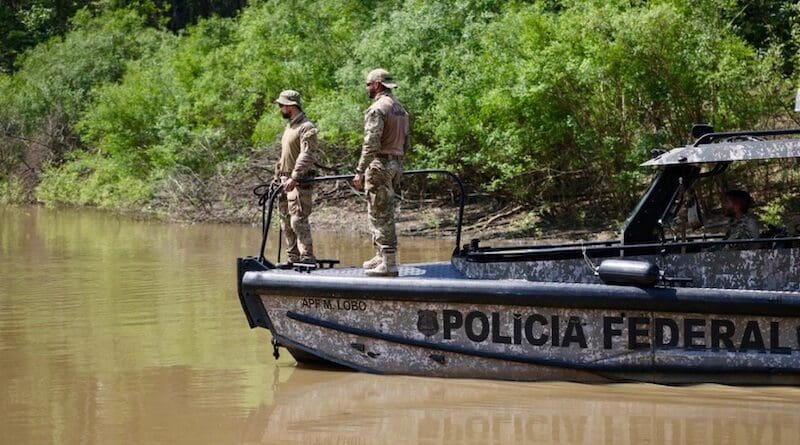
Brazilian authorities dismantle hundreds of illegal dredges in major anti-mining operation. Photo Credit: INTERPOL
November 6, 2025 0 Comments
By Eurasia Review
INTERPOL supported the first operation coordinated by the Amazon International Police Cooperation Centre (CCPI Amazônia) in Brazil against illegal gold mining in the Amazon Basin.
In a significant blow to criminal organizations, law enforcement disabled 277 dredges used in illegal gold extraction along the Madeira River, worth an estimated USD 6.8 million.
When factoring in equipment losses, recent gold extraction, environmental and social damages, as well as disrupted profits, the total economic impact on criminal organizations is estimated at approximately USD 193 million.
Importantly, the operation provided authorities with valuable intelligence to identify and dismantle the financial and logistical networks behind illegal mining. This is crucial to disrupting the criminal organizations, rather than individual workers, who are often vulnerable and subject to exploitation.
Led by the Brazilian Federal Police, the operation brought together more than 100 officers across operational, tactical and analytical roles, working in close collaboration with national and international authorities.
Using intelligence and satellite data, authorities mapped over 400 square kilometres of river and forest territory heavily impacted by illegal mining.
INTERPOL supported the operation with real-time database checks and analysis while facilitating information sharing and communication to strengthen trust and collaboration.
An INTERPOL Purple Notice, warning of the detection of a new modus operandi to facilitate transnational gold-smuggling, was published as a direct result of field activities.
INTERPOL Secretary General Valdecy Urquiza said:
“This operation marks a new chapter in our collective effort to protect the Amazon, and is a clear signal that international cooperation via CCPI Amazônia is not just a concept, it is concrete action.”
“United, we can confront the criminal networks that threaten communities and our environment, and INTERPOL remains a steadfast partner in this fight.”
Humberto Freire de Barros, Director of Amazon and Environment Protection of the Brazilian Federal Police said:
“This operation, the first coordinated by the CCPI Amazônia, demonstrates the Centre’s capacity to aggregate the efforts of various institutions responsible for combating crime in the Pan-Amazon region. This coordinated work aims not only to disrupt criminal activities but also to enhance investigations and ensure that those involved in the illegal chain are brought to justice.”
During the operation, samples of sand, fabric, and other materials used in gold extraction were collected and submitted for forensic analysis to identify their composition, detect hazardous substances such as mercury and cyanide, and trace their origin. A forensic expert also obtained biological samples from residents to evaluate mercury exposure and assess the potential impact of illegal mining on their health.
INTERPOL continues to support follow-up investigations and any additional joint actions.
Eurasia Review
Eurasia Review is an independent Journal that provides a venue for analysts and experts to publish content on a wide-range of subjects that are often overlooked or under-represented by Western dominated media.

No comments:
Post a Comment