In 1943, the Norwegian writer Knut Hamsun gave his Nobel Prize for Literature to the infamous Nazi criminal.
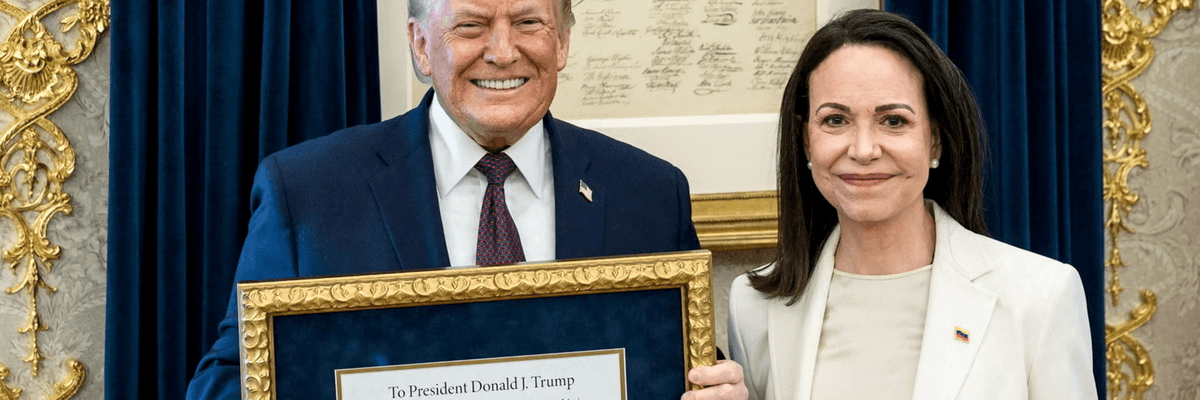
US President Donald Trump holds a framed Nobel Peace Prize medal given to him by Venezuelan opposition leader María Corina Machado—the actual 2025 winner—at the White House in Washington, DC on January 15, 2026.
(Photo by the White House)
Brett Wilkins
Jan 16, 2026
COMMON DREAMS
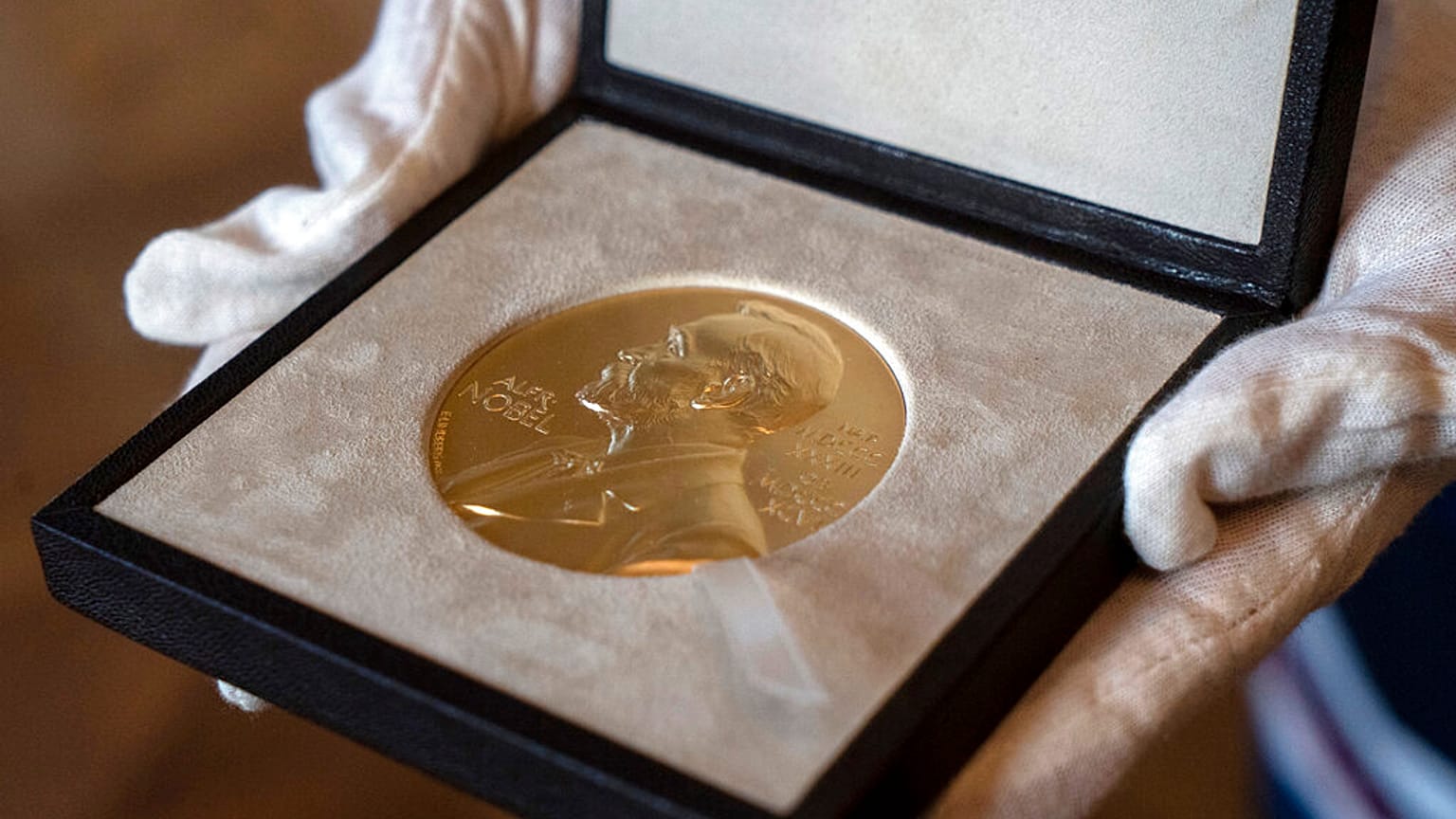
Venezuelan opposition leader María Corina Machado’s gifting of her 2025 Nobel Peace Prize to US President Donald Trump raised eyebrows around the world Friday—but it wasn’t the first time that the winner of the prestigious award gave it away.
Last month, the Norwegian Nobel Committee awarded the peace prize to the 58-year-old opposition leader “for her tireless work promoting democratic rights for the people of Venezuela and for her struggle to achieve a just and peaceful transition from dictatorship to democracy.”
Machado joined a notorious group of Nobel Peace laureates who either waged or advocated for war, as she backed Trump’s aggression against her country. This has included a massive troop deployment, military and CIA airstrikes, bombing of boats allegedly transporting drugs, and the abduction earlier this month of Venezuelan President Nicolás Maduro and his wife, Cilia Flores.
Trump has ordered the bombing of nine other countries during his two terms, more than any other president in history. US forces acting on his orders have killed thousands of civilians in Afghanistan, Iran, Iraq, Libya, Nigeria, Pakistan, Somalia, Syria, Venezuela, and Yemen. While running for president in 2016, Trump vowed to “bomb the shit out of” Islamic State militants and “take out their families,” and then followed through on his promise.
Despite being passed over by Trump for installation in any leadership role in Venezuela so far, Machado presented Trump with her framed Nobel medal along with a certificate of gratitude during a Thursday meeting at the White House. Trump subsequently posted on his Truth Social network that “María presented me with her Nobel Peace Prize for the work I have done. Such a wonderful gesture of mutual respect.”
That gesture prompted the Norwegian Nobel Committee to issue a statement noting that the prize cannot be given away.
“Even if the medal or diploma later comes into someone else’s possession, this does not alter who was awarded the Nobel Peace Prize,” the committee said. “A laureate cannot share the prize with others, nor transfer it once it has been announced. A Nobel Peace Prize can also never be revoked. The decision is final and applies for all time.”
The committee’s statement was extraordinary—but this is not the first time that a Nobel winner gave away their prize. In 1943, Norwegian author Knut Hamsun gifted his 1920 Nobel Prize for Literature—awarded for his novel Markens Grøde (Growth of the Soil)—to Nazi Propaganda Minister Joseph Goebbels after a trip to Germany. Other Nobel laureates have donated or sold their medals.
The progressive media outlet Occupy Democrats said on social media: “Clearly, the similarities between Trump and Goebbels extend beyond just a mutual admiration for fascism. Both men possess(ed) the kind of spiritually sick, egotistical temperament that allows one to accept a prize that someone else has earned.”
“Obviously, Donald Trump does not deserve the Nobel Peace Prize,” the outlet continued. “He has bombed Iran, Yemen, Nigeria, innocent fishing boats in the Caribbean, Venezuela, and is in the process of turning the United States into a war zone. That said, Machado doesn’t deserve it either.”
“Anyone spineless enough to surrender the prize to an evil man like Trump in the hopes of obtaining power is not someone we should be celebrating,” Occupy Democrats added.
Last month, Wikileaks founder and multiple Nobel Peace Prize nominee Julian Assange sued the Nobel Foundation—the Swedish organization that manages administration of the approximately $1.2 million-per-winner prize—in a bid to prevent Machado from receiving the money.
Machado’s win also sparked protests outside the Norwegian Nobel Institute in Oslo.

Can a Nobel Prize be gifted or sold? Some have done it in the past
Copyright AP Photo
By Aleksandar Brezar
Published on 16/01/2026
Auction for Ukrainian refugees
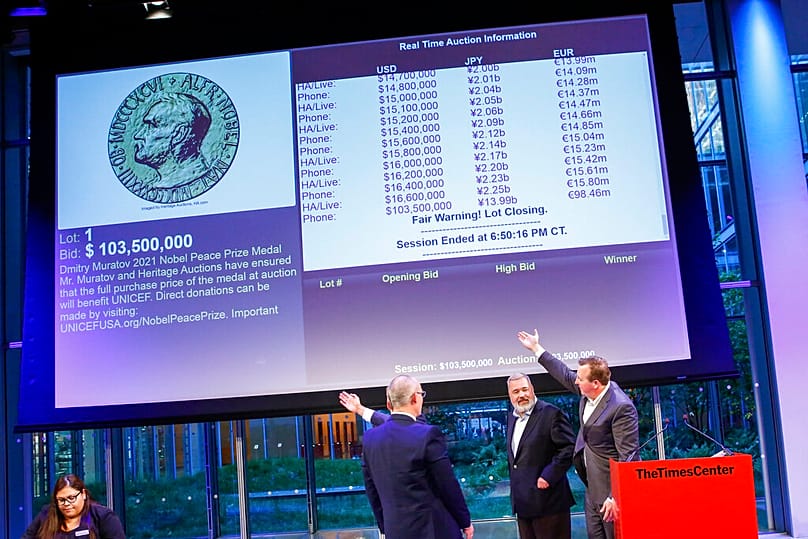
Russian journalist Dmitry Muratov, who won the Nobel Peace Prize in 2021 — alongside Maria Ressa of the Philippines — for his efforts to safeguard freedom of expression in Russia, auctioned his medal in June 2022 for a record-breaking $103.5 million (€89.1m).
All proceeds from the sale held at Heritage Auctions in New York to an anonymous buyer were donated to UNICEF's fund for Ukrainian child refugees following Russia's full-scale invasion of Ukraine in February of that year.
Wartime fundraising and infamous gestures
In the early days of World War II, Nobel medals belonging to Danish physicists Niels Bohr and August Krogh, who won in 1922 and 1920 respectively, were auctioned to raise funds for Finnish civilian relief during the Winter War between Finland and the Soviet Union in 1939-1940.
The medals were later donated to museums in Denmark.
During World War II, German physicists Max von Laue and James Franck, both Nobel laureates, gave their medals to Niels Bohr as Nazi Germany occupied their countries.
To prevent the medals from falling into Nazi hands, Hungarian chemist George de Hevesy, who worked in Bohr's laboratory, dissolved them in acid.
After the war, the gold was recovered, and the Nobel Foundation recast the medals, which were returned to von Laue and Franck's family.
The case of James Watson
James D Watson sold his medal amid controversy at Christie's auction house in December 2014 for about $4.8 million (€4.13m).
Watson, who won the Nobel Prize in Physiology or Medicine in 1962 alongside Francis Crick and Maurice Wilkins for discovering the structure of DNA, said proceeds would support scientific research institutions and conservation causes.
He became the first living Nobel laureate known to sell his medal.
Russian billionaire Alisher Usmanov purchased the medal only to return it to Watson at an official ceremony in Moscow in 2015, saying the scientist "deserved" to have it.
Venezuela’s Machado presents Trump with her Nobel Peace Prize during White House meeting
Crick's Nobel Prize medal, won together with Watson and Crick, was also sold at Heritage Auctions in 2013 for $2.27 million (€1.95m). Part of the sale proceeds were donated to the Francis Crick Institute in London.
Norman Angell's Nobel Peace Prize medal from 1933, won for promoting international understanding, was sold at Sotheby's in 1983. The medal is now held by the Imperial War Museum in London.
Aage Bohr, who won the Nobel Prize in Physics in 1975, had his medal sold at auction in 2011 and again in 2019. Bohr was the son of Niels Bohr, who won the Nobel Prize in Physics in 1922.
Prize money donations
Some laureates have donated their Nobel prize money rather than parting with their medals.
Albert Einstein, who won the Nobel Prize in Physics in 1921, left his prize money to his first wife Mileva Marić and their children under a pre-arranged divorce settlement. The agreement was made before Einstein won the prize.
In 1979, Macedonian-born Albanian Peace Prize laureate Mother Teresa asked for the traditional Nobel banquet to be cancelled and that the funds, together with the prize money, be donated directly to the poor.
Paul Greengard, who won the Nobel Prize in Physiology or Medicine in 2000, donated his full prize earnings to establish the Pearl Meister Greengard Prize, an annual award supporting women scientists.
Copyright AP Photo
By Aleksandar Brezar
Published on 16/01/2026
EURONEWS
Although Machado's gesture marks a rare instance of a living laureate parting with their medal shortly after receiving it, it is not unprecedented. Rules state that Machado could give away her actual medal but not the honour itself.
In a largely unusual move, Venezuelan opposition leader María Corina Machado presented her Nobel Peace Prize medal to US President Donald Trump at the White House on Thursday, in what she said was "recognition for his unique commitment to our freedom."
Machado was awarded the 2025 Nobel Peace Prize for her leadership of Venezuela's opposition movement amid a crackdown by Nicolas Maduro, most notably in the much-maligned 2023 presidential election in the South American country.
In the meantime, Trump ordered a blitz US military operation on 3 January that resulted in Maduro's capture. The former Venezuelan leader and his spouse now face drug trafficking-related charges in New York.
“I presented the president of the United States the medal, the Nobel Peace Prize,” Machado told reporters as she departed the White House on Thursday.
Trump confirmed on social media that Machado had left the medal for him to keep, and he said it was an honour to meet her.
“She is a wonderful woman who has been through so much. María presented me with her Nobel Peace Prize for the work I have done,” Trump said in his post. “Such a wonderful gesture of mutual respect. Thank you María.”
Although Machado's gesture marks a rare instance of a living laureate parting with their medal shortly after receiving it, it is not unprecedented, and rules state that Machado could give away her actual medal but not the honour itself.
The Nobel Foundation's statutes and Alfred Nobel's will — which dictate the merits awardees should have — state that the title of the winner belongs personally to the individual and cannot be legally shared or reassigned to another person.
The medal or the associated diploma can be physically given, sold or auctioned, but this does not confer the award's title on anyone else.
Several other Nobel laureates have previously given away or sold their medals, although the circumstances and motivations varied.
Although Machado's gesture marks a rare instance of a living laureate parting with their medal shortly after receiving it, it is not unprecedented. Rules state that Machado could give away her actual medal but not the honour itself.
In a largely unusual move, Venezuelan opposition leader María Corina Machado presented her Nobel Peace Prize medal to US President Donald Trump at the White House on Thursday, in what she said was "recognition for his unique commitment to our freedom."
Machado was awarded the 2025 Nobel Peace Prize for her leadership of Venezuela's opposition movement amid a crackdown by Nicolas Maduro, most notably in the much-maligned 2023 presidential election in the South American country.
In the meantime, Trump ordered a blitz US military operation on 3 January that resulted in Maduro's capture. The former Venezuelan leader and his spouse now face drug trafficking-related charges in New York.
“I presented the president of the United States the medal, the Nobel Peace Prize,” Machado told reporters as she departed the White House on Thursday.
Trump confirmed on social media that Machado had left the medal for him to keep, and he said it was an honour to meet her.
“She is a wonderful woman who has been through so much. María presented me with her Nobel Peace Prize for the work I have done,” Trump said in his post. “Such a wonderful gesture of mutual respect. Thank you María.”
Although Machado's gesture marks a rare instance of a living laureate parting with their medal shortly after receiving it, it is not unprecedented, and rules state that Machado could give away her actual medal but not the honour itself.
The Nobel Foundation's statutes and Alfred Nobel's will — which dictate the merits awardees should have — state that the title of the winner belongs personally to the individual and cannot be legally shared or reassigned to another person.
The medal or the associated diploma can be physically given, sold or auctioned, but this does not confer the award's title on anyone else.
Several other Nobel laureates have previously given away or sold their medals, although the circumstances and motivations varied.
Auction for Ukrainian refugees
Russian journalist Dmitry Muratov, who won the Nobel Peace Prize in 2021 — alongside Maria Ressa of the Philippines — for his efforts to safeguard freedom of expression in Russia, auctioned his medal in June 2022 for a record-breaking $103.5 million (€89.1m).
All proceeds from the sale held at Heritage Auctions in New York to an anonymous buyer were donated to UNICEF's fund for Ukrainian child refugees following Russia's full-scale invasion of Ukraine in February of that year.
People point to the screen showing the final price for Dmitry Muratov's 23-karat gold medal of the 2021 Nobel Peace Prize after being auctioned in New York 20 June 2022 AP Photo
The auction came just months after Russia launched its full-scale invasion of Ukraine in February 2022.
Muratov is the editor-in-chief of Novaya Gazeta, one of Russia's last independent newspapers.
The publication suspended operations in March 2022 after receiving warnings from Russian authorities amid a crackdown on dissent and criticism of the Kremlin's actions during the early weeks of the war.
The auction came just months after Russia launched its full-scale invasion of Ukraine in February 2022.
Muratov is the editor-in-chief of Novaya Gazeta, one of Russia's last independent newspapers.
The publication suspended operations in March 2022 after receiving warnings from Russian authorities amid a crackdown on dissent and criticism of the Kremlin's actions during the early weeks of the war.
Wartime fundraising and infamous gestures
In the early days of World War II, Nobel medals belonging to Danish physicists Niels Bohr and August Krogh, who won in 1922 and 1920 respectively, were auctioned to raise funds for Finnish civilian relief during the Winter War between Finland and the Soviet Union in 1939-1940.
The medals were later donated to museums in Denmark.
During World War II, German physicists Max von Laue and James Franck, both Nobel laureates, gave their medals to Niels Bohr as Nazi Germany occupied their countries.
To prevent the medals from falling into Nazi hands, Hungarian chemist George de Hevesy, who worked in Bohr's laboratory, dissolved them in acid.
After the war, the gold was recovered, and the Nobel Foundation recast the medals, which were returned to von Laue and Franck's family.
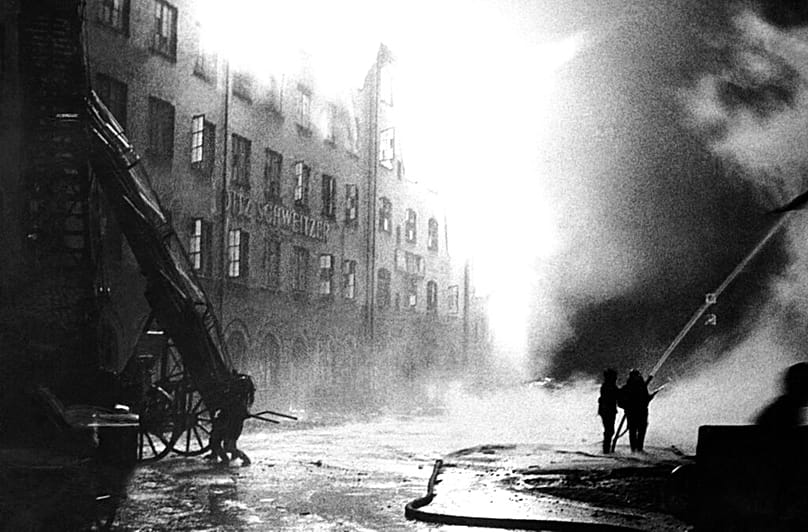
The aftermath of Mosquito planes of the Royal Air Force raid on factories working for the Nazis in Copenhagen, 10 February 1943 AP Photo
Not all stories around Nobel Prize medals are positive, however, and some of the choices made by laureates were quite controversial.
Norwegian author Knut Hamsun, who won the Nobel Prize in Literature in 1920, reportedly gave his medal to Nazi Germany's Minister of Propaganda Joseph Goebbels during World War II.
Hamsun, who met with Adolf Hitler and Goebbels in 1943, was a Nazi sympathiser who supported the German occupation of Norway. Historical accounts indicate he gave his Nobel medal to Goebbels as a symbolic gesture of support.
Hamsun's reputation was destroyed after the war, although his literary works continue to be studied.
Not all stories around Nobel Prize medals are positive, however, and some of the choices made by laureates were quite controversial.
Norwegian author Knut Hamsun, who won the Nobel Prize in Literature in 1920, reportedly gave his medal to Nazi Germany's Minister of Propaganda Joseph Goebbels during World War II.
Hamsun, who met with Adolf Hitler and Goebbels in 1943, was a Nazi sympathiser who supported the German occupation of Norway. Historical accounts indicate he gave his Nobel medal to Goebbels as a symbolic gesture of support.
Hamsun's reputation was destroyed after the war, although his literary works continue to be studied.
The case of James Watson
James D Watson sold his medal amid controversy at Christie's auction house in December 2014 for about $4.8 million (€4.13m).
Watson, who won the Nobel Prize in Physiology or Medicine in 1962 alongside Francis Crick and Maurice Wilkins for discovering the structure of DNA, said proceeds would support scientific research institutions and conservation causes.
He became the first living Nobel laureate known to sell his medal.
Russian billionaire Alisher Usmanov purchased the medal only to return it to Watson at an official ceremony in Moscow in 2015, saying the scientist "deserved" to have it.
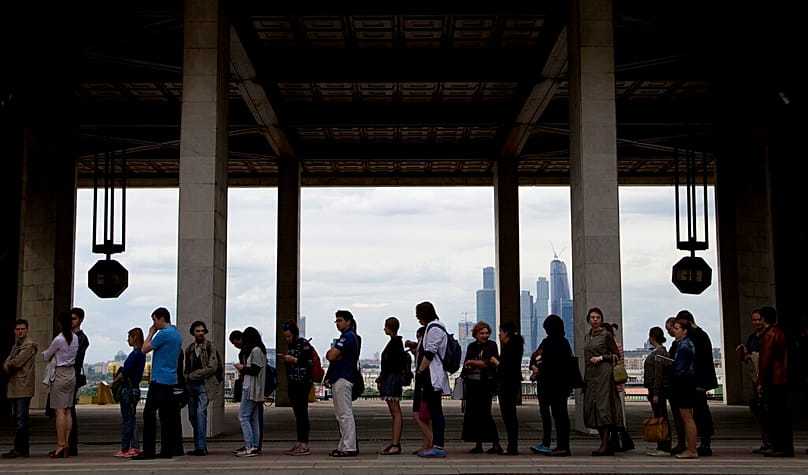
People queue to attend a lecture by US Nobel laureate biologist James Watson, at the Russian Academy of Sciences, Moscow, 17 June 2015 AP Photo
Watson's decision to sell came amid financial difficulties and following controversial statements about race and intelligence, especially regarding people of African heritage, that damaged his reputation and led to his departure from Cold Spring Harbor Laboratory, where he had served as chancellor.
The laboratory stripped Watson of his titles and cut all ties with him in 2019. Watson initially apologised over his remarks, but later said his views remained unchanged.
The EU sanctioned Usmanov in 2022, imposing a bloc-wide travel ban on him and freezing all his assets over his links to Russian President Vladimir Putin and his government. Watson enjoyed close ties with Russia late in his career.
Watson's decision to sell came amid financial difficulties and following controversial statements about race and intelligence, especially regarding people of African heritage, that damaged his reputation and led to his departure from Cold Spring Harbor Laboratory, where he had served as chancellor.
The laboratory stripped Watson of his titles and cut all ties with him in 2019. Watson initially apologised over his remarks, but later said his views remained unchanged.
The EU sanctioned Usmanov in 2022, imposing a bloc-wide travel ban on him and freezing all his assets over his links to Russian President Vladimir Putin and his government. Watson enjoyed close ties with Russia late in his career.
Venezuela’s Machado presents Trump with her Nobel Peace Prize during White House meeting
Crick's Nobel Prize medal, won together with Watson and Crick, was also sold at Heritage Auctions in 2013 for $2.27 million (€1.95m). Part of the sale proceeds were donated to the Francis Crick Institute in London.
Norman Angell's Nobel Peace Prize medal from 1933, won for promoting international understanding, was sold at Sotheby's in 1983. The medal is now held by the Imperial War Museum in London.
Aage Bohr, who won the Nobel Prize in Physics in 1975, had his medal sold at auction in 2011 and again in 2019. Bohr was the son of Niels Bohr, who won the Nobel Prize in Physics in 1922.
Prize money donations
Some laureates have donated their Nobel prize money rather than parting with their medals.
Albert Einstein, who won the Nobel Prize in Physics in 1921, left his prize money to his first wife Mileva Marić and their children under a pre-arranged divorce settlement. The agreement was made before Einstein won the prize.
In 1979, Macedonian-born Albanian Peace Prize laureate Mother Teresa asked for the traditional Nobel banquet to be cancelled and that the funds, together with the prize money, be donated directly to the poor.
Paul Greengard, who won the Nobel Prize in Physiology or Medicine in 2000, donated his full prize earnings to establish the Pearl Meister Greengard Prize, an annual award supporting women scientists.
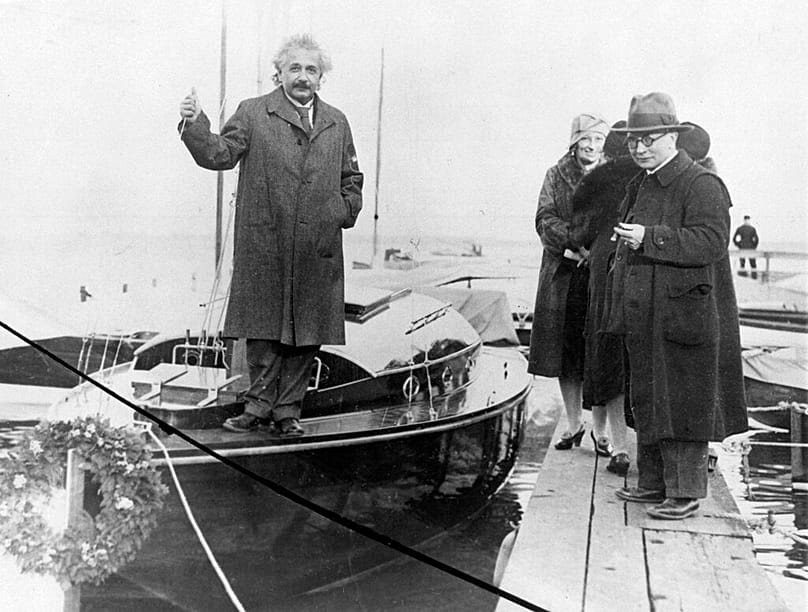
Prof Albert Einstein poses with sailboat presented to him for his 50th birthday by Berliner Handelgesellschs Ftm, a German bank, June 1929 AP Photo
Günter Blobel, who won the Nobel Prize in Physiology or Medicine in 1999, donated his prize money to restoration projects for Dresden and to the construction of a synagogue in his hometown.
E Donnall Thomas, who won the Nobel Prize in Physiology or Medicine in 1990, donated his prize money to his research centre to support ongoing work in bone marrow transplantation.
The Nobel Prize currently includes a monetary award of 11 million Swedish kronor (around €1 million), although the amount has varied over the decades.
Günter Blobel, who won the Nobel Prize in Physiology or Medicine in 1999, donated his prize money to restoration projects for Dresden and to the construction of a synagogue in his hometown.
E Donnall Thomas, who won the Nobel Prize in Physiology or Medicine in 1990, donated his prize money to his research centre to support ongoing work in bone marrow transplantation.
The Nobel Prize currently includes a monetary award of 11 million Swedish kronor (around €1 million), although the amount has varied over the decades.

No comments:
Post a Comment