.jpeg)
Cuba's National Assembly has approved the country's most far-reaching economic overhaul since the 1959 revolution, ratifying a package of reforms designed to pull the island back from the brink of collapse after the measures cleared the Communist Party's Central Committee.
The package, voted on by lawmakers on June 18 and backed by President Miguel Díaz-Canel and former president Raúl Castro, comprises 176 measures grouped into 23 strategic areas of economic and social policy, according to the Communist Party newspaper Granma. The proposals emerged from a review process in which 390 suggestions were submitted to the National Assembly, of which roughly two-thirds were accepted in some form, with the remainder folded into implementation guidance or judged not to constitute substantive change.
Prime Minister Manuel Marrero unveiled the measures in a landmark address to the National Assembly, framing them as an effort to modernise the economy and improve productivity while preserving Cuba's socialist system.
The vote passed unanimously, and Díaz-Canel closed the session by reciting Fidel Castro's revolutionary slogan, "Socialism or death!"
"When the daily life of the people becomes extremely difficult, the primary duty of the Communist Party and the Revolutionary Government is not simply to explain the crisis, but to actively change whatever is necessary to overcome it," he said.
The reforms will, for the first time, permit private companies employing more than 100 workers and allow Cubans to own multiple businesses. Foreign investors will no longer be required to enter joint ventures with the state, and both domestic and foreign investors will be allowed to acquire equity stakes in state enterprises. The package also opens the door to private banks, paves the way for private real estate development and encourages direct foreign investment, including from Cubans living abroad. The state business sector itself will be restructured, with expanded autonomy, decentralised decision-making and revised rules governing profit allocation and executive pay.
Among the more granular provisions, the package will permit property leasing, free-of-charge usufruct arrangements and the selective sale of real estate, available to both resident Cubans and those living abroad on a case-by-case basis. In tourism specifically, the reforms introduce new categories of operators and updated business models, with a particular focus on drawing foreign direct investment from the Cuban diaspora while widening the scope of activity permitted to private domestic businesses.
The ruling party insisted the changes "do not constitute a deviation from the socialist project." Castro voiced full support for the package and called for broad public participation in its implementation. Díaz-Canel acknowledged that hardliners within the Communist party — which has held power on the island since 1965 — would likely resist parts of the package. "Some of the changes will not have absolute consensus, but cannot be postponed," he said.
The reforms arrive as Cuba endures one of the deepest economic crises in its history, the latest chapter in a confrontation with Washington that has escalated steadily since January. Blackouts now regularly stretch beyond 30 hours, and the island is contending with acute shortages of food, fuel, water and medicine. Volker Türk, the United Nations High Commissioner for Human Rights, has warned that children are dying on the island for want of medical supplies. Only a single tanker, the Russian-owned Anatoly Kolodkin, has delivered crude oil to Cuba since the start of the year, arriving at the port of Matanzas in late March with a cargo that analysts said would cover little more than a week of the island's diesel needs.
Much of that hardship traces directly to Washington's pressure campaign. The Trump administration imposed a de facto fuel blockade on Cuba in January, in the aftermath of the US-led operation that removed Venezuelan president Nicolás Maduro and severed Cuba's access to subsidised Venezuelan oil. An executive order threatening tariffs on any country supplying fuel to the island successfully deterred Mexico and other potential suppliers from maintaining shipments. The blockade has since triggered repeated nationwide blackouts, and pushed Cuba to declare in May that its fuel reserves were entirely exhausted, a crisis that sparked the largest street protests in Havana since the embargo began.
The pressure has not been limited to economic measures. Last month, the US indicted Castro, Fidel's brother, over Cuba's 1996 downing of two civilian aircraft operated by a Miami-based exile group, in charges that carry the death penalty and that Havana has no obligation, and no apparent intention, to honour given the absence of an extradition treaty. The indictment was announced alongside the deployment of the USS Nimitz carrier strike group to the Caribbean, echoing the build-up that preceded the Maduro operation, when the USS Gerald R. Ford was stationed off Venezuela's coast in the months before his capture. Classified intelligence cited by Axios has separately disclosed that Cuba acquired more than 300 military drones from Russia and Iran since 2023 and held internal discussions about potential strikes on the US naval base at Guantánamo Bay, a revelation that added an unpredictable security dimension to what had largely been an economic and diplomatic standoff. Trump has repeatedly said Cuba would be "next" after his administration's campaigns against Venezuela and Iran, while CIA director John Ratcliffe travelled to Havana in May for talks that signalled some openness to dialogue.
In unusually candid remarks, Díaz-Canel broke from Havana's longstanding habit of attributing the country's troubles solely to the six-decade US trade embargo. He pointed instead to domestic failings, citing "slowness, bureaucracy and norms that impede those who want to produce," along with "decisions that we have put off." Even so, he was careful to frame the reforms as a defensive measure rather than a capitulation. "We are not doing this because of pressure from the Yankees," he said, but to "preserve" socialism.
Analysts were sceptical that the reforms were driven purely by internal conviction. "Their backs are up against the wall as never before," said Michael Bustamante, chair of Cuban studies at the University of Miami, according to AFP. "They're in the uncomfortable position of making changes to their economic model, seemingly because of the pressure that's being exerted on them by the United States."
The European Union piled on further pressure the same day, with a resolution urging sanctions against Díaz-Canel and Grupo de Administración Empresarial, the military-controlled business conglomerate that dominates large parts of the Cuban economy. The resolution condemned what it described as "the systematic repression" by the Cuban government, while calling for "profound economic and political change." The bloc has separately stepped up humanitarian assistance to the island in recent months, mobilising several million euros in aid to address shortages of food and drinking water.
Whether the reforms will satisfy the White House remains uncertain. Senior figures in the Trump administration, Rubio among them, have signalled that economic opening on Cuba's part could translate into reduced pressure from Washington, but the US gave no immediate response to the Cuban announcement. Vice-president JD Vance, asked on June 18 whether the administration would now turn its focus to Cuba following a memorandum of understanding ending the war with Iran, said Washington wanted Cubans to be "happy and successful." "We're actually talking to the Cuban government right now about how they could change their ways to change that," he said. "If they make smart decisions, we're going to have a much better relationship with that island." Trump has made clear his ambitions extend beyond economic policy to the makeup of Cuba's government itself, having repeatedly floated both military action and what he has called a "friendly takeover" of the island.
The government has yet to set out a timetable for implementing the reforms. Economists said the package could meaningfully improve investment flows and productivity if carried through, but cautioned that its ultimate impact would depend on execution Havana has not yet detailed — and on a Washington that has shown no sign, so far, of relenting.
Cuba's President Miguel Díaz-Canel admits 'urgent changes' needed to overcome crisis
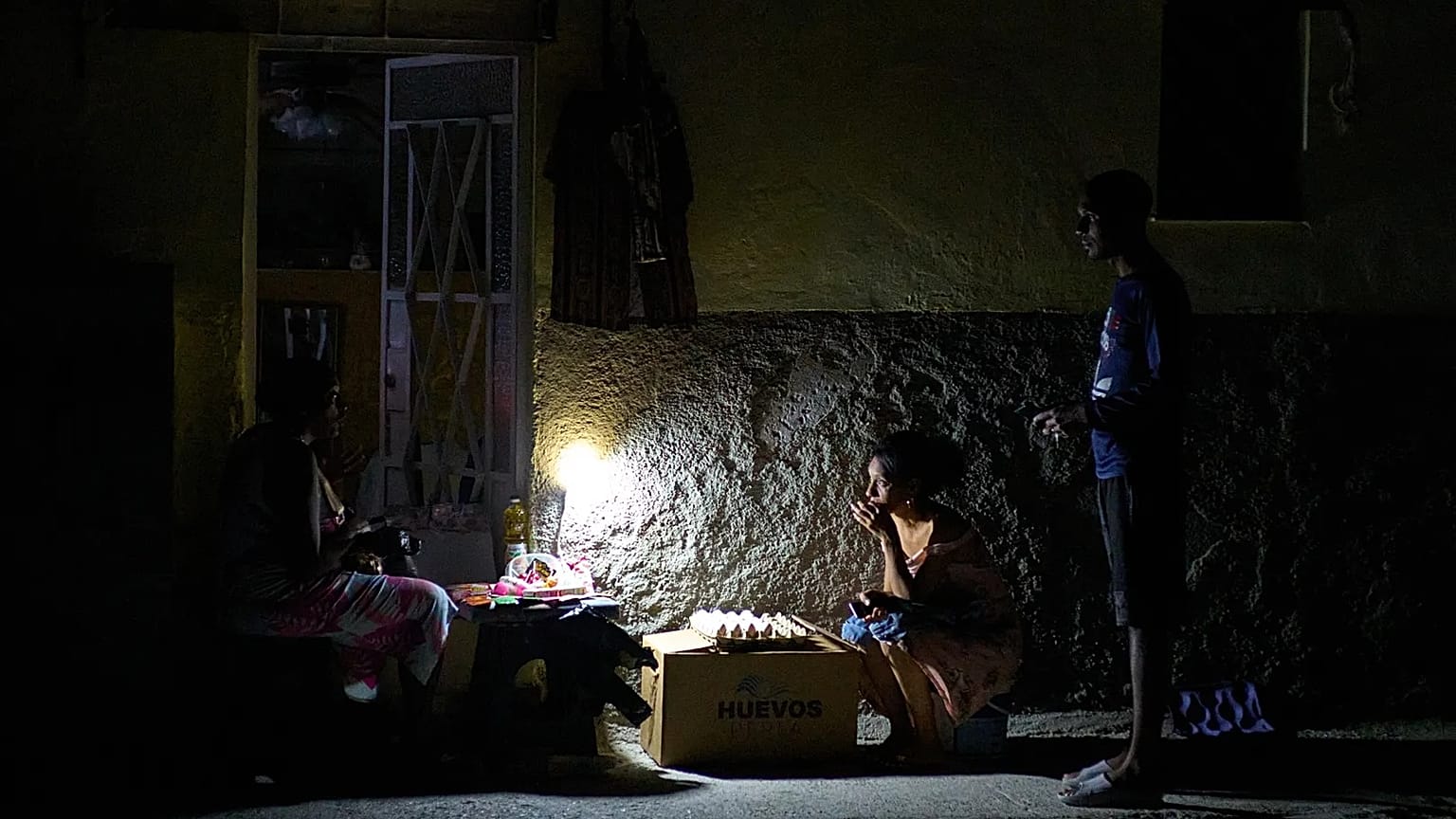
The oil blockade imposed by President Donald Trump in January has brought the island's already moribund economy to the brink of collapse, marked by power cuts sometimes lasting over 30 hours.
Cuba's communist model needs "urgent changes" to overcome a major crisis which cannot be blamed solely on a crippling US oil blockade, President Miguel Díaz-Canel said in his frankest admission yet of the need for radical reforms.
While Havana's impulse has been to blame its problems on a more-than-six-decade US trade embargo and more recent blockade, Díaz-Canel admitted in remarks broadcast on Thursday there were "obstacles that don't come from outside, nor the blockade."
He called out "slowness, bureaucracy and norms that impede those who want to produce" as well as "decisions that we have put off" for contributing to the worst crisis in living memory.
"The situation calls for urgent and necessary changes," he told the Communist Party Central Committee.
Díaz-Canel was speaking at a party meeting convened hastily to fast-track reforms aimed at boosting the private sector and attracting investment from millions of Cubans who have fled abroad.
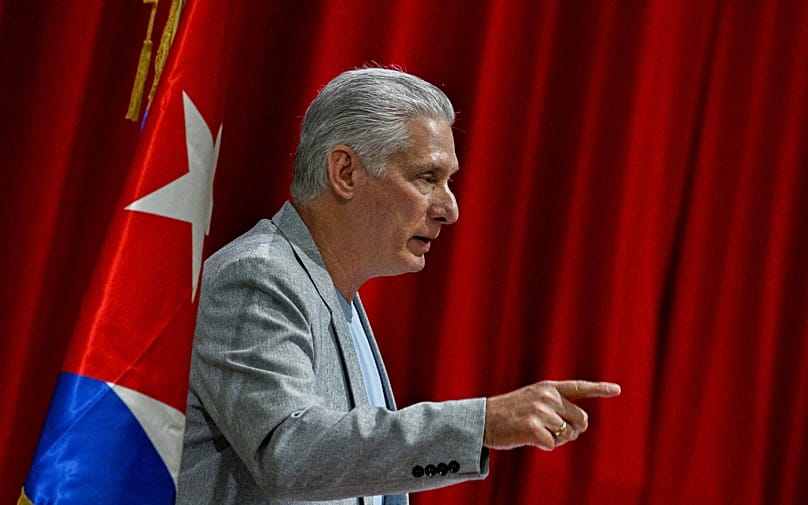
The measures are part of an eleventh-hour bid to stave off economic collapse in the face of unprecedented US pressure.
They are expected to be approved by the National Assembly, which rubber-stamps legislation, later Thursday after being endorsed by the Communist Party.
'Backs against the wall'
Few details of the changes have been forthcoming but Díaz-Canel cited China and Vietnam as possible models for opening Cuba's economy to the world six decades after the overthrow of a US-backed dictator and embrace of communism.
"Their backs are up against the wall as never before," Michael Bustamante, Cuban Studies Chair at the University of Miami, told the AFP news agency.
"They're in the uncomfortable position of making changes to their economic model, seemingly because of the pressure that's being exerted on them by the United States."
The oil blockade imposed by President Donald Trump in January has brought the island's already moribund economy to the brink of collapse, marked by power cuts sometimes lasting over 30 hours and shortages of food, fuel, drinking water and medicine.
Díaz-Canel appeared to anticipate resistance from Communist hardliners.
Some of the reforms "will not have absolute consensus but cannot be postponed," he said.
But "when people's lives become this hard," the government has a responsibility to "change what needs to be changed" rather than try to explain away the crisis, he argued.
It is unclear, however, whether the changes will satisfy Trump, who is pushing for a change in Cuba's leaders as well as its economic model.
The Republican leader has floated a "friendly takeover" of Cuba and joked about making a "stop over" there after ending his war with Iran.
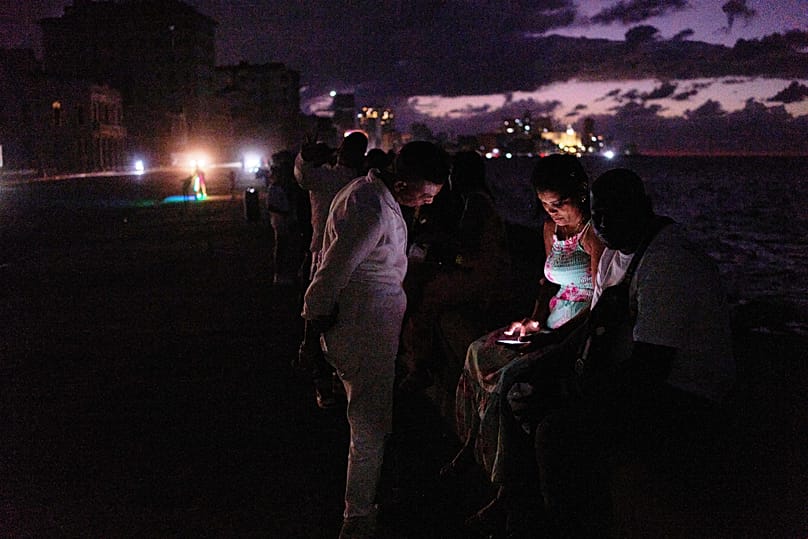
Asked on Thursday if Cuba was now in Trump's sights after he signed a deal to end the Iran war, Vice-President JD Vance said Washington wanted Cubans to be "happy and successful."
"We're actually talking to the Cuban government right now about how they could change their ways to change that."
"If they make smart decisions, we're going to have a much better relationship with that island," he said.
Widespread scepticism
Some of the reforms announced by Cuba were a rehash of earlier proposals, such as granting greater autonomy to state-owned enterprises, which account for roughly 80% of economic activity.
Many disillusioned locals shrugged off the announcements as too little too late, or more state "lies."
"It's a lie, we've been doing this for 67 years and it gets worse every day," Iris, a 58-year-old cleaner, who had been without power at home for 12 hours, seethed.
The country's small but growing business class welcomed the changes, however, while making clear they did not see them as a quick fix.
The reforms "offer hope, a chance that may or may not materialise," said Mario Gonzales, the 32-year-old manager of a restaurant in Havana's historic old town which was thronged with tourists a decade ago and now fills only a handful of tables for dinner.


No comments:
Post a Comment