Trump’s ANWR Oil and Gas Auction Was a Bust—But Alaskan Arctic Still Faces Fossil Fuel Threat
“Even though the interest in today’s sale was tepid, the new leasing still poses significant threats to habitat, iconic wildlife, and Indigenous ways of life,” said Earthjustice.
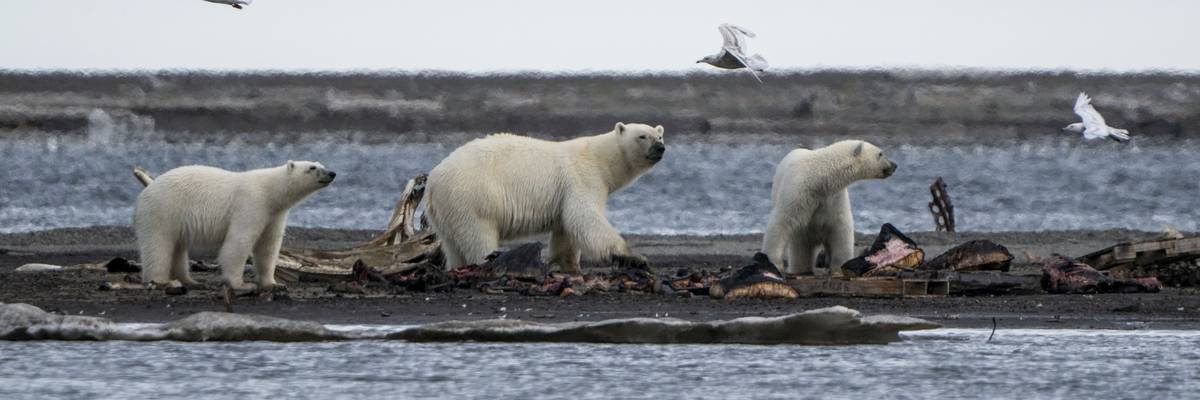
Polar bears feed on whale carcasses in Kaktovik, Alaska on July 1, 2024.
(Photo by Carolyn Van Houten/The Washington Post via Getty Images)
Brett Wilkins
Jun 05, 2026
COMMON DREAMS
In an embarrassment for President Donald Trump and his “drill, baby, drill” energy policy, Friday’s third oil and gas lease sale in Alaska’s Arctic National Wildlife Refuge once again drew no bids from Big Oil—but conservationists stressed that fossil fuel expansion still poses a serious threat to the pristine wilderness and its human and animal inhabitants.
The US Department of the Interior’s Bureau of Land Management (BLM) offered 60 tracts on 689,000 acres in the ANWR in northeastern Alaska’s Coastal Plain for lease sales. Just two companies—the government-owned Alaska Industrial Development and Export Authority and Hex LLC, an Alaska firm—bought five leases that generated a paltry $3.7 million in total receipts.
“We will continue to fight the Trump administration’s leasing program, and work with our friends and allies to protect this sacred and irreplaceable landscape from development of any kind,” Moreland added.
The Trump administration had touted fossil fuel lease sales as a way to help pay for tax cuts in the so-called One Big Beautiful Bill Act that mostly benefited corporations and wealthy individuals. The law, which was signed last July by Trump and extends tax cuts the president enacted in 2017, is expected to result in over $5 trillion in lost revenue through 2034, according to an analysis by the Tax Foundation, the world’s leading independent tax policy nonprofit.
Despite the underwhelming result, the BLM described Friday’s ANWR lease sale as “successful,” with agency Director Steve Pearce calling it “another important step toward restoring American Energy Dominance and responsibly developing the vast resources Congress directed us to make available in the Coastal Plain.”
Friday’s lease sale was the third such auction, the first of which was held in 2021 during Trump’s first term and generated just 1% of the administration’s projected revenue. The Biden administration—which canceled the leases issued in the 2021 sale—held another lease auction last year because Trump’s 2017 tax cut law required two ANWR lease sales within seven years. The 2025 auction drew no bidders.
Green groups and other drilling opponents warned that Friday’s flop does not diminish the threat posed by fossil fuel development in ANWR, which is home to the North Slope Iñupiat and the Gwich’in peoples and 270 animal species, including all of the world’s remaining South Beaufort Sea polar bears and the 200,000 porcupine caribou upon which the Gwich’in—who call the area the “sacred place where life begins—rely upon for their survival. The North Slope Iñupiat broadly support drilling and called Friday’s lease sale ”an important milestone.“
“Even though the interest in today’s sale was tepid, the new leasing still poses significant threats to habitat, iconic wildlife, and Indigenous ways of life in one of the nation’s most wild and beautiful landscapes,” Earthjustice—one of the groups leading a lawsuit challenging the lease sales—said in a statement. “All of today’s leases are in important polar bear habitat, for example.”
Athan Manuel, the Sierra Club’s director of lands protection, said that “today’s lease sale was another embarrassment and broken promise. The Trump administration has pushed leasing out the Arctic Refuge as the way to finance huge tax cuts, yet today generated $3.7 million for the federal government.”
“Let’s call that what it is, another scam to trick Americans into giving away our precious natural world,” Manuel continued. “It does nothing to change the reality that drilling in the Arctic National Wildlife Refuge remains a risky, controversial, and fundamentally flawed proposition.”
“For years, the public was promised that sacrificing the refuge would generate significant economic benefits,” Manuel added. “Instead, this leasing program has been plagued by uncertainty while putting one of America’s most important public lands at risk.”
Autumn Hanna, vice president of the advocacy group Taxpayers for Common Sense, said, “From two previous failed lease sales that delivered less than 1% of promised revenue, taxpayers already know that drilling in the Arctic Refuge is a bad deal.”
“Today’s lease sale is yet another reminder that oil and gas development in the refuge is high-risk, low-reward, with zero interest from real industry players,” Hanna added. “Americans will not see relief at the pump and, instead, face greater risks from the drilling in a sensitive region.”
Trump Auction Opens Arctic Refuge Drilling Rights for First Time Ever
The Trump Administration is holding its latest lease sale in Alaska on Friday in a test for investors and environmentalists as the auction comprises tracts in the Coastal Plain of the Arctic National Wildlife Refuge.
The Bureau of Land Management (BLM) is holding the oil and gas lease sale today, after last year the Trump Administration removed legislative protections from the Biden presidency that restricted oil and gas exploration in Alaska, including the Arctic National Wildlife Refuge and federal lands in the state.
The first sale for the Coastal Plain, "a milestone in unleashing Alaska's vast energy potential," as BLM said in April announcing the date of the lease sale, follows a record-breaking lease sale in the National Petroleum Reserve-Alaska in March.
The first lease sale in the National Petroleum Reserve-Alaska in seven years became the most successful auction in the area ever, as oil majors bid on hundreds of tracts, signaling they haven't given up on Alaska's petroleum resources despite development and court challenges.
The lease sale for the National Petroleum Reserve in Alaska in March, one of five mandated in the next decade under the Trump Administration's One Big Beautiful Bill Act (OBBBA), drew a record high of $163.7 million in high bids and resulted in 187 leases in total, awarded to companies including ExxonMobil, ConocoPhillips, and a consortium of Repsol and Shell subsidiaries.
The lease sale set a record for Alaska with the most revenue generated ever, the most tracts receiving bids, and the second most acreage sold in a single sale, the Bureau of Land Management said at the time.
Now the Administration is looking to open the Coastal Plain of the Arctic National Wildlife Refuge to drilling, saying that it has "strong potential for oil and gas development."
The area may contain between 4.25 and 11.8 billion barrels of technically recoverable oil, according to the U.S. Geological Survey, BLM says.
Going forward, the development of any additional resources in Alaska would not be a fast and easy task. The conditions are harsher than in other areas, while environmentalists have vowed to fight both the lease sales and any future oil and gas drilling and development plans.
By Charles Kennedy for Oilprice.com
‘Hands Off the Arctic,’ Say Wilderness Defenders as Trump Holds Alaska Oil and Gas Lease Sale
“Some places are too important to sacrifice,” said one Indigenous leader as the Trump administration invited fossil fuel companies to drill in the Arctic National Wildlife Refuge.
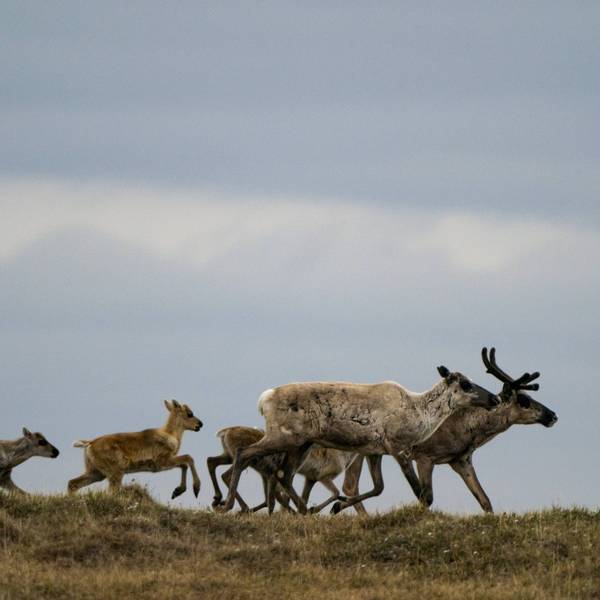
Caribou migrate in the Arctic National Wildlife Refuge in northern Alaska on June 29, 2024.
(Photo by Carolyn Van Houten/The Washington Post via Getty Images)
Brett Wilkins
Jun 05, 2026
COMMON DREAMS
The Trump administration is set Friday to sell oil and gas drilling leases on 689,000 acres in the Arctic National Wildlife Refuge, a pristine and protected area in northeastern Alaska’s coastal plain known for its massive biodiversity and held sacred by its Indigenous inhabitants.
The US Department of the Interior’s (DOI) Bureau of Land Management (BLM) is offering 60 tracts in the ANWR to fossil fuel companies that submitted bids by Wednesday. The lease sale is the first of four in the ANWR mandated under the One Big Beautiful Bill signed by President Donald Trump last year and follows two previous sales this decade, one of which saw little interest during Trump’s first term and another that generated no bids during the tenure of former President Joe Biden.

The sale is part of Trump’s “drill, baby, drill” fossil fuel agenda and follows last October’s reopening by the DOI of 1.56 million acres of the Coastal Plain to oil and gas leasing. The move reversed the Biden administration’s 2023 cancellation of all existing oil and gas leases in the ANWR and ban on drilling across 13 million acres of the adjacent National Petroleum Reserve.
The Trump administration also recently transferred approximately 1.4 million acres of public lands along the Dalton Utility Corridor from the BLM to the state of Alaska, a move one conservationist warned “will only help corporate polluters transform Alaska into an industrial wasteland... for the sake of expanding the portfolios of mining and oil and gas companies.”
The ANWR is home to Indigenous peoples, primarily the North Slope Iñupiat and the Gwich’in. The former are generally supportive of fossil fuel development, arguing that it provides jobs and revenue and boosts self-determination, while the latter broadly opposes drilling.
The Gwich’in call the area “the sacred place where life begins” and rely upon its rich biodiversity—especially its 200,000-strong porcupine caribou herd—for their survival. ANWR boasts some 270 animal species, including musk oxen, Arctic foxes, snow geese and other migratory birds, and all of the world’s remaining South Beaufort Sea polar bears.
While the American Petroleum Institute, the nation’s leading fossil fuel lobby, welcomed Friday’s lease sale, calling Alaska’s oil and gas “key to America’s energy security,” Kristen Moreland, executive director of the Gwich’in Steering Committee, countered that “some places are too important to sacrifice.”
In a Thursday call with reporters, Moreland said that “tomorrow’s lease sale is about much more than economics or development. It is about whether our voices, our culture, and our way of life matters.”
Conservationists also denounced the lease sale, which Earthjustice—part of a coalition challenging the DOI’s policy in federal court—called “another effort to sell out our public lands to boost corporate profits, while Indigenous communities, wildlife, and future generations carry the risk.”
US Sen. Tim Kaine (D-Va.) said Friday on X that “America’s public lands—including the incredible Arctic National Wildlife Refuge—belong to all of us. But now the Trump-Vance administration is auctioning it off to their Big Oil cronies that already have plenty of other areas to drill.”
In a video posted Thursday on social media, US Sen. Martin Heinrich (D-NM) called ANWR “the crown jewel of our American National Wildlife Refuge system.”
“Tomorrow, the Trump administration is gonna try to lease the Arctic National Wildlife Refuge for oil drilling. So I’ve got a message for all the oil majors out there,” the senator said. “I understand you have a job to do. That job never involves drilling in American national parks or national wildlife refuges. Don’t bid.”
Congresswoman Adelita Grijalva (D-Ariz.) also posted a video addressing the lease sale and arguing that Big Oil—part of an industry that spent nearly $450 million during the 2024 election cycle on campaign donations, lobbying, and other efforts to elect Trump and down-ballot Republicans—is “calling the shots.”
The Alaska Wilderness League said on X that “no matter how the administration and oil industry spin today’s lease sale, the outcome doesn’t change: weak demand, shrinking interest, and a story that keeps collapsing under its own promises.”
“The Arctic is not for sale, never has been, never will be,” the group added. “Hands off the Arctic.”

No comments:
Post a Comment