One critic said the administration clearly plans to weaken restrictions requiring “the Forest Service to carefully manage our natural resources and listen to the public, then open the gates to industry and extraction.”
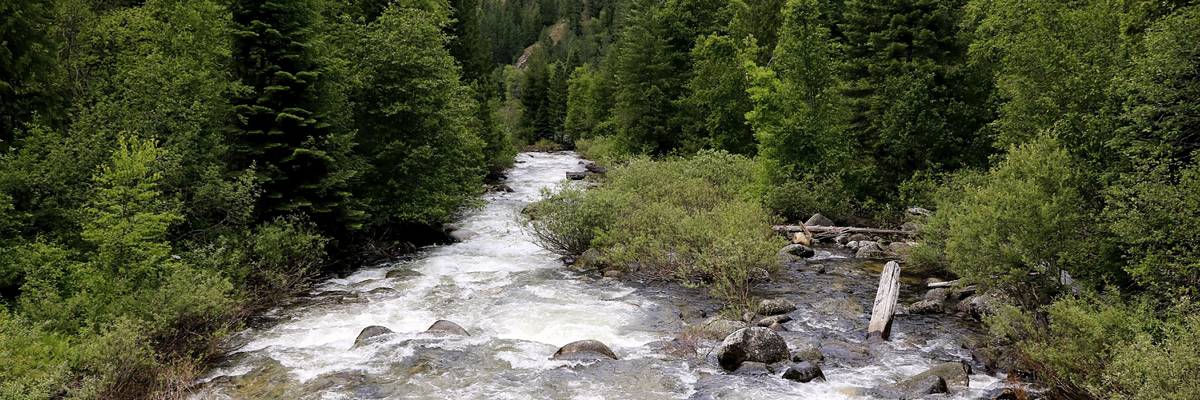
Pristine Boulder Creek flows from the Selway Bitterroot Wilderness toward the Lochsa River in the Clearwater National Forest of northern Idaho.
(Photo by Don and Melinda Crawford/Education Images/Universal Images Group via Getty Images)
Jessica Corbett
Aug 21, 2026
COMMON DREAMS
Still under fire for attacking the Roadless Area Conservation Rule this week, President Donald Trump’s administration provoked a fresh wave of criticism on Friday by targeting another policy meant to protect public lands.
The US Forest Service announced Friday that it was moving forward with a proposed revision to the Travel Management Rule that “simplifies the regulatory requirements to enhance quicker local decision-making and increase access, including for motorized vehicles, e-bikes, and other mobility devices.”
While leaders at the Forest Service and its parent agency, the US Department of Agriculture (USDA), framed the pending changes as progress, Defenders of Wildlife called out the administration for trying to “gut” the rule managing off-road vehicles.
“The USDA’s announcement to gut the Travel Management Rule and the roadless rule in the same week is a one-two punch that together deals a tremendous blow to wildlife,” said Vera Smith, who directs the advocacy group’s national forests and public lands program, in a statement.
“The Travel Management Rule states simply that motorized vehicles must stay on routes and areas designated locally for that use,” Smith said. “The Forest Service issued the rule over 20 years ago to curb damage from unmanaged recreation, reduce user conflict, and protect public safety. Rescinding it now is irresponsible and reckless.”
Hilary Eisen, federal policy director at the organization Wild Montana, was similarly critical, explaining that “the Travel Management Rule is why dirt bikers and snowmobilers can share national forest lands with hikers and backcountry skiers without conflict. It’s why our national forests provide habitat to support thriving wildlife populations. It is built on local decision-making, with a designation process that ensures that no user group gets steamrolled and all our national forest values are protected.”
“Just two days after doubling down on repealing the roadless rule, this announcement makes the administration’s plan obvious: Gut the rules that require the Forest Service to carefully manage our natural resources and listen to the public, then open the gates to industry and extraction,” Eisen warned.
“Forest Service leadership has already shown during the roadless rescission how much it values public input, science, and expert management: not at all,” she added. “Agency leadership has lost the public’s trust, and should expect the public to hold them accountable.”
Agriculture Secretary Brooke Rollins confirmed Tuesday that the administration was working to fully rescind the 2001 roadless rule that blocked road building and commercial logging on about 30% of all national forest land. She attempted to frame it as a move to prevent wildfires, but conservation groups contested her claims.
Josh Hicks, director of conservation campaigns at the Wilderness Society, declared that “opening our backcountry forests to more roads and development, and therefore more ignitions, is... not a wildfire solution, and never will be.”
Criticism of that pending rollback had continued throughout the week, with the Wilderness Society’s senior director of native lands partnerships, Starlyn Miller, calling out the administration’s “failure to engage in meaningful government-to-government consultation with tribal nations,” which she said “undermines tribal sovereignty and federal trust responsibilities.”
“This failure disregards tribes’ deep cultural, historical, and ongoing connections to these roadless lands and the clean water and wildlife they sustain,” said Miller, a Little Shell Chippewa citizen who is of Menominee and Mohican descendant. “We stand with tribal nations and Indigenous communities in defending their freedom to shape and manage forests that are vital to their cultures, identities, and future generations.”
National Congress of American Indians executive director Larry Wright Jr. also spoke out on Friday, saying that “tribal nations possess an inherent and legally recognized relationship with these lands, which remain the foundation of our cultural identities. Attempting to fast-track the removal of the roadless rule circumvents the mandatory government-to-government consultation process required by federal law.”
Wright, who is from the Ponca Tribe of Nebraska, added that “upholding the federal trust responsibility means honoring our treaty rights and ensuring that the protection of sacred sites is recognized as an uncompromisable legal obligation, not an afterthought.”
Conservationists Say Trump Gutting of Roadless Rule Is Corporate Giveaway, Not Wildfire Prevention
Trump has cleared the way for 45 million acres of protected forest to be opened for logging and construction in what one conservation group called the “largest evisceration of public lands protection in American history.”
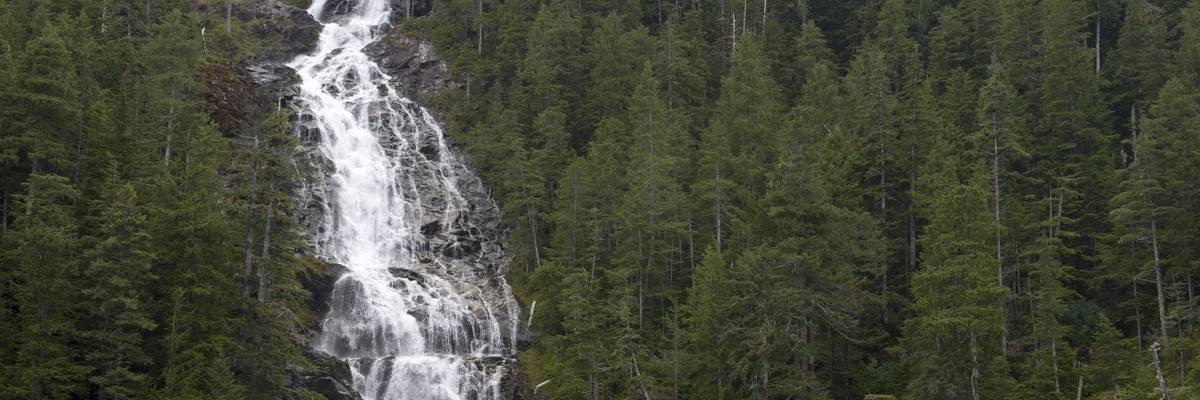
A waterfall on Baranof Island in Tongass National Forest, Southeast Alaska, USA.
(Photo by Wolfgang Kaehler/LightRocket via Getty Images)
Stephen Prager
Aug 18, 2026
COMMON DREAMS
The Trump administration is moving to reverse a decades-old rule that protected 45 million acres of forest lands from logging and construction, in what the Center for Biological Diversity called the “largest evisceration of public lands protection in American history.”
On Tuesday, Agriculture Secretary Brooke Rollins announced that the US Forest Service had filed a proposed rule to fully rescind the 2001 Roadless Area Conservation Rule, enacted under former President Bill Clinton, which had prevented road building and commercial logging on about 30% of all national forest land.
Rollins described the “roadless rule” as a barrier to government wildfire prevention efforts. “Across the country, we’ve watched preventable conditions—overgrown stands, insect outbreaks, and disease—turn healthy landscapes into tinderboxes,” she said. “For too long, outdated restrictions have kept tens of millions of forested acres off-limits to the very treatments that improve forest health and reduce wildfire risk to our communities.”
But conservation groups argue that the administration’s reversal of the roadless rule has little to do with wildfire prevention and everything to do with opening up protected lands to logging interests and other extractive industries, which have long pushed for the rule to be weakened.
Increasing logging on federal lands has been a major goal of Trump’s second term, and repealing the roadless rule is part of that effort. An executive order signed in March 2025 calling for the “immediate expansion” of timber production said that federal policies had made the country unable to “fully exploit our domestic timber supply.”
In June2025, when the US Department of Agriculture first announced plans to rescind the roadless rule, it said that increasing timber production would be one of the benefits. The USDA said the rule hurt “jobs and economic development” and that repealing it aligned with Trump’s goal to eliminate “barriers that hamper American business and innovation.”
Earthjustice has argued that, contrary to what the administration says, repealing the roadless rule will actually lead to more wildfires, not fewer.
It points to findings from the Forest Service that 9 in 10 wildfires are caused by human activity, including throwing cigarettes out of windows, leaving campfires abandoned, and driving cars on grassy areas, causing them to ignite.
A peer-reviewed study published in January in the journal Fire Ecology by researchers with the Wilderness Society found that fires are about four times as likely to start near a road as in roadless forests.
Another study by the Forest Service in 2020, during the first Trump administration, examined two decades of data and found that roadless forests actually received more fuel-reduction treatments per square kilometer than areas elsewhere in the National Forest System.
“Speculation that eliminating road prohibitions would improve forest health is not supported by nearly 20 years of monitoring data,” the study concluded.
Josh Hicks, director of conservation campaigns at the Wilderness Society, said Tuesday, “Opening our backcountry forests to more roads and development, and therefore more ignitions, is... not a wildfire solution, and never will be.”
While doing little to curb the recent increases in wildfires exacerbated by climate change, conservationists argue that repealing the roadless rule will pose other harms to communities and wildlife across the country.
“Roadless forests supply clean drinking water for tens of millions of Americans, are home to irreplaceable wildlife, and store enormous amounts of carbon,” said Gabrielle Berthel, forest advocate at the Natural Resources Defense Council. “Repealing the Roadless Area Conservation Rule would allow for the fragmentation of some of the last intact forest ecosystems in the country, with irreversible consequences for the communities that rely on these forests and the people who seek out these special places for recreation.”
The Center for Biological Diversity (CBD) noted that these forests serve as habitats for numerous threatened species that risk being disrupted, including American wolverines, Canada lynx, grizzly bears, and northern spotted owls.
Randi Spivak, the public lands policy director at the CBD, emphasized that “these are some of the last truly wild forests left in the country... Once you start bulldozing roads for commercial logging and industrial development, there’s no getting them back.”
More than 625,000 public comments have been submitted to the Forest Service since plans to rescind the roadless rule were announced last June. The USDA will accept public comments on the proposal until September 21, after which the administration is expected to move toward a final rule later this year.
Trump has cleared the way for 45 million acres of protected forest to be opened for logging and construction in what one conservation group called the “largest evisceration of public lands protection in American history.”
A waterfall on Baranof Island in Tongass National Forest, Southeast Alaska, USA.
(Photo by Wolfgang Kaehler/LightRocket via Getty Images)
Stephen Prager
Aug 18, 2026
COMMON DREAMS
The Trump administration is moving to reverse a decades-old rule that protected 45 million acres of forest lands from logging and construction, in what the Center for Biological Diversity called the “largest evisceration of public lands protection in American history.”
On Tuesday, Agriculture Secretary Brooke Rollins announced that the US Forest Service had filed a proposed rule to fully rescind the 2001 Roadless Area Conservation Rule, enacted under former President Bill Clinton, which had prevented road building and commercial logging on about 30% of all national forest land.
Rollins described the “roadless rule” as a barrier to government wildfire prevention efforts. “Across the country, we’ve watched preventable conditions—overgrown stands, insect outbreaks, and disease—turn healthy landscapes into tinderboxes,” she said. “For too long, outdated restrictions have kept tens of millions of forested acres off-limits to the very treatments that improve forest health and reduce wildfire risk to our communities.”
But conservation groups argue that the administration’s reversal of the roadless rule has little to do with wildfire prevention and everything to do with opening up protected lands to logging interests and other extractive industries, which have long pushed for the rule to be weakened.
Increasing logging on federal lands has been a major goal of Trump’s second term, and repealing the roadless rule is part of that effort. An executive order signed in March 2025 calling for the “immediate expansion” of timber production said that federal policies had made the country unable to “fully exploit our domestic timber supply.”
In June2025, when the US Department of Agriculture first announced plans to rescind the roadless rule, it said that increasing timber production would be one of the benefits. The USDA said the rule hurt “jobs and economic development” and that repealing it aligned with Trump’s goal to eliminate “barriers that hamper American business and innovation.”
Earthjustice has argued that, contrary to what the administration says, repealing the roadless rule will actually lead to more wildfires, not fewer.
It points to findings from the Forest Service that 9 in 10 wildfires are caused by human activity, including throwing cigarettes out of windows, leaving campfires abandoned, and driving cars on grassy areas, causing them to ignite.
A peer-reviewed study published in January in the journal Fire Ecology by researchers with the Wilderness Society found that fires are about four times as likely to start near a road as in roadless forests.
Another study by the Forest Service in 2020, during the first Trump administration, examined two decades of data and found that roadless forests actually received more fuel-reduction treatments per square kilometer than areas elsewhere in the National Forest System.
“Speculation that eliminating road prohibitions would improve forest health is not supported by nearly 20 years of monitoring data,” the study concluded.
Josh Hicks, director of conservation campaigns at the Wilderness Society, said Tuesday, “Opening our backcountry forests to more roads and development, and therefore more ignitions, is... not a wildfire solution, and never will be.”
While doing little to curb the recent increases in wildfires exacerbated by climate change, conservationists argue that repealing the roadless rule will pose other harms to communities and wildlife across the country.
“Roadless forests supply clean drinking water for tens of millions of Americans, are home to irreplaceable wildlife, and store enormous amounts of carbon,” said Gabrielle Berthel, forest advocate at the Natural Resources Defense Council. “Repealing the Roadless Area Conservation Rule would allow for the fragmentation of some of the last intact forest ecosystems in the country, with irreversible consequences for the communities that rely on these forests and the people who seek out these special places for recreation.”
The Center for Biological Diversity (CBD) noted that these forests serve as habitats for numerous threatened species that risk being disrupted, including American wolverines, Canada lynx, grizzly bears, and northern spotted owls.
Randi Spivak, the public lands policy director at the CBD, emphasized that “these are some of the last truly wild forests left in the country... Once you start bulldozing roads for commercial logging and industrial development, there’s no getting them back.”
More than 625,000 public comments have been submitted to the Forest Service since plans to rescind the roadless rule were announced last June. The USDA will accept public comments on the proposal until September 21, after which the administration is expected to move toward a final rule later this year.

No comments:
Post a Comment