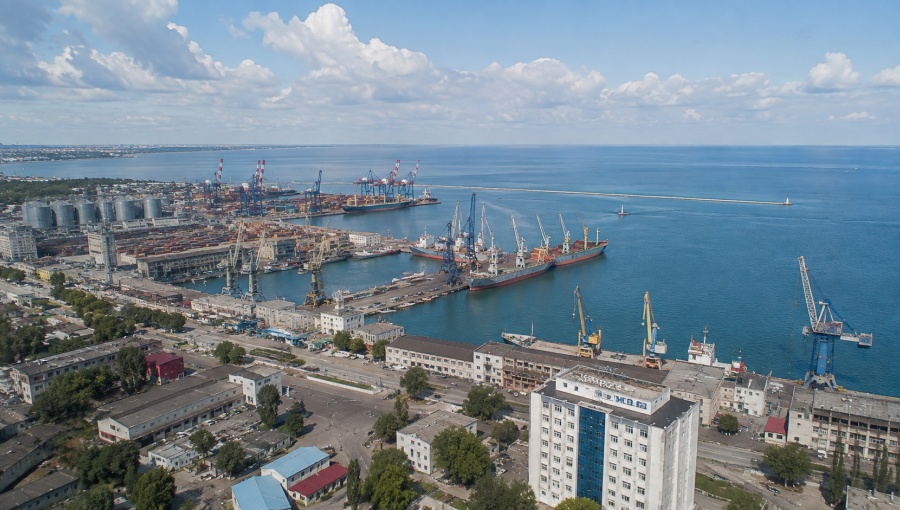
Ukraine's long-range drone campaign has entered a new phase, shifting from attacks on Russia's military infrastructure to systematic strikes on the commercial ports, grain terminals and oil export facilities that underpin both Moscow's wartime economy and Kazakhstan's energy exports.
Russia has countered by targeting Ukraine’s six commercial ports of which Odesa is the key transport asset that accounts for two thirds of Ukraine’s seaborne exports by volume and half by value.
Both Ukraine’s and Russia’s ports have already been brought to standstills that will hurt export revenues and has already caused Ferrexpo, a leading Ukrainian metallurgical plant, to shut down production as its warehouses are full to bursting. Russian exports of oil are likely to be impacted as well, although it has several alternative export channels to ease the pressure.
Attacks are escalating as part of the unfolding brutal tit-for-tat missile war and have simultaneously disrupted Russia's two most important Black Sea export businesses: agricultural exports and crude oil shipments.
On July 30, the Caspian Pipeline Consortium (CPC) again suspended tanker loadings at its marine terminal near Novorossiysk after Ukrainian drones struck two oil tankers waiting to load crude. Hours earlier, Ukrainian analyst Kyrylo Shevchenko reported that Russian attacks on Ukrainian ports and Ukraine's own strikes on Russian grain terminals had left both sides' Black Sea trade under increasing pressure.
Kyiv is widening its economic warfare strategy beyond refineries to target the logistics network that moves Russia's most valuable exports. As IntelliNews reported, Ukraine's strategy of attacking Russia’s oil refineries has settled into a routine of damage, repair and restart that make for spectacular headlines, but after having reduced the throughput by an estimated 45%, according to the Financial Times, has seen the fuel crisis abate in the last weeks as Russia imports petrol from friendly states such as Belarus, Kazakhstan and India. As oil analyst Sergey Vakulenko put it in a recent paper: Russia oil refinery sector is battered but not broken.
Vakhtang Partsvania argued in a comment for Riddle Russia that Bankova, Ukraine’s presidential administration, has become dissatisfied with its previous strategy of hitting oil refineries is working terminals, such as the week-long attacks on Primorsk and Ust-Luga, which temporarily reduce traffic, but the damage can be quickly repaired and the port soon goes back to work, as tank farms are designed to lose individual tanks rather than whole facilities, and loadings usually resume once pipeline and rail links survive, says Partsvania.
The Armed Forces of Ukraine (AFU) has refined its strategy, using new and more accurate long-range “sanctions”, as Ukrainian President Volodymyr Zelenskiy has taken to calling them: Ukraine has been aiming at the more sophisticated and difficult to replace equipment in the refineries that is starting to put them out of action completely. For example, the Moscow refinery was hit in May and will not come back online until the start of next year, Reuters reports.
Economic costs mount
With its limited access to the sea, the Russian counteroffensive is hurting Ukraine more than the pain Ukraine is inflicting on Russia. Every day that Greater Odesa's ports remain idle costs an estimated $70mn in delayed exports, according to Shevchenko. In June alone the three ports handled $2.1bn of exports out of Ukraine's total monthly exports of $3.5bn.
During the first half of 2026, 34mn tonnes of cargo—roughly two-thirds of Ukraine's total exports of 50.7mn tonnes—passed through Greater Odesa, which also handles around 60% of Ukraine's cross-border cargo traffic. Russian attacks have already eliminated roughly one-third of Ukraine's Black Sea grain export capacity. That comes at a time where the Ministry of Finance (MinFin) already says there is a $20bn hole in the budget thanks to inflated defence costs.
Still, the pain to Russia is also significant, at a time when its economy has slowed sharply and the budget deficit is swelling alarmingly. Three of the country's largest Black Sea grain terminals—NZT and KSK in Novorossiysk and ZTKT at Taman, together capable of handling more than 20mn tonnes annually—have restricted truck deliveries following repeated Ukrainian drone attacks. According to Shevchenko, operations at Taman have effectively stopped, while shipping through the Sea of Azov has largely frozen.
The impact is now starting to show up in the export statistics. Russian wheat exports in July fell to just 1.5mn tonnes, their lowest monthly level since 2017 and roughly one-third below the same month last year. The decline threatens between $10bn and $15bn of annual grain trade if disruptions continue. Moscow is exploring alternative export routes through the Baltic and Caspian Seas, but Shevchenko says there is so far little evidence that those corridors are absorbing the lost Black Sea volumes.
CPC in the firing line
The innocent bystander in this slugfest is Kazakhstan which sends 80% of its oil to international markets via the CPC pipeline and the Russian port of Novorossiysk.
The CPC said drones struck the Marshall Islands-flagged tanker Nissos Sifnos, which was loading Tengiz crude from the consortium's Single Point Mooring-3 at the weekend. The attack ignited a fire near the vessel's cargo manifolds before being extinguished by the crew with assistance from three CPC support vessels.
A second tanker, the Isle of Man-flagged Marathi, was attacked around six nautical miles from the terminal while approaching to load. CPC said neither vessel suffered casualties or oil spills and both remained afloat, but loading operations were suspended once again while inspections continue.
The consortium made an unusually pointed political statement, noting that the attacks had occurred despite repeated appeals from Astana and other international shareholders—including approaches made through the US State Department—calling for international energy infrastructure not to be targeted.
The terminal occupies a unique position in Eurasian energy markets. Although located on Russia's Black Sea coast, the 1,511km CPC pipeline primarily exports crude from western Kazakhstan. Its shareholders include Transneft, KazMunayGas, and subsidiaries of Chevron (NYSE: CVX), ExxonMobil (NYSE: XOM), Lukoil and a Rosneft-Shell joint venture. Every disruption therefore affects Kazakhstan's export revenues as much as Russia's, highlighting the increasingly international economic consequences of the conflict.
Taken together, the Black Sea has become one of the war's principal economic battlefields on a par with the twin closure of the global chokepoints of Strait of Hormuz and Bab al-Mandab at the end of the Red Sea.
For much of the conflict, Ukraine focused on breaking Russia's naval blockade and reopening its own export corridor from Odesa. Russia, meanwhile, repeatedly attacked Ukrainian port infrastructure in an effort to choke Kyiv's agricultural and metal exports and the Ukrainian economy is already beginning to shut down as a result. Ukraine continues to lose export revenue every day its ports are disrupted, while Russia's own grain terminals, oil export infrastructure and shipping are increasingly exposed to Zelenskiy’s long-range “sanctions” after the formal EU and US sanctions have delivered little to pressure Putin into talks.
Despite Russia’s clear advantage in the drones vs missiles arms race and Kyiv’s nearly exhausted supply of PAC-3 interceptor missiles, neither side appears capable of protecting its commercial maritime infrastructure completely. Both now face the same difficult choice: absorb the economic cost of interrupted trade or reroute exports through longer, more expensive overland and alternative maritime corridors.
The result is that the economic war in the Black Sea is becoming increasingly symmetrical. At the same time Ukraine’s missile development programme is also rapidly closing the gap with Russia as new classes of long-range and more powerful missiles appear such as the famed Flamingo cruise missile, which is already in service, and the F-9, Ukraine’s first true cruise missile, that is expected to appear at the end of this year.
What began as an attempt to blockade Ukraine's exports has evolved into a contest in which ports, grain terminals, oil tankers and shipping lanes on both sides of the sea have become legitimate military targets, raising the cost of trade for Moscow and Kyiv alike.
Ukrainian Drone Attacks On Refineries Far From Only Threat To Russia’s Oil Industry – Analysis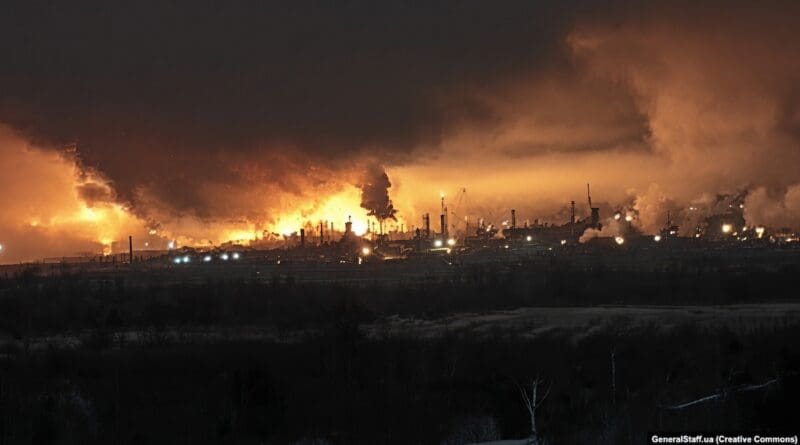
An oil refinery in Kstovo, in Russia's Nizhny Novgorod region, is seen burning after a Ukrainian strike. Photo Credit: Generalstaff.ua, RFE/RL
July 31, 2026
By Paul Goble
Key Takeaways:
Much of Russia’s pipeline network and tanker capacity, dating from Soviet times, is aging and increasingly prone to leaks, reducing the flow of oil to refineries and export markets on which the Kremlin relies while fueling growing anger among Russians.
As older fields are exhausted, Russia is being forced to develop new ones in the Far North, where global warming threatens infrastructure and collapse and requires money Moscow lacks or refuses to spend to prevent new disasters.
Ukrainian drone attacks on Russian refineries have sparked a country-wide gas shortage and cost Moscow significant export earnings. They are far from the only threat to Russia’s oil industry and even to Russian President Vladimir Putin’s standing (see EDM, December 22, 2025, July10, 14). Other underlying threats, while less dramatic so far, may prove more significant, as they could reduce Russia’s production and earnings over time (see EDM, June 25).
Much of Russia’s domestic pipeline network and tanker capacity, dating largely from Soviet times, is aging and increasingly prone to leaks that reduce the flow of oil over the longer term to refineries as well as to export markets on which the Kremlin relies, while sparking ever more domestic anger among Russians (Window on Eurasia, April 14, 2024, July 24; Novye Izvestia, June 24, 2025; Meduza, September 3, 2025; Arctida, July 14). As Russia’s older fields are exhausted, it is being forced to develop new and more distant ones in the Far North, where global warming threatens infrastructure collapse and requires money Moscow does not have or is unwilling to spend to prevent new disasters (Window on Eurasia, August 18, 2021, May 17, December 6, 2025; see EDM, March 4, 2025; Nasha Versia, February 10).
To keep public alarm over the current crisis from spreading to these deeper, longer-term problems, the Russian government has played down these risks, blocking coverage of many of these developments in the central media and even ending the release of data that could allow others to track and report on what is happening (Yesli Byt’ Tochnym, March 22, 2023; IStories, July 14, 2025).
Environmental activists, both in Russia and internationally, have been sounding the alarm and documenting their concerns with evidence drawn from government sources, where leaks of another kind are also a problem for the Kremlin. The most prominent coverage of the oil industry’s problems has come from the Bellona organization in Norway, which gained fame for reporting on Soviet-era dumping of nuclear waste in the Arctic, and from Arctida, a Russian émigré group that tracks developments in the northern regions of the Russian Federation (The Moscow Times, March 31; Arctida, July 14). Arctida’s coverage is significant for tracking problems in the Russian oil industry that extend beyond the refineries Ukrainian drones have destroyed.
In the wake of those attacks, Raya Levashova, climate and environment analyst at Arсtida, has drawn particular attention to these broader problems. More than half of Russia’s 250,000-kilometer (155,342-mile) oil pipeline network is worn out, she notes, and should be repaired or replaced because leaks are now a significant problem. In some places, as much as 80 percent of the oil-carrying infrastructure needs to be replaced now (Arctida, July 14). She adds that, in 2023, the last year Moscow released such data, there were 14,716 major pipeline ruptures, spilling oil into the surrounding environment, contaminating it and limiting the flow of oil to refineries. That figure, already alarming, has almost certainly grown since then, which explains why Moscow has worked so hard to keep such information under wraps.
The Arctida analyst says worse is yet to come as the number of such leaks will skyrocket in the coming years as Rosneft builds a new 9,000-kilometer (5,592-mile) network in the Russian Far North, where it is developing new fields. This pipeline system will be new and thus avoid the problems of aging infrastructure, yet global warming, melting permafrost, and the company’s unwillingness or inability to spend the money needed to ensure its stability could certainly increase the risk of leaks. Rosneft is upbeat about the new routes, saying shipments from the Taymyr Peninsula will begin this September. Levashova sees little reason to accept those claims. Only 700 kilometers (435 miles) of the projected 9,000 kilometers (5,592 miles) have been laid as of June, and the company faces serious problems coping with global warming’s impact on pipeline stability (Arctida, July 14).
Levashova says environmentalists such as her are worried that as the project proceeds, the risk of leaks will rise dramatically and harm the fragile ecosystems of the High North. Rosneft’s approach, she argues, is based on the assumption that environmental conditions will remain stable rather than deteriorate, despite scientific projections. Even pipeline segments that are stable today will be at risk as temperatures rise and the permafrost melts further. Specifically, the relatively inexpensive but low-capacity thermosyphons (passive heat exchange systems that allow for the circulation of air in the ground) that the company is installing will no longer work effectively since they rely on larger differences between air and ground temperatures than those already present in many places in the Russian North and expected across the entire region in only a few years (Arctida, July 14).
Even “at current rates of warming,” she concludes, “localized engineering solutions can no longer guarantee the safety and stability of industrial pipelines; the risks of deformation and loss of containment are rising in step with the climate crisis. In addition, this crisis is being worsened in part by the oil being burned after traveling through these pipes.” She points out that the Russian government has failed to impose fines stiff enough to discourage Rosneft and others from cutting corners, thereby allowing the companies to build in ways that make accidents more likely. Moscow has instead reduced rather than strengthened environmental protections and enforcement (Novaya Gazeta, June 24). As Levashova puts it, “It is often more cost-effective for Russian oil companies to pay fines and compensate for damage than to invest” to prevent such disasters (Arctida, July 14).
Taken together, these trends mean the oil crisis in the Russian Federation will not end even if Ukrainian attacks on refineries do, unless Moscow redirects spending to ensure its pipelines and tankers are safe. The Putin regime is unlikely to take those steps, even with prices remaining high due to the U.S. conflict with Iran. The consequences for the Russian economy and for people across the Russian Federation—first in the Far North, then more broadly—could be enormous and, over time, exceed those of the current Ukrainian drone attacks (Yesli Byt’ Tochnym, September 22, 2023; Arctida, March 25, 2025; East Russia, May 13, 2025; Caspy.Land, July 9).

About Paul Goble
Paul Goble is a longtime specialist on ethnic and religious questions in Eurasia. Most recently, he was director of research and publications at the Azerbaijan Diplomatic Academy. Earlier, he served as vice dean for the social sciences and humanities at Audentes University in Tallinn and a senior research associate at the EuroCollege of the University of Tartu in Estonia. He has served in various capacities in the U.S. State Department, the Central Intelligence Agency and the International Broadcasting Bureau as well as at the Voice of America and Radio Free Europe/Radio Liberty and at the Carnegie Endowment for International Peace. Mr. Goble maintains the Window on Eurasia blog and can be contacted directly at paul.goble@gmail.com .
View all posts by Paul Goble →
Fire reported at another Wildberries warehouse in Russia
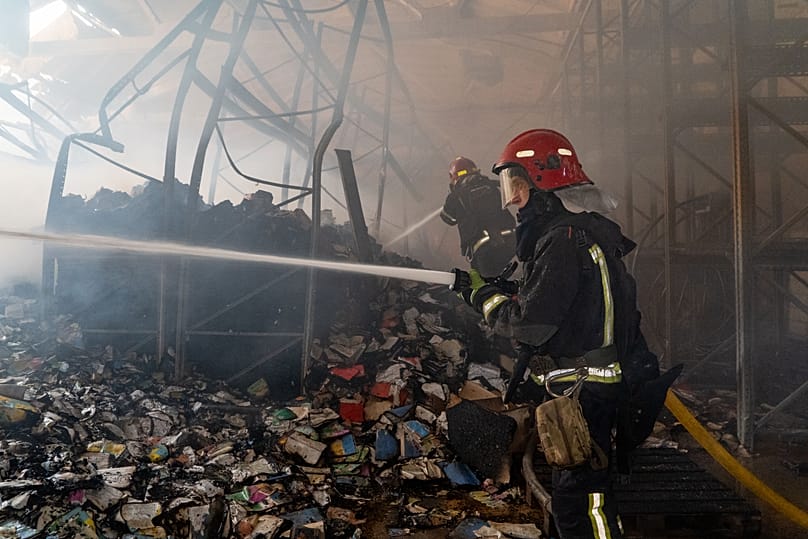
Video footage circulating on social media appears to show a large blaze at the warehouse, with flames engulfing the building and huge plumes of black smoke billowing into the sky.
A fire broke out at a Wildberries warehouse in Russia's Samara region on Sunday following an attack, the company's press service has said.
In a post on Telegram, the Russian online retailer said there were currently no reported casualties and that "logistics chains have been reorganised."
"The receipt of deliveries and dispatch of orders are now being handled at other facilities," it added.
Video footage circulating on social media appears to show a large blaze at the warehouse, with flames engulfing the building and huge plumes of black smoke billowing into the sky.
In July, Ukrainian forces targeted multiple Wildberries logistics facilities across Russia as part of Kyiv's "long-range sanctions" against Moscow, with Ukrainian President Volodymyr Zelenskyy saying the warehouses were involved in supplying drone parts and navigation equipment for the Russian military.
Wildberries was founded in 2004 by Russian billionaire Tatyana Kim and has gone on to become the country's largest online marketplace. Products offered on its website now include items such as knives, helmets, camouflage, and night-vision devices.
Russian strikes on Ukraine
In a social media post on Sunday, Zelenskyy said Russian forces had launched around 1,900 drones, roughly 1,600 aerial bombs, and 144 missiles against 16 regions of Ukraine this week.
"Today, Sumy was struck by aerial bombs. In Brovary, one person was killed in a drone strike, and six people were injured," he wrote.
The Ukrainian air force said Russia attacked Ukraine with 133 drones and loitering munitions overnight.
"According to preliminary data, as of 8:00 am, air defences had shot down or neutralised 109 enemy UAVs of the Shahed, Gerber, and Italmas types, ‘Banderole’ loitering munitions and other types of drones in the north, south and east of the country," the air force said in a statement.
Ukrainian forces targeted Russia's Saratov oil refinery and Engels military air base overnight, per Zelenskyy. An oil depot in the Kaluga region and a facility involved in the storage of attack drones in Brysansk were also hit, he added.
Zelenskyy renews calls for Patriot missiles
It comes as the Ukrainian leader made a fresh plea for more Patriot interceptors.
The US-made Patriot is one of the world's most advanced air defence systems and can be used to defend against ballistic and cruise missiles, loitering munitions, and aircraft. The coveted system is expensive and limited in supply, but it is seen by Kyiv as crucial to success in its fight against Russian President Vladimir Putin's invading forces.
"The world has Patriot missiles," Zelenskyy said on Saturday evening. "What matters now is for our partners to make the political decision to provide the necessary packages. The United States knows what we need. Europe knows what we need. Anti-ballistic missiles must protect people – not sit in stockpiles."
On Friday, US President Donald Trump appeared to go back on a promise to let Kyiv build its own Patriot missiles.
"We have not agreed to that. We're talking about it. But it's a hard thing to give away that kind of technology," Trump said during a cabinet meeting - despite having told Zelenskyy at the 2026 NATO summit in Turkey that Washington would give Ukraine a license to build Patriots.
"We'll show them how to do it," Trump said at the summit in July, adding: "This way you can't complain that we're not giving them enough."

No comments:
Post a Comment