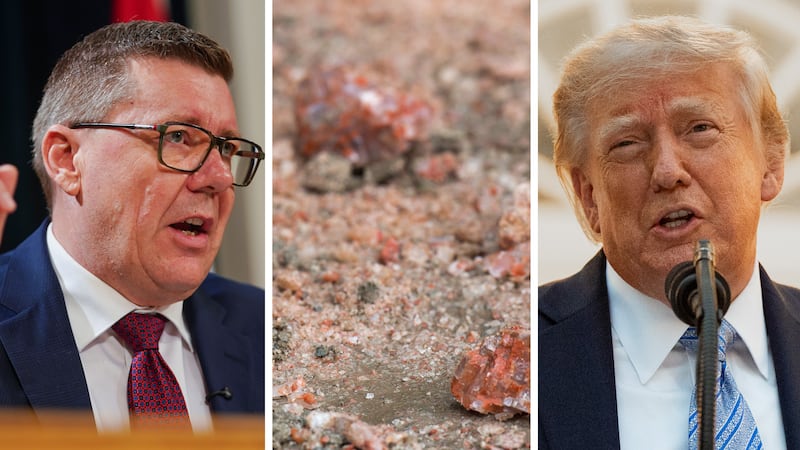
‘Blood potash’: Scott Moe reacts to Trump’s Belarus deal
Published:
Published:
Potash leverage in U.S.-Canada trade war
Belarus sanctions
Kayla Thompson
Trump says U.S. to continue buying Canadian potash but wants cheaper price
Published:
Published:
Trump says Belarus potash deal in works amid Canada fight
President Donald Trump said the US is working with Belarus to secure more supplies of potash amid a trade fight with Canada, a major supplier of the critical ingredient used in fertilizers.

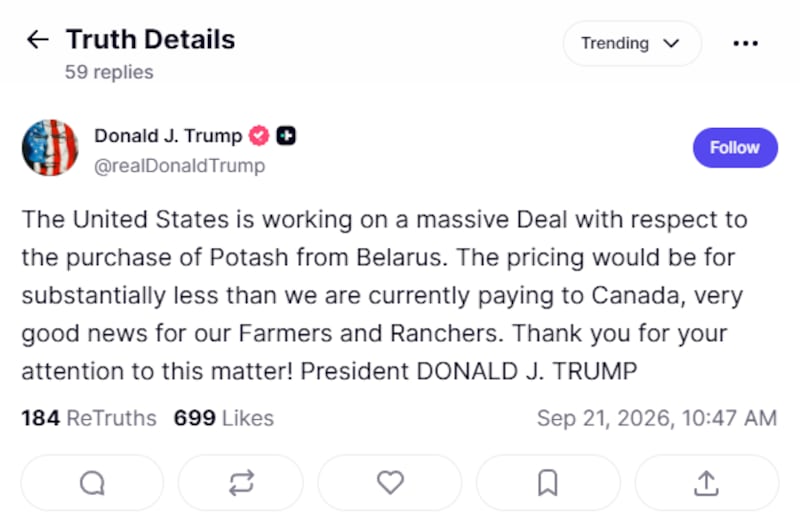
“The United States is working on a massive Deal with respect to the purchase of Potash from Belarus,” Trump said in a social media post Monday. “The pricing would be for substantially less than we are currently paying to Canada, very good news for our Farmers and Ranchers.”
Trump’s comments come amid an escalating trade war with Canada that has seen the two countries impose tit-for-tat tariffs on imports. Trump’s levies, however, don’t apply to some of the most significant natural resources the US buys from Canada, such as oil, potash and critical minerals — an indication of their importance to the US economy.
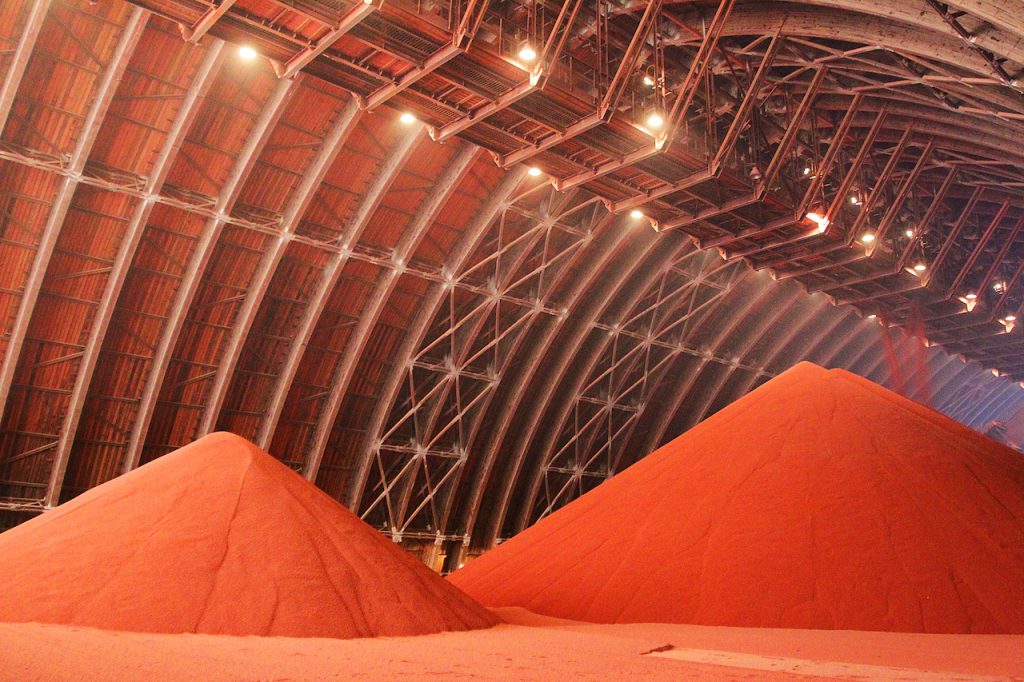
Canada is one of the world’s largest exporters of potash and any move to restrict those supplies flowing to the US could have a major impact on the American agricultural sector.
The world’s largest reserves of potash, which is mined, are located in Saskatchewan. Shares of Canadian fertilizer producer Nutrien Ltd. dropped as much as 5.2%, while Tampa-based Mosaic Co. fell 5.9% intraday before paring losses. The two companies dominate North American potash production via their joint venture Canpotex.
Trump has sought to rebuild ties with Belarus and its authoritarian leader, Alexander Lukashenko, a close ally of Russian President Vladimir Putin. The US is pushing Ukraine to ease restrictions on imports of potash fertilizers from Belarus and has urged Kyiv to encourage other European allies to do the same.
Potash was a major source of foreign-currency revenue for Belarus before western sanctions over the government’s political repression and its help for Moscow in the war on Ukraine. The US lifted some of its own restrictions on fertilizer from Belarus earlier this year as part of a deal that saw Lukashenko’s regime release hundreds of political prisoners.
Belarus, prior to US trade restrictions, shipped over 700,000 tons of potassium fertilizers to the US in 2021. That’s a fraction of the roughly 13 million tons that the US imported in 2025, with nearly 90% coming from Canada, according to the US Department of Agriculture.
Whether Trump will be able to tap additional supplies is unclear. Belarus doesn’t have enough capacity to supply large volumes to the US, because production for the year is already under contract, Russian news agency Interfax reported, citing Lukashenko. The transport of Belarusian fertilizers has also faced logistical hurdles in recent years, after Lithuania’s rail system ended its contract with state-run Belaruskali OAO in 2022.
US farmers and ranchers, key constituencies for Trump’s Republican Party ahead of November’s midterm elections, are under strain from high costs for diesel, fertilizer and other inputs, as well as disruptions in export markets as the Iran war and Trump’s tariff policies squeeze supply chains. New Orleans potash spot prices are at their highest levels since July 2023, according to Bloomberg Green Markets.
Trump has taken steps to help ease the burden on those groups, with polls showing voters largely disapprove of his party’s handling of the economy and the war.
(By Jeff Mason and Ilena Peng)
Trump’s Belarus potash plan may have limited bite

US President Donald Trump’s proposed “massive” potash deal with Belarus rattled fertilizer stocks, but BMO Capital Markets says limited supply and costly export routes make the country an unlikely threat to Canadian producers.
Trump said Monday that the US was working to buy Belarusian potash for “substantially less” than it currently pays Canada, which supplies about 80% of US potash imports. He gave no details on volumes, timing or proposed prices.
Belarus could resume supplying some potash to the US as relations between Washington and Minsk thaw, but those tonnes would probably sell at prevailing market prices rather than at deep discounts, BMO fertilizer and chemicals analyst Joel Jackson said in a note.
“We expect those tonnes would be sold at market-based prices, not deep discounts, and in volumes unlikely to materially alter North American potash supply dynamics,” Jackson said.
The prospect hit North American fertilizer stocks after Trump’s announcement. Nutrien (TSX: NTR)(NYSE: NTR) fell about 2.3% Monday, while Mosaic (NYSE: MOS) slipped about 0.4%.
Supply limits
Belarus, one of the world’s largest potash producers, has rebuilt much of its export business since Western sanctions disrupted its traditional routes following Russia’s 2022 invasion of Ukraine. But the landlocked country remains dependent on more expensive Russian logistics because European Union sanctions restrict access to Lithuania’s Klaipeda port.
That makes Belarus a difficult replacement for Canadian potash, which benefits from established North American transportation infrastructure and Saskatchewan’s enormous production base. Belarus produces about 12 million tonnes annually, split between granular and standard grades, while the US consumes roughly 10 million tonnes, predominantly granular product, according to BMO.
Economics also work against Trump’s suggestion that Belarus could sell large quantities at steep discounts. US potash prices of about $350 to $360 per short ton at New Orleans have risen on strong demand and offer Belarusian suppliers competitive returns relative to other major markets, Jackson said.
Belarus therefore has little incentive to discount one of its largest sources of foreign currency simply to capture US market share.
There may also be little uncommitted product available.
Belarusian President Alexander Lukashenko said Monday the country had redirected exports east and its potash production was already committed under existing contracts. Even if Western markets reopened completely, Belarus lacked additional volumes to supply them, he said.
Lithuania, meanwhile, has shown no sign of reopening the cheaper Baltic export route. EU restrictions on Belarusian potash remain in place, meaning additional shipments to the US would probably have to move through Russian ports.
Pricing pressure
The more immediate risk for Canadian producers may be psychological rather than physical, Jackson wrote. According to the analyst, the prospect of additional Belarusian tonnes could make Nutrien and Mosaic think twice before pushing North American potash prices materially higher, even if Belarus cannot supply enough product to fundamentally reshape the market.
US demand remains robust and BMO still sees room for further potash price increases. But Trump’s announcement introduces another potential source of competition into a market where Canadian producers have long enjoyed a dominant position.
For Belarus to seriously challenge that dominance, it would need substantially greater export capacity, competitive logistics and enough uncommitted granular potash to serve US buyers. These conditions, BMO’s analysis suggests, are not currently in place.
Washington's prisoners-for-sanctions deals with Belarus are losing momentum, with the latest round yielding just 25 freed prisoners and relief for two minor companies, Artyom Shraibman writes for Carnegie Politika.
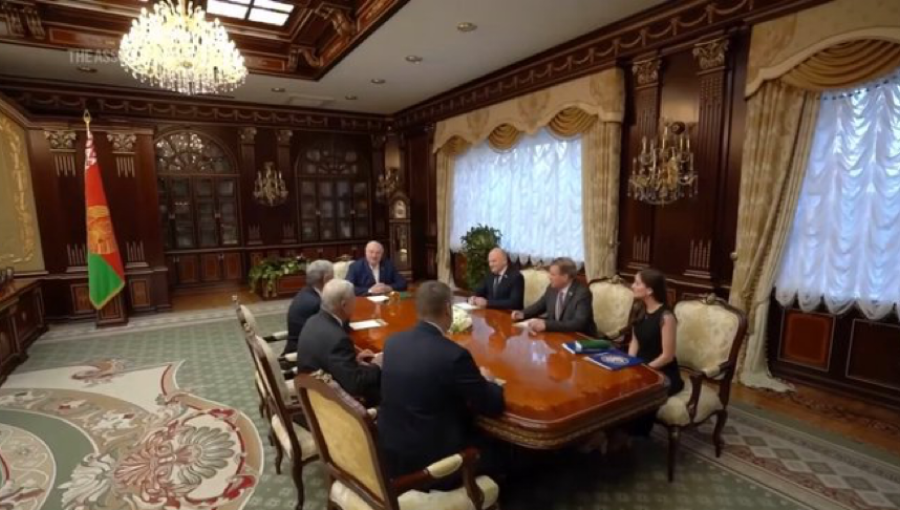
US special envoy John Coale returned to Minsk on September 15 after a six-month hiatus, but his meeting with Belarus' leader Alexander Lukashenko was less productive than previous encounters, Shraibman, a nonresident scholar at the Carnegie Russia Eurasia Center, wrote in the commentary published on September 22.
"The recent talks have demonstrated that the terrain of the negotiations is becoming increasingly boggy. The risks of delays are growing, and the process could reach a stalemate," he wrote.
Belarus released and deported 25 political prisoners, including prominent journalists and activists, to Lithuania this time, against more than 120 in December 2025 and 250 in March 2026, most of whom were allowed to stay in Belarus. On the day Coale arrived, sources said as many as 200 prisoners were being prepared for release, and their relatives had already been told.
The shrinking exchange suggests the transactional model that has run since 2025 is hitting its limits. Washington has already handed over its biggest concessions, lifting sanctions on Belarusian potash producers, national carrier Belavia and Belarusian banks, while the prize Minsk wants most - EU sanctions relief and a route for its potash exports through its neighbours - is not in the US' gift. Shraibman warned as early as March that time was running out for Lukashenko's courtship of Trump.
This time the US lifted sanctions on just two companies: paint and coatings maker Lakokraska and state-owned Bellesbumprom, which oversees companies in the timber, paper and furniture industries. The barely profitable Lakokraska is unlikely to gain much from access to the US market, Shraibman wrote, while Bellesbumprom's main problem is the EU ban on exports to or via the bloc, which forces it to sell through Russia. Ending US sanctions will only make it easier to take payment from those third countries.
Ahead of the talks Lukashenko had demanded that the US unfreeze around $44mn apparently held in a Citibank account, part of Citigroup (NYSE: C), because of sanctions. Coale agreed to submit a request to the bank to release the funds, but no final decision has been announced.
Until now each round had been more substantial than the last and followed a simple script - a Coale visit, a prisoner release and a lifting of sanctions, then quiet negotiations before the next trip. This was the first time plans changed while a meeting was under way. Lukashenko's first words before the cameras were that the two sides should implement previous agreements, "a rather chilly opening," and for the first time Prime Minister Alexander Turchin sat in on the meeting, apparently to spell out what had not been done.
The main unresolved problem is the EU, Shraibman argued. Brussels has no desire to lift sanctions on Belarus and keeps imposing new ones. In the spring Washington asked Lithuania, Poland and Ukraine to let Belarusian potash through to their ports, but they refused, and the US has since stepped up pressure on Lithuania to reopen the Klaipeda route.
Minsk is also creating new political prisoners as fast as it frees them. Since the March release another 224 names have been added to the country's list of political prisoners, and even though hundreds have left prison after serving their sentences, the total still hovers at about 900. Belarus has jailed more people than it has released under the US deal.
"Even for the administration of President Donald Trump - not known for its concern about human rights - a deal in which the United States is gradually lifting sanctions while Belarus releases political prisoners at the same rate it's jailing new ones makes little sense," Shraibman wrote.
Lukashenko would like Minsk's neighbours brought into the process because they control the transit of Belarusian potash, and Belarusian officials meeting European experts and diplomats behind closed doors often ask for the releases to be seen as a concession to the EU as well as to Washington, he said.
Ukraine is very unlikely to play along, with Russia still destroying its port infrastructure and relations between Kyiv and Minsk in crisis; in mid-September Ukrainian security officials again alleged that Belarus lets Russian drones bound for western Ukraine use its relay stations and mobile networks. Minsk has courted Poland for months, freeing Andrzej Poczobut, one of the leaders of Belarus' Polish minority, and later allowing him to travel back to Belarus for meetings.
Lithuania is likely to come under the most US pressure. Vilnius is unhappy about the talks, but newly elected Prime Minister Mindaugas Sinkevicius, leader of the Social Democratic Party, is slightly more open to negotiations, and Coale met him in Vilnius after seeing Lukashenko and discussed potash transit, according to The New York Times. Latvia, which once handled Belarusian potash, has little reason to help after Minsk redirected migrants it had been pushing towards the Polish border to the Latvian frontier instead.
In any case, EU sanctions bar all three from allowing Belarusian potash exports. Those sanctions come up for renewal in February 2027, and if the dialogue is still alive by then Washington may look for allies inside the EU to block the extension unless potash is exempted, Shraibman wrote.
Trump raised the stakes on September 21 with a post on Truth Social saying the US was negotiating a "massive deal" to buy Belarusian potash at prices "substantially less than we are currently paying to Canada," The Guardian reported on September 22. Canada supplies nearly 85% of US potash imports, according to BNN Bloomberg, and Lukashenko countered that Belarus had no spare volumes for Western markets because its output was already contracted.
The post changes little, Shraibman argued. Lithuania has already said the deal does not concern it, hinting that the US is welcome to buy Belarusian potash through Russia's northern ports - financing both the Lukashenko regime and Russia's war economy. Framing the deal as a blow to Canada could make EU consent even harder to secure.
"It is one thing to help the United States achieve the humanitarian goal of freeing Belarusian political prisoners. It is another to stab Canada, a close EU ally, in the back to help Trump in his trade war with Ottawa," he wrote.
"The irony of the situation is that having railed at US hegemony for over three decades, Lukashenko is now a victim of the weakening of that very hegemony," Shraibman concluded. "Washington's loss of influence in Europe is one of the reasons he cannot get what he wants."

No comments:
Post a Comment