Google Secures 890 MW Of Nuclear Power from Constellation Energy
- Google has secured 3.59 GW of power from Constellation Energy, including 890 MW of additional nuclear capacity, to help meet surging electricity demand from AI and data centers.
- Constellation will invest more than $4.3 billion to upgrade 11 nuclear units across Illinois, Pennsylvania and New Jersey, with the first additional power expected in 2028.
- Big Tech is increasingly turning to nuclear power as data-center demand strains U.S. grids, with Microsoft, Amazon, Meta and others signing major long-term nuclear power agreements.
Google/Alphabet (NASDAQ:GOOG) says it has contracted 3,590 megawatts of power from Constellation Energy (NASDAQ:CEG) in the largest US power grid, PJM Interconnection, which serves 67 million people across 13 states and Washington, D.C.
New nuclear energy will account for about a quarter of that supply, or 890 megawatts.
Artificial intelligence and data center expansion have drastically increased Google's electricity usage and carbon emissions.
Major tech companies are racing to secure massive amounts of electricity supplies to power data centers across the US by striking unprecedented power deals and reviving the country’s nuclear industry, Reuters reported on Tuesday.
Unlike renewables, nuclear provides continuous base-load power.
Data centers are inherently energy-intensive, and their power consumption is projected to double globally by 2030, reaching around 945-980 terawatt-hours (TWh) annually. In some countries like the US, they could account for up to 12% of total electricity consumption by 2030, straining existing power grids.
The Google-Constellation deal involves adding capacity at several of Constellation’s nuclear reactors in the Midwest and Mid-Atlantic regions.
“The 20-year power purchase agreement will enable investments in new equipment and technology at 11 Constellation-owned nuclear units in Illinois, Pennsylvania, and New Jersey, increasing thermal and electrical efficiency to unlock additional reliable, firm power to serve the grid,” Constellation wrote in a statement.
The company will make over $4.3 billion of new investments in its fleet as part of the agreement. Electricity from the first of the upgraded plants would be delivered in 2028.
Reuters notes the agreement between Google and Constellation is in response to PJM’s “bring your own power” proposal:
Rising electricity demand driven largely by the data center expansion has contributed to a more than 11-fold increase in PJM capacity prices since 2024 and left the grid with a power shortfall.
In response, PJM management has proposed requiring data center customers connected to the 13-state grid to either bring their own power or face being shut off from grid power remotely in times of peak demand.
The Google-Constellation deal is the latest in a string of nuclear power announcements involving “Magnificent Seven” tech companies.
Google has also contracted to restart NextEra Energy’s (NYSE:NEE) nuclear power plant in Iowa. Constellation has agreed to restart its Three Mile Island reactor in Pennsylvania to serve Microsoft’s (NASDAQ:MSFT) data centers.
Constellation has a 20-year power purchase agreement announced Sept. 30 with Amazon (NASDAQ:AMZN) to supply it with 690 megawatts from its Calvert Cliffs nuclear plant in Maryland; and a 20-year virtual PPA with Meta (NASDAQ:META) for 1,121 MW of power.
In August, Oilprice reported that Major data center operator Equinix (EQIX.O) announced a series of agreements to secure advanced nuclear electricity, including power purchase agreements and a pre-order for microreactors, to fuel its data centers. The move comes as the growing energy demands of data centers, driven by technologies like generative artificial intelligence (AI), raise concerns about global power supplies.
According to a company statement, the agreements are part of Equinix's long-term strategy to ensure a stable and sustainable electricity supply for its global operations. The deals are expected to provide more than one gigawatt of electricity to Equinix's data centers, a significant step as the company plans for future growth.
The United States accounts for roughly 30% of global nuclear electricity generation, making it the world’s top nuclear provider. Other significant nuclear states include France, China, Russia and South Korea.
The 94 operating reactors spread across commercial power plants produce about 782,000 gigawatt-hours (GWh) annually, which supplies nearly 18-19% of the total electricity used in the country.
The last new nuclear reactor built in the US is Vogtle Unit 4 in Burke, Georgia, which began commercial operation in April 2024.
By Andrew Topf for Oilprice.com
Data Centers Are Now Bankrolling Finland's New Power Supply
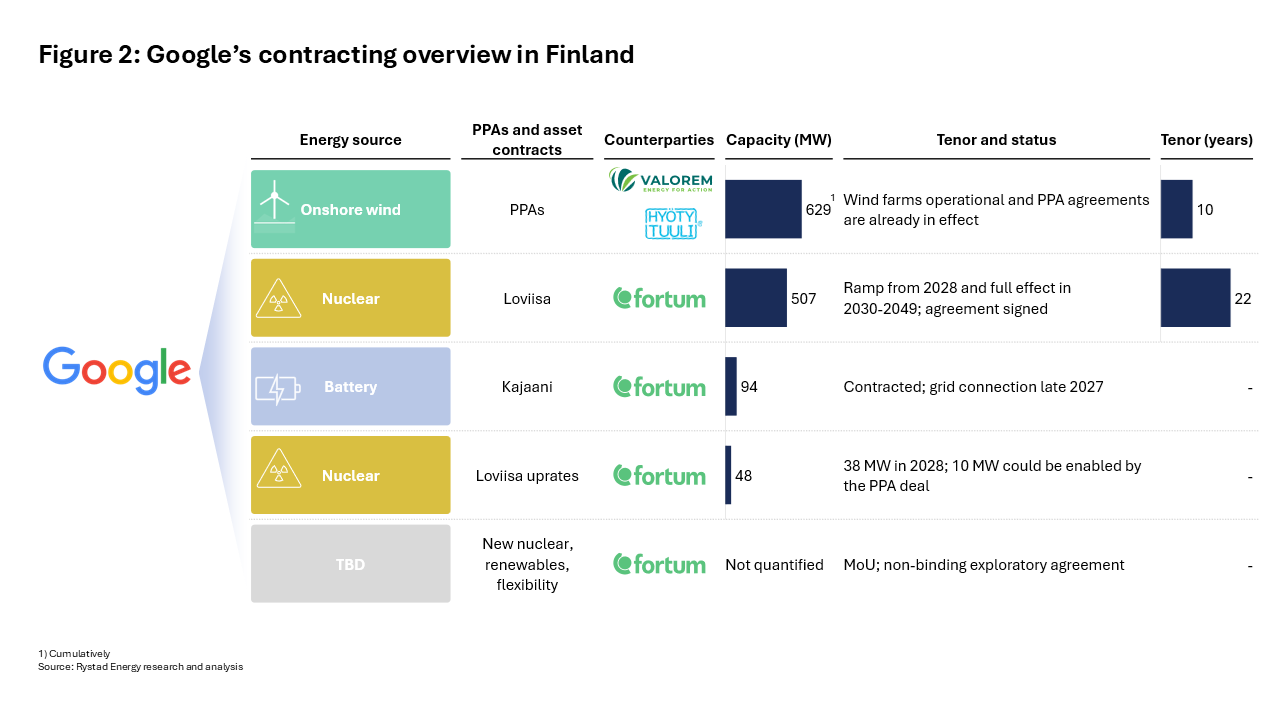
- Google's 507 MW, 22-year deal with Fortum at Loviisa is the largest PPA ever signed in Finland and the country's first for nuclear, backing a plant that supplies 10% of its electricity.
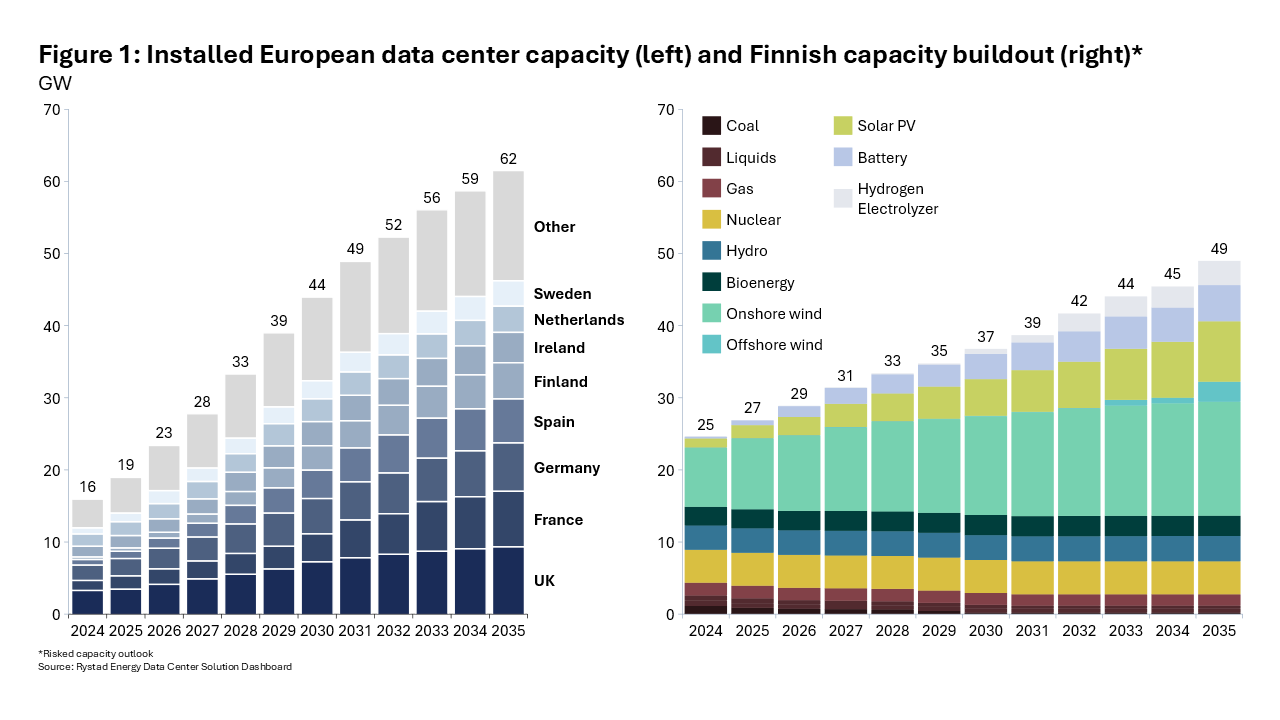
- Finnish data center capacity is forecast to climb from 0.8 GW in 2026 to 5 GW by 2035, with data centers using about 15% of national power by 2030.
- Grid access may become the real bottleneck as Finland weighs scrapping its first-come, first-served connection queue in favor of local, firm supply outside the congested south.
Data centers have become the main financier of new Finnish power capacity. Contracting is shifting from renewable volume to sources that provide baseload supply, as seen in Google's 507-megawatt (MW) agreement with Fortum at Loviisa. The deal is Finland's first nuclear power purchase agreement (PPA), and its 22-year tenor keeps a plant that supplies 10% of the country's electricity from retiring in 2030. Rystad Energy expects the next wave of Finnish offtake to follow the same logic, pairing wind and solar with battery energy storage systems (BESS) to deliver a more baseload-like profile.
A market built on data center demand
Finland is expected to become Europe's fifth-largest data center market by 2035, with installed capacity rising from 0.8 gigawatts (GW) in 2026 to 5 GW in 2035. By 2030, data centers could account for about 15% of national power consumption, making them the leading source of new demand. Cheap onshore wind, a strong grid, low energy emissions and a cold climate that reduces cooling loads make the country an attractive location.
Contracting shifts toward data centers
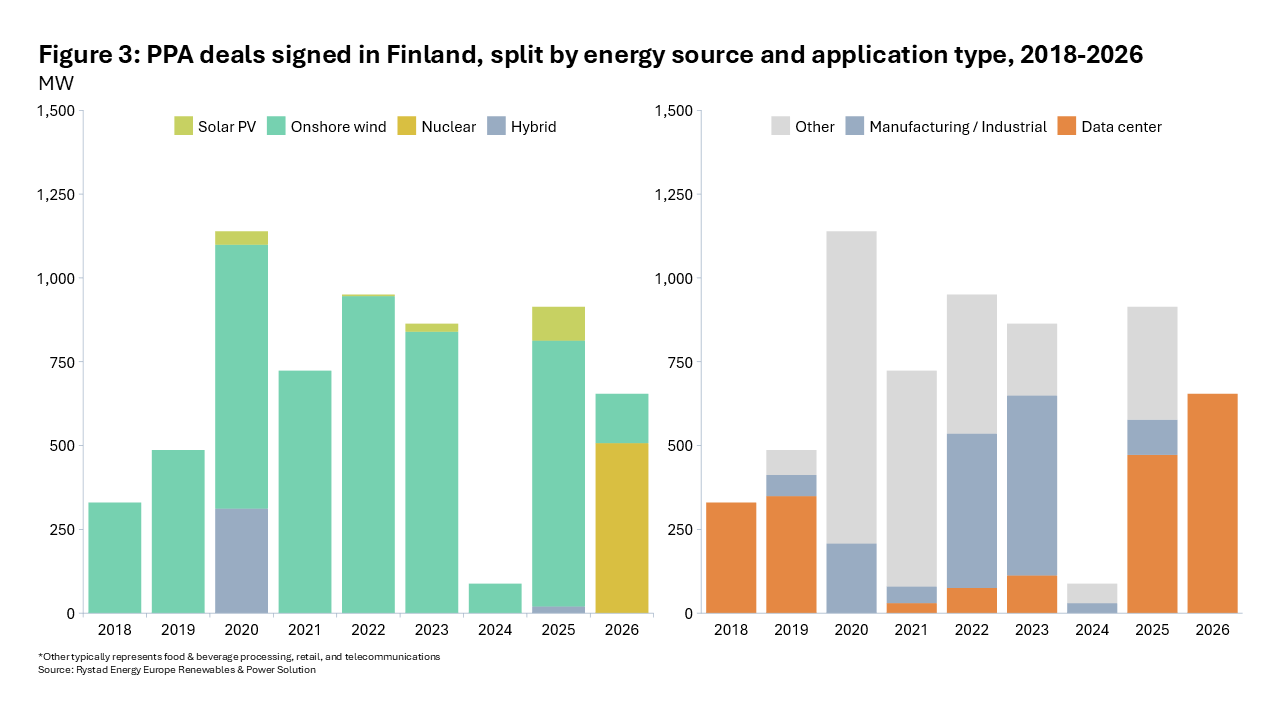
Data centers have overtaken manufacturing and industrial companies as the largest buyers of power in Finland, and the gap has widened quickly. At 507 MW, Loviisa is the largest single PPA signed in the country, surpassing Amazon's 367 MW contract with OX2 for the Rajamäenkylä wind project. The 22-year tenor is more than double that of the onshore wind and solar PPAs among the top deals of 2025 and 2026.
Batteries enable firmer supply
Onshore wind is expected to drive Finland's renewables expansion through 2035. High shares of wind and solar have caused many negative power price hours, but battery capacity is expanding quickly. That should enable hybrid PPAs pairing renewable and battery offtake, delivering the uptime data center operators require.
Grid access may become the tighter constraint
Finland has proposed replacing its first-come, first-served grid connection queue with a priority procedure, which could affect both data center and battery developers. The proposal favors newly built, local and firm supply, and would reward developers that pair their load with dispatchable capacity outside congested southern Finland.

No comments:
Post a Comment