MARAD, TOTE and Hanwha Philly Finalize Deal to Build MDA's Tracking Ships
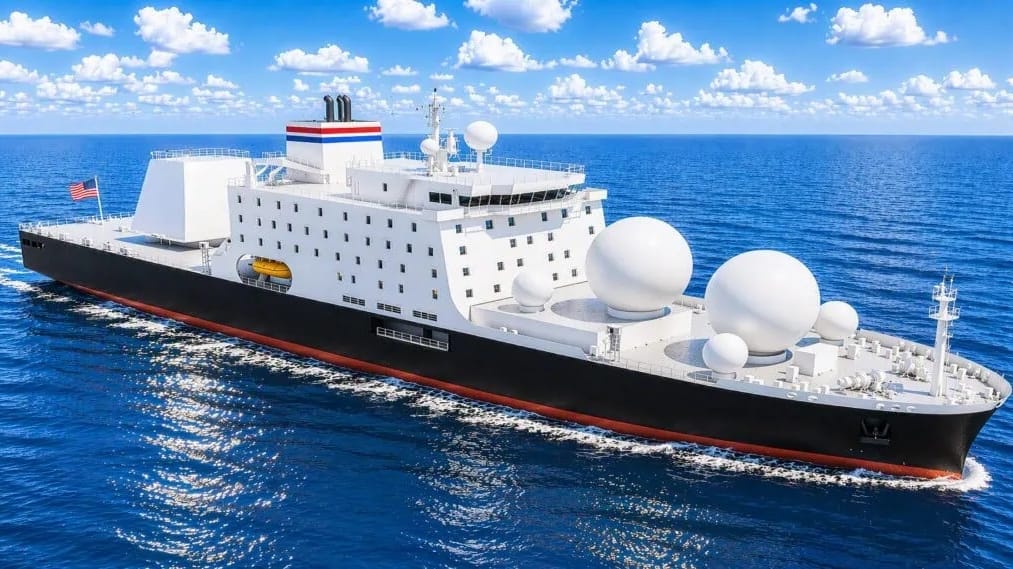
U.S. maritime conglomerate TOTE has accepted a contract with MARAD to manage the Missile Range Instrumentation Vessel (MRIV) project, a three-ship series for the Missile Defense Agency (MDA), and immediately awarded a subcontract to Hanwha Philly for the construction of the first hull plus two options.
In July, MARAD announced that it had awarded Hanwha Philly and TOTE Services the bid to build the MRIVs (not to be confused with MIRVs, the munition class underlying MDA's primary mission).
Outfitted with house-sized radar units, the MRIVs will be used to track and analyze missile flights during testing. They will be deployed to MDA's missile testing ranges for R&D work in support of the Trump administration's Golden Dome project. They will replace two aging vessels, Pacific Tracker and Pacific Collector, which are both over 50 years old.
The design for the MRIV is derived from the previous Hanwha Philly / TOTE design for the National Security Multi-Mission Vessel (NSMV), the school-ship series built for America's state maritime academies. The selection of an existing design as the basis for the MDA's ships should produce efficiencies, as the Hanwha / TOTE team and their suppliers are already familiar with it. TOTE and Hanwha believe that having a vessel construction manager between the shipyard and the government contracting authority will itself save about 50 percent of the construction cost of a typical federal shipbuilding program.
Illustrations released by TOTE show two giant radomes on the new vessel's foredeck and one box-shaped radar array mounted on the stern. The graphics also suggest that the NSMV's characteristic double-level wheelhouse - designed for training many cadets simultaneously - has been reduced to a single level. The accommodations block has also been shortened, leaving more space for the gigantic aft radar, and the number of life boats has been reduced.
The design of the NSMV was always intended for a naval auxiliary role when and if required, and is just seeing its first action in that application. SUNY Maritime's NSMV is now preparing to deploy in support of U.S. forces overseas, demonstrating the design's secondary capability in a national-security mission.
The MRIV comes off of a hot production line for NSMV at Hanwha Philly, and the first should be delivered in 2030, the yard says.
"The MRIV program demonstrates the value of maintaining an active, capable U.S. shipbuilding industrial base, one that can take proven platforms, experienced people and established production infrastructure and put them to work for new and increasingly important missions," said David Kim, CEO of Hanwha Philly Shipyard.

No comments:
Post a Comment