Showing posts sorted by relevance for query HALLOWEEN. Sort by date Show all posts

Wednesday, October 31, 2007

Halloween Blog Apples


My own personal carnival of blog posts inspired by Halloween. Here are my selections of Tricks and Treats.

It is clear that Progressive Bloggers have more fun posting on Halloween then their Blogging Tory counterparts.


Progressive Bloggers

This is the gay Christmas boys & girls.Rocky Horror Picture Show: Sweet Transvestite

We're kind of antisocial socialists at the Bunker, and none of us particularly enjoy handing out carbos to kids. So we tend to turn off the lights on Hallowe'e'n, settle down with the mead and popcorn, and enjoy a dusk to dawn session of our favourite scary movies. Here they are.

Like many people the Shag gets tired of hearing about the general state of the world or at least the unpleasant parts that usually arise from some combination of ordinary stupidity and the pathologies of politicians. Since its almost the end of the month let's take a look at a few tidbits related to the celebration of Halloween.Pumpkin carving is a popular part of of the season. Come October, pumpkins can be found everywhere in the country from doorsteps to dinner tables. One of the market gardens located near Lumsden, Saskatchewan always has several hundred on hand at the end of the selling season which I've been told carries on right to the end of this month. The carving of "jack o'lanterns" is supposed to have originated with an Irishman by the name of Stingy Jack.


I have collected some spooky links to post today, to get in the mood for the Holiday. One of my favorites: and one of the most amazing sites i have ever been, is to be found at Devil's Tramping Ground. This flash animation is so beautiful and haunting. The Banshee will make the hair on the back of your neck stand up, while you marvel at this work. Want to see some ghost videos? heh. Ever heard the term, Pepper's ghost? read more...

List of Good Halloween Sites
It seems that Sean over at Mashable has gotten disapointed about how halloween has been celebrated recently and wants to revive the fun in the day. In order to reinvigorate Halloween he’s collected list of more than 20 Halloween websites.

Vampires!
Muhahahahahhaha! Garlic won't work on these.......Stake through the heart would be kind of....Sparky? Not to mention expensive... No the only way to slay these Vampires, is to unplug them. All those conveniences in your house suck the life out of your bank account, and contribute to…

A Very Nunc Scio Halloween

Halloween. The day where we, the living, dress in strange outfits to confuse the spirits who roam among us. Or, conversely, the day where North America’s sugar intake trebles and the good people at Nestle and Hershey do little jigs around their respective offices, commemorating one of…

Happy Halloween everyone. Yesterday I was at the CUPE rally on the UofR campus. There were a lot of reporters there, and I met Patrick Book of CJME.com I’m going to be wearing my chicken costume to the party in the Archer Library, and hoping I won’t have to use it to stay warm outside later in the week. Murray Wood shakes a finger at Hallow’een Grinches. Kids only get to be kids once, and they need supportive adults to hand out sugary snacks.

Remember the fun of Halloween when you were a kid? Dressing up, decorating the house, carving the pumpkin, sorting through the treats after you?ve gone out?only fractions of the easy days of our childhoods?Calgary?s recreation department wants to put the break on Halloween?.They?re encouraging people to give out swim passes instead of the regular chips and/or chocolate combo?swim passes?for Halloween?how anal?Their justification for it is that ?the tradition of dropping candy into kids' bags doesn't make sense anymore amid so much concern over childhood obesity?(CBC News)WTF!?!Personally, I?ve always believed that reason kids are getting heavier is that they?ve become enslaved to the television set; the computers.

Elin and Lukas are going to mock me, but I have miniature chocolate bars to give out to the neighborhood kids tonight. When they were growing up, we gave out small boxes of raisins, and the rule was that the two of them could eat as much as they wanted on Halloween night, but the rest was trashed. My idea was that an occasional splurge doesn?t hurt but that weeks of eating candy was bad for teeth and bad for concentration.But, as Emerson said, consistency is the hobgoblin of little minds, and I decided to be inconsistent a couple of years ago. There will be candy for the little ones who come by, although I?ll turn off the front porch light and bring the jack o?lantern in about 7:30 p.m. when the big kids start roaming. Magic is one thing, gluttony is another.Reading that back, I see that Lukas and Ellin will laugh even harder if they read it, since in my indulgent inconsistency I still sound preachy. Fine thing to be on a pagan holiday

I have my costume on.......If I look familiar...well, sorry. That means your OLD. (shhhhhhhhhh......best not to say anything) A couple more Halloween tunes, one from deep in the vault....... And another twisted tune, that cracks me up! (Politically correct critiques not necessary) read more

If your cheap like me than you know that the pressure to spend a fortune on Halloween candy can be a little much. $5.99 for 50 Nestle Favorite mini chocolate bars???

...it would look like this:Save the pumpkin, save the world.Happy Halloween!

Sean McDonald posted a photo:

HAPPY HALLOWE'ENIE!!!

Happy Hallowe'enie Beanie

Your moment of Wingnuterer. Boo!


Blogging Tories

Happy Halloween!

I present to you an assortment of macabre political images and, if that doesn't scare you enough, three two videos from the greatest movie ever (watch it today!)

Happy Halloween.

C'est l'Halloween !

Même en pause, je désirais tout de même vous souhaiter une belle journée d'Halloween.

De plus, je vous laisse la chance d'écouter et de voir une prestation de la chanson "Halloween" de King Diamond, chanteur du groupe Merceful Fate. Cette chanson ce retrouve sur l'album Fatal Portrait réalisé en son nom personnel.

Que j'aime bien en passant...

Au plaisir

Halloween horror
Daimnation! | 31 Oct 2007 | 11:35am EST
Can your heart stand the terror of...Mr. B. Natural? Part two here - if you dare. Damian P...

Happy October 31st
Christian Conservative | 31 Oct 2007 | 9:24am EST
Halloween? BAH, HUMBUG! Instead, I'd like to wish every one a Happy Reformation Day!The 95 Theses The Ninety-Five Theses on the Power of Indulgences, commonly known as The Ninety-Five Theses, was written by Martin Luther and is widely regarded as the primary catalyst for the Protestant Reformation. Luther used these theses to display his displeasure with the Church's indulgences,

Scary Halloween for dion
31-10-07, 3:39 pm @ Dr Roy's Thoughts
Today is Hallowe'en, a day for ghost of the past to rise and witches to fly. HM Minister of Finance has completely overwhelmed the headlines with the mini budget. There is nary a word about the income trust matter or the 1995 referendum. HM Government is setting the agenda in the media, even with an almost universally unfriendly media. There is plenty of money left to cut the debt and announce even more personal tax cuts. Wed, October 31, 2007 Liberals spooked

Costumes too sexy for kids?

French maid costumes for adults are one thing, but for kids? ‘Prime News’ asks if Halloween is getting too racy (video).

Being a Whore for Hallowe'en or Just Dressing Like One
A Step in the Right Direction | 31 Oct 2007 | 3:10pm EST
Hmm....this article got me thinking. An excerpt:Meet the sexy-costume backlash: teen and tween girls who, bucking the marketing hype and peer pressure, are resisting the ever-growing tide of provocative wares. This year, there are more risqué costume options for girls than in previous years, retailers say. In addition to the "classic" sexy genre of French maid, nurse and cop,


See my Halloween Posts:

The Witch of Edmonton

Aliens Invade United States


posts, photos, events and more off-site about:
, ,, , , ,


Friday, October 30, 2020

It’s Hard to Enforce Pandemic Health Rules on Halloween. Just Look at What Happened in 1918
The COVID-19 pandemic has already played out like a horror movie script, and yet some Americans are still determined to celebrate Halloween on Oct. 31—trading their normal face masks for costume masks, and planning socially distant festivities.

TIME  OCT 30 2020© Influenza Encyclopedia/University of Michigan Center for the History of Medicine and Michigan Publis... Newspaper headlines about Halloween precautions, 1918

It will no doubt be an unusual holiday, but the cancellation of large costume parties and street celebrations also makes Halloween 2020 eerily similar to one earlier celebration in particular: Halloween 1918, which fell during the deadliest pandemic of the 20th century.

In the 1918 flu pandemic, as during this current pandemic, the virus hit different cities at different times. By Halloween, deaths in East Coast cities were on the decline, after a second wave that had been even deadlier and more contagious than the first wave the prior spring. Further west, the flu was raging.

Just as the state of the pandemic varied, so too did the precautions that cities took for Halloween. Newspaper articles in the digital archive of the Influenza Encyclopedia, produced by the Center for the History of Medicine at the University of Michigan, provide a glimpse at the range of Halloween safety protocols in major cities nationwide.

One thing they make clear: it’s already hard enough to enforce safety protocols on a day like Halloween, but that challenge gets even more intense during a pandemic.

To avoid another surge, some cities urged residents to stay home, banned Halloween parties and street “jollifications,” and urged youngsters to celebrate quietly. In Rochester, N.Y. the Safety Commissioner told police to keep the noise levels down, out of consideration for the high number of people sick with flu or pneumonia who need “rest and quiet” to get better.

In Maryland, concerned that warm weather would bring people out and too close together, the Baltimore Health Commissioner banned “frolics” such as street celebrations, arguing that “while the epidemic’s sweep was becoming milder, it was still dangerous to permit large assemblages of persons.” Residents were encouraged to wear masks but not to attend masked balls, the Halloween edition of the Baltimore American quipped, and they were advised to avoid activities like blowing horns, which are “particularly dangerous” in terms of spreading germs. The city’s health commissioner also had to clarify that “dancing, which was listed as objectionable from the start, is still regarded as nonessential,” according to the paper.

In Pittsburgh, “ticklers and brushes are particularly forbidden, and confetti throwing will not be allowed because in contact with the hands clothes and the persons of the people throwing enhances the danger of spreading influenza,” reported the Oct. 30 Pittsburgh Gazette Times.

Indoor Halloween parties were banned as well. “Halloween parties are taboo, as are all other indoor gatherings, as the danger of spreading the influenza is still great,” declared Denver Mayor W.F.R. Mills, according to the Denver Post.

In some Midwestern cities, Halloween went on as normal. In Missouri, Kansas City banned Halloween parties of more than 30 people, but in St. Louis, police reported that “the usual number of street lights [had been] extinguished” and “bread boxes overturned” during the night’s festivities. The day after Halloween, an Ohio State Journal headline read “Big Throngs Defy The Health Rules: Thousands of Columbus People Jollify on Halloween Despite Flu Bans.”

In Indianapolis, the top health official lifted the ban on public gatherings just for Halloween, allowing residents to “go ahead and have all the Halloween parties they wanted to,” as long as they stayed away from the streets in the downtown area, according to an article in the Halloween edition of the Indianapolis Star. But being allowed to celebrate didn’t necessarily translate to doing so: an Indianapolis News article did predict fewer, and less rowdy, festivities than usual due to the seriousness of both the virus and World War I, which was still going on.

On the other hand, even where cities tried to target large gatherings, local newspaper coverage of scattered incidents of individual mischief-making suggests that the tricks part of trick-or-treating was especially pronounced.

Get your history fix in one place: sign up for the weekly TIME History newsletter

In Dallas, “unusually rough and boisterous” celebrations lasted long after midnight. A piano was stolen and so was a horse; an 8-year-old jumped off a barn and miraculously managed only to sprain an ankle; a 2-year-old caught fire, and survived with only “slight” injuries.

In Birmingham, Ala., cabin fever was blamed for the city’s noisiest Halloween ever. “After almost a month of confinement and smarting under the bitterness of a closed city ordinance all of Birmingham ‘cracked under the strain Thursday night,'” according to the Nov. 1 Birmingham News. Revelers tipped over cars, stole porch swings, switched signs and uprooted gates in front of houses. The paper also speculated that excitement over World War I winding down may have also fueled celebrations: “Maybe the fact that Turkey had just surrendered, Austria was about to pull a collapse, and Germany was hanging groggily to the ropes, had something to do with the unusual display.”

It’s unclear what kind of effect these rowdy Halloweens had on case counts more than a century ago, especially given that it wasn’t the only event drawing people into crowds around that time: Election Day was just a week later, and people flocked to the streets again to celebrate the end of World War I just days after that.

Regardless of Halloween’s role, a long winter was ahead, and the flu did continue to spread at pandemic levels well into 1919, spiking in the following winter and in early 1920 as well. In the end, about 675,000 Americans and 50 million people died, and about 500 million people were infected globally.

Then, as now, even though they lacked much of today’s concrete knowledge about the nature of the virus, public health experts knew that social distancing and wearing masks slowed the spread of flu, and could do so on Halloween too. And so the same precautions they urged more than a century ago are getting new life, in hopes that Halloween won’t make this year even scarier than it already is.

Saturday, October 31, 2020

The best the worst of Halloween candy, all the way back to the 1930s

Author of the article:Monica Zurowski • Calgary Herald 
Publishing date:Oct 31, 2020 •  
Postmedia archives photo. Calgary Herald

One of the best parts of collecting Halloween candy — aside from eating it — is the assessment, sorting and analysis of the merits of the Oct. 31 haul. Kids can spend hours deciding which candy should be eaten and what in order; which treats should be traded to siblings; and which unwanted candy can be tossed to parents.

So, what are the best Halloween candies to get? According to candystore.com and its annual ranking of Halloween candies, the No. 1 treat in the United States — in terms of volume of purchases — is Skittles. That’s followed by Reese’s Peanut Butter Cups, Starburst, M&Ms, Hot Tamales, candy corn, Snickers, Sour Patch Kids, Hershey Kisses and Jolly Ranchers. However, in Canada, those boxes of Nestle mini chocolate bars rank high. People know they can’t go wrong with Kit Kats, Coffee Crisp, Aero bars and Smarties. A survey in one Canadian city last year (Ottawa) showed Reese’s Peanut Butter Cups were chosen as a favourite Halloween treat by 23 per cent of poll respondents, followed by Coffee Crisp at 18 per cent and Kit Kat at 16 per cent.

While most people enjoy a good chocolate bar, many of the faves from days past are now long gone, perhaps even extinct. Mainstays of the 1960s and 1970s like Kraft Caramels and Rockets are rarely seen. Little boxes of Chiclets, Dubble Bubble gum and Mojos don’t make appearances. Also largely gone — thankfully — are those handfuls of hard-to-bite, hard-to-define candies wrapped in orange-and-black Halloween-themed wrappers.

And, let’s not forget about the ubiquitous sucker. They were plentiful and popular for decades. The following Calgary Herald ads for Halloween candy over the decades provide a quick look back at what Calgarians were handing out on Oct. 31 in years past.

1930: This ad from the fall of 1930 showed the specials at the City Hall Market, including candy. Toasted marshmallows were on sale for 19 cents a pound, sugar peanuts were 25 cents a pound, mixed chocolates cost 30 cents a pound and jelly beans went for 25 cents a pound.


An Oct. 24 ad from the same year, 1930, showed the Hudson’s Bay Company advertising Halloween candy at a similar price: Black and orange jelly beans for 25 cents a pound, Halloween Kisses or creamy fudge for 29 cents a pound, and for 39 cents a pound you could “satin candies,” with assorted cream fillings in coral pink, nile green, canary and white.


1940: This Oct. 23, 1940 ad for a store called Naglers, located at 606-608 2nd St. East, showed jelly beans were still a popular treat and selling for 10 cents less a pound than they had a decade earlier — now 15 cents. Halloween kisses were still on offer, too, but Halloween suckers were newly making an appearance — a box of 100 sold for 43 cents.


Eaton’s, on Oct. 24, 1940, was also advertising a variety of Halloween goods: paper costumes for 29 cents, masks for 5 to 15 cents and party hats for 25 cents. Its featured Halloween candy was the caramel sucker — you could get 50 for 38 cents. The treat was expected to be so popular that the store limited sucker purchases to 100 per customer.


1950: Jenkins’ Groceteria Ltd. advertised a number of Halloween treats in its Oct. 26, 1950 ad. A 10-ounce bag of roasted peanuts sold for 25 cents and a bag of Halloween suckers was going for 25 cents, while a box of apples sold for $1.79.


1960: Halloween suckers continued to be the treat to beat; they’re featured in several ads of October 1960 editions of the Calgary Herald, including this Zeller’s ad on Oct. 26. A box of 72 suckers was on sale for 47 cents.


Saturday, November 02, 2024

In Shanghai, Halloween sent shivers down China's spine

Analysis

Chinese authorities are seeking to limit Halloween celebrations in Shanghai, fearing that the festivities could serve as a platform for political dissent. For the regime, the October 31 holiday, imported from the United States, could become a means of criticising those in power through the choice of costumes with a political connotation.


Issued on: 31/10/2024 
By: Sébastian SEIBT
Halloween costumes worn in Shanghai in 2023, including protective suits like those worn by officials during the country's Covid-19 lockdown, were deemed politically subversive. CFOTO/Sipa USA via Reuters Conne - Costfoto

The Chinese government seems to be spooked by Halloween in Shanghai. A group of people dressed up for a pre-Halloween party in the city were detained by police, Reuters reported on October 25. Then, over the weekend, the police were deployed in one of Shanghai's downtown districts to curb the festivities of other fans of Halloween.

One 22-year-old student who was detained by the police told the Financial Times: “We had hats and cat ears, and they’re like ‘you can’t do that this year, unless you’re going to Disneyland’ or something.”

The student, who did not give his name, said the police took him to an administrative building where he joined a long queue of others wearing costumes.

'Subversive costumes'

Those rounded up were required to give police their names, ID numbers and phone numbers before being released according to the South China Morning Post. Videos showing handcuffed people entering a public building accompanied by police officers have been circulating on Chinese social networks since the weekend.

“These arrests took place mainly in Shanghai's cosmopolitan former French Concession district, where last year's Halloween festivities were held,” says Carlotta Rinaudo, China specialist for the International Team for the Study of Security (ITSS) Verona.

If the authorities are nervous as October 31 approaches, it's precisely because they don't want a repeat of last year’s Halloween, during which “some of the participants chose costumes that could be described as politically subversive", says Marc Lanteigne, a sinologist at The Arctic University of Norway.

At the time, the authorities were taken aback by this new political turn of Halloween, which traditionally has more to do with children going door-to-door trick-or-treating than with political grievances.

Beijing has shown little tolerance for expressions of popular discontent in Shanghai. China’s most international city, “considered the most open to the world, serves as a showcase for the country”, says Lanteigne.
Fear of a snowball effect

The regime is doing its utmost to present Shanghai in the most welcoming light to the outside world, while ensuring that not the the slightest challenge to the ruling party emerges.

Are a few cheeky costumes enough to shake the authority of the all-powerful Chinese Communist Party?

“On the face of it, it was more a question of Shanghai's population relaxing a little, rather than challenging the powers that be,” says Lanteigne. “Let's not forget that the local population has been hard hit by both the draconian health measures implemented during the Covid-19 crisis and the Chinese economic slowdown,” he says.

But the authorities saw the festivities as a phenomenon that could have a snowball effect, experts say. In fact, “the line between festive celebrations and protest” has always been quite blurred in China, says Rinaudo, and for several years now, Halloween gatherings have been a way to express criticism of the authorities.

In 2019, Hong Kong police fired tear gas at protesters who challenged a government ban on demonstrators wearing politically provocative face masks.

In 2022, protests in Shanghai against restrictions linked to Covid-19 began on November 2, just after Halloween.

The costumes seen in Shanghai in 2023 finally convinced the authorities that it was better to offer "tricks” rather than "treats" for Halloween, prompting them to clamp down on the festivities.

What China’s leaders absolutely don't want to see is the establishment of a tradition of dissent around Halloween, “because the political implications could become more and more complicated to control", says Rinaudo. The authorities don't want to go so far as to ban Halloween completely, she says, but “are keen to control the way the occasion is celebrated”.

Chinese nationalism vs. Western influence

Nevertheless, mobilising law enforcement nearly a week before Halloween and firmly urging anyone wearing a costume to revert to a more usual dress code is not a sign that the government is sure of itself, notes Lanteigne. "It doesn't show a regime very confident about the social mood and the risk of social unrest,” he says.

For Lanteigne, their response is an indication that with the economic slowdown, the authorities are on the lookout for the slightest sign that a social crisis could be brewing.

Halloween also provides an opportunity “to attack another symbol of Western culture in China”, says Lanteigne. For some years now, Chinese authorities have been urging people not to celebrate Christmas.

"Putting some restrictions on Western festivities like Christmas is part of a nationalistic push for more traditional values" to counteract the influence of the West, says Rinaudo.

Halloween is the perfect target for the ire of the Chinese authorities. On the one hand, Beijing hopes to pre-empt any potential public dissent, and on the other, it seeks to control the narrative surrounding Western cultural influences.

From the government’s viewpoint, they are “bolstering national pride with a crackdown against Western and outside influences”, says Lanteigne.

This article has been translated from the original in French.

Sunday, October 31, 2021

 SOUTH SLAVE

For decades, she gave Hay River Halloween. Now, the town’s giving back.

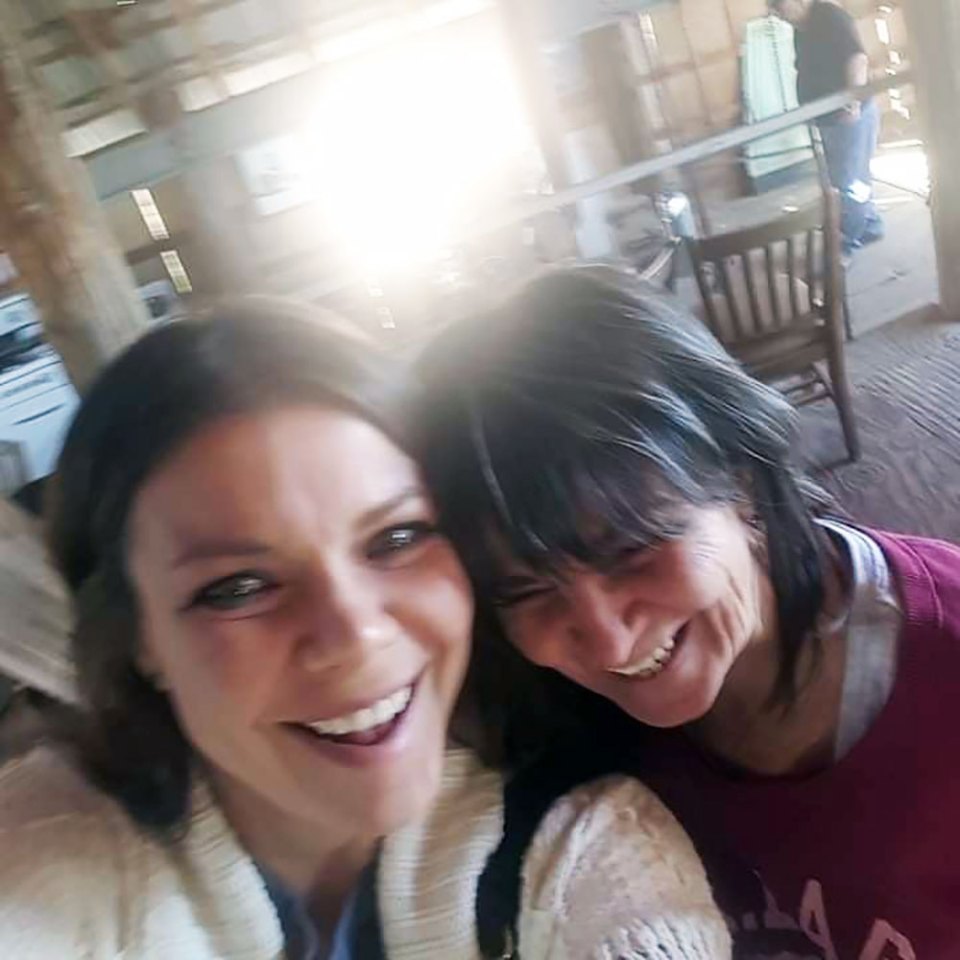
Hay River residents will assemble on Sunday to honour Linda Carter, who has masterminded Halloween for generations of the town’s children.

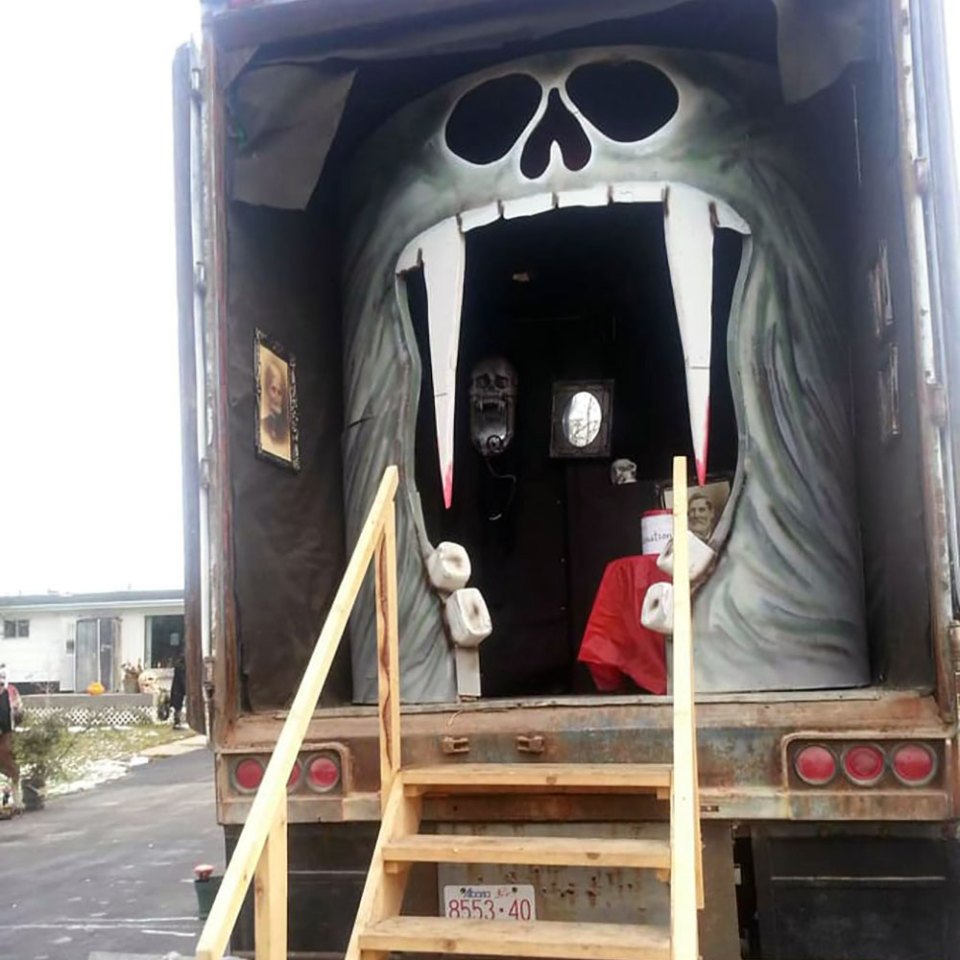
The Carter family’s haunted house is a Hay River legend, a production so all-consuming that the family needed two years to plan and execute each one. There were secret doors, holes in the floor, hiding places, mannequins, and a dozen or more helpers behind the scenes.

This year, though, 73-year-old Linda – who has lived in Hay River since 1954 – is too ill to run her haunted house.

“Mom has been diagnosed with colon cancer and unfortunately, as of today’s date, it is terminal,” her daughter, Sharlyn, said on Friday.

“After mom got the diagnosis – of the treatments no longer working – we decided she wasn’t going to be able to do it.”

Sharlyn Carter with mom Linda
Sharlyn Carter with mom Linda. Photo: Submitted

When residents like Erika Walton heard that, they knew what to do.

“I thought, how can Hay River give back to her when she has given so much to our community?” Walton said.

“Why not bring Halloween to her?”


From 5pm on Sunday, residents wearing their Halloween costumes (and following Covid-19 restrictions) will parade past Linda’s home. She will watch from her vehicle at the end of her driveway.

“This is almost like passing the torch over,” said Sharlyn, through tears.

“They’re already doing it in front of her, for her. It’s a beautiful thing to witness … I’m crying just thinking about it. I can’t even imagine when I start watching it.”

“I’m just overwhelmed with everything this town has done for me,” said Linda. “I’ve always been very proud of this community and I hope I’ve passed that on.”

Nothing cutesy here

Halloween for the Carters wasn’t always a sprawling extravaganza.

“Years ago, everybody was so poor that we didn’t do much for Halloween,” Linda recalled. “I just started doing little things in my house and I realized, when the kids invited friends, how much they enjoyed it.

“I thought I had to keep carrying it on, and it just exploded into this massive Halloween that I have now.”

In particular, when Hay River began holding Spookarama for teenagers each Halloween – itself now a local institution – Linda felt smaller children were being left out.

“That’s why I decided to start a van and have a haunted house for younger groups to come to,” she said.

Photos show Linda appearing in all manner of genuinely horrifying Halloween costumes over the years, usually replete with heavy makeup. (Her outfits were always “kinda spooky,” said Sharlyn, adding her mother “doesn’t like the cutesy-cutesy thing.” Linda simply says she has a “morbid imagination.”)

People would travel from Fort Smith, Fort Resolution, and Kakisa to see the haunted house. Her record, she says, is around 700 visits in one evening – including children who came back multiple times. “That’s a lot for a community of 3,500, right?”

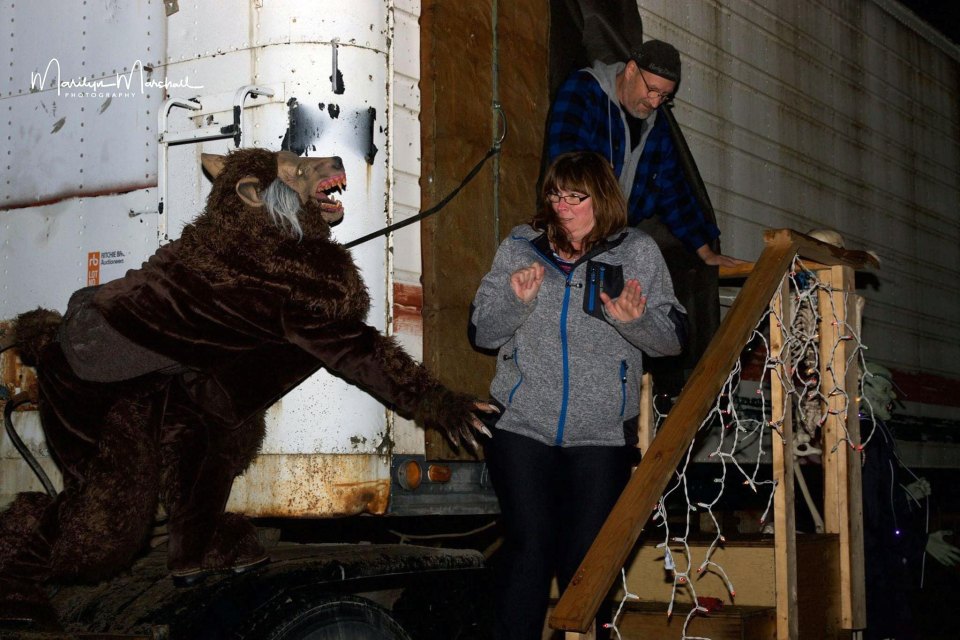
Residents in mid-scare at the Carters' haunted house
Residents in mid-scare at the Carters’ haunted house. Photo: Marilyn Marshall
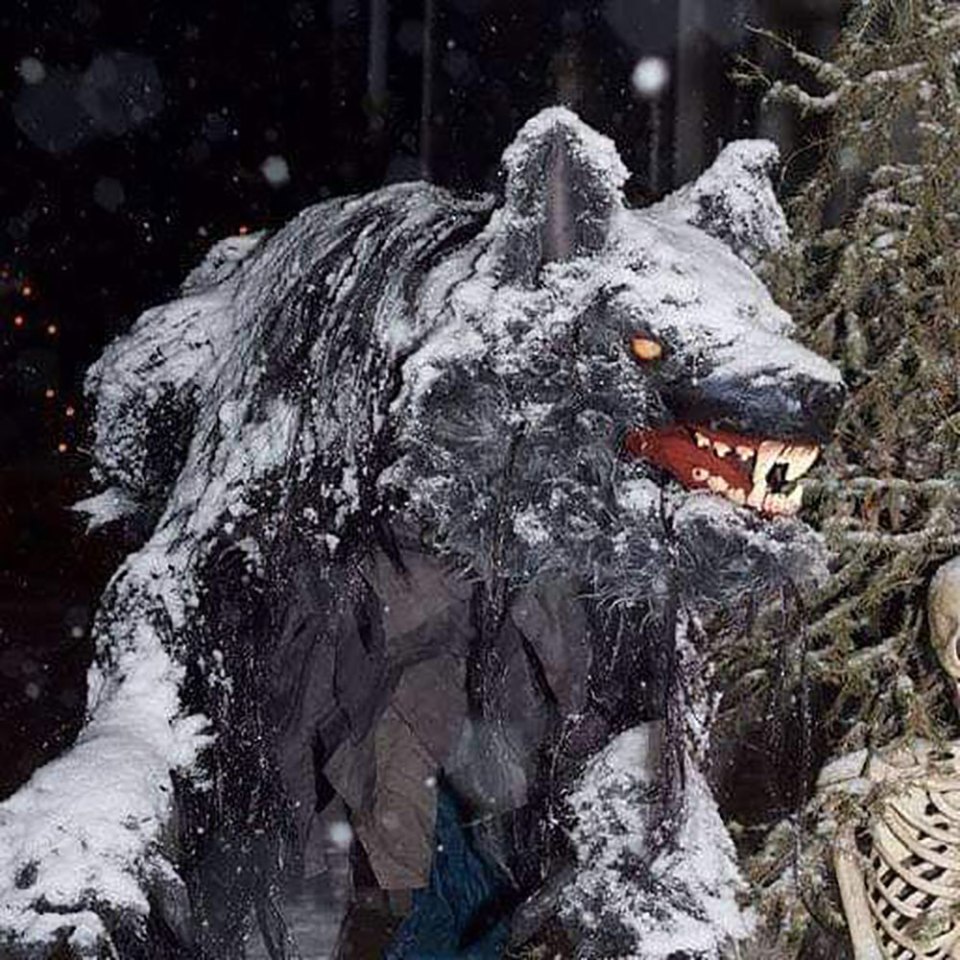
A haunted house detail. Photo: Submitted
The steps to the haunted house. Photo: Submitted

For Sharlyn, growing up in a Halloween-obsessed family was fantastic.

“It was so much fun,” she said. “It started off small – it would be just in the house, handing out popcorn balls and homemade candy apples. Then it turned into mom dressing up. Then my family had a trailer that they turned into the haunted house.”

Sharlyn’s brothers and their families excitedly pitch in, too.

“It’s almost more exciting to our family than Christmas,” she said. “We talk about it and plan for it for two years. It’s a family event we look forward to.”

That enthusiasm was palpable to residents who turned up to be scared out of their wits.

“It’s scary as heck,” said Walton of the haunted house. “I don’t do scary but I have made it through there a few times. It’s just a wonderful event for Hay River.”

Another surprise

The appeal for residents to take part in Sunday’s parade has proven surprisingly successful to Walton, even though she knew how much Linda is loved. (If you want to take part, see her Facebook post for instructions.)

“It’s overwhelming to me, the outpouring expressed from everybody,” Walton said, beginning to tear up.

“It’s bigger than I thought it was going to be. I hoped it would be like this and I’m glad it is – it’s emotional for me because it wasn’t what I expected, everyone reaching out.

“I know Hay River will rally together and come out, support it, and give Linda Halloween like she has to us for years. She loves Halloween and it’s our turn to say thank-you and bring Halloween to her and to her family.”

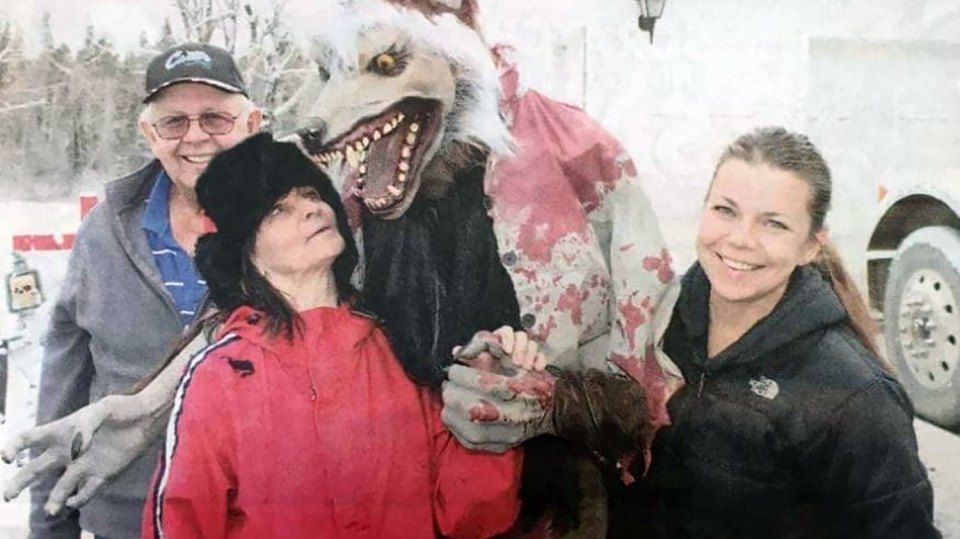
From left: Garry Carter, Linda, werewolf, and Sharlyn. Photo: Submitted

Sharlyn said: “Mom has been a pillar in this community for so many years, doing little things like this, because she wants to give love back to the community that she grew up in.

“Somehow, with the chaos that’s happening in the world, this little town has risen above and beyond to show that compassion, kindness, and respect are still at the forefront.”

Linda, though, isn’t quite prepared to sit back, relax, and let everyone else do the work.

“We have a little surprise, too, when they walk by,” she told Cabin Radio, without divulging any details.

While her daughter howled “it never ends!” in the background, Linda added: “I won’t let it go without my little input.”

Friday, November 01, 2024

Samhain to Soulmass: The Pagan origins of familiar Halloween rituals


Beverley D'Silva
BBC
OCTOBER 30,2024


From outrageous costumes to trick or treat: the unexpected ancient roots of Halloween's most popular – and most esoteric – traditions.


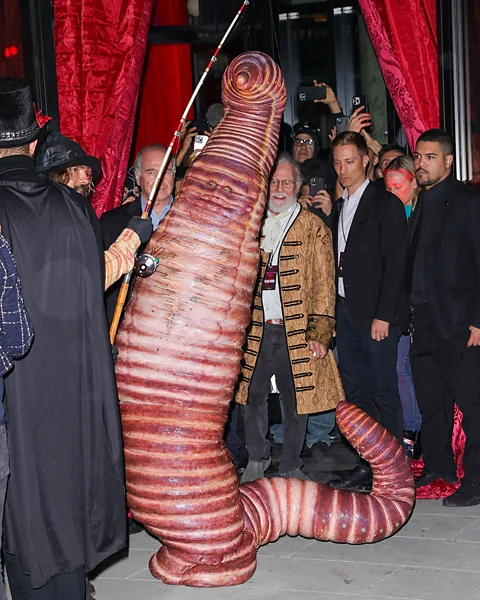
With its goblins, goosebumps and rituals – from bobbing for apples to dressing up as vampires and ghosts – Halloween is one of the world's biggest holidays. It's celebrated across the world, from Poland to the Philippines, and nowhere as extravagantly as in the US, where in 2023 $12.2 billion (£9.4 billion) was spent on sweets, costumes and decorations. The West Hollywood Halloween Costume Carnival in the US is one of the biggest street parties of its kind; Hollywood parties such as George Clooney's tequila brand's bash make a big social splash; and at model Heidi Klum's party she is renowned for her bizarre disguises, such as her iconic giant squirming worm outfit.


Heidi Klum wore a worm costume for Halloween 2022 in NYC – scary disguises were originally intended to ward off evil spirits (Credit: Getty Images)

With US stars turning out again for the biggest dressing-up show after the Oscars' red carpet, it's no surprise Halloween is often viewed as a modern US invention. In fact, it dates back more than 2,000 years, to Ireland and an ancient Celtic fire festival called Samhain. The exact origins of Samhain predate written records but according to the Horniman Museum: "There are Neolithic tombs in Ireland that are aligned with the Sun on the mornings of Samhain and Imbolc [in February], suggesting these dates have been important for thousands of years".


Celebrated usually from 31 October to 1 November, the religious rituals of Samhain (pronounced "sow-win", meaning summer's end), focused on fire, as winter approached. Anthropologist and pagan Lyn Baylis tells the BBC: "Fire rituals to bring light into the darkness were vital to Samhain, which was the second most important fire festival in the Pagan Celtic world, the first being Beltane, on 1 May." Samhain and Beltane are part of the Wheel of the Year, an annual cycle of eight seasonal festivals observed in Paganism (a "polytheistic or pantheistic nature-worshipping religion", says the Pagan Federation).


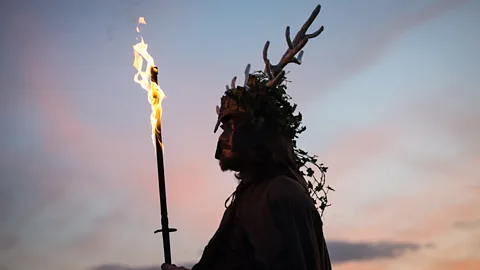
The ancient Celtic festival of Samhain is still celebrated in some places, including Glastonbury Tor, pictured in 2017 (Credit: Getty Images)

Samhain was the pivotal point of the Celtic Pagan new year, a time of rebirth – and death. "Pagans had three harvests: Lammas, harvest of the corn, on 1 August; the one of fruit and vegetables at autumn equinox, 21 September; and Halloween, the third," says Baylis. At this time animals that couldn't survive winter were culled, to ensure the other animals' survival. "So there was a lot of death around that time, and people knew there would be deaths in their villages during the harsh winter months." Other countries, notably Mexico, celebrate The Day of the Dead around this time to honour the deceased.
Costumes and ugly masks were worn to scare away malevolent spirits believed to have been set free from the realm of the dead


At Samhain, Celtic Pagans in Ireland would put out their home fires and light one giant bonfire in the village, which they would dance around and act out stories of death, regeneration and survival. As the whole village joined in to dance, animals and crops were burned as sacrifices to Celtic deities, to thank them for the previous year's harvest and encourage their goodwill for the next.


It was believed that at this time the veil between this world and the spirit world was at its thinnest – allowing the spirits of the dead to pass through and mingle with the living. The sacred energy of the rituals, it was believed, allowed the living and the dead to communicate, and gave Druid priests and Celtic shamans heightened perception.

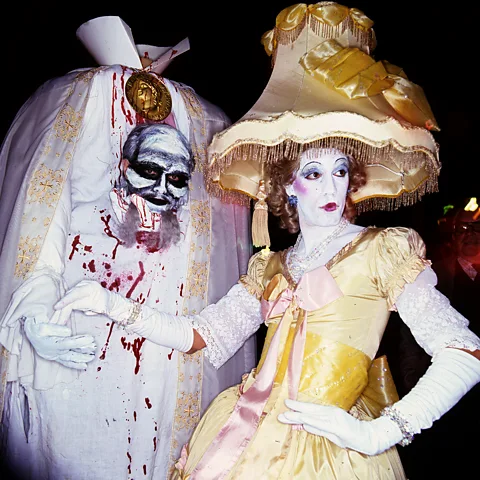
And this is where the dress-up factor came in – costumes and ugly masks were worn to scare away malevolent spirits believed to have been set free from the realm of the dead. This was also known as "mumming" or "guising".

Those early Samhain dressing-up rituals began to change when Pope Gregory 1 (590-604) arrived in Britain from Rome to convert Pagan Anglo-Saxons to Christianity. The Gregorian mission decreed that Samhain festivities must incorporate Christian saints "to ward off the sprites and evil creatures of the night", says Baylis. All Souls Day, 1 November, was created by the Church, "so people could still call on their dead to aid them"; also known as All Hallows, 31 October later became All Hallows' Eve, later known as Halloween.

"There is a long tradition of costuming of sorts that goes back to Hallow Mass when people prayed for the dead," explains Nicholas Rogers, a history professor at York University in Canada. "But they also prayed for fertile marriages." Centuries later boy choristers in the churches dressed up as virgins, he says. "So there was a certain degree of cross-dressing in the ceremony of All Hallow's Eve."


New York City Halloween parade participants in the early 1980s (Credit: Getty Images)


The Victorians loved a ghost story, and adopted non-religious Halloween costumes for adults. Later, after World War Two, the day centred on children dressing up, a ritual still alive today at trick-or-treating time. Since the 1970s, adults dressing up for Halloween has become widespread again, not just in creepy and ugly costumes, but also hyper-sexualised ones. According to Time, these risqué outfits emerged because of the "transgressive" mood of the occasion, when "you can get away with it without it being seen as particularly offensive". In the classic teen film Mean Girls, it's jokingly said that "in girl world" Halloween is the "one night a year when girls can dress like a total slut and no other girls can say anything about it". It's not just in "girl world" that Halloween has a disinhibiting effect – it is a hugely popular holiday in the LGBTQ+ community, and is often referred to as "Gay Christmas". In New York, the city famously comes alive every year with a Halloween parade featuring participants in elaborate and outlandish costumes.

Playing with fire

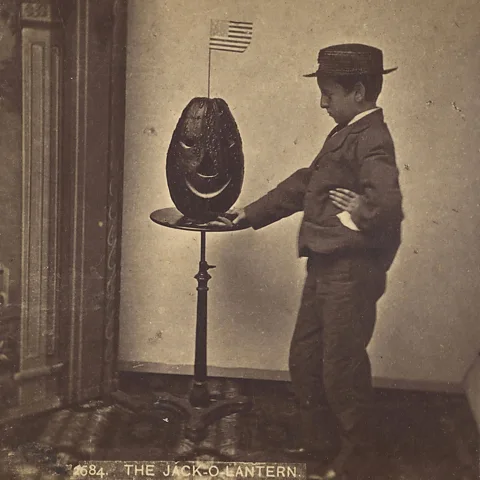
Echoes of Samhain also live on today in fire practices. Carving lanterns from root vegetables was one tradition, although turnips, not pumpkins, were first used. The practice is said to have grown from a Celtic myth, about a man named Jack who made a pact with the devil, but who was so deceitful that he was banned from heaven and hell – and condemned to roam the darkness, with only a burning coal in a carved-out turnip to light the way.


The ritual of carving lanterns out of pumpkins came from the myth of a man called Jack who made a pact with the devil (Credit: Getty Images)


In Ireland, people made lanterns, placing turnips with carved faces in their window to ward off an apparition called "Jack of the Lantern" or Jack-o'-Lantern. In the 19th Century, Irish immigrants took the custom with them to the US. In the small Somerset village of Hinton St George in the UK, turnips or mangolds are still used, and elaborately carved "punkies" are paraded on "punkie night", always the last Thursday of October. In the UK town of Ottery St Mary there is still an annual "flaming tar barrels" ritual – a custom once practised widely across Britain at the time of Samhain, where flaming barrels were carried through the streets to chase away evil spirits.
Soulers went door to door singing and saying prayers for souls in exchange for ale, cakes and apples

Leaving food and sweetly spiced "soul cakes" or "soulmass" cakes on the doorstep was said to ward off bad spirits. Households deemed less generous with their offerings would receive a "trick" played on them by bad spirits. This has translated into modern-day trick or treating. Whether soul cakes came from the ancient Celts or the Church is open to argument, but the idea was that, as they were eaten, prayers and blessings were said for the dearly departed. From Medieval times, "souling" was a Christian tradition in English towns at Halloween and Christmas; and soulers (mainly children and the poor) went door to door singing and saying prayers for souls in exchange for ale, cakes and apples.
Advertisement

More like this:

Britain's most chaotic rituals

The historic roots of goth

Is County Meath the birthplace of Halloween

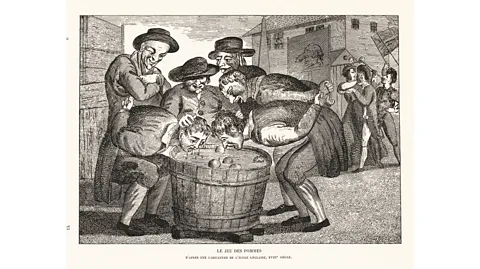
Apple bobbing – dipping your face into water to bite an apple – dates back to the 14th Century, according to historian Lisa Morton: "An illuminated manuscript, The Luttrell Psalter, depicted it in a drawing." Others date the custom back further, to the Romans' conquest of Britain (from AD43) and the apple trees that they imported. Pomona was the Roman goddess of fruitful abundance and fertility, and hence, it is argued, apple bobbing's ties to love and romance. In one version, the bobber (usually female) tries to bite into an apple bearing her suitor's name; if she bites it on the first go, she is destined for love; two gos means her romance will start but falter; three means it will never get started.

It is thought that apple bobbing originated in the 14th Century – or possibly even further back (Credit: Getty Images)


British rituals, at the heart of Halloween traditions, are the subject of Ben Edge's book, Folklore Rising, illustrated with his mystical paintings. Edge says that he has observed a "resurgence of people becoming interested in ritual and folklore… I call it a folk renaissance, and I see it as a genuine movement led by younger people".


He cites such artists as Shovel Dance Collective, "non-binary, cross-dressing and singing traditional working men's songs of the land". There is also Weird Walk, a project "exploring the ancient paths, sacred sites and folklore of the British Isles… through walking, storytelling and mythologising." If interest in folk rituals is on the rise, so too are the numbers turning to such traditions as Paganism and Druidry, both adhering to the Wheel of the Year, and Samhain, "dedicated to remembering those who have passed on, connecting with the ancestors, and preparing ourselves spiritually and psychologically for the long nights of winter ahead".

Ben Edge
The Flaming Tar Barrels of Ottery St Mary (2020) is featured in artist Ben Edge's book about ancient traditions, Folklore Rising (Credit: Ben Edge)

Philip Carr-Gomm, a psychologist, author and practising druid, says that he has witnessed a "steady growth" in interest around Druidry over the past few decades. "We now have 30,000 members, across six languages," he tells the BBC.

The need for ritual, connectedness and community is at the heart of many Halloween traditions, says Baylis: "One of the most important aspects of Halloween for us is remembering loved ones. We light a candle, possibly say the name of the person or put a picture of them on an altar. It's a sacred time and ceremony, but you don't have to be a Pagan to be involved. The important thing is that it comes from a place of protection and love."