Showing posts sorted by date for query TIMOTHY LEARY. Sort by relevance Show all posts

Monday, November 03, 2025

After Oct. 7, Jews seek healing at kabbalah-informed psychedelic retreats

(RNS) — The nonprofit Shefa integrates Jewish beliefs and rituals with legal psychedelic practices, an approach that’s especially resonated in recent years.


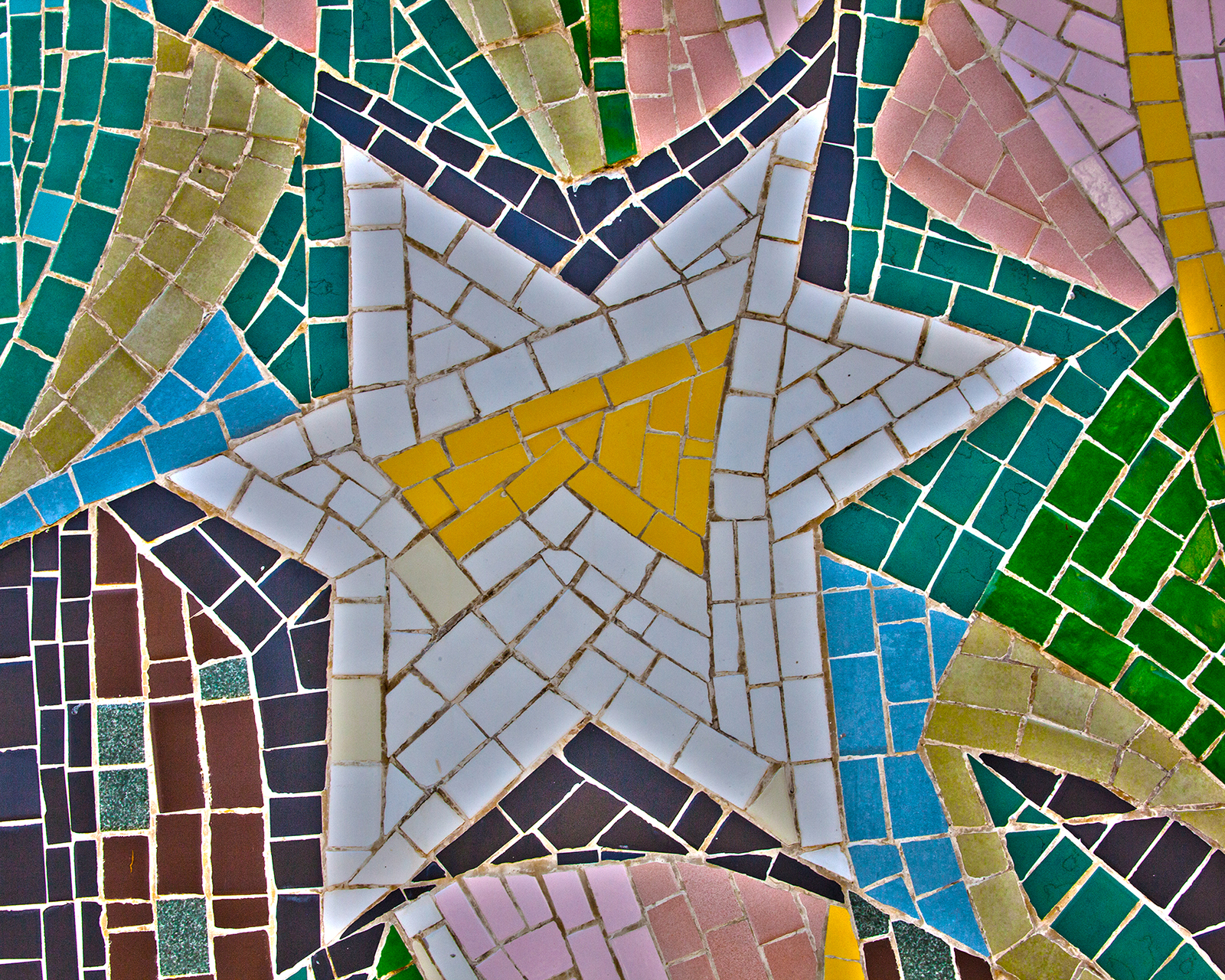
A Star of David mosaic in Jerusalem. (Photo courtesy of Wikimedia/Creative Commons)

Kathryn Post
October 29, 2025
RNS

(RNS) — For nearly two decades, Larry Hertz, a 64-year-old professional, had found healing and spiritual enrichment through underground ceremonies where he and others took psychedelics. But there was a part of him missing: Raised in a culturally Jewish home in California’s Bay Area, he found that few in psychedelic circles knew much about Judaism; if religion was present, it was usually Christianity.

At the same time, his psychedelic practice made him feel as if he were living a double life.

“I think a lot of times when you’re in the medicine world, you can feel very isolated because it’s below ground,” Hertz told RNS. “A lot of my friends, I couldn’t tell them that I was taking medicine.”

That changed last year when an online search led him to Shefa Jewish Psychedelic Support, a spiritual community that, according to its website, bolsters “Jewish psychedelic explorers in North America and abroad.” Shefa does this by conducting psychedelic-fueled retreats that integrate Jewish beliefs and rituals, as well as by hosting a mix of events, from Purim dance parties and Hanukkah gatherings to courses in breath work and other healing techniques.


Rabbi Zac Kamenetz. (Photo courtesy of Shefa)

If its mission statement emphasizes exploration, Shefa’s focus is just as much aimed at healing, especially for American Jews grappling with trauma and fractured identities in a post-Oct. 7 world. “We know people are holding a lot of trauma, whether it’s conscious, unconscious, immediate with their own trauma, or ancestral,” said Shefa’s founder, Rabbi Zac Kamenetz. “We’re not going to resolve a global crisis, but we are going to be ourselves in the pain, the alienation, the anguish, the anger, whatever side you’re taking, or taking no sides.”

Kamenetz came to the world of psychedelics through his participation in a Johns Hopkins-New York University study in which clergy of various faiths took doses of psilocybin, the compound found in hallucinatory mushrooms, to test how spiritually attuned people would respond. While the study itself has generated as much controversy as firm results, it has fostered the launch of at least two other organizations touting its work.

On a hot August night in 2019, Kamenetz, then a director of San Francisco’s Jewish Community Center, stood in the back of a crowded Judaica shop in Berkeley to describe two psilocybin trips he experienced on separate “dose days” during the study. On the first occasion, he saw a vision of the kabbalistic Tree of Life, a diagram central to Jewish mysticism; on the second, he encountered a dark void. “Yes, there is the bliss and color and light, but then there’s a higher reality that falls away to experiencing the void,” Kamenetz said, according to The Jewish News of Northern California.

Kamenetz’s inbox quickly filled with inquiries from people looking to discuss their psychedelic experiences. Months later, as the COVID-19 pandemic triggered a global shutdown and Kamenetz subsequently lost his job at the JCC in the summer of 2020, he saw it as an opportunity to innovate.

At first, Shefa, which in Hebrew means “flowing abundance,” began as a series of Zoom-based integration circles open to Jews across the spectrum of observance. The meetings incorporated short teachings based on the Jewish calendar or weekly Torah reading, and participants shared about previous psychedelic trips.

Shefa began publishing newsletters, hosting courses and in-person events across the country. The point, according to Kamenetz, was not to encourage illegal drug use — a disclaimer on Shefa’s website says: “We do not conduct illegal activities, nor do we refer people toward illegal activity. We also do not provide mental or medical healthcare.” Rather, Kamenetz suggests that adopting a “psychedelic theology” can impact daily life by informing how people understand things such as their interconnectedness with creation or attunement to God’s presence.


A Shefa sticker that says “Judaism Is Psychedelic.” (Courtesy photo)

Shefa attracts Jews from some unexpected corners. “It’s not that I didn’t want to connect to God,” said one person who was raised in ultra-Orthodox Judaism in Brooklyn, who asked to remain anonymous. “It’s just that it didn’t feel like the ultra-Orthodox community was a good fit for where I was at that juncture. When I found psychedelics and specifically Shefa, it was like coming home.”

Kamenetz’s approach reframed his understanding of Judaism, the Brooklynite said: Rather than a system of laws, he now sees Judaism as “a path towards an intimate and transformative connection with God.”

Shefa’s events initially provided only education about psychedelics and Judaism, without involving psychedelics directly. But after Hamas’ attacks on Oct. 7, 2023, Kamenetz, who had trained in ketamine-assisted psychotherapy, began facilitating retreats in Berkeley with the drug, a powerful anesthetic with hallucinogenic effects.

Participants were required to complete a long application and medical screenings before meeting online to prepare in sessions that drew on Hasidic and kabbalistic teachings. The ketamine retreats themselves incorporate Jewish prayers, rituals and music, including a process invented by the 18th-century mystic Ba’al Shem Tov to navigate expanded states of consciousness.


RELATED: Groundbreaking synagogue lures burned-out techies with digital strategies (and ecstatic dance)

Months after Oct. 7, a 30-something researcher in the Bay Area who asked to be identified only by her first initial, A., first met Kamenetz at a Purim party facilitated by Shefa where the rabbi was handing out “Judaism is psychedelic” stickers.

It was a difficult season for A., who has family in Israel. Suddenly, the artistic and political spaces she inhabited no longer felt safe. Intrigued by Shefa, she signed up for an in-person, nine-week course and, later, a ketamine retreat.

“Judaism is going through a dark night of the soul,” A. told RNS. “People are disagreeing fundamentally about what it means to be Jewish right now, and what our relationship with our ancestral homeland means, or should be, or could be, and also how to be in the world post-Holocaust, when you realize that a lot of that negative sentiment towards Jews is still there. It is an existential crisis.”


Sam Shonkoff. (Courtesy photo)

Her previous psychedelic experiences had taken place alone. Now, they were happening in a community that deeply understood her Jewish context.
RELATED: Episcopal Church removes priest who founded Christian psychedelic society

Sam Shonkoff, a professor of Jewish studies at the Graduate Theological Union, connected Shefa to the legacy of Jewish counterculture, spearheaded by leaders such as Rabbi Zalman Schachter-Shalomi, who experimented with LSD alongside psychedelic advocate Timothy Leary in the early 1960s and later founded the Jewish Renewal Movement.

The Jewish counterculture was typically populated by politically progressive Jews who, anecdotally, gathered for underground psychedelic encounters that “sprinkled in” Jewish melodies and prayers, said Shonkoff. Often, he added, “the most potent Jewish reverberation” happened after the trip, through Jewish interpretation.

Despite this tradition, said Shonkoff, “it’s another thing to have a 501(c)(3) that has its explicit purpose to really nourish this integration of Jewish tradition and psychedelics, and to have that be aboveground now for half a decade.”

Some researchers caution that approaching Judaism through psychedelics may dilute the power of the faith, but Shefa hasn’t faced much pushback from establishment Jewish leaders. A Christian group called Ligare, by contrast, has faced significant hurdles.

Founded by another participant in the Hopkins-NYU trial, Ligare aims to help individuals process psychedelic experiences from a Christian worldview. A former Ligare intern has criticized its founder, a former Episcopal priest named Hunt Priest, warning that framing psychedelic trips in religious terms could harm the spirituality of those who have a bad experience. Priest’s enthusiasm for psychedelics also drew an investigation from Episcopal leaders, and earlier this year, Priest agreed to be removed from ordination in his denomination, after the investigation found he’d crossed the line from discussing psychedelics into endorsing them.

A third group inspired by the Hopkins-NYU study and Islam, called Ruhani, is in development.

These groups are hardly the first to fuse psychedelics and spirituality; Indigenous Americans have long fought to protect their right to spiritual practices involving peyote and other compounds, and laid the legal groundwork for psychedelic churches that claim psychedelics as sacraments normative to their religious practice.
RELATED: After a decade of controversy, clergy psychedelic study is published

It’s due in part to Indigenous Americans’ ancient ties to psychedelics that Shefa will be hosting its first legal psilocybin retreat this month in Oregon, with both Jewish and Indigenous facilitators. In preparation, the Indigenous facilitators have learned Jewish and Hebrew songs, and the Shefa facilitators are “making space for Indigenous wisdom,” Kamenetz said.

As Shefa develops its psychedelic programming, Hertz said it’s having tangible impacts. He’s attended two Shefa-facilitated ketamine retreats and plans to attend a third; the Jewish framework, he said, has created a comfortable setting where he can be his authentic self. In fact, after a hiatus from the religious expressions of Judaism, he’s recently been inspired to attend Friday night services again.

“Instead of feeling I was living a dual life,” he said, “I now have one life.”

This story was produced with funding from the Templeton Religion Trust.

Monday, September 08, 2025


LSD shows promise for reducing anxiety, shows drugmaker's study

This photo provided by Catalent shows Catalent's MindMed's formulation of LSD.
Copyright Catalent via AP

By AP, Euronews
Published on  

The psychedelic drug LSD showed positive results for easing symptoms in people with generalised anxiety disorder, a recent study has shown.

LSD reduced symptoms of anxiety in a mid-stage recent study, paving the way for additional testing and possible medical approval of a psychedelic drug that has been banned in the US for more than half a century.

The results from drugmaker Mindmed tested several doses of LSD in patients with moderate-to-severe generalised anxiety disorder, with the benefits lasting as long as three months. The company plans to conduct follow-up studies to confirm the results and then apply for Food and Drug Administration approval.

Beginning in the 1950s, researchers published a flurry of papers exploring LSD's therapeutic uses, though most of them don't meet modern standards.

“I see this paper as a clear step in the direction of reviving that old research, applying our modern standards and determining what are the real costs and benefits of these compounds,” said Frederick Barrett, who directs Johns Hopkins University’s psychedelic centre and was not involved in the research.


Psychedelic research is rebounding

Psychedelics are in the midst of a popular and scientific comeback, with conferences, documentaries, books and medical journals exploring their potential for conditions like depression, anxiety and post-traumatic stress disorder.

The FDA has designated psilocybin, MDMA and now LSD as potential “breakthrough” therapies based on early results.

Still, the drugs have not had a glide path to the market.

Last year, the FDA rejected MDMA — also known as ecstasy — as a treatment for PTSD, citing flawed study methods, potential research bias and other issues.

The new LSD study, published by the Journal of the American Medical Association, addresses some of those problems.

MDMA, like many other psychedelics, was tested in combination with hours of talk therapy by trained health professionals. That approach proved problematic for FDA reviewers, who said it was difficult to separate the benefits of the drug from those of therapy.

The LSD study took a simpler approach: Patients got a single dose of LSD — under professional supervision, but without therapy — and then were followed for about three months.

The paper does not detail how patients were prepared for the experience or what sort of follow-up they received, which is crucial to understanding the research, Barrett noted.

“In many cases, people can have such powerful, subjective experiences that they may need to talk to a therapist to help them make sense of it,” he said.

Anxiety eased, but questions remain

For the study, researchers measured anxiety symptoms in nearly 200 patients who randomly received one of four doses of LSD or a placebo. The main aim was to find the optimal dose of the drug, which can cause intense visual hallucinations and occasionally feelings of panic or paranoia.

At four weeks, patients receiving the two highest doses had significantly lower anxiety scores than those who received placebo or lower doses. After 12 weeks, 65 per cent of patients taking the most effective LSD dose — 100 micrograms — continued to show benefits and nearly 50 per cent were deemed to be in remission. The most common side effects included hallucinations, nausea and headaches.

Patients who got dummy pills also improved — a common phenomenon in psychedelic and psychiatric studies — but their changes were less than half the size those getting the real drug.

The research was not immune to problems seen in similar studies.

Most patients were able to correctly guess whether they’d received LSD or a dummy pill, undercutting the “blinded” approach that’s considered critical to objectively establishing the benefits of a new medicine. In addition, a significant portion of patients in both the placebo and treatment groups dropped out early, narrowing the final data set.

It also wasn’t clear how long patients might continue to benefit.

Mindmed is conducting two large, late-stage trials that will track patients over a longer period of time and, if successful, be submitted for FDA approval.

“It’s possible that some people may need retreatment,” said Dr. Maurizio Fava of Mass General Brigham Hospital, the study's lead author and an adviser to Mindmed. "How many retreatments, we don’t know yet, but the long-lasting effect is quite significant".

Interest from the Trump administration

Health Secretary Robert F. Kennedy Jr. and other administration officials have expressed interest in psychedelic therapy, suggesting it could receive fast-track review for veterans and others suffering psychological wounds.

Generalised anxiety disorder is among the most common mental disorders, affecting nearly 3 per cent of US adults, according to the National Institutes of Health. Current treatments include psychotherapy, antidepressants and anti-anxiety drugs like benzodiazepines.

The possibility of using LSD as a medical treatment isn’t new.

In the 1950s and 1960s, more than 1,000 papers were published documenting LSD's use in treating alcohol addiction, depression and other conditions. But a federal backlash was in full swing by the late 1960s, when psychedelics became linked to counterculture figures like Timothy Leary, the ex-Harvard professor who famously promoted the drugs as a means to “turn on, tune in and drop out”.

A 1970 law classifying LSD and other psychedelics as Schedule 1 drugs — without any medical use and high potential for abuse — essentially halted U.S. research.

When a handful of nonprofits began reassessing the drugs in the 1980s and 1990s, they focused on lesser-known hallucinogens like MDMA and psilocybin, the main ingredient in magic mushrooms, to avoid the historic controversies surrounding LSD.

“LSD was right there in front of everybody, but Mindmed is the first company that actually decided to evaluate it,” Fava said.


LA REVUE GAUCHE - Left Comment: Search results for psychedelics

Saturday, February 22, 2025

The Counterculture That Sprang From San Francisco


 February 21, 2025
FacebookTwitter

Mural, Bolinas, California. Photo: Jeffrey St. Clair.

Paul McCartney heard rumors of the wild goings-on in the Haight and visited on April 4, 1967. At the Fillmore Auditorium, he listened to a rehearsal by the Jefferson Airplane. At Marty Balin’s and Jack Casady’s apartment and along with his girlfriend at the time, Jane Asher, he played an acetate (a type of phonograph) of The Beatles’ “Sgt. Pepper’s” album, which would be released later that year. Thousands of others flocked to the Haight, once a largely Black neighborhood, for the music, the drugs, and the revolution that was promoted by the Diggers, who named themselves after 17th century English dissidents. Gerard Winstanley and his Digger comrades aimed to turn the world upside down would probably have felt at home in the Haight in 1967 when the great American counterculture was “busy being born” to borrow the words from Bob Dylan’s ballad  “It’s All Right, Ma (I’m only bleeding).”

How counter was the counterculture?  And if you were alive then and there how counter was your own personal culture? Not sure? You might be able to decide on your own when the Counterculture Museum opens this spring on the corner of Haight and Ashbury in the neighborhood where hippies and their friends reigned supreme for about two years in the late 1960s.

Then disaster struck. Bad drugs. Bad health. Bad cops. Paradise rarely lasts long, not for Diggers or hippies. But the melodies from that time and place have played on and on. Dozens of books have been written about that era including Charles Perry’s brilliant The Haight Ashbury that comes with an introduction by Grateful Dead member Bob Weir who says, “We weren’t all stoned all the time. But we were all artists, musicians, and freaks all the time.”

The Haight staged a comeback in the 1990s, largely because of the efforts of gay men. Today it is a vital San Francisco neighborhood with Amoeba, a gigantic record store, Gus’s, an excellent grocery, two cannabis dispensaries, a post office, a few decent cafes and restaurants, and dozens of shops and boutiques selling tie-dyed T-shirts, hoodies and sneakers. It also attracts a great many tourists who want to imbibe the magic of the hippie era, buy rolling papers, roaches, posters and R. Crumb Comic books.

Estelle and Jerry Cimino, a husband and wife team and the founders of the Counterculture Museum—they are also the founders of the Beat Museum in North Beach —plan to give as much if not more space to the anti-war and civil rights movements as they do to the “youth culture” of the Sixties that created communes, staged rock festivals, made marijuana a commodity, and went on overland journeys to India to seek gurus in ashrams.

 That decision to blend the movement and the counterculture might surprise and even shock veterans and historians of the Sixties. After all, they were two separate entities from about 1967 to 1972. In those  heady days, Yippies tangled with members of SDS, Abbie Hoffman battled Tom Hayden of the Red Family and Weatherwoman Bernardine Dohrn, who once called Abbie “a thorn in her side.” Abbie called her “Bernie” much to her distress.  At the time, the rivalries and clashes seemed as significant as the divisions in 1917 and 1918 between the Mensheviks and the Bolsheviks or those between American anarchists and American members of the US Communist Party during the 1930s and 1940s.

In the fall of 1970— five months or so after the National Guard shot and killed four students at Kent State and police shot and killed two and injured twelve students at Jackson State—I joined a small delegation that traveled from New York to Algeria to meet with Eldridge Cleaver and Timothy Leary, both living there in exile with the pipe dream of creating a new organization that would appeal to Black Panthers, Yippies, members of SDS, as well as psychedelic warriors who belonged to the League for Spiritual Discovery.

The other members of the delegation were Marty Kenner, Brian Flannigan, Anita Hoffman, Jennifer Dohrn and Stew Albert.  In the background in Algiers were Kathleen Cleaver, Eldridge’s wife, and several young Panthers who had fled the US rather than go on trial and go to jail. In the elegant Panther embassy, in-between visits from the North Korean Ambassador, the young Panthers listened to Motown, smoked dope and danced. I danced and smoked with them. I also dropped acid with Leary and watched a visiting Russian volleyball team trounced an Algerian team.

Anita Hoffman represented Abbie who was not allowed to leave the US; that was an order from Judge Julius Hoffman who presided over the Chicago Conspiracy trial. Marty Kenner represented Panther support groups, Stew Albert spoke for his pal, Jerry Rubin, Jennifer Dohrn conveyed the sentiments of her sister, Bernardine and Brian Flannigan, who had been arrested during the “Days of Rage” in October 1969, expressed the anger of the quintessential street fighting man.

I had a singular objective. Bernardine asked me to meet with Eldridge and tell him in confidence that Leary was untrustworthy, that he had blabbed to reporters and acid heads, gave away secrets about the Weather Underground, and named the names of people who helped him escape from Lompoc Prison and also aided and abetted his flight from the US.

Eldridge taped my conversation with him and held an AK-47 (a gift of the North Korean Ambassador to Algeria) in his lap the whole time we talked. He overreacted to the information I delivered and put Leary and his wife Rosemary under house arrest. The members of the delegation were confined to Eldridge’s pad, which was different from the Panther Embassy and also different from the house in the hills where Eldridge lived with Kathleen.

Don Cox, the Panther Field Marshall gave us a tour of Algiers and described the history of the Algerian liberation movement. On one occasion we enjoyed a sumptuous seafood dinner, while a couple of CIA agents kept their eyes trained on us.

One afternoon, in the pad, I wrote a press release in which I quoted Eldridge, who called for armed struggle, and Leary who wanted cosmic voyagers to travel to outer space. Not surprisingly they couldn’t agree on anything. Also, not surprisingly they both returned to the US, surrendered to the authorities and made deals that kept them from long prison terms.

That fall, I flew from Algiers to Paris, reencountered with Abbie and met pseudo French Yippies —pseudo because they were living at home with their parents. I also roamed the Left Bank with Jean-Jacques Lebel, a French Beat, a translator, and a surrealist. We looked for trouble that never arrived. The young French Yippies seemed to have the best of two worlds. They defied older generations, rioted in the streets and came home to eat their mothers’ gourmet cooking.

My favorite person from that time was Bernadette Devlin, the Irish revolutionary who was fond of saying of the British, “kick them when they’re down.” Nasty but oh so satisfying.

At home in New York I wrote an account of Leary and Cleaver in Algeria. Paul Krassner published it in The Realist under the title, “Eldridge & Tim, Kathleen & Rosemary” and with an illustration that depicted the two couples in bed together in a spoof of the movie, Bob & Carol & Ted & Alice that capitalized on and reflected some of the sexual politics of that era.

I don’t expect the Counterculture Museum to offer exhibits that will highlight the fiasco in Algeria or the odd position of the French Yippies who were both in and out of the global counterculture. The Ciminos emphasize unity not disunity, hope not despair, creativity not self-destruction and positive gains not loses. That’s surely the best tact to take especially since they want to attract visitors and inspire them.

The counterculture that sprang up in the Haight Ashbury is worth remembering and celebrating, especially because the Ciminos will connect it to the movements of the past and political causes of today.

Estelle describes the museum as though it’s a beloved child. “The Counterculture Museum will celebrate the vibrant legacy of Haight-Ashbury by preserving art, activism, and creative expression that once defined the neighborhood. Far from being a relic of the past, counterculture continues to shape music, fashion, social movements and the spirit of independent thinking,” she says.

Estelle adds, “By bringing history to life through exhibitions, events, movies and storytelling, the museum hopes to strengthen the community, enrich the cultural fabric of Haight-Ashbury, and support local merchants by drawing visitors eager to experience the authentic, enduring impact of the counterculture movements.”

It’s worth remembering because as far as I can see there are few if any genuine countercultures today in the US. Journalists and reporters who write about them seem to assume that they’re dead and buried.

In a recent article published in The New Yorker about the documentary filmmakers, Albert and David Maysles, and editor and director, Charlotte Zwerin, journalist Michael Schulman notes that the Rolling Stones concert at Altamont Speedway in December 1969  marked “a death knell for the counterculture.” Indeed, it seemed to be the flip side of Woodstock. Ever since then cultural critics have held funerals and burials for the counterculture though in the 1970s the counterculture spread from  New York’s Lower East side and San Francisco’s Haight Ashbury to the countryside where it put down rural roots.

In the late 1960s and early 1970s in the aftermath of the bloodbaths at Kent and Jackson state I wrote two contradictory pieces about the counterculture: one of them titled “Children of Imperialism” which largely denounced youth culture and the other “New Morning which was issued as a communiqué by the Weather Underground and that herald the arrival of youth culture. Some Black Panthers described it as a betrayal of Third World Liberation struggles.

At that time I thought that the Weather Underground needed a base and a constituency; hippies seemed the only potential allies around, especially since the organization had given up on the white working class. But I could also see that hippies and freaks had adopted some of the racist notions of their parents. They idealized American Indians and Third World peasants and saw themselves as active consumers buying and selling drugs, music, and even rebellion which was framed as a commodity.

Perhaps the Counterculture Museum will convert millennials and members of Generation Z to the cause of rebellion and resistance today but it will be an uphill battle. “We seem to be going backward,” Estelle says, thinking of Trump and company. But she and Jerry Cimino are not giving up their culture war

“It’s important to educate young people about the past so they understand that positive change can happen today just like it did in the 1960s and 1970s,” she says. Jerry adds that the counterculture of the 1960s happened because “the boomers reached critical mass and because their coming coincided with the arrival of global electronic mass media.” Today technology seems more reactionary than ever before, especially when it’s in the hands of autocrats like Elon Musk and his minions.

If the Ciminos wanted help with their museum they could do no better than turn to Stannous Flouride who has lived in the Haight for 43 years and who gives popular walking tours in the neighborhood wearing a black leather jacket and an ancient button that screams “Yippie!”    “City Hall hated the hippies,” Flouride says. “Mayor Joe Alioto wanted to destroy them, so he canceled services to the neighborhood, like garbage removal, which prompted the Diggers to organize a ‘clean-in.’ The Diggers fed thousands of kids and provided the spiritual and political backbone for the hippies.”

If Flouride were creating a counterculture museum he says he’d feature the Diggers, The Panthers, jazz, rock, the January 1967 “Human Be-in” and the “Summer of Love.” He adds “there is really no counterculture here as there was in the Sixties.” He adds, “The only remaining counterculture is hip hop which appeals to both young whites and young Blacks.”

If I wanted to revive a slogan from the Sixties and put it back in circulation it might be, “The spirit of the people is greater than the Man’s technology.” It was greater in Vietnam and it can be greater around the world again. Get off your phones and your laptops. Go into the streets and make as much noise as you can.

If the Counterculture Museum succeeds it will send visitors into the streets of the Haight and beyond. It will turn into its opposite, not a museum with artifacts but a cradle of resistance and rebellion with ideas and tools for insurrections. After all, museums are usually repositories of the past, and as such they are innately conservative and rarely innovative. It’s time to bring about a cultural revolution in the world of the counterculture.

Jonah Raskin is the author of Beat Blues, San Francisco, 1955.

Monday, December 16, 2024

The world’s most mysterious psychedelic is already inside your brain

DMT, “the nuclear bomb of the psychedelic family,” explained.


by Oshan Jarow
 Dec 7, 2024
VOX
Future Perfect

LONG READ


JooHee Yoon for Vox


There’s often a threshold for how weird something can sound beyond which most people stop taking it seriously. One of the quickest ways to kill a conversation, for example, is to start telling someone about that strange dream you had. Perhaps an even more surefire way to land on the far side of that threshold is to tell them about your trip on one of the most bizarre, powerful, and under-studied psychedelic drugs: DMT, or, if you speak chemistry, N,N-dimethyltryptamine.

Tales of hyperdimensional worlds populated by various intelligent creatures — tiny machine elves eager to teach you the universe’s secrets or giant praying mantises that seem to harvest human emotions — are commonplace in DMT trip reports.


Because these trips are so bizarre, even compared to other psychedelics, DMT has largely lived on the fringes of the ongoing revival in psychedelic research and therapy. Ketamine clinics are spawning left and right. MDMA therapy teeters on the brink of government approval. Legal psilocybin centers are set to open across multiple states. But DMT, once called “the nuclear bomb of the psychedelic family” by Harvard psychologist and psychedelic hype-man Timothy Leary, has lagged pretty far behind in mainstream attention and scientific interest


That’s slowly starting to change. “We unashamedly think there’s value here, beyond the weird stuff,” neuroscientist Chris Timmermann, who leads the DMT Research Group at Imperial College London, told me. Like its more conventional psychedelic counterparts, DMT could play a role in psychedelic therapy, offering a new treatment for conditions ranging from depression to cluster headaches — and it could even serve as a kind of rocket fuel for the science of consciousness.


The compound naturally occurs in a variety of mammals and plants. “DMT is everywhere,” wrote chemist Alexander Shulgin, who created nearly 200 psychedelics through the late 20th century. Humans have been ingesting a slow-acting form of it for at least a few hundred, and perhaps thousands of years by boiling DMT-containing vines and leaves to make the psychoactive brew ayahuasca. But scientists didn’t figure out how to isolate, extract, and ingest pure DMT on its own until 1956, which branched the drug off from ayahuasca into its own history.


On high doses of DMT, the self does not disappear. Instead, the self feels largely intact, but transported to alternate worlds reconstructed out of the chaos.


If Timothy Leary was the “high priest of LSD” in the 1960s, the eccentric philosopher Terrence McKenna became DMT’s rhapsodic bard a generation later. “My entire expectation of the nature of the world was just being shredded in front of me,” McKenna recalled of his first trip. “All this stuff was just so weird and so alien and so un-English-able that it was a complete shock — I mean, the literal turning inside out of my intellectual universe.”


Terrence McKenna. San Francisco Chronicle/Getty Images

Like other psychedelics, DMT was pushed underground when President Richard Nixon outlawed it in 1970. Well before today’s psychedelic renaissance, it was research on DMT’s hallucinogenic effects led by psychiatrist Rick Strassman in the early 1990s that marked the first return of legal psychedelic research.

In the decades since, other psychedelics have claimed the spotlight, but in the last few years, DMT research has shown hints of a resurgence. The drug’s unique properties may make it both a more convenient therapy and a more powerful tool for studying the mind than its trippy counterparts: While psilocybin or LSD trips run for several hours, a DMT trip winds down after just 20 minutes, and unlike with other psychedelics, users don’t build up a tolerance to DMT that diminishes its impact.

Related:The psychedelic renaissance is at risk of missing the bigger picture


DMT’s propensity to construct rich alternate realities in the minds of its users can also help push the study of consciousness into new terrain. The drug puts the mind’s ability to create immersive, convincing models of the world on full display — the very same thing our minds do during ordinary consciousness (and dreams). And if DMT can simulate that process in a quick and controllable way, then studying the mechanics of DMT trips could help us learn more about the construction of our sober minds, too.


Still, even with all the world’s research funding and best scientific minds, we may never be able to truly “explain” what happens under the influence of this peculiar molecule — but there’s certainly more to know than we do now. So to the woefully incomplete degree that’s currently possible, here’s the news on DMT as we know it today, in not-quite-all of its curious and under-studied glory.

When pure DMT hit the scene


Pure DMT was first synthesized in 1931 but was set aside, leaving its effects unknown. It wasn’t until 1956 that the first straight DMT hit was reported. Hungarian pharmacologist Stephen Szára had wanted to study LSD, but upon requesting some from the Swiss Sandoz Laboratories, which had been supplying to psychiatrists in the 1950s, he was denied. Communist governments scared them enough, but communists with acid? That was too risky.


No matter, thought Szára. He pored over the existing psychedelic literature, found research identifying DMT as an active ingredient in longstanding psychedelic drinks of the Amazon, extracted it from the Mimosa hostilis plant, and became the first person to describe what happens when you take a hit.


The DMT molecule, in all of its mundane molecular glory Lena Gadanski/Getty Images


From his Budapest laboratory, Szára reported “brilliantly coloured oriental motifs and, later, wonderful scenes altering very rapidly.” Immediately after, he recruited volunteers from his hospital to try the strange drug. In these first DMT trials throughout the late 1950s, participants reported rooms “full of spirits” and “curious objects.”


“DMT is the most efficient reality-switching molecule currently known to exist”— Andrew Gallimore


Rumors of the immensely powerful, conveniently short-lasting psychedelic began to spread through the 1960s counterculture (famously, they were pretty into mind-altering drugs). By 1962, word of DMT reached Timothy Leary, who was then researching psychedelics at Harvard. He ran experiments that applied his idea of carefully crafting the “set and setting” of a trip — focusing on how everything from a room’s lighting to one’s preexisting cultural ideals shape the psychedelic experience — to DMT. Though Leary’s experiments successfully nudged them toward increasingly positive experiences, DMT trips remained indelibly weird and never rose to the level of LSD among the counterculture’s preferred vehicles for exploring altered states of consciousness. When it was outlawed under the 1970 Controlled Substances Act, the modest interest that remained was largely put on ice.


The freeze lasted until the early 1990s, when Strassman managed to jump through the heap of regulatory hoops to carry out legal DMT research at the University of New Mexico, making DMT the origin of today’s revival in psychedelic science. He went on to publish a book in 2000 that dubbed DMT “the spirit molecule,” which was later adapted into one of the most-viewed documentaries on Netflix, starring podcaster Joe Rogan.

Related:MDMA therapy didn’t get FDA approval. Now what?


Still, DMT remained concentrated more on podcasts and internet forums than in the medical and therapeutic highways toward mainstream acceptance like MDMA and psilocybin. High-profile psychedelics research — like much of neuroscientist Roland Griffiths’s work at Johns Hopkins or studies funded by the Multidisciplinary Association for Psychedelic Studies (MAPS) — has tended to focus on psilocybin or MDMA. By 2019, the world’s first dedicated academic center for psychedelic science opened at Imperial College London, where Timmermann was finishing up his PhD on the neuroscience of DMT. After advising a few PhD students also working on DMT, he figured, “Let’s make this into a group and focus our energies into understanding [DMT] from a consciousness perspective,” launching the university’s DMT Research Group in 2022.


Now, Timmermann said, “there’s definitely traction here. And the way to develop that is by doing good science.”

What it’s like to take DMT


Now, the fun stuff. Neurobiologist Andrew Gallimore, author of a forthcoming book on the history and science of DMT, Death by Astonishment, has called it “the most efficient reality-switching molecule currently known to exist, almost instantaneously transporting the tripper from the Consensus Reality Space to a bizarre hyperdimensional omniverse teeming with superintelligent entities of every (un)imaginable form and character.”


We’ll get to all that, but let’s move slowly.


Recreationally, most people smoke DMT either from a pipe or, especially nowadays, a vape pen. The effects kick in within a few seconds, before you can even exhale the first hit. All psychedelic experiences are dose dependent — a gram and a half of dried mushrooms might as well be a different drug than 5 grams — and with DMT in particular, ascending doses lead not just to more intense experiences, but to different kinds altogether.


There’s no agreed upon “map” of what psychonauts (self-experimenters who explore altered states of consciousness) call the “DMT space.” Different people slice it up in different ways, with varying degrees of detail. Some taxonomies have six levels, with names like “The Magic Eye Level” and “The Waiting Room.” Others have mapped out four-step ladders. For brevity’s sake, I’m going to zoom out as much as possible and cram the weirdness of DMT trips into three simple categories: low, medium, and high doses.


At low doses, the onset of DMT feels similar to other psychedelics. Colors grow more vivid, your body may tingle, the world appears a bit crisper, as though the contrast and saturation have been dialed up. A portentous, ambient sense of meaning begins to set in, what’s been called the “noetic quality” of psychedelic trips.


Read more about the mystery of psychedelics
The biggest unknown in psychedelic therapy is not the psychedelics
Why psychedelics produce some of the most meaningful experiences in people’s lives
Psychedelics could treat some of the worst chronic pain in the world


At medium doses, that vivid picture of the world begins to dissolve into classically psychedelic imagery: swirling geometric patterns, flashing colors and shapes, and a general deconstruction of ordinary perception into chaos. Your ordinary sense of self, too, while not obliterated or dissolved, will likely begin to lose its familiar anchors in space and time.


Then there are high, or “breakthrough,” doses (around 20–30 milligrams and up), where the distinctly DMT-flavored weird stuff starts to happen. The incoherent imagery of a medium dose snaps into a new kind of coherence, reconstructing a very high-definition world, albeit one that looks entirely different from what we’re familiar with. When people talk about exploring other dimensions on DMT, it’s this dose they’re talking about.


“If the dose is sufficient … the user bursts through a kind of membrane into an entirely novel domain unlike anything within this universe,” as Gallimore put it. “The most striking feature of this ‘DMT space’ is its structure, often described as ‘hyperdimensional.’” In our normal states of consciousness, human perception tends to see space as flat, even though, ever since Einstein’s theory of relativity, we’ve known that mass bends space and time. Some consciousness researchers believe that on high doses of DMT, perception takes on this kind of curvy geometry. That could help explain why the experiences are so strikingly unusual, and why it’s so hard to describe them back in our sober minds.


But since DMT trips only last a few minutes, people often feel that they’re pulled out of the oddly curved DMT worlds right as they begin to find their bearings, or, as we should probably now get into, before they can finish their conversations with the entities.

We do need to talk a bit about the DMT entities


One of the strangest things about these breakthrough doses are the entities. “I was neither intellectually nor emotionally prepared for the frequency with which contact with beings occurred in our studies, nor the often utterly bizarre nature of these experiences,” Strassman wrote of his DMT experiments in the ’90s.

Not everyone meets entities on DMT, but it happens often enough that it seems like more than a random quirk. A 2022 analysis of 10 years worth of trip reports posted on the r/DMT subreddit, totalling 3,778 DMT experiences, 45.5 percent included “entity encounters,” including: deities, aliens, “creature-based entities” like reptilian and insect beings, mythological beings, “machine elves,” and “jesters.”


An artistic rendition of a DMT entity. Spencer Whalen/Getty Images


While McKenna, who succeeded Leary as the voice of the psychedelic counterculture, is often credited with spreading the idea and expectation of encountering “self-transforming machine elves” in DMT space, humans have been encountering other seemingly intelligent beings while under the influence of DMT since well before he had his first trip in 1965. One of the hallmarks of ayahuasca is encountering other spirits and beings, so much so that ayahuasca is often personified as “Mother Aya.”


Even among the early pure DMT users in Szára’s experiments in the 1950s, people reported seeing “strange creatures, dwarfs or something.” A young physician recalled that “The whole room is filled with spirits.” Another stated, “In front of me are two quiet, sunlit Gods … I think they are welcoming me into this new world.”


A whole scientific literature is emerging to document the different kinds of entities people meet in DMT spaces. (And outside of peer review, there’s a debate over whether these entities and alternate dimensions are “real.” Gallimore, for example, has argued for conducting diplomacy with the DMT entities, since we can’t rule out their existence.)


Either way, the full-on construction of novel worlds and beings gives scientists an opportunity to study the mind in the midst of one of its most dazzling abilities: creating worlds of experience. “You can track the brain as it’s dissolving the habitual model of the world and generating a novel one that has equal or even deeper feelings of immersion,” Timmerman told me.

What DMT could mean for the science of consciousness


DMT, along with the other classical psychedelics — psilocybin, LSD, and mescaline — share a primary mechanism of action, binding to the serotonin 2A receptor and scrambling activity across both the brain’s default-mode and salience networks (brain regions responsible for self-referential thinking and helping our brains choose what information is worth paying attention to). DMT also binds to the sigma-1 receptor, which a team of Hungarian researchers recently found helps protect brain cells when they lack oxygen, as in a stroke. At least one neuroscientist thinks that could help explain the whole entities thing.


Also like other classical psychedelics, DMT is neither physiologically addictive (though any drug carries abuse potential) nor toxic to the brain (per that sigma-1 research, it could actually be neuroprotective). Still, DMT experiences can be destabilizing. One of the main risks is sometimes called “ontological shock,” where someone’s worldview is undermined in a way that causes lasting distress. One survey of 2,561 DMT users found that more than half who identified as atheists before their DMT trips no longer identified as atheist afterward. There’s nothing wrong with abandoning atheism per se, but upending worldviews should always be handled with care, caution, and available support.


That said, upending worldviews in reliable, controlled, and targeted ways could also help advance our understanding of how minds construct worldviews in the first place.


So far, though, psychedelics haven’t quite lived up to their promise of revolutionizing the science of consciousness. “The big limitation on the use of psychedelics to understand the mind and brain concerns how difficult it is to isolate components of the psychedelic experience that we’re interested in,” said Timmermann. His hope is that short trips associated with DMT, which can be repeated in quick succession without diminishing in intensity, will prove more easily interpretable to scientists working in lab settings. For example, DMT research is already turning up a curious pattern that hasn’t emerged with other psychedelics.


One of the major findings in psychedelic science has been that the entropy — or randomness, complexity, and disorder — of brain activity is a kind of signature of a trip’s intensity. Stronger trips are associated with higher levels of entropy in the brain, all the way to reports of “ego dissolution,” dubbed the “entropic brain” hypothesis by neuroscientist Robin Carhart-Harris. Most psychedelics push our minds from order to disorder.


One surprising thing


A 2006 study found that two months after taking psilocybin, the active ingredient in magic mushrooms, two-thirds out of 30 volunteers rated their trip as one of the five most meaningful experiences of their lives.


Read Vox’s reporting on the science of how psychedelics crank up the dial of meaningful experiences here.


DMT fits this mold, up to a point. Low to medium doses show a reduction in the alpha frequency of brain waves (which correspond to relaxed and wakeful states), along with rising entropy, a signature finding of sober brains sinking deeper into a trip.


But in high doses of DMT, that trend flips. The self does not disappear. Instead, the self feels largely intact, but transported to alternate worlds reconstructed out of the chaos. The rising entropy gives way to new neural signatures of order. “We’re starting to see the emergence of low-frequency brain waves in the breakthrough state, usually called delta or theta waves,” Timmermann said. “What’s intriguing about them is that these brain waves are very much present when people are asleep and dreaming. And there’s a resonance between dreams and the DMT state, the deconstruction of the assumptions about external waking life and the reconstruction of a novel world of experience.”


These “contractions” in brain entropy, as Timmermann called them, tend to happen when his team asks tripping study participants to pay attention to a single, salient feature of their experience, like an entity. “Our perceptual systems are finding a way to make sense out of this chaos,” he said.


Researchers hope that probing how DMT deconstructs and reconstructs our experiences of the world can make at least some progress on psychedelic science’s original promise of a major leap in our understanding of consciousness. “Our scientists are interested in how world-modeling actually comes about, and whether something like DMT can simulate that for us,” said Timmermann. That, in turn, can help us understand “how we generate a model of the world in our habitual, daily lives.”


Next year, Timmermann’s research group is moving to University College London, where they’ll add DMT’s molecular relative, 5-MeO-DMT (bufo), to their research agenda, which, I kid you not, is considered even stronger than DMT. If DMT can help scientists study how brains model worlds, bufo can show what happens when the brain stops modeling everything altogether and a bare form of consciousness without content remains.


“5-MeO-DMT is like the modeler of no-worlds … it’s like a canvas without the paint on it. If we can have that experience, then you can look into the more fundamental, core workings of the mind and brain,” said Timmermann. Together, DMT and bufo could make for a hell of a one-two punch in the future of consciousness science.

What the heck is DMT doing in the human body?


Another mystery sets DMT apart from just about every other psychedelic: It’s naturally produced by the human body, and no one knows why.


Research published in 2019 led by a team at the University of Michigan found that some parts of the mammalian brain can have similar levels of DMT as they do serotonin, a neurotransmitter that regulates a huge variety of important functions, from behavior and mood to memory.


When trace amounts of naturally occurring DMT were first found in humans in 1965, scientists speculated that it may underlie mental illness, like schizophrenia. Further research found that DMT might actually mitigate symptoms of psychosis, which tanked that idea pretty quickly.


Next, in 1976, it was proposed that DMT might be a neurotransmitter, akin to serotonin and dopamine, that has a functional role in the body. Serotonin is popularly associated with happiness, dopamine with motivation and pleasure — but what the heck would DMT be doing in the neurochemistry of our minds?


A 2022 review of the last 60 years of debate over DMT’s function concluded that DMT is likely doing something in the brain. But in the two years since, new research has turned up more questions than answers.


It’s tempting to speculate. When Strassman called DMT “the spirit molecule,” he meant it rather literally: Its function in the brain, he argued, is simply to elicit psychological states that we call spiritual. Research published in 2019 showed that levels of DMT in rat brains spike during cardiac arrest, lending some substance to a link between DMT and near-death experiences.


But neuroscientist Jimo Borjigin, lead author of that study and considered one of the world’s leading experts on the puzzle of DMT in the human body, put it bluntly: “We know nothing — seriously! — about the role of endogenous DMT.”

Mainstreaming DMT


For all the far-out ridiculousness of DMT — the curvy geometry, the mischievous but generally benevolent elves, the prospect of hidden dimensions — it could have remarkably practical applications. Studies are beginning to corroborate anecdotes, for example, that DMT could treat cluster headaches, one of the most painful conditions known to humankind.


DMT could also offer a few advantages over the current generation of psychedelic therapy treatments that rely on MDMA or psilocybin. The big one is money: Psychedelic therapy is incredibly expensive. A few months of MDMA therapy recently tested in clinical trials cost about $11,537 per patient, nearly half of which came from paying two therapists to stay with each patient for a full eight hours during the MDMA sessions. DMT, since it winds down within 20 minutes, could make for much more affordable treatments.


Gallimore and Strassman have proposed the possibility of extending DMT trips via a steady IV drip, keeping levels of DMT in the body elevated and stable much like we do with anesthesia during surgery. Last year, researchers from Imperial College London kept 11 healthy volunteers in the DMT space for an extended period of 30 minutes, demonstrating for the first time that “extended DMT,” or DMTx, works and that the length and intensity of DMT therapy sessions could be customized to patient preferences.


“When we speak about precision psychiatry and how to treat individuals according to their specific profiles and needs, a plastic and dynamic psychedelic experience could make things cheaper and more effective,” said Timmermann.


DMT has already shown promising results for depression, and clinical trials are underway — and patents being filed — for DMT as an injectable treatment.

Related:Psychedelics might revolutionize therapy. What happens if you remove the trip?


Extended DMT would be exciting news on the consciousness science front, too. The longer people can stay in the strange worlds of DMT space, the more access that gives scientists and psychonauts alike to one of the mind’s most fascinating tricks: constructing worlds of experience. And even though these worlds may be so alien that many of us might be tempted to write them off, there’s no explanation for our universe, no matter how sober, that isn’t unfathomably weird, as philosopher Eric Schwitzgebel writes in his book, The Weirdness of the World. There’s only “a complex blossoming of bizarre possibilities,” where “something radically contrary to common sense must be true about the fundamental structures of the mind and the world.”


Given how DMT seems to shred just about every bit of common sense, perhaps it’ll help turn up some answers.


Whether that happens may depend on efforts to rein DMT in from the fringes of psychedelia. Given its ubiquity in nature, there’s plenty to go around. And given its presence in our bodies, we all stand to gain from a better understanding of what it’s doing there and why taking more of it leads to what remains perhaps the most bizarre kinds of experiences humans have yet encountered.


Oshan Jarow is a staff writer with Vox’s Future Perfect, where he focuses on the frontiers of political economy and consciousness studies. He covers topics ranging from guaranteed income and shorter workweeks to meditation and psychedelics.