Thursday, July 23, 2026

Ex-congressman details signs Trump never plans on leaving the White House


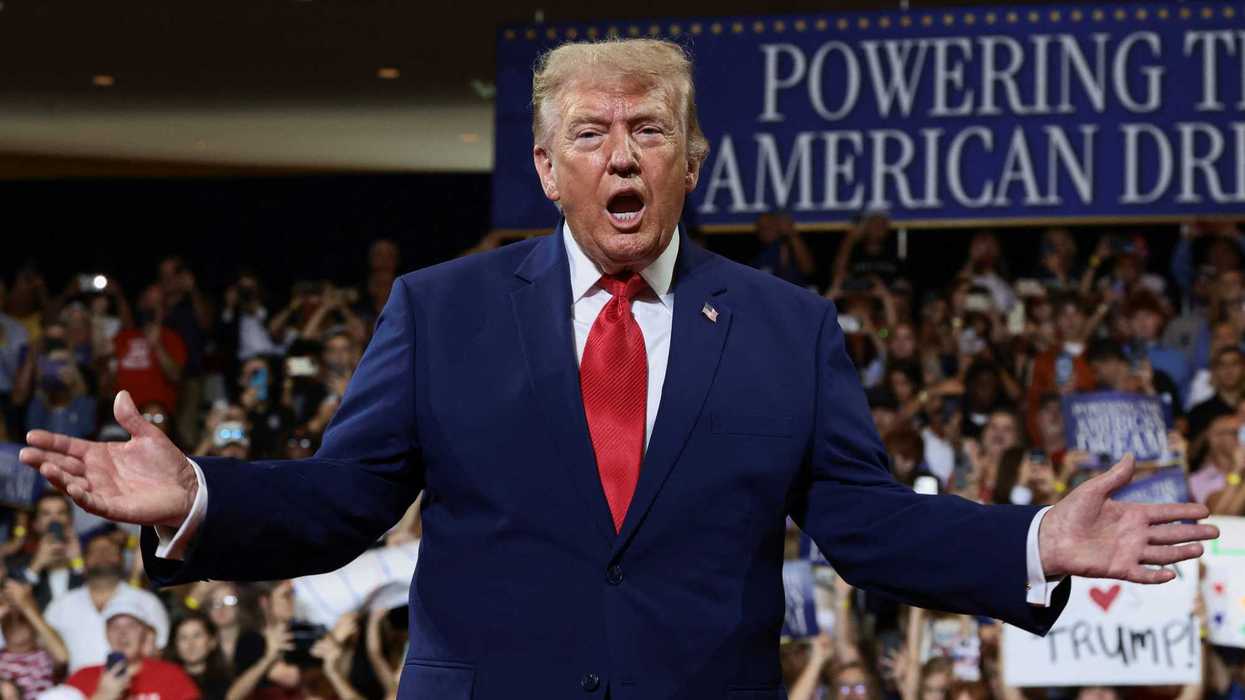
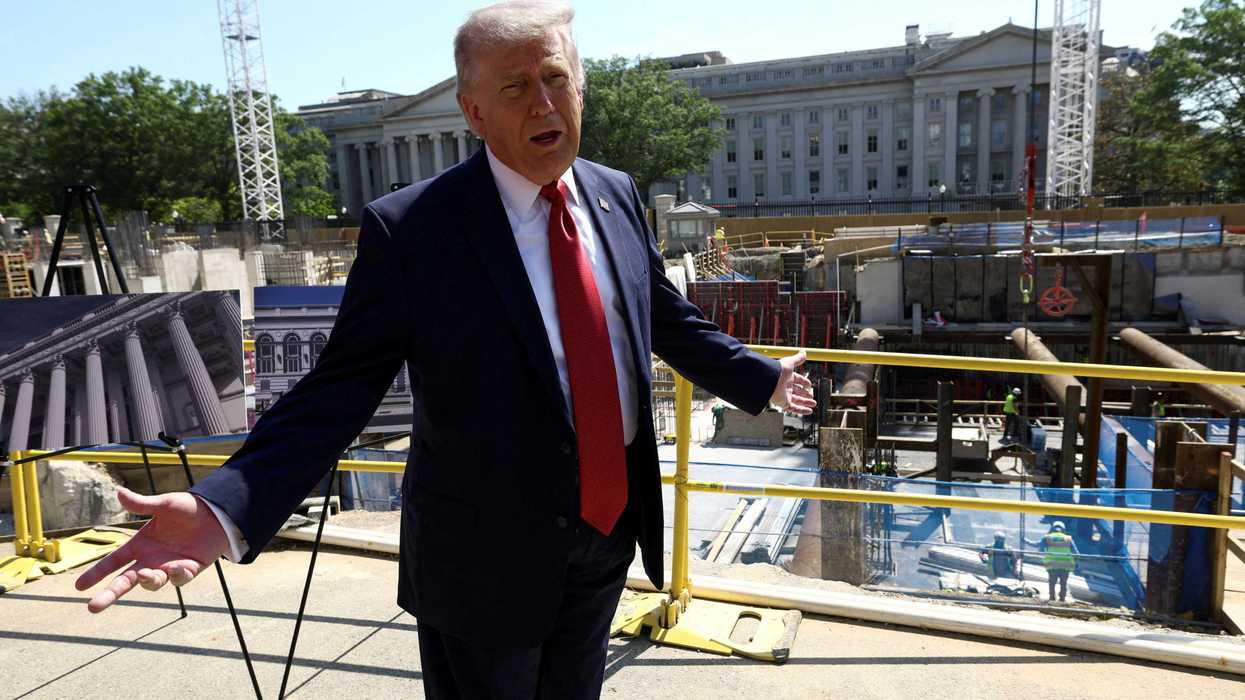
President Donald Trump gestures at the site of ongoing construction of the planned White House ballroom in Washington, D.C., May 19, 2026. REUTERS/Kevin Lamarque
July 22, 2026 
ALTERNET

President Donald Trump's highly publicized renovations to the White House are not just part of his obsession with remaking things in his own image, they are also a grim sign that he has no intention of actually leaving after his term ends, one former congressman argued for The Hill.

In a new piece published Wednesday morning, a Democrat who served in the House from 2001 to 2017, said that Trump's efforts to sow doubt about election integrity is part of a larger scheme to create the pretense for contesting future results that do not go his way. This, the ex-lawmaker contended, very much includes the coming midterms, but also the 2028 presidential race, which goes hand-in-hand with his expanding "portfolio" of White House renovations.

Israel highlighted Trump's most recently announced addition: a helipad on the South Lawn. This is just the latest project the president is pushing forward with for the presidential residence, joining "the big, beautiful ballroom; the trendy new patio paved where portions of the Rose Garden once bloomed; and a refurbished bathroom off of the Lincoln bedroom featuring floor-to-ceiling black and white Statuary marble and gold fixtures."

Taken altogether, Israel argued, it certainly seems like Trump is remaking the White House into a place he plans to stay in for the long haul.

"These are not exactly the signs of a tenant counting down the months until his lease expires on Jan. 20, 2029," Israel wrote. "Given Trump’s affection for princely habitats adorned in gold, one might expect him to be planning his next phase of post-presidential residences in New York, Florida… maybe even Scotland. Instead, he appears intent on making the White House fit for a king, or perhaps a crown prince."

He continued: "The election rhetoric and the royal renovations may seem unrelated. Together, however, they reflect an administration keen on treating democratic norms as temporary inconveniences, and presidential power as a permanent possession."

Israel added that he has personally "resisted theories that Trump could invalidate enough midterm results to preserve his House majority, or somehow extend his own presidency," dismissing such ideas as conspiracies and expressing faith that American institutions could hold back such a power grab. He warned, however, that history "not to confuse institutional endurance with institutional invincibility."

"There are several 'flashpoints' which Trump could exploit during the midterms," Israel continued. "He could deploy federal forces to polling places in certain swing districts to coerce and intimidate. His administration could attempt to seize and invalidate ballots in targeted districts. He could pressure friendly Republican governors in purple states, as he did after the 2020 election, to fish for additional votes. He could lean on Republican congressional allies to manipulate — or even disregard — the rules for governing the seating of new members on Jan. 3, 2027.

He added: "He does not necessarily need a neat, definitive victory. He needs constitutional chaos: competing claims, disputed ballots, emergency court filings. Just enough uncertainty to allow the full weight of his presidential thumb on the scales. The administration and its enablers have built the scaffolding on which democracy will hang."

CNN data analyst flattens Trump's tariff 'insanity'


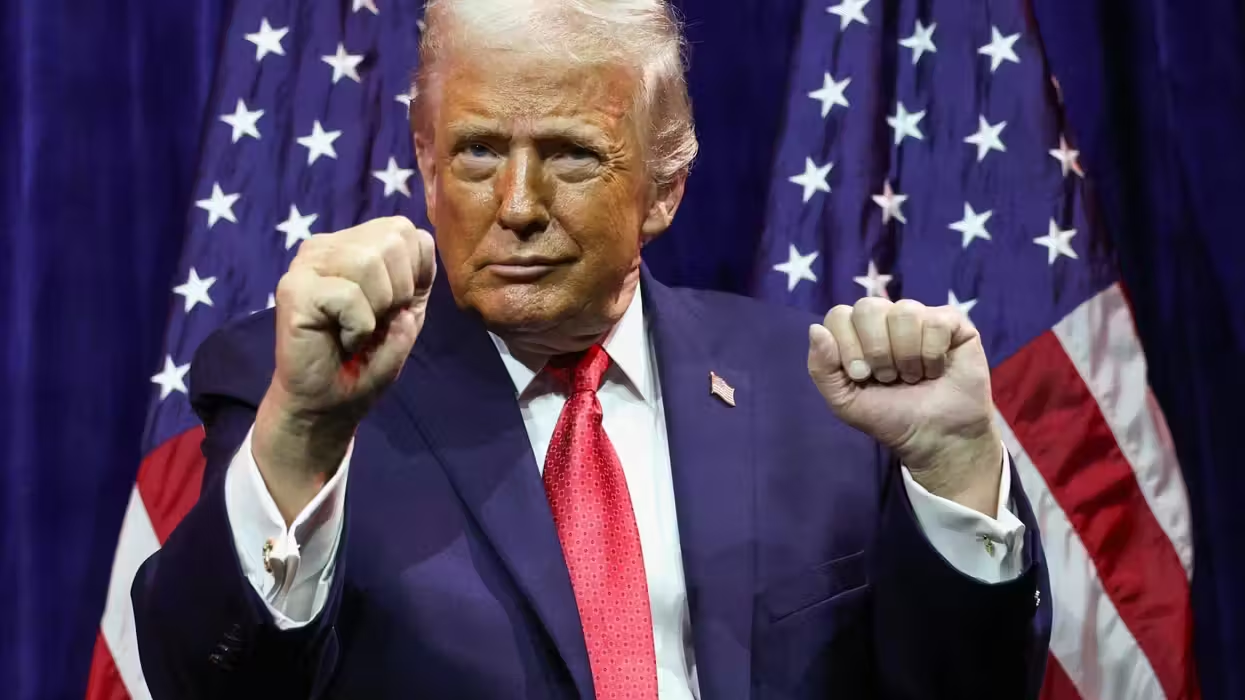
U.S. President Donald Trump reacts as he welcomes Israeli Prime Minister Benjamin Netanyahu (not pictured) at the White House in Washington, D.C., U.S., September 29, 2025. REUTERS Kevin Lamarque

July 23, 2026
ALTERNET

President Donald Trump’s tariffs, which had already cost America at least 100,000 manufacturing jobs as of February, have previously been described by experts as “madness” and “senseless.” But according to a polling expert on Thursday, a new survey reveals that they have also literally created a “bizarro world” in terms of voter opinions on economic policy.

Speaking with CNN’s John Berman on Thursday, polling expert Harry Enten broke down a recent CBS News/YouGov poll which found that only 37 percent of Americans support Trump’s tariffs while 63 percent oppose them. Despite this lopsided view against tariffs, Trump continues to levy them in response to everything from foreign policy disagreements to concerns about the state of the economy.


“The bottom line is this: the American people have seen what tariffs have done to the economy, and they, simply put, do not like it and have turned against the president of United States who, like I said, it feels like bizarro world because from a political standpoint, it is absolute insanity,” Enten told Berman. “They keep trying to do something that the American people clearly, very much do not like.”

Speaking with AlterNet about the tariffs earlier in July, Dr. Robert Shapiro — undersecretary of commerce for economic affairs in the administration of President Bill Clinton and principal economic adviser to Clinton's 1992 campaign — explained that part of their unpopularity stems from how they destabilize the business community. American businesses need a steady tariff environment to be able to proceed with a sense of sound knowledge, but Trump’s constant tariff pivots have upended that.

“It's about uncertainty,” Shapiro told AlterNet. “Every investment is based on an assessment of the likely future demand for whatever you're investing in, and how much it's going to cost to produce it. So there are assumptions about labor costs, material costs and other input costs — and again, about demand. If you have a set of arrangements that give you some confidence about the price of your inputs coming from Mexico or Canada, or about demand for goods in Canada — and don't forget, we have virtually no trade deficit with Canada; we have enormous trade, and it goes in both directions — so it's certainly right, and it's not just about investments based on these probabilities that the trade agreement can help reduce uncertainty about.”

Shapiro added, “It's also about how much you're going to produce today, apart from investment, because you've got thousands of companies selling goods or services into Canada. And so there's uncertainty about whether this will lead to more conflict with Canada, which would hurt Canadian demand for US goods, or whether Canada will impose a new tariff in retaliation for ours that makes my goods less competitive there. Of course it's bad — it's bad for American workers, it's bad for American investment.”
'Tweets don’t overturn signed agreements': Trump just learned the limits of his power


U.S. President Donald Trump gestures as he delivers remarks on the Trump Accounts tax-advantaged investment program at Wheeler High School in Marietta, Georgia, U.S., July 22, 2026. REUTERS/Evelyn Hockstein

July 23, 2026  
ALTERNET


On Wednesday, the bombshell announcement that the Trump administration will allow Saudi Arabia to launch a nuclear program drew widespread condemnation from critics asserting it would fuel the proliferation of nuclear weapons. Then Thursday morning, President Donald Trump attempted to backpedal, claiming the deal was conditional on the Saudis normalizing relations with Israel. But according to sources, he’s about to learn the limits of his social media power.


This is according to veteran foreign affairs reporter Lauren Rozen, who on Thursday said that when asked about the new conditions Trump is trying to add to the deal, a Saudi source told her that “it was signed,” so there was “nothing to renegotiate,” adding, “Tweets don’t overturn signed agreements.”

Trump’s post in question made a number of assertions that appear to conflict with reality. According to Trump, “The Civil Nuclear Deal (There will be no enrichment of material!) being made between the United States Department of Energy and Saudi Arabia, which pertains only to non-military use such as the ones that Iran and UAE (and others) already have, will be approved, but is totally subject to Saudi Arabia joining the very respected and successful Abraham Accords. The United States is not opposed to Civil (Non-Enriched) Nuclear Facilities.”

First of all, Trump’s claim that there would be “no enrichment” not only clashes with how experts have assessed the deal, but is outright impossible. While the agreement theoretically focuses on the U.S. bringing nuclear power technology to Saudi Arabia, according to Yoel Guzansky, a senior researcher at the Institute for National Security Studies in Israel, the plan appeared to let Saudi Arabia enrich its own nuclear fuel in-country. Said Guzansky, "Saudi insistence on enrichment in Saudi Arabia ... was the thing that got [previous] negotiations stuck and U.S. administrations, one after another, did not permit enrichment.” What’s more, all nuclear facilities — whether for energy or weapons — rely on enriched material. In other words, Trump’s insistence that there will be “non-enriched” facilities is nonsensical.

But perhaps most importantly of all, as Rozen’s source pointed out, Trump’s post has no legal weight. A number of experts have agreed.

“The U.S.-Saudi nuclear deal was signed yesterday,” said Axios Global Affairs Correspondent Barak Ravid. “But at the current time, Saudi Arabia signing a peace deal with Israel doesn't seem like a realistic near-term scenario.”

“Most normal countries go by what the actual text of an agreement says,” posted former U.S. Ambassador to Israel Dan Shapiro. “And while Trump is willing to screw the countries he doesn't like (Canada, e.g.) by violating signed agreements, my bet is today’s outburst is momentary spin to respond to criticism the deal is getting, and then the deal goes forward as written because it is a country he likes (and who knows who is getting cut in on the reactor deals).”

Center for International Policy Senior Fellow Sina Toossi warned that there could be wider diplomatic implications for the president’s attempt at rule by social media, declaring, “Trump has spent years destroying America's negotiating credibility. When even close partners have to wonder whether a signed agreement will survive his next post, diplomacy becomes exponentially harder.”
DC insider warns: A $2 trillion time bomb is about to blow up the economy


A broker is seen under the board of the DAX (German stock market index) at Frankfurt's stock exchange
July 23, 2026
ALTERNET

This daily letter to you doesn’t offer financial advice. And most of you have been so worried by the nation’s lurch toward dictatorship under loathsome Trump that it seems almost unfair to burden you with an alarm about the economy. But we’re facing a five-alarm fire that you need to know about.

Much of the United States economy is now based on A.I. — or, more specifically, expectations that A.I. will pay off very big in the near future. A.I.-related stocks have accounted for roughly half of the rise in the S&P 500 this year. And U.S. economic growth is dependent to a remarkable degree on A.I. infrastructure spending.

But it’s becoming a house of cards.


Yes, America now dominates A.I. with the most powerful systems and more data centers than any other nation. But that lead hasn’t come free of charge, and it’s eroding quickly.

The lead is based on colossal spending on data centers, especially by Oracle, Alphabet, Microsoft, Amazon and Meta. A stumble by any one of them would spill over to the rest of the economy.


It’s estimated that these five companies combined will account for more than $800 billion in A.I. investments this year. They plan to spend a additional $1.2 trillion in 2027 — more than Trump’s entire military budget request for 2027.

Where’s all this A.I. money coming from? Some from investors, but much of it is being borrowed.

One worry is their borrowing is outpacing their profits. Not surprisingly, the bond market has begun to charge premiums for what it considers a heightened risk that they won’t be able repay.


Oracle’s debt now stands just a bit above junk bond status. Amazon’s bond prices have also been hard hit. So have those issued by SpaceX, which is also building A.I. data centers and whose bonds have been trading at junkish rates.

Here’s another worry. Chinese A.I. companies are now offering A.I. that’s almost as good as that emerging from Anthropic and OpenAI — but Chinese companies are offering it free of charge to companies anywhere in the world, including in the United States. This is likely to mean lower earnings for leading American A.I. corporations and less demand for data centers.

Last month, Chinese start-up, Z.ai, released a model that’s been rapidly adopted by start-ups and independent developers across Silicon Valley.


What’s the consequence? So far this year, the stock prices of four of the five big data-center companies have trailed the overall S&P 500. Oracle’s shares have fallen more than 35 percent. Shares of SpaceX have fallen below their initial public offering price.

On Thursday, a Chinese start-up called Moonshot AI, released a new A.I. model called Kimi 3, that’s nearly as powerful as the leading American model, Anthropic’s Claude Fable 5. Moonshot said it would soon provide Kimi 3 as open source, essentially free. The news caused a sell-off of U.S. technology stocks on Friday.

The latest systems from companies like Anthropic and OpenAI still outperform Kimi and other Chinese models, but the top Chinese models are far cheaper — which is why Anthropic and OpenAI are now urging the Trump regime to block imports of Chinese A.I. Yet such blockage would competitively harm much of the rest of the tech sector and other big American companies that are using Chinese A.I.

The third worry is how much economic activity in the U.S. now depends on A.I. If investor confidence in A.I. crumbles, much of the economic activity built on it could come crashing down. The sell-off would make it more expensive for companies to raise and borrow the capital they need to fund further A.I. investments, causing companies to delay or cancel their plans for data centers and related infrastructure.


The drop would also push wealthy consumers to pare their spending. Much consumer demand in the U.S. now turns on spending by the richest 10 percent of Americans who own over 90 percent of the value of all shares of stock traded on U.S. stock exchanges. They’re spending like mad now, largely because the ebullient stock market has made them feel far richer. If the market drops, they’ll pull back on their spending, which could lead to wider job losses and, ultimately, a recession.

Bank of America’s monthly global fund-manager survey for July reports that fund managers see the key risk to financial markets to be a bursting of the A.I. bubble. It’s also now the key risk to the economy.

I don’t want to rain on the A.I. parade. Maybe — just maybe — the extraordinary price-earnings ratios of A.I. companies will be justified by torrent of A.I. buying by consumers and businesses in the next few years.

Even if it’s a bubble, it’s impossible to predict when it will burst. Maybe not for several years. And maybe not with a bang but with a whimper.


But the sobering reality is this: the U.S. economy has become so concentrated in a handful of giant A.I. corporations, so highly leveraged with A.I.-related debt, and so dependent on predictions about huge earnings flowing from A.I. in the foreseeable future, that the risks of a recession or even a crash are growing.

Yes, we have fiscal and monetary policy tools to counteract a sudden downturn. But will those tools will be powerful enough to respond if a significant portion of business and consumer demand suddenly shrinks, when investors and creditors are left holding nearly-worthless pieces of paper, when the United States is already deep in debt, when the competence of government policy makers is highly questionable, and when trust in government has never been as low as it is today?

Robert Reich is a professor of public policy at Berkeley and former secretary of labor. His writings can be found at https://robertreich.substack.com/
'Do the math': Economist lays down the law on Trump family’s profiteering


U.S. President Donald Trump gestures as he addresses House Republicans at their annual issues conference retreat, at the Kennedy Center, renamed the Trump-Kennedy Center by the Trump-appointed board of directors, in Washington, D.C., U.S., January 6, 2026. REUTERS/Kevin Lamarque

July 23, 2026
ALTERNET

Business analyst Ed Elson did not mince words over schemes by President Donald Trump and his family to get rich off the White House and the deadly war on Iran, which has killed multiple US service members.

“There are two options,” said Elson speaking Thursday with MS NOW anchor Katy Tur. “It's either he's the greatest investor of all time or he's an insider trader, and I'll let the audience decide what they think is the truth. What I can tell you is before we went to war with Iran, [Trump’s sons] Eric and Don, Jr. invested in tactical drone companies that sell weapons to the U.S. government. And then, what do you know, they hit the big time. I mean, we know that they are on the boards of many of the companies, which they are actively attempting to deregulate through the deregulatory campaign that we're seeing at the SEC and the IRS and the DOJ and the [Commodity Futures Trading Commission]. And then we can just look at their dad, who is clearly insider trading. But of course, we can't actually get any retribution for that because he has gutted the one agency whose job is to enforce the law on that front, which is the sec. They've lost their workforce; their monetary settlements are hitting all-time lows [in case pursuit].”

Elson, co-host of the award-winning Prof G Markets podcast, was speaking of an earlier MS NOW report of Trump and family profiting off the presidency, with Don Jr’s. management fund formerly overseeing a few hundred million dollars, but now overseeing more than $3 billion. Its main investment fund generated returns of roughly 200 percent as of June 30th, according to the New York Times. Tur pointed out that average returns from other similarly-founded venture capital firms were 21 percent.


“Just remember, Trump made $1.4 billion last year from his cryptocurrencies, which in my view amount to a Ponzi scheme,” Elson added. “He made more money on crypto personally than any of the largest crypto firms in America, including Coinbase, personally. So, I mean, do the math yourself. Either he's a genius or he's pulling a fast one. I think it's pretty clear what the answer is.”

And the stench of corruption appears to be sinking in to the American public. Trump’s polls are crashing, and one source close to the administration speaking with Politico said the White House is “at a maximum level of frustration right now” and that the president is now fully aware that the only way to the victory that he wants is completely politically impossible.


Starting August 1, Trump Media and Technology Group planned to launch a new data feed aimed at high-frequency trading firms whose profits are made by making trades a fraction of a second faster than everyone else. The $100K-a-month service would provide “licensed, real-time access to posts from the highest-ranking Truth Social accounts.”

“It used to be that there was a good portion of the population enough to get them elected twice that went along with that. But when you see these [poll] numbers, that persuasion is not effective any longer. It's not holding,” said Tur. “Americans are talking about this. They're seeing it. They're feeling it, and that's corruption.”


‘They’re Trying to Scare People’: AOC Dismisses Latest GOP Warnings of ‘Communism’

“We can’t even raise the minimum wage. Do Republicans really think this stuff is going to happen?”


US Rep. Alexandria Ocasio-Cortez (D-NY) speaks to members of the media as she arrives at the US Capitol Building on May 21, 2026 in Washington, DC.
(Photo by Andrew Harnik/Getty Images)

Julia Conley
Jul 23, 2026
COMMON DREAMS

Republican fearmongering that communism is on its way to the United States is a perennial feature of US political discourse—despite the fact that their warnings proved wrong in the 1930s when President Franklin Roosevelt passed Social Security and other New Deal programs and recently when Mayor Zohran Mamdani neglected to usher in a communist era in New York City, even as he moved forward with plans for universal childcare and a network of city-run grocery stores.

On Thursday, progressive Rep. Alexandria Ocasio-Cortez (D-NY) mocked the GOP’s latest claims that Democratic politicians who support Medicare for All and other broadly popular universal proposals are putting the US on what House Speaker Mike Johnson (R-La.) recently called a “dark road of death to communism.”

“We can’t even raise the minimum wage. Do Republicans really think this stuff is going to happen?” Ocasio-Cortez told a reporter on Capitol Hill after they’d asked whether the recent victories of democratic socialists and other progressives could end up “as full-blown communism.”


With 78% of Democratic voters supporting an expansion of the Medicare program to everyone in the US—which would end healthcare’s treatment as a for-profit endeavor in the US and put the medical system on equal footing with those in other wealthy countries—a number of Democratic House candidates who support the proposal have won primary races in recent months, including Melat Kiros in Colorado, Claire Valdez in New York, and Adam Hamawy in New Jersey. In Michigan, US Senate candidate Abdul El-Sayed, a Medicare for All advocate, has polled ahead of his centrist opponent Rep. Haley Stevens in numerous recent surveys.

As Republicans aim to maintain control of the Senate and House in the midterm elections—having ripped nutrition assistance and Medicaid away from millions of Americans, driven up healthcare costs for people who have insurance through the Affordable Care Act, supported the invasion of Iran as it has sent gas prices soaring, backed billions of dollars in Pentagon spending and military aid for Israel as Americans struggle to afford essentials, and supported a president who says he doesn’t “think about Americans’ financial situation”—they’ve attempted to revive old claims that the new crop of progressive Democrats “are a danger to you and your family,” as Johnson said this week.

The House speaker called the progressive primary winners “crazy little mini-Mamdanis who are popping up all around the country,” while House Republican Conference Chair Lisa McClain (R-Mich.) warned that “the radical left feels they need to hide what their policies are... Let’s call it what it is: It’s communism.”

Ocasio-Cortez, who is said to be a potential 2028 presidential or Senate candidate, called the warnings “very silly” and suggested they came from lawmakers who are dead-set against healthcare being treated as a right in the US instead of a profit-making business.

“They’re trying to scare people because they don’t want us talking about the fact that we all have a right to healthcare,” said the congresswoman. “So they want to call everything they don’t like communist because if people actually wake up to the fact that their elected officials are screwing them over when they get here, then they’re going to realize they deserve better and that healthcare as a right isn’t crazy, it isn’t pie-in-the-sky.”

“They want to call this stuff communist because they don’t want us to realize that the rest of the developed world has guaranteed healthcare,” she added. “So they want to call it communist because they don’t want you to know that Germany, Italy, the UK, Canada—everybody else—has it better than us, and we spend the most money for the worst care in the modern, developed world.”

In another interview Thursday, Ocasio-Cortez expanded on her condemnation of Republicans’ healthcare policies.

“This administration is killing Americans,” she said. “They are killing people by taking away their healthcare. They are killing women by having them bleed out in parking lots. They are killing seniors by imposing cuts to Medicaid and to Medicare recipients... The fact of the matter is they are for UnitedHealth. They are for Big Pharma. They are for these corporations, and they are cutting your healthcare.”


Strategist calls Trump 'too stupid to know what he’s talking about'


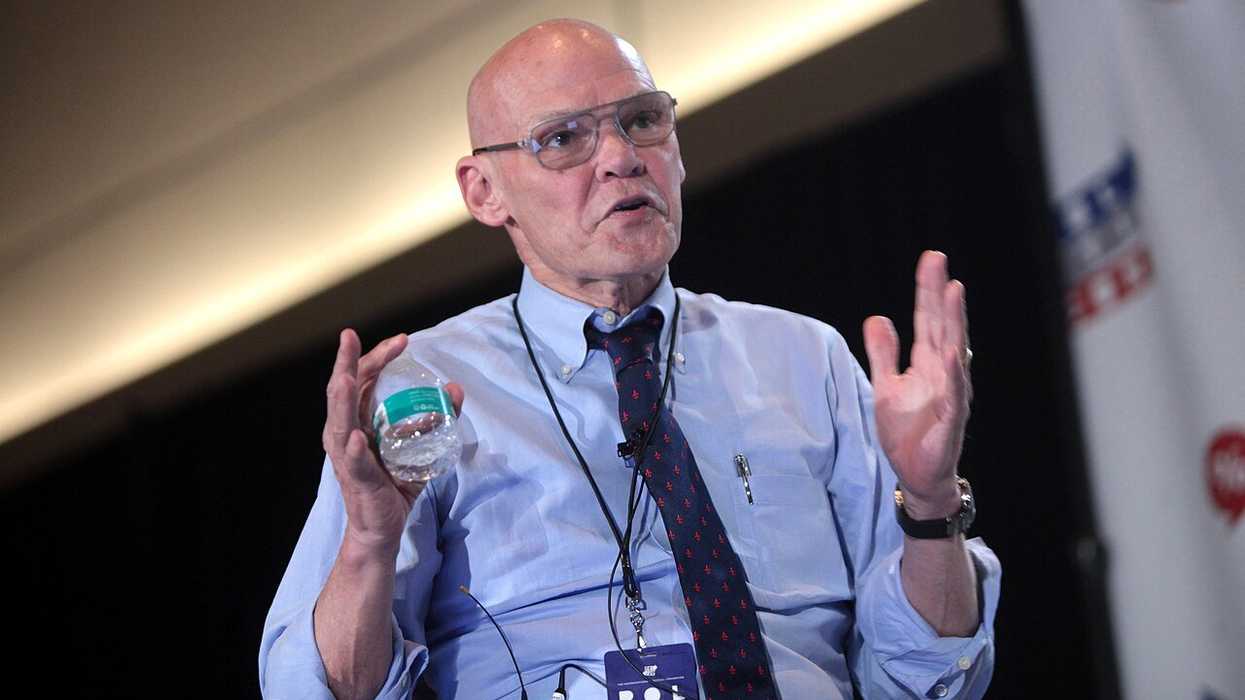
James Carville at Politicon 2016 at the Pasadena Convention Center in Southern California
(Creative Commons)
July 23, 2026 
ALTERNET


Democratic strategist James Carville didn't hold back in his latest attack on President Donald Trump.

Speaking on his "Politics War Room" podcast with political veteran Al Hunt, Carville wasn't speaking to Trump's advanced age, but his complete lack of intelligence.

Lately, Trump has exchanged his allegations that Democrats are all socialists, for blasting them as communists. Carville implied that Trump likely doesn't know the difference.


"He has no idea what communism is," said Hunt. "Or the difference between communism and socialism. You know, he's just blustering. And he certainly loves Xi Jinping when it's convenient to love Xi Jinping."

During a recent speech to the Faith and Freedom Coalition conference in Washington, Trump confessed that it would be so easy to run on a platform of socialism because he could announce that everyone has "free rent."


"From now on, anybody wants a house, don't worry about it. Just pick the house you want. Everybody gets free food. Everything is free from this point forward." He added, "Communism destroys everything, but it's very easy. I'll be honest, I think I'd be the greatest communist in history."

Carville agreed, noting that socialism is an economic system, and while communism is part of an economic system, it's also a political one. He cited Finland as being more of a socialist country than most and noted how hugely successful it was in fighting the former Soviet Union.

Carville said he isn't shocked that Trump is confused because he's not knowledgeable enough on the economic systems, much less the history.


"So, I don't think Trump knows the difference," Carville said. "I really don't. I think he's that stupid. I'm gonna defend him when he uses communism/socialism I think he has no idea of history. He has no idea that Sweden and Denmark and Norway and Finland and countries like that are hugely successful countries are really democratic countries, have a lot of really, really successful businesses and have a real strong program for social insurance. So, I'm going to defend Trump on the grounds that you can always defend him. He's just too f—— stupid to know what he’s talking about."

In their write-up of the podcast, the Daily Beast recalled that Carville recently commented that he thought Trump would resign as soon as the spring of 2027 because the 2026 midterm elections will destroy him.

THE NEW HUAC

Press Freedom Groups Warn ‘No Newsroom in America Is Safe’ After House GOP Subpoenas Left-Wing Outlet

“BreakThrough News is not the first, nor will it be the last, to come under official attack,” said one press freedom advocate.


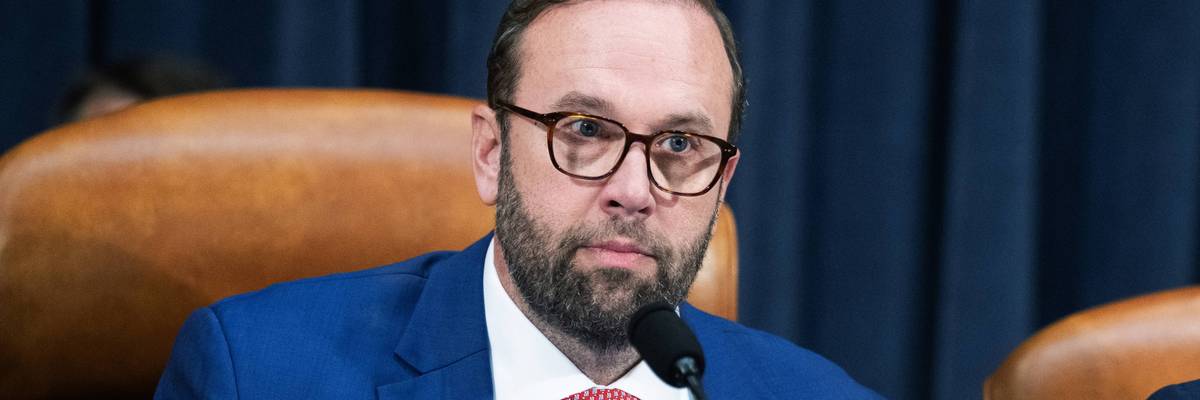
US House Ways and Means Committee Chair Jason Smith (R-Mo.) conducts a hearing on June 4, 2026, at the US Capitol in Washington, DC.
(Photo by Tom Williams/CQ-Roll Call, Inc. via Getty Images)

Stephen Prager
Jul 23, 2026
COMMON DREAMS


Press freedom groups are issuing dire warnings on Thursday that House Republicans’ efforts to subpoena the nonprofit left-wing news organization BreakThrough News represent a dangerous new step in a McCarthyite war on political dissent.

On Wednesday, Fox News reported that BreakThrough, a New York-based outlet, was one of three nonprofits that had been issued subpoenas by the GOP-controlled House Ways and Means Committee as part of an investigation into $39 million worth of donations from tech mogul Neville Roy Singham, a self-described socialist who has used his wealth to fund left-wing nonprofits.

In letters sent Tuesday, the committee, led by Rep. Jason Smith (R-Mo.), said that BreakThrough, as well as two other organizations—the People’s Forum Inc., a New York-based activist hub, and Tricontinental: Institute for Social Research—had not turned over any documents that had been requested as part of an investigation into whether rules around tax exempt status for nonprofits should be tightened to protect against foreign influence.

The committee has accused Singham, an American who now lives in Shanghai, of exploiting the tax code and using shell companies and donor-advised funds to hide foreign money that has been used to promote the interests of the Chinese Communist Party. It does not, however, make any specific accusation of legal wrongdoing.

The subpoena requires BreakThrough News to turn over records about its finances, foreign donors and grant recipients, fiscal-sponsorship arrangements, and communications with Singham and any foreign entities.

In a statement on Wednesday, BreakThrough News said it was “under attack.”


“For years, Republican lawmakers have painted a target on our backs, falsely claiming that our political views and reporting are part of some foreign plot,” the outlet said. “Now, the MAGA-dominated House Ways and Means Committee has issued us a subpoena—demanding internal communications, financial records and more. Make no mistake, this is a flagrant abuse of power, and a direct attack on our work as journalists and on the First Amendment generally.”

BreakThrough said it does not receive any funding from foreign governments or institutions and that it already complies with all the tax and public reporting requirements that nonprofits have to follow.

“We are not charged with any crime, because our only ‘crime’ has been to tell the truth–by covering the activities of the Palestine solidarity movement, unmasking the truth of ICE’s terror in our streets, and exposing Washington’s crimes around the world, from Cuba to the Congo,” the outlet said. “That’s the journalism they want to shut down. Their goal is to saddle us with legal proceedings and hostile media to drain our resources and stop this important work.”

While the committee stated that they are investigating BreakThrough over its financing rather than its politics, letters sent to the organization have treated the content of its reporting as circumstantial evidence of malign foreign influence, referring to it as “anti-American” and claiming that its negative coverage of Israel was “sowing division within the United States.”

Chip Gibbons, the policy director of the free speech advocacy group Defending Rights & Dissent, told Common Dreams that the subpoena of BreakThrough was a “deeply chilling assault on the First Amendment.”

“Such tactics are, quite literally, a throwback to the House Un-American Activities Committee, which today is mostly viewed as a disgrace,” Gibbons said. “I say mostly, because just three days ago [Secretary Marco] Rubio’s State Department released a report preposterously attacking the US left, including some of these groups, as Cuban fronts that cited old HUAC reports.”

He further emphasized in a press release that there was “no plausible need” for a news organization to provide documents as part of a broad congressional inquiry.

“The only thing these groups are accused of is essentially receiving donations from a US citizen who has been the subject of an intensive campaign of demonization,” Gibbons said. “It is lawful for Americans to donate to activist causes and media projects while holding views disfavored by Congress. This is clearly not a valid legislative inquiry at all, but an attempt to intimidate and chill dissenting opinions.”

Seth Stern, the chief of advocacy for the Freedom of the Press Foundation, agreed that “Congress shouldn’t be using a tax investigation as a pretext to dig through a newsroom’s internal communications or financial records.

“Freedom of the press,” he said, “applies to al
l journalists, regardless of whether politicians like their editorial slant or their politics.”


In what it has portrayed as a fight against “left-wing terrorism,” the Trump administration has increasingly blurred the lines between violent activity and protected political speech that they claim “incites” violence.


National Security Presidential Memorandum 7, signed by Trump in September, designates large swathes of left-wing viewpoints on race, gender, immigration, and other topics as “indicators” of domestic terrorism that have been used to link entire groups of people to violent acts they themselves did not commit.

Rubio said last week that the administration would soon be designating more left-wing organizations as terrorist groups, while senior Trump adviser Stephen Miller said that the full force of the state would be used to “disrupt, identify, defund, de-bank, arrest, prosecute” those deemed to “foment” political violence, not just those who actually commit it.

He has previously pledged to use the law to “dismantle” organizations that use heated rhetoric to refer to their right-wing opponents, including calling them “fascist” or “authoritarian.”

Nora Benavidez, senior counsel at Free Press, described the subpoena of BreakThrough as an extension of a “retaliatory ethos” Trump has taken towards critical journalists “with the goal of shutting down criticism and dissent.”

She told Common Dreams, “BreakThrough News is not the first, nor will it be the last, to come under official attack for bringing people alternative and useful news coverage about ICE abuses, foreign policy, Palestinian rights, and other topics.”

“Allowing a congressional committee to harass an independent newsroom with a broad subpoena sets an awful precedent,” Stern said. “If lawmakers can abuse tax oversight to single out outlets whose reporting offends them today, no newsroom in America is safe from government intimidation tomorrow.”
Trump’s Iran War Hits US Farmers With $1.4 Billion More in Diesel Fuel Costs: Report

“Trump’s decision to go to war with Iran drove up the cost of diesel fuel just as farmers were set to start their spring planting.”


A farmer loads soybeans into his planter on May 6, 2026 near West Bend, Iowa.
(Photo by Scott Olson/Getty Images)

Brad Reed
Jul 23, 2026
COMMON DREAMS

President Donald Trump’s illegal war with Iran is putting significant financial stress on US farmers, according to a report issued on Thursday by Democrats on the Joint Economic Committee.

The report finds that US farmers spent $1.4 billion more on diesel fuel this year when planing corn, soybeans, wheat, cotton, and rice than they did a year ago, representing a 63% yearly increase.

The six states to get hit with the biggest yearly percentage increases in diesel costs all voted for Trump in three consecutive presidential elections: Florida (90.6% yearly increase in diesel costs), Alabama (86.2%), Oklahoma (85.9%), West Virginia (85.8%), Kansas (83.8%), and Indiana (79.5%).

Diesel prices in 2026 hit their peak right in the middle of planting season, and the report estimates that “the average farmer spent $1,500 more to refil their farm’s onsite fuel tank... compared to the same high point during the 2025 planting season.”

The report notes that it doesn’t capture the full extent of economic damage caused the president’s unlawful assault on Iran, as its analysis “doesn’t take into account other war-related increases such as the increased costs of running diesel generators that power some greenhouses or the increases at the pump that farmers and truckers face when they drive products to market.”

The report adds that the economic pain being felt by farmers thanks to Trump’s war will soon hit US grocery shoppers.

“Trump’s decision to go to war with Iran drove up the cost of diesel fuel just as farmers were set to start their spring planting,” the report says. “This comes after Trump’s tariffs have already significantly increased costs for farmers and made it more difficult for them to plan for the future. These increased costs... are likely to further contribute to rising grocery costs.”

According to data published by the US Energy Information Administration, diesel prices peaked in May this year when they averaged $5.60 per gallon.

While prices initially fell after Trump announced a ceasefire agreement with Iran in June, the war’s resumption this month has sent them jumping upward again.

Data published by the American Automobile Association on Thursday showed that the average price of diesel in the US is now back up to $5.20 per gallon, an increase of $0.20 from one week ago.

Despite the economic turmoil caused by his illegal war of choice, Trump has shown little sign of backing off. In an interview with Axios published Thursday, the president said that he was “close” to making a decision on whether to authorize what he described as a “massive attack” on Iran that he vowed would be “bigger than ever before.”
Trump’s Military Spending Request Is Really Big Money


Any self-proclaimed deficit hawk who is not all hair on fire about Trump’s budget demand is a lying hypocrite who only uses concerns about the deficit to argue against programs they don’t like.


Dean Baker
Jul 23, 2026
Beat the Press


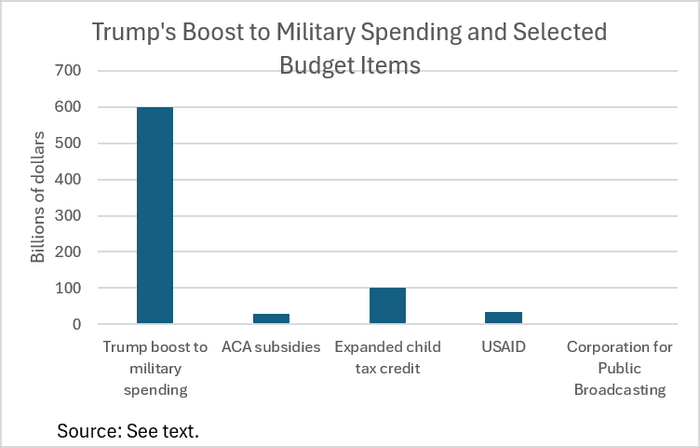
President Donald Trump is asking for $1,500,000 million for the military for next year. That’s close to $600 billion (adjusted for inflation) more than we were spending on the military in fiscal year 2025, before Trump took office.

This increase is huge by any measure. It comes to around $4,600 per household. It is around 8% of the total budget. This spending request dwarfs sums that are often the subject of major debates in Washington.

For example, last year Democrats pushed to have the enhanced subsidies in the Affordable Care Act exchanges extended. This would have cost $30 billion a year, one twentieth of what Trump and Pentagon chief Pete Hegseth are demanding.

People may recall Elon Musk gleefully putting the US Agency for International Development into the “wood chipper” last spring. While ending this program is expected to lead to 4 million additional deaths over the next four years, it only saved around $35 billion a year. That is less than 6% of the increase in military spending that Trump is asking for.

Is the argument that in just 18 months in office, Trump has made the world so much less safe that we have to increase the defense budget by two-thirds?

The annual cost of extending the enhanced child tax credit, which cut child poverty in half, was around $100 billion a year, less than one-fifth of Trump’s proposed increase. And the annual appropriation for the Corporation for Public Broadcasting was $550 million, less than one thousandth of the additional spending for the military that Trump is demanding. (It’s in the chart, just small to see.)


People need to know that Trump’s military spending request is really big money, compared to almost anything else that ever comes up for public debate for Congress. Unfortunately, because of incompetent or corrupt budget reporting, few news accounts make any effort to put these huge numbers in a context that makes them understandable for their audience. As a result, most people will probably have little idea of what is at stake with this military request.

Any self-proclaimed deficit hawk who is not all hair on fire about Trump’s budget demand is a lying hypocrite who only uses concerns about the deficit to argue against programs they don’t like. We got along fine with the former level of military spending, which almost everyone, including Donald Trump in his first term, considered adequate.

Is the argument that in just 18 months in office, Trump has made the world so much less safe that we have to increase the defense budget by two-thirds? Most of us knew that making our former allies into enemies was not a good idea, but Trump is placing a huge price tag on this mistake. And remember, this is Trump’s own number, not his critics’.
We Are Closer Than We Think to Losing Our Wild Neighbors

You do not need to fire a shot to kill an animal and imperil its entire species’ existence—you only need to take away the place it lives. A Trump administration Endangered Species Act rollback would do just that.


Baby and juvenile manatees swim together in a freshwater spring in Florida.
(Photo by Getty Images)


Jane Davenport
Jul 23, 2026
Common Dreams

There is a vision of this country that still exists to anyone who grew up near its wild places: manatees drifting beneath a dock, Florida leafwing butterflies fluttering through the wind, yellow-billed cuckoos migrating in the spring and fall. For generations of Americans, these were not rare sightings. They were proof that people and wildlife could share the same natural inheritance

That inheritance is now under direct threat, and the erosion is no longer incremental. It is accelerating at an unprecedented pace.

Earlier this month, the Trump administration formally rescinded the regulatory definition of “harm” under the Endangered Species Act (ESA)—a single word that has helped to protect this nation’s imperiled wildlife for more than 50 years. For decades, “harm” was understood to include not just the direct killing or injuring of an endangered animal, but the destruction or degradation of the habitat that animal depends on to breed, feed, migrate, or shelter. That understanding was not a bureaucratic technicality. It was the legal recognition of a basic ecological truth: An animal cannot survive the loss of its home and its resources for daily living any more than a person can. Each of these species has a story that will end the same way without habitat protection: not a quick death by bullet but a slow death by a thousand cuts.

Remove that definition, and you remove the government’s ability to regulate clear-cutting old growth forest filled with an endangered bird’s nesting sites, draining a wetland key for an endangered frog’s breeding, or dumping pollution into the lagoon where sea turtles and marine mammals graze. You do not need to fire a shot to kill an animal and imperil its entire species’ existence. You only need to take away the place it lives.

Habitat destruction is already the leading driver of species decline in the US, and this rollback removes one of the few legal tools available to slow it.

Congress enacted the ESA in 1973 with overwhelming bipartisan support, and Republican President Richard Nixon signed it, “to provide a means whereby the ecosystems upon which endangered species and threatened species depend may be conserved.” In the more than five decades since, the ESA has prevented the extinction of an estimated 99% of the species placed under its protection—one of the most successful conservation records in the world.

Rescinding the definition of harm will eviscerate the ESA. And it does so under the pretense of streamlining obstacles to American economic growth, as if the nation’s economy runs on oil, gas, logging, and mining alone. But our national economy—and our national welfare—are inextricably linked to healthy, thriving wildlife and habitats. Wildlife watching, for example, supports a $250.2 billion industry in the US. Commercial and recreational fisheries generate $319 billion in sales and sustain 2.1 million jobs. Hunting and fishing support $400 billion in annual economic value. And the ecosystem services nature provides for free—clean water, crop pollination, flood control, pest suppression—are valued at an estimated $5 trillion a year.

Habitat destruction is already the leading driver of species decline in the US, and this rollback removes one of the few legal tools available to slow it.

Consider the Florida manatee, listed as threatened under the ESA. Manatees lack blubber and cannot fully regulate their own body temperature; in winter, their survival depends on access to water near 72°F. Coastal development and polluted runoff have devastated the seagrass beds manatees depend on and degraded the natural springs that once kept them warm through the winter. More than half of Florida’s manatees now survive only because they cluster near the artificial warm-water discharge of aging power plants. Without the harm definition, it will be exponentially harder to protect and restore their foraging and sheltering habitats they need to survive and recover.

The same pattern will repeat across the country. The North American wolverine depends on vanishing high-elevation snowpack at risk of being lost to development and expanding winter recreation. The whooping crane, one of the rarest birds in North America, needs undisturbed wetland corridors to complete its migration. In the Arctic National Wildlife Refuge, polar bears depend on undisturbed denning sites; seismic testing, vehicle traffic, and aircraft noise associated with oil exploration can cause mother bears to abandon their dens and cubs. For five decades, the ESA enabled economic activities in the habitats species need to survive and recover, with permitting guardrails to ensure adequate protections. Now that the administration has eliminated those guardrails, it’s open season for industry to sacrifice habitat—and the future of our imperiled wildlife species. Defenders of Wildlife, along with other conservation organizations, has already gone to federal court to challenge this unlawful action.

At the same time, we’re standing up to defend the ESA itself from anti-wildlife members of Congress who favor unfettered logging, mining, grazing, and drilling, no matter the cost to endangered animals—or to our irreplaceable natural heritage. One of the most effective actions concerned citizens can take right now is to call their representative and senators and oppose any effort to undermine this bedrock wildlife law.

We are closer than most people realize to losing the manatees in our canals, the whooping cranes in our wetlands, and the wolverines in our mountains. What remains to be seen is whether we act while there is still habitat left to save.


Our work is licensed under Creative Commons (CC BY-NC-ND 3.0). Feel free to republish and share widely.


Jane Davenport
Jane Davenport is a senior attorney at Defenders of Wildlife.
Full Bio >