Sunday, September 13, 2026


Chile bill targets foreign cash for next mining boom


Chile’s “La Moneda” government palace. (Stock image by StreetFlash.)

Chile is opening its capital markets to junior explorers as the world’s top copper producer and second-largest lithium supplier seeks more investment to fund new mineral discoveries.

The Senate-approved bill, spearheaded by President Jose Antonio Kast’s administration, would create a dedicated investment framework for junior exploration and innovation companies. It would also change how reduced mining fees are applied to exploitation concessions, aiming to streamline the process and strengthen legal certainty.

The proposal includes a new basis for reducing fees for exploration concession holders, removing the need for producers to apply for the benefit every year. More broadly, the government wants to lower operating costs and align Chile’s capital markets with international standards.

“Exploration is the heart of mining, but it is a high-risk stage,” Economy and Mining Minister Daniel Mas said. “By integrating mining exploration into capital markets, we intelligently diversify that risk and attract global and national investment funds seeking profitability and sustainability.”

The changes could address a longstanding financing hurdle for junior miners, which rely heavily on private capital because conventional stock market rules are generally designed for larger, established companies. Listing, corporate governance and continuous disclosure requirements can impose costs that are disproportionate to the size of early-stage explorers.

Under the proposed framework, eligible juniors could instead access a simplified regulatory regime tailored to their stage of development without registering under the national Securities Registry. A designated sponsoring agent would oversee regulatory compliance and continuing disclosure.

Investors would also receive financial incentives, including capital gains tax exemptions on share sales and mechanisms allowing them to write off greenfield exploration expenses.

The government expects private capital to shoulder more of the geological risk associated with early exploration, potentially leading to discoveries that generate future tax revenue, royalties and jobs.

Exploration squeeze

Chile attracted a projected $874 million in exploration spending in 2025, according to the Chilean Copper Commission (Cochilco), ranking fourth globally by exploration budget. Copper accounted for 76% of the total, or $669.6 million, while only about $206 million was directed toward initial exploration.

Total exploration investment increased by $80.7 million from 2024, but spending has become increasingly concentrated in larger programs, primarily those run by major mining companies.

The National Association of Small and Medium-Sized Miners, Agrumin, supports the proposal as a way to prevent rising payments from contributing to the loss of mining properties through auctions and further concentrating ownership.

Agrumin said producers have struggled to qualify for reduced mining fees because of eligibility requirements and a high rejection rate for documentation submitted to the National Geology and Mining Service, or Sernageomin, to certify projects as small-scale mining operations.

The National Mining Society, Sonami, has meanwhile called for the suspension of court-ordered auctions of mining claims with unpaid fees scheduled for Oct. 15. It argues that proceeding with the auctions could undermine the effectiveness of the reform while lawmakers are still considering it.

The legislation extends beyond mining. It would exempt exported financial services from Value Added Tax, expand tax relief for non-resident investors and introduce measures covering first-time home buyers and voluntary pension savings.

For Chile’s mining industry, the central test will be whether easier market access and tax incentives can channel more investment into grassroots exploration rather than established projects, replenishing the pipeline needed to sustain future mineral production.


Ex-Glencore head of oil pleads not guilty to UK bribery charges ahead of 2027 trial


Glencore’s former head of oil Alex Beard on Thursday pleaded not guilty to two bribery charges relating to the Swiss commodity trader’s operations in west Africa.

Beard, 59, denied two counts of conspiracy to make corrupt payments at London’s Southwark Crown Court.

Prosecutors allege Beard was involved in a conspiracy to make corrupt payments to government or state-owned oil company officials, in Nigeria between 2010 and 2014 and Cameroon between 2007 and 2014.

He appeared in the dock alongside Glencore’s former head of oil operations Andrew Gibson, who denied four counts of conspiracy to make corrupt payments in Nigeria, Cameroon and Ivory Coast.

Gibson, 66, also pleaded not guilty to an additional charge of conspiracy to falsify documents required for an accounting purpose.

Four other ex-Glencore oil traders last year pleaded not guilty to related bribery charges and all six defendants are due to stand trial from October 2027.

(Reporting by Sam Tobin, editing by Sam Tabahriti)


Tharisa raises nearly $300 million for Zimbabwe platinum project


Tharisa Plc (JSE: THA) said on Friday it had raised $294 million through a Nordic bond issue mainly to complete the construction of its Karo platinum mine in Zimbabwe, which is expected to start production in the final quarter of 2027.

Tharisa said in a statement that it issued a $300 million five-year senior secured bond at 98% of the principal value, with a semi-annual coupon of 11.00% per annum.

The integrated platinum group metal (PGM) and chrome producer operating in South Africa is developing Karo platinum mine on Zimbabwe’s Great Dyke, which is expected to produce 226,000 ounces of PGMs in the first phase.

That would more than double Tharisa’s current PGM output, CEO Phoevos Pouroulis said.

The bond offering was oversubscribed and attracted demand from a broad base of international institutional investors across Europe, the United Kingdom, the Middle East, North America, and Asia, Tharisa said.

Tharisa said the pricing of the bond reflects both the jurisdiction in which the project sits and the fact that Karo is still in construction.

The Karo project was granted a 25-year special mining lease by the government of Zimbabwe on August 24, a key step in advancing the project.

Karo has also agreed an offtake deal to sell platinum concentrate to Valterra Platinum (JSE: VAL).

(Reporting by Nelson Banya. Editing by Mark Potter)


ERG’s Congo cobalt site sees return of army-backed intruders


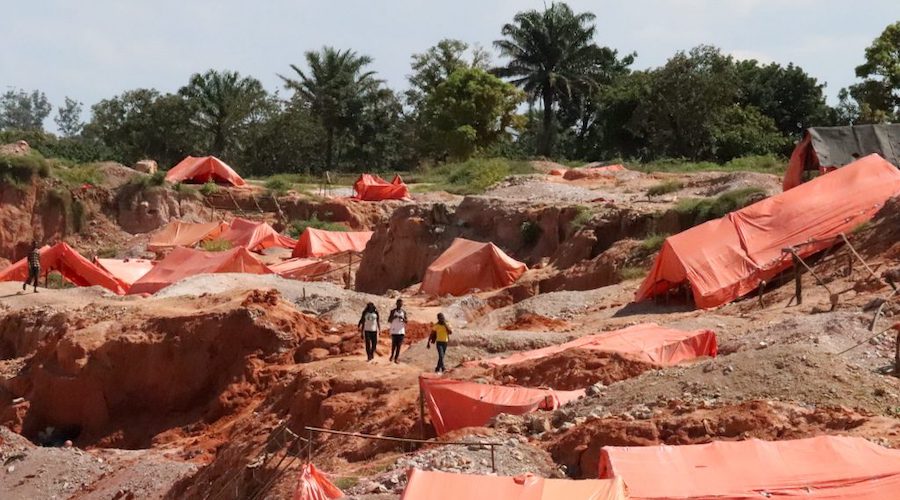
More than three-quarters of the world’s cobalt comes from Congo. (Image courtesy of The Impact Facility.)

Intruders backed by soldiers are again operating illegally at one of the world’s biggest sources of cobalt in the Democratic Republic of Congo.

The recurrence of the incursion at the project belonging to a subsidiary of Eurasian Resources Group, which was first reported by Bloomberg in May, represents a challenge to the authority of Congolese President Felix Tshisekedi. He ordered ministers in July to “definitively end all forms of illegal militarization of mining sites,” saying the issue “fosters negative perceptions of the governance of our natural resources.”

In the previous intrusion, a local company protected by Congolese soldiers had taken over a key section of a major copper-cobalt concession held by ERG’s Metalkol unit. An intervention by the armed forces subsequently cleared them out and seized their equipment.

A new “illegal occupation” in the same part of Metalkol’s permit near the city of Kolwezi began on Aug. 21 and is ongoing, ERG’s Africa division said by email. The incursion is being carried out by “armed men in uniform and groups of miners operating without authorization.”

The “government has been informed of the situation,” said the General Inspectorate of Mines, which is part of Congo’s Mines Ministry. “Appropriate measures are being implemented to ensure a lasting solution to this recurring issue,” a spokesperson said.

Congo’s National Defense & Veterans Ministry and Interior Ministry didn’t respond to requests for comment. Nor did a spokesperson for the subnational government in Lualaba province, where Metalkol is located.

The Central African country has some of the world’s richest deposits of copper, cobalt, tin, tantalum, gold, lithium and zinc. Cobalt has rallied sharply since early last year after Congo — the world’s dominant supplier of the battery metal — imposed export restrictions. 

Despite a recent decline, prices of cobalt hydroxide, the main product shipped from the African country, remain more than three times higher than when the curbs were introduced. Copper has been trading at an all-time high this week. 

So-called artisanal miners — sometimes supported by soldiers — often operate without permission, including on licenses belonging to international investors. The Mines Ministry is overseeing efforts to create zones where they are allowed to work.

Metalkol has the rights to reprocess more than 100 million tons of historic mine waste known as tailings and has become one of the top suppliers of cobalt. Only projects owned by CMOC Group Ltd. and Glencore Plc export more of the battery metal. The ERG unit is also a major producer of copper which is mined alongside cobalt in Congo.

The extraction of ore during the first occupation at Metalkol, which started in February and accelerated in April, was so organized that the activity threatened the venture’s commercial future, ERG previously said.

This time, the “theft of tailings” is also being “conducted on an industrial scale” by excavators and trucks operating around the clock, ERG said, estimating that around 700 tons of material is leaving the concession each day destined for nearby Chinese-owned plants. “Metalkol is unable to access the occupied area” due to the military presence, ERG said.

The earlier intrusion was carried out by a firm named Societe Cooperative Miniere Hosanna which claimed it had been authorized by the government, including the Interior Ministry, to clean up alleged pollution in the riverbed that contains most of Metalkol’s remaining reserves. Interior Minister Jacquemain Shabani previously told Bloomberg his ministry hadn’t granted permission to Hosanna.

ERG didn’t mention Hosanna in its statement about the latest events.

Last month, Mines Minister Louis Watum withdrew Hosanna’s approval to operate as a mining cooperative and issued Metalkol a 45-day notice to take “urgent measures” to clean up the river in its concession, according to letters seen by Bloomberg.

Metalkol is “working constructively” with the ministry’s environmental protection department to review relevant information and determine appropriate action, ERG said. The cooperation is taking place “without prejudice to the company’s position regarding the origin, cause or attribution of the environmental situation under review.”

These incursions “are occurring despite the highest instructions” of Congo’s president, ERG said.

(By William Clowes)


Cutting Canada tariffs alone won’t flatten US aluminum premium, Alcoa says


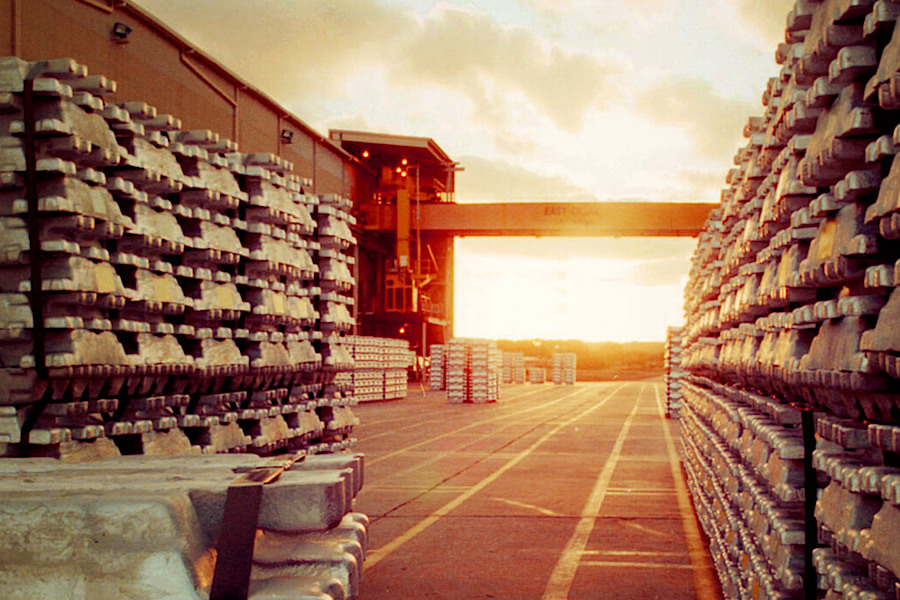
US producer Alcoa’s smelter in Canada. (Image courtesy of Alcoa Canada)


The steep premium paid for aluminum in the U.S. will not drop significantly even if Washington halves the tariffs on metal from neighboring Canada, because imports from other countries will still be needed, Alcoa’s (NYSE: AA) finance chief said on Thursday.

The price U.S. consumers pay on top of the London Metal Exchange benchmark CMAL3 for physical aluminum, known as the Midwest premium AUPc1, is high at $1.09 per lb, or $2,403 per metric ton, but has eased from a record $1.19 in June on hopes the 50% import tariff could be halved for Canadian material.

Speaking at the Jefferies Global Industrials Conference in New York, Alcoa Chief Financial Officer Molly Beerman noted that the U.S. needed to import around 4 million tons of aluminum per year and Canada could only supply 3 million tons of that.

“With the U.S. still needing to incent the import of a million tons, even if we were to have a favorable rate with Canada, we don’t see Midwest dropping significantly,” Beerman said. “It might come off a little bit, but we wouldn’t see it returning to pre-tariff levels.”

If there is tariff relief or waivers for other trade partners — such as Japan, South Korea or Europe — and the last 1 million tons is covered, “then you can expect the Midwest premium to reduce in response to essentially wipe out the tariff benefit,” Beerman said.

Pittsburgh-based Alcoa produces around 900,000 tons per year of aluminum in Canada and is paying more than $1 billion in tariffs to bring most of it into the U.S., Beerman said. “However, the Midwest is fully compensating us for that, as well as returning as margin because of the tightness in tons.”

With aluminum supplies from the war-hit Middle East constrained, customers in North America and Europe are “actively looking for our supply,” Beerman said, noting that Alcoa’s order book was “almost completely sold out for the rest of 2026.”

(Reporting by Tom Daly; Editing by David Gregorio)


White House copper tariff plan stalls amid affordability concerns, sources say


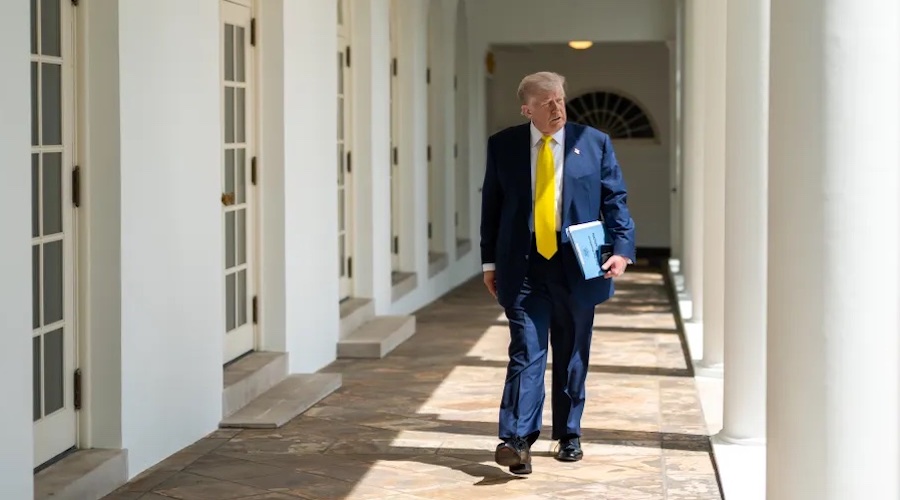
US President Donald Trump (Image courtesy of White House.)

The White House has not yet made a decision on refined copper tariffs as officials juggle concerns that higher prices for the red metal could raise manufacturing costs against the potential benefits of encouraging more domestic mining, according to two people familiar with the matter.

The hesitation comes as the administration is increasingly focused on affordability ahead of November’s midterm elections, with President Donald Trump and Republican lawmakers facing pressure to demonstrate that their economic policies are lowering — rather than raising — costs for American consumers and businesses.

Copper prices CMU3 have surged to record highs amid expectations that Trump would impose tariffs on refined copper products such as cathode, as well as copper concentrate produced at mine sites. Traders and industrial buyers have been rushing to build inventories in the United States to get ahead of any new duties, creating one of the world’s largest stockpiles of the metal.

A White House official said the administration had not made a final decision on the tariffs and confirmed that the Commerce Department provided an update to Trump by a June 30 deadline set by the White House.

“The administration continues to evaluate all options to reshore copper and other critical manufacturing back to the United States,” the official said.

The comments suggest tariffs are not a foregone conclusion, despite the market’s expectation that the United States could extend existing duties to refined copper.

The administration has been considering tariffs on refined copper as part of Trump’s broader push to rebuild U.S. manufacturing and reduce reliance on foreign supplies of critical materials.

Shares of copper producers fell after the Reuters report, with shares of (NYSE: FCX) down 7% in midday Thursday trading, shares of Rio (LON: RIO) down 2.7%, and shares of BHP (ASX: BHP) falling 4.7%. Copper prices lost more than 4%.

Copper is used in construction, transportation, electronics and many other industries. S&P Global (NYSE: SPGI) expects growth in the AI and defense sectors to boost global copper demand 50% by 2040.

The U.S. imports roughly half of its copper needs each year and only has two operational copper smelters, owned by Freeport-McMoRan (NYSE: FCX) and Rio Tinto (LON: RIO), respectively.

The proposed tariffs could make imported copper more expensive and improve the economics of U.S. mining, smelting and refining projects. A Rio executive, for example, told Reuters earlier this year “the current set of mechanisms and tariffs around copper” do little to offset the challenging economics of its U.S. smelter.

But broader copper tariffs could also raise costs for manufacturers that rely on the metal, including producers of electrical equipment, automobiles, construction products and other industrial goods.

That tension has complicated the administration’s efforts to use tariffs to encourage domestic production without adding to inflation or undermining Trump’s political message on lowering the cost of living.

The tariff uncertainty is also preventing copper from flowing to markets outside the U.S., further tightening global supply.

“As long as (tariff) policy remains unresolved, that possibility reduces the incentive to return metal to international markets,” said Jacob White, a minerals analyst at Sprott Asset Management, which invests in copper producers.

US reliant on global copper miners

The expectation for a copper tariff echoes 2025, when the market expected a blanket tariff on all products containing the metal. Trump, however, stopped short in July 2025 of such a sweeping tariff and instead imposed levies on pipes, wiring and other semi-finished products, much to the chagrin of companies that mine copper itself.

Trump tasked Commerce Secretary Howard Lutnick with updating him by June on copper markets and recommending whether to impose a 15% tariff starting on January 1, 2027, that would rise to 30% in 2028. It was not immediately clear what Lutnick recommended to Trump.

U.S. refined copper imports have jumped 16-fold since 2015, even as production slipped 20%, according to U.S. Geological Survey data. The country has nearly 30 years’ worth of supply within its borders.

Trump has pushed in the past year to bolster U.S. copper projects, including the Resolution Copper project in Arizona from BHP (NYSE: BHP) and Rio, and the Twin Metals project in Minnesota from Antofagasta (LON: ANTO).

Trump also has moved to ban the export of electronic waste, which contains copper.

(Reporting by Jarrett Renshaw and Ernest Scheyder; Editing by Christopher Cushing)


US-backed tin refiner agrees to buy up to 100% of Australian miner’s supply


SOCIALISM BY ANY OTHER NAME

Stock image.

A centuries-old tin company backed by funding from the US Department of Defense agreed to buy as much as 100% of the metal concentrates produced by an Australian mining firm under a multiyear offtake agreement financed by STG Metals. 

Nathan Trotter & Co. will purchase up to the entire output of Huntore Australia Pty’s tin concentrate production from its mining and processing operations in Queensland, Australia, according to a statement Thursday. 

The deal with Huntore comes as the US ramps up efforts to spur critical minerals development and processing to counter Chinese monopoly in the global supply chain. Tin is key to defense supply chains, particularly in solder used to connect semiconductors, advanced capacitors and other electronics found throughout military hardware and civilian infrastructure.

The family-owned tin firm, which traces its roots to 1789, received a $19 million grant from the Defense Department in late 2024 to establish domestic tin processing for national hardware to be used in multiple sectors including defense, commercial aviation and microelectronics. 

STG is a growing trading business funded by the partners of Squarepoint Capital LLP, a global quantitative investment firm. 

(By Yvonne Yue Li)


USA Rare Earth breaks ground at $1.2B magnet manufacturing facility in South Carolina 


USA Rare Earth (Nasdaq: USAR) this week broke ground on its new rare earth metal and magnet manufacturing facility in Blacksburg, South Carolina, marking a milestone in its plan to build an integrated rare earth supply chain for the US and its allies. 

Located on a 124-acre site in Bailey Industrial Park in Cherokee County, the 800,000-square-foot facility represents an approximately $1.2 billion investment and is expected to create roughly 490 manufacturing jobs upstate.  

USA Rare Earth said it selected Blacksburg following a comprehensive evaluation of nearly 275 potential sites across the country, adding that South Carolina stood out for its skilled advanced manufacturing workforce, reliable power, transportation infrastructure, proximity to customers and suppliers, and strong support from state and local partners.  

“Breaking ground in Blacksburg is an important moment because it moves our vision from plans on paper to infrastructure taking shape,” CEO Barbara Humpton said in a news release.  

“We’re building the capabilities America needs to make critical rare earth materials and magnets at home, while making a long-term investment in the people and communities that will help us do it.”

Investing in education 

USA Rare Earth also announced a $250,000 contribution to Spartanburg Community College to support its new SPARK Center in Cherokee County. The new center will connect education, workforce development and economic development, providing resources to support businesses. 

“South Carolina’s greatest strength has always been our people and their ability to build things the world depends on,” South Carolina Governor Henry McMaster said. “USA Rare Earth’s decision to put down roots in Blacksburg is another tremendous vote of confidence in our workforce and in the manufacturing future of our state. Today, we celebrate the start of a project that will create new opportunities for families across Cherokee County and the Upstate while helping America rebuild a critical industry here at home.” 

The Blacksburg facility will complement USA Rare Earth’s existing magnet manufacturing operation in Stillwater, Oklahoma, where it commissioned its first commercial production line earlier this year.  

Together, Blacksburg and the planned expansion at Stillwater are expected to provide USA Rare Earth with 10,000 tpa of domestic neodymium-iron-boron (NdFeB) magnet manufacturing capacity.  

USAR also finalized a deal in July to buy a minority stake in France’s Carester that will provide funds for expansion of a processing plant due to open later this year. 

The move is part of a scramble by the US and Europe to build their own rare earths and magnet output to cut dependence on China, which controls about 90% of global processed output of the minerals vital for the energy transition, electronics and defence. 

Once online, the South Carolina facility is targeting production capacity of 6,400 metric tons per annum of sintered NdFeB permanent magnets and 5,000 tpa of strip-cast metal and alloy, with commissioning targeted to begin in 2028. 

US backs energy projects in Philippines with eye on China

SOCIALISM BY ANY OTHER NAME

Philippines. Stock image.

The US plans to support liquefied natural gas and nuclear projects in the Philippines to lower electricity costs and attract businesses into an investment belt that’s seen to counter China’s supply-chain influence.

The US Trade and Development Agency is working with the Philippine government and companies — including San Miguel Corp. and Manila Electric Co. — to improve power generation and transmission in the Southeast Asian nation, USTDA head Thomas Hardy said in an interview.

The goal is to address investors’ concerns about high electricity prices and woo them to support the Luzon Economic Corridor, a flagship infrastructure and investment project backed by the US and Japan on the Philippines’ main island. The US is pushing for more investments in manufacturing into its Asian ally — including in a 4,000-acre AI hub north of Manila — as its tech rivalry with China heats up.

“If it’s good for the Philippines, it’s good for all of us,” Hardy said on Thursday. The USTDA is “designed by law to open up markets for American companies. Is it countering China? Maybe, but we weren’t established to counter China.”

The USTDA official said he sees a lot of LNG projects where US companies can partner with financiers and developers in the Philippines to bring in gas into the Southeast Asian nation. “Whether that’s piping it, doing regasification or new gas-fired power projects, there’s a lot of opportunities,” Hardy said. The US is the world’s top LNG exporter, with plans to double output by 2030.

Nuclear power is also a potential avenue for US-Philippines cooperation, according to the American official. He said his agency will host a delegation of Philippine government officials and private sector leaders later this year to familiarize them with small modular reactor technology and facilitate consultations with US regulators.

The USTDA earlier announced technical assistance funding for Manila Electric’s power generation arm to evaluate small modular reactor designs. That’s part of the agency’s wider push to advance key industries in the Philippines including rail transport, aviation and shipping.

Read More: US Funds Subic Bay Expansion to Boost Philippine Logistics

The agency, the US government’s first mover on key infrastructure in emerging markets, also plans to help accelerate the Philippines’ critical minerals processing capability and link this to the American supply chain, according to Hardy. He also said the study on a freight railway project linking the planned investment belt will likely be finished this year.

Manila has been leveraging its stronger defense ties with Washington for economic advantages. Securing investments is crucial for President Ferdinand Marcos Jr. as the economy stumbled into a deeper slump after the Iran war fallout and a domestic corruption scandal soured consumer and business confidence. 

Diversifying energy sources is also critical for the Philippines as it grapples with a fuel crunch and high power prices due to the disruption to the Strait of Hormuz. Adopting alternatives like LNG and nuclear power will help reduce the nation’s heavy reliance on oil from the Middle East.

Marcos, in a speech at the US-organized forum on the Luzon Economic Corridor on Thursday, said the ecozone is a government’s strategy for organizing growth. “We are moving from identifying possibilities to preparing projects; from expressions of interest to commercial partnerships,” he said.

During the same event, the European Union and Spain formalized their support for the economic corridor, expanding the partnership to 13 members.

The US foreign aid agency Millennium Challenge Corporation separately formalized on Thursday a $60-million grant to the Philippines to help speed up the approvals process for energy projects and improve the services of electric cooperatives. The funding marks a comeback for the American aid agency to the Philippines after it got caught in the crosshairs of Rodrigo Duterte during his presidency over human rights issues.

“We want to be able to drive decisions more quickly and more predictably for others who would want to operate in this space,” said Dan Petrie, MCC acting chief of staff, in a separate interview.

(By Andreo Calonzo)


US Department of Energy grants $73M to advance domestic mining technology  

SOCIALISM BY ANY OTHER NAME


Digital control center in mine overseeing real-time data for optimized operations of mining technology. AI_generated stock image by Degimages.

The U.S. Department of Energy’s (DOE) Office of Critical Minerals and Energy Innovation (CMEI) this week selected four projects for $73 million in funding through DOE’s Mine of the Future initiative to establish domestic testing grounds for innovative mining technologies.  

The projects will accelerate the commercialization of mining technologies, upgrade domestic mining capabilities, and build on the US’ mission to secure America’s critical minerals supply chains, CMEI said.

“Investing in moving cutting-edge mining technologies out of the lab and into the field will help unleash America’s vast mineral resources,” US Secretary of Energy Chris Wright said in a news release.  

“These investments will prove that American innovation can redefine what’s possible in modern mining,” said Assistant Secretary of Energy Audrey Robertson. “By establishing world class testing grounds, we’re accelerating breakthroughs that will strengthen our supply chains, our workforce, and our national competitiveness.” 

DOE’s Advanced Mining and Mineral Processing Technologies Office selected Lynchburg-headquartered Innovative Wireless Technologies, with project locations in Julian and Blacksburg, West Virginia and Idaho Springs, Colorado.  

This project aims to create a national testbed to accelerate the development and deployment of advanced mining technologies that enhance safety, productivity, and supply chain resilience. The effort will combine underground and surface mining environments to validate next-generation digital, connectivity, and automation solutions in real-world conditions. 

University of Arizona also made the list for its project location in Sahuarita, which will create a nationally accessible underground testbed to speed up the development and deployment of advanced mining, electrification, and energy management technologies.  

Also selected are Curators of the University of Missouri, HQ and project location in Rolla, with plans to create a multi functional mining technology proving ground that combines two complementary facilities for underground technology testing and advanced comminution research. Curators of the University of Missouri will design, build, and equip this national resource to support innovation, real world validation, and workforce development for next generation mining technologies. 

Southern Methodist University, with HQ in Dallas and project location in Navasota, Texas will create the world’s first synthetic mine within an advanced drilling and sensing test facility to accelerate next generation mining technologies from lab concepts to field ready deployment. By repurposing a highly instrumented Texas drilling site, it will enable rigorous, repeatable, and safe testing of mining tools, workflows, and automation systems, the DOE said. 

These projects, it said, will develop mining proving grounds and also support R&D projects that accelerate the progression of technologies from laboratories to testing and demonstration in a field-scale setting, an essential step to de-risk commercial adoption.