Saturday, February 15, 2020

Scheer blasted as 'racist and absurd' for telling Wet'suwet'en supporters to 'check their privilege'
By Carl Meyer | News, Energy, Politics | February 14th 20
20

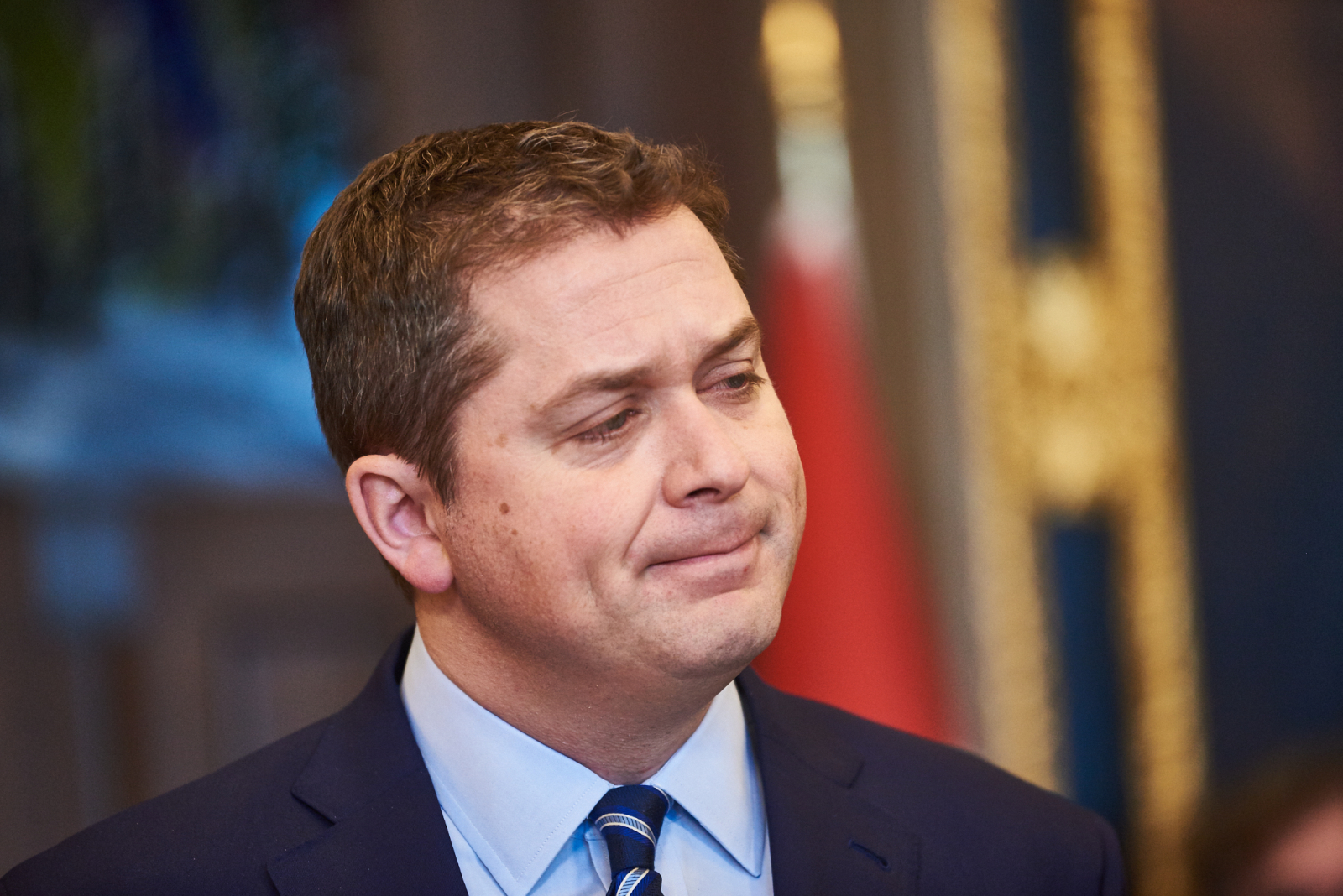
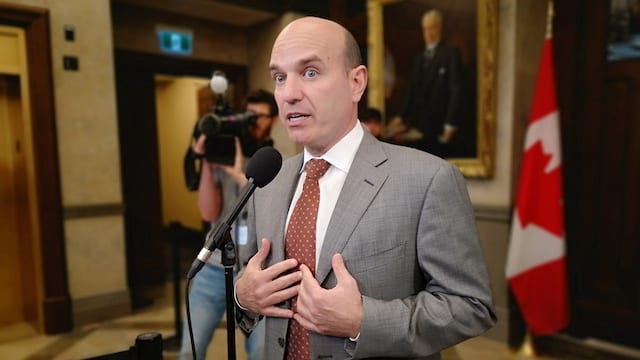
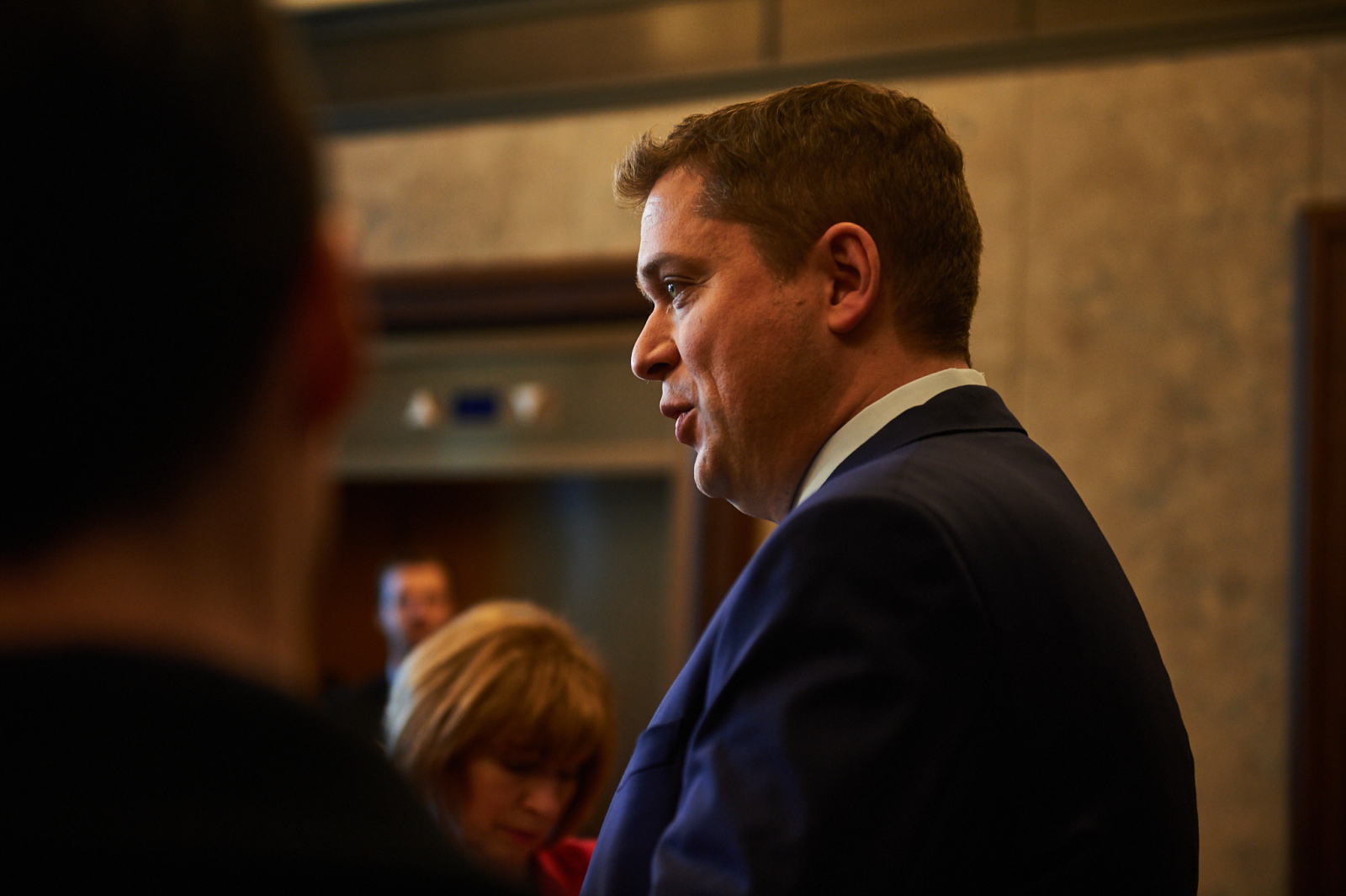
Conservative Leader Andrew Scheer speaks to media on
 Parliament Hill on Feb. 14, 2020. Photo by Kamara Morozuk

Conservative Leader Andrew Scheer appeared in the halls of Canada’s seat of power Friday, walked up to the microphone and cameras waiting for him to address a national audience and told those who have been standing in solidarity with the Wet'suwet'en to “check their privilege.”

The Gidimt’en camp of members of the Wet'suwet'en Nation told National Observer that kind of statement is "racist and absurd" when many Indigenous communities have been discriminated against or lack access to basic services.

Scheer was responding to the news this week that blockades of key rail lines — in protest of the RCMP’s arrests of Wet’suwet’en members in British Columbia in order to clear the route for a gas pipeline — are putting pressure on some industry employees.Conservative Leader Andrew Scheer in Ottawa on Feb. 14, 2020. Photo by Kamara Morozuk

He seized on numbers cited by transportation-sector union Teamsters Canada that “up to 6,000 workers” could be out of work as a result of a decision by Canadian National (CN) Railway to shut down eastern operations, as well as Via Rail’s cancellation of passenger-train service across the country. More than 400 trains have been cancelled in the past week, CN has said.

WHAT PEOPLE ARE READING

Where's Kenney's War Room money really going?
Elizabeth May asks, 'At what cost, Canada?'
The Wet'suwet'en told supporters to 'shut down Canada.' Now trains are cancelled nationwide

“These protesters, these activists, may have the luxury of spending days at a time at a blockade, but they need to check their privilege,” Scheer told reporters, who had gathered outside the House of Commons chamber on Parliament Hill in order to broadcast his views.

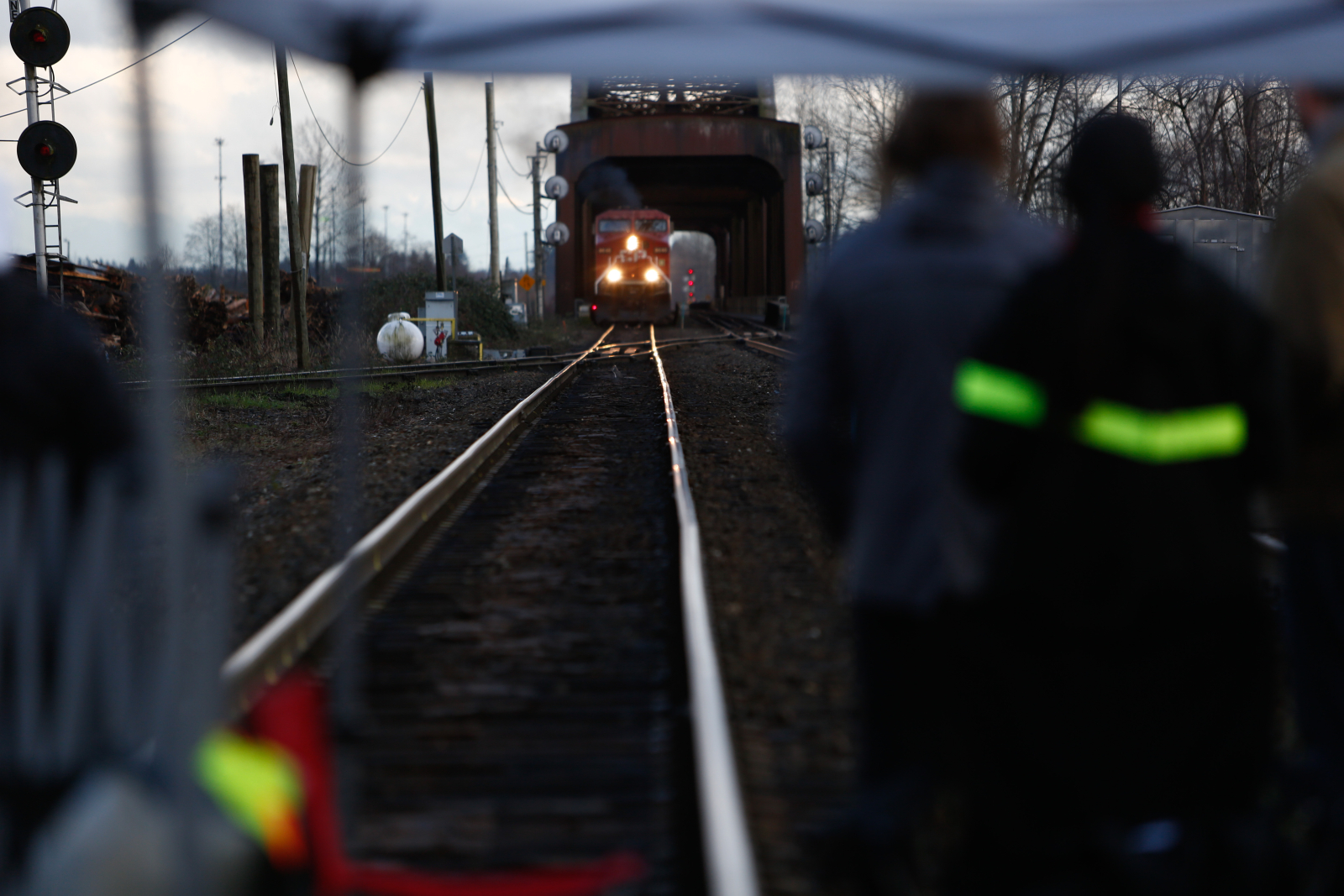
“They need to check their privilege, and let people whose jobs depend on the railway system, small businesses and farmers do their jobs.”Wet'suwet'en supporters create a rail blockade in Port Coquitlam, B.C., on Feb. 13, 2020. Photo by Jesse Winter
Asked what she thought of Scheer's statement, Molly Wickham, spokeswoman for the Gidimt’en camp of Wet'suwet'en Nation members, said the Tory leader's words made little sense.

"All of Canada is subsidized by Indigenous people. All Canadian industries and transportation infrastructure rely on the theft of Indigenous land for their existence," she said. "Calling Indigenous land defenders 'privileged' when so many of our communities are denied basic human rights and services is racist and absurd."


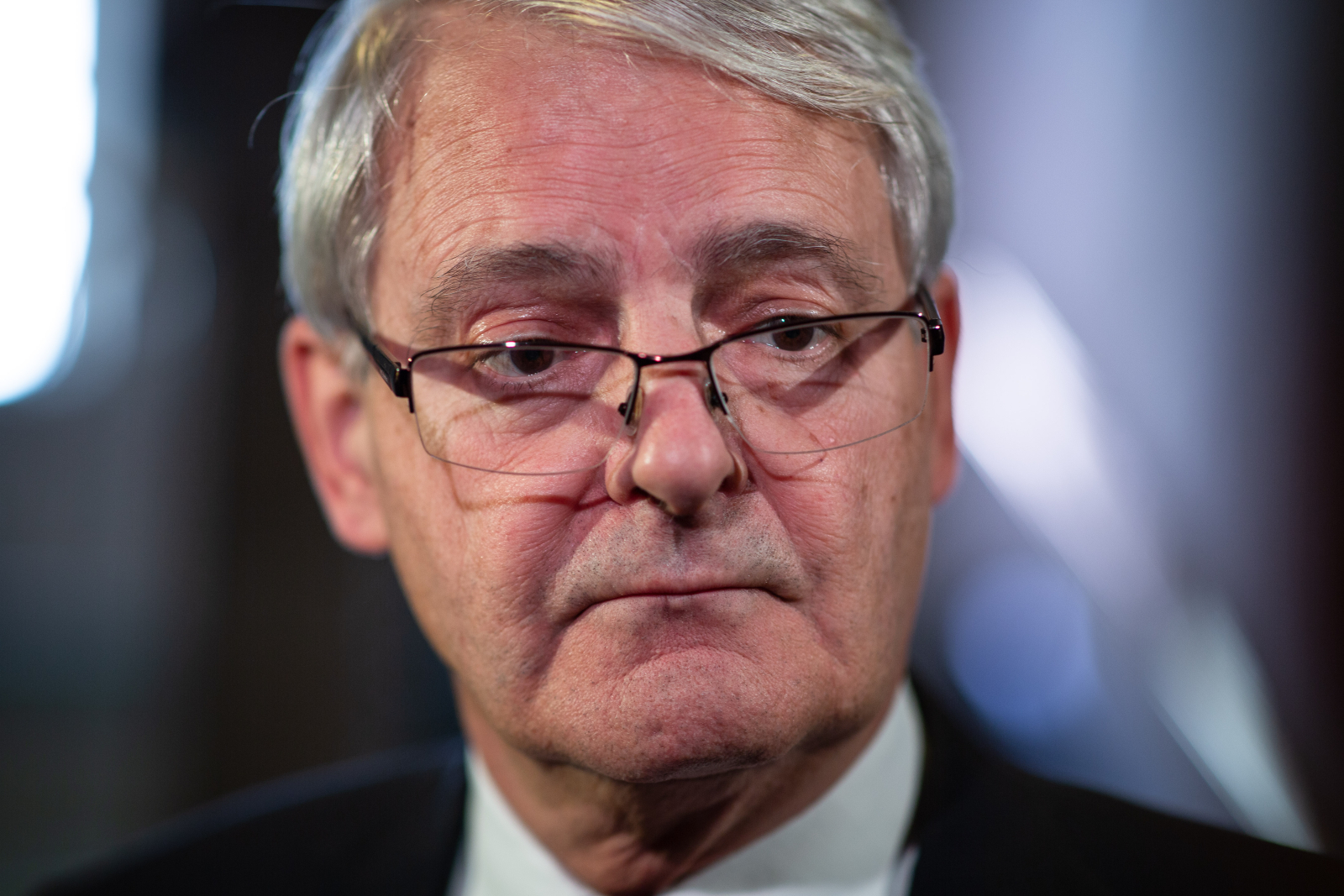
Two examples of Indigenous human-rights issues include the Canadian Human Rights Tribunal decision that Ottawa was "willful and reckless" with First Nations children who suffered racial discrimination and unnecessary separation from their families, as well as the fact that there are still 60 long-term drinking-water advisories on reserves despite the United Nations recognizing clean drinking water as a human right.File photo of Transport Minister Marc Garneau in 2018 in Ottawa. Photo by Alex Tétreault
Miller to meet with Mohawk nations: Garneau

Protests have erupted in multiple provinces after the RCMP moved on Wet’suwet’en territory, arrested matriarchs, sawed apart gates and extinguished sacred fires.

"Calling Indigenous land defenders 'privileged' when so many of our communities are denied basic human rights and services is racist and absurd," Gidimt’en camp of Wet'suwet'en tells Conservative Leader Andrew Scheer.


A blockade in Manitoba has ended, but National Observer reported another in British Columbia has sprung up near Vancouver, just as a third near New Hazleton, B.C., appeared to be winding down. Meanwhile, near Tyendinaga Mohawk Territory east of Belleville, Ont., negotiations have been ongoing with the Ontario Provincial Police over a fourth rail blockade.

Transport Minister Marc Garneau, who spoke to media in downtown Toronto on the sidelines of an annual meeting with his provincial and territorial counterparts Friday morning, said “the path to resolution of this issue is through dialogue and seeking consensus.”

Garneau confirmed Indigenous Services Minister Marc Miller would be meeting “very shortly” with Mohawk representatives to discuss the issue. He insisted the government has been “working every day, ever since this happened,” to engage with CN, Via and Canadian Pacific (CP) Railway, as well as provincial counterparts.

“We’ve been actively engaged on trying to find the best solution, as quickly as possible,” he said.

Late on Friday, Mohawk representatives announced that Miller would be meeting Saturday morning with them at the rail crossing in Tyendinaga Mohawk Territory, to address issues and “polish the Silver Covenant Chain,” which represents the original agreements between Mohawks and the Crown.

"Indigenous and non-Indigenous supporters alike are welcome to travel to Tyendinaga tomorrow to witness the historic event," they said in a statement.


TMC Statement RE: RCMP Actions, February 11th, 2020 pic.twitter.com/DEd61hJjyl— Mohawks of the Bay of Quinte (@MBQTMT) February 11, 2020

The “vast majority” of goods used by Canadians and bought in stores “travel by rail,” Garneau said. The disruption also affects people who rely on passenger rail service to work or travel to see family, he added. “The impact of this disruption affects each and every Canadian.”

Garneau also said “freedom of expression and peaceful protest” are among Canadians’ most fundamental rights, and should be respected, but he was “deeply concerned” that the blockades were preventing the operations of railways.

“There is a risk of seeing this solely as being about a negative impact on the profitability of large companies,” Garneau said. “But it is about people's jobs and livelihoods, and about the transport of key supplies like food, propane, heating oil and chemicals for water treatment, agricultural products for export and so many other products.”Conservative Leader Andrew Scheer on Feb. 14, 2020. Scheer said Trudeau should "pick up the phone" and call Public Safety Minister Bill Blair, "and tell him to put an end to this situation." Photo by Kamara Morozuk
'Law enforcement should enforce the law': Scheer

Scheer also acknowledged that all citizens “have the right to demonstrate peacefully and to express themselves freely,” but said that doesn’t mean they have a “right to paralyze our rail network and our ports.”

He tried to portray the situation as one of “a few activists” being able to shut down “an entire aspect of our economy,” and claimed that those manning the blockades are hurting their own cause. “They’re doing it wrong,” he said.

“For many of these anti-energy activists, this is just a warm-up act,” said Scheer. “This is just a warm-up act for fights like TMX (the Trans Mountain oil pipeline expansion project) and Teck Frontier (a proposed $20-billion oilsands mine). In the end, their goal is the shutdown of our entire energy sector.”

The outgoing Tory leader spent a large portion of his appearance in front of media calling on the RCMP to “enforce the law.”

Pressed repeatedly to explain what specific actions he meant by that, Scheer would not elaborate. 
 
“I’m calling on the prime minister to act as prime minister, to make sure that he uses all the tools in his toolkit to enforce the law," said Tory leader Andrew Scheer on Feb. 14, 2020. Photo by Kamara Morozuk.

“The RCMP act is clear: the minister of public safety has the ultimate authority over Canada’s national police force, and has the power to direct the RCMP to enforce the law,” he said.

“Pick up the phone, call (Public Safety) Minister (Bill) Blair, and tell him to put an end to this situation," he said, aiming his remarks at Prime Minister Justin Trudeau.

Asked if he meant the RCMP should breach areas where it does not have jurisdiction, Scheer said he didn’t mean that.

“I’m calling on the prime minister to act as prime minister, to make sure that he uses all the tools in his toolkit to enforce the law. Where it’s RCMP jurisdiction, they should intervene,” he said.

“Law enforcement should enforce the law.”

Editor's note: This story was updated on Feb. 14, 2020 at 6:01 p.m. Eastern to include a statement from Mohawk representatives.

February 14th 2020


Carl Meyer
Ottawa Bureau Chief
@ottawacarl

Comments

Adam Buckley | 21 hours ago


A reaction from First Nations was predictable. On top of that, it sounds like Scheer said you have to support megaprojects because you're white. That would make it racist both ways.

Geoffrey Pounder | 16 hours ago


The spokesman for corporate Canada and Bay St tells protestors, including First Nations who have suffered decades of oppression, to check their privilege. Can't make this stuff up.
Colonialism is alive and well in Canada's highest political and corporate offices. That's where your problem starts, Mr. Scheer.
Ottawa and the provinces have had years to negotiate with First Nations, act on Supreme Court decisions, recognize aboriginal title, and implement UNDRIP principles. Unless Ottawa and the provinces start dealing squarely with First Nations — which are both nations and first — expect resistance to grow.

Easy to condemn Scheer's aggressive posturing, but Horgan's recalcitrance and Trudeau's hypocrisy are just as bad. A pox on all their houses.
If you want the trains to run, stop oppressing First Nations.* It's that simple.

*My original phrasing was less diplomatic.

D Senzi | 10 hours ago


Such incredible two-faced hypocrisy and egotism from our politicians:
-What we need is a negotiated consensus -- as long as it forms around our position, no matter the harms!
-There's no relationship we value more than the one with our indigenous peoples -- as long as they get the heck off their land and let us ram a pipeline through!
-We're declaring a climate emergency!! -- and we'll get right on that, after we've advanced yet another fossil fuel mega-project and pipelines galore!
-Our children are our future! -- but let's not leave them any hope of a survivable planet, if there's money to be made!
-Super-natural BC! - now let's get fracking! Screw the tourism sector! What's another summer full of raging wildfires and smoke-filled skies, after all?

All these puffed up politicians, full of concern for the "little people" who can't get to work because of protests. Of course people are protesting! Their futures are literally being auctioned off to the fossil fuel industry. Time to wake up and smell the petrol fumes, men. Negotiate a solution which doesn't rely on continued ignorance of the accelerating climate disaster you have been bringing upon us all for the last 5 decades! Then your people can get to work, and have a hope for their own futures too, and that of their children. Ignorance of the laws of physics won't protect us all from their consequences.

Mr. Scheer, please pack up your bags and go far away, and think about your incredible fatuous harmful ignorance. And don't ever talk again, unless you have something intelligent to say. For shame.

valerie losell | 4 hours ago


kudos for every word in that comment D Senzi And I second it and raise you with an "ok Boomer"
VIA Rail Stations In Ontario Are Creepy Ghost Towns Right Now (PHOTOS)
There is no word on when service will resume.

Anja Kundacina Updated on February 14 @ 09:52 AM

Allysha Howse | Narcity Allysha Howse | Narcity


If you were planning on travelling by VIA Rail in the near future, you will need to reschedule your mode of transportation. As of Thursday, February 13, all train service across Canada has been cancelled in the midst of the Wet'suwet'en solidarity blockades. In fact, VIA Rail stations are looking eerily quiet across the province on Friday morning.

Passengers have been sharing videos online of the empty stations, and they are looking absolutely deserted.

According to a news release, CN has been asking for legal assistance and court orders in removing the "illegal blockades."

The protests are still going strong in Ontario, which has led VIA Rail to cancel trains across Canada. All passengers will get full refunds on their already purchased tickets.

"You do not need to contact VIA Rail to confirm the refund, but note that due to the volume of transactions it may take up to 15 days to receive," a VIA Rail statement reads.

"We understand the impact this unfortunate situation has on our passengers and regret the significant inconvenience this is causing to their travel."

There is still no word yet on when service will resume, but it is not possible at this time to purchase tickets for future travel.

With no trains leaving across Ontario, the usually busy train stations look like ghost towns.

It’s eerily quiet at the Via Rail station in #LdnOnt this morning after the company cancelled most of its passenger rail services across Canada. No word yet on when service will resume. pic.twitter.com/2INLFgKWfr— Alvin Yu (@theyutimes) February 14, 2020


Entirely empty @VIA_Rail station at Tremblay in Ottawa - the mood here is tense among staff, train is not moving, there are no travellers in sight either. You could hear a pin drop. #ottawa #ottnews @ctvottawa pic.twitter.com/DKPHUG7Dan— Christina Succi (@CTVChristina) February 13, 2020

"It's eerily quiet at the Via Rail station in #LdnOnt this morning after the company cancelled most of its passenger rail services across Canada," one Twitter user wrote.

"Entirely empty @VIA_RAIL station at Tremblay in Ottawa - the mood here is tense among staff, train is not moving, there are no travellers in sight either. You could hear a pin drop," CTV reporter Christina Succi tweeted this morning.

Empty tracks, empty station and a parking lot full of cars.

I’m told the next Via Rail train to Windsor was supposed to arrive at 10 p.m. tonight.

READ MORE: https://t.co/UWGdEiy4zg https://t.co/dIbr8MgJOu pic.twitter.com/zmGZwJUtPh— Jason Viau (@JasonViauCBC) February 13, 2020

Train service is completely blocked across the country except for Sudbury-White River (CP Rail) and Churchill-The Pas (Hudson Bay Railway), according to CBC.

“With over 400 trains cancelled during the last week and new protests that emerged at strategic locations on our mainline, we have decided that a progressive shutdown of our Eastern Canadian operations is the responsible approach to take for the safety of our employees and the protestors,” said JJ Ruest, president and chief executive officer at CN in a news release.

NEW | This VIA rail train leaving Windsor is the last scheduled train NOT cancelled.

It’s just left the station.

VIA has cancelled all trains as protests continue. https://t.co/gWF2N2q31N pic.twitter.com/hgZYt2Xxwk— Chris Ensing (@ChrisEnsingCBC) February 13, 2020

Luckily for commuters, Metrolinx has announced that GO buses and trains will still be running.

According to City News, the company states that they do not expect any GO or UP service disruptions on any of their lines.
'RCMP off Wet'suwet'en land': Solidarity grows for land defenders

Protests spread across Canada to support Wet'suwet'en hereditary chiefs who say they were not consulted on a pipeline.


by Jillian Kestler-D'Amours
23 hours ago

Montreal, Canada - Canada is facing a national crisis.

That was how Sophia Sidarous, a young Indigenous organiser and member of Metepenagiag First Nation in New Brunswick, described the feeling this week, as people across Canada came out to support members of the Wet'suwet'en Nation who were forced off their traditional lands.
More:

Canada police begin clearing Wet'suwet'en land defender camps

Interactive: Nations Divided: Mapping Canada's pipeline battle

A year after RCMP's violent raid, Wet'suwet'en people fear repeat

Sidarous was among about two dozen people who occupied the Ottawa office of Canada's minister of justice and attorney general, David Lametti, on Monday in solidarity with Wet'suwet'en land defenders opposed to a pipeline project on their territory in northern British Columbia (BC).

"We just wanted to remind him ... that he has certain obligations to fulfil," Sidarous told Al Jazeera in a phone interview, "including upholding human rights ... [and] upholding a nation-to-nation relationship, which does not mean you have to bulldoze people over in order to get a project in."

Federal police (RCMP) officers earlier this month evicted members of the Wet'suwet'en Nation from their traditional territories, where they had set up camps to try to stop construction on the Coastal GasLink project.

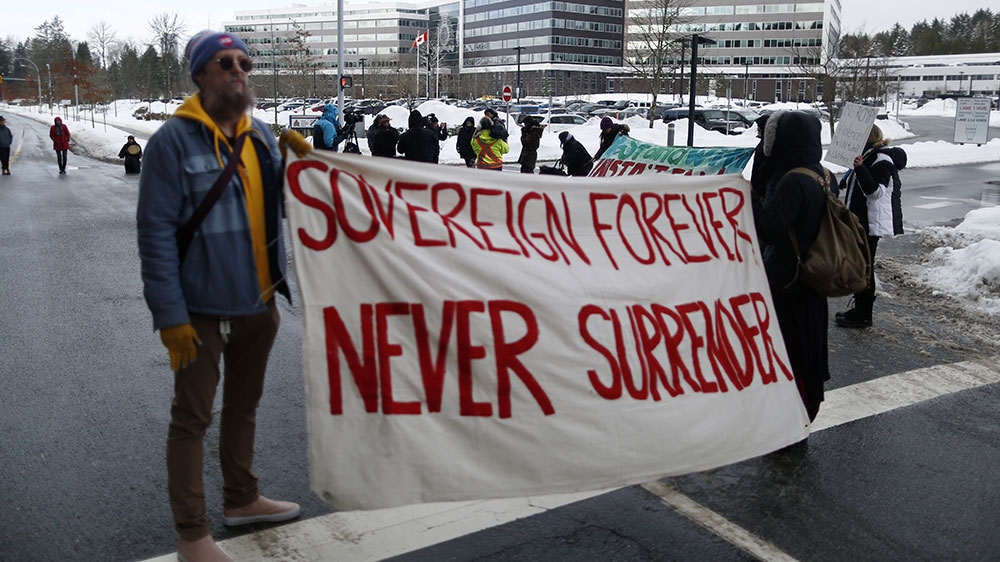
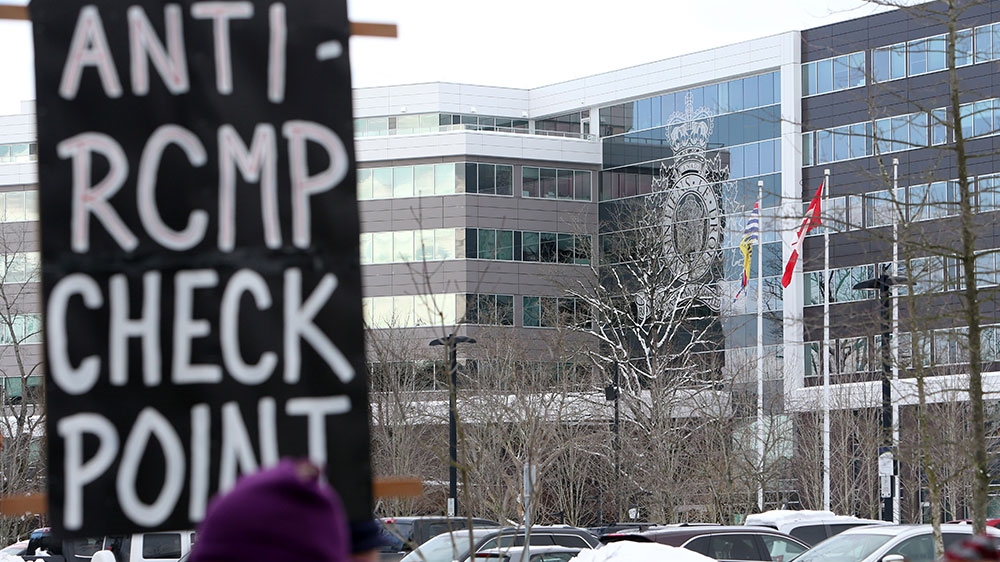
Supporters of the Wet'suwet'en nation, who oppose the construction of the Coastal GasLink pipeline, protest outside the provincial headquarters of the RCMP in Surrey, BC [Jesse Winter/Reuters]

The Wet'suwet'en hereditary chiefs, who hold authority over 22,000sq kilometres (8,494sq miles) of land, said they never consented to the 670km (416-mile) pipeline, which will cut across that area to transport natural gas from northeast BC to a terminal near the town of Kitimat.

The BC Supreme Court in December granted Coastal GasLink an injunction to continue building the pipeline and the company said it has reached agreements with 20 First Nations band councils along the route. The province also says the project has the necessary permits to move forward. "This project is proceeding and the rule of law needs to prevail in BC," Premier John Horgan said last month.

The hereditary chiefs argue that the band councils only hold limited authority over what happens on reserves, the First Nations communities established under Canada's Indian Act, while they hold decision-making power over the nation's traditional territory. The Supreme Court of Canada ruled in 1997 that the Wet'suwet'en hereditary chiefs never ceded authority over their lands.


What you do to one Indigenous person or one Indigenous nation affects all Indigenous peoples across Canada, across Turtle Island [North America] and across the world.

SOPHIA SIDAROUS, MEMBER OF METEPENAGIAG FIRST NATION

More than two dozen Wet'suwet'en land defenders and their supporters were arrested, APTN reported, in separate RCMP raids on a forestry road where camps and blockades had been erected to impede construction on the pipeline.

"When we see elders being disrespected by foreign entities like pipeline companies and when we see the Canadian government not respecting Indigenous peoples' rights, well that doesn't really fly with us," said Sidarous. "What you do to one Indigenous person or one Indigenous nation affects all Indigenous peoples across Canada, across Turtle Island [North America] and across the world."
Solidarity actions

Sidarous is one of many Indigenous people across Canada who have organised actions in solidarity with the Wet'suwet'en hereditary chiefs and land defenders.

Rallies, sit-ins and blockades have been organised in provinces from coast to coast to demand that RCMP officers leave Wet'suwet'en territory and that both the federal and BC provincial governments respect Indigenous sovereignty and rights.

In BC, people blocked access to the Port of Vancouver late last week and police arrested 43 people on Monday when they refused to clear the area. Traffic has also been temporarily halted in downtown Vancouver and on a bridge leading into the city, while Indigenous peoples and their supporters also blocked access into the provincial legislature in Victoria on Tuesday.

Natalie Knight, a Yurok and Navajo organiser based in Vancouver, was among dozens of people who occupied the office of BC Attorney General David Eby on Thursday morning.

Knight told Al Jazeera in a telephone interview from the sit-in that people were calling on Eby to respect Wet'suwet'en law and uphold the principles of the United Nations Declaration on the Rights of Indigenous Peoples (UNDRIP), among other demands.

Supporters of the Wet'suwet'en nation protest by blocking a road outside the provincial headquarters of the RCMP in Surrey, BC [Jesse Winter/Reuters]

Passed into law in BC in November 2019, UNDRIP states that Indigenous peoples should have "free, prior and informed consent" on matters that affect their rights, including resource development projects like the Coastal GasLink.

"This moment is a moment to take action and express our dissent," said Knight.

She said many people have rallied around the Wet'suwet'en because their struggle touches on deeper issues such as Indigenous land rights and sovereignty, and continuing colonialism in Canada. "People are really coming together, and community is being built in an incredible way on the streets," she added.
Railways blocked

Major railways have been blocked in solidarity with the Wet'suwet'en, as well.

On Thursday afternoon, Via Rail Canada - the country's passenger rail company - announced it was cancelling service along its network "effective immediately and until further notice". Via Rail operates more than 500 trains per week across 12,500km (7,767 miles), the company says.

Service had been suspended along the popular Toronto-Montreal line as a result of a blockade in Tyendinaga Mohawk Territory in Ontario. More than 250 trains and over 42,000 passengers had been affected, CBC News reported earlier this week, while industry experts said millions of dollars have been lost due to the stoppage.

Similar blockades also were erected in northern BC and in Manitoba, a province in central Canada.

The Gidimt'en Access Point, a blockade and camp erected by members of the Wet'suwet'en Nation's Gidimt'en clan, welcomed the news of the Via Rail shutdown on Thursday. "Canada is officially shutting down! We are so grateful for all the actions of solidarity," the group wrote on Facebook. "Keep up the pressure! We want the RCMP and CGL off our yintah [land]! We will not stop until they are."

Keeping warm on the Halifax solidarity blockade with the #wetsuweten, now 3.5 hours strong!#ShutCanadaDown #ShutDownCanada #wetsuwentenstrong #Unistoten #unistotensolidarity #AllEyesOnWetsuweten pic.twitter.com/PQ3MZUNZyx— Sakura Saunders (@sakura1979) February 11, 2020

South of Montreal in the province of Quebec, a Canadian Pacific Railway line has also been forced to stop operating after people from the Kahnawake Mohawk First Nation set up a blockade on their territory in solidarity with the Wet'suwet'en hereditary chiefs and land defenders.

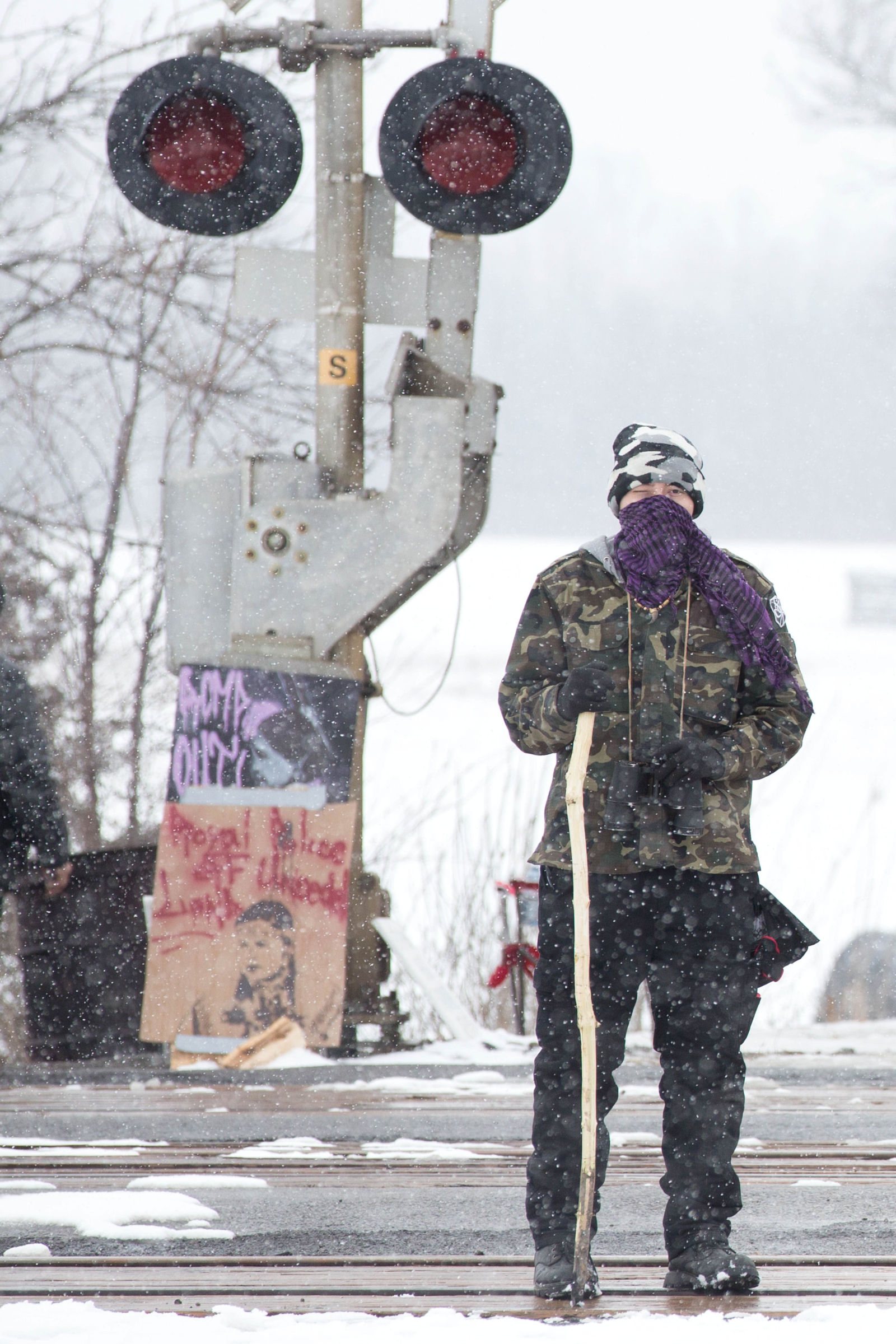
On Thursday morning, four people huddled around a fire next to the Kahnawake blockade. A plastic chair sat atop a large pile of snow set on the train tracks behind them. "RCMP OFF Wet'suwet'en LAND" read a cardboard sign leaning up against a snowbank next to the bright red flag of the Mohawk Warrior Society. "NO PIPELINE!" read another.

Signs from Kahnawake, a Mohawk First Nation, where people have set up a blockade [Jillian Kestler D'Amours/Al Jazeera]

People at the blockade did not answer Al Jazeera's requests for comment. "We're fighting so they can live in a country with free people and clean water. We're fighting for life," James Nolan, who was at the site this week, told The Montreal Gazette newspaper.

In the nearby town of Delson, Quebec, a railway station on the affected line was empty on Thursday. "Service interrupted due to a protest near the train tracks," read a message in French displayed on a screen on the train platform.

"It's incredibly inspiring and powerful to watch because this is the greatest display of sovereignty since Standing Rock," said Catie Galbraith, 19, referring to the Indigenous-led movement in opposition to the Dakota Access Pipeline project in the United States.

"It feels as though we have reached a turning point, that Indigenous peoples are more powerful than we've ever been and we're fighting back in a way that's more effective than it's ever been. It just feels like we're on the verge of a real shift."

Galbraith, a member of the Chickasaw Nation of Oklahoma and co-chair of the Indigenous Student Alliance at McGill University in Montreal, helped organise a sit-in last Friday and a demonstration on Monday at Canadian Prime Minister Justin Trudeau's constituency office in the city.

About 30 people participated in the sit-in, she said, while a few hundred people took part in the demonstration. "There was just kind of a feeling of having to do something," Galbraith told Al Jazeera.

People were especially moved to act because a member of the Indigenous community at McGill was arrested at one of the Wet'suwet'en camps. "It hit very close to home," she added.
'Not standing down'

On Wednesday, Horgan, the BC premier, criticised the recent Wet'suwet'en solidarity rally in Victoria. "It was unacceptable to me and I know it's unacceptable to a vast majority of British Columbians," said Horgan about the participants who blocked staff from entering the provincial legislature.

"Peaceful demonstration is fundamental to our success as a democracy, but to have a group of people say to others, 'You are not legitimate. You are not allowed in here. You are somehow a sell-out to the values of Canadians,' is just plain wrong," he said.

Late on Thursday, the BC Supreme Court issued an injunction giving the authorities the power to arrest anyone impeding the work of the legislature or blocking access to the buildings. People will be picketing BC government offices on Friday to show continued support for the Wet'suwet'en.

Supporters of the Wet'suwet'en nation protest outside the provincial headquarters of the RCMP in Surrey, BC [Jesse Winter/Reuters]

Trudeau addressed the demonstrations this week, saying that while he respected peoples' right to protest peacefully, Canada "is also a country of the rule of law".

"We need to make sure those laws are respected. That is why I am encouraging all parties to dialogue to resolve this as quickly as possible," the prime minister, who had promised to make reconciliation with Indigenous peoples a top priority, told reporters.

Meanwhile, federal Indigenous Services Minister Marc Miller on Thursday offered to meet some of the protest leaders if they promised to discontinue their railway blockades.

But Knight said she and others were undeterred as their demands had not been met. "In the same spirit of the [Wet'suwet'en] hereditary chiefs not standing down, not being bullied by the RCMP … we will do the same in the streets here in Vancouver. We are not standing down."

The powerful example of the Wet’suwet’en resistance
By Nora Loreto | Opinion | February 13th 2020

Lekeyten of Kwantlen First Nation, photographed at the Gidimt'en Checkpoint on Wetsuewt'en territory in 2019. Photo by Michael Toledano

It took longer than it should have, but Canadians are finally paying attention to the struggle at Wet’suwet’en. The hereditary chiefs and supporters first built cabins on their traditional territory in 2010 to try to stop a pipeline from being built across their land but their campaign has grown thanks to effective solidarity actions.

In an era where despair and cynicism about the fate of the planet is widespread, the campaign at Wet’suwet’en has been an important example of what it takes to resist corporate projects that will further pollute the land and air.

The camps at Wet’suwet’en are trying to stop Coastal GasLink from building a pipeline through their traditional territory. The pipeline will carry liquefied natural gas (LNG) to a port at Kitimat where it can be shipped overseas, making a few people extremely rich.

In solidarity with their camps, actions and blockades have been set up all over Canada. Regular protests, including in Vancouver and Victoria, have stopped traffic, disrupted ferry service and even pushed the Throne Speech back, as politicians were physically blocked from entering the Legislature.

WHAT PEOPLE ARE READING

Scheer blasted as 'racist and absurd' for telling Wet'suwet'en supporters to 'check their privilege'
Where's Kenney's War Room money really going?
Elizabeth May asks, 'At what cost, Canada?'

In Halifax, Intergovernmental Affairs Minister Chrystia Freeland was blocked from entering city hall to meet with mayor Mike Savage.

People have occupied banks and have shut down highways. But the highest profile actions right now are happening along rails: supporters have occupied railway tracks in Toronto, at Tyendinaga Mohawk Territory on the Toronto-Montreal and Toronto-Ottawa rail corridors, and on the Candiac commuter rail line just outside of Montreal.

These actions are non-violent civil disobedience at their finest: they have caused economic disruption and, importantly, have forced Canadians to pay attention to the fight against Coastal GasLink.

The symbolism of choosing to shut down rail is important. Canada’s railway is entwined with our history of colonialism. Canada’s first major political scandal saw Prime Minister John A. MacDonald forced to resign for having accepted political donations in exchange for the contract that would be the railway.


The railway was the critical link that allowed Canada to flood the west with White settlers while also sending state troops to forcibly confine Indigenous nations to reserves. The railway played a key role in genocide.

And, the CPR was built using effectively slave labour from Chinese workers, as many as 4000 who died as a result extreme and dangerous working conditions.

In an era where despair and cynicism about the fate of the planet is widespread, the campaign at Wet’suwet’en has been an important example of what it takes to resist corporate projects that will further pollute the land and air.


When Indigenous people block rail lines, they’re targeting the veins of colonial Canada. By stopping the flow of blood, they are forcing Canadians to pay attention.

I love rail. Maybe it’s because my parents held early birthday parties for me at the Halton County Railway Museum in Rockwood, Ontario. Maybe it’s because I used to run outside, barefoot, whenever we heard the freight trains pass, half a mile up the road from my Grandmother’s house, and count the number of cars the train had. Maybe it was the faint memory I have of travelling to northern Ontario by train at the age of three and watching the sun dance through the tree branches we passed (those tracks have all been removed). There is a sentimental quality to watching the world pass while you’re on a train, and it symbolizes so many contradictions of living in a settler-colonial state.

That’s why these solidarity actions can’t simply be seen as protests. As Montreal Gazette journalist Christopher Curtis posted on Twitter, “In Kahnawake, the blockade of a commuter rail to Montreal is about solidarity with the #Wetsuweten but also pride in Turtle Island, in sovereignty, in securing a future for Indigenous youth across the country.”

The desire to push through this pipeline project under the guise of economic prosperity is another in a long list of examples where profits are king and the damage that a pipeline will cause to the land and air don’t matter. Our obsession with resource extraction will be our eventual demise. We know that the atmosphere is warming. We know that LNG pipelines leak methane into the atmosphere. We know that pipeline projects destroy forests and waterways. So why are politicians hell-bent on ensuring this project passes?

The LNG market is a trillion-dollar industry whose time may be running out. Large infrastructure projects like pipelines cannot get built without the full support of government, even if that support means sending in militarized state agents to force people off their land.

We need to listen to the Wet’suwet’en traditional leadership. We need to heed their call that this project is folly and needs to be stopped. They’re experts in knowing how to care for the land: they’ve been doing this for time immemorial.

Yes, even when it inconveniences us. Even though my parents had their trip to visit me this weekend cancelled by Via Rail, it’s an inconvenience that pales in comparison to the “inconvenience” that Canada has imposed on Indigenous nations on this land. And just wait – the “inconvenience” that will accompany catastrophic climate change will be a different kind of chaotic hell.

We need to act before it’s too late, and Wet’suwet’en shows us the way.
BACKGROUNDER
What we mean when we say Indigenous land is 'unceded'
By Emma McIntosh | Analysis, Energy, Politics | January 24th 2020
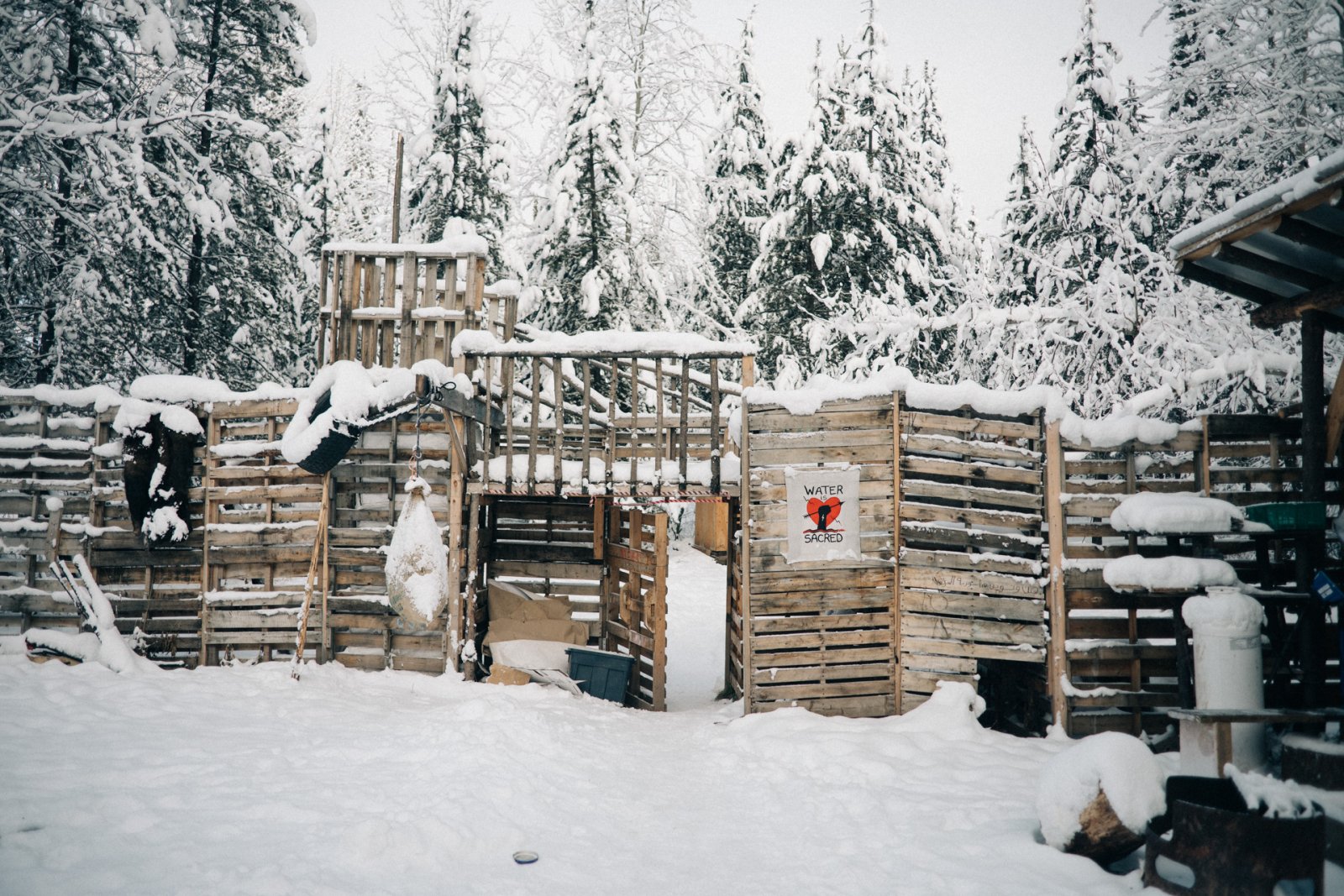
Inside the Gidimt'en Checkpoint on Wet'suwet'en territory in December 2019. The camp was dismantled by Coastal GasLink contractors in early 2019, and then rebuilt and reoccupied. Photo by Michael Toledano
Previous story

You might be living on unceded land.

To be more precise: the Maritimes, nearly all of British Columbia and a large swath of eastern Ontario and Quebec, which includes Ottawa, sit on territories that were never signed away by the Indigenous people who inhabited them before Europeans settled in North America. In other words, this land was stolen. (It's worth noting that territories covered by treaties also weren't necessarily ceded ⁠— in many cases, the intent of the agreements was the sharing of territory, not the relinquishing of rights.)

What to do about it, however, is deeply complex ⁠— and legal questions about how to handle claims to unceded land have become a subject of public discussion as members of the Wet’suwet’en Nation in northern British Columbia have reoccupied their territory and attempted to block the Coastal GasLink pipeline. Similar cases over Indigenous land titles are moving through courts across Canada.

Canada’s Constitution is clear that Indigenous land rights exist, said Benjamin Ralston, a lecturer and researcher at the Indigenous Law Centre at the University of Saskatchewan. But in practice, fights over exactly what those rights are can take decades to resolve in court or in treaty negotiations, revealing “cognitive dissonance” in the system.

WHAT PEOPLE ARE READING

Scheer blasted as 'racist and absurd' for telling Wet'suwet'en supporters to 'check their privilege'
Where's Kenney's War Room money really going?
Elizabeth May asks, 'At what cost, Canada?'

“The real problem is, what do we do about it now, while these slow processes are proceeding?” he said.

In the case of the Wet’suwet’en and Coastal GasLink, at issue is a divide between the traditional Wet’suwet’en legal system, Canada’s legal system, those who have stood to protect the land in question and those who want to see the pipeline built.

Under Wet’suwet’en law, authority over the nation’s 22,000 square kilometres of unceded territory lies with hereditary chiefs from five clans, who oppose the pipeline. However, there are also five elected band councils created by Canada’s colonial Indian Act, and some of the councils have supported the project.

A 1997 Supreme Court of Canada decision affirmed that the provincial government can’t extinguish Wet’suwet’en rights to their land. However, the court also sent the case back from a second trial that hasn’t yet happened, leaving key questions unresolved.


Last year, the RCMP violently arrested Wet’suwet’en people and supporters in the disputed area, with the Guardian reporting late last year that police had been prepared to use lethal force. Earlier this month, the RCMP set up a checkpoint to control access to the area after a B.C Supreme Court judge extended an injunction to force out the Wet’suwet’en in the camps and allow construction on the pipeline to continue.

“We are not trespassing,” Ta'Kaiya Blaney, one of several Victoria, B.C., activists arrested and released after a protest supporting the Wet’suwet’en earlier this week, said in a video posted on Facebook.

Wet’suwet’en Nation territory in northern British Columbia is just one example of a dispute over unceded land.


“Coastal GasLink is trespassing, those cops are trespassing. They have no jurisdiction to violate Indigenous Peoples and Indigenous youth on stolen land.”
'Duty to consult' an imperfect solution

The Wet’suwet’en are far from the only ones asserting their title to their traditional lands.

In Nova Scotia, Mi’kmaq people have pushed for recognition of their unceded territory. In Ottawa, several Algonquin groups claim the land that Parliament Hill and the Supreme Court of Canada sit on. And in 2014, Tsilhqot'in Nation in B.C. became the first to prove title to their land in court.

In 2017, about 140 groups of Indigenous people who never signed treaties were negotiating with Canada’s federal government, the New York Times reported.

Several court cases have reaffirmed that the Canadian government has a duty to consult Indigenous people in cases that will impact their rights, which is meant to be an extra protection while land-title cases get resolved. But that protection is imperfect: duty to consult “is not necessarily going to give you the full benefit of stopping a project,” Ralston said.

In general, courts have also been reluctant to allow Indigenous land claims as a reason to block injunctions.

In a broader sense, however, there are international considerations as well. In November, B.C. passed a bill aligning its laws with the United Nations Declaration on the Rights of Indigenous Peoples (UNDRIP), a landmark document that, among other things, protects Indigenous Peoples’ right to self-government and right to consent to resource-development projects on their territories.

B.C. is the first Canadian jurisdiction to implement UNDRIP ⁠— the document was passed by the UN General Assembly in 2007 over Canada’s objections, and the country has so far been reluctant to formally implement it. It's not clear how the document could play in future disputes.

In the case of Coastal GasLink, B.C.'s independent Human Rights Commission, Amnesty International and the UN Committee on Racial Discrimination have all criticized the provincial government, saying Coastal GasLink violates UNDRIP principles.

B.C. Premier John Horgan, meanwhile, has said the province’s law is not retroactive and Coastal GasLink will go ahead.

Editor's Note: This story was updated at 8:26 p.m. on Jan. 25, 2020 include additional information about treaties.

January 24th 2020


Emma McIntosh
Reporter @EmmaMci

Comments

Anthony Christie | 21 days ago


"...cases over Indigenous land titles are moving through courts..."
I've always wondered... by what right do setter (colonizer, conqueror...?) courts even claim jurisdiction? By what right are unceded territories even called "Canada"? Is there some internationally recognized legal principle here that I'm missing? Or does it all simply boil down, in the last analysis, to realpolitik?

Anthony Christie | 20 days ago


Anyone? Emma? Richard Wagner? Smolgelgem? Bueller? Spicoli? Anyone?

Jan Steinman | 19 days ago


"by what right do setter (colonizer, conqueror...?) courts even claim jurisdiction?"Good question. I don't have an answer.

Historically, a "conqueror" gets to do as they damn well please, so in some ways, appealing to the conqueror's court system that one is an un-conquered, sovereign nation, is self-defeating — it's an admission that one has been conquered.

But the reality is that might be as good as it gets.

Indigenous people could go to the UN to try to deal with their co-sovereign oppressors, but the UN has already said Canada is trespassing on Indigenous territory. The UN could use the Security Council to invoke sterner measures, including sending in peace-keepers, but the Security Council permanent members with veto power include many nations that also suppress Indigenous rights. Could you imagine the US or Russia sending in peace keepers to counter the RCMP, when they, themselves, violently quell Indigenous rights?

So I think the simple answer is also the most distasteful: there is no "right" for courts of conquerers to judge those conquered.

But we Canadians do have a strong sense of ethics… as long as it doesn't affect us individually! Canadian shame and guilt over residential schools, the "60s scoop," and many other clear violation of human rights are all that allow us to avoid such a situation occurring again.

Which is a good thing, in this case. It seems clear that the Coastal GasLink has about as much chance of being profitable as fracked oil has turned out to be — propped up by fleecing investors.

That leaves the matter of "in the public interest." It seems to me that our "leaders" have interpreted "public interest" much as a junkie regards opioids — they know it will kill us, but we just cannot stop. So we go on mainlining fossil fuel, knowing it will someday kill us.

Anthony Christie | 19 days ago


Thanks, Jan and Pam.

PAMELA FITZGERALD | 19 days ago


Generally the principle used by European countries to rationalize the theft of Aboriginal lands was called "Terra Nullius". In other words, if no one lived on the land, it was yours for the taking. Canadian courts have generally taken the position that Terra Nullius does not apply to land considered to be part of Canada since this land was rarely unoccupied.

Given that many Indigenous peoples were decimated by European diseases before even meeting settlers, I see it more of a question of might makes right. Indigenous Nations were not in a position to defend themselves and their lands if many or ever a majority of their people had been wiped out by disease.

Stephen Clarke | 6 days ago


https://en.wikipedia.org/wiki/Right_of_conquest

The "right of conquest" is the legal precedent, tho it's not stated as such it's the elephant in the room

Next story
The Wet'suwet'en told supporters to 'shut down Canada.' Now trains are cancelled nationwide

By Emma McIntosh | Analysis, Energy, Politics | February 13th 2020

A protester stands on the closed train tracks on Day 8 of the protest in Tyendinaga Mohawk Territory, near Belleville, Ont., on Feb.13, 2020. Photo by Lars Hagberg / The Canadian Press

Last week, as militarized police arrested members of the Wet’suwet’en Nation in British Columbia to clear them out of a pipeline’s path, Canada’s decision-makers didn’t seem to be paying attention.

Premier John Horgan had declined to meet with the nation’s hereditary chiefs, who oppose the planned pipeline that would run through their traditional territory. Prime Minister Justin Trudeau refused as well, deferring to the province. And RCMP officers were advancing down a logging road where Wet’suwet’en community members were camped out to block the project, raiding checkpoints one by one.

And so Molly Wickham, a spokeswoman for one of the Wet’suwet’en Nation’s five clans, Gidimt’en, issued a plea.

“Stand up and fight back with us,” Wickham said in a grainy video posted to Facebook.

WHAT PEOPLE ARE READING

Scheer blasted as 'racist and absurd' for telling Wet'suwet'en supporters to 'check their privilege'
Where's Kenney's War Room money really going?
Elizabeth May asks, 'At what cost, Canada?'

“Shut down Canada. Do whatever you can do.”

People listened. And on Thursday, their efforts seem to have culminated in a level of disruption that’s near-impossible to ignore: after eight days of protests blocking key rail lines, CN Rail announced Thursday that it would temporarily shut down all of its operations east of Toronto. Via Rail, which uses CN’s tracks, cancelled passenger-train service across the country.

Now, it appears everyone from Bay Street to Parliament Hill to the dinner table is paying attention.

Even before the announcements Thursday, industrial groups were sounding alarms about the risk to Canada’s economy, with repercussions rippling into agriculture, mining and forestry. Afterward, the union representing CN workers warned of possible layoffs.


“Our union — and thousands of working families — are in crisis,” said a statement from the national president of Teamsters Canada, François Laporte, who called the rail blockades a “catastrophe.”

“This situation cannot go on forever.”

The Wet'suwet'en asked supporters to 'shut down Canada.' Now, trains are cancelled nationwide.


Not everyone is supportive of the Wet’suwet’en cause: a poll released by the non-profit Angus Reid Institute on Thursday showed that Canadians are very much divided on the issue, with two in five supporting the Wet’suwet’en solidarity protesters and a little more than half favouring Coastal GasLink. Oil-rich and pipeline-friendly Alberta was far less likely to support the Wet’suwet’en than people in B.C. or Quebec, and those who supported the protesters were more likely to be young women, lower-income and politically left-leaning.

But the magnitude of the demonstrations has been significant, shutting down roads, bridges and other key infrastructure in addition to rail lines.

“The only way they’re going to pay attention is if we hit them where it hurts: their economy,” Sedalia Kawennotas, a Mohawk elder, told the Montreal Gazette this week. “If this is an inconvenience for commuters, think about us.”

Many of the demonstrations are Indigenous-led ⁠— the Mohawks of Tyendinaga, for example, have set up a blockade along a rail line near Belleville, Ont., effectively shutting down one of the most crucial rail corridors in the country. But as photos across social media show, many of the protesters are non-Indigenous, too.

In Victoria, protesters blocked all entrances to the B.C. legislature on the day of the throne speech. And 57 people were arrested in Vancouver on Monday for blocking ports. More have occupied politician’s offices across the country.

Horgan has now said his government is willing to meet with Wet’suwet’en and Gitxsan hereditary chiefs to discuss a rail blockade in northern B.C. The Gitxsan had been blocking the rail line there in support of their Wet’suwet’en neighbours. Trudeau personally wrote to the chiefs to pledge to send Crown-Indigenous Relations Minister Carolyn Bennett.

Meanwhile, federal Indigenous Services Minister Marc Miller has requested to meet Saturday with the Mohawks of Tyendinaga.

Horgan and Trudeau spoke on the phone Thursday about the urgent need to resolve the blockades, the Prime Minister’s Office said. Both politicians campaigned on messages of reconciliation, but have also supported Coastal GasLink and taken criticism in recent weeks for the apparent contradiction.

“The prime minister and premier discussed how freedom of expression is an important democratic right, but activity must respect the courts and act within the law,” the Prime Minister’s Office said. “The prime minister and premier also discussed how progress on both climate change and reconciliation must continue to be at the forefront of all government actions.”

In an open letter to federal Transport Minister Marc Garneau, Canadian Chamber of Commerce president and CEO Perrin Beatty said the rail disruption is an “emergency for the Canadian economy.”

Beatty warned that the rail disruptions are blocking perishable goods, such as grain, along with timber, aluminum and propane, for Quebec and Atlantic Canada.

“Factories and mines may soon face difficult decisions about their ability to continue operations, and the damage to Canadian supply chains will extend beyond our borders and harm our reputation as a stable partner in international trade,” the letter said.

“We urge the government to act without further delay.”


Reconciliation is dead. Revolution is alive.

Watch the video: https://t.co/ffp9PdIXII

Support: https://t.co/vaiMpGbSSD#WetsuwetenStrong #Unistoten #ReconciliationIsDead pic.twitter.com/BIBz2uOda2— Unist'ot'en Camp (@UnistotenCamp) February 13, 2020
The confrontation over Coastal GasLink

Wet’suwet’en solidarity demonstrations began last Thursday, after the RCMP began its first wave of raids on the northern B.C. First Nation.

RCMP officers were enforcing a court injunction to force the Wet’suwet’en and their supporters out of the path of Coastal GasLink. The natural gas pipeline would run through the nation’s unceded territory, even though the Wet’suwet’en hereditary chiefs have not consented.

Under their traditional law, hereditary chiefs of five clans have authority over the nation’s 22,000 square kilometres of unceded land. The community has since built four camps along a remote forest road in the territory as it attempts to block the project.

The owner of Coastal GasLink, TC Energy (formerly known as TransCanada), touts agreements it has made with elected Wet’suwet’en band councils, which were created under Canada’s colonial Indian Act. The hereditary chiefs say the elected councils have jurisdiction over reserve lands, but not the area adjacent to the pipeline, and point to a 1997 Supreme Court of Canada decision that backs their land claim.

Last year, officers enforcing an earlier court injunction violently arrested 14 people at one Wet'suwet'en camp. This year, heavily armed police arrested 28 people over five days of raids, from Thursday to Monday. Though the enforcement of the injunction has ended, the RCMP maintains a presence in Wet’suwet’en territory.

It’s not clear how long it could take for officials to clear the rail blockades. Though CN Rail has obtained injunctions to force protesters off the railroad tracks, local police haven’t yet enforced the court orders.

The Gitxsan agreed to take down their blockade ahead of their meeting with provincial and federal officials. But others, such as the Mohawks of Tyendinaga, say they won’t leave until the RCMP pulls out of Wet’suwet’en territory.


RCMP breach final Wet’suwet’en camp in the path of Coastal GasLink pipeline
By Emma McIntosh | News, Energy, Politics | February 10th 2020

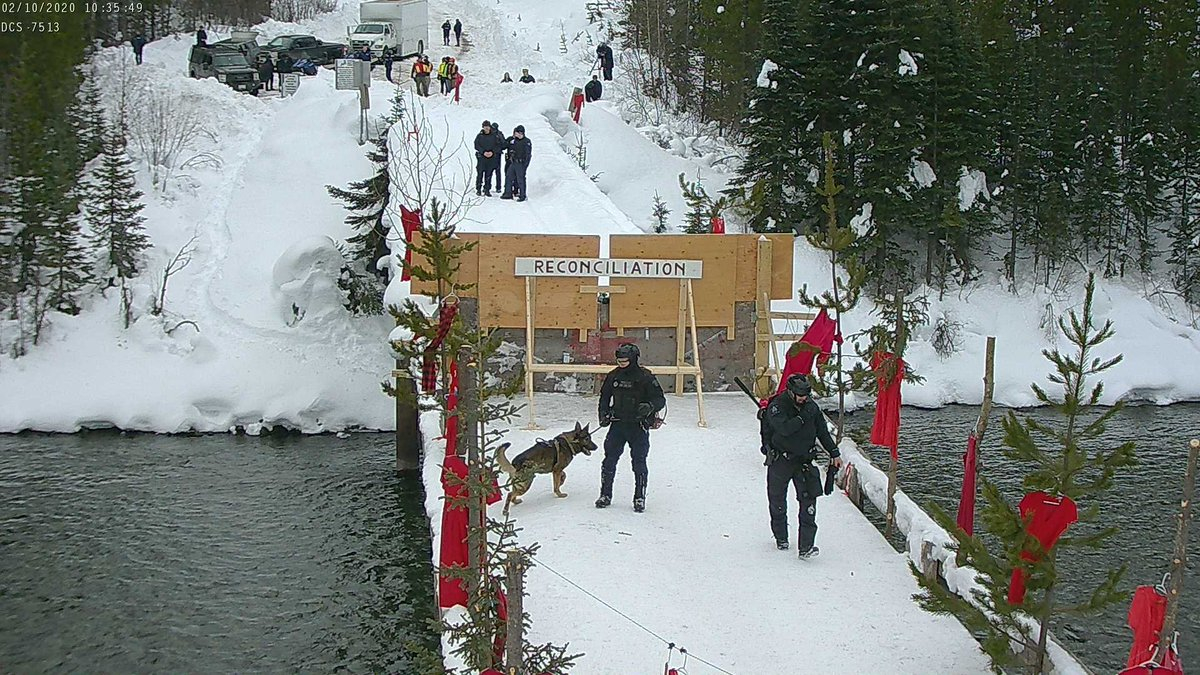
RCMP officers cross the bridge leading to Unist'ot'en Camp in Wet'suwet'en territory in northern British Columbia on Feb. 10, 2020. Photo from Unist'ot'en Camp on Twitter


On the fifth day of RCMP raids on Wet’suwet’en Nation territory, police breached the final camp standing in the way of the Coastal GasLink pipeline in northern British Columbia.

A convoy of officers crossed the river with police dogs while tactical teams behind them pointed their guns at the camp, Unist’ot’en.

They walked past red dresses hung to honour missing and murdered Indigenous women and girls. (Later, officers and pipeline workers pulled them down.) They sawed apart a wooden gate with the word “reconciliation” painted on it in bold, black letters. They extinguished a sacred fire.

While the world watched through livestreams on social media, the RCMP arrested seven people. Among them were several of the First Nation’s matriarchs, who had been in the middle of a ceremony, and the director of a $2-million healing centre at Unist’ot’en.

WHAT PEOPLE ARE READING

Scheer blasted as 'racist and absurd' for telling Wet'suwet'en supporters to 'check their privilege'
Where's Kenney's War Room money really going?
Elizabeth May asks, 'At what cost, Canada?'

They loaded the matriarchs and their supporters into the back of police vans, handcuffing them with zip ties.

“These arrests don’t intimidate us,” Unist’ot’en Camp said in a statement Monday afternoon.

“Colonial orders don’t intimidate us. Men in suits and their money don’t intimidate us. We are still here. We will always be there. This is not over.”

The RCMP are enforcing a court injunction to force the Wet’suwet’en and their supporters out of the path of Coastal GasLink. The natural gas pipeline would run through the nation’s unceded territory, even though the Wet’suwet’en hereditary chiefs have not consented.


The tiny community has built four camps along the Morice West Forest Service Road, about 1,200 kilometres from Vancouver, as they seek to reoccupy their unceded territory and oppose the pipeline.


On the fifth day of RCMP raids on #Wetsuweten territory in B.C., police breached the final camp blocking #CoastalGasLink. They arrested seven people, including Wet'suwet'en matriarchs.


11:07 am - Gates dismantled by RCMP. Confirmed 7 arrests.
Genocide ongoing. #AllEyesOnUnistoten #AllEyesOnWetsuweten #WetsuwetenStrong #ReconciliationIsDead #shutdowncanada #unistoten #landback #thetimeisnow pic.twitter.com/IUXWPrawH9— Unist'ot'en Camp (@UnistotenCamp) February 10, 2020

Since Thursday, the RCMP have advanced along the remote, snowed-in road and stormed through each camp one by one. Unist’ot’en, built in 2010, is the oldest and largest camp. It’s not clear how many Wet’suwet’en and supporters are currently housed there.

At about 9 a.m., officers approached Unist'ot'en Camp. In a press release Monday night, the RCMP said teams spent two hours trying to talk to the people there and asking them to remove the gate leading to the site.

Matriarchs Freda Huson (also known as Chief Howihkat), Brenda Michell (also known as Chief Geltiy) were on the other side of the gate, drumming and singing as they performed a ceremony to "call on our ancestors and to honour missing and murdered Indigenous women and girls," Unist'ot'en Camp said in a statement.

Both were eventually arrested. Huson is the director of the Unist'ot'en Healing Centre, built at the camp as a space for community members to reconnect with traditional practices to recover from grief, loss and trauma related to historic and ongoing colonialism.

The community and its supporters have poured more than $2 million into the construction of the centre. It recently received a $400,000 grant from the First Nations Health Authority to continue to run land-based trauma and addictions treatment programming.

The healing centre's clinical director, Dr. Karla Tait, was also arrested at the camp Monday, along with several other supporters.

No one inside the structures at Unist'ot'en Camp, including the healing centre, were arrested. The rest of the camp appeared to have been left intact.

"No use of force was used, and no injuries resulted from the arrests," the RCMP said in a statement. "They have been transported to Houston RCMP detachment where they can agree to be released on conditions or held for court."

The RCMP also said its "major enforcement operations have concluded" on Wet'suwet'en territory. The road will re-open soon, the statement added, though officers will continue to monitor the area.

The B.C. government's decision to approve Coastal GasLink over the objections of the Wet'suwet'en heredtiary chiefs has been condemned by the B.C. Human Rights Commission, the B.C. Civil Liberties Association and the United Nations Committee on the Elimination of Racial Discrimination.

During the raids, the RCMP repeatedly interfered with freedom of the press.

On Thursday, two journalists were detained and dropped off in a parking lot, and told they’d be arrested if they recorded tactical officers with rifles and police arresting a woman by smashing her truck window and pulling her through. On Friday, one reporter was forced to stand in a ditch with no cell service, unable to witness arrests or communicate with his editors. A reporter was temporarily blocked from going into the area Saturday, and on Monday, a video journalist was told they’d be arrested if they walked near a road where arrestees were being held.

Those infringements on press freedom have been condemned by the international Committee to Protect Journalists, Reporters Without Borders, the Canadian Association of Journalists, Canadian Journalists for Free Expression and Amnesty International.


In a statement, RCMP Senior Sommander and Chief Supt. David Attfield said he was "satisfied" with officers' performance during the raids.

"This was a very challenging situation, and I am proud of the professionalism displayed by our members," the statement read.

8:22 am - @UnistotenCamp matriarchs drumming on bridge, as RCMP convoy advances. #AllEyesOnUnistoten #AllEyesOnWetsuweten #WetsuwetenStrong #ReconciliationIsDead #shutdowncanada #unistoten #landback #thetimeisnow pic.twitter.com/dRv65xZC7H— Unist'ot'en Camp (@UnistotenCamp) February 10, 2020
The clash over Coastal GasLink

Coastal GasLink is owned by TC Energy, a Calgary-based energy company formerly known as TransCanada Corp. If built, the 670-kilometre pipeline would cut through Wet’suwet’en territory to bring natural gas from northeastern B.C. to the proposed LNG Canada facility in Kitimat, B.C., for processing and export.

The project has been bitterly divisive for the Wet'suwet'en community, raising crucial questions about Indigenous land title. It also exposes a deep clash between Canada’s colonial law and that of the Wet’suwet’en.

The Wet’suwet’en have never ceded their land. And under Wet’suwet’en law, hereditary chiefs of five clans have authority over the nation’s 22,000 square kilometres of unceded territory. The hereditary chiefs have repeatedly opposed Coastal GasLink.

The hereditary chiefs’ land claim is backed by a 1997 Supreme Court of Canada decision. But a second trial ordered by the court hasn’t yet happened and many aspects of the dispute are still unresolved.

TC Energy, meanwhile, touts agreements it’s made with elected Wet’suwet’en band councils, which were created under Canada’s colonial Indian Act. The elected councils have jurisdiction over reserve lands but not the area adjacent to the pipeline.

The pipeline company is still awaiting one final greenlight from B.C.’s Environmental Assessment Office before it can begin construction in the area. Last week, the Wet’suwet’en also filed an application to have a judge toss out the province’s approval of the pipeline, saying the company has “flouted” the conditions laid out in the certificate it received from the government.

This is the second time the RCMP have raided Wet’suwet’en territory in the name of Coastal GasLink. Last year, officers enforcing an earlier court injunction violently arrested 14 people at a Wet'suwet'en camp. Documents later revealed by the Guardian showed that officers had been prepared to use lethal force.

In the aftermath of that raid, the hereditary chiefs agreed to allow GasLink in for pre-construction work on the pipeline, saying they were concerned about safety. But the hereditary chiefs evicted the company earlier this year, days after a B.C. Supreme Court judge granted Coastal GasLink the second injunction on Dec. 31.

The RCMP began ramping up their presence on Wet’suwet’en territory on Jan. 13, putting up a blockade at the 27-kilometre mark of the road. While the hereditary chiefs and the province negotiated ⁠— talks broke down last Tuesday night ⁠— officers poured into the surrounding towns, staging to enforce the second injunction.

The first round of raids began hours before dawn Thursday. Officers stormed a media camp and supply post at the 39-kilometre mark of the snowy forest road, arresting four.

They arrested six more during Friday’s raid on the Gidimt’en Checkpoint at the 44-kilometre mark of the road. After a seven-hour standoff, the camp was still standing and several people remained barricaded inside a nearby trapping cabin.

That night, Wet’suwet’en hereditary chiefs and their supporters used their vehicles to block RCMP officers from leaving the area to process four pipeline opponents who were arrested that day. They were at a camp at the 27-kilometre mark of the road, which RCMP had previously said was outside the “exclusion zone” ⁠— or restricted area ⁠— covered by the injunction.

But police extended the exclusion zone late Friday to include the 27-kilometre camp and arrested 11 people there on Saturday. Tensions simmered on Sunday as RCMP approached Unist'ot'en and prepared for Monday's raid.

We are still here, and are joined by Piper the pipeline w/ Artists for Climate & Migrant Justice & Indigenous Sovereignty. We’ve been out since 11am in solidarity with the Wet’suwet’en as their land is being raided by the RCMP for a pipeline. #AllEyesOnWetsuweten #ShutDownCanada pic.twitter.com/QeWAw6nbpQ— Rising Tide Toronto (@RisingTideTor) February 8, 2020

Those arrested Thursday were released without charges. One person who was arrested Friday was released the same day. The rest of the people arrested Friday and Saturday appeared in court Monday and were released afterwards. Unist'ot'en Camp said several of those arrested Monday were released later in the evening.

Meanwhile, solidarity demonstrations have played out across the country since Thursday, some shutting down key infrastructure.

Tyendinaga Mohawk people near Belleville, Ont. blocked rail lines, cutting off train service between Ottawa, Montreal and Toronto. A stretch of railway in northern B.C. has also been taken over by the Gitxsan, longtime neighbours and allies of the Wet’suwet’en. CN Rail has obtained court injunctions to force protestors in both locations out of the way.

Elsewhere, more than 30 people who occupied the Port of Vancouver in support of the Wet’suwet’en were also arrested Monday.

Greta Thunberg, the Swedish teen climate activist, has also tweeted her support.

B.C. Premier John Horgan made his first public comments about the raids Monday, saying he felt confident a "positive reconciliation initiative" is possible in the area but acknowledging that there would be "challenges."

Two months ago, B.C. passed a bill to align its laws with the United Nations Declaration on the Rights of Indigenous Peoples, a landmark international document that, among other things, gives Indigenous people the right to be consulted over resource projects on their territories. Though Coastal GasLink would appear to contradict that bill, Horgan has previously said the law is not retroactive and the pipeline will go ahead.

"Governments do not direct the courts, nor do we direct the RCMP," Horgan said Monday. "I respect everyone's right to lawful protest, but when you're interfering with the operation of the economy... that becomes a challenge."

Editor's Note: This story was updated at 11:48 p.m. Eastern time to include statements from the RCMP, Unist'ot'en Camp and Premier John Horgan.
Kate Gunn and Bruce McIvor: The Wet'suwet'en, Aboriginal title, and the rule of law—an explainer
COMMENTARY   by Guest on February 13th, 2020

COLONIZATION ROAD SCREEN SHOT
By Kate Gunn and Bruce McIvor


The RCMP’s enforcement of the Coastal GasLink injunction against the Wet’suwet’en has ignited a national debate about the law and the rights of Indigenous people.

Unfortunately, misconceptions and conflicting information threaten to derail this important conversation.

Below, we attempt to provide clear, straightforward answers to address some of these fundamental misunderstandings.
What about support for the project from the Wet’suwet’en elected Chiefs and Councils?

Media outlets across the country have repeatedly reported that First Nations along the pipeline route, including the Wet’suwet’en, have signed agreements in support of the project.

Underlying this statement are several key issues that require clarification.

First, the Wet’suwet’en, like many Indigenous groups in Canada, are governed by both a traditional governance system and elected Chiefs and Councils.

The Chief and Council system exists under the Indian Act, a piece of federal legislation. It was introduced by the federal government in the 19th century as part of Canada’s attempts to systematically oppress and displace Indigenous law and governance.

The Wet’suwet’en hereditary governance system predates colonization and continues to exist today. The Wet’suwet’en and Gitxsan Hereditary Chiefs, not the Indian Act Chiefs and Councils, were the plaintiffs in the landmark Delgamuukw-Gisday'way Aboriginal title case. They provided the court with exhaustive and detailed evidence of the Wet’suwet’en and Gitxsan governance system and the legal authority of Hereditary Chiefs.

Unless otherwise authorized by the Indigenous Nation members, the authority of elected Chiefs and Councils is limited to the powers set out under the Indian Act. The Indian Act does not provide authority for a Chief and Council to make decisions about lands beyond the boundaries of the First Nation’s reserves.

By contrast, the Hereditary Chiefs are responsible under Wet’suwet’en law and governance for making decisions relating to their ancestral lands. It is these lands that the Hereditary Chiefs are seeking to protect from the impacts of the pipeline project, not Indian Act reserve lands.

Second, Indigenous peoples hold rights to lands in Canada which extend far beyond the boundaries of Indian Act reserves, including Aboriginal title and rights to the lands they used and occupied prior to the arrival of Europeans and the assertion of Crown sovereignty. Aboriginal title and rights are protected under the Constitution Act, 1982—the highest law in Canada’s legal system.

Third, the fact that First Nations have signed agreements with Coastal GasLink does not, in itself, mean that its members support the project without qualification.

Across the country, Indian Act band councils are forced to make difficult choices about how to provide for their members—a situation which exists in large part due to the process of colonization, chronic underfunding for reserve infrastructure, and refusal on the part of the Crown to meaningfully recognize Indigenous rights and jurisdiction.

The fact that elected Wet’suwet’en Chiefs and Councils have entered into benefit agreements with Coastal GasLink should not be taken as unconditional support for the project.

Finally, similar to how Canada functions as a confederation with separate provinces with their own authority, First Nation decisions on major projects are not simply a matter of majority rules.

The Quebec provincial government made it clear that it was opposed to and would not sanction the proposed Energy East pipeline. The federal government and other provincial governments respected Quebec’s right to make this decision. Similarly, First Nations often disagree about major projects. One cannot speak for another and the majority cannot simply overrule the minority or individual First Nations.
But aren't the Indian Act Chiefs and Councils democratically elected?

Chiefs and Councils under the Indian Act may be elected, but they do not necessarily speak for the Nation as a whole.

Most Chiefs and Councils are elected by status ‘Indians’ whose names are on an Indian Act band list. The federal government decides who is entitled to be registered as a status Indian through the registration provisions of the Indian Act. The registration provisions are restrictive and have been subject to numerous legal challenges.

Some Indian Act bands have adopted custom election codes that allow non-status ‘Indians’ to vote. However, in general if an individual does not meet the criteria for ‘Indian’ status under the Indian Act, they will not be able to vote in band elections.

Critically, the fact that an Indigenous person is not registered under the Indian Act does not mean that they do not hold Aboriginal title and rights. Aboriginal title and rights are held collectively and are not restricted to status Indians registered under the Indian Act.
But what about the ‘rule of law’?

Land law in Canada is much more complicated and uncertain than most non-Indigenous Canadians appreciate.

When European colonizers arrived, numerous Indigenous Nations existed throughout the land we now call Canada. Each Indigenous Nation, including the Wet’suwet’en, had their own unique and specific set of land laws. Canadian courts continue to recognize that Indigenous laws form part of Canada's legal system, including as a basis for Aboriginal title. The "rule of law" therefore includes both Canadian and Indigenous law.

Under international and British law at the time of colonization, unless Indigenous people were conquered or treaties were made with them, the Indigenous interest in their land was to be respected by the law of the European colonizing nation. The British Crown never conquered or made a treaty with the Wet’suwet’en.

In the early days of the colonization of what is now British Columbia, the British government was well aware that based on its own laws it was highly questionable that it had any right to occupy Indigenous lands or assign rights in those lands to individuals or companies.

Nonetheless, beginning in the 1860s the colony of British Columbia began passing its own land laws and giving out property interests in Indigenous land without any established legal right to do so.

The source of the Province’s authority over Indigenous lands remains unresolved in Canadian law today.

In 2004 the Supreme Court of Canada referred to the historical and current situation as British Columbia’s de facto control of Indigenous lands and resources.

In other words, the Supreme Court recognized that the Province’s authority to issue permits for Indigenous lands, including the type of permits issued for the Coastal GasLink pipeline, is not based on established legal authority. It is based on the fact that the Province has proceeded, for over 150 years, to make unilateral decisions about Indigenous lands.

The fact that the Province has acted since the 1860s as though it has full authority to decide how Indigenous peoples’ lands are used does not make doing so legal or just.MARK WORTHING
Isn’t this Crown Land?

Under Canadian law, the Crown, as represented by the various provincial governments, has what is referred to as the underlying interest in all land within provincial boundaries. This is based on the discredited and internationally repudiated ‘doctrine of discovery’. Courts in Canada have concluded that regardless of the doctrine of discovery having been rejected around the world, they are unable to question its legitimacy.

Importantly, even if one accepts that provincial governments hold the underlying interest in ‘Crown land’, that interest is subject to strict limits. It does not mean that the provincial governments have a legal right to occupy Indigenous lands or to grant rights to those lands to individuals or companies. Nor does it give provincial governments the right to sell Indigenous land, assign interests to people or companies or forcibly remove Indigenous people from their territories.

The right to benefit from the land, decide how the land should be used and exclude other people from entering on or using the land is separate from the Crown’s underlying interest in the land.

The right to benefit from the land and exclude others from using the land is part of what Canadian courts have described as Aboriginal title. Aboriginal title, including Wet’suwet’en Aboriginal title, takes precedence over the Crown’s underlying interest in the land.

While Canadian courts have held that provincial governments may be able to infringe Aboriginal title, the requirements to justify infringement are very onerous. The provincial government has not attempted to justify its infringement of Wet’suwet’en Aboriginal title.CARLA LEWIS
But what about the Wet’suwet’en not having proven their Aboriginal title in court?

As with other Indigenous Nations, Wet’suwet’en Aboriginal title exists as a matter of law. It predates the colony of British Columbia and British Columbia’s entry into confederation in 1871.

Its existence was not created by section 35 of the Constitution Act, nor does it depend on recognition by Canadian courts.

Canadian courts can recognize Wet’suwet’en Aboriginal title, but they cannot create it. A court declaration of Aboriginal title would merely confirm its existence under Canadian law.

In the Delgamuukw-Gisday'way case, the courts heard extensive evidence about Wet’suwet’en title and rights. Ultimately, the Supreme Court refused to issue a declaration in favour of the Wet’suwet’en because of a technicality in the pleadings. The parties were left to either negotiate a resolution or begin a new trial.

Regardless of whether there is a court declaration, it is open to the Province to recognize and respect the existence of Wet’suwet’en title at any time.

Instead of recognizing the existence of Aboriginal title, the current provincial government continues to adhere to a policy of denial. This is the same policy endorsed by every provincial government since British Columbia became a part of Canada.

As long as it maintains this policy, the Province avoids the implications of having to recognize Wet’suwet’en title and fulfil its corresponding obligations under Canadian law.

By its continued denial of Wet’suwet’en title, the Province avoids the hard work of reconciling its longstanding failure to respect Indigenous land rights with the continued existence and resurgence of Wet’suwet’en law and governance.

Bruce McIvor is principal of First Peoples Law Corporation, which is legal counsel for Unist’ot’en, and an adjunct professor at UBC's Allard School of Law, where he teaches the constitutional law of Aboriginal and treaty rights. Kate Gunn is a lawyer and associate at First Peoples Law Corporation and author of"Agreeing to Share: Treaty 3, History & the Courts," , which was published in the UBC Law Review. The statements here were made on their own behalf and reflect their views on this issue, not those of their client. This article originally appeared on the First Peoples Law Corporation website.

Wet’suwet’en chief wants Nation to come up with own solution in pipeline dispute

National News | February 14, 2020 by Kathleen Martens


(The Unist’ot’en camp gate on Dec. 18, 2018. APTN file)

Kathleen Martens
APTN News
A hereditary wing chief is continuing to speak out about the impact on the Wet’suwet’en people in the wake of a pipeline dispute.

Despite solidarity actions blocking rail lines, government offices and road intersections across Canada, Andrew George remains concerned.

“The recent conflict between the RCMP and the professional protesters, who wrongfully use Wet’suwet’en ancestry as the means to advance their agenda, are putting Wet’suwet’en community members at risk,” said George, of the Gidimt’en Grizzly House within the Wet’suwet’en Bear Clan.

George proposed an all-clans meeting at the beginning of the week to resolve the ongoing crisis in Wet’suwet’en traditional territory.

News spread quickly that a meeting was being arranged for mid-week but various spokespeople described it as a feast instead of an all-clans meeting.

“Wet’suwet’en people have strong cultural values,” George added in a release to APTN News Friday.

“We stand together, all clans, and work together when there is a threat to peace, safety and security.”

George said he wants to see the clans come together and resolve the disagreement themselves rather than have a solution imposed upon them.


(Andrew George is a hereditary wing chief of the Gidimt’en, Grizzly House, within Wet’suwet’en Bear Clan. APTN file)

“The effects of this conflict have spread far beyond Wet’suwet’en territory throughout British Columbia and Canada,” agreed former area NDP-MP Nathan Cullen, who was appointed a provincial liaison for the hereditary chiefs who oppose the pipeline.

He said their two days of talks that broke off before the RCMP moved in to enforce the pipeline company’s court injunction on Feb. 6 bore some fruit.

“The talks were unsuccessful in the larger goal but maybe laid the foundation for something the province and the Wet’suwet’en can work on right now.”

Already a meeting is set between area hereditary chiefs of the Wet’suwet’en and neighbouring Gitxsan nations and provincial and federal ministers through the long weekend, said a letter from the prime minister’s office.

“As you know, our government has been clear that there is no more important relationship to me and to Canada than the one with Indigenous peoples,” Justin Trudeau wrote.

“In this spirit, I can confirm our government’s participation at a joint meeting …to engage in dialogue on how the current impasse over pipeline development arose, to discuss the current situation and to seek a process that avoids such situations in the future.”

RCMP are more than a week into enforcing a court injunction to clear Gidimt’en and Unistot’en people and their supporters from protest camps in pipeline construction areas south of Houston, B.C.

Calgary-based TC Energy Corp. is building the $6.2-billion Coastal GasLink (CGL) across northern B.C. The pipeline will transport fracked natural gas from northeastern B.C. along a 670-km route to the $40-billion LNG Canada liquefied natural gas export terminal under construction at Kitimat on the West Coast.

“We’re extremely disappointed enforcement was required to reopen the Morice River forest service road,” CEO Russ Girling said in a conference call Thursday.

“But we will continue our efforts to attempt to engage with the hereditary chiefs…in search of a peaceful long-term resolution that benefits all of the people in that community.”


(Nathan Cullen is the B.C. liaison with the hereditary chiefs in the pipeline dispute. APTN file)

The company has met regulatory and environmental guidelines and signed pipeline benefit agreements with all 20 elected First Nation band councils along the route – including with five of six elected councils in Wet’suwet’en Nation.

But Cullen said those chiefs and councillors have been shut out of the present debate in exchange for money and jobs.

“Typically, in these agreements with band councils, the company or the province – depending on who’s doing the negotiating – also include what we refer to as a non-disclosure clause. That means, once signed, the band council can’t talk about it.”

Cullen said it’s wrong to view their silence has approval.

“The agreements are also often portrayed as being those band councils in support of the project itself,” he added.

“Sometimes that’s true. Often times, though, there is an understanding at the table that the band council or the nation might be opposed to a particular project – a mine or a pipeline – yet the company and the province will say, ‘Well, it’s good responsible government to negotiate any kind of benefits regardless of your opposition in case the project goes ahead.’”

In this case, he said those agreements have been used to sow or portray division between elected and hereditary members of the nation.

Meanwhile, Ry Moran of the National Centre for Truth and Reconciliation in Winnipeg said the country is going through necessary growing pains when it comes decolonizing its approach to Indigenous rights.

“This is really what reconciliation looks like,” he said Friday, referring to the blueprint outlined by the final report of the Truth and Reconciliation Commission of Canada in 2016.

“Reconciliation is not easy. It is frequently messy. And what we are trying to do, of course, is recognize and reconcile Canada’s occupation of Indigenous lands.”

Moran said Indigenous peoples and their allies are reminding Canada they are a force to be reckoned with.

And while the country is struggling to get its bearings, he said a framework already exists in the United Nations Declaration of Rights of Indigenous Peoples, which has been endorsed but not adopted by Canada and formally implemented by B.C.


(Dale Swampy is president of the National Coalition of Chiefs. APTN file)

“That’s really at the heart of this current matter,” he said. “Recognizing and affirming different levels of governance, ensuring that the right parties are talking to one another, and ensuring that Indigenous rights are being upheld.”

Dale Swampy, president of the National Coalition of Chiefs, suggests this isn’t the first and likely won’t be the last dispute of this kind.

“We believe there are as many as 400 chiefs across the country that want to work with the natural resource industry – including alongside the CGL pipeline right-of-way,” he said from Alberta.

“People who are opposed to the project – even though we respect their position on the matter – should respect the fact that the majority of the First Nations support the project through their elected officials.”

There are 634 First Nations in Canada.

But Swampy expressed doubts it’s First Nations people who comprise the majority of pipeline protesters.

“I don’t think they’re Indigenous,” he said. “People in our communities around Calgary have been offered money to protest on the streets of Calgary and the streets of Vancouver.”

APTN has not been able to verify this claim.

Swampy said some were promised $300 a day and up to $500 if they wore a headdress.

“They choose people who are disenfranchised, who have no job, no education, are in poverty, collecting welfare,” he said.

“It’s a real concern for us that these corrupt environmentalists are taking advantage of our poor people, putting them in front of RCMP.”

With files from Dennis Ward

kmartens@aptn.ca

@katmarte

Correction: A previous version of this article used the words “Gidimt’en clan” to refer to the neighboring nation. It is Gitxsan. 

APTN IS THE CANADIAN FIRST NATIONS CABLE NEWS STATIONS