
Wednesday, April 08, 2020

KENNEY AND TRUMP PEAS IN A POD HYDROXYCHOLORQUINE
Controversial COVID-19 treatment touted by Trump to be tested in Alberta
Volunteers needed for clinical trial of drug used to treat malaria, lupus and HIV
Bryan Labby · CBC News · Posted: Apr 08, 2020

Evidence lacking
The head of the department of microbiology, immunology and infectious disease at the University of Calgary's Cumming school of medicine says the results from three, small studies into the effectiveness of hydroxychloroquine as a treatment for COVID-19 have been mixed.
Two studies showed positive results, while the third was negative.
Dr. Chris Mody says the three trials involved a total of 120 patients and their outcomes following a six-day course of hydroxychloroquine (HCQ).
Misinformation about so-called miracle cures for COVID-19 are spreading online. Can you really buy your way to a better immune system? We ask an expert: UBC professor Bernie Garrett, who studies deception in healthcare, including alternative medicine. 5:27
One of the trials showed virtually no difference between those who took the drug and those who didn't. Another trial showed more people who took HCQ recovered from pneumonia compared with those who received the usual care.
The third trial showed more people who didn't take HCQ converted from a positive test for COVID-19 to a negative one.
"I wouldn't say on the basis of that number of patients and two trials that look positive and one that looks negative, that we should be using hydroxychloroquine as the standard of care," said Mody.
"I would describe the evidence for hydroxychloroquine is that it indicates it should be studied further. That's about as far as I would go with the evidence there."
Controversy, warnings, hoarding
HCQ has received a lot of attention since President Trump touted it as a "game changer" in a tweet last month.
He suggested hydroxychloroquine along with azithromycin, an anti-biotic used to treat bacterial pneumonia, would change the world of medicine.
Since the March 21 tweet, a number of people have expressed enthusiasm for the still-unproven claims.
Alberta talk radio host Danielle Smith apologized and deleted a tweet that claimed HCQ cured 100 per cent of coronavirus patients within six days of treatment.
Talk radio host deletes tweet with false claim that there's a 100% cure for coronavirus
Kathy Macdonald, a University of Calgary senator, said in a recent tweet that HCQ is "the most effective drug!" while retweeting an article that suggested physicians shared the same view.
Controversial COVID-19 treatment touted by Trump to be tested in Alberta
Volunteers needed for clinical trial of drug used to treat malaria, lupus and HIV
Bryan Labby · CBC News · Posted: Apr 08, 2020
Chloroquine phosphate, an old drug for the treatment of malaria, has shown some efficacy and acceptable safety against COVID-19 associated pneumonia in trials, according to Chinese media. (Barcroft Media/Getty Images)
Albertans who have been exposed to the coronavirus are being asked to join a clinical trial into the effectiveness of hydroxychloroquine, an anti-viral drug that's been used for decades to treat malaria and some auto-immune diseases.
It's one of the drugs that U.S. President Donald Trump has touted as a "game changer."
Albertans who have been exposed to COVID-19 will form one part of the study, while those who have tested positive for the disease are being asked to join a separate trial.
Researchers are hoping to recruit as many as 600 people across the province.
"For now, this is going to be for people living with somebody who's known to be COVID positive or somebody who's a health-care worker that's been looking after someone who's known to be positive," said Dr. Ilan Schwartz, an associate professor of infectious disease at the University of Alberta's faculty of medicine.
The study is being led by McGill University with participants from Quebec, Manitoba and Alberta expected to include as many as 1,500 people from Canada. Another 1,500 people are enrolled in a similar study in the United States.

McGill team seeks Quebecers exposed to COVID-19 for hydroxychloroquine study
At a time of physical distancing, participants will have no contact with medical researchers conducting the study. It means that more Albertans who live outside Calgary and Edmonton and away from the province's major universities will be able to participate.
Anyone who's been exposed to the virus is being asked to visit COVID-19research.ca to see if they qualify for the study. If accepted, they'll receive a five-day course of either hydroxychloroquine or a placebo.
"We're going to be giving medication to people after they've been exposed and possibly infected to see if we can prevent that infection from taking hold," said Schwartz.
"No medication has proven to be effective in either preventing or treating COVID-19. And that's why we need to do these studies."
Albertans who have been exposed to the coronavirus are being asked to join a clinical trial into the effectiveness of hydroxychloroquine, an anti-viral drug that's been used for decades to treat malaria and some auto-immune diseases.
It's one of the drugs that U.S. President Donald Trump has touted as a "game changer."
Albertans who have been exposed to COVID-19 will form one part of the study, while those who have tested positive for the disease are being asked to join a separate trial.
Researchers are hoping to recruit as many as 600 people across the province.
"For now, this is going to be for people living with somebody who's known to be COVID positive or somebody who's a health-care worker that's been looking after someone who's known to be positive," said Dr. Ilan Schwartz, an associate professor of infectious disease at the University of Alberta's faculty of medicine.
The study is being led by McGill University with participants from Quebec, Manitoba and Alberta expected to include as many as 1,500 people from Canada. Another 1,500 people are enrolled in a similar study in the United States.

McGill team seeks Quebecers exposed to COVID-19 for hydroxychloroquine study
At a time of physical distancing, participants will have no contact with medical researchers conducting the study. It means that more Albertans who live outside Calgary and Edmonton and away from the province's major universities will be able to participate.
Anyone who's been exposed to the virus is being asked to visit COVID-19research.ca to see if they qualify for the study. If accepted, they'll receive a five-day course of either hydroxychloroquine or a placebo.
"We're going to be giving medication to people after they've been exposed and possibly infected to see if we can prevent that infection from taking hold," said Schwartz.
"No medication has proven to be effective in either preventing or treating COVID-19. And that's why we need to do these studies."
Evidence lacking
The head of the department of microbiology, immunology and infectious disease at the University of Calgary's Cumming school of medicine says the results from three, small studies into the effectiveness of hydroxychloroquine as a treatment for COVID-19 have been mixed.
Two studies showed positive results, while the third was negative.
Dr. Chris Mody says the three trials involved a total of 120 patients and their outcomes following a six-day course of hydroxychloroquine (HCQ).
Misinformation about so-called miracle cures for COVID-19 are spreading online. Can you really buy your way to a better immune system? We ask an expert: UBC professor Bernie Garrett, who studies deception in healthcare, including alternative medicine. 5:27
One of the trials showed virtually no difference between those who took the drug and those who didn't. Another trial showed more people who took HCQ recovered from pneumonia compared with those who received the usual care.
The third trial showed more people who didn't take HCQ converted from a positive test for COVID-19 to a negative one.
"I wouldn't say on the basis of that number of patients and two trials that look positive and one that looks negative, that we should be using hydroxychloroquine as the standard of care," said Mody.
"I would describe the evidence for hydroxychloroquine is that it indicates it should be studied further. That's about as far as I would go with the evidence there."
Controversy, warnings, hoarding
HCQ has received a lot of attention since President Trump touted it as a "game changer" in a tweet last month.
He suggested hydroxychloroquine along with azithromycin, an anti-biotic used to treat bacterial pneumonia, would change the world of medicine.
Since the March 21 tweet, a number of people have expressed enthusiasm for the still-unproven claims.
Alberta talk radio host Danielle Smith apologized and deleted a tweet that claimed HCQ cured 100 per cent of coronavirus patients within six days of treatment.
Talk radio host deletes tweet with false claim that there's a 100% cure for coronavirus
Kathy Macdonald, a University of Calgary senator, said in a recent tweet that HCQ is "the most effective drug!" while retweeting an article that suggested physicians shared the same view.
ANOTHER RIGHT WING QUACK

University of Calgary senator Kathy MacDonald retweeted an apparent survey of physicians who praised an unproven therapy for the treatment of COVID-19. The tweet has since been deleted. (Twitter)
The University of Calgary distanced itself from Macdonald's tweet.
"The University of Calgary is committed to developing solutions that are evidence-based and backed by scientific rigour. The views expressed were posted on a personal social media account and do not reflect those of the University of Calgary. We encourage Albertans to look to Alberta Health Services for guidance on best practices in the rapidly-evolving COVID-19 situation.
In a separate tweet, Macdonald questioned why the Alberta government has such a narrow view on potential remedies. Both tweets have since been deleted.
 Kathy MacDonald has since deleted a tweet that questioned the Alberta government's 'narrow view of potential remedies' for COVID-19. (Twitter)
In a statement to the CBC, Alberta Health said in part: "While different research projects are underway to assess the effectiveness of various therapies, there is no robust evidence yet on any treatment. We are closely monitoring the emerging evidence across Canada and around the world. If that changes, we will alert Albertans and take action accordingly."
However, the ministry acknowledged that more information regarding research studies will be made available as early as this week.
"We know that many Albertan physicians are interested in enrolling patients in research studies underway on experimental therapies," it said in a statement. "We will be sending information out in the coming days so physicians who want their patients to have access to these therapies can put them in touch with the appropriate people."
There's also been concern about the supply of HCQ since it's been touted as a possible treatment for COVID-19.
Your guide to COVID-19 and its impact on life in Canada
The governing bodies for Alberta's physicians and pharmacists issued a joint warning about prescribing behaviours, misuse and stockpiling of the drugs.
The College of Physicians and Surgeons of Alberta and the Alberta College of Pharmacy said there are "serious concerns about shortages" that could affect patients with chronic conditions who rely on the drugs.
Schwartz says all of the headlines around HCQ and some of the other drugs is a concern, and that it's important for the research to get underway to safely monitor patients who qualify for the trials.
"We want to avoid people taking this medication until it is proven to be both safe and effective for this purpose," he said.
Health Canada says so far eight clinical trials have been approved.
Schwartz says just as fast as the COVID-19 pandemic evolves, they're hoping to get preliminary results from their trials in a matter of weeks.
ABOUT THE AUTHOR
Bryan Labby
Enterprise reporter
Bryan Labby is an enterprise reporter with CBC Calgary. If you have a good story idea or tip, you can reach him at bryan.labby@cbc.ca or on Twitter at @CBCBryan.
The University of Calgary distanced itself from Macdonald's tweet.
"The University of Calgary is committed to developing solutions that are evidence-based and backed by scientific rigour. The views expressed were posted on a personal social media account and do not reflect those of the University of Calgary. We encourage Albertans to look to Alberta Health Services for guidance on best practices in the rapidly-evolving COVID-19 situation.
In a separate tweet, Macdonald questioned why the Alberta government has such a narrow view on potential remedies. Both tweets have since been deleted.
Kathy MacDonald has since deleted a tweet that questioned the Alberta government's 'narrow view of potential remedies' for COVID-19. (Twitter)In a statement to the CBC, Alberta Health said in part: "While different research projects are underway to assess the effectiveness of various therapies, there is no robust evidence yet on any treatment. We are closely monitoring the emerging evidence across Canada and around the world. If that changes, we will alert Albertans and take action accordingly."
However, the ministry acknowledged that more information regarding research studies will be made available as early as this week.
"We know that many Albertan physicians are interested in enrolling patients in research studies underway on experimental therapies," it said in a statement. "We will be sending information out in the coming days so physicians who want their patients to have access to these therapies can put them in touch with the appropriate people."
There's also been concern about the supply of HCQ since it's been touted as a possible treatment for COVID-19.
Your guide to COVID-19 and its impact on life in Canada
The governing bodies for Alberta's physicians and pharmacists issued a joint warning about prescribing behaviours, misuse and stockpiling of the drugs.
The College of Physicians and Surgeons of Alberta and the Alberta College of Pharmacy said there are "serious concerns about shortages" that could affect patients with chronic conditions who rely on the drugs.
Schwartz says all of the headlines around HCQ and some of the other drugs is a concern, and that it's important for the research to get underway to safely monitor patients who qualify for the trials.
"We want to avoid people taking this medication until it is proven to be both safe and effective for this purpose," he said.
Health Canada says so far eight clinical trials have been approved.
Schwartz says just as fast as the COVID-19 pandemic evolves, they're hoping to get preliminary results from their trials in a matter of weeks.
ABOUT THE AUTHOR
Bryan Labby
Enterprise reporter
Bryan Labby is an enterprise reporter with CBC Calgary. If you have a good story idea or tip, you can reach him at bryan.labby@cbc.ca or on Twitter at @CBCBryan.
TRUMP SNAKE OIL hydroxychloroquine

Trump's touting of unproven COVID-19 drug is unusual. We'll ...
https://www.cbc.ca › news › world › trump-drug-covid-hydroxychloroqui...
3 hours ago - ... Trump, a norm-smashing U.S. president facing the political fight of his life, is all-in on a malaria drug as a possible treatment for COVID-19.
Trump's touting of unproven drug for COVID-19 has its own ...
https://www.theglobeandmail.com › canada › article-trumps-touting-of-un...
19 hours ago - Dr. Robin Armstrong, the home's medical director, is treating nearly 30 residents of the nursing home with the anti-malaria drug ...
Doctors embrace drug touted by Trump for COVID-19, without ...
https://nationalpost.com › pmn › health-pmn › doctors-embrace-drug-touted...
2 days ago - Dr Vladimir Zelenko, a general practitioner in upstate New York, has claimed that a three-drug cocktail of hydroxychloroquine, azithromycin and ...
Trump Tells The Story Of A 'Miracle' Cure For COVID-19 ... - NPR
https://www.npr.org › sections › coronavirus-live-updates › 2020/04/07 › tr...
17 hours ago - President Trump continues to promote hydroxychloroquine, a drug that has not been proved to work against coronavirus and COVID-19
Dr. Donald: why the U.S. president keeps touting an unproven COVID-19 treatment
James McCarten
The Canadian Press

Published Wednesday, April 8, 2020
Is hydroxychloroquine effective?
WASHINGTON -- Americans and Canadians alike are used to seeing gauzy, pastel-coloured pitches for medicines, therapies and treatments on cable television. They're less accustomed to hearing them delivered live from the White House briefing room.
At times, Donald Trump's nightly news conferences have come to resemble infomercials as the country's pitchman-in-chief promotes hydroxychloroquine -- an anti-malarial drug more commonly prescribed for diseases like lupus and rheumatoid arthritis that the president seems convinced carries promise for COVID-19 patients.
Trump said the U.S. has stockpiled 29 million hydroxychloroquine tablets -- a strategy based on evidence that doctors, health care professionals, governors and infectious-disease experts across the country have described as inconclusive at best and downright dangerous at worst.
WASHINGTON -- Americans and Canadians alike are used to seeing gauzy, pastel-coloured pitches for medicines, therapies and treatments on cable television. They're less accustomed to hearing them delivered live from the White House briefing room.
At times, Donald Trump's nightly news conferences have come to resemble infomercials as the country's pitchman-in-chief promotes hydroxychloroquine -- an anti-malarial drug more commonly prescribed for diseases like lupus and rheumatoid arthritis that the president seems convinced carries promise for COVID-19 patients.
Trump said the U.S. has stockpiled 29 million hydroxychloroquine tablets -- a strategy based on evidence that doctors, health care professionals, governors and infectious-disease experts across the country have described as inconclusive at best and downright dangerous at worst.
On Tuesday, he seized on the story of Karen Whitsett, a state Democrat from Michigan, who told Fox News this week that "she thought she was dead" before trying the drug, which she now credits with saving her life.
"I think she'll be voting for me now, even if she's a Democrat," Trump said. "I don't say that happens with everybody, but that's a beautiful story. There are many of those stories. And I say, 'Try it."'
That's precisely the sort of message Florence Tew doesn't want to hear.
Tew, who lives in Toronto, has been taking the medication for the last 12 years to help manage lupus, which can include debilitating joint pain, rash and kidney problems. She wants nothing more than the world to find an effective COVID-19 treatment, she said -- but not based on unproven theories that come at the expense of her own therapy.
"It's disheartening," said Tew, who described hearing stories online from other lupus patients being warned by their pharmacies that they wouldn't be able to refill their prescriptions -- and in one case, being told by a doctor's office that they would be denied the drug entirely.
"That's when I started to really panic," she said. "You've gotten to a point where you're taking this medication and you just -- you feel good, you're able to work, you're able to function, and then something throws a wrench into it."
Tew said she currently gets a monthly supply of her medication from PocketPills, a B.C.-based pharmacy service that fills, delivers and manages prescriptions online -- and that's beginning to notice warning signs about the drug's availability.
Demand for the drug spiked in North America in the early days of the outbreak, not long after the president began singing its praises, said A.J. Bassi, the company's director of pharmacy services. Oversight bodies like the Ontario Medical Association and the Registered Nurses of Ontario had to issue notices to discourage doctors from stockpiling it.
Since then, although manufacturers insist that the supply of the drug in Canada is currently at typical, pre-pandemic levels, vendors are using historical purchase trends to restrict pharmacies to a 30-day limit on how much they can purchase, he said.
"If I only historically purchased 500 tablets a month, because that's how much I dispense, then that's how much they're restricting that we can purchase," Bassi said. The coming challenge will be dealing with supply-chain problems where wholesalers are forced to use ground transportation to send shipments, leading to potential restocking delays.
"Everybody's going crazy buying toilet paper -- when you need some, you go buy two rather than one, because you're just -- you're afraid. And the same thing in pharmacy -- you're afraid for your patients, so you buy more."
So what's with the president's fixation on hydroxychloroquine?
Conspiracy theories abound, most of them revolving around Big Pharma's long-standing influence in U.S. politics and reputation as a generous campaign donor. The New York Times reported Tuesday that Trump has a small personal stake in Sanofi, a Paris-based drug maker that produces Plaquenil, the brand-name version.
"Hydroxychloroquine can cause serious adverse reactions and should not be taken without medical prescription or advice," the company says on its website. "Sanofi's hydroxychloroquine product is not indicated for use for COVID-19 in any country."
People close to Trump, including billionaire Larry Ellison, television doctor Mehmet Oz and former New York mayor Rudy Giuliani have all been pushing the president to expedite approving the drug for COVID-19, the Times reported. It's also been a popular talking point on Fox News, Trump's preferred cable-news indulgence.
And Peter Navarro, the White House trade adviser, has reportedly been so aggressive in promoting the hydroxychloroquine theory that he got into a Situation Room confrontation on the weekend with Dr. Anthony Fauci, the head of the National Institute of Allergy and Infectious Diseases and the face of the government's COVID-19 effort.
Navarro, citing his own research into anecdotal reports of the drug's effectiveness, has parroted the president's thinking.
"History will judge whether this was an efficacious drug," he told CNN. "Right now, in the fog of war, if that can save lives that's a good thing."
The Trump administration's enthusiasm for the drug is based on anecdotal studies conducted on a relative handful of patients, said Dr. Allen Zagoren, a surgeon and professor of public administration at Drake University in Des Moines, Iowa.
"When you have a disease that's affecting a million people, you need to have bigger numbers to project because that could be coincidental -- the disease is very unpredictable," Zagoren said.
"You need to have a big study to predict. When you start throwing stuff at the wall to see what will stick, that's garbled information -- it's garbage in, garbage out."
Then there's the issue of side effects, Zagoren noted: the drug carries a host of potential issues, particularly for people with pre-existing conditions, compromised immune systems, cardiopulmonary problems -- the very people who are most likely to be vulnerable to the severe effects of COVID-19 in the first place.
Hydroxychloroquine is also often administered with an antibacterial known as azithromycin that carries a heightened risk of death in patients with a pre-existing heart condition.
"If I was asked to review a case for a lawyer or the board of medicine that a physician decided to give a drug to the patient that had no proven efficacy off-label and the patient died, that's negligence," Zagoren said.
"Write the cheque, because you can't defend that."
This report by The Canadian Press was first published April 7, 2020.
Trump allies put unproven virus drug to work in Texas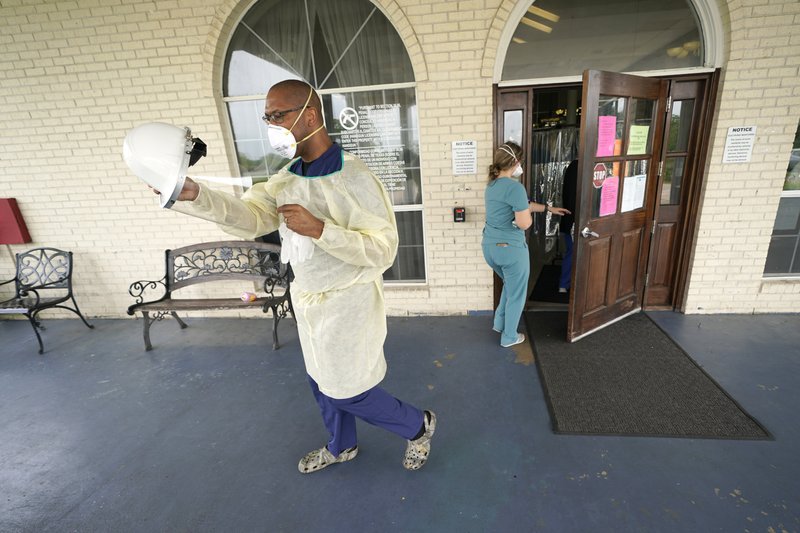
Dr. Robin Armstrong puts on his face shield while demonstrating his full personal protective equipment outside the entrance to The Resort at Texas City nursing home, where he is the medical director, Tuesday, April 7, 2020, in Texas City, Texas. Armstrong is treating nearly 30 residents of the nursing home with the anti-malaria drug hydroxychloroquine, which is unproven against COVID-19 even as President Donald Trump heavily promotes it as a possible treatment. Armstrong said Trump's championing of the drug is giving doctors more access to try it on coronavirus patients. More than 80 residents and workers have tested positive for coronavirus at the nursing home. (AP Photo/David J. Phillip)
AUSTIN, Texas (AP) — When a coronavirus outbreak hit a Texas nursing home, Dr. Robin Armstrong reached for an unproven treatment: the anti-malaria drug hydroxychloroquine.
First, he needed to find a supply. But at a moment when President Donald Trump is heavily promoting the drug, Armstrong is no regular physician. He is a Republican National Committee member and GOP activist in Houston, and after calling Republican Lt. Gov. Dan Patrick, the Texas chairman of Trump’s presidential campaign in 2016, Armstrong soon had enough doses to begin treating 27 infected residents of The Resort at Texas City.
Armstrong, the medical director at the facility, said Tuesday it is too soon to tell whether the treatment will work. But his sweeping use of the drug at one nursing home along the smoggy Texas coastline illustrates how Trump’s championing of the medication is having an impact on doctors across the U.S., even as scientists warn that more testing is needed before it’s proven safe and effective against COVID-19.
“I probably would not have been able to get the medication had he not been talking about it so much,” Armstrong told The Associated Press.
Hydroxychloroquine is officially approved for treating malaria, rheumatoid arthritis and lupus, not COVID-19. But as Trump holds out promise for the drug in the face of a mounting death toll, he has often stated, “What have you got to lose?”
Now in Texas, political connections and Trump allies are helping push the drug into the hands of more physicians.
Republican Bryan Hughes, a Texas state senator, said he is helping organize a pipeline of hydroxychloroquine donations to other states through their GOP leaders. Hughes said he has spent recent weeks helping Louisiana, Mississippi, Arkansas and Georgia receive or expect shipments from Amneal Pharmaceuticals, a maker of the drug based in New Jersey. Last month, the company announced it had donated 1 million tablets to Texas.
Amneal did not return an email seeking comment Tuesday. The company has previously said it donated 2 million tablets to New York, and in Detroit, Henry Ford Health System announced it would lead a 3,000-person U.S. study to determine the effectiveness of the drug against COVID-19.
Small, preliminary studies have suggested the drug might help prevent the new coronavirus from entering cells and possibly help patients clear the virus sooner. But those have shown mixed results.
Armstrong, who emerged from the nursing home Tuesday donned in full protective gear and a face shield, said he knew it was a “ticking time bomb” once the virus started spreading through the facility in Texas City, a refinery town outside Houston. At that point, Armstrong said, the goal quickly became preventing older patients from getting so sick they would require a hospital transport.
“We thought maybe we should try treating these folks while they’re in the nursing facility, while we’re watching them,” Armstrong said.
Armstrong, who said he has used the drug before on COVID-19 patients at a hospital, said that in searching for the medication for the nursing home he called Patrick, a firebrand conservative who drew national attention last month for saying people over the age of 70 would be able to “take care of ourselves” in the pandemic and that the U.S. needed to reopen for business. In a statement, Patrick said Armstrong called him on Friday and that after putting him in touch with Hughes, the drugs were on their way the next morning.
Both Armstrong and Hughes said they had not discussed the drug with the Trump administration. As nursing home residents began receiving their first dose of the treatment Saturday, Armstrong said he sat for a previously scheduled interview with the Trump campaign for a series called “American Heroes.” Armstrong said the interview was conducted by Kayleigh McEnany, who was named the new White House press secretary Tuesday, but said he wasn’t invited on to discuss the drug.
Research studies are beginning to test if the drugs truly help COVID-19 patients, and the Food and Drug Administration has allowed the drugs into the national stockpile as an option for doctors to consider for patients who cannot get into one of the studies.
The drug can cause potentially dangerous side effects, including life-threatening irregular heart rhythms. Those risks are even higher in patients taking other medications that affect the heart.
More than 80 people in all tested positive at the nursing home, and Armstrong said about 30 infected residents were not good candidates for the treatment. He endorsed the need for more rigorous clinical trials, but defended Trump’s embrace.
“Obviously, I’m not getting my medical practice ideas from politicians,” he said. “What it’s done is allowed for more access to the medication.”
For most people, the virus causes mild or moderate symptoms, such as fever and cough that clear up in two to three weeks. For some, especially older adults and people with existing health problems, it can cause more severe illness, including pneumonia, and death.
"I think she'll be voting for me now, even if she's a Democrat," Trump said. "I don't say that happens with everybody, but that's a beautiful story. There are many of those stories. And I say, 'Try it."'
That's precisely the sort of message Florence Tew doesn't want to hear.
Tew, who lives in Toronto, has been taking the medication for the last 12 years to help manage lupus, which can include debilitating joint pain, rash and kidney problems. She wants nothing more than the world to find an effective COVID-19 treatment, she said -- but not based on unproven theories that come at the expense of her own therapy.
"It's disheartening," said Tew, who described hearing stories online from other lupus patients being warned by their pharmacies that they wouldn't be able to refill their prescriptions -- and in one case, being told by a doctor's office that they would be denied the drug entirely.
"That's when I started to really panic," she said. "You've gotten to a point where you're taking this medication and you just -- you feel good, you're able to work, you're able to function, and then something throws a wrench into it."
Tew said she currently gets a monthly supply of her medication from PocketPills, a B.C.-based pharmacy service that fills, delivers and manages prescriptions online -- and that's beginning to notice warning signs about the drug's availability.
Demand for the drug spiked in North America in the early days of the outbreak, not long after the president began singing its praises, said A.J. Bassi, the company's director of pharmacy services. Oversight bodies like the Ontario Medical Association and the Registered Nurses of Ontario had to issue notices to discourage doctors from stockpiling it.
Since then, although manufacturers insist that the supply of the drug in Canada is currently at typical, pre-pandemic levels, vendors are using historical purchase trends to restrict pharmacies to a 30-day limit on how much they can purchase, he said.
"If I only historically purchased 500 tablets a month, because that's how much I dispense, then that's how much they're restricting that we can purchase," Bassi said. The coming challenge will be dealing with supply-chain problems where wholesalers are forced to use ground transportation to send shipments, leading to potential restocking delays.
"Everybody's going crazy buying toilet paper -- when you need some, you go buy two rather than one, because you're just -- you're afraid. And the same thing in pharmacy -- you're afraid for your patients, so you buy more."
So what's with the president's fixation on hydroxychloroquine?
Conspiracy theories abound, most of them revolving around Big Pharma's long-standing influence in U.S. politics and reputation as a generous campaign donor. The New York Times reported Tuesday that Trump has a small personal stake in Sanofi, a Paris-based drug maker that produces Plaquenil, the brand-name version.
"Hydroxychloroquine can cause serious adverse reactions and should not be taken without medical prescription or advice," the company says on its website. "Sanofi's hydroxychloroquine product is not indicated for use for COVID-19 in any country."
People close to Trump, including billionaire Larry Ellison, television doctor Mehmet Oz and former New York mayor Rudy Giuliani have all been pushing the president to expedite approving the drug for COVID-19, the Times reported. It's also been a popular talking point on Fox News, Trump's preferred cable-news indulgence.
And Peter Navarro, the White House trade adviser, has reportedly been so aggressive in promoting the hydroxychloroquine theory that he got into a Situation Room confrontation on the weekend with Dr. Anthony Fauci, the head of the National Institute of Allergy and Infectious Diseases and the face of the government's COVID-19 effort.
Navarro, citing his own research into anecdotal reports of the drug's effectiveness, has parroted the president's thinking.
"History will judge whether this was an efficacious drug," he told CNN. "Right now, in the fog of war, if that can save lives that's a good thing."
The Trump administration's enthusiasm for the drug is based on anecdotal studies conducted on a relative handful of patients, said Dr. Allen Zagoren, a surgeon and professor of public administration at Drake University in Des Moines, Iowa.
"When you have a disease that's affecting a million people, you need to have bigger numbers to project because that could be coincidental -- the disease is very unpredictable," Zagoren said.
"You need to have a big study to predict. When you start throwing stuff at the wall to see what will stick, that's garbled information -- it's garbage in, garbage out."
Then there's the issue of side effects, Zagoren noted: the drug carries a host of potential issues, particularly for people with pre-existing conditions, compromised immune systems, cardiopulmonary problems -- the very people who are most likely to be vulnerable to the severe effects of COVID-19 in the first place.
Hydroxychloroquine is also often administered with an antibacterial known as azithromycin that carries a heightened risk of death in patients with a pre-existing heart condition.
"If I was asked to review a case for a lawyer or the board of medicine that a physician decided to give a drug to the patient that had no proven efficacy off-label and the patient died, that's negligence," Zagoren said.
"Write the cheque, because you can't defend that."
This report by The Canadian Press was first published April 7, 2020.
Trump allies put unproven virus drug to work in Texas
Dr. Robin Armstrong puts on his face shield while demonstrating his full personal protective equipment outside the entrance to The Resort at Texas City nursing home, where he is the medical director, Tuesday, April 7, 2020, in Texas City, Texas. Armstrong is treating nearly 30 residents of the nursing home with the anti-malaria drug hydroxychloroquine, which is unproven against COVID-19 even as President Donald Trump heavily promotes it as a possible treatment. Armstrong said Trump's championing of the drug is giving doctors more access to try it on coronavirus patients. More than 80 residents and workers have tested positive for coronavirus at the nursing home. (AP Photo/David J. Phillip)
AUSTIN, Texas (AP) — When a coronavirus outbreak hit a Texas nursing home, Dr. Robin Armstrong reached for an unproven treatment: the anti-malaria drug hydroxychloroquine.
First, he needed to find a supply. But at a moment when President Donald Trump is heavily promoting the drug, Armstrong is no regular physician. He is a Republican National Committee member and GOP activist in Houston, and after calling Republican Lt. Gov. Dan Patrick, the Texas chairman of Trump’s presidential campaign in 2016, Armstrong soon had enough doses to begin treating 27 infected residents of The Resort at Texas City.
Armstrong, the medical director at the facility, said Tuesday it is too soon to tell whether the treatment will work. But his sweeping use of the drug at one nursing home along the smoggy Texas coastline illustrates how Trump’s championing of the medication is having an impact on doctors across the U.S., even as scientists warn that more testing is needed before it’s proven safe and effective against COVID-19.
“I probably would not have been able to get the medication had he not been talking about it so much,” Armstrong told The Associated Press.
Hydroxychloroquine is officially approved for treating malaria, rheumatoid arthritis and lupus, not COVID-19. But as Trump holds out promise for the drug in the face of a mounting death toll, he has often stated, “What have you got to lose?”
Now in Texas, political connections and Trump allies are helping push the drug into the hands of more physicians.
Republican Bryan Hughes, a Texas state senator, said he is helping organize a pipeline of hydroxychloroquine donations to other states through their GOP leaders. Hughes said he has spent recent weeks helping Louisiana, Mississippi, Arkansas and Georgia receive or expect shipments from Amneal Pharmaceuticals, a maker of the drug based in New Jersey. Last month, the company announced it had donated 1 million tablets to Texas.
Amneal did not return an email seeking comment Tuesday. The company has previously said it donated 2 million tablets to New York, and in Detroit, Henry Ford Health System announced it would lead a 3,000-person U.S. study to determine the effectiveness of the drug against COVID-19.
Small, preliminary studies have suggested the drug might help prevent the new coronavirus from entering cells and possibly help patients clear the virus sooner. But those have shown mixed results.
Armstrong, who emerged from the nursing home Tuesday donned in full protective gear and a face shield, said he knew it was a “ticking time bomb” once the virus started spreading through the facility in Texas City, a refinery town outside Houston. At that point, Armstrong said, the goal quickly became preventing older patients from getting so sick they would require a hospital transport.
“We thought maybe we should try treating these folks while they’re in the nursing facility, while we’re watching them,” Armstrong said.
Armstrong, who said he has used the drug before on COVID-19 patients at a hospital, said that in searching for the medication for the nursing home he called Patrick, a firebrand conservative who drew national attention last month for saying people over the age of 70 would be able to “take care of ourselves” in the pandemic and that the U.S. needed to reopen for business. In a statement, Patrick said Armstrong called him on Friday and that after putting him in touch with Hughes, the drugs were on their way the next morning.
Both Armstrong and Hughes said they had not discussed the drug with the Trump administration. As nursing home residents began receiving their first dose of the treatment Saturday, Armstrong said he sat for a previously scheduled interview with the Trump campaign for a series called “American Heroes.” Armstrong said the interview was conducted by Kayleigh McEnany, who was named the new White House press secretary Tuesday, but said he wasn’t invited on to discuss the drug.
Research studies are beginning to test if the drugs truly help COVID-19 patients, and the Food and Drug Administration has allowed the drugs into the national stockpile as an option for doctors to consider for patients who cannot get into one of the studies.
The drug can cause potentially dangerous side effects, including life-threatening irregular heart rhythms. Those risks are even higher in patients taking other medications that affect the heart.
More than 80 people in all tested positive at the nursing home, and Armstrong said about 30 infected residents were not good candidates for the treatment. He endorsed the need for more rigorous clinical trials, but defended Trump’s embrace.
“Obviously, I’m not getting my medical practice ideas from politicians,” he said. “What it’s done is allowed for more access to the medication.”
For most people, the virus causes mild or moderate symptoms, such as fever and cough that clear up in two to three weeks. For some, especially older adults and people with existing health problems, it can cause more severe illness, including pneumonia, and death.
After virus fades, service industries may be changed forever
By PAUL WISEMAN and ANNE D'INNOCENZIOApril 6, 2020
1 of 4
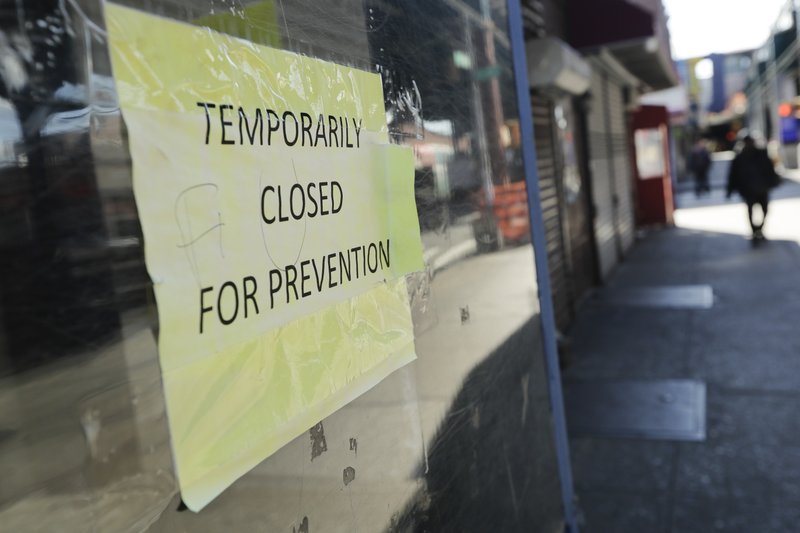
FILE - In this April 4, 2020, file photo, pedestrians pass closed stores on Roosevelt Avenue in the Queens borough of New York. The coronavirus crisis is upending service businesses, and the crisis may permanently change the way Americans work, shop and socialize, even after the disease fades away. (AP Photo/Frank Franklin II, File)
WASHINGTON (AP) — For years, personal trainer Amanda Tikalsky didn’t have to worry much about her job. The U.S. economy’s record-breaking 11-year expansion offered security to service workers like her.
Then came the coronavirus, which closed the Milwaukee athletic club where she worked for 15 years. She scrambled to organize online exercise sessions to keep money coming in. About 25% of her clients made the jump with her.
“It’s an adjustment for everybody,” she said. “We are used to being face to face.”
But even when the virus threat is gone, Tikalsky predicts that many customers will continue to exercise from home. The shutdown is also likely to change her own shopping habits. She has a new appreciation for the ease of buying groceries online.
The pandemic is almost sure to leave a mark on the way people work, shop and socialize, perhaps permanently shifting the way many service industries operate. Consumers will think harder about the health implications of squeezing into crowded restaurants and movie theaters. More businesses will accept the effectiveness of employees who work from home, and the move to online shopping will accelerate.
“We’ve never had a crisis where we couldn’t socially gather with people,” said John Gordon, founder of Pacific Management Consulting Group in San Diego, which advises restaurants.
Until March, service workers — from dishwashers to real estate agents — had been enjoying a record winning streak in the job market. U.S. service jobs had risen for a decade.
The sector appeared almost immune to blips in the economy. Not even low-wage competition overseas or automation seemed to threaten service jobs that require direct contact with customers.
Then the virus arrived. It upended the service economy, which accounts for 84% of U.S. private-sector employment. It wiped out 659,000 service jobs in March — 94% of the jobs that vanished last month as the U.S. economy plunged into recession.
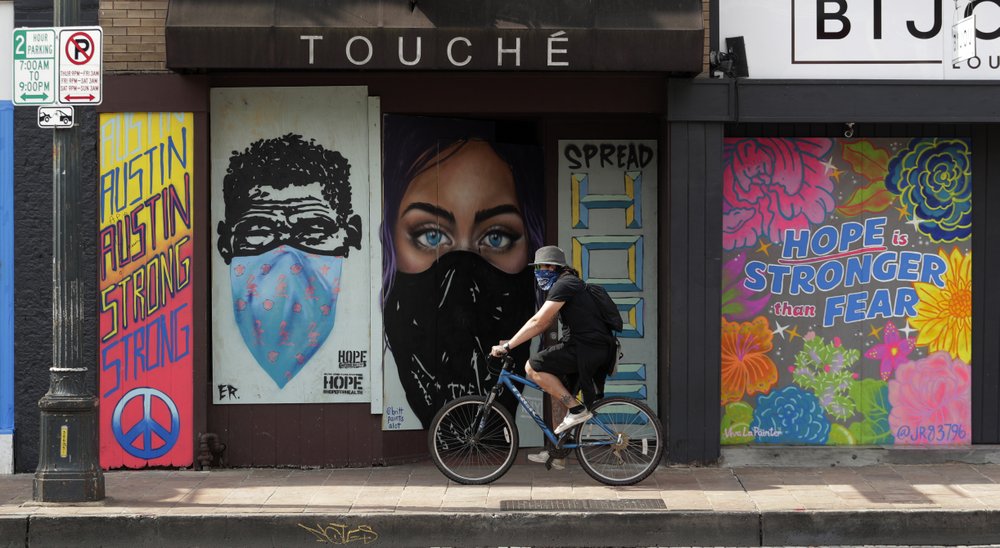
FILE - In this April 6, 2020, file photo, a cyclist wears a bandana over his face as he travels past a boarded up business in downtown Austin, Texas. The coronavirus crisis is upending service businesses, and the crisis may permanently change the way Americans work, shop and socialize, even after the disease fades away. (AP Photo/Eric Gay, File)
It is sure to claim many more. In an interview Monday on CNBC, former Fed Chair Janet Yellen predicted that unemployment rates could climb to Great Depression levels. But because the economy was in solid shape before the outbreak, she added, the return to normal employment could happen much faster than during the Depression or after the 2007-2009 Great Recession.
When the economy goes into a nosedive, manufacturers, not services providers, are usually hit first and hardest.
Not this time. The virus has been a gut punch to businesses that depend on social gatherings — restaurants, cinemas, theaters, hotels, airlines, gyms, shopping centers. More than 250,000 stores are now temporarily closed, accounting for nearly 60% of retail square footage, according to Neil Saunders, managing director of GlobalData Retail, a research firm.
The situation is similar in many other countries. In Wuhan, China, where the viral outbreak began, consumers are still reluctant to go out shopping as conditions slowly head back to normal.
Josh Rivas is among the millions of job casualties in the U.S. He works at a Subway at a rest stop in Connecticut where he and co-workers were laid off because of the virus amid dwindling traffic at the plaza. “We can’t afford for us to miss a day of pay because we have families that we need to take care of and bills we need to pay,” he said.
In recessions, factories are often the first to slash jobs, and they don’t always bring them back. American manufacturers still employ 918,000 fewer workers than they did before the Great Recession. Over the same period, service employment is up by nearly 14 million.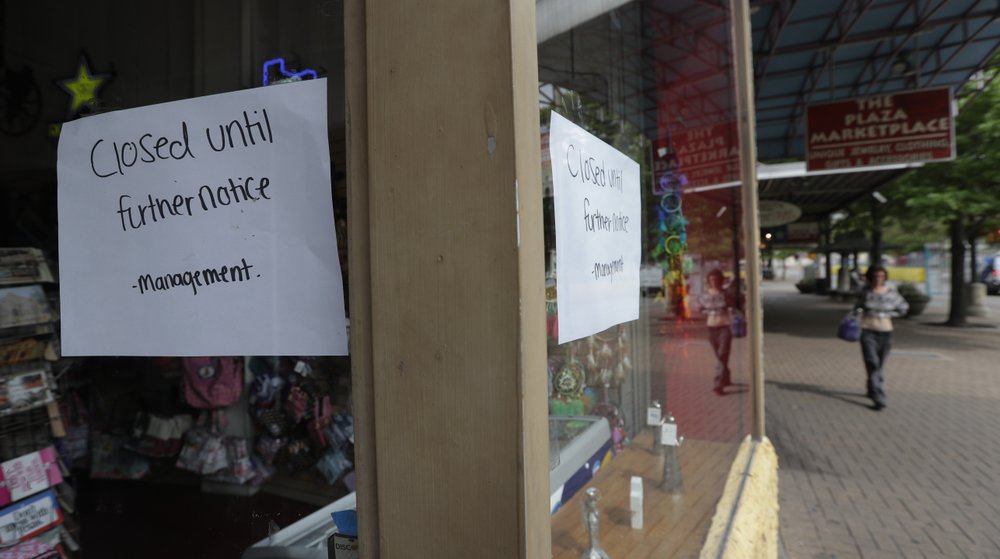
Economists are divided over whether service employees will face the kind of economic disruption factory workers have endured.
Much depends on the rescue efforts being put together by the U.S. government and the Federal Reserve. Congress and the White House are throwing at least $2.2 trillion at American businesses and households in a desperate attempt to keep them from going under before the health crisis is over.
“As long as we do the policy right, we should get a pretty strong recovery,” said Heidi Shierholz, senior economist at the liberal Economic Policy Institute and former chief economist at the Labor Department. “When the lockdown is over, I think we’ll get a pretty decent bounce back.”
Shierholz does not expect a “transformative” change to service sector jobs.
Still, some effects of the outbreak are likely to linger, analysts say.
Cooped up in their homes, Americans have discovered anew the convenience of shopping online — something that is likely to accelerate the decline of traditional retail stores, said Diane Swonk, chief economist at the accounting and consulting firm Grant Thornton.
Restaurants have closed their dining rooms and reduced service to takeout, delivery and curbside pickup. Swonk expects the trend toward grab-and-go dining to continue after the health crisis.
Restaurant consultant Gordon predicts that local governments will reduce restaurant seating capacity to keep diners from being on top of each other. “Some of the places we used to go were just armpit to armpit. Can you see us doing that now?” he said.
FILE - In this March 23, 2020, file photo, a jogger runs past shuttered shops along Venice Beach Boardwalk, in Los Angeles. The coronavirus crisis is upending service businesses, and the crisis may permanently change the way Americans work, shop and socialize, even after the disease fades away. (AP Photo/Chris Pizzello, File)
Millions of Americans have spent weeks working from home, and the experience has been eye-opening for many, and for their bosses. Meetings and even virtual after-hours cocktail parties can be organized on Zoom, WhatsApp or other programs.
“We’re just discovering that we can have amazing seminars and conferences online much easier. We don’t have to travel anywhere,” said Arindrajit Dube, economist at the University of Massachusetts, Amherst. That’s troubling for airlines and hotels that depend on business travel, sometimes to subsidize discounts for leisure travelers.
The enhanced appeal of home offices could also have implications for real estate markets, giving more workers expanded housing options because they won’t need to travel to their jobs.
But there may be limits to Americans’ enthusiasm for isolating themselves at home.
Becky Ahlgren Bedics, 49, of Fishers, Indiana, has been working out via Zoom since her fitness club closed temporarily in mid-March. But she plans to trek over to the club when it reopens. She misses the camaraderie. “There’s such a connection that you have with people,” she added.
___
D’Ínnocenzio reported from New York. Associated Press writers Christopher Rugaber in Washington and Josh Hoffner in Phoenix contributed to this story.
When the economy goes into a nosedive, manufacturers, not services providers, are usually hit first and hardest.
Not this time. The virus has been a gut punch to businesses that depend on social gatherings — restaurants, cinemas, theaters, hotels, airlines, gyms, shopping centers. More than 250,000 stores are now temporarily closed, accounting for nearly 60% of retail square footage, according to Neil Saunders, managing director of GlobalData Retail, a research firm.
The situation is similar in many other countries. In Wuhan, China, where the viral outbreak began, consumers are still reluctant to go out shopping as conditions slowly head back to normal.
Josh Rivas is among the millions of job casualties in the U.S. He works at a Subway at a rest stop in Connecticut where he and co-workers were laid off because of the virus amid dwindling traffic at the plaza. “We can’t afford for us to miss a day of pay because we have families that we need to take care of and bills we need to pay,” he said.
In recessions, factories are often the first to slash jobs, and they don’t always bring them back. American manufacturers still employ 918,000 fewer workers than they did before the Great Recession. Over the same period, service employment is up by nearly 14 million.
FILE - In this March 24, 2020, file photo, a pedestrian passes a business which has closed temporarily in San Antonio. The coronavirus crisis is upending service businesses, and the crisis may permanently change the way Americans work, shop and socialize, even after the disease fades away. (AP Photo/Eric Gay, File)
Economists are divided over whether service employees will face the kind of economic disruption factory workers have endured.
Much depends on the rescue efforts being put together by the U.S. government and the Federal Reserve. Congress and the White House are throwing at least $2.2 trillion at American businesses and households in a desperate attempt to keep them from going under before the health crisis is over.
“As long as we do the policy right, we should get a pretty strong recovery,” said Heidi Shierholz, senior economist at the liberal Economic Policy Institute and former chief economist at the Labor Department. “When the lockdown is over, I think we’ll get a pretty decent bounce back.”
Shierholz does not expect a “transformative” change to service sector jobs.
Still, some effects of the outbreak are likely to linger, analysts say.
Cooped up in their homes, Americans have discovered anew the convenience of shopping online — something that is likely to accelerate the decline of traditional retail stores, said Diane Swonk, chief economist at the accounting and consulting firm Grant Thornton.
Restaurants have closed their dining rooms and reduced service to takeout, delivery and curbside pickup. Swonk expects the trend toward grab-and-go dining to continue after the health crisis.
Restaurant consultant Gordon predicts that local governments will reduce restaurant seating capacity to keep diners from being on top of each other. “Some of the places we used to go were just armpit to armpit. Can you see us doing that now?” he said.
FILE - In this March 23, 2020, file photo, a jogger runs past shuttered shops along Venice Beach Boardwalk, in Los Angeles. The coronavirus crisis is upending service businesses, and the crisis may permanently change the way Americans work, shop and socialize, even after the disease fades away. (AP Photo/Chris Pizzello, File)
Millions of Americans have spent weeks working from home, and the experience has been eye-opening for many, and for their bosses. Meetings and even virtual after-hours cocktail parties can be organized on Zoom, WhatsApp or other programs.
“We’re just discovering that we can have amazing seminars and conferences online much easier. We don’t have to travel anywhere,” said Arindrajit Dube, economist at the University of Massachusetts, Amherst. That’s troubling for airlines and hotels that depend on business travel, sometimes to subsidize discounts for leisure travelers.
The enhanced appeal of home offices could also have implications for real estate markets, giving more workers expanded housing options because they won’t need to travel to their jobs.
But there may be limits to Americans’ enthusiasm for isolating themselves at home.
Becky Ahlgren Bedics, 49, of Fishers, Indiana, has been working out via Zoom since her fitness club closed temporarily in mid-March. But she plans to trek over to the club when it reopens. She misses the camaraderie. “There’s such a connection that you have with people,” she added.
___
D’Ínnocenzio reported from New York. Associated Press writers Christopher Rugaber in Washington and Josh Hoffner in Phoenix contributed to this story.
AP PHOTOS: Virus haunts the destitute living on the margins
By MOSA'AB ELSHAMY
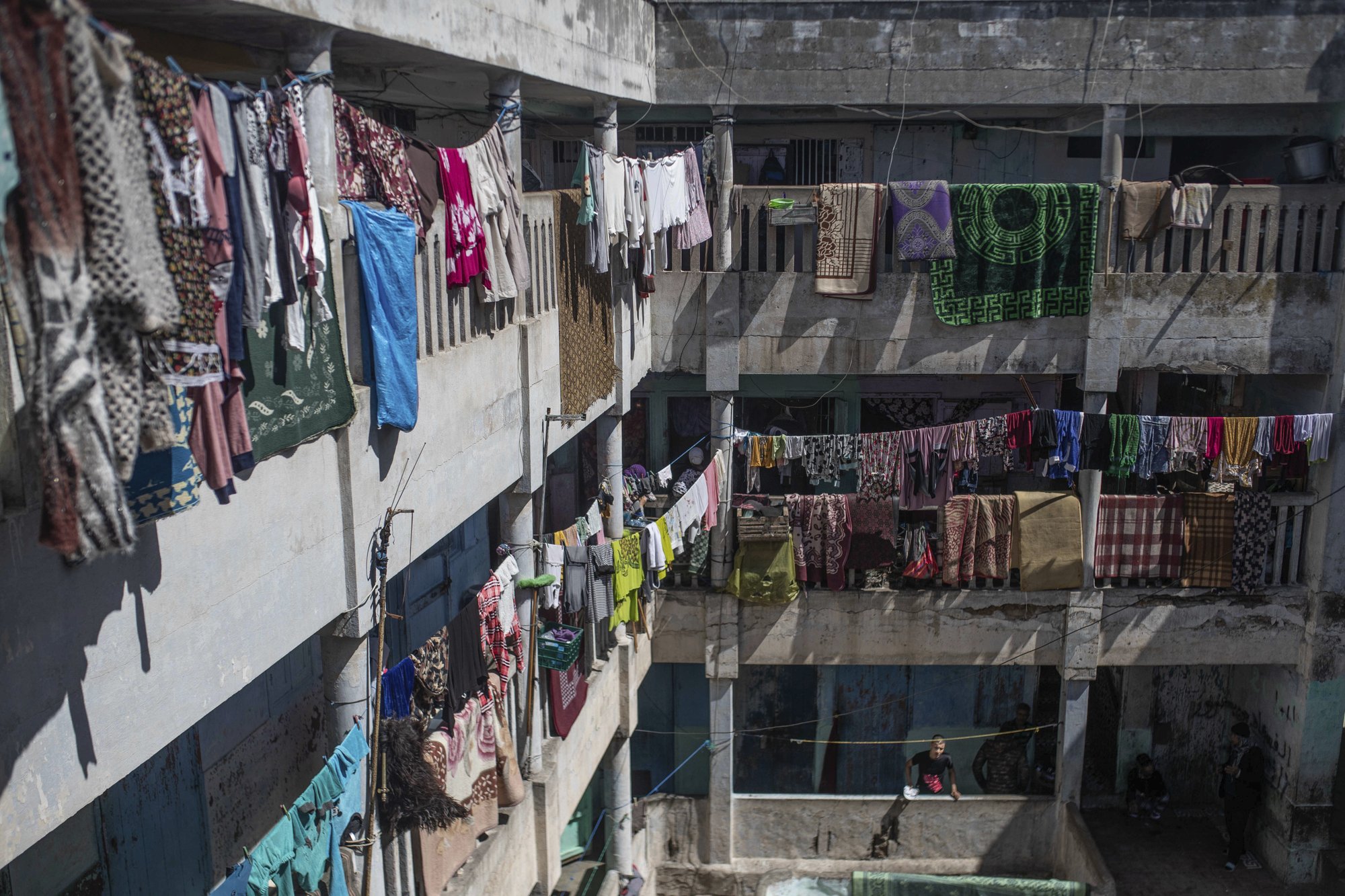
In a housing complex in the Moroccan city of Sale, over 900 people live in crowded rooms without running water or an income to support them. While the North African country entered total lockdown in mid-March, self-isolation and social distancing are a luxury that families in this complex cannot afford.
Some families have lived in their room for 40 years, steadily filling it with children and grandchildren, with some rooms housing up to 10 people. Almost all are marginalized, and since the outbreak of COVID-19, those who had jobs – such as working in gas stations or selling small items on the streets - have been left with no way to make a living.
Like countries around the world, Morocco is facing the challenge of how to protect populations from the fast-spreading virus while not punishing the poor.
In early March, the Moroccan government began rolling out measures to stem the spread of the virus, culminating in the ongoing lockdown that has turned once bustling cities into ghost towns.
Borders, schools, shops, companies, cafes and mosques have closed. Movement between cities is restricted. Only one member of each household is permitted to leave in order to buy necessities, and those who work in essential jobs must have government-approved permission slips to show at checkpoints or risk facing up to three months in prison.
As the measures started to pinch vulnerable families, Morocco approved emergency support packages to people not registered in public or private sector jobs, ranging from $80 to $120. The fund supporting such measures was established by Moroccan King Mohamed VI, and saw mobilization by institutions, businesses and officials.
At the housing complex in Sale’s old medina, children hang around the communal courtyard and run through narrow alleyways. Families share one room where they wash clothes, and fill buckets of water at public fountain
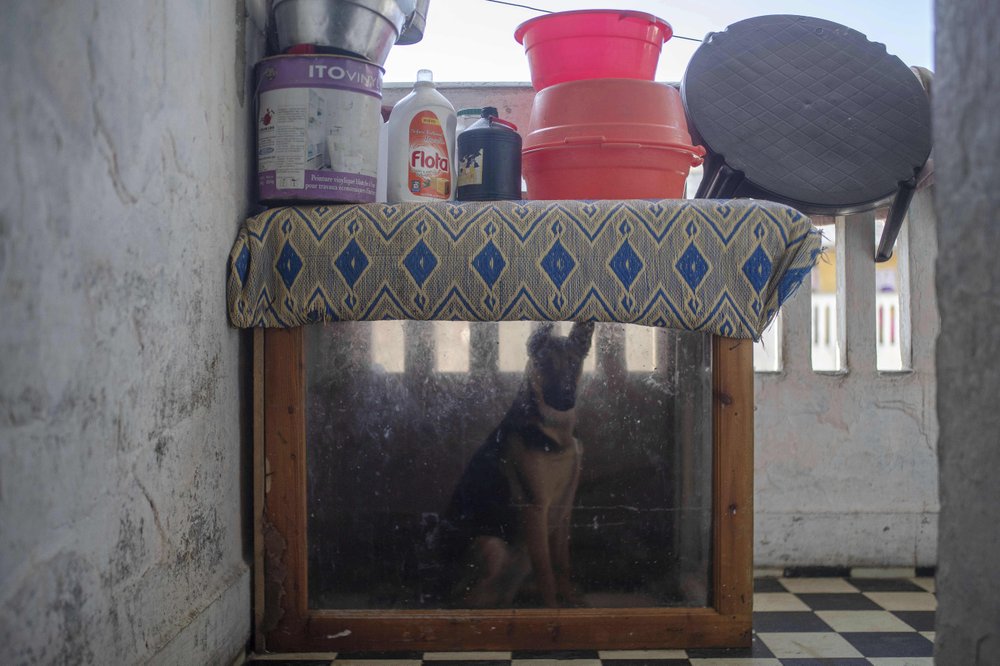
In this in Wednesday, March 25, 2020 photo, a dog owned by one of the residents of a housing complex sits in his kennel in Sale, near Rabat, Morocco. (AP Photo/Mosa'ab Elshamy)
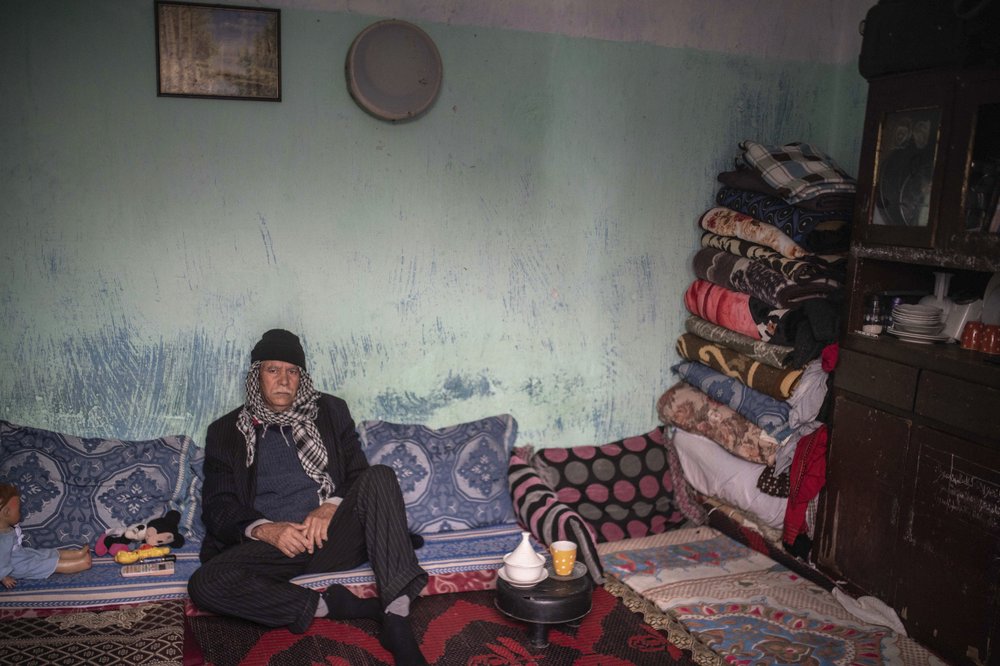
In this in Wednesday, March 25, 2020 photo, Ilias, 61, sit in his room in a housing complex in Sale, near Rabat, Morocco. (AP Photo/Mosa'ab Elshamy)

In this in Wednesday, March 25, 2020 photo, Kaddour El Miny, 55, poses with his equipment for selling water, which he can no longer use, in a housing complex in Sale, near Rabat, Morocco. (AP Photo/Mosa'ab Elshamy)
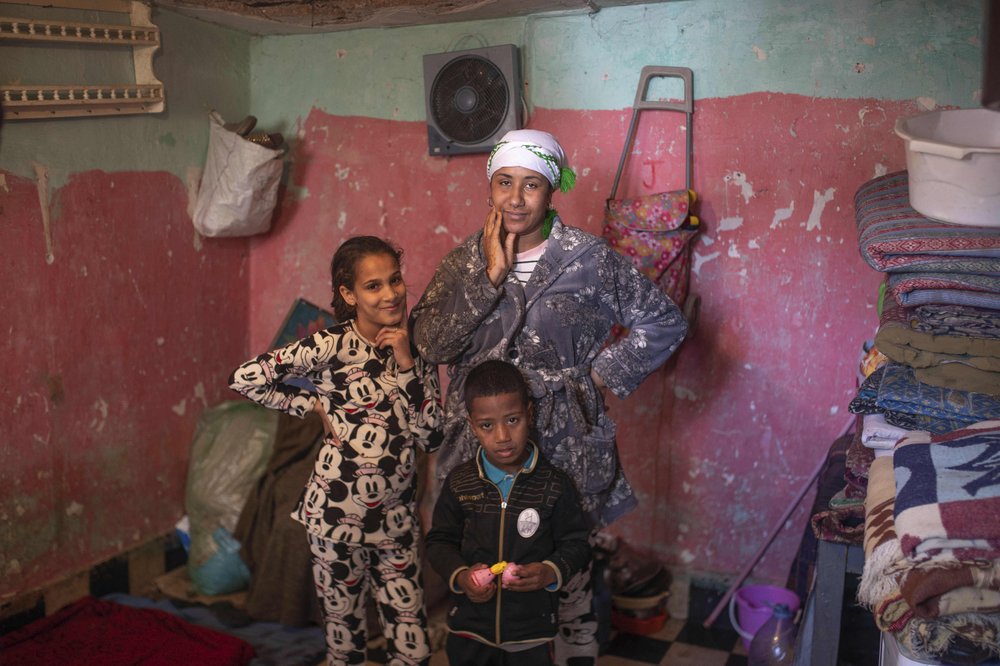
In this in Wednesday, March 25, 2020 photo, Warda, a mother, poses with her son Mohamed and her daughter Jannat in their room in a housing complex in Sale, near Rabat, Morocco. Hundreds of people live in crowded rooms in this Moroccan housing complex with no running water and no income left because of the coronavirus lockdown measures. However volunteers come to help clean as the government tries to protect the population from virus while not punishing the poor. (AP Photo/Mosa'ab Elshamy)
Virus crisis cuts off billions sent to poor around the world

In this April 3, 2020 photo, a woman carrying a child walks past a closed courier business featuring a U.S. flag and the Spanish phrase: "Send to U.S.A" in the largely indigenous town of Joyabaj, Guatemala, where half of the residents depend on remittances, almost all from the U.S. The devastation wrought by COVID-19 across the developed world is cutting into the financial lifelines for people across Latin America, Africa and Asia. (AP Photo/Moises Castillo)
MIAMI (AP) — Until a month ago, Diana Leticia Hernández sold face cream door to door in Miami. Her husband painted houses. The money fed their family and at least six relatives in Honduras.
Hernández has sold nothing since last month due to fear and social-distancing restrictions in South Florida. Her husband hasn’t worked either. This month, for the first time since shortly after their arrival in the United States 16 years ago, they weren’t able to send home about $300 to help their families with food, rent, medicine and school bills.
In the Honduran town of Villa Nueva Cortez, Hernández’s mother Teonila Murillo is running out of money to buy insulin for her diabetes, and Hernández’s brother doesn’t know if he’ll be able to make his $60 rent next month.
“I’m doing really badly,” Murillo told The Associated Press. “There’s no money, and no work. If you get sick here, you die.”
The devastation wrought by COVID-19 across the developed world in cutting into the financial lifelines for people across Latin America, Africa and Asia.
The World Bank estimates that a record $529 billion was transferred to developing countries through official channels in 2018, the latest year for which figures are available. Billions more moved unrecorded in cash. Many of those remittances are sent home by people who work in service jobs or occupations, like day labor, that have no monthly paycheck and are worst affected by the global downtown. Some also comes from migrants who have entered countries without legal status and are ineligible for part of the massive aid packages uncorked by advanced economies.
With coronavirus shutting down industries, many earners in Miami, Las Vegas, London, and other economic centers can no longer afford to send their monthly $50, $100 or $200 to Honduras, Somalia or India. The shock waves are pushing their relatives to desperation.
“I’m in anguish,” said Hernández, 45. “They’re counting on me. I’m trying to get anything I can send, $30, $50, whatever.”
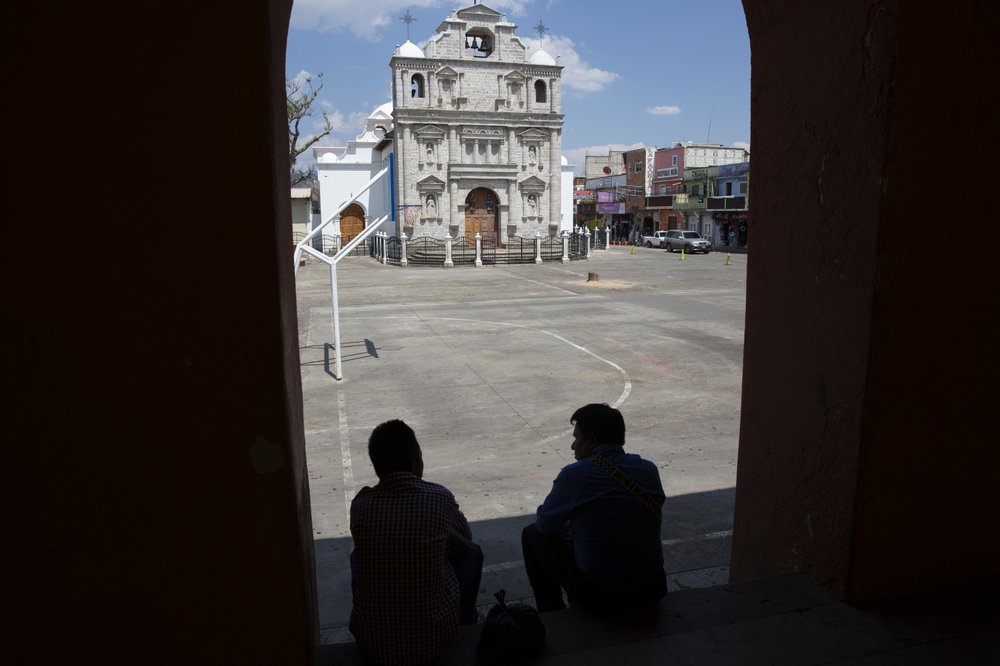
In this April 3, 2020 photo, men look out on to an empty plaza outside the closed Santa Maria Catholic church in the largely indigenous town of Joyabaj, Guatemala, where half of the residents depend on remittances, almost all from the U.S. The devastation wrought by COVID-19 across the developed world is cutting into the financial lifelines for people across Latin America, Africa and Asia. (AP Photo/Moises Castillo)
Across Africa, where remittances have grown to surpass foreign aid and direct foreign investment and some $82 billion flowed in during 2018 alone, untold millions of people are already feeling the pinch. One money-transfer company in Europe sending funds to Africa saw an 80 percent drop in volume in a single week, the Washington-based Center for Financial Inclusion said last month.
In Somalia Abdalla Sabdow, a former security guard and a father of six, made his way through Mogadishu last week to check on the $200 he receives monthly from his cousin Yusuf Ahmed, a taxi driver in the U.S. But the money was late. His cousin, like many in the U.S., had been confined to his home for almost three weeks, unable to work.
“I came back empty-handed,” an anxious-looking Sabdow said, after peering under the partition as workers, one wearing a face mask and gloves, fanned through stacks of crisp $100 bills. “I asked the counter to double-check my name, but nothing has been forthcoming. Time is running out ... It is very distressing.”
With three of his small children piled onto his lap at home, he worried about falling behind in rent, no small thing in a city where camps of hundreds of thousands of internally displaced people are a constant reminder of the fragility of circumstances.
“This month we had a big problem,” his cousin, Ahmed, later explained by phone. He hoped to send the money the following week.
Remittances make up more than 5% of GDP in at least 13 African nations, sometimes far more, the Brookings Institution said last month. Kenya’s remittances are now its largest source of foreign exchange, its president said in December. More than a third of all remittances to Africa come from the European Union, and other significant sources are North America, Gulf nations and other African countries. Informal remittances, though not tracked in World Bank and other data, are estimated to be the source of billions of dollars more.
“We’re going to begin to see a contraction in the economy,” said Olayinka David-West, a professor at the Lagos Business School in Nigeria, said in a recent seminar held by the Center for Financial Inclusion. Africa’s top oil producer is also the biggest recipient of remittances in sub-Saharan Africa, with the money exceeding its revenues from petroleum.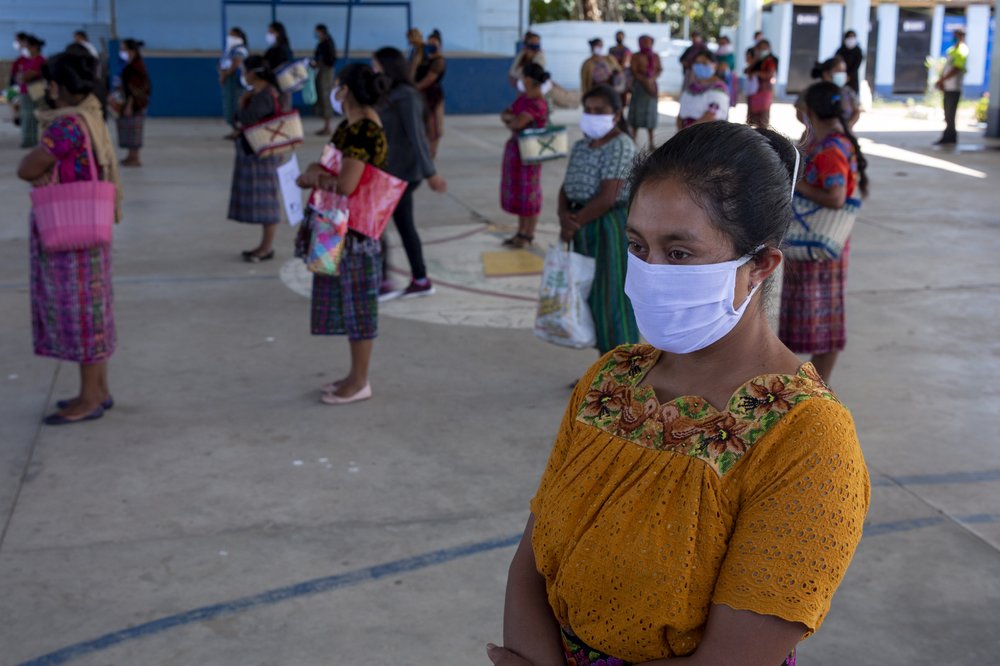
Central America, a region heavily dependent on remittances from the United States, could see a 20 percent drop, from $23.9 billion last year to $19.12 billion this year, said Jonathan Menkos, director of the Central American Institute of Fiscal Studies.
Across all of Latin American and the Caribbean, remittances from the U.S. could drop between 7% and 18% this year, from last year’s $75 billion total, according to the Washington-based Inter-American Dialogue.
”’It is a wide range, and the largest drop may be more accurate unfortunately,″ said Dr. Manuel Orozco, director of migration, remittances and development at the think tank.
In the largely indigenous Guatemalan town of Joyabaj, half of the 100,000 residents depend on remittances, almost all from the U.S.
Rosa López, 18, left a money-transfer office last week holding her 2-year-old son and $100 sent by her sister, who works at a dairy in Texas. The dairy has cut working hours in half, forcing the sister to cut back the money she sends.
The money that came last week will allow López and seven other relatives to buy rice, beans and other basics, but they may have to stop paying the light and water bills, she said.
“We need to figure out a way not to die of hunger,” López said. “She’s the only one who’s helping the entire family.”
One of the most remittance-dependent countries in the world is Haiti, where $3 billion in money sent from abroad makes up about 30 percent of the gross domestic product.
Juliette Andre, a 25-year-old nursing student in Port-au-Prince, used to receive $150 monthly from her aunt who cares for elderly people in Brooklyn, New York. In March, Andre received a total of $50.
“That doesn’t represent anything in Haiti because the cost of living quadrupled,” she said last week. “We are going to be struggling for a while.
Asia is the top recipient of remittances in the world, with India getting the largest amount in the world in 2018 at $79 billion, followed by China at $67 billion, according to the World Bank. The Philippines is also in the top five recipients of remittances.
In India, the southern state of Kerala accounts for almost 19% of the total remittances to the country. Tens of thousands from the state work in various Gulf countries and send money home. The tourism-reliant local economy has been badly hurt by the 21-day lock-down across India and the families who depend on remittance money are growing concerned.
In the last month, Sajeela Mol, a 36-year-old homemaker in Kerala’s Mallapuram district, hasn’t received any money from her husband Shabeer Ali, who works at a fast-food restaurant in Jeddah, Saudi Arabia. Mol lives with her four school-age children and an ailing mother-in-law. The family is dependent on the $150 her husband sends every month.
With the restaurant shut due to the lockdown, Mol said her husband is unsure if he will receive his salary.
“If my husband has no money, I don’t know what will he send home for his family,” said Mol.
______
Pérez reported from Guatemala City and Weissenstein from Havana. Evens Sanon in Port-au-Prince, Mohamed Sheikh Nor in Mogadishu, Somalia, and Subramoney Iyer in New Delhi contributed to this report.
In this April 3, 2020 photo, a woman carrying a child walks past a closed courier business featuring a U.S. flag and the Spanish phrase: "Send to U.S.A" in the largely indigenous town of Joyabaj, Guatemala, where half of the residents depend on remittances, almost all from the U.S. The devastation wrought by COVID-19 across the developed world is cutting into the financial lifelines for people across Latin America, Africa and Asia. (AP Photo/Moises Castillo)
MIAMI (AP) — Until a month ago, Diana Leticia Hernández sold face cream door to door in Miami. Her husband painted houses. The money fed their family and at least six relatives in Honduras.
Hernández has sold nothing since last month due to fear and social-distancing restrictions in South Florida. Her husband hasn’t worked either. This month, for the first time since shortly after their arrival in the United States 16 years ago, they weren’t able to send home about $300 to help their families with food, rent, medicine and school bills.
In the Honduran town of Villa Nueva Cortez, Hernández’s mother Teonila Murillo is running out of money to buy insulin for her diabetes, and Hernández’s brother doesn’t know if he’ll be able to make his $60 rent next month.
“I’m doing really badly,” Murillo told The Associated Press. “There’s no money, and no work. If you get sick here, you die.”
The devastation wrought by COVID-19 across the developed world in cutting into the financial lifelines for people across Latin America, Africa and Asia.
The World Bank estimates that a record $529 billion was transferred to developing countries through official channels in 2018, the latest year for which figures are available. Billions more moved unrecorded in cash. Many of those remittances are sent home by people who work in service jobs or occupations, like day labor, that have no monthly paycheck and are worst affected by the global downtown. Some also comes from migrants who have entered countries without legal status and are ineligible for part of the massive aid packages uncorked by advanced economies.
With coronavirus shutting down industries, many earners in Miami, Las Vegas, London, and other economic centers can no longer afford to send their monthly $50, $100 or $200 to Honduras, Somalia or India. The shock waves are pushing their relatives to desperation.
“I’m in anguish,” said Hernández, 45. “They’re counting on me. I’m trying to get anything I can send, $30, $50, whatever.”
In this April 3, 2020 photo, men look out on to an empty plaza outside the closed Santa Maria Catholic church in the largely indigenous town of Joyabaj, Guatemala, where half of the residents depend on remittances, almost all from the U.S. The devastation wrought by COVID-19 across the developed world is cutting into the financial lifelines for people across Latin America, Africa and Asia. (AP Photo/Moises Castillo)
Across Africa, where remittances have grown to surpass foreign aid and direct foreign investment and some $82 billion flowed in during 2018 alone, untold millions of people are already feeling the pinch. One money-transfer company in Europe sending funds to Africa saw an 80 percent drop in volume in a single week, the Washington-based Center for Financial Inclusion said last month.
In Somalia Abdalla Sabdow, a former security guard and a father of six, made his way through Mogadishu last week to check on the $200 he receives monthly from his cousin Yusuf Ahmed, a taxi driver in the U.S. But the money was late. His cousin, like many in the U.S., had been confined to his home for almost three weeks, unable to work.
“I came back empty-handed,” an anxious-looking Sabdow said, after peering under the partition as workers, one wearing a face mask and gloves, fanned through stacks of crisp $100 bills. “I asked the counter to double-check my name, but nothing has been forthcoming. Time is running out ... It is very distressing.”
With three of his small children piled onto his lap at home, he worried about falling behind in rent, no small thing in a city where camps of hundreds of thousands of internally displaced people are a constant reminder of the fragility of circumstances.
“This month we had a big problem,” his cousin, Ahmed, later explained by phone. He hoped to send the money the following week.
Remittances make up more than 5% of GDP in at least 13 African nations, sometimes far more, the Brookings Institution said last month. Kenya’s remittances are now its largest source of foreign exchange, its president said in December. More than a third of all remittances to Africa come from the European Union, and other significant sources are North America, Gulf nations and other African countries. Informal remittances, though not tracked in World Bank and other data, are estimated to be the source of billions of dollars more.
“We’re going to begin to see a contraction in the economy,” said Olayinka David-West, a professor at the Lagos Business School in Nigeria, said in a recent seminar held by the Center for Financial Inclusion. Africa’s top oil producer is also the biggest recipient of remittances in sub-Saharan Africa, with the money exceeding its revenues from petroleum.
In this April 3, 2020 photo, women wearing protective face masks stand at a safe distance to help curb the spread of the new coronavirus, as they wait for food assigned to their children outside a school in the largely indigenous Xesuj village, Guatemala, where many residents depend on remittances, almost all from the U.S. The devastation wrought by COVID-19 across the developed world is cutting into the financial lifelines for people across Latin America, Africa and Asia. (AP Photo/Moises Castillo)
Central America, a region heavily dependent on remittances from the United States, could see a 20 percent drop, from $23.9 billion last year to $19.12 billion this year, said Jonathan Menkos, director of the Central American Institute of Fiscal Studies.
Across all of Latin American and the Caribbean, remittances from the U.S. could drop between 7% and 18% this year, from last year’s $75 billion total, according to the Washington-based Inter-American Dialogue.
”’It is a wide range, and the largest drop may be more accurate unfortunately,″ said Dr. Manuel Orozco, director of migration, remittances and development at the think tank.
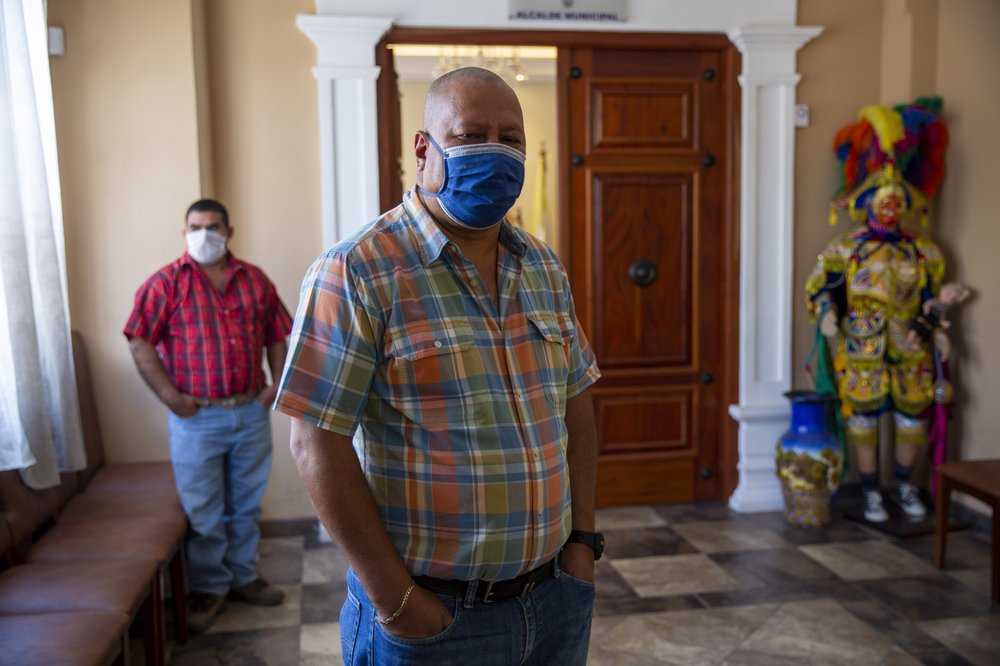
In the largely indigenous Guatemalan town of Joyabaj, half of the 100,000 residents depend on remittances, almost all from the U.S.
Rosa López, 18, left a money-transfer office last week holding her 2-year-old son and $100 sent by her sister, who works at a dairy in Texas. The dairy has cut working hours in half, forcing the sister to cut back the money she sends.
The money that came last week will allow López and seven other relatives to buy rice, beans and other basics, but they may have to stop paying the light and water bills, she said.
“We need to figure out a way not to die of hunger,” López said. “She’s the only one who’s helping the entire family.”
One of the most remittance-dependent countries in the world is Haiti, where $3 billion in money sent from abroad makes up about 30 percent of the gross domestic product.
Juliette Andre, a 25-year-old nursing student in Port-au-Prince, used to receive $150 monthly from her aunt who cares for elderly people in Brooklyn, New York. In March, Andre received a total of $50.
“That doesn’t represent anything in Haiti because the cost of living quadrupled,” she said last week. “We are going to be struggling for a while.
In this April 3, 2020 photo, Mayor Florencio Carrascoza Gámez, wearing a protective mask, poses for photos at his office in the largely indigenous town of Joyabaj, Guatemala, where half of the residents depend on remittances, almost all from the U.S. The 52-year-old mayor knows the importance of remittances: he was a migrant twice in his twenties to send some money back to his family. The devastation wrought by COVID-19 across the developed world is cutting into the financial lifelines for people across Latin America, Africa and Asia. (AP Photo/Moises Castillo)
Asia is the top recipient of remittances in the world, with India getting the largest amount in the world in 2018 at $79 billion, followed by China at $67 billion, according to the World Bank. The Philippines is also in the top five recipients of remittances.
In India, the southern state of Kerala accounts for almost 19% of the total remittances to the country. Tens of thousands from the state work in various Gulf countries and send money home. The tourism-reliant local economy has been badly hurt by the 21-day lock-down across India and the families who depend on remittance money are growing concerned.
In the last month, Sajeela Mol, a 36-year-old homemaker in Kerala’s Mallapuram district, hasn’t received any money from her husband Shabeer Ali, who works at a fast-food restaurant in Jeddah, Saudi Arabia. Mol lives with her four school-age children and an ailing mother-in-law. The family is dependent on the $150 her husband sends every month.
With the restaurant shut due to the lockdown, Mol said her husband is unsure if he will receive his salary.
“If my husband has no money, I don’t know what will he send home for his family,” said Mol.
______
Pérez reported from Guatemala City and Weissenstein from Havana. Evens Sanon in Port-au-Prince, Mohamed Sheikh Nor in Mogadishu, Somalia, and Subramoney Iyer in New Delhi contributed to this report.
Scientists in Japan develop decomposable plastic

Scientists in Osaka, Japan, say they have developed a
Regular plastic bags take about 20 years to decompose after being discarded into the ocean, and plastic bottles take as much as 450 years. About 8 million tons of plastic waste is thrown into the sea annually. The World Economic Forum has said micro-plastics would outweigh fish in oceans across the globe by 2050.
Japan is the second-biggest emitter of plastic waste per capita after the United States, according to The Guardian.
The country used to send 1.5 million tons of plastic waste to China annually, until Beijing banned waste imports in 2017.
Scientists in Osaka, Japan, say they have developed a
new plastic that disintegrates at sea.
File Photo by Keizo Mori/UPI | License Photo
April 7 (UPI) -- Japanese scientists say they have developed plastic that can disintegrate at sea within 30 days.
The Asahi Shimbun reported the plastic contains cassava, a raw material used to make tapioca, and cellulose found in wood pulp, originating from tropical climates.
The new material is the result of collaboration between an Osaka University-led engineering team and Japan Food Research Laboratories, according to the report.
The plant material is not expensive to make, scientists say. The starch and cellulose were dissolved in water, rolled out into a thin layer, and then turned into a transparent sheet after applying heat.
"We would first like to use it as food packaging materials, which are very familiar to people and are often contained in the waste in the sea," said Hiroshi Uyama, a professor of engineering at Osaka University. "I hope that this will be a part of the solution to the issue and raise the interest of people."
Japanese scientists also said the sheet, which measures about 100 micrometers in thickness, has twice the strength of plastics composed of polyethylene.
Marine microorganisms are key to decomposing the new plastic. When placed in seawater filled with microorganisms, the sheet had been torn apart in 30 days; the sheet was not destroyed in water with fewer microorganisms, however.
April 7 (UPI) -- Japanese scientists say they have developed plastic that can disintegrate at sea within 30 days.
The Asahi Shimbun reported the plastic contains cassava, a raw material used to make tapioca, and cellulose found in wood pulp, originating from tropical climates.
The new material is the result of collaboration between an Osaka University-led engineering team and Japan Food Research Laboratories, according to the report.
The plant material is not expensive to make, scientists say. The starch and cellulose were dissolved in water, rolled out into a thin layer, and then turned into a transparent sheet after applying heat.
"We would first like to use it as food packaging materials, which are very familiar to people and are often contained in the waste in the sea," said Hiroshi Uyama, a professor of engineering at Osaka University. "I hope that this will be a part of the solution to the issue and raise the interest of people."
Japanese scientists also said the sheet, which measures about 100 micrometers in thickness, has twice the strength of plastics composed of polyethylene.
Marine microorganisms are key to decomposing the new plastic. When placed in seawater filled with microorganisms, the sheet had been torn apart in 30 days; the sheet was not destroyed in water with fewer microorganisms, however.
Regular plastic bags take about 20 years to decompose after being discarded into the ocean, and plastic bottles take as much as 450 years. About 8 million tons of plastic waste is thrown into the sea annually. The World Economic Forum has said micro-plastics would outweigh fish in oceans across the globe by 2050.
Japan is the second-biggest emitter of plastic waste per capita after the United States, according to The Guardian.
The country used to send 1.5 million tons of plastic waste to China annually, until Beijing banned waste imports in 2017.
A NEW WORLD IS POSSIBLE
More than 95% of Americans made lifestyle changes for COVID-19
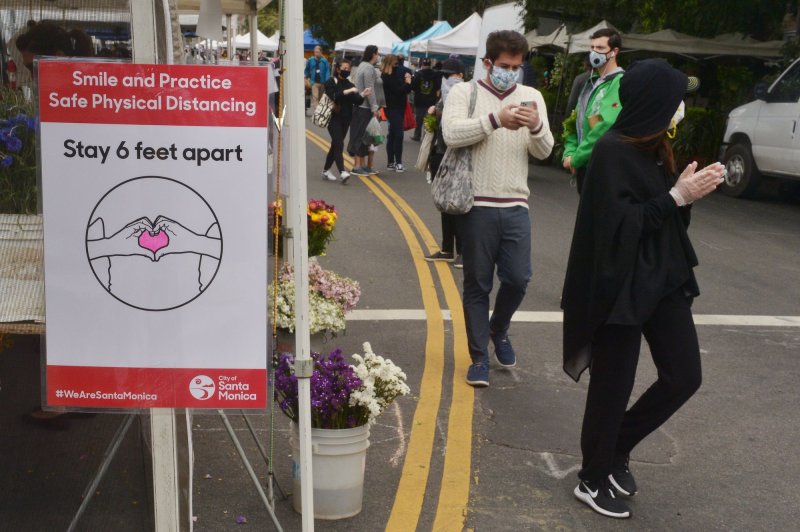
Shoppers and workers at the Hollywood farmer's market comply with Mayor Eric Garcetti's orders to the extent that they can in Los Angeles on Sunday. Photo by Jim Ruymen/UPI | License Photo
April 7 (UPI) -- Since the coronavirus outbreak exploded in early March, more than 95 percent of people in the United States have made changes to their lifestyle, including stockpiling food and practicing social distancing, researchers from Stanford University and Baylor University report.
More than two-thirds of Americans are "very or extremely concerned" about the COVID-19 pandemic, according to the results of a new survey published Tuesday by JAMA Internal Medicine.
The survey was conducted between March 14 and 16 on social media, with more than 9,000 adults participating -- about one-third of whom reported experiencing "cold- and flu-like illness" in the four weeks before the survey.
"In early March, I noticed people in my own community had different reactions to the pandemic -- some were worried, preparing, stocking up on food, and starting to isolate, while others went on with their lives as normal," study co-author Dr. Eleni Linos, professor of dermatology and epidemiology at Stanford University, told UPI
On March 14, the authors of the report posted an online survey on three social media platforms -- Twitter, Facebook and Nextdoor. The 21 questions were designed to collect data on symptoms, concerns and individual actions taken in response to the pandemic. The Twitter and Facebook survey posts were shareable to "facilitate snowball sampling."
As of March 16, 844 of 3,233, or roughly 26 percent, of all U.S. counties were represented by at least one survey respondent.
Overall, nearly 95.7 percent of respondents reported making lifestyle changes in response to COVID-19, with 93 percent increasing hand-washing, 89 percent avoiding social gatherings and nearly 74.7 percent stockpiling food and supplies.
In addition, just over 19 percent of respondents said they were self-isolating all of the time. Slightly less than half -- 49.8 percent -- were self-isolating "most of the time," leaving the house only to buy food and essentials.
The survey revealed that adults between 40 and 75 years old were most concerned about the pandemic, while those between 18 and 24 years old were less so
In all, 70 percent of respondents said their biggest concern was getting sick with COVID-19, and 46 percent said they were worried about not having access to healthcare if they did become infected.
At the time of the survey, in mid-March, 14.7 percent of respondents said their wages or hours at work were reduced since the start of the pandemic, and 1.5 percent of respondents indicated that they had lost their jobs because of it.
Additionally, 80 percent of respondents reported difficulties obtaining hand sanitizer, and 32 percent and 14 percent had difficulty acquiring food and childcare because of social distancing measures implemented in many areas of the country in early March.
"I was surprised that how concerned people felt was quite different depending on their age," Linos said. "Younger people and older people seem to be affected by this crisis in different ways.

More than 95% of Americans made lifestyle changes for COVID-19
Shoppers and workers at the Hollywood farmer's market comply with Mayor Eric Garcetti's orders to the extent that they can in Los Angeles on Sunday. Photo by Jim Ruymen/UPI | License Photo
April 7 (UPI) -- Since the coronavirus outbreak exploded in early March, more than 95 percent of people in the United States have made changes to their lifestyle, including stockpiling food and practicing social distancing, researchers from Stanford University and Baylor University report.
More than two-thirds of Americans are "very or extremely concerned" about the COVID-19 pandemic, according to the results of a new survey published Tuesday by JAMA Internal Medicine.
The survey was conducted between March 14 and 16 on social media, with more than 9,000 adults participating -- about one-third of whom reported experiencing "cold- and flu-like illness" in the four weeks before the survey.
"In early March, I noticed people in my own community had different reactions to the pandemic -- some were worried, preparing, stocking up on food, and starting to isolate, while others went on with their lives as normal," study co-author Dr. Eleni Linos, professor of dermatology and epidemiology at Stanford University, told UPI
"The goal was to really understand how people were feeling about this crisis, how they were reacting to it, and what impact it had on their lives. We were lucky that we started the survey early, before 'shelter in place' announcements were made, and we were able to get a sense of how people were feeling before these policies," Linos said.
On March 14, the authors of the report posted an online survey on three social media platforms -- Twitter, Facebook and Nextdoor. The 21 questions were designed to collect data on symptoms, concerns and individual actions taken in response to the pandemic. The Twitter and Facebook survey posts were shareable to "facilitate snowball sampling."
As of March 16, 844 of 3,233, or roughly 26 percent, of all U.S. counties were represented by at least one survey respondent.
Overall, nearly 95.7 percent of respondents reported making lifestyle changes in response to COVID-19, with 93 percent increasing hand-washing, 89 percent avoiding social gatherings and nearly 74.7 percent stockpiling food and supplies.
In addition, just over 19 percent of respondents said they were self-isolating all of the time. Slightly less than half -- 49.8 percent -- were self-isolating "most of the time," leaving the house only to buy food and essentials.
The survey revealed that adults between 40 and 75 years old were most concerned about the pandemic, while those between 18 and 24 years old were less so
In all, 70 percent of respondents said their biggest concern was getting sick with COVID-19, and 46 percent said they were worried about not having access to healthcare if they did become infected.
At the time of the survey, in mid-March, 14.7 percent of respondents said their wages or hours at work were reduced since the start of the pandemic, and 1.5 percent of respondents indicated that they had lost their jobs because of it.
Additionally, 80 percent of respondents reported difficulties obtaining hand sanitizer, and 32 percent and 14 percent had difficulty acquiring food and childcare because of social distancing measures implemented in many areas of the country in early March.
"I was surprised that how concerned people felt was quite different depending on their age," Linos said. "Younger people and older people seem to be affected by this crisis in different ways.
Cherry trees absorb carbon emissions, South Korea scientists say

Scientists in South Korea say cherry blossoms can offset
Scientists in South Korea say cherry blossoms can offset
greenhouse gas emissions, like these blooming April 5 at
Osaka Castle Nishinomaru Garden in Japan.
RELATED Arctic climate change: Recent carbon emissions worse than ancient methane
The country is in the midst of cherry blossom viewing season, but outdoor activities have been curtailed due to the global coronavirus pandemic.
Local television network KBS reported Sunday the government extended social distancing guidelines for an additional two weeks. Crowding is being discouraged until April 19, according to the report.
South Korean parks have taken pre-emptive measures to prevent crowds from forming during this critical time.
At Gwangju's Uncheon Reservoir, a popular viewing location, park authorities blocked the entrance to a bridge in the middle of the reservoir.
People who did come out to see the blossoms wore masks and said they were "frustrated" with the restrictions that have come with the coronavirus outbreak. The country was one of the first to witness a major outbreak of the infectious disease outside China.Hypothetically, 250 cherry trees, each 25 years old, can absorb 2.4 tons of carbon emissions, which is about the average amount of pollution one passenger vehicle emits annually, according to the report.
South Korea is home to 1.5 million cherry trees, according to forestry statistics dating back to 2018. Annually the trees are capable of absorbing carbon emissions from 6,000 cars annually.
RELATED Arctic climate change: Recent carbon emissions worse than ancient methane
The country is in the midst of cherry blossom viewing season, but outdoor activities have been curtailed due to the global coronavirus pandemic.
Local television network KBS reported Sunday the government extended social distancing guidelines for an additional two weeks. Crowding is being discouraged until April 19, according to the report.
Throngs of South Koreans typically gather in parks and cities like Gwangju to view the blossoms, but people appeared in public in fewer numbers over the weekend, the report says.
RELATED Drylands to become more abundant, less productive due to climate change
South Korean parks have taken pre-emptive measures to prevent crowds from forming during this critical time.
At Gwangju's Uncheon Reservoir, a popular viewing location, park authorities blocked the entrance to a bridge in the middle of the reservoir.
People who did come out to see the blossoms wore masks and said they were "frustrated" with the restrictions that have come with the coronavirus outbreak. The country was one of the first to witness a major outbreak of the infectious disease outside China.
Photo by Keizo Mori/UPI | License Photo
By Elizabeth Shim
April 7 (UPI) -- Cherry trees can offset greenhouse gas emissions and a single cherry tree can absorb as much as 20 pounds of carbon emissions annually, South Korean scientists say.
The Korea Forest Service's Korea Forest Research Institute said Tuesday cherry trees could be helpful in reducing greenhouse gases that contribute to climate change, Yonhap reported.
Hypothetically, 250 cherry trees, each 25 years old, can absorb 2.4 tons of carbon emissions, which is about the average amount of pollution one passenger vehicle emits annually, according to the report.
South Korea is home to 1.5 million cherry trees, according to forestry statistics dating back to 2018. Annually the trees are capable of absorbing carbon emissions from 6,000 cars annually.
By Elizabeth Shim
April 7 (UPI) -- Cherry trees can offset greenhouse gas emissions and a single cherry tree can absorb as much as 20 pounds of carbon emissions annually, South Korean scientists say.
The Korea Forest Service's Korea Forest Research Institute said Tuesday cherry trees could be helpful in reducing greenhouse gases that contribute to climate change, Yonhap reported.
Hypothetically, 250 cherry trees, each 25 years old, can absorb 2.4 tons of carbon emissions, which is about the average amount of pollution one passenger vehicle emits annually, according to the report.
South Korea is home to 1.5 million cherry trees, according to forestry statistics dating back to 2018. Annually the trees are capable of absorbing carbon emissions from 6,000 cars annually.
RELATED Arctic climate change: Recent carbon emissions worse than ancient methane
The country is in the midst of cherry blossom viewing season, but outdoor activities have been curtailed due to the global coronavirus pandemic.
Local television network KBS reported Sunday the government extended social distancing guidelines for an additional two weeks. Crowding is being discouraged until April 19, according to the report.
South Korean parks have taken pre-emptive measures to prevent crowds from forming during this critical time.
At Gwangju's Uncheon Reservoir, a popular viewing location, park authorities blocked the entrance to a bridge in the middle of the reservoir.
People who did come out to see the blossoms wore masks and said they were "frustrated" with the restrictions that have come with the coronavirus outbreak. The country was one of the first to witness a major outbreak of the infectious disease outside China.Hypothetically, 250 cherry trees, each 25 years old, can absorb 2.4 tons of carbon emissions, which is about the average amount of pollution one passenger vehicle emits annually, according to the report.
South Korea is home to 1.5 million cherry trees, according to forestry statistics dating back to 2018. Annually the trees are capable of absorbing carbon emissions from 6,000 cars annually.
RELATED Arctic climate change: Recent carbon emissions worse than ancient methane
The country is in the midst of cherry blossom viewing season, but outdoor activities have been curtailed due to the global coronavirus pandemic.
Local television network KBS reported Sunday the government extended social distancing guidelines for an additional two weeks. Crowding is being discouraged until April 19, according to the report.
Throngs of South Koreans typically gather in parks and cities like Gwangju to view the blossoms, but people appeared in public in fewer numbers over the weekend, the report says.
RELATED Drylands to become more abundant, less productive due to climate change
South Korean parks have taken pre-emptive measures to prevent crowds from forming during this critical time.
At Gwangju's Uncheon Reservoir, a popular viewing location, park authorities blocked the entrance to a bridge in the middle of the reservoir.
People who did come out to see the blossoms wore masks and said they were "frustrated" with the restrictions that have come with the coronavirus outbreak. The country was one of the first to witness a major outbreak of the infectious disease outside China.
Farmers destroy crops grown for restaurants, hotels
CAPITALIST CRISIS; OVERPRODUCTION, WASTE
By Paul Brinkmann

Tomatoes are left on the vine to rot in fields south of Miami
ORLANDO, Fla., April 6 (UPI) -- U.S. farmers have destroyed millions of pounds of perishable food like tomatoes, lettuce and green beans because growers lost a vast number of customers after the coronavirus pandemic struck.
"It's a catastrophe, it really is," said Tony DiMare, a long-time tomato grower based in Palm Beach County, Fla.
DiMare said he let 10 million pounds of tomatoes rot on the farm in a region south of Miami because no market existed for them.
"It's been a disaster at every level -- lost crops, lost sales, lost packing inventory," DiMare said.
RELATED Coronavirus pandemic crashes commodity prices
Growers felt the pandemic impact early in tourism-dominated Florida, where many farms sold directly to the local hospitality industry. South Florida is a major producer of winter vegetables, which are harvested when much of the rest of the country isn't growing produce.
"It will be hard to continue as we have been unless we can get relief from the [federal] stimulus package or business interruption insurance," DiMare said.
The largest trade group for produce growers, the United Fresh Produce Association, is trying to persuade the U.S. Department of Agriculture to distribute aid to its members quickly, said Mary Coppola, the association's vice president of marketing and communications.
RELATED With March Madness canceled, food industry is overloaded with chicken wings
"We're trying to open channels where we can with national retailers, in case one of their distribution centers can take produce," Coppola said. "We're talking to schools and food banks, even if we're only giving away food."
A USDA representative said via email, "We are swiftly evaluating the authorities granted under [the stimulus package] and will leverage our programs to alleviate disruption as necessary."
DiMare and other produce farmers -- already dealing with rising foreign competition -- now face a disastrous year and loss of income.
"Farmers are very resilient. But this is new territory," said Toby Basore, one of the largest lettuce growers in the eastern United States, also based in Palm Beach County. "If the crews start getting sick, who is going to harvest the crops."
Produce grower Paul Allen, who oversees 8,000 acres of farms in Palm Beach County, said he plowed under a million pounds of green beans there in March. Allen said food banks in the region already were overwhelmed with produce donated by the state's shuttered tourism and food-service industries.
'Nowhere for it to go'
"When the restaurants are shut down, there's just nowhere for it to go," said Allen, who also is chairman of the Florida Fruit & Vegetable Association.
Allen said he donates regularly to food pantries and that he hates to destroy crops, but he couldn't face the expense of harvest with nowhere to send the crop. That's partly because green beans are highly perishable, and about half the crop in Florida normally goes to hotels and restaurants that are, for the most part, closed or doing little business.
On the West Coast, demand for fresh vegetables also plummeted in the rich cropland near the San Francisco metropolitan area, said Chris Valadez, president of the Grower-Shipper Association of Central California.
"Demand from restaurants or food service is way down," said Valadez, who represents about 300 farms and processing companies. "We are trying to shift strategy away from food service and to retail outlets, but it doesn't happen overnight."
He said many retail businesses saw a surge in buying as people stocked up to isolate at home, but even that has dropped off.
The major harvest season for the Salinas Valley begins in a few weeks, he said.
Cost to donate
"Some of the harvest can be donated, but the costs involved in harvest would be tremendous for that volume," Valadez said. "The only thing that can help is government funding through the stimulus packages that were recently approved. Hopefully, we will see that soon."
He would rather see direct payments to farmers to make up for economic losses, but he said some government money might go to schools and institutions that would buy the fresh produce.
By contrast, farmers in the colder northern regions of the United States don't have the same immediate trouble. Some have started donating stored, surplus grain to processors who wrote checks to food banks, according to the Illinois Farm Bureau.
"I saw that food banks were getting pinched by a lack of donations and higher demand. It was clear that the situation would only get worse as time goes on," said Nik Jakobs, whose family's farm is about 120 miles west of Chicago.
Demand at those food banks is growing, but unpredictable, said Steve Ericson, executive director of Feeding Illinois, a statewide network of food banks. He said some local greenhouses donated produce, but food banks in his area still could use more.
"Our food banks are seeing 20 percent increases in demand, generally," Ericson said. "When we set up drive-throughs, we are getting 50 percent more people than expected."
SEE
https://plawiuk.blogspot.com/2020/04/u_3.html
U.S. dairy farmers dump milk as pandemic upends food markets
https://plawiuk.blogspot.com/2020/03/is-factory-farming-to-blame-for.html
Is factory farming to blame for the coronavirus outbreak
https://plawiuk.blogspot.com/2020/03/how-coronavirus-is-impacting-us-farmers.html
By Paul Brinkmann
Tomatoes are left on the vine to rot in fields south of Miami
in March because the restaurants and hotels for which they
they were grown had closed due to the coronavirus pandemic.
Photo courtesy of Tony DiMare/DiMare Fresh
ORLANDO, Fla., April 6 (UPI) -- U.S. farmers have destroyed millions of pounds of perishable food like tomatoes, lettuce and green beans because growers lost a vast number of customers after the coronavirus pandemic struck.
"It's a catastrophe, it really is," said Tony DiMare, a long-time tomato grower based in Palm Beach County, Fla.
DiMare said he let 10 million pounds of tomatoes rot on the farm in a region south of Miami because no market existed for them.
"It's been a disaster at every level -- lost crops, lost sales, lost packing inventory," DiMare said.
RELATED Egg suppliers scramble to restock stores after panic buying reduced supplie
The closure of food-service establishments in many parts of the country in March meant that farmers who grow produce for those customers suddenly had a large surplus in storage and in the fields.
Growers said efforts to find retailers or food banks failed, forcing them to plow under their crops. Without immediate aid from government stimulus funding, they said they will have to destroy more food.
Growers impacted early
The closure of food-service establishments in many parts of the country in March meant that farmers who grow produce for those customers suddenly had a large surplus in storage and in the fields.
Growers said efforts to find retailers or food banks failed, forcing them to plow under their crops. Without immediate aid from government stimulus funding, they said they will have to destroy more food.
Growers impacted early
RELATED Coronavirus pandemic crashes commodity prices
Growers felt the pandemic impact early in tourism-dominated Florida, where many farms sold directly to the local hospitality industry. South Florida is a major producer of winter vegetables, which are harvested when much of the rest of the country isn't growing produce.
"It will be hard to continue as we have been unless we can get relief from the [federal] stimulus package or business interruption insurance," DiMare said.
The largest trade group for produce growers, the United Fresh Produce Association, is trying to persuade the U.S. Department of Agriculture to distribute aid to its members quickly, said Mary Coppola, the association's vice president of marketing and communications.
RELATED With March Madness canceled, food industry is overloaded with chicken wings
"We're trying to open channels where we can with national retailers, in case one of their distribution centers can take produce," Coppola said. "We're talking to schools and food banks, even if we're only giving away food."
A USDA representative said via email, "We are swiftly evaluating the authorities granted under [the stimulus package] and will leverage our programs to alleviate disruption as necessary."
DiMare and other produce farmers -- already dealing with rising foreign competition -- now face a disastrous year and loss of income.
"Farmers are very resilient. But this is new territory," said Toby Basore, one of the largest lettuce growers in the eastern United States, also based in Palm Beach County. "If the crews start getting sick, who is going to harvest the crops."
Produce grower Paul Allen, who oversees 8,000 acres of farms in Palm Beach County, said he plowed under a million pounds of green beans there in March. Allen said food banks in the region already were overwhelmed with produce donated by the state's shuttered tourism and food-service industries.
'Nowhere for it to go'
"When the restaurants are shut down, there's just nowhere for it to go," said Allen, who also is chairman of the Florida Fruit & Vegetable Association.
Allen said he donates regularly to food pantries and that he hates to destroy crops, but he couldn't face the expense of harvest with nowhere to send the crop. That's partly because green beans are highly perishable, and about half the crop in Florida normally goes to hotels and restaurants that are, for the most part, closed or doing little business.
On the West Coast, demand for fresh vegetables also plummeted in the rich cropland near the San Francisco metropolitan area, said Chris Valadez, president of the Grower-Shipper Association of Central California.
"Demand from restaurants or food service is way down," said Valadez, who represents about 300 farms and processing companies. "We are trying to shift strategy away from food service and to retail outlets, but it doesn't happen overnight."
He said many retail businesses saw a surge in buying as people stocked up to isolate at home, but even that has dropped off.
The major harvest season for the Salinas Valley begins in a few weeks, he said.
Cost to donate
"Some of the harvest can be donated, but the costs involved in harvest would be tremendous for that volume," Valadez said. "The only thing that can help is government funding through the stimulus packages that were recently approved. Hopefully, we will see that soon."
He would rather see direct payments to farmers to make up for economic losses, but he said some government money might go to schools and institutions that would buy the fresh produce.
By contrast, farmers in the colder northern regions of the United States don't have the same immediate trouble. Some have started donating stored, surplus grain to processors who wrote checks to food banks, according to the Illinois Farm Bureau.
"I saw that food banks were getting pinched by a lack of donations and higher demand. It was clear that the situation would only get worse as time goes on," said Nik Jakobs, whose family's farm is about 120 miles west of Chicago.
Demand at those food banks is growing, but unpredictable, said Steve Ericson, executive director of Feeding Illinois, a statewide network of food banks. He said some local greenhouses donated produce, but food banks in his area still could use more.
"Our food banks are seeing 20 percent increases in demand, generally," Ericson said. "When we set up drive-throughs, we are getting 50 percent more people than expected."
SEE
https://plawiuk.blogspot.com/2020/04/u_3.html
U.S. dairy farmers dump milk as pandemic upends food markets
https://plawiuk.blogspot.com/2020/03/is-factory-farming-to-blame-for.html
Is factory farming to blame for the coronavirus outbreak
https://plawiuk.blogspot.com/2020/03/how-coronavirus-is-impacting-us-farmers.html
Subscribe to:
Posts (Atom)