Thursday, April 09, 2020

Why Canadians and Americans are buying guns during the coronavirus pandemic
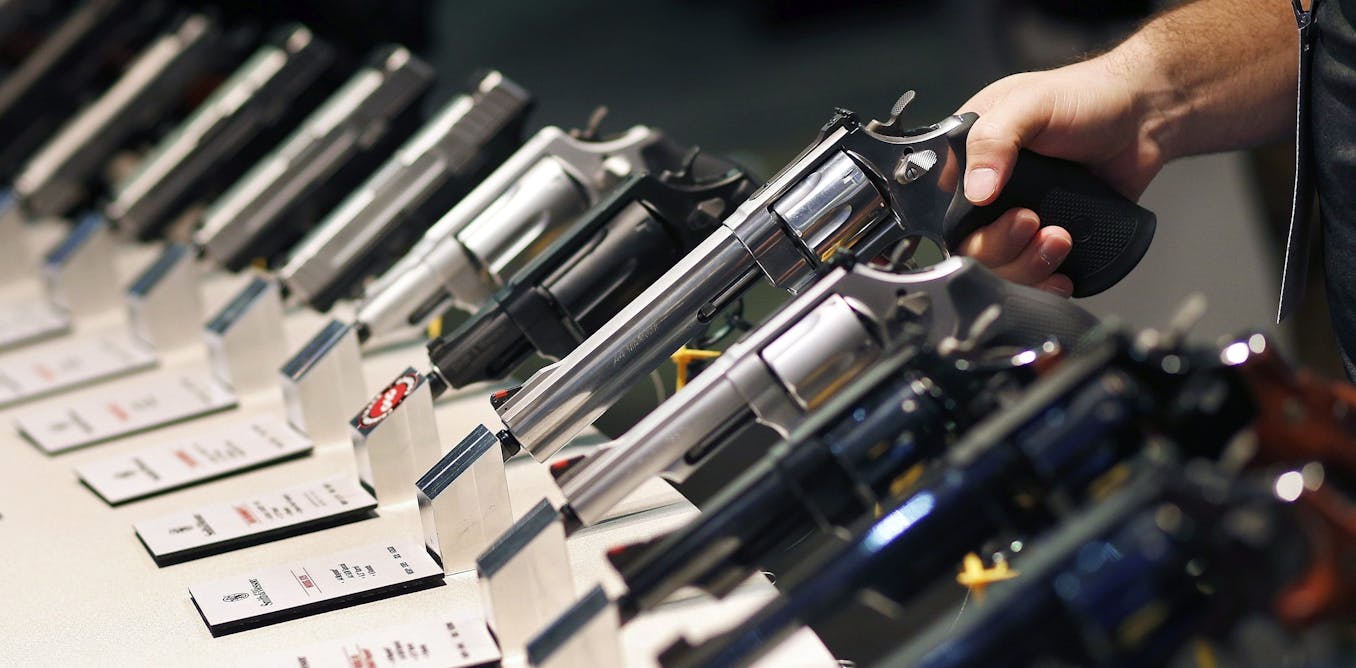
Handguns are displayed at the Smith & Wesson booth at the Shooting, Hunting and Outdoor Trade Show in Las Vegas. Handguns account for most of the guns being purchased by first-time gun buyers in the United States during the coronavirus pandemic. AP Photo/John Locher

Author
Noah S. Schwartz
April 8, 2020 

The COVID-19 pandemic has caused a surge in gun sales. Estimates based on background checks show that an estimated 2.6 million guns were sold in the United States in March. That is an 85 per cent increase over the same period last year.

While there are no official numbers, gun stores in Canada have also reported increased sales. This has spurred some news media to draw comparisons between the two nations’ gun-sales spikes, potentially stoking the fears of the Canadian public.

This angst has been echoed by gun control groups in Canada that have expressed concerns regarding the impact of “increased access to guns” on public health.

But few have noted the three key differences between the American and Canadian COVID-19 gun-sales spike.
No. 1: Why are they buying?

Canadians and Americans buy guns for different reasons. Over the past few decades, the United States has witnessed a transformation in its civilian gun culture. While in the past, gun ownership was mainly related to hunting and sports shooting, changes in laws and gun advertising have led to a rise in gun ownership for self-defence.
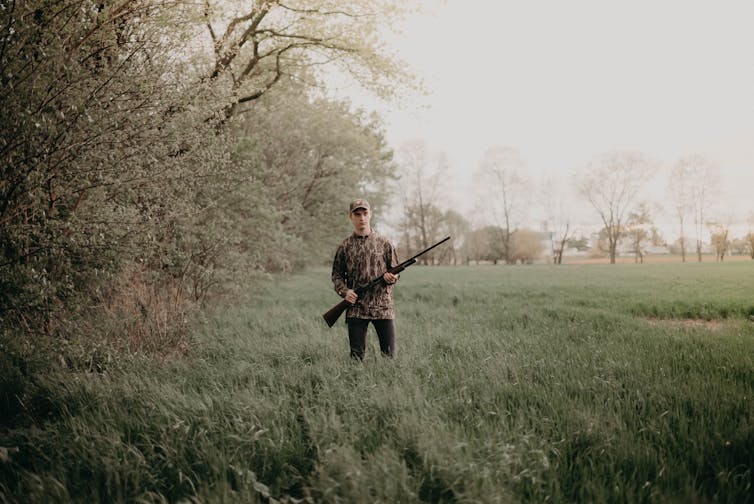
Gun ownership in the United States used to be mostly related to hunting and 
sports shooting. (Austin Pacheco/Unsplash)

In the 1970s, only 20 per cent of gun owners indicated self-defence as their primary reason for gun ownership. In the 1990s, following the explosion of laws that allowed Americans to carry guns outside the home, 46 per cent listed self-protection.

More recent studies have shown that 76 per cent of gun owners now report protection as their primary motivation for gun ownership.

The surge in first-time buyers suggests that many Americans buying guns during the pandemic are doing so due to concerns about self-defence, given fears of looting, violence and the government’s capacity to deal with the crisis.

With the absence of a gun-carry movement in Canada, this same shift has not taken place. The conditions under which guns can be used for self-defence in Canada are narrow, and the government stringently regulates not only firearms ownership, but the discourse surrounding guns.

Self-defence is not a legal reason to acquire a firearm in Canada, and cannot be listed as a reason for firearms ownership on a Possession and Acquisition License (PAL) application.

Though no research exists at this time, owners of gun stores who were interviewed by the media noted that Canadians are likely panic-buying due to a fear of shortages rather than a fear of violence, since the Canadian supply chain is heavily dependent on the United States.

That means gun owners who might have waited to buy firearms and ammunition for target shooting over the summer or hunting this fall are buying them now.
No. 2: How are they buying them?

Another key difference between the bump in sales in Canada versus the U.S. is the requirements to purchase guns and ammunition. South of the border, most firearms legislation is made at the state level, with big differences in gun laws across the country.

In many states, the only requirement to purchase a firearm from a licensed dealer is a federal background check, though states like California and Massachusetts have much stricter laws.

In Canada, the bump in sales is limited to those who have already passed through the RCMP’s extensive licensing regime. This process often takes up to six months and includes a weekend-long course, passing a written and practical test and reference checks. Canadian gun owners are subject to continuous automatic background checks as long as they hold the licence.

So if somebody is legally purchasing a gun in Canada, it means the RCMP could find “no reasons why, in the interest of public safety, they should not possess a firearm.”
No. 3: Who is buying what?

Many of the people buying guns in the U.S. during the COVID-19 pandemic reported that it was their first time purchasing a gun. Furthermore, the majority of guns sold during the current boom have been handguns rather than long guns.

Though it’s a bit early to speculate, this could very well lead to even less support for gun control in the U.S., given that gun owners are unsurprisingly the least likely group to support gun control.
Most first-time gun buyers in the United States during the pandemic 
have purchased handguns. (Kenny Luo/Unsplash)
In Canada, on the other hand, it is likely that only a small minority of gun purchases during the Canadian spike were first-time buyers given the time frame required to acquire a firearm licence in Canada.

Statistics on the breakdown of handguns versus long gun purchases during the Canadian pandemic spike don’t exist, but we can guess that most of the new guns purchased in Canada were long guns being used for hunting or sports shooting.

That’s because gun owners wishing to own handguns must have a special Restricted Possession and Acquisition License (RPAL) and maintain a membership at a shooting club, which can cost hundreds of dollars per year and limits handgun ownership to serious target shooters.

Of Canada’s 2.2 million licensed gun owners, only about a quarter have licences that allow them to purchase handguns.

And so it’s clear there are major differences between the gun purchase spikes in Canada and the U.S. during the COVID-19 pandemic. This will hopefully set anxious Canadian minds at ease and let everyone get back to focusing on more pressing problems

AUTHOR
Noah S. Schwartz
PhD Candidate, Political Science, Carleton University
Disclosure statement
Noah S. Schwartz receives funding from the Social Sciences and Humanities Research Council.
Partners
Why Trump tried to use the coronavirus crisis to ‘Mexicanize’ the U.S.-Canada border

April 2, 2020 
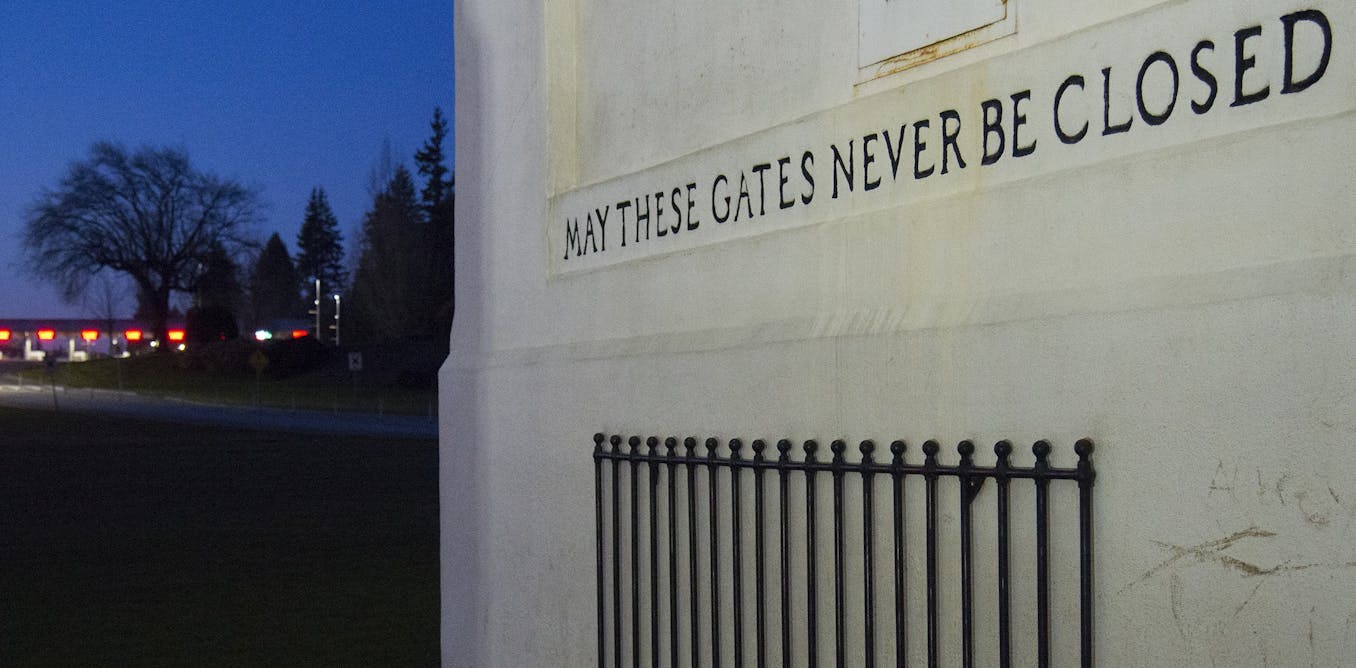
An inscription on the Peace Arch at the crossing between Washington state and British Columbia 
alludes to the special border relationship between the U.S. and Canada. THE CANADIAN PRESS/Jonathan Hayward

For more than 150 years, the United States and Canada have shared what is commonly called the “longest undefended border” in the world. And yet in the midst of the coronavirus pandemic, reports emerged that the United States was intending to place military troops near the border as part of Washington’s plan to stop the spread of COVID-19.

Prime Minister Justin Trudeau said such a move would be a “mistake”. After several days of confusion, Trudeau announced the U.S. had, at least temporarily, backed off on any plans to send troops in response to fears that infected people could illegally cross the border.

What’s behind this threat by the United States to militarize its northern border? For the answer, look to America’s southern border.

Leaked documents revealed that U.S. Customs and Border Protection (CBP) had requested the Department of Defense deploy more than 1,500 troops to both the southern and northern borders to support border enforcement during the coronavirus pandemic.
Troops requested for northern border

Specifically, CBP had requested 1,000 personnel on the northern border and 540 personnel on the southern border. The 540 personnel would be added to the 5,200 troops already present at the U.S.-Mexico border that followed President Donald Trump’s declaration of a national emergency over undocumented immigration in early 2019.

The leaked memo referred to “illegal entries” having “the potential to spread infectious disease.” The memo did not clearly explain how these troops were going to be used — only that they “will not conduct civilian law enforcement activities.” The conditions of the use of force were also unclear.

Read more: Keep on trucking: Trucks must keep moving across Canada-U.S. border amid coronavirus

Canada and the United States had already agreed to close their land border to non-essential travel as a way to stop the spread of COVID-19. That decision did not mean the border would be entirely closed — the flow of goods by land was vital for both economies and would not be stopped. Cross-border commutes related to grocery shopping, studies and work were still allowed as well.

Canada’s diplomatic response to the American attempt to militarize its northern border, generally polite but at times tense, is not surprising given the asymmetrical Canada-U.S. relationship.
‘Sleeping with an elephant’

In 1969, Canadian prime minister Pierre Trudeau famously said that living next to the United States “was in some ways like sleeping with an elephant. No matter how friendly or temperate the beast, one is affected by every twitch and grunt.”
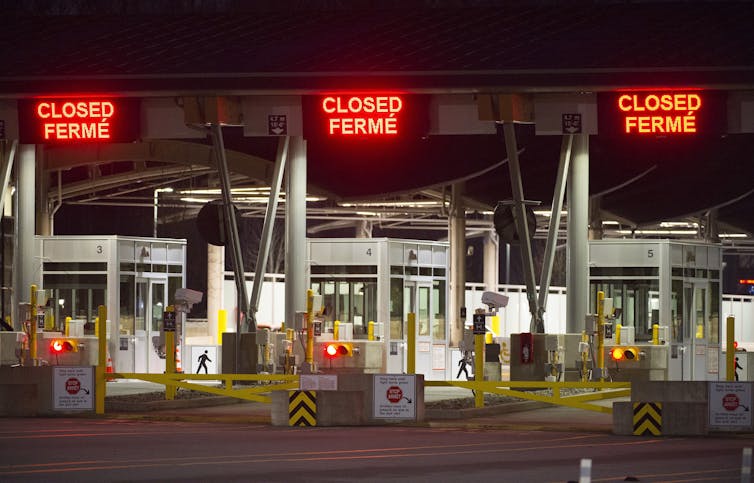
The U.S.-Canada border was closed to non-essential traffic on March 21 in an attempt to contain the coronavirus pandemic. THE CANADIAN PRESS/Jonathan Hayward

Because of this structural asymmetry, Canada-U.S. relations dramatically changed after the terrorist attacks of 9/11. Despite Canadian efforts to meet U.S. security demands against terrorism, Paul Cellucci, the U.S. Ambassador to Canada, bluntly stated in 2003 that “security trumps trade.”

And yet both national economies are deeply interdependent. In the early 2000s, 87 per cent of Canada’s trade went to the U.S. and about one-quarter of America’s trade came to Canada. In 2018, U.S. exports to Canada accounted for 18 per cent of its overall exports, totalling US$363.8 billion, while Canada’s exports to the U.S. had a partner share of 75 per cent, totalling US$337 billion.
Security the priority

Several Canada-U.S. cross-border regions are integrated (infrastructures, economies, tourism, etc.), but U.S. prevalence of national security has dominated the border agenda since 2001.

The metaphor of the “Mexicanization” of the U.S.-Canada border was used to reflect the primacy of this security agenda on both Mexican and Canadian borders.

The traditional U.S. security focus on drug and illegal immigration on the southern border was renewed after 2001 — but terrorism and weapons of mass destruction also became one of the key national security priorities, which also applied to the northern border.

In this new context, U.S. border workers contributed to make both borders more uniform: CBP officials who are trained and on duty on the Mexican border later move to the Canadian border. They bring with them the corporate culture of CBP from the southern border — values, beliefs and behaviours tainted with U.S.-Mexico border challenges.

In parallel, a longstanding collaboration between CBP and the Canadian Border Service Agency (CBSA) exists. But it is essentially focused on U.S border monitoring and law enforcement, which is very similar to CBP’s management of the southern border with (or without) Mexican authorities.

The Mexicanization of the northern border conveys the idea that the Canada-U.S. bilateral relationship is far from being unique — or special. The U.S. increasingly sees Canada as just another border where national security threats emerge without distinction.

This imbalance between security and trade over the last two decades has contributed to numerous regional and local initiatives in order to demonstrate that security and trade imperatives can co-exist.

But the leaked CBP memo shows there is no longer a distinction between the southern and the northern borders. Both are seen as a threat to the safety and security of the United States.

It also shows the world’s longest undefended border is just a fig leaf — an egalitarian symbol in order to hide the deep imbalance between the two countries.


Author
Bruno Dupeyron
Professor and Graduate Chair, 
Johnson Shoyama Graduate School of Public Policy; 
and Assistant Professor of Law,, University of Regina
Disclosure statement
Bruno Dupeyron receives funding from SSHRC.
Partners
University of Regina provides funding as a member of The Conversation CA.

How medieval writers struggled to make sense of the Black Death
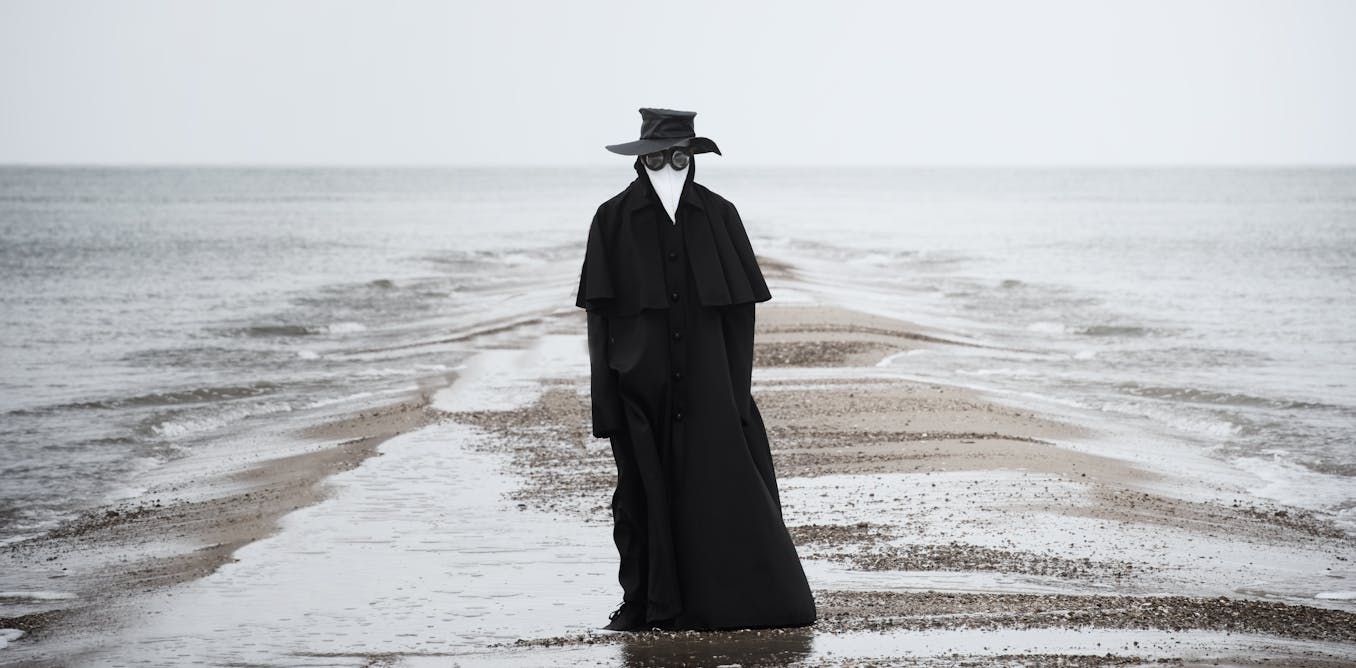
 (Shutterstock)

The Black Death inspired medieval writers to document their era of plague. Their anxieties and fears are starkly reminiscent of our own even if their solutions differ.


A plague of serious proportions is ravaging the world. But not for the first time.

From 1347-51, the Black Death killed anywhere from one-tenth to one-half (or more) of Europe’s population.

One English chronicler, Thomas Walsingham, noted how this “great mortality” transformed the known world: “Towns once packed with people were emptied of their inhabitants, and the plague spread so thickly that the living were hardly able to bury the dead.” As death tolls rose at exponential rates, rents dwindled, and swaths of land fell to waste “for want of the tenants who used to cultivate it….
Pierart dou Tielt’s miniature, Burying Plague Victims of Tournai.
(Wikimedia Commons)


As a medieval historian, I’ve been teaching the subject of plague for many years. If nothing else, the feelings of panic between the Black Death and the COVID-19 pandemic are reminiscent.

Like today’s crisis, medieval writers struggled to make sense of the disease; theories on its origins and transmission abounded, some more convincing than others. Whatever the result, “… so much misery ensued,” wrote another English author, it was feared that the world would “hardly be able to regain its previous condition.
A disease without borders

Medieval writers produced a variety of answers for the plague’s origins. Gabriele de Mussis’ Historia de Morbo attributed the cause to “the mire of manifold wickedness,” the “numberless vices,” and the “limitless capacity for evil” exhibited by an entire human race no longer fearing the judgement of God.

Describing its eastern origins, he further noted how the Genoese and Venetians had imported the disease to western Europe from Caffa (modern-day Ukraine); “carrying the darts of death,” disembarking sailors at these Italian port-cities unwittingly spread the “poison” to their relations, kinsmen and neighbours.
Master of Bruges of 1482’s rendering of Giovanni Boccaccio and Florentines who have fled from the plague. (Royal Library of the Netherlands)Containing the disease seemed nearly impossible. As Giovanni Boccaccio wrote about Florence, the outcome was all the more severe as those suffering from the disease “mixed with people who were still unaffected …” Like a “fire racing through dry or oily substances,” healthy persons became ill.

Possessing the power to “kill large numbers by air alone,” through breath or conversation, it was thought, the plague “could not be avoided.”
Looking for a cure

Scholars worked tirelessly to find a cure. The Paris Medical Faculty devoted its energies to discovering the causes of these amazing events, which even “the most gifted intellects” were struggling to comprehend. They turned to experts on astrology and medicine about the causes of the epidemic.
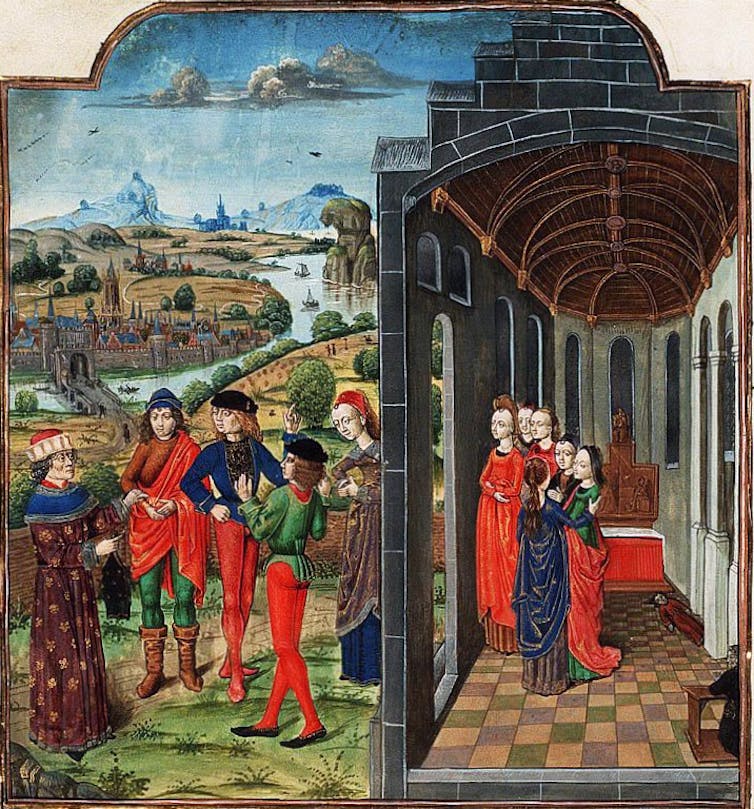
Étienne Colaud’s ‘A meeting of doctors at the university of Paris.’ From the ‘Chants royaux’ manuscript. (Bibliothèque Nationale de France).

On the pope’s orders, anatomical examinations were carried out in many Italian cities “to discover the origins of the disease.” When the corpses were opened up, all victims were found to have “infected lungs.”

Not content with lingering uncertainty, Parisian masters turned towards ancient wisdom and compiled a book of existing philosophical and medical knowledge. Yet they also acknowledged the limitations in finding a “sure explanation and perfect understanding,” quoting Pliny to the effect that “some accidental causes of storms are still uncertain, or cannot be explained.”

Self-isolation and travel bans

Prevention was critical. Quarantine and self-isolation were necessary measures.

In 1348, to prevent the illness from spreading through the Tuscan region of Pistoia, strict fines were enforced against the movement of peoples. Guards were placed at the city’s gates to prevent travellers entering or leaving.

These civic ordinances stipulated against importing linen or woollen cloths that might carry the disease. Demonstrating similar sanitation concerns, bodies of the dead were to remain in place until properly enclosed in a wooden box “to avoid the foul stench which comes from dead bodies”; moreover, graves were dug “two and a half arms-lengths deep.”

Butchers and retailers nevertheless remained open. And yet a number of regulations were imposed so that “the living are not made ill by rotten and corrupt food,” with further bans to minimize the “stink and corruption” considered harmful to Pistoia’s citizens.
Community response and resolve

Authorities responded in different ways to the outbreak. Recognizing the plague’s arrival by ship, the people of Messina “expelled the Genoese from the city and harbour with all speed.” In central Europe, foreigners and merchants were banished from the inns and “compelled to leave the area immediately.”

These were severe measures, but seemingly necessary given the varied social reaction to plague. As Boccaccio famously recounted in his Decameron, the whole spectrum of human behaviour ensued: from extreme religious devotion, sober living, self-isolation and a restricted diet to warding off evil through heavy drinking, singing and merrymaking.
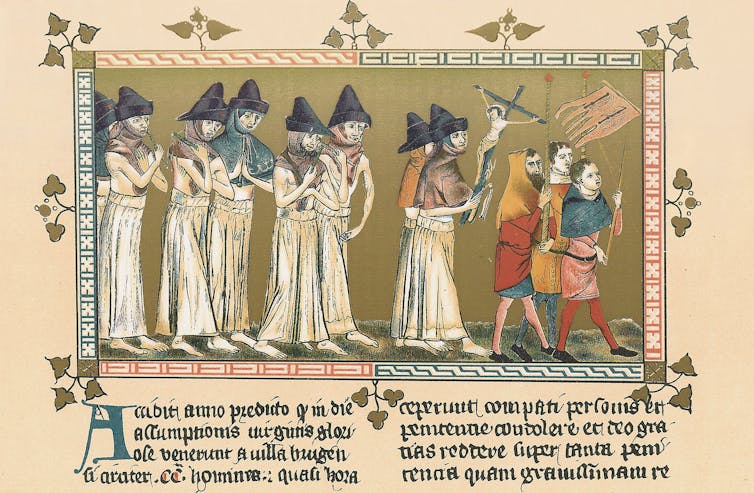
The flagellants at Doornik in 1349. The people are pictured performing 
flagellations as an act of penance. (Wikimedia Commons)

The fear of contagion eroded social customs. The number of dead grew so high in many regions that proper burials and religious services became impossible to perform: new religious customs emerged pertaining to preparing for and presiding over death.

Families were changed. An account from Padua mentions how “wife fled the embrace of a dear husband, the father that of a son and the brother that of a brother.”

Ultimately, there is a human element to plague too often lost in the historical record. Its influence should not be underestimated or forgotten. The modern response to pandemic evokes a similar community response. Different in scope and scale, and indeed in medical practice, administrative and public health actions remain critical.

But in 2020, we are not, as Boccaccio lamented, seeing the law and social order break down. Essential duties and responsibilities are still being carried out. Against our own 21st-century plague, wisdom and ingenuity are prevailing; citizens hang on “the advice of physicians and all the power of medicine,” which unlike the 14th century, is anything but “profitless and unavailing.”


Author
Kriston R. Rennie
Visiting Fellow at the Pontifical Institute of Mediaeval Studies, Toronto, and Associate Professor in Medieval History, The University of Queensland
Disclosure statement
Kriston R. Rennie does not work for, consult, own shares in or receive funding from any company or organisation that would benefit from this article, and has disclosed no relevant affiliations beyond their academic appointment.


THE CONVERSATION March 31, 2020


A trial of n anti-maalaria drug in France found different results from a similar study last month. 

A small trial finds that hydroxychloroquine is not effective for treating coronavirus

April 3, 2020 

On Saturday the Food and Drug Administration approved the use of two antimalarial drugs, hydroxychloroquine and a related medication, chloroquine, for emergency use to treat COVID-19. The drugs were touted by President Trump as a “game changer” for COVID-19.

However, a study just published in a French medical journal provides new evidence that hydroxychloroquine does not appear to help the immune system clear the coronavirus from the body. The study comes on the heels of two others - one in France and one in China - that reported some benefits in the combination of hydroxychloroquine and azithromycin for COVID-19 patients who didn’t have severe symptoms of the virus.

I am a medicinal chemist who has specialized in discovery and development of antiviral drugs for the past 30 years, and I have been actively working on coronaviruses for the past seven. I am among a number of researchers who are concerned that this drug has been given too much of a high priority before there is enough evidence to show it is indeed effective.

There are already other clinical studies that showed it is not effective against COVID-19 as well as several other viruses. And, more importantly, it can have dangerous side effects, as well as giving people false hope. The latter has led to widespread shortages of hydroxychloroquine for patients who need it to treat malaria, lupus and rheumatoid arthritis, the indications for which it was originally approved.

The idea that the combination of hydroxychloroquine with an antibiotic drug, azithromycin, was effective against COVID-19 gained more attention after a study published on March 17. This study described a trial of 80 patients carried out by Philippe Gautret in Marseille, France. Although some of their results appeared to be encouraging, it should also be noted that most of their patients only had mild symptoms. Furthermore, 85% of the patients didn’t even have a fever – one of the major telltale symptoms of the virus, thus suggesting that these patients likely would have naturally cleared the virus without any intervention.

In another study, posted on medRxiv, which has not yet been peer-reviewed, Chinese scientists from Renmin Hospital of Wuhan University, in Wuhan, China, gave hydroxychloroquine to patients with only mild infections who were free of medical issues, similar to the Gautret study. The results showed that the 31 patients who received the drug showed a lessening of their symptoms 24 hours earlier than patients in the control group. In addition, pneumonia symptoms improved in 25 of the 31 patients versus 17 of 31 in the control group. As noted in several of the comments associated with the manuscript, there are issues related to the translation of the paper, thus clouding interpretations of some of the results. The paper also appears to focus more on pneumonia than COVID-19. However, these issues may be cleared up or addressed once the paper finishes the peer-review process.

But two other studies have conflicting results.

A second French group, led by Jean-Michel Molina, has now tested the hydroxychloroquine-azithromycin combination treatment in 11 patients at the Hôpital Saint-Louis in Paris, France, and their results were strikingly different.

Like the Marseille study, the Molina trial was also a small pilot study. Molina and colleagues used the same dosing regimen as Gautret. In contrast, however, to the Gautret study, eight of the 11 patients had underlying health conditions, and 10 of 11 had fevers and were quite ill at the time the dosing began.

These Paris researchers found that after five to six days of treatment with hydroxychloroquine (600 mg per day for 10 days) and azithromycin (500 mg on day 1 and 250 mg on days 2 to 5), eight of the 10 patients still tested positive for COVID-19. Of these 10 patients, one patient died, two were transferred to the ICU and another had to be removed from the treatment due to serious complications.

In addition, a similar study in China also showed no difference in viral clearance after seven days either with or without the hydroxychloroquine with the patients in the trial. This supports Molina’s findings.

Thus, despite the recent approval of this drug for use against COVID-19, questions remain as to the efficacy of this treatment. As Molina and colleagues note: “Ongoing randomized clinical trials with hydroxychloroquine should provide a definitive answer regarding the alleged efficacy of this combination and will assess its safety.”

[You need to understand the coronavirus pandemic, and we can help. Read The Conversation’s newsletter.]


Author
Katherine Seley-Radtke
Professor of Chemistry and Biochemistry and President-Elect of the International Society for Antiviral Research, University of Maryland, Baltimore County
Disclosure statement
Katherine Seley-Radtke receives funding for her research from the National Institutes of Health and the National Institute of Allergies and Infectious Diseases.
Partner
Workers left out of government and business response to the coronavirus

As the coronavirus crisis unfolds, workers and families around the country are finding out how weak the U.S. social safety net is.

Nearly three-quarters of Americans live paycheck to paycheck. About 30% of the workforce lacks employer-paid health insurance. One-third of workers lack paid sick leave. Most of those working in the self-employed economy as independent contractors don’t even qualify for unemployment benefits.

Those are the people who will most need whatever emergency relief may be coming from the government or their employers. But at the moment, they have no direct voice in the amount, or form, that aid may come in.

I have studied work and employment relations for over 40 years and worked directly with employers and unions to build partnerships capable of solving their most difficult problems. Lawmakers representing working-class communities, union lobbyists and advocates for the poor are doing what they can to get help, but they seem to be on the sidelines.

President Donald Trump has repeatedly trumpeted his interaction with corporate leaders to help address this crisis – but never said a word about talking with labor leaders about what support workers might provide.

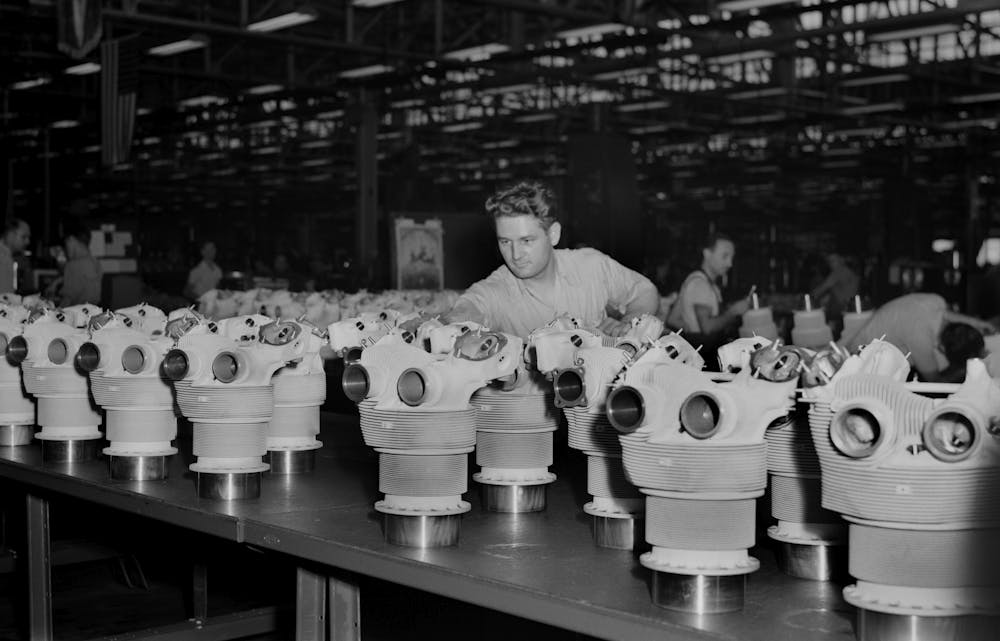
The lessons of U.S. history and the actions of other countries right now suggest there are opportunities for government, business and workers to collaborate on ways to get through this crisis. That effort may, as it has in the past, also lay the groundwork for a new, more inclusive social contract that better prepares society for future crises and gives Americans better lives during good times as well.Workers at an Illinois Buick car plant converted for war production 
line up cylinder barrels for quality control inspection in 1942. 

A wartime footing

The historical lesson comes from World War II. As the U.S. entered the war in 1941, President Franklin D. Roosevelt called on leaders from business and labor to join the war effort. He created the National War Production Board to convert the economy to meet the country’s wartime needs. He also set up the National War Labor Board to oversee workers’ relations with management, aiming to avoid production disruptions and keep prices stable.

Those joint efforts enabled the conversion of factories that increased production of military aircraft so much that the country had roughly 3,000 planes before the war – and 300,000 by 1945.

The decisions of labor, business and government leaders in the War Labor Board also gave birth to many of the employment practices that created the post-war social contract: Wage formulas tied pay raises to productivity and the cost of living; employers paid fringe benefits such as pensions and health insurance; and workers and owners agreed to arbitration to resolve disputes without strikes.
The German approach to the coronavirus

In Germany right now, as part of the economic response to the coronavirus pandemic, the government is seeking to avoid mass layoffs by having employers and unions agree to shorten workers’ schedules. Unions and workers’ councils are discussing with industry leaders and company management how exactly to adjust production and worker needs.

In Sweden, Italy and Spain, unions, employers and governments have reached joint agreements dealing with worker safety, work hours and layoff benefits in light of the coronavirus crisis.
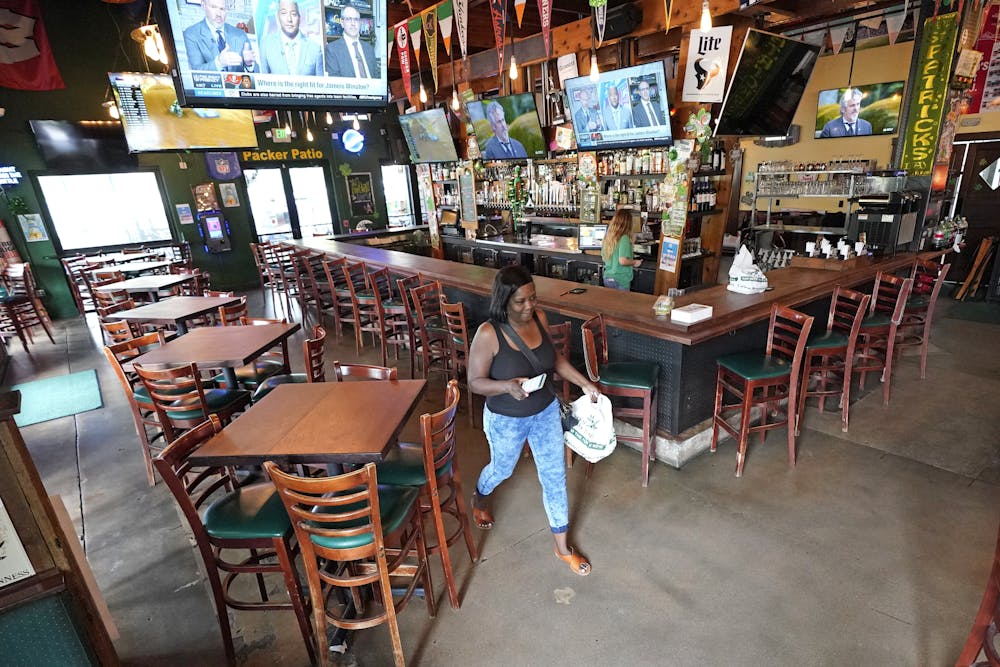
A customer picks up takeout food from a restaurant in Houston, Texas. AP Photo/David J. Phillip

Bringing the effort home to the US

In my view, a similar effort could help the United States now. It will be a bit more complicated than in Europe because union-management relations are not as close here, but there is still a good opportunity.

Workers and companies in all sectors can contribute their skills, personnel and expertise to meet society’s new needs. For instance, manufacturers could help serve the surging demand for ventilators and other health care equipment.

Service-industry companies could have workers deliver care or aid to those most in need. For example, hotels and universities with dorms empty of students who have gone home could offer lodging to essential service staff working long hours, the homeless or others who need their own quarters. Many restaurants and their staff are offering takeout and delivery options to families. Schools and teachers can, as many are already doing, work together with parents to home-school children.

Even within the health care industry, there are opportunities for worker-employer partnerships. For instance, unions could reach out to mobilize retired staffers and those in union-led training programs, to bring them to the front lines where they’re needed. Workers’ councils could help redeploy existing staff to fill urgent shortages and coordinate support services for those who will be pulling long hours. Right now, a major hospital and union in Seattle are developing a way to provide backup child care for workers who need the help.

FORGOTTEN HEROES OF THE PANDEMIC; THE CLEANERS
Cleaning workers are among many groups who most likely will need – but often don’t have – paid sick leave from their jobs. AP Photo/Kathy Willens


As events unfold

Looking ahead, workers and their unions in other industries could make sure government aid, temporary sick leave, family leave, unemployment pay, and other benefits and services get to those most in need.

My research shows that workers are eager to have a broader role in corporate governance and decision-making. This could be accomplished, for instance, if government bailout funds were conditioned on workers having seats on corporate boards or establishing joint worker-management consultative councils or committees to help allocate the money.

Worker input could help ensure that the aid goes to keeping people employed as much as possible, and providing financial and other supports for those who are laid off. Then as recovery comes, these same representatives can help keep business and workers together with a new spirit of commitment to get the business and the economy going again.

By working together in these ways in this time of crisis, business and labor might just lay the groundwork for building a new social contract that fills the holes in the social safety net and forges relationships that will serve society well in the future.

March 20, 2020 


[You need to understand the coronavirus pandemic, and we can help. Read our newsletter.]

Labor
Management
World War II
Unions
Coronavirus
Workers
labor history
Gig workers
Coronavirus 2020
You might also like

Don’t expect the coronavirus epidemic in the US to bring down President Trump

Coronavirus reminds Americans that pursuit of happiness is tied to the collective good

Who wants to join a union? A growing number of Americans


Author
Thomas Kochan
Professor of Management, Co-Director of the MIT Sloan Institute for Work and Employment Research, MIT Sloan School of Management
Disclosure statement
Thomas Kochan does not work for, consult, own shares in or receive funding from any company or organisation that would benefit from this article, and has disclosed no relevant affiliations beyond their academic appointment.
Coronavirus crisis poses risks and opportunities for unions

The COVID-19 pandemic and its economic fallout pose serious challenges for Canada’s workers.
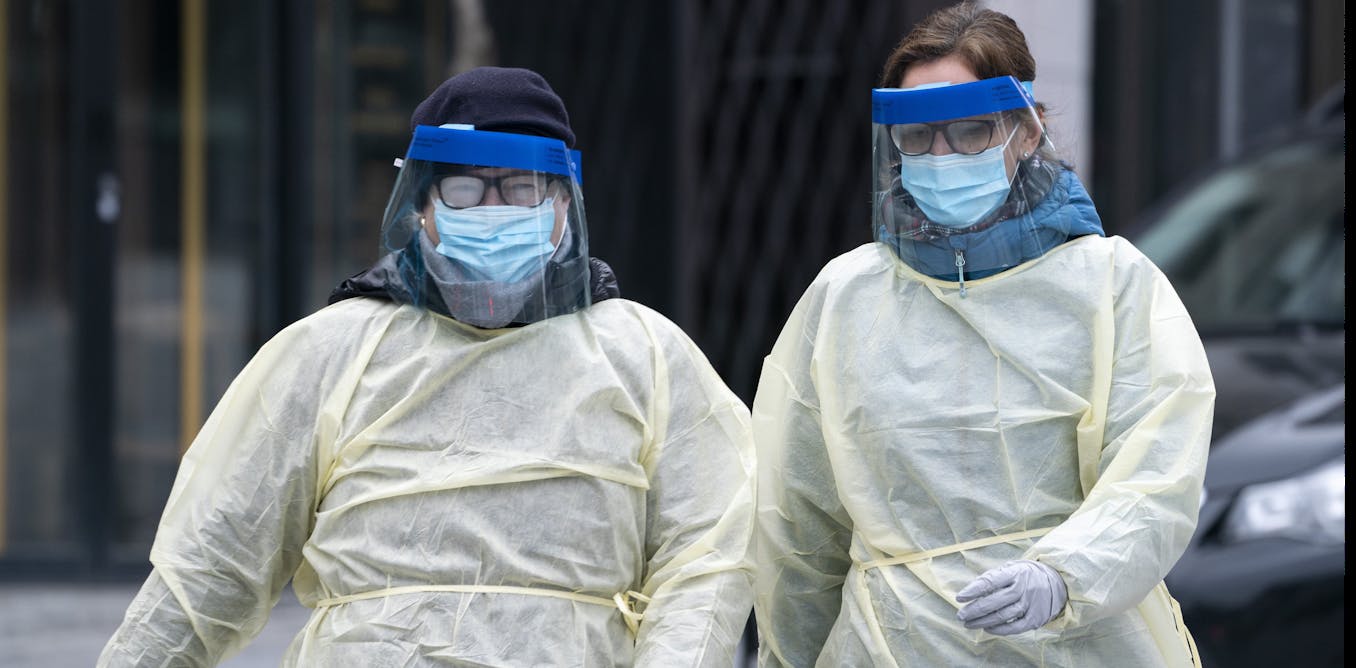
Two health-care workers arrive at a walk-in COVID-19 test clinic in Montréal on March 23, 2020.
 Unionized nurses are among those on the front lines of the coronavirus pandemic. 
THE CANADIAN PRESS/Paul Chiasson


April 5, 2020 

Naomi Klein’s 2007 bestseller, The Shock Doctrine, documented how political and economic elites have exploited crises to advance an agenda of privatization and austerity.

In such moments, elites often take advantage of the public’s fear and uncertainty to push through changes that would normally be met with fierce opposition. With picket lines and large demonstrations out of the question in this time of social distancing and self-isolation, unions are especially vulnerable.

Some Canadian employers have already used this moment of crisis to turn the screws on union members.

In Québec, Premier Francois Legault used the pretext of COVID-19 to unilaterally suspend key provisions in collective agreements with the province’s teachers’ unions.

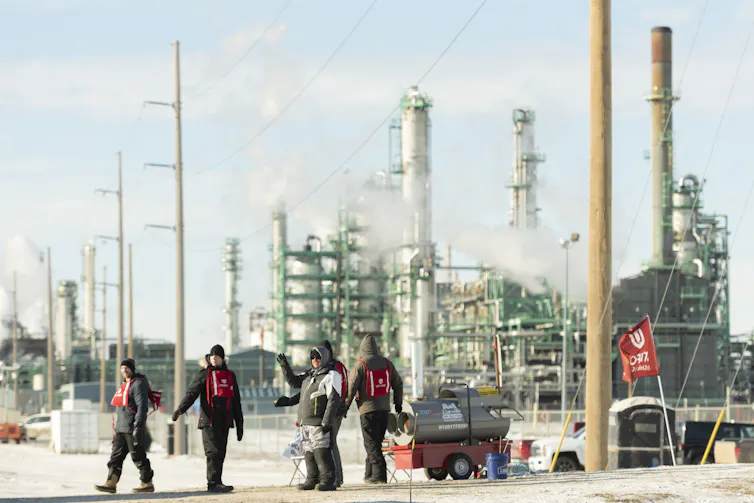
In Saskatchewan, a bitter and prolonged lockout over pension contributions was extended after the Co-op Refinery pointed to COVID-19 as cause for rejecting the terms of settlement proposed by a widely respected independent mediator. 
Unifor 594 members walk the picket line at the Co-op Refinery in Regina in January 2020. Refinery owner Federated Co-operatives Ltd. locked out about 700 unionized workers in early December after they took a strike vote. THE CANADIAN PRESS/Michael Bell

In Ontario, after weeks of rotating strikes were cut short by the pandemic, some teachers’ unions have quietly reached tentative settlements with the province, presumably in an effort to avoid deeper cuts in the future.

Gains will likely be rolled back


Fortunately, some employers, like select grocery chains, have temporarily increased wages in response to COVID-19. Over the long term, however, businesses are likely to use the economic fallout from the pandemic as a pretext for rolling back those gains and demanding unprecedented concessions from their employees.
A plexiglass barrier aims to protect a cashier at a grocery store in North Vancouver, B.C., on March 22, 2020. THE CANADIAN PRESS/Jonathan Hayward

Moving forward, unions are likely to find it incredibly difficult to negotiate gains for their members who will be expected to “share the pain” of an economic recession not of their making.

Public sector workers will also become targets. After governments bailed out select corporations during the 2008 financial crisis, they turned to taxpayers to foot the bill and demanded that health care, education and social service workers did more with less. We can expect a similar dynamic in the years to come.

We should expect some employers and governments to take advantage of the pandemic and its economic fallout by casting unions as selfish for trying to defend the interests of their members. Unions, however, have an unprecedented opportunity to turn that well-worn narrative on its head.

Unions can and must become champions of converting new temporary income supports, social protections and employment standards into permanent measures designed to rebuild Canada’s tattered social safety net. This approach will demonstrate that unions are fighting for the common good rather than simply for the welfare of their members.
Oppose bailouts unless workers benefit

Unions should also call on their members to oppose bailouts of big corporations that don’t also bail out workers and give employees more say over how industries deemed “too big to fail” are run.

In this way, unions can demonstrate the important role they play in ensuring that governments prioritize everyday people over corporate executives.

Finally, unions must continue to lead the resistance to service cuts and demands to privatize health-care services. Why? Because the COVID-19 pandemic is a prime example of why Canada needs a strong and expanded public health-care system.
Health-care workers see a patient in their vehicle at a COVID-19 drive-thru assessment centre at a hospital in Mississauga, Ont., on March 30, 2020. THE CANADIAN PRESS/Nathan Denette

We can expect some politicians and business leaders to dismiss collective bargaining as a distraction in a time when we should be focused solely on “flattening the curve.”

But it’s worth remembering that the strength of our collective response to COVID-19 is in part shaped by the strength and resiliency of union members who labour every day to help us overcome the pandemic. Nurses, cleaners, grocery store clerks and other unionized workers have been on the front lines of this fight. They should emerge from it with a greater level of respect.

Unions, in their continued defence of decent jobs and expanded services, play a key role in promoting the public good. They play this role by acting as a critical counterweight to the power of economic elites who have always prioritized profits over people.

While some elites will no doubt try to use this crisis as a pretext to push for privatization and austerity, unions must be a strong voice in defence of public services and social investments.


AUTHORS
Larry Savage
Professor, Labour Studies, Brock University
Simon Black

Assistant Professor of Labour Studies, Brock University
Disclosure statement

The authors do not work for, consult, own shares in or receive funding from any company or organisation that would benefit from this article, and have disclosed no relevant affiliations beyond their academic appointment.
Partners

Brock University provides funding as a member of The Conversation CA.


After the plague, Shakespeare imagined a world saved from poison, slander and the evil eye


Engraving from ‘The Fearefull Summer,’ a treatise published after the plague of 
1625 and reprinted again in 1636, by John Taylor.
 (McGill Library/Paul Yachnin)Author provided

April 5, 2020 

Shakespeare lived his life in plague-time. He was born in April 1564, a few months before an outbreak of bubonic plague swept across England and killed a quarter of the people in his hometown.

Death by plague was excruciating to suffer and ghastly to see. Ignorance about how disease spread could make plague seem like a punishment from an angry God or like the shattering of the whole world.

Plague laid waste to England and especially to the capital repeatedly during Shakespeare’s professional life — in 1592, again in 1603, and in 1606 and 1609.

Whenever deaths from the disease exceeded thirty per week, the London authorities closed the playhouses. Through the first decade of the new century, the playhouses must have been closed as often as they were open.

Epidemic disease was a feature of Shakespeare’s life. The plays he created often grew from an awareness about how precarious life can be in the face of contagion and social breakdown.

Juliet’s messenger quarantined

Except for Romeo and Juliet, plague is not in the action of Shakespeare’s plays, but it is everywhere in the language and in the ways the plays think about life. Olivia in Twelfth Night feels the burgeoning of love as if it were the onset of disease. “Even so quickly may one catch the plague,” she says.
Juliet’s letter about her plan to pretend to have died does not reach Romeo because the messenger is forced into quarantine. (Shutterstock)

In Romeo and Juliet, the letter about Juliet’s plan to pretend to have died does not reach Romeo because the messenger is forced into quarantine before he can complete his mission.

It is a fatal plot twist: Romeo kills himself in the tomb where his beloved lies seemingly dead. When Juliet wakes and finds Romeo dead, she kills herself too.

The darkest of the tragedies, King Lear, represents a sick world at the end of its days. “Thou art a boil,” Lear says to his daughter, Goneril, “A plague sore … In my corrupted blood.”

Those few characters left alive at the end, standing bereft in the midst of a shattered world, seem not unlike how many of us feel now in the face of the coronavirus pandemic.

It’s good to know that we — I mean all of us across time — might find ourselves sometimes in “deep mire, where there is no standing,” in “deep waters, where the floods overflow me,” in the words of the biblical psalmist.
Poisonous looks

But Shakespeare can also show us a better way. Following the 1609 plague, Shakespeare gave his audience a strange, beautiful restorative tragicomedy called Cymbeline. The international Cymbeline Anthropocene Project, led by Randall Martin at the University of New Brunswick, and including theatre companies from Australia to Kazakhstan, envisions the play as a way to consider how to restore a liveable world today.

Cymbeline took Shakespeare’s playgoers into a world without plague, but one filled with the dangers of infection nonetheless. The play’s evil queen experiments with poisons on cats and dogs. She even sets out to poison her stepdaughter, the princess Imogen.
In ‘Cymbeline,’ Shakespeare suggests that even being seen by someone with antagonistic thoughts can be toxic. (Shutterstock)

Infection also takes the form of slander, which passes virus-like from mouth to mouth. The principal target again is Imogen, framed by wicked lies against her virtue by a man named Giacomo that her banished husband, Posthumus, hears. From Italy, Posthumus sends orders to his man in Britain to assassinate his wife.

The world of the play is also defiled by evil-eye magic, where seeing something abominable can sicken people. The good doctor Cornelius counsels the queen that experimenting with poisons will “make hard your heart.”


“… Seeing these effects will be

Both noisome and infectious.”

Even being seen by antagonistic people can be toxic. When Imogen is saying farewell to her husband, she is mindful of the threat of other people’s evil looking, saying:


“You must be gone,

And I shall here abide the hourly shot

Of angry eyes.”


Pilgrims and good doctors

Shakespeare leads us from this courtly wasteland toward the renewal of a healthy world. It is an arduous pilgrimage. Imogen flees the court and finds her way into the mountains of ancient Wales. King Arthur, the mythical founder of Britain, was believed to be Welsh, so Imogen is going back to nature and also to where her family bloodline and the nation itself began.

Indeed her brothers, stolen from court in early childhood, have been raised in the wilds of Wales. She reunites with them, though neither she nor they know yet that they are the lost British princes.

The play seems to be gathering toward a resolution at this juncture, but there is still a long journey. Imogen must first survive, so to speak, her own death and the death of her husband.

She swallows what she thinks is medicine, not knowing it’s poison from the queen. Her brothers find her lifeless body and lay her beside the headless corpse of the villain Cloten.

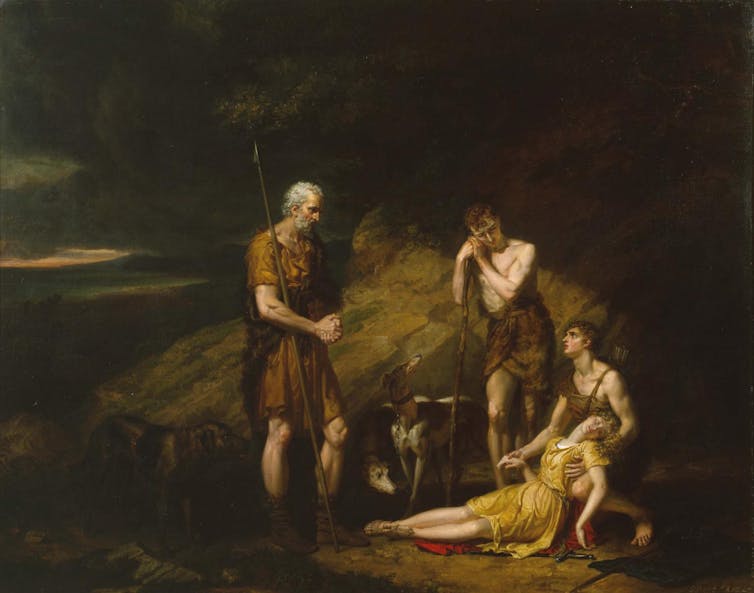
Thanks to the good doctor, who substituted a sleeping potion for the queen’s poison, Imogen doesn’t die. She wakes from a death-like sleep to find herself beside what she thinks is the body of her husband.‘Imogen Found in the Cave of Belarius,’ by George Dawe (1781–1829), showing the scene from ‘Cymbeline,’ where Imogen was seemingly dead and discovered by her brothers. (Wikimedia Commons), CC BY
Embracing bare life

Yet, with nothing to live for, Imogen still goes on living. Her embrace of bare life itself is the ground of wisdom and the step she must take to reach toward her own and others’ happiness.

She comes at last to a gathering of all the characters. Giacomo confesses how he lied about her. A parade of truth-telling cleanses the world of slander. Posthumus, who believes that Imogen has been killed on his order, confesses and begs for death. She, in disguise, runs to embrace him, but in his despair he strikes her down. It is as if she must die again. When she recovers consciousness, and it’s clear she will survive, and they are reunited, Imogen says:


“Why did you throw your wedded lady from you?

Think that you are upon a rock, and now

Throw me again.”

Posthumus replies:


“Hang there like fruit, my soul,

Till the tree die.”
A world cured

Imogen and Posthumus have learned that we come together in love only when the roots of our being grow deep into the natural world and only when we gain a full awareness that, in the course of time, we will die.

With that knowledge and in a world cured of poison, slander and the evil eye, the characters are free to look at each other eye to eye. The king himself directs out attention to how Imogen sees and is seen, saying:


“See,

Posthumus anchors upon Imogen,

And she, like harmless lightning, throws her eye

On him, her brothers, me, her master, hitting

Each object with a joy.”

We will continue to need good doctors now to protect us from harm. But we can also follow Imogen through how the experience of total loss can purge our fears, and learn with her how to start the journey back toward a healthy world.


Leading an online social movement requires offline work

April 2, 2020 

Today, most social movements around the world are digital in some capacity. When a hashtag seems enough to start a movement, social media promise to replace the role of leaders in setting a movement’s goals, coordinating action and inspiring a following.

Our research set out to test the belief that leadership was no longer necessary in online activism by drawing on the experience of several recent movements in Canada. What we found was more complicated and interesting than a simple vanishing act by protest leaders: social media enable new kinds of leadership to form.

The ease with which messages spread through social media may be the most fascinating aspect of digital activism, but it hides the labour of message creation, curation and coordination required to transform chatter into action.

We studied Canadian movements over the past five years and found that leadership labour is performed by individual participants who aren’t necessarily identified as traditional leaders. These individuals work in the background rather than standing out in front lines and front pages. Day by day, hour by hour, they perform the painstaking tasks of articulating the message of the movement, connecting collaborators and supporters, or initiating action on the issue.

Crafting messages


During the 2014 teachers’ strike in British Columbia, some parents started pressuring the government to negotiate with the teachers’ union. One idea caught on: parents with children at home because of the strike would organize playdates at the local offices of politicians. The #MLAPlaydate initiative was born on Twitter and Facebook.


The idea itself was the brainchild of three citizens who took notice of each other’s tweets at the early stage of the strike. Backstage conversations through tweets, email and phone calls led to the creation of #MLAPlaydate. They broadcast their call through Twitter and a blog that described the format of their playful protest. What made the message powerful, they explained, was that:


It’s a way that anyone could play. You could play by tweeting, what we and others did. You can play by taking a meme or photo and commenting on it, so by making it, sort of like, open source activism versus traditional command and control … you allow other people to get more involved.

Chalk drawing in front of an MLA office in British Columbia during an MLA Playdate. (Author provided)

While the three had crafted the message, they saw themselves as a coordination hub rather than as leaders in control. They created spaces for discussion of parents’ views on the teachers’ strike and helped translate these discussions into action.

Online influencers

Crafting the message is not enough. The message must be picked up and circulated.


When causes are embraced by social media accounts with many followers, their involvement amplifies the message and boosts the collective action. In other cases, such accounts grow in popularity due to the dense network of connections their owners have in the local community.

The organizers of Missing and Murdered Indigenous Women (MMIW) events in Calgary were already embedded in local Indigenous communities and had ties to other activists through past work with Idle No More or Women’s Marches. They drew on these past connections and experiences to organize their own MMIW protests. They used Facebook to disseminate information and calls for action not only locally, but also to reach into the national network of Indigenous activists.
Chantal Stormsong Chagnon was one of the organizers of the MMIW mobilization in Calgary. (Mylynn Felt), Author provided

These organizers were already in the thick of things locally and digitally. This leadership role consisted of spreading and sharing the movement’s goals and objectives, which they achieved through existing networks grown from involvement and commitment to the values behind the issue. Calgary Sisters in Spirit committee member Michelle Robinson captured it this way:


… our locations and our numbers can change, but Facebook is kind of a constant. So that’s where we encourage and invite people and let people know this is happening.
Doing the work

The word caretaker brings to mind the image of hands-on labour; with digital activism, this caretaking role describes a leader stepping up to do the work and investing time and effort in countless essential tasks. These leaders distinguish themselves by carrying out tasks such as making signs, sharing petitions or cleaning up after a gathering.

For citizens coordinating the Calgary network that assists arriving Syrian refugees with donated household items, participation in the Refugees Welcome movement took every free moment of the day as they did the heavy lifting online and offline. One organizer shared:


we would finish work and, no dinner, just head down to the warehouse from the time the warehouse opened ‘till closing. … we were there pretty much every single day.

These activities stretched them financially and personally, but their commitment kept them going. Nobody appointed or elected them. These individuals emerged as leaders when they stepped up to do the work that needed to be done.
Online leadership matters

What matters is crafting powerful messages, spreading this message across physical and digital networks and doing the heavy lifting of organizing work. In some cases, the same citizens performed all three leadership roles. In others, different participants stepped into one of them when needed. While the individuals playing these roles may sometimes appear interchangeable, transient and anonymous, leadership itself remains central to any form of activism.

There were no special qualities required to make an ordinary citizen a leader. What mattered was the degree to which they cared about the issue. For some, taking this kind of leadership role represented a peak in a long trajectory of activism and dedication to a cause. For others, the issue at hand struck a particularly sensitive chord or hit close to home. Then, the density of social ties, digital skills and communicative creativity turned into valuable resources.

This means that for activist organizations and social movements nowadays, it is not so important to focus on electing leaders, but on making available mechanisms and avenues for their self-selection. Build open channels for conversation, connection and work. Leaders will come.


Authors
Delia Dumitrica
Associate professor, Department of Media and Communication, Erasmus University Rotterdam
Dr. Delia Dumitrica received funding from the Social Sciences and Humanities Research Council of Canada to study social media and civic activism in Canada (grant number 435-2014-0200).
Maria Bakardjieva
Professor, Communication and Media Studies, University of Calgary

Dr. Maria Bakardjieva receives funding from the Social Sciences and Humanities Research Council of Canada, the Baltic Sea Foundation, Sweden and the University of Calgary, Canada. She has also held appointments as research fellow with the European Research Institutes for Advanced Studies and the Oxford Internet Institute.
Mylynn Felt
PhD Candidate, Communication, Media and Film, University of Calgary
Disclosure statement

Mylynn Felt receives funding from the Social Sciences and Humanities Research Council of Canada as a research assistant to study social media and civic activism in Canada (grant number 435-2014-0200) as well as funding as a Vanier Scholar. She currently serves as vice president on the board of directors for the Friends of the Weber-Morgan Children's Justice Center, a nonprofit organization.


We believe in the free flow of information
Republish our articles for free, online or in print, under Creative Commons licence.
Republish this article