Wednesday, July 13, 2022

BREAKING – Protestors take over Sri Lanka’s national television broadcaster

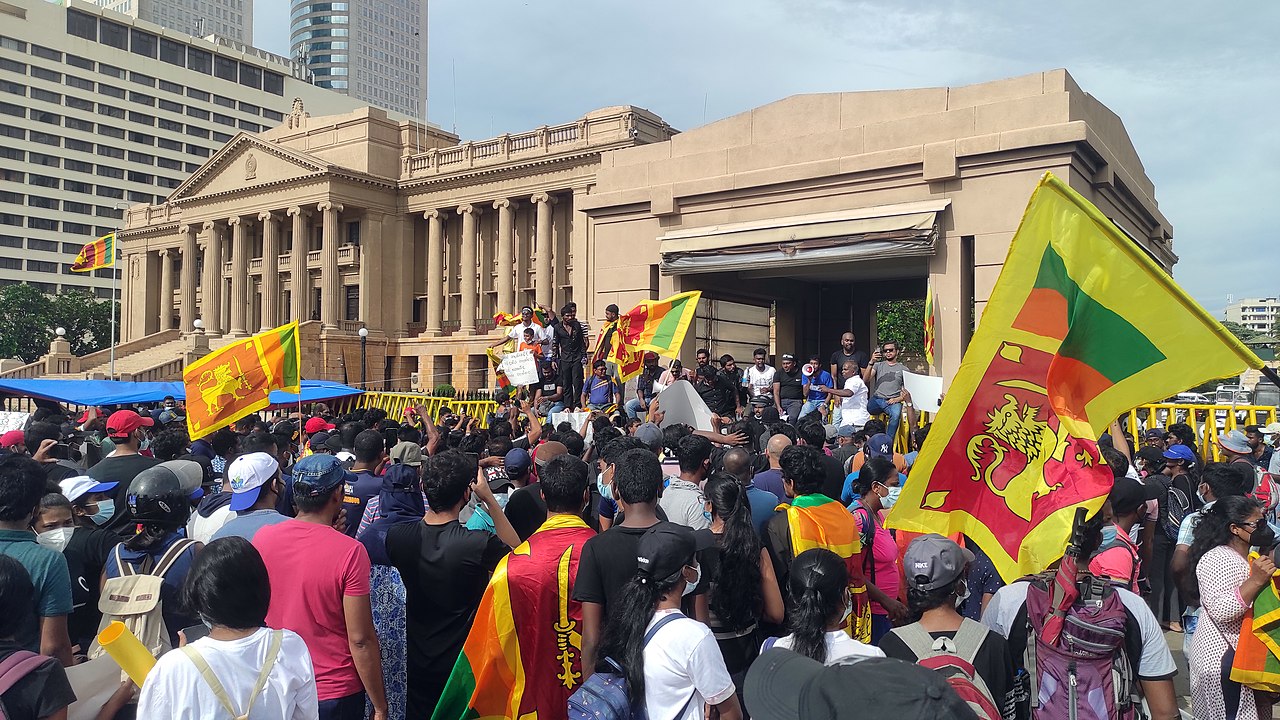
Protestors have taken over the Sri Lanka Rupavahini Corporation, the national television network of the island, after they stormed its offices just moments ago.

A protestor was seen addressing the cameras earlier.

The network has now gone off air.


Sri Lanka’s Road to Ruin Was Political, Not Economic

Article Author: 


Writing in Foreign Policy, Neil Devotta, professor of international affairs at Wake Forest University, explains that “the roots of the current crisis lie with ethnocracy” which has led a country from meritocracy to kakistocracy – governance by a country’s worst citizens.

Quoting a Sri Lankan newspaper, Devotta writes, “drug dealers, fraudsters, murderers, rapists, bootleggers and cattle rustlers’ control politics, and they have bankrupted a country with so much potential”.

In explaining the rise of Sri Lanka as an ethnocratic state, he begins with the premiership of Prime Minister S.W.R.D. Bandaranaike which saw the implementation of the country’s most divisive and racist legislation – the 1956 Sinhala Only Act.  

This ethnonationalism deepened in Sri Lanka and proved fertile ground for the Rajapaksa’s which oversaw the brutal ending of the armed conflict.

“Being anti-minority became patriotic, which is why the Rajapaksas could combine their Sinhalese Buddhist credentials with cavalier racism to keep winning elections for two decades. The role they played in defeating the separatist and terrorist Liberation Tigers of Tamil Eelam only bolstered these credentials” writes Devotta.

Despite this popularity, a series of poor decisions saw the traditional supporter base of the Rajapaksas turn against them. As Devotta notes:

“What is striking is that it took the worst economic crisis in the island’s history—not a popular commitment to ethnoreligious tolerance and pluralism or the need to account for alleged war crimes committed against Tamils or baseless attacks on Muslims—that made the island’s predominantly Sinhalese Buddhists sour on the Rajapaksa family”.

He further adds:

“In that sense, what the aragalaya proved is that nationalist sentiment cannot overcome hunger and scarcity. The Rajapaksas are among the most recent autocrats to discover this”.

Commenting on Rajapaksa’s refusal to relinquish power, Devotta writes:

“Kleptocrats seek to stay in power because they fear being held accountable. Gotabaya Rajapaksa refused to leave for so long because he gave up his American citizenship to run for the presidency and because once out of power he and his family could finally be charged for their predatory past”.

He further notes that currently, “there is such disgust with nearly everyone in Parliament that the legislature may be pressured to dissolve itself so new parliamentary elections, which need not be held until 2025, can be held early”.

He concludes by stating that:

“The ‘Go Home Gota’ campaign has generated discussions about building a future for all on the island. Perhaps the common suffering Sri Lankans are experiencing could be the antidote to the island’s ethnocracy. But given the island’s sorry past, only a fool would bank on that outcome”.

Read the full piece at Foreign Policy


Canada's Foreign Minister stresses urgent political and economic reforms in Sri Lanka

Canadian Minister of Foreign Affairs, Melanie Joly, stressed the need for urgent political and economic reform in Sri Lanka.

Referring to the protests on 9 July, Joly tweeted that “Canada supports a peaceful, constitutional path forward that supports urgent action on economic and political reform.”

On 9 July, demonstrators stormed the President’s official residence and set the Prime Minister’s home ablaze. As a result of the protests, Prime Minister Ranil Wickremesinghe agreed to resign. Whilst President Gotabaya Rajapaksa has attempted to flee the island.


Joly highlights that the demonstrations were a clear indication of a “desire for a better Sri Lanka.”

In the past few months, Sri Lanka has seen a rise in anti-government protests in response to the ongoing economic crisis. Activists have criticized the movement for neglecting the demands of Eelam Tamils. They have highlighted that without demilitarization in the North-East or accountability for war crimes, a better Sri Lanka for everyone will not be possible.

In a further tweet, Joly denounced violence against journalists and peaceful protesters, emphasizing that “the right to protest peacefully must be upheld.”

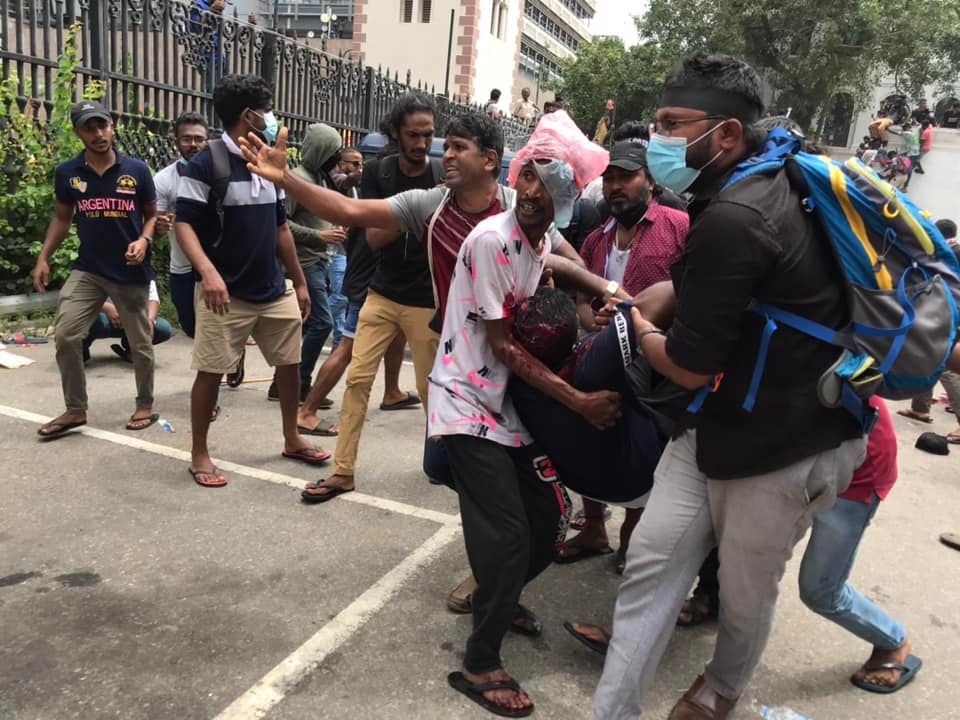
In a statement, the Sri Lankan army admitted to opening fire during the protests that took place on Saturday. Footage was also captured by demonstrators depicting security forces brutalizing both protesters and journalists.


Sri Lankan army admits to opening fire during protests

A statement from the Sri Lankan army admitted that soldiers opened fire during Saturday’s protest, after video clips of the shootings were widely shared, but denied there was any “intent on causing deliberate harm to the protesters”.

In a statement entitled ‘The army sets the record straight about Saturday firing’, the military said its attention “has been drawn to a few video clips going viral”.

Video footage shared earlier today shows heavily armed soldiers and masked soldiers, lining up, taking aim and firing at the walls of the presidential palace, with protestors clearly visible on the other side. Bullets and debris ricocheted just inches away from the demonstrators, who would go on to storm Gotabaya Rajapaksa’s official residence.

Sri Lankan security forces open fire before protesters storm President’s house https://t.co/o6zo8drtrp pic.twitter.com/djy7nxS38V

— Tamil Guardian (@TamilGuardian) July 10, 2022

“The Army categorically denies having opened fire towards the protesters, but fired a few rounds to the air and the sidewalls of the main gate entrance to the President's House compound as a deterrent,” it claimed.

“Firing into the air and sidewalls do not therefore necessarily mean that those Army personnel on duty were intent on causing deliberate harm to the protesters.”

Separate footage captured by the protestors shows several incidents of brutality by the security forces, with journalists among those assaulted.

Read more: Protesters shot and journalist assaulted by Sri Lankan security forces in Colombo


Dialysis machine inspired by juice dispenser wins UK engineering prize

Royal Academy of Engineering MacRobert award-winner could transform lives of kidney disease patients, say experts

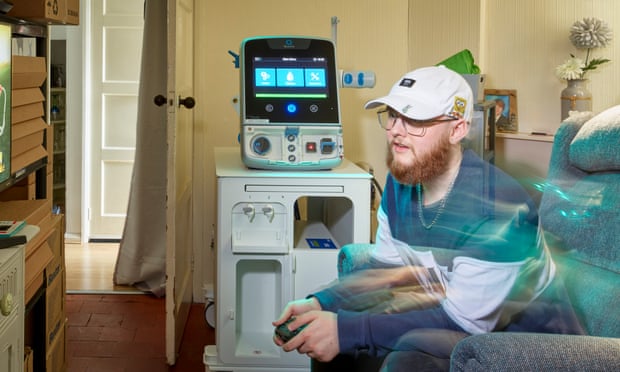
Lewis Till, 21, says using the Quanta home dialysis machine, centre, has improved his health and allowed him to spend more time with his family. 
Photograph: Richard Booth

Hannah Devlin Science correspondent
@hannahdevTue 12 Jul 2022 

A home dialysis machine inspired by technology used in fruit juice dispensers has won the UK’s most prestigious engineering prize.

The device, made by Quanta, is currently used by about 50 patients in the UK, but more than a dozen NHS trusts are planning to offer the technology to patients this year and experts say it could transform the lives of kidney disease patients.

Speaking before the announcement of the Royal Academy of Engineering MacRobert award on Tuesday evening, Prof Sir Richard Friend, chair of the judging panel, said the technology demonstrated “remarkable engineering ingenuity” and had the potential to dramatically improve patients’ quality of life and relieve pressure on hospitals.

“The team exemplifies the persistence, innovation and unconventional thinking that has long been a hallmark of the UK’s greatest engineering success stories and they are worthy winners of the MacRobert award,” Friend said.

Dialysis removes waste products and excess fluid from the blood when the kidneys stop working properly. This typically involves diverting blood to a machine, around the size of a fridge-freezer, where it is passed through a complex system of mechanical valves, pumps and mixing chambers before being returned to the body.

Patients would usually have the procedure three times each week for four hours a time. Of the 30,000 dialysis patients in the UK, only about 5% use home devices because until now these have worked less efficiently than hospital systems, meaning that patients need to be hooked up for longer periods.

In the Quanta device, called SC+, the pistons and valve system are replaced by a disposable cartridge enclosed inside a flexible membrane, which is squeezed and released using pressure changes inside the machine to control the flow of dialysis fluid within. The tabletop machine is far smaller, does not require specialised training to use and works as efficiently as the conventional version.


The technology was originally developed to reconstitute orange juice from concentrate, but the team behind the invention saw its potential medical applications and spun out the company Quanta.

One patient, Lewis Till, 21, from Wolverhampton, has been on dialysis for two years after developing an auto-immune kidney condition, but said that hospital dialysis was not frequent enough to keep him “really well” and that travelling alone to hospital was exhausting. After switching to the Quanta device, he has dialysis five times a week for three hours, which has improved his health, and can spend the time with family or playing video games at home.

“I wish the general public better understood kidney disease and how serious it is, because there is a lack of recognition so people on dialysis don’t really get support or much understanding about how tough it is,” he said. “This can make it hard trying to explain to employers or friends and family how it affects your ability to just get on with normal life.”

Quanta’s CEO, John Milad, said the device had been a “life’s labour to make a reality” for the team behind the innovation, and that winning the award was a “huge validation of what we’ve done” to transform lives.

Previous winners of the MacRobert award include the engineers who developed Rolls-Royce’s iconic Harrier jump-jet engine and the team who designed the Severn Bridge.


Roe reversal puts spotlight on Meta’s abortion content moderation policies

Erica Hellerstein


It’s only been a few weeks since the U.S. Supreme Court overturned Roe v. Wade, the landmark 1973 ruling establishing a constitutional right to abortion — a reality many Americans are still trying to process. The decision is likely to transform the country’s political landscape for decades to come, and has already thrust the U.S. into uncharted legal territory. Since the court’s ruling, ten states have outlawed abortion altogether, and the procedure is now banned with no exceptions for rape or incest in at least five states. Meanwhile, a Missouri lawmaker is pushing to pass legislation deputizing private citizens to sue anyone who helps a Missouri resident get an abortion outside the state — a proposal eerily reminiscent of the Fugitive Slave Act of 1793.

The consequences of the ruling are rippling out well beyond the courts or state legislatures. It’s also raising urgent questions for some of the world’s largest social media platforms and technology companies. As we’ve previously reported, people’s digital footprints could be used to aid investigations of abortion seekers, and those who help them, in states that outlaw the procedure.

But users’ online data is just one piece of the puzzle. Social media companies are also facing heightened scrutiny over their abortion-related content moderation policies. In the days following the court’s ruling on Roe, reports emerged of Meta removing posts related to abortion pills and restricting searches for the hashtags “abortion pills” and the abortion medication “mifepristone.” 

Meta spokesperson Andy Stone addressed reporting suggesting that Facebook removed posts about mailing abortion pills on June 27, tweeting that the company does not allow “content that attempts to buy, sell, trade, gift, request or donate pharmaceuticals,” but does allow content discussing the “affordability and accessibility” of prescription medication. However, he acknowledged that the company has “discovered some instances of incorrect enforcement and are correcting these.”

In a June 30 email to subscribers, the reproductive justice group Reproaction said the group has “seen and heard reports showing an increase in suppression of abortion-related content on Instagram” since the Supreme Court’s decision on June 24. 

Jessica Ensley, the group’s digital outreach and opposition research director, told me this has included Instagram tagging content with the terms “abortion” and the abortion pills “mifepristone” and “misoprostol” with “sensitive content” labels and sometimes requiring users to verify their age before viewing images in posts and stories. For example, Ensley referred me to a June 27 post from the account “thesweetfeminist,” which has more than 250,000 followers on Instagram, featuring a photo of a pink cake with the words “pro abortion” scrawled across it in bubbly white frosting. Meta covered the post and labeled it as sensitive, explaining: “This post doesn’t go against our Community Standards, but may contain images that some people might find upsetting. We cover sensitive or potentially graphic content so people can choose whether to see it.”

Ensley added that accounts with far fewer followers also saw content tagged as sensitive and hidden after Roe was overturned. “Some of them are local organizations that are just trying to get information out to their community and they’re having a hard time,” she explained. “We are in a moment where factual information about abortion is desperately needed. And one of the ways that people can access information readily is through these social media platforms that are now acting like a black box.”

When I asked Meta for further explanation about why the cake post was covered and labeled as sensitive, the company pointed to a June 28 tweet from Instagram Communications saying that, in a bug, sensitivity screens had been added to “many different types of content,” including various posts unrelated to abortion. And, at least as of writing today, it does not look like abortion-related content from accounts that had previously had the screens added now have sensitivity warnings.

However, It’s worth noting that this discussion about platforms’ abortion-related content moderation policies predates June. Ensley and other reproductive rights activists say they have been battling abortion-related censorship and content suppression since well before the court’s decision to overturn Roe. Subscribers to this newsletter may remember my conversation in May with Venny Ala-Siurua, the executive director of the nonprofit Women on Web, which sends abortion pills to people in countries where the procedure is banned or highly restricted. Even then — a month before the Supreme Court overturned Roe — Ala-Siurua told me that the group gets “censored all the time” on social media. Since 2021, Women on Web’s Instagram account has been shut down at least four times, according to Martha Dimitratou, Women on Web’s digital strategist. Ensley, meanwhile, told me she began to first notice content restrictions on the group’s Meta platforms in September 2021, after Texas passed its sweeping anti-abortion “bounty” law, which allows private citizens to sue anyone who helps a person access an abortion. (Reproaction outlined its concerns in a petition published on the organization’s website, which you can read here.)

Meta did not address questions about the claims in Reproaction’s petition or Women on Web’s allegations of Instagram shutdowns. The company also did not answer a question about whether Meta had changed its abortion-related content moderation policies since the Supreme Court overturned Roe, and did not provide information about its content moderation policies involving posts that advocate for abortion access.

Yet even with the uncertainty about the future of abortion-related content on social networks, Ensley and Dimitratou say states’ dwindling abortion access has left people hungrier than ever for information about reproductive health services and abortion pills. Website traffic to both groups has surged, and “I have seen quite an increase in people sharing our information or tagging us in news stories and stuff like that,” Ensley said. “People want that information, which makes it all the more crucial that it be readily available to them.”

IN GLOBAL NEWS:

Russian propagandists have found a cunning and remarkably simple way around YouTube’s ban on Kremlin-backed media. You might remember that shortly after the February 24 invasion of Ukraine, YouTube blocked channels RT and Sputnik from the platform in Europe. The social media giant doubled down by blocking Russian state media altogether on March 11. But about a month later, RT videos started cropping up on YouTube, just on a new channel under a different name — Dig Deep Documentary. According to research by the Institute for Strategic Dialogue, these are RT videos, just with the RT logo replaced with the Dig Deep Documentary one. An easy way to bypass the ban and it worked — at least for a while. The Dig Deep Documentary account appears to have been removed from YouTube, but it was up and running for over two months from mid-April to late June.

The Chinese Communist Party is “cultivating friendly forces” abroad to promote its Xinjiang policies to the wider world. That’s according to a new report by the Australian Strategic Policy Institute. The study detailed how China is using handpicked individuals in the diaspora to uphold the Party narrative about its treatment of the Uyghur minority and is also systematically collecting information on Uyghurs abroad. We’ve covered China’s foreign influence and transnational repression programs extensively, if you want to know more — check out our work here.

Sudan’s internet went dark on June 30 ahead of a wave of anti-government demonstrations denouncing the country’s 2021 military coup. According to the cybersecurity company Surfshark, the June 30 outage made Sudan the 12th country in Africa over the last seven years to block internet access amid widespread protests. A recent report from the digital rights group Top10VPN found that internet shutdowns cost the global economy more than $10 billion in 2022 — the highest amount the group has ever recorded. The study found that Russia, which lost over $8 billion to internet restrictions in 2022, was the most economically impacted country in the world, followed by Myanmar, Kazakhstan, and Iran. Sudan was among the three nations hardest hit by internet outages in Sub-Saharan Africa, according to Top10VPN, with digital blackouts costing the country nearly $18 million in 2022. Check out more of our coverage on internet outages here.

From biometrics to surveillance — when people in power abuse technology, the rest of us suffer

SOCIAL DEMOCRACY REDUX

The Pink Tide Surges in Latin America

While the political balance between progressive and reactionary states south of the Rio Grande continues to tip to the left, even the corporate press pronounced Biden’s June Summit of the Americas meeting in Los Angeles a flop. Most recently, Colombia elected its first left-leaning president, following similar victories in Chile, Peru, and Honduras, which in turn followed Bolivia, Argentina, and Mexico.  And the frontrunner in Brazil’s presidential contest slated for October is a leftist. However, Nicaragua, Venezuela, and especially Cuba – countries led by explicitly socialist parties – are critically threatened by US imperialism, subjected to severe sanctions. In short, the geopolitical situation in the Western Hemisphere remains volatile. What does this portend for US hegemony and for socialism?

Ebb and flow of the class struggle in Latin America

The tidal metaphor describes the shifting constellations of governments in what Washington long considered its exclusive domain ever since the 1823 Monroe Doctrine. The Pink Tide is a reaction to, and a struggle against, neoliberalism, which is the contemporary form of capitalism. The Pink Tide first entered its flow phase in 1998 with the election of Hugo Chávez as president of Venezuela. What followed was truly a sea change with a developing expression of sovereignty and independence. An alphabet soup of regionally integrated entities arose: ALBAUNASURMERCOSURPetrocaribeCELAC, etc.

Upon assuming state power, the emerging left governments paradoxically inherit the very problems that precipitated the popular discontent that had led to their ascendence. And that is not to mention the looming presence of the Colossus of the North whose official policy is zero tolerance of insubordination to the empire.

The Pink Tide went into an ebb phase around 2015 with the election of hard-right Mauricio Macri in Argentina. A US-backed coup in Honduras had already deposed Manuel Zelaya’s leftist government in 2009 and foreshadowed a later US-instigated regime-change operation in Bolivia, overthrowing Evo Morales in 2020. “Lawfare” coups in Paraguay and Brazil along with electoral defeats of leftists in Chile and Uruguay shifted the balance right. In Brazil, frontrunner Luiz Inácio Lula da Silva (known colloquially as “Lula”) was forced to sit out the presidential election in prison on trumped up charges, allowing Jair Bolsonaro, the “Trump of the Tropics,” to win in 2018.

Mexico kicks off the second left wave, July 2018

Prospects for hemispheric progressivism again began looking bullish with Andrés Manuel López Obrador’s (AMLO) victory in July 2018 after two previous attempts at the Mexican presidency, which were widely considered fraudulently stolen from him. A left turn by the second largest economy in Latin America, eleventh in the world, and the US’s second largest trading partner was not insignificant after decades of conservative rule. AMLO, whose MORENA party swept the 2018 national elections, has since shown fortitude in standing up to Washington.

After it became apparent that Biden would not invite Venezuela, Cuba, and Nicaragua to his Summit of the Americas in June of this year, AMLO led a boycott of the summit to be joined by Bolivia, Honduras, Guatemala, and St. Vincent and the Grenadines. El Salvador and Uruguay also purposely missed the party, albeit for different reasons.

AMLO pointedly made a state visit to Cuba and previously had conspicuously welcomed Venezuelan President Maduro as an honored guest.  AMLO stayed firm, even after Biden sent a special delegation to Mexico City apparently to remind him about the career prospects of others – such as Qaddafi, Noriega, and Hussein – who similarly failed to heed imperial summons.

Then on July 4th, the Mexican president facetiously launched a campaign to take down the Statue of Liberty, “no longer a symbol of liberty,” because of the US prosecution of Julian Assange.

 A new president is anointed in Venezuela, January 2019

Tempering any initial leftist euphoria over the ending of conservative rule in Mexico were the continuing US regime-change efforts against Venezuela designed to bring down the leading left state in the region. In one of the more bizarre examples of imperial hubris, US Vice President Pence called a person unknown to over 80% of the Venezuelan public and one who had never run for national office. Pence asked Juan Guaidó if he would like to be president of Venezuela. The next day, on January 23, 2019, this US security asset declared himself “interim president” of Venezuela on a Caracas street corner. US President Trump immediately recognized Guaidó as the legitimate chief-of-state followed by some 60 of the empire’s loyal vassals.

Three years later, barely a baker’s dozen of states currently recognize Juan Guaidó as president of Venezuela. Speaker of the House Nancy Pelosi, who once gushed how “thrilled” she was with the puppet president, now doesn’t even recognize his name. The hapless Guaidó, by the way, failed to secure an invitation to Biden’s summit in Los Angeles last June now that he is such an embarrassment.

After Obama first sanctioned Venezuela in 2015, the illegal measures were intensified by Trump and continued for the most part by Biden. After deliberately targeting Venezuela’s cash cow, the oil industry, the economy was devastated. Today, those fortunes are being reversed. With assistance from China, Russia, and Iran along with adroit economic planning and some concessions to garner support of the domestic bourgeoisie, the Venezuelan economy revitalized by 2022.

Venezuelan President Maduro stood firm against repeated coup attempts by Juan Guaidó and military incursions from Colombia acting as a US proxy. Last November, the municipal and regional elections were a double triumph for Venezuela’s Bolivarian Revolution: the ruling Socialist Party (PSUV) won significantly while the extreme right opposition (including Guaidó’s party) was compelled to participate, implicitly recognizing the Maduro government.

A major sticking point blighting relations between the US and Venezuela is the extradition of Venezuelan diplomat Alex Saab and his imprisonment in Miami. Saab had been instrumental in legally helping Venezuela circumvent the illegal US blockade. Apparently, the empire believes it has the prerogative to decide who other countries may appoint as their diplomats and to persecute those they do not like. This is despite the Vienna Convention, to which the US is a signatory and from which absolute diplomatic immunity is provided even in the time of war. However, under Mr. Biden’s “rules-based order” – as opposed to international law – the US makes the rules, and the rest of humanity must follow the orders.

Rightist replaced in Argentina and a coup in Bolivia, Fall 2019

The Pink Tide again began to rise when, on October 27, 2019, Alberto Fernández replaced Mauricio Macri, whose neoliberal policies had wrecked the economy in Argentina. The new president is aligned with more conservative elements within Peronism compared to his vice-president. The two Peronist factions have continued to wrangle over how to extricate Argentina from the debt-grip of the IMF and international finance, with the more progressive side recently gaining the upper hand.

Then the Pink Tide suffered a major reversal only two weeks after its success in Argentina, when a US-backed coup overthrew leftist President Evo Morales in neighboring Bolivia. With the connivance of the Washington-based Organization of American States (OAS), Evo had to flee for his life. Rightist Senator Jeanine Áñez then entered the Bolivian presidential palace with a bible in her hand – I am not making this up –exorcized the building of indigenous paganism and declared herself temporary president. Major popular protests by the largely indigenous and poor populace followed, only to be brutally repressed with many fatalities.

Almost precisely a year after the initial coup, Evo’s former minister of finance and a member of his Movement for Socialism (MAS) Party, Luis Arce, ran for the presidency. His landslide win vindicated Evo’s initial president victory in 2019.

Marxist-Leninist assumes presidency in Peru, June 2021 – for now

After four presidents in three years, in the ever mercurial and unpredictable Peru, a rural teacher and peasant leader from the Marxist-Leninist Perú Libre Party led the presidential primary election. Pedro Castillo faced far-right Keiko Fujimori, the daughter of an imprisoned former president and convicted human rights violator. Castillo was so unknown that the major press services had to scramble to find a photograph of him.

Castillo was eventually declared the winner of the runoff on June 6, 2021, after a protracted vote count, but by a razor thin margin. With only a minority in the legislature, Castillo has been clinging to elected office by this fingernails ever since. Right off, he was pressured to remove his leftist foreign minister. Since then, he has survived two impeachment attempts, four cabinets, and his banishment from his own political party.

The capital city of Peru, it should be noted, gave its name to the ill-fated Lima Group, a cabal of US client states aligned against Venezuela. Even before Peru voted red, the Lima Group had drowned in a rising Pink Tide.

Left victories in Central America, November and December 2021

The US deemed Nicaragua’s presidential election an undemocratic fraud nearly a year in advance as part of a larger regime-change campaign against left-leaning governments. Disregarding Washington’s call to boycott, a respectable 65% of the Nicaraguan electorate went to the polls on November 11, 2021, and 76% of the voters re-elected Sandinista President Daniel Ortega. The landslide victory was a testament to the Sandinistas’ success in serving Nicaragua’s poor and a repudiation of the 2018 coup attempt fomented by the US.

Following the left reaffirmation in Nicaragua was the long-awaited and much savored victory in what was once called the USS Honduras, alluding to that country’s role as a base for US counter-insurgency operations during the “dirty wars” in Central America. Xiomara Castro, the first female president, was swept in by a landslide on November 28. The slogan of the now triumphant resistance front was: “They fear us because we have no fear.”

It had been twelve years since a US-backed coup overthrew Manuel Zelaya, who was the democratically elected president and husband of Castro. The country had devolved into a state where the former president, Juan Orlando Hernández (JOH), was an unindicted drug smuggler, and where the intellectual authors who ordered the assassination of indigenous environmental leader Berta Cáceres ran free, Afro-descendent people and women were murdered with impunity, gang violence was widespread, and state protection from the pandemic was grossly deficient. Once the US government’s darling, JOH will likely spend the rest of his days behind bars given that he has been extradited to the US to face drug trafficking charges.

Leftists win in Chile and Colombia with Brazil maybe next

Last December 19, Gabriel Boric won the Chilean presidential election by a landslide against far-right José Antonio Kast. The 35-year-old Boric was a leader in the massive protests in 2019 and 2020 against corrupt President Sebastian Piñera. The slogan of the protests was: “If Chile was the birthplace of neoliberalism, then it will also be its graveyard!” The victory was a repudiation of the Pinochet legacy.

A constituent assembly, where the left won the majority of the delegates in a May election, has rewritten the Pinochet-era constitution. But current polls suggest that the electorate may reject it. With a 59% disapproval rating and severe unrest in the territory of the Mapuche indigenous people, Boric has hard times ahead.

Then, on June 19, history was made in the leading client state of the US in the Americas when Gustavo Petro became the first leftist president-elect ever, and his running mate, Francia Márquez, the first Afro-descendent vice president-elect. Petro, a former leftist guerilla and onetime mayor of Bogotá, had since shifted toward the center politically. But in the comparison to the far-right rule of former President Álvaro Uribe and his successors, Colombia has dramatically and decisively shifted to the left. Relations with Venezuela are being normalized and the Monómeros chemical plant, which was handed over to the Guaidó clique and run into the ground, may get returned to Caracas and restart producing needed fertilizers.

Even more portentous than the left victory in Colombia would be one in neighboring Brazil, the largest economy in Latin America and the eighth in the world. That may happen with the October 2 presidential election where the frontrunner, Lula, has a substantial lead In the polls.

Troubled waters ahead as the Pink Tide surges

In conclusion, the surging Pink Tide is symptomatic of the increasingly manifest inability of neoliberalism to address the fundamental needs of the populace. Popular upheavals in Latin America are not isolated, but are indicative of a reaction to increasing inflation, poverty, crime, and drug-related violence. Demonstrations in July in Ecuador led by the indigenous CONAIE organization almost toppled the government of right-wing banker Guillermo Lasso over grievances regarding fuel prices, debts, and illegal mining. Panama is in “permanent strike.”

The living standards of poor and working people globally are dramatically being eroded by a world order where the US and its imperial allies have imposed sanctions – what the UN calls unilateral coercive measures – on a third of humanity.

The US may still be the hemispheric hegemon, but the edifice is corroding. While the US’s Millennium Challenge Corporation falters, China’s Belt and Road Initiative (BRI) has made major inroads in Latin America as it has in Asia and Africa. Argentina joined the BRI last February, following 19 other regional states including Bolivia, Chile, Uruguay, Nicaragua, and Venezuela.

The BRICS summit of Brazil, Russia, India, China, and South Africa was held virtually in June, representing some 30% of the world’s economy and 40% of its population. Argentina attended and is slated to become the next member of an expanded group along with Iran and possibly others such as Indonesia, Niger, and Egypt.

China has become the region’s largest creditor and second-largest trading partner after the US. China’s trade with Latin America and the Caribbean grew 26-fold between 2000 and 2020 and is expected to more than double by 2035. China has provided a vital lifeline for states attacked by the US and room for newfound independence from the hegemon. Particularly when the US weaponized the Covid pandemic by increasing pressure on left states, China filled in.

Despite a resurgent Pink Tide, the US hybrid warfare measures against the explicitly socialist countries in Latin America has created a precarious and critical inflection point. Cuba solidarity activist W. T. Whitney warns: “Thanks to the US blockade, Cuba’s economic situation is more desperate than ever.”Facebook

Roger D. Harris is with the anti-imperialist human rights group, Task Force on the Americas, founded in 1985. Read other articles by Roger D..

Beware the Prophets of Doom:  Organic Food, Fertilisers and Fossil Fuels 

As oil and gas prices rise so does the price of artificial chemical fertilisers – the lynch-pin of industrial agriculture’s claims to be ‘efficient’. In the UK, the price of nitrogen fertiliser has doubled over the past year to around £330 per tonne. With oil currently at over $130 a barrel and with OPEC warning it could reach $200 by the end of the year, it has been suggested that fertilisers could hit GBP 500 a tonne. At these prices, the claimed efficiency of fossil-fuel and fertiliser dependent industrial farming begins to collapse.

The above extract is from a 2008 Soil Association press release.

In July 2022, the price of oil is just over $100 per barrel and fertilisers are well more than double the 2008 price. In fact, the price of fertilisers has doubled since 2021.

Much has been written in recent months about supply chain crises stemming from the conflict in Ukraine and the effects on gas and oil. Perhaps up to two thirds of the global population are reliant on nitrogen-based synthetic fertilisers for much of their food. As a result, alarm bells have been ringing over fertiliser and food shortages, which will hit the world’s poorest the worst.

With fears of rising prices for natural gas – essential for producing nitrogen fertiliser – we are seeing the vulnerability of a fossil-fuel dependent food system. Nitrogen fertilisers are made from ammonia produced by the Haber-Bosch process, an energy-intensive approach. Natural gas usually supplies the hydrogen. The nitrogen is derived from the air. This ammonia is used for all nitrogen fertilisers, including anhydrous ammonium nitrate and urea.

According to the UN Food and Agriculture Organization, in the period 1961-2014, global nitrogenous fertiliser consumption went from a little more than 10 million tonnes to around 105 million tonnes. This has helped feed and maintain a rapidly growing global population.

But this has come at a high cost in terms of mineral-depleted and microbiological-degraded soils, polluted waterways, unstable nitrogen in soils which release nitrous oxide into the atmosphere and a food system extremely vulnerable to oil and gas price rise volatility due to war, commodity speculation or some other catastrophe.

The situation in Ukraine and the West’s sanctions on Russia aside, the current crisis might not be solely due to the economics of supply and demand. The recent article by Antonia Juhasz ‘Why are gas prices so high?’ reports that current prices are not reflective of supply chain problems. In effect, energy traders are stoking rising prices and volatility when it comes to the price of oil, natural gas and other vital fossil-fuel commodities.

Given the environmental impacts and the vulnerability to price shocks and largely unregulated speculation, it is increasingly clear that the world must move away from its reliance on fossil-fuel agriculture. This also involves delinking from a globalised food system based on long-line supply chains.

For instance, Russia and Ukraine produce more than half of the world’s supply of sunflower oil and 30% of the world’s wheat. Some 45 African and least-developed countries import at least a third of their wheat from Ukraine or Russia with 18 of them importing at 50% or more.

Regional and local community-owned food systems based on food sovereignty and short(er) food supply chains that can cope with future shocks are required.

How we cultivate food also needs to change.

The EU’s ‘farm to fork’ strategy advocates for at least a 20% reduction in synthetic fertiliser use by 2030 and at least a 50% reduction in pesticides. This has come under fire from the US government and its cronies in the agrochemical sector who forward tired and discredited arguments that this will fuel hunger and starvation and lead to increased land use.

The industry is determined to undermine the EU’s strategy, which also aims by 2030 to more than triple the percentage of EU farmland under organic management (from 8.1% to 25%).

A loud lobby for a silent spring’ is a 2022 report by the Brussels-based lobby watchdog Corporate Europe Observatory, which details the carefully orchestrated attack on this EU strategy by the industry. Its business model depends on trapping farmers on chemical treadmills.

Rather than rehash the arguments here, readers may turn to author and impact investor Brian Halweil who presented a detailed, research-based takedown of the anti-organic arguments of the pesticide lobby some years back. His piece originally appeared in World Watch Volume 19, Number 3. It can be accessed on the Organic Consumers Association website – ‘Can Organic Food Feed the World?

Halveil also rebuts the claim that organic fertilisers are insufficient in quantity and effect for maintaining necessary levels of productivity. The arguments for organic methods and agroecological approaches and evidence of their success and scaling up have been well documented (see the 2022 article ‘Living in Epoch-Defining Times: Food, Agriculture and the New World Order’ for a brief overview).

Readers are also urged to access the short but excellent backgrounder on YouTube Understanding Our Soil: The Nitrogen Cycle, Fixers and Fertilizer (2021), which describes the deleterious impact of modern synthetic fertilisers on soil, water and the atmosphere and how organic nitrogen-fixing methods can address these problems, not least by restoring and boosting soil fertility.

Of course, no one is advocating an immediate shift to organic cultivation methods. There has to be a gradual and careful phase out and phase in which would take place over a period of many years.

In this respect, Vandana Shiva says in a recent article that it is time governments made the fertiliser industry pay for nitrogen pollution and redirect subsidies from industrial agriculture to ecological farming. Rather than attacking farmers (as is currently happening in the Netherlands), she says new agroecology schools need to be open for farmers to make a transition to ecological agriculture over a three- to five-year period.

At the same time, we must not be hoodwinked by the relentless fear-mongering (concerning organics) of the agritech-agribusiness lobby, which requires farmers to continue to purchase its proprietary inputs, including synthetic fertilisers, while continuing to rollout and impose its high-input, high-energy, health-damaging model of industrial agriculture across the world.

Facebook

Colin Todhunter is an independent writer specialising in development, food and agriculture. You can read his new e-book 'Food, Dependency and Dispossession: Resisting the New World Order' for free here Read other articles by Colin.