Wednesday, July 13, 2022


Rethinking the Crimean Tatar national movements through magical realism

book cover 'Ak Bure. Crimean Tatar Saga', publishing house Blitz. Author Renat Bekkin

book cover “Ak Bure. Crimean Tatar Saga”, publishing house Blitz. Author Renat Bekkin

Within the framework of the recent confrontation between Russia and Ukraine, the Crimean Tatars are often disregarded in the international media — as if the events of 8 years ago are entirely unrelated to today's realities.

Meanwhile, Crimean Tatars live not only inside the Crimean Peninsula but are also spread throughout Ukraine.

The national identity of Crimean Tatars within Ukraine is becoming stronger, especially in the film industry, as directors and actors like Akhtem Seytablaev or Nariman Aliyev become well-known outside of Ukraine. This national identity and national movement are increasingly being noticed by researchers around the world. Global Voices interviewed Renat Bekkin, an orientalistwriter, and researcher, author of fiction and documentary works, a Tatar by nationality, and last but not least, the author of Hawa-la” and “Ak Bure. Crimean Tatar saga.” The book itself was published in 2021 on the 100th anniversary of the Crimean ASSR.

Renat Bekkin discussed the national movement of the Crimean Tatars, which he reflected through the prism of relations between the Kazan Tatars and Crimean Tatars in his book. Renat rightly clarifies that “Tatars” and “Crimean Tatars” are two different peoples with their own history, destiny, and culture.

Bekkin explains that since there is a lot of contradiction around this history, he has not only relied on historical sources like archives and memoirs, but also representatives of the Crimean Tatar nation, such as the veterans of the National Movement of Crimean Tatars: Ruslan Eminov, Gamer Baev, Ayder Emirov, and others. Bekkin even recorded video interviews with some representatives of the Crimean Tatar nation about their national movement.

The novel “Ak Bure. The Crimean Tatar saga” explores the history of three generations of a Crimean Tatar family. The main character of the novel, Iskander (Crimean Tatar), will have to figure out whether his father, in the past an active participant in the national movement of the Crimean Tatars, is a romantic hero or a traitor and a coward. The story is linked with important events in Russia and Crimea's history.

Bekkin was drawn to research this story after discovering that in different geographical localities, people understand or perceive the history of the Crimean Tatars and the history of the National movement of the Crimean Tatars differently. While some in the Western region know of the political and historical figure Mustafa Dzhemilev and the Mejlis, East of the Ukrainian borders Yuri Osmanov and the NDKT (Национальное Движение Крымских Татар – National Movement of Crimean Tatars) are more familiar.

Thus, in “Ak Bure” the author reflects on which path the Crimean Tatars should take during the Perestroika (the 1980s) — following the NKDT's more liberal path, which is longer and more restrained, or choosing a more radical decisive path as the West did through the Mejlis. The author emphasizes that only the Crimean Tatars themselves know what is useful for the people.

Renat, explains that because he is not a Crimean Tatar, it was a rather bold decision to choose a Crimean Tartar as his main character.

Renat Bekkin (RA): Normally, writers apologize for taking, for example, an Indian for the protagonist, not being an Indian, or a Negro, not being a representative of one or another people. I did not want to apologize, but still I was worried about how the representatives of the nation that I put at the head of the plot would eventually react. But despite all my fears, the Crimean Tatars received my book very warmly. They were glad that the topic was covered by a person from the outside, but they regretted that none of them [Crimean Tatars] took it on.

Bekkin notes that many Crimean Tatars often avoid digging into their still-fresh wounds. And yet, there is a completely different understanding between those who are in or from Ukraine in the West, and those in the East, in the countries of the former USSR.

“It is also surprising that the perception of the Mejlis in Crimea, is completely different than in the West,” said Bekkin. Many people have developed a negative perception of the Mejlis, especially among older generations.

To understand these nuances, it must be noted that historically, Ukraine's national policy did not account for the Crimean Tatars’ own autonomy. Those who are older remember that the leadership of the then-Soviet Ukraine would not allow Crimean Tartars to return to their homeland. However, by 2014 the perception of the situation changed again, and many Crimean Tatars adopted an ambivalent attitude toward the states at that time, in spite of the crisis. Many younger Crimeans also have a negative perception of Russia.

This left the Crimean Tatars between a rock and a hard place. And in Ukraine itself, the moods of the Crimean Tatars were ambiguous, there is no monolith, there is no united front to “return to the Motherland,” which was typical in the USSR, instead there is a split. Yet Crimean Tatars in Ukraine and Crimean Tatars in Russia occupy completely different worlds.

RA: The main protagonist of the book, Iskander, has his own path, he did not become Ukrainianized by 2014, for him the main language is Russian — after all, he lived in Tashkent since childhood, then in the 90s he studied in the international environment of the city of Kyiv. It is necessary to understand the atmosphere of Kyiv in the 90s, where, apart from Ukrainians, Russians, Jews, and Crimean Tatars lived. Indeed, the Iskander family lived for some time in the Crimea, but at that time, the main issue was survival, or the struggle for survival, the issue of self-consciousness, identity was not a priority.

EL: I noticed an interesting parallel between Nariman Aliev's film “Evge (Homeward)” (2019) and your novel “Ak Bure” (2019), the description, which is not often mentioned, namely the proclamation of Crimea — as the “Promised Land,” somewhat an Israel for the Crimean Tatars. In the film, it was a main idea, but in your book, it was not even suggested by the protagonist.

RA: In my story, this comparison is rather used by the Kazan Tatar, the antagonist of Iskander — Dinar-Hazrat [an islamic honorific]. He offers an alternative to his ideological Turkic project, “Crimea is a land for the Turks, as Israel is for the Jews.” In this vein, he only argues. But one must distinguish between the Zionist project and the national movement. Nevertheless, the Zionist project was planted by force, through the purchase of land, and armed seizures, moreover, a thousand years ago, where so many peoples ceased to exist and others formed from some ethnic groups. Whereas the national movement of the Crimean Tatars (through the NDKT) saw a peaceful path, it is still the same national, people's movement, but not through squatting.

In his book, Renat unpacks issues specific to Crimean Tatars (or Tatars and Tatarstan), that are normally invisible to people outside of these communities. He introduces Tatar philosophers, authors, writers, leaders, Turkic literature, and spiritual Islamic rites, and at the same time, ridicules the specific features of some leaders, familiar at its best to those who are “in the know.” At the same time, Renat sprinkles the story with magical characters who represent those in power, like security officers, and spiritual leaders.

EL: Iskander ( “Iskender” is also a name of Aleksander the Great used in Turkic languages) is leading us through the streets of Kazan, its cozy places and makes relations with people of different religions and even races. He also takes the reader through the history of his family, through different centuries and various locations where many Crimean Tatar families were destined to visit, in many cases involuntarily. Can you talk about this?

I wrote for those who are interested in the path of this representative of the Crimean Tatar who ended up in Kazan, his interactions with the Kazan Tatars. I cannot avoid topics such as muftiates and succession, about another future of Russia, which is characterized by leaderism.  At the same time I provided the alternative way of the future’ development, through the history of this Crimean Tatar, when there can be miracles and life without strong leaders. Individual leaders still cannot move the block called Russia. For those who are interested in the perspective of a popular movement in the context of a national minority.

China, Malaysia agree to expand, strengthen key BRI projects

(Xinhua08:54, July 13, 2022

Malaysia's King Sultan Abdullah Sultan Ahmad Shah (L) meets with visiting Chinese State Councilor and Foreign Minister Wang Yi in Kuala Lumpur, Malaysia, July 12, 2022. (Xinhua/Zhu Wei)

KUALA LUMPUR, July 12 (Xinhua) -- Malaysia's King Sultan Abdullah Sultan Ahmad Shah met with visiting Chinese State Councilor and Foreign Minister Wang Yi here on Tuesday, with both sides agreeing to expedite practical cooperation and advance the key Belt and Road projects.

Abdullah said China is not only Malaysia's largest trading partner, but also its important strategic partner. The two sides have jointly made remarkable achievements in fight against the COVID-19 pandemic and great progress on the industrial park projects of the two countries, which have injected strong impetus to Malaysia's economic development.

The Malaysian side expects to keep high-level exchanges with the Chinese side, enhance docking between the various departments and regions of the two countries, and speed up practical cooperation, he said.

The supreme head of state welcomes more Chinese investment, and expressed willingness to jointly build the major projects of the Belt and Road with China to set an example of interconnectivity.

Wang said China has been the largest trade partner of Malaysia for 13 consecutive years, and the all-round cooperation between the two countries has been fruitful, boosting both countries' development and rejuvenation, and delivering huge benefits to the two peoples.

China is willing to work with Malaysia to strengthen the docking of development strategies, build the Belt and Road with high quality, expand and strengthen key projects, establish a pilot zone for production capacity cooperation and a pioneer zone for innovation, and help Malaysia give full play to its resources and advantageous location, and upgrade its industrialization, he said.

He added that China stands ready to collaborate with Malaysia to adhere to open regionalism, safeguard the hard-won peace, stability and development in the region, and make greater contributions to development and advancement of humankind.

Wang is on an Asia tour, which takes him to Myanmar, Thailand, the Philippines, Indonesia and Malaysia. 

(Web editor: Wu Chaolan, Liang Jun)
Women's Professional Hockey League Expands Into Montreal

July 12, 2022
Associated Press
Photo of Reagan Carey, commissioner of the professional women's ice hockey league called the Premier Hockey Federation, April 26, 2022. Reagan recently unveiled the U.S.-based league's seventh franchise and second in Canada.

Montreal is finally getting its long-promised women's pro hockey franchise, though the Premier Hockey Federation put the brakes on adding a second expansion team entering its eighth season, the league announced Tuesday.

In unveiling the U.S.-based, privately backed league's seventh franchise and second in Canada, PHF Commissioner Reagan Carey said it was in the sport's best interest to take a slower approach toward growth to ensure long-term stability.

"Sometimes, there's a little energy and enthusiasm and urgency to add teams. But at the same time, you have to do it in a really thoughtful way and make sure that we're doing everything at the right time with the right people moving forward," Carey told The Associated Press.

"There's been a lot of evaluating, assessing and a lot of conversations in just trying to get a better understanding of what the league needs at the immediate moment, and what we need long term for a sustainable future," she added. "And Montreal has been at the top of that since Day 1."

The yet-to-be-named Montreal franchise has been in the works for some 18 months, with its launch already delayed a year by the COVID-19 pandemic. PHF officials in January had also committed to expanding into a U.S. location, without disclosing where.

Hired in April, Carey said she needed to better familiarize herself with the PHF before adding a second expansion team this year. As for the possibility of expanding next year, the former USA Hockey executive said: "I have no reservations about committing to expansion in Season 9."

Women's hockey returns to Montreal for the first time since Les Canadiennes spent 12 years playing in the nation's second-largest city before the Canadian Women's Hockey League folded after the 2019 season.

The team will be based at Centre 21.02, a two-rink high performance center established and run by former Canadian national women's team coach Daniele Sauvageau, while also playing home games in various communities across Quebec to raise the team's profile.

The Montreal franchise will be the league's fourth owned by BTM Partners, and have a local influence among its executive. French cable TV broadcaster Kevin Raphael will serve as team president with Emmanuel Anderson named vice president. Raphael and Anderson have worked on many projects together, including hosting a hockey fundraiser to support children's cancer foundations.

BTM also owns the Boston Pride, New Jersey-based Metropolitan Riveters and Toronto Six. Though the league announced in March that the Toronto franchise was sold to a group which includes former NHL coach Ted Nolan and former Canadian women's hockey star Angela James, Carey said Tuesday the deal had not yet closed.

Montreal already has some catching up to do in establishing a roster some two months after the PHF's free agency period opened.

Carey said that shouldn't be a concern in citing the large pool of talent the team can draw from in Quebec. Montreal will also take advantage of the PHF's decision to increase its salary cap to $750,000 per team this season — more than double the $300,000 cap last year.

Montreal marks the league's third expansion team after adding the pre-existing Minnesota Whitecaps in 2016, and establishing a new team in Toronto two years ago.

The PHF, previously called the National Women's Hockey League, was founded in 2015 and became North America's first women's hockey league to pay players a salary. The league also has teams in Buffalo, New York, and Danbury, Connecticut.

The PHF's continued push into Canada coincides with the rival Professional Women's Hockey Players' Association in discussions to launch its own league within the next year. The PWHPA's membership features a majority of U.S. and Canadian national team players who have balked at playing for the PHF.

Though rivals, Carey supports the PWHPA because it's working toward the same objective as the PHF in seeking to grow the women's game.

"Moving into Canada and being able to provide opportunities for players there as well as the U.S. is important for us. So it's a North American league for sure," Carey said. "But at the same time, we're not resting and settling. Our intent is to continue to grow and provide more resources for players as we move forward."

Keppel Corp to expand wind energy portfolio with $161 mln investment in Europe

·

UPDATE 1-Keppel Corp to expand wind energy portfolio with $161 mln investment in Europe

(Adds details, background)

July 13 (Reuters) - Singapore's Keppel Corp will expand its wind energy portfolio by co-investing 480 million euros ($481.34 million) alongside Keppel Infrastructure Trust (KIT), a Norwegian insurer and a German asset manager in Europe.

Conglomerate Keppel and KIT said on Wednesday they jointly committed 160 million euros for a combined 33.3% stake in a fund, which will invest in a portfolio of existing and future onshore wind energy assets across Norway, Sweden and the UK.

The projects are owned by Fred. Olsen Renewables AS (FORAS), a Norwegian renewable energy developer controlled by Bonheur ASA . (https://bit.ly/3yyfYrv)

The remaining 66% stake in the fund will be split between Norway's Kommunal Landspensjonskasse (KLP) and Germany's MEAG MUNICH ERGO Asset Management (MEAG), each committing to invest 160 million euros.

The fund will make an initial investment of 176 million euros to buy 49% interest in FORAS' three operating wind farms in Sweden and Norway.

It will also have a "five-year exclusive right and obligation" to co-invest in 49% of all future onshore wind farms in the UK and Sweden that FORAS will take to a final investment decision stage, Keppel Corp said in a joint statement with KIT. (https://bit.ly/3PFkPOH)

The investment expands Keppel's existing wind energy portfolio and KIT's maiden investment into renewable energy sector as both companies look to increase their sustainable energy portfolio by the end of the decade, the companies added.

KIT will fund about 131 million euros in FundCo, obtaining a 27.3% stake in it, while the conglomerate Keppel will own about 6% in the entity. ($1 = 0.9972 euros) (Reporting by Sameer Manekar in Bengaluru; Editing by Rashmi Aich)

‘Worse than the pandemic’: price rises push more people into financial trouble

Study shows poorest hit hardest as 1.6m more UK households are struggling compared with late 2021


A supermarket shopper in London. Photograph: Neil Hall/EPA

Robert Booth 
Social affairs correspondent
Mon 11 Jul 2022

Soaring prices have plunged more people into financial trouble than Covid-19, according to a study tracking the fortunes of UK households since the start of the pandemic.

A total of 1.6 million more households are struggling than the last time the study of 6,000 households reported nine months ago. It brings to 4.4 million – one in six – the number of households estimated to be in “serious financial difficulties” across the whole population.

The majority of those have cut the quality of food they eat, a third have pawned possessions and a quarter have cancelled insurance, the research shows. Single parents, renters, disabled people and families with three or more children are worst affected. Credit card debt is rising and a quarter have zero savings.

The only group in less financial strife since October 2021 are households with income of more than £100,000, according to the study by Abrdn Financial Fairness Trust and Bristol University.

“This is the first substantial deterioration we have seen since tracking people’s finances when the pandemic started,” said Mubin Haq, the chief executive of Abrdn Financial Fairness Trust.


“Times are tough for everyone, but it’s those on the lowest incomes who are particularly feeling the effects of rising prices.”

The proportion of households considered secure has fallen from 38% to 31%, and Wales and Scotland are worse affected than England and Northern Ireland, with more than one in five households in “serious difficulties” financially.

Soaring expenses have been driven by rises in energy bills, transport costs and groceries, in that order.

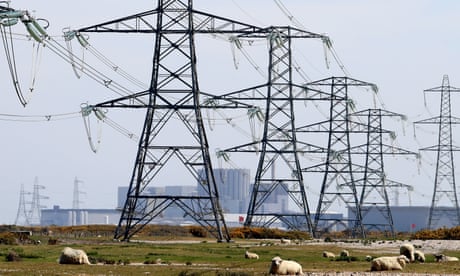
Last week, analysts predicted the energy price cap is on track to rise to £3,244 a year in October, when it is next adjusted, up from £1,971 a year. Annual supermarket inflation hit 8.3% last month.


The three most common tactics to cut costs during the period of the survey conducted in May to June were turning off the heating, reducing use of the cooker and taking fewer showers and baths.

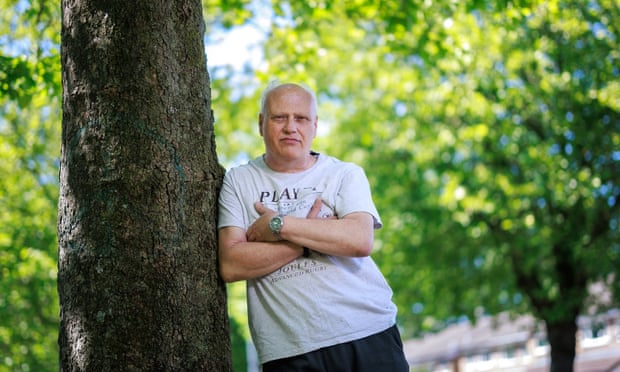
Dean Burn, 62, a semi-retired IT project manager in Stockport, Greater Manchester, told the Guardian his financial predicament was “a lot worse” now than during the pandemic. He spends £620 a month on rent, which recently rose by 5%, and £260 a month on utilities and council tax, but only receives £850 a month in universal credit payments. It isn’t enough and he has used savings and some emergency payments from the council.
Dean Burn near his home in Stockport. Photograph: Joel Goodman/The Guardian
Advertisement


He is already in more than £7,000 of debt, has sold his car for scrap, uses food banks and is eating less – particularly meat. He also walks for miles rather than taking the bus and has cancelled TV subscriptions.

Asked about how he might heat his home this autumn, he said: “I am really not sure about how I am going to do that.”


How to keep the lights on – UK gears up for worst-case energy scenarios


He no longer visits the pub or takes day trips to the seaside. In his street after dark, windows flicker with the light only of TVs as neighbours save on electricity, he said.

Last week, he went to the council because he is worried about becoming homeless.

“I am looking at the calendar and counting the days until I get paid again,” he said. “I have worked for 41 years. This has really affected me.”

The proportion of households behind on at least one bill jumped from 9% to 14%, the study showed.
Faith Angwet from Southwark, south London.

Faith Angwet, 37, a single mother of two from Southwark, south London, who used to work in fashion and retail, said her weekly shopping bill has risen from £200 during the pandemic to £400. She has cut back on spending on toothpaste, soap and washing powder and uses minimum lighting at night.

“If you open my fridge it’s like a single person is living there rather than a family,” she said. “It’s worse now than the pandemic. When I think about it, it’s enough to make my head explode. It is definitely grimmer than before.”
New research shows how the Antarctic ice sheet retreated over 10,000 year

Richard Selwyn Jones, Jul 13 2022

ANALYSIS: Alarming stories from Antarctica are now more frequent than ever; the ice surface is melting, floating ice shelves are collapsing and glaciers are flowing faster into the ocean.

Antarctica will be the largest source of future sea-level rise. Yet scientists don’t know exactly how this melting will unfold as the climate warms.

Our latest research looks at how the Antarctic ice sheet advanced and retreated over the past 10,000 years. It holds stark warnings, and possibly some hope, for the future.
The current imbalance

Future sea-level rise presents one of the most significant challenges of climate change, with economic, environmental and societal impacts expected for coastal communities around the globe

While it seems like a distant issue, the changes in Antarctica may soon be felt on our doorsteps, in the form of rising sea levels.

Antarctica is home to the world’s largest single mass of ice: the Antarctic ice sheet. This body of glacier ice is several kilometres thick, nestled on top of solid land. It covers entire mountain ranges beneath it.

The ice sheet “flows” over the land from the Antarctic interior and towards the surrounding ocean. As a whole it remains a solid mass, but its shape slowly deforms as the ice crystals move around.

While the ice sheet flows outward, snowfall from above replenishes it. This cycle is supposed to keep the system in balance, wherein balance is achieved when the ice sheet is gaining the same amount of ice as it’s losing to the ocean each year.


GETTY IMAGES
The Antarctic ice sheet has been retreating for over 10,000 years.


However, satellites keeping watch from above show the ice sheet is currently not in balance. Over the past 40 years, it has lost more ice than it has gained. The result has been global rising sea levels.

But these historical observations span only four decades, limiting our understanding of how the ice sheet responds to climate change over much longer periods.

We wanted to look further back in time – before satellites – and even before the first polar explorers. For this, we needed natural archives.
Digging up Antarctica’s past

We brought together various natural archives to unearth how the Antarctic ice sheet changed over the past 10,000 years or so. These included:


LIZ CARLSON

Antarctica will be the largest source of future sea-level rise.ice cores collected from Antarctica’s remote interior, which can show us how snow accumulated in the past
rocks collected from exposed mountain peaks, which reveal how the ice sheet has thickened or thinned with time

sediment cores collected from the seafloor, which reveal how the ice sheet margin – where the edge of the land ice meets the ocean – advanced or retreated
lake mud and old beaches, which reveal how the coastline changed in response to the ice sheet growing or shrinking.

When we started our research, I wasn’t sure what to expect. After all, this period of time was long considered fairly dull, with only small changes to the ice margin.

Nevertheless, we studied the many different natural archive one by one. The work felt like a 1000-piece jigsaw puzzle, full of irregular-shaped pieces and seemingly no straight edge. But once we put them together, the pieces lined up and the picture was clear.

Most striking was a period of ice loss that took place in all regions of Antarctica about 10,000 to 5000 years ago. It resulted in many metres of sea-level rise globally.
BAILEY BERG/FOR THE WASHINGTON POST
Understanding how and why the Antarctic ice sheet changed in this fashion offers lessons for the future.

In some regions of Antarctica, however, this ice loss was then followed by ice gain during the past 5000 years – and a corresponding global sea-level fall – as the ice sheet margin advanced to where it is today.
A warning

Understanding how and why the Antarctic ice sheet changed in this fashion offers lessons for the future.

The first lesson is more of a warning. The period of ice loss from 10,000 to 5000 years ago was rapid, occurring at a similar rate to the most dramatically changing parts of the Antarctic ice sheet today.

We think it was likely the result of warm ocean water melting the underside of floating ice shelves – something that has also happened in recent decades. These ice shelves hold back the ice on land, so once they’re removed the ice on the land flows faster into the ocean.

In the future, it’s predicted ice loss will accelerate as the ice sheet retreats into basins below sea level. This may already be under way in some regions of Antarctica. And based on what happened in the past, the resulting ice loss could persist for centuries.
Bouncing back

The second lesson from our work may bring some hope. Some 5000 years ago the ice sheet margin stopped retreating in most locations, and in some regions actually started to advance. One explanation for this relates to the previous period of ice loss.

Before the ice began melting away, the Antarctic ice sheet was much heavier, and its weight pushed down into the Earth’s crust (which sits atop a molten interior). As the ice sheet melted and became lighter, the land beneath it would have lifted up – effectively hauling the ice out of the ocean.

Another possible explanation is climate change. At Antarctica’s coastal fringe, the ocean may have temporarily switched from warmer to cooler waters around the time the ice sheet began advancing again. At the same time, more snowfall took place at the top of the ice sheet.

Our research supports the idea that the Antarctic ice sheet is poised to lose more ice and raise sea levels – particularly if the ocean continues to warm.

It also suggests uplift of the land and increased snowfall have the potential to slow or offset ice loss. However, this effect is not certain.

The past can never be a perfect test for the future. And considering the planet is warming faster now than it was back then, we must err on the side of caution.

Richard Selwyn Jones is a Research Fellow at Monash University, Australia.

This article is republished from The Conversation under a Creative Commons licence. Read the original article here.


Announcement at ocean conference echoes collective will of Pacific peoples – Tuisese


POSTED INSTORY / FIJI
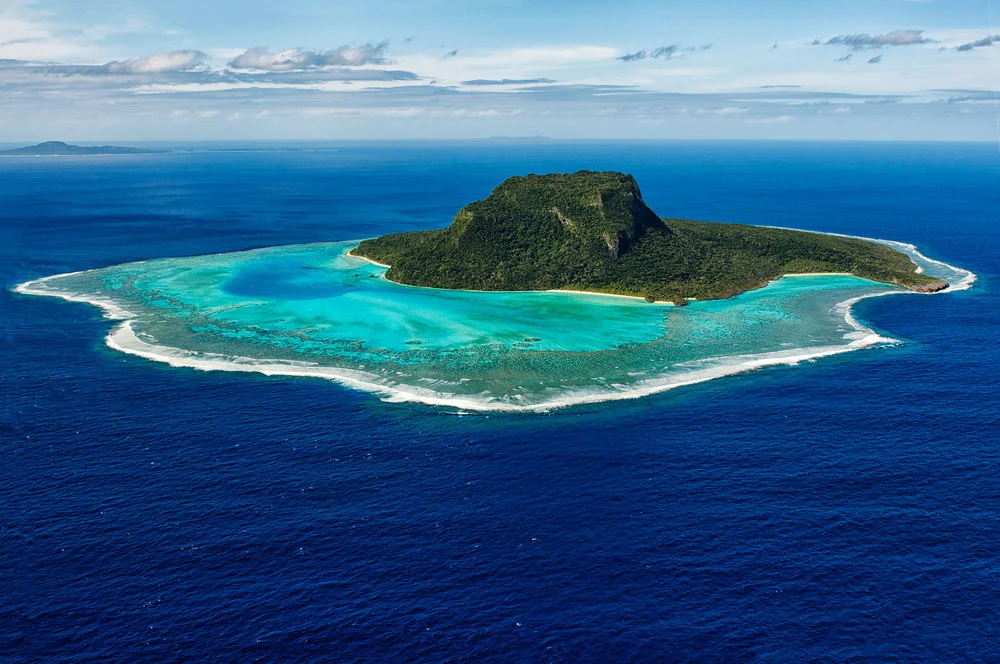
The marine environments of Kaibu, Yacata, Vatuvara, Kanacea and
Adavaci islands in the Northern Lau Group./ Marine Ecology Fiji

By Ian Chute
The Fiji Times
13 July 2022 

Fijian PM’s historic move towards protecting our ocean can increase climate resilience, benefit local livelihoods, safeguard biodiversity and strengthen the economy, says Susana Waqainabete-Tuisese

Fijian Prime Minister Voreqe Bainimarama’s announcement of Fiji’s move towards protecting 30 per cent and sustainably managing 100 percent of our ocean by 2030 by committing more than 8 percent of our ocean in the Lau Seascape to marine protection by 2024 echoes the collective will of Pacific peoples.

Conservation International Pacific senior director Susana Waqainabete-Tuisese said this in a statement in response to Bainimarama’s statement at the United Nations Ocean Conference.

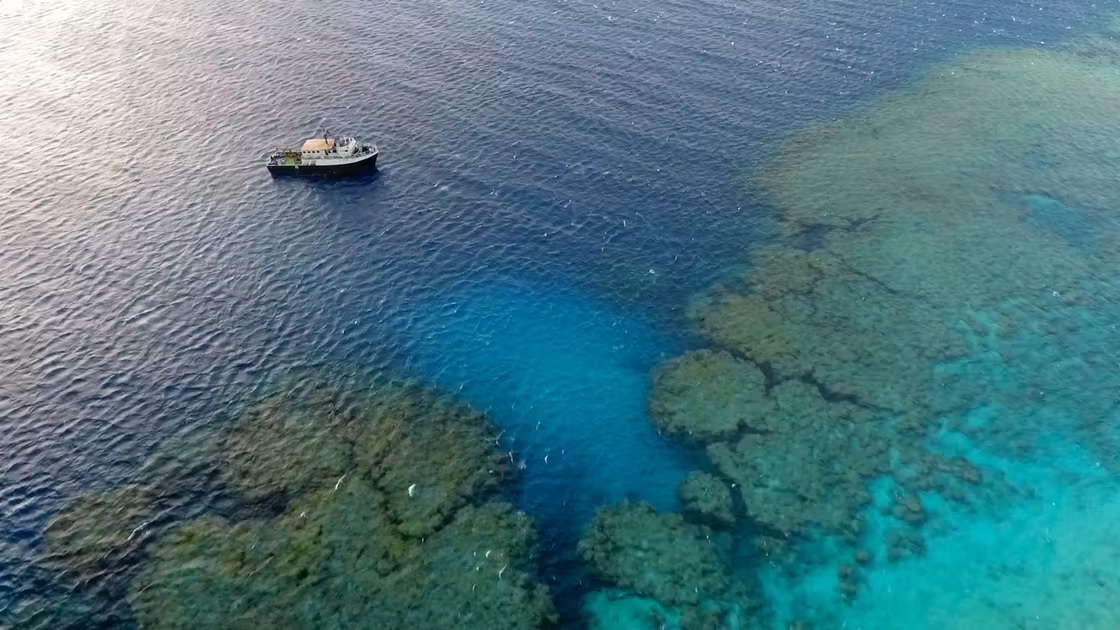
Waqainabete-Tuisese said Fiji’s decisive action to accelerate ocean management was bold, and the seascape approach in the Lau province would effectively manage 30 per cent of its marine area of 335,000 square kilometres, creating over 100,000 square kilometres of marine protected areas.

“Once established, these marine protected areas will provide Fiji and the world with a proof of concept – demonstrating how protecting 30 per cent and sustainably managing 100 per cent of an ocean area can benefit local livelihoods, increase resilience to climate change, safeguard biodiversity and strengthen the economy,” she said.

“The Lau Seascape is the most remote island group in Fiji, home to remarkable biodiversity and stunning ecosystems that provide food, cultural value, and livelihoods for its 9600 inhabitants.

“Facing immense threats to their environment and culture that mirror challenges across the world, the customary leaders of Lau, with support from the government and partners, have committed to protect their ocean home for current and future generations.”


Waqainabete-Tuisese said the move was historic, made possible by the bold leadership of the Fijian Government with the customary leaders and people of Lau, who collectively built the Lau Seascape Initiative since 2013 with the support of multiple civil society partners.

She said the announcement by Bainimarama signified the collective will of Pacific peoples and their governments to protect and sustainably manage their oceans at all costs, against the impacts of climate change.

“The Blue Nature Alliance has supported the Lau Seascape Initiative as the alliance’s first investment site.”

She added Lau was an example and inspiration as they sought solutions globally to the urgent climate and biodiversity crisis.

“We must help secure vital support and financing mechanisms to implement such bold vision and we must do it now – at a time our ocean needs it most,” she said.

Credit: Conservation International

This story was written by Ian Chute, originally published at Fiji Times on 08 July 2022, reposted via PACNEWS.
Mindfulness in schools does not improve mental health, study finds


Students who engaged with the meditation practice benefitted but many were bored by it, say researchers

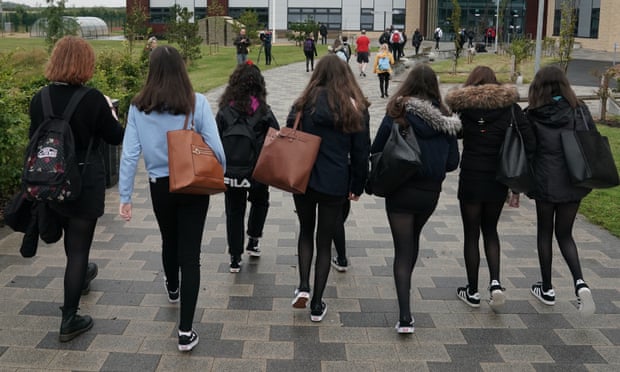
There is mounting concern about the mental health of children and young people in the UK. 
Photograph: Owen Humphreys/PA


Sally Weale 
Education correspondent 
Tue 12 Jul 2022

School-based mindfulness training does not appear to boost wellbeing or improve the mental health of teenagers, according to research that found many pupils were bored by the course and did not practise it at home.

At a time when concern is mounting about poor mental heath among children and young people in the UK, researchers wanted to find out whether a universal mindfulness intervention in secondary schools might help build resilience and have a positive impact on pupil wellbeing.

Mindfulness has become a popular meditation technique aimed at focusing the mind on the present moment, and involves learning how to pay attention and manage feelings and behaviour, to improve resilience in the face of external stressors.

While it has been found to help with the symptoms of depression and anxiety in some studies, researchers from the My Resilience in Adolescence (Myriad) trial found the broad school-based mindfulness offer was no more effective than what schools were already doing to support student mental health with social-emotional learning.

The research was based on a cluster of five studies, carried out over eight years by about 100 researchers working with 28,000 teenagers and 650 teachers in 100 schools. It typically involved teachers learning mindfulness themselves, followed by training in how to deliver it to their students in 10 lessons of 30-50 minutes.

While evidence for the effectiveness of this approach among pupils was “weak”, researchers found it had a positive impact on the teachers involved, reducing burn-out, and also on the general school climate or culture, though these positive effects were relatively short-lived.

The study, from the universities of Oxford, Cambridge, Exeter, King’s College London, University College London and Pennsylvania State in the US, was published in the Evidence-Based Mental Health journal.

Prof Mark Williams, the found director of the Oxford Mindfulness Centre and co-investigator at the University of Oxford, said the findings confirmed the huge burden of mental health challenges that young people face, and the urgent need to find a way to help.

“They also show that the idea of mindfulness doesn’t help – it’s the practice that matters.” Those students that did engage improved, he said, but most did not. “On average they only practised once over 10 weeks of the course. And that’s like going to the gym once and hoping you’ll get fit. But why didn’t they practise? Well, because many of them found it boring.”

He went on: “If today’s young people are to be enthused enough to practise mindfulness, then updating training to suit different needs and giving them a say in the approach they prefer are the vital next steps.”

Dr Elaine Lockhart, the chair of the child and adolescent faculty of the Royal College of Psychiatrists, which co-owns Evidence-Based Mental Health, said children and young people were suffering after the pandemic.

“Mindfulness can be helpful in managing emotions, but it won’t be enough for those children and young people who need support with their mental wellbeing, especially in the aftermath of the pandemic.

“They will need a full range of services to meet their mental health needs, and getting help early is absolutely key in preventing mental health problems from developing or escalating in adulthood.”

Dr Dan O’Hare, a co vice-chair of the division of educational and child psychology at the British Psychological Society, added: “The findings from this study certainly suggest there is a need to consider whether the mental health support we are providing to teenagers within schools is fit for purpose.

“While mindfulness sessions can be hugely beneficial, it’s important to understand that it isn’t a surface level intervention, and how children and teenagers respond to it will be affected by the context in which it’s being taught and the school environment.”
Colombia's Truth Commission Signposts Road to Peace for President-Elect to Follow


COCA/12 JUL 2022
BY JAVIER LIZCANO VILLALBAEN
https://insightcrime.org/

The publication of the long-awaited Final Report from Colombia’s Truth Commission has crystallized the core issues that President-elect Gustavo Petro must overcome if he is to achieve the peace that the country yearns for.

In late June, the Commission for the Clarification of Truth, Coexistence and Non-Repetition (Comisión para el Esclarecimiento de la Verdad, la Convivencia y la No Repetición) presented its final report on Colombia's history of conflict and provided dozens of recommendations for government policy. The report was presented directly to Colombia's president-elect, Gustavo Petro.

The Commission, created in 2017 after a peace deal was signed between the Revolutionary Armed Forces of Colombia (Fuerzas Armadas Revolucionarias de Colombia - FARC) and the Colombian government, sought to tell the story of the internal conflict, its central actors and the victims left behind. These include highly controversial and difficult periods from Colombia's past, including mass kidnappings and massacres, as well as the falsos positivos (false positives) where Colombian security forces shot innocent people and dressed them up to look like guerrilla members.

Petro, a former member of the M-19 guerrilla group, declared that his government, which will take office on August 7, will follow the Commission’s recommendations.

But despite this pledge, InSight Crime considers how easy implementing this roadmap will actually be.
What Would a Change in Security Strategy Look Like?

One of the Truth Commission’s main recommendations is for the State to change its security strategy and to implement a reform within its security forces, which have been accused of participating in the murders of civilians, the persecution of political opponents, forced disappearances and of forming alliances with all kinds of criminal groups.

The report explains that, in order for the security strategy to work, the internal enemy concept that has shaped the country’s security strategy in recent decades must evolve, advocating for an approach that prioritizes peace-building and dialog with local communities.

The president-elect has indicated that he plans to create a Ministry of Peace, Security and Coexistence, and that the control of the country's National Police will be transferred from the Ministry of Defense to the new ministry. This plan comes as a response to petitions from different sectors for the police to focus on maintaining public safety rather than continuing with a militaristic approach.

However, this will not be an easy undertaking. Gustavo Petro has clashed with senior army commanders on several occasions, whom he has accused of being on the payroll of the Urabeños, also known as the Gulf Clan (Clan del Golfo) or the Gaitanista Self-Defense Forces of Colombia (Autodefensas Gaitanistas de Colombia – AGC), the most important drug trafficking group in Colombia today.

Then there is the president-elect’s past as a former member of the demobilized M-19 guerrilla, which threatens to undermine his ability to command the country’s public security forces that for decades has seen the guerrillas as its main enemy.
To Resume or Not to Resume Peace Talks with the ELN?

The Truth Commission also recommends that the incoming government set the conditions for a peace negotiation with the National Liberation Army (Ejército de Liberación Nacional - ELN), the last remaining guerrilla force in Colombia. This, the Commission explains, is necessary for Colombia to end major internal conflicts.

The day after Gustavo Petro won the presidential election, the ELN issued a public statement expressing the group’s willingness to resume peace talks with the incoming government and to create a “Great National Dialogue.” However, it also demanded that these negotiations include discussions of changes in foreign debt, free trade agreements and Colombia's integration with other Latin American countries, all central issues for the ELN’s war against the State.

The president-elect has announced that there will be a bilateral ceasefire, to initiate legal and political negotiations with the different armed groups, including the ELN, when he takes office. A commission for these talks has yet to be appointed.


SEE ALSO: In Colombia, the ELN Want a Peace Process on Their Terms

Talks with the ELN look unlikely to pose a problem, but what does raise doubts is the guerrilla's ability to comply with any agreements made, including a possible disarmament. Colombia's past experience in peace talks with the group has not ended well, especially because of the group's horizontal structure that allows for individual fronts to make their own decisions.
Should Colombia Legalize Drugs?

The war on drug trafficking, a business that has fueled the country's internal conflict, is also mentioned in the Final Report.

The Commission indicates that in order to end the war on drugs and cut off the flow of drug proceeds to criminal groups, the government should bet on legalization, regulating the drug market and demilitarizing territories with coca crops.

This is more complicated than it sounds. First, traffickers in Colombia cultivate, produce and export at least three different types of drugs: cocaine, marijuana and heroin. These drugs do not usually share areas of cultivation and production, and they are transported to different international markets. They are also controlled by different criminal groups.

The most assured path for the Petro government is to bet on the full legalization of marijuana. While the legalization of marijuana has been criticized on the international stage, it has already been implemented in other countries and it would serve to reduce one source of income for criminal groups.


SEE ALSO: Could Gustavo Petro Legalize Coca and Cocaine in Colombia?

Can Colombia Achieve Real Peace?

The main objective, and the first recommendation of the Final Report, is to establish the conditions for Colombia to be at peace. Colombians have long yearned for peace, but it has been impossible to achieve in a single presidential term.

In order to achieve peace throughout the country, it is necessary to resume peace talks with the ELN, advance with drug legalization and reform the country's security strategy, but also to combat or demobilize the successors of the paramilitaries that remain active, such as the Urabeños. In addition, authorities much dismantle entrenched drug trafficking networks, which have been proved to be hard to identify and have a tremendous ability to corrupt State actors. Achieving real peace would also require the redistribution of lands, the central motive for the creation of the now-defunct FARC guerrilla.


Vietnam's VinFast says agrees $4 bln EV factory funding with Credit Suisse, Citi


Reuters
Publishing date:Jul 13, 2022 • 

HANOI — Vietnam carmaker VinFast has signed framework agreements with Credit Suisse (Singapore) Ltd and Citigroup Global Markets Inc. to raise at least $4 billion to develop an electric vehicle factory in North Carolina, the company said.

The announcement comes after its parent Vingroup JSC in May said that an initial public offering (IPO) for VinFast might be delayed until next year due to market uncertainty..

The company has not specified what kind of debt it would raise. Credit Suisse and Citi did not immediately respond to requests for comment.

VinFast, which launched operations in 2019, is betting big on the U.S. market, where it hopes to compete with legacy automakers and startups with two all-electric SUVs and a battery leasing model that will reduce the purchase price.

The North Carolina factory, covering an area of 800 hectares, will initially produce 150,000 electric vehicles a year, the company said.

VinFast has promised to create 7,500 jobs at the factory and said it aimed to start production by 2024.

The company said it is due to open its first overseas showrooms in California in the coming days, including a flagship store in Santa Monica.

For the North Carolina factory, it has also been seeking support from U.S. President Joe Biden’s administration for potential financing through a fund for advanced-technology vehicles.

In addition, VinFast has filed for an IPO in the United States through a shell company in Singapore that now legally holds almost all of the startup automaker’s assets.

Vingroup is Vietnam’s largest listed company by market capitalisation, with businesses in retail, real estate and resorts. It created VinFast in 2019 to build conventional combustion-engine cars before switching exclusively to EVs in 2021.

Despite its cold start in an increasingly crowded market for EVs, VinFast has won support from suppliers, some analysts and the Biden administration in part because of the perception that it is a rising national champion in Vietnam.

In late March, Biden tweeted that VinFast’s then just-announced U.S. investment plans were “the latest example of my economic strategy at work.” (Reporting by Phuong Nguyen and Anshuman Daga in Singapore; Writing by Khanh Vu Editing by Ed Davies)