Tuesday, August 02, 2022

German lawmaker says Roma community is 'again being marginalized'

Europe's largest minority group is often subjected to "racism and the denial of rights," Bodo Ramelow said in a speech to mark the European Roma Holocaust Memorial Day at the Auschwitz-Birkenau concentration camp.
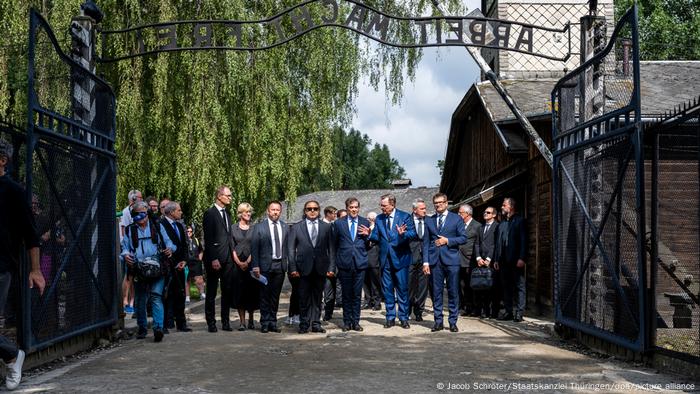
Half a million Sinti and Roma were killed during the Holocaust

German lawmaker and premier for the state of Thuringer Bodo Ramelow (Left Party) called for an end to the exclusion of Sinti and Roma people on Tuesday.

"We are here today, to look the horror in the face and thereby make it visible," the president of the Bundesrat, the parliamentary chamber that represents Germany's 16 states, said in a speech to mark the European Roma Holocaust Memorial Day at the site of the Auschwitz-Birkenau concentration camp.

Europe's largest minority group still experiences racism, says Ramelow

With an estimated population of 10 million people, the Roma community is Europe's largest ethnic minority. "And yet, in many places, they are once again being marginalized," Ramelow said. "They experience hatred, exclusion, racism, violence and the denial of civil and social rights in many countries."

Ramelow and Romani Rose, the chairman of the Central Council of German Sinti and Roma, both laid wreaths.

Wreaths were laid by both Ramelow (pictured) and the chairman of the Central Council of German Sinti and Roma, Romani Rose

On August 2, 1944, some 4,300 Sinti and Roma were killed in gas chambers at the death camp in Nazi-occupied southern Poland.

In 2015, the European Parliament declared the anniversary European Roma Holocaust Memorial Day to commemorate the 500,000 Roma — representing at least a quarter of their total population at that time — murdered in Nazi-occupied Europe.

'Sinti and Roma were persecuted to their deaths'

"Half a million Sinti and Roma were murdered during the Nazi dictatorship," Ramelow said. "Just like Jews and other minorities, Sinti and Roma were persecuted to their deaths because a racist ideology denied them the right to live."

It wasn't until 1982 that the Nazi mass-murder of the Sinti, a subgroup of Romani people mostly found in Germany and Central Europe, and Roma people became recognized as genocide. 

VIDEO: Postwar persecution - The plight of West German Sinti and Roma
With Threat at Historic High, Nuclear Powers Urged to Stop Violating Global Treaty

The head of ICAN said that as "tensions between nuclear-armed states are increasing, hiding behind vague affirmations and empty promises is not enough," and all nations should "join the Treaty on the Prohibition of Nuclear Weapons as the pathway to save the NPT."


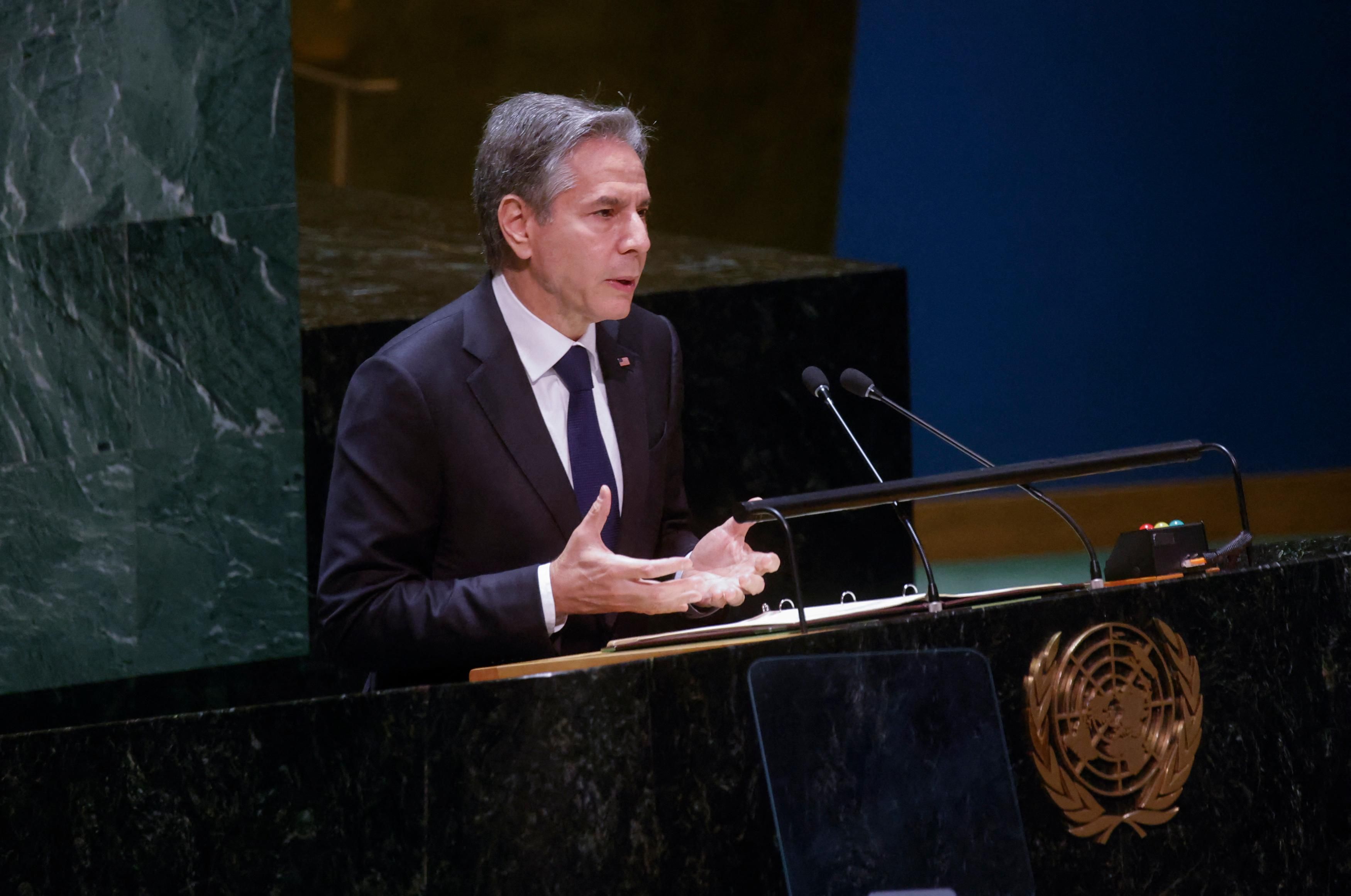
U.S. Secretary of State Antony Blinken speaks during a review conference for parties to the Treaty on the Non-Proliferation of Nuclear Weapons at the United Nations in New York City on August 1, 2022. (Photo: Kena Betancur/AFP via Getty Images)

JESSICA CORBETT
COMMON DREAMS
August 1, 2022

As a treaty review conference kicked off in New York City, anti-war groups on Monday called out nuclear-armed countries—particularly the United States—for not complying with the decades-old agreement, especially as global tensions escalate.

"Nuclear-armed states are violating their disarmament obligations under the treaty and increasing the risk of catastrophic nuclear war."

Five of the nine nations with nuclear weapons—China, France, Russia, the United Kingdom, and the United States—are parties to the Nuclear Non-Proliferation Treaty (NPT), which entered into force in 1970. North Korea ditched the deal in 2003 and India, Israel, and Pakistan have not signed on to it.

In a joint statement Monday, CodePink and the Women's International League for Peace and Freedom U.S. Section (WILPF U.S.) urged the Biden administration "to remove its nuclear weapons from NATO countries and its anti-ballistic missiles from Romania and Poland, to dismantle its land-based intercontinental ballistic missiles (ICBMs), to take all nuclear-armed missiles off hair-trigger alert, and reverse course on nuclear rearmament."

CodePink and WILPF U.S. demanded the declassification of the Biden administration's nuclear policy document and noted that leaders use the term "modernization" for arsenal updates—which the groups called "a euphemism designed to disguise violations" of the NPT. They also acknowledged how Russia's invasion of Ukraine and the response by the United States and other NATO nations have heightened global fears of nuclear war.

While the pair objected to the deployment of American nuclear weapons to several nations—including Belgium, Germany, Italy, the Netherlands, Turkey, and the U.K.—they specifically pointed out that anti-ballistic missiles in Poland and Romania "escalate the arms race, sending a message that the U.S. and its NATO allies could launch a first strike on Russia protected from retaliation."

"At this tenuous time, the U.S. government is engaged in a protracted proxy war with Russia," the organizations said. "We at CodePink and WILPF U.S. raise our voices in thunderous protest at this warmongering and say steps must be taken to de-escalate the crisis."

The groups blasted not only President Joe Biden and others in his administration, but also members of Congress who are backing an $839 billion military budget. As they put it: "Instead of pursuing world peace and climate preservation for our children and their children, leaders of the U.S. are chasing a reckless and provocative foreign policy that pits the two most heavily armed nuclear nations, the U.S. and Russia, against each other, in an existential threat to humankind."

"Much as we condemn Russia's horrific invasion and brutal occupation of Ukraine, we acknowledge our part in this—with U.S. and NATO provocations—and we protest our government's decision to escalate the war with billions of dollars in weapons and military training rather than efforts to reach a negotiated settlement to build a new security architecture for Europe that will guarantee security to all in the region," CodePink and WILPF U.S. added.

Meanwhile, "Russia is threatening to deploy new strategic systems, including a nuclear-armed torpedo," and Russian President Vladimir Putin "recently suggested he might put nuclear weapons-capable missiles and aircraft in Belarus," the pair also highlighted. Additionally, other nuclear powers—specifically China and the U.K.—are dumping money into replacing and upgrading "their deadly arsenals."

The International Campaign to Abolish Nuclear Weapons (ICAN) on Monday similarly called out multiple countries, emphasizing in a statement that the United Nations conference in NYC "takes place amid a rapidly deteriorating international security environment," with nuclear-armed nations "increasing risks of use and proliferation of nuclear weapons."

"Russia's invasion of Ukraine under cover of the threat to use nuclear weapons has fractured the NPT community, heightened the risks of nuclear weapons being used, and increased the likelihood of nuclear proliferation," said ICAN executive director Beatrice Fihn. "At the same time, all five nuclear-armed states are violating their disarmament obligations under the treaty and increasing the risk of catastrophic nuclear war."

"Russia's nuclear threats have shown us the true nature of nuclear 'deterrence': intimidation, coercion, and facilitating illegal aggression," she continued. "This could drive other countries to consider nuclear weapons to defend themselves against nuclear-armed aggressors."

ICAN noted with alarm developments involving three countries that have no nukes of their own but are party to the NPT: Belarus offering to host Russian arms, and Sweden and Finland stating "publicly that they now support these weapons of mass destruction as a crucial part of their security policy and would be willing to participate in using them as part of their NATO membership application."

"These developments are extremely dangerous and undermine confidence in the NPT as a tool for enhancing global security," Fihn asserted, warning that "if Russia or any other nuclear-armed state were to use nuclear weapons, it would have catastrophic humanitarian consequences that would harm people all over the world."

Related Content

'You Don't Got This': Peace Group Blasts NYC's New Nuclear Survival PSA
Brett Wilkins

Finn also flagged that "since the last NPT review conference, nuclear weapons, like chemical and biological weapons, are now comprehensively prohibited by international law."

ICAN received the 2017 Nobel Peace Prize for its work on the Treaty on the Prohibition of Nuclear Weapons (TPNW), which entered into force last year. While that agreement has widespread support globally, it still lacks the backing of any of the nine nuclear powers.

"The NPT review conference must harness the energy and build on the achievements of the TPNW," Fihn argued. "At a time where tensions between nuclear-armed states are increasing, hiding behind vague affirmations and empty promises is not enough. It's time for all states to join the Treaty on the Prohibition of Nuclear Weapons as the pathway to save the NPT."

After opening on Monday with a stark warning from U.N. Secretary-General António Guterres that "humanity is just one misunderstanding, one miscalculation, away from nuclear annihilation," and speeches from other key leaders including U.S. Secretary of State Antony Blinken, the NPT's 10th review conference is slated to run through August 26.

Our work is licensed under Creative Commons (CC BY-NC-ND 3.0). Feel free to republish and share widely.
Can UN summit reduce the risk of nuclear crises?

Progress toward a world without nuclear weapons has stalled for years. A month-long UN conference on nuclear nonproliferation aims to kickstart it as Russia's war in Ukraine stirs fears of nuclear confrontation.


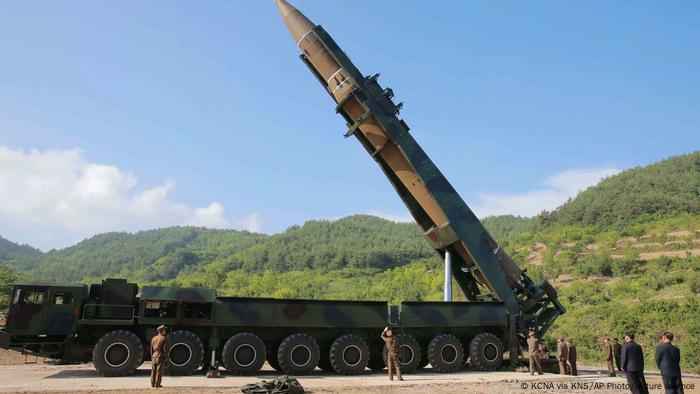
North Korea has continued its nuclear weapons program despite international condemnation


A major summit convenes in New York on Monday with the aim of putting nuclear nonproliferation back on track, as the war in Ukraine and escalating tensions between major powers threaten to undo decades of work to prevent the outbreak of a catastrophic nuclear war.

The 10th review of the Treaty on the Non-Proliferation of Nuclear Weapons (NPT) will feature representatives from almost every nation, including US Secretary of State Anthony Blinken, German Foreign Minister Annalena Baerbock and Japanese Prime Minister Fumio Kishida.

Nations attending the four-week conference, which was delayed for more than two years by the COVID-19 pandemic, will seek to evaluate the treaty's progress and take measures to strengthen it, with the ultimate goal of achieving a world without nuclear weapons. But that aim looks increasingly far from reality.

"We have seen the international arms control architecture crumble over the past decade," Rafael Loss, a nuclear policy researcher at the European Council on Foreign Relations, told DW.

"Western diplomats haven't quite given up yet on the idea of coming to some sort of final agreement, but things have not gotten easier since 2015."


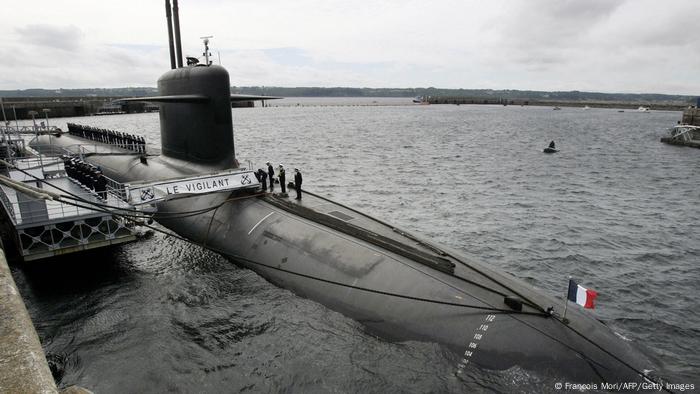
Nuclear bombs may also be deployed from submarines, such as this French vessel 'Le Vigilant'

Growing discontent among non-nuclear nations

The NPT, effective from 1970, was conceived with the aim of forestalling the rapid proliferation of nuclear weapons around the world. Under the agreement, non-nuclear states would refrain from seeking nuclear weapons; and the five states which do possess weapons would promote the spread of peaceful nuclear technology and make efforts to reduce their nuclear weapons stockpiles.

The treaty, which has 191 signatory states, recognizes the United States, Russia, the United Kingdom, France and China as nuclear-weapon states. India, Pakistan, Israel and North Korea are also known to possess nuclear weapons but are not signatories to the treaty, with Pyongyang having left in 2003.

Growing discontent among non-nuclear nations has been increasingly evident among members of the NPT, which hold a review conference every five years. The organization has so far failed to make progress on the goal it set out in 2000 to "accomplish the total elimination of their nuclear arsenals."

The last review in 2015 failed to reach a consensus on several key issues, as major parties remained at odds over the establishment of a Weapons of Mass Destruction-free zone in the Middle East, and introducing effective measures towards nuclear disarmament.

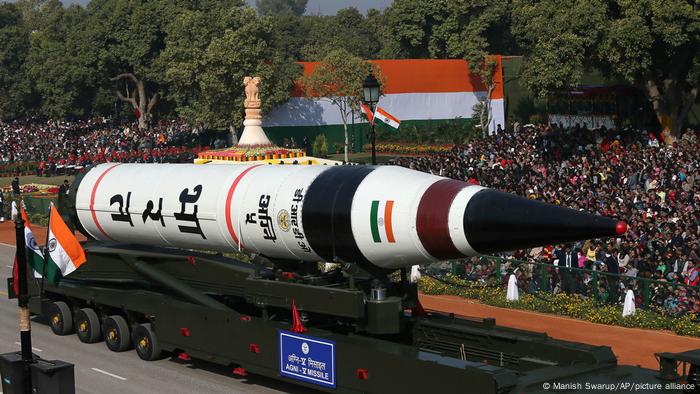
India, Pakistan, Israel and North Korea possess nuclear weapons, but have not signed on to the NPT; an Indian missile is on display here

Alarm bells ringing over Russia's war in Ukraine

In June, the Stockholm International Peace Research Institute (SIPRI) warned in a major report that the risk of a nuclear war was the highest since the height of the Cold War; and that nonproliferation was failing as nuclear-armed states, particularly China, sought to modernize their arsenals.

The organization estimates that there are still 12,705 nuclear warheads worldwide, with 90% of them belonging to Russia and the US.

"There are clear indications that the reductions that have characterized global nuclear arsenals since the end of the Cold War have ended," said SIPRI researcher Hans M. Kristensen.

In January of this year, the five recognized nuclear-weapons states, including Russia, issued a statement that "a nuclear war cannot be won and must never be fought." Yet Russia's invasion of Ukraine the following month brought a swift end to this unified rhetoric.

On Monday, in a letter adressed to participants of the conference in New York, Putin said there could be no winners in a nuclear war and no such war should ever be started.

"We proceed from the fact that there can be no winners in a nuclear war and it should never be unleashed, and we stand for equal and indivisible security for all members of the world community," he said.

Those comments contrasted sharply with previous statements by Russian leaders on their willingness to deploy nuclear weapons, a strategy that the US calls "escalating to de-escalate." President Vladimir Putin's spokesperson Dmitri Peskov said in March that only a "threat to the existence" of Russia would prompt a nuclear attack, but that has not allayed fears that a desperate Putin might deploy a smaller, tactical nuclear weapon if the tide of war turns sharply against him.

The breakdown in relations between the US and Russia also jeopardizes the future of the Strategic Arms Reduction Treaty (START), the only bilateral agreement to reduce nuclear arsenals between the two nations. It was extended for five years in 2021.


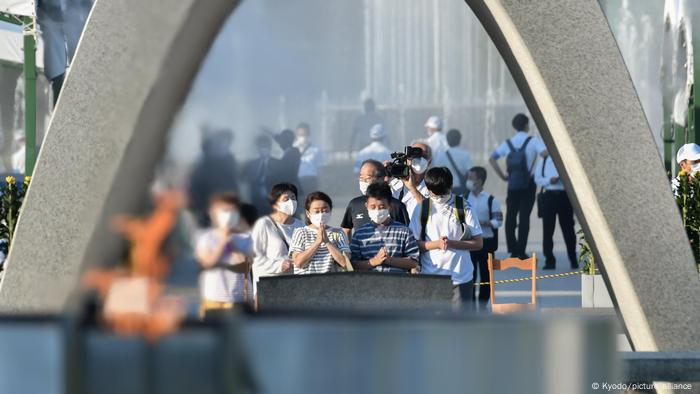
A memorial takes place each year in Hiroshima, Japan on August 6,
 the anniversary of the world's first nuclear bombing

The imperilled future of the Iran nuclear deal, the Joint Comprehensive Plan of Action (JCPOA), is also a major source of concern, particularly for Europe. Former president Donald Trump's decision to unilaterally pull the US out of the deal and reapply economic sanctions to Iran has not been reversed by Joe Biden, and Iran has once again resumed enriching uranium over the pact's restrictions.

World leaders have also called for measures to rein in North Korea, whose leader Kim Jong-un last week said he was "ready to mobilize'' its nuclear deterrent against any US aggression.

The US has warned of Pyongyang's intention to conduct another nuclear test imminently, but its nonproliferation representative has said he does not think any actions taken at the NPT review could influence North Korea's nuclear strategy.
A critical moment

This year's NPT review will be critical to reversing the backsliding in nonproliferation efforts over the last few years, with senior diplomatic figures even warning that a continued failure to make meaningful progress could fundamentally undermine the NPT itself.

"It is abundantly clear that nuclear states have conspicuously failed to live up to their disarmament responsibilities," former UN Secretary General Ban Ki-moon wrote in an opinion piece for Foreign Policy last week.

"There is a wider risk of more nuclear proliferation if the international community no longer sees the NPT as fit for purpose and if other agreements are undermined," he added, referring to the US decision to leave the JCPOA.

The UN is hoping to advance its Treaty on the Prohibition of Nuclear Weapons, effective from 2021. It is the first legally binding treaty with a framework for completely eliminating nuclear weapons and has 86 signatory states, but includes no nuclear-armed nations.

Rafael Loss said this growing schism between the haves and have-nots "could very well also suggest that the NPT regime's normative glue is slowly eroding, and the ban treaty is seen as a more viable path.”

The appearance of Japan's Kishida, the first Japanese prime minister to attend a NPT review, is a sign of the increasing sense of urgency felt among world leaders to return to disarmament.

Japan, the only nation to be attacked with nuclear weapons, plans to host next year's G7 summit in Hiroshima, where around 135,000 people were killed or injured when the US dropped a nuclear bomb in 1945.


TECHNOLOGIES THAT REVOLUTIONIZED WARFARE
Artificial Intelligence: 'Third revolution in warfare'
More than 100 AI experts have written to the UN asking them to ban lethal autonomous weapons — those that use AI to act independently. No so-called "killer robots" currently exist, but advances in artificial intelligence have made them a real possibility. Experts said these weapons could be "the third revolution in warfare," after gunpowder and nuclear arms.
12345678910

Edited by: Sonia Phalnikar

CRIMINAL CAPITALI$M

Cannabis investment platform hit with Spain lawsuit

Nearly 1,200 investors have filed a class-action lawsuit in Spain against a medicinal cannabis investment platform operating worldwide, accusing it of fraud, embezzlement and money laundering, their lawyers said Monday.

JuicyFields, which is based in the Netherlands, promised high returns to invest online in medicinal cannabis plants, said Norberto Martinez from the Martinez-Blanco law firm that filed the case.

A spokesman with Spain's National Court, the country's top criminal court, confirmed the lawsuit was filed over the weekend.

This is believed to be the first class-action lawsuit against JuicyFields, which according to media investigations allegedly scammed investors around the world.

Established in 2020, JuicyFields offered investors the chance to participate in the cultivation, harvesting and sale of cannabis plants, promising returns of between 29 percent and 66 percent, according to the law firm.

But JuicyFields suddenly stopped operations in mid-July, froze cash withdrawals and vanished from the internet, according to several investors.

The lawsuit accuses JuicyFields of operating like a Ponzi scheme, in which early investors are paid out by receipts from later investors.

It estimates that there are nearly 4,500 victims in Spain alone, who each lost an average of 6,500 euros ($6,645). Some individuals lost as much as 200,000 euros.

The minimum investment was 50 euros, and the money could be deposited and withdrawn via bank transfer or cryptocurrencies.

The overall scale of JuicyFields' alleged fraud is unclear. A woman has already filed a police complaint against the firm in France's northern city of Tourcoing.

The 58-year-old woman, who did not want to be identified, said she started by investing 50 euros in December 2021 and in just three and a half months she earned a profit of 25 euros.

"This gave me confidence so I immediately reinjected the money and I invested larger sums," she told AFP, adding she had lost 3,600 euros.

She is part of a group on mobile messaging service Telegram in France for people who want to take legal action against JuicyFields which has over 1,600 members.

A class-action lawsuit against JuicyFields is expected to be filed in a French court before the end of the year, according to Arnaud Delomel, a lawyer who represents hundreds of investors.

AFP was unable to contact JuicyFields for comment and the company has issued no official statement.

vab-zl/ds/lth

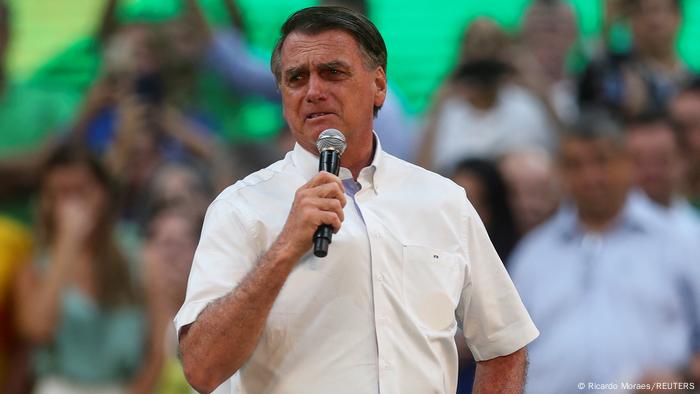
Brazil: Petition in 'defense of democracy' receives 500,000 signatures

A presidential election is just two months away, and some fear President Jair Bolsonaro's utterances mean he might not accept the result if he loses.

Bolsonaro, who came to power in 2019, has regularly attacked the electronic voting system in use since 1996

More than half a million people have signed a petition in "defense of democracy" in Brazil by Sunday in response to President Jair Bolsonaro's attacks on the country's electoral system.

"We are going through a moment of great peril for normal democracy, a risk for the republic's institutions and insinuations about not respecting the election results," the petition's authors wrote, without ever mentioning Bolsonaro.

Former Brazilian President Luiz Inacio Lula da Silva maintains a wide lead over Bolsonaro ahead of October's presidential election.

Bolsonaro has repeatedly attacked the country's electronic voting system, questioned the nation's top electoral court, and insisted that he will only lose re-election if there is mass voter fraud.

So earlier in the week, members of the faculty of law at the University of Sao Paulo drew up the petition to voice concern that "unfounded and unproven attacks have brought into question the electoral process and the democratic state of law achieved with such a great struggle by Brazilian society."

The petition does not directly mention Bolsonaro but stated "threats against other powers ... incitement to violence and institutional rupture are intolerable."

Lula callled on supporters to take to streets to win the October presidential vote

Rival petition supports Bolsonaro's views

Bolsonaro said he did not understand the petition, "Who is against democracy in Brazil? We are for transparency, legality, we respect the constitution," he wrote on Facebook.

His supporters launched their own petition with the goal of gathering one million signatures "to declare that without freedom, there is no democracy."

Their petition in "defense of freedoms" also said Brazilians should avoid "the consolidation of the dictatorship of single thought." 

Meanwhile, Lula said he would continue campaigning in the open despite threats to his safety.

Lula urged his supporters to avoid provocations.

"We will win by having courage. We have to go to the streets to show that the Brazilian people really want democracy. We cannot give in to this bully," he said, referring to Bolsonaro.

lo/sri (AFP, EFE, Lusa, Reuters)

Fires increase in Brazilian Amazon in July


Issued on: 01/08/2022 - 


Greenpeace picture showing smoke billowing from a fire in the Amazon forest in the municipality of Porto Velho, Rondonia State, Brazil, on July 27, 2022 

Christian BRAGA GREENPEACE/AFP


Rio de Janeiro (AFP) – The number of forest fires in the Brazilian Amazon increased by eight percent last month compared with July 2021, according to official figures released Monday, the latest alarm bell for the world's biggest rainforest.

Satellite monitoring detected 5,373 fires last month, up from 4,977 in July last year, according to the Brazilian space agency, INPE.

However, the number was well short of the worst July on record: 19,364 fires in 2005.

July is typically the start of the Amazon "fire season," when drier weather fuels more fires -- mostly set by farmers and speculators clearing land for agriculture, according to experts.

The increase in the Amazon came as major fires raged in California, France and Portugal amid rising temperatures.

This has been a worrying year for fires in the Amazon, a key resource in the race to curb global warming: INPE has detected 12,906 so far, up 13 percent from the same period last year.

"It's only the beginning of the Amazon dry season, when the number of criminal forest fires unfortunately explodes," said Romulo Batista of Greenpeace Brazil.

"In addition to decimating the forest and its biodiversity, those fires and destruction also affect the local population's health due to smoke inhalation," he said in a statement.

President Jair Bolsonaro, who comes up for reelection in October, is facing scrutiny for his government's controversial stewardship of Brazil's 60-percent share of the Amazon, where there has been a surge of fires and deforestation on his watch.

Since the far-right agribusiness ally took office in 2019, average annual deforestation in the Brazilian Amazon has increased by 75 percent compared to the previous decade.

© 2022 AFP

Iran steps up Bahai persecution with wave of arrests

AFP , Monday 1 Aug 2022

Iranian authorities have stepped up persecution of the Bahais with a wave of arrests of prominent members of the country's biggest non-Muslim minority, leaving the battered community in shock, activists said on Monday.

The terraces of the Bahai faith temple on Mount Carmel
The terraces of the Bahai faith temple on Mount Carmel in the northern Israeli port city of Haifa. AFP

The Bahais in Iran, who have been subjected to harassment ever since the inception of the Islamic republic in 1979, had already complained that dozens of community members had been arrested, summoned or subjected to house searches in June and July.

But the intensification of the persecution reached a new peak on Sunday when 13 Bahais were suddenly arrested in raids on the homes and businesses of 52 Bahais across the country, Diane Alai, the representative of the Bahai International Community (BIC), told AFP.

She said those detained included prominent Iranian Bahai figures Mahvash Sabet, Fariba Kamalabadi and Afif Naemi who had previously each served a decade in jail and been part of a now disbanded Bahai administrative group known as the Yaran.

"This is an outrageous move," Alai told AFP. "It is an escalation."

"We did not want to believe that this was going to happen but we could see it in the making," she said, noting a "campaign of incitement to hatred" in pro-government media.

James Samimi Farr, of the Bahais of the United States, added: "For whatever reason there is an emboldened effort to persecute our community and test the waters of what can be done against us."

'Not a shred of proof'

Iran's intelligence ministry said Monday it had arrested members of the Bahai minority suspected of spying for a centre located in Israel and of working illegally to spread their religion.

They had been instructed to "infiltrate educational environments at different levels, especially kindergartens across the country", it said.

Bahais are used to accusations by Iran of links to Israel, whose northern city of Haifa of hosts a centre of the Bahai faith established due to the exile of a Bahai leader well before the State of Israel was established.

Such allegations contain "not one shred of proof," said Alai.

Samimi Farr said: "The government has felt emboldened to persecute us on flimsy pretexts that have been disproved again and again".

The Islamic republic recognises minority non-Muslim faiths including Christianity, Judaism and Zoroastrianism but does not extend the same recognition to Bahaism with followers estimated to number 300,000 in Iran.

Community leaders say Bahais have been subjected to persecution throughout the more than four decade-long existence of the Islamic republic, with members notably facing major obstacles to access higher education.

'Eliminate the community'

During her previous stint in prison, Fariba Kamalabadi got to know the daughter of late former president Akbar Hashemi Rafsanjani, Faezeh Hashemi, who had herself been imprisoned in the wake of protests.

When Kamalabadi was allowed a brief break from prison in 2016, Faezeh Hashemi met her, breaking a major taboo in Iran and outraging conservatives and her own father.

Mahvash Sabet, who wrote poetry during her decade in Tehran's Evin Prison, was recognised in 2017 as an English PEN International Writer of Courage.

The Bahai faith is a relatively modern monotheistic religion with spiritual roots dating back to the early 19th century in Iran, promoting the unity of all people and equality.

Adherents say the tenets of the faith encourage a non-confrontational approach known as "constructive resilience" and insist the Bahais of Iran want to work for the good of the country and not against its leadership.

Iran is currently in the throes of a major crackdown affecting all walks of life in an economic crisis that has sparked protests. Filmmakers, unionists and foreign nationals have been arrested.

Alai said the latest spike in repression had just one ultimate goal. "Their aim is to eliminate the Bahai community as a viable entity."

Iguanas reproducing on Galápagos island century after disappearing

The remote island chain was made famous by British geologist 

and naturalist Charles Darwin's observations on evolution there.

(AFP) — A land iguana that disappeared more than a century ago from one of the Galápagos Islands is reproducing naturally following its reintroduction there, Ecuador's environment ministry announced Monday.

The reptile from the Conolophus subcristatus species, one of three land iguanas living on the archipelago, disappeared from Santiago Island in the early part of the 20th century according to a 1903-06 expedition there by the California Academy of Sciences, the ministry said.

In 2019, the Galápagos National Park (PNG) authority reintroduced more than 3,000 iguanas from a nearby island to restore the natural ecosystem of Santiago, which lies at the center of the Pacific archipelago.

The remote island chain was made famous by British geologist and naturalist Charles Darwin's observations on evolution there.

In 1835, Darwin recorded a huge number of iguanas of all ages on Santiago.

PNG director Danny Rueda said "187 years later we are once again seeing a healthy population of land iguanas with adults, juveniles and newborns.

"It's a great conservation achievement and strengthens our hopes of restoration on the islands that have been severely affected by introduced species."

Located close to 1,000 kilometers (600 miles) off the coast of Ecuador, the Galápagos islands are home to unique flora and fauna and are a Natural World Heritage site.

Baby boom: the endangered wildlife revival at Cambodia's Angkor Wat

Suy SE
Mon, August 1, 2022 


The melodic songs from families of endangered monkeys ring out over the jungle near Cambodia's Angkor Wat temple complex -- a sign of ecological rejuvenation decades after hunting decimated wildlife at the site.

The first pair of rare pileated gibbons were released in 2013 as part of a joint programme between conservation group Wildlife Alliance, the forestry administration and the Apsara Authority -- a government agency that manages the 12th-century ruins.

The gibbon duo, named Baray and Saranick, were born from parents rescued from the wildlife trade and produced offspring a year later.

"We have now released four different pairs of gibbons within the Angkor forest and they have gone on to breed and now seven babies have been born," Wildlife Alliance rescue and care programme director Nick Marx told AFP.


"We are restoring Cambodia's natural heritage back into their most beautiful cultural heritage."

Globally, gibbons are one of the most threatened families of primates, while the pileated gibbon is listed as endangered.

Marx says his team rescues some 2,000 animals a year and many more will soon call the Angkor jungle home.

There are hopes that once the baby gibbons reach sexual maturity in about five to eight years, they will also pair up and mate.

"What we are hoping for the future is to create a sustainable population of the animals... that we released here within the amazing Angkor forest," Marx said.
- 'Big victory' -

Cambodian authorities have hailed the gibbon baby boom that began in 2014.


"This means a big victory for our project," Chou Radina from the Apsara Authority said, adding that as well as gibbons, tourists could now see great hornbills flying over Angkor Wat.

The programme has released more than 40 other animals and birds including silvered langurs, muntjac deers, smooth-coated otters, leopard cats, civets, wreathed hornbills, and green peafowl.

All were rescued from traffickers, donated or born in captivity at the Phnom Tamao wildlife sanctuary near Phnom Penh.

The Angkor Archaeological Park -- which contains the ruins of various capitals of the Khmer Empire, dating from the ninth to 15th centuries -- has some of the oldest rainforest in Cambodia.

It is also the kingdom's most popular tourist destination.

Since Angkor Wat became a world heritage site in 1992, its jungle, which covers more than 6,500 hectares, has benefited from increased legal and physical protections.

There are hopes that wildlife sightings will also spark interest in local and foreign tourists and boost conservation education efforts.
- Ongoing threats -

Rampant poaching, habitat loss from logging, agriculture and dam building has stripped much wildlife from Cambodian rainforests.


Last year, authorities removed 61,000 snare traps, environment ministry spokesman Neth Pheaktra said, adding that the government had launched a campaign to discourage hunting and eating of wildlife meat.

But widespread poverty even before the pandemic left many households without much choice but to continue hunting so their families could eat protein.

Animals are also hunted for traditional medicine and to be kept as pets.

According to Global Forest Watch, from 2001-2021 Cambodia lost 2.6 million hectares of tree cover, a 30 percent decrease since 2000.

Commercial interests are trumping protection efforts in some quarters -- the Phnom Tamao zoo and wildlife rescue centre is under threat from a shadowy rezoning development plan, Marx said.

Back at Siem Reap -- the gateway city to Angkor Wat -- villager Moeurn Sarin shops at the market for bananas, watermelon, rambutan and fish to feed the pileated gibbon families and otters.

"We are happy to conserve these animals," the 64-year-old said, adding he likes to watch the gibbons' tree swinging antics.

"In the future, these animals will have babies for the young generation to see."

suy/lpm/pdw/qan
Mountain melt shutters classic Alpine routes

Nina Larson with Alice Ritchie in Rome
Sat, July 30, 2022


Little snow cover and glaciers melting at an alarming rate amid Europe's sweltering heatwaves have put some of the most classic Alpine hiking routes off-limits.

Usually at the height of summer, tourists flock to the Alps and seek out well-trodden paths up to some of Europe's most iconic peaks.

But with warmer temperatures speeding up glacier melt and thawing permafrost -- which scientists say are driven by climate change -- routes that are usually safe this time of year now face hazards like falling rocks released from the ice.

"Currently in the Alps, there are warnings for around a dozen peaks, including emblematic ones like Matterhorn and Mount Blanc," Pierre Mathey, head of the Swiss mountain guide association, told AFP.

This is happening far earlier in the season than normal, he said.

"Usually we see such closures in August, but now they have started at the end of June and are continuing in July."

- 'Postpone' -

Alpine guides who usually lead thousands of hikers up towards Europe's highest peak announced earlier this week that they would suspend ascents on the most classic routes up Mont Blanc, which straddles France, Italy and Switzerland.

The Guide Alpine Italiane said on its Facebook page that the "particularly delicate conditions" caused by the temperature spike made it necessary to "postpone the climbs".

Mountain guides have also refrained -- reportedly for the first time in a century -- from offering tours up the classic route to the Jungfrau peak in Switzerland.


And they have advised against tours along routes on both the Italian and Swiss sides of the towering pyramid-shaped Matterhorn peak.

Ezio Marlier, president of the Valle D'Aosta guides association, said having to steer clear of routes most coveted by tourists was a blow after the Covid slowdowns.

"It is not easy... after two almost empty seasons to decide to halt work," he told AFP.

He stressed that the Italian Alpine region had shut only two and that there were many other breathtaking and safe routes to take.

But he lamented that many people simply cancelled their trip when they heard their preferred route was off-limits.

"There are plenty of other things to do, but usually when people want Mont Blanc, they want Mont Blanc."
- Dangerous glaciers -

Climbing on some of the thousands of glaciers dotting Europe's largest mountain range is also proving trickier.


"The glaciers are in a state that they are usually in at the end of the summer or even later," said Andreas Linsbauer, a glaciologist at Zurich University.

"It is sure that we will break the record for negative melts," he told AFP.

He said a combination of factors were contributing to a "really extreme" summer, starting with exceptionally little snowfall last winter, meaning there was less to protect the glaciers.

Sand also blew up from the Sahara early in the year, darkening the snow, which makes it melt faster.

And then the first heatwave hit Europe in May, with subsequent ones following in June and July, pushing up temperatures even at high altitudes.

The rapid melting can make glaciers more dangerous, as seen with the sudden collapse of Italy's until then seemingly harmless Marmolada glacier earlier this month, which saw 11 people killed as ice and rock hurtled down the mountain.

While scientists have yet to draw clear conclusions on what caused the disaster, one theory is that meltwater may have reached the point where the glacier was frozen to the rock, loosening its grip.
- 'Invisible threat' -

Mylene Jacquemart, a glacier and mountain hazard researcher at Zurich's ETH university, told AFP there were many unknowns about the catastrophe.

"But the general theme is definitely that more meltwater... makes things complicated and potentially more dangerous."

Mathey, who said warmer temperatures had put mountain guides on high alert, also voiced concern that meltwater filtering under a glacier posed an "additional and invisible threat".

But despite the challenges, he voiced confidence that guides would find solutions, seeking out alternative routes to keep showing off Alpine splendours.

"Resilience is really in the mountain guides' DNA," as is adaptability, he said.

"Humans have to adapt to nature and to the mountains, not the other way around."

nl-bur/fg