Sunday, January 29, 2023

PRISON NATION U$A
Lawsuit accusing private prisons in Arizona of slavery now before top appeals court


Adam Shaw
FOX News
Fri, January 27, 2023 

A lawsuit from civil rights organizations accusing private prisons in Arizona of practicing slavery is now before the Ninth Circuit Court of Appeals amid a broad left-wing pushback against the use of private prisons and immigrant detention centers.

The lawsuit, led by the NAACP, was initially filed in 2020 against the Arizona Department of Corrections, arguing the state is violating the Eighth Amendment’s ban on cruel and unusual punishment and the 13th Amendment’s prohibition of slavery.

The suit argues the use by the state of private prisons involves "substituting a prisoner-corporation relationship for a state-prisoner relationship by relegating prisoners to the status of human inventory and making prisoners slaves to the private prison corporations; attenuating government protection, oversight, safety, and wellbeing of prisoners within the private prisons; and creating financial incentives to design and operate facilities that incarcerate more people for longer periods of time."

The state argued that the lawsuit is mounting a "general attack on the use of private prisons and relies on speculation that private operators may engage in unconstitutional conduct or have engaged in such conduct in non-ADCRR-contracted facilities in the past and that they may be harmed if the operators behave as they have alleged."

CALIFORNIA BANS PRIVATE PRISONS AND IMMIGRANT DETENTION CENTERS

Arizona Central reported at that time that about 8,000 inmates of an overall population of around 40,000 were incarcerated in private jails. A federal court dismissed the lawsuit, and an appeal is now before the traditionally liberal Ninth Circuit. The plaintiffs hope the case reaches the Supreme Court.

A number of briefs have been filed in favor and against the lawsuit. On the plaintiff’s side, briefs filed by left-wing and civil rights groups argue that the reintroduction of private prisons is a callback to racist practices from the 19th century and that such prisons have greater racial disparities and worse conditions.

AZ GOV. KATIE HOBBS CREATES COMMISSION TO STUDY STATE'S PRISON PROBLEMS

"Today, attempts to evade the Thirteenth Amendment’s prohibition against slavery are being tested again using private, for-profit corporations who bid for, buy and sell, and extort prison labor from U.S. citizen prisoners, many of whom are African American," a brief by the professors and graduates of the University of Arkansas Little Rock states.

An amicus brief filed by Latino Justice noted some private facilities are used to house immigrants and claimed the centers include "glaring racial disparities."

"These centers overwhelmingly detain Black and Latino people who have not been accused of any crime, but are instead held for alleged violations of civil immigration law," it says.

The brief also notes that the Biden administration has pledged to shut down a number of private immigration detention centers. The administration has been aiming to rely on Alternatives to Detention, and the number of immigrants in custody across the U.S. remains low.

California banned for-profit prisons in 2019, including for-profit immigration detention centers.

A separate brief by the Florence Immigrant & Refugee Rights Center argues the system is exacerbated by detention quotas that undermine due process for those in custody.

"The same companies profiting from the mass incarceration system have capitalized on the mass detention of immigrants, leading some scholars to compare incarceration of Black men in the ‘new Jim Crow’ with the increased use of for-profit detention to hold immigrants, many of whom are Latinx," the brief says.

Other groups have pushed back in support of Arizona. The Day 1 Alliance, which emphasizes the importance of the private sector in American life, argues that the private sector operation of prisons is beneficial for the inmates and society in general.


A lawsuit alleges prisons in Arizona are practicing slavery.

They argue the use of private sector prisons is subject to multiple levels of oversight, often embedded in their government contracts, and reject the idea that contractors will cut corners to pursue greater profits. It also notes the use of substance counseling and educational and vocational programs to help reduce recidivism rates.

"Private sector contractors are able to maintain lower costs because their size and experience enable them to take advantage of economies of scale in their purchasing power for such essentials as clothing, food, health care services, hygiene items and various other services and supplies," they say.

They also argue that the language of Arizona’s statutes, which say a proposal for a contract cannot be accepted until it offers cost savings, results in a "detailed statutory scheme (that) mandates cost savings while maintaining service quality, which benefits the taxpayer while causing no detriment to incarcerated individuals."

"The required cost savings that are realized through utilizing private sector contractors are designed to combat the enormous strain placed on government budgets by increases in the number of incarcerated individuals," the alliance argues.

It cited data that contractor-operation facilities cost $64.65 per inmate per day compared to $80.20 per day for their public counterparts.


Arizona Democratic gubernatorial candidate Katie Hobbs holds a campaign event at the Carpenters Local Union 1912 headquarters Nov. 5, 2022, in Phoenix, Ariz.


The brief accuses the plaintiffs of "hurling baseless insults at these private sector contractors, filled with hyperbole and fictitious assertions that are devoid of factual validity."

"The reality is that the efforts of these private sector contractors should be lauded and replicated, including their goal of improving the lives of the inmates who cross the thresholds of the facilities that they operate," they say.

The case comes as Gov. Katie Hobbs on Wednesday announced the creation of a commission to study problems in Arizona’s prisons, including staffing levels and the health care offered to those behind bars.

The creation of the commission by Hobbs, Arizona’s first Democratic governor since 2009, came several days after she ordered a separate review of the state’s death penalty protocols.

"We cannot deny there is an urgent need to provide transparency and accountability in Arizona corrections system," Hobbs said.

The Associated Press contributed to this report.
Hubble captures stunning stellar duo in Orion Nebula 1,450 light-years away


Julia Musto
FOX News
Sat, January 28, 2023

The Hubble Space Telescope captured a stunning new image of the bright variable star V 372 Orionis and a companion star.

The NASA and European Space Agency telescope snapped the stars, which lie in the Orion Nebula, a region of stellar formation located around 1,450 light-years away from Earth.

The companion star is seen in the upper left corner.

V 372 Orionis is a particular type of variable star known as an Orion Variable.

NASA SUCCESSFULLY TESTS NEW ENGINE FOR DEEP SPACE EXPLORATION


The bright variable star V 372 Orionis takes center stage in this image from the NASA/ESA Hubble Space Telescope.

Patchy gas and dust of the Orion Nebulae are seen throughout the image. Orion Variables are commonly associated with diffuse nebulae.

The image from the team overlays data from two of the telescope's instruments — the Advanced Camera for Surveys and the Wide Field Camera 3.

The data at infrared and visible wavelengths were layered to reveal details of the area.


An astronaut aboard the space shuttle Atlantis captured this image of the Hubble Space Telescope May 19, 2009.

NASA AND DARPA TO DEVELOP NUCLEAR THERMAL ROCKET ENGINE THAT MAY PUT HUMANS ON MARS: REPORT

Notably, the diffraction spikes that surround the brightest stars of the image were formed when an intense point source of light interacted with the four vanes inside Hubble that support the telescope’s secondary mirror.

Comparatively, those of the James Webb Space Telescope are six-pointed due to its hexagonal mirror segments and 3-legged support structure for the secondary mirror.

CAPITALI$M IS UNSUSTAINABLE

‘Stressful’: Customers who went solar encounter problems after companies went under

Multiple people who started using solar energy for power have been reaching out to Action 9′s Jason Stoogenke recently.

They say they have spent tens of thousands of dollars on systems for their homes and panels don’t work like they’re supposed to.

Even worse, those who are using solar energy say the company has gone out of business, including Accelerate Solar and Pink Energy, formerly PowerHome Solar.

Action 9: Will Pink Energy customers with solar panel issues have to pay back loans?

Homeowners say the feel stranded.

Yaz Humaideh says he bought his solar panels in 2019 from Accelerate Solar, a company that folded about a year later.

Humaideh says he’s had leaks and that he hasn’t saved as much money on his power bills as the company promised.

He now has a lien on his house, which will make it hard to sell or refinance someday.

“This has been stressing me out for years now,” Humaideh said.

Another company eventually bought parts of Accelerate Solar’s assets, but it has no obligation to treat customers, including Humaideh, as its own.

So it doesn’t need to make things right.

The new company can charge him to service his panels like it would anyone who used a different solar company.

“This is $60,000,” Humaideh said. “It’s not like cheap. I work 60/70 hours a week at my job. I don’t have time all the time to go chase all these little things. So, it’s been stressful.”

There’s not much you can do when a company you use goes out of business, Stoogenke said.

But in this case, there may be one option, which is to complain to the attorney general in North Carolina or South Carolina.

Both states have been asking major lenders to suspend payments for certain customers.

CAPITALI$M IS UNSUSTAINABLE
Why whale deaths are dividing environmentalists — and firing up Tucker Carlson


Wayne Parry/AP Photo

Ry Rivard
Sun, January 29, 2023 

Dead whales are usually a sure-fire way to unite environmentalists — but not in New Jersey.

Instead, a recent spate of beached whales in the Northeast is exposing rifts among activists, energizing Republicans and threatening to complicate one of President Joe Biden’s top energy goals.

Since December, at least nine whales have been stranded on beaches in New Jersey and New York. The deaths are happening as pre-construction work ramps up on offshore wind farms, which are a key part of the nation and New Jersey's climate change strategy.

There is no evidence the wind work and whale deaths are linked. But Clean Ocean Action, a 40-year-old nonprofit, believes the two things happening at once may be more than just a fluke.

Real or rhetorical, the claim is stirring a new political debate.


The group, which has been one of the few environmental organizations to criticize offshore wind, is using the whale deaths to push for a halt of offshore wind development until officials can figure out what is going on. Its message is spreading.

Clean Ocean Action is now a strange bedfellow with conservative media figure Tucker Carlson, six Republican lawmakers in the New Jersey Legislature who represent coastal districts and Rep. Jeff Van Drew (R-N.J.), who co-chairs the congressional offshore wind caucus and is its only Republican member.

Carlson is running a series of segments called “The Biden Whale Extinction.” In mid-January, he called wind energy “the DDT of our time” and a guest on the show said, without offering specific evidence, that wind developers’ survey ships were “carpet bombing the ocean floor with intense sound” that would confuse whales.

Van Drew has called on Gov. Phil Murphy to pause offshore wind activity in New Jersey.

“Since offshore wind projects were being proposed by Governor Murphy to be built off the coast of New Jersey, I have been adamantly opposed to any activity moving forward until research disclosed the impacts these projects would have on our environment and the impacts on the fishing industry,” Van Drew, whose South Jersey district includes several coastal counties, said in a statement.

Murphy, like the president, has made offshore wind a key component of his clean energy plans.

At least one moderate Democrat is expressing hesitation, too. New Jersey state Sen. Vin Gopal, who represents part of coastal Monmouth County, said he’s “very concerned” about any ties between wind and the whales.

The political headache couldn’t come at a worse time for the offshore wind industry, which is already struggling to finance wind farms, including Ocean Wind 1, which would be New Jersey’s first.

Biden has set a national goal of 30 gigawatts of offshore wind by 2030, enough energy to power 10 million homes, and Murphy set a state level goal of 11 gigawatts by 2040. To achieve these goals, developers in New Jersey and other states will need to quickly install hundreds of giant wind turbines miles off the coast. So far, just one major project in the region, the South Fork wind farm in New York, has broken ground.

Clean Ocean Action Executive Director Cindy Zipf said she has no evidence to tie the whale deaths to offshore wind, beyond that there is an unprecedented number of whales dying on beaches and an unprecedented amount of offshore wind work getting underway. But there’s also no evidence to prove there isn’t a connection.

For years, Zipf’s group has argued the federal government has skimped on monitoring new wind infrastructure planned for the ocean and isn’t certain of the effect sonic mapping of the ocean floor and an increase in ship traffic will have.

Wind supporters from the New Jersey chapters of the Sierra Club and League of Conservation Voters say talk of a connection with whales is baseless and no reason to stop the development of clean energy. They say an already-warming ocean is a known threat to whales and clean power from wind energy could help stop climate change.

Federal regulators from the Bureau of Ocean Energy Management gave offshore wind supporters a hand by telling reporters last week that there is no evidence construction would exacerbate or compound whale deaths. The kind of sound surveys being done by offshore wind companies has not been linked to stranded whales, they said.

BOEM has been monitoring an unusual number of whale deaths since 2016 and found that about 40 percent of the animals they examined were struck by some ship or entangled in fishing gear. Those sorts of threats are old but may become more common because whales are following their prey closer to shore — something that may be a result of climate change.

There are no wind farms off the New Jersey coast yet, though surveys of the seafloor using sound have been conducted.

Worries that sonic mapping might be affecting whales’ navigation are overblown, said Erica Staaterman, an expert at the federal government’s Center for Marine Acoustics. Staaterman said during the call with reporters that there’s a “pretty big difference” between the relatively brief and targeted sound mapping used by offshore wind and the very loud sounds used by oil and gas companies to take measurements deep beneath the seafloor.

She didn't make it explicit, but there is a political point there: if conservative media is so concerned about the whales, why are they opposed to offshore wind but pushing offshore drilling?

Because it isn’t clear why the whales are dying, the absence of evidence is being used as evidence of regulatory absence.

“It doesn’t seem to me that they have conducted very much review of anything, which is what we’re calling for,” Zipf said in an interview after the media briefing by federal regulators.

Other environmental groups like the Sierra Club have been scrambling to tamp down the speculation and undo the notion that offshore wind is killing whales. At the same time, they're trying to point out hypocrisy among offshore wind’s foes.

“I wouldn’t call for commercial shipping to stop because I know it’s unreasonable. It’s trade. I know it’s not going to stop,” New Jersey Sierra Club Director Anjuli Ramos-Busot said in an interview. “So I find it unreasonable to call for the pause or moratorium on offshore wind — which is going to save us all.”

Last year, the East Coast’s largest port, the Port of New York and New Jersey, saw nearly 3,000 ships come and go, a figure that vastly undercounts all the ocean traffic in the region and dwarfs the number of vessels that have anything to do with offshore wind.

In New Jersey, Murphy’s offshore wind hopes are already meeting headwinds because of basic economics.

Orsted, the Danish developer behind what would be New Jersey’s first offshore wind farm, said late last year it’s worried about making money on the project and other large projects approved in other states.

The state Board of Public Utilities, which controls Orsted’s return on the project, has received well over 100 public comments since December opposing offshore wind and citing whale deaths.

Wind supporters point out that some of the opposition to offshore wind is coordinated and involves misinformation supported by fossil fuel interests.

At a press conference organized by the New Jersey League of Conservation Voters and the Sierra Club, Jody Stewart of the New Jersey Organization Project, a group formed after Hurricane Sandy to help with recovery and to protect shores from extreme weather, said if there is any investigation it should be of the coordinated industry campaign to “stir up opposition among locals.”

“They’re the ones taking this narrative of whales dying because of offshore wind and running with it — not regular people, not people who live here,” she said.

That’s a harder criticism to pin on Clean Ocean Action, which was founded to fight ocean dumping and does beach cleanups, opposes offshore drilling and helped block liquefied natural gas facilities along the New Jersey coast.

There is some evidence, from inland waterways, that the federal government has advanced wind-related projects without fully exploring the threat new shipping routes pose to wildlife.

Last summer, the Delaware Riverkeeper Network alleged federal fisheries officials ignored how construction and operation of a New Jersey port being created to help the wind industry could harm fish, especially a rare type of Atlantic sturgeon in the river. In an email later obtained by the group, federal officials appeared to acknowledge they hadn’t used the best available information about how boats might kill river sturgeon. But that didn’t halt construction at the wind port.

Privately, offshore wind supporters wonder if Clean Ocean Action’s argument is more about NIMBYism than environmentalists.

Zipf rejects this.

“Clean Ocean Action’s mission is solely to protect the ocean, that is our mission, and, you know, being a voice for the ocean oftentimes makes us a lone voice for a period of time until others understand the scope and the threat to the ocean is a threat to us all,” she said.
GOP Gov. Dunleavy says his carbon storage bills could bring Alaska 'billions,' but many unknowns remain


Sean Maguire, Alex DeMarban, Anchorage Daily News, Alaska
Sat, January 28, 2023 at 9:59 PM MST·7 min read

Jan. 28—JUNEAU — Alaska Gov. Mike Dunleavy introduced two bills Friday that would allow the state of Alaska to raise revenue by starting carbon offset and sequestration programs.

One of the governor's bills would create a regulatory framework for geologic storage of carbon dioxide. The other would create a framework for allowing carbon offsets using state land and then selling carbon offset credits.

Carbon offset and capture programs can involve companies injecting carbon dioxide into empty underground reservoirs that may have once contained oil or natural gas, keeping those emissions out of the atmosphere where they contribute to climate change. It could also involve entities, such as the state, receiving compensation for allowing the use of those reservoirs, or for protecting forests or even establishing kelp farms, which also take in carbon emissions.

Companies that might participate may want to voluntarily offset their emissions, or they might be required to do so under regulated markets such as those in California or Europe. They could buy carbon offset credits from the state as it takes steps to protect or enhance its forests.

But how much the state could bring in, and how early, is a huge unknown.

Dunleavy said in his State of the State address this week that, according to experts, Alaska "can realize revenue to the tune of billions of dollars, that's billions of dollars per year, by creating a carbon management system."

Just from Alaska's forest lands alone, Dunleavy said the state has "been told by some that we can generate as much as $30 billion or more over 20 years."

Experts who study carbon offsets say it's possible for the state to make millions each year, but much is still unknown, and will depend on the details of how the programs are carried out.

The governor's legislation says that state forests used for a carbon offset program "must remain open to the public" for hunting, fishing and other recreation opportunities.

Legislators have questions about the wisdom of the state signing decades-long carbon credit agreements. The Legislature wants to perform its own due diligence on the governor's ideas before it jumps on board, to see if the numbers pencil out.

"It sounds almost too good to be true," said Anchorage Democratic Sen. Bill Wielechowski.

'Real potential out there, if ...'


A Houston, Texas, consulting firm produced a report for the Alaska Department of Natural Resources last year that looks at a few opportunities from the state's forests.

Anew Climate considered projects located near roads that could be piloted by the state, by preserving some of the forest in three areas — in the Matanuska-Susitna region, the Haines area of Southeast Alaska and the Tanana Valley area in the Fairbanks region.

It indicated that the state could bring in about $8 million a year from the three areas, in the first decade.

The Dunleavy administration also has identified Cook Inlet basin as a prime location for geological sequestration of carbon in deep underground reservoirs, and said there are companies that have indicated an interest in a forest-based carbon offset program.

"In a nutshell, there's a tremendous amount of opportunity," said John Boyle, commissioner-designee of the Alaska Department of Natural Resources.

However, a fiscal note attached to the governor's carbon offset bill, extending through 2029, doesn't estimate potential revenue. That isn't possible, it says, because of market uncertainty and the unknown timelines of projects. The Department of Natural Resources said that credits could start being issued from 2025 or beyond, depending when the legislation passes and the projects are launched.

Selling forest-based carbon credits is simpler and expected to lead to new revenue more quickly, Boyle said, compared to carbon sequestration and the question of where the carbon dioxide comes from and how it is stored underground.

Nat Keohane, an economist with the Center for Climate and Energy Solutions, a group from Virginia that advocates for climate policy, said he could not comment on how much Alaska might make from its carbon capture and storage proposal. But he said Alaska has a tremendous opportunity to capitalize on the rapidly growing market for such programs.

"There's a real potential market out there, if you can show and verify that you are making real emissions reductions," he said.

Dominick DellaSala, chief scientist with Wild Heritage, a California-based forest conservation group, said the state has the potential to make tens of millions of dollars annually, or perhaps much, much more.

Dunleavy has said a carbon offset program can exist without negatively affecting current resource extraction industries, such as logging. But much of the money must come from preservation of forests, particularly old-growth forests, that would otherwise be logged.

The view that logging can continue and the state can generate vast sums by using forests as carbon offsets does not add up, DellaSala said.

"It's pie in the sky," he said.

Precedent with Native corporations

There is some precedent for a carbon offset program of Alaska's forests. Several Alaska Native corporations are already engaged in a California cap-and-trade program, netting one — Sealaska Corp. — a reported $100 million between 2015 and 2020.

A lawsuit filed last year argued that revenue needs to be shared among other regional corporations, following the terms of the Alaska Native Claims Settlement Act. The case remains open in state court.

New federal tax incentives for storing carbon have been proclaimed as creating a new gold rush for investment. Some environmental and Indigenous groups have questioned the safety of underground carbon storage, and its touted effects in limiting climate change.

Jessica Oglesby, with Global CCS Institute, an Australia-based think tank that supports carbon capture and storage, said it makes sense that the state of Alaska is looking to enter the market.

[Biden administration reinstates road and logging restrictions in Alaska's Tongass National Forest]

"There have been several major U.S. policy developments in the past 12 months that have further boosted the financial viability of (the) projects, including the Infrastructure Investment and Jobs Act, which provided over $12 billion" for carbon capture and storage, among other opportunities, she said.

Due diligence

Sen. Cathy Giessel, R-Anchorage, co-chair of the Senate Resources Committee, said hearings will begin on the forestry offsets bill in mid-February, but she is circumspect about the governor's legislation. State land could potentially be locked up for decades, preventing the possibility for other resource development, like mining, she said.

Dunleavy's carbon offset bill is nine pages long, the sequestration bill runs to 30 pages — filled with complex provisions on classes of wells, permitting and licensing authorities.

"It's complicated," Giessel said.

The Legislature is planning to hire an independent consultant to carefully review Dunleavy's carbon storage proposals, which means it could be months — or even years — before the legislation passes.

"This needs to be thoroughly vetted," said Wielechowski. "We're committing our resources for decades, for generations, and we need to understand the ramifications of this."

The Legislature has hired GaffneyCline & Associates, an oil and gas consultancy firm, for such work in the past. That firm has already been employed by the Dunleavy administration to work on his bills, meaning to avoid a conflict, the Legislative Budget and Audit Committee is looking at potentially using another firm.

Nikiski Republican Rep. Ben Carpenter, who chairs that committee, said there is a procurement process that needs to be followed before a consultant can be hired.

He said Alaskans should not assume that plans to independently review the governor's proposals means the Legislature is not interested in carbon offsetting and sequestration as a new source of revenue.

"I wouldn't say that that's skepticism or putting cold water on anything," Carpenter said. "We just want to do due diligence — and that's what a consultant would help us with."

Wielechowski is somewhat cautious about Dunleavy's proposals after hearing in the past from Outside companies that pitch plans for tremendous sources of new state revenue — which have then not panned out.

In 2008, the Legislature approved spending $500 million to subsidize building a natural gas pipeline from the North Slope to bring in billions of dollars for the state. It still hasn't been built.
Some CEOs are pushing workers to return to the office, but it could come with a cost: hurting diversity

Marguerite Ward
Sat, January 28, 2023

JPMorgan CEO Jamie Dimon and some other corporate leaders are in favor of workers returning to the office. But remote work can benefit people from underrepresented backgrounds.Misha Friedman/Getty Images

JPMorgan CEO Jamie Dimon recently said remote work isn't ideal for many employees.


He's one of several high-profile CEOs who are pushing for a large-scale return to the office.


But remote work has benefited many people with disabilities, many Black workers, and others.

Jamie Dimon seems invested in supporting people from underrepresented backgrounds.


The JPMorgan CEO drove a $30 billion plan to advance racial equity in the US. He's spoken about the importance of reducing inequality, advancing people from underrepresented backgrounds in leadership, and other social-justice issues.

But Dimon appears more bearish when it comes to another measure that's been shown to promote diversity: remote work.

"It doesn't work for young kids or spontaneity or management," Dimon said in a recent interview with CNBC.

Dimon isn't alone in his assessment. Morgan Stanley CEO James Gorman this month said he wants employees back in the office at least three or four days a week. Citadel CEO Ken Griffin slammed remote work at a conference last year, saying innovation and creativity declines because of it.

Dimon has also said that remote work can "help women," given the caregiving duties that disproportionately fall upon them. "Modify your company to help women stay home a little," he said. And he said it's reasonable for employees who work in jobs like research and coding to work remotely.

But the push from some CEOs to return to the office could come at a cost to workforce diversity — something these and other chiefs have vowed to increase. Working from home doesn't only help women who are caregivers, it can be life-changing for some people from underrepresented backgrounds. Remote work has opened career opportunities for many with invisible disabilities like depression or ADHD and those with physical disabilities. It's also improved working conditions for some Black workers and some male caregivers.

Opportunities for those with disabilities

An October report by the Economic Innovation Group, a think tank, found that individuals with disabilities between the ages 25 to 54 were more likely to be employed in 2022 than before the pandemic. Disability advocates say this is because of the rise in remote-work options, which are a godsend to people who need more control over their working environment.

"Remote work offers disabled employees the chance to work, but in their own homes, which provides greater flexibility, accessibility, savings in commuting time and expenses, and even privacy that may be needed to address medical issues that cannot be addressed in the workplace," Arlene Kanter, a professor at Syracuse University College of Law, wrote in a Harvard Law School blog post last year.

Remote work has opened career opportunities for people with invisible disabilities like depression or ADHD and those with physical disabilities, advocates say.
Phynart Studio/Getty Images

"It's been a total game changer," Mason Ameri, an associate professor at Rutgers University who studies employment data on people with disabilities, told The Los Angeles Times in December.

The shift to remote work has been especially helpful for people with physical difficulties and mobility limitations. "The ability to get to work via this 10-second commute is to their advantage," Ameri said.

Remote work can help people who are neurodiverse and those with autism or mental-health disorders be more productive, advocates say. Some benefits of working from home, like reduced stress and more sleep, extend to people without disabilities, too, according to an analysis published on the Association for Psychological Science's website.

Remote work can help rural workers and Black workers

After Spotify adopted a remote-work option in 2021, Travis Robinson, the head of diversity and inclusion at the audio streamer, explained how the policy helps people living outside large cities.

A person who lives in a low-income, rural area can now work for an employer based in a major city, where the cost of living might have prevented them from otherwise doing so, he told Insider.

And while there are often benefits to seeing colleagues face-to-face, for some underrepresented workers, there's a reprieve that comes from getting to work remotely.


Some Black workers report facing less discrimination at work when working from home.
MoMo Productions/Getty Images

Some Black workers report facing less discrimination and fewer microaggressions working from home than when they're at the office.

"I do not foresee myself ever returning to an office," Leron Barton, a writer who describes himself as someone with two decades of experience in corporate America, wrote in a Slate essay titled "I'm Black. Remote Work Has Been Great for My Mental Health."

McKinsey & Co. reported in April that people from marginalized communities were more likely to prefer and stay at jobs that offer remote or hybrid-work setups. Black employees were 14% more likely than their white counterparts to say they would leave a job if remote work was not available, the consultancy said. LGBTQ employees, meanwhile, were 24% more likely to leave than their heterosexuals peers.


Norway’s Temporary Tax Breaks To Bolster Oil Flows To Europe


Editor OilPrice.com
Fri, January 27, 2023 

The energy crisis in Europe triggered by the ongoing war between Russia and Ukraine has left the continent short of hydrocarbon supplies and increasingly reliant on liquefied natural gas imports. Norway, the largest oil and gas producer in the region, has stepped up with a record-breaking sanctioning boom on the Norwegian Continental Shelf (NCS) that has seen a staggering 35 projects greenlighted in the last two and a half years – most at the tail-end of last year. According to Rystad Energy research, Norway will see development spending skyrocket in the short term as the buildout of the project portfolio is estimated to launch a whopping $42.7 billion of greenfield investments.

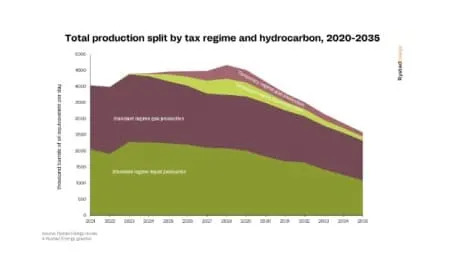
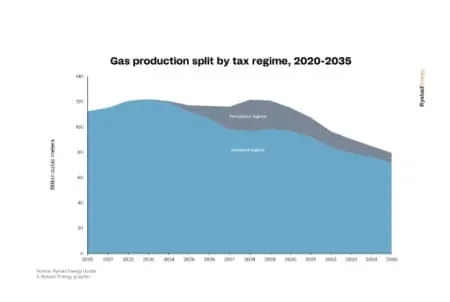
These projects sanctioned under Norway’s temporary tax regime will help maintain high gas production on the NCS towards 2030. While key producing fields such as Troll, Oseberg and Aasta Hansteen will slowly enter the decline phase in the coming years, tax regime projects such as Aker BP’s Yggdrasil Hub (start-up in 2027), Shell’s Phase 3 of Ormen Lange (start-up in 2025) and Equinor’s Irpa (start-up in 2026) will be particularly significant in maintaining a steady high flow of gas from Norway to Europe.

NCS liquids production is also expected to sustain going forward, which is welcome news as Europe seeks to wean itself off Russian oil imports. From the temporary tax regime, Aker BP’s Yggdrasil Hub (start-up in 2027), Equinor’s Breidablikk (start-up in 2025) and Vaar Energi’s Balder Future (start-up in 2024) will be the largest contributors in terms of oil output. Most oil production will, however, stem from major fields sanctioned during the standard tax regime, such as Johan Sverdrup – particularly since the giant offshore field’s second phase came online in December 2022.

Together, these projects have pushed back the production decline on the NCS to 2028. According to Rystad Energy research, the additional supply of gas in 2028 will be about 24.9 billion cubic meters (Bcm), equivalent to around 6.225% of demand in the European Union and the UK combined. This increase from 96 Bcm to 121 Bcm means Norway will go from supplying just under a quarter (24%) to close to one-third (30.25%) of all European gas in five years.

“The outcome of this tax break is three-fold: increased investment on the NCS; increased tax receipts when production starts; and increased supply to Europe at a critical time. Norway will need to consider if this regime is a one-off to attract investment, or if lessons can be learned for the future,” says Mathias Schioldborg, upstream analyst at Rystad Energy.


Temporary tax regime

Norway implemented its temporary tax regime during the Covid-19 pandemic-induced market downturn in 2020 to attract investment and secure future development spending on the NCS. The regime incentivized operators to spend by offering direct expensing and boosting the investment uplift rate on all ongoing investments in 2020 and 2021, as well as on all development projects sanctioned before 2023 up until first oil is realized. Despite a reduction in the uplift rate from 24% in 2020 to 12.4% in 2022, Rystad Energy calculated that the temporary regime still lifts the net present value (NPV) and lowers the breakeven prices of development projects, compared to both the old and new cash flow-based standard regime. With oil prices having recovered substantially from the slump in 2020, NCS operators have been scrambling to get their plans of development and operation (PDO) submitted within the tax window so that their projects can benefit from the favorable financial terms prior to the implementation of the new standard regime at the beginning of 2023.

Aggregated, the 35 projects sanctioned within the regime, 24 were greenlighted last year – making 2022 a clear record-breaker in terms of the number of sanctioned projects on the NCS in a single calendar year. Last year was also a winner in terms of the total value of projects sanctioned in a single year, expected to total nearly $29 billion. Aker BP operates 17 of the 35 projects on the list, including the Yggdrasil Hub (Munin, Hugin and Fulla), the Valhall PWP-Fenris project, the Skarv Satellites project (Alve North, Idun North and Orn), and the Utsira High tieback developments to Ivar Aasen and Edvard Grieg (Symra, Troldhaugen and Solveig Phase 2). All of Aker BP’s projects are in the North Sea, except for Skarv Satellites and Graasel. Equinor follows by operating 11 projects, including Breidablikk, Irpa, Halten East, the electrification of the Njord field, and prolonging the lifetime of the Snohvit gas field in the Barents Sea through its ‘future’ project. Other noteworthy contributions are Shell’s installation of a subsea compression system for Phase 3 of the Ormen Lange gas field, Wintershall Dea’s Dvalin North and ConocoPhillips’ Eldfisk North.

Investment in the NCS set to reach $9.6 billion in 2023

The buildout of the 35 projects will significantly increase short-term spending on the NCS. The peak level of investments resulting from the temporary regime is predicted to reach $9.6 billion this year, mainly boosted by Aker BP beginning its investment scheme for the Yggdrasil and Valhall PWP-Fenris projects. The projects are forecast to cost $12.3 billion and $5.3 billion, respectively. The cost burst at Vaar Energi’s Balder Future project has also squeezed the short-term greenfield investment level on the NCS. Greenfield spending from the 35 projects is projected to increase steadily over the next three years, reaching $9.1 billion in 2024, $7.4 billion in 2025 and $6.3 billion in 2026. However, a sharp decline is anticipated after 2026, when the majority of the projects come online, although Aker BP's Yggdrasil investment scheme will continue through 2027. Greenfield investments from the regime remain on track to be completed by 2029.

Aggregated, the 35 projects are estimated to hold a total of 2.472 billion barrels of oil equivalent (boe) in economically and technically recoverable resources. Of all the projects, Aker BP’s Yggdrasil Hub is a clear winner by holding roughly 571 million boe, split between 266 million boe from Munin, 238 million boe from Hugin and 66 million boe from Fulla. The giant North Sea hub holds around 55% oil, 33% gas and 12% natural gas liquids (NGL). Shell’s development of a subsea compression system at the Ormen Lange gas field follows, as the upgrade will allow for the extraction of about an additional 210 million boe of gas during the field’s lifetime. Equinor’s Breidablikk, Aker BP’s Fenris and ConocoPhillips’ Tommeliten Alpha follow, holding approximately 192 million boe, 140 million boe and 134 million boe, respectively. Measuring by company, Aker BP, Equinor and Vaar take the upper hand by holding 780 million boe, 570 million boe and 265 million boe, respectively, from these projects.

Production from the tax window projects is expected to peak at 921,000 barrels of oil equivalents per day (boepd) in 2028. Production stemming from the regime will not sizably increase before 2025, despite Aker BPs Graasel coming online in 2021, Hod last year, and a few smaller projects slated for launch this and next year. This first lift will be fueled by projects such as Equinor’s Breidablikk, Vaar’s Balder Future, and ConocoPhillips’ Tommeliten Alpha reaching plateau after coming online in 2024, in addition to Shell’s Phase 3 of Ormen Lange and Aker BP’s Tyrving starting up in 2025. A steep ramp-up towards peak is forecast, with production jumping from 300,000 boepd in 2025 to 446,000 boepd in 2026 and 702,000 boepd in 2027, powered sharply by the start-up of Aker BP’s Yggdrasil Hub. We expect production to steadily decline from 921,000 boepd at peak to 818,000 boepd in 2029, 659,000 boepd in 2030, and even out at 254,000 boepd in 2035. At this point, Yggdrasil, Ormen Lange, Irpa, Breidablikk and Valhall PWP-Fenris will produce the most.

By Rystad Energy
A symbiotic relationship between farmers and electrical utilities | Gardener State


Dennis McNamara
Sun, January 29, 2023 

Currently, renewable energy accounts for only 12% of total U.S. energy consumption. Meeting the stated goal of the 2019 Energy Master Plan of “a net-zero emissions economy by 2050” will require much more renewables ― like solar or wind.

According to the USDA “Solar Futures Study,” a lot of land will be needed to meet the net-zero emissions goal. Agriculture in the lower 48 states occupies about 43% of surface area. This amount of land offers the potential of a symbiotic relationship between the farmer and the generation of energy through solar photovoltaics.

However, there is a dual-use opportunity called Agrivoltaics, a system that looks at agriculture and solar energy production as complements to the other instead of competitors. If a farmer has an unused parcel of land the solar array of panels can be low to the ground. For the farmer with no empty parcels of land, there may be the option of dual-use solar, a technology involving adjusting the height of solar panels to as much as 14 feet, as well as adjusting the spacing between them to accommodate equipment, workers, crops and grazing animals.

The spacing and the angle of the panels allows light to reach plants below and have the added benefit of shielding those crops from extreme heat. By allowing working lands to stay working, agrivoltaic systems could help farms diversify income. Other benefits include energy resilience and a reduced carbon footprint.

There is a lot of agrivoltaic research underway to answer the many questions agrivoltaic systems pose like: What are the long-term impacts of solar energy infrastructure on soil quality? What crops in what regions are best suited for photovoltaic systems? How can both crop and energy systems be optimized? How will livestock (and wildlife) interact with solar energy equipment? What types of business agreements will work best between a solar developer and agricultural producer or landowner?

Researchers from University of Maine Cooperative Extension are evaluating the impact of panel installation on blueberry plants.

Researchers at the University of Massachusetts Amherst are studying the effects of co-locating solar energy panels and agriculture operations at up to eight different farms across the state.

At Cornell University the researchers are looking at the benefits of pollinator-friendly plantings on solar farms. One goal is to see if wildflower plantings on solar sites can increase pollinator populations. Another is to see if wildflower plantings on solar farms encourage pollinators to visit crop flowers.

At Rutgers University, thanks to the New Jersey Legislatures’ passing in June 2021 of the “Dual-use Solar Act,” an energy pilot program is underway to study a limited number of farmers with agrivoltaic systems on their property to test, observe and refine the technology. Also, the New Jersey Agricultural Experiment Station received funding in the 2022 State Budget specifically for building Research and Demonstration Agrivoltaic Systems on their Research Farms. These systems will allow for detailed experimentation and engineering that would not be possible in a commercial setting, ensuring that both goals of dual use can be consistently met in NJ through research and demonstration trials.

Agrivoltaic technology advances a clean energy imperative while helping to maintain a working farm. The technology here is in its infancy but has been underway for at least a decade now in many other parts of the world including Europe, Japan, and China.

Here in the U.S. federal regulators as well as academics and developers are working to remedy that disparity. Early studies of crops underneath the panels have shown an increase in yields and reduction in irrigation requirements due to the provided shade.

But ultimately, when it comes to crops becoming a part of consumers food regimen, everything depends on how the crops taste. If flavor or even appearance strays too far from that of traditional produce, the technology will be a hard sell.

Dennis McNamara is an agriculture program associate at the Rutgers Cooperative Extension of Monmouth County.

This article originally appeared on MyCentralJersey.com: A symbiotic relationship between farmers and electrical utilities
Tech giants have cut tens of thousands of jobs. Automakers are ready to hire them.

Nora Naughton,Alexa St. John
Sun, January 29, 2023 

Automakers like Ford and GM have yet to announce anything close to the layoffs that have left thousands of tech workers out of a job this year.
Bill Pugliano/Getty Images

Tech companies are shedding jobs after years of growth.


But car companies are still desperate for new tech talent.


The auto industry could benefit from tech layoffs.


Tens of thousands of tech workers have been laid off in the first month of the year, but the financial woes of tech giants like Google, Amazon, Microsoft and others haven't made their way to the auto industry.

Mainstays like Ford and GM have yet to announce anything close to the sweeping layoffs that have left more than 55,000 tech workers out of a job so far this year.

Certainly, there have been some hits: Ford is planning 3,200 job cuts in Europe. Jeep-maker Stellantis stopping operations at a plant in February will result in 1,350 workers out of a job.

But the auto industry doesn't need to undergo massive cuts — mostly because they already have over the past few years.

"Legacy automakers have spent the last three years figuring out how they're going to go after electrification, autonomous driving — or increasing ADAS rather than full autonomy — and their connected car strategy," Richard Surridge, founder of recruiting firm AVANT Future Mobility, told Insider.

Tech companies, meanwhile, had enjoyed a decade of unmitigated growth thanks to low interest rates and a floor of new investor money. As these companies enter a new phase and a different economy, the tech industry is experiencing its first real belt-tightening.

"All of the tech companies are a bit bloated," Surridge said, noting that the automotive industry has the opposite problem when it comes to staffing. "Legacy auto is underpopulated in order to fully go after the future of mobility — primarily, electrification, batteries, and software."

The auto industry's downsizing phase started years ago

In preparation of the massive EV transition and the introduction of other industry-changing shifts, automakers already used the time before the pandemic, and during it, to make adjustments to their workforce.

Ford, for example, cut 7,000 jobs in 2019. GM, too, slashed tens of thousands of jobs and closed factories that year in the face of an extended union strike. Both companies made these cuts as they prepared to redesign their business for an electric future.

"We've become used to seeing the automotive industry adapting and resizing for many years now," Martin French, managing director at the consultancy Berylls, told Insider. He noted that the entire automotive industry learned a lot of tough lessons from the 2009 bankruptcies of GM and Chrysler, leaving many to make defensive decisions rather than reacting to tough times when they hit.

The auto industry could benefit from tech layoffs


While tech sheds thousands of jobs, automakers are desperate for workers. Some legacy brands may take advantage of recruiting opportunities amid the layoffs, experts and executives have said.

Even within the industry, layoffs at tech-centric auto companies like ArrivalRivian and Britishvolt, or the shuttered Argo AI, could benefit legacy car companies still looking to beef up their tech talent in newly formed electric vehicle divisions.

Companies like Ford and GM would be smart to scoop up this talent, Stephen Beck, founder and managing partner of consultancy cg42, told Insider.

"The need for talent relative to electrification, modern manufacturing, connectivity, et cetera, is very, very high," Beck said. "The war for talent in the automotive industry is still raging and the talent pool is still relatively small."

Amid an onslaught of tech layoffs, here are 12 major tech companies that haven't announced any job cuts in the past 6 months

Samantha Delouya
Sun, January 29, 2023


The list of tech companies laying off workers keeps growing, including recent cuts from Google and Microsoft.


According to layoffs.fyi and Insider's calculations, more than 65K workers have lost jobs so far in 2023.


However, not all tech companies have announced layoffs. Check out some that have avoided mass cuts so far.


The list of companies laying off massive swaths of workers in recent months just keeps getting longer.

In recent weeks, big tech companies have announced they would lay off eye-popping numbers of workers: Google laid off 12,000, Microsoft 10,000, and Amazon 18,000.

According to the tech layoff tracker layoffs.fyi and Insider's own calculations, more than 65,000 tech workers have been cut from their jobs since January 1.

The crush of layoffs in the first few weeks of 2023 followed a brutal year for the tech industry in 2022. Both Meta and Twitter laid off significant portions of their workforces last year.

However, not all tech companies have announced a round of job cuts in the last 6 months. Here are some tech firms that have avoided recent layoff announcements:

Nvidia


Nvidia CEO Jensen Huang

Nvidia makes computer chips for video games, crypto mining, and desktop computers. It has also invested in artificial intelligence.

The company was co-founded by its CEO, Jensen Huang, and it's headquartered in Santa Clara, CA. Nvidia had frozen hiring over the summer as the broader economy slowed but now has more than 1,000 open roles, according to LinkedIn.

Apple

Tim Cook Apple

Many people on social media have celebrated Tim Cook for asking for a 40% pay cut for 2023 while avoiding layoffs at Apple.

While Cook may not have taken the cut to avoid job losses – in a filing, the company said the decision was made to address shareholder concerns about Cook's high pay package – it still won the company some goodwill.

Apple is the only major tech giant to avoid job cuts so far after Google, Microsoft, Meta, and Amazon all announced cuts in the last few months.

Cloudflare


Co-founder and CEO of Cloudflare Matthew Prince.

Cloudflare CEO Matthew Prince recently told Insider that the company is well-prepared for an upcoming recession and that he's actually "kind of excited" about it.

Prince said his cloud and cybersecurity company recognized the signs of a slowing economy and slowed hiring quicker than some larger tech companies like Amazon, Meta, and Microsoft.

"If we hired at that pace, we'd be doing layoffs, too," Prince said.

HubSpot


Yamini Rangan, CEO, HubSpot

HubSpot is one of the few companies in the software space that has avoided a massive layoff announcement in recent months.

One of the company's larger competitors, Salesforce, announced it would lay off 10% of its staff, or about 8,000 employees, earlier this year.

After Twitter laid off 50% of its workers in November, Hubspot's chief people officer posted on LinkedIn, attempting to woo the social media platform's former staffers to join Hubspot.

Block


Jack DorseyGetty

Block has avoided layoffs amid the recent downturn, although Twitter, another tech company started by Jack Dorsey, saw 50% of its staff laid off when Elon Musk took over in November.

Block is a fintech company that owns Square, Cash App, and Tidal. It was co-founded by Dorsey and Jim McKelvey in 2009.

Broadcom

Broadcom CEO Hock E. TanLucas Jackson/Reuters


In May, computer chip maker Broadcom announced it would acquire software company VMWare for $61 billion.

The deal has yet to close, but some employees at both companies fear the tie-up could result in layoffs.

So far, there have been no layoff announcements at Broadcom, though some employees at VMWare have left the company since the deal was announced.

AMD


Lisa Su, CEO of AMDAssociated Press


Chipmaker AMD hit a roadblock when new export restrictions put in place by the Biden administration meant that companies like AMD couldn't sell equipment to China.

However, CEO Lisa Su was optimistic when speaking about the business late last year at Fortune's Most Powerful Women Summit, saying she feels "wonderful" about the industry's future.

"We have lots of things in front of us, and that's what we're always thinking about," Su said. "What does the next five years bring? And that's really helped us grow as much as we have."


Palo Alto Networks


Palo Alto Networks has yet to be hit by the layoff wave that has affected many of its competitors in the cybersecurity and cloud space.

In 2020, when many companies began cutting workers amid pandemic fears, Palo Alto Networks CEO Nikesh Arora announced he would forgo his salary to avoid layoffs.

Crowdstrike


Crowdstrike is another cybersecurity company that has so far avoided layoffs.

"When you think about security, obviously, that's something that companies are going to need. In fact, when we see a downturn in the economy, when you see some of these layoffs, it's an area that's of great exposure to many companies, and it's a time when adversaries continue their relentless attacks," CEO George Kurtz said recently on CNBC.

"From a cyber perspective, the demand is there," he added.

Box


Box CEO Aaron Levie.Reuters

Despite a slowing economy, Box is doing better than ever.

The cloud storage company, which was founded by CEO Aaron Levie in 2005, recently reported $250 million in revenue, which was 12% higher than last year.

"We're really proud of the fact that this is our first billion-dollar revenue run rate quarter, so we can now say that we've crossed that billion revenue threshold, which is super exciting," Levie told TechCrunch in December.

LinkedIn


Kelly Sullivan/Getty Images for LinkedIn

LinkedIn is the social media platform many tech workers turn to post about layoffs and announce they are open for new work. However, the social networking platform has yet to announce job cuts.

This month, the company's COO, Daniel Shapero, said he thinks it's still a great time to work in tech, despite the recent spate of mass firings.

"As much as the tech sector might be facing headwinds … there remains a very big gap between the supply of digital skills and the demand for those skills in markets around the world," Shapero told The National's Business Extra podcast.

MoonPay


MoonPay CEO, Ivan Soto-Wright.MoonPay


MoonPay is one of the few major players in the crypto space that hasn't announced major layoffs in recent months amid the collapsing price of cryptocurrencies and the fallout from FTX's bankruptcy.

MoonPay is a fintech company that provides technology that allows users to buy and sell cryptocurrencies.

The company recently hired Time president Keith Grossman as president of enterprise.


Transition into El Nino could lead to record heat around globe


Andrew Wulfeck
FOXWeather
Fri, January 27, 2023

When the world’s largest and deepest ocean basin warms, satellites will be busy over the Pacific Ocean detecting analogous water temperatures but also, if history repeats itself, landmasses across the globe will have to deal with heat that could be record-breaking.

Since reliable technology started keeping track of world temperatures in the 1950s, the warmest year of any decade were periods dominated by an El Niño event, and the coldest were from La Niñas.

"During El Niño, unusually warm sea surface temperatures in the central/eastern tropical Pacific lead to increased evaporation and cooling of the ocean. At the same time, the increased cloudiness blocks more sunlight from entering the ocean. When water vapor condenses and forms clouds, heat is released into the atmosphere. So, during El Niño, there is less heating of the ocean and more heating of the atmosphere than normal," National Oceanic and Atmospheric Administration experts wrote in a 2022 ENSO blog.

The world’s last El Niño ended nearly four years ago, but it’s the event of 2015-16 that holds records for not only being one of the strongest El Niños on record but also causing the world’s warmest temperatures.

The year 2016 ended with temperatures around 1.8 degrees Fahrenheit above normal, making it the warmest period on record. During the dog days of summer, more than 124 million people were under extreme heat warnings in the U.S. as communities from the Southwest to the Southeast reported record heat.

END OF TRIPLE-DIP LA NINA IN SIGHT: WHAT IT COULD MEAN FOR SPRING SEVERE WEATHER SEASON

The globe is currently still in a La Niña, which is expected to end in the coming months.

The climate pattern has been in control of weather for three years and made history by becoming the first triple-dip La Niña of the 21st century.

Also, during this phase, NOAA reported the world experienced some of its warmest temperatures ever, despite the pattern being known for its cooling effect.

The base mark of near-record heat has some climatologists concerned that once an El Niño is able to shake off the lagging effects of La Niña, temperatures could be off to the races and reach levels never seen before.

"The ongoing La Niña may prevent global average temperature from breaking the record in 2023, but greenhouse gas-induced global warming grows steadily in magnitude. In fact, it most likely helped 2020, a year of La Niña, to tie the all-time high of 2016, a year following a major El Niño," Shang-Ping Xie, a climate dynamicist at Scripps Institution of Oceanography, wrote in an ENSO discussion.

WHAT ARE EL NINO AND LA NINA CLIMATE PATTERNS?

Computer model guidance shows a trend towards the El Niño state, especially in the latter half of 2023 and possibly continuing into 2024.

If history repeats itself, a protracted El Niño episode could result in warm, if not record-breaking, temperatures.

Significant questions remain on exactly when the world reaches the neutral state and begins the trek through El Niño. Some climate models prematurely killed off the current La Niña during its three-year stretch, so the exact timeframe of transition is not set in stone.

The rarity of a stubborn La Niña state and global temperatures that haven’t declined as readily as during past events, has some experts pointing to climate change as playing an increasingly pivotal role in patterns.


Monthly global temperature anomalies since January 1950

NOAA experts admit what is complicating outlooks are climate change’s influences on Pacific wind and water temperature patterns or what is known as the El Niño-Southern Oscillation.

"If temperatures warm faster in the western Pacific than in the eastern Pacific, the background tropical circulation could become more La Niña-like. But if the trend pattern changes as global temperatures continue to rise, meaning the east starts warming faster than the west in the future, the whole circulation across the tropical Pacific could become more El Niño-like," Michelle L’Heureux, a scientist at NOAA’s Climate Prediction Center, posted in a recent blog.