Sunday, February 12, 2023


Michelin Receives Design AiP for First Inflatable Wing Sail
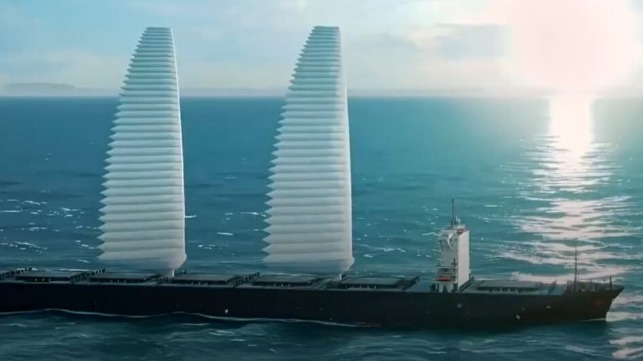
Michelin inflatable wing sail
Michelin is developing an inflatable wing sail for commercial vessels (Michelin)

PUBLISHED FEB 10, 2023 2:26 PM BY THE MARITIME EXECUTIVE


France’s Michelin Group has been awarded an Approval in Principle (AiP) for its design for a wing sail system designed for commercial ships and pleasure crafts. Unlike other sail concepts, the Michelin design is an inflatable wing sail that is automated and full retractable. The design approval comes as Michelin is moving forward with tests of the system on an in-service Ro-Ro operating in Europe.

Introduced in 2021, the system which is known as WISAMO (Wing Sail and Mobility) was developed jointly by Michelin’s research and development department in collaboration with two Swiss investors and involves famed French long-distance sailor, Michel Desjoyeaux, the only person to twice win the Vendée Globe race. They said the design is suitable both for retrofits and new construction and especially suited to ro-ro ships, bulk carriers, and oil and gas tankers. 

The initial tests of a WISAMO sail were carried out on a sailing yacht in late 2021 and early 2022. In the second phase of the testing, they are installing a 100 sq. meter prototype which will help them to refine the technical aspects of the concept. 

The first technical tests demonstrated, Michelin reports, that the wing sail system offers a wide range of use, including “close-hauled” (headwind), providing what they believe is one of the widest operating ranges for modern sail technology. They project that it can be used on all maritime routes and because it is retractable, it provides easy access for navigation in ports and under obstacles such as bridges. The company expects to achieve up to a 20 percent energy saving from the use of the sail and reduce emissions.

“We are very pleased to receive this AIP for the WISAMO solution,” said Gildas Quemeneur, Initiative Leader at Michelin. “It is a very important step forward the further development of this innovative solution to contribute to maritime transport decarbonization. We are now ready for the wing sail usage on MN Pelican Ro-Ro that will allow experimental tests in heavy maritime conditions. All returns of experience will now contribute to build the larger WISAMO wing sail.”

The first installation on a commercial vessel, the 8,600 dwt Compagnie Maritime Nantaise ro-ro cargo vessel Pelican began in late 2022. The 508-foot-long vessel operates under charter to Brittany Ferries and sails between Poole, Great Britain and Bilbao, Spain. This installation will allow testing of the system under commercial maritime navigation conditions.

 

UK Grants Protection to Wreck of 19th Century Emigrant Ship

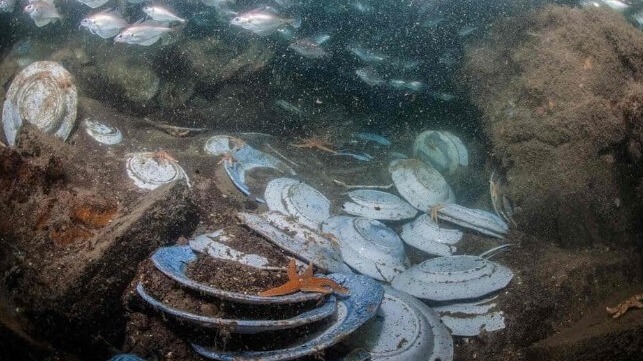
19th century emigrant shipwreck
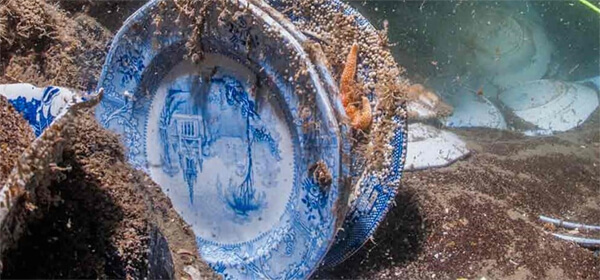
Among the wreck divers found rare examples of Victorian export ceramics (© Stefan Panis courtesy of Historic England)

PUBLISHED FEB 10, 2023 7:03 PM BY THE MARITIME EXECUTIVE


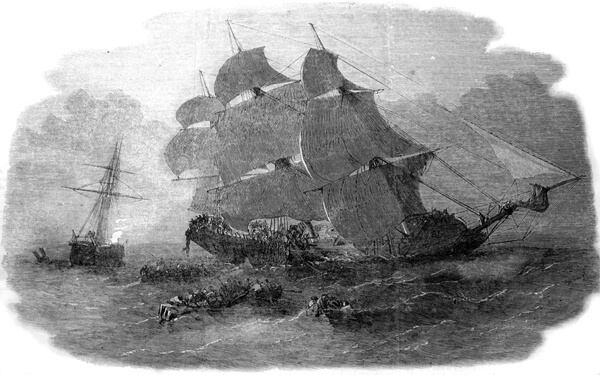
The wreck of a 19th-century wooden sailing ship that represents the emigration and trade between the United Kingdom and New Zealand is set for long-term preservation after being listed for protection, some 167 years after it sank off the Kent coast. Historic England announced that the wreck Josephine Willis, which sank in 1856 killing 70 people including its captain, has been granted protection by scheduling by the Department for Culture, Media and Sport in part because it has a cargo of exceptionally rare ceramics on board.

The British packet boat foundered approximately four miles south of Folkestone Harbour in Kent following a collision with the steamer Mangerton on February 3, 1856. Today the ship lies in two parts on the seabed approximately 75 feet below the surface. The wreck was identified by divers from Folkestone 501 diving club in 2018 and reported to Historic England via Wessex Archaeology.

Historic England explains that medium-sized packet ships were commonly used in the 18th and 19th centuries for transporting people, mail, and freight to Europe, North America, Australia, and New Zealand.

Accounts by the Victoria University of Wellington in New Zealand show that Josephine Willis, a new 1,000-ton vessel, met its tragic fate during its second voyage to Auckland. Its first trip was also eventful, characterized by a mutiny by the crew, before the second trip ended in tragedy colliding with the Mangerton.

Protection of the wreck and its large cargo of ceramics, many of which are unknown in current museum collections, now means that recreational divers can dive to the wreck but its contents cannot be touched or disturbed.


The Josephine Willis featured in Illustrated London News 1856 - courtesy of Historic England


“The sinking of this passenger ship is a sad story of ordinary people being lost to the sea while taking the risk of a long journey to New Zealand in the search for a better life,” said Duncan Wilson, Chief Executive of Historic England. “The other side to this story is of the rare cargo on board which gives us clues to help improve our knowledge of the Victorian export ceramics industry in the mid-19th century. The Josephine Willis fully deserves protection by scheduling.” 

Despite sitting at the bottom of the sea for more than a century and a half, some of the ship’s cargo of ceramics are still in their crates and several unknown patterns have been discovered on cups, plates, and bowls which have no equivalents within museum collections. There are also examples on the seabed of other patterns which were previously only known from ceramics that had been discarded at the kiln after becoming damaged or deformed during the firing process. The ceramics are all close in date and can be traced to three Staffordshire-based potteries namely Mexborough, Charles Meigh, and Davenport.

Although no plans of the ship have been found to date, documentation relating to the role of the vessel as an emigrant packet is known to survive within the National Library of New Zealand.

James Canney, a great, great, great, grandson of Captain Canney who died in the sinking, has been carrying out research into the construction of the ship and the people who chartered it. “I’m pleased the story of the loss of the Josephine Willis is being told and that the shipwreck is being protected,” he said.

According to Graham Scott, a Marine Archaeologist at Wessex Archaeology, most of the ceramics being carried by ship were ordinary, affordable, mass-produced goods that most European settlers in New Zealand could at least aspire to own. However, by being relatively plain they tended to be of little interest to collectors and are often absent from museum collections.


 (© Stefan Panis courtesy of Historic England)


“So, these ceramics are both ordinary and special. Not only do they help shine a light on Victorian industry and trade and the lives of emigrants, but they also help fill important gaps in the collections that those museums preserve and display for us,” he noted.

Historic England said that only one other record for a ship of this type is held on the National Record of the Historic Environment, the 1877 wreck of the iron-hulled sailing vessel Avalanche, which is located outside territorial waters off the coast of Dorset.

The wreck of the Josephine Willis together with the scheduled wreck of the clipper ship South Australian, located in the Bristol Channel off Lundy, hold the potential to add to the knowledge of emigration to Australia and New Zealand during the second half of the 19th century.


Photos: Wreck of X-Press Pearl Lifted from Ocean Floor off Sri Lanka

removal of X-Press Pearl
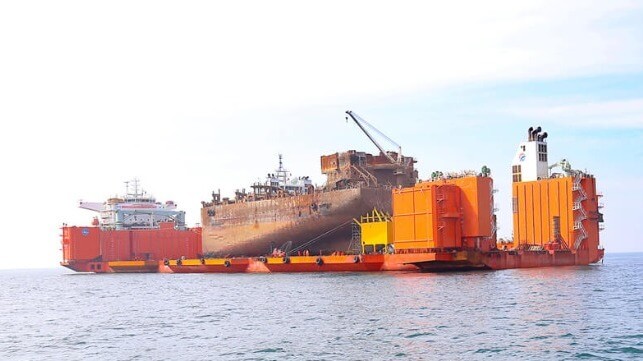
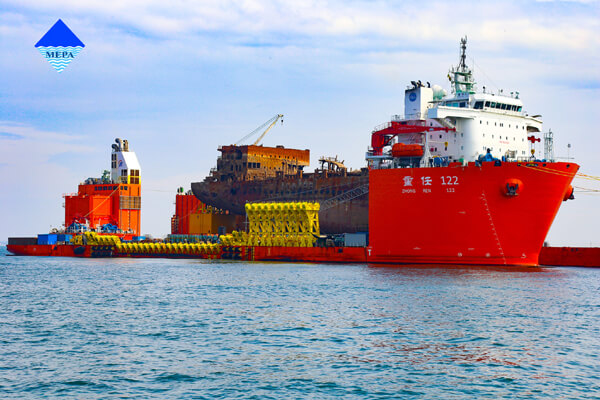
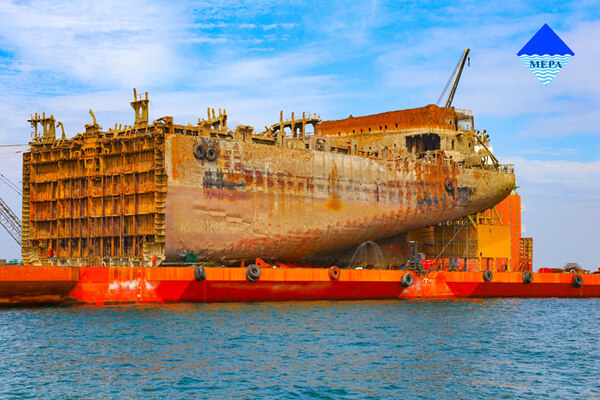
Stern section of the X-Press Pearl was lifted in mid-January for transport to a recycling operation (MEPA)

PUBLISHED FEB 9, 2023 3:58 PM BY THE MARITIME EXECUTIVE


Officials from Sri Lanka’s Marine Environment Protection Agency (MEPA) are reporting that they expected the remaining components of the containership X-Press Pearl which burnt and sunk off Colombo to be removed by this week. The second phase of the salvage operation was due to conclude with the removal of the wreck and a final clearing of remaining debris from the ocean floor.

The 37,000 dwt containership was anchored off Colombo in May 2021 when crews were unable to stop the spread of a container fire believed to have been caused by leaking or improperly packed chemicals. The fire burnt for days and the vessel sunk in an attempt to move it out to sea away from the anchorage causing one of the worst environmental disasters in history. Plastic nurdles washed ashore and chemicals were released into the ocean.

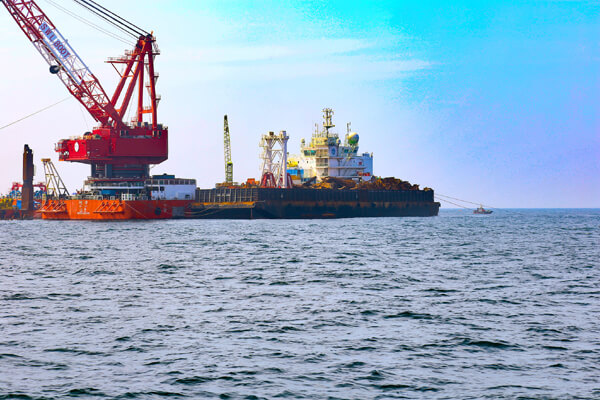
The China-based Shanghai Salvage company was hired to undertake the second phase of the salvage operation which began in November 2022. During this phase, the crews successfully cut the 610-foot hulk into two sections while also clearing equipment and debris from the deck. A previous operation headed by the American Resolve Marine had cleared loose debris, containers, and equipment that had fallen to the ocean floor. 


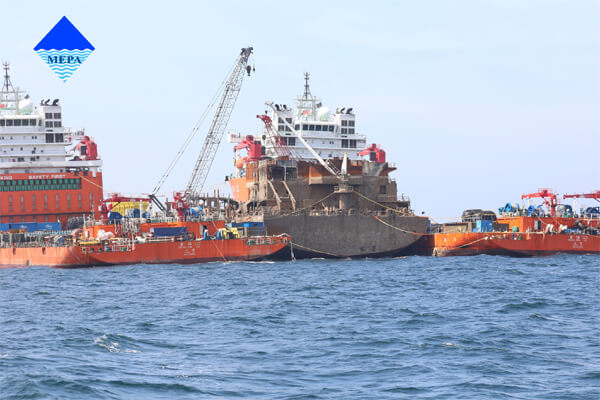
The lifting operation was carried out in two phases with the aft section of the vessel with accommodation block lifted onto the Chinese Fan Zhou 10. That lift took place in mid-January and the aft section has now been transported to Singapore. It will be dismantled and recycled. The second lift of the forward section of the vessel was scheduled to take place last week. 

As part of the removal effort, the salvage companies were tasked with surveying and clearing a more than half-mile radius around the wreck site. While the wreck has now been cleared from the site, the environmental damage is expected to last for years. 

"The MEPA prepared the first interim environmental damage report in 2021. The second interim report was prepared this January and handed over to the Justice Minister,” said Mrs. Dharshani Lahandapura, Chairman of the Marine Environment Protection Authority. She said the second report set the preliminary damage estimate at $6.5 billion. A final report will not be completed until all the removal operations were finished and a further study was conducted on the condition of the water and ocean floor in the area around the wreck site.


(Photos courtesy of the Marine Environment Protection Agency)


Photos: 150-Year-Old Shipwreck Discovered in Lake Superior

Wreck of wooden ship underwater
???????All images courtesy Great Lakes Shipwreck Historical Society
PUBLISHED FEB 8, 2023 4:13 PM BY THE MARITIME EXECUTIVE


The Great Lakes Shipwreck Historical Society has discovered the remains of one of the oldest vessels to sink in Lake Superior, the sailing barquetine Nucleus
The wreck was found in 600 feet of water about 40 miles off Vermilion Point, Wisconsin, on the lake's hazardous "shipwreck coast." The area is known to contain about 200 wrecks from different eras of Great Lakes shipping history.

Nucleus went down in a storm on September 14, 1869, but the vessel already had an ill-starred reputation before her loss. The barquetine had sunk twice previously and been refloated, and it had collided with and sunk a sidewheeler in Lake Huron in 1854. 

On her final voyage in Lake Superior, Nucleus began to take on water. The master decided to abandon ship into the barquetine's lifeboat, and the crew all safely got away before the Nucleus went down. They were picked up by the schooner Worthington a few hours later (though another vessel simply passed them by first). 

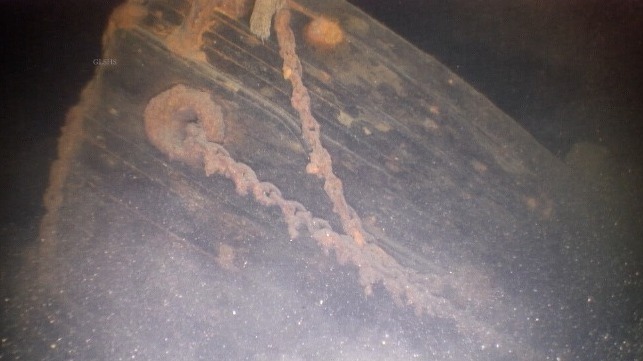
The find is the latest in a series that the society has revealed from the results of a sonar survey program conducted in the summer of 2021. The wreck's identity was confirmed in 2022 using an ROV. The inspection revealed that a good part of its structure had survived the sinking, including the bow. 

"This is a pretty significant shipwreck . . . considering its age, the fact that it is a barquentine and we can’t overlook the vessel’s checkered past. The wreck site is littered with shovels too . . . and a few dinner plates, which speaks to their work and shipboard life," said Bruce Lynn, the society's executive director. 

All images courtesy Great Lakes Shipwreck Historical Society
 

IMB Calls for Vigilance While Highlighting Drop in Piracy in 2022

drop in global piracy
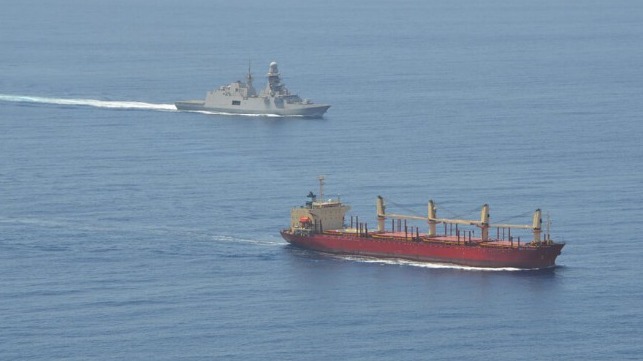
IMB calls for vigilance citing the success due to efforts by navies and others to reduce piracy (EU-NAVFORCE file photo)

PUBLISHED JAN 12, 2023 6:51 PM BY THE MARITIME EXECUTIVE


The ICC International Maritime Bureau (IMB) is once again highlighting the continuing decline in global piracy incidents against vessels while also calling for sustained efforts to maintain the progress seen in 2022. They are reporting that overall, the volume of incidents declined as well as a reduction of severity with fewer armed incidents, kidnappings, or hijackings. They are however highlighting that five areas, and in particular the waters around Singapore, are accounting for two-thirds of all the incidents reported last year.

“The IMB calls for efforts to be sustained worldwide as maritime piracy and armed robbery attacks reached their lowest recorded level in almost three decades,” the group said in announcing the summary of 2022 incidents. 

Michael Howlett, IMB Director said, “The IMB applauds the prompt and decisive actions of the international navies and regional authorities in the Gulf of Guinea which have positively contributed to the drop in reported incidents and ensuring continued safety to crews and trade.” He pointed out that it illustrates both the success as well as the need to maintain security efforts in the region and elsewhere.

Worldwide, the IMB said that it received reports for just 115 incidents in 2022, including piracy and armed robbery against ships. That compared with a total of 132 incidents in 2021 and further illustrating the progress their data shows that the level of incidents was near 200 per year in both 2020 and 2018.

While the rate of incidents has fallen, they, however, noted that 95 percent of the vessels attacked in 2022 had been boarded. They said there were 107 vessels boarded during the year with five additional attempts. Only two vessels were reported hijacked and only one was fired upon. The incidents were nearly evenly split between vessels either underway or at anchor while vessels at berth were far less likely to be attacked.

Geographically, however, the IMB points out that the waters of Southeast Asia and in particular the Singapore Straits are both the most dangerous and the area where the number of incidents was still on the rise. In five years, the number of reported incidents in the Singapore Straits skyrocketed from just three in 2018 to 38 in 2022. All of the vessels had been underway in the Straits last year when they were boarded.

Incidents in the Singapore Straits are considered to be opportunistic, low-level crimes. The IMB however highlights that they are armed robberies with two crews threatened and four others were taken hostage for the duration of the incident. In only three of the incidents, however, was a gun reported, and often the boarders leave when they are discovered.

While they consider the Singapore Straits the most dangerous with 38 incidents, they point out that there were also 10 reports in Indonesia and 12 in Peru. Adding in Bangladesh and Ghana, these five locations accounted for 64 percent of the total incidents in 2022.

The organization highlights the progress in the Gulf of Guinea where the incidents fell from 82 in 2018 and 84 in 2020 to 19 in 2022. Using the region to highlight its message of the need for sustained efforts to combat these crimes, the IMB pointed out that there were two incidents in the fourth quarter of 2022 in the Gulf of Guinea. In one instance, a Ro-Ro was commandeered with the crew taken hostage until they could reach the citadel and the authorities in Sierra Leone recaptured the vessel. They also highlighted reports of shots fired at a Suezmax tanker near Equatorial Guinea.


Historic Cruise Ship Astoria Faces Uncertain Future in 75-Year Career

historic cruise ship to be recycled
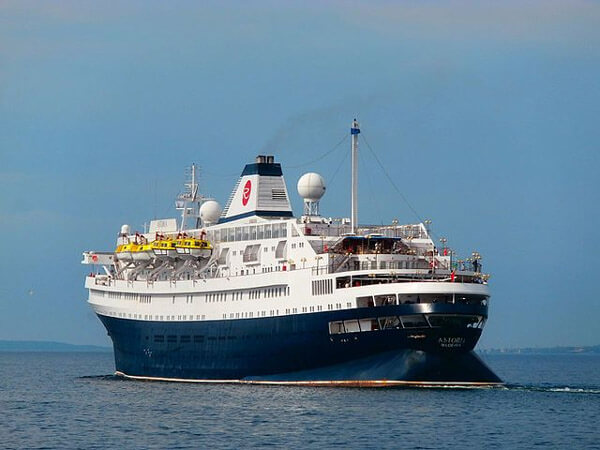
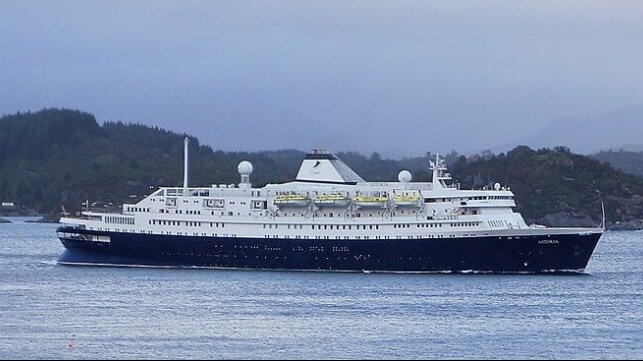
Astoria sailing for CMV in 2018 (Cavernia photo - CC BY-SA 4.0)

PUBLISHED JAN 31, 2023 5:43 PM BY THE MARITIME EXECUTIVE


One of the last historic ocean liners and oldest ocean-going cruise ship, the 1948-built Astoria, is reportedly being sold although her owners are denying it is a sale for scrap. The pending sale marks yet another twist in the career of a ship made famous by a casualty. 

The ship, which is marking 75 years since her maiden voyage, has not operated since the pandemic shut down the cruise industry nearly three years ago. Brokers, cited in a report by Tradewinds, are saying that the vessel which is currently laid up in Rotterdam is being sold for recycling and will soon be towed out to the breakers yard. For months, there has been a rumor that she would become the first ship broken at a new operation planned at the Inchgreen Dry Dock in Scotland. A company leased the facility from Peel Ports to start a ship recycling operation. The owners of the Astoria however are denying the sale saying they are negotiating a deal with a buyer that indicates they plan to operate the ship.

The Astoria began her long career as the first post-World War II newly built Atlantic passenger liner. In the closing days of the war, Swedish American Line had begun to plan for the resumption of its passenger operations. The company’s fleet consisted of a 1904-vintage liner that they had anticipated retiring in 1940 and a 1924 liner that was operating as a mercy ship by neutral Sweden during the war. The company had ordered a beautiful Italian-built liner but was unable to take delivery due to the start of the war and the ship was sunk in 1945 while their other 1928-built liner had been taken over by the Americans and suffered significant fire damage at the end of the war.


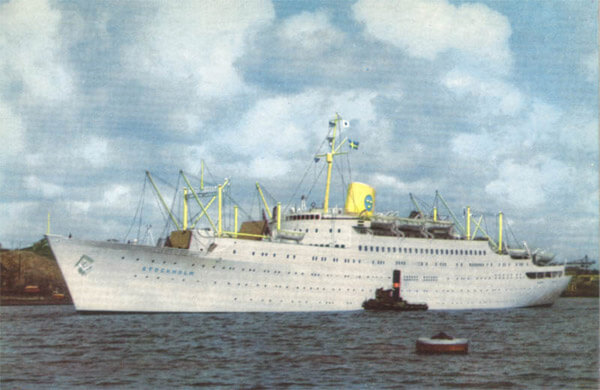
1950s vintage post card view of the Stockholm


Limited by post-war shortages of materials and the capabilities of Scandinavian shipyards, Swedish American ordered a 525-foot liner that at 11,700 gross tons would be a workhorse carrying cargo and mostly tourist class passengers. She was designed for year-round Atlantic service and sailing to Scandinavia she was given an ice-reinforced hull and bow which would forever seal her legacy.

Introduced in February 1948 as Stockholm, she had a modern Scandinavian design and became the first new post-war Atlantic liner. With high demand for passenger travel, she was rebuilt in 1952 expanding her accommodations but she had a mostly unremarkable career. Swedish American added a new modern liner in 1953 meaning Stockholm could also occasionally sail cruises.

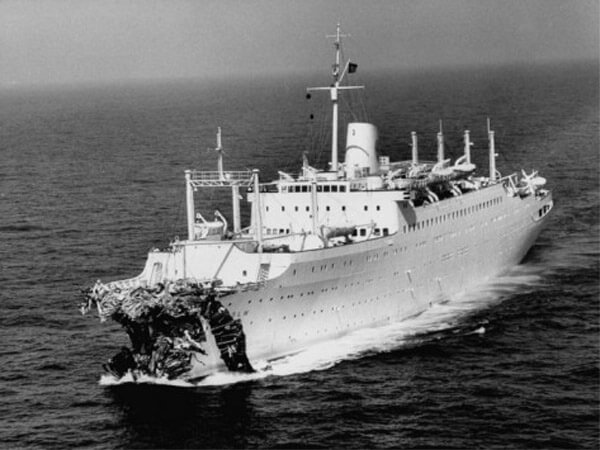
Her legacy came however on a fateful night July 25, 1956. Outbound from New York to Scandinavia she was near the Nantucket Lightship. Radar was in its infancy in the commercial industry and the officers misread their devices causing the Italian liner Andrea Doria to emerge out of a fogbank making a turn across the course for the Stockholm. Her ice-strengthened bow tore through the Andrea Doria causing a fatal wound. A massive sea rescue saved most of the passengers aboard the Italian ship, which sank the in the morning, while the badly damaged Stockholm limped back to New York for repairs. A total of 51 passengers and crew on the two liners were killed in the tragedy.


Stockholm returned to New York badly damaged after her collision with the Italian liner Andrea Doria (USCG photo)


Swedish American retired the liner four years later selling her to an East German group that used her as the Volkerfreundschaft for cruises to trade unionists and Community Party members. In later years she became a holiday ship in a company that was a forerunning to the modern Aida Cruises. 

Her career would likely have ended there except for the surge in the cruise industry. Retired by the Germans in 1985 she ended up in Italy where in a project reportedly heavily subsidized by the government she was rebuilt into a modern cruise ship. She was stripped to the steel and given a new diesel power plant as well as sponsons along the hull.

Mostly unrecognizable, she returned to service in 1994 as a cruise ship operating under various names including Italia Prima, Valtur Prima, and Caribe. Just when it appeared her career was over, she was acquired by a Portuguese company, Classic International Cruises (CIC) who further refitted her as the Athena. In 2013, she went to the successor Portuguese company Portuscale Cruises renamed Azores, and three years later was chartered to the UK’s Cruise & Maritime Voyages (CMV) who changed her name to Astoria. She was continuing to cruise but CMV planned to retire her by 2020 when the pandemic brought her career to a close.

CMV financially collapsed in 2020 but unlike their other cruise ships, because she was under charter, she was not auctioned. She was sold by the bank that had owned her after the financial collapse of Portuscale in 2016. An investment group acquired the Astoria but later abandon plans to rebuild her due to advanced age. She had been listed for sale since 2021.

Note: This story was revised to reflect the owner's denial that the vessel was sold for scrap.

Near the end of her career, although heavily rebuilt, the sheer of the liner hull is still visible (Pjotr Mahhonin photo -  CC BY-SA 4.0)


Top photo: (Cavernia photo of Astoria in Korsfjorden in 2018 - CC BY-SA 4.0)


Fourth Dogger Bank Wind Farm Section Could Power Hydrogen Production

Dogger Bank Wind Farm UK
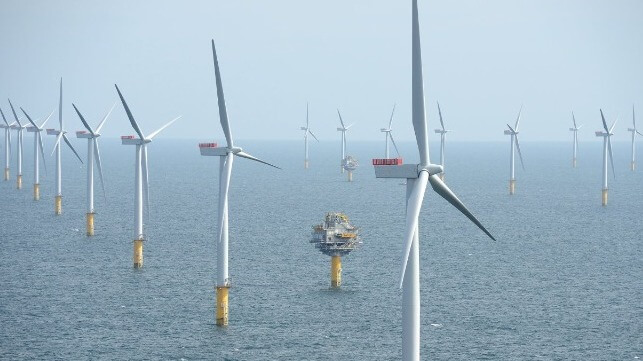
Rendering of the Dogger Bank wind farm which when completed will become the largest offshore wind farm (Equinor)

PUBLISHED FEB 6, 2023 3:55 PM BY THE MARITIME EXECUTIVE


With construction nearing completion on the first of three phases for the Dogger Bank offshore wind farm, partners Equinor and SSE Renewables report they are being to explore a fourth phase that might be used to power the production of hydrogen. SSE is leading the construction of the wind farm which is called the world’s largest and Equinor is scheduled to begin operations at Phase A in the summer of 2023.

The Dogger Bank Offshore Development Zone is located between approximately 75 and 180 miles
off the east coast of Yorkshire, extending over approximately 3,300 square miles and water depths range from 59 to 200 feet. The first of 95 turbine foundation monopiles Dogger Bank A was installed in July 2022, with the project due to start generating power in 2023 followed by the B phase in 2024. The project has been permitted for the first three phases each of which would produce approximately 1.2 GW of power.

Early scoping work is now underway to explore options for developing a fourth phase, Dogger Bank D. According to the partners, Dogger Bank D would be located in the eastern zone of the Dogger Bank C lease area, more than doubling the utilization of existing acreage. It would have the potential to provide an additional 1.32 GW of fixed-bottom offshore wind capacity but would require a new development consent order to progress into construction. The proposed development is located around 130 miles off the northeast coast of England and covers an area of 96 square miles.

The developers said they are exploring two options for the site. One would connect to the grid to provide power to homes while the other option being considered is the use of electricity produced by offshore wind to generate green hydrogen at a dedicated electrolysis facility in the Humber region. The facility, if developed, could become the UK’s largest green hydrogen project.

“Optimizing the Dogger Bank C lease area with an additional phase, Dogger Bank D, is in line with Equinor’s strategy to further develop offshore wind projects in clusters such as the North Sea,” said Halfdan Brustad, vice president of Dogger Bank at Equinor. “Both the grid offtake and green hydrogen production options from Dogger Bank D would contribute to the UK’s net zero ambitions.”

Equinor and SSE Thermal are currently collaborating to accelerate the decarbonization of the Humber, the UK’s largest and most carbon-intensive industrial region, through low-carbon projects such as Keadby 3 Carbon Capture Power Station, Keadby Hydrogen Power Station and Aldbrough Hydrogen Storage. As part of the Zero Carbon Humber initiative, hydrogen transmission, and storage infrastructure are planned in the Humber linked to the East Coast Cluster CO2 transmission and storage system. The green hydrogen option at Dogger Bank D the companies said could benefit from leveraging the low-carbon hydrogen value chain being advanced, including the hydrogen pipeline infrastructure and network of potential customers.

The developers will release an initial scoping report in late March outlining ongoing work to explore the technical feasibility of developing the fourth section of Dogger Bank. 


Strong Response to NY Wind Solicitation Supports Industry Expansion

NY state wind manufacturing growth
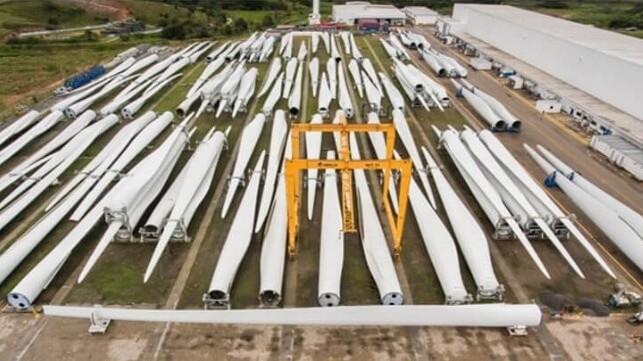
GE proposed expanding its wind blade and nacelles manufacturing in New York to support the latest solicitation (LM Wind)

PUBLISHED FEB 3, 2023 7:56 PM BY THE MARITIME EXECUTIVE


With demand continuing to grow for offshore wind projects, GE announced that it has submitted a plan to construct two new manufacturing facilities in New York to meet demand as part of New York state’s ongoing solicitation for up to 4.6 GW of offshore wind. GE is one of many suppliers looking to participate as the New York State Energy Research and Development Authority (NYSERDA) reported a record response to its latest solicitation.

NYSERDA closed the state’s third round last week reporting it had received more than 100 total proposals for eight new projects from six offshore wind developers. Among the companies that responded were industry leaders including Ørsted, Eversource, Equinor, BP, RWE, National Grid, and others either independently or in joint venture proposals. State officers were quick to say that “the high volume of quality proposals from leading global energy developers is a testament to New York’s ability to attract strong competition and significant investments in our clean energy economy, ports, and the development of a long-term domestic supply chain.”

While the results of the solicitation will not be announced till spring, suppliers are already posturing to benefit from the new projects. GE proposed building additional factories with Carver Companies at their Port of Coeymans site on the Hudson River south of Albany, New York. 

The two business units they are proposing to expand are LM Wind Power, a GE subsidiary, which is ready to build a state-of-the-art facility to manufacture offshore wind turbine blades, and GE Vernova, GE’s portfolio of energy businesses, which proposed building a facility to build nacelles. GE’s proposals, which are contingent on it receiving “a sufficient order volume,” includes specific commitments to hire and train new employees as part of the effort to expand the industry and state-wide economic development.

“As a leading manufacturer and innovator in developing renewable energy technology, GE is ideally positioned to help New York secure its vision of becoming a leading manufacturing hub for offshore wind technology,” said Scott Strazik, CEO of GE Vernova, GE’s portfolio of energy businesses. He noted the facilities would produce components for the Haliade-X offshore wind turbine.  

NYSERDA called the response to the solicitation the strong yet seen for any proposal along the U.S. East Coast. As the projects move forward they are expected to spur investments ranging from manufacturers such as GE to ports and other service providers. The build-out of the sector is also providing increased opportunities for U.S. shipbuilders to meet the demand for crafts to support both the installation and later the maintenance and operation of the wind farms.

Canada Approves North America’s First Green Hydrogen Production Plant

Canada hydrogen production exports
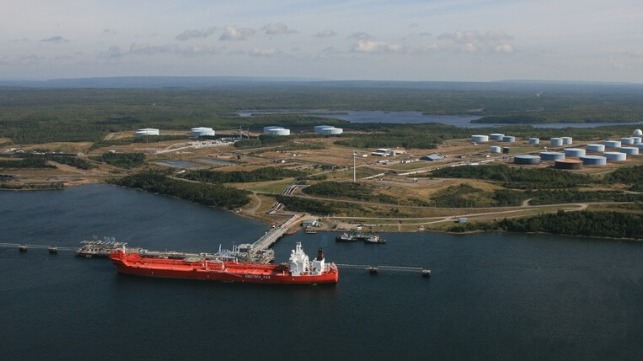
EverWind acquired the terminal at Point Tupper, Nova Scotia and now received environmental approval for what could become North America's first industrial-scale green hydrogen production facility (EverWind)

PUBLISHED FEB 9, 2023 7:58 PM BY THE MARITIME EXECUTIVE


Canadian start-up EverWind Fuels reports it has received what it believes is the first environmental approval for an independent project for the large-scale production of green hydrogen and green ammonia in North America. With the approval issued by the Government of Nova Scotia, EverWind expects to commence construction in the first of 2023 for phase one of its operation projecting that it will begin producing and exporting 200,000 tons annually in 2025.

The EverWind project is part of the massive deal between Canada and Germany signed last year that calls for the development of an export operation for the alternative fuels. EverWind has offtake agreements with the German energy firms E.ON and Uniper that will acquire the production and ship it in the form of liquid ammonia aboard tankers to Germany. 

The plan calls for an investment of $6 billion for the develop of the facility at Canada’s existing port at Point Tupper, Nova Scotia. EverWind won the rights to the Crown land in a December 2022 tender and is currently applying for leases on 137,000 acres of land. They plan to develop a 2GW onshore wind farm at the time which would be used to supply the power to run the electrolyzes to produce the hydrogen. The product would be fueled by the wind turbines as well as the use of solar power ensuring that it would be certified as a green production facility.

According to the company, the Point Tupper terminal with its existing, operational marine terminal is the deepest ice-free berth on the East Coast of North America. Point Tupper is located on the Strait of Canso, in western Cape Breton Island. EverWind agreed to buy the location, which includes a 7.8 million-barrel storage terminal for $60 million from a Texas-based company NuStar Energy.

EverWind says the site has capacity to produce more than 10 million tons per year of green ammonia. With approximately C$1 billion of existing storage and logistics assets, they believe Point Tupper is an ideal hydrogen hub. They also highlight that it has existing connections via critical infrastructure including rail, road, and pipelines, in addition to its port facility.

Currently, according to the International Energy Agency, green hydrogen accounts for less than one percent of global hydrogen production. Most of the world’s green hydrogen production is happening in China but efforts are expanding around the world as part of the effort to speed the adoption of alternative fuels. 

EverWind plans to rapidly scale up production to reach 1 million tons by 2026,while in Germany efforts are also underway to develop the import terminals that will be required. Uniper and its partners have said the LNG terminal built at Wilhelmshaven would serve as the basis for developing a broader alternative energy import hub. Germany would receive the ammonia which could be converted into hydrogen or used to fuel future generations of transportation and industrial production as well as to make fertilizer.

Greenpeace Joins Suit to Block New FSRU at Italian Seaport

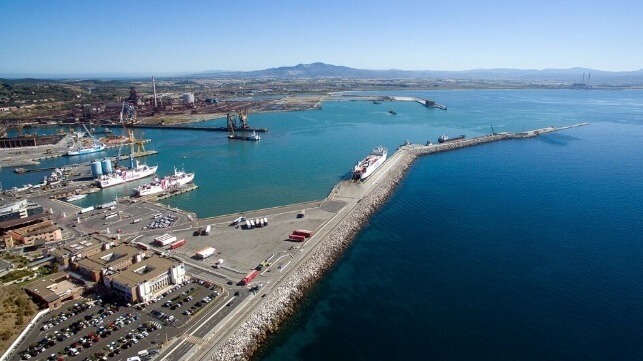
Port of Piombino
Piombino (Autorità di Sistema Portuale del Mar Tirreno Settentrionale)

PUBLISHED FEB 6, 2023 2:32 PM BY THE MARITIME EXECUTIVE


Greenpeace and the World Wildlife Federation have joined the city of Piombino in a suit to block the installation of an FSRU at the city's seaport. The project has already been approved by the regional government, but opponents contend that it could potentially be harmful to the marine environment and to local aquaculture interests. 

State-owned gas company Snam wants to bring in an FSRU to the western Italian port of Piombino as early as April, and it is moving ahead with preparations. The project has urgency for the Italian government because of the need to reduce reliance on Russian natural gas. According to Reuteres, Italy is looking to source over eight billion cubic meters of LNG from other suppliers, primarily in Africa, Qatar and the U.S., before the next winter. Italy's existing terminals do not have that much extra capacity, but the Piombino project alone could handle five billion cubic meters. 

Piombino's mayor, Francesco Ferrari, opposes the FSRU project and filed a court challenge to block it last year. The suit sought an injunction to halt work pending further study, citing safety and environmental concerns. 

"We are aware of the energy emergency and that new gas supply measures are in the national interest, but this cannot disregard safety guarantees for the community in Piombino," said Ferrari at the time. 

WWF and Greenpeace have joined the suit as supporting parties, calling for a more thorough review of the project's impact. 

"There was a lack of risk assessment for the environment (starting from the [environmental impact assessment]) and for people, above all of an entire phase of the life of the work . . . which is certainly worrying. Very little attention was also paid to the study of emissions and pollutants," said President of WWF Italy Luciano Di Tizio and President of Greenpeace Italy Ivan Novelli in a joint statement. 

Separately, Italian trade union USB has filed a criminal complaint with the Livorno prosecutor's office, accusing Snam of "environmental crimes" in connection with the FSRU project. The union has objected to purchasing American natural gas (LNG) at a price "four times that of Russia," and it has expressed displeasure at development projects in Piombino which it considers objectionable, like the FSRU and a new landfill at Ischia di Crociano.