It’s possible that I shall make an ass of myself. But in that case one can always get out of it with a little dialectic. I have, of course, so worded my proposition as to be right either way (K.Marx, Letter to F.Engels on the Indian Mutiny)
Thursday, April 27, 2023
Port Sudan Becomes Evacuation Hub for Foreigners Fleeing Conflict
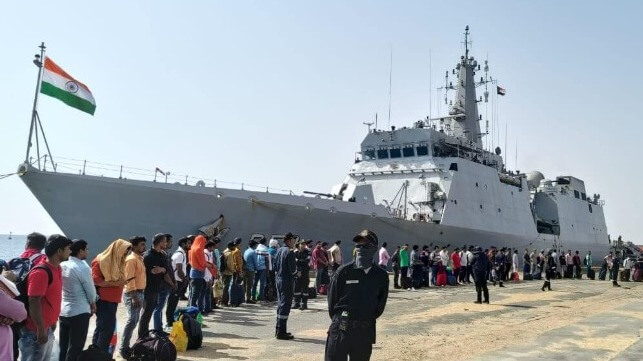
Indian nationals line up to board INS Sumedra (Indian External Affairs Ministry)
Evacuation operations are ramping up at Port Sudan as foreign nationals flee a violent conflict between two warring factions of the Sudanese military. Taking advantage of a fragile ceasefire, convoys organized by governments and aid groups are ferrying foreigners to the city of Port Sudan, where outbound ships and cargo plane flights are under way.
On April 15, fighting broke out between the governing Sudan Armed Forces (SAF) and an allied paramilitary group, the Rapid Support Forces (RSF). The SAF and RSF joined forces to overthrow the civilian government in a coup in 2021, but their alliance has disintegrated in recent months over the details of a power-sharing agreement. As the date for finalizing the deal approached, tensions escalated into combat, and at least 400 people have been killed to date. U.S. and Saudi diplomats have negotiated a brief three-day ceasefire to enable evacuation, though fighting has continued in Khartoum.
Unlike the chaos in the capital, Port Sudan is reportedly under the full control of the Sudan Armed Forces. The port itself is operating normally, with all services and businesses open, according to a local correspondent for West P&I Club. As a natural transport hub and a place of relative safety, it has become a mustering point for state-sponsored evacuation from the country.
The Indian Navy has deployed two warships, INS Sumedra and INS Teg, to ferry its citizens across the Red Sea from Port Sudan to Jeddah. The first voyage got under way with 278 Indian nationals aboard the Sumedra on Tuesday. From Jeddah, the evacuees will be transferred onwards for repatriation.
The UK government has diverted the frigate HMS Lancaster to Port Sudan, and she is expected to arrive to help with the evacuation mission on Wednesday. An additional "humanitarian platform" ship will arrive shortly after, according to UK Defence Secretary Ben Wallace.
The commercial ferries Amanah and Aziz Express have also been providing service between Port Sudan, Suakin and Jeddah, according to AIS tracking data provided by Pole Star. Amanah called at Port Sudan as recently as Tuesday morning.
The U.S. government does not currently plan to stage an evacuation operation for American citizens because of the risky security situation in Khartoum, the U.S. State Department said Tuesday. However, for Americans who are able to leave Port Sudan via ferry, U.S. officials are on hand to receive them on arrival in Jeddah. An estimated 16,000 U.S. citizens remain in Sudan, including many dual U.S./Sudanese nationals; U.S. officials believe that a relatively small number seek to leave the country.
The U.S. military has assets in place at Camp Lemmonier, Djibouti and off the Sudanese coast in case further assistance is needed. The U.S. Navy has deployed the destroyer USS Truxtun, and the expeditionary sea base USS Lewis B. Puller is under way to join her. The Puller has a large flat deck for helicopter operations, as well as a large working deck for small boat launch and recovery.
Singapore, Los Angeles, and Long Beach Agree to Green Corridor
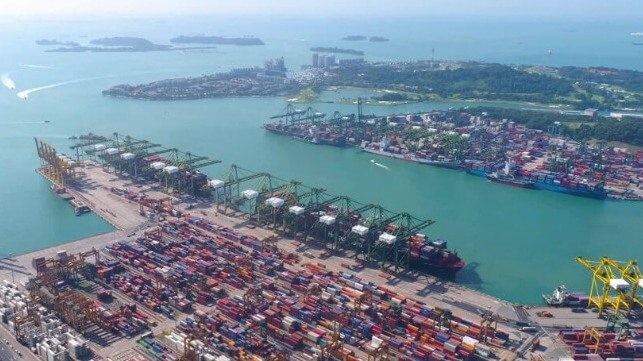
Singapore is partnering the the San Pedro California ports for the next green corridor (Singapore file photo)
The ports of Singapore, Los Angeles, and Long Beach became the latest to join the growing list of port authorities committing to the formation of green corridors in the support of the UN initiative and the efforts to achieve global decarbonization. The latest trilateral agreement was announced as Singapore, which views itself as a global maritime hub and at the forefront of maritime initiatives, kicked off its Singapore Maritime Week, an annual gathering of the international maritime community.
At last year’s event, Singapore Minister of Transport S. Iswaran announced that Singapore would join the Clydebank Declaration for Green Shipping Corridors launched at the UN’s COP 26 conference in 2021. This was followed by an agreement in August 2022 to launch the world’s longest green corridor between Singapore and Rotterdam.
The ports of Singapore, Long Beach, and Los Angeles, supported by C40 Cities, a global intercity partnership, began discussions to establish a green and digital shipping corridor in November 2022. Today in Singapore at the start of Maritime Week, the Maritime and Port Authority of Singapore (MPA), Port of Los Angeles, and Port of Long Beach, with C40 Cities, signed a memorandum of understanding to establish a green and digital shipping corridor between Singapore and the San Pedro Bay ports complex to support the decarbonization of the maritime industry and improve efficiencies through digitalization.
“No single port or organization can tackle the challenge of decarbonizing the supply chain alone, no matter how innovative their technology or robust their efforts,” said the Port of Los Angeles’ Executive Director Gene Seroka. “The establishment of this green shipping corridor between the San Pedro Bay Port Complex and Singapore will prove to be a living, breathing testament to the power of global collaboration.”
Under the terms of the agreement, the three ports committed to facilitating the supply and adoption of low- and zero-emission fuels and exploring the necessary infrastructure and regulations for bunkering. In addition to identifying and collaborating on pilot and demonstration projects, the memorandum aims to identify digital shipping solutions and develop standards and best practices for green ports and the bunkering of alternative marine fuels, including sharing experiences at international platforms such as IMO.
“The signing of this MOU signals our collective will to pool our resources, technical insights, industry, and research networks to deliver scalable green as well as digital corridor solutions to help the maritime industry attain the 2050 emission reduction targets expected of the International Maritime Organization and help spur the development of green growth opportunities,” said Teo Eng Dih, Chief Executive of MPA.
Los Angeles was among the first global port to announce their participation in the green corridor initiative. Months after the adoption of the plan at the climate conference, Los Angeles and Shanghai announced the first green corridor agreement. Other ports have joined in the initiative as well as regional efforts such as ports in the North Sea and Baltic region and the Pacific Northwest and Alaska. The agreements are seen as a tool to accelerate the decarbonization of the maritime industry and support the critical development of supply, infrastructure, and bunkering required for the transition. Planning is proceeding but no timing has yet been announced for the start of the first green corridor.
Norway Identifies Up To 20 New Areas for Offshore Wind Development
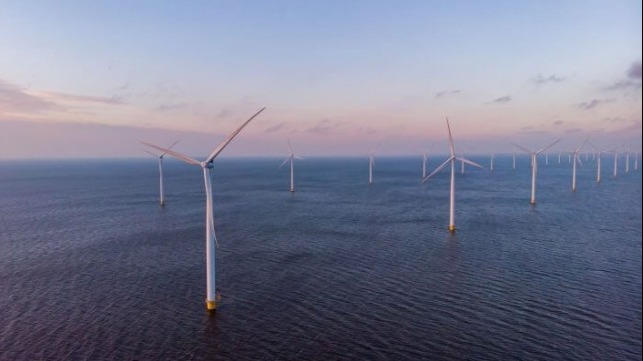
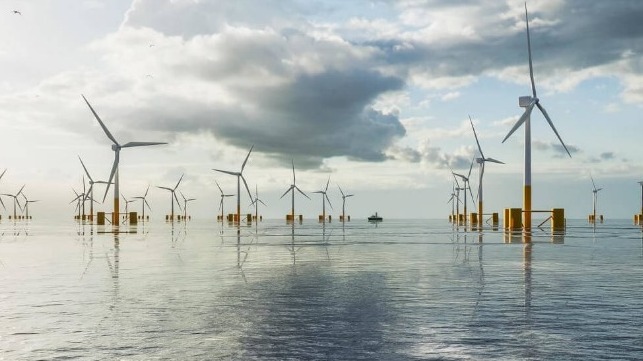
Norway identified offshore areas that could be used to double renewable energy production (file photo)
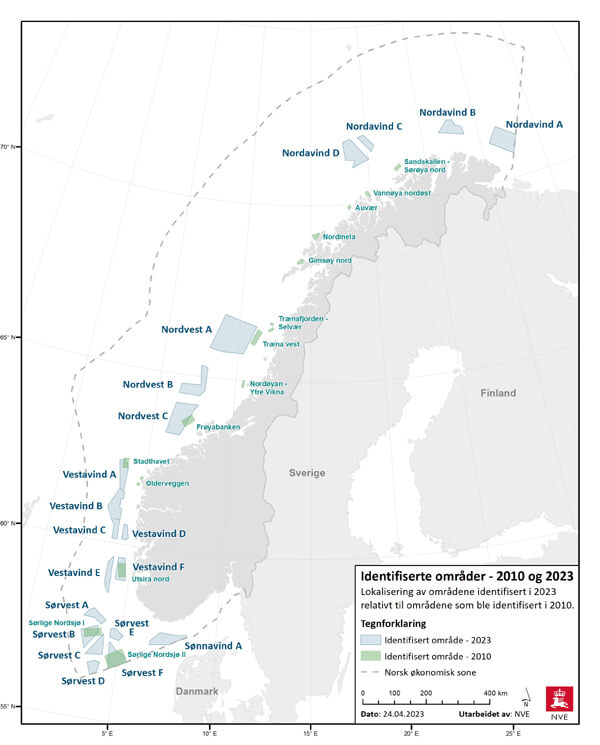
Norwegian authorities today identified broad new areas offshore that they believe can be used to dramatically expand the country’s renewable energy generation. The initiative which involved a wide selection of government agencies outlined the areas and is calling for further study to designate the most suitable areas that could be developed in support of the country’s goal for the development of 30 GW of offshore wind energy generation.
“Together with several directorates and specialist communities, we have identified 20 sea areas with good wind resources, where the conflicts of interest between the environment, fisheries, and other industries are relatively low. These are areas along the entire coast, from Skagerak in the south to the Barents Sea in the north,” said Kjetil Lund, watercourses and energy director for Norway's Directorate of Water Resources and Energy (NVE). “These sea areas should now be investigated in more detail to find the areas that are best suited for offshore wind.”
The areas outlined today hold the potential for Norway to nearly double its power production. Depending on the portion of the sites that would move forward for development, they said that these sites could be equivalent to nearly three-quarters of the country’s current energy generation.
Today’s announcement comes just a month after Norway outlined two new offshore wind locations and set a goal to launch the tender for those sites later this year and in 2024. Two of the sites announced today are adjacent to the lease areas outlined in March and as such the energy authority believes they could be developed as extensions to those projects. Saying that opportunities had been identified for capacity expansion at those locations the energy authority believes that these two sites could be allocated in 2025.
The other 18 sites will require more in-depth impact assessments to confirm the belief that the conflicts between the environment, fisheries, and other industries are low. Lund said that the 18 new areas should be investigated in more detail considering aquaculture, fisheries, environmental interests, petroleum, and shipping.
“We don't have a final decision today on how much offshore wind will be built and where,” said Lund during his briefing. “We will need further studies on environmental and business interests, but also on economics, effects on the power system, and the need for grids. In that process, it is conceivable that some areas will be reduced or eliminated.”
The energy authority worked with the Norwegian Directorate of Fisheries, the Norwegian Environment Agency, the Norwegian Coastal Administration, the Norwegian Petroleum Directorate, and Defense Construction in identifying the target sites. In addition, the Petroleum Safety Authority, the Institute of Marine Research, the Norwegian Institute for Natural Research, Statnett, the Aviation Safety Authority, the Meteorological Institute, the National Communications Authority, and Avinor were also consulted.
NVE has developed a plan for the investigation of the sites. Based on the time required to finalize the plan with other authorities and implement the research, Norway does not expect it will be possible to allocate any of these 18 sites in 2025. Timing for these additional locations will be developed based on the results of the study program.
BOEM Advances Offshore Wind Leasing Process in the Gulf of Maine
Efforts are proceeding in the process to gauge interest and define offshore wind energy in the Gulf of Maine (file photo)
Efforts are proceeding in the process to open the Gulf of Maine as the next region in the United States for the offshore wind industry. The Bureau of Ocean Energy Management (BOEM) will publish a call for public input tomorrow, April 26, beginning a 45-day comment period as it continues to develop the plan for the region.
The Gulf of Maine spanning areas offshore of Massachusetts, New Hampshire, and Maine, is the final zone in the 2021 Offshore Wind Leasing Path Forward plan released by the bureau in 2021 as part of the government’s goal of deploying 30 gigawatts of offshore wind energy capacity by 2030. After opening the Gulf of Mexico for the first leases, BOEM’s plan proceeds to the Central Atlantic region followed by opening the Oregon coast for the first offshore wind projects. The plan anticipates that the Gulf of Maine would be designated as a Wind Energy Area in the middle of this year and the first lease sales could proceed in mid-2024.
The Gulf of Maine is considered to be one of the more challenging areas. It is exposed to stronger weather conditions and also has deeper conditions than the projects elsewhere on the U.S. East Coast. So far, the only development in the Gulf of Maine is a small, non-commercial site that is proceeding forward as a research location in efforts led by the University of Maine to develop floating wind turbine approaches. State officials have moved to block near-shore development due to concerns from the fishing and tourism industries, encouraging developers to focus on floating wind technology.
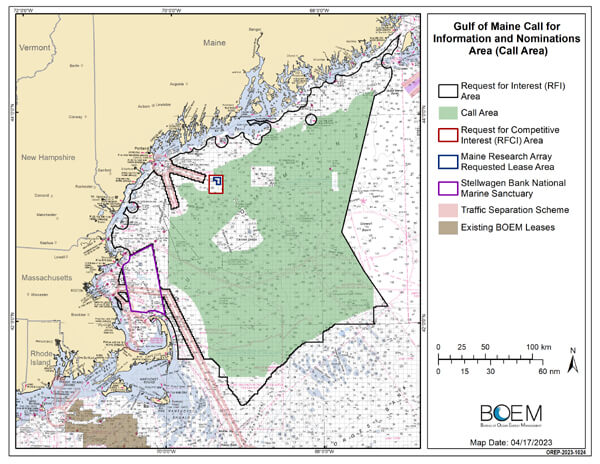
The Call Area is shown in green on the map (BOEM)
BOEM’s publication of its Gulf of Maine Call for Information and Nominations is the next step in the efforts to assess interest in possible commercial wind energy development in areas offshore Massachusetts, New Hampshire, and Maine. BOEM calls it an early step in the commercial planning and leasing process, and the first required by BOEM regulations.
“BOEM is committed to transparent, inclusive, and data-driven processes, and public input is essential to helping us determine areas that may be suitable for offshore wind development in the Gulf of Maine,” said BOEM Director Elizabeth Klein. “We are still early in the planning and leasing process, and we look forward to the multiple future opportunities for engagement.”
After the public comment period closes, BOEM will review and analyze commercial nominations and public comments submitted in response to the call. BOEM will also consider information from government and tribal consultations and the Gulf of Maine Intergovernmental Renewable Energy Task Force to further evaluate the appropriateness of the Call Area for offshore wind energy development.
The call follows the Department of the Interior’s August 2022 Request for Interest to gauge whether commercial interest existed in obtaining wind energy leases within an area in the Gulf of Maine comprising about 13.7 million acres. BOEM worked collaboratively with National Oceanic and Atmospheric Administration’s National Centers for Coastal Ocean Science (NCCOS) to conduct a spatial analysis of the area and considering feedback they note the final Call Area reduces the area to 9.8 million acres, a nearly 30 percent reduction. BOEM removed approximately 160,000 acres from future consideration to avoid Georges Bank.
BOEM has identified four areas that it is seeking public input on during this next phase of the review, including Lobster Management Area I, Platts Bank, Atlantic Large Whale Take Reduction Plan Restricted Areas, and Georges Bank (the immediately adjacent area along the southern boundary of the Call Area). They note that this is not an exhaustive list, but represents the areas that were most commented on in the most recent public engagement.
As part of the process, BOEM is also conducting task force meetings in Maine. The next one is scheduled for May 10-11, 2023, in Bangor, to update Task Force members and the public on BOEM’s commercial and research offshore wind energy planning activities and to discuss the next steps for the Gulf of Maine.
Eneti and Transocean Look to JV to Meet Offshore Wind Install Demands
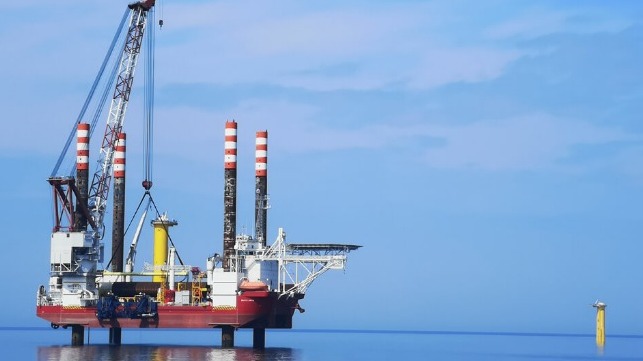
Companies look to repurpose existing vessels to meet the demand for foundation install capabilities (Seajacks file photo)
Eneti, which was launched in 2021 to focus on the offshore energy sector, and Transocean, a large provider of offshore contract drilling services for oil and gas wells, believe they can offer a unique solution to the lack of installation capacity for the emerging offshore wind energy sector. The companies reported that they are in negotiations to form a joint venture company that would repurpose existing offshore drilling vessels to engage in offshore wind foundation installation activities.
Under the plan that is currently being negotiated, the two companies are exploring the formation of a new joint venture for the offshore wind sector. They announced the execution of a memorandum of understanding indicating their intention to form a joint venture company.
They look to create new capacity for the industry while tapping the expertise of both organizations. According to the announcement, the joint venture would initially convert at least two fit for purpose floating vessels into offshore wind foundation installation vessels. Upgrades to the vessels would include a 5,200-ton crane and are expected to provide them with the capability to carry up to six 3,500-ton monopile foundations with a 12-meter diameter. They would also incorporate “certain other environmentally responsible and efficiency-enhancing operating features.”
Eneti has been looking to add capacity while confronted with the high cost and timing of new construction. While they have two new wind turbine installation vessels ordered from Daewoo Shipbuilding and Marine Engineering, the company backed away from a plan to build a Jones Act-compliant vessel. In February 2022, Eneti said that talks with a U.S. shipyard were discontinued due to the high cost and design complications. The former Scorpio Bulker, however, also acquired Seajacks in 2021 to provide initial capacity in the sector. As of the beginning of February 2023, Eneti reported it has over $100 million in firm backlog with an additional $10 million of optional backlog. Demand continues to be strong with the restraints being capacity.
In an investor presentation, Eneti called the wind turbine installation sector a high-growth industry with a bottleneck. In addition to the vessel for turbine installations, foundation install capabilities are in strong demand. Eneti reports Seajacks International has installed more than 500 wind turbine foundation components at wind farms including in Japan, Germany, and Scotland. They currently have five vessels with the other two new constructions expected to be delivered in the fourth quarter of 2024 and the second quarter of 2025.
Transocean told investors in February that it believes the drilling industry was finally beginning a multi-year upcycle after a prolonged eight challenging years. Despite the largest annual backlog addition since before the industry downturn in 2014, the company however still reported a net loss attributable to controlling interest totaling $621 million for 2022. The backlog however nearly doubled standing currently at approximately $8.6 billion.
Transocean owns or has partial ownership interests in and operates a fleet of 37 mobile offshore drilling units consisting of 27 ultra-deepwater floaters and 10 harsh environment floaters. In addition, Transocean is constructing one ultra-deepwater drillship and holds a noncontrolling ownership interest in a company that is constructing one ultra-deepwater drillship.
The proposed joint venture looks to combine Transocean’s experience operating a global fleet of dynamically positioned offshore drilling rigs on long-term contracts with Eneti’s experience, through Seajacks International, in the installation market. According to Eneti, Transocean has three hundred-plus rig-years of experience.
Both companies would contribute operating expertise to the new company. They would also have rights to invest in the joint venture with additional partners.
China’s Jiangnan Shipyard Delivers Largest LPG Gas Carrier
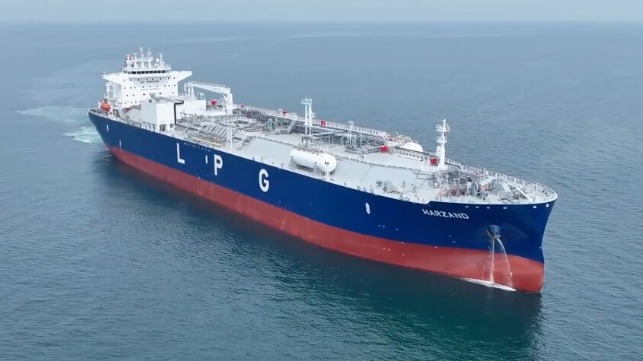
Harzand has a capacity to transport 93,000 cbm making it the largest VLGC according to CSSC (Jiangnan)
Chinese officials celebrated the delivery today, April 26, for what they are reporting is the world’s largest dual-fuel LPG carrier while highlighting the advanced design feature of the new generation of the ships. The naming ceremony for the Harzand (60,000 dwt) was conducted yesterday at the Jiangnan Shipyard in Shanghai.
The vessel is part of what the China State Shipbuilding Corporation (CSSC) is calling a fourth-generation design that improves fuel efficiency versus the yard’s earlier designs as well as increasing carrying capacity. The Harzand is 754 feet in length with a carry capacity of 93,000 cubic meters of LPG. Ordered in 2020 by Petredec of Singapore, the original order was for three vessels due for delivery in 2023 along with an option that was later exercised for three additional vessels.
The ship is fitted with MAN ES LGIP engines and a shaft generator to utilize LPG to provide auxiliary power at sea. The hull design developed by Jiangnan incorporates a new bow shape and rudder energy saving device to improve hull efficiency and lower fuel consumption. The shipyard reports the vessel using low sulfur fuel oil (LSFO) will emit 30 percent less CO2 than the previous generation of 84,000 cbm vessels. The Harzand is designed for an operating speed of 16.5 knots with a fuel range of 23,000 nautical miles. The design was balanced to ensure maximum efficiency when the vessel is sailing fully loaded, with ballast, or liquid cargo.
Other innovations were used during the construction to speed the vessel’s assembly including the first application of domestically produced cryogenic steel. A new approach to testing and trials was also used combining the sea trials, gas test and trials into a simultaneous process to speed the delivery of the ship.
Petredec previously took delivery on four of the shipyard’s 84,000 cbm LPG carriers in 2020. The company has been working with the shipyard since 2007 and has ordered a total of 19 LPG and ethylene carriers from Jiangnan.
CSSC is also highlighting the introduction of the new class as they latest step for the shipyard which has emerged as a leader in the sector. They noted that Jiangnan received its first order for a VLGC in 2012 and since has received orders for 52 vessels, including 14 of its latest 93,000 cbm vessels. CSSC reports the shipyard has caught up to its peers and become a leader in building VLGC ships.
Aramco Ships First "Low-Carbon" Ammonia for Power Generation to Japan
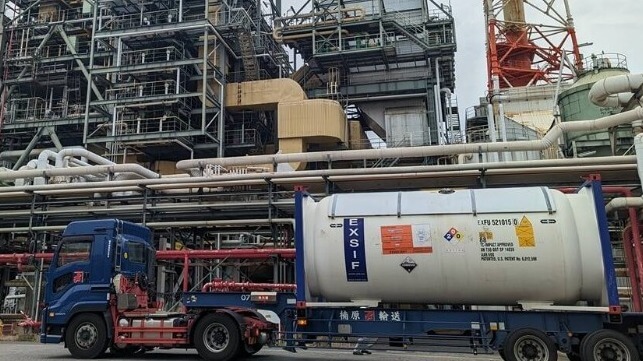
The consignment of low-carbon ammonia arrives at a refinery in Chiba, Japan (Aramco)
Saudi Aramco and Aramco-owned petchem firm SABIC have shipped the first cargo of "low-carbon ammonia" for use in power generation in Japan, the firms announced Friday.
The low-carbon ammonia was produced by SABIC Agri-Nutrients with fossil-fuel feedstock from Aramco; sold by Aramco to Fuji Oil Company; and transported by Mitsui O.S.K. Lines. The consignment has arrived at Fuji Oil's Sodegaura oil refinery in Japan, where it will be burned along with other feedstocks to generate power for refining operations. The project parallels a broader policy push in Japan to import clean ammonia and combust it along with coal in conventional powerplants.
SABIC produces conventional hydrogen and ammonia from natural gas feedstocks. According to Aramco, this particular cargo of ammonia was independently-certified as "low-carbon" because the CO2 from the manufacturing process was captured and utilized in downstream applications. The partners did not specify the end use, but a previous shipment repurposed the CO2 to make methanol.
“Saudi Arabia is working towards becoming the world’s largest exporter of clean (blue) hydrogen by 2030. Our Kingdom maintains large natural gas reserves and ample renewable energy which enable a capacity to produce clean (blue) hydrogen at a competitive cost – this can then be converted into ammonia,” said HRH Prince Abdulaziz bin Salman, Energy Minister of Saudi Arabia.
Efforts to adapt conventional, gas-derived "gray" ammonia to the green transition are gathering steam. Earlier this month, Yara Clean Ammonia and Enbridge announced plans to develop and build a low-carbon blue ammonia facility in Texas. The $2.5-3.0 billion plant will be located at the Enbridge Ingleside Energy Center (EIEC) near Corpus Christi. About 95 percent of the CO2 generated from production will be captured and permanently stored belowground, not reused.
Singapore's First Bunker Tanker with Battery Energy System Delivered
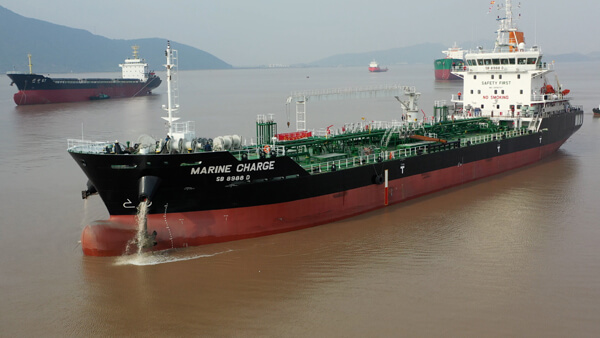
Marine Charge is the first bunker vessel in Singapore with an energy storage system to reduce emissions (V-Bunkers)
The first hybrid, bunker tanker with a battery energy storage system has been delivered and is set to start operations at Singapore, the world’s largest bunker port. The vessel is outfitted with an energy storage system that will permit peak shaving to provide a stable energy load and reduce emissions as part of Singapore’s Marine and Port Authorities' efforts to accelerate emissions reduction in harbor craft and other parts of the port’s operations.
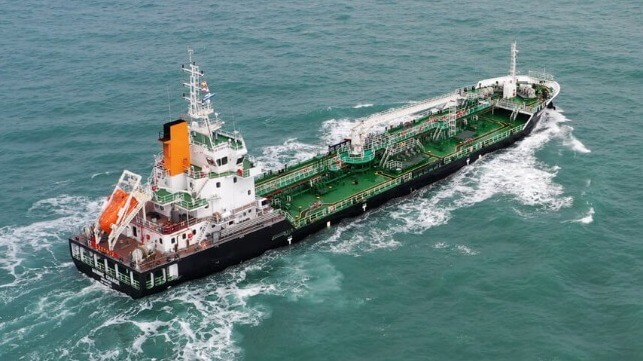
The 7,990-ton bunker vessel named Marine Charge reached the Singapore Anchorage on April 24 preparing for its deployment. The vessel was built by China’s Zhejiang Shenzhou Sunshine Heavy Industry as the first of two bunker vessels ordered in 2021 by Vitol for its V-Bunkers operation based in Singapore. The second vessel, Marine Dynamo, is scheduled for delivery in late May. Both vessels were designed by SeaTech Solutions of Singapore and classed by Bureau Veritas. They are outfitted with 480 Kwh enter storage systems developed by Shift Clean Energy.
“This vessel represents a true demonstration of the change that is becoming normal in the marine industry,” said Brent Perry, CEO of Shift Clean Energy. He said that V-Bunkers is “a fuel carrier focused on improving efficiency, cost of operations, and simultaneously demonstrating a commitment to good global citizenship.”
Marine Charge recently completed the delivery trip from China to its homeport in Singapore (V-Bunkers)
The Energy Storage Systems (ESS) technology is comprised of Lithium-ion batteries and a highly automated Power Management System. It is expected to achieve an estimated 10 percent reduction in GHG emissions.
The design configuration of the system enables the auxiliary engines to operate at the most optimal specific fuel oil consumption with the ESS performing peak shaving. During periods of low power consumption, the management system recharges the batteries which provide additional power during high consumption periods. This allows the main generators to operate with a more stable load which contributed to the lower emissions. In addition, the ESS has recharging capabilities, and while onshore power supply is currently unavailable in Singapore, the bunker tankers are ready for when the charging infrastructure and facilities become available. The MPA recently announced that it would be working with Shell, which launched the first battery-powered ferry in Singapore, to expand charging capabilities for other harbor craft.
“We are delighted to be the first to bring ESS technology to the local bunker craft sector and thus contribute to the reduction of emissions in the port of Singapore,” said Mike Muller, Head of Vitol Asia. “We shall continue to support Singapore’s aspirations, led by the Maritime Port Authority of Singapore, to be a leader in maritime decarbonization. We consider deployment of these two electric-hybrid bunker tankers to be an important step forward in Singapore’s decarbonization journey.”
The launch of the hybrid bunker vessels is the next step in the development of the company’s efforts to support decarbonization. V-Bunkers, which lists a current fleet of approximately 20 bunker vessels, 13 months ago completed the first trial deliveries of bio-fuel blended VLSFO in Singapore. At the time they said it demonstrated the ability to incorporate the emerging option immediately as a near-term effort to reduce emissions.
Vancouver’s Controversial New Terminal Gets Consent with Conditions
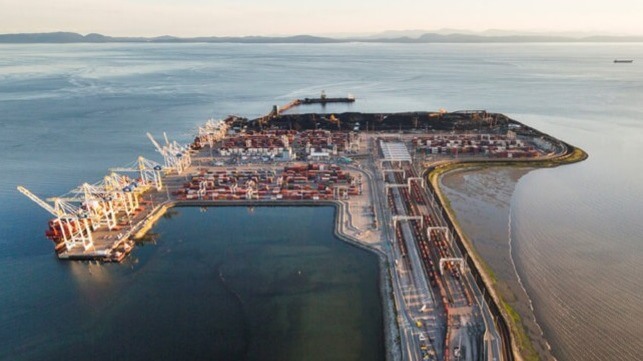
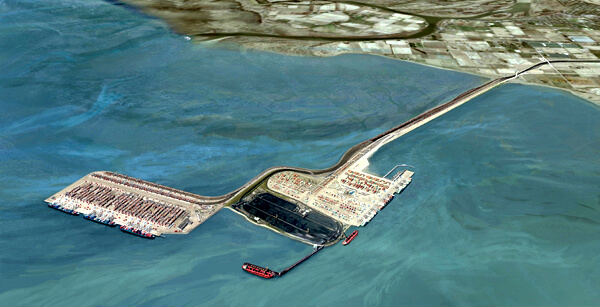
Vancouver plans an expansion of container operations next to the current Deltaport (VFPA)
A decade after Vancouver’s port authority proposed the construction of a massive new terminal to expand the port’s container handling capacity, the Canadian federal government has given its consent to the controversial project. The approval however includes an unprecedented level of legally binding conditions and a financial compliance requirement for the project which continues to be opposed by environmental groups, the longshore union, and the operator of an existing terminal.
Known as the Roberts Bank Terminal 2 (RBT2) Project, the Vancouver Fraser Port Authority plans to expand the existing container operations located about 20 miles south of Vancouver on Georgia Strait in the Fraser River Estuary. The project calls for the creation of a new man-made island adjacent to the existing terminal operated by Global Container Terminals (GCT) near the city of Delta, British Columbia. RBT2 would create three new berths and incrementally add an additional annual capacity for 2.4 million TEU or a 50 percent increase in capacity. Port officials emphasize it will be located in subtidal waters to reduce its environmental effects, but it does involve increasing the size of the turning basis as well as expanding the road network to support the operations.
Port officials highlight Canada’s west coast marine container terminals are forecast to hit capacity by the mid- to late-2020s, following a decade of five percent average annual growth. In 2022, the port handled an actual count of just under two million containers (3.55 million TEU). They point out that currently the port handles over US$200 billion in trade while saying the new facility is necessary for continued growth. They highlight the delays in cargo movement experienced over the past two years due to the surge in volumes and weather-related disruptions, such as the flooding in 2021, saying the RBT2 project would create a buffer to handle future surges in volumes.
Rendering of the proposed new man-made island and terminal expansion project (VFPA)
"The Government of Canada has approved the Roberts Bank Terminal 2 project, subject to 370 legally binding conditions,” said Jonathan Wilkinson, Canada’s Minister of Natural Resources. “Today's decision is based on the clear and compelling need for expanded container capacity on the West Coast, the robust mitigation measures that will be required of the proponent and that address key areas of environmental concern, and the support of the project from a number of First Nations."
Environmental groups have led the opposition to the project. They cite reports that said there would be a negative impact on the area’s wetlands, barn owls, Dungeness carb, chinook salmon, sandpipers and other shorebirds, and southern resident killer whales.
In response to the concerns, the approval came with 370 legally binding conditions which the government says will protect the environment, local wildlife, and land-use activities of Indigenous Peoples. There are over 100 measures to protect the local wildlife including the development of monitoring and mitigation programs. Procedures would delay departures and movements of container vessels when the presence of whales is detected in the area. The in-water construction would be limited to periods of the lowest risk to marine life in addition to requirements for infrastructure to permit the safe passage of fish such as the region’s salmon. As part of the terminal operations, they are also requiring the use of zero-emission cargo handling equipment and the installation of shore power capabilities so the vessels would cold iron while on dock.
As a condition of approval of the project, the federal government is also stipulating that the Vancouver Fraser Port Authority must also put in place a C$150 million (US$110 million) financial guarantee to ensure funds are available for the first three years of construction to comply with these legally binding conditions. Canadian regulations also require the port authority to be self-funding, meaning it must raise the estimated C$3.5 billion (US$2.5 billion) required for the construction through private investment, bonds, and leasing revenues.
"These mitigations don't actually work,” Charlotte Dawe, Conservation and Policy Campaigner at the Wildness Committee, told CBC News after the government’s announcement. “They're just used as excuses and ways to kind of grant projects like this an approval when they really shouldn't have one.” In its written statement, the organization said, “The panel determination should have signified the end for this harmful and shortsighted project by the Port of Vancouver.”
Environmentalists are not alone in their opposition with the International Longshoremen & Warehouse Union Canada and rival terminal operator GCT also opposing the project. The union is already fighting against automation in the port. Earlier in April, the ILWU petitioned for mediation in its current contract negotiations with automation being one of the points of contention.
GCT put forth its plan called Deltaport 4, to add a new berth which it says along with other improvements could address the need for added capacity. DP World, which operates another of Vancouver’s container terminals, in February 2023 reported it had completed construction on its expansion project increasing capacity at the Centerm terminal. When fully implemented later this year, it will add two-thirds to the terminal’s container handling capacity rising from 900,000 to 1.5 million TEUs.
The port authority has committed to bringing a third operator to the port beyond GCT and DP World. They said having a third operator for RBT2 would increase competition and provide choice for the shipping lines while also ensuring the port grows to prevent volume loss to the U.S. and Mexico.
The government approval for the new terminal project is an incremental step in the process. The port authority can now apply for the additional authorizations and permits required from the federal government and the government of British Columbia. The port authority says a final investment decision has not yet been reached and it would take an estimated six years to construct the new terminal facilities.
Melbourne Explores Methanol Bunkering Hub with Maersk and CMA CGM
Melbourne, Australia is launching the first exploration in Australia to develop a methanol bunkering hub (file photo)
A project to explore developing a methanol bunkering hub at Australia’s Melbourne port is being supported by shipping companies including Maersk and Svitzer as well as CMA CGM’s ANL subsidiary. It is the first effort in Australia and joins projects in other parts of the world that look toward developing the infrastructure that will be required to support the adoption of methanol and green methanol as a marine fuel.
“We’re driving the biggest ports reform program in decades through our Victorian Commercial Ports Strategy and this announcement complements our work to protect the future of our commercial ports, which includes the Port of Melbourne as a hub for trade and to ensure it remains one of the biggest and best ports in the country,” said Minister for Ports and Freight Melissa Horne.
Under the terms of the agreement, the companies will work together to explore the various elements of establishing a green methanol bunkering hub and identify any challenges that would need to be addressed. The collaboration will examine a potential project involving the transportation of green methanol from production sites in Bell Bay, Tasmania, operated by ABEL Energy, and Portland, Victoria, operated by HAMR Energy, to Port of Melbourne for storage and bunkering services.
“As Australia’s largest container port with around 3,000 ships visiting annually, it makes sense that we look at ways to work together with customers, service providers, and producers to understand the needs of the market,” said Saul Cannon, CEO of the Port of Melbourne.
The companies that will be joining together to explore the commercial feasibility of establishing a green methanol bunkering hub at the Port of Melbourne include in addition to the port authority, Maersk, Svitzer, CMA CGM’s subsidiary ANL, and terminal operator Stolthaven Terminals. The energy companies will be HAMR Energy and ABEL Energy, both of which are developing green methanol production capabilities.
News of the agreement came as Maersk also announced a series of celebratory events timed to the introduction of the world’s first new construction methanol dual-fuel containership. South Korea’s Hyundai Mipo shipyard floated out the as-yet-unnamed feeder ship on April 4 and is completing the fitting-out process. Maersk said the vessel will depart South Korea this summer and reach Copenhagen in time for a “week of festivities” between September 18 and 21, 2023 that will include a naming event.
A.P. Moller – Maersk reports it will host events for employees, partners, investors, and students. The dock area next to its headquarters will be open for the public to take a closer look at the new vessel from the dock and learn more about the efforts to decarbonize the shipping industry.
The 564-foot vessel will have a container capacity of 2,100 TEU. She has a dual-fuel methanol engine and is designed with an operating speed of 17.4 knots. After the events, Maersk reports she will be operating in the Baltic and provide real experience for Maersk seafarers in operating the new type of fuel, as the company prepares to receive a fleet of new, large ocean-going dual-fuel ships beginning in 2024.
Other large shipping companies including CMA CGM, COSCO, and OOCL, have also ordered the construction of large dual-fuel methanol containerships. Feeder ship operators have also begun to order methanol-fueled ships with analysts predicting that adoption of the alternative fuel will accelerate as infrastructure efforts such as this project in Melbourne build the required support for the fuel option.
Shipping Contract Links Freight Earnings to CO2 Emission Goals
Klavness Combined Carriers and South32 linked freight rates to performance against reducing CO2 emissions (KCC file photo)
Norway’s Klaveness Combination Carriers (KCC) reports working with its charterer South32 Marketing of Australia the shipping company has been able to put into effect what it believes is the first freight contract that links freight earnings to CO2 reductions. The role of charters in the emerging CO2 pricing and emissions regulations has been hotly debated in the industry with KCC and South32 possibly providing a first-mover model.
The carrier reported in January 202 that it had entered into a new six-year contract of affreightment for shipments of caustic soda to South32’s Worsley Alumina refinery located in Western Australia. The companies reported that the contract established a framework for details CO2 emissions reporting as part of an effort to establish a path for annual CO2 reduction targets.
KCC and South32 have jointly developed a mechanism and the terms for freight rates to be linked to the CO2 emissions of KCC’s vessels. The companies report that they have agreed to amend the contract to include a carbon pricing mechanism going forward.
“The shipping industry needs a price on carbon emissions to incentivize efficiency improvements and to start the transition to new fuels,” said Engebret Dahm, Chief Executive Officer of Klaveness Combination Carriers. “In the absence of effective regulations, we are grateful for the support and partnership with front-runners South32 in developing and introducing the first carbon pricing mechanism in the dry bulk and tanker industries.”
The agreement being implemented in 2023 works from a baseline for CO2 emissions established by KCC and South32. Under the revised terms, KCCC will receive a higher freight rate if actual carbon dioxide emissions are below the baseline but the freight rates will be lower in the event of underperformance relative to the baseline. KCC has agreed that any additional freight paid by South32 through this agreement will be dedicated to investments in energy efficiency measures in KCCC’s fleet.
“We recognize that we have a critical role to play in contributing to the decarbonization of the value chain, in partnership with our customers and suppliers,” said Holly Buschman, Vice President of Sustainability Strategy and Community for South32. “This agreement with Klaveness Combination Carriers is an important step towards our goal of net zero Scope 3 greenhouse gas emissions by 2050.”
KCC operates a fleet of 16 combination carriers built for the transportation of both wet and dry bulk cargoes. The company reports that its vessels already operate with a 30 to 40 percent lower carbon footprint than competing vessels. KCC has highlighted several recent steps being tested toward lower emissions across its fleet. Working with Wartsila last year they were retrofitting a customer fin around the propellers on three ships to reduce any vortex from occurring that was reducing drag from the vessel as well as testing a fuel optimization of some of its vessels. Another pilot involved the installation of an air lubrication system and a shaft generator.
Ahead of the implementation of the IMO’s Carbon Intensity Indicator (CII), the industry trade group BIMCO in November 2022 released its position calling for charterers to be assigned CII responsibility. They recommended amending charter agreements because the charterer makes the relevant decisions on the operation of the ship while also calling for both parties to work to find new ways to work together on emissions requirements. The trade group however came under strong criticism from charterers who said the recommendations were “imbalanced and unusable.” BIMCO said it would continue to monitor the issue and adjust its recommendations based on feedback from the industry.