Wednesday, May 03, 2023


Burnt by Charity Models, Club Q Shooting Victims Support Survivor-Led Mutual Aid

Survivors of the Club Q shooting allege that they have not received all the charity funds raised on their behalf.

Bread and Roses Legal Center's Queers for Q fundraiser held on April 21, 2023.

Survivors of the Club Q tragedy say they are still waiting to receive money that was fundraised on their behalf, criticizing national LGBTQ organizations for using the shooting for their own financial gain.

After a gunman attacked the gay club on November 19th, 2022 in Colorado Springs, Colorado, national LGBTQ organizations like GLAAD and the Human Rights Campaign released statements in mourning of the victims — Raymond Green Vance, Kelly Loving, Daniel Aston, Derrick Rump and Ashley Paugh — and directed supporters of the survivors to donate to the Colorado Healing Fund (CHF) and One Colorado.

“GLAAD used this event in a way to attract media attention and resources and legitimacy for their organization, but in reality most [survivors] never talked to GLAAD or got to interact with them,” according to Z Williams, Co-founder of Bread and Roses Legal Center, which prides itself on having supported and continuing to support victims of the Club Q shooting with the organization’s survivor-led healing and mutual aid model. Williams told Truthout that GLAAD “picked a group of people that were supposed to be the representatives of the community, and it was three white men.”

In December, GLAAD invited survivors of the shooting, James Slaugh and Michael Anderson, and the owner of Club Q, Matthew Haynes, all white men, to provide testimony to the House Committee on Oversight and Reform regarding anti-LGBTQ rhetoric, extremism and violence.

Advocates have also stressed that CHF, a nonprofit that provides funds to victims of mass casualty crimes in Colorado, retains 10 percent of all funds donated for those impacted by mass casualty events in the state. While this policy has been reversed after advocates criticized the fundraising model as unethical, with 100 percent of proceeds supposedly now going directly to the victims of the Club Q mass shooting, one survivor told Truthout that the process to access funds was very difficult to navigate.

“That is an organization that I have seen constantly re-victimize people because of their model and especially, I think, in this setting we saw it even more because of the size of the group of victims, the age of the group of victims and just the complete unfamiliarity with what it means to work with queer folks,” Williams explained.

VictimsFirst, a network of surviving victims of mass casualty crimes that advocates for accountability for survivors, sent CHF an open letter in December criticizing the fund for its lack of transparency and predatory model.

“We are sick of the gaslighting and attempts by the Colorado Healing Fund to cover its tracks. First, the Colorado Healing Fund diverted donations away from mass shooting victims. Now they are diverting attention away from the facts as they continue to divert donations to nonprofits under the guise of ‘victim services’ without any transparency about where those donations are headed,” the letter reads.

In addition, advocates have also alleged that CHF and the other groups that fundraised in the aftermath of the Club Q shooting were not well versed in how to support the LGBTQ community.

“There just was a lot of lack of understanding around pronouns and names and relationships and so many of those things that I think are so important when you’re working with queer community,” said Williams. At one point, CHF asked Bread and Roses Legal Center if binders, a piece of clothing commonly worn by transmasculine people, could be purchased at Home Depot, according to Williams.

Bread and Roses Legal Center advocates for survivor-led mutual aid predicated on a queer solidarity approach which rejects charity models that “raise a bunch of money and give it out to people,” as Williams stated, or come into the community with a plan and use media generated from events for an organization’s own gain.

“Mutual Aid is saying, we respond to this event because also like taking care of our community is like taking care of us,” Williams explains. “Even if we didn’t know these folks like these are our family and our community. And another piece of it is not just thinking about mutual aid like how do we respond to an event, but what is the long-term investment in a community and what is the relationship with the community?”

Survivor-lead mutual aid models are increasingly important as mass shooting incidents continue to skyrocket — 2022 was the worst year for school shootings and this year we are seeing a record-setting number of mass killings. NPR reports that so far this year, more than 88 people were killed in 17 mass shootings. While there is no national database that tracks the number of survivors of mass shootings or the financial toll of surviving a mass shooting, research estimates that just the cost of initial hospital charges for patients injured in mass shootings total more than $64,900 per person.

The long-term physical and psychological costs of surviving mass shootings is undoubtedly higher. The National Center for PTSD estimates that a third of people who have survived a mass shooting develop an acute stress disorder and 28 percent of people develop post-traumatic stress disorder (PTSD). Additionally, survivors of hate crimes experience high levels of psychological distress that may exacerbate the financial costs of healing after a hate-crime motivated mass shooting.

Bread and Roses Legal Center recently hosted its second mutual aid event for survivors of the shooting, in which multiple family members of victims of the shooting were present. At the first Queers for Q event, Bread and Roses raised over $140,000 which were entirely distributed to more than 50 people who were impacted by the shooting. Survivors have used these funds to obtain groceries, medical prescriptions, legal name and gender-marker changes, glasses, gender-affirming health care, transportation, rent and job training. Funds will also cover a headstone for one of the victims of the shooting who was killed.

For Bread and Roses Legal Center, mutual aid is a long-term commitment and an investment in a community. “It’s like whatever people need,” Williams explains. “Basically, anything that people need that they say will help them feel safer and more complete in their communities, that’s what we want to do.”

Note: The author will be externing at Bread and Roses Legal Center in Summer 2023.

Washington Is Obstructing the Path to a Political Settlement in Ukraine

The U.S.’s rejection of China’s proposal for a negotiated settlement reveals that it is drawing benefits from the war.

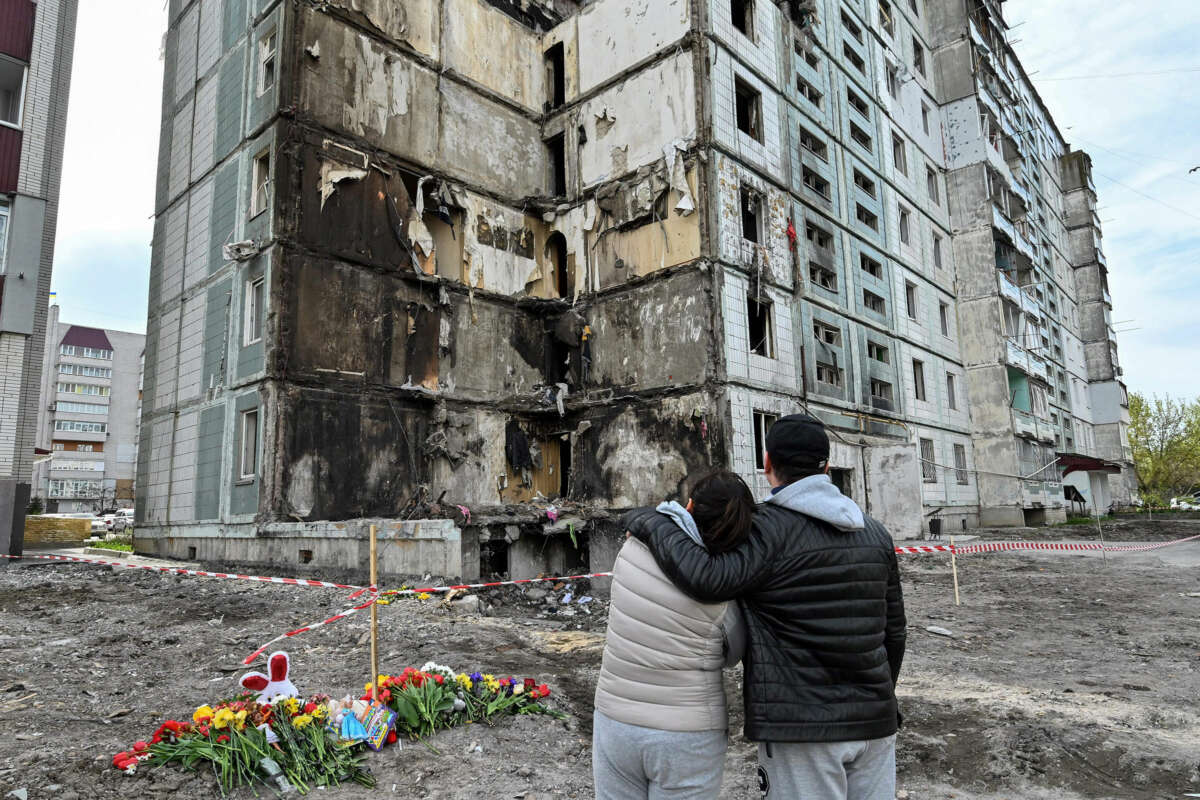
People pay their respects as flowers are laid in front of a damaged multistory residential building, where a Russian strike killed 23 people, in Uman, Cherkasy Oblast, on April 30, 2023.

Honest, paywall-free news is rare. Please support our boldly independent journalism with a donation of any size.

The way President Joe Biden’s administration reacted to China’s offer to facilitate a political settlement of the Ukraine conflict clearly reveals Washington’s undeclared objective regarding that war. The contrast between the administration’s attitude toward China’s position and the attitudes of some of the United States’s allies is striking.

When Beijing published its “Position on the Political Settlement of the Ukraine Crisis” on February 24, marking the beginning of the second year since Russia launched its invasion of Ukraine, Washington immediately dismissed the initiative as a mere decoy, with President Biden telling ABC’s David Muir, “Putin’s applauding it, so how could it be any good?” He then added, “I’ve seen nothing in the plan that would indicate that there is something that would be beneficial to anyone other than Russia, if the Chinese plan were followed.”

And yet, other leaders saw what Biden couldn’t see — or didn’t want to see — which is that the very first of the Chinese declaration’s 12 points reaffirmed a principle that went against Russia’s interest in the ongoing war and in favor of Ukraine’s; namely, the principle of “sovereignty, independence and territorial integrity of all countries.”

This is indeed why Russian President Vladimir Putin did not “applaud” China’s position, contrary to Biden’s claim. In the joint statements to the press that Putin and Chinese President Xi Jinping gave on March 21, during Xi’s recent visit to Moscow, the Russian president declared, “We believe that many of the provisions of the peace plan put forward by China are consonant with Russian approaches and can be taken as the basis for a peaceful settlement.” Many of the provisions — in other words, not all of them.

Whereas Putin could fully support provisions such as “abandoning the Cold War mentality” (point two) and “stopping unilateral sanctions” (point 10), he could obviously not subscribe to the need to respect the sovereignty and territorial integrity of all countries, nor to point eight that states, “the threat or use of nuclear weapons should be opposed.”

Ukrainian President Volodymyr Zelenskyy understood that quite well for his part. In blatant contradiction with Biden’s assessment, he declared on the day China’s position was released, “China is talking about us…. I think what they are saying looks like respect for territorial integrity. It doesn’t mention the country, but it’s our territorial integrity that has been breached. Nuclear security was mentioned as well. I think this is in line with the interests — global interests and Ukrainian interests.” It is this very different attitude that allowed the April 26 phone call between Xi and Zelenskyy to happen, which Ukraine’s president commented as follows:

There is an opportunity to use China’s political influence to restore the strength of the principles and rules on which peace should be based. Ukraine and China, as well as the vast majority of the world, are equally interested in the strength of the sovereignty of nations and territorial integrity…. In compliance with the main security rules, in particular, the inadmissibility of threats with nuclear weapons and the proliferation of nuclear weapons in the world.

In fact, China did mention Ukraine specifically more than once when talking about territorial integrity. In explaining China’s official position on the war two days into the Russian invasion, on February 26, 2022, then-Chinese Foreign Minister Wang Yi clearly stated that, “China stands for respecting and safeguarding the sovereignty and territorial integrity of all countries and earnestly abiding by the purposes and principles of the UN Charter. China’s position is consistent and clear, and it also applies to the Ukraine issue.”

A few days later, on March 5, Wang reiterated the same to his U.S. counterpart, Secretary of State Antony Blinken. Ten days later, Qin Gang, China’s then-ambassador to the U.S. and its present foreign minister, published a piece in The Washington Post clearly stating that, “The sovereignty and territorial integrity of all countries, including Ukraine, must be respected.”

One key reason why Washington has closed its ear to Beijing’s implicit repudiation of the Russian invasion is, of course, that it does not want to hear what goes along with the Chinese position, especially the above-mentioned provisions that Putin could happily endorse but also China’s first point that also stated: “Universally recognized international law, including the purposes and principles of the United Nations Charter, must be strictly observed.… Equal and uniform application of international law should be promoted, while double standards must be rejected.”

After all, the very idea of respecting the sovereignty, independence and territorial integrity of all countries is alien to Washington as much as it is to Moscow. Whereas Washington champions these three principles against Russia in the case of Ukraine, it has violated them over time more than any other government and continues to do so — by means of drone and missile strikes, even if not by deploying troops on the ground since the 2021 Afghan debacle.

Contrasting reactions to Xi’s visit to Moscow last March followed the same pattern: condemnation on Washington’s part, along with insisting prophecies of imminent delivery of weapons by Beijing to Russia, whereas European Commission Vice President Josep Borrell, the high representative of the European Union for Foreign Affairs and Security Policy, commented that Xi’s visit “reduces the risk of nuclear war” because the Chinese president has “made it very, very clear” to Putin that he wants “to minimize the risk of being associated with the Russian military intervention” — a comment that has hardly been reported by the media. Taking the opposite view to Washington’s prophecies, Borrell added that Chinese leaders “are not engaged militarily and there is no sign that they want to engage militarily.”

The very idea of respecting the sovereignty, independence and territorial integrity of all countries is alien to Washington as much as it is to Moscow.

Since the beginning of the present Ukraine crisis in 2021, this is the second major occasion on which the Biden administration has indulged in the business of predicting in a way that looks very much like if it actually wished for its prophecies to become self-fulfilling. When Moscow submitted on December 17, 2021, a draft agreement for a political settlement of the crisis around Ukraine, it was likewise dismissed by Washington. Instead of engaging in negotiations with Russia for an overall agreement to prevent the looming threat of war, the administration made repeated and frenzied announcements over several days that Russia was going to attack the next day — until it eventually happened.

There is good reason to believe that, far from trying its best to prevent the war, Washington wanted it to occur for the simple reason that the Russian invasion would be, and has been, a godsend for the U.S.’s hegemonic designs. One is entitled to believe likewise that Washington did very little to deter Iraqi dictator Saddam Hussein from invading Kuwait in 1990 (some even maintain that then-U.S. ambassador to Iraq, April Glaspie, let Hussein believe that Washington would not even mind) because that invasion was equally a godsend for its hegemonic designs. In both cases, Washington’s global hegemony and allegiance of its Cold War allies were greatly enhanced, after years of decline.

If so, then what could be Washington’s goal in discarding collaboration with Beijing, which is the only possible way toward a political settlement acknowledging Ukraine’s territorial integrity? This, at the very moment when several indications, including the recent Pentagon leaks, point to Washington’s lack of belief in Ukraine’s ability to repel Russia’s troops out of the territory that they have occupied since last year, let alone inflict a massive defeat on them.

How should we explain the very important gap between Washington’s stance and European attempts to build on China’s offer of mediation, as illustrated by recent visits to Beijing by Spanish Prime Minister Pedro Sánchez, French President Emmanuel Macron, European Commission President Ursula von der Leyen and German Foreign Minister Annalena Baerbock? Baerbock declared in Beijing, for instance, that, “In the same fashion as how China mediated between Iran and Saudi Arabia, we want China to use that influence to urge Russia to end its war in Ukraine.”

The key to this contrast lies in the fact that Western Europe is eager to see the war in Ukraine come to an end for the obvious reason summarized by Anthony Cordesman of the Center for Strategic and International Studies, a major bipartisan strategic think tank: “Our European partners and allies are suffering far more from the economic consequences of their support for Ukraine and rise in global energy costs than Americans” whereas the U.S. stands to derive “grand strategic benefits” from inciting Ukraine to pursue the war — “an investment whose benefits greatly exceed its cost.”

Zelenskyy grasped that difference very well a month into the war, when he very lucidly confessed to the London Economist on March 25, 2022, the following:

There are those in the West who don’t mind a long war because it would mean exhausting Russia, even if this means the demise of Ukraine and comes at the cost of Ukrainian lives. This is definitely in the interests of some countries. For other countries, it would be better if the war ended quickly, because Russia’s market is a big one [and] their economies are suffering as a result of the war.

Very true indeed, and as much as it is right to help Ukraine defend its territory and population against Russian aggression and wrong to seek to force it into capitulation, it is also in the best interest of the Ukrainian people to do everything possible to bring the war to an end on the basis of an acceptable compromise instead of thwarting every possibility to negotiate such a compromise — as Washington has been consistently doing before even the war started.

Prism is an independent and nonprofit newsroom led by journalists of color. We report from the ground up and at the intersections of injustice.

The US and Israeli role in Sudan's path to war

Analysis
Giorgio Cafiero
02 May, 2023

Analysis: Israel and the US's desire to consolidate Khartoum's position in the Abraham Accords has emboldened militaristic authoritarianism in Sudan, rather than a civilian-led democratic transition.

Since Sudan’s crisis erupted last month, concerns about state collapse and civil war have been valid.

Unfortunately, with General Abdel Fattah al-Burhan of Sudan’s national army and Mohamed Hamdan Dagalo (a.k.a. Hemedti) of the Rapid Support Forces (RSF) viewing this conflict as existential, it is not easy to imagine a de-escalation at any point soon.

There is also much to say about the role of outside actors seeking to influence Sudan’s crisis and fears of this violence quickly regionalising.

One country which is not necessarily playing a central role in the conflict but has its own vested interests and agendas in Sudan is Israel.

"Israel is deeply committed to ensuring that the military, whether its Hemedti or Burhan or some combination of the two - dominate the politics of Sudan"

There are various Israeli interests at stake in Sudan. The most important one has to do with Sudan’s place in the Abraham Accords.

Following in the United Arab Emirates (UAE) and Bahrain’s footsteps, Sudan announced its decision to, at least partly, join the Abraham Accords in October 2020.

Now Tel Aviv wants to see Khartoum’s entry into the normalisation camp solidify. Ultimately, Israel is committed to trying to ensure that whoever comes out on top in Sudan’s ongoing power struggle will be sympathetic to Tel Aviv and the Israeli government’s way of looking at the Arab world.

The majority of Sudanese citizens are against normalisation of relations with Israel, which is a major factor. This gives Israel vested interests in a military regime governing Sudan.

Analysis   Lara Gibson

“Israel is deeply committed to ensuring that the military, whether its Hemedti or Burhan or some combination of the two - dominate the politics of Sudan,” Dr Nader Hashemi, the director of the Center for Middle East Studies at the University of Denver's Josef Korbel School of International Studies, told The New Arab.

Why Israel would like to prevent democratic development in Sudan and other Arab countries is not difficult to understand.

“Israel wants to have diplomatic relations with as many Arab states as possible. It cannot have diplomatic relations with democracies in the Arab world because democracies in the Arab world will demand that Israel make concessions to the Palestinians as a condition for diplomatic relations. That’s something that Israel refuses to do,” explained Dr Hashemi.

“Thus, Israel is deeply committed to preserving the authoritarian political order in the Arab world and that applies to Sudan as well.”


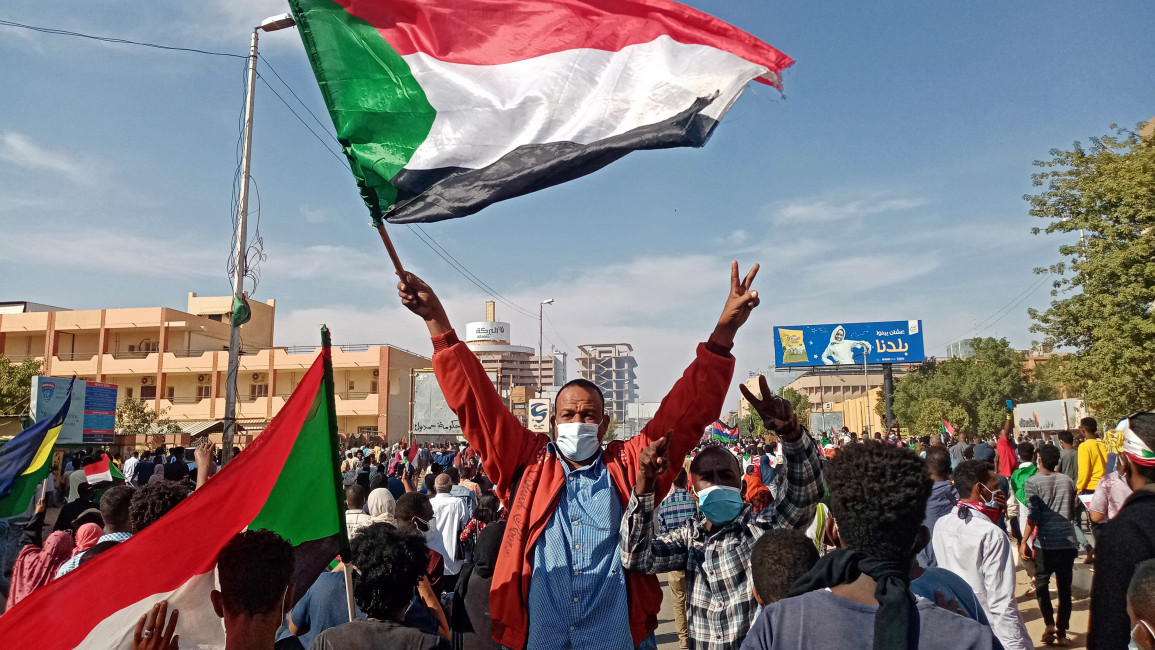
The majority of Sudanese citizens are against normalisation of relations with Israel. [Getty]

But some experts argue that Sudan’s military leadership will have a challenging time solidifying Khartoum in the Abraham Accords camp.

“Even the generals are not confident in their ability to deliver this to Israel, as large factions of their own supporters staunchly oppose making peace with Israel,” said Sarah Leah Whitson, the Executive Director of Democracy for the Arab World Now (DAWN), in an interview with TNA.

“Given that Burhan and Hemedti lack domestic legitimacy, their relationship with Israel could be used against them,” Dr Aziz Alghashian, a fellow at the Arab Gulf States Institute in Washington, told TNA.

“Both military generals and Sudan’s newly official relations with Israel are not overly popular with the Sudan public. Therefore, Israel understands that its relations with Sudan in its current form is very precarious.”

"Israel is deeply committed to preserving the authoritarian political order in the Arab world and that applies to Sudan as well"

A mediation role?

Since Sudan’s conflict erupted last month, Israel has offered to mediate between Burhan and Hemedti. Although doubtful that Tel Aviv would play this role, Israel trying to present itself as a credible and legitimate mediator in Sudan’s conflict is indicative of its relationships with both Sudanese warlords.

Ultimately, Israel seems willing to work with either Burhan or Hemedti should either emerge triumphant in this ongoing crisis.

“I think Israel is not backing one side or the other,” Dr Hashemi told TNA. “It has investments in both of these military gangsters, and it wants to ensure that, whoever prevails, Israel will have good relationships with General Burhan of the Sudanese army or Hemedti.”

Israel’s security establishment is not united on the conflict in Sudan. The country’s foreign ministry joined Egypt in being more in favour of Burhan while the Mossad, like the UAE and Libya’s Khalifa Haftar, has deep ties with Hemedti.

Analysis  Nour Odeh

Cairo and Abu Dhabi supporting opposing sides in Sudan’s conflict makes Israel less likely to fully back either Burhan or Hemedti, which helps explain why Tel Aviv is trying to present itself as a potential mediator.

The Israelis offering to mediate in Sudan’s conflict also speaks to Tel Aviv’s wider interests in other parts of Africa near Sudan, even if the idea of Israel playing this diplomatic role can’t be taken seriously.

“Israel has offered itself up as a mediator for the conflict between the Sudanese generals, boasting about its ties to both men, but no one takes this rather laughable proposal seriously,” Whitson said in a TNA interview.

“It is suggestive, however, of Israel’s goals to expand its political, economic, and military presence in East Africa. That’s why it has also offered to mediate between Ethiopia, Sudan, and Egypt about the Great Dam and conflicts over water, but again, no one takes this seriously.”


For Washington, achieving the goal of pushing Sudan toward formalised relations with Israel required US support for the Sudanese military playing a central role in the country's transition. [Getty]

US foreign policy

Analysing Israeli-Sudanese relations and Khartoum’s place in the Abraham Accords requires taking stock of Washington’s foreign policy.

Throughout the Trump and Biden presidencies, US policies vis-à-vis Sudan have not been oriented around promoting any successful democratic transition. Instead, they have been geared toward ensuring that the military can maintain stability at home and bring Khartoum into the normalisation camp.

“The political turbulence of the military junta in Sudan, and, in particular, its desperation to stay in power was an opportunity for the US to use its leverage in order for Sudan to join the Abraham Accords,” explained Dr Alghashian.

"Throughout the Trump and Biden presidencies, US policies vis-à-vis Sudan have not been oriented around promoting any successful democratic transition"

“We see how the focus of US foreign policy in Sudan was not the suffering and the socio-economic and political concerns of 45 million Sudanese. It was very much preserving the authoritarian order in the Arab world. A lot of energy coming from the US with respect to Sudan policy was geared toward getting Sudan to establish diplomatic relations with Israel,” explained Dr Hashemi.

“What’s more disturbing is the extent to which the US government aided and abetted military control in Sudan and literally bribed Sudan with removal from the US terrorism list for the sole and exclusive purpose of securing the initial sign-off on the Abraham Accords in 2020, serving Israel’s interest, but not America’s or Sudan’s,” Whitson told TNA.

Washington achieving this goal of pushing Sudan toward formalised relations with Israel required US support for the Sudanese military playing a central role in the country’s transition amid the post-Bashir era.

In-depth  Jonathan Fenton-Harvey

In terms of US interests in Sudan in this current period, “the objective was much more regional and supporting the relationship between Israel and Arab authoritarian regimes,” according to Dr Hashemi.

“That was the dominant entry point. That is an important point that has been lost in the debate on Sudan recently, and the failure of national policy that has contributed to the crisis that is unfolding before us.”

The Western mainstream media has been heavily focusing on Russia’s ties to Sudanese actors. But there has been hardly any serious discussion about how Israel and the US’s desire to consolidate Khartoum’s position in the Abraham Accords have emboldened militaristic authoritarianism in the country.

This point must be considered when assessing the various factors and events that led to Sudan’s ongoing crisis.

Giorgio Cafiero is the CEO of Gulf State Analytics.
Follow him on Twitter: @GiorgioCafiero
Islamic Jihad announces truce after rocket fire with Israel in response to Khader Adnan's death

Agencies
03 May, 2023

A string of high-profile hunger strikes during at least 13 stints in Israeli custody had turned Adnan into a national hero and revitalised hunger strikes as a form of protest among Palestinians incarcerated in Israeli jails.


Palestinian militant group Islamic Jihad announced a truce around Gaza Wednesday after militants traded fire with Israel following the death in Israeli custody of Khader Adnan from a hunger strike after 87 days.

Mediators from Qatar, Egypt and the United Nations intervened to broker a return to calm from 4 am (0100 GMT), sources in Islamic Jihad and fellow militant group Hamas told AFP.

Israel did not immediately confirm the agreement.

The Israeli army said the last warning sirens sounded near the Gaza border at around 5:30 am (0230 GMT).

Witnesses in the blockaded Palestinian territory told AFP that several rockets were fired at Israel around this time.

"One round of confrontation has ended, but the march of resistance continues and will not stop," said Tariq Salmi, a spokesperson for Islamic Jihad in a statement.

"Our brave fighters have proven their loyalty and commitment to defending their people," he added.

MENA
The New Arab Staff

Hamas chief Ismail Haniyeh demanded that Israel return the hunger striker's body to his family.

"We stress - and as we have informed all the mediators who intervened - the necessity of handing over the body of the martyr Khader Adnan to his patient family," Haniyeh said in a statement.

Adnan, 45, from Jenin in the occupied West Bank, died early Tuesday after an 87-day hunger strike following his arrest by Israel over ties to Islamic Jihad - he was under 'administrative detention' and never charged.

He was one of the most prominent Palestinian prisoners behind bars in Israel.

A string of high-profile hunger strikes during at least 13 stints in Israeli custody had turned Adnan into a national hero and revitalised hunger strikes as a form of protest among Palestinians incarcerated in Israeli jails.

MENA
Qassam Muaddi

From Tuesday morning, around 100 rockets were fired by militant groups from Gaza towards Israel, according to Islamic Jihad.

The Israeli army claimed it carried out a number of air strikes on Gaza early Wednesday, targeting "weapons manufacturing sites, outposts, military complexes and an underground terror tunnel" belonging to Hamas.

"It (Hamas) will face the consequences," the army added.

Israel generally holds Hamas responsible for all rocket fire from Gaza, regardless of which militant group launched it. The Islamist group has controlled the territory since ousting loyalists of Palestinian president Mahmud Abbas in 2007.

Palestinian fighters in Gaza warn Israel of further attacks after Khader Adnan death


The New Arab Staff
02 May, 2023

Palestinian hunger striker Khader Adnan's death on Tuesday prompted a barrage of rocket attacks from Gaza into Israel.


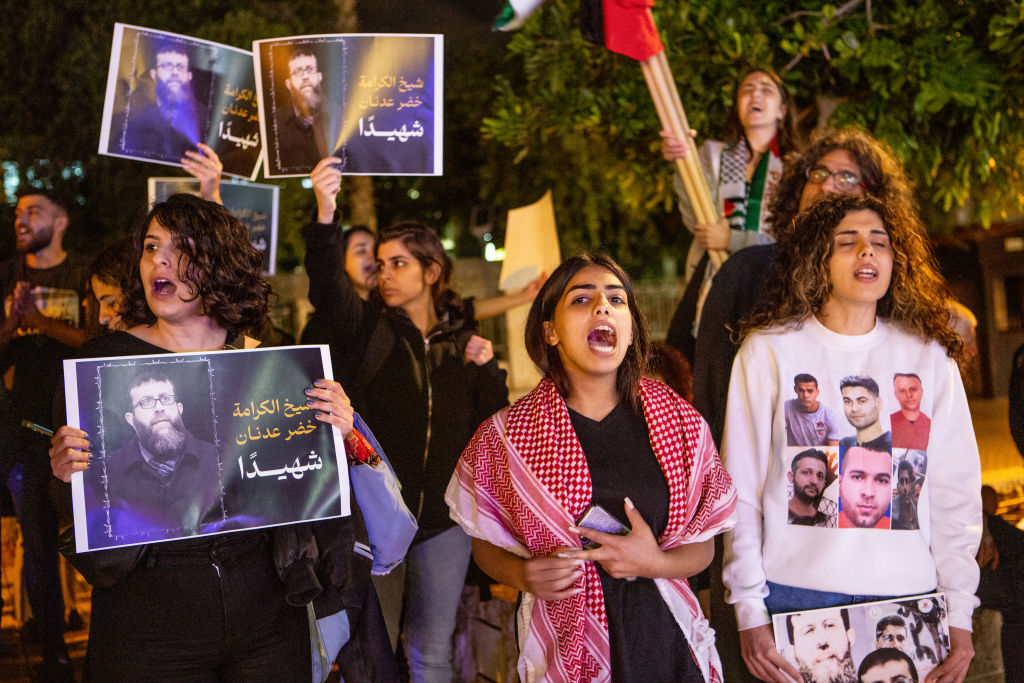
Palestinian resistance factions in Gaza announced Tuesday that they had targeted Israeli settlements with rocket fire, in response to the death following a hunger strike of Palestinian prisoner Khader Adnan, warning of further action if needed.

The joint operations unit of Palestinian groups in the besieged coastal enclave said they bombed Israeli towns within the vicinity of the Gaza Strip, such as Sderot, in an initial response to "the assassination of Commander Khader Adnan" who they described as a national hero.

Adnan was pronounced dead on Tuesday after spending 87 days on hunger strike in administrative detention. He was one of the most prominent Palestinian prisoners behind bars in Israel.

Adnan was a senior official in the Palestinian Islamic Jihad movement, which is the second largest Palestinian faction in Gaza after Hamas.

"This heinous crime will trigger responses from our people everywhere…with the help of God Almighty," the Palestinian fighters said, adding that "we will remain loyal to the blood of our martyrs and the sacrifices of our families, and their cause will remain a top priority for the leadership of the resistance in all circumstances."

They warned Israel that any attack against Palestinians would be met with a response.

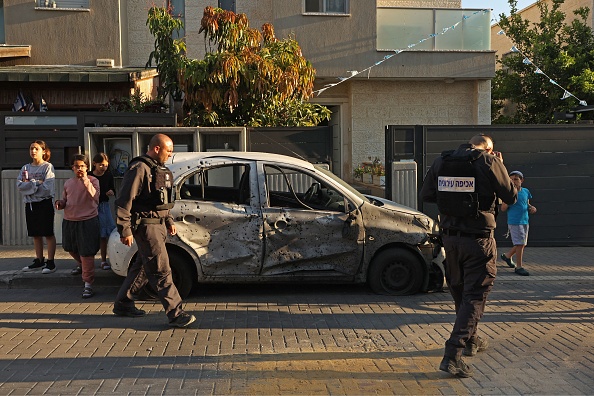
About 25 rockets were fired from the north and south of the Gaza Strip as Israel’s Iron Dome intercepted most of them.

Plumes of black smoke could be seen from Sderot, where some of the rockets landed, causing material damage.

There were also reports of at least three injuries, with one person being seriously wounded whilst working on a construction site.

The Israeli army responded with artillery fire, targeting a monitoring point of the Palestinian resistance groups east of Gaza City. The shelling however did not lead to any injuries, the Palestinians said.

Israelis living in settlements close to Gaza were told to remain indoors for the time being.

Who was Khader Adnan, the Palestinian detainee who died on hunger strike?

The New Arab Staff
02 May, 2023

Palestinians mourned Khader Adnan, a 45-year-old prisoner who had repeatedly been detained by Israel, after he died following 87 days on hunger strike.

Palestinian prisoner Khader Adnan, who spent 87 days on hunger strike in administrative detention in Israel, was pronounced dead on Tuesday.

He is the 237th Palestinian prisoner to die in Israeli detention since 1967 and one of the best-known detainees held by Israel, being arrested and released from jail several times on what Israeli authorities described as "terror-related charges", or without charge.

When Adnan died at 45, he had spent many years of his life behind bars, in both Israeli and Palestinian prisons. Before his death on Tuesday, Adnan refused any medical treatment since beginning his hunger strike on 5 February.

Who was Khader Adnan?

Born on 24 March 1978, Adnan hailed from the town of Arraba, south of Jenin in the occupied West Bank.

He held a bachelor's degree in economics and mathematics and then joined a master's programme in economics at Birzeit University.

Adnan became a political advocate during his time at university, joining the Palestinian Islamic Jihad movement (PIJ) which was founded by Palestinian students in 1981.

He would later become a spokesperson for the Islamist group in the West Bank, where they have a limited presence compared to the Gaza Strip.

He also ran a bakery and briefly worked as a banker.

He was first arrested and held for four months by Israeli authorities in 1999.

The same year, Palestinian security forces arrested him for leading student protests against visiting French Prime Minister Lionel Jospin. He was detained by the Palestinian Authority two more times after that.

Adnan would spend years of his life in and out of Israeli prison cells.

He leaves behind nine children, the oldest of whom is 14 and the youngest only two-years-old.

Why were his hunger strikes so important?


In 2012, a 66-day hunger strike turned Adnan into a national hero and revitalised this form of protest as a legitimate form of protest against conditions and other grievances for Palestinian detainees.

At the time, it was the longest hunger strike ever staged by a Palestinian prisoner.

The 2012 protest shone a light on administrative detention, a controversial measure by Israeli authorities under which people are interned without charge for renewable periods of up to six months. Rights groups have repeatedly slammed the practice, which can see Palestinians jailed indefinitely.

Voices
Yara M. Asi

In 2015, he again secured his release from Israeli custody with a 56-day hunger strike and spent another 58 days and 25 days without food in 2018 and 2021 respectively.

Four prisoners on hunger strike died in the 1970s and 1980s as they were being force-fed by Israeli authorities.

Force-feeding was outlawed until 2015 when an Israeli law allowed a judge to sanction the practice in some circumstances.

What has the response been?


The PIJ has warned Israel that it will "pay the price for this crime".

Rockets were fired from the besieged Gaza Strip following news of Adnan's death, and Israel responded with artillery fire. There were reports of some injuries in Israel.

The PIJ is one of two main armed groups in Gaza, the other being Hamas which runs the Palestinian enclave.

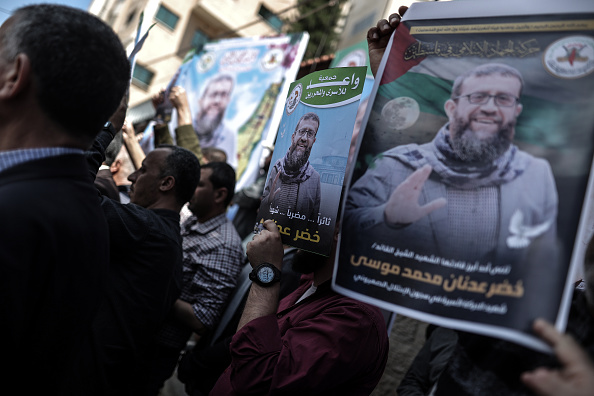
Hundreds of people also rallied in Gaza, paying their respects to Adnan, in a show of solidarity with other Palestinian detainees. Similar rallies were held across the West Bank and in his hometown of Arraba.

Rights groups said Israeli authorities ignored warnings that Adnan's life was in danger, but Israeli authorities said he had repeatedly refused medical treatment.

The Palestinian foreign ministry on Tuesday held Israel fully responsible for Adnan's death, calling for an international investigation into what it described as an "execution". It said it had referred his case to the International Criminal Court.

(The New Arab, Agencies)
Scientist may have discovered how people see 'white light' during near-death experiences

Researchers monitored patients who were nearing death, and some showed a surge of gamma wave activity before passing away.


Jacob Rawley
 2 MAY 2023

Researchers now want to look at patients who have survived near death experiences 
(Image: Getty Images/Science Photo Library RF)

Researchers may have uncovered what is happening in our brains during the final moments before we pass away.

Some who have had near-death experiences claimed that they saw white lights and loved ones, and a new study appears to confirm that there may be some activity in a dying brain.

Published in the Proceedings of the National Academy of Science, the investigators tracked the brain activity of near-death patients.

"How vivid experience can emerge from a dysfunctional brain during the process of dying is a neuroscientific paradox," said George Mashour, M.D., Ph.D., the founding director of the Michigan Center for Consciousness Science.

"Dr. Borjigin has led an important study that helps shed light on the underlying neurophysiologic mechanisms."

The research may explain why people hear voices of loved ones or see light in near-death experiences (Image: Getty Images/iStockphoto)

They looked at four comatose patients who were ultimately determined to be beyond medical help and, with their families' permission, were removed from life support. They all passed away due to cardiac arrest.

Following this, two of the patients showed an increase in heart rate along with a surge of gamma wave activity. Gamma wave activity is considered the fastest brain activity and associated with consciousness, according to the scientists.

The other two patients did not display the same increase in heart rate upon removal from life support nor did they have increased brain activity.

The two who did experience the changes had previous reports of seizures, but had no seizures during the hour before their deaths

Similar signatures of gamma activation were recorded in the dying brains of both animals and humans upon a loss of oxygen following cardiac arrest.

"We are unable to make correlations of the observed neural signatures of consciousness with a corresponding experience in the same patients in this study," explained Nusha Mihaylova, M.D., Ph.D., a clinical associate professor in the Department of Neurology

"However, the observed findings are definitely exciting and provide a new framework for our understanding of covert consciousness in the dying humans."

Because of the small sample size, the authors caution against making any global statements about the implications of the findings.

Moving forward, they say that larger studies on patients who survive cardiac arrest could provide much needed data. This could help to determine whether or not these bursts in gamma activity are evidence of hidden consciousness even near death.


Summer heat waves producing 'dramatic' climate impacts, say New Zealand researchers

ocean sunset
Credit: Pixabay/CC0 Public Domain

Heat waves in Aotearoa New Zealand over recent summers are already causing wide-ranging effects on the environment, a new study suggests.

Summer heat waves in 2017/18, 2018/19 and 2021/22 saw the warmest months on record, with many more  (≥ 25ºC) than usual, says Dr. Jim Salinger, the study's lead author and adjunct research fellow at Te Herenga Waka—Victoria University of Wellington.

"These warm season heat waves (from November to March) all produced dramatic climate impacts across New Zealand, including marine heat wave conditions and major loss of glacier ice volume in the Southern Alps.

"Combined, the three recent heat waves peeled 17% of the total ice off the Southern Alps glaciers, which have lost half their volume since 1949—down from 65 to 32 km3 by 2021," Dr. Salinger says.

Off the north-west and south-west coasts of New Zealand, marine heat wave conditions were extreme during these events.

Professor James Bell, a co-author of the study and  at Victoria University of Wellington, says the increasing frequency and strength of marine heat waves is a major concern.

"The impacts on marine fauna of the 2021/22 heat wave were much larger than any that have been reported during previous heat waves, although they were disproportionately felt among some ," Professor Bell says.

Kororā Little Penguins in the Bay of Plenty are among the species that researchers believe may have taken a hit from warming waters. The study suggests the 2021/22 marine heat wave may be linked to the starvation and death of kororā in the region with rising  potentially affecting the animal's ability to find food.

Heat waves have also been linked to the widespread bleaching of marine sponges across the north and south of New Zealand, affecting millions of sponges.

"For most  in our waters, we don't know their thermal thresholds—the temperatures they're able to tolerate—so it's possible that future, more intense marine heat waves will have even bigger impacts than we've seen to date," Professor Bell says.

Study co-author Professor James Renwick, a professor of physical geography at the University, says heat waves of this type used to be rare, occurring once every few hundred years, but they're now happening more often as the climate warms.

"By the late 20th century, heat waves were occurring once every 40 years. With 1.5°C of warming, events such as we've seen in recent summers would have estimated recurrence intervals of two to three years. With 2°C of warming, these summers would be considered cool relative to what we'd experience with +2°C of warming," Professor Renwick says.

Dr. Salinger says New Zealand temperatures have increased by 1.1ºC since the 1870s.

"Recent summer heat waves are the result of this regional warming coinciding with often strong La Niña and positive Southern Annular Mode conditions pushing anticyclones across southern New Zealand and to the east, with more frequent warm moist easterlies and north easterlies across the North Island," he says.

The heat wave study is published in the journal Weather and Climate.

More information: Coupled ocean-atmosphere summer heatwaves in the New Zealand region: an update. www.metsoc.org.nz/resources/Do … 2_Salinger_et_al.pdf

Provided by Victoria University of Wellington El Niño is coming, and ocean temps are already at record highs. That can spell disaster for fish and corals