It’s possible that I shall make an ass of myself. But in that case one can always get out of it with a little dialectic. I have, of course, so worded my proposition as to be right either way (K.Marx, Letter to F.Engels on the Indian Mutiny)
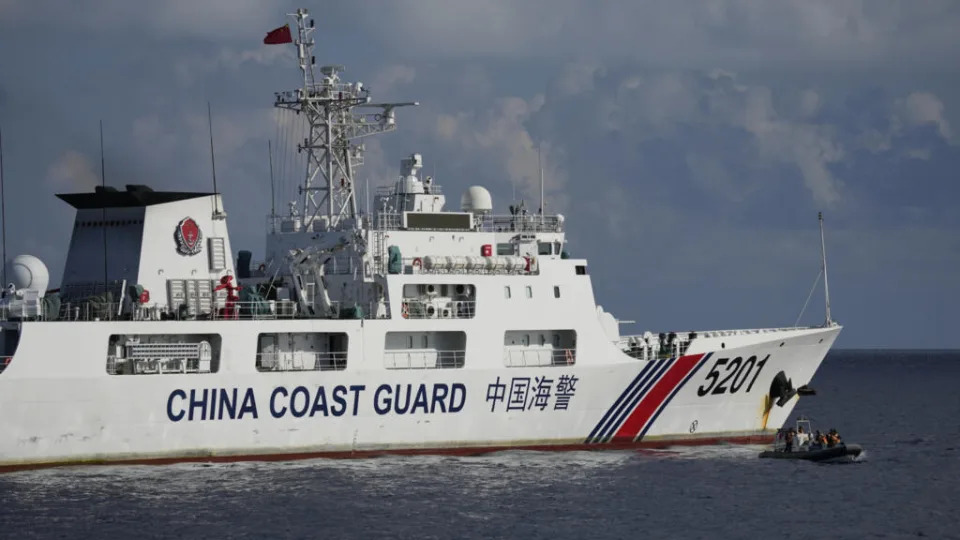
A Chinese fishing vessel has capsized in the central Indian Ocean, with its crew of 17 Chinese, 17 Indonesian and five Filipino sailors missing, state media reported Wednesday.
A multinational search and rescue operation was under way to locate the mariners, and China's premier called on authorities to strengthen safety procedures for fishing operations at sea.
The missing vessel, named Lu Peng Yuan Yu 028, capsized at about 3 am Beijing time on Tuesday (1900 GMT Monday).
President Xi Jinping ordered the coordinated search, CCTV said, but "so far, no missing persons have been found".
Teams from around the region are now at the scene and China has deployed two commercial vessels -- the Lu Peng Yuan Yu 018 and Yuan Fu Hai -- to help in the operation.
"It is necessary to further strengthen the safety management of fishing vessels at sea and implement preventive measures to ensure the safety of maritime transportation," Premier Li Qiang said, urging relevant ministries to strengthen oversight of the fishing sector.
Beijing's Ministry of Foreign Affairs launched an "emergency mechanism for consular protection" involving embassies and consulates in Australia, Sri Lanka, Maldives, Indonesia, the Philippines and other countries, according to CCTV.
(AFP)
New Zealand police suspect arson caused Loafers Lodge hostel fire that killed six
Posted 5h ago
Police officers examine the crime scene at Loafers Lodge hostel where a fire killed at least six people.(AFP: Marty Melville)
New Zealand police say a fire at a hostel in Wellington, in which at least six people were killed, is suspected to have been arson and they have opened a homicide inquiry.
Key points:
New Zealand police say they are treating a hostel fire in which at least six people died as arson
The blaze broke out on the top floor of the Loafers Lodge hostel in Wellington early on Tuesday
The cause of the fire is not known but police say there was a couch fire late on Monday, two hours before the fatal fire
A blaze broke out on the top floor of the Loafers Lodge in the suburb of Newtown in the early hours of Tuesday, causing major structural damage that is hampering recovery efforts.
Following a health and safety assessment on Wednesday, Fire and Emergency New Zealand (FENZ) deemed it safe for police to enter the 92-room building to begin their investigation and find and identify the dead.
"This scene examination will be an extensive and methodical process, and we expect it to take some time — likely several days," Acting Wellington District Commander Dion Bennett said.
"I can confirm that we are treating the fire as arson."
The hostel provided accommodation for construction workers, hospital staff and those serving sentences in the community for minor crimes, among other people.
Police said some people were missing and put the number at less than 20 people. But they said some of them might just be unaccounted for.
The cause of the fire was not known but police said there was a couch fire late on Monday, two hours before the fatal fire. It had not been reported to emergency services at the time.
"We will be seeking to confirm any link between that couch fire and the subsequent fatal fire," Inspector Bennett said.
"The next step for us is going through and ensuring that there isn't anybody else in there and obviously working with police to investigate and support them in the removal of the six people," FENZ region manager Bruce Stubbs told Radio New Zealand.
Reuters
Report accuses French military of failures over journalist's kidnapping
AFP Issued on: 17/05/2023
01:38
French forces tried to use a journalist's visit to northern Mali to track a jihadist leader but failed to prevent the reporter from being kidnapped by the militants, French media reported Wednesday.
French army in spotlight over journalist's kidnapping in Mali
Paris (AFP) – French forces tried to use a journalist's visit to northern Mali to track a jihadist leader but failed to prevent the reporter from being kidnapped by the militants, French media reported Wednesday.
The report comes amid an investigation into what happened to journalist Olivier Dubois, 48, who was abducted in the northern Malian town of Gao in April 2021.
He flew home to France in March, nearly two years after he was kidnapped by the Al-Qaeda-linked Group to Support Islam and Muslims (JNIM).
Based on French and Malian judicial documents from the probe, the report said a fixer working with Dubois had informed France's anti-jihadist Barkhane force of his plans to interview a jihadist leader.
Barkhane planned to track the leader back to his base but abandoned the operation last minute, it said.
But they did not deploy the necessary means to prevent the journalist from being kidnapped, it said.
The report is published by newspaper Le Monde, with daily Liberation and broadcasters RFI and TV5Monde.
But a diplomatic source said a letter had been sent to Dubois the day before he was kidnapped, formally advising him against making the trip.
In addition, Liberation -- for whom Dubois was writing at the time -- had refused to back his plan to interview the jihadist in view of the risks.
Contacted by AFP, the French foreign ministry declined to comment due to the ongoing investigation.
The military general staff also declined to comment.
An internal army probe found in late 2021 that there had been "no personal fault within the Barkhane force" over the kidnapping.
But "the sensitivity of the topic was not sufficiently taken into account so as to allow... a dissuasive action with regards to the journalist", it said.
French forces withdrew from Mali last year following a fallout with the ruling junta.
South Africa's Ramaphosa announces peace mission to Ukraine, Russia
AFP Issued on: 17/05/2023
Six African leaders plan to travel to Russia and Ukraine "as soon as is possible" to help find a resolution to the war, South African President Cyril Ramaphosa said
Europe, G7 sign war register for Ukraine
Marc BURLEIGH Wed, 17 May 2023 at 5:40 am GMT-6·3-min read
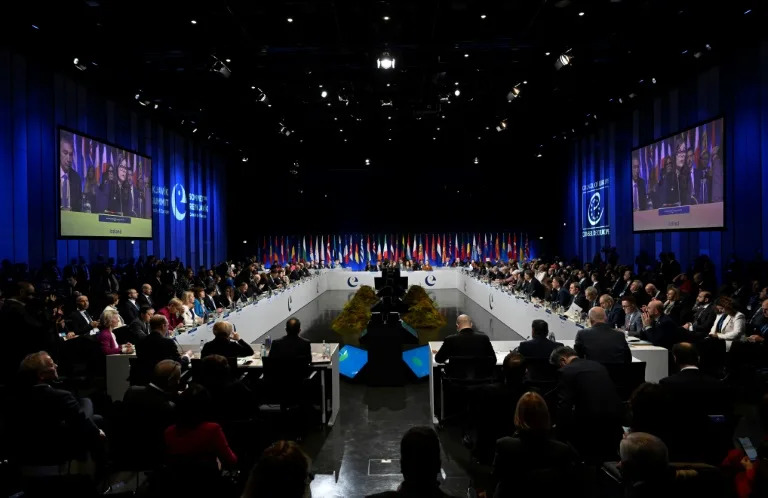
Europe and the United States on Wednesday hailed a newly created "register of damage" for Ukraine as a first step to making Russia pay for its war.
The instrument, created by the 46-nation Council of Europe, records claims of damage or loss, paving the way to a future mechanism to compensate victims of the conflict.
The register is a "first, necessary, urgent step" ensuring "justice that is centred on the victims" of the war, said council head Marija Pejcinovic Buric on the second day of the summit in Iceland.
She said that, by early Wednesday, 40 countries had signed onto the register, including the United States, Japan and all other G7 nations.
Another three countries were finalising internal procedures to do so.
She and other leaders emphasised that countries outside the Council of Europe -- a pan-continental rights body separate from the European Union but incorporating all 27 EU member states -- could back the initiative.
The register, established initially for three years, will be lodged in The Hague with a satellite office in Ukraine.
Ukrainian Prime Minister Denys Shmyhal, at the summit, hailed the register as "an important milestone on the road to justice and reparations for Ukraine and the Ukrainians who have suffered so much from this war.
"The hard work begins now -- we need to ensure that the register becomes operational soon, so that victims of Russian aggression could submit their claims."
- Wide support -
US ambassador to the UN Linda Thomas-Greenfield, at the summit in an observer capacity, told Icelandic media that America was "proud" to join it and was working to drum up funds to contribute to it.
Russia was kicked out of the council last year after invading Ukraine.
Several EU countries back Ukraine's call for a special court to be set up to try Russia's leadership for war crimes.
The Hague-based International Criminal Court (ICC) in March issued an arrest warrant for Putin, accusing him of unlawfully deporting Ukrainian children.
German Chancellor Olaf Scholz voiced support for the register, which he signed on to, but pointed out that "it doesn't settle the issue of payment for the damages" to Ukraine.
He said Europe could use money raised from frozen Russian funds to help pay for Ukraine's postwar reconstruction.
The move by the wider European community highlighted Russia's isolation on the continent.
The summit "shows clearly that (Russian President Vladimir) Putin has failed," Scholz said. - Ukraine presses for jets -
"This meeting and this declaration is important to show the strength of our unity, the strength of our commitment" to Ukraine, the head of the EU's European Council, Charles Michel, said.
The summit was held just after Ukrainian President Volodymyr Zelensky wrapped up a whirlwind tour of major European capitals that saw Germany, France and Britain all vow to step up arms deliveries to Ukraine.
Ukraine is believed to be preparing an offensive on Russian positions in the east of its territory to be launched within weeks.
Zelensky is intent on boosting air defences as Russia deploys missiles and drones to inflict long-range damage.
He is pressing Western allies to provide advanced fighter jets but they are wary, fearing it could escalate the war.
British Prime Minister Rishi Sunak and Dutch counterpart Mark Rutte agreed on the first day of the summit that they would build an "international coalition to provide Ukraine with combat air capabilities, supporting with everything from training to procuring F-16 jets".
Five people died and thousands were evacuated from their homes after heavy rains caused devastation across Italy's northern Emilia Romagna region, while this weekend's Imola Grand Prix was cancelled, officials said Wednesday.
"The city is on its knees, devastated and in pain," said Gian Luca Zattini, the mayor of Forli, a city near Bologna where three people died. "It's the end of the world."
Two of the bodies in Forli were recovered by divers on Wednesday morning, as part of a huge rescue effort involving emergency services and the armed forces.
"Overall in Forli there were three victims, one in Cesena and one in Cesenatico,", which could be a German man previously reported missing, a local authority official told AFP.
Emilia Romagna, which is one of Italy's richest regions, had already been hit by heavy rain just a fortnight ago, causing floods that left two dead.
This time, around 50 centimetres (20 inches) of rain fell within 36 hours in Forli, Cesena and Ravenna -- around half the normal annual rainfall, a situation "with few precedents", Civil Protection Minister Nello Musumeci said.
"It is still a very critical situation," he told reporters, adding that while the rain was still falling, it was expected to lighten during the day.
The flooding caused the cancellation of the Formula One Emilia Romagna Grand Prix, which had been due to take place in Imola on Sunday.
Organisers said they could not guarantee the safety of fans, teams and staff.
At least eight killed by heavy flooding in Italy, as river levels continue to rise
By Niamh Kennedy and Barbie Latza Nadeau, CNN, and Reuters Wed May 17, 2023
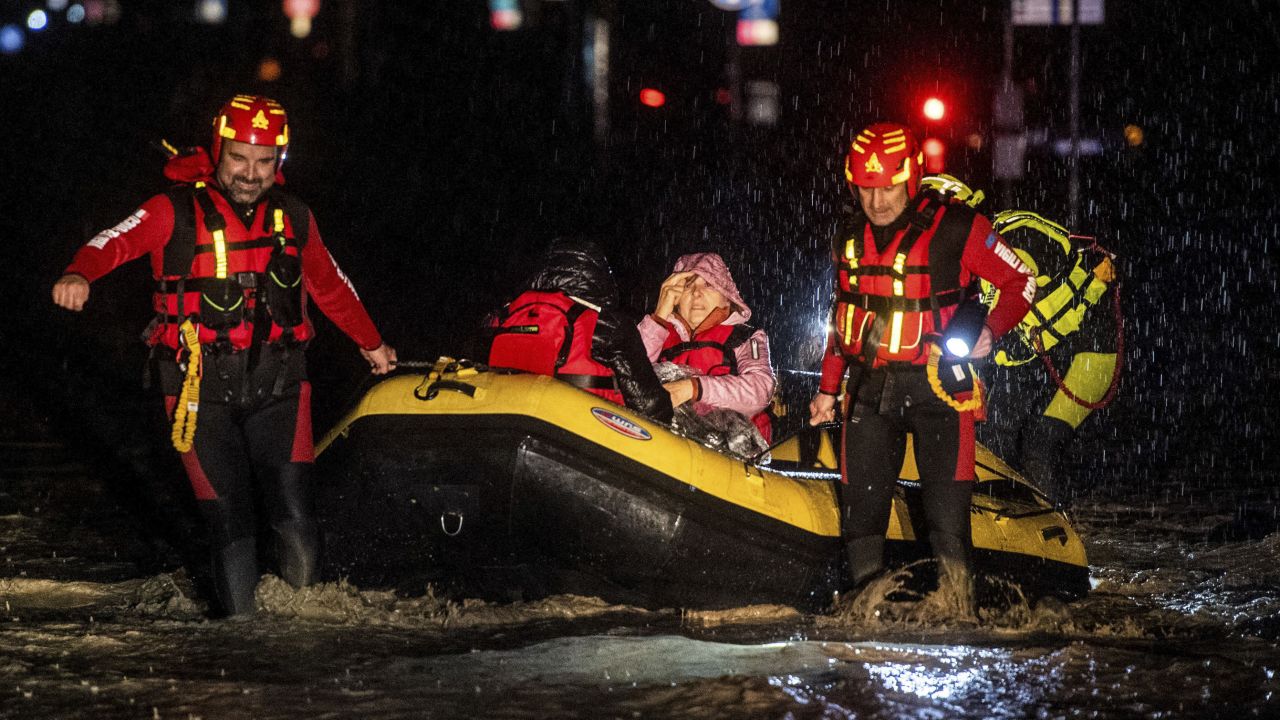
Firemen and civil protection rescuers evacuate a woman with an inflatable boat in the city of Forli in Italy's northern Emilia-Romagna region on Wednesday following severe flooding.
AFP/Getty Images
CNN —
At least eight people have been killed by heavy flooding and mudslides in the northern Italian region of Emilia Romagna, with more than 5,000 residents being forced to evacuate, according to local authorities.
The bodies have been retrieved from various locations, the vice president of Emilia Romagna, Irene Priolo, told reporters according to Reuters, adding that the rains were easing but that river levels were still rising.
The region, which has been suffering a prolonged drought, is under a red alert – the highest level warning or state of emergency for life-threatening weather events. The Emilia Romagna Grand Prix, scheduled for this weekend, has been canceled and the site evacuated.
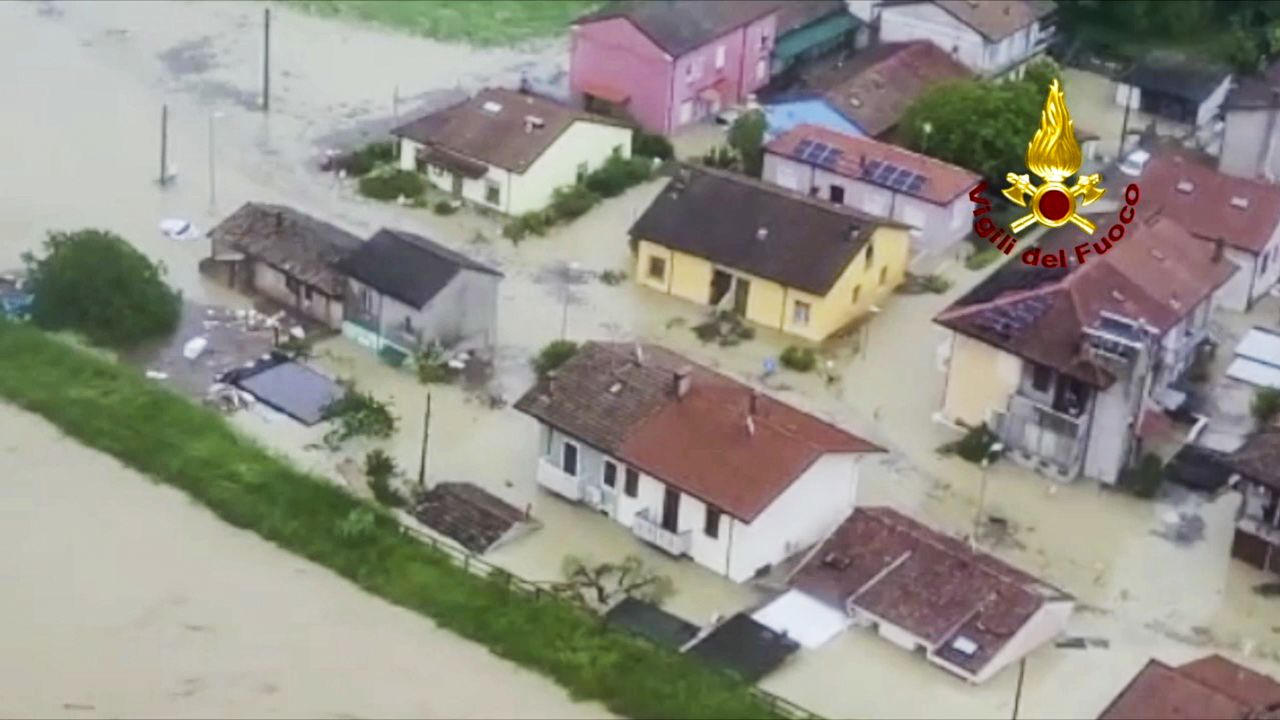
Fourteen rivers burst their banks in the region, forcing people in cities such as Cesena to climb onto the roof of their buildings to escape incoming water, Reuters reported. Firefighters rescued them with helicopters or rubber dinghies. An aerial view of flooded houses in Cesena, where residents had to climb onto rooftops to escape high water levels.
Vigili del Fuoco/AP
A total of 600 firefighters have been deployed from across Italy to assist with evacuations in the region after Italy’s longest river, the Po, broke its banks,” the Italian Department for Civil Protection said in a tweet.
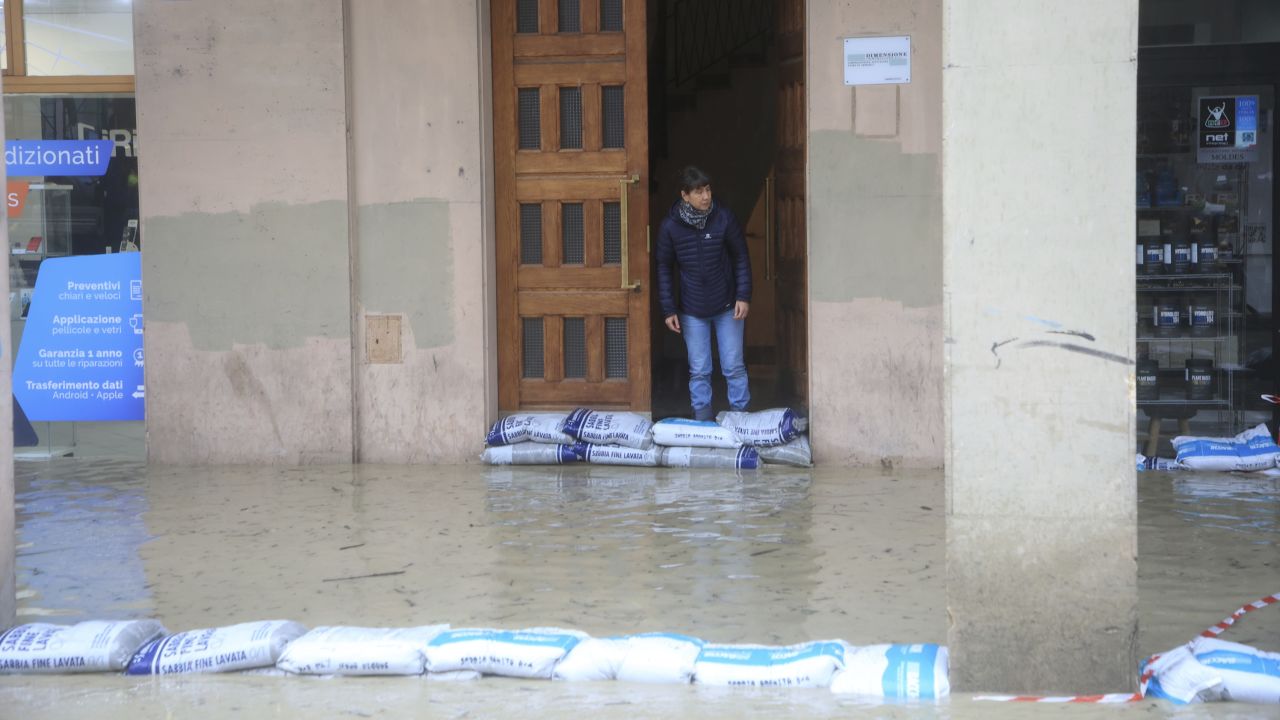
Residents in numerous areas across the region, including in the city of Bologna, were asked not to leave their homes. Sandbags were lined up along a flooded street in Bologna, Italy, on Tuesday.
Michele Nucci/LaPresse/AP
‘Worst night in history’
The city of Ravenna has also been heavily affected. “It’s probably been the worst night in the history of Romagna,” Ravenna Mayor Michele de Pascale told RAI public radio according to Reuters, saying that 5,000 people had been evacuated from his city alone overnight.
“Ravenna is unrecognizable for the damage it has suffered,” he added.
Tweeting on Tuesday evening, Italian Prime Minister Giorgia Meloni extended her “total sympathy” to those affected by the flooding, adding that the government stands “ready to intervene with the necessary aid.”
This pledge was echoed by Deputy Prime Minister Antonio Tajani in a tweet Wednesday morning, saying that the “government will do everything necessary to help” everyone from “evacuees to those who have lost crops” due to the flooding.
In the neighboring eastern region of Le Marche, also severely hit by flooding, 200 firefighters have been mobilized for rescue efforts in the past 24 hours, according to the Vigili del Fuoco fire service.
The torrential rains come after months of drought that dried out the land – which meteorologists say has reduced its capacity to absorb water, worsening the floods, according to Reuters.
Water levels on northern Italy’s Lake Garda fell to record lows in February, with Venice experiencing unusually low tides.
From lengthy droughts to severe flooding, the intensity of water-related disasters around the world has increased over the last two decades as global temperatures climbed to record levels, according to recent research.
The study from NASA scientists published in March in the journal Nature Water found that increasingly frequent, widespread and intense droughts and floods were linked more strongly to higher global temperatures than to naturally changing weather patterns, like El Niño and La Niña. This suggests these intense events will increase as the climate crisis accelerates, the study says.
Formula 1 race canceled
Formula 1 has announced the cancellation of this weekend’s Emilia Romagna Grand Prix because of heavy flooding in the region, citing safety concerns.
In a statement shared on Twitter, it said, “It would not be right to put further pressure on the local authorities and emergency services at this difficult time.”
On Tuesday, Formula 1 staff were asked to leave the site of the race as a precautionary measure, an F1 source told CNN.
The Emilia Romagna Grand Prix is the first event of the Formula 1 season in Europe and was scheduled to take place this weekend.
Murdering the dead: Amadeo Bordiga on capitalism and other disasters - Antagonism ... Antagonism's introduction to a collection of articles by Amadeo Bordiga, ...
Jul 26, 2021 ... Full text: https://www.marxists.org/archive/bordiga/works/1951/murder.htmArt is by Steven Russell Black.
Global temperatures predicted to soar to record levels over next five years
By A.L. Lee Global temperatures are expected to soar to historic levels over the next five years due to increased greenhouse gases that would give rise to extreme weather events, according to a new warning from the World Meteorological Organization.
May 17 (UPI) -- Global temperatures are likely to soar to historic levels over the next five years due to increased greenhouse gases that would give rise to extreme weather events, according to a new warning from the World Meteorological Organization. The report, released Wednesday by the international climate agency in Geneva, says 2023 through 2027 will likely go down as the hottest years on record, with a 66% chance of the average annual surface temperature usurping the climate goal set by the Paris Agreement to shrink global warming through the next century.
"This report does not mean that we will permanently exceed ... long-term warming over many years. However, WMO is sounding the alarm that we will breach the 1.5°C level on a temporary basis with increasing frequency," said WMO Secretary-General Petteri Taalas.
A warming El Niño weather pattern was also expected to develop in the coming months and would "combine with human-induced climate change to push global temperatures into uncharted territory," Taalas explained, adding that "We need to be prepared."
The chances of exceeding the average global surface temperature has gone up steadily since the 1.5°C goal was set in 2015, leading climate scientists to predict the short-term global heatwave.
The annual mean global near-surface temperature for each year between 2023 and 2027 is predicted to fall between 1.1°C and 1.8°C higher than average, the agency said.
Extreme temperatures would be felt across a wide swath of the planet, leading to torrential rains in the Sahel, northern Europe, Alaska and northern Siberia, and reduced rainfall this year over the Amazon and parts of Australia, the report notes.
The report comes as numerous other climate warnings have emerged in recent months, including the State of GlobalClimate 2022, released by the United Nations in November, which declared the last eight years as the hottest ever on record.
A separate study published in January predicted at least half of the world's glaciers will melt and disappear before the turn of the next century as global warming continued on an upward trajectory despite meaningful efforts in recent years to address the problem.
The world's oceans would rise dramatically under such a scenario and lead to flooding and other major disasters around the world.
In another sign of growing of concern, the Global Report on Internal Displacement, released last Thursday, said more than 32 million people worldwide were forced from their homes by weather-related disasters in 2022.
The United States ranked sixth in the world for the most people displaced by climate disasters with 543,000.
Efforts to curtail the climate crisis have picked up steam around the world in recent years, with numerous climate summits and President Joe Biden helping to galvanize the American response.
In recent months, the Biden administration has acted with increased urgency to align with the international climate blueprint, with the United States on "a clear path" to achieving its climate goals due to the president's "all-hands-on-deck strategy for accelerating key clean energy technology innovations," the White House said previously.
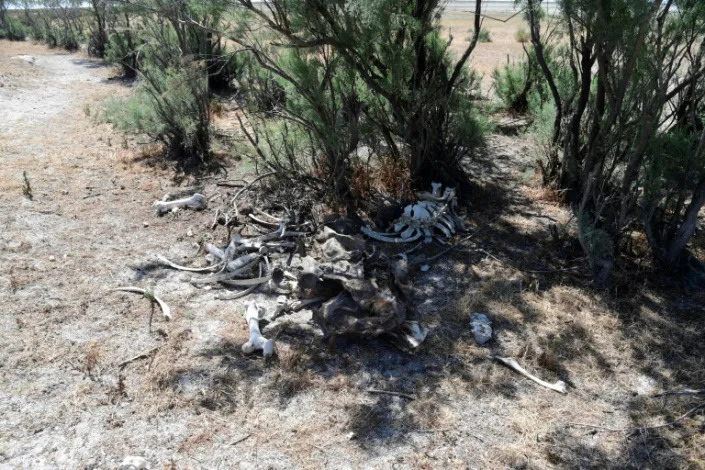
Water woes shake up Spain's election campaign Valentin BONTEMPS Tue, May 16, 2023 Cattle bones on scorched fields in the Donana National Park in May 2023
Concern over the future of Spain's Donana natural park, which is threatened by overfarming, has made water management a key issue ahead of local elections at the end of May.
Spain's water resources are becoming exhausted while its irrigation needs keep rising, "an unsustainable situation", said Felipe Fuentelsaz of WWF Spain.
The Donana National Park in the southern Andalusia region, home to one of Europe's largest wetlands, is in a "critical state", he added.
"For the past two years, it has barely rained. But farmers continue to draw enormous quantities of water from the groundwater table."
With its mix of dunes, forests and lagoons, the park once hosted huge colonies of migrating birds. Now it is mostly dry, and storks and flamingos are a rare sight.
A recent study by the Spanish National Research Council (CSIC) found 59 percent of the park's largest lagoons have dried up.
And the situation could get worse.
The conservative Popular Party (PP) which governs the region introduced a draft law backed by far-right party Vox that would legalise illegal berry farms near the park.
The WWF estimates some 1,500 hectares (3,700 acres) of farmland which are currently irrigated using water from illegal wells would be legalised by the move.
Defenders of the proposal argue it will help farmers who missed out during a previous regularisation of farms in the area in 2014 under a Socialist government.
The plan will "put an end to an injustice", said Manuel Andres Gonzalez, a lawmaker with the PP from the southern province of Huelva where the park is located.
He argues "hundreds" of farmers were unfairly left out of the previous regularisation.
- 'Selling a dream' -
These arguments are rejected by the left-wing mayor of the town of Almonte located inside the park, Rocio del Mar Castellano, who called the proposed plan "dangerous".
"There is no more water. How can they propose increasing the amount of irrigated land? The PP is selling a dream to win votes," she added.
The debate has made headlines in the run-up to the regional and local elections on May 28, and a year-end general election.
Both Socialist Prime Minister Pedro Sanchez and the national leader of the PP, Alberto Nunez Feijoo, have visited Donana in recent weeks.
"Donana will not be touched," said Sanchez last month, accusing the right of "climate denial".
Feijoo responded by saying Donana "does not belong to Sanchez".
He accuses the premier of fuelling a controversy over the plan to distract attention from his government's failure to adequately manage water resources.
If the right wins the next general election, Feijoo has said: "We will get water to places that don't have any."
Pablo Simon, a politics professor at the Carlos III University in Madrid, said Sanchez's focus on the climate issue allows him "to reposition himself on an axis that suits him -- a left-right axis in which he has more to gain than to lose".
- 'Playing with fire' -
The debate has thrown the spotlight on how drought-prone Spain uses its fresh water.
The country is the European Union’s biggest producer of fruit and vegetables and 80 percent of its fresh water is used by farmers.
"We can't continue to be Europe's vegetable garden. It's irresponsible," said Julia Martinez, an expert with the New Water Culture Foundation, a non-profit organisation aimed at promoting more sustainable water management.
The group calls for a "drastic change in policy", with a sharp reduction in the amount of irrigated land in Spain.
Sanchez's government announced last week it planned to spend 1.4 billion euros ($1.5 billion) to build new infrastructure such as desalination plants to boost freshwater supplies.
Huelva province accounts for 90 percent of Spain's strawberry output.
Castellano, the mayor of Almonte, said that while strawberry farming was important, "we can't play with fire".
"If the water disappears, we won't have any more strawberries at all," she added.
vab/ds/mg/gil
Global warming likely to breach 1.5C threshold for first time
World Meteorological Organization raises alarm, saying at least one of the next five years will be the hottest on record.
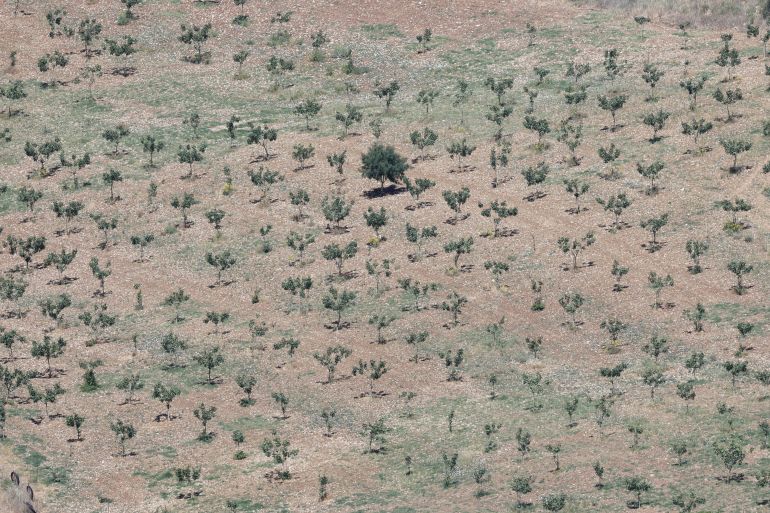
Pistachio trees are seen in a field affected by a prolonged drought in Ronda, southern Spain
[Jon Nazca/Reuters]
Published On 17 May 202317 May 2023
It is near certain that the next five years will be the warmest period ever recorded, the United Nations has warned, as greenhouse gases and El Nino combine to send temperatures soaring.
For the first time, global temperatures are now more likely than not to breach 1.5 degrees Celsius (2.7 degrees Fahrenheit) of warming until 2027, the World Meteorological Organization said on Wednesday.
But that did not necessarily mean the world would cross the long-term warming threshold of 1.5C above pre-industrial levels set out in the 2015 Paris Agreement.
The WMO found that an El Nino weather pattern expected to develop in the next few months could have an effect.
The cooling La Nina conditions over the past three years, which ended in March 2023, have restricted the rise in global temperatures.
But the El Nino natural phenomenon will see waters in the tropical Pacific heat the atmosphere above, spiking global temperatures
It “will combine with human-induced climate change to push global temperature into uncharted territory”, and WMO Secretary-General Petteri Taalas.
“This will have far-reaching repercussions for health, food security, water management and the environment. We need to be prepared.”
Jemilah Mahmood, a physician and expert at the Malaysia Climate Action Council, told Al Jazeera: “I think that the risk is real for everyone, whether you live in the northern hemisphere or the developing world.
“No amount of work and advocacy in the climate space is enough, when we have governance that is favouring fossil fuel production. We need to re-examine why there is so much inaction.”
She said the WMO report left her feeling “angry”.
“We are facing what the UN has called an uncertainty complex. How can we accept this growing number year on year and wonder why humanitarian needs are increasing?”
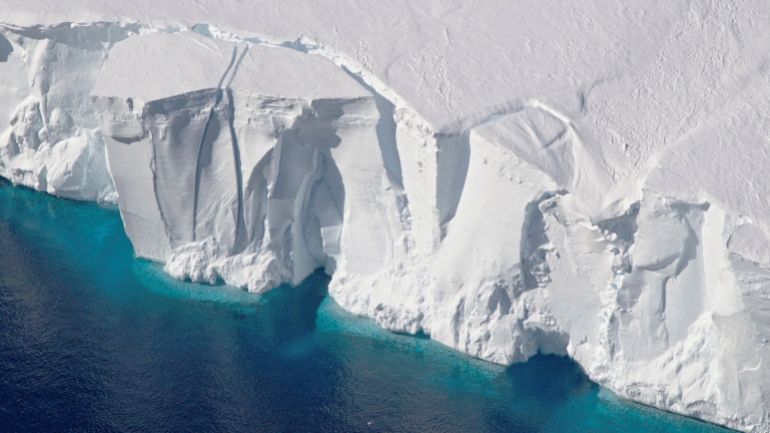
An aerial view of the 200-foot (60-metre) front of the Getz ice shelf with cracks, in Antarctica, in this 2016 handout image [File: NASA/Handout via Reuters]
With a 66 percent chance of temporarily reaching 1.5C by 2027, “it’s the first time in history that its more likely than not that we will exceed 1.5C”, said Adam Scaife, the head of long-range prediction at Britain’s Met Office Hadley Centre who worked on the WMO’s latest Annual to Decadal Climate Update.
The WMO also found a 98 percent chance that one of the next five years will be the hottest on record, surpassing 2016, which saw global temperatures affected by about 1.3C of warming.
Unlike the UN Intergovernmental Panel on Climate Change’s climate projections, which are based on future greenhouse gas emissions, the WMO’s predictions are made on long-range weather forecasts.
“There’s been flooding in many parts of the world, there’s been droughts across the world, [and] they are increasing in frequency these extreme temperatures,” Leon Hermanson, a Met Office scientist who worked on the report, told Al Jazeera.
“We’re even seeing extreme snowfall in regions, because although it needs to be cold to snow, there are also more areas which previously were too cold to have much moisture in the air – and now they’re seeing a lot of snow.”
The 2015 Paris Agreement set out long-term goals to guide countries to reduce gas emissions and limit the global temperature increase in this century to 2C, while working towards a greater limit of 1.5C.
But the likelihood of temporarily exceeding 1.5C has increased over time as human-induced greenhouse gasses have led to increased ocean heating, sea ice and glacier melting.
Between 2017 and 2021, there was a 10 percent chance of exceeding the 1.5C threshold.
SOURCE: AL JAZEERA AND NEWS AGENCIES
Southern Europe braces for climate change-fuelled summer of drought
17 May 2023 Southern Europe braces for climate change-fuelled summer of drought
Brussels, May 17 (BNA): Southern Europe is bracing for a summer of ferocious drought, with some regions already suffering water shortages and farmers expecting their worst yields in decades.
As climate change makes the region hotter and drier, years of consecutive drought have depleted groundwater reserves, Reuters reported.
Soils have become bone dry in Spain, southern France and Italy. Low river and reservoir levels are threatening this summer's hydropower production.
With temperatures climbing into summertime, scientists warn Europe is on track for another brutal summer, after suffering its hottest on record last year – which fuelled a drought European Union researchers said was the worst in at least 500 years.
So far this year, the situation is most severe in Spain.
"The situation of drought is going to worsen this summer," said Jorge Olcina, professor of geographic analysis at the University of Alicante, Spain.
There's little chance at this point of rainfall resolving the underlying drought, either. "At this time of the year, the only thing we can have are punctual and local storms, which are not going to solve the rainfall deficit," Olcina said.
ZHB
Asia heatwaves made 30 times more likely by climate change: study
Issued on: 17/05/2023
Climate change made recent deadly heatwaves in Bangladesh, India, Laos and Thailand at least 30 times more likely, according to a new study
New Delhi (AFP) – Climate change made record-breaking deadly heatwaves in Bangladesh, India, Laos and Thailand last month at least 30 times more likely, according to a study published Wednesday.
Parts of India saw temperatures above 44 degrees Celsius (111 Fahrenheit) in mid-April, with at least 11 deaths near Mumbai attributed to heat stroke on a single day. In Bangladesh, Dhaka suffered its hottest day in almost 60 years.
The city of Tak in Thailand saw its highest-ever temperature of 45.4 Celsius, while Sainyabuli province in Laos hit 42.9 Celsius, an all-time national temperature record, the study by the World Weather Attribution group said.
Two deaths were reported in Thailand, but the real toll was likely higher as the extreme heat caused widespread hospitalisations, with the poor and vulnerable the worst affected.
The new study by international climate scientists looked at the average maximum temperature and the maximum heat index, which includes humidity.
"In both regions, the researchers found that climate change made the humid heatwave at least 30 times more likely, with temperatures at least 2 degrees Celsius hotter than they would have been without climate change," WWA said in a statement.
"Until overall greenhouse gas emissions are halted, global temperatures will continue to increase and events like this will become more frequent and severe," it added.
The analysis also found that such events in India and Bangladesh, previously once-a-century, can now be expected around once every five years because of human-caused climate change.
For Laos and Thailand, if global temperatures rise by two degrees Celsius -- as will happen within around 30 years if emissions are not cut rapidly -- such extreme events could happen every 20 years, compared to every two centuries now, the study said.
"We see again and again that climate change dramatically increases the frequency and intensity of heatwaves, one of the deadliest weather events there are," said Friederike Otto of the Grantham Institute for Climate Change and the Environment, who was involved in the study.
"Still, heat action plans are only being introduced very slowly across the globe. They need to be an absolute priority adaptation action everywhere, but in particular in places where high humidity enhances the impacts of heatwaves," she added.
Scientists were previously reluctant to directly link a particular event to climate change, but in recent years a new field of "attribution science", like that done by the WWA, has emerged.
Some weather events have a more complicated relationship to global warming than others, with the relationship to heatwaves and increased rainfall relatively easy to study.
Other phenomena such as droughts, snowstorms, tropical storms and wildfires are more complicated however, according to the WWA.
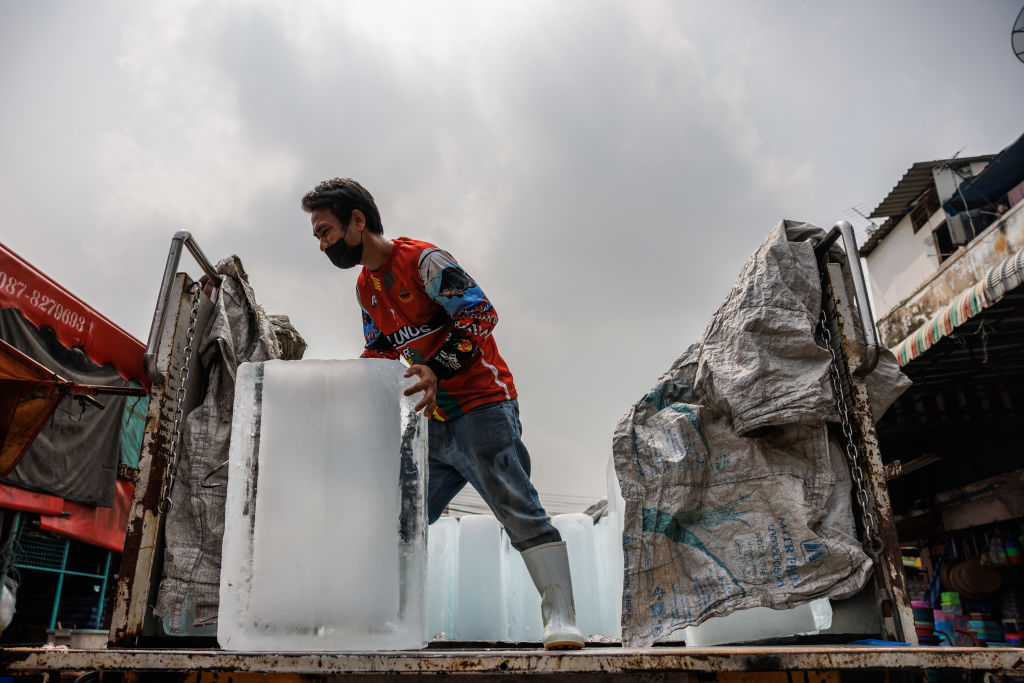
Asia’s Record-Setting Heat Wave Demonstrates Dangers of Warming World Workers unload blocks of ice at a wet market in Bangkok, Thailand, on April 27, 2023. Andre Malerba—Bloomberg/Getty Images
Asia remains in the grip of a blistering heat wave, chiming with predictions from climate scientists that 2023 could be the world’s hottest year.
In an ominous sign ahead of the northern hemisphere summer, an emerging El Nino weather pattern is pushing the mercury to unprecedented levels in southern parts of the continent.
Vietnam reported its highest ever temperature of 44.2C over the weekend, triggering power shortage warnings, while Laos also likely broke records. The Philippines cut classroom hours after the heat index reached the “danger” zone, reflecting the potentially deadly combination of heat and humidity.
The scorching temperatures follow a pattern of increasing extreme weather, caused by the accumulation of greenhouse gases in the atmosphere, that’s sending the world into uncharted territory. The sweltering conditions are testing the ability of governments to protect public health and also to prevent major disruptions to agriculture and power generation in economies that are still recovering from the ravages of Covid-19.
El Nino — characterized by warmer ocean temperatures across the Pacific — has far-reaching impacts on weather patterns around the world. It could bring relief to drought-parched areas of Argentina and the southern US, while blanketing parts of Asia and Australia with hotter, drier conditions. Coffee, sugar, palm oil and cocoa crops would be especially vulnerable.
The prolonged dryness across Vietnam, Laos, Myanmar, Cambodia and Thailand is due to suppressed rainfall over the past winter, said Tieh-Yong Koh, an associate professor and weather and climate scientist at the Singapore University of Social Sciences.
“Because dry soil heats up faster than moist soil, a hot anomaly naturally forms as spring arrives,” he said, adding that this has been exacerbated by global warming over the past decades.
Temperatures in Thailand remained above 40C in many northern and central regions over much of last week, pushing power demand to a fresh peak. A group of businesses and banks have asked the government to prepare an action plan to deal with a potential drought that they say might last for three years.
South East Asia's heating has been off the charts for several weeks. It's gone nuts in the past 2 days: >Laos: hottest day in history, 43.5C >Vietnam: hottest day in history, 44.1C >Dozens of monthly records broken
Rainfall in Malaysia may be as much as 40% lower in some areas, which could put palm oil production at risk in one of the world’s biggest producers of the commodity. Authorities are closely monitoring the return of forest fires and air pollution. An El Nino in 2015 caused a particularly bad episode of haze that was one of the worst environmental disasters in Southeast Asia.
Elsewhere in Asia, scorching temperatures have also roasted parts of China, India and Bangladesh over the past few weeks. Yunnan province, a major aluminum hub in southwest China, suffered its worst drought in a decade last month. India is on alert for more heat waves following soaring temperatures in April that prompted school closures in some states and caused at least 11 people to die of heat stroke after attending an event.
—With assistance from Thomas Kutty Abraham, Nguyen Kieu Giang, Manolo Serapio Jr. and Anuradha Raghu.