Wednesday, May 17, 2023

Webb telescope spots signs of universe's biggest stars

Pierre Celerier
Wed, May 17, 2023

An image of Messier-15, a globular cluster home to up to a million tightly packed stars

The James Webb Space Telescope has helped astronomers detect the first chemical signs of supermassive stars, "celestial monsters" blazing with the brightness of millions of Suns in the early universe.

So far, the largest stars observed anywhere have a mass of around 300 times that of our Sun.

But the supermassive star described in a new study has an estimated mass of 5,000 to 10,000 Suns.

The team of European researchers behind the study previously theorised the existence of supermassive stars in 2018 in an attempt to explain one of the great mysteries of astronomy.

For decades, astronomers have been baffled by the huge diversity in the composition of different stars packed into what are called globular clusters.

The clusters, which are mostly very old, can contain millions of stars in a relatively small space.

Advances in astronomy have revealed an increasing number of globular clusters, which are thought to be a missing link between the universe's first stars and first galaxies.

Our Milky Way galaxy, which has more than 100 billion stars, has around 180 globular clusters.

But the question remains: Why do the stars in these clusters have such a variety of chemical elements, despite presumably all being born around the same time, from the same cloud of gas?

- Rampaging 'seed star' -

Many of the stars have elements that would require colossal amounts of heat to produce, such as aluminium which would need a temperature of up to 70 million degrees Celsius.

That is far above the temperature that the stars are thought to get up to at their core, around the 15-20 million Celsius mark which is similar to the Sun.

So the researchers came up with a possible solution: a rampaging supermassive star shooting out chemical "pollution".

They theorise that these huge stars are born from successive collisions in the tightly packed globular clusters.

Corinne Charbonnel, an astrophysicist at the University of Geneva and lead author of the study, told AFP that "a kind of seed star would engulf more and more stars".

It would eventually become "like a huge nuclear reactor, continuously feeding on matter, which will eject out a lot of it," she added.

This discarded "pollution" will in turn feed young forming stars, giving them a greater variety of chemicals the closer they are to the supermassive star, she added.

But the team still needed observations to back up their theory.

- 'Like finding a bone' -


They found them in the galaxy GN-z11, which is more than 13 billion light years away -- the light we see from it comes from just 440 million years after the Big Bang.

It was discovered by the Hubble Space Telescope in 2015, and until recently held the record of oldest observed galaxy.

This made it an obvious early target for Hubble's successor as most powerful space telescope, the James Webb, which started releasing its first observations last year.

Webb offered up two new clues: the incredible density of stars in globular clusters and -- most crucially -- the presence of lots of nitrogen.

It takes truly extreme temperatures to make nitrogen, which the researchers believe could only be produced by a supermassive star.

"Thanks to the data collected by the James Webb Space Telescope, we believe we have found a first clue of the presence of these extraordinary stars," Charbonnel said in a statement, which also called the stars "celestial monsters".

If the team's theory was previously "a sort of footprint of our supermassive star, this is a bit like finding a bone," Charbonnel said.

"We are speculating about the head of the beast behind all this," she added.

But there is little hope of ever directly observing this beast.

The scientists estimate that the life expectancy of supermassive stars is only around two million years -- a blink of an eye in the cosmic time scale.

However they suspect that globular clusters were around until roughly two billion years ago, and they could yet reveal more traces of the supermassive stars they may have once hosted.

The study was published in the journal Astronomy and Astrophysics this month.

pcl/dl/bp
Ax-2 crew carrying personal, cultural mementoes on launch to ISS


The Axiom Space crew, from left to right, mission specialists Ali al-Qarni and Rayyanah Barnawi, commander Peggy Whitson and pilot John Shoffner, are set to be the second all-private astronaut crew in space. Photo courtesy of Axiom Space

CAPE CANAVERAL, Fla., May 16 (UPI) -- The second crew of astronauts set to launch on a totally private space mission said Tuesday they feel inspired by the responsibility and significance of their flight.

The four-member Axiom Space crew is scheduled to lift off at 5:37 p.m. EDT Sunday from Kennedy Space Center in Florida. They'll travel in a SpaceX Crew Dragon capsule on a mission that includes eight days aboard the International Space Station.

At the space station, they'll perform experiments ranging from scientific research, to industrial manufacturing and materials, to new medications.

"I am very honored and happy to be representing all the dreams and all the hopes of all people in Saudi Arabia, and all the women back home and the region," Ax-2 mission specialist Rayyanah Barnawi said at a livestreamed news conference from Orlando, Fla. She will become first Saudi woman in space.


Barnawi is carrying an earring from her grandmother on the mission. Fellow Saudi mission specialist Ali al-Qarni is bringing dates and Saudi coffee to share with the space station astronauts.

Former NASA astronaut Peggy Whitson, commander of the mission, said she's taking a necklace from her wedding day that she has also worn on her three space shuttle missions.

American pilot John Shoffner, an experienced private aviator, said he has been dreaming of going to space since the early 1960s.


He will carry a memento honoring the memory of astronaut Ed White, who died in the Apollo 1 launchpad fire in 1967. A plastic model of the Gemini spacecraft that Shoffner helped built.

White's spirit, Shoffner said, "I imagine is going with me into space again."

Houston-based Axiom sees the runs to the space station as forerunners of commercial missions it plans to carry out aboard its own space station. The company expects to launch the laboratory in late 2025.

The project will involve partners in academia and industry in future missions to low-Earth orbit.

Sunday's launch will be the 10th human space flight for the Dragon spacecraft nicknamed "Freedom." Axiom sent the first private astronaut crew to the ISS for a 17-day mission in April 2022.

If all goes well, the capsule is scheduled to dock with the space station on Monday morning.


With Sunday's Axiom launch Rayyanah Barnawi will be the first Saudi Arabian woman in space. 


Saudi astronaut Ali Alqarni is a mission specialist on the Axiom Space Crew.


\
Peggy Whitson, commander of the Axiom Space mission, is a former NASA astronaut. 


John Shoffner, the pilot of the Axiom Space crew, is an experienced private aviator. 

Photos courtesy of Axiom Space


Shaky financial conditions persist as lawmakers probe March bank failures

Congress is looking to get to the bottom of the March collapse of Silicon Valley Bank and Signature Bank as experts warn the conditions that led to their failure persist.
 File Photo by Terry Schmitt/UPI | License Photo

May 17 (UPI) -- Experts warn the conditions that saw multiple financial institutions fail in March may still be in place, as lawmakers on Capitol Hill are aiming this week to get to the bottom of the bank collapses.

The Senate Committee on Banking, Housing and Urban Affairs took the top executives of California's Silicon Valley Bank and New York's Signature Bank to task in a hearing on Tuesday after the two banks collapsed just days apart in March. On Wednesday, the committee will look into how to strengthen accountability at the Federal Reserve and on Thursday financial regulators will appear before the panel to answer for their roles in the sudden collapses.

Moving from concerns over transitory risks at the tail end of the COVID-19 pandemic to entrenched inflation in 2023, on top of pervasive negativity, the U.S. banking system was tested like never before, former SVB CEO Gregory Becker told the congressional leaders.

Small- and mid-sized banks came under pressure in March, starting with Silvergate Bank and later SVB. Silvergate was the likely victim of over-reliance on volatile, and somewhat untested, cryptocurrencies, while SVB was caught in something of a contagion of fear.

RELATED   Buffett: Gov't intervention in bank failures necessary to avoid 'catastrophe'

Becker said a February piece in the Financial Times "provided negative commentary" on the securities portfolios and holdings in cryptocurrencies for both Silvergate and SVB.

"Rumors and misconceptions" spread quickly online, he said, triggering a run on deposits. On one day, March 9, about $1 million every second was withdrawn from SVB, he said. The next day, about 80% of its total deposits, or $142 billion, were pulled out of the bank.

"To put the unprecedented velocity of this bank run in context, the previous largest bank run in U.S. history was $19 billion in deposits over the course of 16 days," he said. "I do not believe that any bank could survive a bank run of that velocity and magnitude," he said in reference to the May 10 withdraws.

RELATED  Swiss National Bank chair says it will review regulations after Credit Suisse collapse

Days later, Signature Bank -- a state-chartered, federal-insured crypto industry lender based in New York City -- was closed by state bank regulators in what the bank's former chairman of the board, Scott Shay, described as "a series of truly extraordinary and unprecedented events."

Fear is contagious and negativity breeds negativity. Early May saw PacWest Bancorp become the latest bank in financial distress.

Shares fell after it released a statement saying it was executing a strategic plan to maximize shareholder value by exiting non-core products, improving operating efficiency and strengthening a community bank focus. While shedding assets, the company said it was not victim to the same forces that triggered the collapse of SVB.

"Our cash and available liquidity remains solid and exceeded our uninsured deposits, representing 188% as of May 2," it said.

Ed Moya, a senior market analyst at New York brokerage OANDA, told UPI that banks may still be exposed to the same risky bonds that hobbled SVB, leaving them on the hook for further losses later this year.

"Banking concerns will not be disappearing at all as credit conditions continue to tighten and that will cripple small- and medium-size businesses later this year," he said. "The economy is starting to feel the impact of the Fed's aggressive rate hiking campaign and that is going to break some parts of the economy."

An increase in lending rates may have caught financial institutions off guard given the changing rhetoric on U.S. inflation. Holding its lending rates near zero in late 2021, the Federal Open Market Committee said that inflation was elevated, but that was largely a reflection of "transitory factors."

Supply-chain bottlenecks and a post-vaccine economic rebound led to a 6.2% increase in annual inflation to October 2021, the largest increase in more than 30 years. The following summer inflation was closer to 10%, encouraging an aggressive series of rate hikes meant to cool the economy.

Those lending rates led to a significant drop in the value of the Treasury bonds held by SVB, adding to fears that deposits weren't safe and triggering a bank run. The interest rate risk was particularly acute for SVB, since a large share of depositors were startups, whose finances depend on access to cheap money.

Michael S. Barr, the vice chair for supervision at the Federal Reserve, said last month that the board at SVB didn't manage risks and that effective supervision was impeded by "reducing standards, increasing complexity and promoting a less assertive supervisory approach."

"Its senior leadership failed to manage basic interest rate and liquidity risks. Its board of directors failed to oversee senior leadership and hold them accountable," he said. "And Federal Reserve supervisors failed to take forceful enough action."

On Tuesday, Senate Banking Committee Chairman Sen. Sherrod Brown, D-Ohio, was more direct.

"The simple answer, the same answer we find to most big bank failures; because the executives were getting rich ... Executives put short-term profits above everything else," he said.

Barr also found that Federal Reserve supervisors didn't "fully appreciate the extent" of the bank's vulnerabilities and didn't move fast enough to fix the bank's problems, which Fed officials will likely have to answer for as they appear before Congress on Wednesday and he will get the opportunity to shed more light on, appearing before the panel himself on Thursday.

While SVB's former CEO blamed media reporting for contagion, its own collapse sparked fears of a repeat of the Great Recession. Overseas, troubled Credit Suisse entered into a forced marriage of sorts with Swiss investment bank UBS, while more banks in the U.S. economy fell by the wayside.

The recession in 2007-08 was triggered by the collapse of Lehman Brothers after heavy exposure to subprime mortgages. James Bullard, the head of the St. Louis Fed, said, however, that the financial sector is not the same as the one that existed more than a decade ago as central banks and private banks deploy tools that limit damage that would otherwise have occurred without the necessary safety valves in place.

"Let me be clear: the government's recent actions have demonstrated our resolute commitment to take the necessary steps to ensure that depositors' savings and the banking system remain safe," added U.S. Treasury Secretary Janet Yellen.

Meanwhile, the U.S. economy is cooling off and the media narrative has moved on to more recent concerns, such as the looming default on the federal government's debt. Policymakers at the Federal Reserve, however, might not be done yet with rate hikes as inflation remains about 3% above its 2% target rate.
Chemical used as industrial degreaser may raise risk of Parkinson's disease
By Cara Murez, HealthDay News

A new study found that two years of heavy exposure to the liquid chemical TCE may boost Parkinson's risk by 70%. Photo by Gundula Vogel/Pixabay

A chemical used to degrease industrial parts that was also used as a surgical anesthetic until the 1970s may increase the risk for Parkinson's disease, researchers report.

Their new study found that two years of heavy exposure to the liquid chemical TCE may boost Parkinson's risk by 70%.

TCE, or trichloroethylene, lingers in the air, water and soil. It has been linked to certain cancers.

For the study, researchers compared Parkinson's diagnoses in about 160,000 U.S. Navy and Marine veterans.

A little more than half came from Camp Lejeune, a Marine base in Jacksonville, N.C., where TCE used to degrease military equipment fouled the water.

Between 1974 and 1985, service members spent at least three months at Camp Lejeune or Camp Pendleton in California.

TCE levels in the water at Camp Lejeune were 70 times higher than maximum safety level. Water at Camp Pendleton was not contaminated.

Data included follow-up health information from 1997 to 2021, by which time the veterans might have been expected to develop Parkinson's disease.

In all, 430 vets were diagnosed with Parkinson's. The risk for those who spent time at Lejeune was 70% higher than that for Camp Pendleton vets.

On average, service members were stationed at their camps for about two years, beginning at age 20. They were diagnosed with Parkinson's at an average age of 54 for Lejeune and 53 for Pendleton, decades after their exposure.

TCE can persist for decades in the soil or groundwater. It is now used mostly as a degreaser, but has been used for industrial and commercial purposes for nearly 100 years. It was banned as a surgical anesthetic in 1977.

To degrease parts, it is heated in a tank to create a vapor that dissolves grease. The chemical then enters the atmosphere.

The risk of TCE exposure goes beyond military personnel. Civilians are also at risk, said first author Dr. Samuel Goldman, of the University of California, San Francisco Division of Occupational, Environmental and Climate Medicine and the San Francisco VA Medical Center.

Between 9% and 34% of U.S. water supplies contain measurable amounts of TCE.

"TCE is still a very commonly used chemical in the United States and throughout the world," Goldman said in a university news release. "Its production has been increasing over the past several years and it is widely available online."

He said there is no easy way to know if you have been exposed to it unless you worked with it directly.

"Many of us have detectable levels of TCE in our bodies, but it gets metabolized and excreted very quickly, so blood and urine tests only reflect very recent exposure," Goldman said.

The study also found that the Lejeune vets had a higher rate of prodromal Parkinson's, which is suggestive of the disease but does not meet diagnostic criteria.

"Loss of sense of smell, a sleep disorder known as RBD, anxiety, depression and constipation can be early signs of Parkinson's, but only a very small fraction of people with them will develop it," said senior author Dr. Caroline Tanner, of the UCSF Weill Institute for Neurosciences and the San Francisco VA.

"The risk of developing Parkinson's in the future can be estimated using a risk score based on these symptoms," Tanner said in the release. "The Lejeune veterans had higher risk scores than the Pendleton veterans, suggesting that they are more likely to develop Parkinson's in the future."

The findings were published Monday in JAMA Neurology. The U.S. Department of Veterans Affairs supported the study.

More information

The U.S. National Library of Medicine has more on Parkinson's disease.

Copyright © 2023 HealthDay. All rights reserved.

The World's Deadliest Mushroom Appears to Have an Antidote

Story by Michelle Starr • Yesterday May 16,2023

Amanita Phalloides Mushroom© Provided by ScienceAlert

In spite of being responsible for over 90 percent of mushroom-related fatalities around the world, we still don't know why the death cap mushroom is as lethal as it is. Which makes it a little difficult to discover ways to prevent its toxic effects.

Fortunately, scientists may have now identified a substance that could work as an antidote for poisoning by the famously deadly mushroom, Amanita phalloides. In even better news, the candidate, called indocyanine green, is already FDA approved and used as a dye for medical diagnostic imaging.

A research team led by chemists Guohui Wan and Qiaoping Wang of Sun Yat-sen University in China has now shown the chemical can reduce the potency of the main death cap toxin, α-amanitin, in human cell lines and mice, effectively blocking α-amanitin-induced cell death.

Death cap mushrooms are the reason you don't just go eating any old fungus you might pick in the forest. Originally native to Europe, they can now be found around the world. Attractive and bearing a strong resemblance to other, edible species of mushrooms, they're often picked and eaten by mistake.

With no clear signs of toxicity in their taste, and a slow manifestation of symptoms, it's far too easy to swallow a lethal dose. A few hours after eating, the patient might experience gastrointestinal symptoms that clear up after a day or two, giving the false impression that everything is fine.

Everything is not fine. From the time of ingestion, the mushroom's toxins eat away at the liver, producing symptoms that indicate serious damage to the organ. Without medical intervention – and in some cases, even with acute care – death cap mushroom toxins can result in failure of the liver, and sometimes kidneys, often leading to death. They're not called nice day for a picnic mushrooms, are they?

To get to the bottom of the toxicity of this particular fungus, the researchers took a multi-step approach. First, they used genome-wide CRISPR screening on the human cell line HAP1 to probe the destructive impact of α-amanitin. This technique identifies genes that work together by breaking them and looking for changes, which can highlight pathways in cells that are likely to be influenced by a toxin. In 2019, for example, it allowed scientists to identify the molecular mechanisms of box jellyfish venom, and develop a means of interfering with its meddling.

Related video: Mushrooms Appear To Be In Conversation With Each Other 
 Duration 1:11  View on Watch

When the team conducted this screening on α-amanitin, they found the biosynthesis of proteins called N-glycans played a significant role in the cell death induced by the toxin. Further digging revealed that an enzyme called STT3B, which is required for the synthesis of N-glycans, seemed key to α-amanitin's toxicity.

Next, they screened substances already approved by the FDA for antidote candidates. They identified a potential inhibitor of STT3B – indocyanine green.

The only thing that remained was to test their findings. These tests were conducted on multiple lines of inquiry, including both human and mouse. Two different human cell lines – HAP1 and Hep G2 – were much more resistant to α-amanitin-induced cell death when pre-treated with indocyanine green.

Next, mouse liver organoids were treated. They, too, showed greater resistance to cell death.

Finally, the researchers tested live mice. These were injected with the toxin, and then treated with indocyanine green 4 hours later to mimic the likely treatment scenario for poisoned humans, while the researchers monitored their organs. The treated mice had less organ damage and cell death, and higher survivability, than untreated controls.

However, treatment with indocyanine green at intervals of 8 and 12 hours after poisoning lost its treatment effect, suggesting that irreversible damage occurs early, and that treatment for death cap mushroom poisoning needs to be sought as early as possible.

Further research needs to be conducted to determine how indocyanine green inhibits α-amanitin, and assess how safe it is to administer to humans, but these early results are promising for an antidote in the not-too-distant future.

"Overall," the researchers write, "we show that by coupling whole-genome functional genomic characterization with in silico drug prediction, we can rapidly define and then target medically relevant processes."

You can read more about identifying death cap mushrooms here, but if in any doubt whatsoever, it's safest just not to eat the fungus you found on the forest floor.

The results have been published in Nature Communications.

Kenya's final farewell to Mau Mau heroine Kimathi

Felix Maringa in Nairobi
May 12, 2023

Mukami Kimathi, the wife of fellow Kenyan freedom fighter Dedan Kimathi, has been eulogized for her role in championing the rights of Mau Mau fighters. She died on May 4 at the age of 96.

Kenyan icon Mukami Kimathi, whose husband Dedan Kimathi led a bloody resistance movement against British colonial rule during the 1950s, was buried in her rural town of Njabini, in Kenya's Nyandarua County on Saturday. She died on May 4 in a hospital in the Kenyan capital Nairobi.

The state-sponsored ceremony was attended by Kenyan President William Ruto, who has described Mukami as a "legendary fighter."

Ruto's predecessor Uhuru Kenyatta — whose father Jomo Kenyatta was Kenya's founding president — hailed Mukami as "a true patriot (who) never failed to play her role as a mentor and a leader worthy emulating."

"For those of us who had the privilege of interacting with her, we will forever cherish the moments we shared and thank God for having given us the opportunity to associate with such a great warrior," Kenyatta said in a statement.

Mukami Kimathi, who was in her 90s, died in a Nairobi hospital on May 4, 2023
 Billy Mutai/Zumapress/picture alliance

Who was Mukami Kimathi?

Mukami — a wife, a mother of eight daughters and two sons, as well as a freedom fighter — was key in planning Kenya's independence struggle.

She coordinated the women in the resistance when it came to oath administration, resource mobilization, positioning spies and supplying food to fighters in the forest during the Mau Mau uprising.

Mau Mau fighters, who were brutally targeted by British forces before independence, held her in very high regard and nicknamed her "the wasp."

She went unseen by British soldiers as she conducted activities that sustained the struggle for independence.

Kimathi's death comes at a time when some Western nations are working to right the wrongs of their colonial past.


'Symbol of resistance'

Many have praised Mukami Kimathi as an icon.

"She has been the beacon of hope surrounding the freedom fighters and their descendants, we are therefore as a nation very saddened that we have lost our mother who has been ailing for a while," said Kenya's deputy president, Rigathi Gachagua, who also described her as a symbol of resilience and defiance to the oppression.

Kimathi's nephew, Charles Gitahi, told DW that Mukami had held the family together, was "God-fearing" and had showed them "the way of Christ."

Locating Dedan Kimathi's remains


Mukami Kimathi died before she was able to see the remains of her husband, who was one of Kenya's only three self-styled field marshalls during the independence struggle.

He was executed by British soldiers on February 18, 1957.


The colonialists dumped his body in an unmarked grave at the Kamiti Maximum Security Prison, presumably to stop Kenyans from turning the grave into a shrine.

For the last six decades of her life, Mukami Kimathi begged authorities in both Britain and Kenya to show her where the husband was buried — without success.

Kenya's opposition leader Raila Odinga joined her in this endeavor.

"The last wish of Mama Mukami was that she would like the body of her husband to be exhumed from where it was buried in Kamiti prison and interred together with hers next to each other at their home in Njambini this was her wish," said Odinga.

These sentiments were echoed by former Mau Mau fighter Gitu Wa Kahengeri.

"We'd like the government to ensure that Kimathi's body, which was buried in an unmarked grave, be exhumed and the remains buried alongside the wife during her burial ceremony in Njambini Kinangop," Kahengeri said.


Many now want the British government to reveal the unmarked grave in which Dedan Kimathi was buried so that the family can finally give their father a decent send-off.

Dedan Kimathi's son, Simon Maina, had earlier told DW that he would like to bury his father's remains in a dignified manner.

Dedan's youngest daughter, Evalyne Wanjogu, described her mother's struggle to find closure on the whereabouts of her husband's remains as a futile quest that ran for decades.

She pointed out that as soon as Kenya's first leader, Jomo Kenyatta, took office, her mother reached out to him.

"Her first request for the remains of our father was in 1963, immediately after Jomo Kenyatta was sworn in as prime minister, our mum was the first person to ask Kenyatta to help us find the remains of our father but for one reason or another to which we cannot blame anyone it never happened."

"It never happened in the second regime, in the third regime, the fourth regime it never happened," she lamented.

Edited by: Keith Walker
Nepali sherpa scales Mount Everest for record 27th time


‘Strong climber’ Kami Rita Sherpa beats own record for number of ascents on world’s highest mountain

Reuters


Wed 17 May 2023

A Nepali sherpa has scaled Mount Everest for a record 27th time, beating his own record, a government official and his hiking company said.

Kami Rita Sherpa, 53, scaled the 8,849-metre (29,032ft) mountain early on Wednesday morning along the traditional south-east ridge route, guiding a foreign climber.

“Yes, Kami Rita climbed Sagarmatha for the 27th time,” said tourism official Bigyan Koirala, referring to the mountain by its Nepali name.

Thaneswar Guragai, the general manager of the Seven Summit Treks, for which Kami Rita works, said he got to the summit at 8.30am (2.45am BST) along with the foreign climber.

“We’re trying to get details. For now it’s 100% confirmed that Kami Rita scaled for the 27th time,” Guragai said.

Kami Rita scaled Everest for the first time in 1994 and has climbed it almost every year since then, except in 2014, 2015 and 2020, when climbing was halted for various reasons.

Garrett Madison of the US-based Madison Mountaineering company, who has climbed Everest 12 times, five of them with Kami Rita, described him as a “very strong climber”.

“Very inspirational to see a local climber continue pushing the limits on Mount Everest,” Madison said from Everest’s base camp, where he is preparing for a 13th ascent.

Kami Rita, who comes from Thame village in the Solukhumbu district, home to Everest and other peaks, could not be reached for comment as he was descending to lower camps on Wednesday.

His company said in a statement he had “dedicated his life to mountaineering and has become synonymous with the world’s highest peak”.

Sherpas are known for their climbing skills and many make a living guiding foreign clients up Everest and other mountains.

May is the ideal time for tying to reach the top of Everest, with clear weather before the monsoon arrives from the south, bringing cloud and snow to the peaks and rain to the lowlands.

This year, Nepal has issued a record 478 permits for people to climb Everest, compared with the previous record of 408 in 2021.

The Himalayan nation, which is heavily reliant on climbing, trekking and tourism for foreign exchange, has been criticised for allowing too many climbers, many of them inexperienced, to try for Everest’s summit.

Dangerous overcrowding can develop, especially at a bottleneck called the Hillary Step, just below the summit. In 2019, nine exhausted climbers died on Everest after queues built up of climbers going up and down.

Everest has been climbed more than 11,000 times, from both the Nepali and Tibetan sides, since it was first scaled in 1953, with many people going up multiple times.

More than 320 people have died on the mountain, hiking officials said.


Australia's Labor government clears first new coal mine

May 12, 2023

The government's decision to approve a new coal mine comes after the Labor Party stood on a climate change platform. It has however restricted other, larger projects since coming to power.

Australia's center-left Labor government on Friday said it will approve a new coal mine for the first time since it took power approximately a year ago.

The Department of Climate Change, Energy, Environment and Water notified a proposed approval of the Bowen Coking Coal's Isaac River mine project in Queensland to extract metallurgical coal for a period of five years.

Despite being a relatively small scale mine, the Albanese government's first such approval comes after the party campaigned, among other things, as the more climate-friendly alternative to the center-right Liberal Party.


"The Albanese government has to make decisions in accordance with the facts and the national environment law — that's what happens on every project, and that's what's happened here," a spokesperson for Environment Minister Tanya Plibersek said.

They said the government would continue to weigh projects on a case-by-base basis and also said, "since the election we've doubled renewable energy approvals to a record high."

In March, the government passed a breakthrough climate law that targets greenhouse gas emissions, after what it called "10 years of denial and delay and inaction."
Critics disappointed

Bowen Coking Coal welcomed the decision. "We're here to meet the growing demand for energy and steelmaking coal," said executive chairman Nick Jorss.

NGO Human Rights Watch's Senior Australian Researcher Sophie McNeill called the news "deeply disappointing" and said that Plibersek had "failed to uphold her human rights obligations to stop new fossil fuel projects. "


The Australian Conservation Foundation said green-lighting the project ignored climate science. "The world's climate scientists have all been crystal clear for years that we must immediately stop digging up and burning coal if we want a safe climate," said Gavan McFadzean, a member of the foundation.

"Wherever in the world our coal and gas is burnt, it makes climate damage in Australia worse. More flooding, longer heatwaves, worse bushfires."

Metals, minerals, fuels dominate Australian exports


Labor had never pledged to stop Australia's coal or mining industries and even the notion that it could seems fanciful.

The industries are a core component of resource-rich Australia's economy, particularly its exports, with its nearest giant trading partner China largely uninterested in Australia's English-speaking services sector but most keen on its metals, fuels and food.

Australia led the world in coal exports in 2021, with much of it bound for China. Trade Minister Don Farrell was visiting Beijing on Friday.

According to recent Foreign Ministry figures, seven of Australia's 10 top export products are either metals or fossil fuels — iron ore, coal, natural gas, gold, aluminium, copper, and crude petroleum, in that order. Only beef, wheat and "education-related travel services" break into the top 10 along with them.

The country is usually ranked as having the some of the highest per capita CO2 emissions on the planet, partly because mineral extraction can be energy intensive, as can agriculture, its other main export industry.

But it's also at the forefront of some of the effects of climate change. Heavy storms and bushfires have beset the country in the recent years. In July 2022, more than 30,000 Sydney residents had to leave their homes amid floods. A few months before that, severe storms along Australia's east coast devastated the region and killed at least 20.

Dubbed the "Black Summer" bushfires, flames raged in Australia from late 2019 and continued into 2020, killing at least 33 people, over 500 million animals, and burning through 12 million hectares of land.

mk/msh (AFP, AP)
French court upholds three-year sentence for ex-president Sarkozy in wiretapping case


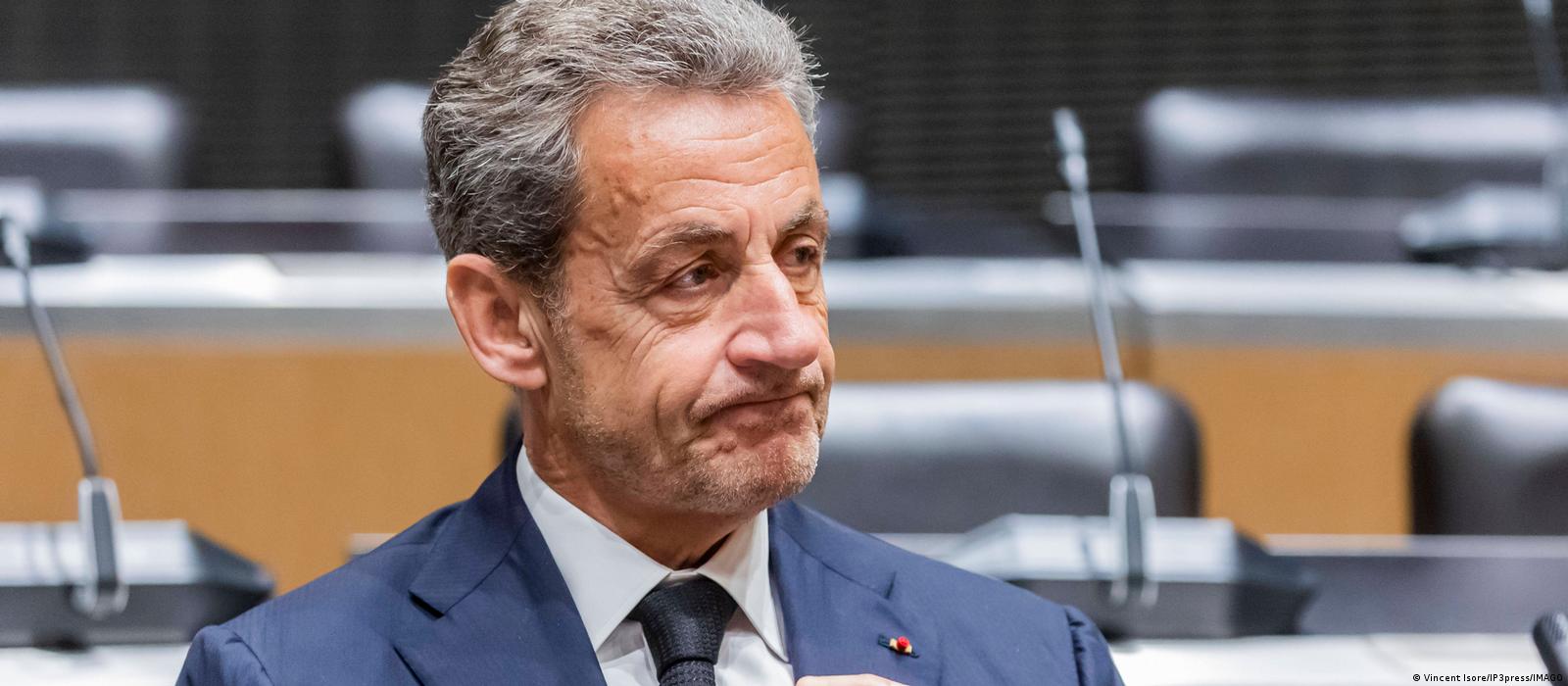
Former French president Nicolas Sarkozy leaves the courthouse after the ruling in his appeal trial on May 17, 2023. 
© Bertrand Guay, AFP

Text by: FRANCE 24
Issued on: 17/05/2023 -

France's former president Nicolas Sarkozy lost his case on Wednesday against a 2021 conviction for corruption and influence peddling at the Paris Court of Appeals. The court upheld a sentence of three years with two years suspended; he will wear an electronic bracelet for the remaining year instead of going to prison. Sarkozy has vowed to appeal the verdict at France’s Supreme Court.

The 68-year-old, who served one term from 2007 to 2012, has been embroiled in legal troubles ever since leaving office.

In March 2021 he was sentenced to three years in prison – two of them suspended and one at home with an electronic bracelet – for corruption and influence peddling through a secret telephone line that was discovered through wiretapping.

The court found that Sarkozy and his former lawyer, Thierry Herzog, had formed a "corruption pact" with a judge, Gilbert Azibert, to obtain and share information about a legal investigation.it

Investigators had wiretapped Sarkozy's two official phone lines. They discovered that he had a third unofficial one taken out in 2014 under the name "Paul Bismuth", through which he communicated with Herzog.

The contents of these phone calls led to the 2021 corruption verdict. Sarkozy contested the accusations and immediately appealed against his conviction.

On the first day of the appeals hearing in December last year, he said he had "never corrupted anybody".

His conversations with Herzog have now been played in court for the first time and were central in determining Wednesday's ruling.

The prosecutor's office had requested that Sarkozy, Herzog and Azibert each be handed a three-year suspended sentence.

They had also asked for Sarkozy and Azibert, 76, to be suspended from public office and Herzog, 67, to be banned from practising law, each for five years.


04:00 Former French President Nicolas Sarkozy (C) arrives at the courthouse with his lawyer Jacqueline Laffont for the appeal hearing of a corruption trial at Paris courthouse on May 17, 2023. 
© Bertrand Guay, AFP


Two other cases

The so-called Bismuth case is just one of several pursuing the man dubbed the "hyper-president" while in office.

Sarkozy will be retried on appeal from November 2023 in the so-called Bygmalion case, which saw him sentenced to one year in prison at first instance.

The prosecution accused Sarkozy's team of spending nearly double the legal limit on his lavish 2012 re-election campaign, using false billing from a public relations firm called Bygmalion. He has denied any wrongdoing.

And French prosecutors on Thursday demanded he face a new trial over alleged Libyan financing of his 2007 election campaign.

France's financial crimes prosecutors said Sarkozy and 12 others should face trial over accusations they sought millions of euros in financing from the regime of then Libyan leader Moamer Kadhafi for his ultimately victorious campaign.

Sarkozy is accused of corruption, illegal campaign financing and concealing the embezzlement of public funds but has always rejected all the charges.

Investigating magistrates are to have the last word on whether or not that trial goes ahead.

Despite his legal problems, Sarkozy still enjoys considerable influence and popularity on the right of French politics and has the ear of incumbent President Emmanuel Macron.

(FRANCE 24 with AFP)


French prosecutors seek trial against Sarkozy over Libya

May 12, 2023

The scandal-plagued Nicolas Sarkozy is yet again under prosecutors' radar for accepting millions in illegal campaign funds from former Libyan ruler Moammar Gadhafi.

French prosecutors, on Thursday, called for a fresh trial against former President Nicolas Sarkozy and 12 of his associates for allegedly using illegal political donations from Libya to finance his 2007 election campaign.

The 68-year-old is accused of embezzling public funds, bribery, criminal association and illegal campaign financing, the public prosecutor's office announced in a statement.

What are the details of the case?

Sarkozy allegedly received millions of euros that had illegally hailed from the regime of former Libyan ruler Moammar Gadhafi to campaign for the 2007 French elections, which he ultimately won.

Early in his time as president, Sarkozy maintained comparatively friendly ties with Libya, for instance inviting Gadhafi for a controversial state visit in 2009. But in 2011, amid pressure about his ties to the Libyan regime and amid its repression of domestic unrest, he put France at the forefront of the Western-led campaign to overthrow him.

Former budget minister Eric Woerth, Sarkozy's right hand man Claude Gueant and ex-minister Brice Hortefeux are some of the others named in the charges.

It is unclear if and when the trial will take place since a prosecutor's demand is just the first step on the route to a court hearing in France's legal system. Investigating judges must concur that the case warrants prosecution after prosecutors say they believe they have a case to pursue.

A witness emerged in 2016, saying that in late 2006 or early 2007 he had brought several suitcases prepared by the Libyan regime — with $5 million (€5.5 million) in it — and delivered it to the Interior Ministry in Paris, which was led by Sarkozy at the time. The former president who occupied the Elysee Palace between 2007 and 2012, has always denied these claims.

However, the Libya affair is not the only scandal Sarkozy faces. He was previously sentenced to three years in prison, two of them suspended, for bribery and undue influence. The result of Sarkozy's appeal in that case is due next week. He is also appealing a conviction for campaign fraud, made in 2021.

He is the first former president of France to be sentenced to prison for offenses committed during and after his term in office, although famously Jacques Chirac was also convicted — albeit with his prison sentence suspended — in 2011.

mk/msh (dpa, AFP)
Syria's Assad may come in from the cold to attend climate conference - analysis

Attending a climate conference can make sense for Syria’s regime because some experts have blamed climate change for the regime’s crackdown and the war that resulted in 2011.
JPOST
Published: MAY 16, 2023

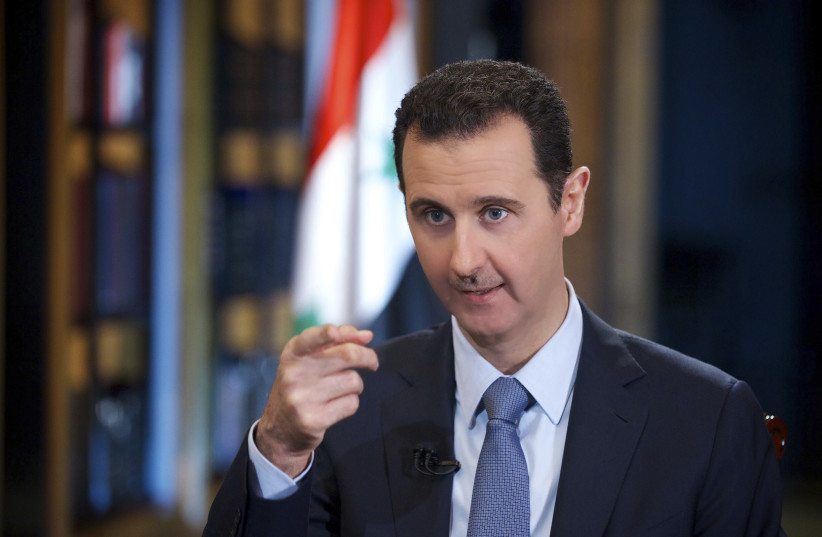
Syria's President Bashar al-Assad speaks during an interview with Turkey's Halk TV in Damascus, in this handout photograph distributed by Syria's national news agency SANA 

(photo credit: REUTERS/SANA/HANDOUT VIA REUTERS)

Syrian regime leader Bashar Assad was invited to attend a climate conference, according to various reports in the region. Ahram Online in Egypt said that “Abdul-Hakim Naimi, the Chargé d'Affairs of the UAE's Embassy in Damascus, handed the invitation to the Syrian president during their meeting on Sunday, Syrian state news agency (SANA) reported.” The meeting will take place in late November and early December 2023.

The UAE is hosting the United Nations climate summit (COP28) in Dubai. Assad has already received outreach from Saudi Arabia, Egypt and the UAE in recent months and Syria is being invited to return to the Arab League with conditions. As such, the invitation to COP28 is not unique in terms of the overall regional trend towards a new diplomatic era in which Syria is seen as part of the region. However, for some Western countries, the presence of Assad or Syrian regime officials could be new.

Al-Arabiya noted that the invitation could possibly place “him in the same venue as Western leaders who have opposed and sanctioned him for years. The invitation was extended by UAE President Sheikh Mohamed bin Zayed, Syrian state news agency SANA reported after the UAE embassy in Damascus tweeted the same.”

Out of the cold? After Arab League summit,
UAE invites Syria’s president to COP28

NEWS WIRES  

Tue, 16 May 2023 

Syria’s embattled President Bashar Assad received an invitation to attend the upcoming COP28 climate talks in Dubai later this year, even as the yearslong war in his country over his rule grinds on.

Assad’s invite, late Monday, to the climate talks comes as the Syrian president already is scheduled to attend the Arab League summit this Friday in Jeddah, Saudi Arabia, years after being frozen out of regional politics. A brutal crackdown by Assad’s government on demonstrators in a 2011 Arab Spring uprising challenging his rule descended into a civil war and consequently became a regional conflict.

The war has killed half a million people and displaced half of its population.

Assad’s invitation came in a letter from Emirati leader Sheikh Mohammed bin Zayed Al Nahyan, Syria’s state-run SANA news agency reported. The agency published images of Assad reading the letter alongside an Emirati diplomat in Damascus. The UAE similarly had cut ties with Assad, only to slowly restore them in recent years.

Asked for comment, the Emirati office organizing the upcoming climate conference said in a statement that the event marked “a milestone opportunity for the world to come together, course correct, and drive progress towards keeping the goals and ambitions of the Paris Climate Agreement alive.”

(AP)


Saudi King invites Syria’s Assad to attend next Arab League summit

Thursday 11/05/2023
Syria’s President Bashar al-Assad receives an invitation, May 10, 2023, from Saudi King Salman bin Abdulaziz through Saudi Ambassador to Jordan Naif Bin Bandar al-Sudairi, to attend the next Arab League summit. (Reuters)

DAMASCUS –

Saudi Arabia’s King Salman bin Abdulaziz has invited Syria’s President Bashar al-Assad to attend next Arab League summit scheduled in in the Arabian Gulf country on May 19, Syrian state media reported on Wednesday.

Arab foreign ministers had on Sunday agreed that Syria could resume its role in the body, 12 years after its membership was suspended over Assad’s crackdown on protests against him.

The invitation is a powerful signal that the regional isolation of Assad and his war-battered country is ending.

Regional countries, including Saudi Arabia, Qatar and others, had for years supported anti-Assad rebels but Syria’s army, backed by Iran, Russia and allied paramilitary groups, regained most of the country.

The icy ties with Assad began to thaw more quickly after the devastating earthquakes in February. Saudi Arabia’s foreign minister visited Damascus last month and his ministry on Tuesday said that the kingdom will reopen its diplomatic mission in Damascus.

Sources had said in April that Assad would be invited to the summit. While Arab countries appear to have brought the Syrian leader in from the cold, they are still making key demands for him to curb Syria’s flourishing drugs trade and secure the return of refugees.