It’s possible that I shall make an ass of myself. But in that case one can always get out of it with a little dialectic. I have, of course, so worded my proposition as to be right either way (K.Marx, Letter to F.Engels on the Indian Mutiny)
Friday, May 19, 2023
Visual processing before moving hands: insights into our visual sensory system
TOHOKU UNIVERSITY
NEWS RELEASE
IMAGE: VISUAL STIMULI WERE PRESENTED THROUGH A HALF MIRROR SO THAT THEIR HANDS WERE NOT VISIBLE TO PARTICIPANTS DURING THE EXPERIMENT. EEG SIGNALS AND HAND MOVEMENTS WERE MEASURED AND ANALYZED LATER.view more
CREDIT: TOHOKU UNIVERSITY
Our hands do more than just hold objects. They also facilitate the processing of visual stimuli. When you move your hands, your brain first perceives and interprets sensory information, then it selects the appropriate motor plan before initiating and executing the desired movement. The successful execution of that task is influenced by numerous things, such as ease, whether external stimuli are present (distractions), and how many times someone has performed that task.
Take, for example, a baseball outfielder catching a ball. They want to make sure that when the ball heads their way, it ends up in their glove (the hand-movement goal). Once the batter hits the ball and it flies towards the outfielder, they begin to visually perceive and select what course of action is best (hand-movement preparation). They will then anticipate where they should position their hand and body in relation to the ball to ensure they catch it (future-hand location).
Researchers have long since pondered whether the hand-movement goal influences endogenous attention. Sometimes referred to as top-down attention, endogenous attention acts like our own personal spotlight; we choose where to shine it. This can be in the form of searching for an object, trying to block out distraction whilst working, or talking in a noisy environment. Elucidating the mechanisms behind hand movements and attention may help develop AI systems that support the learning of complicated movements and manipulations.
Now, a team of researchers at Tohoku University has identified that the hand-movement goal attention acts independently from endogenous attention.
"We conducted two experiments to determine whether hand-movement preparation shifts endogenous attention to the hand-movement goal, or whether it is a separate process that facilitates visual processing," said Satoshi Shioiri, a researcher at Tohoku University's Research Institute of Electrical Communication (RIEC), and co-author of the paper.
In the first experiment, researchers isolated the attention of the hand-movement goal from top-down visual attention by having participants move their hands to either the same location as a visual target or a differing location to the visual target based on cues. Participants could not see their hands. For both cases, there was a control condition where the participants were not asked to move their hand.
The second experiment examined whether the order in cues to the hand-movement goal and the visual target impacted visual performance.
Satoshi and his team employed an electroencephalogram (EEG) to measure the brain activity of participants. They also focused on steady state visual evoked potential (SSVEP). When a person is exposed to a visual stimulus, such as a flashing light or moving pattern, their brain produces rhythmic electrical activity at the same frequency. SSVEP is the change in EEG signal that occurs, and this helps assess the extent to which our brain selectively attends to or processes visual information, i.e, the spatial window.
"Based on the experiments, we concluded that when top-down attention is oriented to a location far from the future hand location, the visual processing of future hand location still occurs. We also found that this process has a much narrower spatial window than top-down attention, suggesting that the processes are separate," adds Satoshi.
The research group is hopeful the knowledge from the study can be applied to develop systems that maintain appropriate attention states in different occasions.
Details of the research were published in the Journal of Cognitive Neuroscience on May, 8, 2023.
People can perform tasks simultaneously, directing their attention to different locations for different tasks. For example, when reaching for a coffee mug while working on a PC, attention could be directed to the cup whilst keeping your attention on the display. Attention to the cup is related to hand movement, which could be different from top-down attention to the display. The study's results showed a difference in spatial profile between the two types of attention. The spatial extent of the attention to the hand-movement goal (bottom right) is much narrower than top-down attention (top right). This suggests that there is an attention mechanism that moves to the location of where the hand intends to go, independent of top-down attention.
Different mechanisms for visual attention at the hand-movement goal and endogenous visual attention
New study shows noninvasive brain imaging can distinguish among hand gestures
The research from the Qualcomm Institute at UC San Diego points to a safe, accurate brain-computer interface that might help patients with paralysis and other challenges
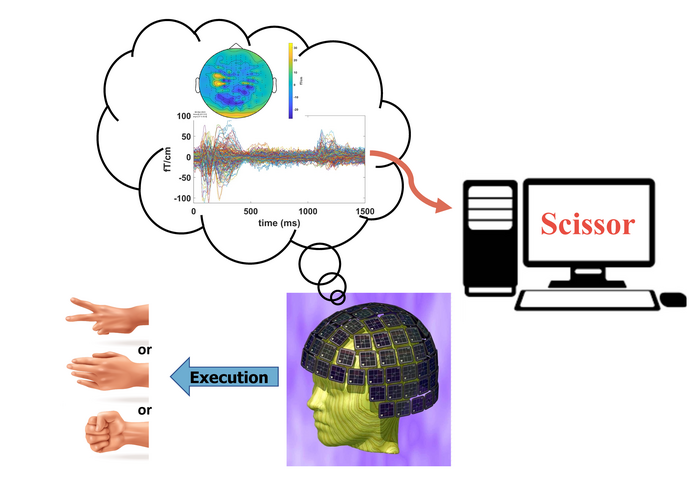
IMAGE: IN THE NEW STUDY FROM THE QUALCOMM INSTITUTE AT UC SAN DIEGO, VOLUNTEERS WERE EQUIPPED WITH A MEG HELMET AND RANDOMLY INSTRUCTED TO MAKE ONE OF THE GESTURES USED IN THE GAME ROCK PAPER SCISSORS. A HIGH-PERFORMING DEEP LEARNING MODEL INTERPRETED THE MEG DATA, DISTINGUISHING AMONG HAND GESTURES WITH MORE THAN 85% ACCURACY.view more
CREDIT: COURTESY OF THE MEG CENTER AT UC SAN DIEGO QUALCOMM INSTITUTE
LA JOLLA, CA, May 19, 2023 — Researchers from University of California San Diego have found a way to distinguish among hand gestures that people are making by examining only data from noninvasive brain imaging, without information from the hands themselves. The results are an early step in developing a non-invasive brain-computer interface that may one day allow patients with paralysis, amputated limbs or other physical challenges to use their mind to control a device that assists with everyday tasks.
The research, recently published online ahead of print in the journal Cerebral Cortex, represents the best results thus far in distinguishing single-hand gestures using a completely noninvasive technique, in this case, magnetoencephalography (MEG).
“Our goal was to bypass invasive components,” said the paper’s senior author Mingxiong Huang, PhD, co-director of the MEG Center at the Qualcomm Institute at UC San Diego. Huang is also affiliated with the Department of Electrical and Computer Engineering at the UC San Diego Jacobs School of Engineering and the Department of Radiology at UC San Diego School of Medicine, as well as the Veterans Affairs (VA) San Diego Healthcare System. “MEG provides a safe and accurate option for developing a brain-computer interface that could ultimately help patients.”
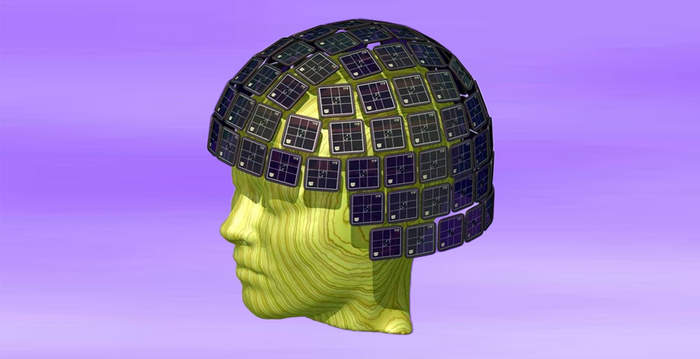
The researchers underscored the advantages of MEG, which uses a helmet with embedded 306-sensor array to detect the magnetic fields produced by neuronal electric currents moving between neurons in the brain. Alternate brain-computer interface techniques include electrocorticography (ECoG), which requires surgical implantation of electrodes on the brain surface, and scalp electroencephalography (EEG), which locates brain activity less precisely.
“With MEG, I can see the brain thinking without taking off the skull and putting electrodes on the brain itself,” said study co-author Roland Lee, MD, director of the MEG Center at the UC San Diego Qualcomm Institute, emeritus professor of radiology at UC San Diego School of Medicine, and physician with VA San Diego Healthcare System. “I just have to put the MEG helmet on their head. There are no electrodes that could break while implanted inside the head; no expensive, delicate brain surgery; no possible brain infections.”
Lee likens the safety of MEG to taking a patient’s temperature. “MEG measures the magnetic energy your brain is putting out, like a thermometer measures the heat your body puts out. That makes it completely noninvasive and safe.”
Rock Paper Scissors
The current study evaluated the ability to use MEG to distinguish between hand gestures made by 12 volunteer subjects. The volunteers were equipped with the MEG helmet and randomly instructed to make one of the gestures used in the game Rock Paper Scissors (as in previous studies of this kind). MEG functional information was superimposed on MRI images, which provided structural information on the brain.
To interpret the data generated, Yifeng (“Troy”) Bu, an electrical and computer engineering PhD student in the UC San Diego Jacobs School of Engineering and first author of the paper, wrote a high-performing deep learning model called MEG-RPSnet.
“The special feature of this network is that it combines spatial and temporal features simultaneously,” said Bu. “That’s the main reason it works better than previous models.”
When the results of the study were in, the researchers found that their techniques could be used to distinguish among hand gestures with more than 85% accuracy. These results were comparable to those of previous studies with a much smaller sample size using the invasive ECoG brain-computer interface.
The team also found that MEG measurements from only half of the brain regions sampled could generate results with only a small (2 – 3%) loss of accuracy, indicating that future MEG helmets might require fewer sensors.
Looking ahead, Bu noted, “This work builds a foundation for future MEG-based brain-computer interface development.”
In addition to Huang, Lee and Bu, the article, “Magnetoencephalogram-based brain–computer interface for hand-gesture decoding using deep learning” (https://doi.org/10.1093/cercor/bhad173), was authored by Deborah L. Harrington, Qian Shen and Annemarie Angeles-Quinto of VA San Diego Healthcare System and UC San Diego School of Medicine; Hayden Hansen of VA San Diego Healthcare System; Zhengwei Ji, Jaqueline Hernandez-Lucas, Jared Baumgartner, Tao Song and Sharon Nichols of UC San Diego School of Medicine; Dewleen Baker of VA Center of Excellence for Stress and Mental Health and UC San Diego School of Medicine; Imanuel Lerman of UC San Diego, its School of Medicine and VA Center of Excellence for Stress and Mental Health; and Ramesh Rao (director of Qualcomm Institute), Tuo Lin and Xin Ming Tu of UC San Diego.
The work was supported in part by Merit Review Grants from the US Department of Veterans Affairs, Naval Medical Research Center's Advanced Medical Development program and Congressionally Directed Medical Research Programs/Department of Defense.
The new research from the Qualcomm Institute at UC San Diego used machine learning and a noninvasive imaging technique called magnetoencephalography (MEG). Illustrated here is the 306-sensor MEG helmet that detects nerve activity in the brain by measuring the magnetic field.
CREDIT
Courtesy of MEG Center at UC San Diego Qualcomm Institute
IMAGE: RESEARCH SUGGESTS THAT FEMALE ATHLETES SUFFER A HIGHER RATE OF CONCUSSION, WHICH MAY BE ACCOMPANIED BY A WIDER RANGE OF MORE SEVERE AND PROLONGED SYMPTOMS COMPARED TO THEIR MALE COUNTERPARTS.view more
CREDIT: PIXABAY
An international study on concussion in sportswomen has been announced by the company that developed a concussion test for adult males based on research led by Dr Valentina Di Pietro and Professor Tony Belli at the University of Birmingham.
Research suggests that female athletes suffer a higher rate of concussion, which may be accompanied by a wider range of more severe and prolonged symptoms compared to their male counterparts.
Emerging biotech company Marker Health was founded in 2016 and has already developed a CE-certified concussion test for adult males following the ground-breaking research from the University of Birmingham. With a research base at the University’s bio-incubator the BioHub Birmingham, the company is now continuing the work that was led by Dr Di Pietro and Professor Belli from the University’s Institute of Inflammation and Ageing.
Following successful data collection during last year’s delayed 2021 Women’s World Cup and the Farah Palmer Cup in New Zealand, the comprehensive research programme will involve data collection from elite and community level rugby players, to support the extension of Marker’s current test approval to all levels of the female game.
Testing and data collection is already underway with several partnerships including the Allianz Premier 15s and the recent TikTok Women’s Six Nations. More international partnerships are anticipated, making this the most comprehensive programme of female-focused research to date.
The research is based on the analysis of small non-coding RNA (sncRNA) biomarkers in the saliva from a quick, easy and non-invasive mouth swab. Following a concussive event, a cascade of chemical processes occurs in the brain, altering biomarker profiles. Marker will analyse these changes to provide doctors with an accurate biological tool to diagnose concussions. Without an objective test, concussion has been challenging to diagnose with doctors currently relying on a series of subjective tests to make their diagnoses.
Marker has been undertaking focused research amongst female athletes for several years, with the aim of developing a specific and objective biological tool to improve diagnosis and outcomes.
Dr Di Pietro said: “Concussion can be difficult to diagnose, particularly in settings such as grass roots sports where evaluation by a specialist clinician is not possible. Consequently, some concussions may go undiagnosed. A non-invasive and accurate diagnostic test using saliva is a real game changer and will provide an invaluable tool to help doctors diagnose concussions more consistently and accurately.”
David Cohen, Chairman of Marker, said: “As seen in the huge crowd at the final game of the TikTok Women’s Six Nations, it is fortuitous that the phenomenal growth in Women’s rugby is occurring as we are extending our concussion diagnostic to female athletes”.
“It is critical to provide specific and accurate biological concussion diagnosis and safe return to play for women. The test can then be used to objectively support enhanced player welfare practices focussed on brain health across at all levels of female sport. The relationship with the University of Birmingham and our international collaborations with the RFU, NZR and TikTok Women’s Six Nations is rapidly moving us closer to providing female players with an accurate and objective concussion test.”
Dr Veemal Bhowruth from University of Birmingham Enterprise, said: “With the higher rate of concussion with women athletes, and the growth in the women’s game, this study is both timely and much needed, to help ensure the welfare of athletes at all levels.”
METHOD OF RESEARCH
Data/statistical analysis
SUBJECT OF RESEARCH
Human tissue samples
Toxic effects of pesticides on the marine microalga Skeletonema costatum and their biological degradation
IMAGE: THE GROWTH CURVES BASED ON THE CELL DENSITY AND CHL-A CONTENT WERE SIMILAR. FIGURE CREDIT: BO CHEN.view more
CREDIT: FIGURE CREDIT: BO CHEN.
The study was led by Dr. Zilian ZHANG (College of Ocean and Earth Sciences, Xiamen University) and Dr. Meng CHEN (College of the environment & ecology, Xiamen University). Since in modern agricultural systems, large amounts of pesticides are applied to specific purposes such as weeding and insecticide, and most pesticides are eventually entering the ocean, however, the toxic effects of pesticides on marine microes are unlear. Therefore, in this study, the toxic effects of three representative pesticides (chlorpyrifos, acetochlor, and dicofol) on the growth of marine microbe microalga Skeletonema costatum were studied by analyzing microalgal cell density and chlorophyll-a content. The research team found that the toxic effects of three widely used pesticides on the marine microalga S. costatum are different. Among these pesticides, acetochlor showed the strongest toxic effect, while chlorpyrifos had the weakest effect. Combined toxicity analysis indicates that the presence of acetochlor increases the toxicity of dicofol and chlorpyrifos, while the toxicity of acetochlor and chlorpyrifos could be reduced by the presence of dicofol. The pesticides were partially degraded by marine microalgae during the cultivation. Among the three pesticides, acetochlor had relatively longer half-lives under both individual and combined conditions.
This study provides new insights into the toxicity of three pesticides to marine microalgae as well as the evidence concerning the contribution of microalgae in the removal of these pesticides from the environment. The molecular processes and mechanisms of degradation of pesticides by marine microalgae will to be further investigated.
See the article:
Zhang Z, Chen Q, Chen B, Dong T, Chen M. 2023. Toxic effects of pesticides on the marine microalga Skeletonema costatum and their biological degradation. Science China Earth Sciences, 66(3): 663–674, https://doi.org/10.1007/s11430-022-1064-7
Acetochlor was identified as highly toxic to S. costatum, while chlorpyrifos and dicofol were moderately toxic pesticides. Figure credit: Taojie Dong
CREDIT
Figure credit: Taojie Dong
The effects of three pesticides on S. costatum cell morphology were observed after exposure to different concentrations of acetochlor. a-e: The microalgae were exposed to 0, 0.01, 0.025, 0.1 and 0.25 mg/L acetochlor for 96 h respectively. The microalgal cells showed abnormal cell division and morphology (d) or cell shape disappeared completely and became a ‘cluster’ (e), when S. costatum was exposed to 0.1 or 0.25 mg L-1 acetochlor, respectively. The result indicated that the cell membranes of the microalgae were damaged by acetochlor. Photo credit: Qiulan Chen.
CREDIT
Photo credit: Qiulan Chen.
Past climate change to blame for Antarctica’s giant underwater landslides
UNIVERSITY OF PLYMOUTH
IMAGE: THE RESEARCH VESSEL JOIDES RESOLUTION SURROUNDED BY SEA ICE AS IT APPROACHES ANTARCTICA'S EASTERN ROSS SEA DURING INTERNATIONAL OCEAN DISCOVERY PROGRAM (IODP) EXPEDITION 374view more
CREDIT: JENNY GALES/UNIVERSITY OF PLYMOUTH
Scientists have discovered the cause of giant underwater landslides in Antarctica which they believe could have generated tsunami waves that stretched across the Southern Ocean.
An international team of researchers has uncovered layers of weak, fossilised and biologically-rich sediments hundreds of metres beneath the seafloor.
These formed beneath extensive areas of underwater landslides, many of which cut more than 100metres into the seabed.
Writing in Nature Communications, the scientists say these weak layers – made up of historic biological material – made the area susceptible to failure in the face of earthquakes and other seismic activity.
They also highlight that the layers formed at a time when temperatures in Antarctica were up to 3°C warmer than they are today, when sea levels were higher and ice sheets much smaller than at present.
With the planet currently going through a period of extensive climate change – once again including warmer waters, rising sea levels and shrinking ice sheets – researchers believe there is the potential for such incidents to be replicated.
Through analysing the effects of past underwater landslides, they say future seismic events off the coast of Antarctica might again pose a risk of tsunami waves reaching the shores of South America, New Zealand and South East Asia.
The landslides were discovered in the eastern Ross Sea in 2017 by an international team of scientists during the Italian ODYSSEA expedition.
Scientists revisited the area in 2018 as part of the International Ocean Discovery Program (IODP) Expedition 374 where they collected sediment cores extending hundreds of meters beneath the seafloor.
By analysing those samples, they found microscopic fossils which painted a picture of what the climate would have been like in the region millions of years ago and how it created the weak layers deep under the Ross Sea.
The new study was led by Dr Jenny Gales, Lecturer in Hydrography and Ocean Exploration at the University of Plymouth, and part of IODP Expedition 374.
She said: “Submarine landslides are a major geohazard with the potential to trigger tsunamis that can lead to huge loss of life. The landslides can also destroy infrastructure including subsea cables, meaning future such events would create a wide range of economic and social impacts. Thanks toexceptional preservation of the sediments beneath the seafloor, we have for the first time been able to show what caused these historical landslides in this region of Antarctica and also indicate the impact of such events in the future. Our findings highlight how we urgently need to enhance our understanding of how global climate change might influence the stability of these regions and potential for future tsunamis.”
Professor Rob McKay, Director of the Antarctic Research Centre at Victoria University of Wellington and co-chief scientist of IODP Expedition 374, added: “The main aim of our IODP drilling project in 2018 was to understand the influence that warming climate and oceans have had on melting Antarctica’s ice sheets in the past in order to understand its future response. However, when Dr Gales and her colleagues on board the OGS Explora mapped these huge scarps and landslides the year before, it was quite a revelation to us to see how the past changes in climates we were studying from drilling were directly linked to submarine landslide events of this magnitude. We did not expect to see this, and it is a potential hazard that certainly warrants further investigation.”
Laura De Santis, a researcher at the National Institute of Oceanography and Applied Geophysics in Italy, and also co-chief scientist of IODP Expedition 374, said: "The sediment cores we analysed were obtained as part of IODP, the international seafloor scientific drilling project that has been active in the field of geoscience for over 50 years. The project aims to explore the history of planet Earth, including ocean currents, climate change, marine life and mineral deposits, by studying sediments and rocks beneath the seafloor.”
Jan Sverre Laberg, from The Arctic University of Norway, Tromsø, said: “Giant submarine landslides have occurred both on southern and northern high latitude continental margins, including the Antarctic and Norwegian continental margins. More knowledge on these events in Antarctica will also be relevant for submarine geohazard evaluation offshore Norway.”
Dr Amelia Shevenell, Associate Professor of Geological Oceanography at University of South Florida, College of Marine Science, said: “This study illustrates the importance of scientific ocean drilling and marine geology for understanding both past climate change and identifying regions susceptible to natural hazards to inform infrastructure decisions. Large landslides along the Antarctic margin have the potential to trigger tsunamis, which may result in substantial loss of life far from their origin. Further, national Antarctic programs are investigating the possibility of installing submarine cables to improve communications from Antarctic research bases. Our study, from the slope of the Ross Sea, is located seaward of major national and international research stations, indicating that marine geological and geophysical feasibility studies are essential to the success of these projects and should be completed early in the development process, before countries invest in and depend on this communication infrastructure.”
Professor Rob McKay (Director of the Antarctic Research Centre at Victoria University of Wellington and co-chief scientist of IODP Expedition 374) and Dr Jenny Gales (Lecturer in Hydrography and Ocean Exploration at the University of Plymouth) examine the half-section of a core recovered from the Antarctic seabed
Climate-controlled submarine landslides on the Antarctic continental margin
ARTICLE PUBLICATION DATE
18-May-2023
Why Antarctic ice shelves are losing their mass and how it leads to global sea level rise
There are many nuances that factor into the behavior of large ice sheets in the Earth’s oceans; these nuances and the progress toward understanding and accurately simulating these behaviors are being reviewed in this study
NEWS RELEASE
OCEAN-LAND-ATMOSPHERE RESEARCH (OLAR)
IMAGE: FROM FIGURE 1 OF WANG Z, LIU C, CHENG C, QIN Q, YAN L, QIAN J, SUN C, ZHANG L. ON THE MULTISCALE OCEANIC HEAT TRANSPORTS TOWARD THE BASES OF THE ANTARCTIC ICE SHELVES. OCEAN-LAND-ATMOS. RES. 2023;2:ARTICLE 0010.view more
CREDIT: WANG Z, LIU C, CHENG C, QIN Q, YAN L, QIAN J, SUN C, ZHANG L.
The Greenland ice sheet (GIS) and Antarctic ice sheet (AIS) contribute largely to global mean sea level (GMSL) changes, though the seas surrounding the Antarctic like the Bellinghausen-Amundsen Seas and the Indian Ocean sector are seeing significantly more warming than the rest of the marginal seas, with immediate noticeable effects on the mass balance (net weight of the glacier mainly accounting for ice gained by snow and lost by melting and calving) of the AIS. The level AIS will contribute to the overall increase in sea level is unknown, and current models vary drastically, leaving a major question regarding future sea levels unanswered. The development of accurate modeling and technology that can help predict the future state of the Earth’s oceans and ice sheets will be helpful in answering these questions.
Researchers’ findings were published in Ocean-land-Atmosphere Research on May 9.
“In this paper, we identify key multiscale oceanic processes that are responsible for heat delivery to the bases of the Antarctic ice shelves and review our current understanding of these processes,” said Zhaomin Wang, professor and first author of the study.
One of these processes responsible for heat delivery is circumpolar deep water (CDW).
CDW is a mix of the ocean’s water masses from different ocean basins, culminating in a warm, salty mass of water in the Southern Ocean. This water can cut through the base of ice shelves rapidly, leading to “cavities”, or cleaves in a glacier due to warm water currents. These cavities are then filled with warm-modified CDW and high salinity shelf water which eventually leads to loss of chunks from the tip of the glacier, known as “calving”. CDW and cavity development are substantial processes, along with basal melting and calving, in which the AIS loses its mass and consequently is a significant contributor to the rise in GMSL.
The effects CDW has on melting of Antarctic ice shelves, along with other mechanisms contributing to warm air and water circulation, are generally understood though they are poorly modeled with consistency. This may be due to not understanding small-scale processes, particularly when it comes to the effects eddies (short-lived oceanic circulation patterns) and the topography of cavities in the glacier have on melting.
“Both eddies and the dynamic effects of bottom topography have been proposed to be crucial in heat transport toward the fronts of ice shelves, in addition to heat transport by coastal currents,” Wang said.
These topographical subtleties help with understanding the transport of CDW and how coastal currents, surface winds, and bottom pressure torque all play into the interactions of these warm water currents with glacial masses and ice sheets.
In review, ice melting thanks to warm water isn’t as simple as it seems on the surface. Researchers surmised that while progress in learning the mechanisms in which oceanic warming is affecting the AIS is occurring, there needs to be improvement and innovation to assess where the continued melting of ice shelves in the Antarctic will leave humanity in the future. Retreating coastlines and GMSL rise are anticipated, though the levels to be expected are poorly understood.
Researchers suggest priorities are made, starting with improving cavity geometry, bathymetry (measuring the depth of water) and future projections of the mass balance of ice sheets. Spending time investigating small-scale processes may also provide valuable information leading to better future models being developed, and critically, determining what the mass loss of the AIS means for atmospheric, oceanic, and sea ice circulations.
China National Natural Science Foundation Projects, The Independent Research Foundation of Southern Marine Science and Engineering Guangdong Laboratory, and the National Science Foundation of Jiangsu Province made this research possible through funding.
Zhaomin Wang, Chengyan Liu, and Chen Cheng of Southern Marine Science and Engineering Guangdong Laboratory(Zhuhai), Qing Qin, Liangjun Yan, Jiangchao Qian, and Chong Sun of College of Oceanography at Hohai University, and Li Zhang of the School of Atmospheric Sciences at Sun Yat-sen University contributed to this research.
A dinosaur specimen from Castellón, Spain represents a new proposed species of spinosaurid, reports a paper published in Scientific Reports. The identification of a potential new species suggests that the Iberian peninsula may have been a diverse area for medium-to-large bodied spinosaurid dinosaurs and sheds light on the origin and evolution of spinosaurids.
Spinosaurids comprise of different groups of dinosaurs that are often large, stand on two feet, and are carnivorous. Well-known examples of spinosaurids include Spinosaurus and Baryonyx. It is thought that spinosaurids may have originated in Europe and then migrated to Africa and Asia, but evidence of their existence in Spain is mostly based on fossilised tooth remains.
Andrés Santos‑Cubedo and colleagues analysed fossil fragments (a right jaw bone, one tooth and five vertebrae) discovered previously in the Arcillas de Morella Formation in Spain and dated to the late Barremian, Early Cretaceous period (between 127 and 126 million years ago). Based on the remains the authors estimate that the specimen is around 10 to 11 metres long. They compared the specimen to data on other spinosaurids to determine its evolutionary relationship to other species.
Based on a comparative analysis of the specimen with other spinosaurids, the authors identified the specimen as both a new species and a new genus of spinosaurid and named it Protathlitis cinctorrensis. The authors named the genus Protathlitis meaning “champion” in Greek and used cinctorrensis in the species name to reference the town — Cinctorres — in which the specimen was uncovered.
The authors propose that this new species may indicate that spinosaurids appeared during the Early Cretaceous in Laurasia — a large area of land in the northern hemisphere — with two sub-groups of species occupying western Europe. The spinosaurids may have later migrated to Africa and Asia where they diversified. In Europe, baryonychines like Protathlitis were dominant, while in Africa, spinosaurines like Spinosaurus were most abundant.
###
Article details
A new spinosaurid dinosaur species from the Early Cretaceous of Cinctorres (Spain)
DOI: 10.1038/s41598-023-33418-2
Please link to the article online https://www.nature.com/articles/s41598-023-33418-2
2:53 One of the world's biggest-ever new dinosaur species found Scientists dig up a gigantic new dinosaur species as long as a basketball court in Australia's outback
Fossil fragments found in Spain are pointing to a new species of dinosaur, researchers said.
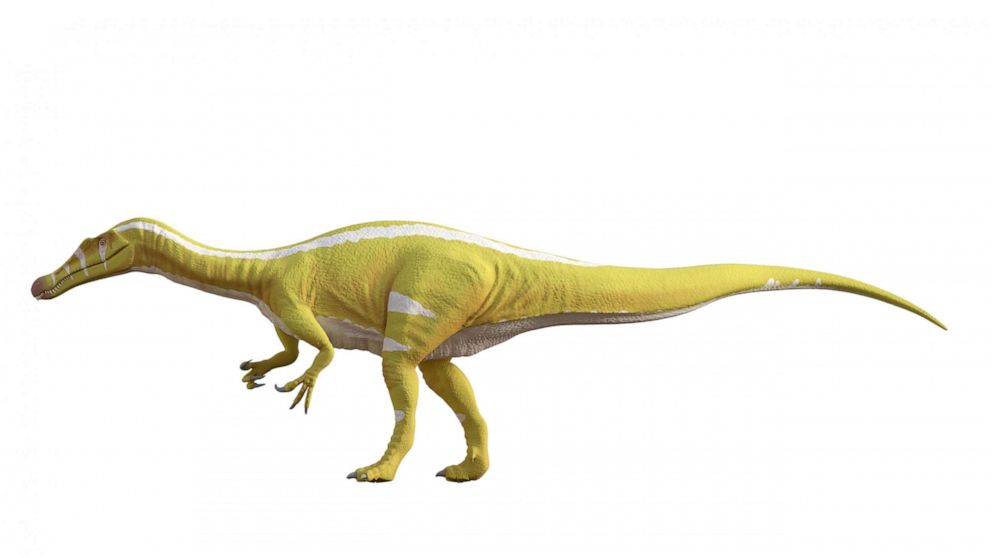
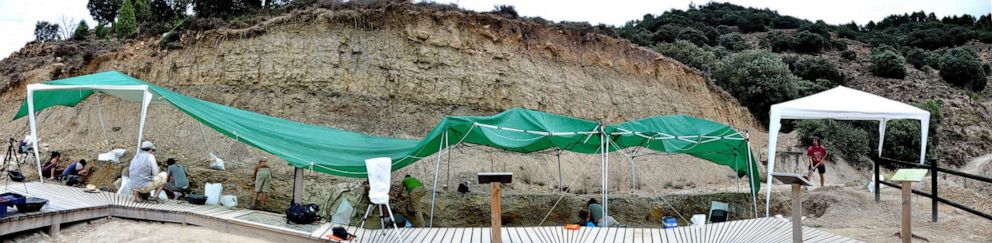
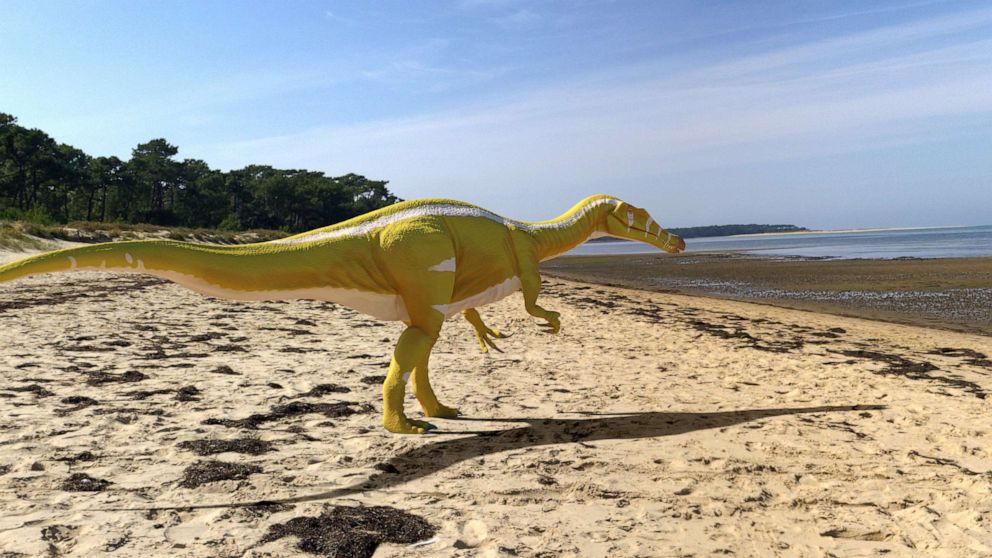
Scientists have proposed a new species of spinosaurid after studying the specimen, which includes a right jaw bone, one tooth and five vertebrate, found in the Arcillas de Morella Formation in Castellon, Spain, in 2011, according to a study published in Scientific Reports on Thursday. A new spinosaurid dinosaur, Protathlitis cinctorrensis, was discovered in Spain. Grup Guix
The fossils date to the late Barremian or Early Cretaceous period -- between 127 million and 126 million years ago, the authors said. Based on the remains, the researchers believe the dinosaur was between 10 meters to 11 meters long, or about 32 feet to 36 feet.
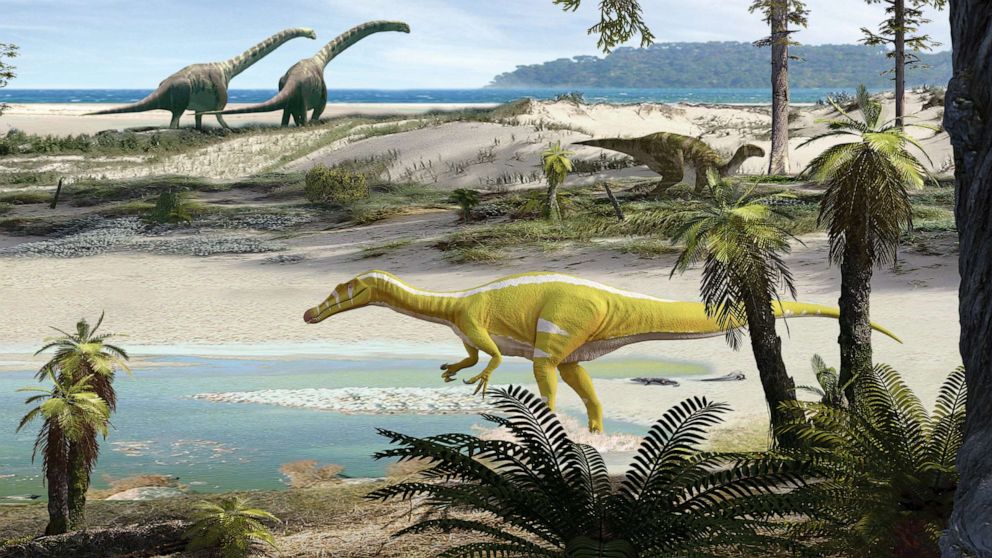
After comparing the specimen to other spinosaurids, the researchers determined it as both a new species and a new genus of spinosaurid, naming it Protathlitis cinctorrensis, with Protathlitis meaning "champion" in Greek and "cinctorrensis" in honor of the town, Cinctorres, in which the fossils were uncovered, according to the study.
A new spinosaurid dinosaur, Protathlitis cinctorrensis, was discovered in Spain. Grup Guix
The name "Champion" was in reference to the UEFA Europa League title won by European soccer club Villarreal C.F. in 2021 and to celebrate the club's 100th anniversary in 2023, lead researcher Jose Santos‑Cubedo told ABC News.
The finding suggests the Iberian peninsula may have been a diverse area for medium to large-bodied spinosaurid dinosaurs, shedding further light on the origin and evolution of the type of dinosaur.
It is believed that spinosaurids may have originated in Europe and then migrated from Africa to Asia, according to the paper. Evidence of their existence in Spain is mostly based on fossilized tooth remains. A new spinosaurid dinosaur, Protathlitis cinctorrensis, was discovered in Spain. Grup Guix
The researchers believe this new species may indicate that spinosaurids appeared during the Early Cretaceous period in Laurasia -- a large area of land in the northern European hemisphere -- with two sub-groups of species occupying western Europe, according to the paper. MORE: 2 new species of massive sauropod dinosaurs found in China, a 1st for the region
The spinosaurids may have later migrated to Africa and Asia, where they diversified.
A new spinosaurid dinosaur, Protathlitis cinctorrensis, was discovered in Spain. Oscar Sanisidro/Grup Guix
"In Europe, baryonychines were dominant, while in Africa, spinosaurines were the most abundant," Santos‑Cubedo said.