Tuesday, July 04, 2023

Halving gender pay gap may boost developed and emerging markets GDP by 6%

Closing employment and wage gaps completely could lead to further economic gains, Goldman Sachs says


The gender pay gap has edged lower and is now about 18% in emerging markets and approximately 23% in developed markets, according to Goldman Sachs Research. 
PA Images

Deena Kamel
Jul 03, 2023

Reducing the current wage and employment gap between men and women may boost the gross domestic product of developed and emerging markets by 5 per cent to 6 per cent, according to a report by Goldman Sachs.

Closing these gaps completely could result in a 10 per cent GDP boost for developed market economies, rising to 13 per cent in emerging markets, the report says.

“Looking at these issues afresh, we find that shrinking working age populations mean that it is now more important than ever to utilise the full resources women have to offer (and to reward them fully),” the report by Goldman Sachs senior portfolio strategist Sharon Bell and emerging market strategist Sara Grut said.

Gender gaps persist in education, health, work, wages and political participation across developed and developing countries alike.

This is despite numerous studies that have highlighted the economic case, in addition to the basic human rights argument, for gender equality.


A report by the World Economic Forum last month showed that women will not achieve equality with men globally for another 131 years, with only tepid progress made in closing persistently large gender gaps, prompting the urgent need for action.

For the 146 countries covered in the 2023 index, the economic participation and opportunity gap has closed by 60.1 per cent, according to the WEF report.

Based on a constant sample of 102 countries covered in all editions of the report since it began in 2006, the economic participation and opportunity score regressed from 60 per cent in 2022 to 59.8 per cent in 2023.

At the current rate of progress observed between 2006 and 2023, it will take 169 years to close this gap.

READ MORE

World will take 131 years to close the gender gap, WEF report says

Airlines call for faster progress in campaign to improve gender diversity

While women are moving into positions of leadership in business, progress is slow and representation at the top of organisations remains elusive, the Goldman Sachs report said. Men account for 92 per cent of chief executives at large-cap companies listed in developed markets, reaching 94 per cent in emerging markets.

New challenges are also emerging as a result of the impact of advanced technologies on labour markets. The jobs that will be most affected by artificial intelligence also tend to be held by women rather than men: about 60 per cent to 70 per cent of the workforce in these areas are women, the report said.

However, roles that require a high degree of face-to-face interaction, or caring professions – both areas where women dominate – are likely to be made more productive through AI and are unlikely to be replaced by it, the report said.

What policy-makers, companies and investors can do

To address the gender gap, Goldman Sachs recommends that policy-makers, companies and investors focus on specific areas.

Education is "all-important", as women with a higher level of education are more likely both to work and to earn more when they are employed, the report said. They also typically spend this increased income on their families, improving their children’s educational attainment, health and welfare.

Stakeholders must also offer family-friendly policies, including maternity and paternity leave, as well as subsidised, high-quality childcare, the report said. All of these policies are associated, albeit loosely, with the higher participation of women in the workforce.

More transparency is needed in the disclosure of pay gaps, which Goldman Sachs says are "still large and still largely unexplained".

The report also calls for "broadening out the leadership pipeline", particularly in technology and finance, as these sectors are lagging in terms of female representation, both generally and at more senior levels.

These sectors are also crucial when it comes to financing women-led businesses and the implications of AI on work opportunities for both men and women, Goldman Sachs said.


MASS KIDNAPPING
Moscow says 700,000 children from Ukraine conflict zones now in Russia

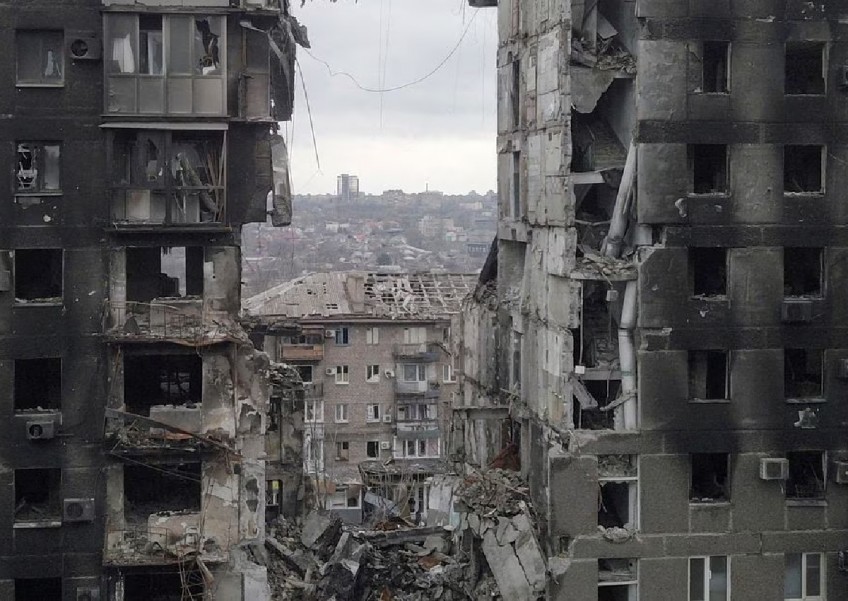
A view shows a residential building destroyed in the course of Ukraine-Russia conflict in the southern port city of Mariupol, Ukraine on April 14, 2022.
PHOTO: Reuters

PUBLISHED ON  JULY 03, 2023 

Russia has brought some 700,000 children from the conflict zones in Ukraine into Russian territory, Grigory Karasin, head of the international committee in the Federation Council, Russia's upper house of parliament, said late on Sunday (July 2).

"In recent years, 700,000 children have found refuge with us, fleeing the bombing and shelling from the conflict areas in Ukraine," Karasin wrote on his Telegram messaging channel.

Russia launched a full-scale invasion on its western neighbour Ukraine in February 2022. Moscow says its programme of bringing children from Ukraine into Russian territory is to protect orphans and children abandoned in the conflict zone.

However, Ukraine says many children have been illegally deported and the United States says thousands of children have been forcibly removed from their homes.

Most of the movement of people and children occurred in the first few months of the war and before Ukraine started its major counter offensive to regain occupied territories in the east and south in late August.

In July 2022, the United States estimated that Russia "forcibly deported" 260,000 children, while Ukraine's Ministry of Integration of Occupied Territories, says 19,492 Ukrainian children are currently considered illegally deported.

'American whitelash' far from over: Politico


Xinhua, July 4, 2023

The white racial violence that has been embedded in the United States' culture not just in the last few election cycles, but since the nation's founding, reported Politico on Sunday, citing a new book by Wesley Lowery, a Pulitzer-winning Washington Post reporter.

Weaving together history, interviews and close examinations of key incidents of violence, Lowery showed the Americans that white fear and resentment of the "other" has always been present, said the report. "What we call backlash at certain moments is really a long-running 'whitelash' that's intricately woven into American history and currently targets not just Black people, but any group that threatens a shifting consensus of who is American and who is not."

"Three years after the eruption of protests following the death of George Floyd, Lowery isn't convinced that America is any better prepared to deal with whitelash as a political force, let alone a cultural one -- particularly as we head into a sharply contentious presidential election," the report noted.

"People have talked for years about civil war," Lowery was quoted as saying. "We don't have something as embedded as slavery anymore, but we're going in diametrically opposed positions; we're ripping ourselves apart from each other."

"I certainly think that's true. It's a soft civil war. One of our historical blind spots is thinking multiracial democracy -- what America should be -- is a settled question. Many people are not sure of that," added the reporter.

Fundraiser for police officer who killed French teenager raises €1m


Politicians on the left have criticised the collection, set up by a far-right activist, but GoFundMe has refused to take it down


Kim Willsher in ParisMon 3 Jul 2023
THE GUARDIAN

A row has broken out over a collection for the family of the French police officer under investigation for shooting dead a 17-year-old that has topped more than €1m (£860,000) in donations.

A similar collection to help the family of the victim, Nahel M, killed a week ago in Nanterre outside Paris after being stopped by two motorcycle patrol officers, has collected less than €200,000.

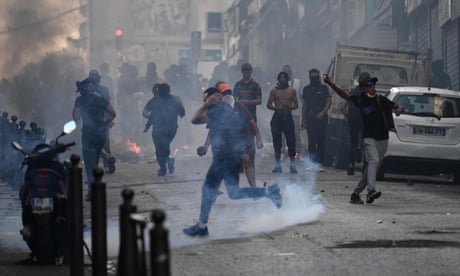
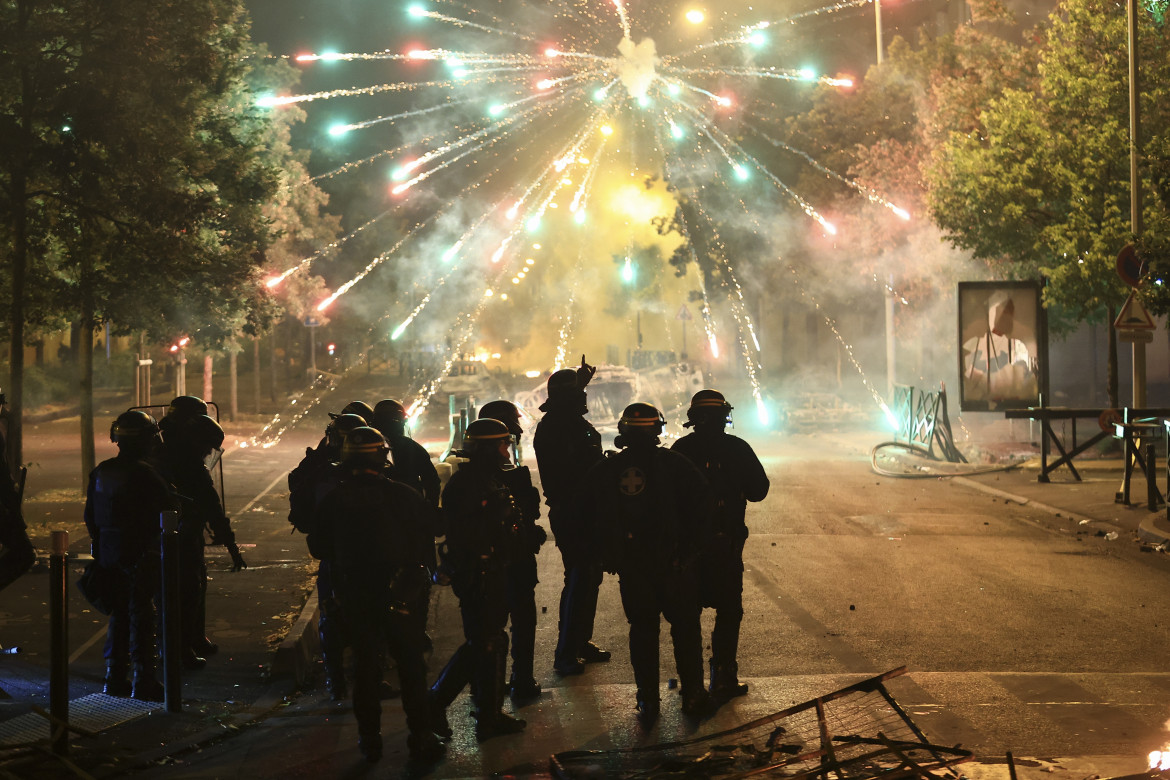
The shooting last Tuesday led to a wave of rioting and violence across France and worsened deep political divisions.


‘We are seen as less human’: inside Marseille’s districts abandoned by the police

Read more


The collection for the 38-year-old officer named as Florian M was organised by Jean Messiha, a former spokesperson for the far-right presidential candidate Éric Zemmour, with an initial target of €50,000.

“Support for the family of the Nanterre police officer, Florian M, who did his job and is today paying a heavy price. Support him massively and support our police,” it reads.

By Monday afternoon, more than 58,000 people had made donations, the largest of which was €3,000 from an anonymous benefactor. There were several donations of €1,000.

Nahel’s grandmother Nadia said she was “heartbroken” by the support shown for the officer. “He took the life of my grandson. This man must pay, the same as everyone,” she told the BFM television channel on Sunday. “I have confidence in the justice system. I believe in justice.”

Leftwing politicians have described the fund as “indecent”.

Clémence Guetté of the radical-left France Unbowedparty said the fund was “indecent and an absolute horror”.

Manon Aubry, a France Unbowed MEP, demanded the fund be cancelled.


“More than a million euros collected on the initiative of a far-right polemicist [Messiha] in support of a police officer who kills a teenager. The message? It pays to kill a young Arab,” Aubry tweeted.

Éric Bothorel of the ruling Renaissance party accused Messiha of “playing with fire” and said the fund was “indecent and scandalous”.

French law prohibits the “opening of or public announcement of subscriptions whose purpose is to compensate for fines, costs and damages awarded by judicial sentences in criminal and correctional matters”. The law allows for a six-month prison sentence or a €45,000 fine if broken.

This law was used in 2019 to close a fund in support of gilets jaunes protester Christophe Dettinger, a former boxer who was convicted of punching two police officers. The platform, Leetchi, deemed the fund contrary to public order after an internal investigation and the €146,000 donations were returned to senders.

A spokesperson for GoFundMe told the French magazine Capital that the fund did not break any rules as the money would not go to fund the police officer’s legal fees or defence.

“The money will be directly given to the family, which has been added as a beneficiary,” they said.

Messiha was defiant on Monday, accusing “lefty progressives” of trying to block the fund.

“Our mobilisation for the family of Florian M and our respect for the rules have paid off,” he tweeted.

Sleeping Giants France, a citizens’ group set up to challenge the financing and spreading of hate, said the fund’s “sheer existence inflames the sentiment of injustice and furthers tensions”.

Olivier Faure, head of the Socialist party, also called for the collection to be stopped. “You are perpetuating a rift that’s already wide open, by taking part in the support of a police officer under investigation for culpable homicide. Close it!” he wrote.

Éric Ciotti of the centre-right Républicains said he understood the initiative: “I don’t find it shocking that we should support the family of a police officer who is going through a difficult time today.”

The French president, Emmanuel Macron, met the leaders of both houses of parliament on Monday as violent protests in France over the police shooting of Nahel appeared to ease after five nights of unrest, during which thousands of people have been arrested amid widespread destruction.


Fundraiser for French officer who killed teen raises over $1.5 million

By Niha Masih
July 4, 2023 


A police officer runs past graffiti that reads “Justice for Nahel” last week in Paris. The police killing of a 17-year-old identified as Nahel M. sparked a wave of violent protests across France. (Charly Triballeau/AFP/Getty Images)


A fundraiser for the family of the French officer who fatally shot a 17-year-old boy had raised more than $1.5 million early Tuesday, igniting fresh outrage in France after days of violent protests.

The GoFundMe campaign aimed to raise about $54,000 for the officer’s family but within four days had raised several times that amount, with donations pouring in from more than 46,000 people.

A similar fundraiser to help the mother of the victim — a teenager of North African descent, identified as Nahel M., who was killed during a traffic stop in a Parisian suburb last week — had collected just over $200,000 as of Monday, according to Le Monde.


The shooting led to a wave of violent protests across France, exposing deep divisions in the country as it grapples with the aftermath of a killing that has reignited a fraught debate about race, identity and police violence.

The GoFundMe campaign for the officer’s family was organized by Jean Messiha, who previously served as a spokesman for former far-right presidential candidate Éric Zemmour and expressed support for law enforcement and the officer, who is being investigated on a charge of intentional homicide.

How the killing of a teen fits into France’s history of police brutality

The fundraiser drew swift condemnation from several lawmakers and activists, who called for its immediate shutdown

Parliamentarian Éric Bothorel, a member of French President Emmanuel Macron’s centrist party, described it as “indecent and scandalous,” while far-left lawmaker Mathilde Panot called for the GoFundMe page to be deleted. “Killing a young North African, in France in 2023, can earn you a lot of money,” she said on Twitter.

Olivier Faure of the Socialist Party also called on GoFundMe to shut down the page, saying it was facilitating a “shameful” action.

Sleeping Giants, a local activist group that fights online hate by pressuring companies to remove ads from conservative media outlets, questioned GoFundMe about whether the fundraiser violated its own terms.

Raising money for the legal defense of alleged “financial and violent crimes” is not allowed on GoFundMe, its terms state. On Twitter, Sleeping Giants asked the company how it would ensure that the money would not be used for this purpose.

The globally popular for-profit crowdfunding platform said the fund for the family of the French officer was not in violation of its policies.

“This fundraiser is within our terms of service as funds will be utilized to support the officer’s family,” a spokesperson for the company wrote in an email, adding that the money will be transferred directly to the family, which is listed as the beneficiary.


Cop GoFundMe Raises More Money Than Victim'sFamily. 
Leftist demonstrators hold a banner in front of the French embassy in Athens on July 3, 2023 in support of the French people protesting against the police shooting of a 17-year-old teenager. 
Louisa Gouliamaki/AFP/Getty


Tens of thousands of police officers have been deployed in response to the violent riots that exploded after the police killing of the 17-year-old. Municipal town halls, schools and vehicles were targeted and set on fire, and protesters lobbed fireworks at police officers. Over the weekend, authorities accused rioters of ramming a vehicle into the home of the mayor of a Parisian suburb, while officials in Beijing said that a bus carrying Chinese tourists was attacked during protests, resulting in several injuries.

On Sunday, the grandmother of the slain teenager appealed for calm and an end to the rioting.

Grandmother of slain teen appeals for calm as protests roil France

“My heart aches,” she was quoted as saying by Reuters, when asked about the fundraising campaign for the officer involved in the shooting.


By Niha MasihNiha Masih is a reporter at The Washington Post's Seoul hub, where she covers breaking news in the United States and across the world. Previously, she was The Post's India correspondent where she covered the rise of majoritarian nationalism, conflict in Kashmir, the Covid crisis and digital surveillance of citizens. Twitter


Dispatch: France is rioting over police shooting
1:41
Protests have spread across France after a police officer shot and killed a 17-year-old boy of Arab descent in a Paris suburb. (Video: The Washington Post)


France riots: Why Hindu nationalists in India are backing the French far right

With many of the protestors in France being Muslims, Hindutva supporters in India are supporting the French far right.

The death of 17-year-old Muslim teenager Nahel Merzouk at the hands of the French police in Paris on June 27 has triggered widespread violent protests across France.

French far-right leaders are blaming immigrants, particularly Muslims, as the cause of the ongoing violence and for the wider problems faced by the white French population.

Interestingly, the French far right has received backing of Hindutva supporters in India, with the latter’s social media accounts vocally supporting action and even violence against protesters.

Long-standing questions of racism

Merzouk, who allegedly attempted to drive away after being stopped by police for speeding, was reportedly fired upon by one of the police officers in the Parisian suburb of Nanterre. This led to the minor’s death. Merzouk, a Muslim, was a French youth of North African descent.

The video of Merzouk being shot at by the police officer has sparked violent protests and riots in several French cities over the past few days. The violence has caused at least one death so far. Additionally, more than 500 law enforcement officers have been injured and there has been large scale damage to property. The police have arrested over 2,400 people so far in connection with the violence.

Merzouk’s death, reportedly at the hands of the French police, has brought to the fore long-standing questions about alleged police brutality in France as well as allegations of racism and discrimination in the country, especially towards immigrants of North African origin, most of whom are Muslim. France, a member of the European Union, has a sizable Muslim immigrant population with many of the community’s members having their origins in former French colonies in North Africa such as Algeria, Tunisia and Morocco. Additionally, there are also a smaller number of refugees and asylum seekers especially from West Asian nations such as Syria.

Far-right gaining traction

Over the past decade, France has seen a rise of the far-right with political leaders such as Marine Le Pen and Éric Zemmour gaining traction in electoral politics.

Several French far right leaders have blamed immigrants, especially Muslims of North African origin, for France allegedly losing its French cultural identity which according to them was was on markers such as Christianity and Whiteness. Such leaders have been propagating the so-called Great Replacement concept, a racist conspiracy theory which claims that the White, French population is being culturally and demographically replaced by non-White populations through a combination of migration and falling birth rates.

In line with this Great Replacement conspiracy theory, some French far-right leaders such as Zemmour are alleging that the ongoing riots have been caused mainly by “immigration”. “If riots ignite the country today, it is because of judicial laxity and anarchic immigration which have left neighbourhoods drifting,” Laurent Jacobelli, another French far-right leader, claimed on Sunday.

Hindutva extends support

Meanwhile, on Saturday, while responding to a tweet urging Adityanath to help France control the riots, Uttar Pradesh Chief Minister Yogi Adityanath’s office hailed the so-called Yogi model of law and order maintenance as a model that France should adopt.

The social media account Adityanath’s office responded to was a fake.

Uttar Pradesh CM Yogi Adityanath's office responding to the tweet

BJP members such as the party’s Uttar Pradesh social media unit co-convener Harsh Chaturvedi and National Spokesperson Shehzad Poonawala hailed Adityanath. Hindi language news channel News18 Uttarakhand also reported citing the fake account that Adityanath’s help had been sought to control the riots in France. Similarly, Republic Bharat, another Hindi language news channel, also highlighted Adityanath’s so-called model of controlling violence, its supposed popularity and how there were purported demands for the model to be implemented in France.

Since Adityanath came to power in Uttar Pradesh in 2017, extrajudicial executions have risen in the state. More significantly, while Muslims constitute less than 20% of the state’s population, around 37% of those killed in these so-called encounters were from the community, police data shows.

Therefore, citing this so-called law and order maintenance model of Adityanath assumes significance because several social media accounts seemingly supportive of Hindutva are, like French far-right politicians, blaming Muslims for the ongoing riots.

Shefali Vaidya is a columnist at the pro-Modi government e-magazine, Swarajya
A Hindutva supporter linked to Adityanath’s Hindutva organisation, the Hindu Yuva Vahini.
A member of the Friends of the BJP, the party's overseas membership drive.
A BJP-leaning author opines that France would be better off taking in labourers from India rather than North Africa.

Citing Western white supremacist social media accounts, some Indian news channels have also projected the ongoing looting and violence in France as being perpetrated by Muslim immigrants against the police.

Similarly, Organiser, the mouthpiece of the Hindutva organisation Rashtriya Swayamsevak Sangh, also focused on the alleged role of “Islamists” in the ongoing riots.

Backed by Hindutva supporters

Some social media accounts seemingly supportive of Hindutva are also vocally supporting the French far right in using violence to oppose protestors.

Some pro-Hindutva social media accounts are also praising Poland’s stricter stance against immigration and refugees, particularly Muslims, and urging France to follow suit.

In a similar vein, Zee News reported, citing a video posted by Polish Prime Minister Mateusz Morawiecki, that asylum seekers and “being liberal” had caused rioting in France. In a video posed on Saturday, Morawiecki – who belongs to a Polish right-wing political party – had alluded that Poland, a European nation like France, was not facing riots because of stricter immigration policies.

In spite of this flood of support from Hindutva supporters, however, there has been no reaction from the French far right who, for the most part, seem to be unaware of the popularity they command in India.

LA REVUE GAUCHE - Left Comment: Search results for HINDUISM IS FASCISM 

Alain Bertho: I fear a dramatic escalation in France’s arsenal of repression

 written by Guido Caldiron
Interview. ‘How can one explain to the young people in the suburbs, who are under daily pressure from the police, that they should remain calm, respond with petitions and appeals, or turn to the parties in Parliament to make their voices heard?’

From his vantage point in Saint-Denis, in the Parisian suburbs, where he was born, raised and still lives today, Alain Bertho is one of the French intellectuals who have dealt most thoroughly with the subject of the banlieues and the political and cultural significance of the riots taking place there.

As professor emeritus of anthropology at the Paris 8 University Vincennes-Saint-Denis, Bertho has devoted dozens of books to this analysis, including The Age of Violence (2018), Les Enfants du Chaos (2016), Le Temps des Émeutes (2009).

Tragedy, grief, anger — what does Tuesday’s point-blank shooting of 17-year-old Nahel by a policeman in Nanterre, now setting the entire country ablaze, tell us about France today?

I think it tells us, first of all, about the outcomes of the two political directions set in motion by the government and Macron. On one hand, a further escalation in police violence and repression, not only against the inhabitants of the banlieues, but also against social movements, such as those who have been demonstrating in the streets of the country against the pension reform being pushed by the president.

On the other hand is the enactment of legislation that makes all this possible and pushes in the direction of the “State of Exception” by resorting to the use of laws intended to be used against terrorism in ordinary settings, with outcomes that are more and more serious. Just to give an example, the first consequence of the new rules on police officers being able to use firearms, adopted at the end of the last decade, was the doubling of related deaths compared to previous years: in 2020 alone there were 40, 52 in 2021, 39 in 2022 and 13 this year so far. We’re talking about people killed “in cold blood” as a result of the intervention of police officers.

At this point, many are recalling the great uprising that broke out in the suburbs in 2005 after the deaths of two teenagers, Zyed and Bouna, who were electrocuted in a fuse box while trying to escape police.

I believe that this time, what the executive branch is “teaching” people is leading us towards catastrophe. In 2005, only one police station was attacked; today there are already 25 in just a few days. Because even in the face of millions of French people who took to the streets – I am referring here to the great mobilizations in defense of pensions – the government decided to plow ahead undeterred, using repression and a bit of parliamentary bricolage to get what it wanted. The sense is that whatever happens and whatever the French have to say, the government says “I decide, regardless!”

In the face of such a scenario, how can one explain to the young people in the suburbs, who are under daily pressure from the police, that they should remain calm, respond with petitions and appeals, or turn to the parties in Parliament to make their voices heard?

I have to be honest, I’m very concerned. I fear new dramatic episodes and that the government’s response will be to increase the arsenal of repression even more. And, at the same time, people are beginning to accuse those in left-wing parties of being “arsonists” because they agree with the reasons behind the protests that are taking place.

In the meantime, however, it has become obvious that the kind of repression once applied in the banlieues is now extended to the whole of society.

Absolutely. Again, we can give concrete examples: the use of LBDs (“Defense Ball Launchers”), the so-called Flash-Balls that shoot semi-rigid rubber balls with great force and speed, began in 1995 in the suburbs; later they also began to be used against protests, starting with those of the Yellow Vests, causing dozens of very serious injuries each year, with people often losing their sight as a result of the injuries received. And the BAC, the police anti-crime brigades, which are now regularly sent in against protesters, also began in the banlieues. As a result, particularly in the wake of the Yellow Vests demonstrations, a new sensitivity regarding police brutality has emerged. There was a realization that this violence was being used not only against “hoodlums,” but against anyone who resisted. Furthermore, the issue of the situation in the banlieues and what is happening there no longer concerns only those who live in these areas – and this has been made clear over the past few days by the large numbers who took part in the “white march” on Thursday in Nanterre, attended by several thousand people who came from all over Paris, including members of some left-wing parties.

And still, in 2017 Macron tried to win the votes of the suburbs; now some are comparing him to Sarkozy, who said and did terrible things against those young people.

One might say that the student has surpassed his teacher. At the time of his first run for the Elysée, it was thought that Macron’s liberalism could represent a curb on the mounting racism in the country. Afterwards, he took it upon himself to disprove these expectations, enacting neoliberal policy that saw rights as its main foe, starting with social rights. Moreover, Macron explicitly focused on the idea of completely destroying the country’s political framework, turning Marine Le Pen and the National Rally into his sparring partner and thus helping to make that political force central in the public space. Then, his government worked to “manufacture an enemy,” in particular by criminalizing French Islam, under the pretext of terrorism; as it happens, Islam is present most of all in the banlieues.

The problem for Macron, however, is that those “poor white people” to whom he tried to appeal by directing their fears against Muslims ended up being the same ones who went into the streets en masse to demonstrate against his pension reform. So it can be said that, in the end, he failed at his own game.

Then, there is also “another banlieue,” the one that votes for Le Pen: could the far-right leader take advantage of this situation?

Marine Le Pen currently enjoys a position of strength, because the leftist parties have not been able to capitalize on the impulses that have come up in society in opposition to pension reform, as the unions have managed to do. These parties are too busy deciding who their candidate will be in the next presidential election. Le Pen opposed the reform, and, partly for the reasons mentioned, appears today to be Macron’s most viable opponent.

Furthemore, these days she has taken up the mantle of a champion of public order, and is speaking to those who perhaps live in the same banlieues and fear that their cars will be burned. This combination of elements means that once again, she is the one being perceived as the president’s most resolute and strongest opponent.

And, since many are now looking at politics in such terms alone, and voting accordingly, there is a risk that those who only want to oust Macron from the Elysee and who are asking themselves, “Who, among the possible candidates, could really be able to beat him?” will give their support to her.

Guido Caldiron
Originally published in Italian on July 1, 2023

https://ilmanifesto.it/la-pedagogia-della-repressione-conduce-la-francia-alla-catastrofe